Atos has entered into discussions to sell its Tech Foundations (TFCo) business, a deal which will result in Atos assuming the name of its digital and cloud business arm, Eviden.
Atos is in talks with EP Equity Investment (EPEI) over the deal. Upon the deal’s completion, Atos will be rebranded to Eviden, and Tech Foundations will adopt the Atos brand. Atos highlighted that the divesture would empower Eviden to focus on its digital, cybersecurity, cloud, and advanced computing business arms.
Atos’ leadership team, comprising Nourdine Bihmane, Diane Galbe and Philippe Oliva, commented:
Following the sale of TFCo, Atos would become Eviden, a global leader in digital transformation with full strategic flexibility and enhanced capital structure to further accelerate its development.”
Atos had first discussed the possibility of separating its Eviden and TFCo businesses in June 2022.
“TFCo stakeholders would benefit from the backing and long-term vision of EPEI to fully implement its transformation and repositioning,” Atos’ leadership added. “This transaction will unlock new opportunities for the employees of both TFCo and Eviden. We welcome EPEI’s full support to TFCo’s management and employees.”
The deal, valued at €2 billion, will involve Atos receiving €100 million from EPEI, which will assume TFCo’s liabilities worth €1.9 billion. Atos stated it plans to raise €900 million to increase its capital base. €217.5 million will come from EPEI, granting it a 7.5 percent stake in Eviden.
Atos’ board has passed the deal through, and the transaction is expected to conclude in late 2023 or early 2024, depending on shareholder approval and other closing conditions.
The transaction would strengthen Mitel’s position in multiple locations worldwide and reinforce its commitment to providing choice and flexibility to its customers.
As a result of the acquisition, Mitel and Unify would become prominent UC leaders in Europe and the Americas, with an estimated collective customer base of over 75 million users across over 100 countries. Their shared channel community would encompass more than 5,500 global partners.
The deal would involve Mitel acquiring Unify’s voice platforms, collaboration and contact centre products, device and endpoint portfolio, and related intellectual property.
The co-branded UCaaS solution, named Unify Office (UO) by RingCentral, became the exclusive UCaaS offering for the extensive user base of the Atos Unify product family. From cloud phones to team messaging and video, customers could access the services necessary to work more effectively in a digital-first world.
Later in 2021, Atos and RingCentral brought Unify Video to Europe to enhance the evolution of the workplace. The standalone video with team messaging empowered online meetings and support teams to work smarter together.
Unify Video offered customers access to high-availability, high-quality meetings, which integrated quickly with team messaging, calendar, task, contact management, and file sharing. The resulting “Smart Video” experience was perfect for the modern workforce.
However, 2021 was a challenging year for the French company, and Atos’ share price tumbled after it issued a profit warning stating it would miss financial targets. In a statement to investors, Atos said that revenue in 2021 was down 2.4 percent in constant currency to €10.8bn. The operating margin was around four percent against a target of roughly six percent.
Atos said “project slippage” in UC and collaboration contributed to the revenue miss. The Mitel acquisition of Unify could represent a shrewd opportunity for both companies, with Mitel potentially looking to reestablish itself as a leading vendor in UC.
White Castle, yes of Harold and Kumarfame, wants to roll out AI-enabled voices to over 100 drive-thrus by 2024 in the hope that people can get their sliders faster with maybe less arguing with someone over speakers.
Working with speech recognition company SoundHound for the technology, White Castle will have an AI voice on its speakers interacting with customers and figuring out what the orders are. The companies promise it will process orders in just over a minute.
If you’ve been at a drive-thru recently, you would know that the menu board and speakers are now big and fancy. But you also know that it still involves yelling from the driver’s seat, barking out orders, and an employee often mishearing words.
Among the 300 finance professionals surveyed across 45 countries, 97% believe that blockchain will play a crucial role in faster payment systems within the next...
8×8 has released several UCaaS and CCaaS updates to its XCaaS platform designed to enhance the customer experience.
The UCaaS updates encompass enhancements to the 8×8 Work desktop, mobile and web experience, the user ability to click-to-call in the web browser, a web dialer Google Chrome extension, and multiple new features for the 8×8 Admin Console.
Hunter Middleton, Chief Product Officer at 8×8, commented:
Regardless of where you’re located in the world or which department you sit in within an organization, having technology that enables consistent experiences is a must. We provide the solutions that organizations need to provide seamless, tailored experiences for their customers and employees.”
The contact centre additions include refinements to 8×8’s Supervisor Workspace, contact centre analytics capabilities, agent performance tracking functionality, and improved customer journey mapping.
The features are generally available now.
“Our continued focus on innovation and advancing the 8×8 XCaaS platform demonstrates our commitment to providing our customers with the resources and tools they need,” Middleton added.
8×8’s XCaaS capabilities have also extended to South Korea, meaning 8×8 now provides full cloud Public Switched Telephone Network (PSTN) support for global businesses with users in 59 countries. The solution entails local direct numbers, toll-free numbers, and calling plans, in addition to support for local emergency services.
UCaaS Enhancements
The 8×8 Work desktop, mobile and web experiences have received several quality-of-life updates, including a loading icon alert when answering or declining a call and deactivating the Merge call button when a user is on a call without other active or on-hold calls. Also introduced are dedicated avatar icons for Auto Attendants, Ring Groups, and Call Queues. Other additions entail call logs for Ring Groups displaying admin-approved information and better contact cards for 8×8 Work and 8×8 Contact Centre users.
The 8×8 Admin Console has refinements to the French language version and an improved storage policy interface to streamline the user experience. Also added is the function for system admins to update Multi-Factor Authentication (MFA) challenge frequency for all users.
8×8’s web dialer chrome extension automatically highlights most phone numbers in a web browser, enabling the user to dial directly from any web page or send SMS without app-switching. The web dialer can begin calls from 8×8 Work for Web when users cannot access the 8×8 Work desktop application.
Lastly, users can now click-to-call in the web browser without manually dialling a number.
CCaaS Enhancements
CCaaS enhancements include updates to the 8×8 Supervisor Workspace, combining analytics, performance management, and team admin functionalities within one interface.
That interface fulfils 8×8’s ambition to build a “single pane of glass” offering that offers extra insight across the contact centre while introducing augmented AI.
This approach empowers leaders with quick insights to improve speed to correction and drive superior performance in the contact centre. It allows leaders to personalise their workspace to oversee teams and make decisions informed by individual needs and priorities without requiring coding work.
Further enhancements to analytics and reporting capabilities encompass more specific customer experience details and new metrics for the agent performance real-time widget.
Other updates include extensions to the time for IVR callbacks from six to 72 hours and a more comprehensive Microsoft Dynamics 365 integration, allowing them to queue names in the auto call log and the ability to display a new contact screen.
8×8 appointed Samuel Wilson as its new Chief Executive Offer in May. Wilson had initially served as interim CEO since November 2022, stepping up to the role after 8×8 terminated the contract of then-CEO Dave Sipes with immediate effect.
Wilson performed the CEO duties while the UC vendor underwent a comprehensive candidate search following Sipes’ departure but was subsequently appointed in the position permanently. Wilson, 8×8’s Chief Financial Officer before its interim CEO, was appointed to 8×8’s Board of Directors.
One week later, 8×8 appointed Kevin Kraus as its new permanent Chief Financial Officer. Kraus had similarly acted as 8×8’s interim CFO since November, replacing Wilson after he was promoted to interim CEO. Before that position, Kraus was 8×8’s Senior Vice President of Finance under Wilson, responsible for financial planning, analysis, and procurement functions.
It has not just been in the realm of C-Suite announcements that 8×8 has been busy with several exciting new product announcements.
In March, 8×8 revealed it had integrated AI across its products — including OpenAI’s Whisper model — across its XCaaS platform. 8×8’s Intelligent Customer Assistant, Supervisor Workspace and 8×8 Contact Centre were also improved with AI/machine learning natural language tools.
The 8×8 Technology Partner Ecosystem embeds innovative technologies into the 8×8 platform with persistent data to enhance business intelligence and insights. Among the benefits of the integrations with over 30 new partners is elite AI capabilities to empower businesses to introduce AI-driven customisable experiences flexibly.
It’s no secret that Elon Musk is desperate for advertisers to return to the platform. He just recently admitted that the company is still cashflow negative and that around 50% of advertisers have left (other reports say the number is bigger). This is despite his earlier claims that the company would break even on a cashflow basis in Q2 (not to mention, despite not paying a bunch of bills).
Basically ever since he took over and lots of advertisers bailed out, directly in response to Elon’s self-created liability, the company has made a few desperate moves to lure them back. Back in February, we wrote about the company promising $250,000 in free ads if companies would spend $250,000 in ads. It didn’t seem to work.
Hell, it’s pretty obvious that the reason Elon hired Linda Yaccarino to play the role of Chief Marketing Officer (but with a shiny-if-misleading CEO title) was her strong relationships with big advertisers.
But, as the Wall Street Journal is reporting, it appears that the “carrot” approach of deeply discounted advertising isn’t working well enough on its own. Ex-Twitter is now breaking out some sticks to try to pressure companies into advertising:
X also warned advertisers that beginning Aug. 7, brands’ accounts will lose their verification—a gold check mark that indicates their account truly represents their brand—if they haven’t spent at least $1,000 on ads in the previous 30 days or $6,000 on ads in the previous 180 days, according to the email.
So, look, we know already that Elon simply cannot wrap his mind around the purpose of Twitter verification. I mean, the Twitter Blue debacle is well understood by everyone but Musk. The whole thing was so dumb, and so disastrous to trust and brand safety on the platform that it drove away plenty of companies, leading the company to make a hasty change and bring back some form of the old verification in the form of “gold checkmarks” for “some” businesses.
It seemed transparently obvious that these gold checkmarks were going to companies that Twitter wanted to appease so they would continue advertising.
And, when looked at through that lens, you can totally understand why the company is frustrated that the companies they “gifted” gold checkmarks to aren’t returning the favor by advertising. Hence this little shakedown.
“Nice gold check mark you got there. You wouldn’t want anything to, uh, happen to it, y’know?”
But, really, this seems like the kind of move likely to drive away advertisers than retain them. It’s just yet another reason not to trust the platform or Elon, who will change the terms of whatever he agrees to to benefit himself in the end.
Of course, the WSJ article also notes that Twitter is, once again, drastically discounting ad buys:
It is offering 50% off any new bookings of those ads until July 31, among other discounts. “The goal of these discounts is to help our advertisers gain reach during crucial moments on Twitter such as the Women’s World Cup,” one of the emails read.
As a separate point, I’ll just note that, back in February, they were talking about 50% off ads for $250,000 spends. Now they’re trying to cajole and coax companies into spending… $1,000.
The trend of people online drinking laundry detergent was never just a TikTok thing.
Disclaimer: This article is for informational purposes only; the writers are not recommending drinking Borax. Just don’t.
The video has all the emblems of someone sharing their recipe for a nutritious smoothie: ingredients laid out on the counter, captions touting their health benefits. But Leah Anduiza, who posts on TikTok as @thetruthaboutparasites, is not telling her 47,000 followers to add a little spinach to a fruit smoothie for an extra boost of iron. Instead, she’s making a solution of borax and water, a concoction she says she drinks daily with her morning coffee.
Borax is a chemical compound containing boron that’s sold as a laundry detergent or cleaning agent. Ingesting it can cause vomiting and diarrhea. Drinking it or bathing in it can cause skin rashes. Take borax for long enough and you could end up with anemia, according to the National Capital Poison Center. But in several online enclaves, borax is one of many dubious substances in the medicine cabinet of misinformation, touted as a cure for everything from arthritis to cancer. Drinking borax is not a new phenomenon. But on TikTok, it became a trend.
The #boraxchallenge has more than 34 million views and counting on TikTok. Click on the hashtag and it’s not difficult to find videos of people sharing their “journey” of ingesting laundry detergent. And if you spend enough time looking at these videos, TikTok will feed you even more.
“I simply add it to my lemon water every morning,” one TikTok user says in a video with 20,000 views, as she showed herself squeezing lemon juice into a bright green cup as cheerful music plays in the background. “Just a pinch or two a day.” Todd Mendlesohn, a former bodybuilder with 25,000 followers on TikTok, promised his audience that a “pre-workout” drink of borax, baking soda, and Celtic sea salt would give them “the biggest pump on the planet.” That video has more than 150,000 views.
These kinds of popular health-adjacent TikTok videos tend to be imbued with a sense of accessibility. If the person showing their recipe for a health drink says it made them feel better, maybe it’ll also work for you. That sentiment can swiftly lead to dangerous trends, in which the individual videos shake off the context in which they were created, bursting in and out of view with a quickness that avoids deep examination. And this is exactly why health misinformation works so well on TikTok. But as the platform’s collective attention moves on to the next trend, real people can still get hurt.
Melissa, who posts on TikTok as @athenavondusseldorf and declined to give her full name out of concerns about harassment, was hopeful when she saw a TikTok video recommending borax water. “I’m in a desperate amount of pain and I have been jumping through hoops with doctors for 8 years trying to get some relief,” she said in a DM, explaining that she’s been diagnosed with a painful spinal condition. A TikTok video — she can’t remember which one she saw first — prompted her to do more research. She found a YouTube video of a woman who replaced her toothpaste with borax. Google results led her to an article on the NIH website about the potential benefits of boron supplements. She bought some borax and mixed a teaspoon into her water bottle — a dosage she settled on after watching how much TikTokers were adding to their concoctions. She drank borax water for two days before posting her own TikTok video about the experience that’s titled “I poisoned myself.”
“I had to call out of work. I was throwing up. I had such a headache that I felt like my brain was swelling,” Melissa said in the video. She knew better, she said. Her instincts were telling her that drinking laundry detergent was a bad idea. But she was in a lot of pain, her doctors weren’t helping, and it seemed like so many other people had tried borax with great results.
The latest dangerous internet challenge
Some people are calling the borax challenge “the Tide Pod challenge for boomers,” referencing the 2018 moral panic about teens filming themselves eating Tide Pods for social media clout. There’s a delicious irony in this framing: While the panic about the Tide Pod challenge vastly outpaced the rather limited popularity of the so-called trend among actual teens at the time, it’s easy to establish that a bunch of adults really are filming themselves preparing and drinking borax. But upon closer examination, the comparison has deeper cracks: Enterprising internet users are actually trying to monetize the borax challenge.
The borax challenge is part of a cottage industry of health misinformation that extends beyond TikTok. But thanks to TikTok’s trend culture, the people making money by pushing these dangerous tips and treatments are finding a new audience that’s ultimately being directed to an established network of snake oil salespeople and miracle cure peddlers spread across the internet.
Misinformation also benefits from the cycle of a controversial social media trend. First, the idea gains attention, and as the trend spreads, its dubious claims draw outrage that leads to video removals. Eventually, the platform cracks down, which simply emboldens the trend’s loyal followers with the idea that “they” are trying to censor the truth.
It’s tricky to track the impact of trends like this, said Rachel Moran, who studies health misinformation as a postdoc scholar at the University of Washington. “Especially when the trend involves ingesting a substance that is typically thought of as toxic, it’s unclear how many people who show interest online will actually perform the behavior offline,” she said. “People may be more inclined to try drinking borax if they can post about it online and go viral, but similarly the everyday non-posting user watching the video may see it as a trend fit only for (wannabe) influencers.”
As people saw — and researched — the practice of drinking borax, they stumbled into an existing network that had been promoting the practice for years. On Facebook, there’s a private group with more than 40,000 members devoted to ingesting or bathing in borax. Recent posts are filled with requests for advice on dosage from people who want to start drinking borax after seeing it online. Some of those who have started their borax “journey” even ask for help dealing with the fallout.
“I have an awful aftertaste, and my mouth is dry,” wrote one user after drinking borax for the first time. Others asked for advice, including dosage, for giving borax to their children and their pets. In another recent post, an anonymous member asked for advice after their mother soaked in borax water. “She’s been throwing up since 2:00am,” the anonymous poster wrote. She was not drinking water. “I’m worried cause she’s almost 86 ...” Someone replied, “She’s detoxing. That’s good.” An administrator for the group declined to answer questions.
TikTok told Vox that it didn’t believe drinking borax was a trend on their platform and that the majority of videos posted on the topic were by people trying to debunk it. Many of the most popular videos promoting borax consumption have since been removed, either by the creator of the video or by TikTok moderators. Many of the removals seem to coincide with increasedmedia attention to the phenomenon at the end of last week, as popular TikTok creators called out and condemned the presence of these videos on the app. TikTok’s community guidelines ban videos that promote dangerous practices, including viral challenges.
Anduiza, the influencer who helped kick-start the borax trend on TikTok several months ago, has paused posting about borax on her TikTok account, and her popular borax recipe video was removed by TikTok for violating their misinformation rules. And yet, she has since been using her social media presence to funnel people to other platforms. Her personal website advertises free and paid advice on undergoing a “parasite detox” that includes ingesting borax, and directs people to the products she sells, including a holistic wellness multi-level marketing scheme called Amare. She also steers people to her 6,000-member private Facebook group and to an Amazon page where she earns affiliate links when people buy the detox products she recommends, including borax. Anduiza did not return multiple requests for comment.
Why misinformation thrives on TikTok
Personal anecdotes from those who “cured” themselves of the incurable have long been health misinformation’s most powerful currency. For years, these testimonials have been shared in private Facebook groups, cheerful Instagram posts, and slickly produced YouTube videos, in targeted advertisements and in Google results. But TikTok is an anecdote-amplifying machine. On TikTok, reaching a huge audience of well-meaning viewers can be as simple as telling a good story, backed by the right music and lighting.
To Casey Fiesler, an associate professor at the University of Colorado who studies online communities, the borax challenge videos were reminiscent of viral TikTok recipes. Instead of dropping a block of feta in a pan and roasting it with tomatoes, however, they’re romanticizing drinking borax as part of a wellness lifestyle. And as those videos find an audience, they become embedded in the structure of TikTok’s algorithmic incentives to keep engaging with content. Once it’s embedded, the pathways toward misinformation multiply.
One video with nearly 2 million views, posted in June and still available on TikTok, claims to unveil the “borax conspiracy” by rehashing the arguments of a 2012 article by the same name that claims “Big Pharma” is covering up the benefits of drinking borax. At the top of the video, TikTok has displayed a suggested search for “Borax health benefits” that led to a river of videos promoting the benefits of ingesting borax. TikTok’s search results have also included a list of related search terms “benefits of borax for dogs,” “can dogs ingest borax for health benefits,” “borax benefits for arthritis,” “benefits of borax for men.”
“It fits the mold of what becomes popular on the platform: ‘alternative’ health advice that is cheap, accessible, and explained through a scientific-adjacent explanation that feels familiar,” said Moran, the misinformation expert.
Not all of those trends are explicitly harmful. Things like the “sleepy girl mocktail” and the “internal shower” are mostly guilty of overstating the benefits of a food or supplement that is safe to eat, according to Moran. And as these topics spread to people outside of their intended audience, there’s often a counter trend of outrage that turns up the volume.
“An interesting thing about TikTok is that the content that gets spread a lot isn’t necessarily the content that people like,” said Fiesler. “It gains a foothold with both the audience who agrees with it and wants to believe it, and the audience who doesn’t believe it and knows that it’s misinformation and wants to warn people.”
What can be done about the challenge cycle?
Addressing misinformation online generally is tricky. TikTok’s cultural swiftness certainly doesn’t help. “When these ‘new’ trends go viral, the conversation intensifies and then dissipates so quickly it’s hard for us to grasp how and when the information became important,” said Moran. Things go from “new” to deeply familiar so quickly that it’s hard to find room for even well-meaning audiences to question their veracity. While some of the most widely shared borax-drinking videos on TikTok were removed, new videos promoting the practice are still being posted and finding audiences.
This is what Chem Thug, an account run by a chemistry PhD candidate and their wife, who asked to remain anonymous to avoid harassment, set out to address. In mid-July, they posted a supercut of TikTok creators enthusiastically undertaking the “borax challenge” as word of the trend spread. The compilation was intended to be shocking to their 175,000 followers and communicate that yes, people really are drinking borax. In fact, some people have been posting videos of themselves drinking borax on TikTok for months, or even years. Then, Chem Thug hops on camera to warn viewers against drinking laundry detergent. “Don’t eat shit out of the f-ing laundry box, people!” the video says before walking through a review of scientific literature on the dangers of ingesting borax.
Chem Thug’s video quickly gained nearly 2 million views.
“I am a firm believer in good faith at first,” Chem Thug said in an interview. “I try to find the kernel of truth from which sprouted all the lies, you know? I like to believe that if they’re given accurate information or as close to accurate information as possible, they’ll come to the logical conclusion.”
For a time, Chem Thug’s video was among the top results on TikTok for searches related to borax, which was part of the purpose of making it. Chem Thug knew the attention would die down eventually, but not the presence of this dangerous misinformation on TikTok. Months from now, they hope that someone searching for borax’s health benefits might see this video instead.
Then Chem Thug ran into a major obstacle to their work addressing TikTok’s misinformation trends: TikTok’s moderation practices. Just before their video hit 2 million views, the platform removed it for violating its rules, sending a message to the Chem Thug account that it flagged its content for promoting dangerous activities. TikTok restored the video six days later.
The trend cycle had advanced. The dangerous borax challenge sparked outrage, which led to attention and media coverage and that ultimately drew action from TikTok’s moderators — which wasn’t always directed at the right users. Even without intervention by moderators, TikTok trends don’t last very long, and the borax challenge will fade away, just like almost everything else that bursts into popularity on the app. But soon something else will trend that is dangerous or misleading or nonsense, and the spotlight will turn in that direction.
The experience was frustrating for Chem Thug. “I’m out here trying to tell people how to not kill themselves,” they said. “You know what I mean?”
Meanwhile, new members continued to flock to the Facebook group that promotes drinking borax. One recent post simply asks, “Is it safe to start taking borax while breastfeeding?”
Then, that afternoon, the Facebook group was no longer available to view. When asked why, an administrator replied, they’d “decided to pause the group till all this TikTok stuff settles down.”
Abby Ohlheiser is a freelance reporter and editor who writes about technology, religion, and culture. Their work has appeared previously on Vox and in the Washington Post, Mashable, the Revealer, the New Humanist, Slate, and the Columbia Journalism Review, among other places. They have an MA in religious studies and journalism from New York University and a book in the works on American evangelicalism and far-right media.
Today Palermo, Italy, recorded its hottest day in city history since records began in 1790, hitting a stunning 47°C (116.7°F).
Now at 3 am, the city is being threatened by a fast-moving wildfire moving into populated areas, with major damage to houses being reported. pic.twitter.com/WbAxyAzGBE
It’s not just heat, either. Rainfall records fell in California, North Carolina, and Vermont, while Kentucky is on track to set one too. Warm air can hold onto more moisture, leading to more torrential downpours. The National Oceanic and Atmospheric Administration (NOAA) reports that thousands of temperature and precipitation records have already been matched or exceeded so far this year, and more are likely to fall.
The point of a record is to put events into context, and the numbers this year show the planet is assuming a state unlike any humanity has experienced before.
El Niño, the warm phase of the Pacific Ocean’s temperature cycle, is especially strong this year, driving up temperatures around the world. It’s aligning with the warm phases of regional cycles in places like Antarctica and the Atlantic Ocean.
Beneath it all, the global climate is changing as humans burn fossil fuels and spew heat-trapping gases into the atmosphere. The world’s average temperature has increased just over 2 degrees Fahrenheit (1.2 degrees Celsius) since the dawn of the industrial revolution in the 1800s. That’s fueling more frequent and intense heat waves. The World Weather Attribution research team, a group of scientists analyzing humanity’s role in extreme weather, reported on Tuesday that the July heat waves in Southern Europe, as well as the heat across the US and Mexico, would be “virtually impossible” without human-caused climate change and will become more common.
“A heatwave like the recent ones would occur every 2-5 years in a world that is 2°C [3.6° F] warmer than the preindustrial climate,” the scientists wrote.
However, there’s a lot baked into the idea of a “record” that often goes unspoken. Not every record is equally long or robust. Past measurements may not be as reliable as modern ones. People colloquially use “record” in different ways to mean different things. And too often, these nuances are lost, and “hottest day on record” becomes “hottest day ever” or “all-time high.”
“I cringe when I read that,” said Chip Konrad, director of NOAA’s Southeast Regional Climate Center and a professor at the University of North Carolina at Chapel Hill. There were likely higher temperatures before humans walked the Earth, when the continents were in different places and the atmosphere had a different mix of gases. Reporters (including myself) don’t always clarify that “ever” and “all-time” mean “since record-keeping began.” And those records only go back to when weather monitoring stations were installed in a given part of the world.
June 2023 was the hottest June on record dating back to 1850. It also marked the third straight month of record ocean heat, and was the 47th consecutive June and the 532nd consecutive month with temperatures above the 20th-century average. https://t.co/qogtRW4e6apic.twitter.com/ccQydaluaw
“The longer a weather station has been there, the more meaningful the record is,” Konrad said. “We have some that go back to the 1800s, but the vast majority were put in around World War II, the middle of the 20th century.” In addition, individual weather monitoring stations can be biased by other human activity like urban sprawl. So not every broken record carries the same weight.
“That being said, it’s still meaningful how impressively warm it’s been this summer,” Konrad said. Just because records only go back so far doesn’t mean scientists can’t figure out what conditions were like before then, and despite the normal chaos of weather, far more heat records are falling than cold records year after year. Their trajectory points toward a world that will continue to heat up.
Strengthening the context of current climate records, then, could clarify what’s in store for the future — and one of the most important ways to do this is to extend our view of the past.
How to put new weather records into context
There are several things to keep in mind when thinking about temperature and rainfall records after a new one is set. As mentioned, it’s worth noting how the record was obtained and how far back observations extend. But it’s also important to understand the conditions leading up to a record and the limitations of measurements.
For example, the hottest temperature ever recorded on Earth is 134°F on July 10, 1913, in Death Valley, California. However, weather historian Christopher Burt has argued that this measurement was likely an error. Temperatures from surrounding areas were nowhere near as hot at the time, and the record was several standard deviations higher than average high temperatures recorded in the area before or since. If that’s the case, the world’s actual hottest temperature on record might have occurred this year.
To increase the integrity of new heat records, scientists can take multiple measurements over a wider area, though truly nailing down a new record often requires an investigation that can take weeks or months. NOAA, for instance, will conduct a site analysis around weather instruments to make sure the equipment was working correctly and that nothing nearby, like a highway or a factory, was altering the record-breaking measurement. “We have to make sure there’s no bias there,” Konrad said. “There are very detailed investigations to make sure that that record isn’t spurious.” Such records, validated with hindsight and multiple measurements, are more significant than individual preliminary records.
Mario Tama/Getty Images
Cities like Phoenix, Arizona, have experienced their longest stretches of extreme heat on record.
Scientists can also fill in gaps by using computer models and by augmenting measurements on the ground with readings from space. From there, they can paint a picture of temperatures around the world. That’s how scientists were able to find that global daily average temperatures are at record highs, though these measurements only date back to around 1979, when weather satellites capable of measuring atmospheric air temperature began taking orbit.
But based on other historical records and trends, scientists can then place these temperatures on longer time scales. “Because warmth must be truly global to push these numbers very high, many scientists have concluded it may have been thousands if not more than 100,000 years (since before the last ice age) when global daily temperature was last this high, but this is more of an expert judgment than a calculated finding,” Bob Henson, a meteorologist and journalist with Yale Climate Connections, said in an email.
Events like heat waves and severe rainfall events can also be described in terms of their probabilities. World Weather Attribution researchers said that the July heat wave in China was a one-in-five-year event, but absent human-caused climate change, it would’ve been a one-in-250-year occurrence. The rain that drenched Vermont and New York earlier this month was described as a one-in-1,000-year storm. This is not a description of history, saying that the last such storm was 1,000 years ago. Rather, it’s a statement of probability, that a storm this severe occurs on average once in every 1,000 years, or that there’s a one-in-1,000 chance of this level of rain in any given year.
“Note that these calculations are based on the assumption that climate is stationary, when in fact we know that the most extreme rains are getting heavier in many/most places,” Henson said. “There’s no simple way to adjust for this, other than to point out that what is a ‘100-year rainfall’ may be occurring more often in a warming climate.”
Another way to contextualize a record is to see how far it is from what’s typical. The record-low sea ice in Antarctica right now has been described as a five-sigma event, meaning it’s five standard deviations below the average for this time of year. “Which means that if nothing had changed, we’d expect to see a winter like this about once every 7.5 million years,” Edward Doddridge, an oceanographer at the Australian Antarctic Program Partnership, told the Australian Broadcasting Corporation.
Climate researchers are building a wooden bridge backward in time
As the world braces for a warmer future, it’s more critical than ever to understand the past. A number of sites around the world lay claim to being the oldest weather monitoring station. One of the earliest claims, at more than 2,000 years old, comes from the Tower of Winds in Athens, Greece. But continuity is the other key factor, and some of the oldest continuous records date back to 1724 in Beijing, China.
The problem is that most of the continuous temperature and rainfall records were taken in an era when humanity was already altering the planet, if not with fossil fuels, then with deforestation and agriculture. It’s tricky to get a sense of humanity’s influence on heat, rain, and extreme weather and sift out natural variability without a way to compare it to the climate before such impacts. “We are not looking at a clean world when we’re looking at these early records,” explained Sturt Manning, an archaeologist who runs the Cornell Tree-Ring Laboratory at Cornell University.
To get a picture of the climate from even further back, before thermometers existed, scientists are piecing together records from proxies like ice cores and rocks, which can reveal the state of the atmosphere and oceans from long ago. One of the most robust sources of historical climate data is tree rings. Trees are abundant in most of the world, and as they grow, they capture annual snapshots of air, water, soil, and sunlight conditions. These tree rings can even reveal trends in extreme weather like hurricanes.
Fiona Goodall/Getty Images
New Zealand’s Kauri trees may hold the key to reconstructing up to 60,000 years of annual historical climate records.
“Hundreds of different tree species produce visible annual tree rings that we can work with and observe, and those relate to calendar years,” Manning said. The record is built from the present using living trees and then extended using fossilized trees or trees preserved in bogs and rivers.
This way, researchers can build a local climate record going back millennia. Already, scientists have reconstructed climate records in Sweden dating back nearly 8,000 years, and with some long-lived Kauri trees found in New Zealand, they could push the timeline back further.
“We have the potential probably, in time, to build maybe 50-, 60,000 years of tree ring records,” Manning said.
These reconstructions likely won’t ever reach a high enough resolution where we can compare the weather on a specific day to a day thousands of years ago, but they provide a sharper picture of the natural variability in the global climate system. That, then, can help explain how we’re changing the planet now, and how future changes will affect us all.
Boost Infinite is the company’s postpaid brand, and it offers a basic $25 per month unlimited plan. It’s been available since December of last year and includes 5G coverage with 30GB of premium data per month. As of today, it’s available to Prime customers with some added incentives: $5 off the $25 SIM kit and $25 off your first bill.
In theory, Boost Infinite will one day use Dish’s own 5G network, which it’s still building and testing under the Project Genesis brand....
I wasn’t going to write about Elon changing Twitter’s name and branding to X, because… who cares? I’m not sure what the point is. But, a lot of people have been asking me my thoughts, and the more I was trying to parse it all out, the more confused I became. It basically only makes sense if Elon is trying to erase everything about Twitter, including the embarrassment that it’s caused since he took it over.
If you had $44 billion burning a hole in your pocket, and a (somewhat questionable) belief that what the world needed was a more international version of WeChat (which has become an “everything” app in China), it seems like it would make most sense to just build it from scratch. Instead, Elon Musk spent all that money (a decent chunk of it borrowed) to buy Twitter, fire around 85% of its staff, take on ridiculous legal liabilities by not living up to various contracts, and set fire to most of its advertising revenue and goodwill.
And now he’s decided to get rid of the Twitter name, logo, and branding.
And replace it all with “X.” Or, rather, 𝕏.
This isn’t exactly a new thing. Elon had laid out this exact plan back in 2022 soon after he announced his plans to buy Twitter. The day he announced that he was dropping his lawsuit to get out of the deal, and would move forward to close, he also said “Buying Twitter is an accelerant to creating X, the everything app.”
Of course, he also wrote: “Twitter probably accelerates X by 3 to 5 years, but I could be wrong.”
Could be.
That said, as with most Elon pronouncements, it’s difficult to tell which ones actually come to fruition. Elon says an awful lot of crazy things that slowly fade away and never become reality. It often seems like he has late night ideas, announces them, and then leaves it up to his team to eventually build or… just let fade away when they know it’s not worth doing.
Apparently X is one of the ideas moving forward. There’s no need to point out that Elon’s always been obsessed with the letter X. He’s got a child that he calls “X.” His second company was X.com, and as it was failing it was merged into Confinity, which became PayPal, because the X name wasn’t working. Elon eventually bought the domain back from PayPal and has always talked about doing stuff with it. And, of course, there’s SpaceX and the Model X Tesla.
We get it. Elon likes the letter X.
As for the idea of making Twitter into WeChat, well, good luck with that. Five years ago, Christopher Chen wrote a good article about why a WeChat-for-the-US would never succeed, back when Facebook was hinting at building something similar (which never really took off). We’ve since seen lotsoffolksexplainwhysucha plan is unlikely to succeed.
There are many different theories as to why, from cultural differences to regulatory differences, from different financial systems to different phone technology. Indeed, it seems that the closest we’ve come to “super apps” are actually based on different ecosystems, which include the phone infrastructure: Apple with iOS and Google with Android. Both have lots of apps (and also app stores) but also have been building in payments. It’s not clear to me that an app starting from a social network can get to the same position.
That said, many people will (correctly!) point out that Elon has a history of entering markets where the conventional system is “that can’t work” and then making it happen (EVs and private space flight being just two examples). Though, in the cases where he’s done that, the challenge has been more on the technical side, rather than the people/culture side. It will be interesting to see if he can actually break through on those. It’s certainly not impossible, but it strikes me as a long shot.
But, really, in thinking about the official change to “X,” it struck me as notable that Elon appears to want to completely burn down the brand value and cultural goodwill he had still been clinging to to keep Twitter afloat for many users. Calling things “tweets” and the the overall “sameness” of Twitter was a part of the inertia that kept people using the site. And he’s getting rid of all of it:
Back when he first discussed it, I could understand the idea that Elon’s plan to “accelerate” the creation of X as an everything app with Twitter was based on leveraging the things that Twitter had: a few hundred million users, a decent social graph, a reliable base of a revenue stream around advertisers that could be improved upon. As such, you could see how taking that, and then gradually extending the nature of the app to include a variety of other features, including payments and other services, could make sense.
But, instead, he’s basically set fire to all the things that actually made Twitter useful for that purpose. So, it’s difficult to see how turning Twitter into “X” accelerates anything useful at all. I can’t figure out how doing all this is a better strategy than just spending the money to start up X from scratch. He’s harmed the social graph. He’s harmed the value. He’s harmed the base of revenue. He’s certainly harmed his own reputation among many who now would never trust him with their money. Every move he’s done with Twitter seems to do more harm to the supposed “vision” of X than “accelerate” it.
And, at some point, the only conclusion seems to be that Elon never actually liked “Twitter.” Sure, he liked the attention that he got on Twitter. But the rest of Twitter, and the value to users other than himself never seemed to make much sense to him. So he’s burned it all down, and what’s left is an app where it’s only valuable if you are Elon Musk, or someone obsessed with Elon Musk. And, as that flails, his only solution is to try to turn it into something completely different. Something definitively not Twitter as an attempt to salvage every other mistake he’s made so far as being part of some grand strategy.
For everyone else, perhaps it’s only worth noting that the new logo of the app: “𝕏” should remind you that it’s time to close your app.
Regardless of where they are working, employees want to stay engaged and feel empowered when collaborating with their colleagues. The new Maybelline Beauty app in Microsoft Teams from Maybelline New York can help – allowing users to adjust their personal style quickly and easily from within a Teams meeting. The virtual makeup looks let people try out different styles, giving more ways to express themselves at work.
Meeting with the Maybelline Beauty app in Teams
Developed in collaboration with the Geena Davis Institute with the goal of representing a broad and diverse population, at launch, the Maybelline Beauty app provides users with 12 unique looks. Users can select from different digital makeup colors and blur effects, choose to view in preview, and then “apply” a look of their choice.
The Maybelline Beauty app in Teams uses AI-powered functionality enabled by Modiface, an augmented reality technology for the beauty industry owned by Maybelline parent company L'Oreal. Modiface AI identifies over 70 points of the users face to create a “virtual map” that enables the seamless application of the digital filters.
Initially available in preview mode, the Maybelline app will be released globally on a rolling basis starting today to Microsoft Teams enterprise customers.
How to get started using the Maybelline app in Teams
Before your next meeting:
Click on “Join meeting”
Click “Video Effects”
Then “More Video Effects”
Scroll down in the right pane and select “Maybelline” under the “Filters” category
Scroll down to view all and select your favorite look
Click “Join now”
If you already joined a meeting and want to choose a look:
Click “More…” at the top of your meeting screen
Click “Video Effects”
Scroll down in the right pane and select "Maybelline” under the “Filters” category
Scroll down to view all and select your favorite look
Click “Preview” to see your selected look without others viewing yet or “Apply” to turn on your favorite look
Start using the app today and let us know what you think! And please, submit your feedback and ideas to our Feedback Portal at aka.ms/TeamFeedback.
In 2017, on-prem data centers accounted for nearly 60% of capacity. By 2027, Synergy Research is projecting that number will be cut in half, but that data doesn’t tell the whole story. New research from Synergy finds that on-prem data center growth is actually hanging in, but over the next five years, growth will remain essentially unchanged. At the same time, hyperscale data centers operated by the largest cloud companies will continue to grow at a hefty rate.
It’s not exactly a death knell for on-prem, but capacity is clearly shifting to the cloud. Today, Synergy reports there are 900 hyperscale data centers worldwide, with that number split pretty much evenly between those facilities that are owned by the cloud providers and those that are leased. On-prem still accounts for 40% of usage.
Synergy is predicting that in five years, the cloud providers will control over half all capacity and the on-prem number will fall to 30%. People have been predicting for years that most enterprise workloads would eventually move to the cloud, but like many technology shifts, change has happened more slowly than perhaps those in the industry thought.
Image Credits: Synergy Research
In 2019 at AWS re:Invent, then AWS CEO Andy Jassy expressed impatience at the rate of change. He clearly wanted people to start moving to the cloud faster, and his keynote speech was peppered with advice on how to do that.
“It’s easy to go a long time dipping your toe in the water if you don’t have an aggressive goal,” Jassy said at the time, and perhaps this new data and the trend lines predictions Synergy is making show that we could be finally getting to a tipping point in the cloud.
For AWS, however, it might not be growing the way that Jassy hoped. While growth has slowed pretty dramatically overall for the cloud infrastructure market, it has plunged for AWS in particular, dropping into the teens in its most recent report, compared with 37% growth in the year prior. In terms of market share, that translated into 32% for AWS, still the clear leader, but Microsoft has continued to creep up with 23% last quarter. Google was in third place with 10%.
Those numbers might paint a confusing picture, but in spite of the short-term slow-down we are seeing, Synergy believes that as the economy begins to steady, the trend to the cloud will only accelerate, and that will translate into less on-prem data center capacity in the not-too-distant-future.
Synergy’s spending numbers tell a clearer story: “Ten years ago, enterprises were spending over $80 billion per year on IT hardware and software for their own data centers, while spending well under $10 billion on nascent cloud infrastructure services. Fast forward to the present day and spending on data center hardware and software has only grown by an average 2% per year, while spending on cloud services has ballooned, growing by an average 42% per year to reach $227 billion in 2022,” Synergy reports.
All that is to say, that while on-prem data centers aren’t going away anytime soon, they are beginning to diminish as a percentage of IT spending and data center capacity, and that trend seems unstoppable.
Microsoft Teams users will be able to get access to a new AI-powered Microsoft 365 Copilot feature during calls and inside chat messages. Microsoft is announcing an expansion of Copilot into the calls interface of Teams and in regular chats, beyond the meeting experience it outlined earlier this year. It’s all part of Microsoft 365 Copilot, which Microsoft put a steep price point on today.
Copilot for Teams phone calls will add a generative AI experience for real-time summarization or the ability to generate dates, names, and key points during calls. I can imagine this will be super useful for salespeople who have to deal with multiple clients and track key dates and numbers that are being discussed on these types of calls.
Microsoft is putting a price on the AI-powered future of Office documents, and it’s a steep one for businesses looking to adopt Microsoft’s latest technology. Microsoft 365 Copilot will be available for $30 per user per month for Microsoft 365 E3, E5, Business Standard, and Business Premium customers.
That’s a big premium over the cost of the existing Microsoft 365 plans right now. Microsoft charges businesses $36 per user per month for Microsoft 365 E3, which includes access to Office apps, Teams, SharePoint, OneDrive, and many other productivity features. A $30 premium for access to Microsoft 365 Copilot will nearly double the cost for businesses subscribed to E3 that want these AI-powered features. For Microsoft 365 Business Standard,...
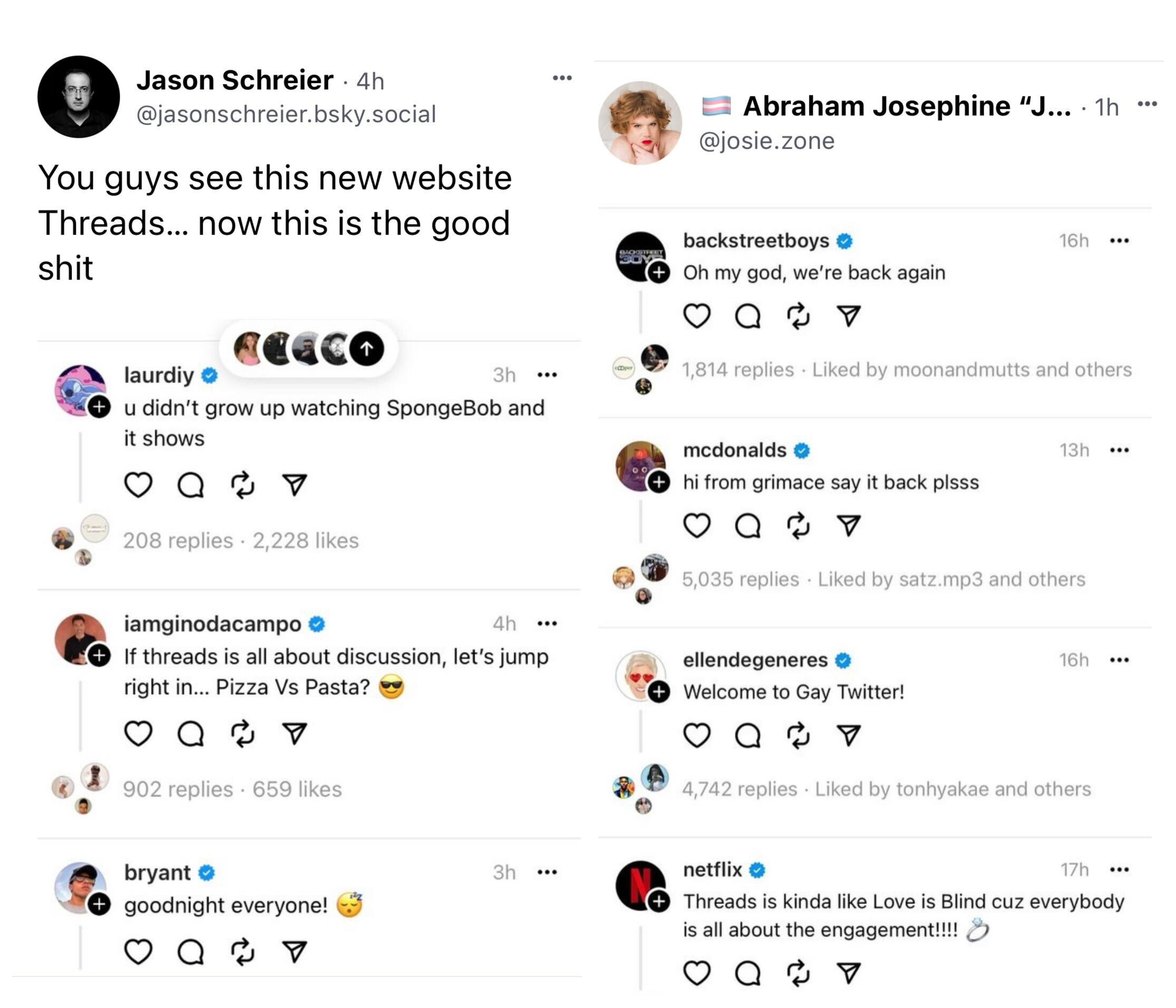
The outsized success that followed — Threads was the fastest app to hit 100 million downloads, and later blew past 150 million — came as a surprise to almost everyone involved. That includes the app’s makers at Meta, who hadn’t built a homegrown hit this big...
Companies need a head of AI but even those with that title disagree on just what they do. | Getty Images/fStop
America’s biggest companies are hiring AI leadership as fast as they can.
If AI is coming for our jobs, many Americans are hoping to get out in front of it. Regular people are using AI at work, and tech workers are rebranding themselves as AI experts. And those in leadership are vying for the hottest new job title: head of AI.
Outside of tech, the head of AI position was mostly nonexistent a few years ago, but now people are taking on that title — or at least its duties — at everywhere from Amazon to Visa to Coca-Cola. In the US, the number of people in AI leadership roles has grown threefold in the past five years, according to data from LinkedIn, bucking the downward trend in tech hiring overall. And while the head of AI job description varies widely by company, the hope is that those who end up with this new responsibility will do everything from incorporating AI into businesses’ products to getting employees up to speed on how to use AI in their jobs. Companies want the new role to keep them at the forefront of their industries amid AI disruption, or at least keep them from being left behind.
“This is the biggest deal of the decade, and it’s ridiculously overhyped,” said Peter Krensky, a director and analyst at Gartner who specializes in AI talent management.
Like anything new in tech, the AI revolution can take on a bit of a gold-rush quality. AI is one of the few areas where companies are actively spending money, since they see it as the inevitable future and as a way to improve their bottom line. At the same time, the parameters of the head of AI job — and even AI itself — aren’t very clear, and the pivot to the position can seem opportunistic. Remember Shingy, AOL’s Digital Prophet?
The thing is that while everyone seems to agree that companies need AI stewards, the nature of new technology means many are uncertain as to what that stewardship means in practice. Furthermore, we’re not sure about who exactly should become the new stewards: the people who have been working on AI for years or those who have been introduced to AI by the latest crop of consumer products and understand how the rest of us use it. We’re also not certain just how big of a disruption AI will be and how fast that disruption will happen.
Those are just some of the reasons companies are hiring heads of AI. And if they don’t already have a head of AI, most big companies will have one soon.
“If I were talking to a CEO a year ago, and I was like, ‘You’d be a fool not to have a head of AI.’ They’d be like, ‘Come on, give me a break,’” said Krensky. “And now they’re like, ‘I know, that’s why I have one.’”
Krensky estimates that currently about a quarter of Fortune 2000 companies have dedicated AI leadership at the VP level or above. He expects it to be about 80 percent a year from now. While the position will be more commonplace at bigger companies — especially those in banking, tech, and manufacturing — he’s also seeing it crop up at midsize organizations and in government agencies.
Typically, the person taking what Kensky calls a “cool and sexy” job title — one that he says is often a “hat, not a role” — comes from an existing technology leadership position like chief data officer or chief information officer. But the accessible nature of generative AI tools and their potential use across industries and positions has meant that people in nontech roles like business and marketing are also donning the mantle.
And because AI is supposed to be more transformational and more readily profitable than tech fads like Web3, experts think the head of AI is also going to stick.
“This is going to be a role that will stay on for a while. It’s not a transitional role,” said Beena Ammanath, executive director of the Deloitte AI Institute. “It’s absolutely crucial.”
Just what any given head of AI does varies, especially depending on the type of company. Generally, that breaks down into heads of AI at digital companies working to incorporate the technology into their products, while at nontech companies that means figuring out where and how to use existing AI technology to improve their business models, Ammanath said. Everyone, it seems, is trying to get the rest of their company to start using AI.
Mike Haley, SVP of research at Autodesk, says he’s the company’s de facto head of AI, having guided the architecture and engineering software company’s AI strategy for more than a decade. In addition to steering AI usage within the company, Haley is invested in putting AI to use in Autodesk’s products in order to “dissolve the interface” between users and the software. That means AI could help people use “natural methods of expression” like English or a pencil drawing, for example, to create detailed blueprints.
“Suddenly this complex tool that requires all sorts of learning and parameterization becomes way more accessible to more people,” explained Haley, who has a background in computer science and applied math.
Bali D.R., head of AI and automation at IT services consulting firm Infosys, is helping clients leverage AI while also trying to use it to “amplify human potential” across Infosys, from recruitment to sales to software development.
“All parts of the value chain, we are seeing how we can actually make it better, faster, cheaper,” says D.R., who moved to the AI role from another management role, and who started his career at the company 30 years ago in software development.
FICO chief analytics officer Scott Zoldi has been leading the data analytics company’s AI efforts for the past seven years, although without the “buzzy” head of AI title. He’s mainly focused on incorporating AI into the company’s products, including using consumer spending patterns to help detect credit fraud or when a customer is falling for a scam. He also spends a lot of time thinking about how AI can be used responsibly so as not to run afoul of regulatory bodies, corporate governance, or consumers by, for example, using AI that’s more likely to flag a protected group of people for committing fraud.
Zoldi, who says he’s written more than 100 AI patents, thinks the “head of AI” position should go to someone with a technology background.
“You really have to be an expert or you’re potentially going to be setting up the organization for failures down the road because it’s very complicated,” Zoldi, who views the position as a sort of watchdog, like a chief of security.
While Gartner’s Krensky estimates about 80 percent of AI leadership comes from a tech background, another 20 percent, of course, does not.
That’s the case with Coca-Cola’s global head of generative AI, Pratik Thakar, who previously led the company’s global creative strategy.
Thakar has been using AI to streamline and amplify the company’s advertising products. That included recently using AI to make roughly 15 percent of a commercial, which sliced the production time from a year down to two months.
Conor Grennan, a dean at NYU’s Stern business school, who recently took on the additional title of head of generative AI, sees the title as more of an initiative and thinks of it as akin to a chief learning officer or chief productivity officer. In the position, he pushes people across NYU, from students to professors to administrators and recruiters, to use AI to become more efficient and better at their tasks.
Grennan, who has an MBA and had previously studied English and politics, thinks it’s actually better for many organizations if their AI leadership doesn’t come from a tech background so that the person is better able to explain its benefits to a wider audience of mere mortals.
“You don’t need to know the software running your iPhone, just order an Uber,” Grennan said. Instead, what’s important for the role, he says, is creativity with language and breadth.
“They need to be an excellent communicator, they need to have a view of the entire firm, at least at the 30,000-foot view. And also it has to be somebody who really understands what generative AI can do,” Grennan said. “You don’t capture everything by putting it in the tech department.”
Regardless of where the head of AI sits within an organization, the fact remains that it’s a new frontier that will likely change a lot as the technology and our understanding of it develop. And like with any new technology, there’s going to be a mix of genuine innovation and genuine swindling.
AI is happening, and it will be a very big deal. But its full effects — and exactly what those are — will roll out over many years, so we may have time to figure things out.
It seems to anger certain Elon Musk fans every time I mention it, but pre-Elon Twitter was generally doing okay. Not great. Not terrible. Just okay. It wasn’t printing cash like Meta or Google, but it had been steadily increasing revenue and was profitable in 16 of the previous 20 quarters before Elon took over. There was a big paper loss in the 2nd quarter of 2020 due to a single noncash deferred tax asset, and many people see that giant loss and mistakenly think it showed the company was deep in the hole. However, you can tell it was nothing given that most analysts basically ignored that single big loss and focused on the underlying advertising and user numbers.
Elon has admitted multiple times now that he basically set fire to Twitter’s value and what had been a growing revenue stream. So it’s little surprise that he admitted it once again over the weekend, tweeting an admission that the company had lost around 50% of its advertising revenue.
The more interesting bit here, though, was him admitting that the company was “still negative cash flow.” Remember, in February, he had said the company was “trending to breakeven” and in April had suggested that it was now there. That April statement included him claiming that “most” advertisers had returned to Twitter, which Musk is now effectively admitting was a lie. And, his prediction that the company would be “cash flow positive” in the 2nd quarter didn’t quite pan out, I guess.
Of course, both of the things he complains about are directly due to Musk’s own terrible decisions. Advertisers have bailed because of his terrible choices, setting fire to brand safety efforts and driving away top tier advertisers (and users), and the “heavy debt load” was entirely due to his decision to finance $13 billion of the takeover with debt, on which the company how has to pay interest.
Both of those moves could have been easily avoided.
Well, it seems he’s paying out what can only be considered bribes to some of his favorite Twitter users. Back in February, Elon announced that the company would start sharing ad revenue with Twitter Blue subscribers.
But since then there had been not a peep, even as some users raised questions about such payments.
Then, finally, late last week, some users started tweeting about how they had received their first payments, though many noticed that these payments were basically only going to Elon Musk’s favorite reply guys. This left some others (including some other Musk stans) pissed off that they weren’t getting their share of the cash.
Among those in Twitter’s payout pool was Andrew Tate, who tweeted that he received $20,379 under the new program. Tate wrote that “every penny” of the proceeds will go toward his Tate Pledge charity initiatives. The former pro kickboxer, who once tweeted that women should “bare [sic] some responsibility” for being raped, last year claimed tech platforms had banned him for what he said were “traditional masculine values.” Tate has 7.1 million followers on Twitter; his Twitter account had been banned in 2017 and was reinstated after Musk acquired the social network. Last month Tate was charged with rape and human trafficking offenses in Romania. Earlier this week, Tate and his brother Tristan sued a Florida woman and others, alleging they conspired to falsely accuse the Tates in the Romania case, the AP reported.
Also getting Twitter payments were Brian Krassenstein ($24,305) and Ed Krassenstein ($24,877), entrepreneurs who originally rose to prominence on the platform with their relentless anti-Trump tweets. “Now I’m going to stop promoting border crossings and begin promoting Tesla vehicles,” Ed Krassenstein joked in a tweet. “I assumed I’d would be getting paid around $500 or so for the past 4-5 months. I thought, it would be pennies on the dollar compared to what George Soros pays me (sarcasm).”
Other Twitter users who shared ad-revenue payouts included podcaster and political commentator Benny Johnson ($9,546), Ashley St. Clair, a writer for political satire site Babylon Bee ($7,153), and an anonymously run account called End Wokeness ($10,419).
One user, who was not included, emailed Twitter and heard back from the company confirming that those selected were not based on the criteria stated in Twitter’s blog post about the program, but rather the payouts went “to a selected group of people.”
That email is all kinds of hilarious. In case you can’t see the image, it says:
Thanks for reaching out about being unable to receive your payment from Creator Ads Revenue Sharing on Twitter. We have information for you.
Currently, creator ad revenue sharing is only available to a selected group of people.
We hope this clarifies your concern.
Indeed, you do have information.
So… to sum up: Elon’s own decisions destroyed the company’s revenue and saddled it with way more expenses in the form of debt interest/repayment. The company is bleeding users and revenue, and despite promising a large group of users payouts if they joined his failed “Twitter Blue” program, the company is only paying that money to a small handpicked group which seems to consist almost entirely of accounts that suck up to Musk on the platform.
I might not be an intergalactic business genius, like many people assure me Musk is, but I fail to see how this strategy succeeds.
Bell Telephone Company of Pennsylvania operators in 1945. By that point, the process of automating telephone operation was well underway. | Bell Telephone Company of Pennsylvania/Federal Communications Commission/PhotoQuest/Getty Images
How automation wiped out a whole career for young women — and how young women adapted.
If you were a young (white) woman looking for work in the early 1920s, you could do worse than becoming a telephone operator.
In the early 1920s, AT&T, the telephone monopoly that grew out of Alexander Graham Bell’s Bell Telephone, was America’s largest employer, and specifically employed many women as operators, who manually connected callers by plugging wires into inputs on switchboards. In 1929, when employment peaked in the last months before the Great Depression, a government report estimated the number of operators working for AT&T at 161,669.
The company refused to hire Black operators until 1944, immigrants rarely got hired, and some exchanges barred Jewish women too. But for white, gentile, American-born women, especially young and unmarried women (as women often left the labor force after marriage, and married women faced discrimination in hiring), connecting calls at the switchboard was a common way to make a living.
“In 1920, telephone operators were roughly 2 percent of the US female workforce and 4 percent of nearly three million young, white, American-born working women,” economists James Feigenbaum and Daniel Gross observe. “As much as 15 percent of cohorts born at the turn of the century might have ever been an operator.”
Then it all went away. In the 1920s, as telephone coverage was expanding and the ranks of operators were growing, AT&T began to roll out a “mechanical switching” system in which people would manually dial other numbers from their home, using a rotary system. Human operators were no longer needed. The profession took decades to die out completely, as AT&T switched gradually, exchange by exchange. But eventually, automation killed off the telephone operator as a profession, by around 1978.
That’s what made telephone operators so interesting to Feigenbaum and Gross, two economic historians who wanted to examine a clear case where automation led to an entire job class being automated away.
For existing operators, they find that automation had real costs. Operators in a city that transitioned to mechanical switching were substantially less likely to have any job 10 years later than operators in cities that were slower to automate; those that did find work tended to find worse, lower-paying jobs.
But Feigenbaum and Gross also examine the results for young white women coming of age during automation, who just a few years earlier would’ve been ideal candidates for telephone operator jobs. Remarkably, they find little or no negative effects at all: they were just as likely to find work as they would have been before, and job openings in fields like secretarial work and restaurants increased even as telephone operation was automated away. Some of those jobs (like restaurant work) paid less, but others were competitive with telephone operation.
This is just one case, and economists have a long way to go in understanding how automation affects workers — a question that is more important than ever with the rapid progress in AI. But telephone operation appears like a mostly heartening example. Even though a job that once employed 2 percent of all working women was automated away, new workers entering the labor market were not significantly worse off.
The curious case of the completely automated job
Bettmann Archive/Getty Images
An elevator operator carries a sheep and a goose in the Waldorf-Astoria Hotel in New York City, circa 1930. This is what happens when you search a photo archive for “elevator operator.”
Of course, automation leading to job losses in a particular job category or whole sector of the economy is pretty common. As websites like Expedia and Kayak and Google Flights emerged, the number of travel agents in the US fell from 100,000 in 2000 to 45,000 last year, even as the working population grew by 29 million people. From 1948 to 2019, a recent Department of Agriculture report found, the amount of labor on US farms fell by 74 percent, while the output of those farms grew by 175 percent. We grew nearly three times as much foodwith a quarter of the labor because of intensive investment in advanced combine harvesters, fertilizers, and other innovations.
But that didn’t eliminate the need for farm workers, and travel agents still exist (in fact, the Bureau of Labor Statistics expects the number of travel agents to grow rapidly in the next decade as part of the travel industry’s overall recovery from Covid). It’s pretty rare for a job to be fully automated out of existence the way telephone operators were. The economist James Bessen, for instance, has argued that since 1950, only one job (elevator operators) has ever been fully automated away. The Bureau of Labor Statistics still estimates some 4,000 people working as telephone operators, though their work is highly specialized and very different from that of early 20th-century women on switchboards who saw their jobs swept away.
“Jobs are bundles of tasks,” Gross told me. “We had a job that was defined by one task: call-switching. … Part of why there aren’t as many examples of entire categories being eviscerated is that most jobs have workers doing multiple things.”
My job as a reporter, for instance, can be divvied up into many individual tasks: scheduling calls with sources, conducting interviews, transcribing those interviews, conducting online research and reading past coverage and academic papers, collating all of the above into a final article. Even if one of those tasks is automated (as transcription largely has been in recent years), the rest remain. Most jobs, from janitorial labor to factory assembly to medicine and law, are like this: complex combinations of discrete tasks, and the job itself doesn’t vanish if one task is automated.
The technology to automate call-switching emerged in the 1890s, only 16 years after Bell’s invention of the telephone. Almon Strowger, an undertaker in Kansas City, Missouri, developed the so-called “Strowger switch,” the first electric system for connecting phone lines without a human operator.
A possibly apocryphal but extremely funny origin story alleges that Strowger was inspired to invent his switch because he thought the operator at the local telephone exchange, who was married to a rival undertaker, was conspiring to divert calls from bereaved families to her husband instead of Strowger. I haven’t been able to source this to anything other than a series of poorly footnoted books and articles but I like the anecdote too much to leave it out. It also seems to fit later anecdotes from people who knew Strowger and attested to his … difficult … temperament.
In any case, switching failed to take off in the 1890s. It didn’t offer clear cost savings over human operators, and it produced more errors. It wasn’t until 1917, Feigenbaum and Gross note in a companion paper, that “mechanical switching could match manual operation on connection times and error rates, and internal estimates suggested it may generate savings in large cities.”
A major factor was the exponentially rising complexity of telephone networks as more and more people got phone lines in their homes and workplaces. “It only takes 50,000 subscribers to have a billion possible pairwise connections,” Gross said. “Adding a 50,001st subscriber adds another 50,000 potential connections. Having the mechanisms to connect that many different people manually is incredibly costly and complicated.” While human operators had managed this complexity for a few decades, it beggared belief that they could handle a country where every home had a phone.
Automation proceeded in stages, city by city, and with important limits. Initially more complex tasks, like long-distance switching, were reserved for human operators even in cities that transitioned to mechanical switching. The Great Depression slowed investment in mechanical switching systems, as did restrictions on non-military uses of copper imposed during World War II. (Copper was the main material for phone lines). The full transition to mechanized call switching only ended in 1978, Feigenbaum and Gross observe, at which point computerized switching systems far more complex than anything Almon Strowger imagined were beginning to be implemented.
The staggered rollout is a godsend for economists: they let Feigenbaum and Gross compare employment outcomes for young white women before and after AT&T transitioned to mechanical operation in a given city, and by combining these before/after comparisons in the 261 different cities they examine through 1940, and roughly 2,500 additional cities which were not yet converted to mechanical service, they can estimate an average effect of the transition.
What automation did to existing telephone operators — and those who would’ve taken their place
Transitions to mechanical switching led, unsurprisingly, to a dramatic reduction in the share of young, white, US-born women working as operators: in cities instituting the change, the share fell by 1.7 percentage points, which is a huge change given that on average 3.9 percent of this group was working in telephone operation before automation.
Operating was a relatively high-turnover job; among operators in cities that didn’t transition to mechanical switching, only 24 percent were still operators 10 years later. But the share was even lower in cities that automated: only 16 percent stayed in the field (presumably moving to cities or exchanges that hadn’t yet been automated). A large share of operators who dropped out of the profession post-automation didn’t find other work at all. Older operators (meaning those who were over 25 when automation occurred) were 7 percentage points less likely to be working, which Feigenbaum and Gross note accounts for “more than half of the displacement of operators in this age group.” They had no future in telephones, and most of them got booted out of the labor force entirely.
Those who kept working tended to get worse jobs. About 10 percent of operators exposed to automation were in a lower-paying profession a decade later, compared to only 1 percent of operators not exposed to automation.
So that’s the bad news: getting hit head-on by a wave of automation had serious negative effects on these women. But what about women coming of age in the 1930s who might have earlier been telephone operators? Were they worse off for lacking this job opportunity? Surprisingly, Feigenbaum and Gross find the answer is no.
“We find no effects on the fraction of young women working, in school, married, or with children for any group,” they conclude. This is true even after they narrow their analysis to white, American-born women, and down to relatively narrow age bands (16 to 20, say, or 21 to 25). What appears to have happened is that other professions open to young women with just a high school diploma saw job opportunities increase as those in telephone operation were shrinking. Secretarial work, for instance, boomed, as did restaurant work.
“This is the era of the drugstore lunch counter, the soda fountain,” Gross says. “There’s growing demand in this broad line of work in new places.”
H. Armstrong Roberts/ClassicStock/Getty Images
Telephone operator jobs gave way to more modern careers, like working at a soda fountain.
The idea that demand for young women in the workforce surged in these industries exactly enough to offset the jobs lost to automation in telephony seemed almost magical to me. It’s such a neat story, and a such hopeful one for automation generally.
One possible story is that the spread of the telephone, enabled by automated switching, led to increased productivity elsewhere in the economy which enabled more hiring in positions like secretarial labor. Secretaries spend a lot of time on the phone, after all. That’s not what seems to have happened, though. “We don’t really think there are any kind of direct productivity impacts of the technology outside of AT&T itself,” Gross says. “If there are, they’re minuscule, too small to explain these effects.”
So what did happen? The closest thing to an answer we have is that the overall economy adapted. Moving to mechanical switches didn’t reduce the total amount of spending in the economy. The money that used to pay operators’ salaries, the money AT&T made from telephone bills and then spent on wages, was still there, and it went to something. Moreover, the presence of a sudden glut of young women available to work gave businesses a reason to try out what Feigenbaum and Gross call “organizational innovations”: new ways to structure their firm to make use of these female workers. Around this time, doctors and hospitals had begun hiring “medical stenographers” to take down symptoms and other information from patients, in person or via phone. None of the tech behind that job was new, but the availability of young women to do it was new.
“There’s a time dimension that’s really important,” Feigenbaum says. “If you’re an incumbent worker, the technology shock is bad for you. If you’re a future worker, you have time to adjust.”
Feigenbaum and Gross are hesitant to draw overly broad conclusions from this work for the whole economy. “We’d need to study 10 more, 100 more automation events to really know how, this phenomenon operates,” Feigenbaum says. “Are there some cases where the other jobs are not growing at the same time?” It’s possible. We just don’t know.
But the ability of the next generation of female workers to adapt to the telephone automation shock gives me some hope as we face a new wave of automation led by AI. Of course, sufficiently general AI threatens to automate vast swathes of tasks at once, quite quickly, without giving us much time to transition. If that happens, rapid job loss seems inevitable. But it hasn’t happened so far, and smaller shocks like mechanical telephone operation seem more common.
The telephone operators’ example gives me some reason to think the next generation of would-be truck drivers, or radiologists, will be able to sort into new work. And maybe, if we’re lucky, we can avoid existing drivers getting hurt the way existing telephone operators were.
Logitech has acquired Loupedeck for an “undisclosed, non-material” sum. | Image: Loupedeck
Logitech has acquired Loupedeck — the company behind the self-titled editing console beloved by streamers and creative professionals — for an undisclosed sum, according to a press release published on Tuesday. It’s one of many recent steps that Logitech has taken to gain some ground in the streaming market against competing companies like Elgato, having similarly acquired Mevo — a camera hardware and software company specializing in livestreaming — in 2021.
According to the press release, the partnership between Logitech and Loupedeck is designed to provide “a more seamless experience for creators,” which could potentially provide Loupedeck hardware with more specialized presets out of the box and better integration with Streamlabs — the...
The happy face of a man who’ll never lose a single expensive earbud. | Image: Beyerdynamic
True wireless earbuds may rule the roost when it comes to portable listening, but Beyerdynamic hasn’t forgotten about the other kind of wireless earbuds. Its new Blue Byrd ANC in-ear headphones are neckbuds, aka neckband earbuds, aka in-ear headphones with a wire running between your ears that are still technically “wireless” because there’s nothing physically connecting them to your phone.
The new Blue Byrd in-ear headphones are an upgraded version of the second-generation model from 2021, now with support for active noise cancellation and a transparency mode. Turning on ANC drops the battery life from 14 hours to a bit over eight, and charging is still handled over USB-C, where a 10-minute charge gets you two hours of listening.
Amazon doesn’t believe it fits the definition of a “very large online platform” — at least not how the European Union defines it.
The retail giant is taking legal action to challenge the EU’s new content moderation rules for big tech companies, claiming that the company is being unfairly targeted by the legislation. On Tuesday, Amazon filed a petition with the EU’s General Court to request that the European Commission annul its decision to designate Amazon as a “very large online platform” (VLOP) under the Digital Services Act (DSA), arguing that the company doesn’t meet the requirements to fall under such a category.
“The DSA was designed to address systemic risks posed by very large companies with advertising as their primary revenue...
Tesla has agreed to settle on a class action lawsuit over sudden price increases the company pushed on Solar Roof buyers in 2021, CNBC reports. Tesla said it will pay just over $6 million in the settlement, which involves thousands of customers who had committed to purchasing the novel roof-replacing solar shingles product.
According to the court filing, the settlement class included 8,636 customers, 6,307 of whom had canceled their orders. About 1,600 of the remaining customers completed their full contract at the original prices, and the rest are either scheduled for install or are pending. One of the lead plaintiffs had their Tesla contract increase from about $72,000 to $146,000, while others were offered a free Powerwall home...
Illustration by Kristen Radtke / The Verge; Getty Images
xAI, Elon Musk’s newly formed AI company, has revealed itself with a new website detailing its mission and team at https://x.ai/. Musk tweeted the company’s intent is to “understand reality” without any other details or explanation.
“The goal of xAI is to understand the true nature of the universe,” according to the website. The team is headed up by Elon Musk and includes team members that have worked at other big names in AI, including OpenAI, Google Research, Microsoft Research, and DeepMind (which was recently folded into Google).
Announcing formation of @xAI to understand reality
A spider spins its web. Everything is connected. The urban society is strong because of that connection. Every person contributes to the whole, the skills of one person helping to feed any other person in the vast chain of connection. These threads come together like spider silk, connecting us all in the vast fabric of society.
But that connection is also a weakness.
Threads is an assault on the senses. Once you’ve experienced it, it’s impossible to scrub from memory. Threads is a kaleidoscope of disturbing images and unpleasant information, a cautionary tale to be avoided, and a revelation of truth that feels stark and unavoidable.
Here is an incomplete list of things I saw in Threads. Documentary footage of a spider. Ambulances clogging the streets of Sheffield. U.S. citizens setting fire to a Russian consulate. The sinking of the USS Kitty Hawk in the Persian Gulf. Skin peeling in the wake of a nuclear attack. A man explaining that the symptoms of acute radiation poisoning are similar to panic. Soldiers and police officers moving through cities, murdering hungry citizens. Shambling masses of bent and poisoned humans starving in front of rotting billboards. The birth of an awful mutant baby.
It is the traffic warden that we remember. The symbol of order, his yellow trimmed coat shabby with nuclear dust, face wrapped bandages that seep and ooze, shotgun at the ready. More than the nuclear mushroom cloud and the screaming, monstrous baby, the traffic warden persists.
Threads has already scarred many people who have seen it, which is perhaps the point. Even now, its horrors await millions, even billions of people, who with a few clicks of a button can expose themselves to the nightmarish visions awaiting within. The question before us is what lessons they’ll draw from those horrors.
It’s important to emphasize that in a direct sense, Threads is a production of government—not just the technical ingenuity of an advanced society, but of the investments and policy made by elected officials. As a response to a world a few escalatory steps away from nuclear conflict between Russia and America, a prospect made all the more terrifying given the collapse of consensus reality in the face of new mass communications technologies, it’s an audacious step, a deliberate choice to reflect horror back at the user rather than conceal or hide from it.
Threads tells the story of anywhere—a city in Yorkshire, the disembodied virtual metropole of the 1%, or your city, it’s all the same. It’s at no seeming risk of nuclear fire in a Russian-American exchange, nor is there any reason for its inhabitants to be directly affected by the machinations of captains of industry and technological barons, and yet they sit, waiting for something to happen, reaching out into the darkness for some fleeting connection—to other people, to distant authority, to anyone who can make sense of what’s happening.
Threads shows us the world of connection and its attendant dangers. We are all so close to each other, so close that we can use the connections to wreak devastating havoc. Russia has said it deployed new nuclear weapons. Its pundits talk on TV of using nukes as a way to help the flagging nation win its war in Ukraine. Hypersonic weapons are changing the delicate balance of power between the nuclear nations. China is building new ICBM silos and increasing its nuclear stockpile. The last remaining nuclear prohibition treaties between the U.S. and Russia are in tatters.
The spider weaves its web. Threads persist. We are all still connected, to our benefit and our detriment.
Threads, Meta’s Twitter rival, launched on Wednesday and people are already trying to deactivate their accounts. The issue is: you can’t deactivate your Threads account unless you delete your Instagram account too.
“You may deactivate your Threads profile at any time, but your Threads profile can only be deleted by deleting your Instagram account,” the Threads Supplemental Privacy Policy reads.
Threads, referred to by some as a would-be “Twitter killer,” is a separate app from Instagram and mimics Twitter’s feed page, full of text-based posts from suggested users. However, you need to log in through your Instagram account to get access to it. The app then imports your username and verification status from your Instagram account and also provides an option for you to import your profile picture, bio, and website information.
Ironically, critiques of Threads have been trending on Twitter. “I deactivated my threads account already but it turns out you can’t delete your threads account without also deleting your Instagram account so maybe just don’t sign up!” writer Emily Hughes said in a tweet that gained over three million views. “Fuck!! I did just to look and immediately hated it but I guess I’m stuck with it now,” author Lilly Dancyger responded. Many have called this Faustian bargain a "trap."
This isn't particularly surprising from Meta, which has long leveraged the reach of its acquired social media companies—Instagram and WhatsApp—to stay relevant and retain users as its flagship product, Facebook, wanes. It also illustrates why so many antitrust experts argued that Meta should have been broken up years ago.
The creation of Threads follows two antitrust complaints brought by the Federal Trade Commission (FTC), which aimed to force Meta to sell Instagram and WhatsApp and accused the company of pursuing “anti-competitive conduct.” The FTC first sued Facebook in December 2020, citing its acquisitions of Instagram and WhatsApp as a move to neutralize competition, and once again in October 2022. Both of these complaints were later dismissed in court. Now, if you have regrets about joining Threads, you have to say goodbye to your Instagram account.
Notably, Threads is not currently available in the E.U. due to concerns regarding data privacy stemming from how Threads and Instagram are linked. According to Bloomberg, citing anonymous sources, Meta is waiting for more guidance around the Digital Markets Act, a new competition law that governs how online platforms use their market platform.
Deactivating a Threads account means that no users will be able to see your content, but your data will still live in the app’s servers unless the account is deleted, along with the linked Instagram. The app tracks all of the same data as it does on Instagram, which includes health and fitness, location, contacts, search history, and usage data. Jack Dorsey, Twitter’s CEO before Elon Musk, tweeted a screenshot of the Thread’s privacy page, saying, “All your Threads are [sic] belong to us.”
Aside from being required to delete an Instagram account in order to delete Threads account, people are also upset by the fact that the two platforms are so linked, such as Threads asking if you want to follow all the same people as you do on Instagram when you first make an account.
Meta has a history of copying the style of trending or existing apps. Instagram’s Story features come from Snapchat, while its Reels feature comes from TikTok. Two of the most followed Instagrammers, Kylie Jenner and Kim Kardashian, even launched a petition asking Meta to “stop trying to be tiktok.” In July 2022, Meta released a feature called Dual that looked a lot like the up-and-coming social platform BeReal. Although the company's monopolistic aspirations have undoubtedly faded after years of failing to innovate and chasing ill-advised trends like the metaverse, Threads shows how it's still willing and able to leverage what remnants of its empire remain.
It’s no secret that Twitter has been imploding ever since being taken over by billionaire cringeposter Elon Musk. So it should be no surprise that Facebook parent company Meta is now launching its own Twitter clone, Threads, which promises to suck in slightly different ways than the blue bird site.
The myriad problems with Twitter have been well documented, and the launch of Threads is proof that Meta smells blood in the water. The app is a direct response to the mass-exodus of advertisers under Musk, whose increasingly blatant transphobia and racistconspiracy-peddling has left many users of the dying platform pining for a social app that is not overrun with Nazis and QAnon conspiracists.
Meta’s sales pitch for Threads seems to be simply that it’s not Twitter. It’s a text-based social network that is not actively falling apart, created by a monopolistic tech company known for privacy abuses and run by the second worst guy on earth. Even by these extremely low standards, it is not good.
Threads has all your favorite social media users, such as corporate brand accounts, annoying Instagram influencers, and minor internet celebrities who aren't funny.
To understand Threads, just imagine all the worst parts of Instagram and Twitter. The interface looks and feels like Instagram’s comments section, and there is no way to view posts chronologically on the timeline—or even to limit your feed to posts from accounts you follow. Instead, users see text posts based on what an invisible algorithm determines is most likely to make them engage and stay on the app, so they will see more ads.
Also, you can’t post ass. Threads is enforcing Meta’s usual policies, which forbids nudity or anything it determines to be sexually suggestive—a hugely unpopular position which infamously killed Tumblr, continuously bans sex workers and queer people, and has nearly destroyed other platforms like OnlyFans. Presumably, this is to avoid scaring away brands and cringey influencers, which seem to be the most visible users on the platform in its first 24 hours.
Using these old and unpopular choices for a new social platform speaks to a tech industry that is increasingly desperate and out of ideas. After all, this is the same company that has spent billions unsuccessfully trying to convince people to have work meetings as leg-less avatars inside a virtual “Metaverse” no one wants to use. But it’s also a cynical admission that when it comes to competing with Twitter, Meta doesn’t even need to try.
Of course, there’s also Meta’s non-Twitter competitors, BlueSky and Mastodon, which both use decentralized models that avoid the pitfall of a single corporation determining which posts you see. But Mastodon is built on a technology stack almost as old as Twitter’s, and has largely failed to achieve widespread adoption despite several mass-exoduses from Twitter. BlueSky is more promising, using a brand new protocol called AT which promises to let users not only create their own instances of the service, but filter their feeds with custom algorithms, instead of settling for one centrally-controlled “master algorithm” that prioritizes engagement above all else. But despite another large influx of new users over the holiday weekend, BlueSky remains an invite-only private beta, which in theory gives Threads the opportunity to siphon more users from the Twitter wreckage.
So far, Meta’s biggest advantage is that it’s drawing from the 1.6 billion users it already has on Instagram, which is captively tied at the hip to Threads in a way that prevents users from deleting their Threads account without also deleting Instagram. Currently, the most active users are celebrities, corporate brands, self-promoters, and cringey TikTok influencer types—the exact kind of annoying people many of us used to go on Twitter to avoid. In an ideal scenario, it would keep those users away from platforms like BlueSky, where discourse is sparse and most users just want to have fun posting with their friends.
Even if its launch is well-timed, it’s hard to see Threads as anything but a frail attempt by Meta to return to its glory days. As a platform, it seems to have no selling points apart from that it was launched from the decaying avian corpse of another, even worse platform. The fact that Twitter had to become a broken shithole run by a racist clown in order for Threads to become viable speaks volumes about not only Meta, but social media in general.
The company’s foray into text-posting also comes at a time when social media as a whole seems to be in a prolonged death spiral, with the engagement and ad-driven business model of the past 15 years reaching a crisis point. Does anyone really want another billion+ user social network with all the same nightmarish problems? Will anyone actually use four different Twitters, or will we all simply splinter off into whatever service fits each person best?
No matter what happens, it seems clear that the power vacuum of social media is already getting very confusing and weird. Faced with its own failing platforms, the company formerly known as Facebook is clearly desperate to restore its fading relevance. But it’s extremely telling of the tech industry as a whole that this is only possible due to the cartoonish mismanagement and rapid decline of another, even shittier company.


/cdn.vox-cdn.com/uploads/chorus_asset/file/24809495/GettyImages_1570241532.jpeg) Mario Tama/Getty Images
Mario Tama/Getty Images
/cdn.vox-cdn.com/uploads/chorus_asset/file/24809471/GettyImages_1311698420.jpeg) Fiona Goodall/Getty Images
Fiona Goodall/Getty Images


 Meeting with the Maybelline Beauty app in Teams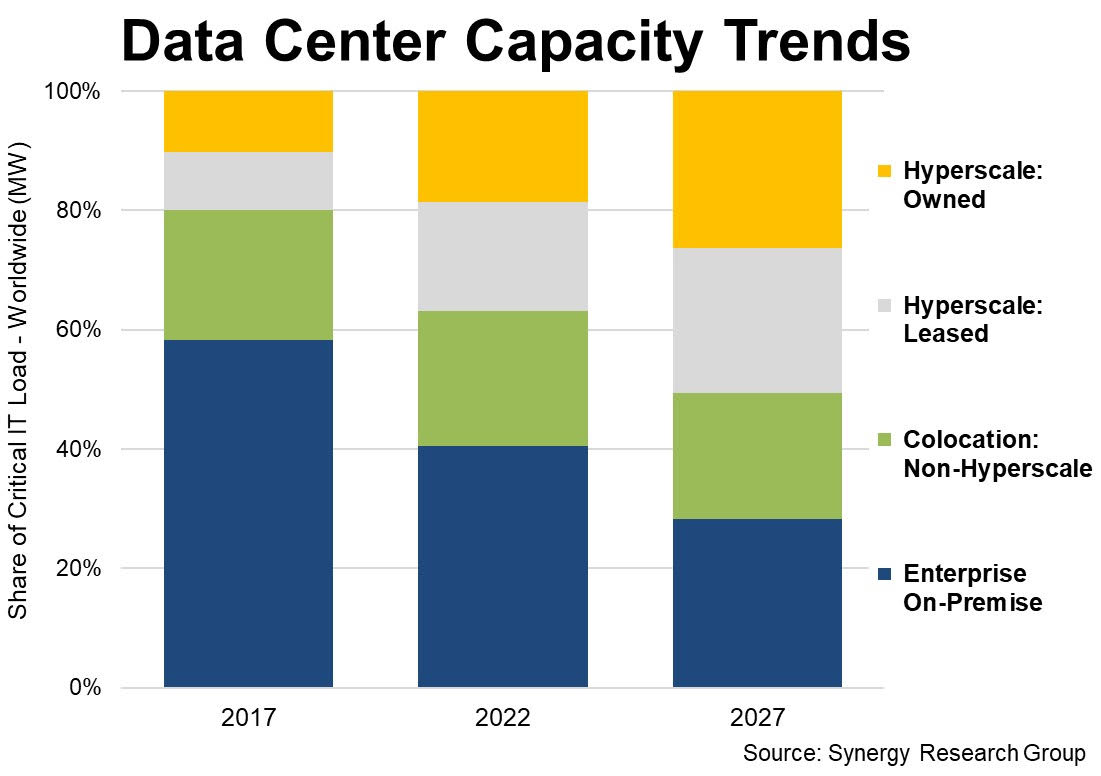


/cdn.vox-cdn.com/uploads/chorus_asset/file/24793363/514685668.jpg) Bettmann Archive/Getty Images
Bettmann Archive/Getty Images
/cdn.vox-cdn.com/uploads/chorus_asset/file/24793376/GettyImages_563937513.jpg) H. Armstrong Roberts/ClassicStock/Getty Images
H. Armstrong Roberts/ClassicStock/Getty Images