11 Sep 16:38
by Young S. Park, Jae H. Park, Han N. Hwang, Tomba Singh Laishram, Kwang S. Kim, Myung H. Kang, and Chan C. Hwang
Author(s): Young S. Park, Jae H. Park, Han N. Hwang, Tomba Singh Laishram, Kwang S. Kim, Myung H. Kang, and Chan C. Hwang
Graphene promises to be a revolutionary component of upcoming electronic devices. New calculations and experiments reveal that the electronic structure of graphene can be recovered even when the graphene is grown on a metal substrate.
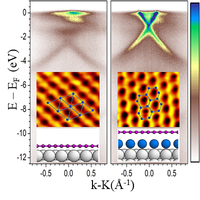
[Phys. Rev. X 4, 031016] Published Tue Jul 29, 2014
08 Aug 14:34
by A. C. Wilson
Tunable spin–spin interactions and entanglement of ions in separate potential wells
Nature 512, 7512 (2014). doi:10.1038/nature13565
Authors: A. C. Wilson, Y. Colombe, K. R. Brown, E. Knill, D. Leibfried & D. J. Wineland
Quantum simulation—the use of one quantum system to simulate a less controllable one—may provide an understanding of the many quantum systems which cannot be modelled using classical computers. Considerable progress in control and manipulation has been achieved for various quantum systems, but one of the remaining challenges is the implementation of scalable devices. In this regard, individual ions trapped in separate tunable potential wells are promising. Here we implement the basic features of this approach and demonstrate deterministic tuning of the Coulomb interaction between two ions, independently controlling their local wells. The scheme is suitable for emulating a range of spin–spin interactions, but to characterize the performance of our set-up we select one that entangles the internal states of the two ions with a fidelity of 0.82(1) (the digit in parentheses shows the standard error of the mean). Extension of this building block to a two-dimensional network, which is possible using ion-trap microfabrication processes, may provide a new quantum simulator architecture with broad flexibility in designing and scaling the arrangement of ions and their mutual interactions. To perform useful quantum simulations, including those of condensed-matter phenomena such as the fractional quantum Hall effect, an array of tens of ions might be sufficient.

08 Aug 14:33
by Juan Ramon Sanchez-Valencia
Controlled synthesis of single-chirality carbon nanotubes
Nature 512, 7512 (2014). doi:10.1038/nature13607
Authors: Juan Ramon Sanchez-Valencia, Thomas Dienel, Oliver Gröning, Ivan Shorubalko, Andreas Mueller, Martin Jansen, Konstantin Amsharov, Pascal Ruffieux & Roman Fasel
Over the past two decades, single-walled carbon nanotubes (SWCNTs) have received much attention because their extraordinary properties are promising for numerous applications. Many of these properties depend sensitively on SWCNT structure, which is characterized by the chiral index (n,m) that denotes the length and orientation of the circumferential vector in the hexagonal carbon lattice. Electronic properties are particularly strongly affected, with subtle structural changes switching tubes from metallic to semiconducting with various bandgaps. Monodisperse ‘single-chirality’ (that is, with a single (n,m) index) SWCNTs are thus needed to fully exploit their technological potential. Controlled synthesis through catalyst engineering, end-cap engineering or cloning strategies, and also tube sorting based on chromatography, density-gradient centrifugation, electrophoresis and other techniques, have delivered SWCNT samples with narrow distributions of tube diameter and a large fraction of a predetermined tube type. But an effective pathway to truly monodisperse SWCNTs remains elusive. The use of template molecules to unambiguously dictate the diameter and chirality of the resulting nanotube holds great promise in this regard, but has hitherto had only limited practical success. Here we show that this bottom-up strategy can produce targeted nanotubes: we convert molecular precursors into ultrashort singly capped (6,6) ‘armchair’ nanotube seeds using surface-catalysed cyclodehydrogenation on a platinum (111) surface, and then elongate these during a subsequent growth phase to produce single-chirality and essentially defect-free SWCNTs with lengths up to a few hundred nanometres. We expect that our on-surface synthesis approach will provide a route to nanotube-based materials with highly optimized properties for applications such as light detectors, photovoltaics, field-effect transistors and sensors.

06 Aug 16:34
by Shoji Yoshida
Nature Nanotechnology 9, 588 (2014).
doi:10.1038/nnano.2014.125
Authors: Shoji Yoshida, Yuta Aizawa, Zi-han Wang, Ryuji Oshima, Yutaka Mera, Eiji Matsuyama, Haruhiro Oigawa, Osamu Takeuchi & Hidemi Shigekawa
Studies of spin dynamics in low-dimensional systems are important from both fundamental and practical points of view. Spin-polarized scanning tunnelling microscopy allows localized spin dynamics to be characterized and plays important roles in nanoscale science and technology. However, nanoscale analysis of the ultrafast dynamics of itinerant magnetism, as well as its localized characteristics, should be pursued to advance further the investigation of quantum dynamics in functional structures of small systems. Here, we demonstrate the optical pump–probe scanning tunnelling microscopy technique, which enables the nanoscale probing of spin dynamics with the temporal resolution corresponding, in principle, to the optical pulse width. Spins are optically oriented using circularly polarized light, and their dynamics are probed by scanning tunnelling microscopy based on the optical pump–probe method. Spin relaxation in a single quantum well with a width of 6 nm was observed with a spatial resolution of ∼1 nm. In addition to spin relaxation dynamics, spin precession, which provides an estimation of the Landé g factor, was observed successfully.

06 Aug 11:24
by Robert Drost, Andreas Uppstu, Fabian Schulz, Sampsa K. Hämäläinen, Mikko Ervasti, Ari Harju and Peter Liljeroth

Nano Letters
DOI: 10.1021/nl501895h

05 Aug 17:06
by Maria N. Gastiasoro and Brian M. Andersen
Author(s): Maria N. Gastiasoro and Brian M. Andersen
Recent experimental studies have revealed several unexpected properties of Mn-doped BaFe2As2. These include extension of the stripelike magnetic (π,0) phase to high temperatures above a critical Mn concentration only, the presence of diffusive and weakly temperature dependent magnetic (π,π) checkerb...
[Phys. Rev. Lett. 113, 067002] Published Tue Aug 05, 2014
04 Aug 16:04
by Michael Röckert, Matthias Franke, Quratulain Tariq, Stefanie Ditze, Michael Stark, Patrick Uffinger, Daniel Wechsler, Upendra Singh, Jie Xiao, Hubertus Marbach, Hans-Peter Steinrück, Ole Lytken

A colorful representation of temperature-programmed desorption spectra for a Cu(111) surface fully covered by tetraphenylporphyrin is depicted. In their Full Paper on page 8948, O. Lytken et al. report on their investigations on the release of hydrogen during the metalation and dehydrogenation of tetraphenylporphyrin on the Cu(111) surface. The desorption of hydrogen is indicated as balloons and bubbles of hydrogen. The reactions producing the desorbing hydrogen are shown at the bottom of the image.
04 Aug 16:01
by Tomoko Inose, Daisuke Tanaka, Hirofumi Tanaka, Oleksandr Ivasenko, Toshi Nagata, Yusuke Ohta, Steven De Feyter, Naoto Ishikawa, Takuji Ogawa
Abstract
Invited for the cover of this issue is the group of Takuji Ogawa and Daisuke Tanaka at Osaka University. The image depicts porphyrin–TbIII double-decker complexes with different electronic structures comprising protonated, anionic, and radical forms. The single-molecular magnetic properties were successfully switched by changing the electronic structures of the complexes. Read the full text of the article at 10.1002/chem.201402669.

“Studies like this combine both the characterization of magnetic properties and the fabrication of highly ordered thin films. Both aspects are necessary for rational development of future spintronic devices.” Read more about the story behind the cover in the Cover Profile and about the research itself on page 11362 ff. (DOI: 10.1002/chem.201402669).
04 Aug 15:56
by Marko Melander, Kari Laasonen and Hannes Jónsson

The Journal of Physical Chemistry C
DOI: 10.1021/jp504709d

04 Aug 15:55
by Fabian Donat Natterer, François Patthey and Harald Brune

ACS Nano
DOI: 10.1021/nn501999k

04 Aug 15:30
by Feng Gao
Self-assembly of functional compounds into a prerequisite nanostructure with desirable dimension and morphology by controlling and optimizing intermolecular interaction attracts an extensive research interest for chemists and material scientist. In this work, a new triple-decker sandwich-type lanthanide complex with phthalocyanine and redox-active Schiff base ligand including tetrathiafulvalene (TTF) units has been synthesized, and characterized by single crystal X-ray diffraction analysis, absorption spectra, electrochemical and magnetic measurements. Interestingly, the non-centrosymmetric target complex displays a bias dependent selective adsorption on a solid surface, as observed by scanning tunneling microscopy (STM) at the single molecule level. Density function theory (DFT) calculations are utilized to reveal the formation mechanism of the molecular assemblies, and show that such electrical field dependent selective adsorption is regulated by the interaction between the external electric field and intrinsic molecular properties. Our results suggest that this type of multi-decker complex involving TTF units shows intriguing multifunctional properties from the viewpoint of structure, electric and magnetic behaviors, and fabrication through self-assembly.
Scientific Reports 4 doi: 10.1038/srep05928

04 Aug 13:51
by Carlos-Andres Palma, Jonas Björk, Francesco Rao, Dirk Kühne, Florian Klappenberger and Johannes V. Barth

Nano Letters
DOI: 10.1021/nl5014162

04 Aug 13:39
by Mattia Crescioli, Paolo Politi, Ruggero Vaia
Antiferromagnetic chains with an odd number of spins are known to undergo a
transition from an antiparallel to a spin-flop configuration when subjected to
an increasing magnetic field. We show that in the presence of an anisotropy
favoring alignment perpendicular to the field, the spin-flop state appears for
both weak and strong field, the antiparallel state appearing for intermediate
fields. Both transitions are second order, the configuration varying
continuously with the field intensity. Such re-entrant transition is robust
with respect to quantum fluctuations and it might be observed in different
types of nanomagnets.
31 Jul 13:39
by Andrea Candini, Valerio Bellini, David Klar, Valdis Corradini, Roberto Biagi, Valentina De Renzi, Kurt Kummer, Nicholas B. Brookes, Umberto del Pennino, Heiko Wende and Marco Affronte

The Journal of Physical Chemistry C
DOI: 10.1021/jp5041663

31 Jul 13:31
by Keitaro Eguchi, Yasumasa Takagi, Takeshi Nakagawa and Toshihiko Yokoyama

The Journal of Physical Chemistry C
DOI: 10.1021/jp503851k

31 Jul 13:21
by Marten Piantek, David Serrate, Maria Moro-Lagares, Pedro Algarabel, Jose I. Pascual and M. Ricardo Ibarra

The Journal of Physical Chemistry C
DOI: 10.1021/jp506652j

31 Jul 13:20
by Johanna Eichhorn, Damian Nieckarz, Oliver Ochs, Debabrata Samanta, Michael Schmittel, Pawel Jerzy Szabelski and Markus Lackinger

ACS Nano
DOI: 10.1021/nn501567p

31 Jul 10:27
by S. J. Weber
Mapping the optimal route between two quantum states
Nature 511, 7511 (2014). doi:10.1038/nature13559
Authors: S. J. Weber, A. Chantasri, J. Dressel, A. N. Jordan, K. W. Murch & I. Siddiqi
A central feature of quantum mechanics is that a measurement result is intrinsically probabilistic. Consequently, continuously monitoring a quantum system will randomly perturb its natural unitary evolution. The ability to control a quantum system in the presence of these fluctuations is of increasing importance in quantum information processing and finds application in fields ranging from nuclear magnetic resonance to chemical synthesis. A detailed understanding of this stochastic evolution is essential for the development of optimized control methods. Here we reconstruct the individual quantum trajectories of a superconducting circuit that evolves under the competing influences of continuous weak measurement and Rabi drive. By tracking individual trajectories that evolve between any chosen initial and final states, we can deduce the most probable path through quantum state space. These pre- and post-selected quantum trajectories also reveal the optimal detector signal in the form of a smooth, time-continuous function that connects the desired boundary conditions. Our investigation reveals the rich interplay between measurement dynamics, typically associated with wavefunction collapse, and unitary evolution of the quantum state as described by the Schrödinger equation. These results and the underlying theory, based on a principle of least action, reveal the optimal route from initial to final states, and may inform new quantum control methods for state steering and information processing.

30 Jul 17:13
by A. Spinelli
Nature Materials.
doi:10.1038/nmat4018
Authors: A. Spinelli, B. Bryant, F. Delgado, J. Fernández-Rossier & A. F. Otte
The spin dynamics of all ferromagnetic materials are governed by two types of collective phenomenon: spin waves and domain walls. The fundamental processes underlying these collective modes, such as exchange interactions and magnetic anisotropy, all originate at the atomic scale. However, conventional probing techniques based on neutron and photon scattering provide high resolution in reciprocal space, and thereby poor spatial resolution. Here we present direct imaging of standing spin waves in individual chains of ferromagnetically coupled S = 2 Fe atoms, assembled one by one on a Cu2N surface using a scanning tunnelling microscope. We are able to map the spin dynamics of these designer nanomagnets with atomic resolution in two complementary ways. First, atom-to-atom variations of the amplitude of the quantized spin-wave excitations are probed using inelastic electron tunnelling spectroscopy. Second, we observe slow stochastic switching between two opposite magnetization states, whose rate varies strongly depending on the location of the tip along the chain. Our observations, combined with model calculations, reveal that switches of the chain are initiated by a spin-wave excited state that has its antinodes at the edges of the chain, followed by a domain wall shifting through the chain from one end to the other. This approach opens the way towards atomic-scale imaging of other types of spin excitation, such as spinon pairs and fractional end-states, in engineered spin chains.

30 Jul 17:10
by Jenny C. Oberg, M. Reyes Calvo, Fernando Delgado, Maria Moro-Lagares, David Serrate, David Jacob, Joaquin Fernandez-Rossier, Cyrus F. Hirjibehedin
The properties of quantum systems interacting with their environment,
commonly called open quantum systems, can be strongly affected by this
interaction. While this can lead to unwanted consequences, such as causing
decoherence in qubits used for quantum computation, it can also be exploited as
a probe of the environment. For example, magnetic resonance imaging is based on
the dependence of the spin relaxation times of protons in water molecules in a
host's tissue. Here we show that the excitation energy of a single spin, which
is determined by magnetocrystalline anisotropy and controls its stability and
suitability for use in magnetic data storage devices, can be modified by
varying the exchange coupling of the spin to a nearby conductive electrode.
Using scanning tunnelling microscopy and spectroscopy, we observe variations up
to a factor of two of the spin excitation energies of individual atoms as the
strength of the spin's coupling to the surrounding electronic bath changes.
These observations, combined with calculations, show that exchange coupling can
strongly modify the magnetic anisotropy. This system is thus one of the few
open quantum systems in which the energy levels, and not just the excited-state
lifetimes, can be controllably renormalized. Furthermore, we demonstrate that
the magnetocrystalline anisotropy, a property normally determined by the local
structure around a spin, can be electronically tuned. These effects may play a
significant role in the development of spintronic devices5 in which an
individual magnetic atom or molecule is coupled to conducting leads.
30 Jul 16:35
by Irina Eichwald, Stephan Breitkreutz, Grazvydas Ziemys, György Csaba, Wolfgang Porod and Markus Becherer
For decades now, microelectronic circuits have been exclusively built from transistors. An
alternative way is to use nano-scaled magnets for the realization of digital circuits. This
technology, known as nanomagnetic logic (NML), may offer significant improvements in terms of power
consumption and integration densities. Further advantages of NML are: non-volatility, radiation
hardness, and operation at room temperature. Recent research focuses on the three-dimensional (3D)
integration of nanomagnets. Here we show, for the first time, a 3D programmable magnetic logic gate.
Its computing operation is based on physically field-interacting nanometer-scaled magnets arranged
in a 3D manner. The magnets possess a bistable magnetization state representing the Boolean logic
states ‘0’ and ‘1.’ Magneto-optical and magnetic force microscopy measurements prove the correct
operation of the gate over many computing cycles. Furthermore, micromagnetic simulations confirm the
correct functionalit...
30 Jul 15:10
by Yoshiaki Sugimoto
Article
Nanoclusters supported on substrates are important for a range of applications, as well as of interest for their fundamental physics and chemistry. Here, the authors demonstrate the use of a scanning probe microscope for the assembly of nanoclusters on an atom-by-atom basis.
Nature Communications doi: 10.1038/ncomms5360
Authors: Yoshiaki Sugimoto, Ayhan Yurtsever, Naoki Hirayama, Masayuki Abe, Seizo Morita

30 Jul 14:43
by H. Vita
Understanding the nature of the interaction at the graphene/metal interfaces is the basis for graphene-based electron- and spin-transport devices. Here we investigate the hybridization between graphene- and metal-derived electronic states by studying the changes induced through intercalation of a pseudomorphic monolayer of Cu in between graphene and Ir(111), using scanning tunnelling microscopy and photoelectron spectroscopy in combination with density functional theory calculations. We observe the modifications in the band structure by the intercalation process and its concomitant changes in the charge distribution at the interface. Through a state-selective analysis of band hybridization, we are able to determine their contributions to the valence band of graphene giving rise to the gap opening. Our methodology reveals the mechanisms that are responsible for the modification of the electronic structure of graphene at the Dirac point, and permits to predict the electronic structure of other graphene-metal interfaces.
Scientific Reports 4 doi: 10.1038/srep05704

30 Jul 13:59
by Preeti Ovartchaiyapong
Article
Hybrid systems composed of defect centres in diamond and mechanical resonators are promising for studies in quantum information science and optomechanics. Here, the authors show direct coupling of the spin of a nitrogen–vacancy centre to a diamond cantilever through lattice strain.
Nature Communications doi: 10.1038/ncomms5429
Authors: Preeti Ovartchaiyapong, Kenneth W. Lee, Bryan A. Myers, Ania C. Bleszynski Jayich

30 Jul 13:16
by F. Libisch, V. Geringer, D. Subramaniam, J. Burdörfer, M. Morgenstern
The surface potential of the herringbone reconstruction on Au(111) is known
to guide surface-state electrons along the potential channels. Surprisingly, we
find by scanning tunneling spectroscopy that hot electrons with kinetic
energies twenty times larger than the potential amplitude (38 meV) are still
guided. The efficiency even increases with kinetic energy, which is reproduced
by a tight binding calculation taking the known reconstruction potential and
strain into account. The guiding is explained by diffraction at the
inhomogeneous electrostatic potential and strain distribution provided by the
reconstruction.
30 Jul 11:21
by S. Just, S. Zimmermann, V. Kataev, B. Buechner, M. Pratzer, M. Morgenstern
Monolayer graphene grown by chemical vapor deposition and transferred to
SiO_2 is used to introduce vacancies by Ar^+ ion bombardment at a kinetic
energy of 50 eV. The density of defects visible in scanning tunneling
microscopy (STM) is considerably lower than the ion fluence implying that most
of the defects are single vacancies. The vacancies are characterized by
scanning tunneling spectroscopy (STS) on graphene and HOPG exhibiting a peak
close to the Fermi level. The peak persists after air exposure up to 180 min,
albeit getting broader. After air exposure for less than 60 min, electron spin
resonance (ESR) at 9.6 GHz is performed. For an ion flux of 10/nm^2, we find a
signal corresponding to a g-factor of 2.001-2.003 and a spin density of 1-2
spins/nm^2. The ESR signal consists of a mixture of a Gaussian and a Lorentzian
of equal weight exhibiting a width down to 0.17 mT, which, however, depends on
details of the sample preparation. The g-factor anisotropy is about 0.02%.
Temperature dependent measurements reveal antiferromagnetic correlations with a
Curie-Weiss temperature of -10 K. Albeit the electrical conductivity of
graphene is significantly reduced by ion bombardment, the spin resonance
induced change in conductivity is below 10^{-5}.
29 Jul 15:54
by Manuela Garnica, Daniele Stradi, Fabián Calleja, Sara Barja, Cristina Díaz, Manuel Alcamí, Andrés Arnau, Amadeo L. Vázquez de Parga, Fernando Martín and Rodolfo Miranda

Nano Letters
DOI: 10.1021/nl501584v

29 Jul 14:51
by Carlos-Andres Palma (1), Jonas Björk (2), Florian Klappenberger (1), Emmanuel Arras (1), Dirk Kühne (1), Sven Stafström (2), Johannes V. Barth (1) ((1) Technische Universität München, (2) Linköping University)
Ensemble averaging of molecular states is fundamental for the experimental
determination of thermodynamic quantities. A special case occurs for
single-molecule investigations under equilibrium conditions, for which free
energy, entropy and enthalpy at finite-temperatures are challenging to
determine with ensemble-averaging alone. Here, we provide a method to access
single-molecule thermodynamics, by confining an individual molecule to a
nanoscopic pore of a two-dimensional metal-organic nanomesh, where we directly
record finite-temperature time-averaged statistical weights using
temperature-controlled scanning tunneling microscopy. The obtained patterns
represent a real space equilibrium probability distribution. We associate this
distribution with a partition function projection to assess spatially resolved
thermodynamic quantities, by means of computational modeling. The presented
molecular dynamics based Boltzmann weighting model is able to reproduce
experimentally observed molecular states with high accuracy. By an in-silico
customized energy landscape we demonstrate that distinct probability
distributions can be encrypted at different temperatures. Such modulation
provides means to encode and decode information into position-temperature space
or to realize nanoscopic thermal probes.
03 Jul 16:07
by Guoqiang Yu
Nature Nanotechnology 9, 548 (2014).
doi:10.1038/nnano.2014.94
Authors: Guoqiang Yu, Pramey Upadhyaya, Yabin Fan, Juan G. Alzate, Wanjun Jiang, Kin L. Wong, So Takei, Scott A. Bender, Li-Te Chang, Ying Jiang, Murong Lang, Jianshi Tang, Yong Wang, Yaroslav Tserkovnyak, Pedram Khalili Amiri & Kang L. Wang

03 Jul 16:05
by Stefan Fölsch
Nature Nanotechnology 9, 505 (2014).
doi:10.1038/nnano.2014.129
Authors: Stefan Fölsch, Jesús Martínez-Blanco, Jianshu Yang, Kiyoshi Kanisawa & Steven C. Erwin
Quantum dots are often called artificial atoms because, like real atoms, they confine electrons to quantized states with discrete energies. However, although real atoms are identical, most quantum dots comprise hundreds or thousands of atoms, with inevitable variations in size and shape and, consequently, unavoidable variability in their wavefunctions and energies. Electrostatic gates can be used to mitigate these variations by adjusting the electron energy levels, but the more ambitious goal of creating quantum dots with intrinsically digital fidelity by eliminating statistical variations in their size, shape and arrangement remains elusive. We used a scanning tunnelling microscope to create quantum dots with identical, deterministic sizes. By using the lattice of a reconstructed semiconductor surface to fix the position of each atom, we controlled the shape and location of the dots with effectively zero error. This allowed us to construct quantum dot molecules whose coupling has no intrinsic variation but could nonetheless be tuned with arbitrary precision over a wide range. Digital fidelity opens the door to quantum dot architectures free of intrinsic broadening—an important goal for technologies from nanophotonics to quantum information processing as well as for fundamental studies of confined electrons.


