We calculate the spatially resolved tunneling conductance of topological superconductors (TSCs) based on ferromagnetic chains, measured by means of spin-polarised scanning tunneling microscopy (SPSTM). Our analysis reveals novel signatures of MFs arising from the interplay of their strongly anisotropic spin-polarisation and the magnetisation content of the tip. We focus on the deep Yu-Shiba-Rusinov (YSR) limit where only YSR bound states localised in the vicinity of the adatoms govern the low-energy as also the topological properties of the system. Under these conditions, we investigate the occurence of zero/finite bias peaks (ZBPs/FBPs) for a single or two coupled TSC chains forming a Josephson junction. Each TSC can host up to two Majorana fermions (MFs) per edge if chiral symmetry is preserved. Here we retrieve the conductance for all the accessible configurations of the MF number of each chain. Our results illustrate innovative spin-polarisation-sensitive experimental routes for arresting the MFs by either restoring or splitting the ZBP in a predictable fashion via: i) weakly breaking chiral symmetry, e.g. by the SPSTM tip itself or by an external Zeeman field and ii) tuning the superconducting phase difference of the TSCs, which is encoded in the 4$\pi$-Josephson coupling of neighbouring MFs.
Dr.jens.brede
Shared posts
Majorana fermion fingerprints in spin-polarised scanning tunneling microscopy. (arXiv:1507.01803v2 [cond-mat.mes-hall] UPDATED)
Topological orbital magnetization and emergent Hall effect of an atomic-scale spin lattice at a surface
Author(s): M. Hoffmann, J. Weischenberg, B. Dupé, F. Freimuth, P. Ferriani, Y. Mokrousov, and S. Heinze
We predict the occurrence of a novel type of atomic-scale spin lattice in an Fe monolayer on the Ir(001) surface. Based on density functional theory calculations we parametrize a spin Hamiltonian and solve it numerically using Monte Carlo simulations. We find the stabilization of a three-dimensional…
[Phys. Rev. B 92, 020401(R)] Published Mon Jul 06, 2015
Graphene growth and properties on metal substrates
Self-Assembled Si(111) Surface States: 2D Dirac Material for THz Plasmonics
Author(s): Z. F. Wang and Feng Liu
Graphene, the first discovered 2D Dirac material, has had a profound impact on science and technology. In the last decade, we have witnessed huge advances in graphene related fundamental and applied research. Here, based on first-principles calculations, we propose a new 2D Dirac band on the Si(111)…
[Phys. Rev. Lett. 115, 026803] Published Tue Jul 07, 2015
Epitaxial B-Graphene: Large-Scale Growth and Atomic Structure

Conductance of a single flexible molecular wire composed of alternating donor and acceptor units
Article
Molecular wires with high conductivity and conformable flexibility are desirable in nanoelectronics. Here, Nacci et al. grow flexible molecular wires, composed of alternating donor and acceptor units, on a metal surface, and show that high conductance can be achieved without electronic delocalization.
Nature Communications doi: 10.1038/ncomms8397
Authors: Christophe Nacci, Francisco Ample, David Bleger, Stefan Hecht, Christian Joachim, Leonhard Grill
Revealing the Empty-State Electronic Structure of Single-Unit-Cell FeSe/SrTiO_{3}
Author(s): Dennis Huang, Can-Li Song, Tatiana A. Webb, Shiang Fang, Cui-Zu Chang, Jagadeesh S. Moodera, Efthimios Kaxiras, and Jennifer E. Hoffman
We use scanning tunneling spectroscopy to investigate the filled and empty electronic states of superconducting single-unit-cell FeSe deposited on SrTiO3(001). We map the momentum-space band structure by combining quasiparticle interference imaging with decay length spectroscopy. In addition to quan…
[Phys. Rev. Lett. 115, 017002] Published Thu Jul 02, 2015
Shifting the Voltage Drop in Electron Transport Through a Single Molecule
Author(s): Sujoy Karan, David Jacob, Michael Karolak, Christian Hamann, Yongfeng Wang, Alexander Weismann, Alexander I. Lichtenstein, and Richard Berndt
Small changes in the configuration of a molecule can significantly influence its resistive behavior in a circuit.
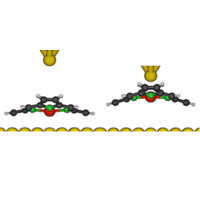
[Phys. Rev. Lett. 115, 016802] Published Thu Jul 02, 2015
Magnetoluminescence and valley polarized state of a two-dimensional electron gas in WS2 monolayers
Nature Nanotechnology 10, 603 (2015). doi:10.1038/nnano.2015.78
Authors: T. Scrace, Y. Tsai, B. Barman, L. Schweidenback, A. Petrou, G. Kioseoglou, I. Ozfidan, M. Korkusinski & P. Hawrylak
Materials often exhibit fundamentally new phenomena in reduced dimensions that potentially lead to novel applications. This is true for single-layer, two-dimensional semiconductor crystals of transition-metal dichalcogenides, MX2 (M = Mo, W and X = S, Se). They exhibit direct bandgaps with energies in the visible region at the two non-equivalent valleys in the Brillouin zone. This makes them suitable for optoelectronic applications that range from light-emitting diodes to light harvesting and light sensors, and to valleytronics. Here, we report the results of a magnetoluminescence study of WS2 single-layer crystals in which the strong spin–orbit interaction additionally locks the valley and spin degrees of freedom. The recombination of the negatively charged exciton in the presence of a two-dimensional electron gas (2DEG) is found to be circularly polarized at zero magnetic field despite being excited with unpolarized light, which indicates that the existence of a valley polarized 2DEG is caused by valley and spin locking and strong electron–electron interactions.
Large anisotropic deformation of skyrmions in strained crystal
Nature Nanotechnology 10, 589 (2015). doi:10.1038/nnano.2015.113
Authors: K. Shibata, J. Iwasaki, N. Kanazawa, S. Aizawa, T. Tanigaki, M. Shirai, T. Nakajima, M. Kubota, M. Kawasaki, H. S. Park, D. Shindo, N. Nagaosa & Y. Tokura
Mechanical control of magnetism is an important and promising approach in spintronics. To date, strain control has mostly been demonstrated in ferromagnetic structures by exploiting a change in magnetocrystalline anisotropy. It would be desirable to achieve large strain effects on magnetic nanostructures. Here, using in situ Lorentz transmission electron microscopy, we demonstrate that anisotropic strain as small as 0.3% in a chiral magnet of FeGe induces very large deformations in magnetic skyrmions, as well as distortions of the skyrmion crystal lattice on the order of 20%. Skyrmions are stabilized by the Dzyaloshinskii–Moriya interaction, originating from a chiral crystal structure. Our results show that the change in the modulation of the strength of this interaction is amplified by two orders of magnitude with respect to changes in the crystal lattice due to an applied strain. Our findings may provide a mechanism to achieve strain control of topological magnetic structures based on the Dzyaloshinskii–Moriya interaction.
Synthesis, properties and applications of 2D non-graphene materials
Pasteur’s Experiment Performed at the Nanoscale: Manual Separation of Chiral Molecules, One by One

Doping of Graphene by Low-Energy Ion Beam Implantation: Structural, Electronic, and Transport Properties

Force-noise spectroscopy by tunnelling current deflection sensing. (arXiv:1507.00242v1 [cond-mat.mes-hall])
An electro-mechanical setup for the measurement of AC-forces in a low-temperature tunnelling microscope has been developed, which enables extremely high force resolution. The crosstalk of vibrations onto the tunnelling current is used to measure the deflection of a force-sensing cantilever beam. We demonstrate its capability to measure the noise of the force at a tunnelling contact using polycrystalline Iridium. Depending on temperature, spring constant and current, a resolution in the range of $\rm {fN}/\sqrt{\rm Hz}$ is possible. We observe peak levels of the force-noise at the energy of the expected phonon maximal density of states, which suggests that inelastic transport processes contribute to force fluctuations.
Influencing the properties of dysprosium single-molecule magnets with phosphorus donor ligands
Article
Ligand design contributes to dictating the magnetic properties of lanthanide-based single-molecule magnets. Here, the authors report a series of phosphorus-ligated dysprosium complexes, and show that the dynamic magnetic properties change as the ligand is varied from phosphine to phosphide to phosphinidene.
Nature Communications doi: 10.1038/ncomms8492
Authors: Thomas Pugh, Floriana Tuna, Liviu Ungur, David Collison, Eric J.L. McInnes, Liviu F. Chibotaru, Richard A. Layfield
Photoemission Circular Dichroism and Spin Polarization of the Topological Surface States in Ultrathin Bi_{2} Te_{3} Films
Author(s): C.-Z. Xu, Y. Liu, R. Yukawa, L.-X. Zhang, I. Matsuda, T. Miller, and T.-C. Chiang
The complex behavior of photoemission in topological insulators is a result of quantum interference involving three photoemission channels according to abinitio calculations.
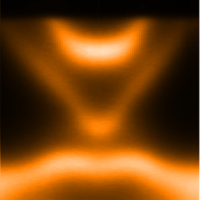
[Phys. Rev. Lett. 115, 016801] Published Tue Jun 30, 2015
Probing molecular chirality on a sub-femtosecond timescale
Nature Physics. doi:10.1038/nphys3369
Authors: R. Cireasa, A. E. Boguslavskiy, B. Pons, M. C. H. Wong, D. Descamps, S. Petit, H. Ruf, N. Thiré, A. Ferré, J. Suarez, J. Higuet, B. E. Schmidt, A. F. Alharbi, F. Légaré, V. Blanchet, B. Fabre, S. Patchkovskii, O. Smirnova, Y. Mairesse & V. R. Bhardwaj
Chiral molecules that are non-superimposable mirror images of each other, known as enantiomers, have identical chemical and physical properties unless they interact with another chiral entity, such as chiral light. Chiroptical effects arising from such interactions are used to detect enantiomers in mixtures and to induce enantioselective synthesis and catalysis. Chiroptical effects often arise from the interplay between light-induced electric- and magnetic-dipole transitions in a molecule and evolve on ultrafast electronic timescales. Here we use high-harmonic generation from a randomly oriented gas of molecules subjected to an intense laser field, to probe chiral interactions on these sub-femtosecond timescales. We show that a slight disparity in the laser-driven electron dynamics in the two enantiomers is recorded and amplified by several orders of magnitude in the harmonic spectra. Our work shows that chiroptical detection can go beyond detecting chiral structure to resolving and controlling chiral dynamics on electronic timescales.
Atomic species identification at the (101) anatase surface by simultaneous scanning tunnelling and atomic force microscopy
Article
Anatase is a pivotal material in devices for energy-harvesting applications and catalysis. Here, Stetsovych et al . demonstrate the potential of simultaneously combining atomic force microscopy and scanning tunnelling microscopy to identify the atomic species populating the (101) surface of anatase.
Nature Communications doi: 10.1038/ncomms8265
Authors: Oleksandr Stetsovych, Milica Todorović, Tomoko K. Shimizu, César Moreno, James William Ryan, Carmen Pérez León, Keisuke Sagisaka, Emilio Palomares, Vladimír Matolín, Daisuke Fujita, Ruben Perez, Oscar Custance
One-dimensional spin texture of Bi(441); Quantum Spin Hall properties without a topological insulator. (arXiv:1506.08017v1 [cond-mat.mes-hall])
The high index (441) surface of bismuth has been studied using Scanning Tunnelling Microscopy (STM), Angle Resolved Photoemission Spectroscopy (APRES) and spin-resolved ARPES. The surface is strongly corrugated, exposing a regular array of (110)-like terraces. Two surface localised states are observed, both of which are linearly dispersing in one in-plane direction ($k_x$), and dispersionless in the orthogonal in-plane direction ($k_y$), and both of which have a Dirac-like crossing at $k_x$=0. Spin ARPES reveals a strong in-plane polarisation, consistent with Rashba-like spin-orbit coupling. One state has a strong out-of-plane spin component, which matches with the miscut angle, suggesting its {possible} origin as an edge-state. The electronic structure of Bi(441) has significant similarities with topological insulator surface states and is expected to support one dimensional Quantum Spin Hall-like coupled spin-charge transport properties with inhibited backscattering, without requiring a topological insulator bulk.
Observation of Valley-polarized Landau Levels in Strained Graphene. (arXiv:1506.07965v1 [cond-mat.mes-hall])
In strained graphene, lattice deformation can create pseudo-magnetic fields and result in zero-field Landau level-like quantization. In the presence of an external magnetic field, valley-polarized Landau levels are predicted to be observed because the pseudo-magnetic fields are of opposite directions in the K and K' valleys of graphene. Here, we present experimental spectroscopic measurements by scanning tunneling microscopy of strained graphene on Rh foil. We direct observed valley splitting of the Landau level induced by the coexistence of the pseudo-magnetic fields and external magnetic fields. The observed result paves the way to exploit novel electronic properties in graphene through the combination of the pseudo-magnetic fields and the external magnetic fields.
Metallocorroles as Photocatalysts for Driving Endergonic Reactions, Exemplified by Bromide to Bromine Conversion
Abstract
Photochemical oxidation of halide anions by visible light has been suggested for solar energy conversion processes. Post-transition metallocorroles are now disclosed as very efficient catalysts for the photoinduced transformation of bromide to bromine. The advantages of these catalysts are that they are very stable under the reaction conditions and that the energy levels of the oxidizing HOMO and the reducing LUMO are easily tuned. Insights into the mechanism of action obtained in this work is predicted to be very useful for the design of other systems that rely on photocatalysis for driving endergonic reactions.

Brominated corroles that form post-transition-metal complexes are very efficient catalysts for the photocatalyzed transformation of bromide to bromine. They are very stable under the reaction conditions and the energy levels of their oxidizing and reducing half-filled MOs are easily tuned. TOF=turnover frequency.
Modulation of the molecular spintronic properties of adsorbed copper corroles
Article
Modulation of the spin states of molecules adsorbed on metal surfaces facilitates potential spintronic applications. Here, the authors demonstrate the tuning of the electronic interaction between a gold surface and the ligand of a corrole complex, tuning its spin state through fused-ring-expansion.
Nature Communications doi: 10.1038/ncomms8547
Authors: Fan Wu, Jie Liu, Puneet Mishra, Tadahiro Komeda, John Mack, Yi Chang, Nagao Kobayashi, Zhen Shen
Effect of electron-phonon interaction on the formation of one-dimensional electronic states in coupled Cl vacancies
Author(s): Bruno Schuler, Mats Persson, Sami Paavilainen, Niko Pavliček, Leo Gross, Gerhard Meyer, and Jascha Repp
The formation of extended electron states in one-dimensional nanostructures is of key importance for the function of molecular electronics devices. In this paper, using a combination of atomic force microscopy, scanning tunneling spectroscopy, and tight-binding calculations the authors investigate the confinement of electronic states to controlled Cl vacancy pairs in a NaCl bilayer on Cu(111). They reveal that electron-phonon coupling has great influence on these quantities.
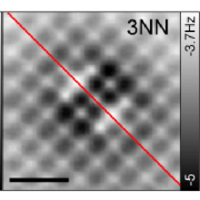
[Phys. Rev. B 91, 235443] Published Wed Jun 24, 2015
Nanoscale control of phonon excitations in graphene
Article
A fundamental understanding of electron–phonon interactions in graphene is crucial to developing graphene-based electronic and photonic devices. Here, the authors control the properties of phonons in graphene by tuning the interaction strength between graphene and an underlying platinum substrate.
Nature Communications doi: 10.1038/ncomms8528
Authors: Hyo Won Kim, Wonhee Ko, JiYeon Ku, Insu Jeon, Donggyu Kim, Hyeokshin Kwon, Youngtek Oh, Seunghwa Ryu, Young Kuk, Sung Woo Hwang, Hwansoo Suh
Implications of a temperature-dependent magnetic anisotropy for superparamagnetic switching. (arXiv:1506.07333v2 [cond-mat.mes-hall] UPDATED)
The macroscopic magnetic moment of a superparamagnetic system has to overcome an energy barrier in order to switch its direction. This barrier is formed by magnetic anisotropies in the material and may be surmounted typically after 10^9 to 10^12 attempts per second by thermal fluctuations. In a first step, the associated switching rate may be described by a Neel-Brown-Arrhenius law, in which the energy barrier is assumed as constant or a given temperature. Yet, magnetic anisotropies in general depend on temperature themselves which is known to modify the Neel-Brown-Arrhenius law. We illustrate quantitatively the implications of a temperature-dependent anisotropy on the switching rate and in particular for the interpretation of the prefactor as an attempt frequency. In particular, we show that realistic numbers for the attempt frequency are obtained when the temperature dependence of the anisotropy is taken into account.
Magnetic adatoms as memory bits: A quantum master equation analysis
Author(s): Christian Karlewski, Michael Marthaler, Tobias Märkl, Timofey Balashov, Wulf Wulfhekel, and Gerd Schön
Due to underlying symmetries, the ground states of magnetic adatoms may be highly stable, which opens perspectives for application as single-atom memory. A specific example is a single holmium atom (with J=8) on a platinum (111) surface for which exceptionally long lifetimes were observed in recent …
[Phys. Rev. B 91, 245430] Published Tue Jun 23, 2015
Spin-Lattice Order in One-Dimensional Conductors: Beyond the RKKY Effect
Author(s): Michael Schecter, Mark S. Rudner, and Karsten Flensberg
We investigate magnetic order in a lattice of classical spins coupled to an isotropic gas of one-dimensional conduction electrons via local exchange interactions. The frequently discussed Ruderman-Kittel-Kasuya-Yosida effective exchange model for this system predicts that spiral order is always pref…
[Phys. Rev. Lett. 114, 247205] Published Thu Jun 18, 2015
Tailoring low-dimensional structures of bismuth on monolayer epitaxial graphene
To improve graphene-based multifunctional devices at nanoscale, a stepwise and controllable fabrication procedure must be elucidated. Here, a series of structural transition of bismuth (Bi) adatoms, adsorbed on monolayer epitaxial graphene (MEG), is explored at room temperature. Bi adatoms undergo a structural transition from one-dimensional (1D) linear structures to two-dimensional (2D) triangular islands and such 2D growth mode is affected by the corrugated substrate. Upon Bi deposition, a little charge transfer occurs and a characteristic peak can be observed in the tunneling spectrum, reflecting the distinctive electronic structure of the Bi adatoms. When annealed to ~500 K, 2D triangular Bi islands aggregate into Bi nanoclusters (NCs) of uniform size. A well-controlled fabrication method is thus demonstrated. The approaches adopted herein provide perspectives for fabricating and characterizing periodic networks on MEG and related systems, which are useful in realizing graphene-based electronic, energy, sensor and spintronic devices.
Scientific Reports 5 doi: 10.1038/srep11623
Observation of a robust zero-energy bound state in iron-based superconductor Fe(Te,Se)
Nature Physics. doi:10.1038/nphys3371
Authors: J-X. Yin, Zheng Wu, J-H. Wang, Z-Y. Ye, Jing Gong, X-Y. Hou, Lei Shan, Ang Li, X-J. Liang, X-X. Wu, Jian Li, C-S. Ting, Z-Q. Wang, J-P. Hu, P-H. Hor, H. Ding & S. H. Pan
In superconductors, electrons are paired and condensed into the ground state. An impurity can break the electron pairs into quasiparticles with energy states inside the superconducting gap. The characteristics of such in-gap states reflect accordingly the properties of the superconducting ground state. A zero-energy in-gap state is particularly noteworthy, because it can be the consequence of non-trivial pairing symmetry or topology. Here we use scanning tunnelling microscopy/spectroscopy to demonstrate that an isotropic zero-energy bound state with a decay length of ∼10 Å emerges at each interstitial iron impurity in superconducting Fe(Te,Se). More noticeably, this zero-energy bound state is robust against a magnetic field up to 8 T, as well as perturbations by neighbouring impurities. Such a spectroscopic feature has no natural explanation in terms of impurity states in superconductors with s-wave symmetry, but bears all the characteristics of the Majorana bound state proposed for topological superconductors, indicating that the superconducting state and the scattering mechanism of the interstitial iron impurities in Fe(Te,Se) are highly unconventional.
Catalytic Conversion of Hexagonal Boron Nitride to Graphene for In-Plane Heterostructures
