This paper is a corrected version of Phys. Rev. B 95, 165404 (2017), which we have retracted because it contained a trivial but fatal sign error that lead to incorrect conclusions. --- We extend a recently-eveloped Fermi-liquid (FL) theory for the asymmetric single-impurity Anderson model [C. Mora $et al.$, Phys. Rev. B, 92, 075120 (2015)] to the case of an arbitrary local magnetic field. To describe the system's low-lying quasiparticle excitations for arbitrary values of the bare Hamiltonian's model parameters, we construct an effective low-energy FL Hamiltonian whose FL parameters are expressed in terms of the local level's spin-dependent ground-state occupations and their derivatives with respect to level energy and local magnetic field. These quantities are calculable with excellent accuracy from the Bethe Ansatz solution of the Anderson model. Applying this effective model to a quantum dot in a nonequilibrium setting, we obtain exact results for the curvature of the spectral function, $c_A$, describing its leading $\sim\varepsilon^2$ term, and the transport coefficients $c_V$ and $c_T$, describing the leading $\sim V^2$ and $\sim T^2$ terms in the nonlinear differential conductance. A sign change in $c_A$ or $c_V$ is indicative of a change from a local maximum to a local minimum in the spectral function or nonlinear conductance, respectively, as is expected to occur when an increasing magnetic field causes the Kondo resonance to split into two subpeaks. We find that the fields $B_A$, $B_T$ and $B_V$ at which $c_A$, $c_T$ and $c_V$ change sign, respectively, are all of order $T_K$, as expected, with $B_A = B_T = B_V = 0.75073\,T_K$ in the Kondo limit.
Dr.jens.brede
Shared posts
At which magnetic field, exactly, does the Kondo resonance begin to split? A Fermi liquid description of the low-energy properties of the Anderson model. (arXiv:1609.06165v3 [cond-mat.mes-hall] UPDATED)
Superconducting exchange coupling between ferromagnets
Nature Materials. doi:10.1038/nmat4753
Authors: Yi Zhu, Avradeep Pal, Mark G. Blamire & Zoe H. Barber
Recent discoveries from superconductor (S)/ferromagnet (FM) heterostructures include π-junctions, triplet pairing, critical temperature (Tc) control in FM/S/FM superconducting spin valves (SSVs) and critical current control in S/FM/N/FM/S spin valve Josephson junctions (N: normal metal). In all cases, the magnetic state of the device, generally set by the applied field, controls the superconducting response. We report here the observation of the converse effect, that is, direct superconducting control of the magnetic state in GdN/Nb/GdN SSVs. A model for an antiferromagnetic effective exchange interaction based on the coupling of the superconducting condensation energy to the magnetic state can explain the Nb thickness and temperature dependence of this effect. This superconducting exchange interaction is fundamentally different in origin from the various exchange coupling phenomena that underlie conventional spin electronics (spintronics), and provides a mechanism for the active control of the magnetic state in superconducting spintronics.
Direct observation of the skyrmion Hall effect
Nature Physics. doi:10.1038/nphys3883
Authors: Wanjun Jiang, Xichao Zhang, Guoqiang Yu, Wei Zhang, Xiao Wang, M. Benjamin Jungfleisch, John E. Pearson, Xuemei Cheng, Olle Heinonen, Kang L. Wang, Yan Zhou, Axel Hoffmann & Suzanne G. E. te Velthuis
Alkali-induced rich properties in graphene nanoribbons: Chemical bonding. (arXiv:1609.05562v1 [cond-mat.mes-hall])
The alkali-adsorbed graphene nanoribbons exhibit the feature-rich electronic and magnetic properties. From the first-principles calculations, there are only few adatom-dominated conduction bands, and the other conduction and valence bands are caused by carbon atoms. A lot of free electrons are revealed in the occupied alkali- and carbon-dependent conduction bands. Energy bands are sensitive to the concentration, distribution and kind of adatom and the edge structure, while the total linear free carrier density only relies on the first one. These mainly arise from a single $s-2p_z$ orbital hybridization in the adatom-carbon bond. Specifically, zigzag systems can present the anti-ferromagnetic ordering across two edges, ferromagnetic ordering along one edge and non-magnetism, being reflected in the edge-localized energy bands with or without spin splitting. The diverse energy dispersions contribute many special peaks in density of states. The critical chemical bonding and the distinct spin configuration could be verified from the experimental measurements.
Spin transport at interfaces with spin-orbit coupling: Formalism
Author(s): V. P. Amin and M. D. Stiles
Spin transport at interfaces between nonmagnets and ferromagnets plays an important role in spintronic devices. Lately, there is an increasing suspicion that spin-orbit coupling, which couples the spin and momentum of carriers, might contribute significantly to this process. Unfortunately, the existing description of spin transport at such interfaces, magnetoelectronic circuit theory, is not valid when spin-orbit coupling is present at the interface. This paper presents a generalization of magnetoelectronic circuit theory to interfaces with spin-orbit coupling. Like the original theory, this generalization describes spin transport in terms of drops in spin and charge accumulations across the interface, but also includes responses to in-plane electric fields and offsets in spin accumulations. The most important result is a description of the way in-plane electric fields generate spin accumulations, spin currents, and torques at the interface. The effects described by this generalized circuit theory impact the interpretation of experiments involving spin-orbit torques, spin pumping, spin memory loss, the Rashba-Edelstein effect, and spin Hall magnetoresistance.
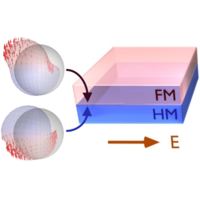
[Phys. Rev. B 94, 104419] Published Fri Sep 16, 2016
Spin transport at interfaces with spin-orbit coupling: Phenomenology
Author(s): V. P. Amin and M. D. Stiles
Most spintronic devices share two features: they utilize spin-orbit coupling and they contain interfaces. While bulk spin-orbit effects are thought to be well described by phenomenological theories, interfacial spin-orbit effects are not. A theory that could describe interfacial spin-orbit effects would be useful in analyzing experiments on heavy-metal ferromagnet bilayers, which are a key feature of potential energy-efficient implementations of MRAM. To develop such a theory, the authors present the boundary conditions needed for drift-diffusion models to treat interfaces with spin-orbit coupling. Together with the drift-diffusion equations, these boundary conditions give an analytical model of spin-orbit torques caused by both the spin Hall and Rashba-Edelstein effects. A key feature of these boundary conditions is that they capture spin currents generated by interfacial spin-orbit scattering. The authors validate this phenomenological approach by comparing the results with those obtained by solving the spin-dependent Boltzmann equation. They discuss the interpretation of current experiments, and describe in particular how interfacial effects give rise to torques on a nearby ferromagnetic layer even through a nonmagnetic spacer layer.
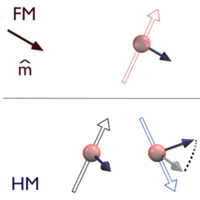
[Phys. Rev. B 94, 104420] Published Fri Sep 16, 2016
Covalent Assembly and Characterization of Nonsymmetrical Single-Molecule Nodes
Abstract
The covalent linking of molecular building blocks on surfaces enables the construction of specific molecular nanostructures of well-defined shape. Molecular nodes linked to various entities play a key role in such networks, but represent a particular challenge because they require a well-defined arrangement of different building blocks. Herein, we describe the construction of a chemically and geometrically well defined covalent architecture made of one central node and three molecular wires arranged in a nonsymmetrical way and thus encoding different conjugation pathways. Very different architectures of either very limited or rather extended size were obtained depending on the building blocks used for the covalent linking process on the Au(111) surface. Electrical measurements were carried out by pulling individual molecular nodes with the tip of a scanning tunneling microscope. The results of this challenging procedure indicate subtle differences if the nodes are contacted at inequivalent termini.

The path matters! Hexaphenylbenzene-based molecular nodes and polyfluorene wires are the constituents used for the on-surface synthesis of asymmetric node structures with a well-defined geometry, size, and composition (see structure). Measurements of electronic transport through individual molecular nodes when lifted from the surface by an STM tip revealed different transport behavior depending on the π-conjugation pathway.
Aryl Radical Geometry Determines Nanographene Formation on Au(111)
Abstract
The Ullmann coupling has been used extensively as a synthetic tool for the formation of C−C bonds on surfaces. Thus far, most syntheses made use of aryl bromides or aryl iodides. We investigated the applicability of an aryl chloride in the bottom-up assembly of graphene nanoribbons. Specifically, the reactions of 10,10′-dichloro-9,9′-bianthryl (DCBA) on Au(111) were studied. Using atomic resolution non-contact AFM, the structure of various coupling products and intermediates were resolved, allowing us to reveal the important role of the geometry of the intermediate aryl radicals in the formation mechanism. For the aryl chloride, cyclodehydrogenation occurs before dehalogenation and polymerization. Due to their geometry, the planar bisanthene radicals display a different coupling behavior compared to the staggered bianthryl radicals formed when aryl bromides are used. This results in oligo- and polybisanthenes with predominantly fluoranthene-type connections.

Radical geometry: The geometric structure of the aryl radical involved in the on-surface synthesis of graphene nanoribbons determines the geometric structure of the ribbon. Using atomically resolved non-contact atomic force microscopy the structures of various coupling products and intermediates were resolved.
Thermodynamics of an Electrocyclic Ring-Closure Reaction on Au(111)

Atomic Layer Deposition of Zinc Oxide: Diethyl Zinc Reactions and Surface Saturation from First-Principles

Distance- and spin-resolved spectroscopy of iridium atoms on an iron bilayer
Author(s): Johannes Schöneberg, Nuala Mai Caffrey, Paolo Ferriani, Stefan Heinze, and Richard Berndt
The induced spin polarization of Ir atoms on a ferromagnetic Fe double layer on W(110) has been investigated with spin-polarized scanning tunneling microscopy. An unoccupied state is observed with a spin polarization exceeding 60% that is inverted with respect to the Fe layer. This inversion is due …
[Phys. Rev. B 94, 115418] Published Tue Sep 13, 2016
Spin decoherence of magnetic atoms on surfaces. (arXiv:1609.03389v2 [cond-mat.mes-hall] UPDATED)
We review the problem of spin decoherence of magnetic atoms deposited on a surface. Recent breakthroughs in scanning tunnelling microscopy (STM) make it possible to probe the spin dynamics of individual atoms, either isolated or integrated in nanoengineered spin structures. Transport pump and probe techniques with spin polarized tips permit measuring the spin relaxation time $T_1$, while novel demonstration of electrically driven STM single spin resonance has provided a direct measurement of the spin decoherence time $T_2$ of an individual magnetic adatom. Here we address the problem of spin decoherence from the theoretical point of view. First we provide a short general overview of decoherence in open quantum systems and we discuss with some detail ambiguities that arise in the case of degenerate spectra, relevant for magnetic atoms. Second, we address the physical mechanisms that allows probing the spin coherence of magnetic atoms on surfaces. Third, we discuss the main spin decoherence mechanisms at work on a surface, most notably, Kondo interaction, but also spin-phonon coupling and dephasing by Johnson noise. Finally, we propose some schemes to engineer spin decoherence.
Engineering Polarons at a Metal Oxide Surface
Author(s): C. M. Yim, M. B. Watkins, M. J. Wolf, C. L. Pang, K. Hermansson, and G. Thornton
Polarons in metal oxides are important in processes such as catalysis, high temperature superconductivity, and dielectric breakdown in nanoscale electronics. Here, we study the behavior of electron small polarons associated with oxygen vacancies at rutile TiO2(110), using a combination of low temper…
[Phys. Rev. Lett. 117, 116402] Published Fri Sep 09, 2016
Study of Ferrocene Dicarboxylic Acid on Substrates of Varying Chemical Activity

Seed-Assisted Growth of Single-Crystalline Patterned Graphene Domains on Hexagonal Boron Nitride by Chemical Vapor Deposition

Electronic and magnetic properties of spiral spin-density-wave states in transition-metal chains
Author(s): M. Tanveer, P. Ruiz-Díaz, and G. M. Pastor
The electronic and magnetic properties of one-dimensional (1D) 3d transition-metal nanowires are investigated in the framework of density functional theory. The relative stability of collinear and noncollinear (NC) ground-state magnetic orders in V, Mn, and Fe monoatomic chains is quantified by comp…
[Phys. Rev. B 94, 094403] Published Tue Sep 06, 2016
Tailoring Large Pores of Porphyrin Networks on Ag(111) by Metal–Organic Coordination
Abstract
The engineering of nanoarchitectures to achieve tailored properties relevant for macroscopic devices is a key motivation of organometallic surface science. To this end, understanding the role of molecular functionalities in structure formation and adatom coordination is of great importance. In this study, the differences in formation of Cu-mediated metal–organic coordination networks based on two pyridyl- and cyano-bearing free-base porphyrins on Ag(111) are elucidated by use of low-temperature scanning tunneling microscopy (STM). Distinct coordination networks evolve via different pathways upon codeposition of Cu adatoms. The cyano-terminated module directly forms 2D porous networks featuring fourfold-coordinated Cu nodes. By contrast, the pyridyl species engage in twofold coordination with Cu and a fully reticulated 2D network featuring a pore size exceeding 3 nm2 only evolves via an intermediate structure based on 1D coordination chains. The STM data and complementary Monte Carlo simulations reveal that these distinct network architectures originate from spatial constraints at the coordination centers. Cu adatoms are also shown to form two- and fourfold monoatomic coordination nodes with monotopic nitrogen-terminated linkers on the very same metal substrate—a versatility that is not achieved by other 3d transition metal centers but consistent with 3D coordination chemistry. This study discloses how specific molecular functionalities can be applied to tailor coordination architectures and highlights the potential of Cu as coordination center in such low-dimensional structures on surfaces.

The grids are alright: A scanning tunneling microsopy study combined with Monte Carlo modeling of two similar, but distinctly functionalized, porphyrin tectons reveals how steric hindrance at Cu coordination nodes guides the assembly of porous grid-like networks with unprecedented morphology and pore size.
Two-Dimensional Chirality Transfer via On-Surface Reaction

Pseudodoping of Metallic Two-Dimensional Materials. (arXiv:1609.00220v1 [cond-mat.mes-hall])
We demonstrate how weak hybridization can lead to apparent heavy doping of 2d materials even in case of physisorptive binding. Combining ab-intio calculations and a generic model we show that strong reshaping of Fermi surfaces and changes in Fermi volumes on the order of several 10$\%$ can arise without actual charge transfer. This pseudodoping mechanism is very generically effective in metallic 2d materials either weakly absored to metallic substrates or embedded in vertical heterostructures. It can explain strong apparent doping of TaS2 on Au (111) observed in recent experiments. Consequences of pseudodoping for many-body instabilities are discussed.
RKKY-like contributions to the magnetic anisotropy energy: 3d adatoms on Pt(111) surface
Author(s): Mohammmed Bouhassoune, Manuel dos Santos Dias, Bernd Zimmermann, Peter H. Dederichs, and Samir Lounis
The magnetic anisotropy energy defines the energy barrier that stabilizes a magnetic moment. Utilizing density-functional-theory-based simulations and analytical formulations, we establish that this barrier is strongly modified by long-range contributions very similar to Friedel oscillations and Rud…
[Phys. Rev. B 94, 125402] Published Thu Sep 01, 2016
A scanning tunneling microscopy study of the electronic and spin states of bis(phthalocyaninato)terbium(III) (TbPc2) molecules on Ag(111)

DOI: 10.1039/C6DT01967F, Paper
In this article, we investigate a single molecule magnet bis(phthalocyaninato)terbium(III) (TbPc2) molecule film by using low temperature STM.
The content of this RSS Feed (c) The Royal Society of Chemistry
Asymmetric Alternating Copolymerization of Meso-epoxides and Cyclic Anhydrides: Efficient Access to Enantiopure Polyesters

Role of SrTiO_{3} phonon penetrating into thin FeSe films in the enhancement of superconductivity
Author(s): Shuyuan Zhang, Jiaqi Guan, Xun Jia, Bing Liu, Weihua Wang, Fangsen Li, Lili Wang, Xucun Ma, Qikun Xue, Jiandi Zhang, E. W. Plummer, Xuetao Zhu, and Jiandong Guo
The significant role of interfacial coupling in the enhancement of superconductivity in FeSe films on SrTiO3 has been widely recognized, but the explicit origin of this coupling is yet to be identified. Here, by surface phonon measurements using high-resolution electron energy loss spectroscopy, we …
[Phys. Rev. B 94, 081116(R)] Published Wed Aug 31, 2016
Self-assembled diacetylene molecular wire polymerization on an insulating hexagonal boron nitride (0001) surface
Highly efficient and tunable spin-to-charge conversion through Rashba coupling at oxide interfaces
Nature Materials. doi:10.1038/nmat4726
Authors: E. Lesne, Yu Fu, S. Oyarzun, J. C. Rojas-Sánchez, D. C. Vaz, H. Naganuma, G. Sicoli, J.-P. Attané, M. Jamet, E. Jacquet, J.-M. George, A. Barthélémy, H. Jaffrès, A. Fert, M. Bibes & L. Vila
Determining the quantum-coherent to semiclassical transition in atomic-scale quasi-one-dimensional metals
Author(s): Bent Weber and Michelle Y. Simmons
Individual dopants in semiconductors are attracting considerable attention due to the prospect of using them in a wide range of applications. In particular, phosphorus donors in silicon have attracted significant interest owing to their weak interaction with the host crystal. However, harnessing their attributes toward the construction of scalable circuitry will require low resistive interconnects at a comparable scale as the dopant atoms. In this Rapid Communication, the authors investigate the transition from quantum coherent to the semiclassical diffusive transport in a 4.6-nm quasi-one-dimensional Si:P metal wire. Analyzing the temperature dependence of universal conductance fluctuations (UCF) the authors show that electron transport evolves from a quantum coherent to a semiclassical regime at temperatures as low as ~4 K and confirm that concepts of UCF and weak localization remain valid in metallic conductors at the atomic-scale.
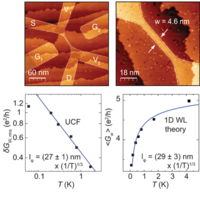
[Phys. Rev. B 94, 081412(R)] Published Mon Aug 29, 2016
Reducing current noise in cryogenic experiments by vacuum-insulated cables. (arXiv:1604.03903v2 [physics.ins-det] UPDATED)
We measure the current noise of several cryogenic cables in a pulse tube based dilution refrigerator at frequencies between about 1~mHz and 50~kHz. We show that vibration-induced noise can be efficiently suppressed by using vacuum-insulated cables between room temperature and the 2nd pulse tube stage. A noise peak below 4 fA at the 1.4~Hz operation frequency of the pulse tube, and a white noise density of 0.44 fA/\sqrt{Hz} in the millihertz range are obtained.
RKKY oscillations in the spin relaxation rates of atomic scale nanomagnets. (arXiv:1608.07462v2 [cond-mat.mes-hall] UPDATED)
Exchange interactions with itinerant electrons are known to act as a relaxation mechanism for individual local spins. The same exchange interactions are also known to induce the so called RKKY indirect exchange interaction between two otherwise decoupled local spins. Here we show that both the spin relaxation and the RKKY coupling can be seen as the dissipative and reactive response to the coupling of the local spins with the itinerant electrons. We thereby predict that the spin relaxation rates of magnetic nanostructures of exchanged coupled local spins, such as as nanoengineered spin chains, have an oscillatory dependence on $k_F d$ , where $k_F$ is the Fermi wave length and $d$ is the inter-spin distance, very much like the celebrated oscillations in the RKKY interaction. We demonstrate that both $T_1$ and $T_2$ can be enhanced or suppressed, compared to the single spin limit, depending on the interplay between the Fermi surface and the nanostructure geometrical arrangement. Our results open a route to engineer spin relaxation and decoherence in atomically designed spin structures.
Resonant Charge Transport in Conjugated Molecular Wires beyond 10 nm Range

Electron States of 2D Metal–Organic and Covalent–Organic Honeycomb Frameworks: Ab Initio Results and a General Fitting Hamiltonian
