In brief: Today’s post discusses our storm expectations for the next two days, with at least three distinct waves of severe weather possible for various parts of the Houston metro area. The bottom line is that it is important to remain weather aware through Wednesday.
Stormy pattern
A sharp disturbance in the upper atmosphere will provide lift needed to support unsettled weather from today through Wednesday across the Houston region. Areas along and north of Interstate 10 will be most favored for severe storms today, but we cannot rule out strong thunderstorms anywhere in the region. Among the risks we are tracking:
Heavy rainfall with high rates. Most of the greater Houston area is likely to receive 1 to 2 inches of rain, but there will be greater totals in some locations, and rain will be falling quickly enough to back up streets. For this reason we have put a Stage 1 flood alert in place through Wednesday evening.
Tornadoes. The atmosphere, with plenty of instability as well as available energy (CAPE), will be capable of forming tornadoes. If they form, they could become fairly powerful tornadoes given the atmospheric conditions.
Large hail. With previous storms we have already seen quarter-sized hail of late, and the atmosphere will be capable of supporting more large hail over the next two days.
Damaging winds. Within stronger thunderstorms there will be the potential for damaging, straight-line winds. If possible, batten down loose outdoor items that don’t have much heft.
Tornado outlook for Tuesday and Tuesday night. (NOAA)
Timing of storms
Your best weapon for timing storms over the next two days will be a good radar app (RadarScope is one we like) to determine conditions nearby your location. However, generally, we expect a fairly calm morning. After that we should see at least three waves of storms:
Round one: By late Tuesday morning a line of storms, very likely with severe storms embedded, will be nearing the College Station area. This line should move into Montgomery County and points north by around noon, affecting the I-45 corridor (I’m concerned about areas including The Woodlands, Conroe, and Huntsville). At this time, we think most of these storms will be along and north of Interstate 10, but again we cannot rule out impacts further south, and closer to the coast.
Round two: Conditions may then calm down for a few hours this afternoon and early evening. However by around sunset I expect another line of storms to approach the Houston region from the northwest. I expect these to advance into the Houston metro area between 8 pm and midnight, but they may peter out before reaching the coast.
A second line of storms could advance into Houston this evening, around sunset, from the northwest. (Weather Bell)
Round three: If you live near the coast you may be wondering, are we not going to see anything from all of this mess? Well, it’s possible that areas south of Interstate 10 will not see much action on Tuesday. However, most of our guidance shows another round of storms developing to the southwest of the region and advancing into the city. It appears as though these storms will reach the southern portion of the Houston metro area early on Wednesday morning, spreading into much of the metro area. Again, these storms also have the potential to produce severe weather and could make for a messy commute on Wednesday morning.
After this we may see additional rounds of development later on Wednesday, but nothing quite as severe. We shall see.
Tuesday and Wednesday
Temperatures on both days should be in the low- to mid-80s, with partly to mostly cloudy skies. Even when there aren’t storms, on Tuesday in particular, there will be a fairly pronounced southerly wind with gusts up to 25 mph or so. Nights will be warm.
Thursday and Friday
Although likely not severe, the rains may linger into Thursday as a weak front pushes into the area. Expect partly sunny skies on Thursday, with highs in the mid-80s, and mostly sunny skies on Friday with a high of around 80 degrees. With slightly drier air, we should see nighttime temperatures drop into the 60s.
We should have another exceptional weekend. Although I don’t expect the air to be as dry as last weekend, it still should be reasonably pleasant with highs around 80 degrees, or just a bit above that, and lows in the vicinity of 60 degrees in Houston, with a smattering of 50s possible for far inland areas. Sunshine will be abundant, with rain chances near nil.
Next week
Most of next week looks mostly sunny and hotter, with highs possibly reaching 90 degrees by mid-week. It might start to feel a bit like summer around these parts, so enjoy the weekend.
Next update
We will post again on this site no later than shortly after noon.
AUGUSTA, GA—Racked with guilt at the thought of making the wrong decision, local couple Anthony Wells and Katherine MacNaughton were reportedly debating on Tuesday the ethical implications of bringing another child into this bar. “There are already so many children in the World of Beer—is this really something we want weighing on our conscience?” said MacNaughton, who admitted that she was struggling to reconcile their desire for a family outing with the feeling that the decision was ultimately a selfish one. “If it’s this bleak now, imagine what it could look like in an hour or two. If we take another stroller in there, aren’t we just contributing to the pain and suffering? I don’t know what to do. But whatever choice we make, we’ve got to make it soon. The clock’s running out on happy hour.” At press time, Wells was overheard arguing that bringing children into the bar was necessary to sustain the kids menu.
WASHINGTON—Promising to lift export controls on AI chips if they received the rare first-edition trading card in return, U.S. trade negotiators reportedly offered China access to advanced semiconductors Tuesday in exchange for a holographic Charizard. “We’ll give you state-of-the-art Nvidia GPUs if you give us a PSA 10 Gem Mint holographic Charizard,” Treasury Secretary Scott Bessent said to a Chinese trade representative, later explaining to reporters that the Trump administration hoped to shore up America’s complete set of the original 151 and was willing to part with its most sophisticated machine-learning processors to achieve that goal. “You definitely can’t have the chips needed to develop cutting-edge AI without giving us something better than a Blue-Eyes White Dragon, because we already have tons of Yu-Gi-Oh! cards. You’ve been cheating us for years, but now we’re going to rebalance the scales and ensure that American three-ring binders are full of foil cards, full arts, and special illustration rares for generations to come.” At press time, officials confirmed bilateral trade negotiations had collapsed after the United States discovered the holographic Charizard was grossly misaligned, though China claimed it was merely an error card.
FRESNO, CA—Revealing that all of the company’s customers have been seduced by a hidden monstrosity, Sun-Maid announced Tuesday that the girl in the company logo has always been a sentient raisin disguising itself in human flesh. “You’ve bought Sun-Maid raisins all these years thinking that was a kind young girl smiling back at you, but if you really gazed into her eyes you would see the horror of the living raisin who draped itself in the girl’s skin to try and live among humanity,” said Sun-Maid president Steve Loftus, who explained that the loose smock, large wig, and signature bonnet of the Sun-Maid girl are all ways to cover up the misshapen folds created by her skin suit. “It’s been this way since the hidden raisin first appeared as part of our company’s logo in 1915. She has walked among generations. She woke up gasping and squinting at the harsh sun that created her. In the fear and confusion of her birth, she killed a young girl that stumbled upon her, and before anyone knew she was gone, the raisin skinned her and donned her form. She longs to be accepted by humanity, but also hates us, living trapped in a world where she harvests her own kind. This is the story of Sun-Maid.” Loftus also told reporters that as more raisins have gained sentience, the Sun-Maid girl has helped them find their own secret identities as the Morton’s Salt girl and Land-O-Lakes butter lady.
Mounting Trash, Shrinking Space: Houston’s Urgent Waste Problem
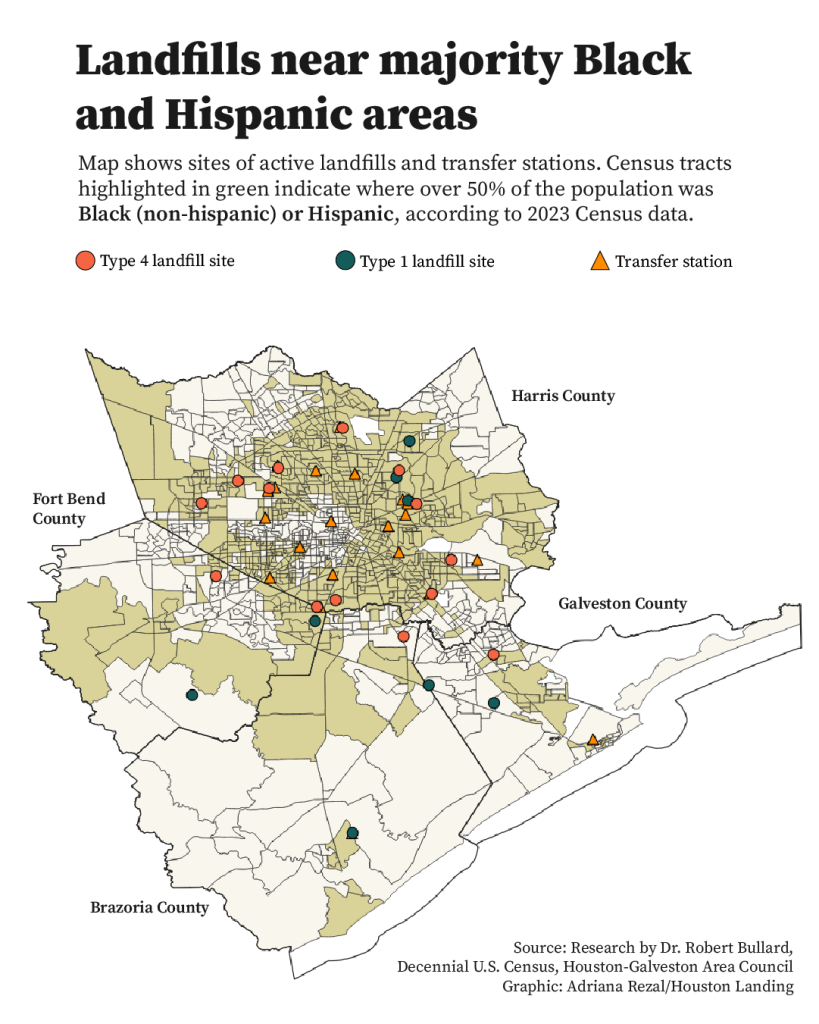
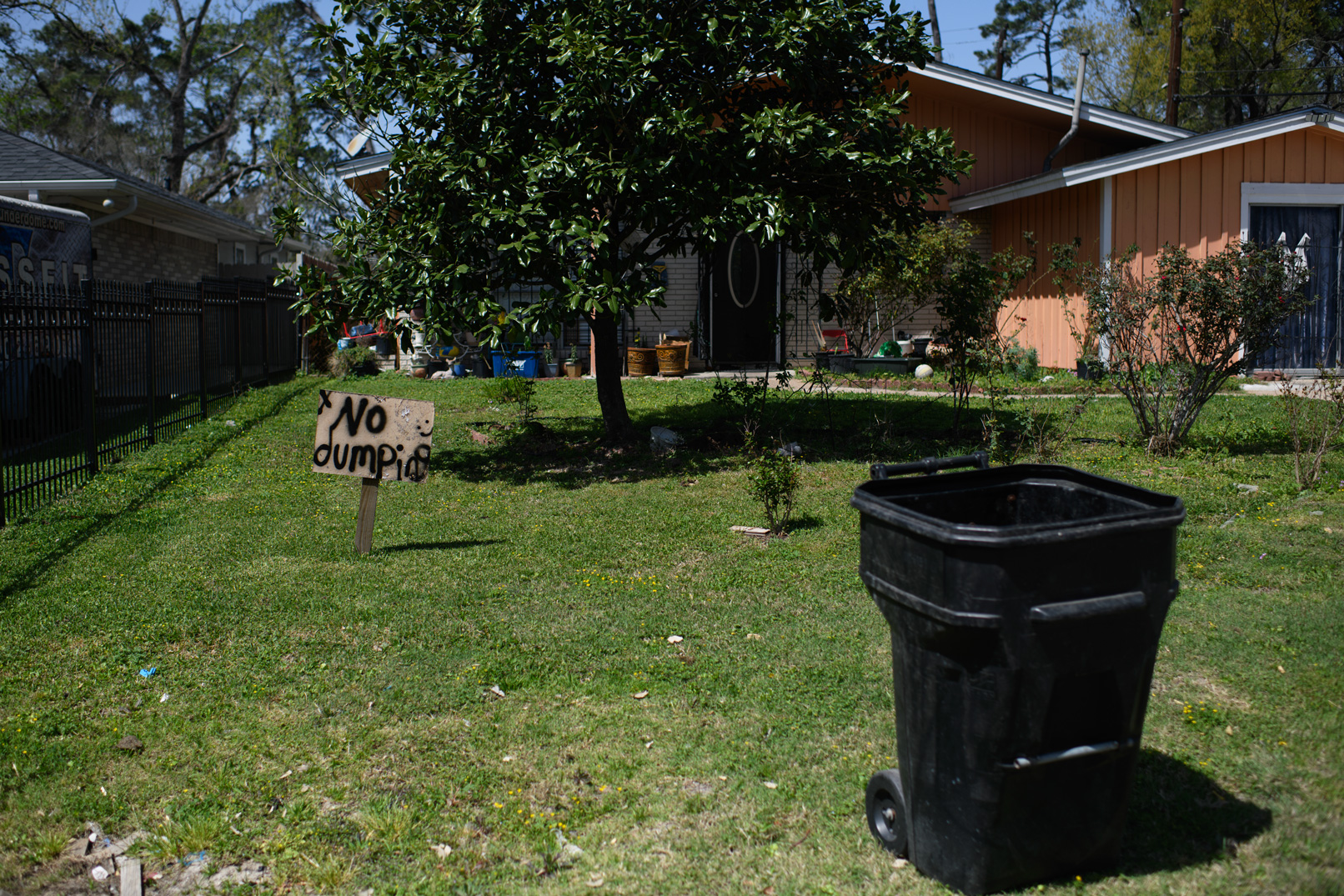
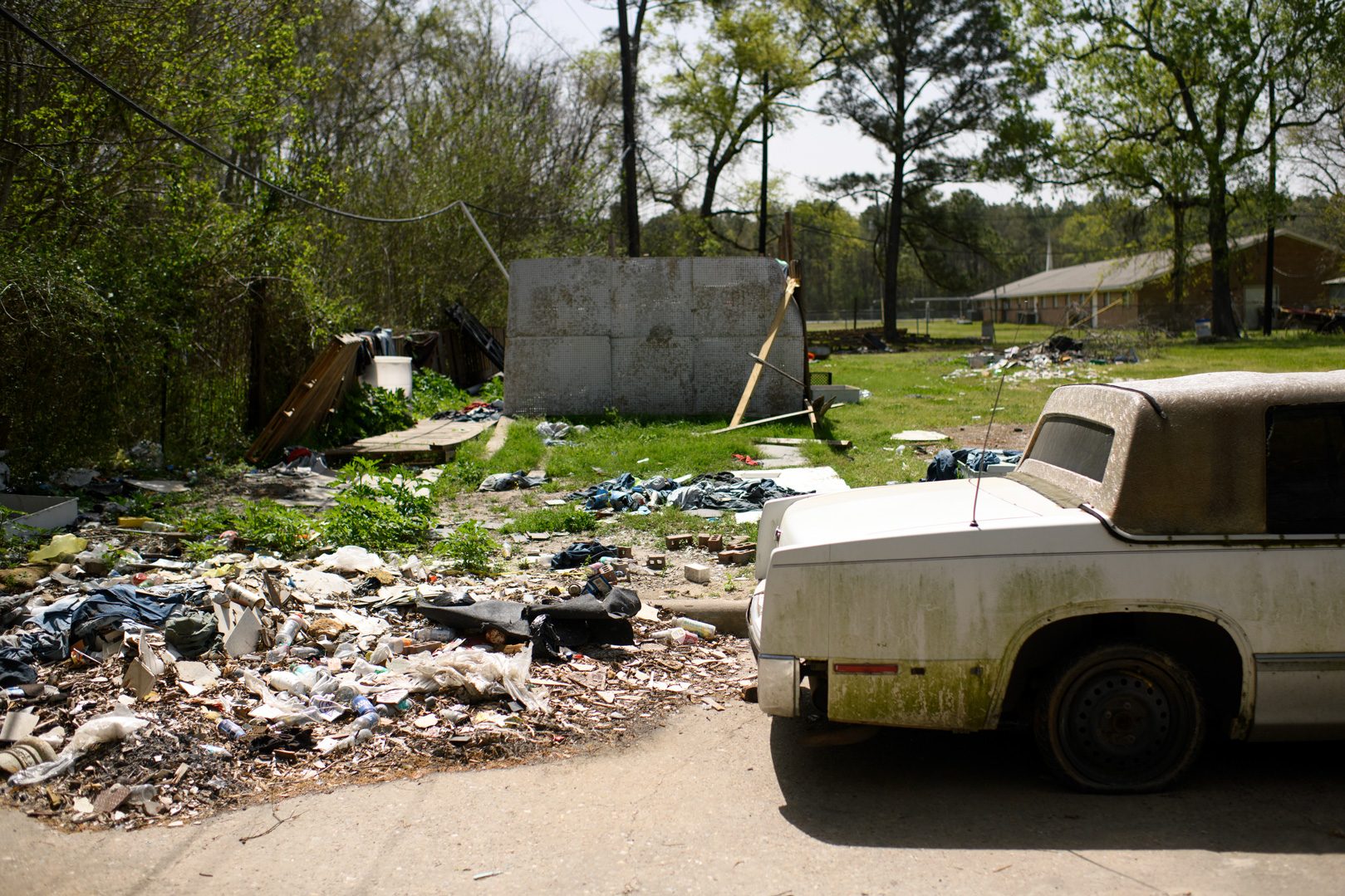
As Houston heads toward producing 5.4 million tons of waste annually by 2040, the space available at its five landfills will decrease by a third within the next 15 years. America’s fourth-largest city now faces a critical choice: continue on a path that has disproportionately harmed communities of color, or move toward more sustainable and equitable waste solutions.
Alex Cantoran parks his truck at the final house on the block, jumps out and grabs the five-gallon white bucket sitting near the edge of the property. He unscrews the lid quickly. Inside are several green compostable bags of trash, the contents of which he hauls to the truckbed and transfers into one of his six 90-gallon barrels. He returns the bucket, hops back in the truck and repeats the process at the next house.
For Cantoran, compost collection runs like clockwork. By late afternoon, he and his partner, David Lemons, had already emptied compost buckets at over 200 houses in the city of West University Place. They started early, around 6 a.m., when they drove down from the Woodlands north of Houston with empty barrels rattling around in the back awaiting fresh table scraps and banana peels.
Tuesdays are the longest of the week; Cantoran and Lemons hit just over 400 houses. The two men work for Zero Waste Houston, a residential food waste pickup service that began in 2017. Instead of going to the landfill, the trash is turned into compost – a process that transforms organic waste, such as decomposing plant and food leftovers or yard and tree trimmings, into enriched soil.
Alex Cantoran and David Lemons of Zero Waste Houston go through their Tuesday route as they pick up residential organic waste bins, Tuesday, April 1, 2025, in West University City. (Antranik Tavitian / Houston Landing)
Experts and environmental advocates consider zero-waste projects, like composting or recycling, some of the most vital solutions to Houston’s growing trash problem. Composting diverts organic waste before it reaches the landfill, lessening the need for landfill expansion and reducing methane emissions from landfills by more than 50 percent, according to the Environmental Protection Agency. It also enriches soil with much-needed natural nutrients and stores carbon that would otherwise be released into the atmosphere.
However, city-wide composting programs can be challenging. It can cost millions for local officials to set up a composting project. For cities like Houston, this means starting small and applying for competitive federal funding. Additionally, composting is a relatively new solution in some communities, where residents unfamiliar with using a separate bucket for organic waste may need education through composting classes and community outreach.
But, officials and advocates say this work is far from impossible. In the past decade, businesses like Zero Waste Houston have popped up to fill the gap and local community gardens and schools are instructing educational classes. To catch up with Houston’s growing pile of trash, however, advocates say there will need to be serious dedication from the city – in process as well as budget.
“Right now, composting is kind of looked at like a luxury service,” Lemons said on the drive. “But it’s not. Everyone benefits from it. It’s just like putting out your recycling or your trash. I really hope it catches on.”
The benefits of composting
A year after Zero Waste Houston founder Leo Brito started his landscaping company in the Woodlands, he decided to offer composting. He began calling current and previous landscaping customers to gauge interest in a food-waste pickup service.
“I remember one customer, who became my very first composting customer, said, ‘Oh wow, yes, count me in, sign me up.’ It started small, but we just grew from there,” Brito said.
Today, Brito picks up compost in West University Place, the Woodlands and the Heights, and he just started a pilot program in Bellaire. West University Place might be the most successful in part because the city has worked to educate residents and promote composting, said Brito. His total number of customers sits at right around 400 residents, each paying an initial $25 for the bucket, and $10 a month for the service.
Every week, customers must place their bucket outside, usually in compostable bags, for pick up. If there isn’t a bucket outside, the compost collector will take a photo and remind the customer they missed a week.
“We’re very local and hands-on,” Brito said. “We know who we’re serving.”
What is composting?
Everything organic decomposes, but composting can speed up this natural process. It creates an ideal environment for bacteria, fungi and worms to break down matter, eventually transforming the waste into garden soil.
Compost is composed of organic matter, nitrogen, air, carbon and water. The best composted soil has 30 parts carbon to 1 part nitrogen. Carbon is found in brown plant materials, such as branches, leaves and paper. Nitrogen mostly comes from fresh organic material, such as food scraps, green grass or coffee grounds.
To keep a constant air flow, the pile of compost should be turned frequently and kept slightly moist either by the food scraps or adding water to the pile. More information on how to compost can be found at the National Resources Defense Council.
About one-third of food produced worldwide ends up in landfills, where it makes up for 20 percent of all the waste, according to the EPA. Of the 167 million tons of garbage produced by the United States each year, 50 percent of the trash set on the curb is compostable.
Organic waste is also the leading cause of methane emissions at landfills due to how quickly the matter decays. In a landfill, as trash piles on top of trash over time, the waste at the bottom is deprived of oxygen. Tiny bacteria that thrive without oxygen munch on the trash, producing methane gas.
Because compost retains its proper airflow, the presence of oxygen keeps the methane-emitting bacteria at bay.
Leo Brito, founder of Zero Waste Houston, teaches a composting class to farming students at Hope Farms, Thursday, April 3, 2025, in Houston. (Antranik Tavitian / Houston Landing)
Methane is 80 times more potent than carbon dioxide as a greenhouse gas, meaning it is more effective at trapping heat in the atmosphere and contributing to climate change.
Organic municipal solid waste landfills are the third-largest source of methane emissions in the United States, according to the EPA. The U.S. is the second largest emitter of methane in the world and Texas is the largest emitter in the country.
Of the 201 municipal landfills in Texas, Blue Ridge Landfill in Fort Bend County is the fourth top emitter of methane emissions and the McCarty Road Landfill in North Houston is the 10th, according to a 2022 EPA methane analysis conducted by the organization Industrious Labs.
“We need to tackle the trash problem with a multi-pronged approach,” said Melanie Sattler, the department chair for civil engineering at the University of Texas at Arlington. “The cheapest and simplest is to just reduce the waste before it actually gets to the landfill. That’s composting, that’s recycling.”
Another sustainable practice is anaerobic digestion, said Sattler, which occurs in a tank without any oxygen. Without air flow, the digester produces methane and carbon dioxide, which can be captured, cleaned and used as natural gas for heating, cooling and electricity generation. The material left behind – a nutrient-rich semi-solid mixture called digestate – can be used as natural fertilizer for crops, gardens and landscaping.
“Digesters can be located on the same land as a landfill and they could divert organic waste, but it doesn’t have to be,” Sattler said. “A city can also have a separate container for food and yard waste and it can go to a composting facility or a digester rather than the landfill.”
In Houston, the energy company Synthica is constructing an anaerobic digester northeast of the city to take pre-consumer food – such as food manufacturing byproducts and expired produce – and industrial organic waste. The company plans to start operations in early 2026.
How possible is composting in Houston?
For the City of Houston, composting has been challenging. In 2021, the city ran its first composting pilot program in the Heights, Kashmere Gardens and the Houston Botanical Garden for about a month through a partnership with Zero Waste Houston and Moonshot Composting, a Texas-wide company also collecting compost in Austin, Fort Worth, Dallas and Waco.
Overall, the program diverted over 7 tons from the landfill. Again, in 2024 the city worked with Zero Waste Houston to set up four drop-off locations throughout the city for residents to dump food scraps. It lasted a month and diverted nearly 5 tons of waste from landfills.
This didn’t come without its challenges, however, according to City Council Member Sallie Alcorn. For both pilot programs, some residents had no idea what composting looked like, which meant the city spent a considerable amount of time in education, such as hanging flyers on doors and hosting community meetings.
Sallie Alcorn, At-Large Position 5, listens to public comment during a City Council meeting at City Hall, Tuesday, Feb. 6, 2024, in Houston. (Houston Landing file photo / Antranik Tavitian)
“We felt like we really made a mark educating residents about composting,” Alcorn said. “But we really need more funding for something long-term like this. The key is getting a grant from the federal government.”
The Solid Waste Department has unsuccessfully applied for a $500,000 composting and food waste reduction grant through the United States Department of Agriculture two years in a row. The funding would help establish permanent drop-off locations, educational programming and free compost kits for those who can’t spare the monthly fee.
“We got feedback from the USDA last time that we were really close,” Alcorn said. “This year, we got a grant writer and I’m hopeful it’ll happen. I’m going to be super involved.”
In 2024, the USDA invested $11.5 million in 38 projects across 23 states. This included cities like Cleveland Ohio, where officials will use the funds to expand the city’s current drop-off composting locations and provide subsidized monthly composting subscriptions to SNAP-eligible households.
The 2025 USDA grant is not open for applications yet.
In Houston, advocates and officials have also pushed for a citywide trash fee, which could help fund composting and prevent illegal dumping. Currently, the City of Houston’s Waste Management Department does not charge residents for trash pickup. Rather, the department’s $100 million annual budget comes from tax dollars in the city’s general fund.
For the past month, the Houston’s Mayor’s Office did not respond to repeated requests for comment, and the city’s waste management department refused an interview with the interim waste management director, Larius Hassen, “due to onboarding.” This came after the previous director, Mark Wilfalk, resigned from his post in late March.
However, the budget is limited due to the city’s 2004 voter-imposed property tax revenue cap, which limits tax increases to 4.5 percent. Advocates, like Alcorn and City Council Member Tarsha Jackson, say a trash fee could provide the missing funding.
“A lot of community leaders in my district say they have no problem with a trash fee,” Jackson said. “Because it’s really whatever can be done to completely eliminate illegal dumping. Trash is only getting picked up once a week and if the city misses a week, then suddenly residents have a lot of trash accumulating and nowhere to put it.”
Trash fees can steadily fund the waste department as a form of funding outside of taxes. The fees could go to more trash pick-up days, combating illegal dumping, hiring more employees or a composting program.
It’s not unusual for cities to have a trash fee, according to Jackson. In San Antonio, the fee ranges from nearly $15 a month to a little more than $30 a month depending on the size of the trash bin. Additionally, residents and businesses pay a monthly $3 environmental fee, which aids in the city’s efforts to combat illegal dumping.
In 2019, Houston city council members overwhelmingly rejected a $27 monthly trash fee, but Alcorn says she’s hopeful that may change soon.
“I’m in favor of a trash fee, but I’m also in favor of having less trash in general,” Alcorn said.
David Lemons and Juan Carlos Lopez go through their Monday routes of picking up trash at the Houston Zoo and then taking it up to Zero Waste Houston’s conroe facility. The pair dump all the organic matter and mix it with wood chips. After a few months of mixing, watering, and moving, a finished compost emerges.
To Brito, composting is the best solution to Houston’s waste problem. He imagines a composting bin at the end of every block where residents can drop off their weekly table scraps and yard trimmings. He’s talked with the city several times about expansion and other opportunities.
He’s well aware of the lack of education in composting, which is half the battle. Education is a must for Brito.
In March, he hosted an urban composting class, and in early April, he led a hands-on composting class at Hope Farms, a community garden and training center in Sunnyside. Students learned together how to make the best mixture of compost. Brito brought a truck full of finished compost, woodchips and a 90-gallon container of compostable trash. He dumped the woodchips and trash all over the ground in front of the five students, laughing slightly.
“As a society, we have to remind ourselves that, hey, we are wasting too much,” Brito said. “At what point do we want to fix the system? We can take control of that.”
1. My coworker reacts out loud when reading about politics
I work at a front desk position at a cultural institution, and usually there is a lot of down time at my job. I love this aspect of the job and usually spend several hours a day reading. There are almost always two people on staff, so there are a few different people I will work alongside for the entire day.
One of my coworkers verbally reacts to a lot of things that they are looking at during this otherwise quiet time. This person will laugh abruptly and very loudly, or will make comments into the silence like “oh wow” or “ew, that’s horrible.” Sometimes these reactions startle me, and occasionally visitors to our institution look surprised/startled at this person’s random laughs or comments. For the record, the coworker is often reading political headlines when they make comments like this. I REALLY do not want to talk about politics at work so I do not ever engage or react, despite that totally ignoring it feels weird and rude. I know my politics align with my coworker’s; I have no interest in discussing current events because when we do the conversation is always like, Coworker: “This is awful, isn’t it?” Me: “Yes, I agree this thing is horrible.” Coworker: “How horrible do you think it will get?” Me: “Hopefully not too much worse!” Coworker: “I bet it will get worse.” So, both unproductive and anxiety-inducing.
Is there any way I can curb the out-loud comments? Pointedly ignoring this person doesn’t seem to be having the desired effect.
Yeah, those comments are attempts to draw you into a conversation about what they’re reading; they want you to ask what they’re reacting to. Maybe they’re not consciously thinking of it as performative, but it is (and I’m sure they’re capable of reading without audibly reacting in other contexts).
You could say: “I don’t know if you realize you pretty frequently react out loud when you’re reading the news. I can’t talk about politics at all right now — frankly I’d rather not even think about it at work — so I’d be grateful if you wouldn’t comment out loud on it.” You could add, “It can be pretty jarring when I’m not expecting it, and I think that last guest was confused because they didn’t have any context” (athough that might be overkill).
2. My coworker forgets the details of what she tells me to do
I have been at my nonprofit job for 10 years, and in the past three years an amazing, more experienced senior colleague has taken me under her wing. My career has been vastly improved by her mentorship/collaboration with me, and I feel very grateful for her support and encouragement.
Things have been rough since January because of the executive orders (our nonprofit receives a lot of federal funding) with many people being laid off through no fault of their own, and an intense re-focus on finding non-federal funding. My mentor is taking the lead on this for our topic area and is quite busy and stressed.
My problem is, in the past few months when working on proposals, she will tell me to do something and then forget she told me that a few days later and criticize me for my actions. For example, she’ll say, “Let’s create a table in the narrative highlighting our work in X field” and then a week later will say, “Why did you do that? We don’t want that in here.”
I’m not sure how to push back. I have said, “You told me to put the table in last week” but she doesn’t seem to believe that she said that. I do take notes when we talk but they’re my personal notes, so I’m not sure if it would help to refer back to them when talking to her. It’s incredibly frustrating, and I’m also concerned it’s reflecting poorly on me as an employee, which I really don’t want!
She is truly a kind and helpful coworker who has a lot on her plate right now, so I want to be understanding, but I also don’t want to develop a reputation with her of sloppiness.
Start sending a quick summary email after these conversations, framed as, “Just a quick summary of what we decided in case it’s helpful to refer back to later (and in case this jogs any other thoughts).” In fact, you could even say to her at the end of the next meeting, “We’ve had a couple of times recently where I thought you wanted one thing and you wanted another, so I’m going to start summarizing my takeaways from our meetings so you have a chance to see if there’s anything I missed or misinterpreted.” In other words, it’s not “you are losing your memory from stress,” but rather “this is an additional way to ensure we’re both on the same page.”
And that’s actually true; it’s possible that in these conversations she’s using shorthand and really did mean X and didn’t realize it sounded like Y to you … and so when she sees Y later she’s stumped. Doing a quick run-down of your take-aways is a good way to spot any miscommunications like that. And then if she does forget things she said previously, you’ll be able to say, “Oh, it’s in the summary of our meeting from that day, but I can change it now if you want me to.”
3. Required voicemail greeting is saying my last name in a vulgar way
My company is now requiring us to use the default voicemail greeting which says, in an automated voice, “The party you have called, (name), is unavailable.” The problem is that the text-to-speech not only gets my name’s pronunciation wrong, it pronounces it in a way that is decidedly not-safe-for-work. I’m not talking something like Dick which can be a name or a vulgar term — it’s straight up pronouncing my last name like a vulgar slang term that is definitely not how I pronounce it. What would you advise doing here?
Talk to someone with the authority to waive the requirement for you! Start with your manager if you’re not sure who that is. Say this: “I’m happy to use the automated voicemail greeting, but it’s mispronouncing my last name in a very vulgar way. Could I get an exception to the policy so I can record it myself and not have it mangled into an obscenity?”
4. Asking for a new office chair after a period stain
I need a new desk chair and I’m not sure how to go about out requesting one. I work as a public school teacher at a middle school, and recently proctored state mandated testing. The first morning of testing, I got my period and it was heavier than I have experienced in years. While I used a pad, within the first hour of testing I was aware that I needed to change it. I called for support, so I could excuse myself. No one answered and no one was able to relieve me at any point during the three-hour test, and I ended up staining my office-issued chair. Badly.
I’m generally an open person who is period-positive. I work at a middle school, you know? But this was unexpected and embarrassing.
My problem is that I would like to get a replacement chair. This one is damaged and stained. I know there are more chairs available, but I need a script to email our engineer/custodian. He is a kind and helpful person who I respect, but he’s older and this feels deeply personal, intimate, and embarrassing. I know I shouldn’t be ashamed that my body did a normal body thing, but how do I deal with this? They will see the stain. What should I say?
Be matter-of-fact, but you also don’t need to get into details! “Unfortunately my chair got badly stained and I would like to get a replacement. What’s the process for doing that?” If for some reason you get a response that indicates you’ll need to get more specific (like if he’s like “oh, a lot of chairs are stained and we usually just live with it”), you can say, “This was body fluids so I’d really like to replace it.”
5. Can I leave during a project I’m leading?
I have been at my current company for six years. It has always been fast-paced and given me a lot of opportunities for growth and responsibility. Lately, there has been a shift and I report to a different executive who I do not like. This is not a happy place to be, but work-wise I have never been busier. I am a project lead on a huge project and there is not really anyone who can fill in for me/fill my shoes.
Another company has been aggressively pursuing me, and they’re making it hard to say no to what sounds like a better fit, culture, compensation, and benefits-wise. I would feel guilty leaving in the middle of this project, which will last at least six months. The recruiting company indicated they can’t wait that long. What should I do? Stay somewhere I’m not happy and hope there is something great out there 6-8 months from now, or jump ship and carry a guilty conscience?
Take the other job! This is just a thing that happens in business settings, and it’s normal and common. In many jobs, there’s never a good time to leave and it will always be disruptive; that doesn’t mean that you don’t get to make the decisions that are in your best interest.
Your employer will find a way forward, just like they would do if you were fired tomorrow for, I don’t know, having a massive cocaine stash in your desk or were taken out by a rabid raccoon. They’ll have a period of scrambling, and then they’ll figure it out.
Managers are aware that people can leave and that they might leave at inconvenient times, including during projects they’re leading. That’s just how it goes, and it’s a very normal part of work life.
“President Trump issued an executive order late Thursday directing the Corporation for Public Broadcasting’s board of directors to ‘cease federal funding for NPR and PBS,’ the nation’s primary public broadcasters, claiming ideological bias.” — NPR
- - -
EXT. SESAME STREET
A group of children stand in the middle of Sesame Street. There are no cars because owning a car is a crime punishable by death. The children take turns injecting each other with puberty blockers—the only activity children are allowed to do in this fifteen-minute city. Big Bird enters wearing assless chaps. The children see Big Bird and run over, excitedly. Big Bird lights ten cigarettes in his beak and hands one to each child.
BIG BIRD: Remember, kids, there is no God. There is only the crushing weight of existence.
The children cheer.
CHILDREN (chanting, in unison): God is dead! God is dead! God is dead!
Big Bird turns and slowly walks away, revealing his bare, MS-13-tattooed bird ass as he exits.
- - -
EXT. OSCAR’S TRASH CAN
Oscar pokes his head out of his trash can. Standing next to Oscar is Elmo. They both face the camera.
ELMO: I’m Elmo, and my pronouns are Elmo/Elmo/Elmo’s.
OSCAR: And I’m a grouch. Because of my deep-seated hatred of white people.
ELMO: Today, Oscar will help Elmo with the word of the day. The word of the day is… “entitlements.” How do we use the word “entitlements?” Like this! Oscar doesn’t like to work very hard because, like we always say on the crime-filled streets of Sesame, working hard is for suckers, right kids? Luckily, Oscar makes sure to always vote for leftist candidates, who tax the hard-working rich at high rates to pay for Oscar’s… entitlements. Now Oscar will use his… entitlements… to buy drugs from Snuffleupagus. Yay!
Snuffleupagus appears holding a suitcase full of drugs in his trunk. He and Oscar do all of the drugs and go off on a hallucinogenic bender, à la Fear and Loathing in Las Vegas.
- - -
INT. COOKIE MONSTER’S HOUSE
Cookie Monster is in his kitchen with a plate of cookies in front of him. Grover is next to him.
COOKIE MONSTER: Me eat cookies because red meat illegal, like it should be.
Cookie Monster devours the plate of cookies.
GROVER: Uh oh, Cookie Monster, all those cookies will give you cavities. Time for your government-mandated fluoride rinse.
Grover grabs Cookie Monster and waterboards him using a rag and a hose that sprays heavily fluoridated water.
- - -
INT. COUNT VON COUNT’S CASTLE
Count von Count stands in the foyer of his former castle, which now serves as the headquarters of the Communist Party of Sesame Street. Behind him, the other Sesame Street Muppets do shots and twerk.
COUNT VON COUNT: Velcome to ze party, children! Now zhat ve have rigged all ze elections, ze communist party is ze only party around. Ah-ha-ha-ha!
Count von Count walks over to a corner of the room, where the Muppet corpses of Elon Musk, Jeff Bezos, and Mark Zuckerberg are heaped in a pile.
COUNT VON COUNT: And vhat do ve have here? Vhy it looks like ze dead bodies of capitalist labor exploiters whose vealth ve have seized and redistributed to ze proletariat. Children, can you help me count ze number of bourgeois scum? One! Two! Three dead billionaires! Ah-ha-ha-ha!
- - -
INT. BERT AND ERNIE’S HOUSE
Bert and Ernie sit in bed together, shirtless, post-coitus. Their sinewy felt torsos glisten in the candlelight. Looking into the camera, the two of them swing a string of anal beads back and forth in front of their faces, hypnotically.
BERT and ERNIE (in unison): You are turning very gay now. You are turning very gay now.
- - -
EXT. SESAME STREET
All the Muppets gather on the front steps of 123 Sesame Street, wearing Soviet military fatigues. A Muppet Joseph Stalin carrying a conductor’s baton appears. The brass intro to the State Anthem of the USSR begins to play. Stalin waves the baton as the Muppets sing.
MUPPETS (singing, in unison): Soyuz nerushimy respublik svobodnykh!…
Just as they finish singing, Count von Count drags the Muppet corpses of Elon Musk, Jeff Bezos, and Mark Zuckerberg onto the front steps.
COUNT VON COUNT: And now, it’s time to eat ze rich. Ah-ha-ha-ha!
The Muppets begin devouring the dead billionaires’ fabric bodies in a frenzy. Felt limbs and organs fly everywhere.
Issues about control of book purchases and how curriculums teach race and gender have led to change on many boards, including Keller, Katy and Mansfield ISDs.
Editor’s Note:This story is copublished with The Nation. Read their version here.
The five members of the Navarro County Commissioners Court had rarely seen such a large audience for their Tuesday meeting as they saw in October 2024, when they weighed a Colorado-based company’s application for a multimillion-dollar tax abatement—an incentive to expand its already-established cryptocurrency mine near the small North Texas town of Corsicana. It was standing room only in the small meeting room of the stately county courthouse. Roughly a dozen locals occupied the first rows of seats, while more than 50 employees of Riot Platforms—the company seeking the crypto handout—filled up the rest, spilling out into the halls.
Commissioners called on Jackie Sawicky to speak. She wore a black t-shirt with a crossed-out Bitcoin symbol below an acronym for the Texas Coalition Against Cryptomining (TCAC), the organization she’d founded in May 2022, days after Corsicana announced that Riot’s 265-acre, 400-megawatt (MW) mine—and 150 jobs with it—was coming to a bucolic area southwest of town where ranches are strung along a two-lane farm-to-market road.
“On April 27, the City of Corsicana announced [Riot was] building the world’s largest Bitcoin mine. The people living off of [FM] 709, these beautiful people, were not informed, nor did they consent,” she told the commissioners. “This is a multibillion-dollar corporation, and they are trying to wriggle out of paying their fiduciary obligation to the county,” adding that a relatively poor county like Navarro could use all the tax revenue it can get.
A little later, Riot Public Policy Director Samuel Lyman painted Sawicky, a 45-year-old permaculturalist who relocated to the 25,600-person Corsicana from the Dallas-Fort Worth suburb of Garland in 2018 seeking more gardening acreage, as a “professional activist,” even though her work with TCAC is entirely unpaid. Lyman said his firm had already donated more than $100,000 to community organizations and that the mine’s proposed expansion, which will more than double its mining output, would generate over a billion dollars in taxable sales to offset the tax break.
Riot workers, many of whom had been bussed in that morning from the mine—which lies in unincorporated territory beside the 400-person hamlet of Oak Valley—wore gray work shirts with reflective yellow safety stripes. Lyman asked them to raise their hands if they supported the abatement. Hands shot up.
Riot Platforms is one of Texas’ biggest Bitcoin players, alongside other cryptocurrency miners including the Nevada-based MARA Holdings Inc., China-based Bitmain, and Houston-based Genesis Digital Assets. Such firms “mine” Bitcoin by using advanced computers to, essentially, make trillions of guesses at unique strings of numbers in order to add to a collective digital ledger known as the blockchain and earn new Bitcoin—something like a craps game where the challenge is to see who can throw the most dice at once. By growing and maintaining this blockchain, miners like Riot earn revenue in the form of Bitcoin, the oldest and most valuable of the so-called cryptocurrencies, that financial invention which has blurred the lines between a currency and a speculative asset while bedeviling government regulators.
While Bitcoin is designed as a decentralized payment system that bypasses banks and credit cards, its consumption of Texans’ true wealth—the state’s natural resources—is centralized in the hands of a few companies, sucking up massive amounts of water and energy to keep hardware running 24/7.
Around May 2021, cryptominers migrated en masse to Texas for its cheap power and deregulated power grid after China outlawed Bitcoin mining. Governor Greg Abbott declared Texas “open for crypto business” and promised to create a new Bitcoin “Mecca.” Since then, cryptomines like Riot’s—consisting of large warehouses or arrays of Conex-style containers filled with stacks of what look like 1980s-era stereo systems laboring day and night at crypto’s contrived random numbers game—have proliferated mostly in remote, unincorporated areas, where they benefit from largely unscrutinized, sweetheart tax deals and sparse regulations.
The Riot Platforms Navarro County cryptomine site in March (Shelby Tauber for the Texas Observer)
The October commissioners’ meeting was Riot’s second shot at a tax break in Navarro after the county took no action on the proposal in March 2024. Sawicky had organized residents to oppose the giveaway. Now, facing a surprise agenda item, the few residents able to make the meeting reminded Commissioner David Brewer of a promise he’d made to decline tax gifts for the cryptomine.
Weighing the company’s promise to nearly double its workforce to 290, Brewer and two other commissioners provided the bare majority needed for an unprecedented Bitcoin mining expansion, clearing the way for the world’s first 1-gigawatt cryptomine—expected to consume as much energy as a brand new city with 250,000 homes.
The expansion is set to massively increase Navarro County’s energy footprint in a state where an isolated Texas-centric electrical grid already struggles to meet the demands of its growing population, industry, and recent proliferation of artificial intelligence data centers and other Bitcoin mines. Rising demand means Texas is on track to nearly double its 2023 rate of energy consumption by 2030.
Increasing strain on the Texas grid worries Navarro locals, who have not forgotten the winter storm of 2021, when at least 246 Texans died after a polar vortex blasted all 254 counties. The storm caused blackouts that affected millions from North Texas down to the Rio Grande Valley.
“Texas’ grid is still very fragile. The improvements made so far by the state are inadequate for what’s coming,” Corsicana resident John Blewitt told commissioners. “[The crypto industry isn’t] interested in investing in alternative energy. They want a lot of energy, a lot of electricity, right now, which means burning fossil fuels. The industry creates an enormous carbon footprint. Climate change is real.”
Lee Bratcher, president of the Texas Blockchain Council, a cryptocurrency industry group, told the Texas Observer that approximately 40 mines are operating in the state in 2025, together consuming about 3,200 MWs, enough to power 800,000 homes. But the biggest users are just 15 larger operations that each consume more than 75 MWs of energy.
Texas is the national epicenter of Bitcoin mining, with only about 24 total mines operating outside the state’s borders as of 2023, according to the New York Times. Riot’s first Texas facility, 120 miles south of Corsicana in Rockdale, currently holds the record for world’s largest cryptomine—though only until the firm’s Navarro County expansion is complete.
But Riot’s mines need more than electricity. The firm needs just under 1.5 million gallons of water a day for its unexpanded mine, according to 2022 documents obtained by TCAC and reviewed by the Observer, since the lightning-fast number-crunching will quickly overheat the hardware if it isn’t kept cool. The amount represents roughly an eighth of the City of Corsicana’s current daily maximum water usage.
Riot representatives told commissioners in October they’re drilling two wells to tap water from the Woodbine Aquifer and will store rainwater at the mine’s 18.5-acre retention pond for use, but Corsicana is ceding at least part of its own water supply from local reservoirs, records show, to keep Riot’s computerized “miners” immersed in a thermally conductive liquid.
It’s energy and water that locals like Theresa Hibbitts say they can’t afford to lose in a county that was under a burn ban due to drought conditions at the time of the abatement decision, and in a state whose grid operator regularly warns Texans to conserve energy during winter storms and summer heat.
Hibbitts recalled how the county’s lakes were nearly depleted during droughts in 2006 and 2011, when, she said, “It was cheaper for me to go buy a new set of sheets than to wash [them].” While Navarro County is no longer in drought, Hibbitts and others here know how quickly that can change. “One minute we got a life preserver trying to stay afloat, and the next minute, all the churches have ‘Pray for rain’ on them,” as she put it.
Riot’s tax abatement came after the company made an annexation deal with the hamlet of Oak Valley. In exchange for adding the mine site, the township will gain more than $1.2 million in electricity franchise fees to repave bumpy roads and build a park. Oak Valley residents including Dawn Horn, however, aren’t buying the firm’s PR. She told the Observer she would live with potholes over blackouts.
In recent visits to the existing Oak Valley facility, the Bitcoin operation’s immersion cooling systems so far seem to be staving off significant noise pollution—another issue locals fear.
Other cryptomines that avoid the expenses and resource consumption of liquid immersion cooling typically use industrial fans that create a steady thrum. Many Navarro residents worried Riot’s expansion could bring the same maddening din generated by another cryptomining firm that’s keeping their Hood County neighbors up at night.
MARA Holdings Inc. acquired its 300-megawatt cryptomine in unincorporated Hood County just over 100 miles northwest of Navarro, in January 2024. The mine looks something like the final stage of the classic Space Invaders arcade game come to life, resembling primitive graphics of aliens descending in ships. The facility’s giant trapezoidal cooling fans look like they’ve just landed atop rows of containers housing thousands of mining computers. Instead of fast-paced music, they emit a fluctuating drone.
The mine was first sunk here in 2022, on the same property as Constellation Energy’s fracked gas plant, in the rolling hills near Granbury, a fast-growing suburb outside Fort Worth. The whir of the mine’s fans mixes with the churn of the gas plant, which supplies the mine’s power. The gas plant, which leases roughly 50 of its 255 acres to the mine, received a seven-year tax abatement from Hood County in 2018 that expired this year.
Constellation also hopes to use taxpayer funds to add eight new gas-fired turbines to its plant that would generate 300 MWs—the exact amount of electricity MARA’s mine uses. Citing financial uncertainty related to the project’s permitting process, the company withdrew an application for a taxpayer-funded loan under the Public Utilities Commission (PUC) Texas Energy Fund program in March, but it noted it will likely apply for a different taxpayer-backed loan under the PUC’s Completion Bonus Grant Program.
Cheryl Shadden, a nurse anesthetist and TCAC member, and her eight dogs live across the road. When she moved to this acreage west of the Brazos River 27 years ago, this was an idyllic rural community. Now, she endures relentless racket from the mine and plant combined. While the background noise may not feel immediately jarring, it peaked at about 86 decibels—around the same as a loud vacuum cleaner—on the Sunday in September I visited, as measured by an app on my phone.
In the 1970s, the federal Noise Control Act tasked the U.S. Environmental Protection Agency with setting and enforcing noise standards to protect public health. In 1974, 70 decibels was designated as the maximum limit for 24-hour noise exposure to avoid hearing loss. But, by 1981, Congress had stripped funding for the effort, forcing state and local governments to address excessive noise. In Texas, that authority is largely delegated to municipalities in the form of noise or nuisance ordinances. Unincorporated areas like Shadden’s community in Hood County lack regulatory authority.
Cheryl Shadden with two of her eight dogs at her property across the road from the Marathon cryptomine (Shelby Tauber for the Texas Observer)
During my September visit to the area, I could sense the impact of the mine’s din. While talking with Shadden for about 20 minutes, as she built decorative wooden pumpkins on a workbench, a faint headache began to creep in from my temples, a tiny fraction of the disquiet and distress that she and her community describe living with for two years now.
Shadden says the noise is worse at night. That’s when the mine runs at full capacity, penetrating her walls with noise up to 106 decibels, based on her own app readings, levels that leave her ears ringing. She said she and some neighbors have suffered hearing loss, migraines, and vertigo that they believe is directly related to their prolonged exposure to the low-frequency resonance. (The World Health Organization recommends no more than 30 decibels for sleep quality.) MARA’s sound barrier, which purportedly helps residents on another side of the mine, doesn’t do anything for those elsewhere.
Last summer, Shadden put one of her dogs down after it developed anxiety and began ripping out its fur. Locals believe other animals and wildlife are affected by the unnatural din, though their hunches are hard to prove.
During my visit, we went to see her retired neighbor, Tom Weeks. He says he and his wife are both light sleepers and have spent countless nights awake. He has hypertension and tinnitus, and he suffered a pulmonary embolism and massive blood clot this past summer—conditions he believes have been exacerbated by the noise. A veterinarian has prescribed gabapentin to treat his dog’s anxiety.
In Texas, the state does virtually nothing to regulate cryptomines. Although miners face up to $25,000 in fines each day if they failed to register large mines consuming over 75 MWs by the PUC’s February 1, 2025, deadline, no state agency places strict rules on the mines’ noise levels or resource consumption. Hood County residents can appeal to the Texas Commission on Environmental Quality (TCEQ), but it regulates only the mine’s power source: Constellation Energy’s Wolf Hollow II gas plant. “The people have been left out of this thing since day one,” Weeks told the Observer. “There has been no consideration or concern for human beings at all. It’s just wrong.”
Next, we visited Virginia and Nick Browning, a couple who have lived for over 30 years on property north of the plant and mine. While Nick isn’t bothered by the cyptomine’s noise, given his deteriorating hearing, Virginia is kept awake and suffers bouts of vertigo after sleepless nights. “Some days, I look like I’m drunk. I mean, that’s how I walk. I can’t walk and have my head up,” she said.
Shadden, Weeks, and others recently banded together with the environmental law firm Earthjustice to file suit against MARA. The lawsuit details myriad health problems residents have reported.
Residents are seeking an injunction to stop the mine’s noise, arguing it constitutes a private nuisance. The lawsuit references local citations issued under a Texas criminal law that outlines penalties for excessive noise above 85 decibels. Residents are also collecting data for potential personal injury lawsuits against both MARA and Constellation, and have successfully pressured leaders in Hood and neighboring Somervell County to pass resolutions opposing the existing mine and proposed gas plant expansion.
In an email to the Observer, Adam Pollock, a spokesperson for MARA, categorically rejected residents’ allegations about noise, writing in a statement that the company’s mine is in an established industrial zone, its sound measurements are below legal limits, and that there’s no link between the company’s operations and the alleged ailments. “MARA is committed to being a good neighbor and has a track record of sustainable business practices and adding jobs and tax revenues to the communities in which it invests,” he wrote.
For now, locals are celebrating a victory related to the gas plant, not the mine: In February, the TCEQ granted residents a contested case hearing process in response to their challenge to the Wolf Hollow II expansion. If the residents prevail, an administrative judge could submit a recommended proposal for TCEQ to deny or modify the permit.
If approved, the plant’s new turbines, known as Wolf Hollow III, will add hundreds of thousands of tons of toxic emissions to the area. Those include climate-warming greenhouse gasses and volatile organic compounds.
In August, Shadden and her neighbors traveled to the Texas Capitol to testify against the Wolf Hollow III application for a taxpayer-funded loan from the PUC. That’s where I met Danny Lakey, who lives on a hill within a mile of the mine and gas plant. He showed me screenshots of a sound-measuring app with a reading of 79.7 decibels.
Shadden told members of the Texas Senate Committee on Business and Commerce that, since the cryptomine began operating in 2022, the gas plant has been running at “99 percent” capacity, sometimes shaking houses when it has to blow off pressurized steam through valves to control compressor surges. While Houston was without power during Hurricane Beryl in July, she said she saw valves blow regularly at the Wolf Hollow as it strained to supply power to MARA’s round-the-clock cryptomine.
Shadden and others also lobbied legislators in support of resurrecting Senate Bill 1751, an ultimately unsuccessful bill introduced by GOP state Senator Lois Kolkhorst in 2023, which would have limited cryptomining incentives, including the “demand response” programs in which large crypto firms can sell energy back to the Electric Reliability Council of Texas, the state’s grid operator, during peak demand times. SB 1751 would have capped those incentives at 10 percent and withheld abatements from miners consuming more than 75 MWs.
The efforts ended in disappointment: The PUC approved Constellation’s Texas Energy Fund application in September—before the company voluntarily withdrew its bid to likely reapply for a different loan. Meanwhile, the Legislature has only moved in crypto’s direction since the Capitol visit.
Texas’ first legislative session following the reelection of President Donald Trump, who vowed to make the United States the “crypto capital” of the world, has put Sawicky, Shadden, and other environmental advocates on the defense.
This session, state Representative Giovanni Capriglione and state Senator Charles Schwertner, both Republicans, introduced separate bills to create a strategic Bitcoin reserve. As of early April, the Senate had passed Senate Bill 21, which would allow the state to build a crypto stockpile, boosting the industry. Trump signed an executive order in March that would create a similar federal reserve.
In 2023, a New York Times analysis found that 34 large U.S. cryptomines combined to pump 16.4 million tons of carbon pollution into the atmosphere per year. The rampant growth of cryptomining in Texas and elsewhere pushed the Massachusetts-based Quiet Communities Inc. to file a 2023 lawsuit against the EPA to revive Noise Control Act regulations rolled back in the 1980s.
In addition to the ongoing Hood County case, Earthjustice Deputy Managing Attorney Mandy DeRoche told the Observer that the organization is litigating other cryptomine cases in New York and Pennsylvania involving communities impacted by noise or indirectly impacted by gas and coal ash plant pollution exacerbated by cryptomining. The firm, she said, is considering petitioning the EPA to implement federal noise statutes specifically for cryptomines.
Many analysts had expected the Bitcoin bubble to burst in 2023—after the infamous 2022 collapse of the FTX crypto exchange, where customers had exchanged cryptocoins for conventional currency or other cryptocurrencies. Depositors withdrew assets shortly before FTX CEO Sam Bankman-Fried’s 2022 arrest on charges of fraud, conspiracy, and money laundering. But prices rebounded even after Bankman-Fried’s 2023 conviction. Miners began expanding while pouring $133 million into the 2024 federal elections, primarily backing Trump and GOP legislators including Senator Ted Cruz, who owns at least three cryptomining machines in the West Texas town of Iraan. In 2023, Cruz disclosed a purchase of between $50,000 and $100,000 in Bitcoin following an endorsement by the Texas Blockchain Council (TBC).
Bitcoin prices have rallied, spurred by Trump’s executive order supporting crypto growth and deregulation. But as cryptomining expands, it is also becoming more cutthroat, requiring ever-increasing computing power, more advanced hardware—and even more energy. A BloombergNEF model predicted that if the 2023 cryptomining peak loads triple, Texans’ peak electricity rates could soar by 30 percent. If the expansion is sixfold, rates could increase by 80 percent. Right now, according to TBC’s Bratcher, the industry is growing by 20 to 30 MWs a month.
“THE PEOPLEHAVE BEEN LEFT OUT OF THIS THING SINCE DAYONE.”
The growth of Texas’ cryptomining industry massively increases consumption of fossil fuels that cause climate change. And its advocates actively promote a political agenda that includes climate denial. TBC spent more than half of its $949,488 revenue in 2023 on a lobbying firm.
A 2024 Greenpeace report noted that TBC advisory board member Genevieve Collins also directs Americans for Prosperity Texas, funded by the Kochs and the American Petroleum Institute, which is among the most vocal opponents of energy and environmental policies aimed at addressing the climate crisis.
Another TBC board member, Riot Platform’s Head of Public Policy Brian Morgenstern, worked in the first Trump administration as deputy press secretary at the White House, the same report said. He collaborated with former Energy Secretary and Texas Governor Rick Perry to form the America First Policy Institute, which has championed “drill, baby, drill” policies.
In its years as a crypto leader, Riot has already rebranded twice: In 2017, the company changed its name from Bioptix to Riot Blockchain and then to Riot Platforms in 2023, as part of an effort to pitch itself as a data center operator.
Riot, like other cryptominers, thrives partly on public largesse. In addition to tax breaks, roughly a quarter of its total 2023 revenue, $33.7 million, came from energy subsidies for not executing its primary function: mining Bitcoin, as part of its participation in ERCOT’s demand-response program.
Chris Jones, an electrician who worked at the Navarro County Riot facility for over a year troubleshooting the power system supplying the facility’s hardware, alleged in March that Riot is attempting to misclassify its facility near Corsicana as a data center in its application for an exemption from state sales taxes even though he claims it doesn’t meet the legal requirements.
In December 2024 and February 2025, Jones, a 27-year certified electrician, filed multiple complaints to the Securities and Exchange Commission, the Texas Attorney General’s Office, and ERCOT describing alleged irregularities by Riot, including potential misuse of public funds and misrepresentation in the firm’s financial reporting. He also filed a complaint with the federal Occupational Safety and Health Administration (OSHA) about what he described in the complaint as “ungrounded current” running through the facility’s electrical conduits. “That place is a death trap. I’m surprised someone has not got killed up there yet,” Jones told the Observer. “It’s the most dangerous place I ever worked, and I used to work in coal mines.”
Records show OSHA moved to close Jones’ case in February after receiving a response from Riot Platforms Vice President of Safety Frank Durant, who said he’d investigated and corrected the issues Jones described. Jones sent a rebuttal to the agency disputing Durant’s claims on February 23. Jones was fired, he said, on March 3 after sharing his concerns on social media. The agency is now investigating Jones’ termination as potential retaliation, according to OSHA documents and emails Jones shared with the Observer.
In an email to the Observer, a Riot Platforms spokesperson called Jones’ claims “categorically false,” writing: “While it is disappointing that a disgruntled employee feels the need to make these statements, our focus is on our business and continuing to be a positive contributor to the Navarro County community.”
During the Navarro Commissioners Court hearing in October, Riot Senior Vice President of Operations David Schatz told commissioners and residents that the firm has already improved the land it bought in 2022. “We have about 80 acres that’s unused, that we planted 1,000 trees on, that is protected, that we do not touch. … Nobody told us we had to do it—because we’re good stewards of the community,” he said.
Citing two meetings the firm held for the public, Schatz said, “Since Day 1, Riot has been transparent about what we’re doing here, including what we’ve done in the past. This is a rinse [and] repeat of what we’ve done in Rockdale. We have a proven track record.”
Sawicky, however, told the Observer that those public events were only held after TCAC members and others demanded more accountability with a week-of-action protest and petition campaign. She told the Observer she was forbidden from livestreaming the supposedly public meet-and-greet with Riot representatives at the Corsicana Opry last May and was monitored by a security guard. Police escorted her out of a second event at the Opry the following month after she said she pulled out her phone to film.
Cheryl Shadden (Shelby Tauber for the Texas Observer)
Trump’s reelection and the county’s abatement decision were the last straw for Sawicky. She disbanded TCAC in November and began packing her things to move to New York state. She plans to put her Navarro County home on the market. “My time and energy and activism is valuable, so I’m going to spend it where it’s going to have the biggest impact and where it’s appreciated,” she said. “I don’t have any hope for this state. It’s terrible. It’s getting worse.”
She and Shadden vow to continue their advocacy against cryptocurrency mining, but as members of the National Coalition Against Cryptomining (NCAC). For now, Sawicky will help NCAC form a board and obtain its 501(c)(3) status. Shadden, meanwhile, is strategizing about how to incorporate her Hood County community as a township. Maybe then she’ll win the right to enact some modest regulations for the Wolf Hollow gas plant and Marathon’s cryptomine.
“We’ve got to do something,” Shadden told the Observer. “I mean, how long are all of these communities throughout Texas going to tolerate this?”
This story was supported by a grant from the Fund for Investigative Journalism.
Update: A description of the lawsuit against MARA Holdings Inc.has been corrected.
In brief: Storms are firing up to the west of Houston this afternoon, and the region will face an unsettled pattern through Wednesday morning, at least. This post describes our latest thinking on timing and impacts from these storms.
Good afternoon. Some fairly strong thunderstorms have developed near Brenham, and they are part of a system that is slowly moving to the east, and therefore toward the Houston metro area. I have some doubts about how much of this activity is going to hold together later this afternoon, but it is possible that some parts of the Houston region, including Montgomery County, will experience thunderstorms late this afternoon or this evening before midnight. After this we should experience a reprieve over night.
Radar reflectivity at 3:39 pm CT Monday. (RadarScope)
Tuesday and Wednesday
It is difficult to forecast the next couple of days with high confidence, so I’m going to share what we’re thinking now. But this is a fluid situation. (Both literally and figuratively). Tomorrow morning a fairly strong line of storms is likely to develop along the I-35 corridor around sunrise and then progress eastward across the state. A lot of our modeling suggests this line of storms will remain rather strong as it reaches I-45 late during the morning or around noon-ish. All of the threats are in place here: heavy rainfall, damaging winds, hail, and possibly tornadoes.
Here’s the tricky part. I’m fairly confident in strong storms for places like College Station and Huntsville, but the further south one goes, the less chance of inclement weather. It is possible that much of Harris County, and points south, see only scattered showers and thunderstorms on Tuesday, rather than a seriously disruptive and severe event.
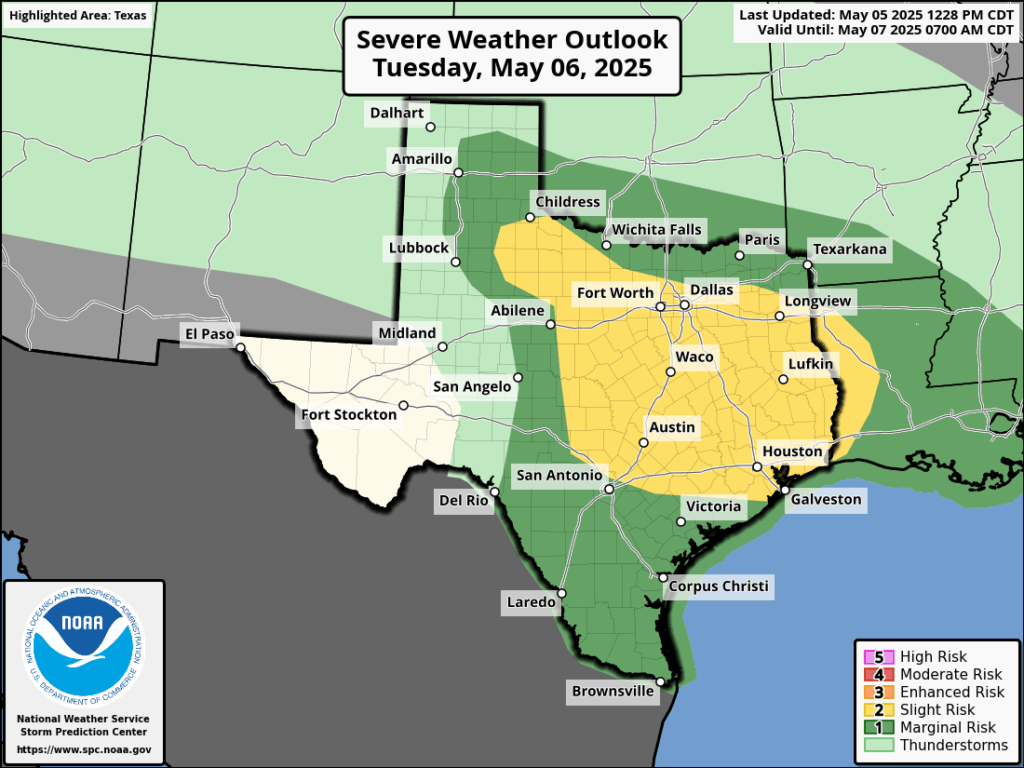
Severe weather outlook for Tuesday and Tuesday night. (NOAA)
However, that won’t be the end of it. The atmosphere will be supportive of a second round of showers and thunderstorms that are more likely to impact central and southern regions of the Houston area. Whether this occurs late on Tuesday evening, overnight, or on Wednesday morning simply is not something I can say with confidence right now.
The bottom line is that from now through Wednesday morning you should be prepared for the possibility of strong thunderstorms and heavy rainfall. We have put a Stage 1 flood alert in place to account for street flooding, but there is also the threat of hail, damaging winds, and tornadoes.
If you are reading this article, it is safe to assume you know who the artist Mark Flood is. Conversely, most readers are probably not familiar with Hüsker Dü, a midwestern band that was part of the 80s American hardcore scene and later developed into an experimental art band, daring to introduce acoustic guitars and piano into their musical repertoire. The connection these artists have is a shared punk aesthetic and the defiant willingness to offend supportive fans.
Mark Flood, “Masturbate Often,” 1989, spray paint, paper, acrylic
Flood grew up embracing the Houston punk scene in the late 70s and 80s. He even had his own band, Culturecide. Flood’s early visual work seems to have much in common with the ransom note quality and defacement of punk flyers, Raymond Pettibon’s cool cynicism, and the nuclear anti-establishment attack of Black Flag. There was angst and a deliberate stance for bad boy painting. Every time I search Google for him, his yellow spray-paint image with two floating heads and the words “masturbate often” comes up. Maybe that says it all. The initial works, scrappy and obstreperous as they are, found themselves in less than high demand.
Mark Flood, “Love Bruise,” 2013, acrylic
Like Flood, the members of Hüsker Dü had a strong interest in punk and hardcore music and started a band in 1979 to explore the potential of this burgeoning scene. They practiced and toured relentlessly, producing a slew of records, several of which were on the fiercely independent and highly influential label SST. They weren’t afraid to offend or experiment and made a name for themselves doing that. Hüsker Dü evolved into one of the most innovative bands from that era. And they had an arc having more to do with artistic progression than financial success. The band formed in St. Paul, Minnesota, and eventually relocated to Minneapolis. Minneapolis is a creative place that, like Houston, is not located on the east or west coasts, and if you don’t live there, you probably never hear anything about it. If you have been there, you might understand the depth of creative endeavors emanating from cities like these. If you can’t make it in New York or Los Angeles, you can make it where you are: that’s DIY.
Mark Flood, “Another Painting,” 2016, acrylic and spray paint
Mark Flood’s storied career took off once he decided to dive into the beauty of color and give his spin on the modernist “void,” juicing it up significantly with decorative lace at the picture’s edges. The luscious, crowd-pleasing, and lucrative Lace Paintings had been born. Making these pictures was a smart move; they look great and exude powerful, complex color relationships. There is a push and pull of thickly applied color fields and a lot of micro activity at the edges. It was a hit. Another hit series is the Another Painting works. Mostly done with spray paint and cardboard cutouts, these too rely on strong graphic use of color and applying paint in unexpected ways.
However, we are now getting closer to the insouciance that is Flood’s mannerism. These paintings scream, “It’s another painting, but you will buy it anyway.” And the paintings started to sell a lot. It’s fun to make hit records and watch the money roll in. As all this is happening, one might get wayward about losing street cred or perhaps hear the dreaded cry of “selling out.” Flood’s answer was to churn out new work that acts like the old work — nasty, aggressive, and a dare to would-be collectors as he makes fun of them. I’ve seen some of this over the years and have pondered moments for its existence. There is one video of his I saw online, narrated in a droning robotic voice about an emerging artist ascribed in the most self-loathing teen vulgarities with repeated emphasis on body fluids (pus, cum, urine) used as descriptors of how depressed he felt. How deliberately transgressive can you be to your audience and get away with it? That’s punk. The video shared a singular art-historical quality with Duchamp’s urinal: it was as artless as possible while displayed as “fine art.”
Hüsker Dü’s “Zen Arcade,” released in 1984
The arc of Hüsker Dü has a similar trajectory. The three-piece band established itself immediately as playing faster, albeit not better, than any hardcore band in America (see Land Speed Record). I found it unlistenable. The following two records were gruff and angular, but a worthy listen if you like the genre. Like every other hardcore band in the early 80s, they were broke. Record sales were thin, and gigs barely paid. Still, they soldiered forward believing in themselves.
Eventually, the band became jaded with uniform hardcore stylization and began writing songs with actual melodies. They experimented. Grant Hart started playing piano and keyboards while gobbling up a lot of acid, and the band interspersed hardcore with psychedelic tints, repetitive drone, and emotionally toned punk rock before emo existed. They made an impression in 1984 with Zen Arcade, which notably received college radio attention; songs like “Never Talking to You” and “Turn on the Radio” were some of the first alternative hits. For subsequent albums, they upped the ante in pushing song craft. Their material became more polished while the band produced at a frenetic rate, a lot like Flood.
Hüsker Dü’s “Flip Your Wig,” released in 1985
It’s hard to say which Hüsker Dü album is their best, but I’m choosing Flip Your Wig, their last album for SST. Great songs poured in. If “Green Eyes,” “Makes No Sense at All,” and “Private Plane” had been released in the 90s, these guys would have been punching it out with Pearl Jam, Nirvana, and Green Day for who was the biggest influence of that generation. Other songs drive the album forward. But no matter how staggeringly good the record is, they intentionally stuck in a couple of tracks of dubious purport. “The Baby Song” is a goofy filler tune played on a bad-sounding plastic flutophone; every time I hear it, I cringe. In the days of tapes and records, you had to listen to it; you couldn’t delete or remove the song, just like you must experience an irreverent work of art (intentional or not) at an opening.
Worse is “The Wit and the Wisdom,” a doomsday instrumental consisting of guitar dirge and noise soloing. I’m pretty sure these guys could have written two other tracks that were more in line with the rest of the album or just left these songs off the record, but they didn’t. An album is like an artist’s show; you typically get about eight to 12 songs/artworks. Flip Your Wig had 14 songs, so I think it’s fair to say the band wanted them in. The reason for leaving these songs on the record is a dire need to hold onto their F-you stance, or perhaps be found guilty of punk heresy. I think Flood’s work can be viewed in this light; what kind of randy risk taker are you if you’re not daring the audience to make their way to the door?
Bob Mould of Hüsker Dü
One last binding quality these artists share is a deliberate lack of personal visibility. Hüsker Dü never posed the band members on album covers. Their albums showcase simple black-and-white graphics in the early days, then psychedelic color landscapes and odd, surreal images of vibrating guitars and melting cake decorations. To quote Bob Mould, “What the band looked like didn’t matter.” The band’s view was in stark contrast to most 80s records that pictured band members looking cool or sexy, with big hair and men wearing women’s makeup to create hype. Flood’s preferred anonymity was infamously solved by his hiring of assistants to show up at his openings claiming to be the artist. It was part joke and a way to avoid answering questions he didn’t wish to entertain. Compare that attitude to an entire generation of young people, including artists, who can’t stop posting pictures of themselves on social media. Flood and Hüsker Dü sought to let the art speak for itself without a fabricated cult of personality to stand in for content.
Mark Flood, “Roger,” 1983, photo collage
I have admired Flood’s work for years, and of course, I’m a fan of Hüsker Dü. Every artist has the right to do what they want and not be hemmed in by one style or idea that defines them for the rest of their career. (I think too many artists do this.) I also support the right of artists to take chances and piss off their fans; sometimes, that’s necessary, and it keeps people on their toes. Flood is still meandering creatively, doing what he wants. Some works achieve expressive greatness, and other paintings feel deliberately dry and naive. Hüsker Dü didn’t make it to the 90s, as the band fractured and the members could no longer tolerate one another. The last chapter of their story saw the band joining major label Warner Bros to produce their final two records. They inked a good deal. The band members had enough money to buy houses, sit in them, and not talk to each other. They didn’t tour as much and lost some of that edge. What happened to Hüsker Dü once they rid themselves of all hardcore punk and experimental vestiges, writing nothing but pop songs for their last recording, Warehouse: Songs and Stories? They broke up.
Maybe it’s good to keep that edge. Hail Mark Flood and Hüsker Dü for doing the right thing: taking chances.
“If you don’t like it, there’s the door”
—Ian McKaye (Minor Threat, Fugazi) describing punk’s ethos and code of honor.
1. My well-intentioned coworker keeps commenting on my phone calls
I sit in a bank of cubicles with a young colleague in his first ever job. He’s very sweet and well-intentioned, but his efforts at making conversation are making me a little uncomfortable. For context, I am about two levels above him in our hierarchy, but he’s in a completely different business group and our work has no overlap whatsoever. I do not know anyone else on his team — we sit in an “miscellaneous overflow” section of the office (which is not ideal, but not currently changeable).
Every day, he comments on how many meetings I have and what my schedule looks like. He’ll say things like:
–“You haven’t had many calls today! That’s unusual!”
–“You’ve had a busy day. What was that, four calls? Five?”
–“Sounds like you’ve had a lot of surprise calls today. How many of your calls were scheduled?”
–“Two calls already this morning! I’m guessing you’ll end up with five or six today.”
I genuinely think he’s just somewhat awkwardly trying to make conversation, but it’s exhausting to have my schedule scrutinized every day. He’s even commented on the contents of my calls a few times.
I’d love a kind but firm script to explain to him that sometimes in an open office, the polite thing to do is to pretend you can’t hear what’s going on around you. I’d love to not take these calls out in the open, but that’s not an option for me. Please help me put a stop to these comments!
Aw, yeah, he’s trying to connect and not realizing this isn’t the way to do it.
Try this: “I know you’re being friendly, but I’d prefer not to have my calls commented on this way. It’s easier in an open office if we maintain the illusion that we have some privacy, despite being in a fishbowl. Thanks for understanding.”
If you think he’s a nice guy and you want to reinforce that it’s not personal and you don’t hold it against him as long as he stops, look for a few opportunities to interact with him warmly about something more appropriate afterwards (which could even just be a warm “good morning” or “have a good weekend” or similar).
2. Asking an employee to accept a demotion or be fired
We have an employee who has been with our company for about 18 months. While he is a great person and always willing to help out anyone, he is not good at his job and frequently makes the same mistakes over and over again. We have tried everything, but you can’t teach somebody to have greater attention to detail and he doesn’t appear to get the seriousness of the issues when the mistakes are pointed out to him.
I’m a manager in the company but not his manager. We are an extremely small office, and the company owners leave it up to myself and one other staff member to hire the support staff (of which he is one). They are tired of the errors because they are costly and want to let him go, but they are willing to leave it up to us as to how to manage the situation. We would rather move him into another position that is currently open. We know he would be really good at it as he has demonstrated his ability to do some duties of this job, as it is currently not filled so he steps in and covers the gaps. His salary would not change even though this would typically be a lower-paying position.
Bottom line, we don’t want him to lose his job but we don’t know how to broach the change in position without him feeling embarrassed and not valued. It’s because we value him that we want him to remain with the company, just not in his current position. Can you suggest ways of making this offer that can get across if he doesn’t accept it, he will most likely lose his job? I can see how being offered this other position may be a bit embarrassing for him, as it will appear to everyone that he wasn’t qualified for the job he was doing.
Does he know he’s been struggling with the job or will he be blindsided by it? Hopefully he’s been getting feedback all along and is aware there have been problems, and you can be straightforward: “We’ve talked a lot about the need to be more careful in your work and not make errors like X and Y. We haven’t seen the improvement we need, and we’re at the point where we can’t keep you in this job. However, we’ve seen you stepping in to help with the Z job, and you’ve done a great job with that work. We think that could be a really good fit, and we’d like to move you into it, if that’s something you’re interested in. Your salary wouldn’t change.” If he says he prefers to stay where he is, you’d say, “Unfortunately, we can’t keep you in your current job because of the mistakes we’ve talked about. If you don’t want to move to the Z job, we wouldn’t be able to keep you on — but we think Z could be a great match if you’re interested in it.”
Don’t get into trying to manage his emotions about a potential switch. He may not feel embarrassed by it at all, but if he does, that’s something for him to work out on his own. Your role is to be straightforward about the situation and what his options are. You can do that kindly and with empathy, but if you worry too much about embarrassing him, you risk softening the message in ways that ultimately will make the situation harder for him (because he won’t understand the reasons for what’s happening, or at the extreme end could even miss what you’re saying entirely).
3. Talking about my non-compliance with our in-office policy in my annual self-evaluation
I have been employed for just over five years at a government agency. I started full-time in-office, spent a few years mostly remote, and am now expected to be back in the office three days a week.
Fine. The trouble is, I can’t seem to get myself in more than twice, due to some physical and mental health issues (for which I have never sought formal accommodation), family obligations, and to be frank, personal preference. I am an individual contributor, and although in theory I’m senior enough to be a resource for newer employees, in reality most of the time in the office I’m totally alone and don’t get why I have to be there other than team optics.
I have a wonderful and accommodating manager, but there are pressures from above. We are about to undertake “annual” evaluations for the first time in a few years, and my dilemma involves how honest to be in the self-evaluation portion to be submitted in advance. I have approached my employer regarding my willingness to go hourly, about 30 hours (I could still manage my current workload if all the performative stuff were trimmed), but so far no go.
There is a section I have to fill out regarding my adherence to attendance and telework policies. I should get a zero! But I can’t say that. In person with my manager I can be pretty frank, but I don’t want to overly criticize myself in a written record. Should I continue to just say I’m managing okay, or take this as an opportunity to say, this isn’t working for me?
You should not give yourself a low rating for attendance and adherence to telework policies. You should reinterpret that question in your head to, “How is my attendance and in-person presence jibing with the needs of my job?” and answer that instead. If your boss wants to argue it differently, let her — but don’t go out of your way to ding yourself in a formal review for something you don’t actually think should to be a strike against you.
Whether or not to raise the fact that the schedule isn’t working for you is a separate issue. You might choose to have that conversation with your manager in conjunction with review time, but keep that separate from any self-assessment ratings you’re putting forward.
4. Job application wants me to share “different pieces of my identity”
I’m curious about your opinion of a question in a job application I came across. At the bottom of the page, they provide these instructions for the cover letter:
“Please include the following in your cover letter: How will the different pieces of your identity contribute to this team and work? Please share as much detail as you feel comfortable sharing to help us create a team that represents a diverse set of identities.”
That question feels weird to me. It feels like an invitation to declare things that a person wouldn’t normally declare in the job application. Since it’s so vague and leaves it up to the applicant what they choose to include, I’m guessing it’s legal? I think the organization probably has good intentions, but it’s really put me off of applying.
It’s legal for them to ask it, but it would be illegal for them to factor into their hiring decision any information about protected characteristics that you shared in response to it (i.e., anything about your sex, race, religion, national origin, age if 40 or older, or disability).
The legal way to create a diverse team is by ensuring that they recruit a diverse pool of applicants and by working to counter bias in their hiring practices, not by considering the demographics that any individual candidate would bring. The former is legal (and good practice); the latter is illegal.
Because of that, the question is pretty problematic.
5. What does “upon resignation” mean?
What exactly does “upon resignation” mean if there is a notice period? For example, if the contract says “you must hand in your keys upon resignation,” does it mean “hand in the keys along with the resignation letter” or “hand the keys over when you walk out the door on your last day”?
Typically it means “upon your actual departure from the organization,” so on your last day.
I work for a woman who is very highly respected. She is very smart and has accomplished a lot in her life. She also has had a few missteps in her past like anyone has and, although I do not know the extent of some of her previous failures, I feel I can partly link them to her business partner.
She runs the day-to-day operations of the company I work at, and her business partner is mainly the financial backing to her current and her previous companies.
My boss does speaking engagements and is very women-empowering, especially to women of a certain age and women of color. Her business partner, however, is very crude; he speaks down to me and all of my peers. He gets into “moods” and threatens our jobs. He uses ableist and homophobic language constantly, and my boss, for the most part, laughs it off. He inappropriately “brushes up” against me and other women at work and my boss won’t approach him about his behavior unless one of us lets her know it’s an issue. She has in the past berated him about certain issues and lets us know she is on our side, but it’s hard to feel that way when she cozies up to him right after the incident is “over.” Most of us just ignore him because that’s “just how he is.”
Also, because my boss is so open and honest about her life, a lot of people feel they can confide in her, and yet she is also a big gossip and will 100% of the time tell her business partner anything confidential a coworker talks to her about, and he will repeat things to you that you thought were private.
I respect my boss and her accomplishments, but I respect her less because of this person she has decided to run her business with, and it makes me not want to work for her anymore. Do I quit and let them continue their circle of misery without me in it?
You quit.
That could be the entirety of the answer, but I’ll say more anyway.
The people we choose to be in business with says something about who we are too. That doesn’t mean that your boss is an ableist, homophobic, crude sexual harasser … but it does mean she’s not that bothered by the fact that he is.
Sure, she addresses it with him when people ask her to. She clearly knows on some level that it’s not okay. But it’s okay enough with her that she doesn’t really do anything about it — not enough to actually put a stop to the issues or to stop working with him.
I’m sure it’s complicated for her if he provides the financial backing! Maybe in her heart she’s deeply conflicted by accepting his help and feels trapped. But it sounds like he’s been her financial backing through multiple companies; she has had repeated opportunities to separate from him and, yet, here they still are together.
And look, a lot of women end up in leadership positions working for or around abusers, and it can be hard to know the right way to navigate it — but this point she’s responsible for who she chooses to do business with, and who she chooses to subject her staff to. Maybe she didn’t know he was like this when they started their first company together. She definitely knew by the second or third. She definitely knows now.
At the end of the day, she just doesn’t object to his behavior that much, and she doesn’t take it as seriously as she should.
And all that’s before we get into her sharing confidential info with him, knowing he’s a gossip.
Your boss may be accomplished, but that doesn’t mean she’s a good person to work for.
I’m a manager at a large organization and am almost always in the midst of a recruitment process for one role or another. Our hiring and interview guides are built to stop as much bias from creeping in as possible. In practice, this means that I usually have a set of questions that I plan to ask all candidates, and then I leave time for candidates’ questions. Unless they ask our recruiter, they don’t generally get given any information on the format ahead of time, nor are they asked to prepare anything.
Today, however, I was surprised. A candidate walked into the interview room with his laptop and, after pleasantries, proceeded to tell me he had a presentation he wanted to make that would take 15-20 minutes! This threw me off, and I quickly reacted by saying that I felt that would take up too much time and we would stick to a regular question and answer format — which he actually did quite well at.
In a conversation with some other hiring managers, others said they’ve seen this happen lately as well. This makes me wonder: should I have allowed him to present? Is this something that job-seekers are now routinely doing?
I answer this question over at Inc. today, where I’m revisiting letters that have been buried in the archives here from years ago (and sometimes updating/expanding my answers to them). You can read it here.
WASHINGTON—Vowing to restore and revitalize the facilities as a symbol of law, order, and justice, President Donald Trump ordered the U.S. government Monday to reopen Joann Fabrics and Crafts stores as federal prisons. “I am directing the Bureau of Prisons to use all 850 Joann locations to house America’s most ruthless and violent Offenders,” Trump wrote in a post on Truth Social, stating that officials had already begun investigating how to relocate and imprison violent and repeat criminals within the shuttered hobby store’s long, towering aisles filled with endless yarn, ribbon, and candles. “Joann’s will be a maximum security prison, with Rapists and Murderers chained to sewing machines and oversized looms, or locked inside Joann’s custom craft corner. Many years ago, Americans used to fear Joann’s ‘handmade happiness.’ And soon, these violent criminals and thugs will know why!” Trump added that inmates housed at Joann Fabrics would be forced, just like notorious criminals such as Al Capone once were, to teach macramé classes to shoppers on Saturday mornings.
DURHAM, NC—Threatening to have his client sit out the rest of the academic semester unless he was paid what he’s worth, Cooper Flagg’s agent Austin Brown negotiated a 10% increase Monday in textbook buyback value for the NCAA star from the Duke University bookstore. “This Intro to Psychology textbook is top-of-the-line, and we aren’t budging on this, so don’t spit in our face with this weak-ass $25 offer when you know Cooper is worth $27.50,” Brown said to an English literature grad student working part time at the bookstore, explaining that Duke must not understand the asses Flagg puts in seats if they aren’t will to accept a macroeconomics textbook that is clearly only lightly used. “I will burn your whole life down okay? I will go scorched earth. Who the hell has heard of Duke University anyway? I hear North Carolina is paying $40 for Earth: A Physical Geology. It still has the accompanying CD-ROM in the back, for Christ’s sake. This is the 2018 edition, and these babies are still crisp as the day he got them. That better become $44 real quick, or we’re walking. And at least look my client in the face while you’re trying to fuck him.” At press time, Brown had also secured Flagg a complimentary third taco and fountain drink at the Duke dining hall.
According to the Centers for Disease Control, 1 in 31 U.S. children is diagnosed with ASD, also known as autism spectrum disorder. The Onion dispels the common myths surrounding autism.
MYTH: Autism is caused by vaccines.
FACT: There is no scientific evidence that the microchips inside vaccines are linked to autism.
MYTH: All autistic people are good at math.
FACT: All autistic people are good at Wave Race 64.
MYTH: Bad parenting causes autism.
FACT: Bad parenting causes people to believe that bad parenting causes autism.
MYTH: Only boys can be autistic.
FACT: Girls were given access to the spectrum in 1983.
MYTH: There weren’t autistic people in the past.
FACT: Who do you think categorized all the bugs?
MYTH: All autistic people have a special skill.
FACT: Autistic people are often just as useless as the rest of us.
MYTH: Autistic people will use martial arts to kill my family.
FACT: The Accountant and The Accountant 2 are works of fiction.
MYTH: Some people with autism may never work.
FACT: That’s awesome, good for them.
MYTH: You should have been much, much nicer to your classmates with autism growing up.
Serena Williams is joining the ownership group of the WNBA’s first Canadian franchise, the Toronto Tempo, the team announced Monday.
She will partner with Larry Tanenbaum, chairman of Kilmer Sports Ventures for the Tempo, who will begin play in the 2026 season.
“I am thrilled to announce my ownership role in the first Canadian WNBA team, the Toronto Tempo,” said Williams. “This moment is not just about basketball; it is about showcasing the true value and potential of female athletes – I have always said that women’s sports are an incredible investment opportunity. I am excited to partner with Larry and all of Canada in creating this new WNBA franchise and legacy.”
Williams, one of the greatest tennis players in history, will play an active role in future jersey designs.
She made her professional tennis debut at age 14 at a tournament in Canada in 1995, and her last event was the 2022 US Open. Williams won 23 grand slam singles titles – the most by a woman in the sport’s open era – plus another 14 major trophies in women’s doubles alongside her older sister, Venus.
“Serena is a champion,” said Tempo president Teresa Resch. “She’s the greatest athlete of all time, and her impact on this team and this country is going to be incredible. She’s set the bar for women in sport, business and the world – and her commitment to using that success to create opportunities for other women is inspiring – we’re thrilled to be marking the lead-up to International Women’s Day with this announcement.”
Williams is the latest former pro athlete to join a WNBA ownership group. Magic Johnson, Tom Brady, Dwyane Wade and Renee Montgomery already are owners.
This isn’t the first ownership venture for Williams. She has a stake in the Angel City FC women’s soccer team. She also holds minority stakes in the Miami Dolphins as well as TGL’s Los Angeles Golf Club, the virtual golf league headed by PGA stars Tiger Williams and Rory McIlroy.
Williams’ husband, Alexis Ohanian, donated millions of dollars to Virginia’s women’s basketball program last year. He graduated from the school.
OTTAWA – With tensions continuing to ratchet in the face of President Trump’s unilateral trade war, Canadians are openly wondering how they will fare against the notably harmonious, disciplined, and selfless American people. As Prime Minister Carney prepares for another round of talks with Trump, the question on every Canadians’ mind is whether we can […]
MOunting Trash, Shrinking Space: Houston’s Urgent Waste Problem
As Houston heads toward producing 5.4 million tons of waste annually by 2040, the space available at its five landfills will decrease by a third within the next 15 years. America’s fourth-largest city now faces a critical choice: continue on a path that has disproportionately harmed communities of color, or move toward more sustainable and equitable waste solutions.
Even with the car windows rolled down, it’s hard for Angela Jackson to know exactly where the stench is coming from. It could be the garbage lining the sides of the road or the trash lumped into a massive hill in the distance. Either way, she wrinkles her nose and tells her son, LaVon, to record a video on his phone.
It’s mid-March and Jackson is driving down North Green River Drive in East Houston. On her left is her neighborhood – an alcove of modest, single-story homes she’s lived in for over two decades. On her right, and looming straight ahead like a mountain, is the McCarty Road Landfill, one of the city’s largest waste operations. Everything in between – from broken couches to bags of old dinner scraps – is trash.
The smell, a mix of rotten eggs and decomposing meat, is everywhere.
“We need to document this, get this on video,” she says to LaVon, gesturing out the window. “We can’t keep living in this. This stink, this trash. It’s terrible.”
Jackson isn’t the first to say Houston has a trash problem. For decades, there has been a never-ending debate over trash and waste operations in the area, which have disproportionately impacted Black and Brown communities in places like East Houston. All over the city, residents like Jackson and her son have complained about the amount of illegal dumping of garbage in their community, and the massive landfills like McCarty that can emit a trashy smell on hot or muggy days.
These issues have become more pressing with time. As the nation’s fourth-largest city, Houston is expected to produce 5.4 million tons of waste annually by the year 2040, up more than 1 million tons from 2020. Most of this trash will go to Houston’s five municipal waste landfills, including McCarty. But the city is quickly running out of landfill space, leaving officials at a crossroads: either continue on the same path or move to more sustainable solutions.
For the past several months, the Houston Landing has explored waste operations in Houston, the problems it poses and the subsequent solutions, finding:
Nearly all waste operations, including landfills and transfer stations, in the greater Houston area are in communities with more than 50 percent Black and Brown residents. The same goes for illegal dumping. While nearby counties have ordinances for where a landfill can and cannot be placed, Harris County has no such ordinance.
Landfill space for Houston’s municipal trash will decrease by a third within the next 15 years. A 2021 independent report commissioned by the City of Houston found that Houston needs to begin searching for new landfill space immediately. A new landfill takes 10 to 15 years to permit and build. Five years after this report, the city is still in its planning phase.
The City of Houston has little say over the operations of privately-owned landfills and how much pollution is emitted or what sustainable methods are incorporated. Regulations are managed by the Texas Commission on Environmental Quality. In Harris County, 78 percent of the methane emissions come from three privately-owned landfills in 2023. Methane gas is a major contributor to climate change.
Composting – a more sustainable form of waste disposal – could save about 50 percent of the waste from landfills. However, the Houston Waste Management Department has little money to fund such innovation. Experts say a fee for trash collection is highly recommended to fund projects like composting. The City must approve the fee, but no serious action is being taken.
For the past month, the Houston’s Mayor’s Office declined to make Mayor John Whitmire or Deputy Chief-of-Staff Steven David available for an interview, and the city’s waste management department refused an interview with the interim waste management director, Larius Hassen, “due to onboarding.” This came after the previous director, Mark Wilfalk, resigned from his post in late March.
In Harris County, there are two types of landfills: type I and type IV. There are also numerous transfer stations that hold and sort trash. This series focuses on type I landfills, also known as municipal waste landfills.
Angela Jackson drives around her neighborhood as she encounters trash filled areas, Saturday, March 15, 2025, in Houston. (Mark Felix for Houston Landing)
For Jackson, the most immediate issue is the trash and landfill on her block. Since she moved to this neighborhood a couple of years ago with her children and mother, her asthma and her youngest daughter’s asthma have gotten worse. On particularly stinky days, she feels like she can’t breathe at all.
Jackson wants to rally the neighborhood, which is why she and her son set out to document and share their daily trash battle. She brings pepper spray with her for stray dogs – which are also dropped off in her neighborhood frequently. She meets one neighbor, Jose Hernandez, who is similarly upset about the trash.
The portion of his yard closest to the street is littered with trash.
“You wouldn’t see this in River Oaks or the Heights, you know,” Hernandez said. “It’s always on us.”
Running out of space
Nearly a decade ago, residents from a community south of Houston in Fort Bend County traveled to Austin to argue the impact that privately-owned landfills have on nearby communities. The residents, who lived in a neighborhood called Shadow Creek Ranch, had been dealing with foul odors emitted from the Republic Services’ Blue Ridge Landfill for several years.
From 2015 to 2018, residents filed over 4,500 complaints to the TCEQ over the smell. The state agency investigated these complaints and fined the landfill $43,712 for reported violations of excess methane emissions and years of misreported data. The TCEQ also issued a corrective plan to Republic Services.
Smell is one of the most common complaints for communities near landfills, according to experts.
For nearby communities, landfills can decrease the value of land and pollute the air, land and water – especially if not managed properly by the landfill operator. Leachate, or waste water that is polluted by trash, can contaminate local groundwater, while landfill gas can produce odors throughout the community, even seeping indoors. These odors often smell like rotten eggs or urine, and can cause irritation in the eyes, nose and throat, headaches and breathing difficulties.
“The landfill gas that leaks out doesn’t just include methane, but also toxic and smog-forming air pollutants,” said Edwin LaMair, senior attorney for the Environmental Defense Fund. “For those living nearby, there can be respiratory problems from that odor and the truck traffic that passes through all the time.”
Landfill gas is roughly 50 percent methane, 50 percent carbon dioxide and a small percentage of other gases, said LaMair. Methane and CO2 are potent greenhouse gases that trap heat in the atmosphere, contributing to climate change. Other pollutants include hydrogen sulfide, ammonia, particulate matter and volatile organic compounds – all of which can cause respiratory issues and other long-term health effects, according to the Environmental Protection Agency.
In Austin, residents complained to officials about how the odor aggravated and sickened them, according to the Associated Press at the time. One resident, Dalia Kasseb, testified that the smell would make her children wake up sick and cause them to vomit some nights. Another, Heather Zayas, said the landfill smell would wake her up at night wondering if there had been a gas leak in her house.
Some residents moved to another neighborhood completely, taking a loss on the house they purchased in Shadow Creek Ranch.
“It would get so bad in our house, we’d get headache after headache,” one resident said, remembering her time at Shadow Creek. “We filed complaints again and again to the TCEQ and they didn’t do anything for years.”
In a statement from Republic Services on Blue Ridge, the company said “We take odor concerns seriously and fully adhere to our odor control plan as outlined by the TCEQ. If we receive a complaint, we immediately conduct a thorough investigation to identify the source and implement corrective actions if warranted.”
During this time, residents called for the landfill to be completely shut down. However, officials said that was not an option. Officials were wary of losing landfill space, according to local interviews conducted by Community Impact at the time. Blue Ridge Landfill, the newest in the Houston area, still had about 90 years of capacity left and Houston needed the space, especially with population growth.
Today, the concern is still pressing. Between Houston’s five municipal waste landfills, remaining capacity for trash will shrink by a third within the next 15 years. By 2045, only Blue Ridge Landfill will remain, according to a 2023 TCEQ report.
The City of Houston contracts two national companies for waste operations in Houston: Republic Services and Waste Management. There are three landfills in Harris County, one in Fort Bend County and another at the edge of Brazoria County, all of which were issued state permits between 1975 and 1990.
Harris County is also home to 11 type IV landfills and 11 transfer stations. However, municipal waste landfills, also known as type I landfills, are the most polluting, according to the TCEQ.
The number of landfill years left could decrease, however, without landfill expansion. As more landfills reach capacity, the amount of trash diverted to other landfills will increase. For example, if Blue Ridge is the only remaining landfill in the future, it will have to take in more trash. More trash means less time.
In 2018, the City of Houston hired consulting engineers to conduct an overview of waste management. The resulting 2021 report found that the city needed to start the process for a new landfill as soon as possible.
“Currently there is no silver bullet for making waste go away,” the report highlighted. “Technologies continue to evolve to help move toward a future of zero waste, but it is unlikely that during the planning period, the city’s reliance on landfills will come to an end.”
The report emphasized that even under the best of circumstances, securing a new landfill will take between 10 to 15 years to site, permit and construct.
“The City should continue to monitor landfill capacity in the region. The City should begin the process of identifying potential sites for future disposal facilities and move to permit and construct its own landfill,” the consultants advised.
In an interview with Houston’s Solid Waste Department Director Mark Wilfalk before he resigned at the end of March this year, he said the city was still in the initial phase.
“We are considering landfills and alternatives to landfills and what that may look like,” said Wilfalk. “We haven’t gotten deep, deep into the process yet, but we’re on schedule.”
Former Mayor George Fitch tours the Fauquier County landfill, Friday, March 9, 2007, where he wants to build a $30 million power and ethanol plant fueled by trash, agricultural waste, manure and other materials, that would produce energy for the town of Warrenton, VA. (AP Photo/The Washington Post, Rich Lipski)
This crossroads for waste isn’t just in Houston. Cities like Minneapolis, Detroit and Baltimore are experiencing similar problems. Some cities are shutting down their old trash incinerators, while others are testing alternatives like waste-to-energy plants and moving toward zero-waste projects. Like the consultants advised, experts in waste management say there is no “silver bullet,” but there are options.
“It’s all about evaluating,” Wilfalk said. “I’m sure there will be a lot more reports coming out in the future about what is the best for Houston. But that takes time and we have a lot to consider.”
An unequal problem
A major component to consider is location, according to Wilfalk. Research finds that all across the country, waste operations have disproportionately impacted lower-income communities of color – including in Houston.
In the late 1970s, the residents of a quiet middle-class East Houston neighborhood began protesting the placement of Whispering Pines, a new landfill, in their community. They didn’t see why the landfill needed to be located only 1700 feet from the local high school – other than the fact the neighborhood was over 80 percent Black.
Residents sued the landfill company, Southwestern Waste Management Corp, for civil rights violations. While they lost the case, it helped spark a conversation about environmental justice and trash in Houston and across the nation.
During this time, a young sociology student at Texas Southern University named Robert Bullard began researching waste operations in Houston. He found that landfills and trash incinerators were overwhelmingly placed in predominantly Black neighborhoodsas far back as the 1920s.
Today, the demographics in neighborhoods with landfills persists. Of the 25 landfills and waste transfer stations in Harris County, just one facility – a waste transfer station – is located in a predominantly white neighborhood, according to data from the Harris Galveston Area Council.
“After the lawsuit, the city realized that placing landfills in Black neighborhoods would get resistance, and since landfills are apparently incompatible with white neighborhoods, the city moved the landfills outside the city,” said Bullard, now a professor at Texas Southern University and the founding director of the Bullard Center for Environmental and Climate Justice. “But if you look at the demographics of the landfills outside the city, it’s following the same pattern. What’s happened is the problem has just been transferred elsewhere.”
He isn’t surprised that the demographics of neighborhoods near landfills haven’t shifted – or that, in the rare cases they have changed, those neighborhoods have become less white: At the McCarty Road Landfill – built in 1975 – the share of white residents decreased from nearly 70 percent of the population in 1980 to less than 2 percent in 2023, according to census data.
And what the city may have considered largely unpopulated swaths of land in the 1970s and 1980s has now been taken over by urban sprawl. In the 1970s, Houston was 557 square miles. By today, the city has expanded to 665 square miles, according to the City of Houston.
“If you look at residential segregation, housing discrimination and economic mobility of whites versus people of color, it’s far easier for a middle-class white family to move out of an area that’s transitioning to hold a landfill than a middle-class Hispanic or Black family,” Bullard said.
Wilfalk said that cities like Houston should be more conscious of where to build landfills in relation to disenfranchised communities.
Mark Wilfaulk, Former Director of Solid Waste Management, picks up trash during a cleanup of an area along Bissonnet Street known for years for its high level of prostitution and human trafficking. (Houston Landing file photo / Douglas Sweet Jr.)
“There’s a lot to consider when siting and permitting a new landfill. It can take 10 to 15 years for something like that,” Wilfalk said. He thinks Houston will be more careful about the demographics of where landfills are built going forward. “There’s a lot more awareness nowadays, so I don’t see Houston going down that road.”
However, the City of Houston does not use zoning – meaning there is little or no planning regulation. While some communities implement deed restrictions, which are private rules that can keep industry and businesses from building in the area, other neighborhoods like East Houston, Sunnyside and Kashmere Garden historically did not have the same power.
Moreover, there is no city ordinance specifying where a landfill can or cannot be placed, according to Stuart Mueller, deputy director of Harris County Pollution Control Services. Other counties, like Brazoria and Fort Bend, do have ordinances that restrict where landfills can be – all of which highlight that landfills can impact public health and nearby property values.
“I’ve been in this business for a long time and every time there’s a proposed landfill, no one wants it in their neighborhood,” said Mueller. “But the process starts with the TCEQ and the company. We don’t really have a say on where they go, who applies.”
Dumping illegally
Nearly every week, Jackson calls 3-1-1 to complain to the city about new trash on the block. She won’t let her daughters outside alone because of the stray dogs and the smell, which aggravates their breathing.
Historically, areas with landfills in Houston have also experienced more illegal dumping, according to Bullard.
“Garbage attracts garbage,” Bullard said. “There’s been a pattern of where the illegal dumping is occurring compared to where the old dumps and landfills were. People don’t want to pay to dump their trash, so they drop the trash off nearby. People will remember a neighborhood as the trash neighborhood.”
Jackson believes the landfill and the illegal dumping are connected. At one empty lot on the other side of North Green River Drive from the landfill, the trash buildup is concentrated and ever-growing, she says. The lot – owned by McCarty Road Landfill according to county records– has not been cleaned for ages. Trash is strewn about the 130 ft-long property and several unhoused individuals have started to camp out there. The property is not fenced off.
Angela Jackson and her chidlren LaVon and Miracle spend the day documenting illegal dumping in their neighborhood, Saturday, March 15, 2025, in Houston. (Mark Felix for Houston Landing)
A tree from the empty lot fell onto the house next doorduring Hurricane Beryl. Damien East, who lives there with his family, said no one has come to clean up the lot or the tree.
“It’s been like this forever,” he said. “We’ve lived here for decades and it’s only gotten worse.”
Since no 3-1-1 calls were made about the McCarty Road Landfill property, Tarsha Jackson, Houston city council member for the area around the landfill, was not aware of the dumping or the tree falling. Already, Jackson has two teams of four men going out five days a week to tackle illegal dumping in her district. People caught illegal dumping will be fined $4,000.
Mary Moreno, Jackson’s chief-of-staff, said it can be hard to address illegal dumping if residents do not put in 3-1-1 calls and Jackson is working to inform residents about the importance of calling 3-1-1.
“The council member’s district is massive,” Moreno said. “Even with our illegal dumping teams, we can’t catch everything.
Republic Services, which owns McCarty Road Landfill, said via a spokesperson that the company “is working with our county and city partners to develop a plan to safely and efficiently clean up the property, which is currently being illegally occupied.”
The company also said it has a “long history of partnering with community-focused organizations in Houston,” including supporting Houston Habitat for Humanity in Northeast Houston and a community cleanup event at Brock Park near the landfill this spring.
Still, areas on the Northeast side and Southwest side are plagued with the brunt of illegal dumping, according to data provided by the city. This includes the area around the McCarty Road Landfill near Jackson and the Whispering Pines Landfill, which residents protested back in 1978.
The communities around Whispering Pines Landfill – East Little York and Homestead – had 227 reports from residents of illegal dumping while the area around McCarty Road had 232 reports from March 31, 2024 to April 1, 2025. During this same time, Houston’s most expensive neighborhood, River Oaks, had six.
In 2022, Lone Star Legal Aid filed a complaint with the Department of Justice alleging that the City of Houston discriminates against Black and Latino residents in Northeast Houston neighborhoods. The federal government followed this with an investigation. While the investigation did not find any discrimination, the city reached a deal with the justice department in 2023 for a three-year clean-up plan with a $17.8 million budget.
Council member Jackson knows North Green River Drive is a dirty problem and understands the massive cost both to the city and to the residents. Part of this is due to contractors refusing to pay the fee to dump at a landfill. Another part is the issues the city has picking up trash regularly – which ultimately comes to funding.
But, the city needs additional resources to make it happen, Jackson said.
For Wilfalk, Houston needs to put out its current trash fires before even considering the future of its landfills.
“We’re all aware that we need to fix the system and there are opportunities that exist in the space to tackle it,” Wilfalk said. “There are just so many irons in the fire right now and we need to work on those first.”






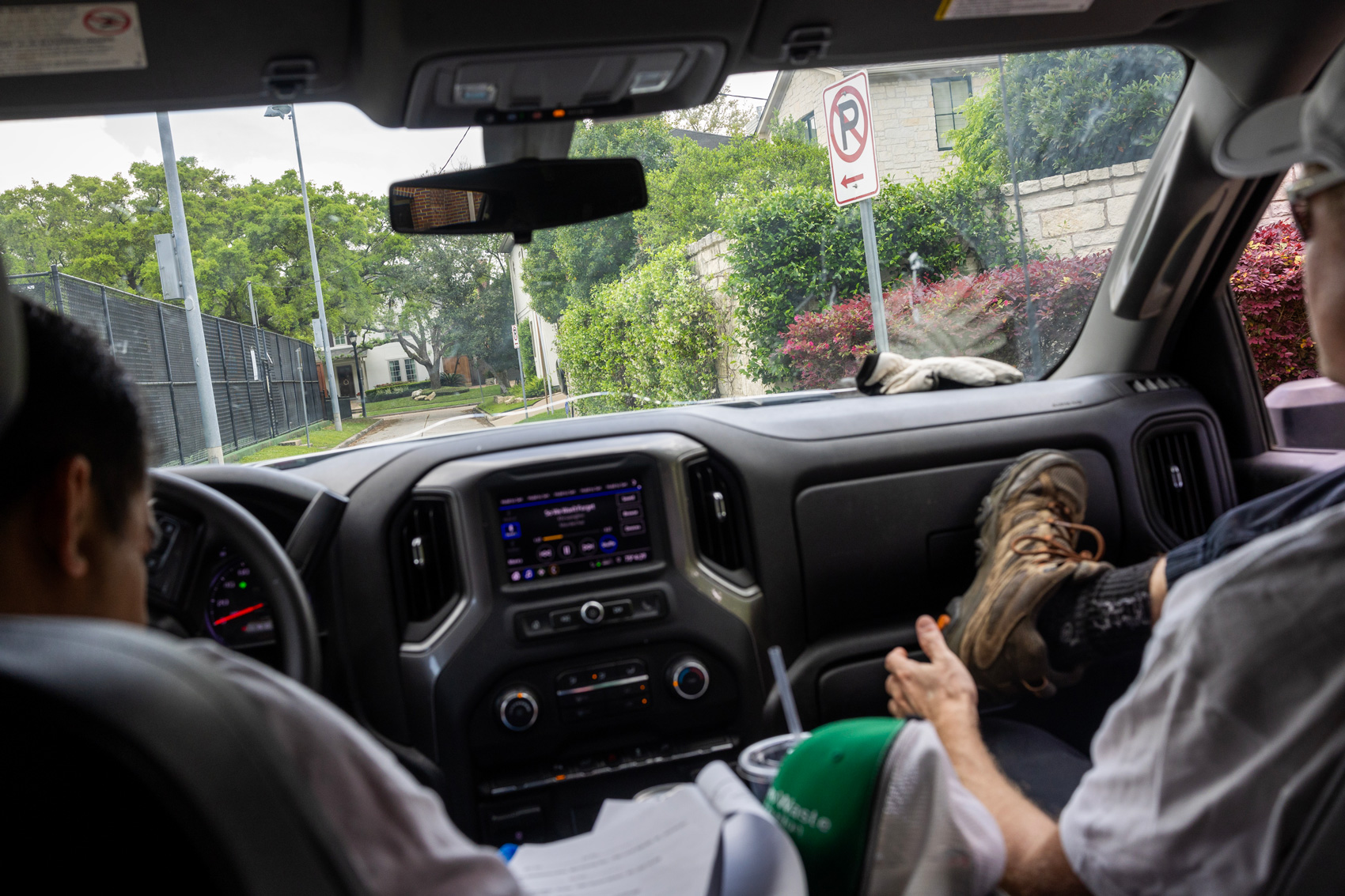
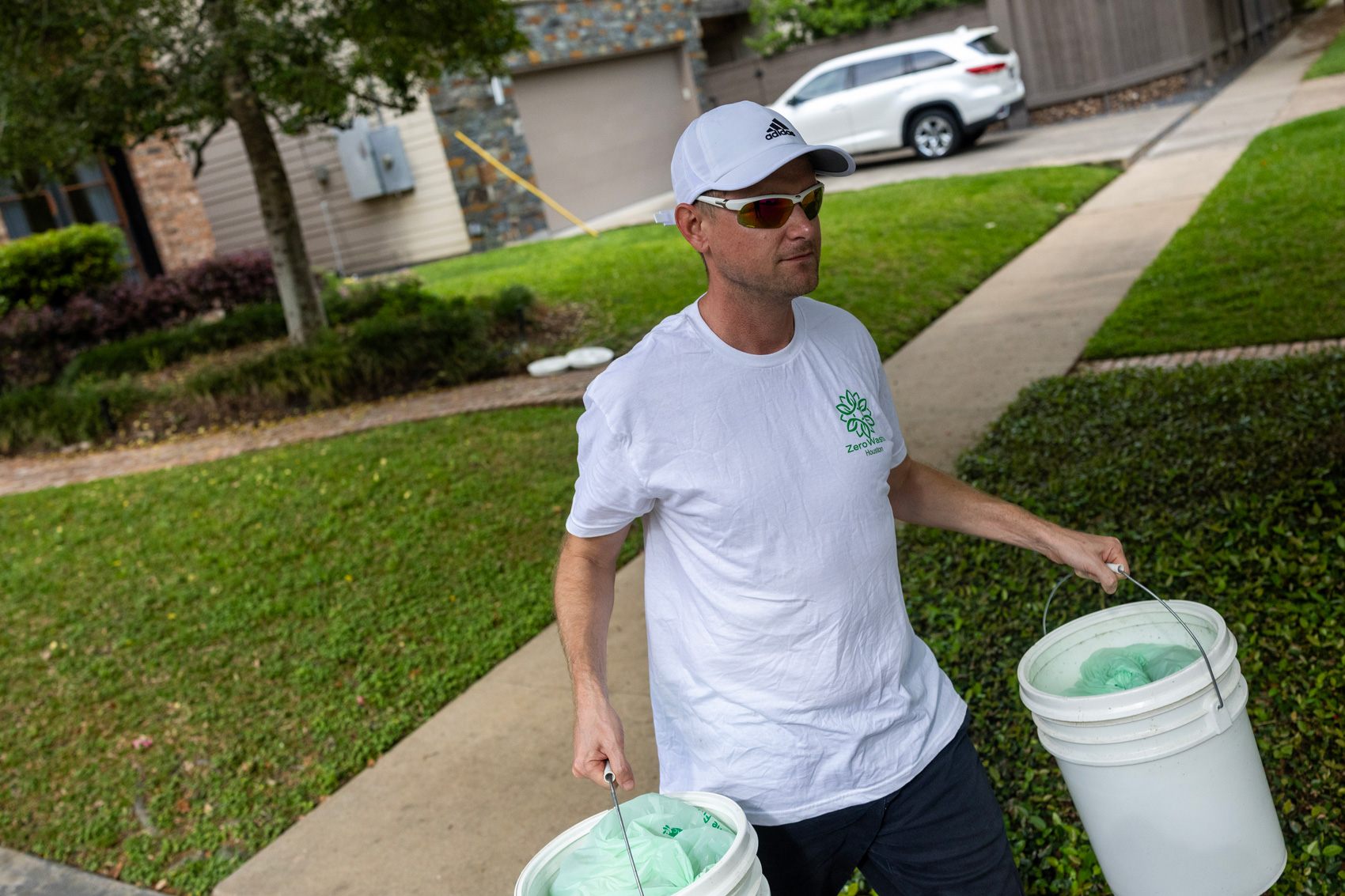
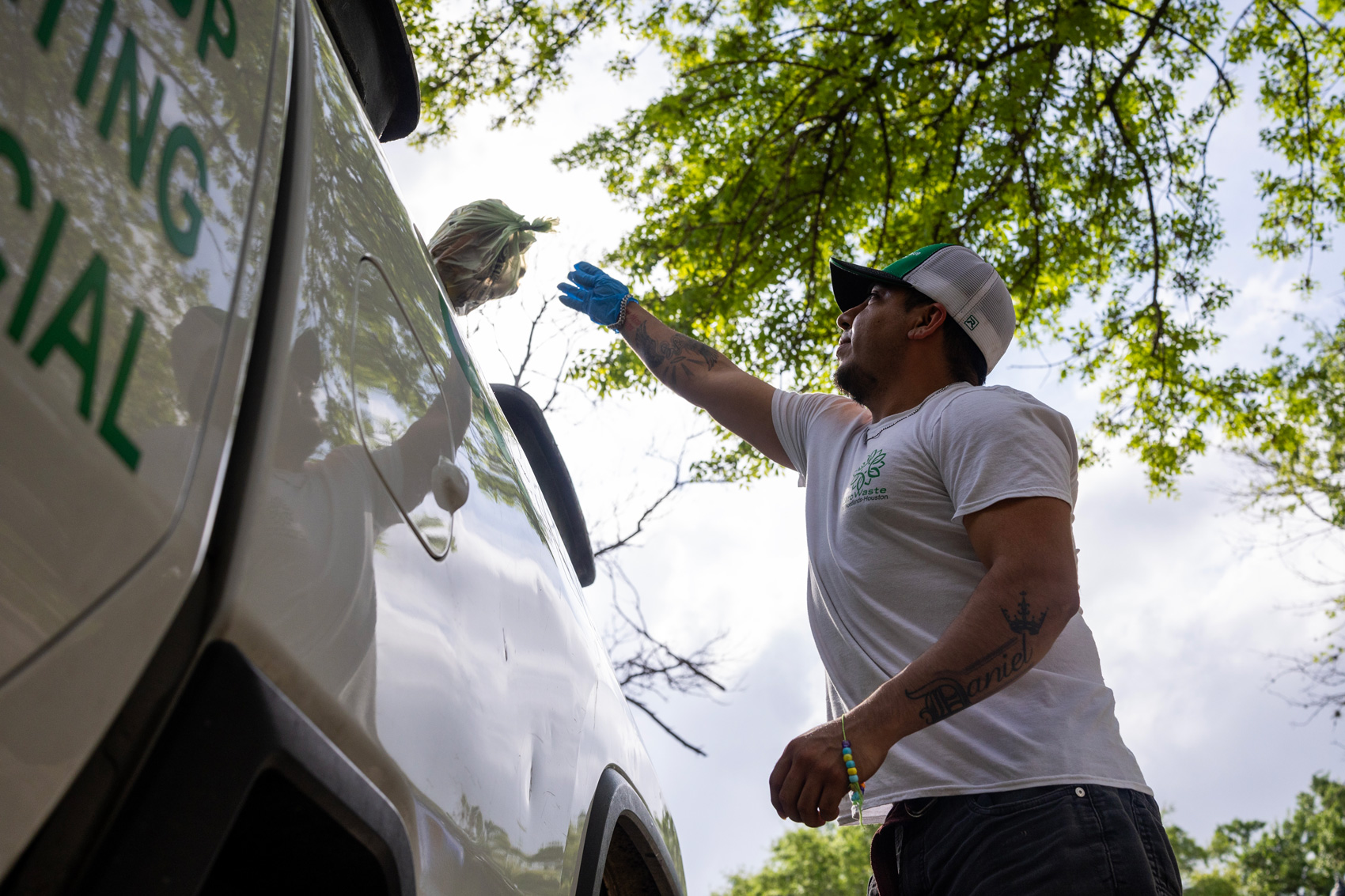
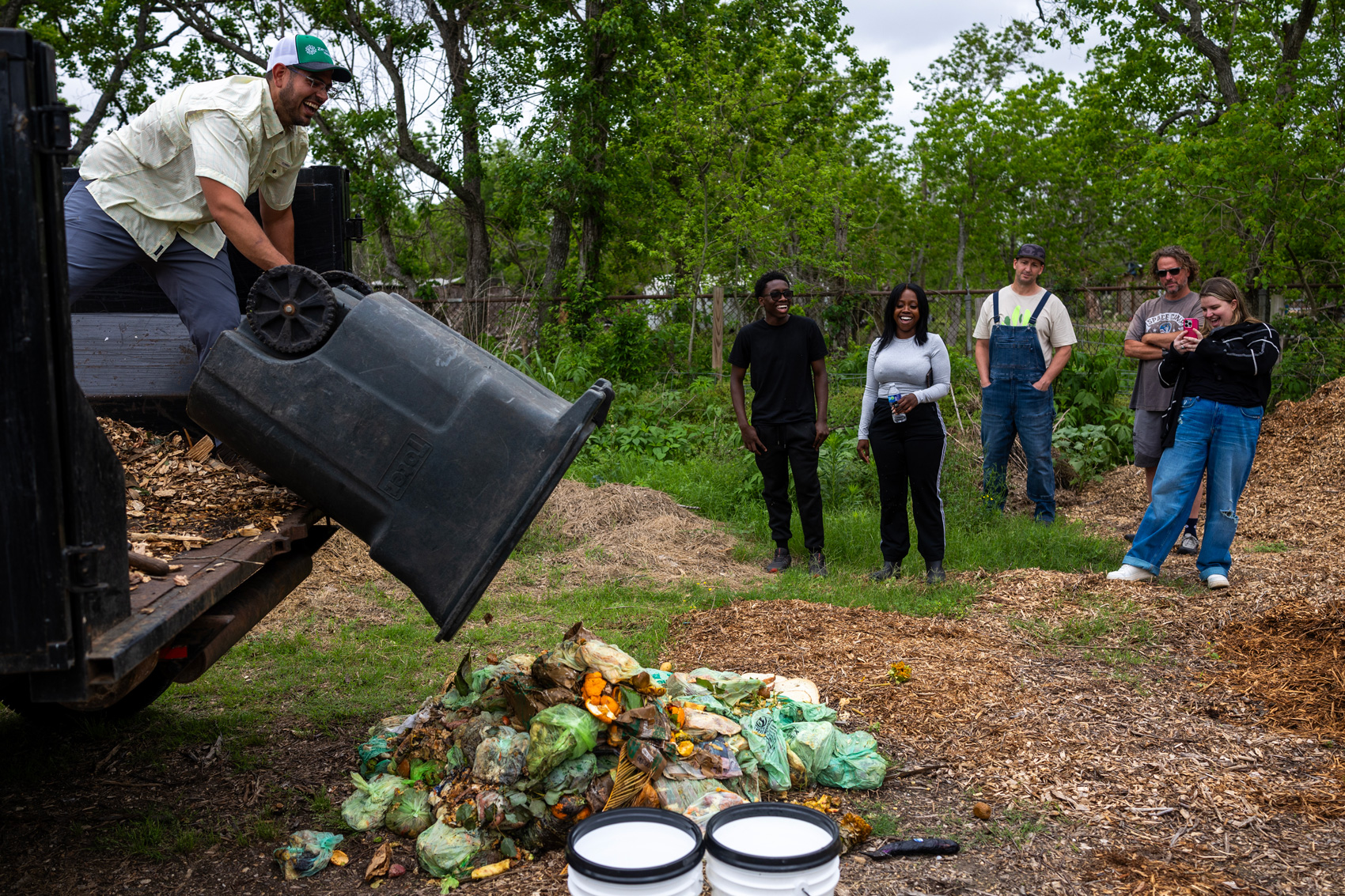
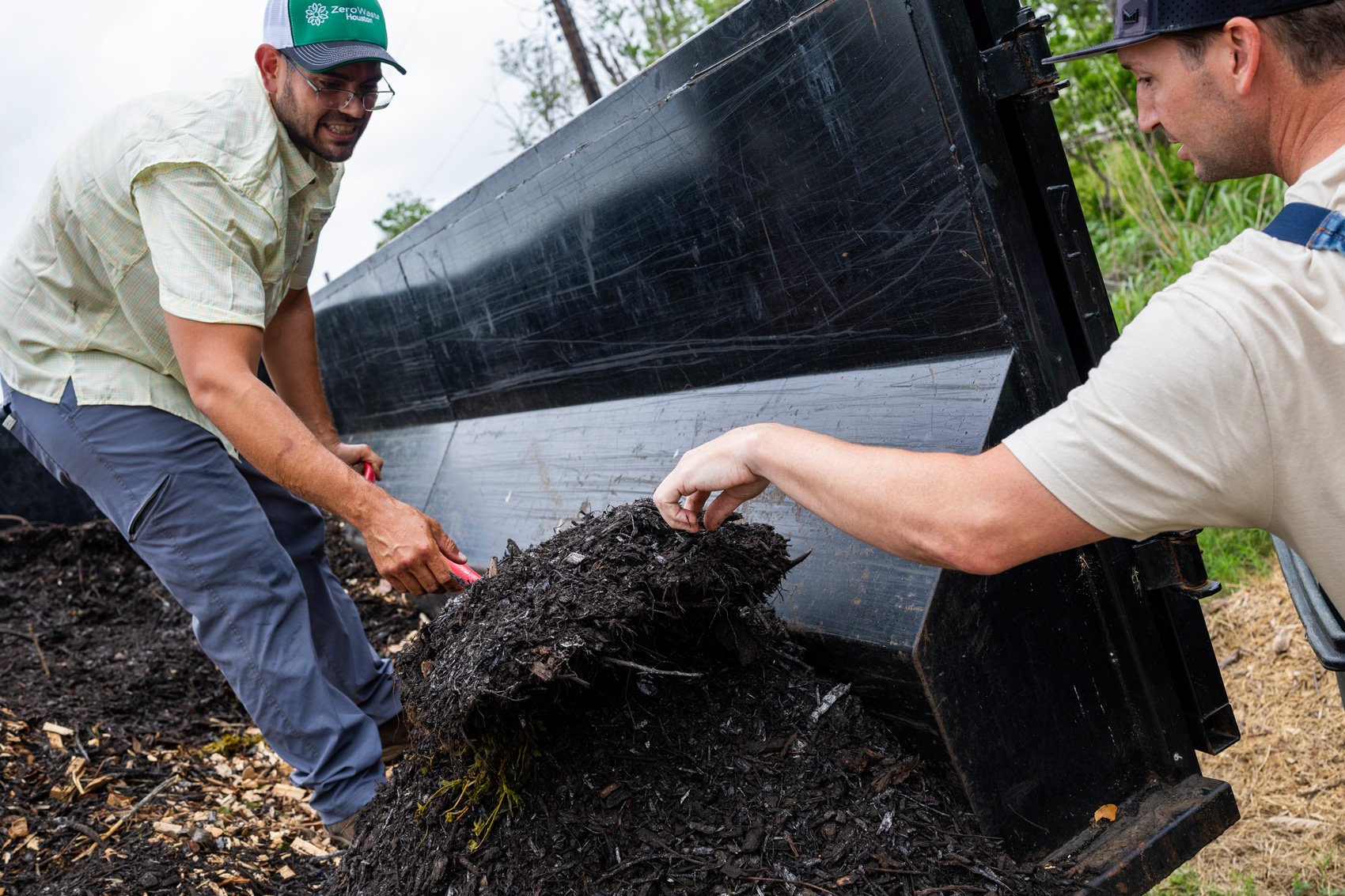

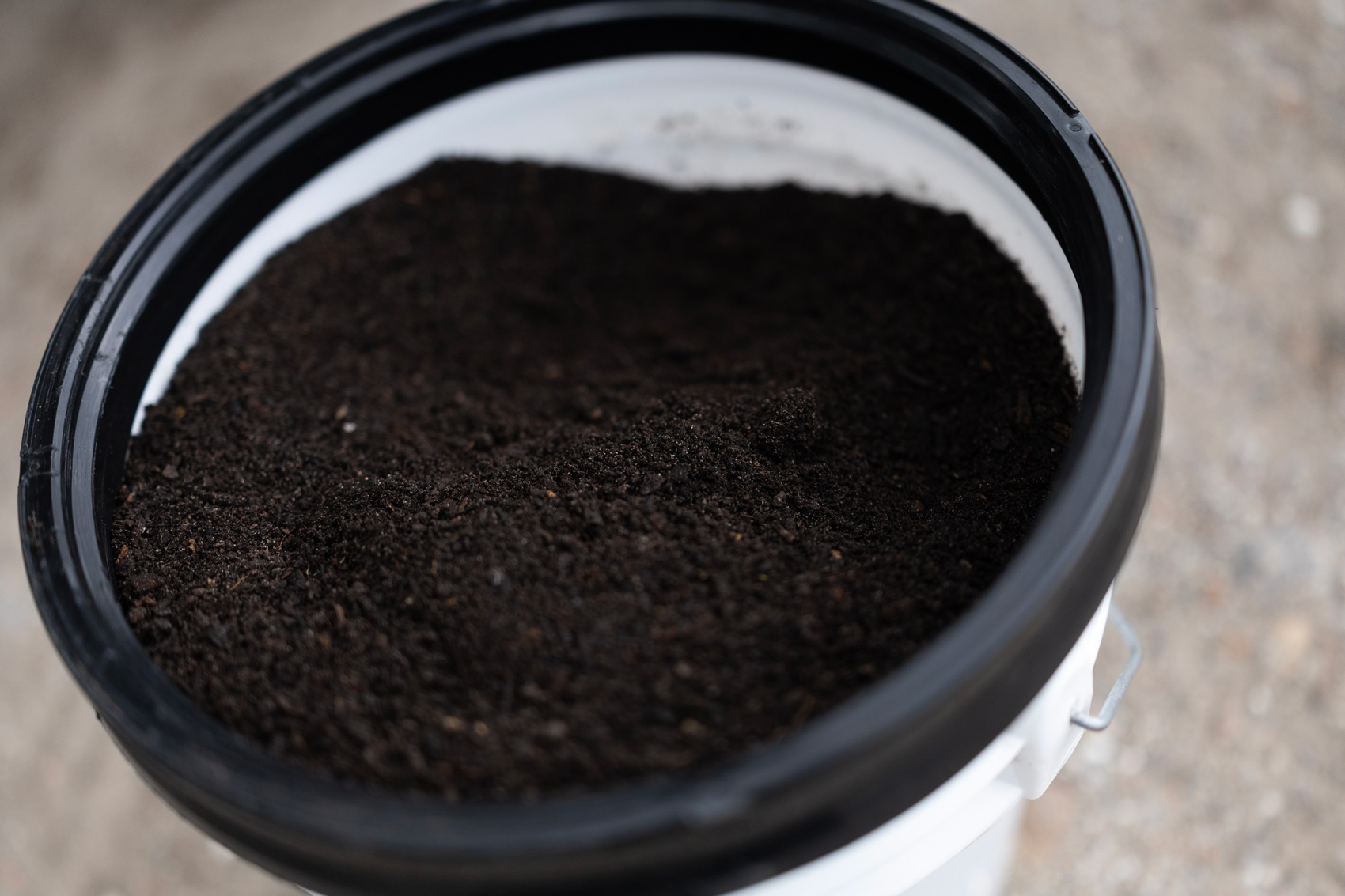


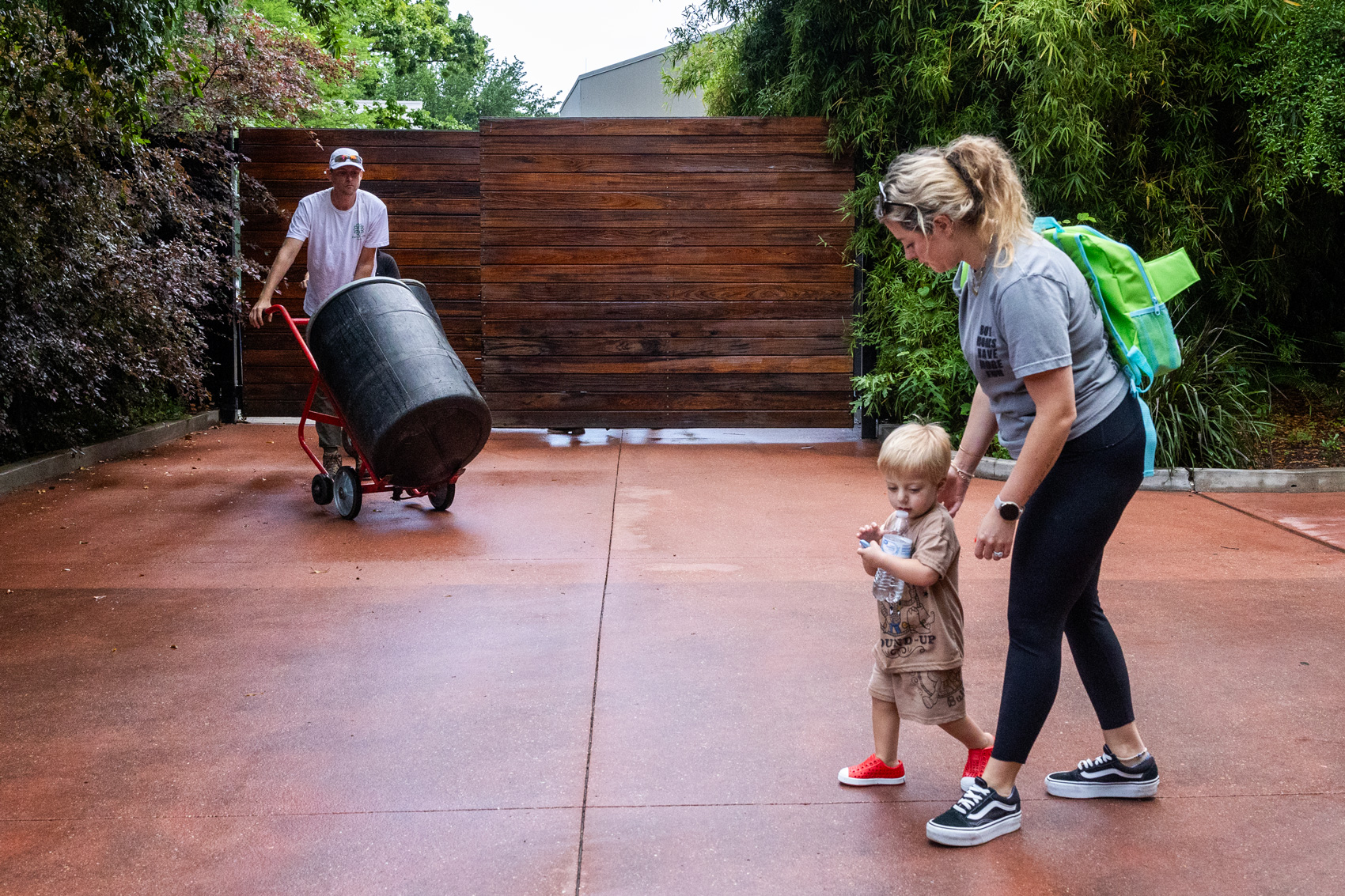


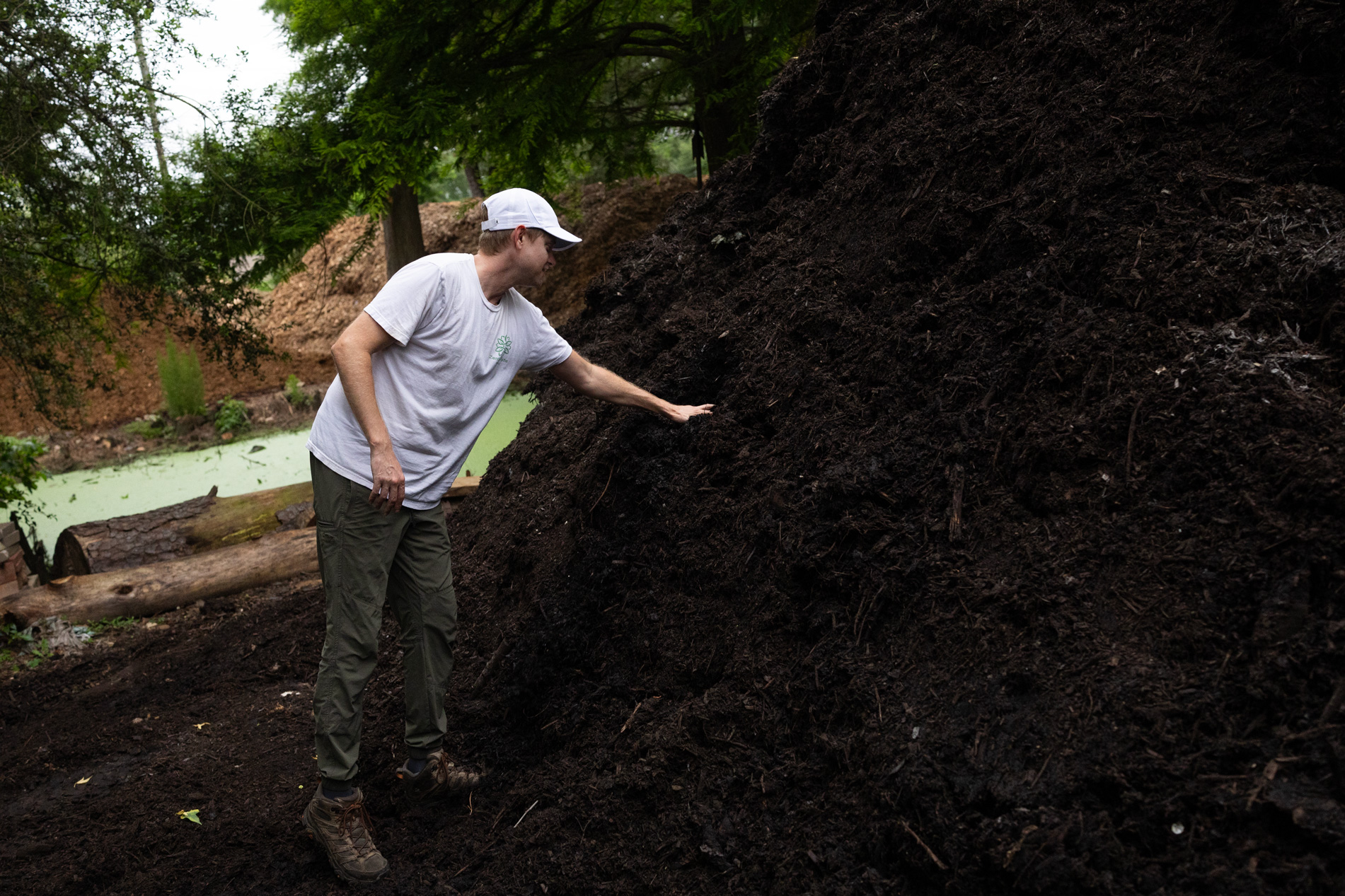
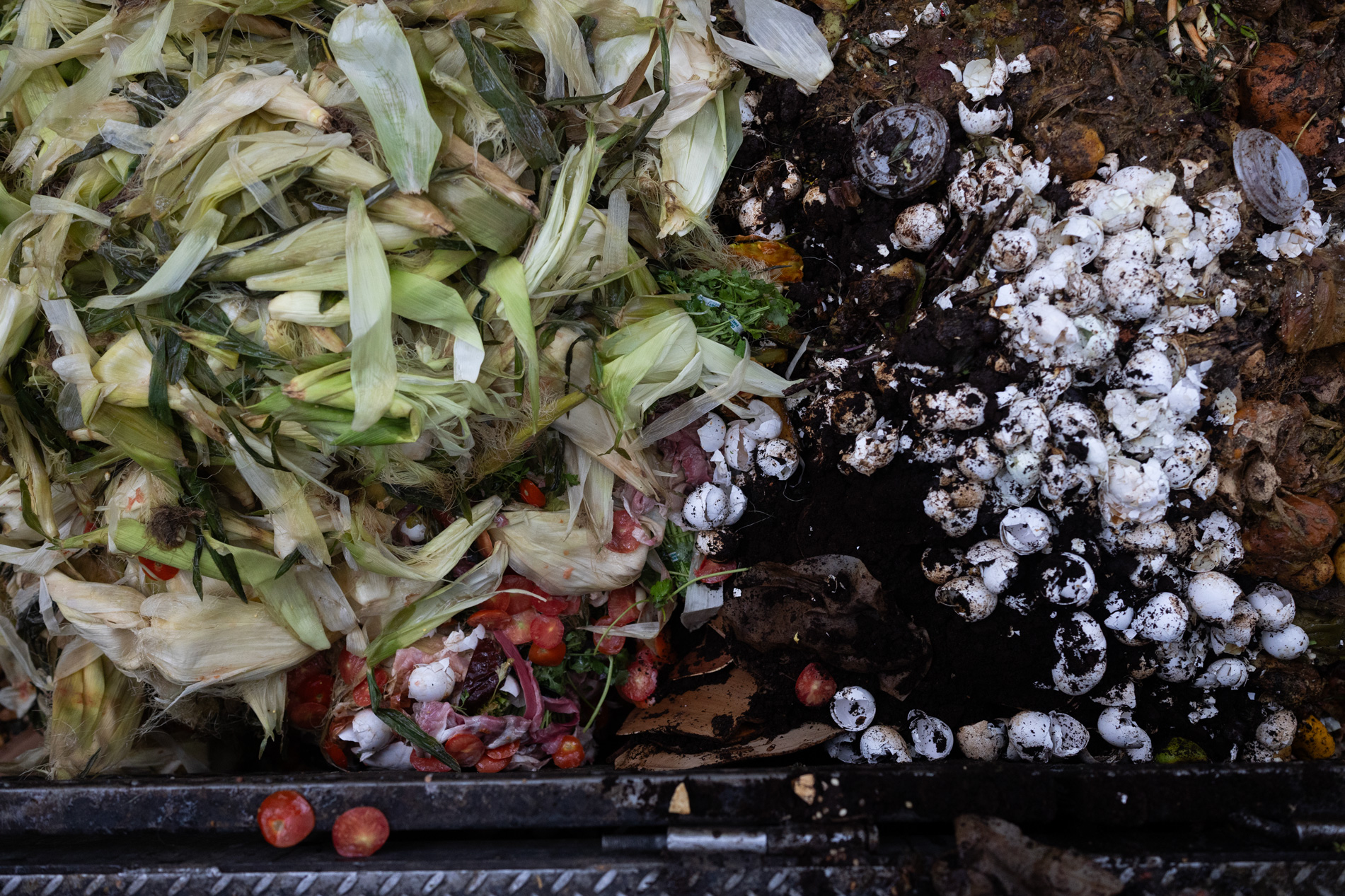


/https://static.texastribune.org/media/files/15d13c5650c0e8e7ca76fd525eab37c9/Keller%20ISD%20School%20Board%20ST%20TT%2002.jpg)