The Town Centre steering committee met with the design consultants last month on August 18, and viewed concept sketches and models for the development of the 10 acres ...
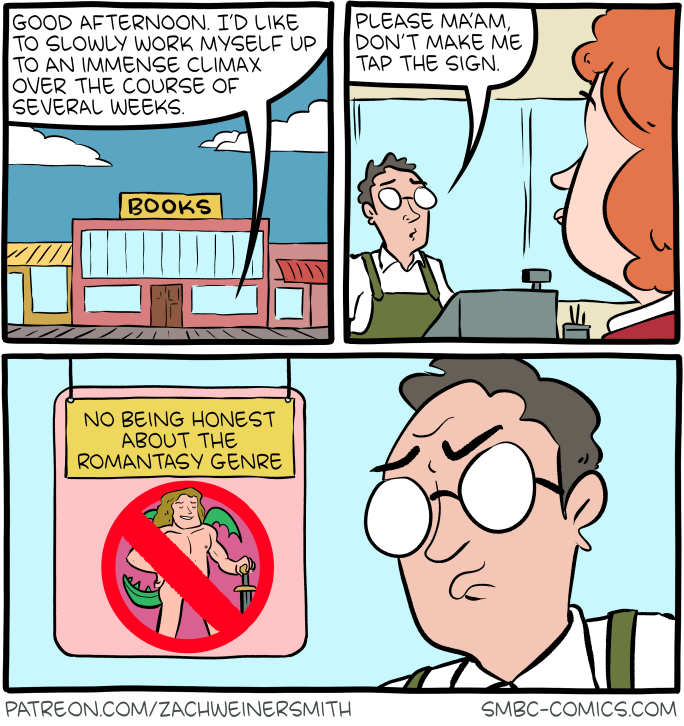
Charlie, a highly-strung, openly gay over-thinker, and Nick, a cheerful, soft-hearted rugby player, meet at a British all-boys grammar school. Friendship blooms quickly, but could there be something more...?
Charlie, a highly-strung, openly gay over-thinker, and Nick, a cheerful, soft-hearted rugby player, meet at a British all-boys grammar school. Friendship blooms quickly, but could there be something more...?
Added by @macmanx in Reading & Literature › Webcomics.
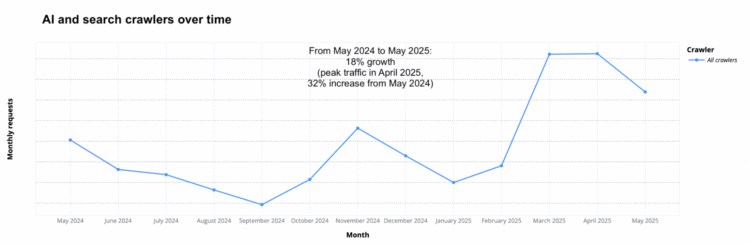
Bots have crawled the web for a long time, but the past couple years has been something different as companies release their AI crawlers to scrape as much as possible. Cloudflare broke it down by type of bot and source.
Not all crawlers are the same. Bots, automated scripts that perform tasks across the Internet, come in many forms: those considered non-threatening or “good” (such as API clients, search indexing bots like Googlebot, or health checkers) and those considered malicious or “bad” (like those used for credential stuffing, spam, or scraping content without permission). In fact, around 30% of global web traffic today, according to Cloudflare Radar data, comes from bots, and even exceeds human Internet traffic in some locations.
A new category, AI crawlers, has emerged in recent years. These bots collect data from across the web to train AI models, improving tools and experiences, but also raising issues around content rights, unauthorized use, and infrastructure overload. We aimed to confirm the growth of both search and AI crawlers, examine specific AI crawlers, and understand broader crawler usage.
Every now and then I glance at traffic sources, and AI bots seem increasingly common. I wonder if or when bot traffic outnumbers human visits.
Congressional Democrats are threatening to withhold their votes on a forthcoming measure to keep federal agencies open and funded, demanding Republicans first negotiate with them over upcoming changes to health care benefits that impact millions of Americans.
With just three weeks until the government shuts down, Republican leaders in the House and Senate are preparing to put forward a stopgap spending bill that would keep agencies afloat past the current Sept. 30 deadline. Such a measure would require Democratic support in the Senate, however, and the minority party is seeking to exploit that leverage to avoid health care cuts scheduled to hit in the coming months.
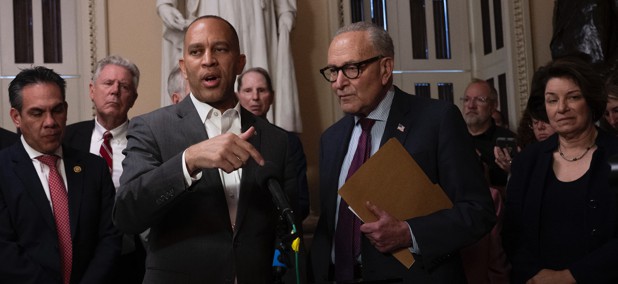
“We will not support a partisan spending agreement that continues to rip away health care from the American people, period full stop,” House Minority Leader Hakeem Jeffries, D-N.Y., said on Thursday after meeting with top Democratic appropriators and his counterpart in the Senate.
Senate Minority Leader Chuck Schumer, D-N.Y., emerged from that meeting suggesting he and Jeffries were in “total agreement” on the path forward.
“What the Republicans are proposing is not good enough for the American people and not good enough to get our votes,” Schumer said. “The Republicans have to come to meet with us in a true bipartisan fashion to satisfy the American people’s needs on health care or they won’t get our votes, plain and simple.”
Around 22 million people who receive health care through the Affordable Care Act marketplace are slated to see the enhanced subsidies expire at the end of 2025 unless Congress intervenes. Those higher-level subsidies have been in place since 2021. Some Republicans have indicated they are open to extending the subsidies, but want to address the issue separately from the funding process.
Democrats are also looking to address changes to Medicare made in the One Big Beautiful Bill Act, which the Congressional Budget Office has estimated will result in around 10 million people losing their access to care over the next decade.
The government has been operating under a continuing resolution for all of fiscal 2025, meaning agencies are still funded at their fiscal 2024 levels. The proposed length of the next CR remains unclear, though Republicans are looking to bring a bill up for a vote as soon as next week.
Both the House and Senate have begun passing full year funding measures for fiscal 2026, though only the Senate has done so with broad, bipartisan support. Lawmakers could seek to fund some parts of government with full-year appropriations bills and the rest with a stopgap, though the current time crunch would make such an approach difficult to execute.
Further complicating the funding talks are the Trump administration’s efforts to unilaterally withhold previously approved spending through a process known as “pocket recissions.” Schumer previously suggested that the White House following through on such an approach would increase the likelihood of a shutdown.
This story has been updated to reflect the most up-to-date CBO estimate of the Big Beautiful Bill’s impact on Medicare coverage.
Sombr, the artist behind hits “Undressed” and “Back To Friends,” won his first ever award at the 2025 MTV VMAs on Sunday. The Onion shares everything you need to know about the singer.
Birthplace: Liminal space
Age: However old Sufjan Stevens’ Illinois feels to you
Genre: Alt-horny
Hairstyle: The Muammar Gaddafi
VMA Received: Most Recent Artist
Fans: People who have to retake driver’s test
Greatest Fears: Smiling, color photography, smiling in color photography
WASHINGTON—Fulfilling his pledge to realign the mission of the White House kitchen with the vision of the Founding Fathers, President Donald Trump signed an executive order this week officially renaming the White House refrigerator the U.S. Department of Ham. “When Thomas Jefferson had the first ice house installed in 1801, the name Department of Ham was chosen to show the world our ability to eat cold cuts at a moment’s notice,” said Trump at the Oval Office signing ceremony, adding that when Harry Truman changed the appliance’s name to “fridge” in 1947, it “weakened the nation’s image” and disrespected the men and women throughout the country’s history who have enjoyed fresh deli meat at any time of day. “The Department of Ham is a beautiful name that conveys tremendous strength when it comes to cured pork, and it in no way downplays the strategic importance of turkey, salami, or even pre-packaged smoked salmon. The restoration of this name will return this storied 28-cubic-foot department to its former glory.” At press time, a professional headshot of a glistening ham posed before the U.S. flag had been added to the Cabinet website.
Elon Musk was temporarily overtaken as the world’s richest person by Oracle cofounder Larry Ellison after the company’s stock surged $100 billion on AI-related cloud computing contracts. What do you think?
“Nothing tens of thousands of layoffs can’t solve.”
Shane Craft, Prop Master
“It’s amazing to live in a country where the second- or even third-richest person on earth can one day become the richest person on earth.”
Corinne Baggins, Entree Suggester
“I can spot him a couple bucks, but not much more.”
Now ... this brings me to something very dear to my heart. A particular segment in all television show that warms my body, tingling toes to tingling top of head, and that is, of course, you guessed it, the television commercial. #CowboyWho
In brief: Today should be dry and hot in Houston, but the isolated to scattered shower chances will (sort of) return this weekend. Temps will remain pretty hot with low to mid-90s being the standard for a while longer.
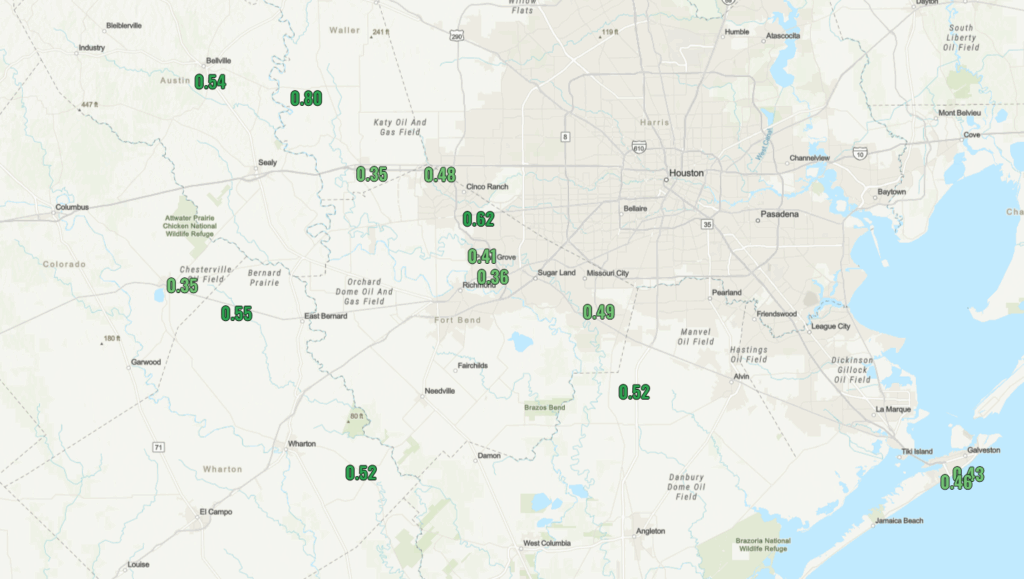
Look, if we’re really being honest, I don’t have much to add to what Eric’s forecast yesterday summed up in gifs. The only thing that kind of changed was the rain! Several spots picked up a quarter to even a half-inch or slightly more of rain yesterday from passing showers.
Some of Thursday’s higher rain totals south and west of Houston. (NOAA)
Unauthorized showers, but not bad at all.
Today through Monday
In terms of rain chances, today looks minimal to near zero. Tomorrow looks quite isolated. Sunday and Monday should see at least a smattering of afternoon showers in typical late summer fashion here in Houston. Most of us will probably see little to no rain, but like Thursday, a few locations could pick up a quarter to half-inch from a heavier downpour.
Temperatures? Well, we are truly in “Second Summer” now. It’ll be hot, today especially. I wouldn’t be shocked to see upper-90s in a few locations this afternoon. Temps will then back down into the low to mid-90s Saturday through Monday. Morning lows won’t be as nice as earlier this week, with mid to upper 70s.
Rest of next week
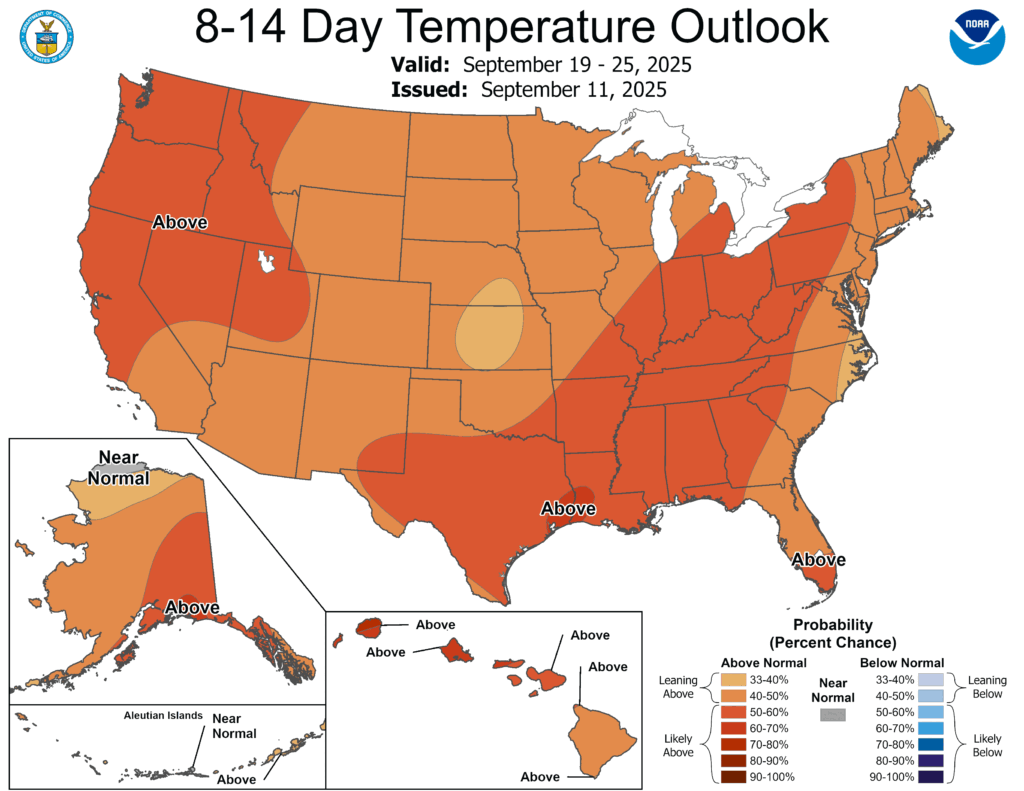
It may get hotter yet next week, with temperatures starting through Tuesday or Wednesday in the low to mid-90s. We could do mid to even isolated upper-90s by late week or next weekend, possibly. It looks like this week was, indeed, fake fall. The 8-to-14-day outlook from NOAA’s Climate Prediction Center shows the highest odds of above normal temperatures in the Lower 48 right over Southeast Texas.
You can keep the autumn threads in the closet a little longer. (NOAA CPC)
Every now and then, we can count on a decent end to September temperature-wise. I’m not sure this is the year. But, hey, at least we had this week and a mostly tolerable summer!
You Stretched Diagonally Across It: Contemporary Tapestry at Dallas Contemporary, April 11 – October 12, 2025
You Stretched Diagonally Across It: Contemporary Tapestry boldly repositions textiles as a powerful and relevant medium, not just decorative objects. The show succeeds in its mission to survey a vibrant and curious collection of contemporary works, demonstrating how weaving traditions persist and evolve. The exhibition’s strength lies in how it frames each piece as a complex narrative, a quality that elevates craft to art.
Many approaches to the medium are taken across an expansive, continuous gallery. Yto Barrada’s Geological Time Scale immediately establishes a dialogue with history, pushing back against colonial-era aesthetics by presenting a collection of monochromatic rugs. From there, the exhibition explores how artists use a medium historically associated with utility to tell powerful stories.
Diedrick Brackens, “nuclear lovers,” 2020, woven cotton and acrylic yarn
The show feels most compelling in its exploration of how images translate into textiles. Artists like Melissa Cody and Diedrick Brackens weave personal and cultural narratives into their pieces. Cody’s Motherboard Vibrations honors her Navajo/Diné heritage by incorporating digital patterns, linking ancient tradition with contemporary technology. Similarly, Brackens’ nuclear lovers translates a poem into a lush, interwoven scene, turning poetic rhythm into physical form.
While many of the pieces are more traditional tapestries that could be displayed on a wall, others, like Clarissa Tossin’s woven Amazon boxes, push the boundaries of the medium, taking on a sculptural quality. This exploration of materials is a recurring theme, with artists weaving everything from recycled polyester to lacquered magazine paper into their work, a testament to the flexibility of the medium.
Clarissa Tossin, “Circumnavegação à Exaustão- Cosmos,” 2020, amazon delivery boxes, laminated archival inkjet print and wood
There is one minor issue: the hang of the show is impeded by its sparse and distantly placed wall labels. For a show that so elegantly merges historical legacy with contemporary innovation, a more direct and accessible approach to the didactic material would have better served the artists and their work. There is a paper map available at the front desk that assists in this regard, but a show brimming with interesting work begs to be read more deeply. Despite this, You Stretched Diagonally Across It is an exciting and important showcase that firmly establishes contemporary textile art as a dynamic and crucial field of inquiry.
****
Groundbreakers: Post-War Japan and Korea from the DMA Collection at the Crow Museum of Asian Art at UT Dallas, September 6, 2025 – July 26, 2026
Groundbreakers at the Crow Museum of Asian Art’s gallery at UT Dallas provides a nuanced survey of postwar artistic innovation from Japan and Korea. The show, presented in collaboration with the Dallas Museum of Art, delves into the cross-cultural dialogue and experimentation that defined these periods, a conversation that feels particularly resonant given the complex historical relationship between the two nations.
Kazuo Shiraga, “Imayo Ranbu (Modern Dance),” 2000, oil on canvas
Upon entering the gallery, visitors are greeted by Jiro Takamatsu’s Cube 6 + 3, a three-dimensional work that immediately interrogates the viewer’s perception of space and depth. This piece serves as a fitting introduction to the exhibition’s core themes: a commitment to abstraction, a rigorous exploration of materiality, and an emphasis on the process and performance of creation.
The works on display trace the output of three distinct yet interconnected movements: Mono-ha, Dansaekhwa, and Gutai. The artists from these groups challenged traditional notions of artmaking, moving beyond the conventional tools of the hand. For some, the body became the primary implement. Kazuo Shiraga’s work, for instance, is a visceral testament to this approach; his canvases are a direct result of his energetic performance, painted with his feet while suspended from a rope. Similarly, Natsuyuki Nakanishi’s use of vinyl bubbles created with his mouth or Sadamasa Motonaga’s choice to pour paint directly onto the canvas underscore a radical reorientation of the artist’s relationship with their materials. Motonaga’s work, from the visceral, material-driven Work, No. 1 to the more gestural, symbolic Line Line Line, showcases a deliberate and considered evolution of an artist’s practice.
Sadamasa Motonaga, “Line Line Line,” 1979, acrylic on canvas
The exhibition successfully establishes a dialogue between these pioneering movements and contemporary art. It highlights the influence of these early experimentations on later artists, such as Tatsuo Miyajima and Do Ho Suh. Miyajima’s commissioned piece, Counter Ground, a work of randomized numerical sequences, is intended to empty the viewer’s mind, a concept that echoes the performative and meditative qualities of the postwar movements. Meanwhile, the inclusion of a work by Do Ho Suh, whose father was a mentor to Lee Ufan, provides a compelling point of conversation regarding the legacy of these artistic antecedents. Lee Ufan’s own journey, which saw him as a key figure in Mono-ha while living in Japan on a Korean grant, underscores the fluid, international nature of these movements despite their national origins.
Groundbreakers successfully argues that the very act of artistic creation during this period — the playful use of materials, the direct gestures, and the reorientation of subject and object — is as significant as the final art form. Through its selected works, the show provokes a deeper consideration of the viewer’s role and the ongoing relevance of these ground-breaking postwar artistic practices.
Editor’s note: This article is also published in English on Glasstire. Find that here.
Nota de la editora: este artículo fue publicado originalmente en inglés en Glasstire el 5 de agosto del 2025.
Traducción de Yolanda Fauvet y Paulina H. Marroquín
La famosa imagen de Che Guevara visto desde abajo —desaliñado y decidido, una estrella invertida adorna la boina que lleva sobre su revoltoso cabello largo y tiene la mirada fija en un punto indeterminado en la lejanía o en un futuro brillante— hace tiempo que dejó la esfera de la fotografía documental para convertirse en un icono de la cultura pop. El rostro del líder revolucionario ha sido reproducido, alterado, idolatrado, parodiado y encarnado, y ha aparecido en innumerables camisetas, pósteres de dormitorios y álbumes de Madonna, como símbolo de simpatías marxistas, rebeldía adolescente o elegancia radical. Incluso un contorno del retrato, de dieciséis toneladas de acero y 40 metros de altura, adorna la fachada del Ministerio del Interior en la Plaza de la Revolución, en el centro de La Habana. La imagen sigue siendo la fotografía cubana más conocida y, muy posiblemente, la foto más reproducida de la historia.
Realizada por el fotógrafo cubano Alberto Korda en 1960, cuando Guevara hizo una breve aparición en el escenario durante un discurso de Fidel Castro, la fotografía prácticamente no se usó hasta que Guevara fue ejecutado en Bolivia en 1967, cuando, en palabras de Malcolm Daniel y Raquel Carrera, “pasó a funcionar como la imagen secular de un santo mártir”. Una copia de la fotografía original sin recortar de Korda, titulada Guerrillero heroico, muestra a Guevara entre hojas de palmera y a Jorge Masetti, periodista argentino que más tarde se convertiría en guerrillero, de perfil. El retrato cuelga cerca de la entrada de la admirable exposición del Museum of Fine Arts, Houston (MFAH) Navigating the Waves: Contemporary Cuban Photography [Navegar las olas: Fotografía cubana contemporánea], una muestra de obras de la isla caribeña creadas después de que la Revolución Cubana derrocara la dictadura de Fulgencio Batista en 1959. Curada por Daniel, curador de fotografía del MFAH, y Carrera, la exposición toma todos sus elementos del impresionante acervo de fotografía cubana del museo, una colección extraordinariamente sólida de casi 400 obras de más de ochenta artistas, que comenzó a reunirse en 1994 y recientemente fue ampliada con una donación.
Vista de la instalación de “Navigating the Waves: Contemporary Cuban Photography” [Navegar las olas: Fotografía cubana contemporánea] en el Museum of Fine Arts, Houston
A partir de la década de 1960, Korda y sus contemporáneos —jóvenes fotógrafos documentales alineados con los ideales de la Revolución, que más tarde fueron bautizados como la generación “épica”— dirigieron sus lentes no solamente hacia los héroes políticos y los grandes acontecimientos, sino también hacia los segmentos de la sociedad cubana que antes eran oprimidos y estaban olvidados. Mario Ferrer Mortimor, por ejemplo, comenzó una larga serie titulada Guajiros que retrataba a la población rural no como pintorescos “tipos” etnológicos, del modo en que lo habían hecho fotógrafos anteriores, sino como personas trabajadoras que luchaban contra considerables desventajas para mejorar su vida y la de su país en general. Una fotografía sin título de 1975 muestra a un hombre alto y sonriente con un sombrero de paja y unos fabulosos bigote y patillas, apoyado en un carro tirado por dos cebúes, que muestra tanto el atraso de la agricultura cubana de la época como la fortaleza del proletariado de la isla. Cuatro imágenes de Los centenarios (1981) de Pedro Beruvides presentan retratos cortados para mostrar muy de cerca a ancianos negros nacidos antes de la abolición de la esclavitud en Cuba en 1886. Sus rostros curtidos y estoicos recuerdan inevitablemente a William Casby, born in slavery, Algiers, Louisiana [William Casby, nacido en esclavitud, Algiers, Luisiana] (1963), de Richard Avedon, que Beruvides posiblemente conocía.
Imágenes periodísticas o ensayísticas como estas funcionaban como propaganda implícita del régimen de Castro y obtuvieron su aprobación oficial, lo que las convirtió en una introducción adecuada a la exposición, que comienza en la década de 1960, cuando el apoyo del pueblo cubano a la Revolución alcanzó su punto álgido. Sin embargo, los curadores también tuvieron la inteligente idea de colgar dos obras más recientes cerca de la entrada. Untitled No. 1 [Sin título n.º 1] (2017), de la serie Memorias pendientes de Adrián Fernández, muestra una enorme estructura similar a un andamio en una carretera junto al mar. Las curvas y ángulos monumentales del armazón, inacabado o posiblemente obsoleto, recuerdan las torres de refrigeración y otras reliquias de los paisajes postindustriales de Bernd y Hilla Becher, así como la poco atractiva Vessel [Vasija] de Thomas Heatherwick en Manhattan. La enigmática construcción en la foto de Fernández también parece la parte trasera de una enorme valla publicitaria.
Reynier Leyva Novo, “Un día feliz FC n.º 11”, 2016, impresión de 2024, impresión de inyección de tinta. The Museum of Fine Arts, Houston, compra financiada por Joan Morgenstern, Jereann Chaney y Carl Niendorff
Un día feliz FC n.º 11 (2016), de Reynier Leyva Novo, perteneciente a la serie Un día feliz, muestra un podio desde atrás, repleto de micrófonos, con una gran multitud reunida delante y dos fotógrafos con cámaras enfocadas hacia el orador, o más bien hacia donde debería estar el orador. Nadie se encuentra en el podio. En realidad, el artista se apropió de una de las imágenes de Korda en la que Fidel Castro se dirige a una audiencia y lo borró digitalmente, un astuto gesto político-conceptual que sólo fue posible una vez que Castro dejó de estar en el poder. La gran impresión de inyección de tinta de Novo, al igual que la de Fernández (que también es una representación digital), emplea tecnología contemporánea para reflexionar sobre la promesa fallida de la política cubana y del Partido Comunista que ha monopolizado el país durante tanto tiempo. Novo lo hace a través de la ausencia de un líder carismático y el vaciado implícito de todo lo que representaba; Fernández a través de una monumental ruina modernista imaginaria. Entre el optimismo de la generación épica y la ironía hastiada de estas obras se encuentra gran parte de la historia contemporánea de la fotografía cubana —y de la propia isla— que el resto de la exposición desarrolla.
Vista de la instalación de “Navigating the Waves: Contemporary Cuban Photography” [Navegar las olas: Fotografía cubana contemporánea] en el Museum of Fine Arts, Houston
A partir de las décadas de 1970 y 1980, muchos artistas, poco interesados en crear obras que apoyaran al régimen pero incapaces de desafiar la represiva censura del gobierno, recurrieron a la representación irónica de la vida cotidiana, y encontraron los pequeños surrealismos que la fotografía comunica tan bien y que durante mucho tiempo habían sido un sello distintivo de la fotografía callejera en Estados Unidos y otros lugares. En Sin título (1990-1992), de la serie Zoo-Logos, de Eduardo Muñoz Ordoqui, el brazo de un simio que se asoma lastimeramente entre los barrotes de una jaula del zoológico de La Habana parece espectral y patético, con lo que crea un comentario tácito sobre las condiciones de pobreza de la vida cubana. Sin título (1995), de Mario Díaz, plasma a un hombre sin camisa trabajando en un coche antiguo mientras está sentado dentro del capó. Hay piezas esparcidas por la calle residencial. Díaz también alude a la situación de la isla, donde mantener en funcionamiento maquinaria creada generaciones atrás era una necesidad absorbente —tanto así que el coche parece tragarse al hombre por completo—, pero la configuración de los faros, la parrilla y el parachoques del viejo Oldsmobile también sugiere un rostro, y el torso encorvado del hombre hace las veces de una nariz bulbosa. El humor absurdo de estas obras parece tanto un mecanismo de supervivencia como una manera de evitar contenidos políticos explícitos.
Otros artistas se refugiaron en un reino de mitos y alegorías privados. Juan Carlos Alom fotografió una caja transparente de vidrio o plástico que contenía un par de cráneos humanos en Curando la tierra (1996), de la serie El libro oscuro. Sobre ellos, de una capa de tierra brota una hilera de ramitas nudosas y sin hojas. Duplicada en espejo en la imagen resultante, con una mancha blanca expresionista que se extiende por la parte inferior, la composición experimenta con las convenciones de la fotografía “directa” (en parte por la falta de materiales en la isla), al tiempo que insinúa significados esotéricos. De manera similar, René Peña González insinúa un significado hierático en sus obras sin título de la serie Ritos II (1995). Al retratar su propio cuerpo musculoso y de piel oscura con objetos cargados de significado —un pollo muerto, un pez que cuelga por la cola—, estas imágenes evocan la espiritualidad de las religiones sincréticas afrocubanas, pero siguen sin ser específicas y muestran un sentido incipiente de la identidad negra cubana en un momento en que el gobierno había declarado oficialmente que el racismo no existía.
Marta María Pérez Bravo, “La mano poderosa”, 1996, plata sobre gelatina. Museum of Fine Arts, Houston, compra del museo financiada por Photo Forum 1998
La mano poderosa (1996), de Marta María Pérez Bravo, se inspira en las imágenes populares mexicanas de la Sagrada Familia representada como los dedos de la mano de Dios, pero aquí las figuras adoptan la forma de muñecos de trapo de hombres —y una mujer— vestidos con ropa de negocios. La ficha explica que la artista veía a los muñecos como sus representantes de galería en ese momento, a los que imaginaba controlar mediante magia simpática. Y, de hecho, durante la década de 1990, en un momento en que la vida cotidiana en la isla se volvió más precaria con el colapso de la Unión Soviética y los subsidios que durante mucho tiempo envió, el mundo del arte internacional (incluido el FotoFest de Houston) se interesó mucho por el arte y la fotografía cubanos. Esta situación paradójica dio lugar a artistas como Pérez Bravo, Peña González y Alom, cuya exploración de aspectos de la identidad cubana, como la raza, la sexualidad y la religión, los puso en contacto directo con contemporáneos de todo el mundo y los situó a la vanguardia de un determinado tipo de fotografía latinoamericana y caribeña centrada en el cuerpo y sus mortificaciones, un enfoque muy influido por siglos de catolicismo en el Nuevo Mundo. Sin embargo, aunque exitosas y estimulantes en su época, estas obras ahora parecen bastante serias y anticuadas.
Esterio Segura, “Sin título” de la serie “Lo secreto”, 2003, impresión de inyección de tinta. Museum of Fine Arts, Houston, Madeleine P. Plonsker Collection, obsequio de Madeleine y Harvey Plonsker
En el siglo actual, a medida que la isla ha seguido abriéndose al exterior, los artistas cubanos se han familiarizado cada vez más con las corrientes internacionales del arte y la fotografía. Persiste una fuerte tradición documental, como demuestra la exposición con obras como la maravillosa Sin título (2003) de Esterio Segura, de la serie Lo secreto, una fotografía de una antena parabólica prohibida instalada en el interior en un fregadero de azulejos blancos y oculta de manera cómica con una gran bolsa de basura de plástico. Muchos otros fotógrafos han optado por formas de trabajar más o menos conceptuales que encuentran paralelismos pronunciados con artistas más conocidos de otros países. Cuatro imágenes de la serie Quinquenio gris (2015) de Alejandro González muestran escenas cruciales de la historia de Cuba de principios de la década de 1970, recreadas con figuras de juguete al estilo de David Levinthal. En Sin título #12 (2016), de la serie 0:00:00, Linet Sánchez Gutiérrez fotografía una pequeña maqueta de un escenario vacío que ella construyó, que recuerda espacios igualmente conmovedores y elocuentes de las obras de Thomas Demand. Y Entre el aire y los sueños (el cielo del mundo) (2003) de Glenda León, una gran imagen a color de nubes esponjosas ordenadas digitalmente para formar un mapamundi, actualiza la irónica obra Equivalents [Equivalentes] de Vik Muniz de 1993, realizada con guata de algodón.
Sin embargo, esto no quiere decir que las obras recientes de la exposición parezcan excesivamente derivativas, sino más bien que hablan de una nueva fase en la fotografía cubana liderada por artistas mucho más conscientes del mundo del arte en general —y del mercado que lo acompaña— que las generaciones anteriores, mucho más dispuestos a perseguir intereses artísticos personales por el arte en sí mismo. Y, sin embargo, al igual que las obras de Fernández y Novo que se encuentran en la entrada, estos fotógrafos siguen vinculados a la historia y los retos particulares de su país. Navigating the Waves nos ofrece una visión sin precedentes de la trayectoria de la fotografía en Cuba desde la Revolución hasta casi la actualidad. Lo mejor de todo es que nos prepara para querer saber qué vendrá después.
Navigating the Waves: Contemporary Cuban Photography estuvo en exhibición en el Museum of Fine Arts, Houston hasta el 3 de agosto del 2025. Esta reseña fue posible en parte gracias a una beca de viaje concedida por la Dorothea and Leo Rabkin Foundation.
They see lawn care as maintaining their property and protecting their substantial investment. It’s also the one time they can be alone with their thoughts.
- - -
Why couldn’t the dad sleep?
He was worried about money.
- - -
Why didn’t the dad want to have kids?
He was worried that he would pass on the gene for Huntington’s disease.
- - -
Did you hear about the dad who loved Eagles songs?
All dads love Eagles songs. It reminds them of their carefree youth.
- - -
Knock-knock!
Who’s there?
Hello, may I speak with the man of the house about the electricity bill?
Get off my porch.
- - -
KID: I’m hungry.
DAD: Hi, hungry. I’m tired.
- - -
Why do dads fart so much?
Their bodies are aging and breaking down.
- - -
Why do dads love grilling?
It makes them feel useful, given that their children are getting older and need them less and less.
- - -
What did one dad say to the other dad?
Not much. Forging a new friendship as an adult male is exceptionally difficult.
- - -
A corny dad joke:
The dad couldn’t eat corn anymore, because he had to cut down on carbs in light of his type 2 diabetes.
- - -
A dad passed a tennis court where two young people were engaged in an intense game, yelling and grunting with every shot.
“What a racket!” the dad said.
“Thanks!” replied one of the players.
“I wish I could afford a nice racket like that, but I haven’t been able to play in years,” the dad said.
…
“Back problems,” the dad said.
“Ah,” said the player.
- - -
Why don’t dads ever stop and ask for directions?
Because they have a lot of pride and arrogance wrapped up in their ability to be resourceful and to take charge, and they simply cannot ask for help. This is a type of toxic masculinity.
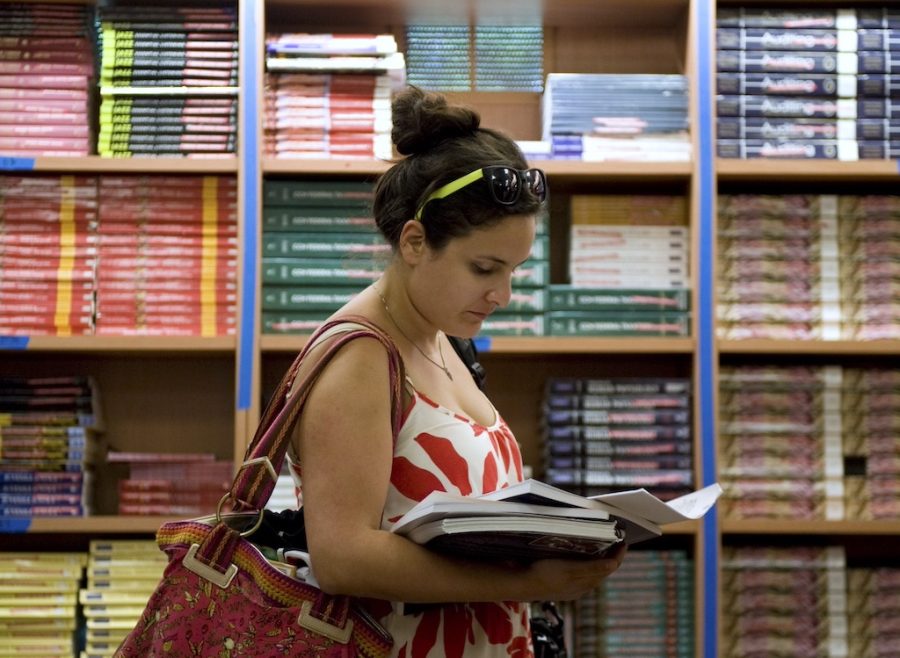
For years, textbook prices have burdened students already struggling with loans and sky-high tuition costs. Now Wall Street is taking over the market, tightening its grip on a staple campus institution: the college bookstore.
College students are now buying their textbooks from Wall Street. (Leonard Ortiz / Digital First Media / Orange County Register via Getty Images)
As the fall semester ramps up, the nation’s college students are preparing to make a dreaded purchase: course textbooks, which can cost students hundreds of dollars per year.
For years, textbook prices have been rising many times faster than inflation, burdening students already struggling with loans and sky-high tuition costs. A single course textbook can cost $400; the average hardcover textbook is closer to $100. Used textbooks and e-books aren’t always much cheaper.
How did the college textbook market become so broken, forcing some students to skip meals and work overtime just to afford course materials? One culprit, advocates say, is Wall Street’s increasing control over a staple campus institution: the college bookstore.
There are more than 4,000 campus bookstores across the country, and over half of them are operated by just two firms: Barnes and Noble Education, a publicly traded company that was spun off in 2015 from the Barnes & Noble bookstore empire, and Follett Higher Education, a bookstore operator now backed by the personal private equity fund of Tony James, the billionaire that once led Blackstone.
The duopoly may be forcing students to pay more for their books, thanks to a scheme originating under the Obama administration that has entrapped thousands of students over the last decade, all while bookstore giants and textbook publishers profit. The industry has stymied all attempts at reform, including stricter rules on the matter proposed last year under the Biden administration.
Many college bookstores were once run independently by universities, working closely with faculty to curate their shelves for students’ courses. But over the last several decades — as the rise of e-books and Amazon threatened the broader bookselling business — campus bookstore operations have increasingly been outsourced to private firms. Of the thousands of bookstores, only about three hundred independent college bookstores remain.
Campus bookstore consolidation is only growing. This spring, Barnes and Noble Education announced a “surge in new campus store partnerships,” assuming control over bookstores at more than twenty schools, including Villanova University and Georgia Southern. At the latter school, student bookstore workers were laid off as a result of the takeover, losing their tuition benefits.
The trend has hollowed out many once-independent college bookstores — and when Barnes and Noble Education or Follett arrives on campus, they bring with them a self-enriching textbook scheme.
Barnes and Noble Education have recently announced a ‘surge in new campus store partnerships,’ assuming control over bookstores at more than twenty schools
The “conspiracy,” as it was described in one antitrust case from 2020, is an automatic textbook billing program sometimes dubbed “inclusive access.” Schools that have adopted the billing program, often through bookstore partnerships with Barnes and Noble Education or Follett, automatically add textbook costs to students’ tuition bill, charging them for a semester’s course materials, which are in most cases provided online via a digital access code.
For bookstore operators and textbook publishers, the system is a gold mine, guaranteeing them lucrative textbook sales. But critics say that the program can entrap and then overcharge students, who may not know they can opt out.
As Barnes and Noble Education and Follett have expanded their campus bookstore duopoly, they have pushed universities to adopt their trademarked automatic billing programs, raking in millions in the process.
“There’s a lot of money in this market,” explained Nicole Allen, the director of open education for SPARC, an advocacy group dedicated to promoting open access to education and research. And both Barnes and Noble Education and Follett, she said, were using campus bookstore takeovers to help advance their textbook sales racket: “Their plan is to push campuses to this model.”
The Great Bookstore Buyout
In 2012, David Hoyt, the finance manager at the University of Denver bookstore, saw the writing on the wall. Like many independent bookshops around the country, the campus store was struggling to make money in the cratering book business. Students were increasingly buying textbooks and course materials online for cheap or pirating them. Publishers were hiking textbook prices to try to recoup the lost income, and bookshops were trying to get in on the e-commerce boom, but the industry was in free fall.
“The competition started to get very, very intense,” Hoyt said.
Follett, Hoyt told the Lever, swooped into Denver with a promise of a guaranteed income stream for the university, if it allowed the company to take over the bookstore. For many years, the bookstore had been profitable independently. But some 75 percent of its revenue came from textbook sales, according to Hoyt, which were dropping off rapidly.
University administrators struck a deal with Follett in 2012. At the time, they claimed that the new bookstore operator “would better serve students,” Hoyt said.
But in reality, the university was watching out for its bottom line.
“They were worried about a loss in revenue from the bookstore,” Hoyt said.
Had the University of Denver’s bookstore stayed independent, Hoyt said, there were plans to add a cafe to the bookstore, to encourage students to spend more time there, and to increase its affordable rental textbook offerings. Instead, the university turned the bookstore over to Follett, which promptly laid off staff, including Hoyt, and slashed operating costs — “trying to cut expenses as low as possible to make a profit,” Hoyt said.
This sequence of events at the University of Denver became a common story, repeated many times at struggling campus bookstores across the country. By the mid-2010s, as they continued to acquire dozens of college stores each year, Barnes and Noble Education and Follett had firmly established their duopoly over the college bookstore market.
Yet even when Wall Street was in charge, the bookselling business remained tough.
This began to change in 2016, when federal regulators granted the floundering textbook industry what seemed to be a golden goose. That year, former president Barack Obama’s Department of Education released a rule change, buried in an obscure financial aid policy, that for the first time allowed universities to automatically bill students for textbooks, bundling the charges with tuition.
Regulators were “hoping that campuses would be able to use the large purchasing power of their student body to negotiate for bulk pricing,” explained Cailyn Nagle, senior program manager of open educational resources at the Michelson 20MM Foundation, a nonprofit that advocates for equity in educational access. “You have thousands of students who need the same thing, maybe you can get a discount for them,” she said — or so the thinking went.
Instead, the new policy proved to be a “lifeline for the textbook industry,” in the words of Allen. Major publishers and booksellers seized on the opportunity to extract more money from students.
In the wake of the rule change, Barnes and Noble Education and Follett began offering their own automatic billing programs, which charged students for a suite of online course materials. Barnes and Noble Education has claimed that its program saves students thousands of dollars, but advocates like Allen are dubious. One recent study found that booksellers’ claims of savings were exaggerated, concluding that the program “does not benefit students as a whole.”
The fees charged by these programs vary; some levy a flat fee per course or per credit hour. Under some university contracts, Barnes and Noble Education and Follett charge $25 or $26 per credit hour for classes that use their materials, which could add up to $390 for a typical fifteen-credit-hour course load in a semester. Because course materials are either provided via digital access codes that expire or, less commonly, rental print textbooks, students can’t resell the materials, as they might with a brand-new textbook.
In 2020, as the companies’ automatic billing programs took off, students and independent booksellers around the country brought a slate of antitrust lawsuits over the practice. They charged Barnes and Noble Education and Follett, as well as the largest textbook publishers, with collusion to “restrict the supply of textbooks and monopolize the market.”
The scheme, which prevented students from choosing to buy textbooks from other, potentially cheaper vendors, had “allowed them to charge higher prices for those course materials with no legitimate justification,” antitrust attorneys argued.
Many of the contracts provide universities a cut of the textbook revenue — giving them a vested interest in higher textbook costs.
In other words, the automatic billing programs had created what Nagle called a “captured consumer group.”
While technically, students are guaranteed a right to opt out of such programs, it has often proven difficult for students to do so. Some universities have an opt-out deadline weeks before students receive their syllabuses, making it difficult to investigate textbook alternatives. Others warn students that opting out will make coursework “impossible.” In some cases, advocates say, students have accidentally bought a second set of textbooks, not knowing they had already paid for one.
“It’s just obviously predatory,” said Dan Xie, the political director at the Student Public Interest Research Groups, a coalition of student advocacy groups, and a longtime advocate for open textbooks.
Universities, meanwhile, have little incentive to bargain for better deals from the booksellers. Many of the contracts, records compiled by SPARC show, provide universities a cut of the textbook revenue — giving them a vested interest in higher textbook costs. Booksellers advertise that adopting the programs will provide universities with much-needed cash. Under its contract with Follett, for instance, the University of Iowa receives 8 percent of digital textbook sales.
“It’s quite clear that the publishers and the schools know they’re going to make more money if they have these programs,” Xie said.
The Textbook Trap
As opposition from students and consumer advocates to the auto-billing program mounted, booksellers fought attempts at reform — all while continuing to ink deals with universities to operate their campus bookstores.
In 2021, a federal judge dismissed the slate of antitrust suits, largely siding with the booksellers and publishers’ legal defenses. The decisions dealt a blow to students’ attempts to hold booksellers accountable for the automatic billing programs in the courts.
Still, there remained the possibility of regulatory reform. In the final two years of the Biden administration, federal education policymakers signaled that they were considering revising the 2016 rule that had opened the floodgates for automatic billing. In a rulemaking last year, regulators proposed a new requirement that any such programs be opt-in, rather than enrolling students by default.
This proposal provoked immediate backlash from both textbook publishers and booksellers, who inundated regulators with letters opposing the change, arguing that it would make textbooks less affordable. Reformers encountered “an incredible amount of industry and institution pressure,” Nagle said.
Joe Biden’s Department of Education tabled the proposal, then ultimately walked it back shortly before President Donald Trump’s inauguration, citing a need for further study. With Trump now dismantling the Department of Education, reforms on a federal level seem a distant prospect.
With Trump now dismantling the Department of Education, reforms on a federal level seem a distant prospect.
For Barnes and Noble Education, its auto-billing programs — called “First Day” and “First Day Complete” — appear to be central to its business model. The publicly traded company has seen financial troubles over the last several years, receiving a $50 million equity investment last year to remain afloat.
To their shareholders, Barnes and Noble Education executives indicate that they are betting on auto-billing as the company’s future. Last year, the company said its 1.6 percent revenue growth for the 2024 fiscal year was “primarily” due to First Day Complete. In a March earnings release, the company said the program’s revenue had again increased 20 percent year over year.
“We’re really encouraged . . . by the pipeline of schools that have either already committed or are on the verge of committing” to the program, one executive told investors last year.
At the same time, the company has gone on an acquisition spree, signing numerous contracts over the past year to operate more campus bookstores. That included the University of Denver’s, which Follett operated for over a decade.
When Barnes and Noble Education acquires a new college bookstore, its operation contract signed with the university often includes a provision that provides its automatic billing model. Such is the case with the University of Denver, which is now advertising courses that use the program to provide materials.
Hoyt remains convinced that the University of Denver’s bookstore could have remained independent, if the university had the will. “Students were definitely served better when it was an independent bookstore,” he said.
“The university could have done it, and they could have done it for years,” he added. “But they wanted the money.”
This article was first published by the Lever, an award-winning independent investigative newsroom.
1. My client “befriended” me and now isn’t paying for my work
I am a self-employed home manager. I gained a new client via referral a few months ago. She is very nice and friendly, and I am a friendly “relationship building” type of professional. This has served me well in getting and keeping clients and in sales previously. I admit, I do struggle with crossing the line — oversharing too much personal info, experiences, etc. — and with this particular client, it has backfired.
After working with her for a few weeks, I offered to help with one task at no charge to help her out during a very difficult time in her personal life. She was so appreciative and touched. We had a payment arrangement set up so when she did not pay the next time I worked, it wasn’t concerning. She then gave me a gift to thank me for the free help. She was over the top grateful. It was a generous gift equal in worth to about two days work.
The next time I visited, she gushed about how great I was. She’s been treating me like a friend, wanting to chat over lunch/drinks, asking a lot about my personal life, etc., which is nice of course, but I’ve started realizing that she may have turned this into a “we’re friends now, you don’t charge friends, right?” kind of thing. She didn’t pay me for that time and I thought perhaps since the gift was so generous, it was rude of me to ask for payment. I’ll accept that gift as payment for the last round, but now it’s even and going forward I’m not sure how to tell her she has to pay me without hurting her feelings, since she thinks she’s gained a friend.
On the other hand, she’s offering to tell everyone how great I am, like she wants me to work for exposure. I can’t tell if I’ve been had, taken advantage of, or she just can’t afford it. I’m worried I may not be cut out for self-employment if I can’t find the line between business and friendliness.
When the next round of work starts getting discussed, be explicit about payment before you do anything. For example: “I’ll plan to invoice this at $X — does that work for you?” If she expresses surprise or pushes back, you can say, “I was able to do X at no cost as a one-time favor, but it’s not something I can do more than that one time.” Don’t beat around the bush about this; be warmly matter-of-fact. Of course you charge for the labor that you perform as your livelihood, and you don’t need to feel awkward about that.
Even if she’s thinking she’s gained a friend, gaining a friend is not the same thing as gaining an unpaid laborer. If she’s growing unclear on that, it’ll be far less awkward to clarify it now than down the road.
2. My employee is disputing feedback in her review I was directed to put in by someone else
I am a first-time manager doing employee reviews for the first time. While finishing up my reviews, my manager asked to look over them. She wanted me to include some feedback that I was completely blind to and have never heard about. I pushed back enough to get something more concrete. (The original feedback was similar to, “The VP feels like the employee doesn’t make enough teacups.” I pushed and got the goal, “Employee should be making one teacup an hour.”)
I went ahead and included it in my review. In the meeting, I did note that this was from above me and not my personal feedback. Because the info was last-second, I really did not have time to determine if this was a bona fide issue or not.
Now the employee has noted she is going to dispute that section of the review. According to her, she actually has been meeting the goal that I had them settle on. She asked if it’s okay and I’m not going to tell her she can’t disagree with something in her review. What should I do now? Should I just play a neutral body? If HR asks, is it okay for me to say that my manager wanted me to include this info and I wasn’t aware of this beforehand? What’s the best way to handle this?
You should take an active role in navigating it. Is it true that she’s meeting the goal that the review said she was failing at? If so, your job as her manager is to go back to the VP and say that, and jointly figure out where the disconnect is — why does the VP have one impression and the employee has a different one? Is there some other way in which her work is falling short and the VP didn’t have enough details to accurately capture it on the first attempt, but there’s a genuine issue there if you look more closely? Or is the VP just mistaken, in which case their impression needs to be corrected? What you should not do is just be a neutral bystander; as her manager, you’re ultimately responsible for what’s in her review, and if it isn’t correct, you do have a responsibility to sort through it and get it fixed.
Ideally, too, when the VP first raised the feedback, you would have dug in to get more details — not just about the VP’s impressions, but about what was actually going on with the employee’s work. You were right to push for something concrete, but when they came back with “she should make one teacup an hour,” the right next move was for you to (a) decide if you agreed with that goal and raise it if you didn’t, (b) look at what the employee’s output actually was (so that you could see if there was an issue or not, and be better prepared to work with the employee on it if there was, and (c) go into the review prepared to own the feedback if at all possible. There are times when you might need to pass along feedback from above that you disagree with and therefore can’t own, but before you do that you really need to dig into what’s going on and where the lack of alignment is coming from. You don’t want to see your job as just passing messages along without getting more involved.
3. Is disorganized interview scheduling a red flag?
I have a low-stakes question. I’m writing this while waiting for an online interview to start, though I’m pretty sure I’m being stood up.
I saw a job ad online, applied, and had my first interview with an external recruiter. It went well and she asked if I would be available for another interview on Friday at 9 am with the hiring manager. I said yes, and was told the hiring manager would send the invite. That’s when things started to get a bit .. not great.
On Friday, at around 7 am, I get a text from the hiring manager asking if I’d be available for an interview and offering four different time options for that same day — including the 9 am slot. It seemed like there was some miscommunication between the recruiter and the hiring manager, but these things happen, right? So I asked if we could talk at 3 pm, since the afternoon would work better for me, and … nothing. No acknowledgment of my reply, no response at all. At 3 pm, I messaged her again asking if she still wanted to talk that day. She apologized, said she had an emergency, and suggested Monday at the same time. Great, right?
Later, she changed the meeting time to 2 pm without asking me, but I accepted anyway. At 2 pm today, I joined the Teams meeting — and I’ve now been waiting for over an hour, with no response from the hiring manager.
These are red flags, right? I mean, one or two of these things would be understandable, but all of them? Anyway, I’d love to hear your thoughts on this.
Yes-ish.
At a minimum, it’s an indicator that the hiring manager might not be super organized, in ways that will be annoying or frustrating if you work for her. But the word “might” is important there. It’s possible that she had a crisis blowing up that week and this was out of character. It’s also possible she is kind of scattered but she’s good enough at other things that you’d still be able to happily work for her. Or, yes, she might be a chaotic mess. It’s hard to know with such a limited data sample — but you also can’t ignore that all the data you have so far has the same theme. It’s just that it’s a really small amount of data. (On the other hand, hiring managers draw conclusions on similarly small amount of data all the time! But they’re also in a different position; they might have loads of candidates to choose from, while you might not feel you have loads of jobs to choose from.)
So I’d say that if it’s a job you’re otherwise interested in, proceed in their process and watch for what other clues you see. If it keeps happening, that’s much more definitive.
4. Is it reasonable to wait 60 days to be paid?
I am getting laid off as of next Friday. I’ve been offered a contracting position for 20 hours per week for the next few months. I’m going over the consulting agreement, and it says that they will pay invoices within 60 days of receiving the invoice. Is that reasonable? Can I try to get them to agree to do it faster? That money will be my only income, and it will be tricky paying bills if I won’t get paid for two months after I’ve done the work.
You can try. It’s reasonable to say, “Can we change the payment terms to 30 days rather than 60 days?” That said, they may or may not agree. Particularly if it’s a big company, this might just be the way they handle accounts payable and you might not have the leverage to get them to change it. The smaller the company, the more open they might be to altering that. The larger the company, the less likely it is.
The 77th Primetime Emmy Awards will be broadcast on Sunday, Sept. 14. The Onion shares everything you need to know about this year’s most lauded TV series.
Adolescence
Synopsis: A psychological drama about every parent’s worst nightmare: their child being British.
Nominations: Outstanding Depiction of Boys Being Boys, Outstanding Dramatic Performance—Bloke
Most Memorable Moment This Season: When the camera operator trips and really eats it during the show’s one-shot take.
Andor
Synopsis:Star Wars.
Nominations: Outstanding Intellectual Property, Outstanding Series with Broadly Interpretable Themes
Most Memorable Moment This Season: Cassian Andor (Diego Luna) draining the game-winning three against the Galactic Empire’s starting five.
The Bear
Synopsis: Carmy (Jeremy Allen White) and Syd (Ayo Edebiri) spend the entire season working on a beautiful cake, only for Carmy to throw it on the ground after remembering his brother is dead.
Nominations: Outstanding Smell Mixing, Outstanding Stunt by a Hot Dog or Sandwich
Most Memorable Moment This Season: When Syd finally realizes her dream is to beat Bobby Flay.
Paradise
Synopsis: After the president is murdered in the postapocalyptic underground city of Paradise, citizens are legally required to use ironic air quotes when saying the name of their city.
Nominations: Outstanding Whatever This Is, Outstanding One to Skip if Your Life Pretty Busy Right Now
Most Memorable Moment This Season: Guessing the big twist during the opening credits.
The Penguin
Synopsis: That’s really Colin Farrell under there.
Nominations: Outstanding Fat Suit in a Limited Series, Outstanding Non-Batman Guy in a Batman Thing
Most Memorable Moment This Season: When the Penguin, during episode six, finally turns into the Joker.
The Pitt
Synopsis: In this high-intensity medical drama, Noah Wyle gets use out of all the medical-term pronunciations he already memorized for ER.
Most Memorable Moment This Season: In the season finale, a frustrated Dr. Robby (Noah Wyle), tired of being challenged by administrators, slams his fist on the table and yells, “I’m a doctor! I went to doctor school! I have a stethoscope! I’m wearing drawstring pants!” and storms out of the room.
Severance
Synopsis: A techno-dystopian office has a surprising number of character actors working there.
Nominations: Outstanding Use of Inside, Outstanding Conversation Topic with Family Who Are Otherwise Strangers to You
Most Memorable Moment This Season: When Mark (Adam Scott) and his computer finally kiss.
The White Lotus
Synopsis: Showrunner Mike White funds himself another vacation, this time to Thailand.
Nominations: Achievement in Characters Starting Out One Way and Then at the End They’re Different, Outstanding Original Song (“Incesta Fiesta!” by the Hand Job Brothers)
Most Memorable Moment This Season: Gaitok (Tayme Thapthimthong), commiserating with fellow resort employees, remarks, “Issues of class and race are so heightened and pointed in a place like this.”
DESTIN, FL—In an expression of disgust and contempt for the scarlet, peeling crowd of beachgoers streaming past them, the vacationing Hoekstra family reportedly affirmed their viewpoint Monday that getting sunburned was a moral failing. “Some people just have no forethought, no discipline,” said Ellen Hoekstra, the family’s 48-year-old matriarch, who watched from her seat on a shaded lounge chair and frowned at the red-shouldered masses, shaking her head reproachfully at one particularly burned young couple. “I mean, look at that big splotch on her chest. What were they thinking? Or not thinking, more like it. I’m just so glad I’m raising you kids right. It’s like Sodom and Gomorrah out there.” At press time, the entire family was said to have gasped in horror as the strap on 51-year-old Jeffrey Hoekstra’s Apple Watch slipped, revealing a sliver of bright red skin.
RACINE, WI—Saying the new product “attacks and intimidates pests right where they live,” popular insecticide brand Raid introduced its first-ever bug doxxing kit Tuesday. “Our complete doxxing system brings insect eradication into the 21st century by revealing the exact locations of termite mounds and ant colonies, a practice that encourages anonymous individuals on the internet to stalk and harass the bugs,” said Raid spokesperson Kyle Molasky, explaining that the kit is perfect for those who are disgusted by insects but reluctant to personally eliminate them, because it allows customers to simply upload the pests’ coordinates and then lets the official Raid 4chan forum do the rest. “Whether it’s a wasp nest hanging from an old oak tree in the backyard or silverfish lurking in your attic, you can publish the locations of tens of millions of bugs, and their lives will become a living hell, with many eventually just killing themselves. All you need to do is tag the queen to get started.” A press release stated that for extra stubborn bug problems, the new doxxing kits can be used alongside Raid swatting traps, which deploy highly trained law enforcement units to finish the infestation once and for all.











 A partir de la década de 1960, Korda y sus contemporáneos —jóvenes fotógrafos documentales alineados con los ideales de la Revolución, que más tarde fueron bautizados como la generación “épica”— dirigieron sus lentes no solamente hacia los héroes políticos y los grandes acontecimientos, sino también hacia los segmentos de la sociedad cubana que antes eran oprimidos y estaban olvidados. Mario Ferrer Mortimor, por ejemplo, comenzó una larga serie titulada Guajiros que retrataba a la población rural no como pintorescos “tipos” etnológicos, del modo en que lo habían hecho fotógrafos anteriores, sino como personas trabajadoras que luchaban contra considerables desventajas para mejorar su vida y la de su país en general. Una fotografía sin título de 1975 muestra a un hombre alto y sonriente con un sombrero de paja y unos fabulosos bigote y patillas, apoyado en un carro tirado por dos cebúes, que muestra tanto el atraso de la agricultura cubana de la época como la fortaleza del proletariado de la isla. Cuatro imágenes de Los centenarios (1981) de Pedro Beruvides presentan retratos cortados para mostrar muy de cerca a ancianos negros nacidos antes de la abolición de la esclavitud en Cuba en 1886. Sus rostros curtidos y estoicos recuerdan inevitablemente a William Casby, born in slavery, Algiers, Louisiana [William Casby, nacido en esclavitud, Algiers, Luisiana] (1963), de Richard Avedon, que Beruvides posiblemente conocía.
 Imágenes periodísticas o ensayísticas como estas funcionaban como propaganda implícita del régimen de Castro y obtuvieron su aprobación oficial, lo que las convirtió en una introducción adecuada a la exposición, que comienza en la década de 1960, cuando el apoyo del pueblo cubano a la Revolución alcanzó su punto álgido. Sin embargo, los curadores también tuvieron la inteligente idea de colgar dos obras más recientes cerca de la entrada. Untitled No. 1 [Sin título n.º 1] (2017), de la serie Memorias pendientes de Adrián Fernández, muestra una enorme estructura similar a un andamio en una carretera junto al mar. Las curvas y ángulos monumentales del armazón, inacabado o posiblemente obsoleto, recuerdan las torres de refrigeración y otras reliquias de los paisajes postindustriales de Bernd y Hilla Becher, así como la poco atractiva Vessel [Vasija] de Thomas Heatherwick en Manhattan. La enigmática construcción en la foto de Fernández también parece la parte trasera de una enorme valla publicitaria.

 A partir de las décadas de 1970 y 1980, muchos artistas, poco interesados en crear obras que apoyaran al régimen pero incapaces de desafiar la represiva censura del gobierno, recurrieron a la representación irónica de la vida cotidiana, y encontraron los pequeños surrealismos que la fotografía comunica tan bien y que durante mucho tiempo habían sido un sello distintivo de la fotografía callejera en Estados Unidos y otros lugares. En Sin título (1990-1992), de la serie Zoo-Logos, de Eduardo Muñoz Ordoqui, el brazo de un simio que se asoma lastimeramente entre los barrotes de una jaula del zoológico de La Habana parece espectral y patético, con lo que crea un comentario tácito sobre las condiciones de pobreza de la vida cubana. Sin título (1995), de Mario Díaz, plasma a un hombre sin camisa trabajando en un coche antiguo mientras está sentado dentro del capó. Hay piezas esparcidas por la calle residencial. Díaz también alude a la situación de la isla, donde mantener en funcionamiento maquinaria creada generaciones atrás era una necesidad absorbente —tanto así que el coche parece tragarse al hombre por completo—, pero la configuración de los faros, la parrilla y el parachoques del viejo Oldsmobile también sugiere un rostro, y el torso encorvado del hombre hace las veces de una nariz bulbosa. El humor absurdo de estas obras parece tanto un mecanismo de supervivencia como una manera de evitar contenidos políticos explícitos.


 ALT
ALT