
Shared posts
16 Feb 20:09

Just an eye opener for all those of you who like large cups when ordering at a fast food.
16 Feb 20:09


USA Is The 16th Best Place To Be Born In The World
by Tyler Durden
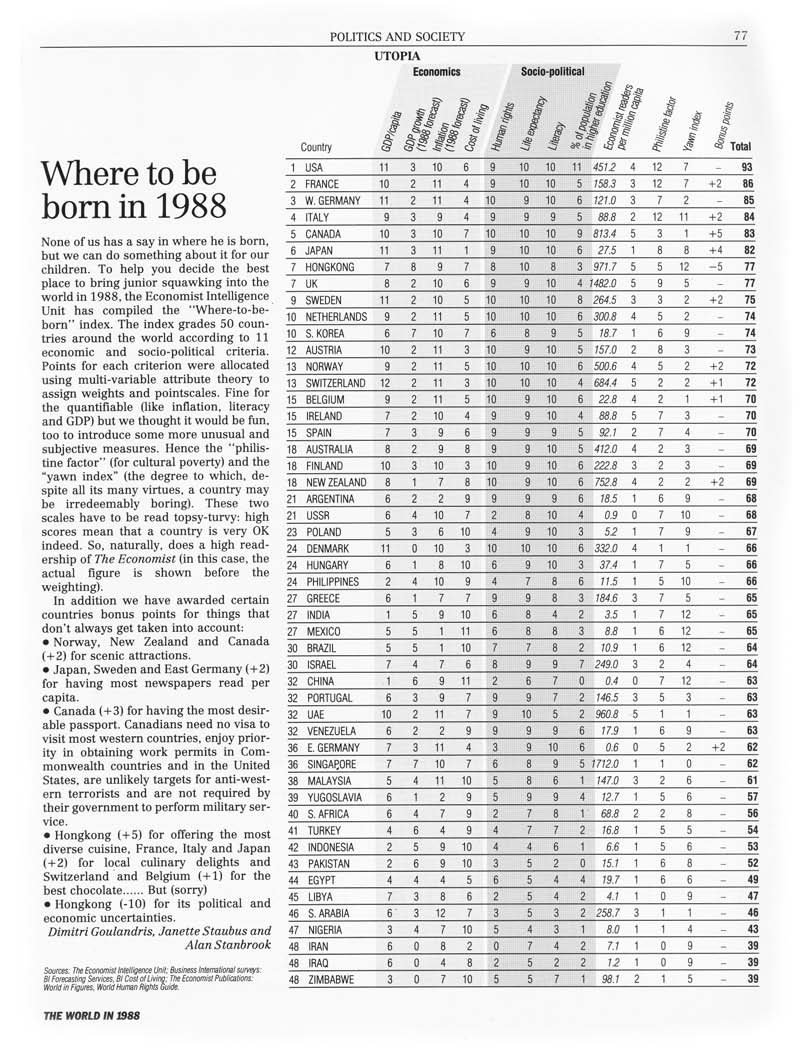
In 1988, America was the best place to be born in the world. Based on The Economist Intelligence Unit's quality-of-life index - which links the results of subjective life-satisfaction surveys (how happy people say they are) to objective determinants of the quality of life across countries - USA was #1. Fast forward 25 years or so... and The United States now ranks 16th, just above South Korea and just below Taiwan and Belgium.

And now...

* * *
USA USA USA... 16th is the new "exceptional"


16 Feb 20:06

Sloppy Tacos with Lime Greek Yogurt Sauce - The only thing better than Sloppy Joes for dinner is taco night and this hybrid is the best of both worlds
craving more? check out TasteSpotting
#356159 - Sloppy Tacos with Lime Greek Yogurt Sauce Recipe
Sloppy Tacos with Lime Greek Yogurt Sauce - The only thing better than Sloppy Joes for dinner is taco night and this hybrid is the best of both worlds
craving more? check out TasteSpotting
16 Feb 20:03
Understanding ISIS; understanding Islam
by streiff (Diary)

There is an indispensable piece in The Atlantic titled What ISIS Really Wants. Barack Obama would do well to have read it before he starts playing Islamic Pope on the internet and holding forth on what is and what is not actually Islam. It starts with a question that apparently no one in our National Security apparatus has bothered to ask:
What is the Islamic State?
Where did it come from, and what are its intentions? The simplicity of these questions can be deceiving, and few Western leaders seem to know the answers. In December, The New York Times published confidential comments by Major General Michael K. Nagata, the Special Operations commander for the United States in the Middle East, admitting that he had hardly begun figuring out the Islamic State’s appeal. “We have not defeated the idea,” he said. “We do not even understand the idea.” In the past year, President Obama has referred to the Islamic State, variously, as “not Islamic” and as al-Qaeda’s “jayvee team,” statements that reflected confusion about the group, and may have contributed to significant strategic errors.
The author contends, I think rightly that we have mislead ourselves it two critical ways. First, that all jihaism is the same. Second, that the medieval nature of ISIS that we see portrayed is just some cinematic schtick that they are fostering.
This understanding is critical. For though ISIS reveres bin Laden and al Zarqawi they have broken with al Qaeda under Zawahiri because they are backsliders. So while the root of ISIS is al Qaeda it is an error to see ISIS and al Qaeda as the same. This leads to the next point:
The most-articulate spokesmen for that position are the Islamic State’s officials and supporters themselves. They refer derisively to “moderns.” In conversation, they insist that they will not—cannot—waver from governing precepts that were embedded in Islam by the Prophet Muhammad and his earliest followers. They often speak in codes and allusions that sound odd or old-fashioned to non-Muslims, but refer to specific traditions and texts of early Islam.
To take one example: In September, Sheikh Abu Muhammad al-Adnani, the Islamic State’s chief spokesman, called on Muslims in Western countries such as France and Canada to find an infidel and “smash his head with a rock,” poison him, run him over with a car, or “destroy his crops.” To Western ears, the biblical-sounding punishments—the stoning and crop destruction—juxtaposed strangely with his more modern-sounding call to vehicular homicide. (As if to show that he could terrorize by imagery alone, Adnani also referred to Secretary of State Sen. John Kerry (D-MA)Heritage ActionScorecard
Sen. John Kerry
Senate Democrat Average
But Adnani was not merely talking trash. His speech was laced with theological and legal discussion, and his exhortation to attack crops directly echoed orders from Muhammad to leave well water and crops alone—unless the armies of Islam were in a defensive position, in which case Muslims in the lands of kuffar, or infidels, should be unmerciful, and poison away.
Where this leads us to is a direct rejection or everything that Barack Obama, and George W. Bush, have said about the nature of jihadism:
The reality is that the Islamic State is Islamic. Very Islamic. Yes, it has attracted psychopaths and adventure seekers, drawn largely from the disaffected populations of the Middle East and Europe. But the religion preached by its most ardent followers derives from coherent and even learned interpretations of Islam.
Virtually every major decision and law promulgated by the Islamic State adheres to what it calls, in its press and pronouncements, and on its billboards, license plates, stationery, and coins, “the Prophetic methodology,” which means following the prophecy and example of Muhammad, in punctilious detail. Muslims can reject the Islamic State; nearly all do. But pretending that it isn’t actually a religious, millenarian group, with theology that must be understood to be combatted, has already led the United States to underestimate it and back foolish schemes to counter it. We’ll need to get acquainted with the Islamic State’s intellectual genealogy if we are to react in a way that will not strengthen it, but instead help it self-immolate in its own excessive zeal.
In true Islam might makes right.
In Islam, the practice of takfir, or excommunication, is theologically perilous. “If a man says to his brother, ‘You are an infidel,’ ” the Prophet said, “then one of them is right.” If the accuser is wrong, he himself has committed apostasy by making a false accusation. The punishment for apostasy is death. And yet Zarqawi heedlessly expanded the range of behavior that could make Muslims infidels.
…
Denying the holiness of the Koran or the prophecies of Muhammad is straightforward apostasy. But Zarqawi and the state he spawned take the position that many other acts can remove a Muslim from Islam. These include, in certain cases, selling alcohol or drugs, wearing Western clothes or shaving one’s beard, voting in an election—even for a Muslim candidate—and being lax about calling other people apostates. Being a Shiite, as most Iraqi Arabs are, meets the standard as well, because the Islamic State regards Shiism as innovation, and to innovate on the Koran is to deny its initial perfection. (The Islamic State claims that common Shiite practices, such as worship at the graves of imams and public self-flagellation, have no basis in the Koran or in the example of the Prophet.) That means roughly 200 million Shia are marked for death. So too are the heads of state of every Muslim country, who have elevated man-made law above Sharia by running for office or enforcing laws not made by God.
When Obama holds forth on what is true Islam he may be right in the United States. But he is decidedly wrong in large portions of the Islamic world. ISIS reflects real Islam in territory it controls, a territory that is rapidly expanding.
ISIS is true Islam and true Islam is sharia.
While bin Laden was content to believe the Caliphate would take place at some point in the future, ISIS is intent upon bringing the Caliphate about now. To do so it must claim territory and it must implement sharia law in that territory. The brutal punishments that we see, like those Erick reported upon this morning, are part and parcel of the true Islam:
The caliph is required to implement Sharia. Any deviation will compel those who have pledged allegiance to inform the caliph in private of his error and, in extreme cases, to excommunicate and replace him if he persists. (“I have been plagued with this great matter, plagued with this responsibility, and it is a heavy responsibility,” Baghdadi said in his sermon.) In return, the caliph commands obedience—and those who persist in supporting non-Muslim governments, after being duly warned and educated about their sin, are considered apostates.
Choudary said Sharia has been misunderstood because of its incomplete application by regimes such as Saudi Arabia, which does behead murderers and cut off thieves’ hands. “The problem,” he explained, “is that when places like Saudi Arabia just implement the penal code, and don’t provide the social and economic justice of the Sharia—the whole package—they simply engender hatred toward the Sharia.” That whole package, he said, would include free housing, food, and clothing for all, though of course anyone who wished to enrich himself with work could do so.
Abdul Muhid, 32, continued along these lines. He was dressed in mujahideen chic when I met him at a local restaurant: scruffy beard, Afghan cap, and a wallet outside of his clothes, attached with what looked like a shoulder holster. When we sat down, he was eager to discuss welfare. The Islamic State may have medieval-style punishments for moral crimes (lashes for boozing or fornication, stoning for adultery), but its social-welfare program is, at least in some aspects, progressive to a degree that would please an MSNBC pundit. Health care, he said, is free. (“Isn’t it free in Britain, too?,” I asked. “Not really,” he said. “Some procedures aren’t covered, such as vision.”) This provision of social welfare was not, he said, a policy choice of the Islamic State, but a policy obligation inherent in God’s law.
ISIS is apocalyptic.
The Islamic State has attached great importance to the Syrian city of Dabiq, near Aleppo. It named its propaganda magazine after the town, and celebrated madly when (at great cost) it conquered Dabiq’s strategically unimportant plains. It is here, the Prophet reportedly said, that the armies of Rome will set up their camp. The armies of Islam will meet them, and Dabiq will be Rome’s Waterloo or its Antietam.
“Dabiq is basically all farmland,” one Islamic State supporter recently tweeted. “You could imagine large battles taking place there.” The Islamic State’s propagandists drool with anticipation of this event, and constantly imply that it will come soon. The state’s magazine quotes Zarqawi as saying, “The spark has been lit here in Iraq, and its heat will continue to intensify … until it burns the crusader armies in Dabiq.” A recent propaganda video shows clips from Hollywood war movies set in medieval times—perhaps because many of the prophecies specify that the armies will be on horseback or carrying ancient weapons.
Like a Biblical Armageddon, this will the site of the great battle that leads to the triumph of Islam and the establishment of the Caliphate. From Dabiq, the forces of ISIS will march on Istanbul. History is strewn with the vestiges of apocalyptic religions and philosophies. Some burn out, some don’t. Some are peaceful and some not so much. Seventh Day Adventists started out as the apocalyptic Millerites and no one quakes in fear of them, but you can’t take this for granted. This is important to keep in mind when considering how to deal with ISIS.
ISIS really does want to kill you.
Choudary took pains to present the laws of war under which the Islamic State operates as policies of mercy rather than of brutality. He told me the state has an obligation to terrorize its enemies—a holy order to scare the shit out of them with beheadings and crucifixions and enslavement of women and children, because doing so hastens victory and avoids prolonged conflict.
Choudary’s colleague Abu Baraa explained that Islamic law permits only temporary peace treaties, lasting no longer than a decade. Similarly, accepting any border is anathema, as stated by the Prophet and echoed in the Islamic State’s propaganda videos. If the caliph consents to a longer-term peace or permanent border, he will be in error. Temporary peace treaties are renewable, but may not be applied to all enemies at once: the caliph must wage jihad at least once a year. He may not rest, or he will fall into a state of sin.
One comparison to the Islamic State is the Khmer Rouge, which killed about a third of the population of Cambodia. But the Khmer Rouge occupied Cambodia’s seat at the United Nations. “This is not permitted,” Abu Baraa said. “To send an ambassador to the UN is to recognize an authority other than God’s.” This form of diplomacy is shirk, or polytheism, he argued, and would be immediate cause to hereticize and replace Baghdadi. Even to hasten the arrival of a caliphate by democratic means—for example by voting for political candidates who favor a caliphate—is shirk.
Where next?
The author believes that the best course of action is to let ISIS burn itself out:
Properly contained, the Islamic State is likely to be its own undoing. No country is its ally, and its ideology ensures that this will remain the case. The land it controls, while expansive, is mostly uninhabited and poor. As it stagnates or slowly shrinks, its claim that it is the engine of God’s will and the agent of apocalypse will weaken, and fewer believers will arrive. And as more reports of misery within it leak out, radical Islamist movements elsewhere will be discredited: No one has tried harder to implement strict Sharia by violence. This is what it looks like.
Even so, the death of the Islamic State is unlikely to be quick, and things could still go badly wrong: if the Islamic State obtained the allegiance of al‑Qaeda—increasing, in one swoop, the unity of its base—it could wax into a worse foe than we’ve yet seen. The rift between the Islamic State and al-Qaeda has, if anything, grown in the past few months; the December issue of Dabiq featured a long account of an al‑Qaeda defector who described his old group as corrupt and ineffectual, and Zawahiri as a distant and unfit leader. But we should watch carefully for a rapprochement.
Unlike al Qaeda, which has focused on the West as an enemy, the author, correctly, points out that ISIS is interested in bringing about a Caliphate. This is true as far as it goes. In my view there are two dangers here. There is no evidence at this time that ISIS will burn itself out. Rather it seems to be still expanding though not with the rapid leaps of the past year or so. As it acquires territory and terrorizes, to the extent that it needs to terrorize the muslim inhabitants of its territory, it will gain control of the children, the education system, and family life. At that point it will be self-generating. The second, and most obvious, fallacy is that this prescription contradicts two other key points. ISIS believes it needs to bring about a cataclysmic battle… and there is only one nation on earth that can give that to them. And as the caliph needs to declare a jihad once per year, at some point it will be our turn to be the target. While the al Qaeda leadership may not be sufficiently radical and bloodthirsty for ISIS, many al Qaeda operatives are rallying to ISIS.
At some point we have to come to the realization that while Islam may very well be, like Christianity, a Venn Diagram encompassing a wide array of worship practices and denominations. Where Islam differs radically from Christianity is that it does have a violent underpinning — let’s not forget that Islam was spread by fire, sword, and terror and not by argument and the example set by saints and martyrs — and arguing that ISIS is not truly Islamic paints one as little more than a buffoon or liar:
The people who arrive at the faith spoiling for a fight cannot all be stopped from jihadism, but those whose main motivation is to find an ultraconservative, uncompromising version of Islam have an alternative here. It is not moderate Islam; most Muslims would consider it extreme. It is, however, a form of Islam that the literal-minded would not instantly find hypocritical, or blasphemously purged of its inconveniences. Hypocrisy is not a sin that ideologically minded young men tolerate well.
Western officials would probably do best to refrain from weighing in on matters of Islamic theological debate altogether. Barack Obama himself drifted into takfiri waters when he claimed that the Islamic State was “not Islamic”—the irony being that he, as the non-Muslim son of a Muslim, may himself be classified as an apostate, and yet is now practicing takfiragainst Muslims. Non-Muslims’ practicing takfir elicits chuckles from jihadists (“Like a pig covered in feces giving hygiene advice to others,” one tweeted).
I think the author’s prescription on letting this flame burn itself out is fraught with danger and smacks of using “Hope” as our national security strategy. By not actively confronting ISIS we are gambling that the Islamic world sees our reticence as a humanitarian virtue and not as profound weakness. We are also gambling that this version of Islam does not have wide appeal… like, for instance, in Saudi Arabia. And most of all we are gambling that they will never be powerful enough to come for us, lead us to a deserted beach, and cut off our heads. On the whole these are not good bets to make.
The post Understanding ISIS; understanding Islam appeared first on RedState.


16 Feb 20:02


Bloomberg: Don’t Distribute The Footage Where I Said Let’s Take Guns Away From Minorities
by CO2Insanity
Bloomberg: Don’t Distribute The Footage Where I Said Let’s Take Guns Away From Minorities. We wonder how all the minorities in the Army, Air Force, Marines, Navy and Coast Guard feel about this racist twit. Not to mention all the minority members of Congress and our minority president.
16 Feb 20:01
10 stupid questions about pregnancy and their brilliant answers
 |
submitted by greenovni [link] [96 comments] |


16 Feb 20:00
ISIS explains their master plan. (Inspired by landlubber77)
 |
submitted by aszing [link] [354 comments] |

16 Feb 19:57


Driverless cars create these oddly beautiful virtual ghost cities when navigating public roads
by Joshua Barrie
This will definitely be one of the spookier things you'll see today: Gloomy, ghost-like footage of a driverless car travelling through one of Britain's most famous cities, Oxford. It's all captured through the viewpoint of an autonomous vehicle and shows what they see as they navigate around city streets.
The YouTube video has been released by a team of researchers at Oxford University, an institution integral in the development of driverless cars in the UK.
Here's a mesmerising clip from the footage:

The vehicle winds past landmarks such as Balliol College, which boasts alumni such as Edward Heath, Christopher Hitchens, and Robert Southey; rolls past the Sheldonian Theatre; and, incidentally, passes by the alleyway that leads to one of Oxford's most enjoyed pubs, The Turf. (Side note: The establishment is where Australia's former prime minister Bob Hawke once downed a yard of ale in just 12 seconds.)
The video is the work of Oxford University's Mobile Robotics Group (MRG), which worked on creating the new LUTZ Pathfinder Pods. These, among others, were unveiled to the public in London last week and are set for testing in the town of Milton Keynes in the coming months.
Here's another eerie clip.

"What does the world look like to a driverless car?" ask researchers on the university's science blog. "The videos show how some of Oxford's most iconic locations are mapped and interpreted by the technology. The footage also shows how the system detects people and other traffic."
Although fiercely modern in terms of technology, driverless cars don't see things in a particularly refined way, it appears. It looks medieval if anything — amplified by Oxford's old buildings, of course.
Here's one more clip...

If that's not enough, here's the video in full...
Join the conversation about this story »
NOW WATCH: The New Mercedes Driverless Car Even Has The Driver's Seat Facing Away From The Road

16 Feb 19:46


Venezuela’s No. 1 for misery, and it’s getting worse
by CO2Insanity
Venezuela’s No. 1 for misery, and it’s getting worse. Next time somebody tells you communism is number one agree with them and point out Venezuela.



16 Feb 19:42
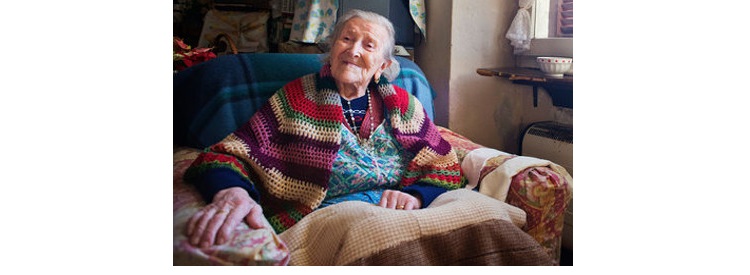
These Actors Went To Extreme Lengths To Prepare For These Roles
by noreply@blogger.com (Damn Cool Pics)
When it came to getting ready for these roles, the actors listed below took no chances. This is method acting at its finest.


Via distractify


Via distractify
Fatbob likes this

![[link]](http://i.imgur.com/0Mt74Qa.jpg)
![[link]](http://i.imgur.com/RkzGNZZ.jpg)

16 Feb 19:26


InstaDoom is a Instagram and Doom Mashup
by Shane McGlaun
I remember when the original Doom came out back in the early ’90s. For its time, the game had awesome graphics and I went to a classmates hose down the street I didn’t even like just to play it. Looking at the game today, it looks pretty bad graphically.

Some people still play the original Doom though and if you are a fan, check out this version of the game made using 37 actual Instagram filters recreated in the Doom engine. Naturally, the game is called InstaDoom. It’s kind of weird playing an FPS with Instagram filters over the top, but whatevs.


If the Instagram filters weren’t enough to impress you, the game also has a Selfie mode and you can take your own selfies as Mr. Doom form within the game. This is geekery at its highest level. You can download InstaDoom here.
[via DoomWorld]
16 Feb 19:26

The Campaign Bow (1896)

Washington Crisps (1912)
More presidential campaign commercials (from both winners and losers), here: http://www.livingroomcandidate.org
Presidents
by tia@misstia.com
The Campaign Bow (1896)
Washington Crisps (1912)
More presidential campaign commercials (from both winners and losers), here: http://www.livingroomcandidate.org
16 Feb 19:24
Watch Jean-Claude Van Damme Troll Everyone
Funny or Die held a competition last year in which it asked viewers to create their own movie starring Jean-Claude Van Damme using some green screened footage of the actor.
One year later, Marca Blanca combined that footage with some of the best epic fails, and the result is pretty amazing.
Watch “Jean-Troll Van Damme” take out a jogger, a boy in a toy car and a number of other unfortunate souls.
You never know when he’s going to appear… be very afraid.
16 Feb 19:22

Bob Odenkirk on the emotional differences between Saul Goodman and Jimmy McGill
by Ben Kuchera
The first two episodes of Better Call Saul are much better than we expected, and the tone of the series is much different than the often-goofy character of Saul Goodman would have you believe.
In fact, the show deals with the character of Jimmy McGill, the man who will later create the persona of Saul Goodman, the lawyer who then played such an important role in Breaking Bad. It reads more as a superhero origin story, if the superhero was a sleazy TV lawyer. It's all a bit complicated, and will likely be explored in more detail as the show progresses.
This interview with Bob Odenkirk gets surprisingly emotional around the 29 minute mark when the actor is asked if he would want to spend time with Saul Goodman. The answer is "no," and...
16 Feb 19:19


A Spanish shoeshine man who makes $34 a day just handed over the Twitter handles @RioDeJaneiro and @Japan for free
by AFP

Madrid (AFP) - Authorities in Brazil have got hold of a valuable Twitter account to publicise next year's Rio Olympics, after a humble Spanish shoeshine man surrendered the rights to it for free.
Javier Castano, 50, handed over the password for the Twitter name @riodejaneiro to Rio de Janeiro city hall -- and said Monday he now wants to do the same with the handle @japan for the 2020 Tokyo Olympics.
Castano registered several key Twitter account names in 2007, when the online social network was in its early days.
He said he spent years sending messages to Rio city hall offering them the account. It said it has now finally replied to him and formally accepted.
"We are very happy to at last be able to use the name of our city on the social network," said Rio's tourism secretary Antonio Pedro Figueira Mello in a statement.
"This will be of great value now that we are getting closer to the Olympics."
Castano was formerly a graphic designer but saw work dry up in Spain's recent economic crisis. He now earns about 30 euros ($34) a day shining shoes in the street in Malaga, southern Spain.
He insisted on giving the Twitter accounts only to the legitimate representatives of the Olympic host cities, for free.
"I am a shoeshine man with not much money, but I have the privilege of being able to give a gift to 130 million Japanese people or eight million people in Rio," he told AFP. "Could you do that?"
Castano has already handed over @canada and @madrid to authorities in those places, by sending them the passwords to the accounts once they formally accepted and confirmed their identity.
"I am very happy now. My only remaining task is to hand over @japan," he said.
Japanese government officials however said they had never heard of Castano and voiced reservations about accepting Twitter accounts from private individuals.
"There is no discussion, as far as I know, about setting up new accounts," said an official who helps publish tweets for the Japanese prime minister's office.
Join the conversation about this story »
NOW WATCH: 14 things you didn't know your iPhone headphones could do