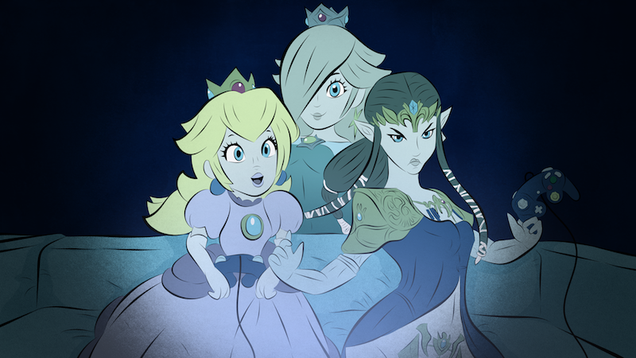
Toeing the line between camaraderie and fierce competition is near-impossible, especially in fighting games communities, but the Super Smash Sisters have mastered it, with bite.
Toeing the line between camaraderie and fierce competition is near-impossible, especially in fighting games communities, but the Super Smash Sisters have mastered it, with bite.

Welcome to Kotaku’s Sunday Comics, your weekly roundup of the best webcomics. The images enlarge if you click on the magnifying glass icon.
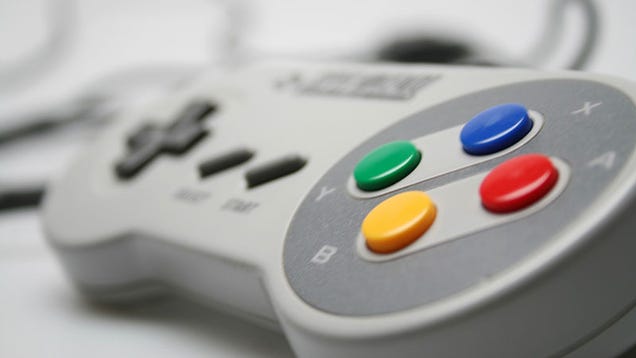
There have been many different ways of playing video games on a console (and sometimes PC) over the years. Some have been better than others.

Welcome to Kotaku’s Sunday Comics, your weekly roundup of the best webcomics. The images enlarge if you click on the magnifying glass icon.
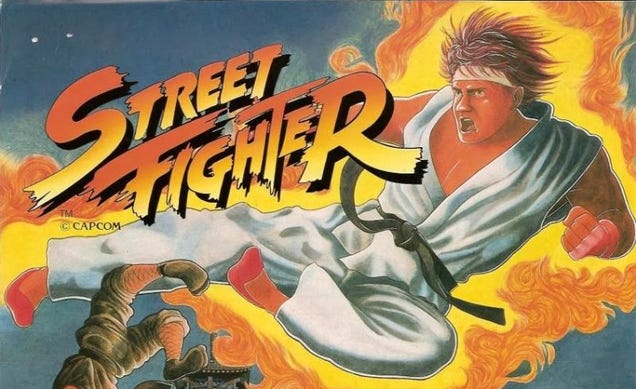
This week twenty-nine years ago, the first Street Fighter was released in arcades. There was Ken, Ryu, and some very different buttons.
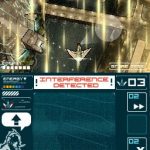
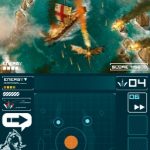
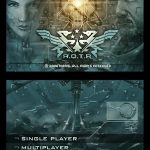
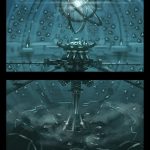
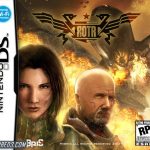
With a title probably inspired by the classic River Raid for Atari 2600, Raid Over the River is a cancelled shoot ‘em up that was in development in 2006 for Nintendo DS by the infamous Nibris studios, the team behind the cancelled survival horror “Sadness” for Wii. The interesting part about this lost DS game is that time travels and multi-dimensions would be featured in the story, letting developers to add a good number of original levels set in different time periods and places.
Raid Over the River backstory was posted by IGN and Eurogamer:
“The main character of the game is pilot David McBride, a 40-year-old veteran of Operation “Sand Storm”. He discovers, by a total chance, the plans of the “Molayarius“, a sect cultivating traditions of the Knights Templar of Grand Master Jacques de Molay crest. They aim to summon the demon Bafometonto the world. David aims to to destroy these plans, but he finds himself in a world and an epoch of danger as he is flung through time, is led and perhaps misled by the seductive but dangerous Anna, and is constantly under fire as he flies through 10 levels of shooting and flying action all around the world and across time.”
“The action begins in Peru, where archaeologists uncover a strange artifact that can be used to travel through time. According to Deutsch-Everett theory, which is all about the temporalist’s paradigm, it says here, it’s impossible to travel within your own timeline. Because that would be ridiculous. However, you can visit future or past Earths from other dimensions, obviously. As a result of this discovery, the Temporal Advanced Research Projects Agency is established to send intrepid types to these different dimensions and seek out any potential threats. You play TARPA pilot Carrie Colins, 29, and it’s your job to deal with some scouts from another dimension who pop up on Earth at the start of the game.”
It seems that even Nibris were divided in different dimensions where the game had two different storylines.
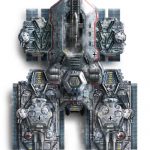
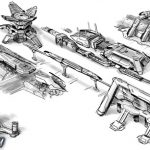
Story, Arcade, Dogfight and Survival modes over six campaigns in different time periods and dimensions were planned, with levels set in ancient Greece, Europe during World War II, Soviet Russia during the Cold War, present day USA, Germany in 2018 and Japan during a far away future. Nibris planned to have different vehicles for each time period and dimension, such as old bi-planes, sci-fi jet planes and dragons. Power-ups and special items would have also been available to the players to improve their fire power and each vehicle had many different movements options, to rotate, nose dive and dodging hits. Coop multiplayer was also planned to be added to the game.
DS specific features would also been implemented into Raid Over the River, being able to use voice command and the touch screen to launch special attacks. Unfortunately Raid Over the River was never completed: just like it happened with Sadness, Nibris were not able to secure a publisher for their project and they had to stop working on it before to finally close down in late 2010.
Images:


Videos:
The post Raid Over the River [DS – Cancelled] appeared first on Unseen64: Beta, Cancelled & Unseen Videogames!.
 If you’re familiar with the ins and outs of the emulation scene, you’ll no doubt know that the Sega Saturn is very much lagging behind. While there are emulators out there for the 32-bit console that just about do they job (and an impressive one gaining traction on Android devices), retro gamers finally have a promising new alternative through Mednafen.

Sega has said it is "looking into" remasters of the first two Shenmue games.
Despite interest from both fans and Sega itself, the holdup lies with the games' scope, their age - the original Shenmue was released on Dreamcast back in 1999 - as well as licensing issues.
"The issue is that it is a big game. It is a project from many years ago," Sega Europe boss told MCV.


Der Entwickler Firaxis und der Publisher 2K Games haben eine streng limitierte Ausgabe des kommenden Strategiespiels Civilization 6 (im Preview-Artikel) angekündigt. Die sogenannte „25th Anniversary Edition“ ist weltweit auf 20.000 Exemplare begrenzt und wird zeitgleich mit der Standard-Version des Spiels ab dem 21.
 Last month, Eurogamer put out a report claiming NX will be a portable console with detachable controllers. Nintendo filed a few patents today that line up with this report, as the patents show a handheld electronic device with controllers that can attach to it. The first two talk about tracking hand/gestures in a bit more detail than older Nintendo patents, but the third one is what really lines up with recent reports. The patent talks about an attachable accessory which can be added to the side of the device. This is most likely the "detachable controller" Eurogamer brought up, as the attachable accessory is shown to be physical buttons...

Der Pokémon Go-Wahn scheint weiter ungebrochen. Auch einen Monat nach der Veröffentlichung trifft man überall noch auf Personen, die der virtuellen Monsterjagd frönen. Sehr zu Freuden der Entwickler, denn nach aktuellsten Schätzungen des auf App-Marketing spezialisierten Unternehmens Sensor Tower erzielte die Augmented-Reality-App im ersten Monat einen neuen Umsatzrekord.

Noch vor dem Start der Gamescom 2016 haben KoelnMesse und der BIU (Bundesverband Interaktive Unterhaltungssoftware) den Termin für die Kölner Spielemesse im Jahr 2017 bekanntgegeben. Demnach öffnen die Messetore vom 22. bis 26. August 2017.

Update vom 11.8.2016:
Mittlerweile sind die Programme nicht mehr verfügbar. In einer Erklärung des Internet Archive heißt es:

Anlässlich der bevorstehenden Quakecon 2016 im texanischen Dallas (4. bis 7. August) haben das Team von Humble Bundle, Inc. und Bethesda einen Quakecon-Sale mit ausgewählten Spielen (samt den dazugehörigen DLCs) aus dem Portfolio des Publishers gestartet.
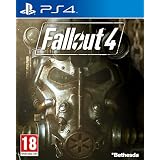
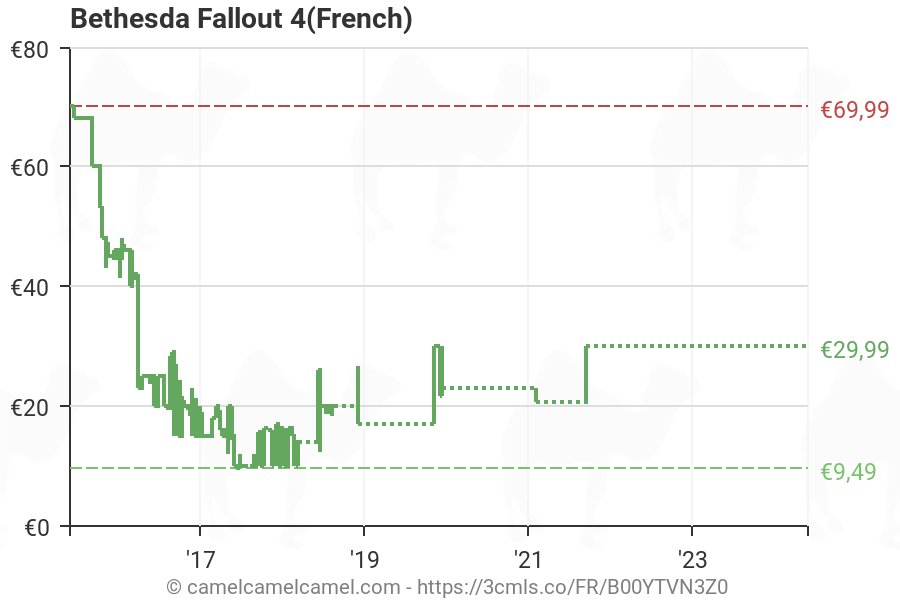
Der Beitrag Sony Playstation 4: Fallout 4 – 23,63 EUR erscheint auf DVDTiefpreise.de/com • Schnäppchen für Blu-rays/DVDs/Games & mehr….
VectrexRoli reviews both cased and uncased Lynx SD cartridges. Check out his other videos. I love this guy! 

This is the first post in an occasional series by Colin from This Does Not Compute.
One of the things that has always interested me are devices that should be computers, but aren't really. We generally think of "computers" as multi-purpose systems, things that run an operating system and applications. But there are tons of devices out there that have processors and RAM but don't really run an operating system in the traditional sense. What is one very famous example of this that we are all familiar with? The Nintendo Game Boy series, specifically the original Game Boy, Game Boy Pocket, and Game Boy Color, sometimes referred to as the "DMG", "MGB" and "GBC" respectively.
I recently ran across the RealBoy emulator project (https://realboyemulator.wordpress.com). There are plenty of Game Boy emulators out there and this one isn't really any different... except for this excellent blog series that explains in depth how the original DMG works. It's meant as a primer in order to understand how the emulator's code works, but it's also an amazing look at the underlying hardware.
In short, the architecture of the Game Boy is pretty simple -- processor, RAM, and ROM. The first two reside in the console itself while the ROM (and some more RAM) is in the game cartridge. There's only a small amount of permanent code in the Game Boy hardware, basically just enough to get the device to perform an initial cartridge check. (The check is, in a way, a form of DRM; it makes sure that the game was licensed by Nintendo and not independently released).
The CPU is perhaps the most interesting part of the system. In the DMG, it's a Sharp LR35902. By all appearances it's a custom part, and in many ways it is, but designing an entire processor from the ground up just for a hand-held game system (or any game system at all really) isn't cost effective. So the Game Boy's CPU is actually based on the Zilog Z80, which was at that time -- and still is -- a common 8-bit processor. The Z80 itself was actually a binary-compatible version of the Intel 8080; not necessarily a clone, but capable of executing all the same instructions. There were some additions to the Z80 beyond that of the 8080, but the custom Sharp CPU wasn't just a rebadged Z80. It actually leveraged parts from both processor architectures, while omitting anything that wasn't relevant to a game console.
What to me at least, makes the Game Boy more of a device than a computer is that there was no traditional operating system layer, firmware, or anything standing in the way between the game and the hardware. After that initial check, the CPU simply ran any instructions presented to it by the game. Modern games are written using a high-level programming language like C, but older games were written in machine language telling the CPU exactly what to do and when. In some ways, the game itself was an operating system. (This is also partially why emulators aren't perfect -- you have to write high-level code that mimics how hardware works, whereas modern games, already written in a high-level language, can simply be ported to another platform)
You might be most surprised by the lineage of the Intel 8080. It was originally designed in 1974 (along with the Z80), and made its way into early PCs and even some arcade games like Space Invaders. But the 8080 also was the basis for subsequent Intel processors, like the 8086. The 8086 is where we get the common computer term "x86", as it spawned the 286, 386 and 486 CPUs. Those of course led to the Pentium series, and on to the modern processors we use in our computers today. It's crazy to think that in 1989 when it was released, the Game Boy actually shared some similarities with computers running Windows. It is in its own right, a computer... that also isn't.
This Does Not Compute is a YouTube channel (https://www.youtube.com/c/thisdoesnotcompute) about gaming, content creation and all things technology. Colin can be reached on Twitter @thisdoesnotcomp (https://www.twitter.com/thisdoesnotcomp) and Instagram (https://www.instagram.com/thisdoesnotcomp).
 For many retro gamers the Sony PlayStation Portable doubles up as a great emulation system, and it looks like its successor is set to follow in its footsteps. Just days ago an all new homebrew enabler known as HENkaku was released for the PS Vita which allows several different emulators to be run on firmware 3.60.


