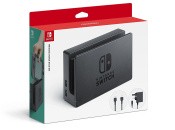
£80 for playing on another TV
£80 for playing on another TV
From SNES to Switch in 25 years
Nintendo's upcoming limb-centric fighting game Arms is shaping up to be an entertaining competitive experience for the Switch. Its design is simple and intuitive, and excitement creeps in the moment you throw a punch and realize how capable you are. The fact that Arms' characters and environments are infectiously vibrant and cheery doesn't hurt either. While Arms seems like a simplistic brawler on the surface, its mechanics offer a subtle dose of nuance and complexity that makes it far deeper than it initially lets on.
Arms' intricacies are exhibited by the freedom you have to customize your fighter's arm configurations before each round. Before a fight begins, you're given the option to select from three different arms that are exclusive to each character (the full game will allow you to mix and match all signature gloves regardless of the fighter you choose). This opens up a wide range of combinations and strategies based on factors like weight, elemental attributes, and attack styles.


When playing as the ramen noodle-armed fighter Min Min, you can use her Dragon arm's stationary laser attack to hinder your opponent's movement, while simultaneously sending out charged-up jabs from your electric-powered Megawatt Arm to stun and dwindle their health. Or as the dancing green blob Helix, you can opt for two bouncing Blorb arms: one to limit your opponent's vertical mobility, and the other to damage and blind them. With each arm sporting a unique combat advantage, the ability to mix and match is one of Arms' major highlights as a fighting game thus far.
Adding to the complexity of battles are special abilities unique to each fighter. These offer distinct perks to a fighter's attacks or maneuverability options. For example, Helix's elastic body allows him to shrink and stretch at will, making it possible to dodge incoming attacks; on the other hand, Twintelle can slow down enemy attacks or herself in mid-air. These options imbue Arms' combat with an extra layer of strategy akin to fighter matchups from traditional fighting games. In a fight, a specific arm configuration could prove useful, but if you're not careful, it could be easily countered by an opponent's special ability. Case in point: Master Mummy's slow Megaton arms against Min Min's quick, attack deflecting kick ability.
Despite the varying intricacies of Arms' mechanics, the major concern over its viability as a balanced fighting game is the reliability of its motion controls; if their execution is inconsistent in practice, then none of that is going to matter in the long run. Unintentional punches and missteps aren't unheard of in Arms, and while this is excusable for casual players, anyone looking for serious competition will no doubt be dissuaded by mistakes outside of their control. It has been confirmed that the game is playable using traditional controller setups, but it's currently unclear how that will work in practice.


Whatever your initial reaction to the game's appearance was, Arms isn't just about about flailing about like a crazy person to win--though you're welcome to try (and lose). Rather, it's about carefully considering which arms to use during a round and how they can be leveraged to defeat your opponent. The motion controls may prevent it from becoming a mainstay of the fighting game community, but its mechanics seem to offer a solid framework that makes it far more involved than most motion-controlled games.

Auch mehr als zweieinhalb Monate nach dem weltweiten Launch bleibt Nintendos neue Hybridkonsole Switch weiterhin auf dem Erfolgskurs und war bekanntlich im vergangenen Monat mit 280.000 Exemplaren die am meisten Verkaufte Konsole in den USA.
But your castle is (with)in another castle!

Platinum Games gehört sicherlich mit zu den bekanntesten Studios in der Spielebranche und hat in der Vergangenheit zahlreiche Fans weltweit durch Titel, wie Bayonetta (Testnote: 8.5), Vanquish (Testnote: 8.0),
 Die Frisur sitzt.
Ein Set-Foto des Han Solo-Spin-offs zeigt Alden Ehrenreich erstmal in der Rolle des berüchtigsten Schmuggler der Galaxies.
Die Frisur sitzt.
Ein Set-Foto des Han Solo-Spin-offs zeigt Alden Ehrenreich erstmal in der Rolle des berüchtigsten Schmuggler der Galaxies.
Nintendo has released a new trailer for Fire Emblem Echoes: Shadows of Valentia that focuses on the Season Pass.
View it below:
Fire Emblem Echoes: Shadows of Valentia is now available for the Nintendo 3DS.
A life-long and avid gamer, William D'Angelo was first introduced to VGChartz in 2007. After years of supporting the site, he was brought on in 2010 as a junior analyst, working his way up to lead analyst in 2012. He has expanded his involvement in the gaming community by producing content on his own YouTube channel and Twitch channel dedicated to gaming Let's Plays and tutorials. You can contact the author at wdangelo@vgchartz.com or on Twitter @TrunksWD.
Full Article - http://www.vgchartz.com/article/268188/fire-emblem-echoes-shadows-of-valentia-gets-season-pass-trailer/
How a third pillar became a golden goose

Noch ein gutes Angebot bei Base.com ist Puyo Puyo Tetris (PS4) für £19,28 // 22,48 EUR inkl. VSK. Damit dürften wir auch den neuen Bestpreis haben. Das Spiel selbst ist gleich der USK Fassung.

 Puyo Puyo Tetris (PS4) für 22,48 EUR inkl. VSK
Metacritic: 85%
Vergleichspreis: 27 EUR
Bezahlt wird nur mit Kreditkarte. Verschickt wird in diesen Fall aus der Schweiz.
Der Beitrag Puyo Puyo Tetris (PS4) für 22,48 EUR inkl. VSK erschien zuerst auf .
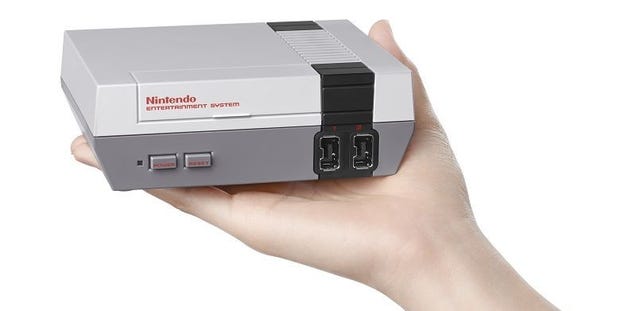
The NES Classic was the #2 best-selling console in America in April, right behind the Nintendo Switch, the NPD Group reported today. Yes, that means the $60 mini-console outsold PS4, 3DS, and Xbox One. Good thing they discontinued it, huh?
 Hello, gentle readers, and welcome to the RPG Reload, the regular feature where we maintain a healthy fear of Etna. Last month, we took a look at the early history of the tactical RPG genre followed by its blossoming in the 1990s. It was an important time for the genre, as the vague concepts of the 1980s were finally drawn together into a functional set of genre guidelines. While the genre really started to take off in Japan, things went a different way in the West. Besides occasional hits like X-COM, Western game developers were largely focused on a considerably more popular sister genre, the real-time strategy game. This gap would only become wider as time went on. This month, we're taking a look at some of the significant tactical RPGs of the 2000s, as the Japanese variation of the genre rode a massive wave of popularity worldwide off the back of Final Fantasy Tactics.
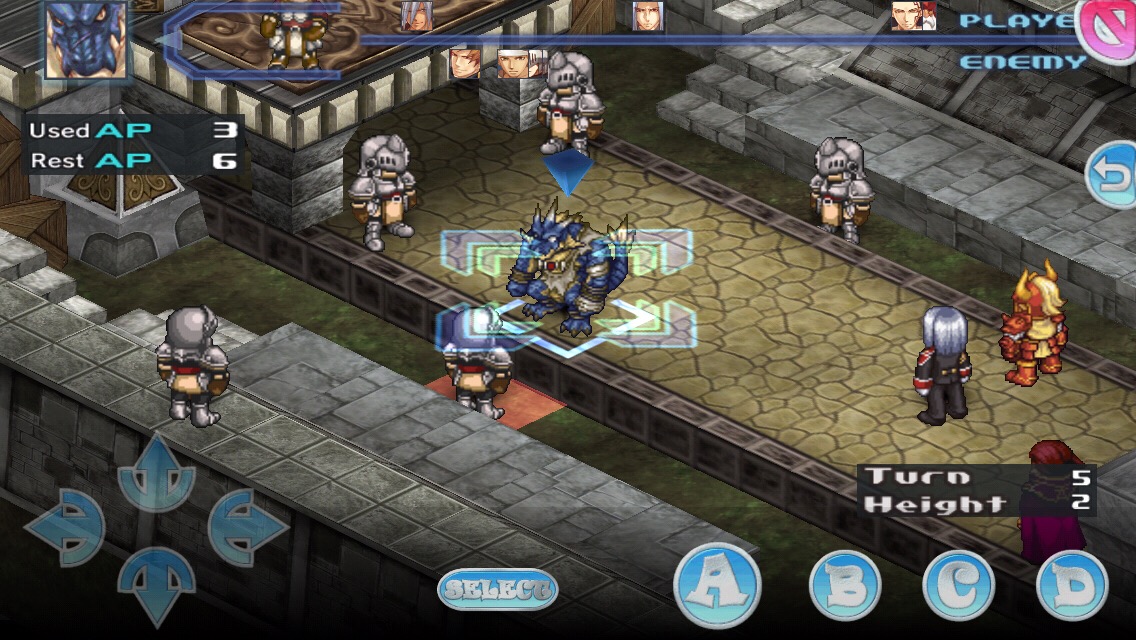
The split between Japan and the West, consoles and PCs, and the players of all types was at perhaps its peak divisiveness in the early 2000s. Although turn-based strategy games remained popular among PC gamers, particularly realistic war simulations, the RPG variant was rare. MicroProse had some serious financial troubles that kept it from properly taking advantage of X-COM's success, and Sir-Tech was running on fumes as Jagged Alliance 2 went out the door. Between Blizzard's StarCraft and Warcraft games and Westwood's Command & Conquer series, the RTS genre was firing on all cylinders. PC RPGs, long a reliable source of tactical combat, had turned to a somewhat more active model in the wake of Bioware's success with Baldur's Gate. Still, there were a few developers kicking away at the TRPG genre in the West, and I'll try to mix the highlights in with the absolute sea of Japanese TRPGs from this decade.
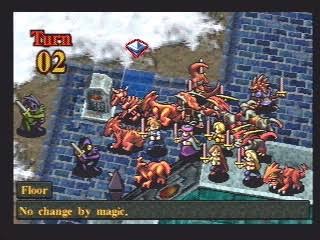
PlayStation 1 TRPGs
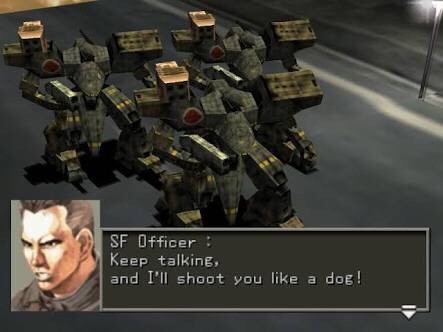
Square's Final Fantasy Tactics had busted the TRPG genre wide open on PlayStation, and it didn't take time for others to follow. Square themselves followed the game up with the excellent Front Mission 3, the first game in the series to release outside of Japan. Games like Kartia, Brigandine, Vanguard Bandits, and Rhapsody somehow all saw releases outside of Japan, and other games like Saiyuki, Hoshigami, and the Arc the Lad Collection gave Western console fans something to enjoy in the system's twilight years. Over in Japan, series like Langrisser, Super Robot Wars, and Summon Night were enjoying considerable popularity. One very notable Japan-only release late in the PlayStation's life was Tear Ring Saga, which released in 2001. Developed by the creator of Fire Emblem, Shouzou Kaga, the game was perhaps a little to close to his prior work at Nintendo. The company ended up taking both Kaga's development studio and his publisher, Enterbrain, to court. They eventually settled the case and the game was allowed to continue to be sold.
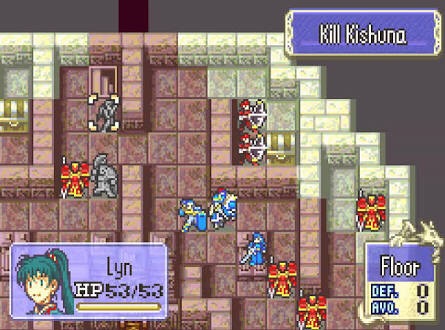
Fire Emblem Goes West
Nintendo's Game Boy Advance shot out like a rocket, giving the company a leg to stand on even as their console business went through some choppy waters. The Fire Emblem series had missed the Nintendo 64 entirely, and the decision was made to release some games in the series on the company's new handheld. To help promote that new game, Nintendo included its hero in its latest Super Smash Bros. fighting game on their new console, the Gamecube. Roy proved to be so popular among Western players that Nintendo of America decided to finally take a chance on releasing a Fire Emblem game outside of Japan. Curiously, the game they opted to localize wasn't Roy's game, which had released scant months after Smash's late 2001 debut. Rather, they brought over the game's prequel, which had come out in early 2003. Fire Emblem launched on the Game Boy Advance in North America in late 2003, with releases in Europe and Australia in the following year.
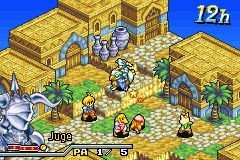
As it had gone for its Intelligent Systems stablemate Advance Wars, Fire Emblem proved to be a solid seller in the West, putting the series on a regular localization schedule for the next few installments. The Game Boy Advance crowd seemed to enjoy strategy games, and the genre enjoyed a bit of success on the platform. Ogre Battle prequel Tactics Ogre: The Knight of Lodis released worldwide to reasonable success, giving handheld players a taste of something very similar to Final Fantasy Tactics. Speaking of that game, it finally got a follow-up, and for whatever reason, Square decided to put it on Nintendo's handheld. Final Fantasy Tactics Advance came out a few months ahead of Fire Emblem in 2003. It sold well and was generally praised, but some of its gameplay and story choices proved to be divisive for fans of the original game. Over in Japan, plenty of Super Robot Wars games were released on the system as well. One surprise appearance on Game Boy Advance was Julian Gollop, the creator of X-COM. In 2005, after the Nintendo DS launched, Gollop's Rebelstar: Tactical Command was released.
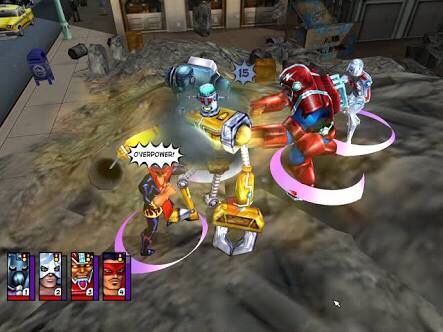
Freedom Rings on PC
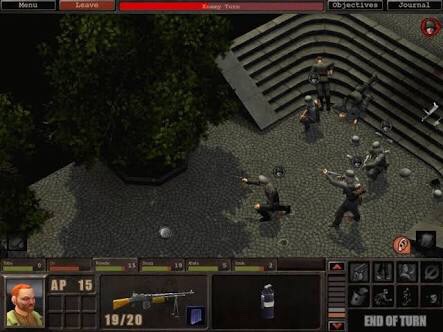
While things were pretty quiet on the PC front for the genre, there were a few companies still plugging away at it. Notably, Irrational Games did a superhero take on the genre with their Freedom Force series. It feels like Freedom Force was just a little bit too early to take advantage of the big superhero boom to come. I wonder how a new game in the series would fare today? Publisher 1C Company was publishing TRPGs from a number of developers, with the Silent Storm series from Russian developer Nival proving to be quite a success. Interplay was on its last legs, but it managed to release Fallout Tactics: Brotherhood of Steel, which was a TRPG take on their already-strategic Fallout RPG series. Aside from those few holdouts, not many Western developers were doing much with the genre. Over in Japan, however, quite a few TRPGs were released for the domestic market. Like most PC-exclusive Japanese games from that period, however, they were mostly an excuse to strip cute anime girls down to their skivvies or less. Some of these games had solid mechanics, but you'd best be fast with the ALT-Tab if you're going to play them in polite company.
The PlayStation 2's Hours of Darkness
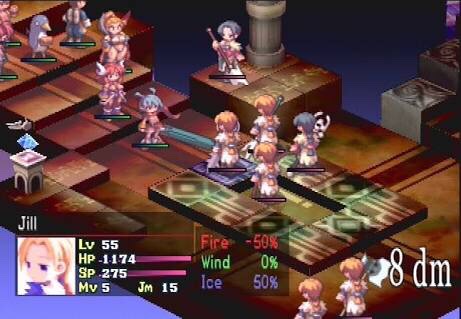
Although you would have expected Square or Konami to capitalize on the successes of their TRPGs from the previous generation, the genre's crown during the 2000s would end up going to a very unlikely source. The developer behind the PlayStation game Rhapsody, Nippon Ichi, continued to work in the TRPG genre after the move to Sony's new console. In 2003 their latest game, Disgaea: Hour of Darkness, was released worldwide. The game ended up being a surprise hit, selling out shipment after shipment. It had a lot of appealing points and wasn't afraid to play with genre conventions. The story and characters were a lot of fun, the gameplay mechanics practically begged you to break them as much as you wanted, and it offered near limitless potential for grinding and powering your team up. Disgaea kicked off a series that continues to this day and has served as the backbone for Nippon Ichi's finances for nearly 15 years. Following the release of Disgaea, Nippon Ichi put out a number of other TRPGs along similar lines.
The PlayStation 2 also saw a ton of releases from Idea Factory. A number of Spectral Souls and Generation of Chaos games came out on the platform, though Western gamers would have to wait for later ports to play most of them. Banpresto's Summon Night and Super Robot Wars games enjoyed continued success on the platform in Japan, and Fire Emblem's creator released his final commercial game to date, Berwick Saga, which distinguished itself from Fire Emblem in a number of interesting ways. Square kept their Front Mission series going, releasing Front Mission 4 worldwide and Front Mission 5 in Japan only. It was an unfortunate decision. Front Mission 4 wasn't as good as the third game had been and ended up selling quite poorly. Front Mission 5 was incredible and deserved a worldwide audience, in my opinion. In other Japan-exclusive happenings, SEGA had ported most of the Sakura Wars games over to the PlayStation 2.
The Rest of the Decade
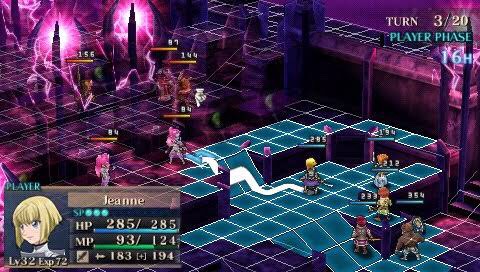
The TRPG genre came in hard on both PSP and Nintendo DS, with excellent games like Level 5's Jeanne d'Arc and Square's Final Fantasy Tactics A2 leading the charge. The original titles were supported by ports of many popular TRPGs from the past, with everything from the original Final Fantasy Tactics to Disgaea showing up. Still, the genre was showing signs of slowing down. Fire Emblem went through an extraordinary rough patch in this period and appeared to be in danger of cancellation after poor sales of its Nintendo Wii and Nintendo DS installments. On consoles, the genre was being held down almost entirely by Nippon Ichi and Idea Factory, whose games felt like they were being made for an increasingly narrow niche of players. SEGA had a hit that caught them by surprise in Valkyria Chronicles for the PlayStation 3 but failed to make much of its success in the West, confusingly opting to put its sequel on the PSP and changing the tone entirely.

In spite of the genre seemingly falling out of vogue, Square Enix chose to make their first iOS release a TRPG. Song Summoner came out for iPods in 2008, heralding the company's arrival in the smart device market. Still, it looked as though TRPGs were going to have to survive on a healthy niche going into the next decade. You'd be forgiven for thinking the genre was down for the count, of course, but anyone who believed that firmly would be in for a real awakening only a few years later. But that's a story for next month, isn't it?

We'll finish things up with this mini-series next month when we take a look at the big TRPGs of the decade we're living and breathing at the moment. Be sure to let me know what you think in the comments below, and feel free to share your memories and opinions on any TRPGs from the 2000s. Also, don't forget to check out the RPG Reload Play-Along of Star Wars: Knights of the Old Republic in the forums. There's still plenty of time to join in on the fun! As for me, I'll be back next week with an RPG Reload File. Thanks for reading!
Next Week's Reload: Fairune [Free]
 Eine Pizza Hawaii mit Banane bitte!
Nach dem Re-Release der ersten beiden Teile von Pizza Connection ist ein vollkommen neuer Teil für 2018 geplant.
Eine Pizza Hawaii mit Banane bitte!
Nach dem Re-Release der ersten beiden Teile von Pizza Connection ist ein vollkommen neuer Teil für 2018 geplant.
 Neue Details zur Story aufgetaucht
Ein japanisches Promo-Poster für Episode 8 verrät neue Hinweise auf den Plot des kommenden Star Wars-Films The Last Jedi.
Neue Details zur Story aufgetaucht
Ein japanisches Promo-Poster für Episode 8 verrät neue Hinweise auf den Plot des kommenden Star Wars-Films The Last Jedi.




Arms, the forthcoming motion control-fuelled fighting game, is getting an open beta at the end of the month, with players able to participate on the weekend of 27th and 28th May and the weekend of 3rd and 4th June.
The beta - dubbed the Global Testpunch - will take place over limited time windows, like the Splatoon 2 open beta before it.
Nintendo also used today's Direct event to detail more of Arms, with the number of revealed characters now up to 10. A suite of new modes were also unveiled (including four-player splitscreen) and we've got the lowdown on all of them in our recently published preview piece. Nintendo also announced that Arms will be getting free DLC support, with new fighters and stages due to come post-release.
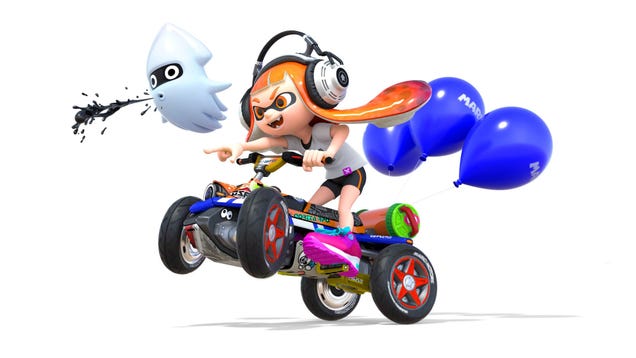
Mario Kart 8 Deluxe on the Switch just got an update that amongst other tweaks changes one of Inkling Girl’s animations, which I guess Nintendo didn’t realise meant something a little more offensive in Europe than it did in Japan.
 ... und zeigt die neuen Klingonen.
Ein neues Schiff, eine neue Besatzung, neue Planeten und neue Klingonen. All das seht ihr im ersten Trailer für die neue Star Trek-Serie.
... und zeigt die neuen Klingonen.
Ein neues Schiff, eine neue Besatzung, neue Planeten und neue Klingonen. All das seht ihr im ersten Trailer für die neue Star Trek-Serie.


