29 Jul 01:51
by Yi Zhang, Zhaofu Fei, Peng Gao, Yonghui Lee, Farzaneh Fadaei Tirani, Rosario Scopelliti, Yaqing Feng, Paul J. Dyson, Mohammad Khaja Nazeeruddin

Perovskite films, grown from PbI2:MAI in DMSO in the presence of functionalized ionic-liquid (imidazolium iodide) dopants and incorporated into perovskite solar cells, are reported. One cell has a power conversion efficiency exceeding 19%. Difference in power conversion efficiency can be traced to the physical properties of imidazolium-PbI3 salts that form during the preparation of the film.
29 Jul 01:45
J. Mater. Chem. A, 2017, 5,17943-17953
DOI: 10.1039/C7TA04995A, Paper
Guiting Chen, Fan Zhang, Meiyue Liu, Jun Song, Jiarong Lian, Pengju Zeng, Hin-Lap Yip, Wei Yang, Bin Zhang, Yong Cao
A novel bispyridinium salt (FPyBr) is designed as a cathode modifier to achieve high-performance and low-hysteresis fullerene/perovskite solar cells with a maximal PCE of 19.61%.
The content of this RSS Feed (c) The Royal Society of Chemistry
29 Jul 01:42
J. Mater. Chem. A, 2017, 5,18044-18052
DOI: 10.1039/C7TA05720B, Paper
Shun-Hsiang Chan, Ming-Chung Wu, Kun-Mu Lee, Wei-Cheng Chen, Tzu-Hao Lin, Wei-Fang Su
The power conversion efficiency of perovskite solar cells can be enhanced by using Ba2+-doped perovskite films.
The content of this RSS Feed (c) The Royal Society of Chemistry
29 Jul 01:37
Energy Environ. Sci., 2017, 10,1874-1884
DOI: 10.1039/C7EE01650F, Analysis
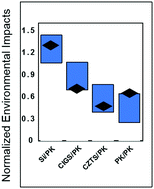
Ilke Celik, Adam B. Phillips, Zhaoning Song, Yanfa Yan, Randy J. Ellingson, Michael J. Heben, Defne Apul
A PKSn,Pb/PKPb tandem was found to be the most promising PV technology for lowering the environmental impacts from solar PVs.
The content of this RSS Feed (c) The Royal Society of Chemistry

29 Jul 01:35
Energy Environ. Sci., 2017, 10,1942-1949
DOI: 10.1039/C7EE01675A, Communication
Fengxian Xie, Chun-Chao Chen, Yongzhen Wu, Xing Li, Molang Cai, Xiao Liu, Xudong Yang, Liyuan Han
Formamidinium (FA)-based perovskite materials show an extended absorption spectrum to 840 nm, which enables high power conversion efficiencies of over 20% compared with normal-structure perovskite solar cells (PSCs).
The content of this RSS Feed (c) The Royal Society of Chemistry

29 Jul 01:34
by Antonio Gaetano Ricciardulli, Sheng Yang, Xinliang Feng and Paul W. M. Blom

ACS Applied Materials & Interfaces
DOI: 10.1021/acsami.7b09702

29 Jul 01:33
by Yoon Ho Choi, Hyun Bin Kim, In Seok Yang, Sang Do Sung, Young Sik Choi, Jeongho Kim and Wan In Lee

ACS Applied Materials & Interfaces
DOI: 10.1021/acsami.7b05146

29 Jul 01:31
by Xiaohui Yi, Zhenwei Ren, Ningli Chen, Cheng Li, Xinhua Zhong, Shiyong Yang, Jizheng Wang
Abstract
Owing to their attractive performance in photovoltaic devices, organolead halide perovskite materials have attracted enormous interest for photodetector applications. However, current perovskite-based photodetectors mainly rely on high-conductive 2D materials such as graphene or transition metal sulfides to transport photocarriers, which indeed significantly improve the photoresponsivity but seriously weaken other parameters such as on/off ratio or response speed. Achieving a high overall performance remains a challenge. Here, a solution-processed TiO2 nanocrystal (NC) film is employed to transport photocarriers. The designed TiO2 NC/perovskite (CH3NH3PbI3) bilayer device exhibits satisfactory overall performance with on/off ratio of 4000, photodetectivity of 1.85 × 10¹² Jones, and rise/decay time of 0.49/0.56 s. The device can also be integrated on flexible polyimide substrate. This work provides a strategy to realize high-performance perovskite-based photodetectors and clearly demonstrates their potential applications in future flexible optoelectronics.

TiO2 nanocrystal (NC) film is used to construct a TiO2 NC/perovskite bilayer photodetector, which shows high overall performance with on/off ratio of 4000, detectivity of 1.85 × 10¹² Jones, and rise/decay time of 0.49/0.56 s. The device is also fabricated on flexible polyimide substrate and displays comparable performance with a glass-based one, indicating its great potential in future flexible optoelectronics.
29 Jul 01:29
by Aashir Waleed, Mohammad Mahdi Tavakoli, Leilei Gu, Shabeeb Hussain, Daquan Zhang, Swapnadeep Poddar, Ziyi Wang, Rongjun Zhang and Zhiyong Fan

Nano Letters
DOI: 10.1021/acs.nanolett.7b02101

29 Jul 01:28
by Yalan Yan, Chunlin Jin, Jia Wang, Tianru Qin, Fangfei Li, Kai Wang, Yonghao Han and Chunxiao Gao

The Journal of Physical Chemistry Letters
DOI: 10.1021/acs.jpclett.7b01031

29 Jul 01:22
by Chaoxing Wu, Tae Whan Kim, Jae Hyeon Park, Haoqun An, Jiajia Shao, Xiangyu Chen and Zhong Lin Wang

ACS Nano
DOI: 10.1021/acsnano.7b03657

29 Jul 00:52
by Nilushi Wijeyasinghe, Anna Regoutz, Flurin Eisner, Tian Du, Leonidas Tsetseris, Yen-Hung Lin, Hendrik Faber, Pichaya Pattanasattayavong, Jinhua Li, Feng Yan, Martyn A. McLachlan, David J. Payne, Martin Heeney, Thomas D. Anthopoulos
This study reports the development of copper(I) thiocyanate (CuSCN) hole-transport layers (HTLs) processed from aqueous ammonia as a novel alternative to conventional n-alkyl sulfide solvents. Wide bandgap (3.4–3.9 eV) and ultrathin (3–5 nm) layers of CuSCN are formed when the aqueous CuSCN–ammine complex solution is spin-cast in air and annealed at 100 °C. X-ray photoelectron spectroscopy confirms the high compositional purity of the formed CuSCN layers, while the high-resolution valence band spectra agree with first-principles calculations. Study of the hole-transport properties using field-effect transistor measurements reveals that the aqueous-processed CuSCN layers exhibit a fivefold higher hole mobility than films processed from diethyl sulfide solutions with the maximum values approaching 0.1 cm2 V−1 s−1. A further interesting characteristic is the low surface roughness of the resulting CuSCN layers, which in the case of solar cells helps to planarize the indium tin oxide anode. Organic bulk heterojunction and planar organometal halide perovskite solar cells based on aqueous-processed CuSCN HTLs yield power conversion efficiency of 10.7% and 17.5%, respectively. Importantly, aqueous-processed CuSCN-based cells consistently outperform devices based on poly(3,4-ethylenedioxythiophene) polystyrene sulfonate HTLs. This is the first report on CuSCN films and devices processed via an aqueous-based synthetic route that is compatible with high-throughput manufacturing and paves the way for further developments.

Dissolution of copper thiocyanate (CuSCN) in aqueous ammonia enables processing of superior quality hole-transporting layers at low temperature in ambient air. Transistors based on these CuSCN layers exhibit mobilities close to 0.1 cm2 V−1 s−1, while solar cells incorporating CuSCN interlayers yield power conversion efficiencies of 10.7% and 17.5% for organic bulk heterojunction and organometal halide cells, respectively.
28 Jul 02:23
J. Mater. Chem. A, 2017, 5,17570-17579
DOI: 10.1039/C7TA03505E, Paper
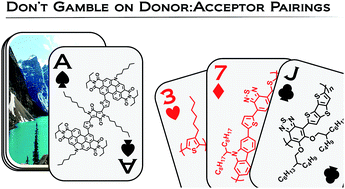
Chaohong Zhang, Stefan Langner, Alexander V. Mumyatov, Denis V. Anokhin, Jie Min, Jose Dario Perea, Kirill L. Gerasimov, Andres Osvet, Dimitri A. Ivanov, Pavel Troshin, Ning Li, Christoph J. Brabec
The miscibility has more influence than the crystallinity on the optimized acceptor : donor ratio in solar cells.
The content of this RSS Feed (c) The Royal Society of Chemistry
28 Jul 02:23
J. Mater. Chem. A, 2017, 5,17204-17210
DOI: 10.1039/C7TA05809H, Communication
Yuan-Qiu-Qiang Yi, Huanran Feng, Meijia Chang, Hongtao Zhang, Xiangjian Wan, Chenxi Li, Yongsheng Chen
A series of new non-fullerene small molecule acceptors (NTIC, NTIC-Me, NTIC-OMe and NTIC-F) based on the acceptor-donor-acceptor (A-D-A) architecture, using hexacyclic naphthalene-(cyclopentadithiophene) as the central unit, were designed and synthesized.
The content of this RSS Feed (c) The Royal Society of Chemistry
27 Jul 01:06
J. Mater. Chem. A, 2017, 5,17230-17239
DOI: 10.1039/C7TA05865A, Communication
Xuning Zhang, Xiaobing Zuo, Shenkun Xie, Jianyu Yuan, Huiqiong Zhou, Yuan Zhang
Photovoltaic characteristics, recombination and charge transport properties are investigated. The determined recombination reduction factor can reconcile the supreme device performance in organic solar cells using non-fullerene ITIC acceptor and severe carrier losses in all-polymer devices with P(NDI2OD-T2).
The content of this RSS Feed (c) The Royal Society of Chemistry
27 Jul 01:05
J. Mater. Chem. A, 2017, 5,17632-17639
DOI: 10.1039/C7TA04851C, Paper
Youyu Jiang, Jing Li, Sixing Xiong, Fangyuan Jiang, Tiefeng Liu, Fei Qin, Lin Hu, Yinhua Zhou
2,6-Dimethoxypyridine serves dual functions as a Lewis base for surface passivation and as a dopant for PC61BM in the fabrication of highly reproducible and high-efficiency planar perovskite solar cells.
The content of this RSS Feed (c) The Royal Society of Chemistry
27 Jul 01:05
J. Mater. Chem. A, 2017, 5,17619-17631
DOI: 10.1039/C7TA05583H, Paper
Xuncheng Liu, Li Nian, Ke Gao, Lianjie Zhang, Lechi Qing, Zhen Wang, Lei Ying, Zengqi Xie, Yuguang Ma, Yong Cao, Feng Liu, Junwu Chen
Side-chain random copolymers show high 3-D hole transport and offer excellent active layer thickness tolerance.
The content of this RSS Feed (c) The Royal Society of Chemistry
26 Jul 02:39
by Bing Guo, Wanbin Li, Xia Guo, Xiangyi Meng, Wei Ma, Maojie Zhang, Yongfang Li
In this work, high-efficiency nonfullerene polymer solar cells (PSCs) are developed based on a thiazolothiazole-containing wide bandgap polymer PTZ1 as donor and a planar IDT-based narrow bandgap small molecule with four side chains (IDIC) as acceptor. Through thermal annealing treatment, a power conversion efficiency (PCE) of up to 11.5% with an open circuit voltage (Voc) of 0.92 V, a short-circuit current density (Jsc) of 16.4 mA cm−2, and a fill factor of 76.2% is achieved. Furthermore, the PSCs based on PTZ1:IDIC still exhibit a relatively high PCE of 9.6% with the active layer thickness of 210 nm and a superior PCE of 10.5% with the device area of up to 0.81 cm2. These results indicate that PTZ1 is a promising polymer donor material for highly efficient fullerene-free PSCs and large-scale devices fabrication.

The nonfullerene polymer solar cells based on a wide-bandgap polymer PTZ1 and a narrow-bandgap acceptor IDIC exhibit weak active-layer thickness and area dependence with an optimal power conversion efficiency of 11.5%, indicating that the blend of PTZ1/IDIC has potential for the practical application of polymer solar cells.
22 Jul 01:25
by Yuliar Firdaus, Luna Pratali Maffei, Federico Cruciani, Michael A. Müller, Shengjian Liu, Sergei Lopatin, Nimer Wehbe, Guy O. Ngongang Ndjawa, Aram Amassian, Frederic Laquai, Pierre M. Beaujuge
Abstract
“Nonfullerene” acceptors are proving effective in bulk heterojunction (BHJ) solar cells when paired with selected polymer donors. However, the principles that guide the selection of adequate polymer donors for high-efficiency BHJ solar cells with nonfullerene acceptors remain a matter of some debate and, while polymer main-chain substitutions may have a direct influence on the donor–acceptor interplay, those effects should be examined and correlated with BHJ device performance patterns. This report examines a set of wide-bandgap polymer donor analogues composed of benzo[1,2-b:4,5-b′]dithiophene (BDT), and thienyl ([2H]T) or 3,4-difluorothiophene ([2F]T) motifs, and their BHJ device performance pattern with the nonfullerene acceptor “ITIC”. Studies show that the fluorine- and ring-substituted derivative PBDT(T)[2F]T largely outperforms its other two polymer donor counterparts, reaching power conversion efficiencies as high as 9.8%. Combining several characterization techniques, the gradual device performance improvements observed on swapping PBDT[2H]T for PBDT[2F]T, and then for PBDT(T)[2F]T, are found to result from (i) notably improved charge generation and collection efficiencies (estimated as ≈60%, 80%, and 90%, respectively), and (ii) reduced geminate recombination (being suppressed from ≈30%, 25% to 10%) and bimolecular recombination (inferred from recombination rate constant comparisons). These examinations will have broader implications for further studies on the optimization of BHJ solar cell efficiencies with polymer donors and a wider range of nonfullerene acceptors.

Swapping main-chain substituents in a set of analogous wide-bandgap polymer donors is shown to result in gradual bulk-heterojunction (BHJ) device performance improvements when the polymers are combined with the nonfullerene acceptor “ITIC”. The gradual improvements result from better charge generation, collection, and reduced geminate and bimolecular recombination, leading to polymer-nonfullerene BHJ solar cells with power conversion efficiencies as high as 9.8%.
21 Jul 07:35
J. Mater. Chem. A, 2017, 5,16907-16913
DOI: 10.1039/C7TA05282K, Paper
Seth[space]M. McAfee, Abby-Jo Payne, Sergey V. Dayneko, Gururaj P. Kini, Chang Eun Song, Jong-Cheol Lee, Gregory C. Welch
Utilizing the N-annulated PDI acceptor PDI-DPP-PDI, a simple air-processed and air-tested organic photovoltaic device fabrication procedure has been established to streamline the screening of donor materials.
The content of this RSS Feed (c) The Royal Society of Chemistry
21 Jul 07:35
by Shanshan Chen, Hye Jin Cho, Jungho Lee, Yankang Yang, Zhi-Guo Zhang, Yongfang Li, Changduk Yang
Abstract
Despite rapid advances in the field of nonfullerene polymer solar cells (NF-PSCs), successful examples of random polymer-based NF-PSCs are limited. In this study, it is demonstrated that random donor polymers based on thieno[2′,3′:5′,6′]pyrido[3,4-g]thieno[3,2-c]isoquinoline-5,11(4H,10H)-dione (TPTI) containing two simple thiophene (T) and bithiophene (2T) electron-rich moieties (PTTI-Tx) can be promising materials for the fabrication of highly efficient NF-PSCs. With negligible influence on optical bandgaps and energy levels, the crystalline behavior of PTTI-Tx polymers was modulated by varying the T:2T ratio in the polymer backbone; this resulted in the formation of different microstructures upon blending with a nonfullerene m-ITIC acceptor in NF-PSCs. In particular, a PTPTI-T70:m-ITIC system enabled favorable small-scale phase separation with an increased population of face-on oriented crystallites, thereby boosting the processes of effective exciton dissociation and charge transport in the device. Consequently, the highest power conversion efficiency of 11.02% with an enhanced short-circuit current density of 17.12 mA cm−2 is achieved for the random polymer-based NF-PSCs thus far. These results indicate that random terpolymerization is a simple and practical approach for the optimization of a donor polymer toward highly efficient NF-PSCs.

Over 11% efficiency random polymer-based nonfullerene solar cell is realized on the donor family of PTPTI-Tx containing various thiophene/bithiophene ratios in the backbone. A small-scale phase separation with an increased fraction of face-on oriented crystallites observed in the PTPTI-T70:m-ITIC blend enables efficient exciton dissociation and charge transport, thereby inducing a remarkably enhanced JSC of 17.12 mA cm−2 through this system.
20 Jul 03:06
by Zhaojun Li, Wei Zhang, Xiaofeng Xu, Zewdneh Genene, Dario Di Carlo Rasi, Wendimagegn Mammo, Arkady Yartsev, M. R. Andersson, René A. J. Janssen, Ergang Wang

A high power conversion efficiency of 6.9% from all-polymer solar cells with polymers as both donor and acceptor is achieved with good stability over 60 days as reported by Xiaofeng Xu, René A. J. Janssen, Ergang Wang, and co-workers in article number 1602722. The random copolymer PNDI-T10 could be a promising alterative acceptor to the widely used alternating polymers PNDI-T and N2200, as it delivers better performance in the resulting solar cells.
20 Jul 03:06
by Ming Cheng, Yuanyuan Li, Majid Safdari, Cheng Chen, Peng Liu, Lars Kloo, Licheng Sun

In article number 1602556, Licheng Sun and co-workers report an efficient perovskite solar cell (PSC) based on a solution processable nickel(II) phthalocyanine (NiPc) and vanadium oxide (V2O5) integrated hole transport layer. The introduction of the NiPc thin layer on the perovskite surface greatly restricts the crystalline incommensurate effects between perovskite layer and V2O5 layer, and correspondingly facilitates the formation of a thin and uniform V2O5 layer on top of NiPc/perovskite. The integrated HTL shows enhanced hole extraction efficiency and the optimized PSC displays an impressive average PCE of 17.6%
under one sun illumination.
19 Jul 12:18
J. Mater. Chem. A, 2017, 5,16976-16983
DOI: 10.1039/C7TA04717G, Paper
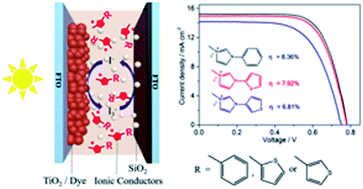
Meirong Zhang, Zhitong Jin, Chuanqi Feng, Min Wang, Zhong-Sheng Wang
The photovoltaic performance of quasi-solid-state DSSCs depends on the substituent and the substitution site of the imidazolium ring as well.
The content of this RSS Feed (c) The Royal Society of Chemistry
19 Jul 12:18
J. Mater. Chem. A, 2017, 5,17368-17378
DOI: 10.1039/C7TA04014H, Paper
Peng Zhang, Jiang Wu, Yafei Wang, Hojjatollah Sarvari, Detao Liu, Zhi David Chen, Shibin Li
Al-modified compact ZnO film-based planar PSCs exhibit high environmental stability and UV resistance.
The content of this RSS Feed (c) The Royal Society of Chemistry
19 Jul 12:17
by Wei Gao, Qiaoshi An, Ruijie Ming, Dongjun Xie, Kailong Wu, Zhenghui Luo, Yang Zou, Fujun Zhang, Chuluo Yang
Side group of ITIC-like small molecular acceptor (SMA) plays a critical role in crystallization property. In this article, two new SMAs with n-hexylthienyl and n-hexylselenophenyl as side chain, namely ITCPTC-Th and ITCPTC-Se, are designed and synthesized by employing newly developed thiophene-fused ending group (CPTCN). And thiophene and selenophene side group substituted effects of SMA-based fullerene-free polymer solar cells (PSCs) are investigated. A stronger σ-inductive effect between selenophene side group and electron-donating backbone endows ITCPTC-Se with better optical absorption and higher LUMO level, ITCPTC-Th-based PSCs deliver a higher power conversion efficiency of 10.61%. Charge transport and collection, recombination loss mechanism, and morphology of blend films are intensively studied. These results confirm that side group substituted effects of SMAs are multiple and thiophene is a superior option to selenophene as aromatic side group of ITIC-like SMAs.

Two new small molecular acceptors (SMAs), ITCPTC-Th and ITCPTC-Se, are designed and synthesized to investigate thiophene and selenophene side group substituted effects. A polymer solar cell (PSC) based on ITCPTC-Th achieves high power conversion efficiency (PCE) of 10.61%, which are significantly higher than that of ITCPTC-Se-based PSC. This confirms that thiophene is superior to selenophene as side group of ITIC-like SMAs.
19 Jul 00:53
by Guanjun Xiao, Ye Cao, Guangyu Qi, Lingrui Wang, Chuang Liu, Zhiwei Ma, Xinyi Yang, Yongming Sui, Weitao Zheng and Bo Zou

Journal of the American Chemical Society
DOI: 10.1021/jacs.7b05260

18 Jul 12:52
J. Mater. Chem. A, 2017, 5,21161-21168
DOI: 10.1039/C7TA03890A, Paper
Yongguang Tu, Jihuai Wu, Xin He, Panfeng Guo, Tongyue Wu, Hui Luo, Quanzhen Liu, Qihui Wu, Jianming Lin, Miaoliang Huang, Zhang Lan, Sizhong Li
Further efficiency enhancement mainly relies on decreasing the interface losses between the active layers in perovskite solar cells.
The content of this RSS Feed (c) The Royal Society of Chemistry
18 Jul 12:46
by Tongle Bu, Lan Wu, Xueping Liu, Xiaokun Yang, Peng Zhou, Xinxin Yu, Tianshi Qin, Jiangjian Shi, Song Wang, Saisai Li, Zhiliang Ku, Yong Peng, Fuzhi Huang, Qingbo Meng, Yi-Bing Cheng, Jie Zhong
Abstract
Organic–inorganic hybrid halide perovskite solar cells (PSCs) have recently drawn enormous attentions due to their impressive performance (>22%) and low temperature solution processability (<150 °C). Current solution process involves application of a large amount of toxic solvents, such as chlorobenzene, which is heavily employed in both the perovskite layer and the hole transport layer (HTL) deposition. Herein, this study employs green solvent of ethyl acetate for engineering efficient perovskite and HTL layers, which enables a synergic interface (perovskite/HTL) optimization. A champion efficiency of 19.43% is obtained for small cells (0.16 cm2 with mask) and over 14% for large size modules (5 × 5 cm2). The PSCs prepared from the green solvent engineering demonstrate superior performance on both efficiency and stability over their chlorobenzene counterparts. These enhancements are ascribed to the in situ inhibition on carrier recombination induced by interfacial defects during the solution processing, which enables about 2/3 reduction of calculated recombination rate. Thus, the green solvent route shows the great potential toward environmental-friendly manufacturing.

The widely used toxic chlorobenzene for the perovskite and Spiro-OMeTAD film processing is replaced by a green solvent of ethyl acetate. This green solvent engineering produces pinhole-free films of both the perovskite and Spiro-OMeTAD hole transport layer. Via the synergic interface optimization, an impressive power conversion efficiency up to 19.43% is achieved.
18 Jul 12:45
by Yiping Wang, Xin Sun, Zhizhong Chen, Yi-Yang Sun, Shengbai Zhang, Toh-Ming Lu, Esther Wertz, Jian Shi
High-temperature vapor phase epitaxy (VPE) has been proved ubiquitously powerful in enabling high-performance electro-optic devices in III–V semiconductor field. A typical example is the successful growth of p-type GaN by VPE for blue light-emitting diodes. VPE excels as it controls film defects such as point/interface defects and grain boundary, thanks to its high-temperature processing condition and controllable deposition rate. For the first time, single-crystalline high-temperature VPE halide perovskite thin film has been demonstrated—a unique platform on unveiling previously uncovered carrier dynamics in inorganic halide perovskites. Toward wafer-scale epitaxial and grain boundary-free film is grown with alkali halides as substrates. It is shown the metal alkali halides could be used as universal substrates for VPE growth of perovskite due to their similar material chemistry and lattice constant. With VPE, hot photoluminescence and nanosecond photo-Dember effect are revealed in inorganic halide perovskite. These two phenomena suggest that inorganic halide perovskite could be as compelling as its organic–inorganic counterpart regarding optoelectronic properties and help explain the long carrier lifetime in halide perovskite. The findings suggest a new avenue on developing high-quality large-scale single-crystalline halide perovskite films requiring precise control of defects and morphology.

It is shown that alkali halides can be used as a universal substrate for the vapor-phase epitaxy of halide perovskites. With vapor-phase epitaxy, hot photoluminescence and a nanosecond photo-Dember effect are revealed in an inorganic halide perovskite, suggesting it could be as compelling as its organic–inorganic counterpart for developing high-performance optoelectronics.
![[BOND]](http://onlinelibrarystatic.wiley.com/undisplayable_characters/00f8ff.gif) CH2
CH2![[DOUBLE BOND]](http://onlinelibrarystatic.wiley.com/undisplayable_characters/00f8fe.gif) CH2,
CH2, ![[TRIPLE BOND]](http://onlinelibrarystatic.wiley.com/undisplayable_characters/00f8fd.gif) CH, or
CH, or