Nano Letters
DOI: 10.1021/acs.nanolett.7b03225
The control of film morphology is crucial in achieving high-performance perovskite solar cells (PSCs). Herein, the crystals of the perovskite films are reconstructed by post-treating the MAPbI3 devices with methylamine gas, yielding a homogeneous nucleation and crystallization of the perovskite in the triple mesoscopic inorganic layers structured PSCs. As a result, a uniform, compact, and crystalline perovskite layer is obtained after the methylamine gas post-treatment, yielding high power conversion efficiency (PCE) of 15.26%, 128.8% higher than that of the device before processing. More importantly, this post-treatment process allows the regeneration of the photodegraded PSCs via the crystal reconstruction and the PCE can recover to 91% of the initial value after two cycles of the photodegradation-recovery process. This simple method allows for the regeneration of perovskite solar cells on site without reconstruction or replacing any components, thus prolonging the service life of the perovskite solar cells and distinguishing from any other photovoltaic devices in practice.

The crystals of the perovskite films are reconstructed by post-treating the MAPbI3 devices with methylamine gas, yielding high power conversion efficiency (PCE) of 15.26%, which is 128.8% higher than that of the device before processing. More importantly, the photodegraded perovskite solar cells are regenerated via crystal reconstruction, and the PCE recovers to 91% of the initial value after two cycles of the photodegradation-recovery process.
Perovskite solar cells have evolved to have compatible high efficiency and stability by employing mixed cation/halide type perovskite crystals as pinhole-free large grain absorbers. The cesium (Cs)–formamidium–methylammonium triple cation-based perovskite device fabricated in a glove box enables reproducible high-voltage performance. This study explores the method to reproduce stable and high power conversion efficiency (PCE) of a triple cation perovskite prepared using a one-step solution deposition and low-temperature annealing fully conducted in controlled ambient humidity conditions. Optimizing the perovskite grain size by Cs concentration and solution processes, a route is created to obtain highly uniform, pinhole-free large grain perovskite films that work with reproducible PCE up to 20.8% and high preservation stability without cell encapsulation for more than 18 weeks. This study further investigates the light intensity characteristics of open-circuit voltage (Voc) of small (5 × 5 mm2, PCE > 20%) and large (10 × 10 mm2, PCE of 18%) devices. Intensity dependence of Voc shows an ideality factor in the range of 1.7-1.9 for both devices, implying that the triple cation perovskite involves trap-assisted recombination loss at the hetero junction interfaces that influences Voc. Despite relatively high ideality factor, perovskite device is capable of supplying high power conversion efficiency under low light intensity (0.01 Sun) whereas maintaining Voc over 0.9 V.

The reproducible high performance of a triple-cation-based mixed halide perovskite cell fabricated by appropriate control of crystal growth and post-annealing under controlled relative humidity (R.H. < 25%) and in ambient air conditions is demonstrated. The device fabrication shows high yield in producing power conversion efficiencies up to 20.8% with a cell aperture size of 25 mm2.
Organic-inorganic hybrid perovskite solar cells form a new type of thin film photovoltaic technology, which has achieved extraordinary improvements in power conversion efficiency in a relatively short time. To further improve the efficiency and stability of the perovskite solar cells, it is critical to understand and control the microstructure of both the functional materials and their interfaces. Much effort has already been made to understand the microstructure of perovskite solar cells and its influence on their performance. This has proved particularly challenging due to the fragile nature of the organic-inorganic perovskites and the consequent potential for generating artefacts through the application of the characterization methods themselves. In this progress report, an overview of some of the more commonly used characterization methods is given, their possible impact on the materials analyses is evaluated, and the latest developments in the understanding of the microstructure of perovskite solar cells are summarized. The heterogenic nature of the individual perovskite grains and the polycrystalline film as a whole is illustrated, the features and properties of the grain boundaries and the effect they can have on solar cell performance are described, and the interface characterization between the layers in the solar cell devices is discussed.

The microstructure of perovskite solar cells has been shown to have a large impact on their properties. In this progress report, some of the most important findings relating to how different microstructures influence the performance of perovskite solar cells are summarized, and the possible impact of different characterisation techniques on the results obtained from them are discussed.


It is a great challenge to obtain broadband response perovskite photodetectors (PPDs) due to the relatively large bandgaps of the most used methylammonium lead halide perovskites. The response range of the reported PPDs is limited in the ultraviolet–visible range. Here, highly sensitive PPDs are successfully fabricated with low bandgap (≈1.25 eV) (FASnI3)0.6(MAPbI3)0.4 perovskite as active layers, exhibiting a broadband response from 300 to 1000 nm. The performance of the PPDs can be optimized by adjusting the thicknesses of the perovskite and C60 layers. The optimized PPDs with 1000 nm thick perovskite layer and 70 nm thick C60 layer exhibit an almost flat external quantum efficiency (EQE) spectrum from 350 to 900 nm with EQE larger than 65% under −0.2 V bias. Meanwhile, the optimized PPDs also exhibit suppressed dark current of 3.9 nA, high responsivity (R) of over 0.4 A W−1, high specific detectivity (D*) of over 1012 Jones in the near-infrared region under −0.2 V. Such highly sensitive broadband response PPDs, which can work well as self-powered conditions, offer great potential applications in multicolor light detection.

Highly sensitive perovskite photodetectors (PPDs) with broadband response from ultraviolet to the near-infrared region are achieved with low-bandgap (≈1.25 eV) (FASnI3)0.6(MAPbI3)0.4 perovskite as active layer. The optimized PPDs with 1000 nm thick perovskite and 70 nm thick C60 electron transport layer exhibit an almost flat response from 350 to 900 nm with external quantum efficiency larger than 65% under −0.2 V bias.
A novel atomic stacking transporting layer (ASTL) based on 2D atomic sheets of titania (Ti1−δO2) is demonstrated in organic–inorganic lead halide perovskite solar cells. The atomically thin ASTL of 2D titania, which is fabricated using a solution-processed self-assembly atomic layer-by-layer deposition technique, exhibits the unique features of high UV transparency and negligible (or very low) oxygen vacancies, making it a promising electron transporting material in the development of stable and high-performance perovskite solar cells. In particular, the solution-processable atomically thin ASTL of 2D titania atomic sheets shows superior inhibition of UV degradation of perovskite solar cell devices, compared to the conventional high-temperature sintered TiO2 counterpart, which usually causes the notorious instability of devices under UV irradiation. The discovery opens up a new dimension to utilize the 2D layered materials with a great variety of homostructrual or heterostructural atomic stacking architectures to be integrated with the fabrication of large-area photovoltaic or optoelectronic devices based on the solution processes.

The self-assembly atomic stacking transporting layer based on 2D titania atomic sheets exhibits unique advantages when used as an electron transporting layer for the development of stable and high-performance perovskite solar cells. The advantages are shown to include high UV transparency, negligible (or very low) oxygen vacancies, and solution processability.
TiO2 is by far the most widely used semiconducting materials for electrodes in (photo)-electrochemical applications owing to its unique electrical and optical properties combined with the chemical and thermal stability as well as nontoxicity. The electronic processes, especially the transport of charges within the electrodes and interfacial charge transfer, are among the most concerned issues to achieve better solar energy utilization. Towards this end, many approaches, including the development of novel electrode configurations and tuning electronic structures have been devoted to facilitate these electronic processes. Despite the intensive studies, some intrinsic structural features in TiO2 nanostructures, which are usually hidden from the tangible materials characterization techniques, are far from being consciously concerned. In this review, in addition to briefly summarizing the recent progress in TiO2 nanostructures for (photo)-electrochemical applications, the intrinsic structural features in TiO2 nanostructures, together with the challenges and perspectives involving these features, are emphatically discussed. These intrinsic structural features are shown to have a profound influence on the transport of charges within the TiO2 electrodes and interfacial charge transfer, and thus it is proposed that the charge transport in TiO2 electrodes can be efficiently promoted by cognizing and making good use of the intrinsic structural features.

The hidden intrinsic structural features, which are usually intangible from the conventional materials characterization methods, have profound influence on the electronic processes that occurred in the semiconductor electrodes. By cognizing and consciously taking use of these latent structural features, charge transport as well as the resulting solar energy utilization can be efficiently promoted via certain approaches.
In very recent years, growing efforts have been devoted to the development of all-polymer solar cells (all-PSCs). One of the advantages of all-PSCs over the fullerene-based PSCs is the versatile design of both donor and acceptor polymers which allows the optimization of energy levels to maximize the open-circuit voltage (Voc). However, there is no successful example of all-PSCs with both high Voc over 1 V and high power conversion efficiency (PCE) up to 8% reported so far. In this work, a combination of a donor polymer poly[4,8-bis(5-(2-octylthio)thiophen-2-yl)benzo[1,2-b:4,5-b′]dithiophene-2,6-diyl-alt-(5-(2-ethylhexyl)-4H-thieno[3,4-c]pyrrole-4,6(5H)-dione)-1,3-diyl] (PBDTS-TPD) with a low-lying highest occupied molecular orbital level and an acceptor polymer poly[[N,N′-bis(2-octyldodecyl)-naphthalene-1,4,5,8-bis(dicarboximide)-2,6-diyl]-alt-thiophene-2,5-diyl] (PNDI-T) with a high-lying lowest unoccupied molecular orbital level is used, realizing high-performance all-PSCs with simultaneously high Voc of 1.1 V and high PCE of 8.0%, and surpassing the performance of the corresponding PC71BM-based PSCs. The PBDTS-TPD:PNDI-T all-PSCs achieve a maximum internal quantum efficiency of 95% at 450 nm, which reveals that almost all the absorbed photons can be converted into free charges and collected by electrodes. This work demonstrates the advantages of all-PSCs by incorporating proper donor and acceptor polymers to boost both Voc and PCEs.

High-performance all-polymer solar cells with high Voc of 1.1 V and PCE of 8.0% are realized by incorporating a pair of the donor polymer poly[4,8-bis(5-(2-octylthio)thiophen-2-yl)benzo[1,2-b:4,5-b′]dithiophene-2,6-diyl-alt-(5-(2-ethylhexyl)-4H-thieno[3,4-c]pyrrole-4,6(5H)-dione)-1,3-diyl] and acceptor polymer poly[[N,N′-bis(2-octyldodecyl)-naphthalene-1,4,5,8-bis(dicarboximide)-2,6-diyl]-alt-thiophene-2,5-diyl]. The simultaneously high Voc and power conversion efficiency stem from the low photon energy loss and high internal quantum efficiency near unity.
Perovskite solar cells (PSCs) based on cesium (Cs)- and rubidium (Rb)-containing perovskite films show highly reproducible performance; however, a fundamental understanding of these systems is still emerging. Herein, this study has systematically investigated the role of Cs and Rb cations in complete devices by examining the transport and recombination processes using current–voltage characteristics and impedance spectroscopy in the dark. As the credibility of these measurements depends on the performance of devices, this study has chosen two different PSCs, (MAFACs)Pb(IBr)3 (MA = CH3NH3+, FA = CH(NH2)2+) and (MAFACsRb)Pb(IBr)3, yielding impressive performances of 19.5% and 21.1%, respectively. From detailed studies, this study surmises that the confluence of the low trap-assisted charge-carrier recombination, low resistance offered to holes at the perovskite/2,2′,7,7′-tetrakis(N,N-di-p-methoxyphenylamine)-9,9-spirobifluorene interface with a low series resistance (Rs), and low capacitance leads to the realization of higher performance when an extra Rb cation is incorporated into the absorber films. This study provides a thorough understanding of the impact of inorganic cations on the properties and performance of highly efficient devices, and also highlights new strategies to fabricate efficient multiple-cation-based PSCs.

The confluence of low trap-assisted charge-carrier recombination, low resistance offered to holes at the perovskite/2,2′,7,7′-tetrakis(N,N-di-p-methoxyphenylamine)-9,9-spirobifluorene interface with a low series resistance (RS) and a lower value of charge storage, leads to the realization of higher photovoltaic performance when an extra cation (Rb) is incorporated into the perovskite films.
Triple-junction device architectures represent a promising strategy to highly efficient organic solar cells. Accurate characterization of such devices is challenging, especially with respect to determining the external quantum efficiency (EQE) of the individual subcells. The specific light bias conditions that are commonly used to determine the EQE of a subcell of interest cause an excess of charge generation in the two other subcells. This results in the build-up of an electric field over the subcell of interest, which enhances current generation and leads to an overestimation of the EQE. A new protocol, involving optical modeling, is developed to correctly measure the EQE of triple-junction organic solar cells. Apart from correcting for the build-up electric field, the effect of light intensity is considered with the help of representative single-junction cells. The short-circuit current density (JSC) determined from integration of the EQE with the AM1.5G solar spectrum differs by up to 10% between corrected and uncorrected protocols. The results are validated by comparing the EQE experimentally measured to the EQE calculated via optical-electronic modeling, obtaining an excellent agreement.

The external quantum efficiency of triple-junction cells is accurately measured following a new protocol that takes into account light bias and voltage bias. Integration of the external quantum efficiency to determine the short-circuit current density matches with the value under simulated AM1.5G illumination conditions and results in a power conversion efficiency of 9.77 ± 0.29%.
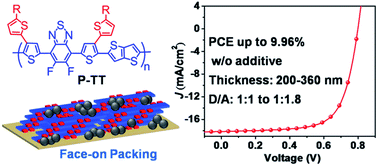
Highly crystalline conjugated polymers represent a key material for producing high-performance thick-active-layer polymer solar cells (PSCs). However, despite their potential, a limited number of crystalline polymers are used in PSCs because of the lack of highly coplanar acceptor building blocks and insufficient light absorptivity (α < 105) of most donor (D)–acceptor (A)-type polymers. This study reports a series of novel 3,7-di(thiophen-2-yl)-1,5-naphthyridine-2,6-dione (NTDT) acceptor-based conjugated polymers, PNTDT-2T, PNTDT-TT, and PNTDT-2F2T, synthesized with 2,2′-bithiophene (2T), thieno[3,2-b]thiophene (TT), and 3,3′-difluoro-2,2′-bithiophene (2F2T) donor units, respectively. PNTDT-2F2T exhibits superior polymer crystallinity and a much higher absorption coefficient than those of PNTDT-2T or PNTDT-TT because of adequate matching between highly coplanar A (NTDT) and D (2F2T) building blocks. A bulk heterojunction solar cell based on PNTDT-2F2T exhibits a power conversion efficiency of up to 9.63%, with a high short circuit current of 18.80 mA cm−2 and fill factor of 0.70, when a thick active layer (>200 nm) is used, without postfabrication hot processing. The findings demonstrate that the polymer crystallinity and absorption coefficient can be effectively controlled by selecting appropriate D and A building blocks, and that NTDT is a novel and versatile A building block for highly efficient thick-active-layer PSCs.

A novel 1,5-naphthyridine-2,6-dione-based conjugated polymer is developed and applied as a donor in the active layers of efficient polymer solar cells. PNTDT-2F2T exhibits outstanding polymer crystallinity and absorption coefficient. A polymer solar cell device made using PNTDT-2F2T exhibits a high power conversion efficiency (9.63%) with a thick active layer (>200 nm).
To advance polymer solar cells (PSCs) toward real-world applications, it is crucial to develop materials that are compatible with a low-cost large-scale manufacturing technology. In this context, a practically useful polymer should fulfill several critical requirements: the capability to provide high power conversion efficiencies (PCEs) via low-cost fabrication using environmentally friendly solvents under mild thermal conditions, resulting in an active layer that is thick enough to minimize defects in large-area films. Here, the development of new photovoltaic polymers is reported through rational molecular design to meet these requirements. Benzodithiophene (BDT)-difluorobenzoxadiazole (ffBX)-2-decyltetradecyl (DT), a wide-bandgap polymer based on ffBX and BDT emerges as the first example that fulfills the qualifications. When blended with a low-cost acceptor (C60-fullerene derivative), BDT-ffBX-DT produces a PCE of 9.4% at active layer thickness over 250 nm. BDT-ffBX-DT devices can be fabricated from nonhalogenated solvents at low processing temperature. The success of BDT-ffBX-DT originates from its appropriate electronic structure and charge transport characteristics, in combination with a favorable face-on orientation of the polymer backbone in blends, and the ability to form proper phase separation morphology with a fibrillar bicontinuous interpenetrating network in bulk-heterojunction films. With these characteristics, BDT-ffBX-DT represents a meaningful step toward future everyday applications of polymer solar cells.

Two new conjugated polymers based on difluorobenzoxadiazole bring real-world applications of polymer solar cells closer. They integrate multiple advantages including high power conversion efficiency built on low-cost acceptors, allowing thick active layers, and processability from green solvents under mild conditions. Particularly, benzodithiophene-difluorobenzoxadiazole-2-decyltetradecyl (BDT-ffBX-DT) is a champion in meeting a comprehensive list of prerequisites for future application of polymer solar cells.
This study reports an effective amidine-type n-dopant of 1,8-Diazabicyclo[5.4.0]undec-7-ene (DBU) that can universally dope electron acceptors, including PC61BM, N2200, and ITIC, by mixing the dopant with the acceptors in organic solvents or exposing the acceptor films in the dopant vapor. The doping mechanism is due to its strong electron-donating property that is also confirmed via the chemical reduction of PEDOT:PSS (yielding color change). The DBU doping considerably increases the electrical conductivity and shifts the Fermi levels up of the PC61BM films. When the DBU-doped PC61BM is used as an electron-transporting layer in perovskite solar cells, the n-doping removes the “S-shape” of J–V characteristics, which leads to the fill factor enhancement from 0.54 to 0.76. Furthermore, the DBU doping can effectively lower the threshold voltage and enhance the electron mobility of PC61BM-based n-channel field-effect transistors. These results show that the DBU can be a promising n-dopant for solution-processed electronics.

An effective, solution-processed amidine-type n-dopant of 1,8-diazabicyclo[5.4.0]undec-7-ene (DBU), which can universally dope electron acceptor materials, including PC61BM, N2200, and ITIC, is reported. The DBU doping can enhance the performance of the perovskite solar cells and the electron mobility of the field-effect transistors.
Organolead halide perovskite solar cells (PSC) are arising as promising candidates for next-generation renewable energy conversion devices. Currently, inverted PSCs typically employ expensive organic semiconductor as electron transport material and thermally deposited metal as cathode (such as Ag, Au, or Al), which are incompatible with their large-scale production. Moreover, the use of metal cathode also limits the long-term device stability under normal operation conditions. Herein, a novel inverted PSC employs a SnO2-coated carbon nanotube (SnO2@CSCNT) film as cathode in both rigid and flexible substrates (substrate/NiO-perovskite/Al2O3-perovskite/SnO2@CSCNT-perovskite). Inverted PSCs with SnO2@CSCNT cathode exhibit considerable enhancement in photovoltaic performance in comparison with the devices without SnO2 coating owing to the significantly reduced charge recombination. As a result, a power conversion efficiency of 14.3% can be obtained on rigid substrates while the flexible ones achieve 10.5% efficiency. More importantly, SnO2@CSCNT-based inverted PSCs exhibit significantly improved stability compared to the standard inverted devices made with silver cathode, retaining over 88% of their original efficiencies after 550 h of full light soaking or thermal stress. The results indicate that SnO2@CSCNT is a promising cathode material for long-term device operation and pave the way toward realistic commercialization of flexible PSCs.

A novel, thermal- and photostable inverted perovskite solar cell is developed, employing a SnO2-coated carbon nanotube film as cathode (substrate/NiO-perovskite/Al2O3-perovskite/SnO 2@CSCNT-perovskite). The deposition of the electron-extracting SnO2 on the CSCNT cathode increases device efficiencies, eliminates device hysteresis, and suppresses charge combination. Solar cells fabricated with SnO2@CSCNT cathodes show power conversion efficiencies of 14.3 and 10.5% on rigid and flexible substrates, respectively.
Reduced contact size would permit higher resolution cortical recordings, but the effects of diameter on crucial recording and stimulation properties are poorly understood. Here, the first systematic study of scaling effects on the electrochemical properties of metallic Pt and Au and organic poly(3,4-ethylenedioxythiophene):polystyrene sulfonate (PEDOT:PSS) electrodes is presented. PEDOT:PSS exhibits better faradaic charge transfer and capacitive charge coupling than metal electrodes, and these characteristics lead to improved electrochemical performance and reduced noise at smaller electrode diameters. PEDOT:PSS coating reduces the impedances of metallic electrodes by up to 18x for diameters <200 µm, but has no effect for millimeter scale contacts due to the dominance of series resistances. Therefore, the performance gains are especially significant at smaller diameters and lower frequencies essential for recording cognitive and pathological activities. Additionally, the overall reduced noise of the PEDOT:PSS electrodes enables a lower noise floor for recording action potentials. These results permit quantitative optimization of contact material and diameter for different electrocorticography applications.

Electrode arrays are fabricated using metal (Pt, Au) and organic (poly(3,4-ethylenedioxythiophene):polystyrene sulfonate (PEDOT:PSS)) coatings. Their electrochemical sensing characteristics are studied and quantified as a function of diameter for different frequency bands and at different size regimes. The results can guide the design and operation of ECoG electrode arrays.
Dramatic advances in perovskite solar cells (PSCs) and the blossoming of wearable electronics have triggered tremendous demands for flexible solar-power sources. However, the fracturing of functional crystalline films and transmittance wastage from flexible substrates are critical challenges to approaching the high-performance PSCs with flexural endurance. In this work, a nanocellular scaffold is introduced to architect a mechanics buffer layer and optics resonant cavity. The nanocellular scaffold releases mechanical stresses during flexural experiences and significantly improves the crystalline quality of the perovskite films. The nanocellular optics resonant cavity optimizes light harvesting and charge transportation of devices. More importantly, these flexible PSCs, which demonstrate excellent performance and mechanical stability, are practically fabricated in modules as a wearable solar-power source. A power conversion efficiency of 12.32% for a flexible large-scale device (polyethylene terephthalate substrate, indium tin oxide-free, 1.01 cm2) is achieved. This ingenious flexible structure will enable a new approach for development of wearable electronics.

A nanocellular scaffold is introduced to construct a mechanics buffer layer and optics resonant cavity in a flexible perovskite solar cell. A power conversion efficiency of 12.32% is achieved with a flexible, large-scale device (polyethylene terephthalate substrate, indium tin oxide-free, 1.01 cm2). Moreover, the devices, which demonstrate excellent performance and mechanical stability, are practically fabricated in modules for a wearable solar-power source.
The mechanism behind the temperature dependence of the device performance in hybrid perovskite solar cells (HPSCs) is investigated systematically. The power conversion efficiency (PCE) of the reference cell using [60]PCBM as electron extraction layer (EEL) drops significantly from 11.9% at 295 K to 7% at 180 K. The deteriorated charge carrier extraction is found as the dominant factor causing this degradation. Temperature dependent spectroscopy and charge transport studies demonstrate that the poor electron transport in the [60]PCBM EEL at low temperature leads to inefficient charge carrier extraction. It is further demonstrated that the n-type doping of [60]PCBM EEL or the use of an EEL (fulleropyrrolidine with a triethylene glycol monoethyl ether side chain) with higher electron transport capability is an effective strategy to achieve HPSCs working efficiently over a broad temperature range. The devices fabricated with these highly performing EELs have PCEs at 180 K of 16.7% and 18.2%, respectively. These results support the idea that the temperature dependence of the electron transport in the EELs limits the device performance in HPSCs, especially at lower temperatures and they also give directions toward further improvement of the PCE of HPSCs at realistic operating temperatures.

The temperature dependence of the figures of merit of hybrid perovskite solar cells (HPSCs) is dominated by the electron extraction layer (EEL). At low temperature, the device using [60]PCBM as EEL shows significant lowering of the performance due to the poor electron transport capability of [60]PCBM. By n-type doping [60]PCBM, highly efficient HPSCs over a broad temperature range are achieved.


Here, conjugated polymer is added as third component to tune the solution viscosity, morphology, and function of small molecule (SM) based bulk-heterojunction (BHJ) solar cells, which are fabricated using blade coating. Novel information about the effect of blade coating speed on the nanoscale morphology and function of ternary blend solar cells is provided. The crystal sizes increase with an increase of coating speed for both binary and ternary blends, while the addition of the third component tends to favor smaller SM crystal grains and improves the connectivity of SM crystals. Small angle neutron scattering experiments provide the first clear experimental evidence that the addition of the third component would significantly impact the fullerene phase separation, which is crucial for bimolecular recombination and charge transport. It shows that for both binary and ternary blends, the concentration and sizes of [6,6]-phenyl-C61-butyric acid methyl ester (PCBM) aggregates increase with an increase of coating speed, while addition of third component does not affect the volume fraction of PCBM aggregates but impacts the size of PCBM aggregates. It is demonstrated that the judicious selection of blade coating speed and addition of conjugated polymer optimize the morphology of SM-BHJ, providing guidelines for high performance SM-BHJs from roll-to-roll production.

The crystallization of small molecules and fullerene phase separation in SM-BHJ blends are significantly impacted by the blade coating speed as well as the addition of a third component. The judicious selection of blade coating speed and the addition of a conjugated polymer optimizes the morphology of SM-BHJ, which will provide guidelines for high performance SM-BHJ from roll-to-roll production.

In article number 1602812, Jung-Yong Lee, Bumjoon J. Kim, and co-workers investigate nonconjugated polymer additives (nPAs) for highly efficient and stable polymer solar cells (PSCs). The P2VP nPA self-assembles vertically on the ZnO surface via a single coating process for the deposition of active materials. The self-assembled P2VP reduces the work function and surface defect density of ZnO, which leads to efficient and stable PSCs with up to 11.14% efficiency.
Solar cells based on mixed organic–inorganic halide perovskites are promising photovoltaic technologies with low-cost and fantastic power conversion efficiency (PCE). Enhancing the nucleation and regulating the crystallization rate of perovskite films and improving the bendability of brittle hybrid grains are crucial to improving the photovoltaic performance of flexible perovskite solar cells (PVSCs). Here, a simple approach is first introduced for fabricating perovskite films with full coverage and larger crystalline size by incorporating the elastomer polyurethane (PU) into the perovskite precursor solution to both retard the crystallization rate and improve the bendability. Shiny, smooth perovskite films are obtained with compact, micrometer-sized crystalline grains that exhibit excellent photoelectric performances. The PVSCs fabricated by incorporating PU into the perovskite precursor offer an impressive PCE of 18.7% with almost no photocurrent hysteresis and excellent stability in ambient air. More importantly, the elastomer PU additive crosslinks the grain boundaries between neighboring perovskite crystals to form a PU network that effectively improves the bendability of the perovskite films.

Polyurethane (PU) has been used as an effective additive to optimize the performance of perovskite solar cells by retarding crystallization rate and enhancing grain size of perovskite crystals. More importantly, elastomer PU can effectively improve the bendability of perovskite films due to denseness and high elasticity created by crosslinking grain boundaries between neighboring perovskite crystals to form a PU network.