Shared posts

08 Apr 16:37

A Problem Google Has Created for Itself

by James Fallows
Over the eons I've been a fan of, and sucker for, each latest automated system to "simplify" and "bring order to" my life. Very early on this led me to the beautiful-and-doomed Lotus Agenda for my DOS computers, and Actioneer for the early Palm. For the last few years Evernote has been my favorite, and I really like it. Still I always have the roving eye.
Thumbnail image for KeepLogo.jpeg So naturally I have already downloaded the Android version of Google's new app for collecting notes, photos, and info, called Google Keep, with logo at right. This early version has nothing like Evernote's power or polish, but you can see where Google is headed.
Here's the problem: Google now has a clear enough track record of trying out, and then canceling, "interesting" new software that I have no idea how long Keep will be around. When Google launched its Google Health service five years ago, it had an allure like Keep's: here was the one place you could store your prescription info, test results, immunization records, and so on and know that you could get at them as time went on. That's how I used it -- until Google cancelled this "experiment" last year. Same with Google Reader, and all the other products in the Google Graveyard that Slate produced last week.GoogleGraveyard.png After Reader's demise, many people noted the danger of ever relying on a company's free offerings. When a company is charging money for a product -- as Evernote does for all above its most basic service, and same for Dropbox and SugarSync -- you understand its incentive for sticking with that product. The company itself might fail, but as long as it's in business it's unlikely just to get bored and walk away, as Google has from so many experiments. These include one called Google Notebook, which had some similarities to Keep, and which I also liked, and which Google abandoned recently. 
So: I trust Google for search, the core of how it stays in business. Similarly for Maps and Earth, which have tremendous public-good side effects but also are integral to Google's business. Plus Gmail and Drive, which keep you in the Google ecosystem. But do I trust Google with Keep? No. The idea looks promising, and you can see how it could end up as an integral part of the Google Drive strategy. But you could also imagine that two or three years from now this will be one more "interesting" experiment Google has gotten tired of. 
Until I know a reason that it's in Google's long-term interest to keep Keep going, I'm not going to invest time in it or lodge info there. The info could of course be extracted or ported somewhere else -- Google has been very good about helping people rescue data from products it has killed -- but why bother getting used to a system that might go away? And I don't understand how Google can get anyone to rely on its experimental products unless it has a convincing answer for the "how do we know you won't kill this?" question.
More discussion: Wired, TechCrunch, the Verge. Routine disclosure: many of my friends work at Google, as does one of my sons.


02 Apr 20:04

What It Means to Treat Kate Upton Like the Successful, Autonomous Person That She Is

by Conor Friedersdorf
kate upton full.jpg
By all outward appearances, Kate Upton is winning life. Born in America, raised in material comfort, and blessed with the athletic talent to win national equestrian competitions as a teen, she is now 20 years young, an enviable age to be. She's also rich, famous, beautiful, and successful, having been the face of Guess, a cover model for the Sports Illustrated swimsuit issue, a mainstay in glossy fashion magazines, and an actress with roles in two films to her credits.

Congratulations, Kate Upton!

Success has attracted the fans you'd expect. One fan, Los Angeles teenager Jake Davidson, is typical in some ways: He has a crush on the supermodel and wishes he could take her to his high school prom.

Atypically, he actually asked her to go:

She handled the situation with acumen, Tweeting, "How could I turn down that video! I'll check my schedule ;)" and later telling People magazine:

It was so flattering.

The video was so cute, and I really appreciated it. There was something about it that I knew I had to respond. When a guy has a good sense of humor and confidence, that's attractive. This video was creative and funny. It made me laugh, and everyone loves a good laugh! I'm not sure if I'll be able to go with him or not, due to my schedule. I want to, but I just don't know if I can make it work. But I really appreciated being asked; it made me feel really great!
Having gracefully bowed out, they all lived happily ever after.

So what's left to talk about? A provocative Amanda Marcotte item titled, "Jake Davidson Asking Out Kate Upton Isn't Cute. It's Creepy." Take a look for yourself before I hint at my reaction to it:

Kat Stoeffel of the Cut has a post celebrating Upton for coming up with a polite excuse to get out of the date, even though Upton still had to endure the humiliation of having to pretend she was flattered, so as to preserve her reputation for being "nice." As Stoeffel points out, if famous models and actresses can't decline a man's offer for no other reason than lack of interest, what chance do the rest of us have?
"But her 'yes' would have reinforced the idea that women owe something--attention, time, sex--to men just because they've asked nicely. Or paid a compliment. Or bought a drink."
Davidson's prom video put Upton in a no-win situation. Say yes, and you have to go through with this prom date that will probably be one of the most awkward and embarrassing nights of your life, where you have to socialize with teenagers while being paraded around like a show pony. Laugh at the obvious ridiculousness of this entire situation, and now you're a big old meanie-head. But what Upton chose to do, which is to let him down easy while pretending to be flattered, isn't really much better. Everyone knows she's just saying that. The lesson learned: You may be a rich and famous model, but any random man can, just by making a video, force you to do a little song and dance about how delightful his attentions are.

Instead of applauding Davidson for this, adults should be appalled. All that's been taught here to young men is that they are entitled to women's attention simply because they ask for it. This lesson not only feeds the unjustified grievances of the Reddit users that Stoeffel describes as "tallying up women's socially obligatory acts of kindness." It also helps build the undercurrent of fear that many women, especially younger women, have to live with in their daily lives. This entitlement we teach men crops up all the time for women, and it's rarely as cute as a silly comedy video: When a man demands that you stop on the street to entertain his proposal of going back to his place and then follows you for blocks because you pretended not to hear him. When a rape victim is told that if she didn't want to have sex, she shouldn't have gone to the rapist's hotel room. When a woman files for a restraining order because she's afraid her abusive husband means it when he says that if he can't have her, no one can.
She added, "Let's be clear: I'm not saying that Davidson is violent or that he was threatening Upton with anything more than having people call her a bitch if she didn't play along. But men who are violent feel justified because they believe that women owe them their attention, their bodies, and their love. By joining in the collective pressure on Upton to give her attention--even just the attention of a polite refusal to a request that is, in reality, too silly to warrant acknowledgement--to a young man just because he wants it, we're contributing to the overall culture of male entitlement."

This argument is strange in part because it proceeds as if an experience very common to celebrities of both genders is unique to women. I don't just mean the general phenomenon of random people seeking photos or photographs or otherwise harassing famous people, who must either respond with time and attention or risk looking like entitled jerks. I mean that prom invitations are a thing. Here's one of many YouTube prom invitations to Justin Bieber. Here's a teen asking Justin Timberlake to be her date. Last year, an 18-year-old took to Twitter to ask a 23-year-old NFL player if he would accompany her to prom. He said yes and picked her up in a Lamborghini. Of course, most celebrity invitations end in a "no," or even a refusal to directly respond, and while that may make some people regard the star as less "nice," is that really so terrible?

But I object to Marcotte's argument in a deeper way. Her ultimate purpose is pushing back against real, pervasive problems that women face: street harassment, rape, spousal abuse. That's a vital project. And those scourges are partly a function of the perpetrators' entitlement. In this instance, however, her focus on those themes has caused her to treat two individuals, Upton and Davidson, as if they are stand-ins for their genders rather than individuals. She has also portrayed a strong, successful woman as if she's a humiliated victim. In doing so, she diminishes Upton and vests Davidson with more power than he possesses or ought to possess.

The problem isn't her awareness that there are privileges associated with being a straight, white male from an upper-middle-class upbringing, her belief that women as a class are subject to sexist cultural norms, or her belief that those norms are connected at some level to serious abuses. It would be a mistake to dismiss any of those priors. But there are limits to how far they can take us. Group dynamics cannot be mapped onto individuals nearly so neatly as Marcotte attempts it. Her ideology causes her to write as if she doesn't understand what is plain to most observers: Kate Upton is far more privileged, powerful, culturally savvy, and capable of fully exercising her autonomy than the vast majority of straight white males in America, and certainly more than a dateless, non-celebrity 18-year-old high school student on YouTube.

Speaking of "the dynamics of difference and power," as they called it at my alma mater, Marcotte, in her capacity as a regular columnist at a prestigious, internationally read Web magazine, presently possesses a lot more cultural power and privilege than the high school boy she just called "creepy," accused of implicitly threatening Upton with being called a bitch, and told that his prom invitation is rooted in the same premise that stalkers and rapists operate under. 

Yet it's actually the treatment of Upton that interests me most. It's certainly possible that she reacted in something like the way Marcotte imagines: that she was alerted to the YouTube video, felt as if she was in a no-win situation, pretended to be flattered, and felt resentful at having to choose between feigning niceness and taking a public relations hit. Under this scenario, she would've suffered in part due to the cultural voices that pressured her to actually attend the prom. Had Marcotte confined her criticism to those voices, I'd have agreed with her commentary. I tend to think celebrities owe less to the public than most Americans seem to believe. And I think Stoeffel is right that public invitations like this can verge on emotional blackmail.   

What makes me uncomfortable is the way that Marcotte presumes her plausible explanation for how Upton felt is in fact how she felt--as if it's okay to begin from general observations about objectionable gender dynamics in society and to extrapolate from them as if they tell us how a specific woman would of course react to a specific situation. Isn't that unfair to Kate Upton? Surely an appreciation that women are diverse, autonomous individuals requires us to be open to the possibility that Upton's inner thoughts and feelings are different than any of us might expect, especially since Upton's public statements are directly at odds with Marcotte's theory. Marcotte doesn't leave open the possibility that she was mildly flattered, or ambivalent, or found the video hilarious, or managed the whole thing through a PR adviser and never even thought of it outside those moments.

I don't actually think there is any one way Upton "ought to" feel. Nor do I know anything about her philosophy, her experiences, her personality, her sensitivities, her strengths, her insecurities, her disposition. How could I even make an informed guess? I would suggest that feminism shouldn't aim to shame high-schoolers who ask supermodels out on YouTube so that the objects of their affection don't feel humiliated pretending to be nice; rather, feminism should aim for a world where no supermodel would ever experience humiliation at being asked out by a high schooler, in large part because no one would even imagine that a teenager possesses the power to humiliate a grown woman at the top of her profession with no more than a respectfully phrased invitation. That is how things ought to be. It seems possible that we are almost there, too.

If not, perhaps part of the problem is that Marcotte and those who agree with her assume the opposite. They proceed as if it's not just possible but obvious that Upton would conceive of her experience as they did: as a victimized member of a disempowered group who has of course been humiliated. But surely at least some women would regard themselves, in Upton's situation, as powerful, autonomous superstars who managed some good press, made a random kid happy, and haven't been through anything so unpleasant that they can be said to have "endured" it.  

Wouldn't that be a good thing? Isn't presuming maximal trauma and discomfort itself victimizing to some people? And finally, aren't asking someone to pay attention to you with an appeal to their politeness or niceness and demanding they pay attention to you with the implicit threat of physical coercion actually different in kind, not degree? If you're reading, Davidson, I think the answer is yes.


29 Mar 19:21

Japanese Inspiration by Way of Belgium

by Sarah Lonsdale

Our NYC-based friend Zak Profera swung by Remodelista headquarters in SF the other day (sporting fabulous silver Jill Sander sneakers) with a bag of samples from his latest collection of linens from his line Zak + Fox. Zak launched his line a year ago with an assortment of historically inspired designs and patterns, presented for a modern audience. As he says, "I'm always drawn to the narrative behind something, and the creative process for me goes beyond the aesthetic, but also requires a dedicated search for the 'reason.' "

To wit, his latest collection of Belgian linens, called "Kiyohime," which was inspired by Japanese folktales. Zak notes that with both Japanese and Belgian design, "There's a lot of heart and thought behind each detail, even for the most unadorned object; design is driven from the mix of natural materials and organic hues, and the creation of something beautiful emerges by allowing those elements room to breathe."

The collection will be available in showrooms in April. For more information, go to Zak + Fox. To see more on the collection, see his pictorial interpretation of the legendary myth Kiyohime.

Zak Profera of Zak + Fox

Above: Zak Profera with his Shiba Inu.

zak and fox uroko linen

Above: Uroko shown in ink (also available in snow, shown on stool). Uroko translates to "scale," like that of a fish or snake. In Japanese folklore, Kiyohime, a lovelorn woman entranced by a traveling monk is often depicted in a kimono of this pattern.

zak and fox belgian linen with Japanese design, Kesa

Above: Kesa shown in umber with Hidaka beneath.

zak and fox Kesa linen

Above: Kesa, shown in snow and umber, represents the tale of a traveling monk. Kesa or Kesaya, is a vestment worn by a Buddhist priest over his robes; the rectangular geometric pattern referencing the small, patchwork assembly which makes up its construction.

zak and fox Hidaka from the Kiyohime collection

Above: Hidaka is named after the river Hidaka that stands as a barrier between love and rage in the ancient fable of Kiyohime. Zak notes, "The three new designs all represent different key elements of the story, but the challenge was figuring out how to distil these complicated metaphors and this imagery down to something wholly accessible and suited even for a minimalist. The legitimate translation of metaphor-to-geometry is what I found most compelling when I was creating these designs."

See Zak+Fox's previous collection, Textiles inspired by Exotica.

Explore more Fabrics & Linens.

28 Mar 18:32

What That New Mom Sitting Across From You At Lunch Was Probably Thinking

by Pamie

Oh, this is nice. I’m outside.

I’M OUTSIDE.

I’M OUTSIDE! WOO!

Yes, I’m outside, with my friend, like a real lady and I am going to have some lunch. A lunch date! Oh, I’m on a lunch date with my friend like I’m a real, live, normal person. This is fantastic.

She’s been talking. My friend is definitely talking right there. I should probably pay attention.

Man, it’s pretty outside. I forgot how nice life is when you’re around it. Look at all these people, just having lunch. Enjoying their day. People all look so pretty and happy and nice. These people all look so nice.

I hope the baby is napping.

Can she see my breast pads through this shirt? I hope I look okay. I am almost positive I remembered to put on deodorant before I left. I could check the app to see if the baby is still asleep, but —

NO. I will NOT check the app! This is MY TIME and there’s nothing I can do if the baby is awake anyway, because I’m way over here, enjoying my lunch with my friend like everybody else gets to do and I should do because I’m still a person.

Oh, it’s clearly my time to talk. Say words now. Say words in an order that makes sense.

I… um… do did you we… weh…

I don’t want to just talk about the baby, but it’s obviously where the questions are headed. Maybe talk about work. Try talking about work. Man, it’s late. What is it, like, noon? I have been up for seven hours already. I am going to order a glass of wine because it’s quitting time, amiright? Happy hour.

Yes, I will have a glass of wine. Like a lady.

… Did I ever say anything when it was my turn to talk? I should make sure to laugh right now, just in case my friend said something funny. Damn, she just asked why I’m laughing.

Say something about the menu. Good. That almost made sense.

Why do I hear my baby crying? Do you hear my baby crying? Can everybody? Is this a real cry, like my baby has somehow teleported here and is already attached to my boob, or is this like when I hear the baby’s screams even when I’m in the shower or blow-drying my hair? Because the phantom PTSD screams fool me every damn time.

You should probably laugh again. This time add a, “Right?”

Good. Good job. We’re fooling ‘em all.

Okay, that’s a real baby cry I’m hearing, because there’s a baby behind me with a cry that is weirdly close to mine. I mean my baby’s. That baby sounds like my baby. I thought that wasn’t scientifically possible. I recognized my baby’s cry three floors away in a parking lot. I knew it in the hospital wing six hours after the baby was born. How can this tiny thing behind me impersonate my baby so well?

Maybe I need to feed that baby. I might as well, since all this crying has triggered my let down and–

OH MAN. ARE MY BREAST PADS IN THE RIGHT POSITION?

Am I leaking everywhere? DON’T LOOK. But what if I am? What if everybody can see it and everybody knows and I’m not just a normal lady like everybody else? I’m a ladycow who walks around with–

Can somebody feed that crying baby? And where is my glass of wine?

What if my baby isn’t napping, but is crying right now and that’s why I’m trying to feed a baby? Can my baby control me from miles away? My stomach hurts. Did the baby do that?

The food is here. Time to eat. I can eat like a normal person, at a normal rate. I will not have to abandon this plate mid-bite. I get to just sit here and eat it, like a normal person. Do not cry over this. DO NOT CRY OVER THIS. This is a good thing, just enjoy it. Why can’t I enjoy this nice day, this nice meal, this nice friend?

Focus on the weather, on the conversation. It’s okay. This is all great. You got this. You are outside, and that is progress, lady.

That wine and that food are making me sleepy because I have been up for a whole day already and it is not even today yet. Heh. That’s funny. I have a lot of funny thoughts.

Shit. I think my friend just asked me a question. Shoulder shrug?

Okay, I’m just going to check the app on the baby really quickly so that I know the baby is asleep and then I can finish this lady lunch date and — oh, the check is here. Oh, no. It’s over. Aw, man.

That was over way too quickly. I had so much fun, we should do this again every week. I should tell my friend that. Perhaps I will e-mail it, because I’m about to pass out.

28 Mar 14:42

The Jaw-Dropping Reason Congress Drafted DOMA: 'Moral Disapproval of Homosexuality'

by Garance Franke-Ruta
windsor.banner.reuters.jpg Plaintiff Edith Windsor waves to supporters outside after arguments in her case against the Defense of Marriage Act. (Jonathan Ernst/Reuters)

When Supreme Court Justice Elena Kagan read aloud from the 1996 Report to Congress that accompanied the passage of the Defense of Marriage Act, there were audible gasps of shock in the courtroom, according to several people who attended oral arguments Wednesday.

"I'm going to quote from the House Report here," Kagan had said "... 'Congress decided to reflect and honor of collective moral judgment and to express moral disapproval of homosexuality.' Is that what happened in 1996?"

"Does the House Report say that?" replied Paul Clement, the attorney defending DOMA. "Of course, the House Report says that. And if that's enough to invalidate the statute, then you should invalidate the statute."

But, he continued, "This Court, even when it's to find more heightened scrutiny ... it suggests, 'Look, we are not going to strike down a statute just because a couple of legislators may have had an improper motive. We're going to look, and under rational basis, we look: Is there any rational basis.'"

In short, he argued, "The House Report says some things that ... we've never invoked in trying to defend the statute"-- and so the court should focus on these other articulated rationales for preserving the controversial law.

Yet the intent of Congress in passing the law, as laid out in the House Judiciary Committee Report to Congress, is hard to ignore. Noted Kagan: "We have a whole series of cases which suggest the following ... that when Congress targets a group that is not everybody's favorite group in the world, that we look at those cases with some --­ even if they're not suspect -- with some rigor to say, do we really think that Congress was doing this for uniformity reasons, or do we think that Congress's judgment was infected by dislike, by fear, by animus, and so forth? I guess the question that this statute raises, this statute that does something that's really never been done before, is whether that sends up a pretty good red flag that that's what was going on."

What was going on, precisely, in 1996? Let's take a look at the section of the report in question, explaining a rationale for DOMA (I've italicized the red flags I see):

H. R. 3396 ADVANCES THE GOVERNMENT'S INTEREST IN DEFENDING TRADITIONAL NOTIONS OF MORALITY

There are, then, significant practical reasons why government affords preferential status to the institution of heterosexual marriage. These reasons -- procreation and child-rearing -- are in accord with nature and hence have a moral component. But they are not -- or at least are not necessarily -- moral or religious in nature. For many Americans, there is to this issue of marriage an overtly moral or religious aspect that cannot be divorced from the practicalities. It is true, of course, that the civil act of marriage is separate from the recognition and blessing of that act by a religious institution. But the fact that there are distinct religious and civil components of marriage does not mean that the two do not intersect. Civil laws that permit only heterosexual marriage reflect and honor a collective moral judgment about human sexuality. This judgment entails both moral disapproval of homosexuality, moral conviction that heterosexuality better comports with traditional (especially Judeo-Christian) morality. As Representative Henry Hyde, the Chairman of the Judiciary Committee, stated during the Subcommittee markup of H.R. 3396: ''[S]ame-sex marriage, if sanctified by the law, if approved by the law, legitimates a public union, a legal status that most people...feel ought to be illegitimate.... And in so doing it trivializes the legitimate status of marriage and demeans it by putting a stamp of approval...on a union that many people...think is immoral.''

It is both inevitable and entirely appropriate that the law should reflect such moral judgments. H.R. 3396 serves the government's legitimate interest in protecting the traditional moral teachings reflected in heterosexual-only marriage laws.

That is one heck of a statement of congressional intent -- and one made even more notable by Salon's revelation during the Lewinsky scandal in 1998 that Hyde had, as a married man in the 1960s, had an extramarital affair. That story? "This hypocrite broke up my family," a j'accuse against Hyde by the husband of the woman Hyde had had an affair with, Fred Snodgrass. In the piece, Snodgrass's daughter also relays her mother's opinions, observing of Hyde, "She knows she wasn't his first [mistress] and she wasn't his last."

Given Hyde's relaxed relationship to monogamous heterosexual marriage, his role in pushing DOMA, and the fact that his powerful articulation of the underlying rationale for the law was included in the reporting of the bill, it seems clear that one goal of DOMA was to put the force of the state behind moral views precisely like Hyde's -- which were then widely shared by congressional Republicans, as well as some Democrats -- that gay unions are immoral, illegitimate, disreputable, against nature and not worthy of "the stamp of approval" of any U.S. government body.


19 Mar 02:17

Cool Experiment of the Day: A 100 Percent Supplement Diet

Cool Experiment of the Day: A 100 Percent Supplement Diet

Software engineer Rob Rhinehart thinks he never has to eat a traditional meal ever again. The 24-year-old from Atlanta, GA has developed a strange beige drink named "Soylent," in reference to the 1973 science fiction film Soylent Green, which he claims contains all the required nutrients to form a healthy diet. In a recent interview with Vice, Rhinehart revealed he thinks the world would be much better off if his concoction was adopted by the masses, resulting in an overall healthier populace.

Submitted by: Don-KYM (via Vice)

Share on Facebook
18 Mar 17:36

When Looking 'Insane' Got You Committed

by James Hamblin

The archaic medical practice of recognizing mental illness and "idiocy" based on appearance

asylum for the insane 615.jpg State Asylum for the Insane, Morristown, New Jersey (Library of Congress)

"As we progress in our study of insanity, we are constantly reminded of the physical changes that take place in the patients ... Disease of the brain makes itself known by well-marked bodily symptoms that are, in themselves, almost as important as the many variations of disordered mental action," wrote Allan Hamilton, MD, in 1883's Types of Insanity: An illustrated guide to the physical diagnosis of mental disease.

When one walks through the wards of any asylum for the insane, he will be immediately impressed with the repulsiveness of the faces about him, for the general appearance of the insane patient is in no sense prepossessing, and this is especially the case in the female. Women of beauty, as writers upon insanity have observed, rapidly lose their good looks with the establishment of mental disease, and plainness or downright homeliness is the rule among asylum patients, whether of high or low social station.

This was a time when "the insane" -- which included "idiots, imbeciles, and lunatics" -- were committed to asylums in courts of law. Hamilton outlines legislation in every state regarding the process.

The laws relating to the care of the Insane in Wisconsin are quite simple. Lunatics are committed only by the County Judge.

In other states, physicians' testimony was required. This text was meant, then, to be of earnest use in making that commitment process more accurate.

He provides several illustrated examples, which accompany colorful descriptions in the full text:

IMBECILITY Screen Shot 2013-03-15 at 10.12.43 AM.png

IDIOCY Thumbnail image for Screen Shot 2013-03-15 at 10.07.06 AM.png

CHRONIC MANIA ("Is clownish in his behavior, and sings at the top of his voice.") Screen Shot 2013-03-15 at 10.36.29 AM.png

CHRONIC MELANCHOLIA Screen Shot 2013-03-15 at 10.18.01 AM.png

MANIA OF A VIOLENT TYPE ("Her hair is coarse and becomes erect when she is excited.")Screen Shot 2013-03-15 at 10.33.08 AM.png

DEMENTIA Screen Shot 2013-03-15 at 11.04.17 AM.png

GENERAL PARESIS ("Has delusions of wealth, but is demented and stupid.") Screen Shot 2013-03-15 at 11.04.45 AM.png

If a friend is keeping a hand inside his jacket, maybe he is depressed?

Hamilton was also keen on handwriting analysis:

In some cases we have but little difficulty in making a diagnosis by the letter alone, because of the striking incoherency, which the individual may restrain in conversation but which he indulges in when left to himself; and in suspected cases, where patients are on their guard, it is well to ask them to write a letter.

Screen Shot 2013-03-15 at 11.49.59 AM.png

One of the peculiarities of the letters of the insane consists in the use of illustrative diagrams, keys of explanation, and strangely coined words, and in forms of mental disease syrnptomatized by religious exaltation there are constant suggestions of the delusions of the individual.

This text was written with certainty and authority, 140 years ago. It doesn't go as far as to say a diagnosis could be based entirely on physical appearance, though it would have done no favors for an eccentric person who found himself in front of a judge and happened to have a hand in his coat.


via Emily Temple at Flavorwire 


17 Mar 15:25

A New Perspective of the Day: Floor Plans From Famous TV Shows

A New Perspective of the Day: Floor Plans From Famous TV Shows

Since September 2012, Spanish interior designer Iñaki Aliste Lizarralde has been mapping meticulously detailed floor plans based on notable fictional residences in popular TV shows. Initially shared on his deviantART account, Lizarralde's project includes the apartments from How I Met Your Mother (shown top), Friends (shown middle) and Frasier (shown bottom), among several others.

Hat tip to Juxtapoz.

Submitted by: Unknown (via Iñaki Aliste Lizarralde)

Share on Facebook
16 Mar 00:42

Rob Portman's Selfish Reversal on Marriage Is a Triumph for Gay Rights

by Noah Berlatsky

The Republican senator's embrace of marriage equality shows just how successful advocates have been in linking the personal with the political.

berlatsky_portman_post.jpg Jonathan Ernst/Reuters

Rob Portman, Republican Senator from Ohio and a former frontrunner to be Mitt Romney's running mate, has declared that he now favors gay marriage. As Portman says in an op-ed for the Columbus Dispatch, his change of heart was personal:

That isn't how I've always felt. As a congressman, and more recently as a senator, I opposed marriage for same-sex couples. Then something happened that led me to think through my position in a much deeper way.

Two years ago, my son Will, then a college freshman, told my wife, Jane, and me that he is gay. He said he'd known for some time, and that his sexual orientation wasn't something he chose; it was simply a part of who he is. Jane and I were proud of him for his honesty and courage. We were surprised to learn he is gay but knew he was still the same person he'd always been. The only difference was that now we had a more complete picture of the son we love.

Portman goes on to make the conservative (and entirely reasonable) case for gay marriage. Personal liberty means allowing folks to marry who they want without government interference. Marriage and family are stabilizing institutions, and more people, gay or straight, joining stabilizing institutions is a good thing.

Related Story

Inside This Year's Epic Campaign for Gay Equality

The one thing Portman doesn't do, though, is explain why these conservative arguments seem reasonable to him now, when they didn't have force before. Or, rather, he does explain...but his explanation leaves most of the relevant moral issues hanging. Portman says he changed his mind because he looked at his son and wanted him to have a happy life. But the gay people to whom Portman was denying marriage before his conversion—those people were also someone's sons and daughters. Does Portman only care about suffering when it occurs in his family? Shouldn't he, at the very least, not just promulgate his new views, but apologize for his old ones—perhaps by pointing out his earlier failure of empathy, and promising to do better in the future?

Several writers have pointed out Portman's lack of contrition. Jonathan Chait for one, writes:

Portman ought to be able to recognize that, even if he changed his mind on gay marriage owing to personal experience, the logic stands irrespective of it: Support for gay marriage would be right even if he didn't have a gay son. There's little sign that any such reasoning has crossed his mind.

Chait concludes:

[W]hy should any of us come away from his conversion trusting that Portman is thinking on any issue about what's good for all of us, rather than what's good for himself and the people he knows?

I don't disagree with Chait here. I am pleased that Portman has come out in favor of gay-marriage, but somewhat depressed to find in him a public servant who appears to be lacking in self-awareness or empathy. I know that politicians live to disappoint...but still. It's disappointing.

What I think Chait misses, though, is the extent to which Rob Portman's intellectual and moral mediocrity points to an amazing strategic victory by the gay rights movement. As Chait says, Portman's reversal on this issue appears to boil down to pure selfishness. But...there are many issues where selfishness, no matter how pure, does not translate into political action. As just one example, there is, and has long been, a great deal of evidence that women are routinely given Cesareans for no medical purpose. Yet, while there are many mothers who are needlessly subjected to this major abdominal surgery, those mothers and their loved ones do not, for the most part, become advocates for laws legalizing midwifery, or for changes in birth practices. Even though these women have a personal experience of policy failure and injustice, that experience does not translate into political action, because they simply do not see those personal experiences in political terms.

Portman, on the other hand, does see his personal experience with gay issues in political terms. That's not because he's especially sensitive or thoughtful—there is no reason to think he is either. Rather, it's because gay rights advocates have been so successful in linking the personal and the political together that even the most unreflective career pol can't help but connect them.

In large part, gay activists have done this precisely by focusing on marriage. As Michael J. Klarman explained in his recent book, From the Closet to the Altar, there was much tension in the gay rights movement over the strategic decision to focus on same-sex marriage. Many activists wanted instead to concentrate on anti-discrimination laws, or even on civil unions. The focus on same-sex marriage—a focus determined by individuals on the ground as much as by national organizations or activists—resulted in many setbacks and defeats, and energized Republicans for years. Anti-gay marriage ballot measures may well have given Bush the state of Ohio and the presidency in 2004.

But while there were downsides, the focus on gay marriage has also had huge successes—and one of those successes is the way in which it has so forcefully connected personal and family ties to politics. Marriage—he public acknowledgement of personal commitment—has become the symbol for gay rights. And as a result, Rob Portman cannot look at his gay son without seeing that that his gay son's family—Portman's family—is a political issue that requires a political stance.

Portman's op-ed makes him sound like someone who, faced with a moral dilemma, has muddled through as best he can with the least thought and effort possible. The fact is, though, that most of us, most of the time, are more like Rob Portman than we are like, say, Mildred Loving, the woman whose Supreme Court case overturned the laws against interracial marriage. The marriage equality movement, like any moral movement, has been built by activists with great struggle and courage. But it's success is measured by the fact that it has framed the issues in question such that even the selfish and small-minded can, given a little push by their families, make the right choices. Portman is not an inspiring figure. But there is something inspiring in realizing that the movement has reached a point where even someone like him finds it easier to make the right choice than the wrong one.


15 Mar 17:48

LoungePac chair is designed for the professional beach bum

by Dave LeClair

The LoungePac in both its open and closed states

Hanging out on the beach sometimes doesn't consist solely of, well, hanging out. A true beach bum knows that having to get up to get a drink or having to leave the beach altogether because of sunburn is just not acceptable. A new chair called the LoungePac is aimed at keeping those things from proving necessary... Continue Reading LoungePac chair is designed for the professional beach bum

Section: Outdoors

Tags: Beach, Chair, Lounge, Relax

Related Articles:
13 Mar 16:50

How 4,000 Men Hand-Deliver 175,000 Lunches Around Mumbai in 1 Day

by Alessandra Ram

In an age of multinational food chains, demand for the 125-year-old dabbawalla delivery system is at an all-time high


While traveling across Asia for its ongoing series on sustainable food, the team from Perennial Plate has covered agriculture, advocacy, cooking, and business. Now, Daniel Klein and Mirra Fine conclude their journey with an ode to the people in between -- those who deliver the food.

“Dabbawalla” comes from the term tiffin dabba, referring to a tiered lunch box and “dabba,” a carrier. As Saritha Rai explains in The New York Times, India’s dabbawalla network originated during the British colonial occupation after cities were flooded with new, regional workers as a way to bridge the distance [both literally and figuratively] between their work sites and their homes. Each morning, after the recipient has gone to work, family members who remain at home (mothers, wives, grandmothers, and sisters) prepare a freshly-cooked meal to be picked up by a dabbawalla, sorted and distributed at railway stations, and hand-delivered to their loved one at the office.

Today, Mumbai is home to approximately 4,000 dabbawallas who deliver tens of thousands of lunches via an intricate, 125-year-old coding system without fail. The dabbawallas rely on a series of codes written on the sides of the boxes that function as directions. Though many of them are illiterate, they have learned to sign their names on the receipt. In fact, the delivery service is estimated to have an error rate of 1 in every 16 million transactions, and has been studied by corporations like GE for its precision and accuracy.

Despite the influx of food chains and eateries in Mumbai over the last decade, demand for the lunchtime service is higher than ever before, with customers from multinational corporations and hedge funds. Now, clients can put in a request via text message or e-mail. Variations on the service are even cropping up in cities across the United States with heavy South Asian populations, like San Francisco and New York.

For more from the Perennial Plate, visit their site.


12 Mar 02:37

Tweet Heat – The hottest Tweets of the Month [Feb. 2013]

by Jan Rajtoral


This is a guest post by Jan Rajtoral (AKA Gonzo the Great), founder of gonzodesign, a Dutch design studio specialized in graphic and (responsive) web design. He also writes for the gonzoblog.nl, where above anything else, his passion for writing, technology, communication and design drives him to contribute.

- § -

In this article we’re going to take a look what has been published this last month on the Blogosphere. We hand-picked a selection with the best Resources, Tutorials, Scripts/Snippet and WordPress related Articles for you. All these design-related links have been mentioned on Twitter in the last month, and collected in this single article. So, I hope you’ll enjoy this roundup cause we think that having resources and staying up-to-date is important in your personal growth and development.


HTML, CSS, PhP, Coding & Resources

Browserhacks

Browserhacks – An extensive list of browser specific CSS and JavaScript hacks from all over the interwebs. Handcrafted by Hugo Giraudel and Tim Pietrusky.

JSDB – A collection of the best javascript libraries with ratings and some GitHub stats.

Tips for using SVGs in web projects – When trying to utilise them in large web projects there are a few pitfalls I’ve come across that I haven’t found to be documented. This post therefore serves as a few pointers if you are looking to employ them in a web project.

Git Tips From the Pros – We’ll take a look at some of the advanced features and workflows that you might not already be familiar with. Hopefully, you’ll walk away with your mouth agape at the sheer possibilities that git provides!

Dig deep into CSS gradients – The idea that you can obtain many shapes using just gradients was a starting point for many CSS experiments I would later do.

Responsive Tables – A few smart folks have already put together their thoughts on responsive tables and, while I think the proposed methods are pretty good, I think there might be room for improvement.

Getting Started with Responsive Typography – Responsive type is resizable. It can be changed based on screen size or user preference. Responsive type adjusts for column width as well, so that lines of text are not too long or short. Responsive type also adjusts for differences in pixel density and screen resolution, so that letterforms do not become pixilated or blurry.

Mobile Navigation Patterns – This is an article about helping mobile site viewers find what they’re looking for more quickly and directly, removing barriers and hopefully making a better navigational experience for everyone (with a focus on e-commerce).

Photoshop Blend Modes in CSS from The Adobe WebKit Team – It’s very early days so this obviously isn’t an in-depth look but it’s fantastic to see the power of blend modes coming to CSS. It’s also fun to see what the future of CSS will look like and this is very exciting.

Using The New Twitter API V1.1 – From March 5th 2013 Twitter are removing there current API and it will be fully replaced with the new API V1.1. This means that any application that is currently using the old API will stop working on March 5th.

Using background clip for text with CSS fallback – It is no surprise to find people using non-standard properties in HTML, and it is no big deal if it fails gracefully in other browsers. Unfortunately, background-clip: text fails rather spectacularly in non-WebKit browsers.

CSS frameworks and semantics – It’s our responsibility as web developers to keep standards alive. We shouldn’t let convenience and speed get in the way of well structured, semantic HTML.

Responsive Web Design: Advantages To Gain And Challenges To Face! – Stats reveal that the mobile-based website hits were 7.12% in August 2011 and the count rose to 11.78% in August 2012. What does it mean? The future would be of Smartphones and most of the internet searches would be made through mobile phones.

Mobile Considerations in User Experience Design: “Web or Native?” – The purpose of this chapter is to empower you, as a user experience designer, to understand your medium so that you can answer these questions informedly, starting by looking at what exactly we mean by an application being “native.”

Create a Mobile User Experience – Whether you build from scratch or look for some parts to get started, consider mobile as an important part of your overall design scheme. Think about how you want users to interact with your site and what actions they will take.

Using Flexbox: Mixing Old and New for the Best Browser Support – Flexbox is pretty awesome and is certainly part of the future of layout. The syntax has changed quite a bit over the past few years. But if we weave together the old, new, and in-between syntaxes, we can get decent browser support.

Exploring Device Orientation and Motion API – The Device Orientation API exposes two different types of sensor data: orientation and motion. Such APIs will let Web developers easily deliver advanced Web user experiences leveraging modern devices’ sensors.

HTML5 forms introduction and new attributes – HTML5 introduces a number of new attributes, input types, and other elements for your markup toolkit. In this article we’ll be focussing on the new attributes with a future article looking at the new input types.

HTML’s New Template Tag, standardizing client-side templating – A new <template> element which describes a standard DOM-based approach for client-side templating. Templates allow you to declare fragments of markup which are parsed as HTML, go unused at page load, but can be instantiated later on at runtime.

Web Design: Customize Checkboxes and Radio Buttons with CSS3 – With CSS3 we can customize web presentations to be almost anything we want it to be. In this post, as the title says, we are going to customize the look of checkbox and radio input.

Take Control of the Box Model with box-sizing – In this article, we’ll go over a few important things to know about the box model, like how it affects defining accurate fixed and fluid sizes, then learn how to tame it with the new box-sizing feature.

Feature Support & Polyfills – There are a handful of common practices to get websites to perform adequately in all browsers, some of which have already been covered within this guide. When incorporating CSS3 properties, fallbacks are recommend to support older browsers.

Font Hinting and the Future of Responsive Typography – Font hinting has been the source of countless headaches for type designers and users. Meanwhile, some of the most fundamental and important elements of typography still can’t be addressed with the web of today.

There Is No Mobile Internet! – We need to embrace a device-agnostic approach to communicating with connected consumers and forget the idea of a “mobile Internet”. There is only One Web to experience.

3 Types of Breakpoints In Responsive Designs – At the very least there are 2 distinct types of breakpoints, those for major changes and those for minor ones. I think there’s a 3rd group in between where the change isn’t as major as changing the entire layout, but is significantly more than a tweak.


Tutorials

Collapsing Header Effect

How To Create a Simple Collapsing Header Effect – Making use of a simple collapsing header effect, where the page header or banner would gradually shorten and disappear upon page scroll. Let’s take a look at recreating this cool effect for use in your own website designs.

Create a 3D Book Animation with CSS – With the introduction of transforms in CSS, we can now replicate 3D objects. The 3D book I’ve created consists of two elements, the spine and the cover.

Interactive Infographic with SVG and CSS Animations – With the right techniques and modern browser support, developers can now produce some pretty impressive animations, effects and interactions using SVG. Learn how to build an interactive animated infographic using SVG, CSS and JavaScript.

Icon Fonts in Use with a Fancy Hover Effect – In this tutorial we will play a bit with icon fonts. Besides other advantages, this technique provides an easy way to have your icons look crisp on retina displays. We’ll use a custom set of social icons generated with IcoMoon App and we will add a fancy effect on hover.

Neat Table of Contents with Jquery and CSS3 – In this article we will create a nice little Table of Contents with bit of jQuery and CSS3. Div element stays fixed on the left or right side of the page for easy navigation of the page, it can be expended and collapsed easily by a reader.

Adding Motion into Web Design with Animate.css – Lots of frontend web developers have been getting interested in dynamic interfaces using motion effects. This is all too common with many advancements within popular JavaScript libraries. But there has also been a lot of interest in CSS3 animated effects.

Create an Absolute Basic Mobile CSS Responsive Navigation Menu – In this tutorial we will go over the process in coding a very basic CSS responsive navigation menu. We will transform a basic non-list style navigation to a drop down menu using media queries in our stylesheet. There’s no need for javascript in this tutorial.

Coding a Horizontal Navigation Bar with jQuery Dropdown Menus – For this tutorial I want to build a simple jQuery-powered dropdown menu. This can work well using the animate method for generating delayed effects. Along with the typical JS codes I have also worked some CSS3 transition effects into the stylesheet.

Full Width Image Slider – This slider has a 100% width layout and it is responsive. It operates with CSS transitions and the image is wrapped with an anchor. The anchor can be replaced by a division if no linking is needed. With a max-width set to 100%, the image will size down for smaller screens.

How to Build an iOS-Style Content Slider using jQuery – Building a custom slider widget to work properly in modern browsers and smartphones is not easy. Many of the supported browsers for Android and iOS devices are advancing, too. This means we can expect support for greater ideas in the near future.

Create an accordion menu using CSS3 – However there is one problem with using the :target and that is that it makes it impossible to close the content areas again or have multiple sections open at the same time. We fix this by using hidden checkboxes, we can control the opening and closing.


Tools (web applications, bookmarklets, frameworks etc.)

GroundworkCSS

Groundwork  – Framework to make responsive development and rapid responsive prototyping a breeze. Groundwork has been built from the ground up with the incredibly powerful CSS preprocessor, Sass. Sass is an extension of CSS3, adding nested rules, variables, mixins, selector inheritance, and more.

5G Blacklist – Helps to reduce the number of malicious URL requests that hit your website. It’s one of many ways to improve the security of your site and protect against evil exploits, bad requests, and other nefarious garbage.

Flight – A lightweight, component-based JavaScript framework that maps behavior to DOM nodes. Twitter uses it for their web applications. By way of example, we’ve included a simple email client demo (browse the source code) built over the Flight framework.

MQtest.io – A simple tool to help identify which media queries your device responds to. This test isn’t about what media queries your device can or cannot see. Instead it shows you which dimensions your device will respond to when using ‘width=device-width,initial-scale=1.’

PilotSSH – A secure application for server administration. It uses a set of scripts on the server side to create a nice graphical user interface. Pilot your servers in a few touches! Restart servers, read logs, manage users and processes… With PilotSSH, everything can be done in a few touches!

Segment.io – Lets you send your analytics data to any service you want, without you having to integrate with each one individually. No more littering your app with tons of different analytics services. Instead, instrument your app once cleanly and then send your data to any analytics service you want.

Windu CMS – A simple, lightweight and fun-to-use website content management software. system was made by a company designing websites. The use of file-based database and efficient object-oriented PHP code, Windu CMS is really fast.

Slidr.css – A standalone CSS library for sliding checkboxes. No Javascript needed! Slider.cc was built on top of Twitter Bootstrap, therefor I added the default styles which are used for labels, badges, buttons and so on.

cgSceneGraph – A powerful, cross-platform and very easy-to-use animation framework written in JavaScript for the <canvas> tag in HTML5. It’s full object oriented to ease the development of your applications and games.

Roole – A language that compiles to CSS. It drew many inspirations from other CSS preprocessing languages like Sass, LESS and Stylus. The most unique feature of Roole is that it has vendor prefixing built-in, so the language stays dead simple yet being able to prefix some extremely complex rules transparently.

Squash – An exception reporting and bug analysis tool. Squash uses git blame to figure out who can fix the bug. Squash analyzes the stack trace of every exception, and determines which line in the backtrace is the source of the bug. Squash shows you where in the code the problem was, so you can quickly get to fixing it.

Conditionizr – A fast and lightweight (4KB) javascript utility that detects browser and pixel ratio, allowing you to serve conditional JavaScript and CSS files. Rebuilt from it’s jQuery predecessor, it’s now 50% faster.

hhhhold! – Feel the insanity of user-generated content in your project by putting simple hhhhold! URLs in your code.

Browser Refresh for Sublime Text 2 – After installing this plugin you can hit command + shift + r on Mac OS X or ctrl + shift + r on Windows while using your favorite browser, the last active window will come to the foreground and reload the active tab.

DevRef – The Developer’s Reference

Adobe Edge Reflow – Visually design responsive websites. Edge Reflow offers a flexible design approach, visual media query breakpoints, a customizable fluid grid web fonts integration, and much more.

Inspectlet – Watch visitors use your website. Discover where visitors are getting confused on your site and what’s getting their attention. See every mouse movement, scrolling, clicks, and typing on your site.

color.hailpixel – A different kind of color picker where you can explore hex colors in an intuitive way.

Foundation – What’s new in 4? Responsive design gets lighter, faster and more advanced, so you can code smarter. Now you can build for small devices first. Then, as devices get larger and larger, layer in more complexity. Everything is now semantic.

Parallax scrolling - It is a collection of HTML/CSS and JavaScript files to be used for web designers and developers and baked into a responsive framework.

StatusCake.com – Free Unlimited Website Monitoring. Make sure you’re the first to know about your website’s downtime. StatusCake.com has a network of monitoring centres throughout the world.

Markdown.css – Makes it easy to make your HTML markup look like plain-text markdown. All it takes is the inclusion of the markdown.css file and defining some classes in your HTML.

Bolt – A tool for Content Management, which strives to be as simple and straightforward as possible. It is quick to set up, easy to configure and uses elegant templates. Bolt is created using modern open source libraries, and is best suited to build sites in HTML5 with modern markup.

Koken – A free system designed for photographers, designers, and creative DIYs to publish independent websites of their work. We developed Koken to offer photographers, designers and artists a different kind of publishing platform.

csswizardry-grids – Simple, fluid, nestable, flexible, Sass-based, responsive grid system.


jQuery Plugins, Javascript, APIs, etc.

jQuery Nested

Nested – A jQuery plugin which allows you to create multi-column, dynamic grid layouts. Unlike other libraries and jQuery plugins similar to Nested, this is (as far I as I’ve know) the first script out there that allows you a complete gap-free layout.

Rubberband – A jQuery plugin for adding responsive breakpoint events.Sometimes you need to know when your responsive design changes. Rubberband fires events when the browser enters and exits breakpoints matching your media-queries.

Fly In/Out Gallery – A simple gallery with a fly-in and fly-out animation between images. Using keyframe animation for IE10, Firefox, Chrome, Safari, Opera and iPad etc. and a fallback styles for earlier versions of IE.

Picker – A jQuery plugin for replacing default checkboxes and radios.Replace those boring default checkboxes and radio inputs with a custom picker. Picker will atuomatically detect the type of the input and render the proper styles.

Cinnamon.js – Allows users to find links, images, and other content by their synonyms, using the browser’s built-in Find function. Cinnamon.js works on modern browsers and IE8+.

Queen.js - A platform for running scripts on many browsers. Queen is a server which captures browsers and then is able to push scripts to them to run in a clean context (an iframe).

jQuery.BlackAndWhite -This plug-in can easily convert any colored image into a B&W greyscale image. It uses the the HTML5 canvas tag and a fallback for the old browsers

PeerJS — True peer-to-peer data in the browser. PeerJS wraps the WebRTC implementation to provide a complete, configurable, and easy-to-use peer-to-peer data API.

Textillate.js – An ease-to-use jQuery plugin for applying CSS3 animations to any text. Textillate.js combines some awesome libraries to provide an ease-to-use plugin for applying CSS3 animations to any text. It uses lettering.js and animate.css.

Backgrid.js – A set of components for building semantic and easily stylable data grid widgets. It offers a simple, intuitive programming interface that makes easy things easy, but hard things possible when dealing with tabular data.

Toolbar.Js - Toolbar allows you to quickly create tooltip style toolbars for use in web applications and websites. The toolbar is easily customisable using the twitter bootstrap icons and provides flexability around the toolbars display and number of icons.

Crossfilter – A  JavaScript library for exploring large multivariate datasets in the browser. Crossfilter supports extremely fast (<30ms) interaction with coordinated views, even with datasets containing a million or more records.

Lazy Line Painter – An awesome jQuery plugin for SVG path animations. It uses the Raphaël library.

Navi.js – Navi makes it easy to dynamically display content on your sites. Instead of cluttering up your site tree with extra files, you can easily write all of your html code for multiple pages in one file.

threesixty – a jQuery plugin for creating draggable 360s.

Sidr – The best jQuery plugin for creating side menus and the easiest way for doing your menu responsive. You will be able to create multiple sidrs on both sides of your web to make responsives menus (or not, it works perfectly on desktop too).

Conditionizr – A fast and lightweight (3KB) javascript utility that detects browser and pixel ratio, allowing you to serve conditional JavaScript and CSS files. Rebuilt from it’s jQuery predecessor, it’s now 50% faster.

iLightBox – A fresh and revolutionary jQuery lightbox plugin that is packed with features: it comes with fullscreen, retina-ready skins, supports for swipe events, Youtube and Vimeo integration for HTML5 video, and a powerful Javascript API.

typeahead.js – Inspired by twitter.com’s autocomplete search functionality, typeahead.js is a fast and fully-featured autocomplete library. typeahead.js has a dependency on jQuery 1.9+, it must be loaded before typeahead.js.

Anima.js - CSS animations have some limits, the main is that you can’t really have full control over them. And it’s near impossible to stop transitions without dirty hacks. Anima gives you the ability to use delays and durations normally, even for pure CSS animations.


WordPress Related

WordPress related

Understanding and Using Widgets in WordPress – In this article we are going to see how the admin can drag drop the widgets and how can we develop a WordPress widget with options, defined to customize the behavior of the widget.

10 of the Leading WordPress E-Commerce Plugins – If you’ve been thinking about using WordPress for an e-commerce website you may be wondering which e-commerce plugin is the best fit for your needs. There are several different options available, and in this article we’ll look at 10 of those options.

Creating Vanity URLs in PHP: Rewrite Rules – In this post, I’ll show you a more advanced technique that will keep your folder structure clean: rewrite rules in Apache. Apache is the web server software most commonly used to run PHP sites.

Useful WordPress Utility Functions – In this article we are going to look at some of the utility functions that you can take advantage of if your website is built using WordPress. If you have a look at some of these functions you will understand how you can use WordPress not just for a simple blog, not just for a CMS but for an application framework.

14 CDN Providers to Make WordPress Blazing Fast – In this article, I shall be taking a look at various CDN options available for WordPress users and making some recommendations at the end. However, before going any further, let us first take a look at the advantages of using a CDN.

WordPress Meta Boxes: a Comprehensive Developer’s Guide – This tutorial will attempt to cover everything you could possibly want to know about using meta boxes in WordPress. Much of the information will apply to plugins as well, but there will be a few minor differences.

wp-config.php snippets for better Security and Performance – But what many users don’t know is that the wp-config.php file may be used to specify a wide variety of configurational settings, enabling you to improve the functionality, performance, and tighten security of your WordPress-powered site.

How To Clean Up & Optimize Your WordPress Install – Over time WordPress saves snippets of information to its database, which can become bloated with unnecessary values. In this post we’ll look at 10 ways you can give your WordPress install a spring clean to trim the fat and put everything in its place.

How to build effective 404-error pages in WordPress – One of the fundamental rules of UI is not to leave users in dead-ends without guidance. There is always a back button in the browser, but do you really want your visitor to have to use it?

How to Setup WordPress RSS to Email Subscriptions – Email isn’t going away and it’s still a really useful marketing tool. I often subscribe to newsletter via email still, as I find they are easier to prioritize in my life rather than just subscribing to the RSS of a site.

How to Optimize your WordPress site for Performance – Experts believe that slower sites get fewer visitors as compared to faster websites. Optimizing your WordPress theme for speed and maximum performance will lead to a positive change.

How To Improve And Refine Your WordPress Theme Development Process - I’ve asked some of the top theme designers and developers to share some tips and techniques to help you improve and refine your theme development and design process.


.. and don’t forget these!

BLOKK – A font for quick mock-ups and wireframing for clients who do not understand latin.

FILLR - a free dummy font that replaces actual characters with squiggly lines (heavily inspired by BLOKK, which uses blocks instead). FILLR makes dummy content immediately identifiable without distracting anyone with fake Latin.

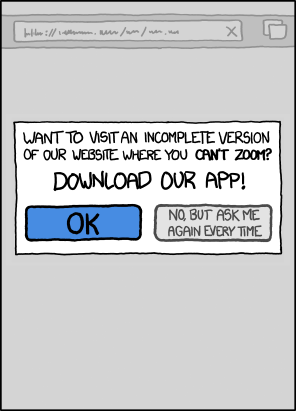
No, I’m not going to download your bullshit app – Do I buy a separate radio to listen to different stations? No. The functionality is the same, the only thing that differs is the content. Apps ought to provide some actual functionality, not just blobs of content wrapped up in binary files.

Why should designers learn how to code? – Some people say that we should keep the boundaries of the traditional divide between developers who create the code and the designers that design the experience.

Stop Selling Ads and Do Something Useful – To remain relevant to consumers who spend hours each day focused on smaller screens trying to get stuff done, marketers will have to think like publishers and technology companies.

Please stop using Twitter Bootstrap – Twitter Bootstrap is great for developers; all of the pieces are nicely laid out for you, use a consistent design language, and piece together like Lego. No design sense needed and no creativity involved.

A question of style – I’m a big fan of design principles for many reasons, not least of which is they way they can help to quickly resolve debates and arguments. They become a kind of higher authority to appeal to, taking opinion and ego out of the equation.

Do you like, like Frameworks? – It’s no surprise then that despite the number of these easy-to-use tools and, as a result, increase in web designers that there is still only a small percentage of websites created today that are truly something to marvel at, especially when you consider the billions of websites that exist today.

Give a crap. Don’t give a fuck – How do you know if you’re doing a good job? There’s always an external way to measure quality—being prepared, attending to the details, listening to the collective wisdom about what it means to do good work. Give a crap about the little things, and you’re good.


If you want to stay up-to-date with the latest articles and resources from the design community, you should follow Inspired Magazine on Twitter.

07 Mar 21:22

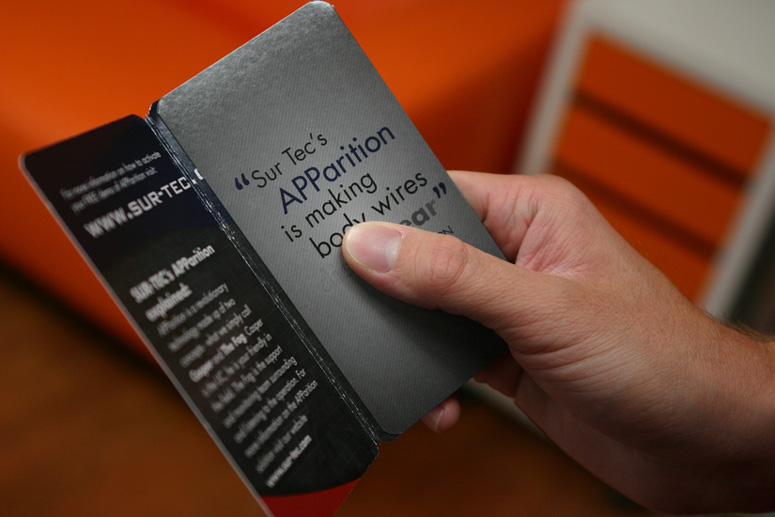
Sur-tec Brochure with Heat Sensitive Ink

by duncan
Lead Image

Designed by REACTOR design studio

Printed by Brochure: AC Printing, Olathe, KS
Heat sensitive ink: H&H Graphics, Chicago

Thermochromatic ink mimics the functionality of an app designed for covert surveillance in this high-tech, complex print job designed and executed for an equally high-tech, sophisticated client. (Video of the ink in action at the bottom of the post). DescriptionDescriptionDescriptionDescriptionDescription

Production Details

Client
Sur-tec APParition

Quantity Produced
500

Production Cost

Production Time
3 weeks

Dimensions (Width × Height × Depth)
8.25 × 5 in

Page Count

Paper Stock
Carolina / 18PT / C2S Cover

Number of Colors
5/4 (5th color is black to clear thermographic ink)

Varnishes
Overall Gloss Varnish

Binding

Typography

Many thanks to our ADVx3 Partners
07 Mar 21:16

Tapestry

by swissmiss

Tapestry story

Today the team of Tapestry made me laugh out loud with a link to this Tapestry Story titled #itshardbeingtwo. It’s best experienced on the iPhone, so do yourself a favor and download the app. Tapestry is a fun new way to tell and experience stories. Congrats betaworks, consider me a fan.

07 Mar 20:48

Photoshop Likened to a City

by Tom Kenny

“I love and hate Adobe,” he said when we first discussed this piece. See, Adobe doesn’t build Photoshop for my dad. Adobe just builds Photoshop, and Photoshop is an insane mess. Every couple years brings a new version, costing hundreds of dollars, chock full of new features he doesn’t need, and lacking the improvements he wants. Later, he downgraded his original sentiment: “I hate Adobe.”

This is almost exactly how I felt about Adobe for a while, until I came to the same realisation as the author of this article did.

From day one as a Photoshop developer, it’s made clear that you’re making the app for a crowd, not an individual. They have a rule in the hiring process: if someone claims to be a Photoshop “expert,” they terminate the interview. Photoshop is too big for experts. Only a specialist can thrive inside it, and any specialist will rankle at all of the irrelevant stuff tacked on to “their” Photoshop.

So CS6 isn’t for Thomas Knoll. It’s not for my dad. It’s not for me. It’s not really for anybody. It’s just for everybody. Amateur head-choppers, professional graphic designers, and everyone in the world with a BitTorrent client or a student discount somehow needs Photoshop. Because only Photoshop can Photoshop.

I have to highlight this quote to demonstrate the ambition of what Adobe wan’t to achieve:

The holy grail is to give Photoshop computer vision. The app should simply select “objects” the way users see, like a “beach ball” or a “tree” or a “head,” not as “blob of color one,” “blob of color two.” Then the user should be able to do what she pleases to the object, with the software filling in the details like what might’ve been behind that object — something that’s available in a nascent form in CS6. Content vision also means the software should know when you’re working on a family photo and when you’re working on a logo, adjusting color grading techniques accordingly. It means unifying many of Photoshop’s features — which, once again, its architecture is uniquely suited to do.

07 Mar 02:10

Awkward Moment of the Day

Awkward Moment of the Day

What we have here is a very unfortunate newspaper headline with an ill-placed image of a grapefruit slice that is supposed to resemble "G," but fails miserably. As seen on the cover page of the Food section in a recent issue of the Minnesota daily newspaper Mankato Free Press, courtesy of the graphics department.

Submitted by: Unknown (via Gawker)

Share on Facebook
06 Mar 14:14

Prank Artist of the Day: Talking Hamster Mimics Traffic Cop

A Russian lad goes on a joyride with a smart talking hamster that can mimic anything it hears. What could possibly go wrong?

Submitted by: Unknown

Share on Facebook
01 Mar 16:46

an unfamiliar stumble.

by Casey
A.N

Relate to this so much. Waking up with my sunrise simulator, working with my sun lamp, and waiting for the spring.

So this one’s new.

My entire body is completely and utterly depressed while my brain stays afloat in a little pharmaceutical lifeboat tossed around on a sea of misery.

Think Life of Pi minus the tiger. (Sub in a one eyed cat with thumbs if you must.)

I still have my wits about me, but attempting to convince my body to come along and catch up already is near impossible. My very wise friend Ami said I’m in mid stumble, you know that panic when you’re not sure if you’re going to land on your feet or completely wipe out? I feel fairly confident I’ll land on my feet, but the underlying terror of face planting hasn’t been this close in a long time. Rather than being completely anesthetized from depression I merely have a local that seems to be keeping my brain function at 50% capacity.

I cry a lot.

All I want to do is hide and sleep.

Eating? Pfft. What’s that?

Showering? Totally overrated.

Changing out of my pajamas? Nope.

Leave the house? Yeah, right.

The biggest difference this time is that my brain is capable of seeing a light at the end of the terribly dark and dreary tunnel. It’s also able to scold the rest of me for being such a useless lump of human. There is a disconnect, my body knows exactly what is going on while my brain is all “SUCK IT UP SOLDIER! WE HAVE THINGS TO DO.” In an attempt to apologize for its bossiness it bought my tired body flowers  yesterday.

my brain bought my body flowersThings are running a little slower around here. They’re still functioning, but they’re slow.

If I feel this terrible while receiving the help I know I need, I can only imagine how many of you are suffering. Spring is almost here, we’ve almost made it out of another miserable winter alive. Let us all be extra gracious to each other and ourselves over the next few weeks, the sun is out there somewhere. (And clearly Annie never lived in Indiana because according to the weather the sun will not be coming out tomorrow. Or this week. At all.)

How are you doing?


Copyright © 2013 moosh in indy.. This Feed is for personal non-commercial use only. If you are not reading this material in your news aggregator, the site you are looking at is guilty of copyright infringement. Please contact mooshinindy (at) gmail (dot) com so we can take legal action immediately.
Plugin by Taragana
28 Feb 17:00

Breaking Down Our $57 Board & Batten

by John Petersik
A.N

I want a house to do this in.

Yesterday you saw how our board & batten project came out for the Pinterest Challenge, so today we’re back with the full tutorial shebang. And hold onto your safety goggles, it’s 2,000 words long. But don’t let all the words fool you, we’d say that this was one of the biggest bang-for-you-buck / most fool-proof ways to make an easy upgrade that we’ve encountered in a while. Wow, just realized I’m five sentences into this and I’ve already said “bang” twice. Not sure if that’s a good sign or what…

We had long known that adding some sort of molding feature to our hallway was in our future… and now we’re just kicking ourselves for waiting so long. It cost us a mere $57 for the materials (we did buy a tool on top of that, but we’ll get to that in a second) and it only took a few hour-or-two-long work periods over the course of 6 days (including some break days for paint-curing) to finally bring some oomph to our boring hall. So anyone who’s looking to tackle this on nights and weekends could hopefully do it within a week since each step only took a few hours and could be spaced out across each evening.

We were inspired by a few other tutorials – like Ana’s, Kate’s, Sarah’s, and Emily’s – and took pieces and parts of each to figure out what worked best for us. So our tutorial below may not be exactly what your space needs, but between the lot of us there should be a fitting solution in there! Let’s just say that we learned that there are many different ways that you can approach board & batten, so a lot is about personal preference, what suits your home, etc.

As for our approach, there are a few things to note upfront:

  • We did not add any “board” to the wall – i.e. large flat panels. Since our walls are smooth (not textured) we just used the existing drywall as the backdrop for our vertical battens. Once everything was painted it all looked seamless and gleaming, just like a board would have looked. But if you have textured walls, check out Kate’s tutorial above.
  • We used our existing baseboards. Why? Because it was easier – and you know we love to use what we have. Simply by choosing battens that were thinner than our baseboards, we could keep them in place and work with them (saving us time and money). But if you can’t or don’t want to take this approach, both Ana and Kate’s tutorials above talk about replacing the baseboard.

Oh, and if you’re not the word-reading type we made two videos of the process for you (one for the building portion and one for the finishing). So here’s how it all went down when it came to installing the rails and battens (including tips for how to keep the boards level, how to space them out, how to keep them from bowing too far from the walls, etc).

And here’s how we finished everything (including how we filled the nail holes, how I cut in without taping off, and a bunch of other stuff that we shoved in there):

And fret not if you can’t watch the videos (if, say, you’re at work) – we broke down all the steps with photos and descriptions right here (note: watching them later if you’re planning to tackle this might simplify things a lot – I always think videos make things less intimidating).

But on with the words! To start, we measured the space and planned our materials. My graph-paper sketch was probably overkill, but it made me feel better. It helped us plan how many boards we needed for the top rail and ledge, as well as count how many battens (the vertical strips) we might need.

Next up was a supply run. We had most of what we needed on hand, so the only four items that we ended up purchasing are pictured below (the nail gun being a belated birthday gift from my sweet wife who was just waiting for me to pick out the one I wanted).

Here’s a full list of supplies & materials that we used (many of which we had on hand, along with the things we purchased above):

  • Pneumatic brad nail gun
  • Pre-primed lattice strips (our came in 12ft lengths, so I cut them down in store for easier transport)
  • 1 x 3″ pine boards (for top rail)
  • 1 x 2″ pine boards (for top ledge)
  • Measuring tape
  • Laser level (optional)
  • Level
  • Stud finder
  • Miter saw (you can also use another saw for cutting wood, or even have them pre-cut in the store)
  • Spackle, joint compound, or wood filler (for filling nail holes)
  • Paintable white caulk meant for moldings & a caulk gun
  • Sandpaper and/or palm sander
  • Primer
  • White paint (we used an extra durable cabinet-type paint in a satin finish)
  • Paint brush, roller, and other painting supplies

*Buy your wood around a week before you start the project and just let it sit in your house (this is called “acclimating” the wood) to avoid any cracks caused by expansion or contraction, which happens if it’s not acclimated when it’s installed.

We opted to use 1 x 3″ pine boards for the top rails, which we wanted to attach first (after their acclimation period). So I cut them with my miter saw to fit snugly along each stretch of wall. If you have exact measurements for your space you can even get them pre-cut for you at Home Depot, so don’t let the use of a saw scare you off from this project.

Before attaching them to the wall, we had to do a few things – like deciding the height of our board & batten. We first assumed “the higher the better!” and held it just under our light switches and thermostat. But after stepping back, we realized the high placement was just making our eight foot ceilings look lower than they already are.

So, as you’ll see, we later landed on a more traditional height of 40″ off the floor, which is a lot closer to the “traditional range.” But again, many aspects of installing board & batten are just a personal preference thing, so go with whatever you think looks best for your space. I’m sure rooms with tall ceilings or ornate crown molding might look awesome with higher board & batten (as well as mudrooms and other entryway areas, etc).

Since floors and baseboards aren’t always level, we relied on this cheap laser level that I picked up a while ago to mark the 40″ line on a few spots along each wall. Those marks created a guide for us when holding our 1 x 3″ board in place.

And since nails are always more secure when they go into studs, we also broke out our stud finder to mark each to-be-nailed spot along the wall. Obviously just remember to make your marks low enough that they won’t be covered when you hold up your top rail piece.

Next up was nailing the rails into place with my new pneumatic (i.e. air compressor powered) brad nail gun. This was my first time ever using one and it intimidated me the first few times, but now I’m in love with it (not as much as Sherry, who says she wants to marry it). I’ll write a separate post about it later, but let’s just say it was the saving grace of this project. It probably would’ve taken us three or four times as long to complete the construction portion of this project without it. I got this pretty basic, but well-reviewed Craftsman model from Sears for $70.

So here are all of the top rails in place. We opted not to glue them to the wall in addition to nailing them into studs simply because if we ever decide to remove or replace this, we don’t want to rip off chunks of drywall in the process. The good news is that the boards are so light – especially all of the vertical lattice pieces – that nails shot into studs with a nail gun are supremely secure… especially with the caulking that we did around any cracks to hold them even more firmly.

But even if you opted to glue things on top of nailing them, it wouldn’t add much time or cost to the project (a tube of Liquid Nails is just a few bucks). Speaking of time, if you subtract the time it took us to set up and figure out the nail gun, I’d say the process of measuring / cutting / nailing these took us about an hour.

The next step was adding the vertical battens. We used lattice strips at Sarah and Emily’s suggestion because they were cheap (66 cents per foot!) and they didn’t stick out past our existing baseboard. Had we used 1 x 2″ boards like some folks do, it would’ve hung over our baseboards. We could’ve replaced our baseboards too, but then they would’ve stuck out past the trim around the four (count ‘em four!) doors in our hallway. So yes, chunkier battens could be nice in less narrow spaces (we didn’t want ours to jut out too far and close things in) but in our case we actually thought the lattice + rail setup was ideal and we like the dimensional-but-not-crazy-thick result.

We chose to space our battens at 16″ intervals because our studs are 16″ apart and this meant that more nails would go into studs, not just into drywall. Plus, when we held up a few spacing options it looked pretty darn good (seriously, half of this project is just deciding what looks best and going with it). To make our lives easy, we used a scrap piece of 1 x 3″ board to make a spacer (a 14.5″ spacer kept the lattice 16″ apart from center to center).

The lattice was light enough that tape held it to the wall while we used a level to make sure each batten was perfectly vertical. Then Sherry went back with the nail gun and secured them in place. Is it wrong to say that watching my lady concentrate so hard while wielding a power tool got me a little hot and bothered?

About an hour-ish later, all of the battens were cut to size and nailed into place.

Since we wanted the batten on the facing walls to line up (and that’s where the studs were, which added stability), the placement was pretty easy to determine. But if you were tackling this and not every batten could end up in a stud to accomplish a balanced look, I’d go with balanced placement over hitting every stud (they’re seriously as heavy as a paint stirrer, so they’ll likely hold up fine either way).

At around this stage of the project, Clara saw it for the first time – and here’s her reaction word for word: “Wow! It’s beautiful! Did a man come while I was sleeping and bring that?” Is that kid hilarious or what? She totally didn’t give us credit for it. We think it’s because that morning the heating guy came with an oil delivery for us, so she remembered a man coming to help with something and assumed he came back to fix up the hallway for us. Naturally.

Lots of the tutorials we saw included adding a ledge along the top to sort of beef things up or create a spot to lean art or other items. We bought some 1 x 2″ pine for this purpose but as soon as we held it in place we realized we didn’t really like it. Since it wasn’t going to be a functional ledge for us, it basically just narrowed the hallway more and created a few hazardous little corners for tiny heads to walk into. So we scrapped the idea, returned the wood, and enjoyed calling the construction phase: COMPLETE.

The next day we started to prep the space for painting by filling nail holes and caulking gaps. At the recommendation of some of you guys, we went with spackle over wood putty (we hear joint compound works too) since it’s said to be easier to work with and holds up better over time. It certainly went on easier than wood filler so assuming it keeps looking as good as it looks right now, we’re completely sold on that approach for filling nail holes after your rails and battens are hung.

After all of the nail holes were spackled (not a fast process, but not too bad – maybe it took an hour total?) we used paintable white caulk to fill some of the gaps between our boards and the wall. Since our old house doesn’t have perfectly flat walls, this was a necessary step to keep the project looking nice and polished in the end. We didn’t do every edge, just the ones that needed it (across the top rail and a few places along the battens). I’d say the caulking step added another hour of work in case you’re wondering. Oh and definitely watch the finishing video in this post for more details about exactly what caulk we used, how I smoothed it, etc.

Later that day we broke out the palm sander to get rid of any excess spackle around the nail holes.

After that, the rails and battens were ready for primer. We already had Kilz Premium (which is a stainblocking primer) on hand, so we used a brush and a small foam roller to put one coat of primer on each piece of wood to prevent any bleed-through in the wood down the road (always a worthwhile “insurance” step). And we went over the battens too, just to be safe (even though they came pre-primed). Here’s the whole thing primed and almost ready for paint. Just had to let the primer dry.

The next day it was finally time to paint the board and batten. We used Benjamin Moore Advance paint in Decorator’s White in a satin finish leftover from our office cabinet painting project. Advance paint is especially durable (we used it on our kitchen cabinets too) so we figured it was a good choice for hallway molding that might get its fair share of wear and tear.

Admittedly, the finished picture of the painting step isn’t very dramatic since the walls above were still off-white.

So after letting the paint cure for a couple of days we tackled painting the walls above the board and batten. Sherry was still nervous that taping the freshly-painted top rail could peel paint off, so she opted to cut in by hand around the top rails (you can read her tips for doing that here and watch the video in this post and the video here for even more tips). She did a great job, despite not having her usual short-handled brush handy.

After she was done edging, I went back with the roller and (after a second coat) we had the finish line in sight.

Oh, and if you couldn’t tell – we were painting the walls with Moonshine by Benjamin Moore since:

  • we had some leftover from painting our dining room
  • we didn’t want anything too bold/dark to close in the hallway
  • it’s the color in the adjacent frame-filled hall and we wanted them to relate to each other (so things didn’t feel too choppy)

Note: we still have to paint the trim in the frame hallway the same white color as the board & batten.

Boom. Just like that we’re ready for after pictures. So here we go!

We’re in love with the result. And we’re kicking ourselves that we didn’t do it sooner. You know how you never quite realize how “blah” a space is until you do something to it and wonder why you waited so long? I mean, we walk through this hallway dozens of times a day and all we had done up to this point was hang some art in one small corner (the most hidden part of the hallway, ironically). But now that we’ve got the board and batten up we’re ready to hang some more.

Okay, so let’s break down the budget.  We only spent money on three items since we had things like paint, spackle, and caulk on hand. And had we actually purchased my nail gun back at my birthday in November as planned ($70 from Sears), our total cost for the project would’ve been only $57. Crazy, right?!

  • Four 12′ pieces of lattice – $32 ($0.66/foot at Home Depot)
  • Two 8′ pieces and two 6ft pieces of 1 x 3″ pine – $25 (also from Home Depot)

And time-wise, our project stretched over the course of five days (six if you count the trip to Home Depot for the materials). But if we had the luxury of not having to schedule things around Clara, it probably could’ve been completed in three days (first day for construction & spackling/caulking, second day for sanding/priming/painting the board and batten, third day for painting the wall). Heck, you could probably even ditch that third day if you’re doing this project on an already painted wall.

But if you’re doing the nailing by hand it might take longer (which explains why Sherry had the urge to make out with our nail gun). Oh but if you don’t want to buy one, you can always rent one from your local home improvement store, so that’s another option.

But here we are, roughly six days later and waaaay more excited to walk down our hallway. We’re now in the midst of figuring out what to hang on the walls above the board and batten, as well as choosing what next project we can take on to satisfy the itch I’ve now got on my nail gun trigger finger (after I wrestle it away from Sherry). I smell some crown molding in our future…

27 Feb 04:54

Nuts, Olive Oil, Heart Disease

by Edith Zimmerman
Among persons at high cardiovascular risk, a Mediterranean diet supplemented with extra-virgin olive oil or nuts reduced the incidence of major cardiovascular events.

The Mediterranean Diet is now science-science, according to a study in the New England Journal of Medicine. (Gina Kolata summarizes: "The study ended early, after almost five years, because the results were so clear it was considered unethical to continue.")

---

See more posts by Edith Zimmerman

78 comments

27 Feb 04:53

Berry Puff Pancake

by noreply@blogger.com (SnoWhite)

This delicious puff pancake is a super fun morning treat. 

And, of course, I made it even better for you. 

We used 100% white whole wheat flour, 1 less egg, reduced the amount of butter and sugar, and used 2% milk rather than whole.  Loaded up the berries and served with with maple syrup rather than whipped cream. 

Delicious. 

Berry Puff Pancake – Adapted from Recipe Girl

Ingredients

  • 3 eggs
  • 1 C milk (we used 2%)
  • 1 C white whole wheat flour
  • 1/8 C white sugar (or try, 4 T honey)
  • 1/8 tsp. salt
  • 1 T butter
  • Splash of vanilla extract
  • 1 1/2 C berries (we used blueberry, raspberry, blackberry)
  • Pure maple syrup

Directions

Combine 3 eggs with 1 C milk and 1 C white whole wheat flour.  Stir.  Then, add in 1/8 C sugar, and a pinch of salt.  Using a blender (we used our immersion blender), blend until smooth. 

Meanwhile, melt 1 T butter into a large, oven-proof skillet.  Swirl the butter in the pan so that the bottom and sides are coated. 

Pour the batter into the skillet.

Toss the berries on top. 

We used frozen berries (we did not thaw them first) and they worked really well. 

Bake at 400 degrees for 20 minutes, until the pancake is set in the center and lightly browned on the edges. 

Cut into wedges and serve warm. 

Enjoy!

Don't miss a recipe! Sign up for free email updates.
22 Feb 22:37

Web Designer’s Resources: Free Navigation Code

by Patrick McNeil

Ever notice how things that look easy to the user are, in fact, really complicated for the web designer or developer to pull off? Like horizontal navigation bars that fully span the active space on a web page. Sebastian Nitu, a web designer and developer based in Vancouver, WA, recognized how much of a pain this seemingly simple task is and created a free jQuery plugin that other designers can drop into their web projects.

HorizontalNav really alleviates a technical hurdle for web developers. And if you’re both the designer and developer, then you’ll appreciate having simple and powerful (and free!) tools like this to bolt onto a project.

Horizontal Nav free jQuery plugin

If you’re looking to transition your design career from print to web and need expert advice, instruction and inspiration, don’t miss the 2013 HOW Design Conference. This year, HOW offers a dedicated track of sessions designed to give you the essentials of web design and development, taught by top experts in the interactive design field.

Learn web design from the expert instructors at HOW University. See our rotating schedule of web design training courses, including hands-on training in coding for web designers, designing WordPress websites, information architecture and more.

21 Feb 13:40

Things to Do Without Hard-Boiled Eggs

by Edith Zimmerman

"Think of it as an avocado-based Scotch egg."
—Done. And if someone in Chicago orders this dish from Gosu in Logan Square tonight, can they please also beam it outward and rain it down over New York? I can wait on the roof until 9 a.m. tomorrow. Thank you!

---

See more posts by Edith Zimmerman

25 comments

21 Feb 13:35

Know Your Right of the Day: Arrested in Canada? Google a Lawyer

Know Your Right of the Day: Arrested in Canada? Google a Lawyer

Upon getting arrested for driving under the influence, 19-year-old Christopher McKay from Alberta, Canada was given two options to exercise his right to counsel: a 1-800 hotline number and a phone book. After struggling to find a lawyer he wanted, McKay then told police that Google was his go-to source of any information, to which Judge Heather Lamoureux responded by ruling that "police must provide an accused with Internet access in order to exercise their right to counsel."

Submitted by: Unknown (via Boing Boing)

Share on Facebook
20 Feb 15:41

Josephine Baker: Dancer. Spy. Subverter of Racial Assumptions.


by Liz Matsushita
historical woman


Photo credit: Little Treasures.

About six months ago, I wrote about the racist moments that cropped up on the latest cycle of “America’s Next Top Model.” (I realize in reality TV-land that this might has well have been the last century, and that about seven seasons have aired since then.) One of the moments that struck me as the most insanely questionable was when a designer dressed up black British model Analiese in a skirt of dangly plush bananas, while he dressed the other two models—both white—in more traditional, Marie Antoinette-style outfits.

It was pointed out to me that the tropical getup may have been purposely evocative of today’s Historical Woman, the amazing Josephine Baker: an American-born French singer, dancer, and all-around entertainer who fought Nazis and racists on the side. One of her most famous stage costumes was a skirt made of dangling bananas, usually accompanied by a complete lack of a top. This throws the whole ANTM affair into a much more complicated and ambiguous place—especially considering Ms. Baker’s agency in marketing her act and image in this way. How to feel about it now?

In the famous banana skirt.

Let’s start with the banana skirt. The garment has been alternately described as problematic and empowering, as an accessory of European colonialist fantasy and as a tool that Baker knowingly used to subvert racial and gender categories. In this way, the skirt is really a microcosm for her entire career, at least in the early decades.

When Josephine Baker, born Freda McDonald in St. Louis, Missouri in 1906, arrived in Paris in 1925, France was obsessed with black culture. For them, Josephine—who appeared in a show called “La Revue Nègre”—was a safe venue for their fantasies about “the savage,” a figure often extolled as the antidote to a spiritually oppressive civilization. That Josephine was from Missouri and not deepest Africa seemed to mean little to her French fans and critics.

“The white imagination sure is something when it comes to blacks,” Josephine quipped. I like to think she meant: “White people sure can be racist!”

Baker appeared in a number of shows in which she was usually scantily clad, often portraying a “savage” who meets a French colonial explorer and dances to the accompaniment of African drums. See a video of one such dance here. Critics rhapsodized about her primal vitality and her exotic looks. Picasso extolled her “coffee skin, ebony eyes, and legs of paradise,” and she was admired by everyone from Ernest Hemingway to Jean Cocteau (oh, Paris in the 1920s!).

While the banana skirt and the “primitive” dances, as well as the audience reaction, may induce discomfort in a modern mind (like mine), it’s possible that in the context of her time Josephine was exercising an unprecedented kind of power, even as she reproduced the stereotypes that still popularly characterized her race. Her particular brand of entertainment was insanely marketable and earned her great success and admiration. She herself may have been the one who invented the banana skirt—thus it was not, as the liberal imagination (like mine) might like to infer, foisted upon her by a racist white stage manager. Either way, she certainly took advantage of its popularity, advocating for everything from banana moisturizers to pomades to custards that bore her name. (This last was actually created by Alice B. Toklas, Gertrude Stein’s GFF. Oh, Paris in the 1920s!)

Josephine Baker’s crazy whirlwind of a life was by no means limited to her stage career. During World War II, Josephine was a spy for the French Resistance movement. Thus, she joins Julia Child in the “unlikely spy” category. (Waiting for Josie & Josephine.) Her Europe-wide performing career was the perfect cover for her to casually participate in—and then remember– all sorts of important conversations, and she passed the info on to the Allies, aiding Charles de Gaulle and his Free French buddies.

What motivated this singer/dancer to enter the world of political intrigue? It’s true that she was a devoted nouveau francaise and that she loved her adopted country—but even more, Josephine hated Nazis. “The Nazis were racist,” she told Ebony magazine in 1973. “They were bigots. I despised that sort of thing and was determined that they must be defeated.”

As a result of her service to France, Josephine became the first American woman to receive a full French military funeral upon her death in 1975, an event that shut down the streets of Paris. She even got a 21-gun salute, which, apparently, is more than just a Green Day song.

Josephine in a tux, being impossibly likable. Photo credit: Art Deco Weddings.

There’s really too much more to say about Josephine in this confined space. For example: She adopted twelve children from different countries and called them her “Rainbow Tribe” (way before Angelina Jolie). She lived in a fifteenth-century French castle. She had pet cheetahs. She participated in the Civil Rights Movement and was asked by Coretta Scott King to help lead it following the assassination of King’s husband. (Baker declined, probably for safety reasons.) She refused to play to segregated audiences on her U.S. tour and thus helped accelerate integration.

Josephine Baker’s legacy continues to inspire many women to this day, and her image—often, but not always, including that infamous banana skirt—pops up in the most unlikely of places. Look for her cameos in Midnight in Paris, The Triplets of Belleville, and the animated Anastasia. Even Beyoncé has paid tribute.

With Jay-Z as Josie's hubby Pepito?

I wonder now what Josephine would think of where we are now, both in the U.S. and Europe. She was happy with the progress that had been made even in her own lifetime. But how far have we really come? To what extent do we still exoticize women of color? Even as overt, sickening racism becomes less frequent, what subtler forces are at play that continue to reveal and reinforce power imbalances between whites and minorities?

I’m optimistic that, at the very least, the visceral discomfort induced in liberal-minded minds (like mine) by seeing a black woman dressed in a banana skirt by a white man on TV means we’ve at least made some progress.

15 Feb 16:51

App

If I click 'no', I've probably given up on everything, so don't bother taking me to the page I was trying to go to. Just drop me on the homepage. Thanks.
13 Feb 16:08

At long last, Donna Tartt is publishing a new novel!

Great news for Donna Tartt fans! Little, Brown has announced the publication date and title of the much-awaited third novel by the best-selling author of "The Secret History" (1992). "The Goldfinch" will be published in October — exactly 11 years after "The Little Friend" (2002) came out, ending a dreadfully long drought, reports Vulture.

This is how Amazon describes it:

"A young boy in New York City, Theo Decker, miraculously survives an explosion that takes the life of his mother. Alone and determined to avoid being taken in by the city as an orphan, Theo scrambles between nights in friends' apartments and on the city streets. He becomes entranced by the one thing that reminds him of his mother: a small, mysteriously captivating painting that soon draws Theo into the art underworld."

So in case you're wondering what everyone will be reading next fall ...


Continue Reading...

11 Feb 23:29

The Everyday Tools & Resources of a Freelance Designer

by Sam Jones


As well as the obvious design software such as Adobe’s Creative Suite there’s a lot of other tools & resources us freelancers make regular use of.

These tools help us to stay organised, improve our productivity, keep us up to date with industry news and allow us to network with other professionals. Rather than rattle off a list of stuff I use every now and then, I’m going to talk about the tools & resources I use day in, day out and how they fit into my daily routine.

Dribbble

Dribbble

Dribbble is a show and tell platform for designers to share small screenshots of the designs they’re working on. I browse the pages everyday simply because I find it interesting to see what people are working on and I like to leave feedback and words of encouragement where I can. I also find it useful because as a Freelancer I often work alone so it’s nice to be able to upload a shot of my work every now and then and get some feedback from other designers.

Another benefit of Dribbble is that people often use it to search for and hire new talent. I myself have had a handful of enquiries since joining and it’s required no more effort than simply uploading and tagging my work. This shows that just by having your work on there it automatically opens the door for new opportunities.

Feedly

Feedly

Keeping up to date with all that’s happening in design can be very difficult without the right tools. There’s only so much content you can consume each day and over the last two years I’ve been trying to cut down as much as possible. My aim has been quality over quantity and along the way I’ve tried all sorts of content curation tools such as Zite, Flipboard, Summify and Sidebar. These are all great tools but for me the best solution so far has been syncing my Google Reader account with Feedly. Google Reader gives me some form of quality control by allowing me to subscribe to the blogs of my choice and then Feedly simply makes it faster and easier for me to browse through all of that content on my iPhone. Now every night when I go to bed I set aside some reading time in which I’ll use feedly to look for interesting or useful articles. The best of which I can then share on Twitter the next day.

Designer News

Designer News

As well as Feedly I’ve also recently started using Designer News, which for someone who’s trying to cut back on the amount of content they consume has been a bit of a godsend. It’s purpose is a platform to share and discuss things happening in design and so far the quality of the links that have been posted has been excellent. This is probably down to the fact that it’s invite-only, but you don’t have to be a member to make use of the content.

I’ve also found it to be a helpful tool for discovering blogs and writers whose work I wasn’t already familiar with, which is quite a refreshing change from the stuff I see on Feedly.

Buffer

Buffer App

Buffer is an app that changed the way I use Twitter. The way it works is you create a schedule telling your Buffer at what times to post each day. You then fill up that schedule by adding articles, pictures and videos to your Buffer which will then be automatically posted for you throughout the day. In my case I use it to share the most interesting and useful articles I read while browsing Feedly and Designer News. I’ve found it to be a really great way of keeping my Twitter profile active on busy work days and providing my followers with a consistent stream of relevant content.

Twitter

Twitter

Unless you’ve been living under a rock for the last 6 years you’ll know all about Twitter. For us designers it’s a great way to connect with new people, promote our work and keep up to date with the latest in design. I’m certainly no Twitter pro but out of everything on this list it’s definitely had the biggest impact on my business. It’s helped me to find new clients and discover valuable opportunities that I never would have otherwise. How I’ve done this I think comes down to simply following the right people – designers, developers, copywriters, entrepreneurs and bloggers. For instance, I certainly wouldn’t have come across these opportunities by following only my favourite tv personalities.

How and when I use Twitter really depends on what I’ve got going on during the day. I try not to get too caught up in it while I’m working so I usually limit myself to 10-15 minutes in the morning and then let Buffer do the hard work while I get my head down. This is usually until the evening or during less busy periods when it’s more likely that I’ll have the desktop client running in the background, which allows me dip in and out.

Gimme Bar

Gimme Bar

Gimme Bar is a bookmarking tool that allows you to save just about anything you find on the web, whether it’s images, videos, text, or entire pages, which you can then organise into collections for easy finding later on. For me this makes it a great tool for not only saving the stuff I like but it also comes in really handy for collating bits of research for my projects.

Wunderlist

Wunderlist


This one is a lifesaver. Out of the few I’ve tried, Wunderlist is the only to-do app I’ve ever stuck with because it does genuinely keep me organised. The main features include multiple lists, due dates, reminders, recurring and subtasks, all of which I use daily. I have 3 main lists related to work. One for client work and general duties, one for my daily routine – which I use to keep track of the stuff I do everyday, and finally, one for meetings and appointments.

Microsoft Excel

Microsoft Excel

When it comes to keeping track of my finances I like to keep things simple. Microsoft Excel might not be anything special when compared to other book keeping software, but it gets the job done. The trick is just making sure you keep on top of everything, which so far I think I’ve managed to do a pretty good job of. However, if you are one to put admin work off for as long as you can then it might be a good idea to look at alternatives such as Freshbooks.

Spotify

Spotify

Spotify is a music streaming service that gives users access to millions of tracks for free so it’s perfect for listening to music while you work. I myself have one big playlist which I’ll start at the beginning of the day, click shuffle and see where it takes me.

Squarespace

Squarespace

Setting my portfolio up on Squarespace is one of the best decisions I’ve made in relation to my own website. The original version was built on WordPress and as I don’t really code I had to hire someone whenever I wanted to implement changes to the design. This involved a lot of waiting around and I always felt like I wanted something where I could be a bit more hands on, so I could get stuff done straight away. That’s exactly what I found with Squarespace. The combination of the style editor and LayoutEngine technology makes it a breeze to make changes and any customisation on top of that can be done with basic coding skills. Not only is making changes to the design easier but overall I’ve found it to be a much simpler way of maintaining my portfolio and blog. An added bonus to using Squarespace is that the customer support is probably the best that I’ve ever dealt with.

And there we have it folks. If you’re just starting out or thinking about going freelance I hope this gave you a good idea of the sort of stuff you need to look into.

If you have any questions or are a freelancer yourself and would like to share the tools & resources you use on a daily basis, feel free to use the comments section below.

This is a post from Inspired Magazine. If you like it, you may want to subscribe to our RSS full feed to be updated on every article we're publishing. Also, it's highly recommended to follow us on Twitter!

The Everyday Tools & Resources of a Freelance Designer

10 Feb 03:47

Daily Delight: Jar Chandelier

by Grant Dudley

I thought I’d give you a little break from our Valentine-inspired posts (we admit that we enjoy the holiday a bit much at HGTV.com) and focus on lighting — “jar lighting” to be exact.

This 5-jar chandelier casts a soft glow when filled with vintage-style bulbs. Hung above tables, counters or in hallways, its lighthearted charm warms up any space.

EXTRA: THE NIGHT THE LIGHTS WENT OUT AT THE SUPER BOWL >>

From West Elm

And now, back to our regularly-scheduled Valentine programming.

09 Feb 16:00

Hack of the Day: George W. Bush’s Self-Portraits Leaked

Hack of the Day: George W. Bush’s Self-Portraits Leaked

A hacker known as "Guccifer" has apparently obtained e-mails, photos and even some self-portraits of George W. Bush after gaining access to the personal email accounts of Dorothy Bush and five other friends and families close to the former president. Without a doubt, the highlight of the leak goes to these two self-portrait paintings of Bush taking a bath (shown left).

Submitted by: Unknown (via Gawker)

Share on Facebook