Shared posts

09 Jan 23:25

150 MPH Rocket Knife Can Slice Through Almost Anything [Video]

by Geeks are Sexy

From The Backyard Scientist:

I recreated my favorite MythBusters experiment and tried to chop a car in half with a Rocket Knife. I also tried to chop a chicken, steak, and fruits in half! Next week.. RED HOT ROCKET KNIFE! …after my burns heal ;)

[The Backyard Scientist]

The post 150 MPH Rocket Knife Can Slice Through Almost Anything [Video] appeared first on Geeks are Sexy Technology News.

09 Jan 21:51

Le tout petit problème de l’agilité

by CommitStrip

09 Jan 07:24

65″ Hisense 4K HDR at $799, 75″, 86″, ULED, 8K Booth Tour

by Charbax

Hisense presents 4K HDR models: 65H8C 65" 4K HDR at $999, 86H8D at $5999, 65" H9D+ with ULED, 70" H8D. 8K. 70" $3499, 75" $5999. 75" 4K Roku TV at $1999, 65" 4K Roku TV at $799. Hisense has a 430 acres 4K TV factory in China and another TV factory in Mexico for the US which they bought from Sharp.

08 Jan 22:50

CES : "Voice is the New Search", prévient Google. Mais Amazon a beaucoup d’avance

by Eric Scherer

La voix est la prochaine grande plateforme technologique. "Voice is the New Search", prévient depuis plusieurs mois Google, mais, au CES cette semaine à Las Vegas, c’est son rival Amazon qui, avec éclat, a affiché une avance insolente en matière d’interface vocale, le nouvel OS de nos vies connectées, dopé à l’intelligence artificielle avec qui nous devons désormais apprendre à vivre.

A la maison comme dans nos voitures, en marchant ou à la gym, nous allons relever la tête de nos écrans et lâcher nos claviers pour parler aux machines qui nous assistent et contrôlent notre monde.

Quand les interfaces traditionnelles graphiques s’estompent, ce n’est pas un petit changement. C’est le résultat de progrès foudroyants dans la fiabilité de la reconnaissance vocale et du traitement du langage qui, au fur et à mesure de leur utilisation, apprennent et rendent les services rendus de plus en plus pertinents. En somme, l’arrivée de l’intelligence artificielle dans notre vie quotidienne.

Attention ! Nouvel usage !

En 18 mois, prenant de vitesse Google et surtout Apple, Amazon a déjà imposé un nouvel usage aux Etats-Unis, et depuis peu au Royaume Uni avec Echo, sa petite enceinte cylindrique qui abrite l’assistant virtuel à commande vocale.

Encore inédit en France, Echo, commandé à la voix, permet, grâce au cloud et à son OS « Alexa », d’écouter de la musique, de commander un taxi, d’acheter des produits, d’allumer les lumières, le chauffage, de fermer une porte, etc…

Ainsi débute le règne des assistants personnelsAlexa, puis Google Assistant dans Google Home et Pixel, Cortana de Microsoft et Siri d’Apple, moins performant — qui pourraient bien changer autant nos vies que les applications de nos smart phones.

A gauche Echo d'Amazon, à droite Google Home

A gauche Echo d'Amazon, à droite Google Home

Interagissant avec des machines opérées à des milliers de kilomètres de distance, nous commençons déjà à dicter nos emails ou textos, et Google assure que 20% du search sur Android se fait désormais à la voix. Les interfaces conversationnelles chatbots, alimentées par la voix, pourraient bien vite, selon certains, tuer et remplacer sites et applis.

Search pour Google Assistant

Search pour Google Assistant

Alexa Inside ! Alexa OS de l’Internet des objets

Amazon, forçant les constructeurs de terminaux à tous s’adapter, étend maintenant cette interface très naturelle et bien pratique à de nombreux nouveaux appareils domestiques qui peuvent désormais répondre à des questions, accomplir des tâches ou contrôler notre environnement : du frigo au réveil, des lampes aux machines à laver, de l’aspirateur à la tondeuse, en passant par la voiture et les futurs robots-guides dans les magasins ou les aéroports.

Et désormais à la télévision.

Nous allons donc parler à notre téléviseur ! Et probablement, bientôt, lui demander de nous recommander des programmes.

"Qu'est ce qu'il y a de bien ce soir à la télé ?" 

Au CES, Amazon a noué des partenariats avec des fabricants chinois de TV 4K (Seiki, Westinghouse, Element) en proposant sa plateforme Fire TV fonctionnant à la voix.

amazon-fire-tv-edition-livetv-with-quick-display

12search

Samsung a intégré la voix depuis un an dans son interface et LG propose désormais le bouton voix au beau milieu de ses nouvelles télécommandes.

IMG_1373

Google a donc profité du CES pour annoncer l’arrivée dans les prochains mois d’Assistant dans les Android TV et les boxes. Mais aussi dans les voitures et les montres.

L’enceinte Google Home, similaire à Echo, a été lancée cet automne et intègre la possibilité de commander des séries Netflix à la voix sur le téléviseur. Lenovo a montré la sienne au CES, tout comme Mattel celle pour les enfants. Le constructeur de cartes graphiques Nvidia a lancé un assistant personnel « Spot », petite boule qu’on accroche au mur.

Mark Zuckerberg a montré en fin d’année qu’il avait construit lui même son propre assistant personnel virtuel, Jarvis :

La nouvelle console Shield de Nvidia exploitant Android TV dispose d’une commande du téléviseur et des programmes à la voix, intégrant Google Assistant.

Démo :

Turner Sports intègre Alexa à son appli de télécommande pour réduire le stress du téléspectateur noyé par l’océan de contenus sportifs disponibles. Huawei l’a fait pour nouveau smart phone Mate 9.

Après "mobile first, AI first" !

Les médias, à l’image de Hearst, commencent à monter des équipes autour de ces nouvelles interfaces naturelles qui suscitent un très fort engagement avec le public.

L'activation par la voix témoigne d'un nouvel âge de l’informatique vocale et conversationelle : « depuis le début de l’informatique, nous avons dû apprendre le langage des machines, il était temps qu’elles apprennent le notre ! », note le CEO de Narrative Science.

Déjà 72% des Américains qui possèdent des objets connectés souhaitent que la voix soit la principale voie d’accès. 6 millions de foyers américains possèdent déjà des smart speakers, nouvel assistant numérique du foyer familial. Le CES s’attend à un doublement cette année.

Car Amazon a ouvert sa plateforme aux développeurs externes et la liste s’allonge chaque jour des terminaux et utilisations embarquées d’Alexa. En 7 mois, Amazon a multiplié par 7 le nombre de nouvelles « compétences » qui se chiffrent à 7.000. On peut aujourd’hui commander un plat de son restaurant favori.

amznalexa2-1240x823

L'automobile est une des premières cibles. Dans quelques semaines Ford intégrera Alexa à son tableau de bord pour se guider sur la route, écouter sa musique ou acheter sur… Amazon.

Dans peu de temps, écrit cette semaine le Washington Post, « nos voitures ne seront pas seulement plus sûres et plus fiables, elles deviendront les compagnons attentifs à tous nos faits et gestes, mémorisant nos goûts, préférences, trajets, voix, etc… ».

Et il est probable que les enfants nés cette année n’auront pas à passer un permis de conduire.

Déjà des problèmes, bien sûr !

Tout nouvel usage a évidemment des bugs, voire soulève de vrais gros problèmes.

Les assistants apprennent vite mais ont encore mais encore beaucoup de difficultés à comprendre les contextes d’utilisation.

La protection de la vie privée est un enjeu majeur. Pour être activés, ces assistants écoutent en permanence ! Qui peut écouter ? Où seront stockées nos conversations ?

Des incidents avec des enfants se produisent déjà :

Si une émission parle d'Alexa vous risquez d'avoir des surprises !  Et La police américaine réclame même déjà à Amazon des enregistrements, indices potentiels de preuves de crimes.

Des problèmes mais aussi des situations inédites : ce week-end, sur Twitch, la plateforme live qui retransmet des jeux vidéo, des milliers de personnes, sidérés, n’ont pas pu quitter l’écran où se parlaient en direct deux robots !

npgaijzoivbut2u7bdke

Pour l’instant la France, hormis via Siri ou Google Now, est épargnée par cette nouvelle vague technologique vocale : Alexa n’y est pas encore disponible et le nouveau téléphone Pixel de Google qui embarque le performant Assistant ne sortira pas avant le 2ème trimestre. L’interface en Français n’est pas encore prête. Mais ça ira vite !

"On comprend ici qu'on est en train de passer du Big Data à l'Intelligence Artificielle", résumait cette semaine à Las Vegas, le patron d’Orange, Stéphane Richard.

Méta-Media vous l’avait dit il y a juste un an, ici depuis le Nevada !

Stay tuned !

 

08 Jan 22:45

Amazing AR Inventions at CES Friday

by Charlie Fink

The home stretch for my daily CES coverage of AR & VR

Continue reading on CinematicVR »

07 Jan 08:39

Samsung veut glisser de la publicité ciblée dans ses TV connectées

Si financièrement parlant, Samsung se porte plus que bien, cela ne l'empêche pas de continuer à chercher de nouvelles sources de revenus. Sa dernière idée en date : utiliser son parc de dizaines de millions de téléviseurs connectés... pour y diffuser de la publicité.

06 Jan 20:27

HTC Vive Tracker: Our first take

by Mike Epstein

The HTC Vive tracker is a little black "puck" that opens the door to a new wave of VR simulations, the kind where we aren't confined to the limitations of a controller.

The post HTC Vive Tracker: Our first take appeared first on Digital Trends.

06 Jan 11:52

Intel Compute Card : Un nouveau PC a mettre dans la poche

by Pierre Lecourt

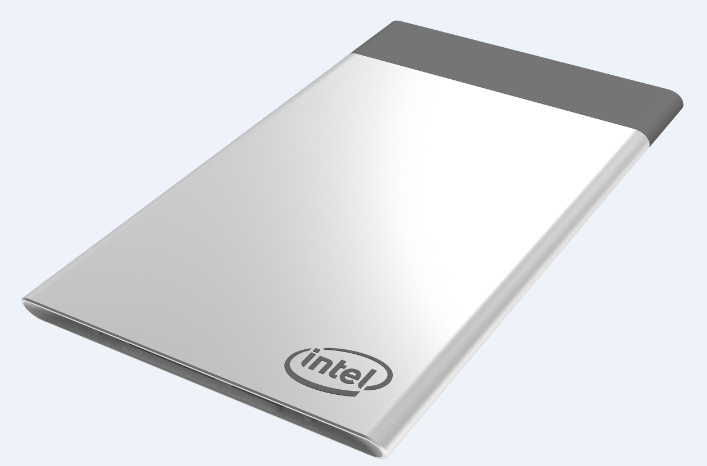
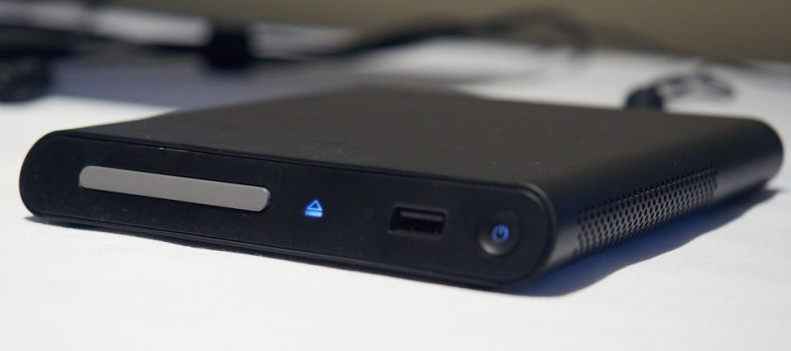
Imaginez un frigo connecté, une télé connectée et un PC de bureau qui soient tous les trois munis d’une petite encoche permettant d’y glisser un morceau de métal de 94.5 mm de long pour 55 mm de large et 5 mm d’épaisseur. A l’intérieur, un coeur de PC complet : Processeur, mémoire vive et stockage avec en prime une connexion Wifi, c’est le Intel Compute Card.

Minimachines.net

L’idée n’est pas nouvelle, de nombreux constructeurs ont déjà promis ce genre d’idée au travers différents formats. Des fabricants de téléviseurs qui ont promis des formats de cartes évolutives pour rendre leurs solutions un peu plus évolutives. D’autres type de produits avec ce genre d’évolution au travers différents formats. Jusqu’à Nvidia qui a lancé un format Tegra sur carte SoDIMM capable d’être intégré facilement à diverses machines. On ne peut pas dire que cela fût un succès, à chaque fois la promesse de pouvoir changer le coeur de l’engin était faite, à chaque fois le constructeur n’y donnait pas  suite.

Minimachines.net

La position d’Intel est un peu différente. D’une part le fondeur a les moyens de rendre son Intel Compute Card populaire auprès des fabricants, d’autre part sa proposition n’est pas construite autour d’un format de machine sortant des standards actuels.

La promesse d’Intel tourne autour d’un PC pouvant être un processeur Intel Kaby Lake de septième génération, vous pourrez avoir un core i7 dans ce boitier de 9.5 sur 5.5 cm… Et si un adaptateur sort un jour, ce qui semble des plus logique, le même PC pourra vous servir à piloter un appareil connecté ou devenir un PC classique en branchant un clavier, une souris et un écran sur le dock.

Le tempo est également différent, Intel promet un objet disponible dès la moitié de l’année et se base sur une connectique devenue un vrai standard aujourd’hui, l’USB type-C. Un seul port peut servir à alimenter la carte et ses composants tout en proposant une bande passante suffisante pour profiter à plein des capacités de l’objet. Intel parle d’USB, de PCIe, de HDMI et de DisplayPort et de fonctions additionnelles. Ce n’est pas un scénario de science fiction ou le vœu d’un unique constructeur de téléviseur ou de frigo mais bien une solution qui pourra être adoptée par l’ensemble des fabricants du marché, de manière assez simple.

Minimachines.net

Pour le moment, nous n’avons pas de date précise pour cet Intel Compute Card. Pas même de détails de ses caractéristiques complètes et encore moins de prix. Mais après le Compute Stick comme PC d’appoint à brancher sur un téléviseur, l’Intel Compute Card pourrait devenir un standard où de simples constructeurs n’auraient qu’à respecter un cahier des charge connectique: Une prise au bon format correctement alimentée et les éléments pour faire transiter les données vers les différents ports (affichage, USB, mémoire de masse) pour être, de facto, compatible.

Minimachines.net

Plusieurs partenaires internationaux se sont déjà déclarés intéressés : Dell, HP, Lenovo et Sharp pour commencer mais également des consrtructeurs ou développeurs plus locaux comme Seneca Data, InFocus, DTx, TabletKiosk et Pasuntech.

Minimachines.net

Si l’offre est intéressante, suffisamment performante et pas inabordable on peut imaginer foule d’usages pour cet Intel Compute Card, de la traditionnelle télé connectée au PC à brancher sur un dock, on peut imaginer plein d’outils qui seront ravis d’être boostés par une carte de ce type : Machines CNC et autres imprimantes 3D pour les plus connues mais également tout type de robot et autres développement industriels : Affichage numérique, écrans d’information, distributeurs, systèmes de sécurité ou domotique. On imagine que pour un partenaire industriel, réduire l’ensemble des “cerveaux” de ses machines en activité à une seule et unique carte de ce genre rendrait le dépannage et la manutention de ses engins beaucoup plus aisée.

Mise à jour à 18H36 : Gogogadgeto a pointé un lien vers Gizmodo en commentaire où l’on découvre des prototypes de docks et la connectique de l’Intel Compute Card.

Minimachines.net

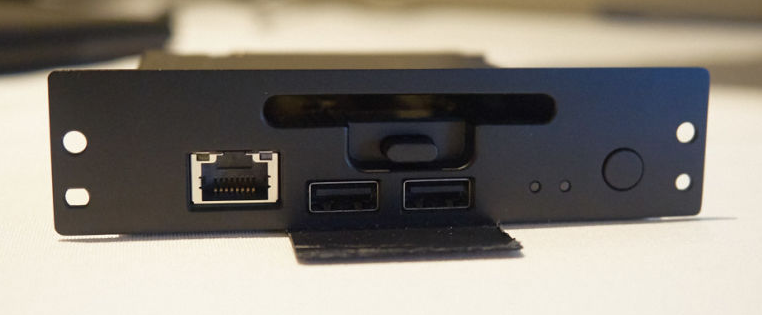
Celle ci est donc bien originale et dérivée de l’USB-C. Elle servira à tous les éléments entrants et sortants de l’objet. De l’alimentation à l’affichage en passant par le pilotage des différents composants.

Minimachines.net

Le format carte permet une intégration très discrète et efficace . Ce dock imaginé par Sharp en donne une bonne idée. On insère l’Intel Compute Card comme on manipulait une disquette auparavant. On pourra brancher ce type de dock affleurant à un bureau et profiter ainsi d’une connectique complète avec un clavier et une souris en USB ainsi qu’un port RJ45 pour un accès au réseau. D’autres connecteurs sont peut être disponibles de l’autre côté de l’engin.

Minimachines.net

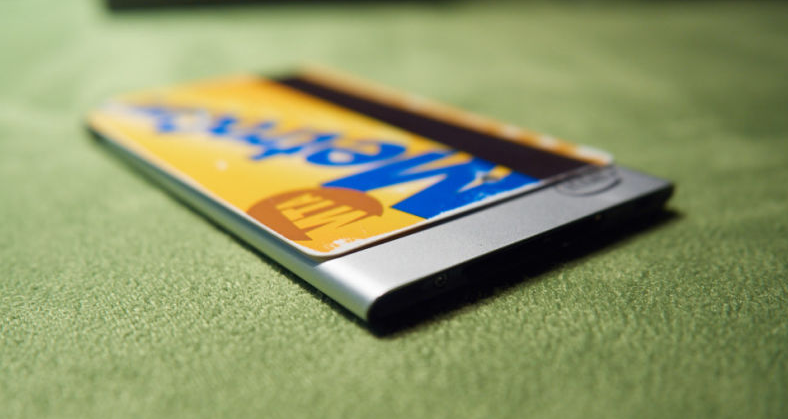
On apprend, au passage, qu’Intel a développé l’engin avec Foxconn qui se chargera de sa fabrication. Le format carte de crédit est presque atteint ce qui, même si on n’a pas le détail précis des spécifications de l’objet, est assez impressionnant.

Minimachines.net

Ce dock prototype imaginé par Intel pourrait être votre PC de bureau du futur au travail. Avec un Intel Compute Card que l’on voit juste émerger via le liseré argenté en façade, on imagine très bien pouvoir l’éjecter pour le glisser au sein d’un portable d’entreprise pour retrouver ses données mises à jour en mobilité.

Source : Intel via FanlessTech.

Intel Compute Card : Un nouveau PC a mettre dans la poche © MiniMachines.net. 2016

06 Jan 08:51

Flir One : caméra thermique USB Type-C ou Lightning à 199,99 $, une version Pro arrive

Flir, une référence dans le domaine des caméras thermiques, profite du CES pour lancer la troisième génération de son capteur One pour smartphones. Il est accompagné d'une version Pro avec une précision multipliée par quatre. Tarif de base, 199,99 dollars.

06 Jan 08:47

Any HTC Vive can now go wireless for $249, and tracking accessories are coming

by Gabe Carey

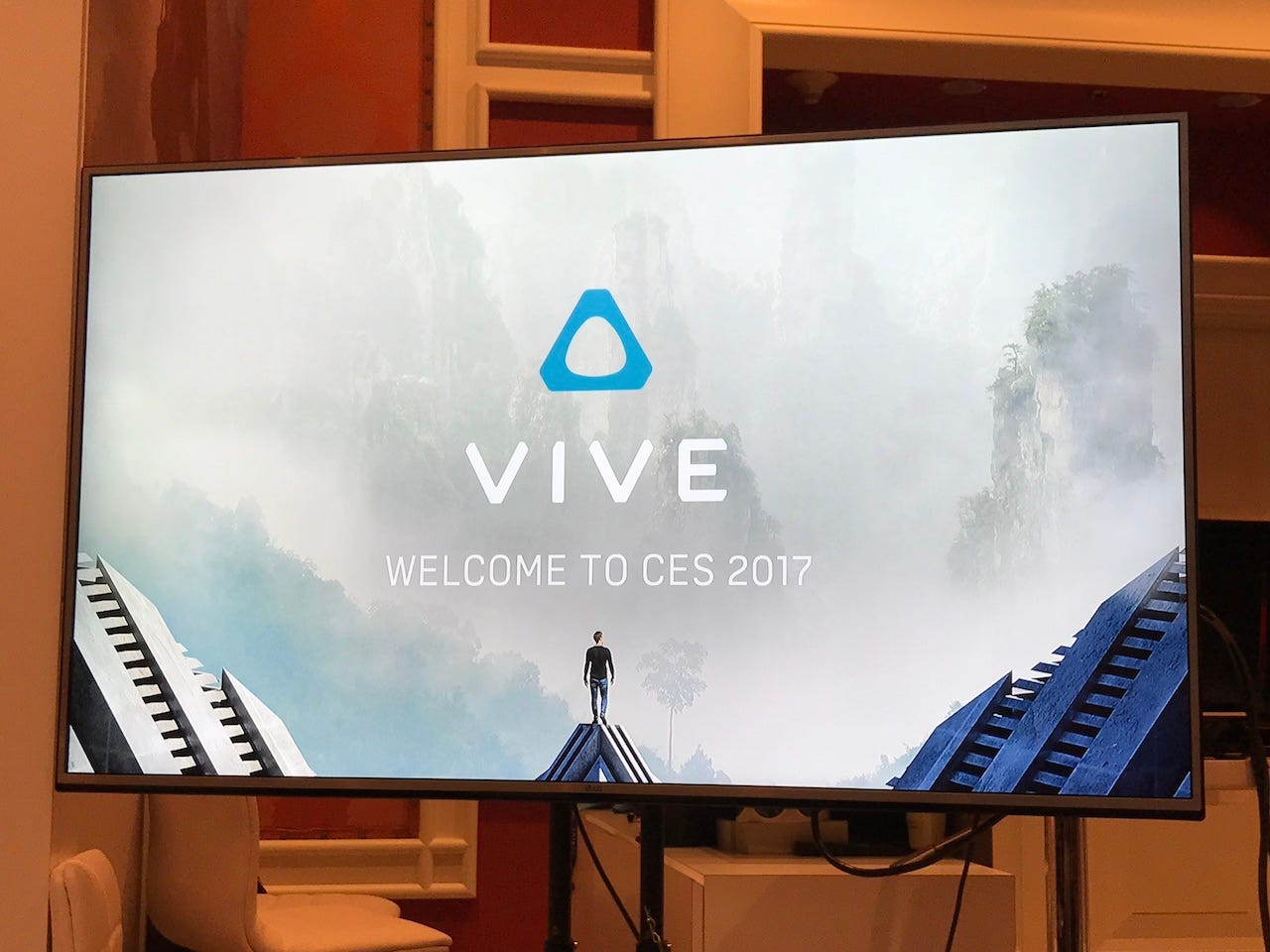
At its CES 2017 press event, HTC gave us the rundown on all of the latest Vive developments, including wireless adaptors, a Deluxe Audio Strap, and even a subscription service for virtual reality games and applications.

The post Any HTC Vive can now go wireless for $249, and tracking accessories are coming appeared first on Digital Trends.

06 Jan 08:43

HTC Vive announces new sensors that bring any object into virtual reality

by Deniz Ergürel

In a special press event today at CES 2017, HTC Vive debuted two new accessories for its VR headset.

Continue reading on Haptical »

06 Jan 08:40

Tanvas’ haptic feedback system lets you feel texture on a touchscreen

by Natt Garun

Touchscreen technology has redefined the ways we interact with electronic devices, but while controls have gotten more precise over the years, touchscreens themselves haven’t been able to truly replicate the human sense of touch. Tanvas wants to add the ability to feel texture on a touchscreen with a new haptic feedback technology showcased at CES.

In my short demo, I played with a few sample applications. One lets you drag your finger through a virtual pool with pebble floors. The haptic feedback makes it feel like water ripples are following your fingertips, and the pebbles underneath create a slight “bump” between every other stone. It feels really zen.

Another interesting application is with one of Tanvas’ partners Bonobos, the...

Continue reading…

02 Jan 18:43

Asus ZenFone AR revealed, the second Google Tango phone

by Vlad Savov

Every company tries to be the first with the biggest CES announcement, but Asus has been preempted today by hardware partner Qualcomm, which has revealed the upcoming ZenFone AR smartphone with Google Tango support. At the same, prolific leaker @evleaks has provided an image of both the front and back of the new phone.

Spotted by GSM Arena and others, Qualcomm’s Snapdragon Blog today disclosed the news about the Asus ZenFone AR, which will follow in the footsteps of the Lenovo Phab 2 Pro, the first phone with Google Tango. Tango is a souped-up version of augmented reality from Google that holds a lot of promise, but still needs work.

The ZenFone AR will be powered by a Snapdragon 821 processor, same class of chip as in the Google Pixel...

Continue reading…

01 Jan 21:01

This Airplane Gun Can Fire 120 Paper Airplanes Per Minute!

by Geeks are Sexy

Check out this amazing paper airplane machine gun that can fire 120 airplanes per minute!

Impressive, isn’t it?

[Papierfliegerei]

The post This Airplane Gun Can Fire 120 Paper Airplanes Per Minute! appeared first on Geeks are Sexy Technology News.

01 Jan 20:56

Move A Robotic Hand With Your Nerve Impulses

by Jenny List

Many of us will have seen robotics or prosthetics operated by the electrical impulses detected from a person’s nerves, or their brain. In one form or another they are a staple of both mass-market technology news coverage and science fiction.

The point the TV journalists and the sci-fi authors fail to address though is this: how does it work? On a simple level they might say that the signal from an individual nerve is picked up just as though it were a wire in a loom, and sent to the prosthetic. But that’s a for-the-children explanation which is rather evidently not possible with a few electrodes on the skin. How do they really do it?

A project from [Bruce Land]’s Cornell University students [Michael Haidar], [Jason Hwang], and [Srikrishnaa Vadivel] seeks to answer that question. They’ve built an interface that allows them to control a robotic hand using signals gathered from electrodes placed on their forearms. And their write-up is a fascinating read, for within that project lie a multitude of challenges, of which the hand itself is only a minor one that they solved with an off-the-shelf kit.

The interface itself had to solve the problem of picking up the extremely weak nerve impulses while simultaneously avoiding interference from mains hum and fluorescent lights. They go into detail about their filter design, and their use of isolated power supplies to reduce this noise as much as possible.

Even with the perfect interface though they still have to train their software to identify different finger movements. Plotting the readings from their two electrodes as axes of a graph, they were able to map graph regions corresponding to individual muscles. Finally, the answer that displaces the for-the-children explanation.

There are several videos linked from their write-up, but the one we’re leaving you with below is a test performed in a low-noise environment. They found their lab had so much noise that they couldn’t reliably demonstrate all fingers moving, and we think it would be unfair to show you anything but their most successful demo. But it’s also worth remembering how hard it was to get there.

We’ve covered a huge number of robotic and prosthetic hands here over the years, but it is a mark of the challenges involved that we’ve covered very few that are controlled in this way. Even those that have are usually brain-controlled rather than nerve-controlled, and are thus considerably more complex. We applaud this team for their achievement, and we hope others will pick up on their work.


Filed under: Medical hacks
01 Jan 20:38

Here’s How the See-Through Touch Displays of Tomorrow Will Transform Our World

by June Javelosa

Demanding Transparency

Apart from Iron Man’s transparent smartphone looking exceptionally cool, it really doesn’t make much sense to have one.

“Transparent screens by their very nature make what’s happening on the front of the screen happen on the back of the screen,” Jennifer Davis, vice president of marketing and product strategy at Planar Systems, explained in an interview with Inverse.

“There are lots of things people do on their phones that they don’t want everybody watching.”

The transparent smartphone may still be some years away. Credit: Paramount Pictures/Marvel Studios

Besides, today’s technology still hasn’t advanced to the point where it can recreate these see-through smartphones. But that’s not to say we can’t have some form of cool tech inspired by Tony Stark’s gadget arsenal.

For larger screens, like televisions, not only is the technology more appropriate, it’s also more feasible—and is actually commercially available. In fact, Panasonic already showcased a demo screen at this year’s Consumer Electronics Show, which featured a widescreen TV that could go partially transparent to display the shelves behind it.

Planar Systems

But Planar Systems is taking this concept a step further—by adding touch screen functionality. The screens will be given a sense of functionality, which opens up a wealth of new possibilities.

“If your experience with the display is going to be transparent, and I mean that in every sense of the word, and it’s going to be visible and [have] an element of publicness to it, why not make it a social experience?” Davis says.

As a television screen, the many applications for the technology would be pretty extraordinary. Imagine having a living room window that could transform into your TV?

But beyond interiors, Planar Systems has some very interesting ideas about how their technology can be used.

For instance, museums could use the screen as interactive, augmented reality displays that allows guests to enjoy the experience minus clunky headgear. Visitors could view a particular artifact through the glass, with graphics and visuals overlaid to provide more information. It can basically transform the traditional augmented reality (AR) experience—which is largely a personal activity because of the required headsets—into a more social setting.

A concept for interactive museum glass displays. Image Credit: Planar Systems

In retail, it can be applied as a storefront window that incorporates the actual products and the digital visuals. Or imagine the technology’s use in hospitals, where such display screens could be used in tandem with a digital assitant that provides instructions, directions, and assitance for filling out digital forms through mobile interaction with patients for added privacy.

What Planar Systems wants to do is go beyond the obvious display applications and integrate these screens into the very architecture of structures—so that they become as natural a building material as concrete, rebar and I-beams.

“We’d like to see video walls and displays and transparent displays be integrated into the design—in fact, integral to the design,” Davis added.

For now, the screens are currently commercially available for $18,500 (for the smallest, 55-inch 1080 full HD display). That’s a hefty price tag, but hopefully, as businesses and wealthy private owners shell out the money for these early models, the prices will come down and someday we’ll consider transparent, invisible TV screens just a normal part of 21st Century life.

The post Here’s How the See-Through Touch Displays of Tomorrow Will Transform Our World appeared first on Futurism.

30 Dec 21:29

UploadVR’s 2016 Game of the Year Winners

by David Jagneaux
UploadVR’s 2016 Game of the Year Winners

Last week we announced a comprehensive list of nominees for our 2016 Game of the Year Awards. There were over 20 categories selected with approximately 4-8 different games and experiences nominated for each category. That all adds up to a ton of amazing content we saw in VR’s first full year of consumer adoption.

We teamed up with the prolific Christopher Sabat (the voice of Piccolo, Yamcha, and of course Vegeta in Dragon Ball Z as well as Roronoa Zoro in One Piece) to record a video announcing each winner in every category. In my opinion, getting a glimpse of gameplay combined with that epic voice is absolutely the best way to experience our award selections. Check it out:

Since there were so many categories to decide and so many voices to hear, we actually had a true deliberation process in real-time using AltspaceVR. That means for three hours I, the Games Editor at UploadVR, Staff Writer Joe Durbin, Staff Writer Jamie Feltham, and Senior Editor Ian Hamilton, all discussed the nominees and who we thought deserved to win each and every category. That entire process was recorded, so get your popcorn ready.

We know it is three hours long, at the very least the first 25 or so minutes are pretty funny. The whole thing is embedded below.

We also have the third, and quickest, way to digest our selections and that’s in plain old text format.

Check them out below!

Best Music/Sound Design Winner: Thumper

Bound

EVE: Valkyrie

The Gallery: Episode 1 – Call of the Starseed

Thumper

Until Dawn: Rush of Blood

Best Art Direction Winner: Bound

ADR1FT

Bound

The Climb

Obduction

Robinson: The Journey

SUPERHOT VR

Thumper

Best Online Game Winner: Werewolves Within

Arizona Sunshine

Battlezone

Dead and Buried

EVE: Valkyrie

Onward

RIGS

The Unspoken

Werewolves Within

Best Narrative Winner: The Gallery: Episode 1 – Call of the Starseed

The Assembly

Edge of Nowhere

The Gallery: Episode 1 – Call of the Starseed

Obduction

Robinson: The Journey

Best Immersive Film Winner: KÀ The Battle Within

Ctrl

Gnomes and Goblins

Henry

KÀ The Battle Within

Best Productivity App Winner: Bigscreen

Bigscreen

Envelop

LightVR

Virtual Desktop

Best Creativity App Winner: Tilt Brush

Gravity Sketch

Medium

Quill

Tilt Brush

Best Racing Game Winner: DiRT Rally

Blaze Rush

DiRT Rally

Driveclub VR

Project CARS

Redout

Best Horror Game Winner – A Chair in a Room: Greenwater

A Chair in a Room: Greenwater

The Brookhaven Experiment

Dark Days

Sisters

Until Dawn: Rush of Blood

Best Action/Adventure Game Winner: Vanishing Realms

Chronos

Edge of Nowhere

SUPERHOT VR

Vanishing Realms

Windlands

Best Puzzle Game Winner: SUPERHOT VR

Fly to KUMA

Hitman GO: VR Edition

Neverout

Please, Don’t Touch Anything

SUPERHOT VR

Water Bears VR

Best Shooter Winner: Onward

Arizona Sunshine

Damaged Core

Onward

Raw Data

RIGS

Space Pirate Trainer

Most Surprising New Game Winner: Onward

The Brookhaven Experiment

Eagle Flight

Onward

Space Pirate Trainer

Thumper

The Unspoken

Vanishing Realms

Best Mobile VR Game Winner: Minecraft

Dark Days

End Space

Minecraft

Neverout

Sisters

Tactera

Wands

Best Rift Game Winner: The Unspoken

Arizona Sunshine

Chronos

The Climb

Damaged Core

Edge of Nowhere

Lucky’s Tale

SUPERHOT VR

The Unspoken

Best Vive Game Winner: Arizona Sunshine

Arizona Sunshine

The Brookhaven Experiment

The Gallery: Call of the Starseed

Job Simulator

The Lab

Onward

Raw Data

Vanishing Realms

Best PS VR Game Winner: RIGS

Battlezone

Bound

How We Soar

Job Simulator

Rez Infinite

RIGS

Thumper

Until Dawn: Rush of Blood

Best Social Variety Experience Winner: AltspaceVR

AltspaceVR

Bigscreen

Destinations

High Fidelity

Rec Room

Toybox

Most Innovative VR Game Winner: Fantastic Contraption

Accounting

Damaged Core

Eagle Flight

Fantastic Contraption

The Gallery: Episode 1 – Call of the Starseed

Job Simulator

The Lab

SUPERHOT VR

Breakout VR Game Studio Winner: Owlchemy Labs

CCP Games (EVE: Valkyrie, Gunjack, Project Arena)

Cloudhead Games (The Gallery)

High Voltage (Damaged Core, Dragon Front)

Insomniac (Edge of Nowhere, The Unspoken)

Owlchemy Labs (Job Simulator, Rick and Morty)

Playful Corp (Lucky’s Tale, Wonderland)

Squanchtendo (Accounting)

Survios (Raw Data)

Best VR Game of the Year Winner: Arizona Sunshine

Arizona Sunshine

Damaged Core

The Gallery: Episode 1 – Call of the Starseed

Job Simulator

Onward

Rez Infinite

SUPERHOT VR

The Unspoken

Most Anticipated Upcoming VR Game of 2017 Winner: Star Trek – Bridge Crew

Arktika.1

Fallout 4 VR

Farpoint

Lone Echo

Resident Evil 7: Biohazard

Rock Band VR

Star Trek: Bridge Crew

Wilson’s Heart


What are your picks for some of the best games and experiences this year? Did your favorite not win what you thought it would? Let us know in the comments below!

Tagged with: 2016, arizona sunshine, Daydream, game of the year, gaming, gear, onward, PS VR, rift, RIGS, superhot, unspoken, uploadvr, Vive, VR games

29 Dec 15:35

Google Tango on Lenovo's Phab 2 Pro: a work in progress

by Lauren Goode

There’s a lot going on with the Lenovo Phab 2 Pro smartphone, a dizzying array of things to consider. The first is that it’s massive, barely qualifying as a phone, with a 6.4-inch display and hard, chamfered edges that make it feel like a weaponized phablet. The second thing to consider is that this a Lenovo phone. For people in China, India, or Vietnam, this is not an anomaly. But in the US, where we prize our high-priced iPhones and Samsungs and various other Android phones, Lenovo is a brand-new entrant.

The third and most important thing to consider is this is the only device you can buy right now that supports Google Tango. Tango is Google-made software that, combined with specific hardware, offers advanced 3D sensing. If basic...

Continue reading…

28 Dec 19:02

The price of bitcoin is creeping back toward its 3-year high of $1,000

by Fitz Tepper
bitcoin rainbow Does it feel like the only time you hear about Bitcoin is when the price is either abruptly soaring or sinking? Us too! This time it’s soaring. Bitcoin is up about 30% over the last month, and about 50% over the last 3 months. The current price is hovering right around $950. The last time it traded this close to $1,000 was in January 2014 when the price hit $1,023 – right before… Read More
28 Dec 19:01

No Vive 2 At CES, HTC Confirms

by Ian Hamilton
No Vive 2 At CES, HTC Confirms

I’d wager most people who bought the HTC Vive love the unit but wish a new version would bring key improvements. A slimmer design and lighter cord, a better fit for the face and more ergonomic controllers without hard-to-reach grip buttons are all near the top of the early adopter wish list.

HTC relies on Valve’s lighthouse tracking technology to make the Vive and its controllers work. Earlier this year, Valve opened up that technology to a wide range of partners. While none of these partners have officially announced products compatible with this SteamVR Tracking technology yet, early buyers are anxious because future headsets and accessories could be lower cost if you already have the VR tracking system installed.

This means anticipation is high for CES next week. Really high. The event, spread across Las Vegas, is one of the world’s biggest consumer electronics conferences. Last year, HTC used CES to offer a first hands-on demo with the Vive Pre developer kits, giving early adopters their first look at what consumer room-scale VR looks like. Given this anticipation, rumors have been circling that HTC is set to reveal the next iteration of its Vive VR headset at CES. To put it plainly: they’re not true.

HTC confirmed to UploadVR that it will not be announcing a “Vive 2” at this year’s show.

“There is no truth to the rumor of launching Vive 2 at CES 2017,” the official statement from HTC reads. “At Vive, we are laser focused on building out a strong and growing ecosystem for current and future Vive owners so they can experience the best room-scale VR with the most compelling content available.”

It is also worth noting that, while we expect major announcements and VR-related reveals next week, Oculus is not listed as an exhibitor at CES this year. Facebook is, but there is no booth listed. Last year at CES Oculus had a very large booth on the show floor at the Las Vegas Convention Center. That doesn’t appear to be the case this time around. It makes sense on multiple levels, given that Facebook seems to be absorbing the Oculus brand, and they just shipped Oculus Touch a couple of weeks ago. CES isn’t really necessary for Facebook because if you want to check out their latest VR efforts you can go into one of hundreds of stores around the country for a demo of the Oculus Rift.

Tagged with: htc, vive 2

28 Dec 07:27

Il pensait avoir une guitare sous le sapin mais… quel troll, son frère !

by Morgan
Lorsque vient le moment de préparer un paquet cadeau, certains prennent à peine le temps de faire la chose correctement et d’autres, a contrario, y mettent une intention toute particulière. Il fallait au moins ça pour réaliser ce troll parfait. À première vue, c’est une guitare qui se trouve sous le sapin, mais… « Mon frère […]
27 Dec 22:18

Meet the World’s First Dimensioning Instrument

by stephaniesummar

Finding the dimensions of something just got a lot easier.

The post Meet the World’s First Dimensioning Instrument appeared first on Futurism.

27 Dec 20:37

Police want an Echo's data to prove a murder case, but how much does it really know?

by Ashley Carman

Police in Bentonville, Arkansas are turning to Amazon to help prosecute a suspected murderer. The case, which was first spotted by The Information and goes back to 2015, shines a light on how smart home devices might start playing a larger role in future criminal investigations.

James Andrew Bates was charged with first-degree murder after a man named Victor Collins was found dead in Bates’ hot tub in November 2015. Bates owned a few connected devices, including a Nest thermostat, a Honeywell alarm system, and an Amazon Echo. During the course of their investigation, police issued a warrant to Amazon requesting data in the form of audio recordings, transcribed records, and other text records from Bates’ Echo. The police also sought more...

Continue reading…

27 Dec 09:15

Une carte de voeux qui cache une platine vinyle pour Noël

by Francois Castro Lara

Une carte de voeux ou d’anniversaire fait toujours plaisir. Mais si on parvient à surprendre son interlocuteur avec une mélodie, c’est encore plus sympa ! Au Royaume-Uni, la startup Recards commercialise des kits qui vont vous permettre de créer des cartes créatives qui cachent une platine vinyle.

Pour Noël, vous pouvez donc prévoir de préparer des cartes de voeux qui vont déclencher un vinyle jouant des mélodies festives. À noter que Recards propose également des kits pour les anniversaires. Pour en savoir plus, rendez-vous sur le site officiel du fabricant.


Une idée de Recards

Cet article Une carte de voeux qui cache une platine vinyle pour Noël est apparu en premier sur Creapills.

27 Dec 09:09

Can you tell the difference between Bach and RoboBach?

by James Vincent

Artificial intelligence can imitate the works of Bach so well that you (probably) can’t tell the difference. Don’t believe me? Try it for yourself.

The computer-generated music in these samples is the work of DeepBach — a deep learning-powered program created by Gaetan Hadjeres and François Pachet of the Sony Computer Science Laboratories in Paris. This is the institution that previously gave us the “world’s first” AI pop song (though that had quite a bit of help from humans) and has used its AI music software FlowMachines to mimic musicians ranging from Mozart to the Beatles.

Now, though, FlowMachines has conquered Bach — and its success says a lot about the current capabilities (and limitations) of current AI.

Deep learning, the...

Continue reading…

27 Dec 09:04

Simon's Cat's Christmas Checklist

Watch Simon’s Cat in this super cute guide to preparing for Christmas all in one handy checklist! Featuring the kitten and the cat in a series of adorable coloured vignettes...(Read...)

27 Dec 08:30

Viadeo racheté par le groupe LeFigaro pour 1,5 M€

by Aymeric Guittet
Placée en redressement judiciaire fin novembre, l'ex-pépite française sauve une grande partie de ses postes.      Bonne affaire ou achat à perte ? LeFigaro Classifieds, filiale du groupe LeFigaro CCM Benchmark, qui détient entre autres Cadremploi.fr et Keljob.com, a été retenu par le tribunal de commerce de Paris le 23 décembre pour reprendre Viadeo. Montant...
26 Dec 09:32

The best things to do with your new HTC Vive, Oculus Rift, or PlayStation VR

by Adi Robertson

So you’ve been lucky enough to get a tethered VR headset for Christmas: Now what? VR headsets are still very new platforms, and you’ll probably be a little short on really high-quality games and apps for the near future. But that doesn’t mean there isn’t a lot to try out, no matter what headset you have. (Unless some prankster got you this monstrosity.) Here’s some of the best stuff to get you started.

We've rounded up our favorite and most-used apps and utilities for the technology we use every day. Check out our other picks for iPhones, Android phones, PCs, and Macs. We've also listed our favorite games for iOS and Android from this year.

All platforms

Every VR platform has some unique advantages, but there are also a lot of...

Continue reading…

21 Dec 10:34

3D Printed Greeting Cards

by Lewin Day

T’is the season to hack, and the maker brigade won’t disappoint — there’s no better way to crank out a few cute holiday tchotchkes than to fire up the 3D printer. [Niklas Roy] has released gDraw, a software package that creates G-code to print out 2D drawings on your 3D printer.

The interface is simple, allowing the quick and easy creation of basic vector drawings. The program then converts the paths in the drawing to a G-code representation that your printer follows to squirt them out in plastic. Think of it as the 3D printed equivalent of the “Stroke Path” tool in Photoshop.

[Niklas] chose to demonstrate the software by creating some interesting greeting cards that Big Christmas is sure to rip off next year and sell for $30 a pop. The printed plastic drawings give a fun 3D effect to the cards, and we’d love to see more examples of art created with this technique. The software was designed to work with the Ultimaker 2, but with tweaks, it should be able to generate code for other printers, too.

We’ve seen plenty of great festive hacks over the years — like this awesome laser projection setup.


Filed under: 3d Printer hacks, Holiday Hacks
20 Dec 15:28

HTC’s next product announcement will be on January 12th

by Natt Garun

HTC just sent out an invitation for an event on January 12th. As per usual with these teaser invites, there are minimal details about what the announcement will unveil. All we have to go by right now is that it’s something “For U.” If you notice, the U is also mirrored with the C in HTC’s logo.

The event will be held right after CES, but well over a month before Mobile World Congress. Maybe we’re looking at some new wearables or VR, but a new flagship smartphone isn’t out of the question either. We’ll know more in a few weeks.

Continue reading…