Shared posts

23 Feb 22:22

AirMech Command is Now Available for Oculus Touch And HTC Vive Vive (Update)

by Jamie Feltham
AirMech Command is Now Available for Oculus Touch And HTC Vive Vive (Update)

Update: AirMech Command is now available for Oculus Rift with Touch support, HTC Vive, and OSVR platforms. The game can be downloaded on Steam for $19.99 with support for all three headsets, as well as gamepad or tracked motion controller input methods.

Original Story: Remember AirMech Command? It was one of our favorite launch titles for the Oculus Rift last year, showing what VR could do for the real-time strategy (RTS) genre beloved by many a PC gamer, and it’s coming back soon in a big way.

Carbon Studios, the team behind the game, released the below trailer, showcasing an update for AirMech Command that will add Oculus Touch motion controller support. This version of the game is also going to launch on the HTC Vive ‘very soon’, according to the video’s description, though no date has been given yet.

Motion controller support doesn’t appear to be a quick addition here like it is in other previously gamepad-only games such as Lucky’s Tale. You can use either Touch or the Vive wands to issue commands on the battlefield, like selecting units, pointing to where you want to move them, and targeting enemies to attack. The game’s UI is fully compatible with the controllers, too.

AirMech Command is the next iteration in Carbon’s franchise. It offers single, multiplayer and co-op modes along with 13 maps, 60 units and even a Spectate mode for those that just want to watch. Even a year on, it’s one of the meatier VR experiences you can have right now.

Sadly, there isn’t any word on if the game could come to PlayStation VR (PSVR) just yet. We’ve reached out to carbon to ask about a possible version for that headset, as well as if Vive and Rift players will be able to play together.

When it launched last year we labelled AirMech Command as “a brilliant combination of the RTS and MOBA genres” that “uses VR in some really inventive ways that not only improve the game as a whole, but doesn’t feel forced or restrictive.” Hopefully these latest updates will bring the game to an even wider audience then before.

Tagged with: airmech command, htc vive, oculus touch, rts

22 Feb 23:32

Quelles mécaniques de déplacement dans la réalité virtuelle ?

by Jacky Lucien VINCENT

Les technologies de réalité virtuelle (VR) rencontrent un réel succès depuis plusieurs années dans les communautés de développeurs et progressivement, les applications sortent des labos avec des casques destinés au grand public et commercialisés par les plus grandes marques high tech. Nul doute que cette industrie émergente représente l’une des prochaines grandes révolutions technologiques du 21e siècle. Mais l’immersion totale dans un monde virtuel n’est pas encore atteinte et représente le plus grand challenge pour les acteurs du secteur. Les solutions répondant à l’immersion virtuelle de la vision ou de l’ouïe ont atteint un stade surprenant de développement, mais aucun mécanisme de déplacement en revanche se rapproche si près de la réalité pour l’instant.

Les chercheurs se posent donc plus que jamais des questions autour des mécaniques de déplacement dans la VR. Nous sommes limités à la fois par l’espace disponible dans l’environnement réel, par notre corps (fatigue physique, sensation possible de nausée, anxiété) ou encore par le prix des appareils. Mercredi 15 février, nous recevions, à l’occasion du premier Virtual Wednesday, Damien Doury (développeur et game designer VR) et Stanislas Chesnais (CEO de 3dRudder) chez NUMA pour échanger autour des solutions hardware et software développées actuellement pour répondre à cette problématique.

Software

Roomscale

Cette technologie permet de se déplacer dans l’environnement réel et de traduire les mouvements dans l’environnement virtuel. Bien que l’immersion soit forte, cette solution requiert en revanche un espace important pour se déplacer et chacun ne bénéficie pas d’une large pièce chez lui, ce qui pose une contrainte supplémentaire pour les développeurs de contenus.

Running in place (RIP)

Contrairement au roomscale où le joueur se déplace dans la pièce, les technologies RIP permettent de garder une position fixe en courant sur place ; la direction étant contrôlée par l’orientation du casque. Cette solution résout le problème de l’espace mais la position et le sens de déplacement ne prend pas en compte la position à la fois de la tête et du corps. Des solutions émergent comme PocketStrafe, qui permet grâce à un téléphone glissé dans la poche de prendre en compte la position du corps.

Le D-pad (directional pad)

Le D-pad est un joystick qui permet de contrôler le déplacement dans le jeu sans solliciter le mouvement réel du corps. Cette technologie est simple et peut aussi être utilisée avec un clavier d’ordinateur. En revanche elle peut aussi déclencher une sensation désagréable de nausée, le motion sickness, car l’équilibre est perturbé dû à un différentiel entre la vue et l’oreille interne.

Téléportation

Pour contrer cet effet de nausée, les ingénieurs ont imaginé un système de téléportation. Grâce à une visée laser, on peut imaginer se déplacer rapidement dans l’espace. En revanche, c’est une technique critiquée d’une part car elle casse l’immersion et d’autre part car elle peut parfois permettre aux joueurs de tricher en esquivant furtivement des attaques par exemple. D’autres variantes de la téléportation permettent d’améliorer cette solution, comme la téléportation “glissée” ou encore lorsque le joueur “tire” le monde autour de lui (solution particulièrement utilisée dans les jeux de stratégie).

Hardware

Exosquelette

L’avantage de l’exosquelette est qu’il permet d’ajouter le toucher, un input qui s’ajoute à la vision et à l’ouïe. Ceci permet d’enregistrer les mouvements (outputs) qu’il est ensuite possible de bloquer mécaniquement pour simuler la présence d’un objet dans l’espace virtuel.

Omnidirectional treadmill

Apparue en 2014, l’idée de ces appareils est de permettre une expérience en VR complète dans un espace restreint. Grâce à des tapis à friction faible et des chaussures spéciales, le mouvement réel est traduit dans l’environnement virtuel.

Autres technologies

Ces solutions hardware sont des solutions dites full scale. Mais d’autres acteurs ont pris le parti de fabriquer des produits plus légers ou plus facilement accessibles par les utilisateurs. On retrouve des combinaisons traditionnelles couvertes de capteurs, des technologies de reconnaissance de mouvement par vidéo ou encore des joysticks adaptés aux pieds. C’est le choix de 3dRudder que l’on peut utiliser assis et qui évite la sensation du motion sickness en conservant la sensation de déplacement dans l’espace.

Plusieurs solutions pour plusieurs applications

La technologie des casques VR est déjà bien développée et un standard s’est progressivement installé (par le jeux de deux lentilles qui convergent vers un écran scindé). A côté, les solutions aujourd’hui sont nombreuses en ce qui concerne les mécaniques de déplacement. Les standards peinent à s’installer car ces différentes solutions répondent en fait à plusieurs applications spécifiques.

Les designers et développeurs d’applications VR se sont tous penchés sur la question du déplacement. Ils ont créé des solutions hardware et software transcendant la condition humaine. Mais, si ces modes d’interaction répondent de plus en plus au problème d’équilibre et de fatigue, ils sont peu intuitifs ou naturels. Surtout, ils créent des ruptures d’immersion, élément essentiel de ce médium. Les technologies évoluent rapidement et permettront progressivement d’imaginer une immersion totale.

The post Quelles mécaniques de déplacement dans la réalité virtuelle ? appeared first on NUMA Paris.

22 Feb 11:05

The Ultimate Craft Station Cabinet

by staff

Keeping all your arts and crafts gear neatly organized is easier than ever with the ultimate craft station cabinet. The discreet wooden cabinet opens up to reveal a plethora of customizable shelves, drawers, and slots designed to house a wide range of gear.

Check it out

$2,199.00

20 Feb 15:41

Snapchat Spectacles are now available online

by Sean O'Kane

Snap is now selling Spectacles online in the United States. The funky $129 Snapchat sunglasses with a built-in camera were announced in the fall, and for a while they were pretty hard to get, but the company has now closed up the pop-up shop in New York City. It’s also putting the traveling vending machines on hold — though Snap says the “Snapbots” will still show up in “surprising” locations in the future. Customers are limited to six Spectacles purchases per household when ordering via the web.

It’s not a surprising move — Snap let loose that it wanted to “significantly broaden the distribution of Spectacles” when it filed for an IPO a few weeks ago — but it is basically a necessary one. While the Snapbots were an exciting experience,...

Continue reading…

19 Feb 22:30

MIT develops a speech recognition chip that uses a fraction of the power of existing technologies

by Brian Heater
google-voice-android MIT announced today that it’s developed a speech recognition chip capable of real world power savings of between 90 and 99 percent over existing technologies. Voice technology has, of course, become nearly ubiquitous in mobile devices, thanks to the exponential growth of smart assistants like Siri, Alexa and Google Home – but the new chip could help branch out in much simpler… Read More
19 Feb 22:04

Une horloge magnétique et minimaliste pour décorer votre salon

by Creapills

En Suède, le studio Flyte a mis au point STORY, une horloge design et minimaliste qui fonctionne grâce à un système de magnétisme.

Envie d’une horloge originale pour décorer votre salon ? En Suède, le studio Flyte a imaginé STORY, une horloge magnétique et minimaliste vraiment pas comme les autres. STORY prend la forme d’une horloge en bois circulaire qui n’utilise pas d’aiguilles pour indiquer l’heure.

Une horloge magnétique et minimaliste pour décorer votre salon

L’horloge STORY en action

Grâce à un système de magnétisme, une boule métallique lévite sur l’horloge pour vous indiquer l’heure. Et si vous avez besoin de connaître l’heure exacte, il est possible de la faire apparaître au centre de l’horloge. Un concept très design qui a visiblement séduit bon nombre d’internautes ; le projet a largement dépassé son objectif financier sur Kickstarter. Pour en savoir plus, rendez-vous sur la page de STORY.

Une horloge magnétique et minimaliste pour décorer votre salon

Oubliez les horloges traditionnelles

Une horloge magnétique et minimaliste pour décorer votre salon

Le studio Flyte…

Une horloge magnétique et minimaliste pour décorer votre salon

… nous dévoile STORY…

Une horloge magnétique et minimaliste pour décorer votre salon

… une horloge pas comme les autres…

Une horloge magnétique et minimaliste pour décorer votre salon

… qui a remplacé les aiguilles…

Une horloge magnétique et minimaliste pour décorer votre salon

… par un système de magnétisme

Une horloge magnétique et minimaliste pour décorer votre salon

Un concept à découvrir de toute urgence sur Kickstarter !


Source Flyte
Via zeutch.com

Cet article Une horloge magnétique et minimaliste pour décorer votre salon provient du blog Creapills, le média référence des idées créatives et de l'innovation marketing.

19 Feb 18:19

Rogue One’s visual effects studio shows how it blows up planets

by Rich McCormick

Destroying a planet is easy if you’ve got a Death Star (and even easier with Starkiller Base) but here on Earth we have a slightly tougher time. In our case, it’s up to the visual effects team at Industrial Light and Magic to destroy entire worlds, building cities and mountains up inside their computers, before knocking them down with humongous lasers.

ILM’s latest video shows how it did exactly this for Scarif and Jedha, two of the planets featured in last December’s Rogue One. The famed visual effects studio’s techniques are shown in layers, starting with a mesh that builds the basic shape of a CGI scene, before structures, textures, and effects like water are added on top. From there, ILM unleashes hell, adding explosions, clouds of...

Continue reading…

16 Feb 09:05

Announcing TensorFlow 1.0

by Google Devs
Posted By: Amy McDonald Sandjideh, Technical Program Manager, TensorFlow

In just its first year, TensorFlow has helped researchers, engineers, artists, students, and many others make progress with everything from language translation to early detection of skin cancer and preventing blindness in diabetics. We're excited to see people using TensorFlow in over 6000 open-source repositories online.


Today, as part of the first annual TensorFlow Developer Summit, hosted in Mountain View and livestreamed around the world, we're announcing TensorFlow 1.0:


It's faster: TensorFlow 1.0 is incredibly fast! XLA lays the groundwork for even more performance improvements in the future, and tensorflow.org now includes tips & tricksfor tuning your models to achieve maximum speed. We'll soon publish updated implementations of several popular models to show how to take full advantage of TensorFlow 1.0 - including a 7.3x speedup on 8 GPUs for Inception v3 and 58x speedup for distributed Inception v3 training on 64 GPUs!


It's more flexible: TensorFlow 1.0 introduces a high-level API for TensorFlow, with tf.layers, tf.metrics, and tf.losses modules. We've also announced the inclusion of a new tf.keras module that provides full compatibility with Keras, another popular high-level neural networks library.


It's more production-ready than ever: TensorFlow 1.0 promises Python API stability (details here), making it easier to pick up new features without worrying about breaking your existing code.

Other highlights from TensorFlow 1.0:

  • Python APIs have been changed to resemble NumPy more closely. For this and other backwards-incompatible changes made to support API stability going forward, please use our handy migration guide and conversion script.
  • Experimental APIs for Javaand Go
  • Higher-level API modules tf.layers, tf.metrics, and tf.losses - brought over from tf.contrib.learnafter incorporating skflowand TF Slim
  • Experimental release of XLA, a domain-specific compiler for TensorFlow graphs, that targets CPUs and GPUs. XLA is rapidly evolving - expect to see more progress in upcoming releases.
  • Introduction of the TensorFlow Debugger (tfdbg), a command-line interface and API for debugging live TensorFlow programs.
  • New Android demos for object detection and localization, and camera-based image stylization.
  • Installation improvements: Python 3 docker images have been added, and TensorFlow's pip packages are now PyPI compliant. This means TensorFlow can now be installed with a simple invocation of pip install tensorflow.

We're thrilled to see the pace of development in the TensorFlow community around the world. To hear more about TensorFlow 1.0 and how it's being used, you can watch the TensorFlow Developer Summit talks on YouTube, covering recent updates from higher-level APIs to TensorFlow on mobile to our new XLA compiler, as well as the exciting ways that TensorFlow is being used:


Click herefor a link to the livestream and video playlist (individual talks will be posted online later in the day).


The TensorFlow ecosystem continues to grow with new techniques like Foldfor dynamic batching and tools like the Embedding Projector along with updatesto our existing tools like TensorFlow Serving. We're incredibly grateful to the community of contributors, educators, and researchers who have made advances in deep learning available to everyone. We look forward to working with you on forums like GitHub issues, Stack Overflow, @TensorFlow, the discuss@tensorflow.orggroup, and at future events.


15 Feb 15:15

The Vaquform is a desktop vacuum former for rapid prototyping and custom costumes

by Chaim Gartenberg

Vacuum forming is a manufacturing technique that’s been around for a while. You take a heated sheet of plastic, press it down onto the object you’d like to make a mold of, and then use a vacuum to suction down the sheet of plastic to accurately capture the exact details. It’s a pretty analogue process for the most part, but the Vaquform is a Kickstarter project that hopes to add some digital technology to the mix, while also promising to bring an industrial level of quality to a more consumer-friendly form factor at a lower price.

The Vaquform’s digital smarts come in the form of a IR probe for monitoring the temperature of the plastic and preset settings for different material thicknesses and types, making it relatively easy to just...

Continue reading…

15 Feb 14:43

Super Materials Are Leading Us to a New Age in Science

by Chelsea Gohd

It’s no secret that graphene is a pretty incredible super-material. Discovered in 2004, graphene is, simply, a layer of carbon atoms that is only one atom thick. It is ultra-light, yet it’s 200 times stronger than steel (some even claim that it is the strongest material on Earth). It’s electrically conductive but biodegradable, and it can be formed into practically any shape imaginable.

Truly, graphene sounds like a material right out of a pretty well-written sci-fi thriller, but it’s completely real, and scientists are learning more about it every single day.

Until recently, graphene could only be made in extremely tiny quantities with much difficulty and at a high cost, but according to a recent study published in Nature Communications, heating soybean oil to 800 degrees Celsius (1,472 degrees Fahrenheit) can cause carbon atoms to arrange into a one-atom level thick sheet. This method cuts graphene production costs ten-fold and is a simple and fast one-step solution, but it couldn’t produce graphene in great enough quantities.

graphene_home_v2
CLICK TO VIEW FULL INFOGRAPHIC

A physics professor stumbled upon an explosive technique to create larger quantities of graphene, but the material wasn’t as high quality. Other researchers tried building graphene into different shapes, and they discovered one that allowed graphene to retain its amazing properties on a macro-level. That’s another major breakthrough, but one that will do us little good until we can make graphene on a larger scale.

Clearly, graphene is going to take some time to figure out. Once we do, though, the material will help enable all kinds of futuristic research. With the potential to create anything from cyborgs to advanced supercomputers, graphene is truly the material of the future.

The post Super Materials Are Leading Us to a New Age in Science appeared first on Futurism.

10 Feb 23:30

Dungeon Master and Players Narrate Episode of 1980s Dungeons & Dragons Cartoon

by Geeks are Sexy

This is one of the best thing I’ve watched in while. If you ever watched the cartoon or played the game, I suspect that you’ll enjoy watching this quite a bit!

Dungeon Master Joel sets Grant, Greg, Kirran, Eddie, and Gooey on the grandest quest ever to be played in a Dungeons and Dragons game. Full of DM Magic.

[Grant Smith | Via LS]

The post Dungeon Master and Players Narrate Episode of 1980s Dungeons & Dragons Cartoon appeared first on Geeks are Sexy Technology News.

10 Feb 22:33

The Most Interesting Xiaomi Products

by Admin

Xiaomi (pronounced as shao-mee) is a privately owned Chinese electronics company with headquarters in Beijing. Being the world’s 4th biggest smartphone manufacturer it also develops and sells mobile apps, laptops, and other consumer electronics.

When it comes to the said other consumer electronics, the only thing that would probably come to mind is Bluetooth speakers. However, this is far from the reality, as Xiaomi also produces a wide variety of very different electronics.


The Most Interesting Xiaomi Products


According to IDC, in October 2014 Xiaomi was the 3rd biggest smartphone manufacturer in the world, but, interestingly, in 2014 Xiaomi took over Samsung in the Chinese market, becoming country’s largest. So it might be just a matter of time until they move further up on the global scale.

So what other awesome products does Xiaomi make, except for this amazing transformer tablet (that we are happy to inform you has met the crowdfunding goal by 100%)?

Source: mi.com

As it turns out, a bunch of different things, all of which have one common trait: very high quality. I’m not over-hyping it a single bit: anyone who ever owned a Xiaomi product can attest to that.

In this article we have collected some of the best Xiaomi products.


Xiaomi Soocare X3 smart toothbrush

A Bluetooth toothbrush by Xiaomi is an interesting device. First, you need to pair the toothbrush with your smartphone via an app, and set it up. You can set the length of a session and add custom tasks, like brushing tongue or massaging gums.

Soocare X3 features a magnetic levitation acoustic wave motor. The frequency of its vibration can reach 37,200 times per minute. A pretty impressive built-in 1000 mAh lithium battery takes 16 hours to fully charge it, however, the brush can operate up to 25 days on a single charge provided you use it for 4 minutes each day.

Product link: http://ali.ski/mXUs_8


Xiaomi smart kettle

Xiaomi kettle is made out of high-quality metal, and it also acts as a thermos – the water retains the warmth for up to 12 hours. You can also use it via the app, and set the time when it turns on. Which means you can always have the hot water available when you wake up. The future is here, you guys.

Product link: http://ali.ski/4lMd6


Xiaomi floral monitor

Another product that you probably didn’t expect Xiaomi to have made, yet here it is.

The floral monitor samples the soil, and alerts you if something is needed. You can select the plant from the list, and it will tell you if the soil is suitable. It also alerts you when the plant needs to be watered.

Product link: http://ali.ski/BFMI-z


Xiaomi electric mosquito repellent

This mosquito repellent is an interesting market to get into. But Xiaomi has repeatedly shown us it is not afraid of taking risks. The MIJIA Portable Mosquito Repeller lasts for up to 15 hours when plugged to Mi Power Bank Pro 10000mAh, and up to 28 hours when plugged to a 20000mAh one.

Its small size and weight make it very portable. But you still need one of those wacky pads that you can buy at stores.

Product link: http://ali.ski/k1nNe


Xiaomi Yeelight smart night light

Yeelight is a lot more than you would expect from a desk lamp.

You can pick your favorite out of 16,000,000 colors from the app that also controls the hue and brightness, or by tapping the top (which in its entirety is a touch panel). There are options to turn the light on or off at a set time, switch between 4 colors of your choice, and adjust the speed of pulsation, if you choose to enable it.

Product link: http://ali.ski/ki-MX


Xiaomi XiaoFang Wi-Fi IP camera

Xiaofang is a smart WiFi IP camera that features 1080P Full HD video, enhanced 9-meter night vision, and mobile sound detection. Xiaomi added innovative functions such as multiple camera linking and sharing, special special intruder alarms – it can start recording and notify you when there is movement. It can even detect a sound of a CO2 or of a fire alarm.

The camera has a magnetic base, which helps with mounting it to metallic surfaces. It can be used with a power bank, or it can be connected to a computer via USB.

Product link: http://ali.ski/F0mV1R


Xiaomi Mi FPV 4K drone

Xiaomi drone comes with a 4K camera that can record in 30FPS.

For the $500 it is a very impressive machine with all the features that you would expect from a high end drone like DJI (against which it compares pretty well): low battery detection that automatically returns it to the takeoff spot, it can follow the predetermined route, or hover around objects on the map, and it has a real-time location tracking feature that can help retrieve in emergencies.

Product link: http://ali.ski/hDfTJ


Xiaomi Huami Amazfit smart watch

This smart watch lets you take and make calls, view your text messages, it has a heart rate monitor, etc. etc. Just look at the pic below to get a better idea, because, you know: a picture tells a thousand words.

Product link: http://ali.ski/NltGi7


Xiaomi Mi Air Ultrabook

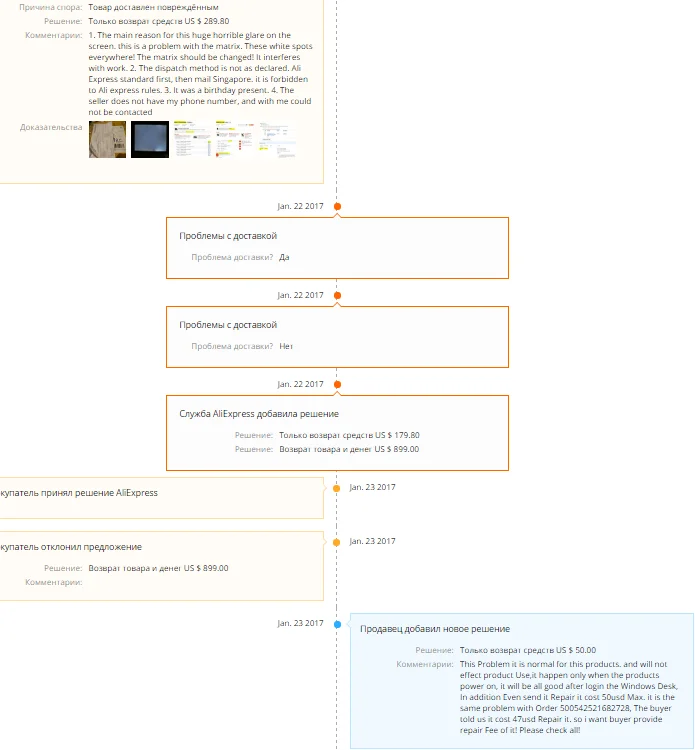
Most people would probably automatically dismiss ordering a laptop from AliExpress, which is totally understandable, but a bunch of Russians who did it have positive reviews, apart from a couple that had issues with the backlight bleed (for which $180 was refunded via dispute).

It has a 13.3″ full HD display, a 256Gb SSD, a 720p webcam, and it is thinner than its main apparent rival – Macbook Pro.

Product link: http://ali.ski/w1t5Xa


Xiaomi pen

It’s just a pen. But you probably still wait it for some reason.

Product link: http://ali.ski/qLqkQ


>> More Xiaomi products in the Xiaomi Store <<


If you want to learn more about brands, check out these articles:

Best AliExpress brands: electronics

best aliexpress brands

Best AliExpress brands: clothing

best aliexpress brands clothing

The post The Most Interesting Xiaomi Products appeared first on AliHolic.

08 Feb 22:34

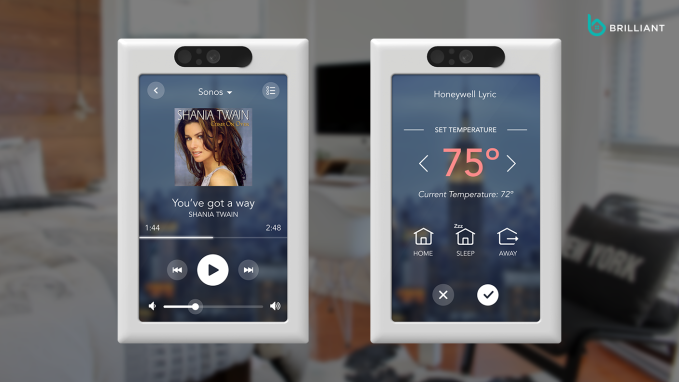
Brilliant’s Control is poised to become a main control hub for smart home devices

by Stefan Etienne
brilliant_control_sonos_honeywell_examples With the surge of the smart home appliances and gadgets, the Brilliant Control is a San Mateo, California-based startup’s answer for the all-in-one smart home control panel. The Control is designed to easily replace a conventional light switch, with an installation designed to take no longer than 5-10 minutes. In my mind, the most important aspect about a product like this is… Read More

08 Feb 22:27

Pinterest introduces Lens, a Shazam for objects in the real world

by Casey Newton

Pinterest today introduced Lens, a new visual search tool that uses machine vision to detect objects in the real world and suggest related items on the service. Lens, which is now in beta, is a tool inside the Pinterest mobile app that functions as a kind of Shazam for objects. Point it at food, furniture, or even the night sky, and Pinterest will return objects that it believes are related.

In a demonstration, Pinterest co-founder Evan Sharp used Lens to detect a pomegranate. Pinterest returned results for pomegranate bread, pomegranate sandwiches, and tips for peeling pomegranates. He described a second use of Lens in which a boy held his phone to the night sky, and Pinterest returned a variety of nighttime landscape photos.

...

Continue reading…

08 Feb 22:22

Pinterest users can now jump to other products within an image

by Matthew Lynley
pinterest shop the look Pinterest is looking to continually decrease the friction from finding something they’re interested in and drilling further into newer products and ideas, and it now has another product to try to close that gap. The company today said it’s launching a new feature that allows users to find and jump to additional products within a photo they’re currently viewing. So, for… Read More
31 Jan 10:45

Check out this personal cargo robot from the maker of Vespa scooters

by Trevor Mogg

Gita wants to be your personal robot, carrying your stuff from A to B at speeds of up to 22 mph. The two-wheeled creation, which comes from the same people that make the Vespa, can also follow a human or move along autonomously.

The post Check out this personal cargo robot from the maker of Vespa scooters appeared first on Digital Trends.

30 Jan 23:11

These Goggles Turn Every Worker Into Iron Man

by stephaniesummar

These augmented reality goggles will help you through the workday.

The post These Goggles Turn Every Worker Into Iron Man appeared first on Futurism.

30 Jan 22:00

D-Wave is now shipping its new $15 million, 10-foot tall quantum computer

by Chaim Gartenberg

Quantum computing is a very complicated subject branch of computer science that could one day radically change the way our computers function. At the forefront of that field is a Canadian company called D-Wave, which created the world’s biggest quantum computing chip last year, with over 2000 qubits (quantum bits) to perform calculations. Now, that chip is finally shipping in a 10-foot-tall, $15 million dollar quantum computer called the D-Wave 2000Q, which is a successor to the company’s earlier 1000Q, which only had half the number of qubits.

Most of the massive structure is taken up by cryogenic refrigerators

The actual chip itself roughly the size of a thumbnail, with most of the massive 700 ft3 structure taken up by cryogenic...

Continue reading…

30 Jan 16:09

The Sport Of Cup Stacking, Explained

Sport stacking, cup stacking, speed stacking — whatever you call it, this sport is mesmerizing to watch. Vox's Phil Edwards learned the basics about stacking...(Read...)

19 Jan 23:19

DigiLens grabs $22 million from Sony, Foxconn as it looks to print next-gen AR displays

by Lucas Matney
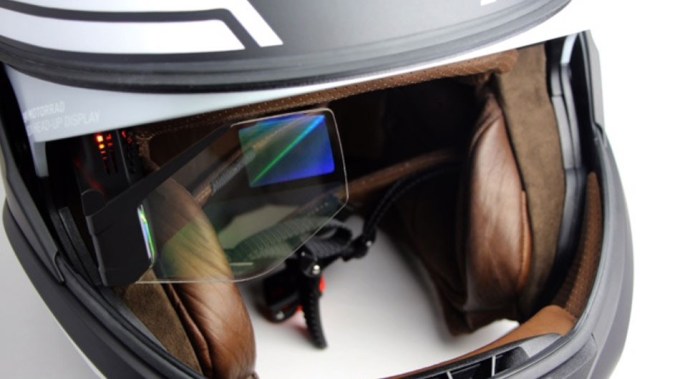
motohud The hype behind augmented reality tech has been giving a lot of display manufacturers the motivation to rethink how modern displays work. Current optics technologies being used by HoloLens, Vuzix and Magic Leap all rely on a complicated high-end type of waveguide display technology that utilizes lenses with etched structures that capture and diffract light being projected into the edge of… Read More
19 Jan 23:06

Driver in fatal Tesla Autopilot crash had seven seconds to take action

by Jordan Golson

The Tesla driver killed in a crash while the Autopilot system was activated last year would have seen the tractor trailer for at least seven seconds prior to impact, according to the NHTSA investigation of the accident. This should have given the driver enough time to take “some action,” said Bryan Thomas, communications director for NHTSA, though it’s not known “whether that was enough time to avoid or mitigate the crash.”

The NHTSA investigation report called seven seconds a “period of extended distraction,” and noted that similar crashes generally had a “much shorter time” available for both the system and driver to detect and respond to a pending collision, usually less than three seconds. The report called distractions longer than...

Continue reading…

19 Jan 23:04

You’ve Been Poisoned Coffee Mug

by staff

Add a touch of humor to your morning routine by having some harmless fun with this “You’ve Been Poisoned” coffee mug. The unsuspecting victim innocently sips their brew only to find out they’ve just been poisoned.

Check it out

$15.80

19 Jan 23:03

‘Dungeons & Dragons’ in AR Teased by Wizards of the Coast Digital Games Studio

by David Jagneaux
‘Dungeons & Dragons’ in AR Teased by Wizards of the Coast Digital Games Studio

Playing Dungeons & Dragons 5th edition using AltspaceVR was one of my first multi-hour VR experiences. It combined something that I was familiar with and brought it to new life with new capabilities using the power of virtual reality. Whereas Dungeons & Dragons in VR brings anyone from around the world to the same location as you to relish in the joy of tabletop roleplaying in a digital setting, AR would bring digital augmentations into the physical world to enhance a physical game. The prospect is equally as exciting, but for very different reasons.

In a recent blog post on the official Wizards of the Coast website, company President Chris Cocks elaborated on the company’s forthcoming ‘moves’ in the digital space. Chief among the announcements is the founding of a new internal Digital Games Studio at Wizards of the Coast.

Playing D&D in AltspaceVR

Jeffrey Steefel leads the team, which is made up of game industry veterans with experience at studios such as Bioware, Activision, Warner Bros. Interactive Entertainment, Valve, and more. The existing Magic Online team (a digital version of the immensely popular Magic: The Gathering card game) is now included under the new Digital Games Studio banner, in addition to several other existing digital art and design teams.

The big news as it pertains to the world of AR though, is this nugget of information: “We will bring our characters and worlds to other games and experiences,” Cocks writes. “What would it be like to throw fireballs as a Planeswalker in an MMO, or quest for treasure with your friends in a D&D augmented-reality game?” This is clearly nothing more than generalized ideas, but it has more legs than just a random statement normally would.

Source: 3DVTT

At the GamesBeat 2016 conference, Dungeons & Dragons Director Nathan Stewart spoke on a panel about how to revitalize old franchises. In an interview with VentureBeat after the panel, Stewart elaborated on some of the ideas as they pertain to WotC properties.

“The dream, the dream for me, on AR—when I first saw the HoloLens demo I thought, oh my god, yes,” Stewart said. “Did you see the one where it’s the electrician helping him? When I saw that, I said, yes, that’s D&D. That’s amazing. I totally want to do that..I would like to take Fantasy Grounds or Roll 20, take the virtual tabletop, and play it with an augmented reality-type thing. It’s basically like Kingsmen Table, with the people at the table, whether they’re there or not, with the DM in front, and the DM really being the key to — their version of AR being a little different from other people’s.”

In that interview, Stewart also goes on to elaborate how physical gestures and movements at the table could reveal information that most players otherwise have to ask about, such as where their characters can see or what they’d like to do. You can within the roleplaying mindset and let AR transform stats and mechanics into overlays that are easily accessible and understandable. Not to mention how much easier it would be to create digital art and objects to display on a table through AR glasses, such as 3D map, instead of physically creating all of the props and resources by hand.

Official Wizards of the Coast Artwork

There are no announcements at this time, but based on the words of Cocks and Stewart, it’s clear that WotC is cooking something up for the AR world as it relates to the long-running Dungeons & Dragons franchise. Hopefully something similar is in the works for Magic: The Gathering as well.


Featured Image: Projection-Mapping

Tagged with: augmented reality, d&d, dungeons and dragons, magic the gathering, rpg, tabletop, wizards of the coast

17 Jan 16:56

What is a smart mirror and why do so many companies think you want one?

by Brian Heater
816c5780 CES 2017 wasn’t the year of the smart mirror – but it was hard to ignore the things lurking about around the edges of the show. The phenomenon has been around for a while now, mostly as concept or Arduino-driven DIY projects, but manufacturers have clearly seen the rise of the smart home as an opportunity to really push the concept toward mainstream acceptance. Introduced at the… Read More
16 Jan 21:26

Google’s Johnny Lee Excited To Merge Tango And Daydream

by Ian Hamilton
Google’s Johnny Lee Excited To Merge Tango And Daydream

CES saw the reveal of the ASUS ZenFone AR, which should be the first phone to put both Google’s depth-sensing Tango augmented reality technology into the same device as the Daydream virtual reality platform. The phone is expected to ship in the coming months.

The AR functionality was shown live on stage at CES by Google’s Johnny Lee, who heads up the Tango team. Google has shown a Hot Wheels app (onstage) and Jenga (shown previously) as realistic digital representations of otherwise classic gaming experiences inserted believably into your environment. A GAP app shown at CES, however, hinted at AR technology’s enormous potential to save folks time. It overlayed clothes of varying sizes seamlessly onto a floating model in the living room, with each outfit draping realistically over different body types.

And as countless CES attendees navigated the endless casino hallways, so many of us could have saved time if we’d been given step-by-step directions. All it would take are little dots overlaid on the carpet ahead shown on the phone’s screen — something that has been shown with Google Tango in the past.

ZenFone AR was offered for hands-on after the event with its VR mode in a standard Daydream View headset, showing how the phone could be a tempting development device as it would let creators test apps for both Tango and Daydream. The ZenFone AR doesn’t integrate the separate mixed reality technologies, instead offering them separately on the same device. The device, however, may help developers prepare themselves for potential next steps in future devices when Google is likely to merge the two sides of its mixed reality development in Android.

“We’re excited about it. There’s no committed timeline for it of course. A lot of it has to do with, how well do we expect to see the overall performance,” said Lee, in an interview with UploadVR at CES. “VR has a lot of compute requirements. Tango has a lot of compute requirements. So when you start running them together…things like thermals and heating become an issue….as we work on testing out the hardware and testing out the software, we’re definitely excited about the potential of the two coming together.”

Lee said they are improving Tango tracking with each update, saying “every month we’re doing improvements.” Though he enjoys the games, Lee is looking forward to mixed reality apps like indoor navigation and shopping experiences to meaningfully change people’s lives.

“I really get excited when I see genuinely provided people value,” Lee said. “Ultimately, to me, it means either saving people time or money…I really like gaming and enjoy it as an entertainment experience, but when I see things like the shopping experience and the utility apps and indoor navigation, all of those genuinely have the ability to save people time or money.”

It is a long year ahead with Facebook, Intel, Qualcomm and Microsoft already showing off VR headsets that can track their location without external sensors. This is the dream of what Google could do when it merges Tango and Daydream into a single mixed reality platform, and there is a lot of time left in the year for Lee to show off Google’s progress. Previously, Lee teased “there’s a whole new class of products that could be made” when our gadgets know their precise location within a given space.

Tagged with: johnny lee, tango

11 Jan 20:40

Razer : Un prototype volé aperçu… en Chine !

by Morgan
Razer avait fait sensation au CES 2017 de Las Vegas en dévoilant deux projets assez époustouflants, Ariana et Valerie, respectivement un système d’immersion complet et un ordinateur portable à trois écrans. Malheureusement, deux prototypes furent volés. Aujourd’hui, Razer offre une jolie récompense à quiconque permettra de les retrouver. MàJ : Le projet très intéressant de […]
11 Jan 15:44

‘Oasis’ Reconstructs Your Physical Room Into A VR Paradise Using Google Tango

by David Matthews
‘Oasis’ Reconstructs Your Physical Room Into A VR Paradise Using Google Tango

Tired of your cramped apartment, its moldering walls, battered furniture, and the fact that it isn’t on a pirate island or in outer space?

Well, researchers have now managed to use Google’s Tango platform to create a simple app that allows you to scan your home and then walk through it in VR. The interior of a normal building is transformed into a world complete with frolicking deer, for example, as the video below shows.

They say this is a new step for Google’s room-scanning Tango system, which so far has been used to create an augmented reality overlay on a phone screen, but not a full VR experience like this.

Misha Sra, a PhD candidate at MIT’s Media Lab and one of the developers of the project, says she wants to “democratize” VR, so that anyone can pick up a phone and create a virtual environment.

“Let’s say you want to ask your Grandma to build VR for her living room, or house. All she would need to do is pick up a Google Tango-powered phone tablet, turn on the app and walk around her house,” she explains. Your VR house is then viewable on the very same phone through a headset.

So far, the software can turn an interior into four different environments: a lush wood; a rocky island surrounded by shipwreck debris; a volcanic lava flow; and a platform floating in space. The system works by detecting walls and replacing them with barriers in VR so you don’t walk in to them, depending on the environment being mimicked – so a fence in the wood, or lava in the volcano.

You might also worry about tripping over your coffee table, but Sra says the software has that covered.  Although the rooms shown in the demo video are clear of stumbling blocks, Sra explains that furniture can be visualized as things like rocks or ponds so users steer clear.

The system, called Oasis – named after the virtual world in the book Ready Player One, which Sra was reading while working on the project – also automatically detects chairs and represents them virtually so you can sit down as you luxuriate in your virtual home. Objects in your house are tracked in real time, so that if you move the chair it will follow you in VR.

The advantage of this kind of scanning system is that “the virtual world conforms to your space,” Sra says. “You don’t have to clear out your living room, move furniture out, and clear an open space like you do for the Vive [or other room-scale VR setups.]”

It’s the same idea as was on display at the recent CES conference from Intel’s Project Alloy, a headset that claims to be able to scan your room and replicate it in VR – meaning you can duck behind your real furniture while gaming. Oasis could be used to make your home more appealing, Sra thinks. “Let’s say it’s the middle of winter in Boston,” she says, and going outside is not the most appealing idea. “You say OK, I want to be at the beach – and so you’re at the beach.” Friends in VR are then able to come and hang out and tell stories in your spruced-up living room.

Sadly, Sra’s project is an early stage research demo, and not close to being a finished, available product. But next, she and her fellow researchers want to give users the ability to customize their VR house, selecting an environment to their taste.

There is no limit to the kind of virtual homes we could walk around, she says. “I could create a Paris theme…or Lord of the Rings,” she imagines. “I think it could be a pretty interesting creativity tool.”

Tagged with: ar, augmented reality, MIT, oasis, research, tango

11 Jan 09:01

The D3-U is a VR camera you hold IRL

by Devin Coldewey
d3_tracker As VR and AR mature, they’ll borrow more of each other’s expertise; from the one, more immersive environments; from the other, intelligent means of walking the line between virtual and real. One example of such a crossover is the D3-U, a physical camera made for taking pictures in VR. Read More
11 Jan 08:59

Experiment 7 Is A New VR Studio Focused On Tabletop Games From Zynga And EEDAR Alums

by David Jagneaux
Experiment 7 Is A New VR Studio Focused On Tabletop Games From Zynga And EEDAR Alums

Even though tabletop gaming may not be what you first think of when you imagine the immersive potential of virtual reality, it fits the medium better than you’d initially think. Playing games of Dungeons & Dragons in VR feels natural and by eschewing the need for physical table space, actually being present in the same room together, or the pain of cleanup and setup, everything just flows much more easily. It all contributes to VR being a powerful way of enjoying tabletop pastimes without an actual tabletop.

Tapping into this potential is a new VR development studio dubbed Experiment 7. Today Gamesindustry.biz revealed the new studio, which is headed up by EEDAR co-founder Geoffrey Zatkin (serving as Creative Director) and former Zynga New York GM Demetri Detsaridis (serving as GM). Coray Seifert (serving as Director of Production) from Impellar Studios also joins the team.

At the core of their focus is the concept of the Magic Table. “We built Magic Table as a platform for our own games, but eventually want other developers to be able to release Magic Table games as well,” explains Detsaridis. “Players on the platform can challenge real-world friends, other VR users from around the world, or face our custom AI opponents in a variety of tabletop games set in stunning and personalizable rooms. You can even play and chat with users on completely different VR hardware.”

In fact, you can play a single player preview version of Magic Table Chess for free right now on both Gear VR and Oculus Rift. Multiplayer, avatars, and motion controllers are planned additions for a later time.

The advent of VR as a social platform is a major theme for the new studio, but it’s not clear how they plan to differentiate themselves from existing options. You can already play a full game of D&D inside AltspaceVR with officially licensed materials. But even more specifically, Tabletop Simulator is an existing game that includes support for non-VR and the HTC Vive (as well as Rift with Touch unofficially) on Steam with essentially any tabletop game you could imagine. It even has multiplayer and motion controllers, as well as user-generated content available. You can download and play all of that right now.

It remains to be seen what exactly Experiment 7 and the Magic Table platform intend to do to set themselves apart, other than offer a mobile VR experience, so we will continue following the studio and its creations to see what happens next.

Are you a fan of tabletop gaming in VR? Let us know what you think in the comments below!

Tagged with: board, eedar, experiment 7, tabletop gaming, zynga

11 Jan 08:59

Illumina wants to sequence your whole genome for $100

by Sarah Buhr
Installing a flow cell on an Illumina cluster station. The first sequencing of the whole human genome in 2003 cost roughly $2.7 billion, but DNA sequencing giant Illumina has now unveiled a new machine that the company says is “expected one day” to order up your whole genome for less than $100. Illumina’s CEO Frank deSouza showed off the machine, called the NovaSeq, onstage at the JP Morgan Healthcare Conference in downtown… Read More