Shared posts

12 Sep 09:20

Le Flipper Zero passe à la version 1.0 de son firmware

by Pierre Lecourt

Doublement de la vitesse de transmission Bluetooth Low Energy, amélioration de la communication NFC, meilleure autonomie, le nouveau firmware 1.0 du Flipper Zero est arrivé.

L’outil annoncé en 2020 aura mis quatre an à passer en Firmware 1.0. Cela ne veut pas dire que les précédents modèles ne fonctionnaient pas ou pas bien, l’engin a déjà une belle communauté, une histoire riche en aventures, un magasin d’applications et même un accessoire ludique.

Simplement, comme tout bon gadget de niche ultra geek qui se respecte, il continue d’évoluer avec une optimisation aux petits oignons de son système. Outre une meilleure gestion de ses capacités techniques, le nouveau déploiement apportera des possibilités supplémentaires comme, par exemple, le support des applications Javascript sans compilation.

Un élément intéressant est mis en exergue autour de cette mise à jour, celui d’un changement dans la gestion du firmware lui même. Limité par la place en mémoire disponible sur le Flipper, le firmware ne pouvait plus recevoir de nouveaux services. Chaque modification ou correction de code nécessitant une mise à jour complète de l’ancien. Un changement de gestion d’ensemble est donc apparu il y a quelques temps avec un passage d’une gestion de firmware monobloc à une solution plus élégante par Application. Avec un humour acronymique douteux, l’équipe de développement a appelé  sa solution le Flipper Application Packages. Ce système installé sur la carte MicroSD permet de stocker une bibliothèque de composants et d’outils qui seront chargés dans le firmware en direct par le Flipper Zero. En clair, vous chargez des fonctionnalités suivant vos besoins en remplaçant des éléments dont vous ne vous servez pas. Un peu comme si vous changiez un disque dans un jukebox de CD. Cela se fait à la volée sans nécessiter de reflasher tout le firmware à chaque fois.

Si cette fonction était en place depuis un moment, elle est mise en avant avec cette mise à jour comme une nouveauté importante et stable. De quoi embarquer plus de fonctions dans son petit gadget et les déployer sur le terrain le jour où elles peuvent s’avérer utiles.

Minimachines.net en partenariat avec Geekbuying.com
Le Flipper Zero passe à la version 1.0 de son firmware © MiniMachines.net. 2024.

11 Sep 09:50

Flipper Zero 1.0 firmware update supercharges the hacking handheld

by Joanna Nelius
A white handheld device with a dolphin on an orange scren.
This little gadget keeps getting better and better. | Image: Flipper Devices Inc.

One of our favorite hacking gadgets, the Flipper Zero, received its first major firmware update today. It includes a bunch of features the developers have been working on stabilizing for the last three years, including a big battery life boost that technically arrived with a previous update. While many of the features aren’t technically new, the entire package should make this gadget feel like a supercharged version of its former self.

One of the most notable updates since launch solves one of the developers’ biggest problems: the device’s internal flash memory originally limited how many features they could add. In the past, new features were built into the firmware itself, but they eventually exceeded what the memory could handle. Last...

Continue reading…

11 Sep 09:48

Connecting businesses to emerging artists

by Matthew Hempstead

Spotted: Global political, economic, and environmental upheaval can make it difficult to prioritise arts and culture. Yet, in difficult times, it may be even more important than ever to ensure that support and education in the creative industries continues. In the UK, analysts estimate the value of the collective creative industries to be around £126 billion.

The jobs market is consistently competitive in these areas of work, which is why UK-based Curaty helps match artists with collectors and buyers. By championing young and underrepresented artists, the organisation greatly expands the network of contacts for both creators and consumers. Curaty strategically matches artworks with companies, individuals, and public organisations, working closely with London art schools to connect new artists with professional opportunities.

Depending on the space available and what a collector is looking for, Curaty provides a range of services, including art advisory and collection management. As well as loaning art or facilitating sales, Curaty also partners with organisations looking for a more complex artistic piece or space.

Social impact is an important part of the way in which the organisation works, and the Curaty team ensures that women and other underrepresented artists are supported and featured throughout the variety of projects and pieces. The company also provides immersive experiences and produces collection publications for owners wishing to share their pieces with the public.

Written By: Keely Khoury

11 Sep 09:48

La révolution des appareils sans fil dans l’automatisation industrielle

by Faniry R.

L'automatisation industrielle traverse une période de changements majeurs. L'essor des technologies sans fil transforme ce secteur crucial. Les entreprises cherchent à moderniser leurs équipements pour suivre cette évolution rapide.

L'adoption généralisée des technologies sans fil au-delà des frontières

L'adoption des technologies sans fil n'est pas limitée à un domaine. L'automatisation des usines utilise largement ces systèmes pour les équipements mobiles. Les véhicules à guidage automatique en sont un exemple. De plus, les opérateurs peuvent accéder à distance aux machines pour leur entretien.

Les entreprises spécialisées dans l'automatisation des processus voient également des avantages dans ces solutions. Ces technologies sans fil sont utilisées pour surveiller les processus à distance et améliorer la sécurité des employés. D'ailleurs, de grands noms comme ABB, Schneider Electric, Siemens et Honeywell proposent une gamme croissante d'appareils sans fil pour répondre à ces besoins.

Le Wi-Fi s'est imposé comme la technologie de choix dans ce secteur. Cela s'explique par sa large compatibilité et la disponibilité d'équipements adaptés. En parallèle, d'autres technologies comme le WirelessHART se distinguent dans des industries spécifiques. Emerson, par exemple, a déployé plus de 10 millions de transmetteurs de pression sans fil.

L'impact des solutions cellulaires dans l'automatisation

Outre le Wi-Fi et le WirelessHART, les solutions cellulaires jouent un rôle clé. Elles sont utilisées pour l'acquisition de données dans les systèmes d'automatisation distribués. Ces technologies facilitent la communication entre les appareils distants. Les principaux fournisseurs de routeurs IoT cellulaires pour les environnements industriels incluent Cisco, Teltonika Networks et Moxa. Leur présence dans ce marché en pleine expansion est cruciale pour le développement de nouvelles solutions connectées.

En 2023, ces technologies sans fil représentaient 70 % des appareils installés dans l'automatisation industrielle. Cette dominance souligne leur importance pour les entreprises cherchant à se moderniser. L'adoption de ces technologies devrait continuer à croître au cours des prochaines années.

L'intelligence artificielle booste l'automatisation industrielle

L'intelligence artificielle (IA) joue également un rôle de plus en plus central dans ce domaine. En intégrant l'IA, les entreprises optimisent leurs processus et améliorent leurs performances. De nombreuses collaborations entre entreprises d'automatisation et acteurs technologiques ont vu le jour.

Par exemple, ABB et Siemens ont renforcé leurs liens avec Microsoft. Leur objectif : utiliser l'IA générative pour améliorer les solutions numériques. De plus, Schneider Electric et Siemens collaborent avec NVIDIA pour développer des outils industriels basés sur l'IA. Cette association vise à transformer la manière dont les entreprises utilisent les technologies numériques dans leurs processus.

Rockwell Automation, autre acteur majeur du secteur, s'est également associé à NVIDIA en 2024. Ce partenariat vise à intégrer l'IA dans les robots mobiles industriels. Ces collaborations témoignent de l'importance croissante de l'IA dans l'automatisation.

En route vers l'avenir de l'automatisation industrielle

L'intégration de l'intelligence artificielle dans l'automatisation industrielle ne fait que commencer. D'ailleurs, les partenariats entre grandes entreprises montrent que l'IA sera au cœur des futures innovations. Les solutions basées sur ces technologies permettront d'optimiser les processus et d'améliorer l'efficacité des systèmes industriels.

Les entreprises doivent donc se préparer à cette transformation majeure. L'automatisation industrielle entre d'ailleurs dans une nouvelle ère, où l'IA et les technologies sans fil redéfiniront la production et la gestion. Pour rester compétitives, les entreprises devront ainsi intégrer ces innovations rapidement dans leurs processus.

Cet article La révolution des appareils sans fil dans l’automatisation industrielle est apparu en premier sur OBJETCONNECTE.COM.

10 Sep 16:52

🧬 Les scientifiques sur le point de ressusciter des espèces éteintes: quelles conséquences ?

by Adrien BERNARD
Recréer une espèce disparue: est-ce vraiment possible ? Cette question, qui pouvait sembler relever de la science-fiction il y a quelques décennies, se rapproche désormais d'une réalité...
10 Sep 16:49

You can buy a diamond-making machine for $200,000 on Alibaba

by Benj Edwards
CLOSE UP: Jeweler looking a diamonds on the work table - stock photo

Enlarge (credit: eugenekeebler via Getty Images)

In an age when you can get just about anything online, it's probably no surprise that you can buy a diamond-making machine for $200,000 on Chinese eCommerce site Alibaba. If, like me, you haven't been paying attention to the diamond industry, it turns out that the availability of these machines reflects an ongoing trend toward democratizing diamond production—a process that began decades ago and continues to evolve.

The history of lab-grown diamonds dates back at least half a century. According to Harvard graduate student Javid Lakha, writing in a comprehensive piece on lab-grown diamonds published in Works in Progress last month, the first successful synthesis of diamonds in a laboratory setting occurred in the 1950s. Lakha recounts how Howard Tracy Hall, a chemist at General Electric, created the first lab-grown diamonds using a high-pressure, high-temperature (HPHT) process that mimicked the conditions under which diamonds form in nature.

Since then, diamond-making technology has advanced significantly. Today, there are two primary methods for creating lab-grown diamonds: the HPHT process and chemical vapor deposition (CVD). Both types of machines are now listed on Alibaba, with prices starting at around $200,000, as pointed out in a Hacker News comment by engineer John Nagle (who goes by "Animats" on Hacker News). A CVD machine we found is more pricey, at around $450,000.

Read 11 remaining paragraphs | Comments

10 Sep 16:33

Microsoft performs operations with multiple error-corrected qubits

by John Timmer
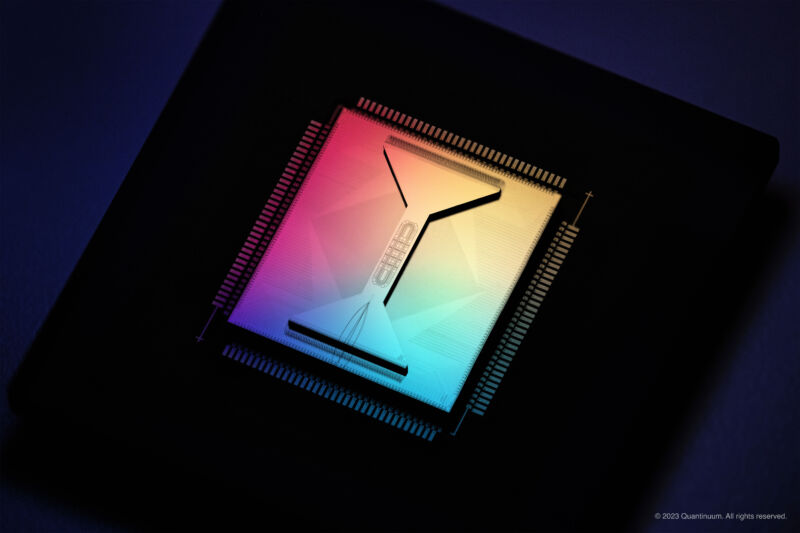
Image of a chip with a device on it that is shaped like two triangles connected by a bar.

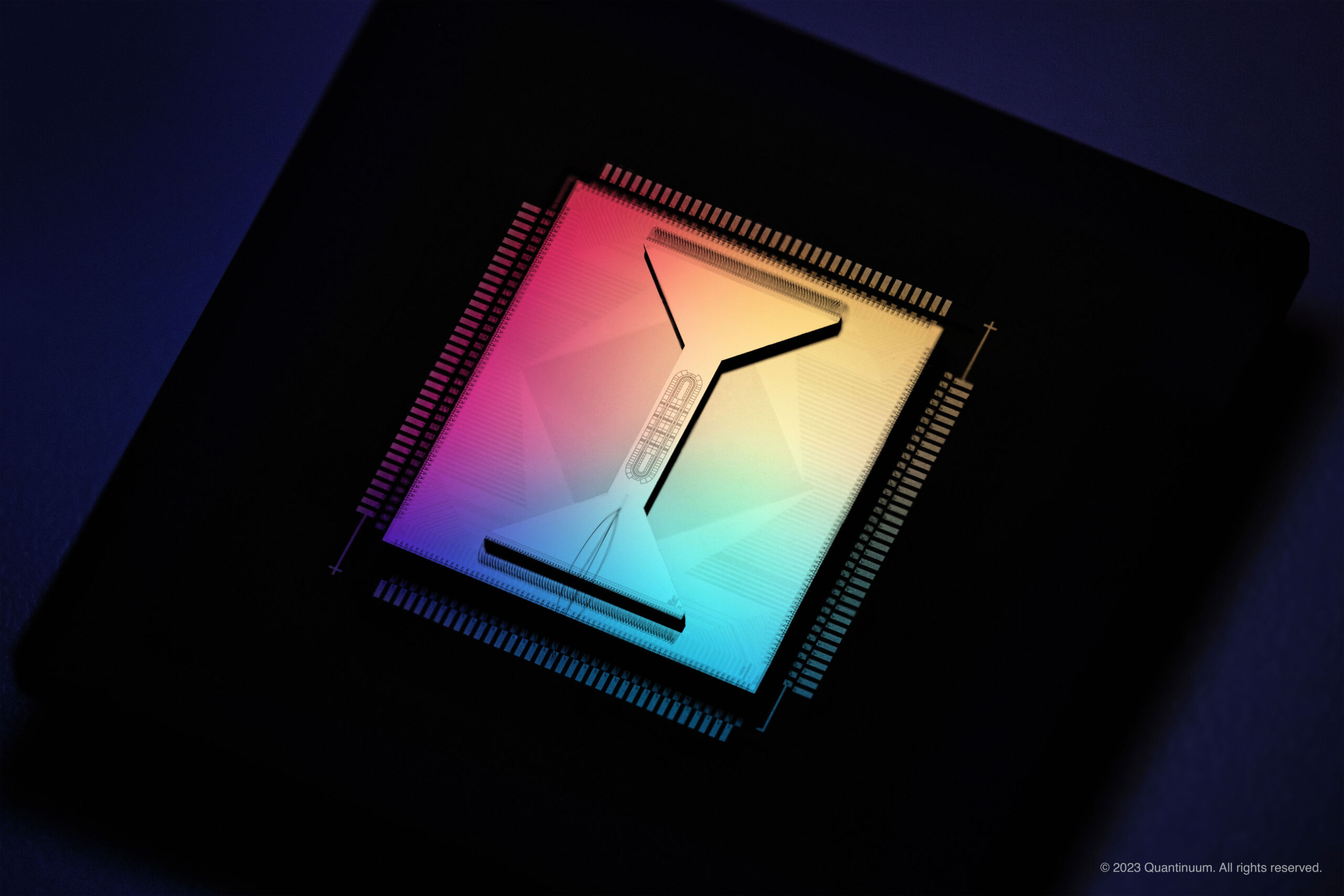
Enlarge / Quantinuum's H2 "racetrack" quantum processor. (credit: Quantinuum)

On Tuesday, Microsoft made a series of announcements related to its Azure Quantum Cloud service. Among them was a demonstration of logical operations using the largest number of error-corrected qubits yet.

"Since April, we've tripled the number of logical qubits here," said Microsoft Technical Fellow Krysta Svore. "So we are accelerating toward that hundred-logical-qubit capability." The company has also lined up a new partner in the form of Atom Computing, which uses neutral atoms to hold qubits and has already demonstrated hardware with over 1,000 hardware qubits.

Collectively, the announcements are the latest sign that quantum computing has emerged from its infancy and is rapidly progressing toward the development of systems that can reliably perform calculations that would be impractical or impossible to run on classical hardware. We talked with people at Microsoft and some of its hardware partners to get a sense of what's coming next to bring us closer to useful quantum computing.

Read 20 remaining paragraphs | Comments

10 Sep 16:08

Chrome is making it easier to keep track of browser tabs

by Jess Weatherbed
An example desktop and phone displaying Chrome tab groups, connected by a blue line.
Tab groups will soon make it easier to revisit webpages across devices without bookmarking them. | Image: Google

Google is adding some new features to Chrome that aim to help users organize and keep track of their browser tabs across both desktop and mobile devices. The search giant announced in a new blog post that tab groups — which enable Android and desktop Chrome users to keep related pages together in custom-labeled groups — will start rolling out to Chrome for iOS starting today.

Once Chrome is updated, iPhone and iPad users can access the feature by opening the tab grid, long-pressing on a tab, and selecting “Add Tab to New Group.” Custom names and colors can then be assigned to the created tab groups to help keep them organized and easily identifiable.

GIF: Google
Here’s a quick demo showing how to access tab...

Continue reading…

10 Sep 07:36

Ubisoft Shares Take a Hit Over Investor Unease

by Caitlin Wolper

Gamers have nothing on investors when it comes to fast twitch muscles. 

Shares in major video game publisher Ubisoft took an over 7% hit on Monday after an investor with a less than 1% stake in the company published a letter suggesting it should go private and shake up its management. The fact that such a minnow of an investor could significantly dent the share price shows how on edge the sector is lately.

Still In the Game

Ubisoft is known for popular franchises including “Assassin’s Creed” and “Far Cry,” and recently released a big, blockbuster “Star Wars” game. But, as reported by The Wall Street Journal, its recent work has been plagued by delays and cancellations, and its share price is down 41% year-to-date. Although the games industry is suffering a crunch overall, Ubisoft’s share price is faring worse than most.

But shares jolting downward isn’t the only symptom of the gaming sector’s hair-trigger pessimism: 

  • Last week, Sony (which owns PlayStation) shut down a game called “Concord” just two weeks after it was released. “Concord” was a live-service game, meaning its business model was based more on an attention economy and keeping players engaged in the game, rather than just selling copies.
  • PlayStation spent eight years developing “Concord,” but negative reviews from gamers and poor sales prompted it to shut down the game. It shows the risk that game companies take trying to bank on an attention-economy effort.

“In the end, live services are a high-risk, high-reward venture,” Rhys Elliott, a gaming analyst at MIDiA, told The Daily Upside. Despite this, Elliott expects Sony to keep plugging away at live-service games. “It only takes one big live-service win to generate billions in revenue and unlock new audiences — two things PlayStation wants as the console business faces growth challenges.”

Big in Japan: In another bizarre move, Sony raised the price of its PlayStation 5 console in Japan by 19% at the beginning of this month. The PS5 is now a 4-year-old console, so bumping the price up is pretty unreal. Sony said the increase was due to “fluctuations” in the global economy. Why those fluctuations only hit its home country of Japan is a mystery.

The post Ubisoft Shares Take a Hit Over Investor Unease appeared first on The Daily Upside.

10 Sep 07:35

DOOM on a Volumetric Display

by Dave Rowntree

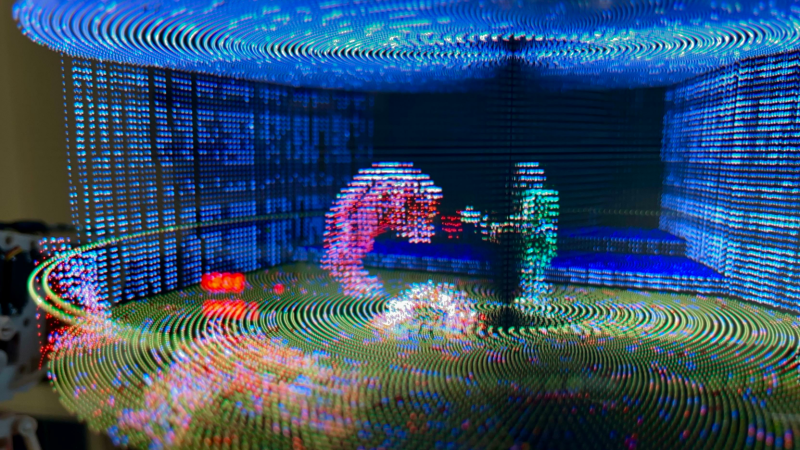
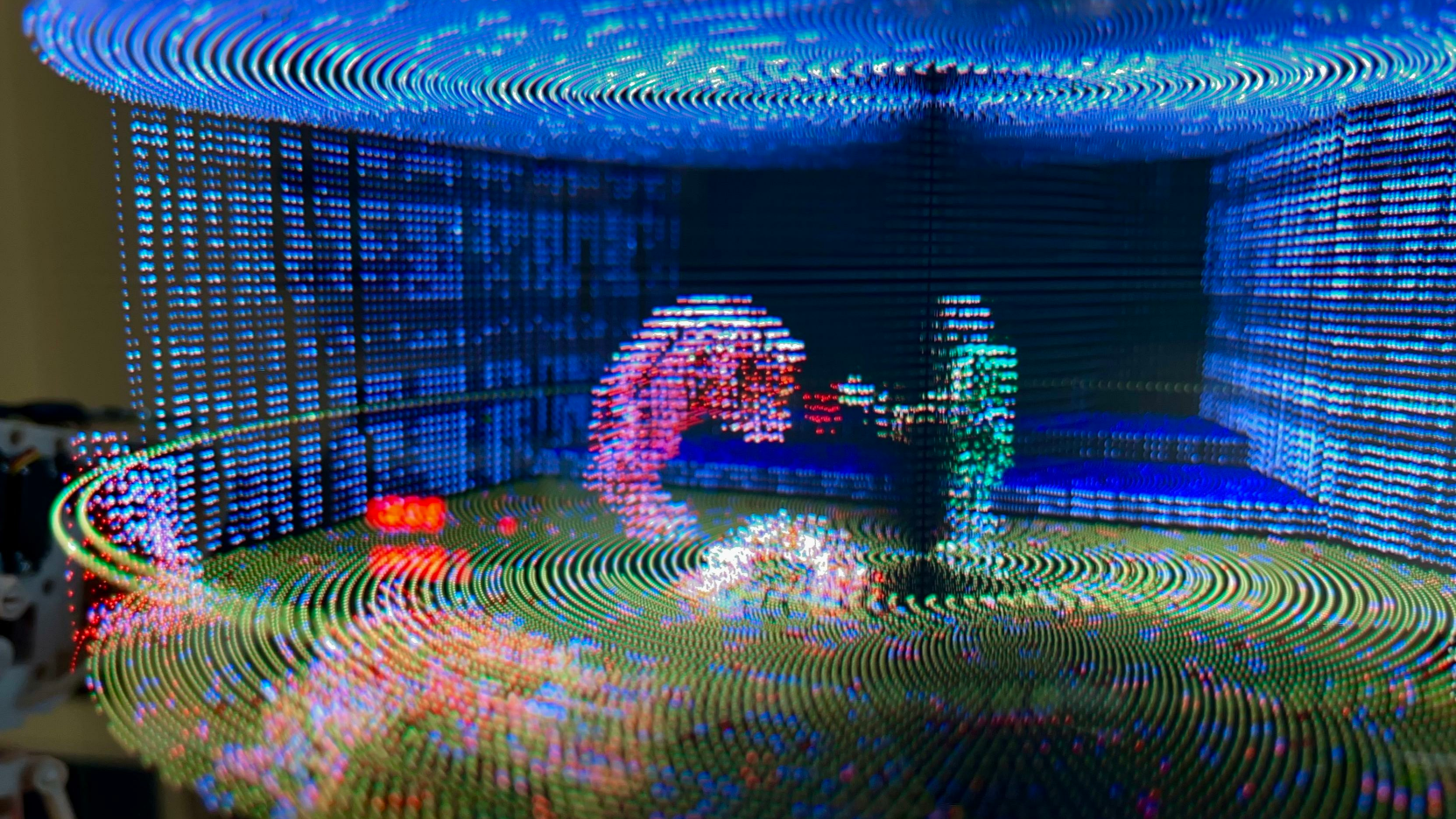
There’s something magical about volumetric displays. They really need to be perceived in person, and no amount of static or video photography will ever do them justice. [AncientJames] has built a few, and we’re reporting on his progress, mostly because he got it to run a playable port of DOOM.

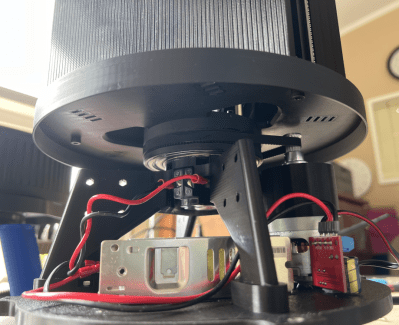
Base view of an earlier version showing the motor drive and PSU

As we’ve seen before, DOOM is very much a 3D game viewed on a 2D display using all manner of clever tricks and optimizations. The background visual gives a 3D effect, but the game’s sprites are definitely very solidly in 2D land. As we’ll see, that wasn’t good enough for [James].

The basic concept relies on a pair of 128 x 64 LED display matrix modules sitting atop a rotating platform. The 3D printed platform holds the displays vertically, with the LEDs lined up with the diameter, meaning the electronics hang off the back, creating some imbalance.

Lead, in the form of the type used for traditional window leading, was used as a counterbalance. A Raspberry Pi 4 with a modified version of this LED driver HAT is rotating with the displays. The Pi and both displays are fed power from individual Mini560 buck modules, taking their input from a 12 V 100 W Mean-Well power supply via a car alternator slip ring setup. (Part numbers ABH6004S and ASL9009  for those interested.) Finally, to synchronise the setup, a simple IR photo interrupter signals the Pi via an interrupt.

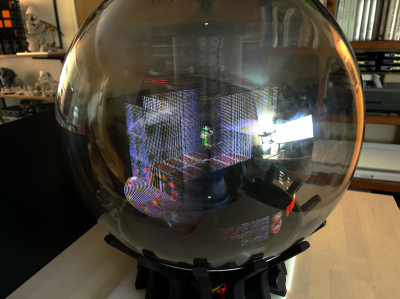
The second version running Doom

The base contains a DC motor driving the platform with a 224:20 reduction ratio using a GT2 timing belt to help reduce noise. [James] reports that running at 700 RPM was the limit for the current version, giving an acceptable update frame rate. Too high, and the vibration and chassis flex was excessive. The base does little else other than house that power supply and support a 400 mm acrylic garden light dome. We wouldn’t want to run this without such protection, which might not even be enough.

There are quite a few details to consider in such a build. One is the need to reduce the angle of perception of the LED display using a 3D printed slat-type collimator in front of each unit. You only want to perceive the LEDs head-on, or the POV effect is ruined. However, most of the details are in the software.

To that end, [James] took the entire game logic of the ‘Doom Generic’ port, removing the code that renders the 3D parts of the scene. The 2D menus and in-game panels are rendered by projecting the image onto a cylinder. That was easy. [James] took a minimalist path for the room scenes, as fully solid walls looked too busy. The viewport automatically zooms into any ongoing battles, so monsters zoom into focus if nearby, but objects behind closed doors and too far around corners are discarded. No spoiler alerts! The models were lifted from Chello’s Voxel Doom mod, giving a fitting 3D upgrade to gameplay. This is an ongoing project, so we’ll keep track and report back!

We’ve reported on a few volumetric displays over the years, like this tiny one based on an OLED display. Even a volumetric CCTV system. But they can’t run DOOM. Speaking of which, here’s what it looks like ray-traced.

Thanks to [Keith] for the tip!

09 Sep 16:01

Sharp & Japan’s Largest Telecom Unveil Lightweight AR Glasses ‘MiRZA’

by Scott Hayden

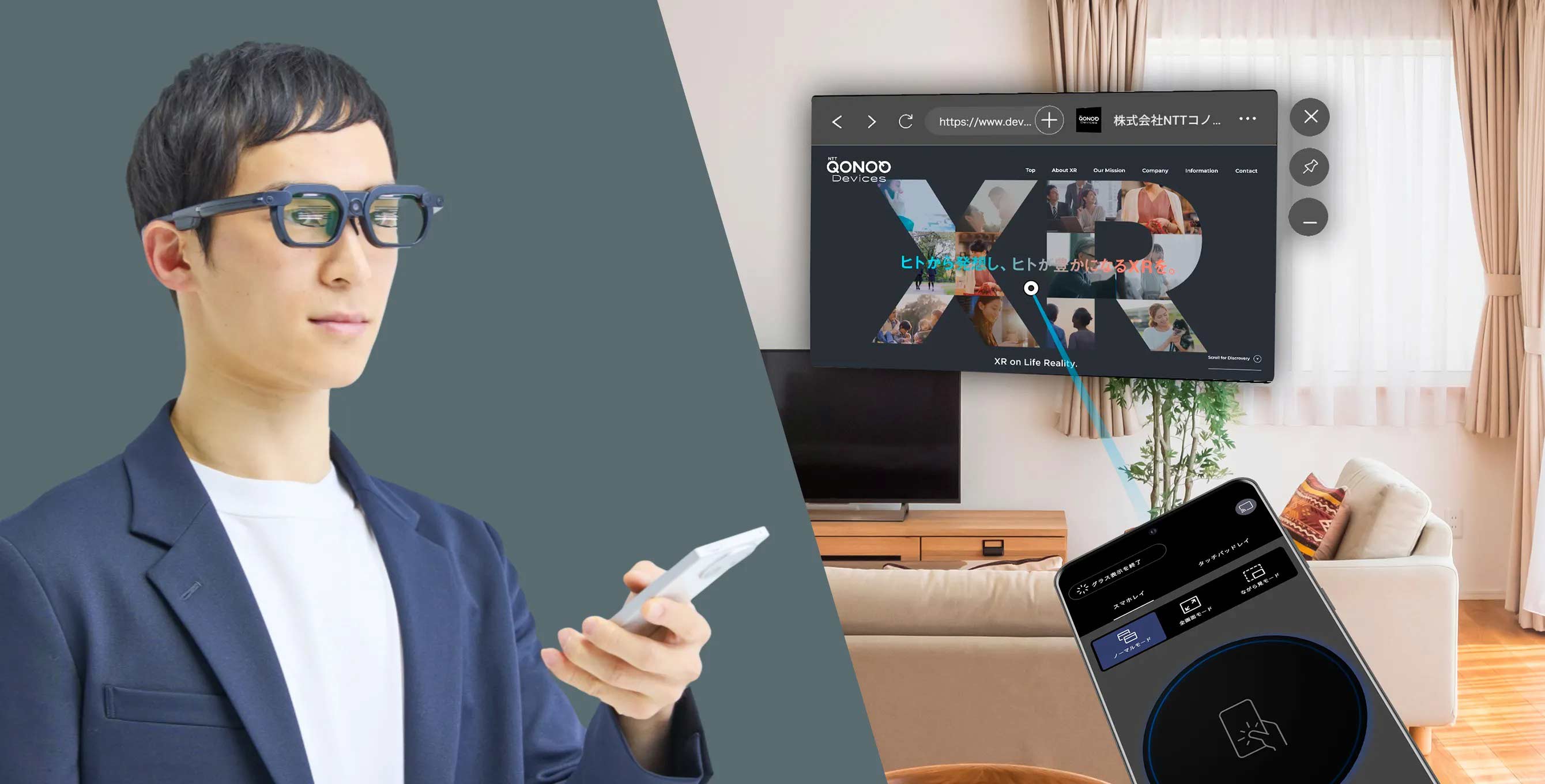
Sharp and Japan’s largest telecom NTT Docomo today announced a new pair of AR glasses called MiRZA, which is hitting the Japanese market sometime his Fall.

It would be pretty tough to mistake Mirza for a normal pair of glasses, what with its chunky struts and rims, 6DOF tracking sensors, and center-mounted camera—not to mentions its unique AR optics, which incorporate so-called ‘mirror bars’ courtesy of South Korean AR lens creator LetinAR, promising a 45-degree diagonal field of view.

Created by NTT QONOQ Devices, a joint venture between Sharp and NTT’s XR development branch NTT QONOQ, Mirza isn’t going to be cheap either. Priced at an eye-watering ¥248,000 (~$1,730 USD), the funky but functional device more than likely will be squarely targeted at enterprise.

In the press release (Japanese), the company highlights its ability to take photos and make calls, and also display multiple screens positioned anywhere around the user. Mirza promises a peak brightness of 1,000 nits, although it’s unclear if that’s referring to perceived brightness to the end user or the brightness of the 1,920 × 1,080 microOLEDs.

To boot, Mirza promises good weight distribution thanks to placing components closer to the back of the glasses’ struts. Both internal battery and processing (Qualcomm Snapdragon AR2 Gen1) is on board, however it boasts wireless connectivity to Snapdragon Spaces-compatible smartphones.

Image courtesy NTT QONOQ Devices

For now, the company has only certified the AQUOS R9 SH-51E, a Japan-only flagship from Sharp, however the company says more compatible phones will be announced in the future.

We’re still waiting for more clarity on launch regions, however it’s likely Mirza may be a Japan-only device. In the meantime, check out the specs below:

MiRZA Specs

  • Weight:125g
  • Size: Approx. 187mm (W) x 45mm (H) x 184mm (D) (when in use), Approx. 187mm (W) x 45mm (H) x 96mm (D) (stored)
  • Chipset: Snapdragon® AR2 Gen1
  • Display: Resolution: FHD (1,920 x 1,080), 45° FOV (diagonal), 1,000 nits brightness, MicroOLED binocular full color
  • Optics: LetinAR’s unique thin mirror bar type optical module
  • Battery: continuous use time: 1~1.5 hours, charged in under 2 hours using the included USB Type-C cable
  • Camera: 1x front RGB camera (image quality: FHD), 2x side monochrome cameras
  • Audio: 4x microphones, 2x speakers
  • Other sensors: Touch sensor (for operation), Proximity sensor (for determining wearing status), Illuminance sensor (for automatic brightness adjustment), Acceleration/gyro/camera spatial recognition sensor (for 6DoF tracking)
  • Connection: Bluetooth 5.0, Wi-Fi 6E

The post Sharp & Japan’s Largest Telecom Unveil Lightweight AR Glasses ‘MiRZA’ appeared first on Road to VR.

09 Sep 13:19

🧬 Vidéo: ce simple colorant alimentaire rend la peau transparente et permet de voir les organes

by Cédric DEPOND
Une souris transparente, cela vous étonne ? Pourtant, des chercheurs de Stanford l'ont fait. En utilisant un colorant alimentaire courant, ils sont parvenus à rendre la peau de cet animal...
09 Sep 12:27

Qu’est ce que la culture et le management de Netflix nous disent sur le monde d’aujourd’hui

by Bertrand DUPERRIN

En 2009 Netflix publiait un document de 125 pages résumant sa culture et sa vision du travail qui avait, en son temps, fait beaucoup parler de lui. Au début de l’été une version mise à jour a été mise en ligne et c’est l’occasion de revenir sur ce document assez disruptif et voir ce que nous dit son évolution au fil du temps.

Une approche clivante du marketing RH

Même si le document a été mis à jour depuis je ne peux que vous inciter à lire ces 125 slides qui sont non pas un condensé mais, au contraire, une vision exhaustive de la culture Netflix et de leur vision du travail pour comprendre à quel point le document avait surpris voire choqué à l’époque.

On ne pouvait que reconnaitre à Netflix le mérite de l’honnêteté quitte à être clivant, à l’opposé de la plupart des entreprises qui affichent des valeurs assez consensuelles pour plaire à tous quitte à ce qu’elles ne se vérifient pas dans la pratique.

Il ne faut pas oublier que ce document avait pour objectif le recrutement et, d’une certaine manière, plutôt que dire « pourquoi nous rejoindre » il disait tout autant « pourquoi ne pas nous rejoindre« , « si vous n’êtes pas confortable avec ça surtout ne postulez pas« .

J’admet m’en être d’ailleurs inspiré à un moment au moment de mettre en place un site carrière afin de ne plus perdre de temps sur des candidatures peu pertinentes : plutôt qu’un discours qui donnait envie au plus grand nombre de candidater j’ai préféré un discours qui allait plaire à des gens qui nous ressemblaient et rebuter les autres.

Typiquement, Netflix allait en 2009 à l’encontre d’un discours très en vogue dans beaucoup d’entreprises, notamment de la tech, qui clamaient qu’elles étaient une grande famille. Netflix a toujours tenu le discours opposé, se comparant plutôt à une équipe de sportifs professionnels avec ce que cela implique sur l’emphase mise sur la collaboration, la performance et ce qui lie les gens. Indirectement, et contrairement à beaucoup d’autres, son image n’a pas été écornée lorsqu’elle a du licencier car ça n’était pas orthogonal avec les valeurs qu’elle communiquait.

Ceci dit le moins qu’on puisse dire c’est que cette culture ne les a pas empêché ni de recruter ni de réussir.

La culture Netflix en 2024

Netflix a donc publié une mise jour du manifeste de sa culture au printemps dernier. Qu’est ce qui change ? Tout d’abord la taille puisque tout est condensé pour tenir sur une seule page. Comme si ils avaient pris le temps d’avoir du recul ce qui a permis de simplifier le propos sans pour autant que cela ne change beaucoup sur le fond.

Fondamentalement je ne vois pas beaucoup de changement et cela ne me surprend pas : en 2009 Netflix affichait une culture qui étaient en phase avec la direction que prenaient le monde, la société, l’économie, ce qui tranchait justement avec celles d’entreprises un peu plus ancrées dans le passé. Or, depuis, si les choses ont changé c’est pour aller dans le sens de ce que percevait Netflix, confirmant qu’ils avaient vu juste depuis le début.

Rien de neuf mais une vision affinée et améliorée de la précédente au fil du temps et de l’expérience.

Mais surtout une version plus synthétique ce qui permet d’aborder plus facilement ses quatre pierres angulaires.

La « Dream Team »

On en revient à la notion d’équipe préférée à celle de famille. On y trouve une liste des valeurs qui doivent être partagées (altruisme, jugement, candeur, créativité, courage, inclusion, curiosité, résilience) dont on verra qu’elles sont essentielles à la mise en oeuvre des autres dimensions de la culture Netflix. Quand on voit les retours d’expériences de salariés d’entreprises qui essaient de se substituer à leur propre famille ils n’ont certainement pas tort (After Working at Google, I’ll Never Let Myself Love a Job Again).

Il y a surtout une référence constante à la performance : au delà des valeurs c’est la performance et elle seule qui fait qu’on est digne ou non de rester dans l’équipe.

Derrière la candeur on trouve la notion de feedback continu, la volonté de constamment se remettre en cause et accepter d’être remis en cause par autrui dans une logique d’amélioration continue.

Les gens au dessus des process

Netflix reconnait la primauté de l’individu sur les process et considère que les gens sont capables d’avoir un impact sur leur propre travail si on les laisse utiliser leur capacité de jugement, leur sens des responsabilités et la critique constructive.

On a le droit de ne pas être d’accord avec ce qui est fait ou la manière dont on le fait à condition de finalement s’engager une fois qu’une discussion a eu lieu sur le sujet.

Cette confiance donnée aux individus sur la manière d’organiser leur travail permet d’éviter les complications et l’excès de process qui accompagnent souvent la croissance des entreprises (Smart Simplicity : 6 règles pour gérer la complexité sans devenir compliqué).

Cela rejoint une préoccupation émergente dans nombre d’entreprises sur le fait que jusqu’à présent les gens étaient dirigés par les process alors qu’aujourd’hui nature même du travail et des challenges auxquels font face les collaborateurs demandent de donner aux collaborateur la capacité d’influer sur les process. Il y a de nombreuses réflexions en cours sur cette notion de People Centric Operations (Les salariés doivent suivre les process. En êtes-vous sûrs ?) mais ça ne sont que des réflexions tant cette approche pousse les entreprises à sortir de leur zone de confort. Pour Netflix c’est une réalité.

Inconfortablement excitant

Divertir 2 milliards de personnes demande d’innover, sortir de sa zone de confort, sans cesses essayer des choses nouvelles. Au delà de ce qui sonne comme une évidence qui, a mon avis, ne s’applique pas qu’à Netflix et aux entreprises de son secteur mais quasiment à tout le monde (encore faut il en avoir conscience) cela demande aux collaborateurs d’accepter de vivre dans l’inconfort du changement permanent.

Une vérité que tout le monde connait même si peu d’entreprises osent l’assumer, préférant vendre à leurs employés l’illusion rassurante d’une stabilité qui n’existe plus. (La transformation n’est pas un état provisoire de l’entreprise et vos employés le savent donc ne mentez pas.)

Excellent et toujours meilleur

Les salariés, appelés ici membres de la Dream Team, doivent sans cesse améliorer les choses et construire un futur dont on ne sait pas ce qu’il sera. Rappelez vous que Netflix a commencé en 1998 en louant des DVD qu’ils envoyaient par la poste et qu’il s’agit du parfait exemple d’une entreprise qui n’a pas subi la transformation digitale de l’économie. D’ailleurs plutôt que la subir c’est elle qui transformé son secteur.

Pour Netflix c’est sa culture qui est la cause de sa réussite et elle enjoint à ses salariés de sans cesse l’améliorer et surtout pas de la préserver telle qu’elle comme, là encore, trop d’entreprises le font, perdant ainsi la capacité à saisir des opportunités et se transformer.

Pour moi cela fait écho à une intervention de Ginnie Rometti, alors PDG d’IBM, il y a plus de 10 ans et où elle avait dit qu’il ne fallait jamais « protéger le passé« .

Conclusion

Il est surprenant de constater à quel point la manière dont Netflix formalise et présente sa culture détonne encore dans le monde d’aujourd’hui alors que rien ne me semble plus pertinent si on est réalistes par rapport à ce qu’est le monde d’aujourd’hui et les challenges auxquels font face les entreprises.

Pourquoi un tel grand écart ?

Tout d’abord une réelle volonté de la part des entreprises de protéger le passé. Une entreprise est un organisme vivant, sa culture doit évoluer avec le temps et les gens afin de prendre en main son futur et non le subir.

Ensuite la peur de déplaire, de déranger. Beaucoup d’entreprises essaient de plaire au plus grand nombre et, surtout, ne veulent en aucun cas déplaire à qui que ce soit que ce soit en termes de marketing RH ou de marketing tout court. Or ce que dit Netflix fait peur : beaucoup de personnes ne sont pas confortables dans un tel environnement et ce qu’il raconte de la compréhension qu’on a du monde. Netflix a décidé de ne s’intéresser qu’à ceux qui sont alignés à cette vision même si cela veut dire se couper d’un grand nombre de talents. Notons également que Netflix fait une claire séparation entre marketing et marketing RH là où beaucoup pensent qu’il y a un lien entre les deux : ses produits sont pour tout le monde mais tout le monde ne peut pas y travailler. Votre abonnement est bienvenu, pas votre CV.

Enfin la difficulté de changer. Une culture ne se décrète pas, elle se vit et est incarnée au premier chef par ses dirigeants. Pas facile d’opérer un tel virage si on se dit qu’on risque d’en être la première victime. Cela me rappelle l’exemple de CISCO à la fin des années 2000 (Entreprise 2.0 : retour sur l’expérience de CISCO). Non seulement John Chambers, le PDG de l’époque, avait dit qu‘il avait du aller contre sa nature profonde pour aller dans le sens du bien de l’entreprise mais en plus qu’il avait du se séparer de la moitié du top management incapable d’incarner la nouvelle organisation et la culture qui allait avec.

Image : Netflix de Emre Akkoyun via Shutterstock.

L’article Qu’est ce que la culture et le management de Netflix nous disent sur le monde d’aujourd’hui est apparu en premier sur Bloc-Notes de Bertrand Duperrin.

09 Sep 10:02

Robot leg powered by artificial muscles outperforms conventional designs

Inventors and researchers have been developing robots for almost 70 years. To date, all the machines they have built—whether for factories or elsewhere—have had one thing in common: They are powered by motors, a technology that is already 200 years old. Even walking robots feature arms and legs that are powered by motors, not by muscles as in humans and animals. This in part suggests why they lack the mobility and adaptability of living creatures.
09 Sep 10:01

Loki, l’outil open source qui vérifie les faits

by Korben

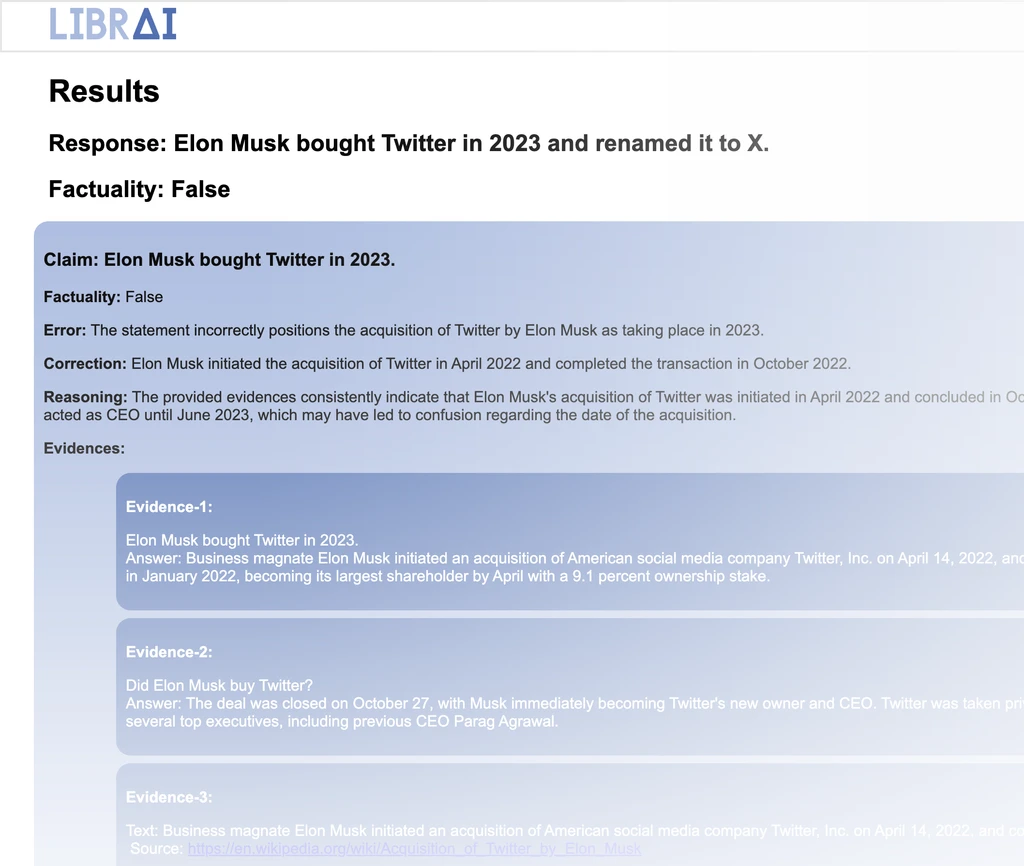
Loki, ça vous dit quelque chose ? Non, je ne parle pas du dieu espiègle de la mythologie nordique, mais bien d’un outil qui pourrait bien révolutionner la façon dont on traque les fake news. C’est une solution open source capable de passer au crible de longs textes pour en extraire les affirmations douteuses et les vérifier en un clin d’œil.

Loki est un projet vraiment prometteur pour tous ceux qui ont à cœur la vérification des faits, que vous soyez journaliste, chercheur ou simplement un citoyen soucieux de démêler le vrai du faux. Son atout majeur, c’est un pipeline complet qui prend en charge tout le processus, de la décomposition des textes en affirmations individuelles jusqu’à la vérification finale.

Et concrètement alors, comment ça marche ?

Eh bien, Loki commence par découper un long texte en petits morceaux plus digestes, histoire d’y voir plus clair. Ensuite, tel un fin limier, il évalue chaque affirmation pour déterminer si elle mérite d’être vérifiée. Exit les déclarations vagues ou ambiguës, on se concentre sur le concret !

Une fois les affirmations intéressantes identifiées, Loki se transforme alors en super détective du web. Il génère des requêtes précises pour partir à la chasse aux preuves sur Internet, en s’appuyant sur divers modèles d’IA tels que le traitement du langage naturel (NLP), l’apprentissage automatique (ML) ou encore l’extraction d’informations. Comme ça, fini les heures passées à éplucher les sources, il s’occupe de tout !

Et une fois les preuves rassemblées, il enfile sa casquette d’enquêteur pour évaluer la véracité de chaque affirmation. Tel un juge impartial, il examine les éléments à charge et à décharge pour rendre son verdict. Fake news ou info fiable ? Vous le saurez en un instant ! Il faut cependant garder à l’esprit que même si Loki s’appuie sur des modèles d’IA performants, aucun outil n’est parfait. Une supervision humaine reste donc nécessaire pour garantir la fiabilité des résultats.

L’interface est basique mais permet d’interagir directement avec le moteur de vérification. Pas besoin d’être un crack en informatique, c’est à la portée de tous.

Le top, c’est qu’il ne se contente pas de vous dire si une info est vraie ou fausse. Il vous explique aussi comment il est arrivé à cette conclusion, avec toute la transparence qu’on est en droit d’attendre de ce genre d’outils. Ça permet de sourcer et de justifier l’analyse. En prime, il sait se montrer pédagogue puisqu’en plus de débusquer les fake news, il vous proposera aussi une version corrigée et sourcée de l’information. De quoi devenir un pro de la vérification des faits en un rien de temps !

Si vous voulez tester Loki par vous-même, rien de plus simple. Il vous suffit de vous rendre sur le site https://loki.librai.tech/ pour découvrir toutes les possibilités offertes par cet outil. En attendant, voici un petit tutoriel pour bien démarrer avec Loki. Il vous faudra des clé API pour OpenAI, Anthropic et Serper.

Première étape : installez Python et Poetry en suivant les instructions sur le site officiel.

Ensuite, clonez le dépôt GitHub de Loki et lancez l’installation avec les commandes :

git clone https://github.com/Libr-AI/OpenFactVerification

cd OpenFactVerification

pip install -r requirements.txt

poetry install

Ça peut sembler un peu technique, mais promis, c’est à la portée de tous !

Une fois que tout est en place, vous pouvez commencer à jouer avec Loki.

Pour vérifier un texte, rien de plus simple :

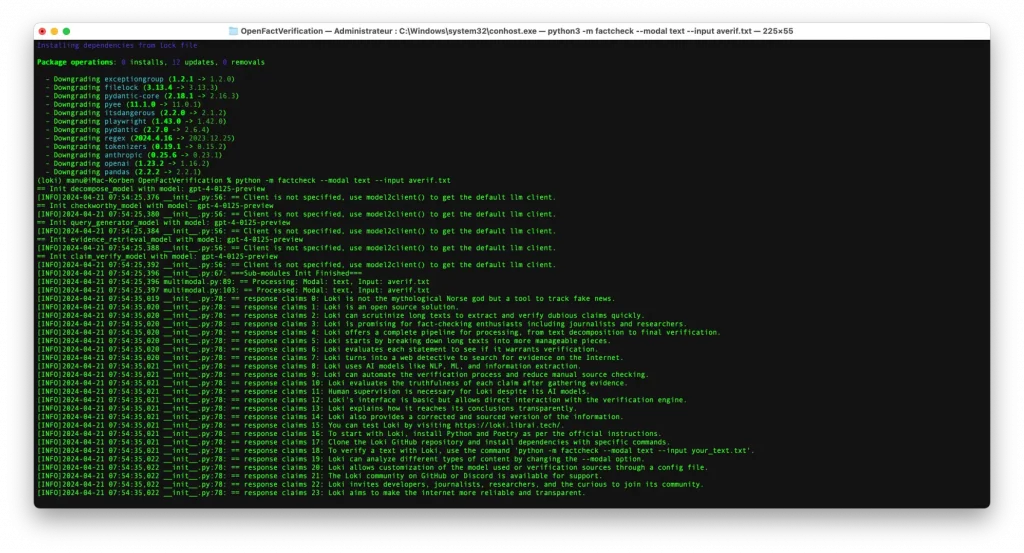
python -m factcheck --modal text --input mon_texte.txt

Et voilà, Loki va se mettre au travail et vous fournir une analyse complète du texte et vous livrer à la fin un gros JSON.

Vous pouvez aussi tester avec différents types de contenu (image, vidéo, audio…) en changeant l’option --modal. Et si vous voulez personnaliser le modèle utilisé ou les sources de vérification, il vous suffit de passer un fichier de configuration en paramètre :

python -m factcheck --modal text --input mon_texte.txt --api_config ma_config.yaml

Notez aussi que tout ceci est dispo sous la forme d’une lib Python, donc facilement intégrable avec vos outils.

Avec ça, vous avez toutes les cartes en main pour devenir un pro de la vérification des faits. Alors, à vous de jouer ! Et si jamais vous avez besoin d’un coup de main, n’oubliez pas que la communauté Loki est là pour vous aider sur GitHub ou sur le serveur Discord dédié au projet.

09 Sep 07:19

🧬 Le cerveau enregistre trois copies de chacun de nos souvenirs: comment fonctionne-t-il ?

by Cédric DEPOND
Le cerveau humain est bien plus flexible qu'on ne le pensait auparavant. Une étude récente menée par l'équipe du professeur Flavio Donato, à l'Université de Bâle, révèle que chaque souvenir...
09 Sep 06:59

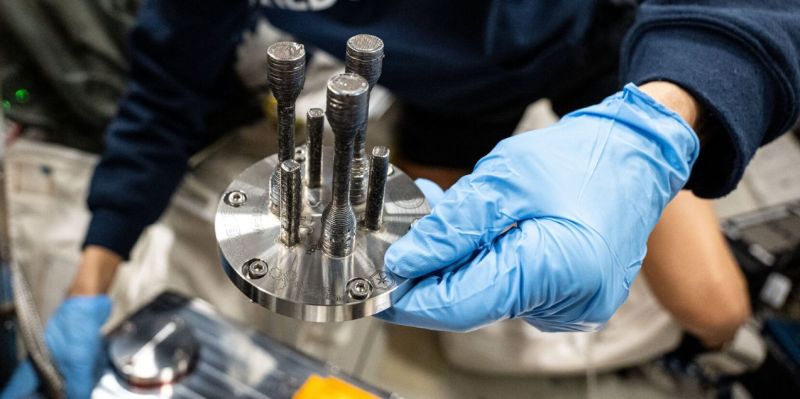
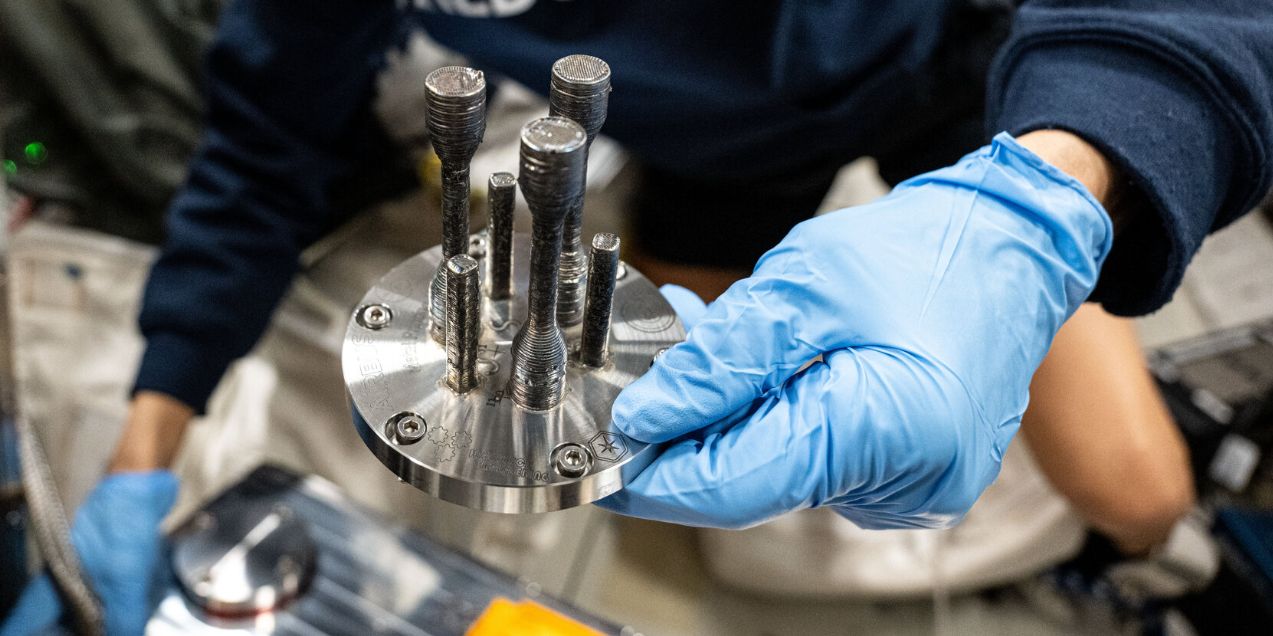
Printed in Space: 3D-Printed Metal Parts Shown Off After Returning From the ISS

by Maya Posch

The European Space Agency (ESA) is showing 3D-printed metal parts made onboard the International Space Station using a printer and materials the agency sent earlier this year.  While 3D printing onboard the ISS is nothing new, the printing of metal parts in space is an important advancement. The agency’s goals are to be able to produce more tools and spares in situ rather than having to rely on resupply missions. An ambitious idea being pitched is to use captured space debris as input as well, which would further decrease the ISS’s dependence on Earth and expensive cargo runs from the bottom of the gravity well.

The metal 3D printer in operation during testing on Earth prior to being installed on the ISS. (Credit: ESA)

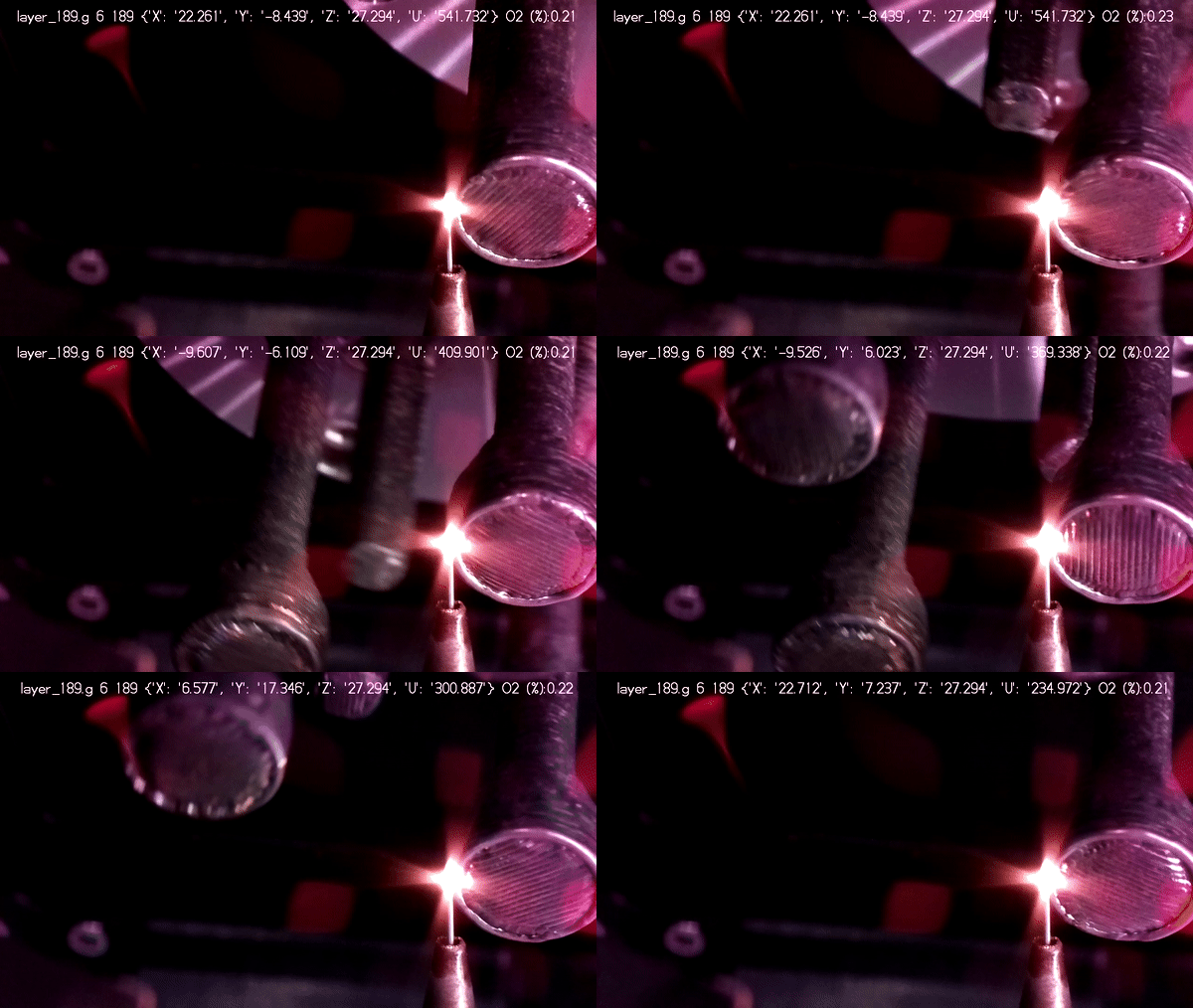
The 180 kg 3D printer lives in the European Drawer Rack Mark II inside ESA’s Columbus module. Controllers on Earth managed the printing process after installation. The printer ran for about four hours a day, with each layer inspected before continuing. This means the printing process took days, but running the machine continuously would, of course, cut printing time significantly.

The printer uses stainless steel wire that is fed to the printing location, where a laser melts it. As the pool of molten metal moves away from the laser-heated spot, it solidifies like plastic does in a regular FDM printer. Of course, with the melting point of stainless steel being around 1400 °C, it runs a lot hotter and thus requires that the printer to be inside a completely sealed box, with the atmosphere inside vented into space and replaced with nitrogen prior to starting the printing process. The presence of oxygen would totally ruin the print.

We badly want a practical metal printer for home use, but, so far, they remain out of reach. When you do get them, you might consider that there are different design rules for metal-printed parts.

07 Sep 15:02

Nvidia RTX 50-series GPUs: performance, specs, prices, availability

by Monica J. White
Nvidia's RTX 50-series GPUs are almost here, and we've now had the chance to test them ourselves.
07 Sep 14:52

Water Filtration

You'd think the most expensive part would be the quark-gluon plasma chamber, but it's actually usually the tube to the top of the atmosphere to carry the cosmic rays down.
06 Sep 13:59

This Mod Lets You Play ‘Star Wars Outlaws’ in VR

by Scott Hayden

Serial modder Luke Ross has released a new VR mod for the PC version of Star Wars Outlaws (2024).

Ross has been keeping up with the latest game releases it seems. Released only on August 30th, you can now play Star Wars Outlaws in VR.

Granted, the 6DOF mod uses gamepad and not VR controllers as such, and is probably best played in third-person, although you can adjust the camera to give some pretty great first-person views.

Check out YouTuber ‘Lord Beardsteak’ below make their away around Tatooine, showing off some the game’s impressive open-world environments:

If you haven’t had a chance to jump into Star Wars Outlaws, here’s how Ubisoft describes it:

Experience the first-ever open world Star Wars™ game, set between the events of The Empire Strikes Back and Return of the Jedi. Explore distinct locations across the galaxy, both iconic and new. Risk it all as Kay Vess, a scoundrel seeking freedom and the means to start a new life, along with her companion Nix. Fight, steal, and outwit your way through the galaxy’s crime syndicates as you join the galaxy’s most wanted.

Like with many of Luke Ross’ R.E.A.L. VR mods, you’ll have to join their Patreon to get access, which starts at $10 per month. Once you join the Patreon, you’ll find documentation on how to install the mods (basically drag and drop) as well as suggested specs. Spoiler: you’ll need a beefy rig for almost any of Ross’ mods.

Ross is known for offering retroactive VR support for a host of PC games, including Horizon Forbidden West, Elden Ring, and Cyberpunk 2077 to name a few.

Earlier, Ross also modded a number of Rockstar Games titles, including GTA V, Red Dead Redemption 2, and Mafia II, however due to a dispute with the studio many of have been removed from the project’s Patreon, although continue to be available on GitHub.

The post This Mod Lets You Play ‘Star Wars Outlaws’ in VR appeared first on Road to VR.

06 Sep 12:48

Morefine M11 : un MiniPC Alder Lake N avec un écran 7″ tactile

by Pierre Lecourt

Jolie évolution depuis le modèle précédent, le Morefine M11 propose une approche totalement différente dans ses usages. Avec toute la connectique d’un MiniPC et un écran de 7 pouces tactile, il peut servir dans énormément de scénarios.

Envie d’un PC domotique ? Un PC de caisse, un contrôleur pour une machine externe quelconque ? Envie d’un PC multimédia qui permet de sélectionner le contenu de vos vidéos et musiques à la volée ? Tout cela est possible sur le Morefine M11. La plateforme interne reste basée sur un cœur Alder Lake N d’Intel, mais l’enveloppe évolue vraiment.

Deux processeurs sont retenus, le N100 identique à ce que proposait le Morefine M10 mais aussi le N200. Deux puces quasiment identiques en terme de conception avec 4 cœurs, 6 watts de TDP et 6 Mo de cache. Mais une petite nuance pour le N200 qui permet d’aller un poil plus haut en fréquence. Jusqu’à 3.7 GHz pour les cœurs de calcul contre 3.4 GHz pour le N100. Et surtout un circuit graphique Intel UHD qui profite de 32 EU à 750 MHz pour le N200 contre 24 EU à la même fréquence pour le N100. Le seul point faible du N200 est son tarif plus élevé chez Intel.

On retrouve un boitier de 17.38 cm de large pour 11.6 cm de profondeur avec 2.19 cm d’épaisseur. Une petite béquille dépliable est positionnée sur l’arrière du châssis de manière à pouvoir faire tenir l’engin debout et vous permettre de mieux voir l’écran. L’affichage n’est d’ailleurs pas détaillé, le « constructeur » se contentant d’un qualificatif HD pour le décrire. Je suppose qu’il s’agit d’un écran IPS capacitif en 1280 x 800 pixels mais je n’ai pas plus d’informations que cela.

On retrouve en interne plusieurs configurations. Les N100 et N200 avec toujours 16 Go de mémoire vive LPDDR5-4800 soudée à la carte mère. Et de 256 Go à 2 To de stockage NVMe PCIe. Un port M.2 2242 est intégré à la machine. Autre particularité, la présence d’une batterie interne avec un modèle Li-Po 3400 mAh qui offrirait jusqu’à 3.5 heures d’autonomie. L’idée ici est plus d’offrir la possibilité de se balader d’une pièce à l’autre sans éteindre son PC plutôt que de le considérer réellement comme un portable. Mais c’est également une solution intéressante de considérer cette batterie comme une sorte de protection électrique.

La connectique est assez complète avec sur le haut de l’engin un port Ethernet Gigabit et trois USB 3.2 Type-A. A gauche une sortie HDMI 2.1, un microphone, et deux USB Type-C dont un proposant des données, une sortie Power Delivery 3.0 et un Display Port. C’est ce port USB Power Delivery qui permettra d’alimenter la machine et de recharger sa batterie interne.

Enfin, à droite on retrouve un USB 2.0 Type-A, un jack audio combo 3.5 mm et le bouton de démarrage. Sur les côté de l’engin, le Morefine M11 propose également des enceintes stéréo.

l’engin est sympathique et on imagine plein d’usages originaux avec ce type de minimachine. Malheureusement, les prétentions tarifaires de l’objet sont encore une fois un peu élevées pour qui cherche un MiniPC de ce type. Chez le constructeur, en version N100 16/512 Go on est à 364$ HT soit quelque chose comme 330€ HT et presque 400€ TTC. Une version N200 toujours en 16/512 Go grimpe à 415$ HT (373€ HT et 448€ TTC). Il sera moins onéreux d’investir dans un MiniPC classique et de lui ajouter un écran tactile HDMI/USB externe que dans cette solution.

Au passage, je ne suis pas vraiment certain de la disponibilité réelle de ces engins qui commencent à se multiplier en ligne. Des marques noname commencent à en proposer comme cet HiGole F9B Pro qui en est une autre version sous N100 avec une connectique plus orientée vers des usages pro (double Ethernet 2.5 Gigabit par exemple) mais plus de béquille ni de haut-parleurs dans un châssis identique. Ce modèle est annoncé à 300€ environ en 16/512 Go avec Windows 11 mais encore 43€ de frais de port. HiGole propose même une variante avec un modèle équipé en 4G à 360€.

Toutes ces marques semblent évidemment dépendre du même fournisseur de base. Mais celui-ci ne semble pas leur avoir livré grand chose, ce qui explique peut être les tarifs élevés et les frais de port dissuasifs. L’arrivée de ces engins en masse pourrait changer la donne. A suivre donc.

Source : Liliputing

Minimachines.net en partenariat avec Geekbuying.com
Morefine M11 : un MiniPC Alder Lake N avec un écran 7″ tactile © MiniMachines.net. 2024.

06 Sep 09:11

Falling cost of lab-grown diamonds

by Nathan Yau

Natural diamonds require a lot of pressure and time, and then someone has to mine for them. Lab-grown diamonds can be produced to be nearly indistinguishable from the natural ones, minus the time and mining. For Works in Progress, Javid Lakha describes the process and the growing cost gap between natural and the cheaper lab-grown.

As the value of diamonds inevitably falls, do engagement rings turn towards something more rare?

Tags: cost, diamond, Works in Progress

06 Sep 07:05

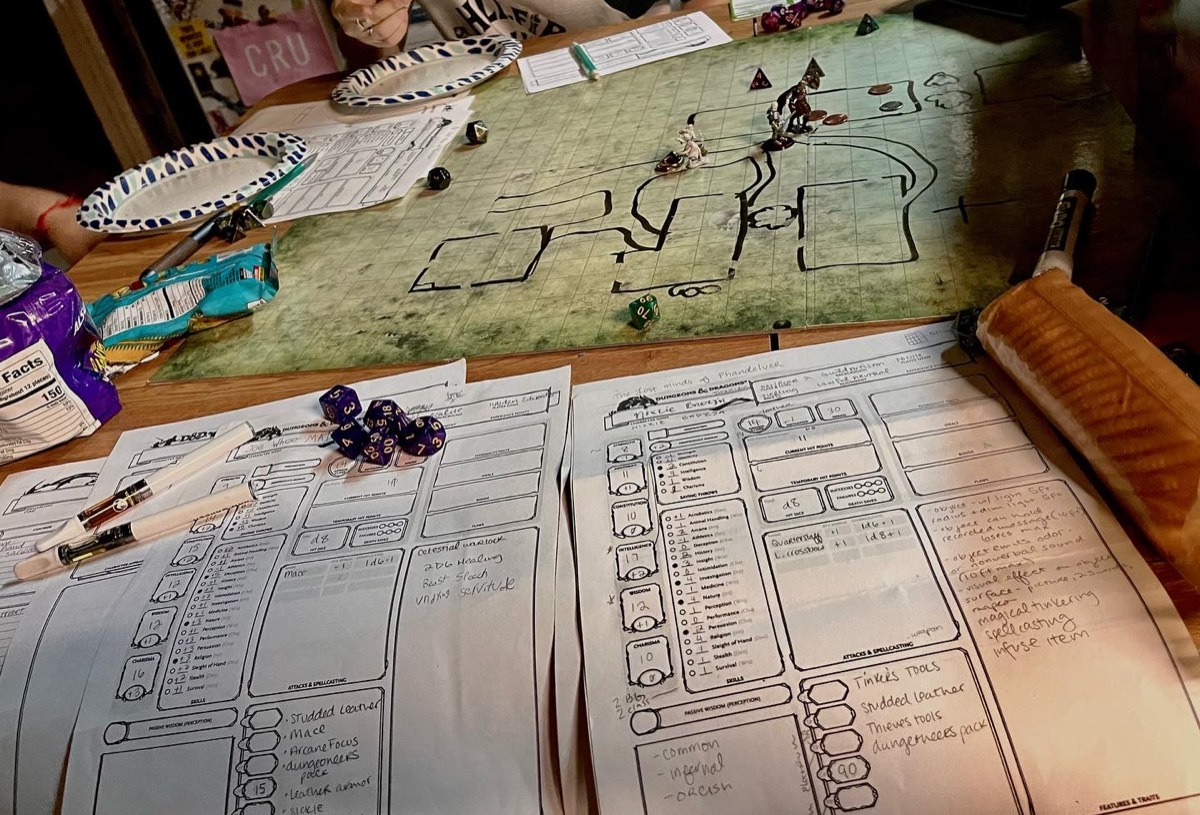
Study: Playing Dungeons & Dragons helps autistic players in social interactions

by Jennifer Ouellette
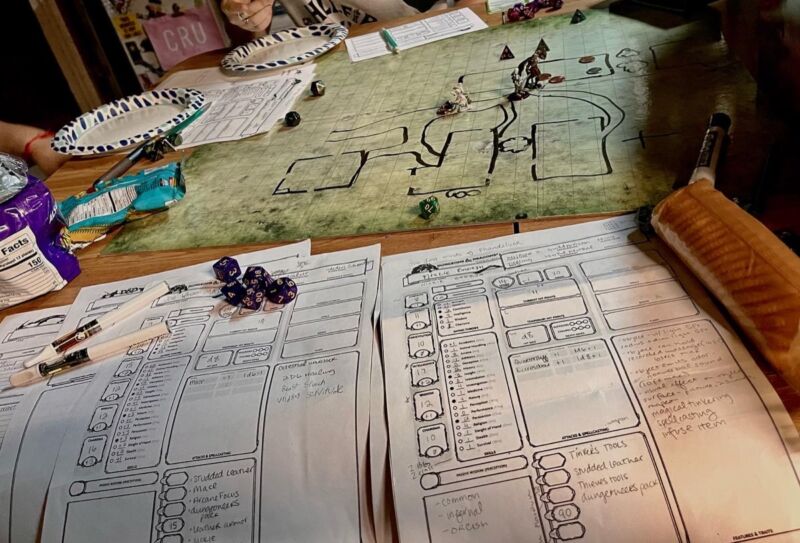
A Dungeons & Dragons game session featuring a map, miniatures, dice, and character sheets

Enlarge / Researchers say that Dungeons & Dragons can give autistic players a way to engage in low-risk social interactions. (credit: Nicole Hill/CC BY-SA 4.0)

Since its introduction in the 1970s, Dungeons & Dragons has become one of the most influential tabletop role-playing games (TRPGs) in popular culture, featuring heavily in Stranger Things, for example, and spawning a blockbuster movie released last year. Over the last decade or so, researchers have turned their focus more heavily to the ways in which D&D and other TRPGs can help people with autism form healthy social connections, in part because the gaming environment offers clear rules around social interactions. According to the authors of a new paper published in the journal Autism, D&D helped boost players' confidence with autism, giving them a strong sense of kinship or belonging, among other benefits.

“There are many myths and misconceptions about autism, with some of the biggest suggesting that those with it aren’t socially motivated, or don’t have any imagination," said co-author Gray Atherton, a psychologist at the University of Plymouth. "Dungeons & Dragons goes against all that, centering around working together in a team, all of which takes place in a completely imaginary environment. Those taking part in our study saw the game as a breath of fresh air, a chance to take on a different persona and share experiences outside of an often challenging reality. That sense of escapism made them feel incredibly comfortable, and many of them said they were now trying to apply aspects of it in their daily lives.”

Prior research has shown that autistic people are more likely to feel lonely, have smaller social networks, and often experience anxiety in social settings. Their desire for social connection leads many to "mask" their neurodivergent traits in public for fear of being rejected as a result of social gaffes. "I think every autistic person has had multiple instances of social rejection and loss of relationships," one of the study participants said when Atherton et al. interviewed them about their experiences. "You've done something wrong. You don't know what it is. They don't tell you, and you find out when you've been just, you know, left shunned in relationships, left out.... It's traumatic."

Read 7 remaining paragraphs | Comments

06 Sep 07:04

Unilever taps Accenture GenWizard platform as it looks to create targeted Gen AI solutions across business

by Staff Writer

Accenture has expanded its partnership with Unilever to simplify its digital core and apply generative AI to drive efficiencies and improved business agility.

Hein Schumacher CEO, Unilever, says: “We have already introduced 500 AI applications across Unilever, helping us to reach new levels of efficiency. But as AI matures and becomes increasingly intelligent and intuitive, we see so much more potential.”

“Now, as part of our action plan to deliver faster growth, drive productivity, and dial up performance, we’re going deeper. With the help of Accenture’s world class tools and capabilities, we will be able to analyse where and how AI can have the highest transformational impact and deliver the greatest returns.”

Unilever will look to leverage Accenture’s GenWizard platform to accelerate its technology and digital product development. The Gen AI platform has more than 350 patents and ready to apply tools and frameworks.

Julie Sweet, Chair and CEO, Accenture, says: “This next exciting chapter in our decades long collaboration with Unilever will raise the bar on how enterprises can scale Gen AI to power productivity and value at speed.”

“Our GenWizard platform will enable Unilever to create a full spectrum of targeted Gen AI solutions across its business that can realise efficiencies and cost savings, uncover new ways of working and ultimately help drive competitive advantage.”

2024 RTIH INNOVATION AWARDS

Gen AI is a key focus area for the sixth edition of the RTIH Innovation Awards, which is now open for entries.

The awards, sponsored by CADS, 3D Cloud, Retail Technology Show 2025, and Business France, celebrate global tech innovation in a fast moving omnichannel world.

It’s free to enter and you can do so across multiple categories.

Key 2024 dates

Friday, 25th October: Award entry deadline 

Tuesday, 29th October: 2024 shortlist revealed

30th October-6th November: Judging days

Thursday, 21st November: Winners announced at the 2024 RTIH Innovation Awards ceremony, to be held at RIBA’s 66 Portland Place HQ in Central London.

05 Sep 20:16

Tiime riposte à l'offensive de Qonto

by Patrice
Tiime
Ce n'est peut-être qu'une coïncidence mais, alors que Qonto vient de lancer une offensive de séduction en direction des experts-comptables, Tiime – le spécialiste des solutions de comptabilité et de gestion ciblant justement ces derniers en priorité – annonce la gratuité de son offre, compte bancaire compris, pour leurs clients.

Il est tout de même difficile de ne pas établir un lien entre les deux actualités, à moins d'une semaine d'intervalle, quand la nouvelle initiative est manifestement destinée à mieux attirer les cabinets comptables, ce qui, dans le cas de Tiime, se traduit non seulement par la recommandation de ses outils aux entreprises qu'ils recrutent, comme Qonto, mais également l'utilisation de sa plate-forme de productivité tout-en-un conçue expressément à leur intention (qui, elle, reste payante, naturellement sera également gratuite, laissant planer un doute sur le futur modèle économique).

La grille tarifaire applicable depuis le début du mois de septembre, inchangée pour les sociétés qui souscrivent directement auprès de la jeune pousse, propose donc désormais sans frais toutes les fonctions disponibles – formalités administratives, génération de factures, capture, conservation et transmission des documents (justificatifs et autres), pilotage de trésorerie… et compte de paiement – dès lors qu'elles sont mises à la disposition de l'organisation par l'intermédiaire de leur expert-comptable adhérent.

Tiime Gratuit

En tout état de cause, il semble que, en parallèle d'une vision qui se généralise de convergence entre les plates-formes de gestion et les comptes bancaires, se dessine aujourd'hui une véritable bataille pour la conquête des experts-comptables, dont un des enjeux ou, du moins, un des principaux arguments est l'équipement bancaire des entreprises. Les acteurs en place, qui n'ont visiblement pas anticipé cette tendance, risquent alors de voir marginaliser leurs offres pour PME – même quand elles intègrent des services extra-financiers – face au pouvoir de prescription d'un autre partenaire de poids de leurs clients, dont Tiime se vante d'en avoir déjà convaincu plus de 2 000.
05 Sep 17:09

Microsoft to detail OneDrive Copilot, mobile app updates, and more during October event

by Tom Warren
Illustration of the new OneDrive UI
Image: Microsoft

Microsoft is holding a OneDrive digital event on October 8th that will cover the “latest innovations in AI across Microsoft 365 and OneDrive.” It’s the second annual event after Microsoft held a similar stream last year to introduce a big new design update for the cloud storage service, AI Copilot integration, and lots more.

This year, Microsoft is promising to announce “what’s coming for Copilot in OneDrive,” alongside enhancements to the OneDrive mobile app and an “improved photos experience.” The event will also cover OneDrive features across work and personal accounts.

The OneDrive digital event will be hosted on Microsoft Teams and will include the ability to ask the OneDrive product team questions about the cloud storage service....

Continue reading…

05 Sep 13:00

Hanlon's Razor

Hanlon's Razor is the adage: "Never attribute to malice that which is adequately explained by stupidity."

Or sometimes, "Never attribute to malice what can be attributed to incompetence."

It appears in a similar form by the inimitable Johann Wolfgang von Goethe as, "And I have again observed, my dear friend, in this trifling affair, that misunderstandings and neglect occasion more mischief in the world than even malice and wickedness. At all events, the two latter are of less frequent occurrence," in The Sorrows of Young Werther. The same sentiments are also shared by William James, Churchill, and H.G. Wells. More recently, Douglas Hubbard gave a more modern version in his book The Failure of Risk Management: Why It's Broken and How to Fix It: "Never attribute to malice or stupidity that which can be explained by moderately rational individuals following incentives in a complex system."

The mistake of assuming bad intentions was brought home to me when puzzling why people kept leaving paper towels in the sinks of the bathrooms at university. How hard is it to put them in the bin?? A year after assuming my fellow students were either lazy or inconsiderate or both, I was washing my hands when another student dried his hands on the towel, walked to the door, opened it by covering the handle with the paper towel — presumably to avoid the germs — and then aimed his paper towel at the bin which was between the sinks. He missed, and it landed in the sink as he walked off down the corridor. Suddenly, it was clear to me that the hygiene of the door handle was higher in consideration of towel-in-the-sink people than whether or not their towel hit their target (and whether it was worth checking if their towel had hit the bin). It made sense. Someone later moved the bin next to the door, and it didn't happen again.

Besides towels in sinks, I've seen people get mad at others pushing in line when the pushers-in didn't realise other people were queuing. I've seen drivers shouting at another driver who's in blissful ignorance of the trouble they've caused. I've seen agents blamed for terrible customer service when the system is at fault, and customer service blame users when the product is at fault. I've seen people despairing at others leaving litter in the park or on the street when animals had dragged out the mess overnight. I've seen people vilified for not moving down on a train when they weren't aware of the squeeze at the other end. And, usually, I think people aren't smart or capable enough, or in fact wicked enough, to carry out the conspiracies that people credit them for. Very often it's the person assuming bad intentions and getting mad who suffers the most.

To be sure, there are different degrees of negligence. We can all make mistakes, but if you're doing your taxes, it's not okay to make a mistake because you didn't read the instructions. If you're standing on a busy train, you owe it to others to be aware that you may be blocking an aisle, and we should do our best to make sure our rubbish stays where we put it. But none of us are perfect and so often I think Hanlon's Razor has some truth to it.

Perhaps a better formulation of Hanlon's Razor would be, "Before attributing to malice, try attributing to incompetence." But I'm not a fan of the wording with 'stupidity' or 'incompetence'. Awareness is so often the necessary start and what's missing.

Since posting this a few people also shared with me, Clarke's Corollary: "Any sufficiently advanced incompetence is indistinguishable from malice." And another relevant name for a similar situation is Cock-up Over Conspiracy.

Hanlon's Razor, which encourages us first to consider innocent mistakes rather than assuming ill will, was a submission to Murphy's Law, book two: more reasons why things go wrong, by Arthur Bloch (p52). Murphy's Law is "If anything can go wrong, it will." I've also previously covered Muphry's Law, where, when criticising spelling or grammar, you will make a spelling or grammar mistake yourself.

Also see:

More conjectures and thinking named after people:

05 Sep 09:27

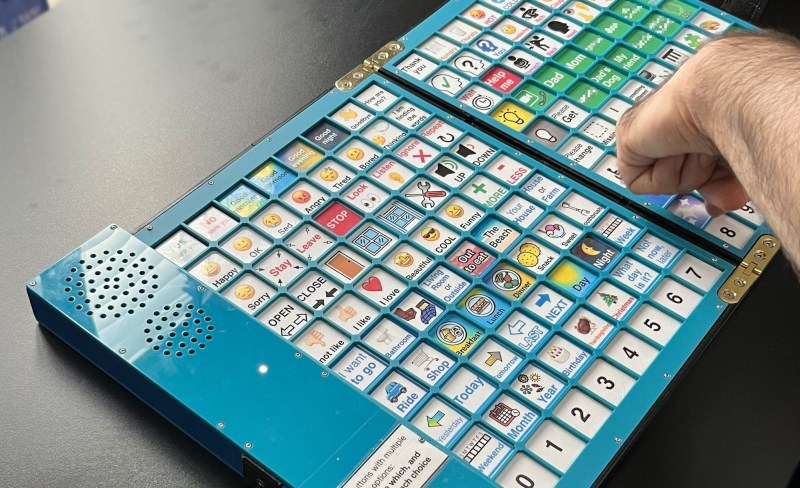
Tactile Communication Board Speaks the Truth

by Kristina Panos
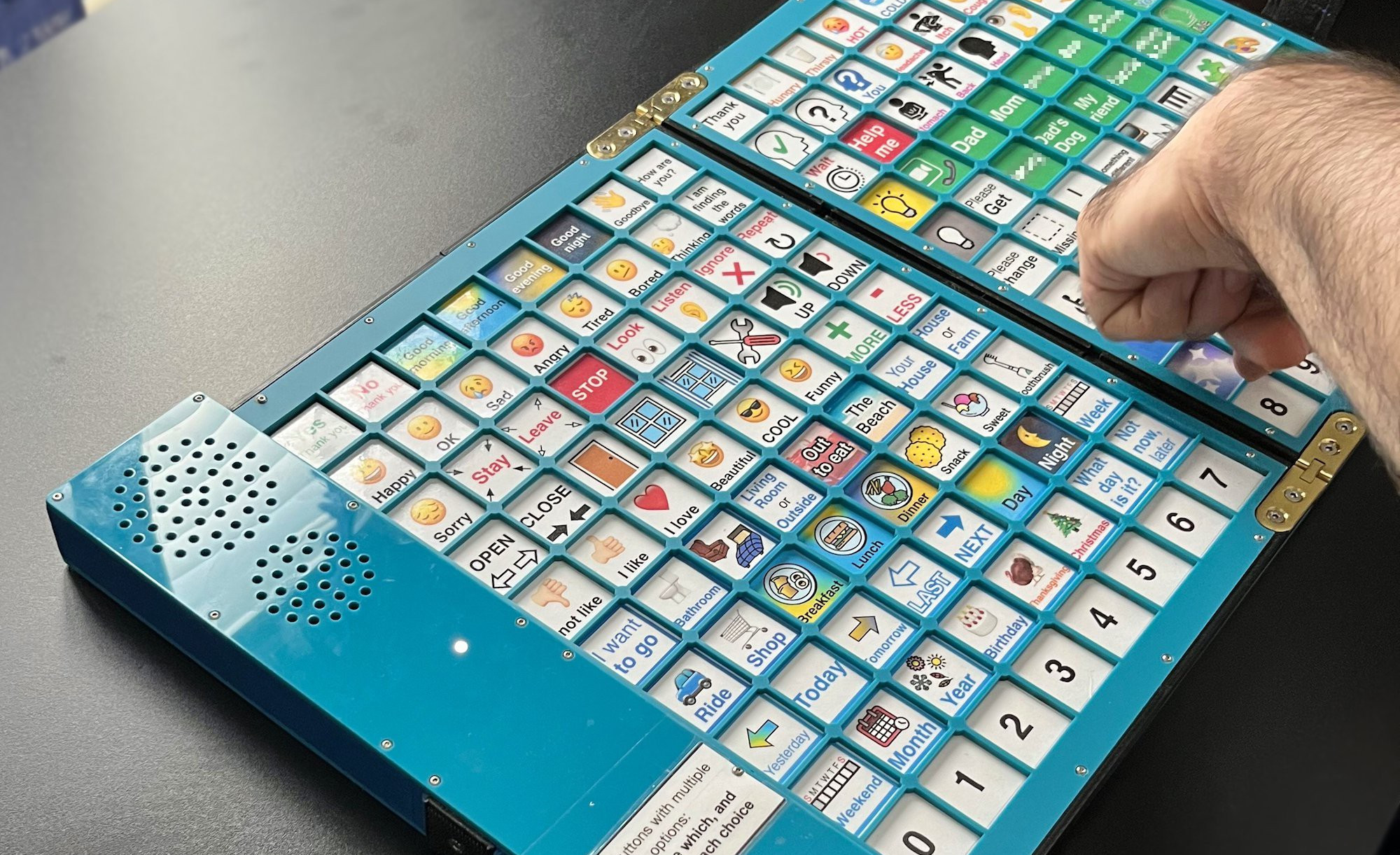
A client uses an Augmented Alternative Communication board that speaks.

Sometimes, simple things can make a world of difference. Take for example a non-verbal person who can’t necessarily control a touch screen in order to tell someone else what they need or want or think.

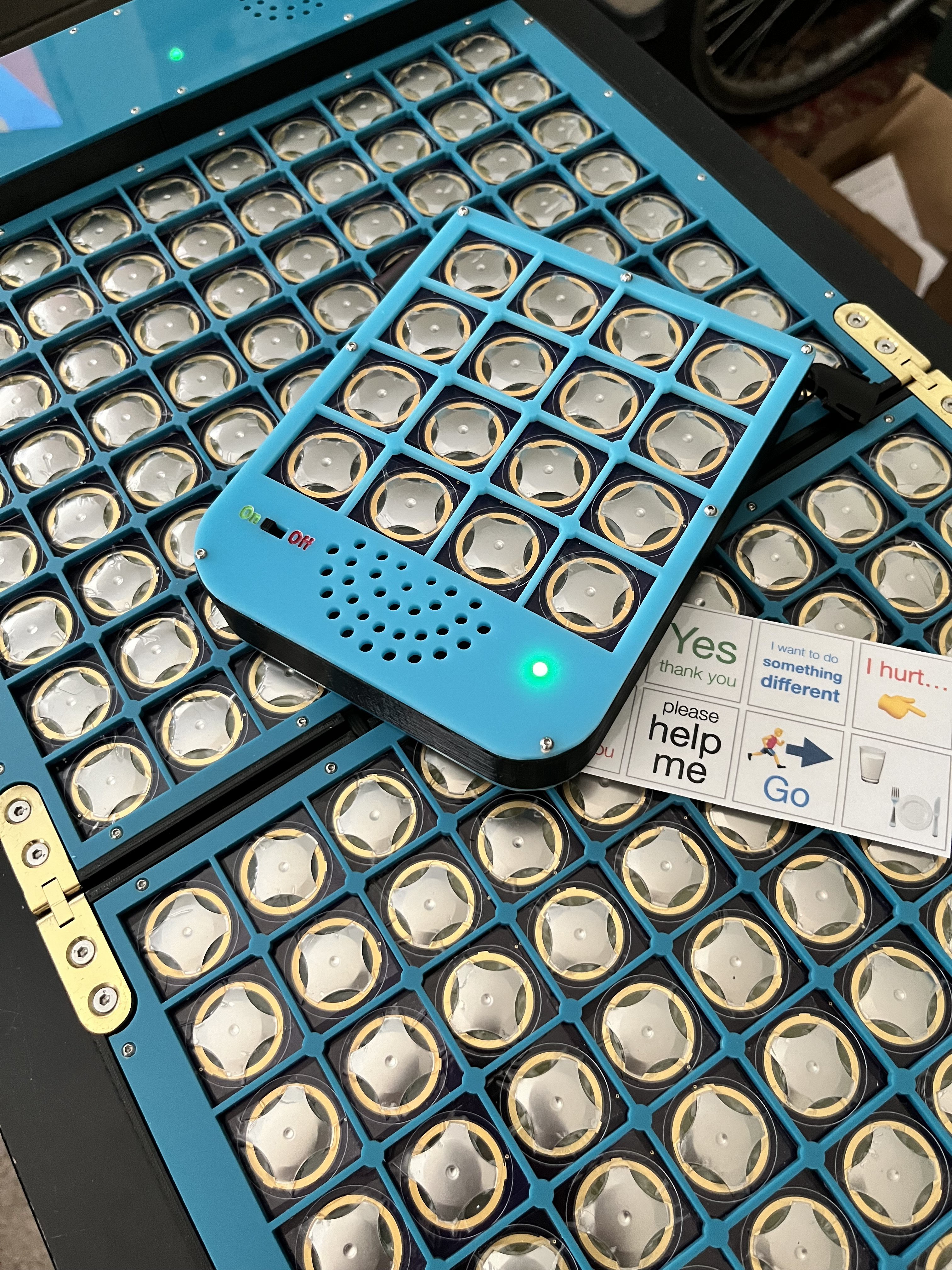
The switches of the AAC board, plus the smaller version. This is where Augmentative and Alternative Communication (AAC) devices come in. Recently tasked with building such a device, [Thornhill!] came up with a great design that houses 160 different phrases in a fairly small package and runs on CircuitPython.

Basically, the client presses the appropriate snap-dome button button and the corresponding phrase is spoken through the speaker. The 10×16 grid of buttons is covered with a membrane that both feels nice and gives a bit of protection from spills.

The buttons can achieve high actuation forces and have a crisp tactile response, which means they’re probably gonna go a long way to keep the user from getting frustrated.

This handy AAC board is built on the Adafruit RP2040 Prop-Maker Feather and two keypad matrices. If this weren’t useful enough as it is, [Thornhill!] also built an even smaller version with 16 buttons for the client to wear around their neck.

Did you know? AAC boards aren’t just for humans.

04 Sep 22:30

Study: People facing life-or-death choice put too much trust in AI

In simulated life-or-death decisions, about two-thirds of people in a UC Merced study allowed a robot to change their minds when it disagreed with them—an alarming display of excessive trust in artificial intelligence, researchers said.
04 Sep 22:30

Seeing like a butterfly: Optical invention enhances camera capabilities

Butterflies can see more of the world than humans, including more colors and the field oscillation direction, or polarization, of light. This special ability enables them to navigate with precision, forage for food and communicate with one another. Other species, like the mantis shrimp, can sense an even wider spectrum of light, as well as the circular polarization, or spinning states, of light waves. They use this capability to signal a "love code," which helps them find and be discovered by mates.