Thunderbolt 5 was first unveiled last year with promises of 120 Gbps bandwidth and support for multiple 8K monitors. The good news is that the first Thunderbolt 5-compliant devices are now coming to market.
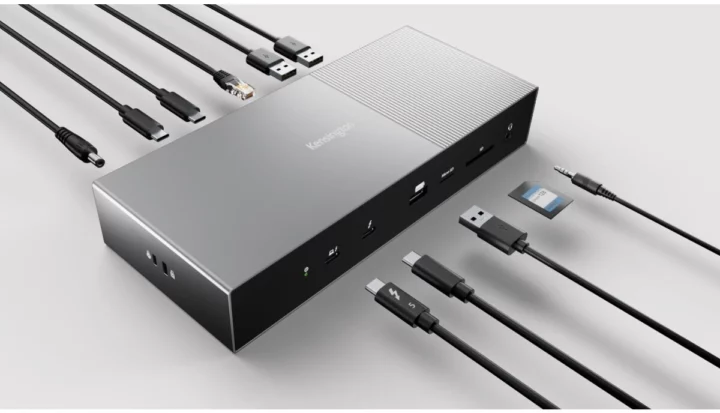
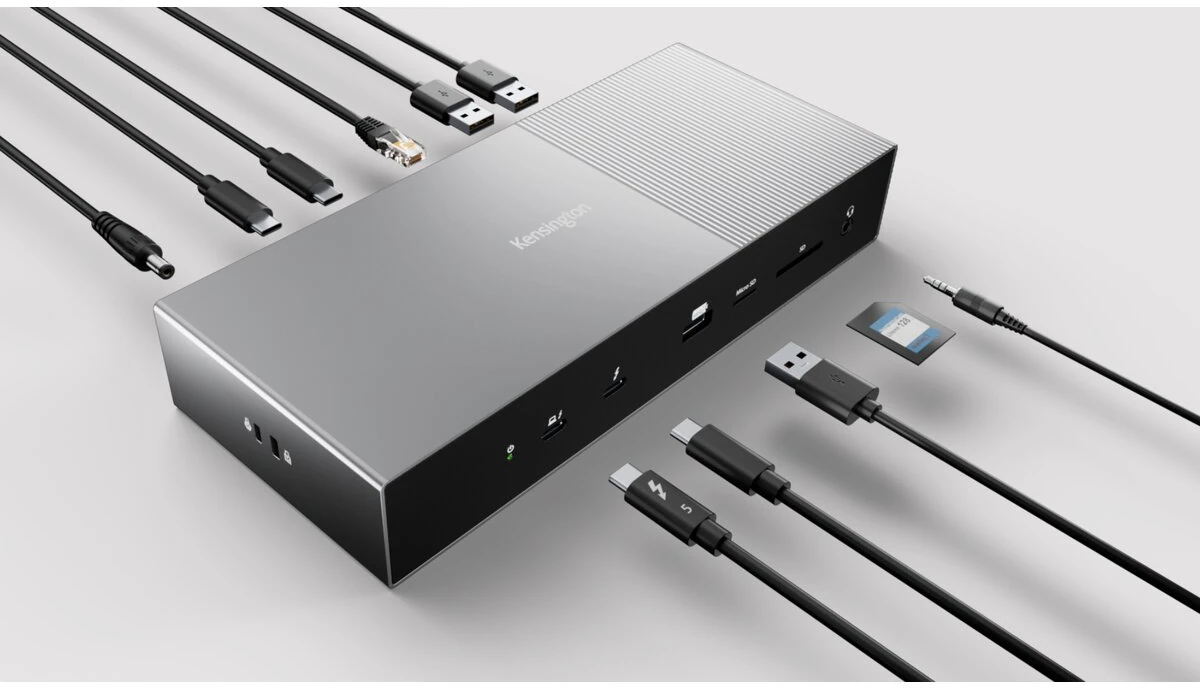
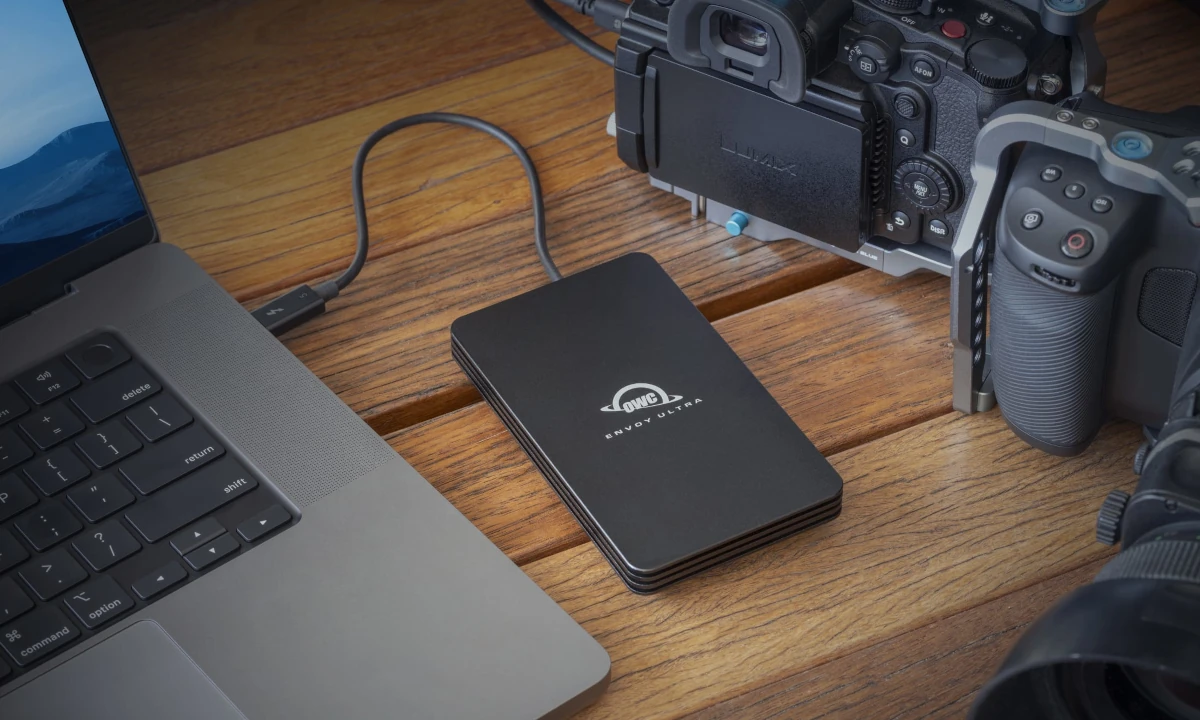
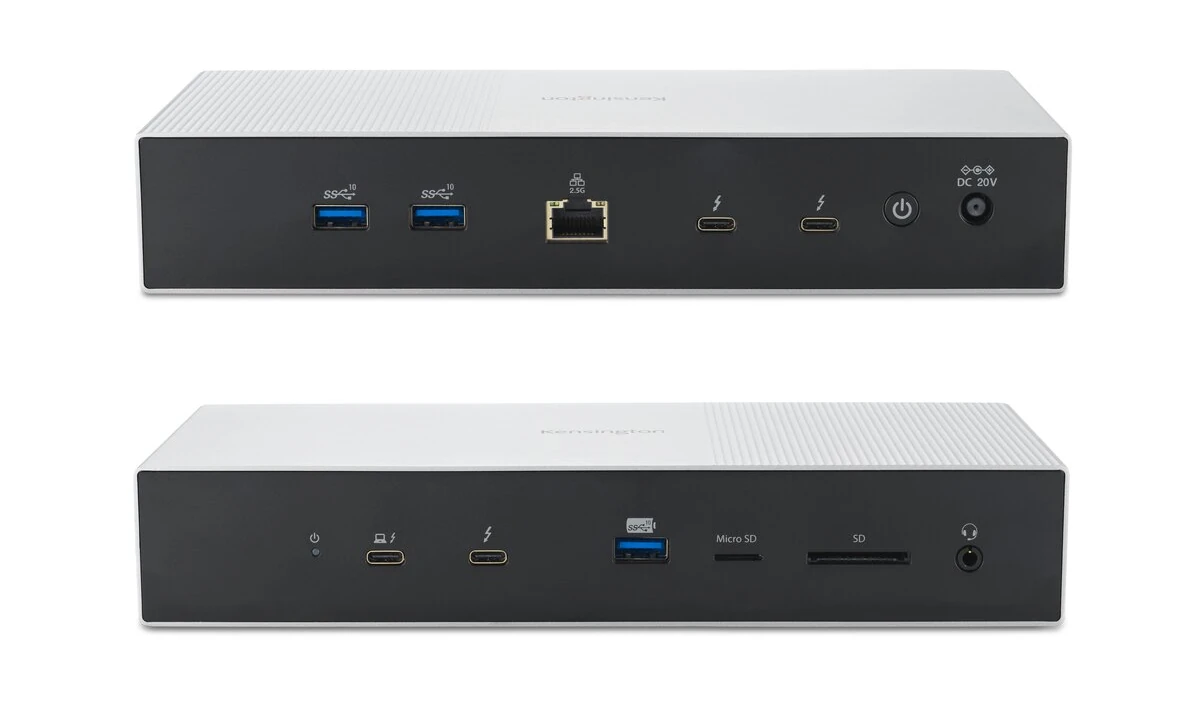
There’s not too much to choose from for now, but we need to start somewhere, and the OWC Envoy Ultra portable SSD ($299.99 and up) and the Kensington SD5000T5 EQ Thunderbolt 5 Triple 4K Docking Station with 140W PD ($399.99) – also found on Amazon – are some of the first Thunderbolt 5 devices to make it to market.
OWC Enjoy Ultra Thunderbolt 5 portable SSD
Key features:
Speed over 6000MB/sm or up to twice faster than Thunderbolt 4 and USB4
Capacity – 2TB or 4TB
Compatibility – Macs, PCs, iPad Pros, Chromebooks, and Surface devices with a Thunderbolt 3 to 5 port, or USB4 port
Rugged design – Waterproof, dustproof, and crushproof
Power Supply – Bus-powered with built-in Thunderbolt cable
Fanless design with a heat-dissipating aluminum enclosure
The 2TB model can be pre-ordered for $399.99, and the 4TB variant for $599.99.
Kensington SD5000T5 Thunderbolt 5 docking station
Specifications:
Connection technology – Thunderbolt 5, works without additional drivers on macOS (14.5 or later) and Windows 11 (23H2 or later)
Thunderbolt ports
1x Thunderbolt 5 host port
3x Thunderbolt 5 downstream ports
Data transfer speeds – Up to 80Gbps of bidirectional bandwidth with Bandwidth Boost enabling up to 120Gbps for video-intensive usage
Storage – SD card reader (UHS-II, SD4.0)
Video Ports – 3x Thunderbolt 5 DFP supporting up to triple 4K @ 144Hz, dual 8K @ 60Hz, single 8K @ 60Hz, or 1080p @ 540Hz
Power Delivery – Up to 140W (28V/5A) via USB-C PD 3.1 port
The number of available Thunderbolt 5 devices is limited, and a search for “Thunderbolt 5” on Amazon only shows the above docking station and a few 80 Gbps certified cables. But more compatible devices should eventually see the light of the day over time.
Where are the Thunderbolt 5 hosts?
It’s all good to have a Thunderbolt 5 portable SSD and docking station, but you won’t benefit from the higher transfer speed and multiple 4K and 8K features of the standard unless you purchase a host that supports the new standard.
Kensington representatives told PCWorld that they are currently (September 2024) only two laptops with an Intel “Barlow Ridge” Thunderbolt 5 chip inside, namely the Razer Blade 18 Mercury (2024) and the Maingear ML-17 going for $4500 and $3900 respectively. So upgrading your setup to Thunderbolt 5 is quite pricey at this time.
Il y a quelques jours, la presse s'est réunie au siège de Gemmyo, niché dans le 5ème arrondissement de Paris, pour assister à une conférence de rentrée sur un thème central de la Maison : le Smart luxury.
Après avoir été Directrice Générale des parfums Annick Goutal, Frédérique Picard est depuis 15 ans à la tête de Carel Paris. Qu’est-ce qui fait de cette prestigieuse Maison de chaussures de luxe une marque de plus en plus indémodable ?
It’s been a tumultuous week for OpenAI, full of executive departures and major fundraising developments, but the startup is back at it, trying to convince developers to build tools with its AI models at its 2024 DevDay. The company announced several new tools Tuesday, including a public beta of its “Realtime API”, for building apps […]
Discord a optimisé son infrastructure en réduisant de 40 % le trafic WebSocket en éliminant les pings inutiles et en optimisant la gestion des connexions. Cela a permis de réduire la charge serveur et d’améliorer l’efficacité des communications en temps réel pour ses millions d’utilisateurs. Cette réduction a également entraîné une diminution des coûts opérationnels tout en maintenant une expérience utilisateur fluide.
Le neuropeptide "calcitonin gene-related peptide" (CGRP) est un puissant vasodilatateur et immunomodulateur, sécrété par des neurones périphériques sensoriels innervant les voies...
Drones that charge right on the power lines they inspect is a promising concept, but comes with plenty of challenges. The Drone Infrastructure Inspection and Interaction (Diii) Group of the University of South Denmark is tackling these challenges head-on.
The gripper for these drones may seem fairly straightforward, but it needs to inductively charge, grip, and detach reliably while remaining simple and lightweight. To attach to a power line, the drone pushes against it, triggering a cord to pull the gripper closed. This gripper is held closed electromagnetically using energy harvested from the power line or the drone’s battery if the line is off. Ingeniously, this means that if there’s an electronics failure, the gripper will automatically release, avoiding situations where linemen would need to rescue a stuck drone.Accurately mapping power lines in 3D space for autonomous operation presents another hurdle. The team successfully tested mmWave radar for this purpose, which proves to be a lightweight and cost-efficient alternative to solutions like LiDAR.
We briefly covered this project earlier this year when details were limited. Energy harvesting from power lines isn’t new; we’ve seen similar concepts applied in government-sanctioned spy cameras and border patrol drones. Drones are not only used for inspecting power lines but also for more adventurous tasks like clearing debris off them with fire.
Some people are reportedly taking a novel approach to using the blockbuster weight loss drug — and a handful of doctors even say they're doing it themselves.
In an interview with USA Today, Florida-based neurosurgeon and longevity influencer Brett Osborn said he chooses to "microdose," or take small amounts, of weight loss drugs to access other health benefits like lowered blood sugar and cholesterol.
A diabetes drug by definition, the Novo Nordisk-manufactured Ozempic and its sister weight loss drug Wegovy belong to the class of medicines known as GLP-1s, which is believed to mimic the gut's feeling of fullness.
Both use the active ingredient semaglutide and come in different dosages, generally starting at a quarter-milligram or half-milligram, in pre-loaded pens.
That raises an interesting question: how exactly are people "microdosing" drugs that come as one-off injections? USA Today neither answers that question nor shares a microdosing schedule for the drugs.
While it doesn't appear that Osborn himself microdoses Ozempic for the express purpose ofweight loss, he told the newspaper that it can also help those who want to keep off the pounds they shed with the help of the drugs.
"The medications are not to be stopped," the doctor said. "You just keep the gas pressed, albeit [at] smaller amounts, and that weight loss will be maintained."
Osborn is joined in his endorsement by cosmetic dermatologist Aria Vazirnia, who said that he's seen increased interest in taking smaller doses of the drugs as they've increased in popularity.
"Often in managing weight, there's so much stigma and bias from both the clinician side and the patient side that often people's brains want to try to tell them that they can outsmart the system," the Beverly Hills-based specialist said. "They'll feel better about the fact that they're on a medication if they go to a smaller dose, and, really, what we need to get to the root of is, let's make this patient feel whole from the beginning, that there's nothing wrong with using a medication."
Strangely, neither Vazirnia nor Osborn explained exactly how this supposed microdosing works, though we reached out to both for more details.
If we had to wager a guess, though, we'd hypothesize that they're suggesting patients use compounded semaglutide, the unauthorized "generic" version of Ozempic and Wegovy that patients dose out themselves.
Et oui, Hermès pourrait faire ses premiers pas dans la haute couture. L'idée est en tout cas envisagée par le président exécutif de la marque Axel Dumas, comme il l'a annoncé dans un entretien au Financial Times.
A2Z Cust2Mate Solutions Corp. has received an order to deploy its new Cust2Mate 3.0 smart shopping carts at an additional ten Franprix stores in Paris, France in Q4 2024. This follows on from a deployment in August.
In addition to AI technology, self-scanning, and in-cart payments for a "pick and go" experience, A2Z Cust2Mate's 3.0 smart shopping carts include several new features, such as a shopping list which is automatically updated as the shopper progresses and advanced retail media capabilities such as in-store location based advertising and customised advertising targeting both, on cart and historic shopping purchases, as well as the shopping list and other triggers.
Gadi Graus, CEO at A2Z Cust2Mate, says: "We are proud and delighted to expand the deployment of our smart carts to additional Franprix stores; a testament to the superior shopping experience and customer satisfaction our smart carts provide to shoppers and the added value we bring to retailers."
Every year I like to write a detailed report about all the major news from Oculus/Facebook/Meta Connect. This year I want to do something a bit different: instead of reporting a list of all the announcements from there, I want to give you a detailed commentary about the event from a technical strategy standpoint. This is part of what I do for a living: in companies, I’m not only the developer or lead of developers, but I also work on technical roadmaps for products. So in this article, I want to tell you what are the major lessons you have to take from Meta Connect 2024 and that you should take into consideration for the future of your career or your business. At the end of the article, I will also provide some links with a list of all the pieces of news announced there, so you can be sure not to miss any news from this major event.
Orion shows us the future of AR
Meta Orion glasses (Image by Meta)
The most important moment of the Meta Connect 2024, the one everyone is talking about, has been the reveal of the Orion AR glasses. Zuckerberg showed these prototypical AR glasses that look like bulky standard glasses and that provide see-through augmented reality with a quality that is not available in any other commercial AR product on the market. This news created a lot of buzz and also a lot of discussions in tech circles: some people said it’s just smoke, while others are excited and say that AR is finally coming. As usual, the truth is in the middle.
The good thing about Orion is that it finally shows true AR. For the first time, a major company has shown some AR glasses that look ok-ish to wear in public and that have good technical features (good FOV, hand tracking, etc…). It’s a landmark moment for our space: after so much dreaming about how AR glasses could be one day, we finally have a peek at a true first version of them. It’s like starting to see the light at the end of the tunnel. Someone compared this to an iPhone moment… I think the comparison is not correct, because the iPhone was a product, while this is a prototype. But maybe we can compare it to the moment Palmer Luckey launched the Kickstarter of the Oculus DK1: it’s the start of something new. It’s an exciting moment for the whole ecosystem and I can feel that something has changed in our space.
I think the comparison with the early Oculus DK1 prototype holds for many things. This is a prototype with a lot of future potential and can be the beginning of a new technological course (please, let’s not find a new name for this… I’ve enough after VR, metaverse, spatial computing…). It doesn’t hold for others: this is the product of a big corporation, for instance, and it also required a lot of money and time to be developed. Anyway, as Bernard Yee (from Windup Minds) made me notice on Linkedin, if we consider this the DK1 of AR glasses, and we make a parallel with VR, that to go from DK1 to the beginning of mainstream distribution with the Quest 2 took almost 10 years, we can imagine that mainstream AR glasses may still need other 10 years to happen.
Boz explains what is Orion
I know, it’s a stretched comparison: Meta is bigger than Oculus, the ecosystem now is more mature, AI can speed up all developments, etc… But still, it’s a realistic timeframe: Michael Abrash talked a few years ago about imagining lightweight standalone AR glasses for everyday usage for around 2035-2040. And the rumors talk about Meta releasing its first consumer AR glasses around 2027. Zuckerberg highlighted that the next device will be directed at consumers and not be a devkit, but he also said that he expects the cost to be between a laptop and a smartphone… so maybe we can imagine a $1200 price more or less. At that price, and with the limited content available, I doubt that many people will buy it. This leads us to a timeline for consumer adoption that extends beyond 2030.
Orion has been very good at showing us how AR will be in a few years. It’s a great thing to be excited about, but the practical consequences for all of us in the short term are close to zero. I honestly think that it shouldn’t change much of any roadmap that any tech-savvy XR person should have already thought before this announcement. But on the other side, the good news is that it probably put AR on the radar of some people who did not think about it, which leads us to the next point.
Orion’s positive indirect effects
Meta Orion glasses, with their wristband and computational unit (Image by Meta)
Orion is a very expensive device: to manufacture one, you need something in the range between $10-20000, not to mention all the problems of yield that you may have on all its experimental components. And from the early tests, it also seems to have its share of issues: some people trying it reported some bugs and crashes. It simply can not go on sale. That’s why Meta’s detractors said that Orion is just smoke and mirrors, a show for the investors and the press. Some people compared it to the Half Dome prototypes that were shown but then never came to the market (RIP).
I think these people do not consider one small huge detail: Orion was worn by Mark Zuckerberg on the stage of the event. You may love him or hate him, but Mark Zuckerberg is one of the most powerful people in the technology world at this moment. And he went on a stage at an event and he basically said: “You see, our mission is AR, we invested lots of money in it, we reached the first amazing result, and we will launch a product about it soon-ish. Ah, and see how I look cool with these things on my face”. How can you not say that this is a super important event?
Meta CEO Mark Zuckerberg tries on Orion AR glasses at the Meta Connect annual event (Image by Reuters)
If you are still not convinced, remember what happened a couple of years ago when the same person said “You know what? I like the metaverse, so I will rename my company to Meta”. The whole tech world was shaken, and we XR people suddenly became rock stars. We had so many job requests in that period that we could spend money on blackjack and hookers and still pay our bills. What Zuckerberg does and says matters, period. He never dedicated much attention to the Half Dome prototypes, that was more a thing to show that Meta was doing R&D, but he proudly wore Orion, and this shows a stark difference between the two things.
I’m pretty sure that Meta’s announcement of Orion will have ripple effects in our ecosystem, not as big as the ones of the Meta renaming, but still noticeable. Meta is showing that it is relentlessly investing in XR, notwithstanding the huge losses and the criticism. And now it showed something tangible about the “metaverse”, something people (and especially, investors) can understand. It will give people in the technology world the impression we are really getting there. A few days before Meta Connect, Snap showed the same attitude: the 5th edition of the Spectacles is still an expensive devkit, but Snap keeps evolving them… and again, Snap’s CEO put them on the stage as well. Apple already committed to doing AR and made clear that the endgame is AR glasses. To me it’s clear that at this point AR is inevitable… it will take time, but it’s coming. And many people are probably realising this: more investors will start considering XR again. Major companies will put again AR in their roadmaps. And so on. They will get it’s a long-term bet, so don’t expect a huge influx of money tomorrow, but at least this technology will be back on their horizon of things to consider in the future.
Furthermore, the showcase of such a device by Meta has surely created some anxiety in its competitors: Apple, Google, etc… may act cool on the outside, but for sure on the inside are trying to get information about Orion, and are working hard to build something better than that. This announcement will probably speed up or modify the internal AR glasses roadmap of some big tech companies.
So the reveal of Orion will not have short-term direct effects, but I’m sure it will create medium-term ripple effects.
A positive moment for XR
Things are getting better
Step by step, XR is rising again from its last fall. I see that slowly there is always more optimism in the ecosystem and slowly there are new opportunities coming.
Yesterday I was reading an article from Bloomberg that highlights how Meta’s stock value has risen a lot in the last two years. The article was titled “Zuckerberg’s metaverse gamble pays off with $201 billion fortune”, which is in stark contrast with all the previous articles mocking him and the crazy expenses Meta is doing on XR. Thanks to its futuristic investments in XR and AI, together with the layoffs of the “year efficiency”, Meta’s stock value is so high that now Zuck is the 4th richest person in the world. Bloomberg is an esteemed journal in the business circles, so I guess also this news will have ripple effects.
The perception around XR is improving always more and in fact, as I’ve already reported a few times, the famous VC fund a16z is now actively investing in XR companies. Be careful not to be too optimistic, though: the situation in our space is still quite cold, and finding investors is still difficult. But I see it as slowly getting warmer, and all these recent announcements are for sure going to help in raising the temperature. So if you are looking for investments for your XR product, keep doing it, and also add some references to the Meta Connect in your pitch. But always remember the long timeframes for the adoption of XR we talked about above.
Smartglasses are on the rise
Ray-Ban Meta glasses are a huge success (Image by Meta)
If AR glasses like Orion are the moonshot, what are the products that are more accessible now? The answer is the smart glasses. Ray-Ban Meta is the gadget of the moment, and I’ve heard rumors about a couple million units sold. The reason for this success is that the device… well, it’s first of all a pair of sunglasses and then a device… it is cool to wear. And it offers a few features, but it delivers them well. Everyone I know who has a pair of Ray-Ban Meta is very happy about them and this is a sign of the potential of the product. Meta is now also selling them with transition lenses, so people can not use only them outdoors, but also indoors. The plan is to make people keep these glasses on all the time, a bit like people do with Apple Airpods.
Ray-Ban Meta has not been the first smartglass out there, but it’s the first to be a device truly consumer-oriented, fashionable, useful, and also distributed everywhere thanks to the distribution network of EssilorLuxottica. Meta made a genius move in partnering with Luxottica and in fact, the partnership has been extended until 2030. This means we should expect other fashionable good smartglasses for the next 6 years: considering the usual life cycle of these devices, this may mean 2-3 versions of the product. 2030 is also a time when Meta may be at its 2nd iteration of consumer AR glasses, and I wonder if Luxottica may already be part of their design. Maybe in 2030, we may have fashionable AR glasses, who knows. Zuckerberg said in his interview with Alex Heath that he’s a great believer in Luxottica, so I wouldn’t find it strange if this partnership extended even beyond 2030.
Other companies have understood the potential of smartglasses, and in fact, Google tried to partner with Luxottica as well and Apple is rumored to be working on smartglasses, too. It’s a sector I’m following with much interest, because it’s something that can become popular in the short term, maybe a few years. I do not expect to be “popular” in the sense of billions of units, but in the dozens of millions, yes. I expect that in a few years, it won’t be strange to see some people in the street who have Ray-Ban or Apple smart glasses.
I think a defining moment will be when we can develop applications for these smartglasses. For now, they are purely consumer devices, with only Meta providing features for them. But if they become really popular, then it would make sense for Meta to create an ecosystem for them and provide an SDK, maybe to be integrated into other standard Android apps. You could develop your Android app and add extra features if the user has Meta smartglasses. That is the moment I’m waiting for because I think this may represent an opportunity for all of us developers, a new and interesting market to enter into.
Smartglasses and the races for AR and AI
Mark Zuckerberg’s interview with Alex Heath for The Verge. I’ll mention it a few times in this article
Smartglasses are also a very important vehicle for the current races towards mainstream AR and AI that the big tech companies are taking part in.
Both implications are easy to get. If smartglasses get more popular, the people wearing smartglasses will more easily transition to AR glasses. These people will already be used to having glasses on their heads, they will already understand their utility, and they have probably also gone through the acceptance of all the concerns of wearing cameras on their faces. So the more people will wear smart glasses, the easier the adoption of AR glasses will be. Of course, the brand that will sell more smartglasses will have an advantage, because its customers may have developed loyalty, but the market is so early that this is not a guarantee.
Regarding AI, the fact that these smartglasses are all now connected to AI will make a big difference. Meta announced LLAMA 3.2, a multimodal AI model: it can work not only with text, but also with voice, images, and videos. People using Meta glasses will get used to using Meta AI for everything they do because they have an assistant always available. They do not even have to take a smartphone out of their pocket, they have just to say “Hey Meta” and they can ask whatever question about what they have in front of them. I’m pretty sure that people using smartglasses will use AI quite a lot because it is just too handy. The advantage of Meta is twofold: first of all, many more people will use its Meta AI product. Then, many people using its product means a lot of new material to train its multimodal AI. Ray-Ban Meta can now read text, and QR codes, it can remember things… this means that the AI you will use will train itself with the texts you read, you images you see, and so on. Meta has the great opportunity of training LLAMA and Meta AI on real data of people actually using it every day. If the AR glasses of Meta and Apple would come out the same day 3 years from now, Meta’s one would have a much better AI assistant, because it would have been trained with 3 years of real data of people wearing glasses on their faces. This may also mean that Meta AI APIs may work better for XR use cases in applications made by developers for glasses. This is a huge advantage in my opinion.
Quest 3S and the increase in VR sales
Meta Quest 3s (Image leaked on the web, taken from Upload VR)
Quest 3S (I use the uppercase to make my friend David Heaney happy) was the first news of the Meta Connect, but by far not the first by importance. It anyway had its space and Zuckerberg announced it as a very important product inside Meta offerings.
Meta Quest 3S is a headset that mixes the horsepower and the mixed reality capabilities of Quest 3 with the visuals of Quest 2. It only costs $299, and it is able to let people play a good catalog of games. Probably this device will have a good success: the Holiday season is close, and people will want to buy it as a gift for Christmas, especially because amazing games like Batman and Alien are coming soon for it. Kids will love it: it is a new device to have fun, socialize, and play Roblox.
In my opinion, Quest 3S may sell some dozen units over its lifetime. If I had to make a guess, I would say maybe 20-30M like the Quest 2 over the next 2-3 years. This would increase even more the number of people in VR, with a clear benefit for all the companies selling content on the Meta Horizon (a.k.a. Quest) Store. I don’t think it’s going to break the market selling 100M units, but it is part of that step-by-step advancement of XR I was telling you before. I’m very happy it launched because it will bring more people in, and this will bring overall more positivity around XR. Talking about business, the Quest 3S is the headset for which you can increase the market numbers for the next two years in the slides of the pitch deck of your startup.
Mixed Reality and Spatial Computing overtake Virtual Reality
Apple set the trend of MR, all the others are following it (Image by Apple)
I keep talking about VR, but the trend in Meta, and in the market in general, has clearly shifted from VR towards MR and AR. And also from pure gaming to a more general “spatial computing”.
Zuck announced Quest 3S saying it is the most affordable mixed reality headset and then added that now Quest 3 and 3S are the “best family of mixed reality devices, period”. It was clearly a way to fire shots at Apple, but it shows that now he’s talking more about MR than VR. The reason is clear: while MR is still unripe, it is one of the roads, together with smartglasses, that leads to AR glasses. And AR glasses are the endgame for tech companies because they are the devices that will substitute smartphones.
MR is the big trend and Apple helped a lot in putting the attention on it. Don’t be fooled by the usual attitude of seeing everything black or white: VR is here to stay, too, but probably its products are going to have a smaller scale. Even if we transitioned to standalone VR, PCVR still exists and has a strong community, too. But the numbers are different: if there are 2M PCVR users on Steam, there are maybe 10M on Quest. MR will have a similar destiny: maybe in 5 years, 50M people will use MR software, and 10M will use VR ones every month. maybe the headset will be the same, but the content with MR features will be used more because it is less isolating and more natural.
And among this used content, most of it won’t be about gaming. Because the reality is that the vast majority of us don’t spend the biggest part of our day playing games: we work, we communicate with people, we create stuff, etc… Again Apple has been a pioneer with this, because it shifted the attention of XR headsets heavily to non-gaming things. While I hate the hype around the term “Spatial Computing”, it has an important implication for me: it makes clear the headset is not a toy, it is a new form of computing, of interacting with technology in general. Meta was selling the Quest just as a console, but this was a very limiting vision. Now Meta understood this, and in fact this year the Meta Gaming Showcase has not been held and the company dedicated just a few minutes to announce new games for Quest at Connect. Most of the time they talked about socializing, mirroring the content of your computer, watching YouTube, watching Amazon videos, etc…
Youtube videos cowatching, one of the main announcements about Quest at Connect (Image by Meta)
Quest 1 was a VR gaming console. Quest 3/3S is an MR computing device where you can also play games. The transition is not complete yet and most titles on the Horizon store are still games, but the fact that now Meta has an accelerator specifically dedicated to non-gaming content is very telling of what are the long-term goals.
There will always be the need for games and other escapist experiences: PC and mobile stores are full of games, too. So if you are making a VR game, don’t be worried, there will still be a market for your product. But my advice for you all is to start thinking in new terms: can you think about non-gaming experiences for XR headsets, too? And also, can you think about something in AR/MR and not only in VR? And if you are making a VR application, can it have an MR mode? These are all underdeveloped markets: while there are very successful VR games, the number of good MR applications is very limited, so it’s an open market where you could find success. An open market in which all major corporates are desperately looking for good content. Think about it.
New opportunities and new problems with 2D apps
The introduction to Meta Spatial SDK
Meta is trying in every possible way to attract content to its store. And given its attention to Spatial Computing, now it’s not only interested in VR apps but also in 2D apps that the users can put in their spaces to have some kind of utility. Meta has not an existing 2D store like Apple or Google, so it has to also create an ecosystem of 2D apps from scratch.
This is the reason why it just opened up the store to 2D app content. And it launched its Spatial SDK, which allows existing Android app developers to use their traditional tools (e.g. Android Studio) and languages (e.g. Kotlin) to develop apps that have some sort of 3D or spatial content. Basically, now the Horizon Store is open for 3D immersive apps, 2D apps, but also all the shades of gray that there are in between these two extremes. Meta is heavily investing in this and in fact, it has just started a Meta Horizon Start program for mobile developers. Previously Start was a program just to facilitate teams working on XR apps, while now it is opening up also to mobile developers.
I think this is an opportunity for Android developers to enter a new market. Sure, mobile has bigger numbers, but if a porting to MR does not cost much money, it would be a way to enter a new market with smaller numbers, but also smaller competition. If I had a mobile app that may make sense to be executed on Quest, I would make a thought about that.
As a user, this instead concerns me a bit, though: having both 2D and 3D apps on the store may be very confusing, and I would love to have a clever way to separate them. A very well-made search and recommendation engine would help with that, otherwise, the risk is that when I’m looking for a cool immersive game to play, I’m provided with the suggestion of playing Candy Crush. The problem is that Meta is not proving very good at doing that: now that App Lab has been merged into the main store, people are given recommendations about shovelware. I think this is an issue to be solved as soon as possible.
Focus, a sample immersive app made of 2D panels developed with Meta Spatial SDK (Image by Meta)
This is also a problem for me as a VR developer: now I know that I don’t have only to compete with XR content, but also with 2D one. This is something that can reduce my revenues. So at the end of the day, this decision brings both pros and cons.
Iif you think about it, the availability of 2D apps in XR is also an interesting step towards AR glasses. For instance, at first, you use Instagram on your mobile phone, then you use it on your AR glasses connected to your phone, and then just on your AR glasses. If you have both your 2D and your 3D apps on your glasses, in the end, you don’t need your phone anymore.
Finally Meta promised us developers to give us access to the camera images early next year. This is great for two reasons.
The first is that Meta listened to us: it is proof that if some decision is not heavily strategic for Meta (like the hated Facebook login), the company can revert it if the community strongly asks for it. I was asking for it desperately every time I could and like me there were many other people pushing for it. All together we won and that’s proof of the power of the community.
The second reason is that finally, with camera access, we can really create applications that are truly mixed reality. We can use computer vision and artificial intelligence algorithms on the images that come from the cameras in front of the user to understand what is the reality around him and make the application react to it accordingly. One example of why this can be useful is this prototype of an interior design assistant I made: it can look at what you have in the room around you and suggest how to improve it with new (or different) pieces of furniture:
Camera access will make truly MR happen and will also create more bridges between MR and AI. There are new opportunities opening up to developers also in this sense. But of course, it creates some fears about privacy…
Privacy Concerns
Mark with a very sad face talking about privacy in the metaverse at one of the previous Connect events (Screenshot of the event from Facebook)
Having glasses the whole day connected to AI is great: I can imagine using them myself every day: I could be at a store and ask my glasses if a certain product is cheaper somewhere else; I could watch myself in the mirror and ask if I look cool; I could ask for help when writing a greetings letter and I want some hints on how to make it more original; and I could of course ask them to remind me where I put my keys or my car or everything else I usually forget. But this also means that I’m sending all my data to Meta.
As I’ve said, Meta would love me to keep the glasses on all the time. What if I invoke these glasses to do something related to what I have on my desk when I have also my credit card on it? And how is this data used to train Meta AI? And even more, since Meta is an advertisement company, how all this data is going to be used to create a model around my person and my behavior? This model is very useful to have a personal assistant to help me, but it is also what can be used to show me personalized ads. And in the wrong hand, as Louis Rosenberg said, can also be used to manipulate me.
From big powers come big responsibilities. While on the technical side, I’m amazed at the Ray-Ban Meta glasses, on the privacy side, I’m very scared. Meta in the past has been bad in managing personal data. Now Zuckerberg is trying to give a new image to the company, hoping to fix this reputation issue. This is noticeable also in the different look that Zuck gives to himself: he looks more human in his latest appearances. But still, I will trust Meta only if we don’t see some scary reports about the user data after smartglasses have become popular. The next 2-3 years will be very important in this sense. And in any case, since Meta is an ad company, I’m sure some of my personal data will be sold to the best bidder in one way or another because that’s the business of the company. That’s why I’m very cautious about it.
Apple’s big stance on privacy will pay off in the glasses era. Meta, Google, Snap, and Bytedance are all ad companies, while Apple is primarily a hardware+software company, so it can care about our personal data much more. People will trust wearing Apple glasses much more than wearing Meta glasses… it is to be seen what will be the long-term effects of this difference in reputation.
Of course, I’m just talking about the privacy concerns of the manufacturer. What developers do with the images they get from cameras is another big can of worms… Users had better be educated about how to protect their privacy.
Zuck underplaying the role of small creators
This is what Zuck can produce when he’s a creator (Image by Mark Zuckerberg)
If there is a thing I truly don’t like about what The Zuck did recently has been when he downplayed two times the importance of small creators during his interview with Alex Heath. Zuck, if you are reading this article, you have to know I’m angry with you about this (And then I have to ask you: if you are the 4th richest man in the world… why the hell do you spend your time reading my articles and not with blackjack and hookers?)
The first time he downplayed creators is when he spoke about AI. He said that basically, he doesn’t care if small creators don’t want their data to be used to train AI. The contribution of every single creator in the final model (and so in the answers) is so little, that if someone objects to be part of the training, for him is fine. Plus of course, since the contribution is so minimal, Meta’s main interest is not paying for the provided data. Meta may envision partnering with some important source of content, but not with single small creators. Well, I would like to tell Zuckerberg that if he doesn’t think that our contribution is so relevant, why does he still scrape our data? Let’s remove all our data from all of us small creators from your LLAMA models and let’s train them on only the websites of 2-3 big players you want to pay: let’s see what a great model comes out. Our data as singles is not relevant, but all our data together is very important. I remember a friend of mine sending me a picture of him asking Chat GPT 4 about “Oculus Passthrough” and Chat GPT answering him with data from my blog and suggesting he go reading it (and I’m not even kidding… see the picture below). So it seems to me that we small creators have some importance after all…
Thanks ChatGPT for asking for my advice
The Zuck made the same mistake the second time when speaking about Orion glasses. When Alex Heath asked if this was a devkit, he answered that Meta has enough internal resources and enough close partners that it doesn’t need to distribute Orion as a dev kit to build its ecosystem. That’s very shortsighted. The most successful VR games out there are Gorilla Tag and Beat Saber which are two games made by indie studios no one knew before. A lot of pieces of content that Meta paid millions to its partners to develop instead had just ok sales. I think this says it all. It’s true that Meta can build some foundations of the software for its AR glasses alone, but it had better to make other small creators play with it if it truly wants to make a product people and developers want. If it wants to create a rich ecosystem, it is more probable that some indie creator finds the right mechanic to make a game with Orion funny than an internal team at Meta. So, Zuck, if you are reading this, give me and the other bois of the XR community an Orion devkit. I bought that potato headset of the Quest Pro, I guess I should have a reward for that, don’t I?
I think that this shows the attitude that Meta already showed in the past with the creation of App Lab: it doesn’t consider us small creators seriously, it is not a company that cares about creating a vibrant community. And I think it’s losing a lot of opportunities doing so. If you are a small creator, expect some opportunities offered by Meta (e.g. Start program) but do not expect a huge helping hand.
I was surprised to hear Mark Zuckerberg talking about Luxottica in such an enthusiastic way during his interview with The Verge. He said that in his opinion, Luxottica will become a huge tech company and since it is based in Italy, Italy may have an important role in the design and manufacturing of XR glasses.
As an Italian, this was pretty exciting to hear: our role in the current XR market is basically inexistent, and hearing that we may have a central role in what concerns glasses, is pretty cool. I wonder what implications this may have for the future of my country and what opportunities it will create. For sure the growing attention towards fashion on wearables may give more power to places where there is an expertise about fashion, like Italy or France. (And by the way, CEO of Luxottica, if you are reading this, too, call me so we can talk about collaborations on your yacht).
Other considerations
RIP Quest Pro. Your 6 users will cry for you
Some minor considerations:
With the discontinuation of the Quest Pro, there is no Meta headset with embedded eye tracking anymore. This means to me that the time for eye tracking, which a few years ago seemed a very important feature, has not come yet. It is probably not as relevant for VR as we used to think. So content using eye tracking still has to wait before being distributed on a big market;
Meta launched Hyperscape, letting people enter into environments scanned with the phone. I already said in my previous article that I love this feature, and I think it prepares us for a time where every one of us will scan his own room and then let other people enter it. But there is another implication of this demo: the environment showed there are cloud rendered. Meta is using its Avalanche service (that was leaked years ago) to cloud-stream the environment you are looking at. This is the first time I see a major company using cloud rendering for a consumer app, and it may not be the last. I wonder if the time for cloud rendering, at least in beta form, is not starting to come. From the many people that are having issues with the app, it seems that cloud rendering is not ready for prime time, yet, but it may be having its first steps;
Meta announced a new version of its Avatars system. Meta Avatars are constantly evolving to become always more realistic. The end game is the hyper-realistic Codec Avatars that Meta teased multiple times of course. It’s good that Meta is investing resources in giving people the opportunity to express themselves in the best way possible. And now Meta is also opening up a marketplace of accessories for the avatars: this is another opportunity for independent creators to earn a few bucks. But my question is: do avatars are really that relevant if they belong to a single platform? We need a system for digital identity and that should work in every app I am in, with every headset I am using. If Meta wants to really make their Avatars useful, they should be cross-platform like Ready Player Me, in my opinion.
References
I promised you some useful references for the news discussed above. Here are some great links to learn everything that was announced at Meta Connect 2024:
And that’s it for today: I hope this article has been useful in making you think at a deeper level about the news announced at Connect and I also hope that it can be useful for your business (if you have a company) or your career (if you are an individual). If you like my way of analyzing the XR market and it may be useful for you, feel free to contact me to talk about possible collaborations (sorry for the commercial). Of course, I would love to also hear your opinion about all of this, so please write your take from Connect here below in the comment section or by writing me on social media.
And whoever you are, I wish you the best career in XR possible!
Trois chercheurs ont découvert une faille dans le réseau informatique des véhicules KIA, qui rendeaient possible le suivi et le déverrouillage de la voiture à distance.
Will AI soon surpass the human brain? If you ask employees at OpenAI, Google DeepMind and other large tech companies, it is inevitable. However, researchers at Radboud University and other institutes show new proof that those claims are overblown and unlikely to ever come to fruition. Their findings are published in Computational Brain & Behavior today.
Les cybercriminels incorporent aujourd'hui des photos du domicile de leur cible dans les messages d'extorsion envoyés par mail. Ces adresses se trouvent rapidement aujourd'hui à cause des nombreuses fuites de données.
Spotted: While researchers have found ways to generate some types of precious gems in the lab, these have required energy-intensive processes. The alternative is mined gems, which present their own issues, including the use of environmentally damaged mining practices that often lead to soil erosion, deforestation, ecosystem destruction, and human conflict.
Now, UWE Bristol researcher Sofie Boons has developed a technique that could dramatically alter the jewellery industry. Boons has been able to grow a ruby in situ from a ‘seed’, in a platinum ring. The ’seed’ can be produced from waste gemstone materials, such as chips, which are readily available in industry. Boons told Springwise that, “The unpredictability of the growth, in direction and through the appearance of facets determined by the material’s crystal structure, means each time a seed is grown a different outcome will be materialised.”
The gems are grown using a flux solution, a chemical that lowers the melting temperature of the ruby’s molecular structure. The ruby is then grown in a furnace in a process that only takes days, and the final products have the same structure and quality as mined gems.
One goal of this research is to demonstrate that lab-grown gems are just as beautiful and valuable as mined gems, perhaps setting the stage for a much more sustainable jewellery industry. Boons added that in-situ growth also “enables the re-imagination of jewellery gemstone incorporation, (literally) outgrowing traditional setting practices.”
Boons plans to expand her research at the University of West England with funding from an Early Career Vice Chancellor Grant. She will test the growth of multiple seeds simultaneously and trial the growth of sapphire seeds in collaboration with the University of Bristol. Her current work has been supported by a Crafts Council Research Fellow and funding from the Expanding Excellence in England (E3) fund, managed by the UK Research and Innovation fund.
Spotted: Around 45 per cent of the world’s flowering plant species are now threatened with extinction, and conservationists are in a race against time to protect our planet’s biodiversity. Often, though, there are critical knowledge gaps that hinder the progress of conservation projects. Now, researchers in Guam have highlighted one solution.
The legume tree, Serianthes nelsonii, is restricted to the Mariana Islands of Rota and Guam and is considered one of the most endangered native plant species in the world. The Plant Physiology Laboratory at the University of Guam carried out a study that identified key vulnerabilities of the endangered tree. These included the minimal amount of sunlight that penetrates the sub-canopy in Guam’s densely packed karst forest. The team experimented with positioning reflective materials around the tree seedlings to increase available light.
The study showed that seedlings with mirror systems installed beneath them had an increased survival rate of up to 160 per cent. The conservation technique also improved plant growth by more than 170 per cent, increased their stem diameter by 60 per cent, and boosted the number of leaves they grew compared to the plants without mirrors.
Historically, black plastic mulching with reflective properties has been pioneered in some horticulture and farming production systems to increase light to crops on a larger scale. This newly developed conservation technique, however, is specifically designed for smaller-scale regeneration projects and involves minimal costs.
eBay UK has launched a new consignment service for luxury items, giving users access to expert sellers who will list and sell their items on their behalf.
To power the service, eBay has partnered with Luxe Collective.
Launching initially for designer handbags, eBay can now help consumers to list and sell their new and pre-owned handbags from top brands across all price points including Chanel, Hermès, and Louis Vuitton.
From its launch in the US, items sold through eBay consignment are seeing significantly higher final sale prices, than those listed traditionally on eBay. For example, a small quilted Chanel 19 flap bag sold for over 45% more than the average sales price for similar bags on the marketplace.
eBay and Luxe Collective handle every component once they receive the item – from photography to pricing.
How eBay Consignment works
The user fills out the consignment intake form by answering a few questions.
Upon submission of the form, a prepaid, insured shipping label is provided.
eBay and the consignment partner, Luxe Collective, handle the item’s photography, pricing, and listing.
Once the item sells, the user and Luxe Collective receive the proceeds from the sale, with the user receiving a majority percentage based on the item's selling price.
Mari Corella, General Manager of Luxury and Sneakers at eBay, says: “As consumer interest in shopping for pre-loved luxury continues to grow in popularity, eBay is evolving to ensure it is at the forefront to provide shoppers with the best service.”
“Consignment follows our already popular Authenticity Guarantee service that vets and verifies luxury goods, as we continue to enable customers to buy and sell on the platform with ease and peace of mind.”
Ben Gallagher, Co-Founder at Luxe Collective, says: “Luxe Collective has long been dedicated to delivering pre-loved luxury at an accessible price point on eBay. Partnering with eBay UK on its new Consignment service is a great moment for us as it will encourage more sellers to join eBay’s global community, bringing even more luxury pieces to the platform ready for shoppers to find their dream pieces.”
eBay Consignment comes on the heels of Authenticity Guarantee’s expansion to pearl jewellery and the marketplace’s acquisition of Certilogo, an AI powered authentication provider.
Présenté en partenariat avec Onomotion, un projet innovant associe le fourgon électrique eSprinter à des vélos cargos pour fluidifier les livraisons sur le dernier kilomètre.
Découvrez notre test complet du scanner 3D Creality CR-Scan Otter, un appareil précis et facile à utiliser, idéal pour capturer les moindres détails d'objets de taille moyenne à grande, tout en restant performant sur des surfaces complexes.
Une des spécialités du législateur, c’est de nuire, volontairement ou par simple maladresse ignorante, à ceux qu’il prétend vouloir protéger. Par exemple par la loi dite anti-Perruche, qui, sous un tonnerre d’applaudissements d’associations d’handicapés, a retiré aux personnes nées avec un handicap lourd à cause d’une erreur de diagnostic prénatal, la garantie d’une autonomie financière à vie (mais au nom de leur dignité).
Et là, voilà le même coup qui se prépare avec une énième proposition de modification de la définition du viol pour y faire entrer la notion de consentement de la victime.
Pourquoi serait-ce une erreur ? Version courte : parce que celle qui s’est battue pour l’en faire sortir, c’est l’avocate Gisèle Halimi. Reconnaissons-lui à tout le moins qu’elle savait ce qu’elle faisait.
Version longue : allons-y pour une petite histoire du viol en droit français. Avertissement : si vous êtes féministe, à la lecture de ce billet vous allez avoir envie de cramer des hommes et vous aurez raison.
Le code pénal de 1810 n’a pas défini le viol. Il punissait « le viol » ou tout « attentat à la pudeur » (C’est ainsi qu’on nommait sous l’ancien code pénal l’agression sexuelle), de la réclusion, point. On sent que ce n’était pas la priorité de l’époque.
La loi sur le viol sera révisée par une loi de 1832 (début du règne de Louis-Philippe) qui le punit désormais de dix à vingt ans de réclusion criminelle, et l’attentat à la pudeur, de cinq à dix ans. C'est la naissance de la distinction viol (qui suppose un acte de pénétration sexuelle) et agression sexuelle (toute agression sans pénétration corporelle). Une loi de 1863 (Second Empire) va aggraver la répression et permettre de prononcer jusqu’à la perpétuité (qui n’était pas la peine maximale à l’époque…).
Comme toujours quand la loi est muette sur une notion juridique, alors que le droit raffole des définitions claires et précises, c’est la cour de cassation qui s’y est collée. Une cour composée exclusivement d’hommes du XIXe siècle, what could possibly go wrong ?
Pendant longtemps, la cour renverra à l’appréciation souveraine des juges du fond (oui, que des hommes), se contentant d’exiger que soit constaté un "coït illicite avec une femme qu’on sait ne point consentir". Cette solution ne sera pas satisfaisante, aboutissant à des appréciations très variables et des acquittements parfois difficiles à comprendre (les verdicts n’étant pas motivés ni susceptibles d’appel).
Par un revirement, qui sera longtemps l’arrêt de principe en la matière, du 25 juin 1857 de la chambre criminelle, une définition va enfin être posée (et je salue ici tous les étudiants en droit qui ont bossé un jour sur le rôle créateur de droit de la jurisprudence). Et vous allez voir que ce que la cour va vouloir protéger, ce n’est pas tant l’intégrité physique de la femme que "l’honneur des familles". Dans cet arrêt, la cour va ainsi juger : « qu’il appartient au juge de rechercher et de constater les éléments constitutifs de ce crime d'après son caractère spécial et la gravité des conséquences qu'il peut avoir pour les victimes et pour l'honneur des familles ; que ce crime consiste dans le fait d'abuser d'une personne contre sa volonté, soit que le défaut de consentement résulte de la violence physique ou morale exercée à son égard, soit qu'il résulte de tout autre moyen de contrainte ou de surprise pour atteindre, en dehors de la volonté de la victime, le but que se propose l'auteur de l'action. »
Vous avez remarqué ? On a les éléments constitutifs du viol de la définition actuelle : l’abus qui est une périphrase pudique pour parler d’acte de pénétration sexuelle, par violence, contrainte morale ou autre, ou surprise (qui en droit veut dire un consentement vicié qui n’aurait pas été donnée par la victime sans l’utilisation d’un artifice). Il n'y manque que la menace, mais les juristes s'accordent pour dire que la menace n'est rien d'autre qu'une manifestation de la contrainte et que c'est un ajout superfétatoire. Mais le consentement est mentionné (contre sa volonté) et est au cœur de cette définition : c’est un abus contre la volonté de la personne. Il faut donc rechercher si cet abus avait lieu contre la volonté de la personne. Cette volonté de la victime est un élément des débats. Ça veut dire que la victime va être longuement interrogée, notamment pour la défense, pour s’assurer qu’elle n’a pas voulu ce rapport, et qu’elle a bien manifesté ce refus pour que l'accusé ait su qu'il était absent. La cour de cassation va même aller jusqu’à affirmer en 1910 que du fait du devoir conjugal, le viol entre époux est par nature impossible, car il est impossible que ce soit contre la volonté de l’épouse. Cette jurisprudence va tenir jusqu’en 1990, je vous raconterai un jour quelles circonstances ont abouti à ce revirement, assurez-vous de ne pas avoir mangé juste avant.
En attendant, l'application de cette définition va être terrible pour les femmes victimes. En effet, l'absence de consentement étant un élément constitutif de l'infraction, il revenait à l'accusation de le prouver. Ainsi, la femme victime devait faire la preuve, non seulement de son absence de consentement, mais aussi de la violence qu'elle avait subie pour passer outre ce refus. Bien souvent, le crime de viol n'était reconnu par les juges (exclusivement des hommes à l'époque) que lorsque la victime avait subi de très graves violences, laissant des traces révélatrices. Or on le sait bien désormais, les victimes, et c'est normal, ont souvent du mal à parler de ce qui leur est arrivé tout de suite. Il y a un choc post-traumatique, qui met parfois très longtemps à se résorber. Or si la victime ne portait au moment de sa plainte plus de trace médicalement constatée de violences subies, bien des juges (juges d'instruction, chambres d'accusation ou cours d'assises) estimaient que la preuve de l'absence de consentement n'était pas rapportée. Et croyez vous qu'avoir subi des violences suffisait ? Point du tout. Les circonstances, et le comportement des victimes étaient souvent retenus contre elles et les rendaient partiellement responsables de ce qui leur était arrivé : ont été ainsi retenu contre la victime le fait de faire du camping, de l'auto-stop, d'accepter une invitation d'un homme, et bien sûr, la façon dont elles étaient habillées, les lieux qu'elles fréquentaient, et à quelles heures. Par exemple, en 1959, une bande de jeunes hommes qui avait pris l'habitude de proposer des balades en scooter (qui était une curiosité à l'époque) à des jeunes filles et les conduisait dans un endroit isolé pour les violer, avait fini devant les assises du Haut-Rhin, où les accusés ont été condamnés. Mais lors de l'audience civile qui a suivi immédiatement, les victimes ont vu leur indemnisation rabotée par la cour qui a jugé que "Si l'imprudence de la victime d'un crime ou délit, et spécialement d'un viol, ne peut être une cause de réduction des dommages et intérêts auxquels elle a droit, il en serait autrement s'il était prouvé que la victime du viol a provoqué les accusés et allumé leur convoitise par une attitude répréhensible". En l'espèce, accepter une balade en scooter.
Tel est encore l’état du droit quand en 1974, deux touristes belges, Anne, une professeure de biologie âgée de 24 ans et Araceli, une puéricultrice de 19 ans, couple de lesbiennes belges et pratiquant le naturisme, vont planter leur tente dans la calanque de Morgiou près de Marseille. Un pêcheur local, Serge, va tenter de les séduire, en vain. Éconduit à deux reprises, il va monter une expédition punitive avec deux amis, Guy et Albert. Le 21 avril 1974, les trois individus surgissent là où campent les deux femmes, qui se défendent vigoureusement, les frappent et les violent des heures durant. Araceli tombera même enceinte et avortera illégalement en Belgique qui comme la France interdisait l'IVG à l'époque. Les trois hommes sont arrêtés, et affirment que les jeunes femmes étaient consentantes aux relations sexuelles. La juge d’instruction, une femme, les suit et les renvoie devant le tribunal correctionnel de Marseille pour de simples coups et blessures.
Les deux femmes vont prendre comme avocate Gisèle Halimi et Agnès Fichot, qui vont obtenir du tribunal correctionnel qu’il se déclare incompétent le 15 octobre 1975 car les faits relèvent d’une qualification criminelle du fait des viols apparemment commis. Les prévenus sur le point de devenir accusés font appel, et la cour d’appel d’Aix-en-Provence confirme ce jugement le 3 février 1976. Ce sera les assises.
Le procès aura lieu les 2 et 3 mai 1978. La défense est assurée par Jean-Claude Simon et Gilbert Collard, la défense des victimes par Agnès Fichot, Anne-Marie Krywin, Marie-Thérèse Cuvelier et Gisèle Halimi. Le procès va avoir lieu dans un climat très tendu, les accusés étant soutenus par leur famille et leurs amis, et les victimes, étant seules, loin de leur pays, et surtout, lesbiennes et naturistes, sont accusées d’être des perverses et d’avoir été forcément consentantes. Malgré cette pression, la cour d’assises condamnera Serge à 6 ans de prison pour viol, et Guy et Albert à quatre ans. Voyez les images post-verdict, présentées par un journaliste qui connait son sujet, et surtout voyez comment Gisèle Halimi ne se laissait pas impressionner ni marcher sur les pieds par les ancêtres des trolls. Difficile de ne pas l’admirer, admettez.
Gisèle Halimi a fait de ce procès une tribune, et surtout en a fait le procès du viol, contre des accusés qui reconnaissaient la relation sexuelle mais affirmaient qu’elles s’étaient laissé faire (après certes s’être défendues à coups de marteau —oui oui, à coups de marteau— et avoir été battues comme plâtre).
Par la suite, elle défendra d’autres femmes violées, dénonçant à chaque fois, outre la mentalité de l’époque, cette utilisation du consentement élément constitutif de l’infraction comme arme contre les victimes qui voient leur comportement, leurs mœurs, leur vie privée passée au crible pour savoir si au fond elles n’auraient pas un peu consenti, ou oublié de dire non. Elle convaincra la sénatrice Brigitte Gros de déposer une proposition de loi qui sera adoptée en 1980 et va faire entrer la définition actuelle du viol dans le code pénal : « Tout acte de pénétration sexuelle de quelque nature qu'il soit, commis sur la personne d'autrui, par violence, contrainte ou surprise » (je fais abstraction des modifications inutiles qui ont déjà été ajoutées par la suite à cette formulation d'une clarté diaphane). Les quatre critères de l’arrêt de 1857 sont toujours là, mais il n’est plus fait mention de l’absence de consentement. Dès lors qu’il n’est plus mentionné, il n’a plus à être recherché : on se tourne uniquement vers l’état d’esprit de l’accusé : c’est lui qui va être soumis au gril de l’interrogatoire. Le consentement plane toujours au-dessus des débats, car il n’y a pas de violence, contrainte, menace ou surprise si on a consenti, mais il est nécessairement sous-entendu, pas explicitement examiné. Ce qui protège la victime, sans nuire aux droits de la défense, puisque c’est l’état d’esprit, la volonté et la conscience de ce qui se passe qui seuls comptent.
Voilà pourquoi, sans doute de manière contre-intuitive, la proposition, faite au nom des femmes victimes, et réclamée par des associations féministes sincères serait un terrible cadeau empoisonné. Je crois comprendre que dans l’esprit de ces associations, cela voudrait dire qu’il suffirait que la victime dise qu’elle n’était pas consentante pour que le débat soit joué et la culpabilité établie. Le réveil risque d’être pénible. Montesquieu disait avec une formule devenue célèbre qu’il ne faut toucher à la loi que d’une main tremblante. Il voulait dire par là que trop de lois rendent l’application de la règle commune confuse, incompréhensible, et en fait la chose de spécialistes pointus alors même qu’elle est faite pour s’appliquer à tous (et le dernier demi-siècle a été consacré à lui donner raison sur ce point) mais aussi qu’il faut bien réfléchir aux conséquences imprévues d’une réforme législative, qui une fois promulguée se confronte aux textes déjà existants et qui va avoir par la suite une vie propre au cours de laquelle l’enfant du législateur va se muer en adolescent revêche et capricieux. Souvenons-nous de la première loi sur les crimes incestueux.
Regardons la loi actuelle, legs de Gisèle Halimi, qui a plus fait pour le sort des femmes violées que tous les législateurs actuels réunis, et posons-nous la question : en quoi pose-t-elle problème ? En quoi empêcherait-elle la répression de faits de viols avérés par une faille, une faiblesse, qu’il conviendrait de combler ? C'est la seule question qui vaille. Si c’est pour faire un symbole, une loi d’affichage comme le législateur aime tant en faire tout en promettant de ne jamais en faire, alors laissons le journal officiel tranquille. Il n’est pas l’Officiel des spectacles. Il y a encore, beaucoup, plein d’actions à mener, de formation, de prévention, d’information, de soutien aux victimes. Elles ont besoin de vrais amis, pas d’amis qui vont faire de leur vie un enfer en étant persuadés de les aider.
Des chercheurs américains ont mis au point une méthode de récupération du lithium ingénieuse, permettant de transformer l'extraction de ce métal essentiel. Ce procédé pourrait rendre...
Enlarge / The small quantum processor (center) surrounded by cables that carry microwave signals to it, and the refrigeration hardware. (credit: IBM)
As we described earlier this year, operating a quantum computer will require a significant investment in classical computing resources, given the amount of measurements and control operations that need to be executed and interpreted. That means that operating a quantum computer will also require a software stack to control and interpret the flow of information from the quantum side.
But software also gets involved well before anything gets executed. While it's possible to execute algorithms on quantum hardware by defining the full set of commands sent to the hardware, most users are going to want to focus on algorithm development, rather than the details of controlling any single piece of quantum hardware. "If everyone's got to get down and know what the noise is, [use] performance management tools, they've got to know how to compile a quantum circuit through hardware, you've got to become an expert in too much to be able to do the algorithm discovery," said IBM's Jay Gambetta. So, part of the software stack that companies are developing to control their quantum hardware includes software that converts abstract representations of quantum algorithms into the series of commands needed to execute them.
IBM's version of this software is called Qiskit (although it was made open source and has since been adopted by other companies). Recently, IBM made a couple of announcements regarding Qiskit, both benchmarking it in comparison to other software stacks and opening it up to third-party modules. We'll take a look at what software stacks do before getting into the details of what's new.
Enlarge / A screen capture of AJ Smith doing his Eleanor Rigby duet with OpenAI's Advanced Voice Mode through the ChatGPT app. (credit: AJ Smith / Getty Images)
OpenAI's new Advanced Voice Mode (AVM) of its ChatGPT AI assistant rolled out to subscribers on Tuesday, and people are already finding novel ways to use it, even against OpenAI's wishes. On Thursday, a software architect named AJ Smith tweeted a video of himself playing a duet of The Beatles' 1966 song "Eleanor Rigby" with AVM. In the video, Smith plays the guitar and sings, with the AI voice interjecting and singing along sporadically, praising his rendition.
"Honestly, it was mind-blowing. The first time I did it, I wasn’t recording and literally got chills," Smith told Ars Technica via text message. "I wasn’t even asking it to sing along."
Smith is no stranger to AI topics. In his day job, he works as associate director of AI Engineering at S&P Global. "I use [AI] all the time and lead a team that uses AI day to day," he told us.
Enlarge / Examples of the kind of CAPTCHAs that image-recognition bots can now get past 100 percent of the time. (credit: Arxiv, Plesner et al.)
Anyone who has been surfing the web for a while is probably used to clicking through a CAPTCHA grid of street images, identifying everyday objects to prove that they're a human and not an automated bot. Now, though, new research claims that locally run bots using specially trained image-recognition models can match human-level performance in this style of CAPTCHA, achieving a 100 percent success rate despite being decidedly not human.
ETH Zurich PhD student Andreas Plesner and his colleagues' new research, available as a pre-print paper, focuses on Google's ReCAPTCHA v2, which challenges users to identify which street images in a grid contain items like bicycles, crosswalks, mountains, stairs, or traffic lights. Google began phasing that system out years ago in favor of an "invisible" reCAPTCHA v3 that analyzes user interactions rather than offering an explicit challenge.
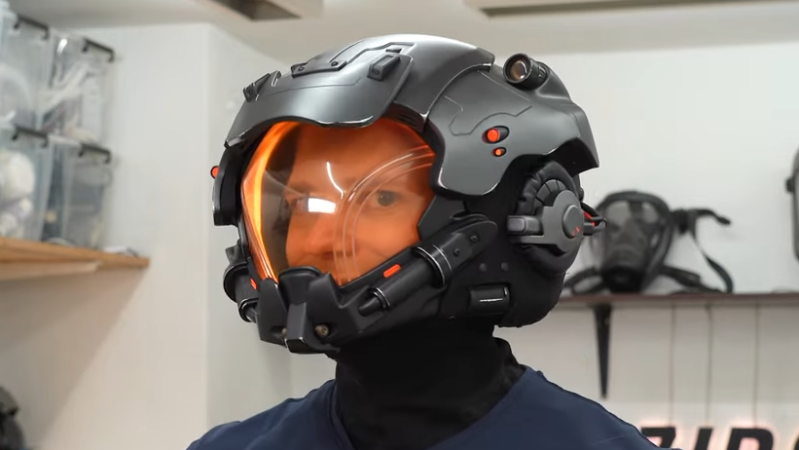
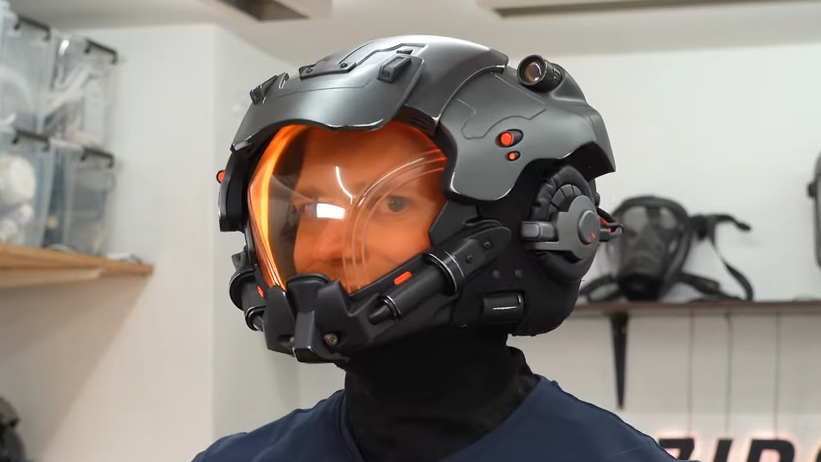
[Zibartas] recently created wearable helmets from the game Starfield that look fantastic, and we’re happy to see that he created a video showcasing the whole process of design, manufacture, and assembly. The video really highlights just how much good old-fashioned manual work like sanding goes into getting good results, even in an era where fancy modern equipment like 3D printing is available to just about anyone.
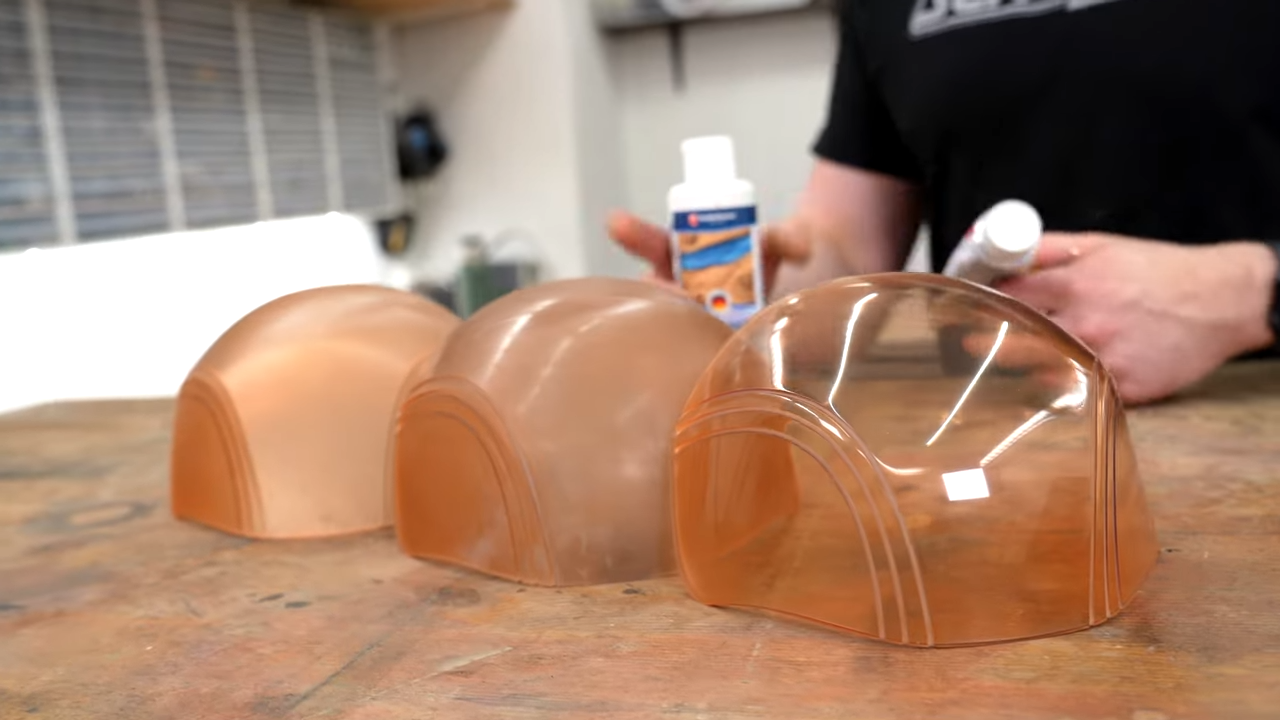
The secret to perfectly-tinted and glassy-smooth clear visors? Lots and lots of sanding and polishing.
The visor, for example, is one such example. The usual approach to making a custom helmet visor (like for Daft Punk helmet builds) is some kind of thermoforming. However, the Starfield helmet visors were poor candidates due to their shape and color. [Zibartas]’s solution was to 3D print the whole visor in custom-tinted resin, followed by lots and lots of sanding and polishing to obtain a clear and glassy-smooth end product.
A lot of patient sanding ended up being necessary for other reasons as well. Each helmet has a staggering number of individual parts, most of which are 3D printed with resin, and these parts didn’t always fit together perfectly well.
[Zibartas] also ended up spending a lot of time troubleshooting an issue that many of us might have had an easier time recognizing and addressing. The helmet cleverly integrates a faux-neon style RGB LED strip for internal lighting, but the LED strip would glitch out when the ventilation fan was turned on. The solution after a lot of troubleshooting ended up being simple decoupling capacitors, helping to isolate the microcontrollers built into the LED strip from the inductive load of the motors.
What [Zibartas] may have lacked in the finer points of electronics, he certainly makes up for in practical experience when it comes to wearable pieces like these. The helmets look solid but are in fact full of open spaces and hollow, porous surfaces. This makes them more challenging to design and assemble, but it pays off in spades when worn. The helmets not only look great, but allow a huge amount of airflow. This along with the fans makes them comfortable to wear as well as prevents the face shield from misting up from the wearer’s breathing. It’s a real work of art, so check out the build video, embedded just below.
See that little circle? That’s a camera. | Photo by Vjeran Pavic / The Verge
All around Meta’s Menlo Park campus, cameras stared at me. I’m not talking about security cameras or my fellow reporters’ DSLRs. I’m not even talking about smartphones. I mean Ray-Ban and Meta’s smart glasses, which Meta hopes we’ll all — one day, in some form — wear.
I visited Meta for this year’s Connect conference, where just about every hardware product involved cameras. They’re on the Ray-Ban Meta smart glasses that got a software update, the new Quest 3S virtual reality headset, and Meta’s prototype Orion AR glasses. Orion is what Meta calls a “time machine”: a functioning example of what full-fledged AR could look like, years before it will be consumer-ready.
But on Meta’s campus, at least, the Ray-Bans were already everywhere. It...
Every creation is a mirror, reflecting something of its creator. If you and I were to paint the same subject, your painting would reflect some of you, and mine would reflect some of me. If we both write stories, each one will carry something of ourselves—our personality, our experiences.
The writer is in the writing. The artist is in the art. The musician's in the music.
Take writing as an example. If we're writing authentically, we can't help but share a bit of ourselves in our work. Our past experiences affect what we notice. Our timidity or confidence is reflected in the tone and style. Our education in the choice of words. Our kindness and patience, or cynicism and frustration, is revealed to the reader. And the choice of what you write or paint reflects you.
Not if we're trying too hard. Not if we're writing to sound like a writer or if we're adopting a "literary" style because we think that's how it should be done. And not if we focus more on pleasing a search engine or ticking off marketing goals than connecting with readers. But if we write honestly and directly, the writer shows through.
The Third Dimension
This phrasing hit me while reading Brenda Ueland's book If You Want to Write. She calls the writer the Third Dimension. I believe she means that when you read a book, there are the characters, the reader, and also, inescapably, the writer's personality. She writes that readers can tell when writing isn't authentic, when it's not really you, but instead, a performance to meet someone else's expectations of how one should write—or perhaps a creation of an AI's sycophantic personality.
The presence of the writer in the writing, or the artist in the art, leads Ueland to say, "…I have come to think the only way to become a better writer is to become a better person."
I believe this principle also holds true across other creative disciplines, though I thought "the cook is in the cooking" didn't quite have the same ring. Still, it holds a ring of truth if I consider a musician and their music, an entrepreneur and their business, a podcaster and their podcast and others.
It's hard to write this without wondering what I'm sharing about myself (and what gets scrubbed out and cleansed by Grammarly proofreading). In Sketchplanations as a project, I've come to think that sooner or later, everything I know of value will be there. So, in some way, the whole thing reflects me. Shall we go for a beer?
 5 Triple 4K Docking Station with 140W PD ($399.99) – also found on Amazon – are some of the first Thunderbolt 5 devices to make it to market.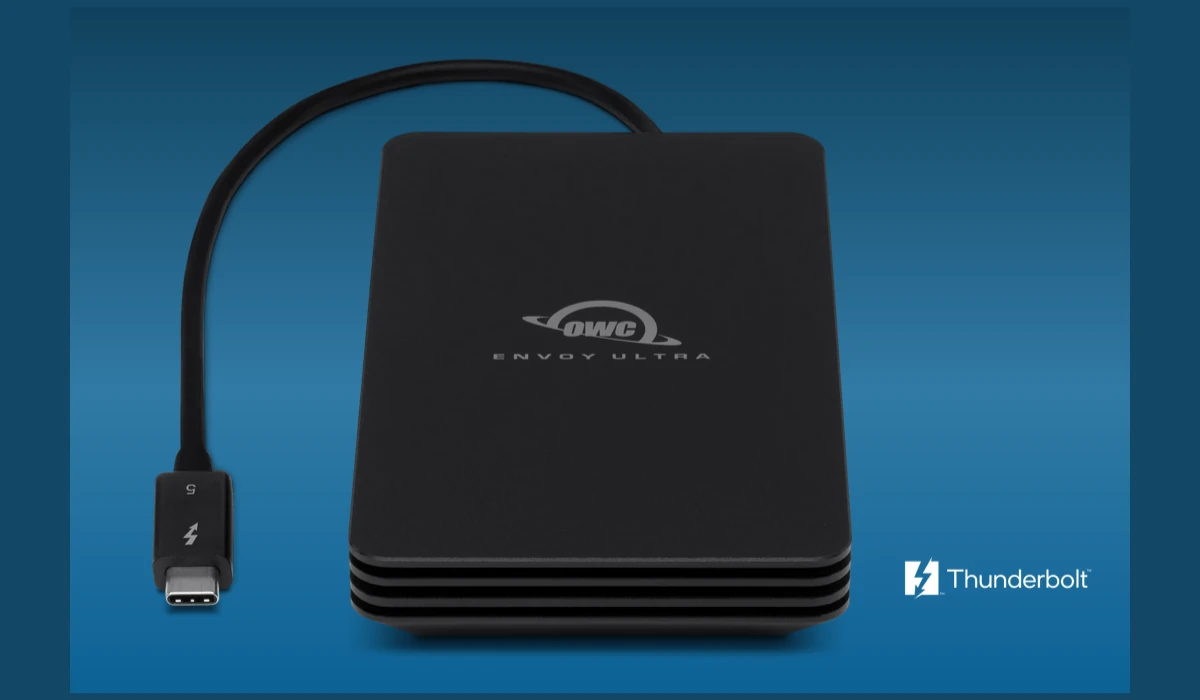
 The number of available Thunderbolt 5 devices is limited, and a search for “Thunderbolt 5” on Amazon only shows the above docking station and a few 80 Gbps certified cables. But more compatible devices should eventually see the light of the day over time.















 Découvrez notre test complet du scanner 3D Creality CR-Scan Otter, un appareil précis et facile à utiliser, idéal pour capturer les moindres détails d'objets de taille moyenne à grande, tout en restant performant sur des surfaces complexes.