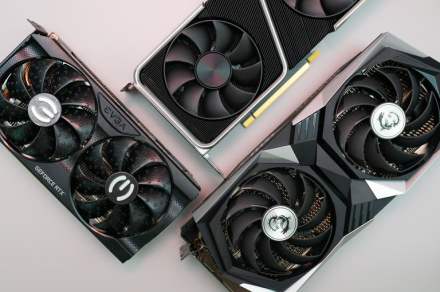
Nvidia will reportedly announce its RTX 5070 GPU alongside the RTX 5090 and RTX 5080 at CES 2025 in January. Nvidia CEO Jensen Huang will be holding a CES keynote on January 6th, and now Wccftech claims that Nvidia will showcase a trio of next-generation RTX 50-series GPUs during Huang’s keynote.
Rumored specs of the RTX 5090 and RTX 5080 leaked last month, with Nvidia’s flagship RTX 5090 expected to ship with 32GB of GDDR7 memory and a 600-watt spec. Wccftech reports that the RTX 5070 will feature a 192-bit memory bus with 12GB of GDDR7 VRAM. The RTX 5070 is also said to have a 250-watt total board power spec, 14 percent higher than the RTX 4070. Hardware leaker kopite7kimi has corroborated the report, suggesting the GPU will ship with...
La découverte d'un nouveau système de groupe sanguin, MAL, marque une avancée significative dans le domaine de l'hématologie. Une énigme de plus de 50 ans vient ainsi d'être résolue, offrant...
When I wrote the article about my 5 main highlights of Meta Connect, I selected among them Meta Hyperscape, the solution to scan environments and enter inside them. I guess this surprised a few of you, who were expecting a mention of Meta Avatars or some of the new games, but after I’ve tried the beta of Hyperscape available on the Horizon Store, I’m not only convinced that I did right at considering it one of the main pieces of news of the show, but I also think that it’s much bigger than I imagined. Let me tell you why.
Meta Hyperscape
Gameplay video of my first 10 minutes in Meta Horizon Hyperscape
A little refresh in case you missed this news at Connect: Mark Zuckerberg announced at Meta Connect a solution called Hyperscape. This software is comprised of a mobile app that lets you scan an environment (e.g. your room) with your phone, and it uploads the data on the cloud, which reconstructs the space using a series of Gaussian Splats. Then there is a VR app for Quest where you can enter the environment you’ve just scanned, either alone or with other people. Meta is not the first company proposing something similar: a few months ago I tried a similar service by Varjo, for instance.
The service is currently available in beta only in the US and the VR Client only features 6 predefined environments for now.
How to install Hyperscape
Hyperscape is available on the Meta Horizon Store. It requires the runtime v69 of Quest, so if you are still on a previous version, make sure to update your headset by going to the System Settings and forcing an update.
The app is available only in the US… but I mean, I’m Italian, so I’m not someone willing to respect the rules… so I launched the VPN on my PC to set myself up as if I was in the US, went to the store page of Hyperscapeon the web version of the Horizon Store while I was logged in with my Meta account, and asked to Get and Install the app. I put the headset on my head, and voilà, Hyperscape was on my device. The download has been lightning fast because the app weighs only 32MB!
Launching the app
Hyperscape is so lightweight that I guess is a native app… which is also coherent with the fact that it should be very reactive. The application surprisingly launches as a 2D window, that then becomes immersive only after it has done some checks. I’ve never seen any functionality like that if not in WebXR, so I wonder how they did it (maybe thanks to the new Spatial SDK?).
The intro 2D window that checks the network connection
When it is a 2D window, Hyperscape does some network checks and runs the full application only if your network is good enough. If it finds some network problems, it shows you a dialog that flags that your network is not fast enough and says that you may have some issues. You can choose to close the app or to continue notwithstanding the issues. My suggestion is that, unless your network speed is really potato or you are very prone to motion sickness, you should go on anyway, so that you can experience this interesting application.
The network check is important because this application relies on cloud streaming. According to people who analyzed the data of the app, Hyperscape uses the rumored Meta Avalanche service for cloud rendering and streaming.
Navigating the environments
As I’ve said, Hyperscape currently features only six environments: one is a car garage, four are the spaces where some small indie artists paint or craft objects, and the last one is the previous office of Mark Zuckerberg. Hyperscape showed me this choice in a little floating menu window in mixed reality. I selected the cars to start but then navigated all of them. I have to say that the four artists’ spaces are quite similar, I would have personally preferred a bit more variety, but still, they are all worth a look.
The selection menu with the possible environments to visit
When you choose one space, you are teleported into it in an immersive way and a popup explains to you what that environment is about. Then you are presented with the controls: with the left thumbstick, you can teleport, while with the right thumbstick, you can snap turn. The A button is to show again the info window of the space you are in. The Menu button of the left controller is to return to the environment select window, instead.
Input is pretty straightforward
Inside the spaces there are some places featuring little circles: if you point at them with your right controller and you press the Trigger button, a little pop-up will explain to you something about the object the little dot is on. Most of the time, to be totally honest with you, this additional information was absolutely not interesting to read.
Uhm, ok, I guess?
If you have ever tried a VR virtual tour experience for real estate, you know what I’m talking about: you just go around a place and click on some interesting points to get some relevant info.
Gaussian Splats
These lamps have not been reconstructed very well, so they look like made of watercolors
Gaussian Splats are an amazing new rendering technique, but since it’s something new, people are still experimenting with how to use them at their best. When I tried Varjo Teleport, I mentioned how the various environments I was in looked like painted in watercolors. Here the reconstructions are much better, and I did not have the same sensation, but still, things looked slightly blurred, as if every object was lightly softer or slightly more distorted than it should have been. A few objects, probably the ones that were not scanned appropriately, looked like watercolored. Reflective surfaces showed artifacts, and when I moved my head, they changed their appearance in a noticeable way. Sometimes you notice some “paint strokes” in the air, which probably represent some bug in the reconstruction. And if you go close to an object, you notice that all its visuals are like painted.
This is a logo on a jacket. From a distance, it looks fine, but going very close to it, you start seeing it as if it is made of blurry strokes
Don’t misunderstand me: as you can see from the images and the videos in this article, the reconstruction is definitely good. But from the pictures, you easily miss all the imperfections that you instead easily notice in VR, and that prevent you from having a full sense of immersion.
Cloud streaming
The application is cloud streamed and you can easily notice that. Sometimes there are some visible effects of that: I had lag, small freezes, and also some weird things happening in the periphery of my vision. But also when the network behaves well, there is always that subtle sense of slight blurring and slight lag that is always present with streamed experiences. This is for sure one of the reasons why this app is in Beta: the streaming should be improved. I also wonder if, considering that the app should be available only in the US, the streaming services are only located in North America, so we Europeans have a worse experience.
The huge sense of presence
These paintings look amazing. If I told you that this an image I took in a physical place, you would believe me
Most of the time, your experience will be conditioned by some of the problems that I’ve mentioned above and your brain will easily notice that you are in a reconstructed environment and not in a real one. Some objects are blurred, some others have reconstruction imperfections, and so on. In fact, when I launched the car garage environment, I was not much impressed by it. I found it nice, but that was it.
But there will be a few spots in the experience where the space in front of you will look real to you, and in these moments you will go WOW. It happened to me the first time in one of the workbenches of one of the creators: I looked at the desk in front of me and for a split second it looked like real and my mind clicked. For that moment, I truly believed to be there in the space of that creator, in front of his desk. Then moving around, I lost this sensation because of the imperfections, but then later in another space, I had it again.
The quality of the reconstruction is overall very good, but in some places, it is excellent and you can feel immersed there. And what is impressive is that these environment reconstructions are truly 6DOF. I could move with teleporting everywhere I wanted, and I could snap turn however I wanted. Virtual tours are usually 3DOF and you can only navigate to specific viewpoints. Here I could be everywhere, it was like being in another space. If they can improve the splats’ quality this can truly feel like a teleport to another location.
I thought it could be just me to be amazed by this app, so I also made another non-VR person try the experience and she was literally amazed all the time about it. So it’s not only my impression, it is definitely good.
I got pretty excited by Meta Hyperscape, so as an entrepreneur and developer I immediately started thinking about all the possibilities enabled by this technology. The first thing I thought is that this will disrupt virtual tours: if I were Matterport or another company making money with virtual tours, I would be concerned, because with Hyperscape, everyone with a phone (and some technical knowledge) could scan his own space and create a virtual tour about it. And this virtual tour would be fully 6dof: people can freely move inside it, feel the objects with the proper depth, and so on. It would not be just a set of 360 photo bubbles, but a full navigation in another space. I know that Hyperscape is in beta, but when it is finalized, this service will be perfect for visiting homes remotely.
The social aspect is also another thing that always fascinated me about reconstructed 3d spaces. I could scan my new home and invite my friends to visit it in VR. Or I could scan a space in a specific moment I want to remember (e.g. a portion of the restaurant of my wedding party) and I could revisit it alone or with my family whenever I want. I’m pretty sure that Meta is primarily interested in this and I see in it great potential: as today you shoot a picture to remember a moment, in the medium-long term future maybe you will be able to save a full environment.
The office of Mark Zuckerberg is a glimpse of that: in my life, probably I will never have the opportunity of being invited by Marky Z to his office, but with Hyperscape, I was there. It could also be a service offered by celebrities to let you visit their environments, their favorite spaces, or the location of their events…
I am in the same place as Mark Zuckerberg. With just some hundred billions less…
Another idea could be creating VR games that are held in real spaces. Indie developers with limited budgets for 3D graphics may for instance scan their rooms (after they remove the pizzas and the Red Bulls :P) and set up an escape room or a point-and-click adventure there.
As the Varjo PR told me at AWE about their Teleport service, it can also be useful in the B2B sector: for instance, if a company has to set up a stage, or a booth, or something like that, they could do that, then scan the environment, and send it to the CEO to step in and verify if he likes it
I think this is an enabling technology that as soon as it is stable, will offer many new opportunities in the XR space. And don’t get me started on what it could be possible to do with interactions: if some of the scanned objects could be grabbed or interacted with (e.g. you can turn on the light), that would be amazing.
A note on cloud rendering and feasibility
That moving black band you see in the periphery of my vision is an artifact of the streaming
This application does cloud streaming, probably streaming the splats that you have to show on the display. Cloud streaming is amazing for many reasons, but it also is the cause of some of the problems described above: lag, latency, vision artifacts, etc… It also introduces an additional problem: price. Streaming from the cloud is pretty expensive and I wonder what is the cost per minute per user that Meta is paying for Hyperscape. I wonder also if streaming has been chosen because Meta wanted to test its Avalanche service or if there is a necessity at the base, like that the environments are so big that a full download would require too much time, or the computation needed by the splats is so big that must be done in the cloud. I bet that also the choice of using teleport and not allowing smooth locomotion is conditioned by these performance considerations.
I ask all these questions because I’m wondering about the feasibility of this as a commercial application. Is it currently too expensive for a startup to create a similar infrastructure? And if it is Meta offering it, what will be the price? And will Meta try to make money out of it? All these questions will help in understanding if all the above ideas can become true products in the short term or not. Because if the costs are too high, no company would ever create a product out of it in the next months. But if it is affordable, we can have new startups exploiting this new technical marvel.
Final considerations
I’ve been impressed with Meta Hyperscope. It’s a glimpse of a future when we will be able to visit other real spaces without moving from home and have the true impression of being there. This is an enabling technology that in my opinion will have many ripple effects in our space in the medium-long term. But for now, it is still a bit rough and probably expensive. If you truly want to feel like being in the office of Mark Zuckerberg, you still had better wait for him to offer you lunch (where you eat some BBQ sauce, of course)…
Le système de transport souterrain d'Elon Musk est constamment perturbé par des conducteurs égarés, des skateurs et des personnes ne respectant pas la loi.
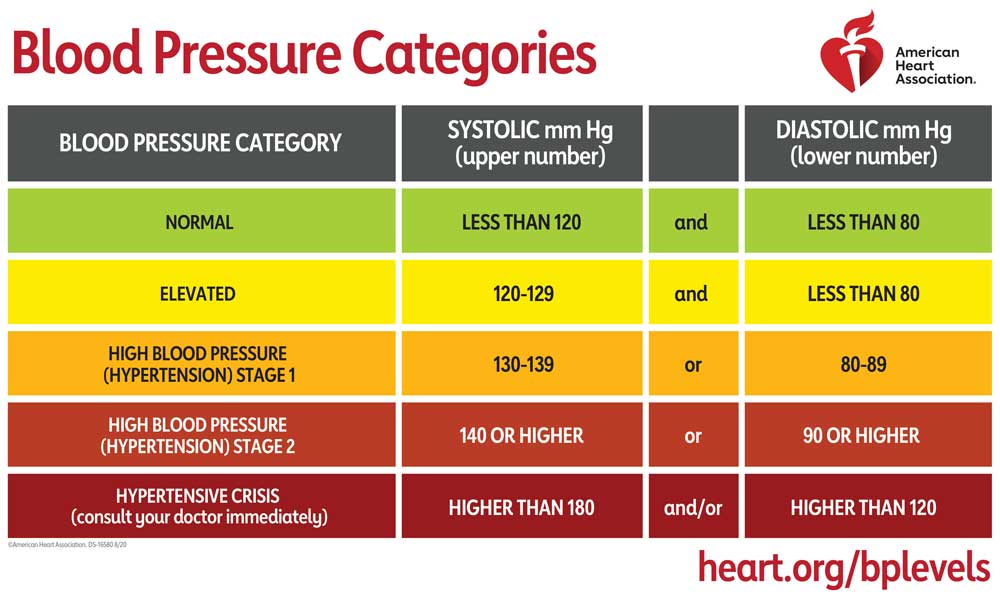
Many people may be surprised to learn the proper procedure for taking a blood pressure reading—because of how different it is from what happens during their doctor's appointments.
According to the American Heart Association and other medical experts, getting an accurate reading requires following a strict set of preparations: You must not eat, drink, exercise, or smoke within 30 minutes of a reading. You must have an empty bladder. You must sit straight up in a chair with back support. Your legs must be uncrossed and your feet must be flat on the ground. The arm to be measured must be rested on a flat surface so that it is at the same level as your heart, not lower, not higher. You must sit calmly, without talking for five minutes to relax before the reading. When it's time, an appropriately sized cuff should be wrapped around your bare upper arm, right above the elbow; it should never be wrapped over clothing. At least two readings should be taken, with the average recorded. Ideally, readings should be taken in both arms, with the highest readings recorded.
Deviations from this protocol have the potential to significantly alter your blood pressure reading—and your blood pressure category. For instance, putting the blood pressure cuff over clothing can raise your reading as much as 50 mm Hg. That's enough to make someone with early stage hypertension seem as if they're in a hypertensive crisis, at imminent risk of a stroke or heart attack. If you have to pee, the reading can be 15 mm Hg higher. Talking can raise it by 10 mm Hg.
Virtuoso et Globetrenter ont dévoilé le rapport "Luxury Travel Trend Watch : 2025" autour des perspectives du secteur du voyage haut de gamme l'année prochaine.
Nvidia CEO Jensen Huang will deliver a keynote at CES 2025 in January. The keynote will take place on January 6th at 6:30PM PT / 9:30PM ET, just a day before the Consumer Electronics Show opens its doors in Las Vegas. It comes amid rumors of next-gen Nvidia GPUs appearing early next year.
A source familiar with Nvidia’s plans told The Verge last month that we might hear more about the RTX 50-series at the Consumer Electronics Show in early 2025. Nvidia is an official guest keynote of the Consumer Technology Association (CTA) for this upcoming CES show after the company previously delivered its own “special address” stream at CES 2024 earlier this year.
While Huang will undoubtedly focus on the AI hardware and software that has propelled...
Samsung, the world’s leading memory chip manufacturer, issued a rare apology after saying it expected to post just$6.78 billion in operating profit for the most recent quarter, about $900 million short of analyst expectations.
“We have caused concerns about our fundamental technological competitiveness and the future of the company due to our performance falling short of the market’s expectations,” reads the statement attributed to Samsung Vice Chairman Jun Young-hyun. “Many people are talking about Samsung’s crisis. We, who are leading the business, are responsible for all of this.”
The so-called “crisis” caused the company to instigate a six-day workweek for executives earlier this year. That change was instigated after posting...
When we reviewed Diablo IV, the latest installment in the long-running action roleplaying game series last year, we said it was off to a hell of a good start. But ARPGs live and die by their endgame loops, and it was far too early at the time to accurately assess the game’s true staying power.
Sadly, after that confident first step, like so many loot-hunting games before it, Diablo IV fell flat on its face. I’ve seen plenty of boneheaded updates to live-service games, but Diablo IV’s first major patch, released a couple of months after the game’s release, was still pretty shocking. By that point, a consensus had emerged that the endgame was a bit barren, and getting to the game’s level cap of 100 was a tedious slog. But that’s the great thing about live-service games, right? Tweak some numbers, throw in a couple of fun high-level activities, and, baby, you’ve got a stew going.
Sadly, the game’s developers at Blizzard had other plans. The patch notes for that first update read like someone had systematically gone through the game and removed anything that could be considered fun. Almost every character build had been mercilessly nerfed, and worst of all, the game became even slower. Fans were incensed, and Diablo IV floundered like this for its first three seasons. I mostly lost interest.
The holiday shopping season is traditionally the most important sales time of the year for brands and retailers, but for the last two years, brands have approached the season with cautious optimism. This year, brands are feeling much better about their holiday sales going into the season.
That’s based on new Modern Retail+ research based on a survey of brands and retailers about the upcoming holiday season. When asked about their revenue expectations, a plurality of respondents (35%) said they expect sales to be up between 11-30% compared to last year’s holiday season. Comparatively, only 20% said the same in 2023 and only 6% in 2022. Instead, in previous years, the most common answer to the question was between 1-10%.
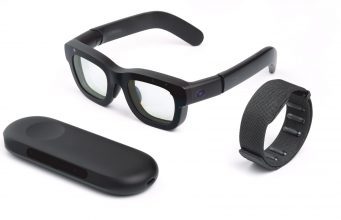
Meta’s biggest reveal at last week’s Connect conference was definitely the Orion prototype AR glasses, which the company says it’s been working on for nearly five years. It’s a big deal not only because of how compact it is, but because Meta says it wants to eventually turn the prototype into a consumer product.
You may have caught our high-level coverage of the Orion headset here, but our friend Norman Chan from Tested got to sit down with Meta CTO Andrew “Boz” Bosworth to try out the glasses and learn about the Orion project. In typical form, he digs deep into the intriguing technical details of the headset. You can check out his full video below, or scroll further down to get a summary of the technical details Chan learned from his demo and conversation:
Although Orion isn’t ready for mass production, Meta says it’s planning to build around 1,000 units for internal testing. At a purported cost of $10,000 for each prototype, that’s a cool $10 million worth of hardware the company will be shelling out to get enough devices that it can do testing and development at a reasonable scale.
The Orion glasses weigh just 98 grams, which is right under the 100 grams threshold that Meta believes is important for making something that actually looks and feels like glasses rather than goggles. For comparison, the classic Ray-Ban Aviator sunglasses weigh around 30 grams, and Meta’s own Ray-Ban smartglasses weigh around 50 grams. So the Orion AR glasses might be reasonably called glasses, but they’re still chunky bois.
Still, 100 grams is incredibly lightweight if you consider that Orion is packing most of the same fundamental capabilities as Meta’s own Quest 3 headset, which is more than five times heavier at 515 grams.
In addition to the novel silicon carbide lenses we heard about, which help the glasses reach a large (for their size) 70° diagonal field-of-view, Orion also employs MicroLED projectors which are not only tiny, but super bright. Meta says they can output hundreds of thousands of nits of brightness. It’s essential to start with such a bright light source because it’s a complex optical path that loses lots of light along the way. By the time it reaches your eyes, you’ll be seeing just 300–400 nits.
That’s a bit brighter than your average VR headset, but still a long way from bright enough to use outside on a bright day. You’d need around 3,000 nits for reasonable outdoor usability. That means Meta will need to find a brighter light source, or reduce inefficiency in the optical path, if it wants Orion to be something people will wear outside of their homes.
As for resolution, Chan says the main Orion demo has a resolution of 13 pixels-per-degree, which is a bit of a surprise. Because AR glasses often have a smaller field-of-view than their VR counterparts, usually they get an advantage on PPD because the available pixels are spread over a smaller area. But even with a 70° field-of-view, Orion has only about half of the PPD of Quest 3 (25PPD).
However, Meta was apparently also demoing a similar Orion prototype that was 26 PPD, but that came at the cost of image brightness. The company told Chan that its goal is to reach a resolution of 30 PPD by the time Orion becomes a proper product. That’s still far from a ‘retina’ resolution of 60 PPD, but should be enough to make the headset useful for text-based work.
One of the most interesting details from Chan’s interview was the way Orion glasses implement eye-tracking.
Like other headsets, the technique involves illuminating the eye with a series of infrared LEDs, then point a camera at the eye to reverse-engineer the position of the eye based on the visible reflection of the IR LEDs. Usually the IR LEDs are placed in a ring around the lens, but Chan noted that Orion places absolutely tiny LEDs directly in the user’s field-of-view—right on the lens.
In order to make it all invisible to the wearer, the wires that power the LEDs are arranged in a nearly randomized pattern that you could easily mistake as a bit of hair on the lens.
Image courtesy Meta
A random pattern is less eye-catching than a clearly defined pattern (the basis of many optical illusions). Between the random pattern, minuscule thinness of the wires, and nearness to the eye, Chan said it was all but invisible when looking through the lens.
It was also mentioned that the ‘compute puck’, which offloads much of the processing work from the glasses, uses a custom Wi-Fi 6 protocol to communicate, with a range of 10 or so feet.
The custom protocol purportedly focuses on ‘pulsing’ data from the puck (rather than continuously streaming it) to reduce both heat production and power consumption. We can imagine this being a packet-like approach where instead of communicating constantly from the puck to the glasses, outgoing information is gathered over the course of a discrete time period before being packaged and transmitted.
While the puck is plenty large and is said to be capable of “all day” battery life, the glasses themselves can currently run for up to three hours—essentially the same battery life you’d expect from a standalone VR headset.
Compared to research prototypes shown by Meta in the past, Orion isn’t just made to give people a look at the experience the company wants to eventually deliver. Orion is more of a preview of a product that Meta is actively building.
Plus proche de la clé HDMI que de la carte de développement, Digiport propose une sortie vidéo qui permettra de jouer, lire des fichier vidéo ou audio locaux et même de surfer ou de piloter des logiciels.
Digiport est une sorte de clé HDMI dans le sens ou le dispositif ne comporte pas qu’une connectique classique mais embarque un port HDMI mâle, de telle sorte qu’on peut enficher directement la clé dans un port HDMI de téléviseur sans câble. Une idée qui est d’ailleurs de moins en moins pratiquée par le marché car elle n’a pas forcément que des avantages et force les industriels à livrer avec leurs solutions des câbles HDMI femelle-mâle.
Le Digiport profite de ce module pour assurer des travaux variés, connecté à un clavier, un écran et une souris il offrira tous les services possibles à ce type de solution. Proposé par une équipe australienne, l’objet est proposé en plusieurs versions sur Kickstarter : un support seulement livré avec un dissipateur à 62€. Ou des kits complets avec un Compute Module 4 et une carte de stockage à partir de 121€ et jusqu’à 165€ suivant l’équipement et les accessoires choisis.
La petite carte de support offrira au CM4 deux ports USB 2.0, une alimentation en USB Type-C, un capteur infrarouge pour être pilotée à la télécommande (non fournie) et un lecteur de cartes MicroSDXC.
Rien de vraiment révolutionnaire dans cette offre mais un format qui peut intéresser certains utilisateurs. La carte peut facilement être transportée et accrochée à un écran, servir aussi bien pour ajouter des services à un téléviseur que devenir un support pour des présentations. Néanmoins, la valeur ajoutée par rapport à une carte de développement classique est assez mince. Limitée essentiellement au format de l’objet et non pas aux services qu’il pourra rendre. Comme souvent le streaming et le jeu rétro sont mis en avant sur ce type de dispositif même si je ne suis pas sur qu’un Compute Module 4 soit la solution la plus adaptée pour ces usages.
En 2014, Hélène Courtois, Daniel Pomarède, RB Tully et d'autres font une annonce retentissante : ils ont identifié que la Voie lactée est liée gravitationnellement à 100 000 autres galaxies s'étendant sur 500 millions d'années-lumière. Une partie de leurs 10 années d'observations s'étant faites à Mauna Kea, à Hawaï, ils donnent le nom très poétique d...
Type 1 diabetes is an auto-immune condition whereby the patient’s own immune system attacks the pancreatic islets, destroying them in the process. Since these islets are responsible for producing insulin in response to blood sugar (glucose) levels, the patient is thus required to externally inject insulin for the remainder of their life. That was the expected scenario, but it appears that this form of diabetes may soon be treatable, with one woman now being free of the condition for a year already, as reported in Nature, referencing an article by [Shusen Wang] et al. that describes the treatment and the one-year result.
Most notable with this study is that the researchers didn’t use the regular method to create pluripotent stem cells. These cells were extracted from the patient, to revert back to this earlier developmental stage. They were not modified using genes, but rather singular chemicals (PDF). The advantage of this is that it avoids having to modify the cell’s genomes, which could conceivably cause issues like cancer later on. This was one of the first time that this method was used in a human subject, with islet cells formed and about 1.5 million of them injected into the patient’s abdominal muscles, a novel site for this procedure.
This location made these islets easy to keep track of, and easier to remove in case of any issues compared to the usual injection site within the liver. Fortunately for this woman, no complications occurred and one year later she is still free of any diabetes symptoms. Two other patients in the trial are also seeing very positive results, leaving only the question of whether the auto-immune condition that originally caused the islet destruction still exists. Since this female patient is taking immunosuppressants for a previous liver transplant it’s a hard to thing to judge, especially since we understand the causes behind type 1 diabetes so poorly.
Regardless, this and other trials using pluripotent cells, transplanted islets and more offer the prospect of a permanent treatment for the many people who suffer from type 1 diabetes.
Bea Baron (aka BeaPlays) has taken on the role of Community Manager at Dress To Impress, a Roblox game where players show off their fashion skills that has become something of a pop culture phenomenon.
In a post on X, BeaPlays, a Roblox YouTuber and Twitch partnered streamer, said: “I have been involved in the Roblox space now since I was ten years old, and worked with some incredible games and people. I think that together, we can make Dress To Impress an incredible, safe and welcoming place for everyone.”
“I look forward to working with you, the DTI community, and the developers, to hopefully ensure the game’s future is one that you feel involved in and proud to be a part of. If you’re a DTI influencer, concept designer, creative member of the community, or just a player, introduce yourself below! I’d love to meet as many of you as possible!”
BeaPlays added: “While I will still continue to work freelance on some other games behind the scenes, and make my videos/streams, I am elated to begin this new journey with DTI. I want to take a moment to thank all of you, from the bottom of my heart, for the years of support you have given to me.”
“Without you, I wouldn't be here today, and this wouldn't be happening.”
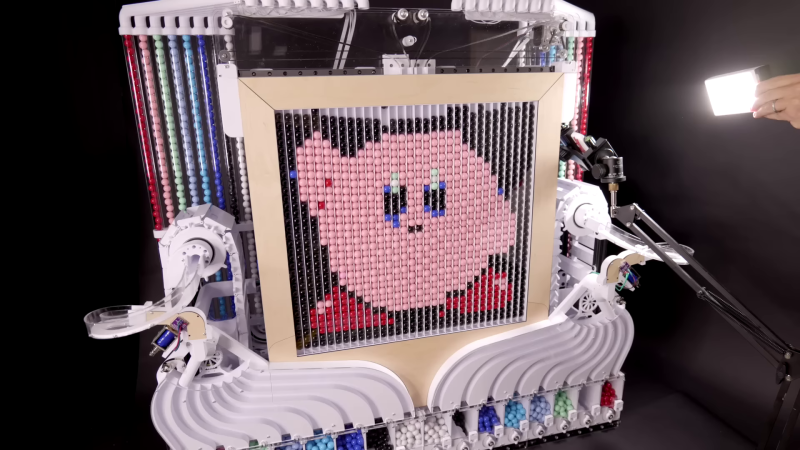
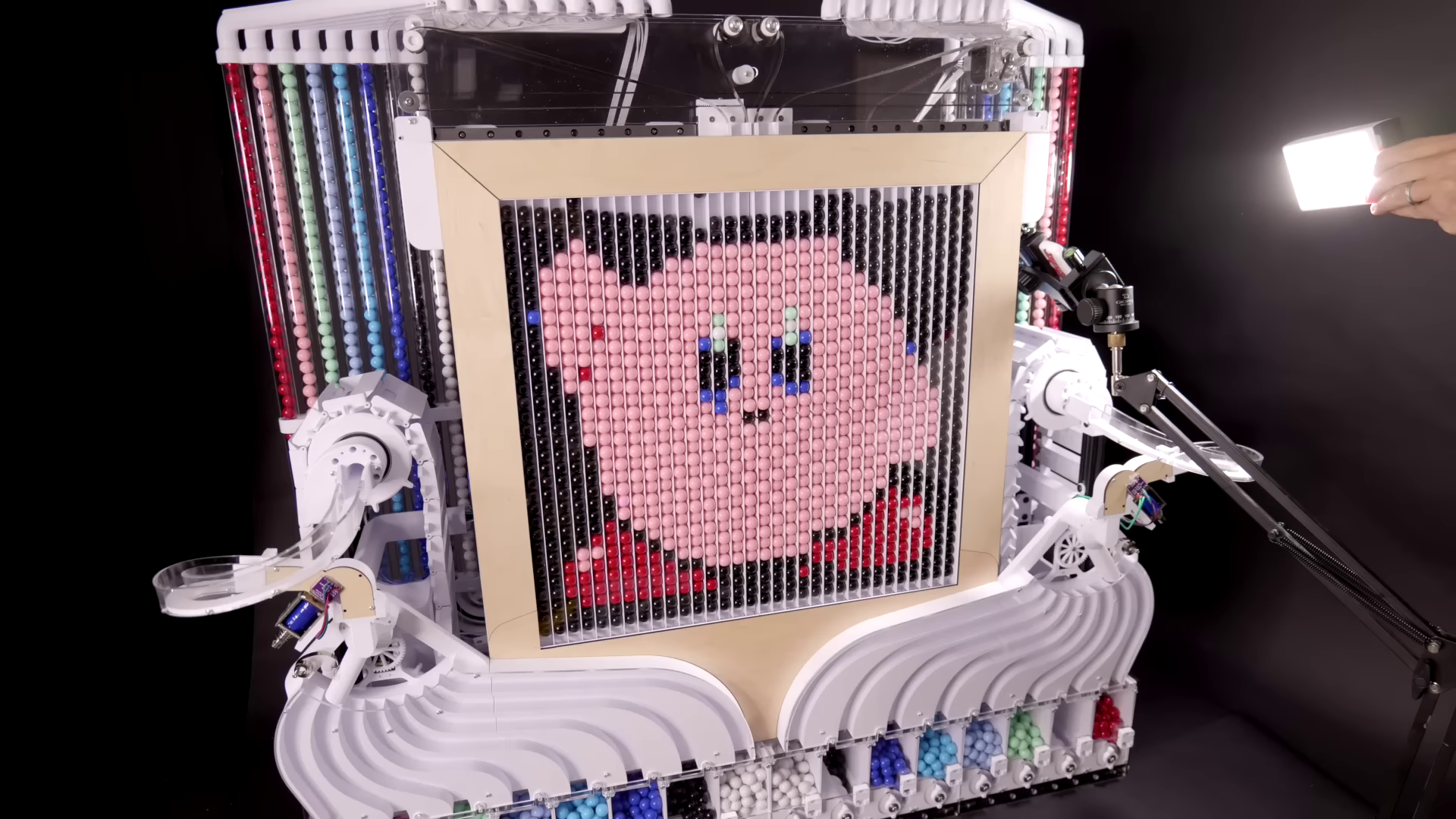
Marble machines are a fun and challenging reason to do engineering for the sake of engineering. [Engineezy] adds some color to the theme, building a machine to create 16×16 marble images automatically. (Video embedded below.)
The core problem was devising ways to sort, lift, place, and dump marbles in their correct positions without losing their marbles—figuratively and literally. Starting with color detection, [Engineezy] used an RGB color sensor and Euclidian math to determine each marble’s color. After trying several different mechanical sorting mechanisms, he settled on a solenoid and servo-actuated dump tube to drop the marble into the appropriate hopper.
After sorting, he faced challenges with designing a mechanism to transport marbles from the bottom hoppers to the top of the machine. While paddle wheels seemed promising at first, they tended to jam—a problem solved by innovating with Archimedes screws that move marbles up smoothly without clogs. The marbles are pushed into clear tubes on either side of the machine, providing a clear view of their parade to the top.
Perhaps most ingenious is his use of constant-force springs as a flexible funnel to guide the marbles to a moving slider that drops them into the correct column of the display. When a picture is complete, sliding doors open on the bottom of the columns, dumping the marbles into a chain lift which feeds them into the sorting section. Each of the mechanisms has a mirrored version of the other side, so the left and right halves of the display operate independently.
The final product is slow, satisfying and noisy kinetic testament to [Engineezy]’s perseverance through countless iterations and hiccups.
Marble machines can range from minimalist to ultra-complex musical monstrosities, but never fail to tickle our engineering minds.
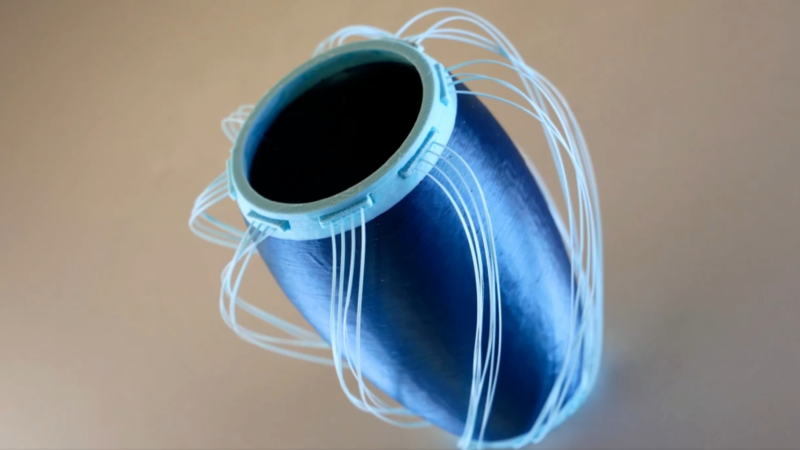
[3DPrintBunny] is someone who continually explores new techniques and designs in 3D printing, and her latest is one she calls “pause-and-attach”, which she demonstrates by printing a vase design with elements of the design splayed out onto the print bed.
The splayed-out elements get peeled up and attached to the print during a pause.
At a key point, the print is paused and one peels up the extended bits, manually attaching them to sockets on the main body of the print. Then the print resumes and seals everything in. The result is something that appears to defy the usual 3D printer constraints, as you can see here.
Pausing a 3D print to insert hardware (like nuts or magnets) is one thing, but we can’t recall seeing anything quite like this approach. It’s a little bit reminiscent of printing foldable structures to avoid supports in that it prints all of its own self-connecting elements, but at the same time it’s very different.
We’ve seen [3DPrintBunny]’s innovative approaches before with intentional stringing used as a design element and like the rest of her work, it’s both highly visual and definitely it’s own thing. You can see the whole process in a video she posted to social media, embedded below.
I tried out another 'pause-and-attach' type print today using some strings. The strings give it extra flexibility and allow me to add a twistpic.twitter.com/gIytsb8NEm
On Friday, Meta announced a preview of Movie Gen, a new suite of AI models designed to create and manipulate video, audio, and images, including creating a realistic video from a single photo of a person. The company claims the models outperform other video-synthesis models when evaluated by humans, pushing us closer to a future where anyone can synthesize a full video of any subject on demand.
The company does not yet have plans of when or how it will release these capabilities to the public, but Meta says Movie Gen is a tool that may allow people to "enhance their inherent creativity" rather than replace human artists and animators. The company envisions future applications such as easily creating and editing "day in the life" videos for social media platforms or generating personalized animated birthday greetings.
Movie Gen builds on Meta's previous work in video synthesis, following 2022's Make-A-Scene video generator and the Emu image-synthesis model. Using text prompts for guidance, this latest system can generate custom videos with sounds for the first time, edit and insert changes into existing videos, and transform images of people into realistic personalized videos.
Now, its lead inventor, Lanny Smoot, says he’s hoping that lightsaber might turn into a product you can actually buy — and it sounds like plans could already be in motion, unless Smoot was misinformed.
I think the company would like to do that. And I think Josh D’Amaro, our number two guy, our head of Disney Parks, said it at a public — I hope — meeting of toy vendors to say, hey,...
La justice est souvent symbolisée par Thémis, la déesse grecque qui porte un bandeau sur les yeux pour incarner l’impartialité, une balance pour l’équité des décisions et un glaive pour signifier des sanctions justes. Aujourd’hui, l’arrivée de l’Intelligence Artificielle dans le domaine judiciaire suscite de nombreuses interrogations. Peut-on allier justice et IA tout en garantissant l’équité des décisions ? Cette technologie pourrait-elle accélérer les procédures sans compromettre les principes fondamentaux de la justice ? Besoin urgent d’innovation dans la justice En France, le système judiciaire souffre de lenteurs chroniques. Des délais excessifs, pour les affaires civiles et pénales, s’étirent souvent […] Lire la suite :La justice et l’intelligence artificielle : un équilibre à trouver
Meta is bringing reminders to its Ray-Ban smart glasses, a feature it previewed during its Connect event last month. With the update, you can ask Meta AI to remember your surroundings, like where you parked, and even time up reminders to make a phone call.
The other features coming with the update include the ability to send and record voice messages on WhatsApp or Messenger without taking out your phone. You can now ask Meta AI to scan QR codes or call phone numbers that you come across, too.
Meta is also updating how you invoke Meta AI while wearing the smart glasses. Instead of saying “Hey Meta” before each question, you now only need to say “Hey Meta” for your first question and then ask any additional questions without the prompt....
Vorfreude is a delightful German word for the pleasure of anticipation. It combines vor, meaning "before" or "in advance", and freude, meaning "happiness". It's the joy from the anticipation of joy.
How to get more happiness from the same activity? Vorfreude!
The magic of Vorfreude
For me, the magic of Vorfreude lies in how it stretches out the pleasure of any upcoming event or experience. Once I hit 'Confirm' to book a trip, it kicks off joy for months whenever I think about the trip. And the great part about it, if we're organised, is that a trip in December can bring 'anticipatory joy' from when we book it in January. I need only reflect on my positive feelings about the trip, and life seems better.
"Vorfreude is the best joy"
I've often found that the Vorfreude may surpass the joy of the actual trip. With my Vorfreude glasses on, I never worry about the mosquitoes, the heat, or the inevitable waiting on the journey.
Germans have a saying that reflects this: "Vorfreude ist die schönste Freude," or Vorfreude is the best joy.
Thanks to something called fading affect bias, the emotional weight of negative memories tends to fade faster than positive ones. This leaves us with a rose-tinted view of past trips and may conveniently erase the niggly parts we didn't enjoy, allowing us to focus on just the good parts of a trip coming up. Or perhaps it's our optimism bias (we had a fun podcast about optimism bias).
Vorfreude is not just for the big events
Vorfreude doesn't only apply to big events like a holiday or wedding. I find anticipatory joy in small things, too. I look forward to the first coffee in the morning every day. Sometimes, the coffee won't live up to what I'd hoped for, but hey, I'd already been enjoying the idea of it since I finished my last coffee the day before.
I look forward to meeting friends and loved ones. I look forward to a dinner out. I look forward to weekends. I look forward to the next football match. I look forward to a cake coming out of the oven. Many people look forward to 5 o'clock each day. By simply reflecting on these moments of future joy, we can experience happiness right now, no matter where we are.
Enhancing Vorfreude
We can even work to cultivate and enhance our Vorfreude. As a child, nothing built anticipation like an advent calendar, ramping up excitement for Christmas day as I opened each new window. Sharing photos of your holiday destination with friends and family before you go and planning activities increases vorfreude. Getting good things in the diary can kick us out of languishing.
In some ways, Vorfreude mirrors the benefits I get from fear-based training plans or the forcing function of signing up for endurance events later in the year—having signed up for the event, I start to benefit from it as soon as I get out training with friends.
The opposite of Vorfreude
Of course, you may not be looking forward to the trip that's coming up. Perhaps upcoming events are filling you with dread. Anxiety is an emotion perhaps closest to the opposite of Vorfreude, or anticipatory anxiety more specifically.
I've also seen Vorangst proposed—with Angst being strong anxiety or fear—which seems a very suitable alternative.
Avoiding expectations
While thinking fondly about upcoming events can give you Vorfreude, a reader pointed out to me the dangers of thinking too much about how good something will be in the future.
It's easy to slip into setting expectations in your mind about how good something ought to be. If it then doesn't live up to your expectations, it could affect your enjoyment in the moment.
I guess the sweet spot is expectation-free Vorfreude.
Voorpret
It's not just the Germans who thought of giving a word to the joyful anticipation and excitement before an event. The Dutch use the word Voorpret for the same concept—pret meaning fun.
"Ahhh, another bowl of chocolate frosted sugar bombs! The second bowl is always the best! The pleasure of my first bowl is diminished by the anticipation of future bowls, and by the end of my third bowl, I usually feel sick."
Dans la rubrique “Nos étudiants ont du talent”, AnhPhu Nguyen et Caine Ardayfio ont réussi à transformer des lunettes connectées en appareil de reconnaissance faciale, divulguant une palanquée d’informations sur les gens environnant.Ces deux étudiants de l'Université Harvard ont partagé un projet glaçant d’efficacité, baptisé I-XRAY. Pour faire simpl...
I’d like Gemini to address me in the formal ‘usted.’ | Illustration: The Verge
Google initially rolled out Gemini Live, its conversational AI voice chat, in just one language: English. Today, the company is expanding the service to a handful of other languages, starting with French, German, Portuguese, Hindi, and Spanish. And while support for these languages does appear to be imminent for a lot of people, the company is still couching promises of other Gemini features with fuzzy “coming weeks” timelines.
Google expects that the languages starting to roll out today will be available to all users “in a couple of weeks.” As for other languages, Google says it will have more than 40 languages over “the coming weeks,” which is harder to pin down. Still, Google’s timeline from announcement to full rollout for Gemini...
The event, which saw a huge amount of electromagnetic radiation being slung our way by the Sun, clocked in as a powerful X-level solar flare and was deemed by experts at the National Oceanic and Atmospheric Administration (NOAA) to be the second-strongest of the year so far. The radio blackouts occurred over Hawaii and other areas of the Pacific.
Communications were only briefly lost, but the powerful event serves as a potent reminder of the cosmic forces that can have a direct influence on life on our home planet.
An X7.1 (R3) solar flare erupted from Region 3842 this evening - as seen in this animation (courtesy of jhelioviewer). This was the second strongest flare of Solar Cycle 25, only bested by an X8.7 flare on May 14th of this year. See https://t.co/MiukLmxbua for full story. pic.twitter.com/Qohhyk17DW
— NOAA Space Weather Prediction Center (@NWSSWPC) October 2, 2024
Aurora Watch
And the drama might not be over yet. According to the NOAA, the sunspot explosion appears to have caused a coronal mass ejection — which in short, means that the Sun just spit up a wad of solar plasma.
That plasma now seems to be heading in our direction and is due to collide with our atmosphere on October 5. NOAA has since issued a "minor-strong" geomagnetic storm warning as a result.
The concept of solar plasma hurtling toward our planet might sound scary, but you probably have nothing to worry about. According to NOAA, some "technological infrastructure" could experience some "limited, minor effects," though those should remain "mainly mitigable."
And beyond some (hopefully) minor technological difficulties, there could be a huge plus to the geomagnetic event: auroras!
Back in May, when a similar X-level plasma plume hit our planet's atmosphere, keen-eyed observers across the globe — including across the US, as far south as Florida — were privy to incredible views of the Northern Lights, which are usually only visible in a few, far-north regions of the word.
NOAA says that if there are auroras this week, they'll likely be visible "over many of the northern states and some of the lower Midwest and Oregon."
We'd recommend keeping up with NOAA updates this week, lest you miss a dazzling cosmic light show.
As the buzzy artificial intelligence upstart finally wraps its latest funding round — a $6.6 billion raise at a gargantuan $157 billion valuation — it’s asking for a big commitment from its financial backers: exclusivity. On Wednesday, the Financial Times reported that the ChatGPT-maker is requesting its investors avoid backing competitors. The ask comes just as OpenAI fully enters the next phase of the burgeoning tech titan life cycle.
A Tech Tale as Old as Time
Uber once pitched investors on a future that could deliver cheap labor and services (in the form of private drivers) on demand. Netflix once pitched investors on a future that could deliver mass amounts of entertainment and media on demand. Both laced their shiny promises with one big, if implicit, caveat: It’ll take years and years and billions and billions of dollars before we reach the market share and scale and find the delicately-balanced business model needed to achieve profitability. But once we do, it’s game on.
Now, OpenAI is where those two companies were a decade ago — only its promises of ultra-cheap labor are based on possibly replacing humans. And, like both Uber and Netflix before it, OpenAI remains a massive money-loser. That means it’ll need a lot of financial runway to achieve its dreams — and that’ll be a lot easier if its backers aren’t crowding the runway by funding rivals. But OpenAI wunderkind Sam Altman can be forgiven for feeling cocky:
The $6.6 billion raise marks the largest venture capital round of all time, led by a $1.3 billion investment from Thrive Capital, a source told The New York Times. Thrive Capital was joined by Microsoft (which has already invested $13 billion), AI chipmaker Nvidia, SoftBank, Fidelity, and Tiger Global, among others. Notably absent, sources told Axios, is Apple, which had been linked all summer to the funding round.
Open and Closed: Whether OpenAI can get investors to agree to exclusivity remains an open question, the FT reports, and it’s not in VC firms’ nature to accept such demands.Better to spread your bets. Still, Uber successfully made similar demands in its ride to the top, making this a script even the lousiest of AI chatbots could write.
Le numéro un mondial du luxe confirme la conclusion d'un partenariat mondial avec la Formule 1, détenue par Liberty Media. Effectif à partir de 2025, cet accord impliquera plusieurs Maisons du groupe.
Microsoft is releasing a new version of Office this week, designed for people that don’t want to subscribe to Microsoft 365. The standalone Microsoft Office 2024 release is now available for both consumers and small businesses, and includes locked-in-time versions of Word, Excel, PowerPoint, OneNote, and Outlook across both Mac and PC.
Office 2024 includes a lot of the updates that Microsoft has been delivering to Microsoft 365 subscribers over the past few years. Microsoft last released a standalone version of Office in 2021, and this new Office 2024 release includes improvements to the core apps, as well as accessibility and UI changes.
Office 2024 has a new default theme, with Microsoft’s latest Fluent Design principles that match the...
Artificial intelligence (AI) seems to be doing everything these days. Making images, making videos, and replacing most of us real human writers if you believe the hype. Maybe it’s all over! And yet, we persist, to write about yet another job taken over by AI: creating video games.
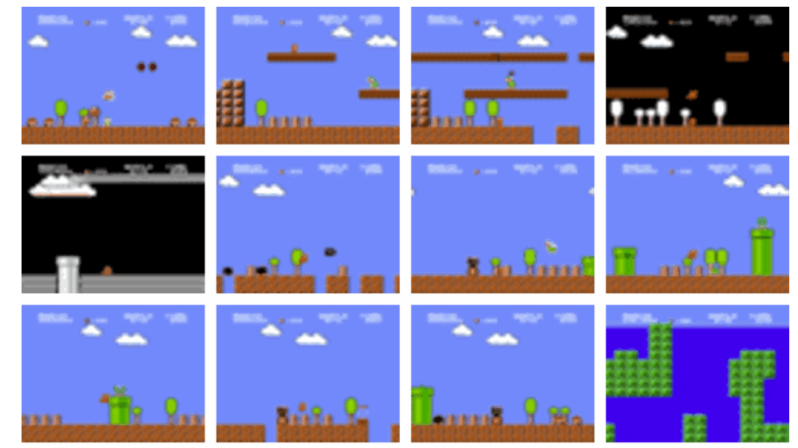
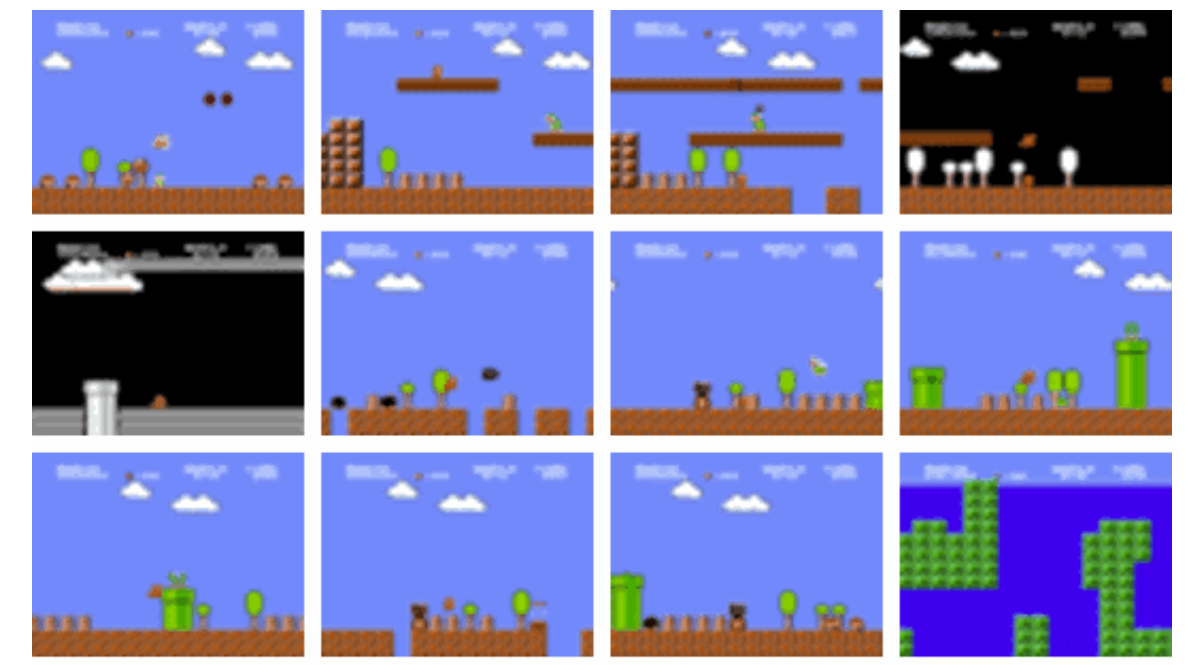
The research paper is entitled “Video Game Generation: A Practical Study using Mario.” The basic idea is whether a generative AI model can create an interactive video game by first training it on an existing game.
MarioVGG, as it is called, is a “text-to-video model.” It hasn’t built the Mario game that you’re familiar with, though. It takes player commands as text inputs—such as “run, or “jump”—and then outputs video frames showing the result in the ‘game.’ The model was trained on a dataset of frame-by-frame Super Mario Brothers game play, combined with data on user inputs at the time. The model shows an ability to generate believable video output for given player inputs, including basic game physics, item interactions, and collisions. It’s able to do this in a chained way, so that it can reasonably simulate a player making multiple actions and moving through a level of the game.
It’s not like playing a real Mario game yet, by any means. Regardless, the AI model has shown an ability to replicate the world of the game in a way that behaves relatively consistently with its established rules. If you’re in the field of video game development, though, you probably don’t have a lot to worry about just yet—you probably moved past making basic Mario clones years ago, so you’ve got quite an edge for now!



















 La justice est souvent symbolisée par Thémis, la déesse grecque qui porte un bandeau sur les yeux pour incarner l’impartialité, une balance pour l’équité des décisions et un glaive pour signifier des sanctions justes. Aujourd’hui, l’arrivée de l’Intelligence Artificielle dans le domaine judiciaire suscite de nombreuses interrogations. Peut-on allier justice et IA tout en garantissant l’équité des décisions ? Cette technologie pourrait-elle accélérer les procédures sans compromettre les principes fondamentaux de la justice ? Besoin urgent d’innovation dans la justice En France, le système judiciaire souffre de lenteurs chroniques. Des délais excessifs, pour les affaires civiles et pénales, s’étirent souvent […]



.jpg)