For two decades, Google Search has been unstoppable. Invincible. So thoroughly dominant that would-be competitors often couldn’t even get funding, because investors didn’t see the point in trying. But earlier this year, a judge declared that Google’s power, and the way the company wields it, was an illegal monopoly. And so now the US Department of Justice has to figure out how to undo it.
On this episode of The Vergecast, we dig into the DOJ’s first attempt at a plan. The Verge’s Lauren Feiner joins the show to talk through the recently filed proposal, which includes selling Chrome, possibly selling Android, and requiring Google to give vast quantities of its search tech and data to anyone wanting to compete.
In a stunning misstep, OpenAI engineers accidentally erased critical evidence gathered by The New York Times and other major newspapers in their lawsuit over AI training data, according to a court filing Wednesday.
The newspapers’ legal teams had spent over 150 hours searching through OpenAI’s AI training data to find instances where their news articles were included, the filing claims. But it doesn’t explain how this mistake occurred or what precisely the data included. While the filing says OpenAI admitted to the error and tried to recover the data, what it managed to salvage was incomplete and unreliable — so what was recovered cannot help properly trace how the news organizations’ articles were used in building OpenAI’s AI models....
Les rêves de voyages spatiaux prennent une nouvelle dimension avec le concours Hyperion. Architectes et ingénieurs sont invités à concevoir un habitat autonome, capable de traverser des siècles...
Des progrès technologiques pourraient bouleverser les analyses sanguines. Une simple goutte de sang, et le diagnostic est en route.
Un dispositif portable innovant promet de changer...
Walmart Realm has announced a festive update which includes four new virtual shops inspired by social trends from Pinterest and TikTok with gifts and holiday ideas curated by influencers.
This allows customers to see products in their own personal space. A Wish List feature, meanwhile, enables people to create and share gift lists with family and friends and there is also improved product discovery for more seamless commerce.
And in the spirit of giving, Walmart will be giving guests the opportunity to win a MetaQuest 3S, HP Envy 2-in-1 Laptop, HART Tools Toolkit and more, via weekly giveaways and mini games between now and 20th December.
“Walmart Realm is continuing to shorten the distance between inspiration and commerce for the next generation of customers, highlighting the best gifts for everyone on their list in a familiar, gamified experience. It’s fun. It’s immersive. It’s adaptive retail,” says Justin Breton, Head of Brand Marketing Innovation at Walmart.
Launched earlier this year, built using the Emperia Creator Tools platform, and produced by Sawhorse Productions, Walmart Realm invites users to collaborate with a brand, in a social atmosphere, allowing visitors to to gather and exchange information on a particular topic, while also engaging and purchasing products related to the topic.
Walmart says that the social nature of this approach allows for digital creators an almost complete freedom in expressing themselves, while providing it the opportunity to enjoy the viral effect of such experiences.
A musical robot that can play the piano alongside a human, creating a harmonic accompaniment in real time, has won an award at the Center for Human-Inspired Artificial Intelligence (CHIA) Conference 2024.
SpaceX’s Starship is the most powerful launch system ever built, dwarfing even the mighty Saturn V both in terms of mass and total thrust. The scale of the vehicle is such that concerns have been raised about the impact each launch of the megarocket may have on the local environment. Which is why a team from Brigham Young University measured the sound produced during Starship’s fifth test flight and compared it to other launch vehicles.
Published in JASA Express Letters, the paper explains the team’s methodology for measuring the sound of a Starship launch at distances ranging from 10 to 35 kilometers (6 to 22 miles). Interestingly, measurements were also made of the Super Heavy booster as it returned to the launch pad and was ultimately caught — which included several sonic booms as well as the sound of the engines during the landing maneuver.
Sounds were measured at eight different locations.
The paper goes into considerable detail on how the sound produced Starship’s launch and recovery propagate, but the short version is that it’s just as incredibly loud as you’d imagine. Even at a distance of 10 km, the roar of the 33 Raptor engines at ignition came in at approximately 105 dBA — which the paper compares to a rock concert or chainsaw. Double that distance to 20 km, and the launch is still about as loud as a table saw. On the way back in, the sonic boom from the falling Super Heavy booster was enough to set off car alarms at 10 km from the launch pad, which the paper says comes out to a roughly 50% increase in loudness over the Concorde zooming by.
OK, so it’s loud. But how does it compare with other rockets? Running the numbers, the paper estimates that the noise produced during a Starship launch is at least ten times greater than that of the Falcon 9. Of course, this isn’t hugely surprising given the vastly different scales of the two vehicles. A somewhat closer comparison would be with the Space Launch System (SLS); the data indicates Starship is between four and six times as loud as NASA’s homegrown super heavy-lift rocket.
That last bit is probably the most surprising fact uncovered by this research. While Starship is the larger and more powerful of the two launch vehicles, the SLS is still putting out around half the total energy at liftoff. So shouldn’t Starship only be twice as loud? To try and explain this dependency, the paper points to an earlier study done by two of the same authors which compared the SLS with the Saturn V. In that paper, it was theorized that the arrangement of rocket nozzles on the bottom of the booster may play a part in the measured result.
Aujourd’hui, il est difficile d’imaginer la vie sans téléphone, tablette, ordinateur ou tout autre appareil connecté. Face à cette dépendance croissante à la technologie, le marché des fabricants de puces électroniques ne cesse de se développer.
Dans la plupart des cas, ces appareils toujours importants sont alimentés par des semi-conducteurs, de petites puces qui conduisent l’électricité. Au fil des années, les puces sont devenues de plus en plus puissantes, tout en devenant moins chères et plus petites.
Elles jouent un rôle important non seulement dans l’alimentation de nos appareils, mais aussi dans le fonctionnement de l’IA (intelligence artificielle). Au fil du temps, les semi-conducteurs ont également investi les voitures et les maisons.
Parallèlement à la croissance et à l’innovation des nouvelles technologies, les entreprises qui produisent des puces continuent de croître à un rythme soutenu.
Même avec les nombreux problèmes causés par le COVID-19, les fabricants de puces devraient avoir un taux de croissance annuel composé d’au moins 4 à 5 % par an d’ici à 2027. Cela représente une augmentation prévue de près de 315 milliards de dollars par rapport au chiffre d’affaires total de 2019 de ces entreprises.
Alors, qui sont les principales entreprises qui produisent ces appareils cruciaux ? Pour répondre à cette question, nous avons rassemblé une liste des 10 premiers plus grands fabricants de puces à travers le monde, sur la base de leur revenu total en 2020.
Comment l’IA et la géopolitique ont redéfini le top 10 en 2024-2025 ?
Le marché des semi-conducteurs a connu un bouleversement spectaculaire depuis 2020. L’IA a, en fait, propulsé de nouveaux leaders. Aujourd’hui, le classement se base sur les performances pour les datacenters.
Actuellement, l’américain NVIDIA rivalise avec les géants historiques. Il s’empare des premières places par le biais de ses GPU pour l’IA. Samsung Electronics et SK Hynix, quant à eux, profitent de la forte demande de puces mémoire.
Par ailleurs, la géopolitique impacte fortement la chaîne d’approvisionnement. TSMC (Taiwan), leader incontesté de la fonderie, conserve sa place d’acteur stratégique, mais sa position est sensible.
Cette dépendance accélère la relocalisation industrielle en Europe et aux États-Unis. En conséquence, les stratégies d’investissement déterminent la performance. Ce nouveau paysage justifie une lecture actualisée de notre top 10 des fabricants de puces électroniques.
Le top 10 des plus grands fabricants de puces électroniques : mise à jour 2025
Intel
Chiffre d’affaires en 2020 : 77,87 milliards de dollars
Actifs totaux : 153,09 milliards de dollars
Basée dans la célèbre Silicon Valley en Californie, Intel est une entreprise massive de semi-conducteurs. Elle emploie désormais plus de 110 000 personnes dans 46 pays. L’entreprise a été fondée en 1968. Depuis, elle est devenue la plus importante entreprise de semi-conducteurs au monde en termes de chiffre d’affaires.
La société américaine est le notamment développeur de la série de microprocesseurs x86. Un microprocesseur que l’on trouve souvent dans les ordinateurs portables et autres PC. L’entreprise fournit ces CPU aux grandes entreprises informatiques et technologiques, telles que Lenovo, HP et Dell.
Intel a récemment élargi sa gamme avec des CPU de nouvelle génération : Alder Lake (2021), Raptor Lake (2022) et Meteor Lake (2024-2025). Ces processeurs offrent des architectures hybrides combinant cœurs haute performance et cœurs à faible consommation, optimisées pour l’IA et les applications intensives.
Intel ne se limite plus aux CPU. L’entreprise produit également des chipsets pour cartes mères, GPU Arc, mémoires, FPGA, processeurs embarqués et circuits intégrés spécialisés. Avec l’expansion de sa division fonderie (Intel Foundry Services), elle propose désormais des services de fabrication pour d’autres concepteurs de puces, rivalisant directement avec TSMC et Samsung.
Samsung Electronics
Revenu en 2020 : 52,2 milliards de dollars
Actifs totaux : 304 milliards de dollars
Fondée en 1969, cette société sud-coréenne d’électronique est l’un des plus grands producteurs de semi-conducteurs au monde. À l’échelle mondiale, l’entreprise emploie près de 290 000 personnes et est présente dans 74 pays.
Les semi-conducteurs de Samsung sont souvent utilisés dans les smartphones et les tablettes, notamment dans la gamme d’appareils Samsung Galaxy.
Toutefois, les semi-conducteurs ne sont pas les seuls produits de Samsung. La société fabrique également des batteries lithium-ion, des capteurs d’image, des modules de caméra et des écrans, pour n’en citer que quelques-uns. Parmi les clients les plus importants de l’entreprise figurent Apple, Sony, HTC et Nokia.
Globalement, Samsung est le plus grand fabricant de téléphones mobiles et de smartphones. Ce qui en fait une entreprise extrêmement pertinente et importante en 2021.
Taiwan Semiconductor Manufacturing Co. (TSMC)
Chiffre d’affaires 2020 : 45,5 milliards de dollars
Actifs totaux : 89,87 milliards de dollars
Taiwan Semiconductor Manufacturing Co. (TSMC) se trouve parmi les plus grandes usines indépendantes de semi-conducteurs au monde.
Cette société a connu une croissance rapide depuis 1994, avec un taux de croissance annuel composé (TCAC) de 17,4 % en termes de revenus. Aujourd’hui, TSMC emploie plus de 50 000 personnes et produit plus de 10 millions de plaquettes de semi-conducteurs par an.
Les appareils les plus connus utilisant les semi-conducteurs de TSMC sont des produits Apple, du MacBook Air à l’iPhone 12.
SK Hynix Inc.
Chiffre d’affaires en 2020 : 25,27 milliards de dollars
Actifs totaux : 56,08 milliards de dollars
Spécialisée dans la production de semi-conducteurs de mémoire, SK Hynix Inc, anciennement connue sous le nom de Hyundai Electronics, est une entreprise sud-coréenne implantée en Corée, aux États-Unis, en Chine et à Taïwan. Rien qu’en Corée du Sud, la société emploie plus de 22 000 personnes.
Ces puces mémoires ont plusieurs grands consommateurs, dont Apple, Asus, Dell et HP.
En outre, l’entreprise fabrique également d’autres produits électroniques, des lecteurs de DVD aux téléphones portables.
Broadcom Corporation
Chiffre d’affaires en 2020 : 23,89 milliards de dollars
Actifs totaux : 75,93 milliards de dollars
Fondée en 1991, Broadcom est une entreprise publique américaine dont le siège social est situé à Irvine, en Californie. L’expertise de la société dans la production de semi-conducteurs va des ordinateurs aux smartphones. Elle vend notamment ses produits à des dizaines de grandes entreprises.
Parmi ses clients habituels figurent Apple, Motorola, IBM, Dell, Asus, Lenovo, Logitech, Nokia et même Nintendo.
Une grande partie de l’intérêt pour les produits de Broadcom provient de la capacité de leur puce à accélérer les tâches qui utilisent le cryptage. Pour de nombreuses entreprises, ces puces contribuent au commerce électronique et aux communications sécurisées.
Broadcom produit également les puces de la série « BCM43″ qui sont spécialisées dans la prise en charge du WiFi dans de nombreux smartphones. Contrairement aux autres entreprises de cette liste, les appareils Apple et Android utilisent ces puces.
Qualcomm
Chiffre d’affaires 2020 : 23,53 milliards de dollars
Actifs totaux : 35,59 milliards de dollars
Fondée et basée en Californie du Sud, Qualcomm est surtout une entreprise de semi-conducteurs. Elle se spécialise également dans les logiciels et autres technologies sans fil.
Par rapport à d’autres entreprises de semi-conducteurs, Qualcomm fabrique des semi-conducteurs pour une très large gamme d’appareils, des véhicules aux montres, des ordinateurs portables aux smartphones et au WiFi.
Qualcomm est connue pour être une entreprise plutôt innovante. En 2017, l’entreprise est sortie de sa zone de confort pour créer sa première puce pour serveur PC, appelée Centriq 2400. Cette puce a été un succès, ce qui a permis à l’entreprise de se développer pour fabriquer davantage de semi-conducteurs pour PC et d’autres produits électroniques.
Qualcomm a également été l’un des premiers à fabriquer la technologie 5G, avec plus de 20 appareils mobiles qui utilisent maintenant la technologie 5G de l’entreprise.
Micron Technology
Chiffre d’affaires en 2020 : 21,43 milliards de dollars
· Actifs totaux : 53,68 milliards de dollars
Micron Technology est la seule entreprise de semi-conducteurs basée dans l’Idaho de cette liste. Elle se spécialise dans la fabrication de mémoires et de stockage de données pour les ordinateurs. Actuellement, la société emploie environ 40 000 personnes et possède 18 sites dans le monde.
Au cours des deux dernières années, Micron a sorti pas mal de produits impressionnants. En 2019, l’entreprise a fabriqué la première carte microSD d’une capacité de stockage de 1 téraoctet (To). En fait, à partir de 2020, Micron produit le plus grand SSD au monde : le Micron 5210 Ion de 3,84 To.
Applied Materials
Chiffre d’affaires en 2020 : 17,2 milliards de dollars
Actifs totaux : 22,35 milliards de dollars
Applied Materials est un géant de la Silicon Valley spécialisé dans la production de semi-conducteurs pour l’électronique, les écrans d’ordinateur, les smartphones, les téléviseurs et les produits solaires. Cette entreprise américaine a été fondée en 1967 et emploie aujourd’hui plus de 20 000 personnes.
Selon toute vraisemblance, elle figurerait plus haut dans cette liste si elle n’avait pas abandonné en 2013 sa fusion avec Tokyo Electron, qui était alors le plus grand fabricant d’équipements à semi-conducteurs.
Applied Materials est non seulement spécialisée dans la fabrication de puces à semi-conducteurs, mais fournit également des équipements précieux utilisés pour les fabriquer. Par exemple, les équipements de la société aident à produire des revêtements pour l’électronique flexible.
Nvidia Corporation
Revenu en 2020 : 14,78 milliards de dollars
Actifs totaux : 26,88 milliards de dollars
Également basée dans la Silicon Valley californienne, Nvidia est une société de semi-conducteurs unique en son genre. Elle est surtout spécialisée dans les processeurs graphiques (GPU), qui sont particulièrement utiles pour les jeux vidéo.
La gamme de GPU de la société, connue sous le nom de “GeForce”, est le processeur graphique le plus populaire aux États-Unis. Le Nvidia GeForce RTX 3060 Ti est donc actuellement le GPU de jeu le plus puissant.
Si le jeu est l’un des principaux marchés de Nvidia, les GPU de la société sont également utilisés dans les sites de supercalculateurs du monde entier. Plus récemment, l’entreprise a également fourni des processeurs pour les smartphones, les véhicules et d’autres appareils.
Texas Instruments Inc.
Chiffre d’affaires 2020 : 14,46 milliards de dollars
Actifs totaux : 19,35 milliards de dollars
Texas Instruments (TI) est l’une des plus anciennes entreprises de semi-conducteurs de cette liste. Elle a effectivement été fondée il y a plus de 90 ans, en 1930. Aujourd’hui, l’entreprise compte près de 30 000 employés et développe principalement des puces analogiques et des processeurs embarqués.
TI est une entreprise de semi-conducteurs plutôt historique, qui a produit le premier transistor en silicium commercial au monde (1954), le premier circuit intégré (1958), la première calculatrice portable (1967) et la première puce DLP (1987).
En 2020, les produits de TI sont utilisés dans presque tous les appareils électriques, ce qui fait de la société un indicateur vital de la santé de l’industrie des semi-conducteurs.
Notre méthodologie de classement
Pour établir ce top 10 des plus grands fabricants de puces électroniques, nous nous sommes appuyés sur un critère simple et objectif : le chiffre d’affaires réalisé en 2020. Ce choix nous permet de comparer les entreprises sur une base financière concrète, en les regroupant selon trois seuils. Le premier seuil équivaut à plus de 40 milliards de dollars, le second, entre 20 et 40 milliards, et le troisième, moins de 20 milliards de chiffre d’affaires.
Mais au-delà des chiffres, nous avons aussi pris le temps d’examiner ce que fait chaque entreprise. Nous avons, par exemple, intégré leur spécialité (la mémoire, les GPU ou les processeurs), les marchés qu’elles servent, ou encore les grandes marques qui utilisent leurs technologies.
Pour que notre analyse soit plus pertinente, nous avons également tenu compte de leur présence internationale. Mais nous avons aussi pris en compte le nombre de personnes qu’elles emploient et de la valeur totale de leurs actifs. Toutes ces informations proviennent de sources publiques fiables et de rapports financiers accessibles.
Notez cependant qu’avec ce classement, notre but n’est pas de désigner « la meilleure » entreprise. Nous proposons juste de vous donner une vue d’ensemble des acteurs les plus influents de l’industrie des semi-conducteurs, à travers des données claires et vérifiables.
Marché des puces électroniques 2025 : STMicroelectronics fait face à un grand défi !
STMicroelectronics, l’un des acteurs majeurs de l’industrie des semi-conducteurs, annonce des perspectives peu encourageantes pour le début de l’année 2025. Le géant franco-italien des puces électroniques anticipe un premier trimestre particulièrement difficile. La conséquence, entre autre, du ralentissement observé fin 2024.
L’une des principales causes est la faiblesse persistante de la demande dans plusieurs secteurs clés. Plus précisément, une réduction significative des commandes de ses clients. Pour rappel, STMicroelectronics fournit des composants essentiels à de nombreux constructeurs automobiles et fabricants d’appareils électroniques.
Les analystes du secteur soulignent que cette situation reflète une tendance plus large du marché des semi-conducteurs. Les fabricants doivent composer avec un déséquilibre entre l’offre et la demande. Après la pénurie mondiale qui avait marqué les années post-Covid, l’industrie fait désormais face à un excès de capacité de production. Ce phénomène entraine ainsi une pression à la baisse sur les prix en 2025.
Le chiffre d’affaires prévisionnel pour le premier trimestre 2025 devrait se situer en deçà des attentes initiales des investisseurs. On parle d’une baisse estimée entre 15 et 20% par rapport à la même période en 2024. Cette projection reflète non seulement les défis conjoncturels mais aussi les ajustements structurels en cours dans l’industrie.
Malgré ces perspectives moroses à court terme, le grand fabricant de puces électroniques maintient ses investissements stratégiques. Notament dans l’innovation et la modernisation de ses capacités de production. L’entreprise reste confiante dans ses fondamentaux à long terme, portés par des tendances de fond comme la transition énergétique et la digitalisation croissante de l’économie.
Fabricants de puces : Cerebras, consorts et d’autres startups bouleversent le secteur
Actuellement, une nouvelle génération de start-up vient bousculer l’ordre établi en misant sur des architectures de rupture. Des entreprises comme Cerebras Systems, Graphcore, Tenstorrent ou Rivos développent des technologies radicalement différentes. Ces dernières ont pour objectif, dès l’origine, de répondre aux besoins massifs de calcul moderne.
Cerebras, par exemple, a fait le pari audacieux de concevoir des puces de taille wafer-scale. Cette approche dépasse les limites traditionnelles du silicium. Du coup, elle permet d’accélérer des charges de travail autrefois gourmandes en ressources.
Graphcore mise de son côté sur une architecture maison pour le traitement parallèle intensif. Tenstorrent et Rivos quant à eux exploitent l’ouverture du standard RISC-V pour concevoir des processeurs sur-mesure, optimisés pour des performances ciblées.
Notons que ces acteurs émergents ne se contentent pas d’optimiser l’existant. Bien plus que cela, Ces fabricants de puces repensent entièrement les modes de construction, de programmation et d’intégration de celles-ci. Leur agilité technologique leur permet d’explorer des voies que les grandes entreprises, plus contraintes par leur inertie industrielle, hésitent à emprunter.
Au-delà des géants historiques, de nouvelles entreprises émergent ou se renforcent avec des technologies de rupture. Ayar Labs (San Jose, USA) est un spécialiste de l’interconnexion optique (co‑packaged optics) pour l’IA à très grande échelle. En 2025, la société a présenté un retimer optique UCIe à 8 Tbps lors du salon Hot Chips 2025. Elle a aussi dévoilé des collaborations stratégiques avec des acteurs taïwanais pour accélérer la production.
Ensuite, Lightmatter (Mountain View / Boston, USA) a levé de nombreux capitaux (valuation ≈ 4,4 milliards $) et vise à réduire l’énergie de transfert de données dans les centres de calcul. Ce leader dans la photonique appliquée à l’IA a dévoilé sa puce « Passage M1000 », un «3D photonic super‑chip».
Enfin, Axelera AI (Eindhoven, Pays‑Bas) est un spécialiste des processeurs d’inférence IA «edge» à haute efficacité énergétique. En mars 2025, elle a lancé la puce «Titania» et obtenu une subvention de jusqu’à 61,6 M€ dans le cadre du projet européen «DARE».
IA et semi-conducteurs : le succès de NVIDIA et Broadcom
L’IA transforme profondément le secteur des semi-conducteurs au point de propulser certaines entreprises comme NVIDIA et Broadcom vers de nouveaux sommets financiers.
D’un côté, NVIDIA, leader incontesté des puces graphiques et de l’infrastructure IA, a enregistré un chiffre d’affaires de 130,5 milliards de dollars pour l’exercice 2025. Ce qui désigne une hausse de 114 % par rapport à l’année précédente.
Sa division Data Center, alimentée par la puce Blackwell, a généré 39,3 milliards de dollars au quatrième trimestre. Ce chiffre colossal représente environ 50 % de son chiffre d’affaires global. De plus, la forte demande accrue des applications d’IA avancées ne fait qu’accentuer cette croissance. Nous observons notamment cette situation dans les domaines de l’apprentissage automatique et de l’inférence.
D’un autre côté,Broadcom a enregistré un revenu de 15 milliards de dollars au deuxième trimestre de l’exercice 2025. Cette hausse constitue en majorité des revenus liés à l’IA de 4,4 milliards de dollars. Une hausse de 46 % par rapport à l’année précédente.
Actuellement, la société prévoit que ses revenus liés à l’IA atteindront 5,1 milliards de dollars au troisième trimestre. Ce qui représente environ 60 % de la croissance de son activité de semi-conducteur . La firme connaît également une forte demande pour ses puces d’IA personnalisées. Leurs produits sont aujourd’hui utilisés par des clients tels que Google, Meta et ByteDance.
Semi-conducteurs en 2025 : enjeux éthiques et durables à ne pas négliger
Les puces électroniques transforment nos vies, mais leur fabrication durable de puces pose de vrais défis. En fait, produire des semi-conducteurs consomme beaucoup d’eau ultra-pure et d’énergie. Cela crée un impact environnemental semi-conducteur important, surtout dans les régions déjà sous tension hydrique. Les usines génèrent aussi des déchets chimiques qu’il faut gérer pour limiter les risques.
La dépendance à certaines zones géopolitiques pour les matières premières crée des tensions et des risques stratégiques. Les entreprises doivent réfléchir à l’usage éthique de leurs puces, notamment lorsqu’elles alimentent l’IA ou collectent des données sensibles. L’éthique dans l’industrie des semi-conducteurs devient un enjeu stratégique pour tous.
Des leaders comme NVIDIA et Broadcom, mais aussi des start-ups innovantes, investissent dans des procédés plus écologiques. Ils développent des circuits modulaires et un approvisionnement responsable semi-conducteur. L’éthique et la durabilité influencent donc le choix des investisseurs et la confiance des consommateurs. Et la consommation énergétique puces électroniques et l’IA et la responsabilité technologique sont au cœur de cette transformation.
FAQ sur les puces électroniques
Quels types d’appareils utilisent une puce électronique ?
Omniprésentes dans le quotidien de la société actuelle, les puces électroniques sont intégrées dans une multitude d’appareils tels que les smartphones, ordinateurs et tablettes. Des équipements domestiques comme les réfrigérateurs intelligents et les lave-linges intègrent aussi les puces électroniques.
Elles sont également nécessaires dans les véhicules connectés, les appareils médicaux, ainsi que dans les systèmes de sécurité. Elles ont pour fonction d’optimiser la fonctionnalité et la connectivité de ces dispositifs.
Pourquoi Intel demeure leader du marché des puces électroniques ?
Grâce à son innovation constante et ses investissements massifs en recherche et développement, Intel demeure leader parmi les fabricants de puces électroniques.
L’entreprise maintient une avance technologique significative à cause de ses procédés de fabrication de pointe et son architecture de conception optimisée. De plus, Intel se distingue par sa capacité à s’adapter aux besoins du marché, en proposant des produits performants pour divers segments, allant des ordinateurs personnels aux serveurs de données.
Pourquoi les puces sont-elles importantes pour l’industrie automobile ?
La puce électronique joue un rôle prépondérant dans l’industrie automobile moderne afin de garantir une gestion efficace et intelligente des véhicules. Elle est au cœur des systèmes de sécurité, de navigation et d’assistance à la conduite afin d’assurer une expérience utilisateur optimisée.
De plus, les puces facilitent l’intégration de technologies avancées comme la conduite autonome et les véhicules connectés. Une telle innovation contribue effectivement à la réduction des émissions de CO2 et à une meilleure efficacité énergétique. Leur importance croissante témoigne ainsi de l’évolution vers des automobiles plus durables et intelligentes.
Le GPD Pocket 4 est désormais sur le pas de tir d’un lancement sur Indiegogo. Comme d’habitude mon premier conseil est de bien réfléchir dans quoi vous mettez les pieds avec ce genre d’opération de financement participatif. Même si la solution est tentante n’oubliez pas que vous n’êtes pas client de GPD, vous êtes alors un investisseur et à ce titre vous ne faites que prendre des risques.
Aucune obligation de livraison ou de garantie, aucune action légale possible. Vous investissez dans ce qui peut être tout à fait légalement un échec de production ou une machine plein de défaut. Cela permet de d’économiser hypothétiquement quelques sous mais le risque à court, moyen et long terme est important.
Le prix de base du GPD Pocket 4 sera de 895 dollars et une quantité probablement minimale de machines seront proposées à 829$. Ces quelques pièces servant a amorcer la pompe d’une campagne autant publicitaire que commerciale. Le prix « en magasin » n’est pas indiqué. Il faut prendre en compte que ces sommes sont indiquées sans taxes ni frais de port. Il faudra ajouter en prime des frais de dédouanement facturés par le transporteur. Les 895 dollars se transforment en 1018€ avec juste 20% de TVA. Si on ajoute entre 50 et 80 € de frais de dédouanement et une quarantaine d’euros de frais de port la note arrive alors facilement à 1100€.
Pour ce tarif on aura droit à un netbook sous AMD Ryzen 7 8840U, une puce 8 cœurs Zen4 et développant 16 Threads associée à un circuit graphique Radeon 780M. Elle proposera 16 Go de LPDDR5x et un stockage SSD NVMe PCIe 4.0 x4 de 1 To.
Une version plus puissante sera équipée d’un Ryzen AI 9 HX 365 qui passe au Zen 5 d’AMD avec 10 cœurs au total et un circuit graphique Radeon 880M. Ce modèle équipé de 32 Go de mémoire vive toujours en LPDDR5 et avec un stockage qui grimpe à 2 To sera commercialisé à 1157$. Soit 1315€ avec juste 20% de TVA.
Enfin, la version « haut de gamme » est annoncé à 1466$ (1666€ avec 20% de TVA) et tournera sous processeur Ryzen AI 9 HX 370. Une puce aux 28 watts de TDP qui développe 12 cœurs et le double de threads. Un processeur de dernière génération avec 4 cœurs Zen 5 et 8 cœurs Zen 5C oscillant de 2 à 5.1 GHz. Avec un NPU 50 TOPS et un circuit graphique Radeon 890M offrant 16 cœurs RDNA 3.5 à 2.9 GHz. Ici on retrouvera jusqu’à 64 Go de LPDDR5x-7500 et le SSD NVMe pourra atteindre 4 To.
Le GPD Pocket 4 confirme sa fiche technique
L’écran est donc bien un IPS 8.8 pouces qui gonfle en définition pour atteindre 2560 x 1600 pixels en 144 Hz. Soit, sur une dalle de cette taille, une densité impressionnante de 343 pixels par pouce. La luminosité atteint 500 nits et le choix a été porté sur une dalle à la colorimétrie maitrisée avec un DCI-P3 couvert à 97%. Le support d’un stylet actif MPP 2.0 et une capacité tactile 10 points de contact capacitif sont assurés.
Le châssis mesurera bien 20.7 cm de large pour 14.5 cm de profondeur et 2.2 cm d’épaisseur. La batterie est une 44.8 Wh avec une charge rapide 100 Watts mais on n’a toujours aucune information quand à l’autonomie de la machine. Entre l’écran haute définition et la puce embarquée, il y a lieu de s’en inquiéter.
Pour le reste c’est bien un module Wi-Fi 6E et le Bluetooth 5.3 qui sera embarqué, un connecteur USB4 est prévu ainsi qu’un connecteur amovible compatible avec plusieurs options sur une base USB : un port RS-232, un lecteur de cartes MicroSDXC UHS-I, ou un module 4G LTE avec lecteur de cartes SIM.
Pourquoi développer des modèles aussi puissants et chers ?
J’ai posé cette question à plusieurs acteurs de ce marché particulier. Un marché qui a vu passer le format netbook d’un entrée de gamme ultra abordable et pratique à celui d’un très haut de gamme hyper élitiste. La réponse est toujours la même. Les marques qui s’intéressent encore à ce format n’ont pas les moyens de le développer en masse.
Des acteurs comme GPD ou One Netbook ont plus d’intérêt a développer des produits haut de gamme qu’ils vendront sur un marché de niche à une poignée d’utilisateurs dans la durée que de proposer une référence à bas coût plus difficile a rentabiliser pour des raisons évidente de service après vente. Sur une machine à 1000€, le temps passé a la monter en usine et a la développer peut être long. La durée de vie du produit sera également plus importante que sur un modèle entrée de gamme. Ce qui a permis par exemple à GPD de lancer le Pocket 3 en 2021 et de continuer à le vendre trois ans plus tard.
GPD préfère de loin vendre 3000 appareils à 1000€ et que 10 000 appareils à 300€ parce qu’ils sont plus taillés pour cela d’un point de vue gestion technique et commerciale.
Il aurait fallu qu’un acteur international se décide, par exemple au lancement du processeur Intel N100, a lancer un reboot du format netbook. Un acteur comme Lenovo, Acer, Asus ou HP aurait pu reprendre à son compte le format netbook avec un moteur mis à jour efficace et performant. On a tendance a oublier que le N100 est un processeur mobile tant il a été boudé par les fabricants sur ce segment. Mais cette puce à très faible TDP aurait fait une excellent candidat pour un engin basique de petite diagonale. Il est possible de construire une solution à moins de 500€ très bien équipé autour de cette puce. Mais il faut pour cela avoir les capacités logistiques et commerciale ainsi que le SAV nécessaire pour que l’opération soit rentable. Les « petits acteurs » comme GPD ne l’ont pas.
Certains acteurs de second plan comme Chuwi ont tenté l’aventure d’un MiniBook X sous Intel N100 abordable. Avec du succès mais également avec pas mal de déboires. Certaines machines fonctionnant comme un charme et d’autres séries étant beaucoup, beaucoup, plus problématiques.
Est-ce qu’il est trop tard pour lancer un nouveau format netbook entre le 9 et le 10 pouces comme ce GPD Pocket 4 mais en version « simple », sans tactile, avec un processeur taillé pour le quotidien comme un Alder Lake N ? Je ne pense pas. Le problème est que les marques sont devenues frileuses sur ce segment. Elles préfèrent vendre des machines en 13 et 15″ mal équipées sous les 300€ mais bien plus rentable plutôt que de prendre un petit risque avec un format de ce type. Et c’est bien dommage.
J’ai fait un atelier « impression 3D » dans l’association Ateliers Geeks à une jeune fille qui avait le même genre de machine que ce qui est présenté ci-dessus par Acer ou HP, un Celeron de début 2021 avec 4 Go de mémoire vive et un stockage neurasthénique en eMMC. Le tout sous Windows 11. Ces produits sont tout simplement une honte technique. Windows y est inexploitable et la gamine en question a du se rabattre sur un ordinateur d’occasion bien plus performant et moins cher acheté chez AFBshop par l’asso. J’ai lancé les outils utilisés dans cet atelier (Fusion360 et Cura) sur un MiniPC équipé d’un N100 avec 16 Go de mémoire vive et un SSD SATA. La performance du N100 est sans commune mesure avec celle du Celeron.
Voilà le triste constat que je peux faire aujourd’hui. Les marques préfèrent faire de l’argent avec des produits inexploitables vendus à des gens sans le sous plutôt que de vendre des netbooks corrects. Pour rappel quand les netbooks ont disparu de la circulation, la majorité des acteurs de leur marché m’expliquait qu’il était devenu impossible de gagner de l’argent avec des ordinateurs portables à 400€. On voit où ils en sont maintenant.
Découvrez l’architecture et les technologies derrière le système de stockage de métadonnées de Reddit, conçu pour traiter des charges massives de 100 000 requêtes par seconde. Cet article explore les défis techniques, les solutions innovantes mises en œuvre, ainsi que les tendances actuelles en ingénierie logicielle, comme les alternatives aux modèles LLM, le fonctionnement d’Asyncio en Python, et l’automatisation de la gestion d’ingénierie chez GitLab. Une plongée dans les coulisses des systèmes hautement performants et leur impact sur l’industrie.
Lapz, the Apple Vision Pro app that puts Formula One races in mixed reality, is on hold after F1 asked it to stop using its content, as reported by UploadVR. In a message posted to its Discord channel, Lapz says it halted distribution through TestFlight while it explores “licensing opportunities with various racing leagues and tech partners.”
“F1® have respectfully asked us to discontinue the use of their F1®TV broadcast rights in our platform for the time being while we continue to advance our roadmap and enhance the beta experience,” the message says.
Lapz started out as just a concept video created by designer John LePore. However, the video garnered a lot of attention, leading LePore to work with a group of developers to create an...
At SID Display Week in May 2024, MicroLED maker Jade Bird Display (JBD) had a large booth that showed their devices, a number of customer systems, and a “compensation demo.” JBD offered to loan me their compensation demo. After sending me one of the demos from SID and my taking many pictures to evaluate it, JBD informed me that they would be able to send me a newer demo in a couple of months, so I decided to wait for the newer system before reporting my results. Between the availability of the systems and my travel, many months have passed.
This article starts with quite a bit of “background information,” which I think is helpful in understanding the results. Perhaps the most controversial issue is that JBD says their compensation is based on both eyes. I felt the need to add some information on “Binocular Rivalry,” which discusses how human vision responds to seeing different content in each eye. Human vision is complex, to say the least, and while I think what JBD claims is mostly true, it oversimplifies what people see.
All images in JBD’s demo were pre-loaded into the demo system. JBD’s current devices have a more limited real-time correction built into the display and controller. The stills in the demo were pre-processed to demonstrate what will be possible in real-time with their new chipset. JBD allowed me to submit a series of test patterns that they added to their set of demo images, which I appreciate. Still, I couldn’t try any new test patterns based on my findings (which I often do with other headsets when I see an effect that I want to investigate further).
I should also note that the demo systems did not have the full heat-sinking capability that would be incorporated into a product. This limited the number of bright pixels, particularly red ones, that could be shown in a single image.
I also just realized that in all the back-and-forth with JBD on getting their demo system, which I thought would happen soon after Display Week, I missed reporting on MicroLED and other display technology at Display Week. I plan to make up for that soon. I also need to finish reporting on DLP’s use of “pixel shifting” for AR headsets using PoLight’s Twedge Concept. I want to get my backlog of information cleaned up before CES in January 2025.
Meeting at CES 2025
Speaking of CES 2025. If you or your company schedule a meeting with me at CES 2025, I can be reached at meet@kgontech.com).
JBD Dominates in MicroLED-Based AR Glasses
JBD is the only company I know of that is shipping MicroLEDs, and the only ones I have seen in any headset product or even prototype. At the same time, Meta CTO Andrew Bosworth stated in videos that Meta “designed” Orion’s MicroLEDs, and it is most likely that Jade Bird Display is making Orion’s MicroLEDs. It has been widely rumored that Meta’s 2020 MicroLED deal with Plessey fell apart (example: https://www.microled-info.com/meta-announces-10000-ar-glasses-powered-microled-microdisplays), and there are no other likely suspects. Perhaps Meta got a change in resolution to make it a custom part. It appears Meta “designed” the MicroLEDs in a similar way that Apple “designed” the Micro-OLEDs used in the Apple Vision Pro when it is known that Sony manufactured the Micro-OLEDs for Apple.
PlayNitride has demonstrated a full-color MicroLED display using blue MicroLEDs with Quantum dot red and green color conversion with a Lumus Waveguide (but not in a headset) at AR/VR/MR 2023 (see MicroLEDs with Waveguides (CES & AR/VR/MR 2023 Pt. 7)). PlayNitride has continued advancing its efforts with quantum dot color conversion MicroLEDs. Still, I have yet to see a headset.
JBD’s booth featured AR glasses from multiple companies, including TCL’s Ray New X2 (full-color 3-chip X-cube) Ray Neo X2 and several monochrome (green) AR glasses, including Vuzix Z100, LAWK’s Meta Lens, MyVu AR, and INMO’s Go. I have also seen JBD MicroLED-based monochrome AR glasses from Oppo and, more recently, Even Realities announced their small form factor AR glasses Even Realities G1: Minimalist AR Glasses with Integrated Prescription Lenses.
JBD’s Current and Future Lineup
All the JBD MicroLED-based AR glasses to date use its monochrome 640×480 MicroLEDs with a 4-micron pixel. JBD offers projector optics for both single devices and has gone through a few generations of 3-Chip with X-Cube color combiners. JBD has been talking about 1280×720 monochrome devices with 5-micron pixels and monochrome 1920×1080 devices with 2.5-micron pixels for a few years, and JBD states that they plan on shipping devices to headset companies with 2.5-micron pixels for use in prototypes in 2025. JBD JBD sells MicroLED panels, both with and without the optics, as shown below.
As I have discussed before, including in TCL and JBD X-Cube Color and our recent AR Roundtable Video Part 2: Meta Orion Technology and Application Issues, combining three monochrome panels to form a full-color image is a challenging alignment problem that is costly to manufacture. Most laymen will think about the horizontal and vertical alignment. Still, the more complex problem is aligning the panels in all dimensions, or the individual colors will not be in focus across the image. I think everyone in the industry believes that some form of “monolithic” approach will be required in the long run for MicroLEDs to be used in high volumes. I discussed the most well-known approaches to single-chip-full-color MicroLEDs in MicroLEDs with Waveguides (CES & AR/VR/MR 2023 Pt. 7). Among those approaches is the “stacked LED” method, which grows the various Red, Green, and Blue LED crystal layers on top of each other.
JBD Single Chip
JBD has developed and is sampling a stacked pixel device, but I have not personally seen it running. Unlike others that make the red, green, and blue LEDs all in variously doped Indium gallium nitride, JBD uses AlInGaN for the blue and green LEDs and AlInGaP for red. While red can be made in InGaN, it is generally not very efficient and high-yielding, whereas AlInGaP is more “natural” when making red. JBD is demonstrating that they have the process capability to mix the two types of LED crystal layers.
It’s not clear when the stack LED approach will be better than the 3-chip method, at least for the immediate future. Perfecting the manufacturing of the complex process will likely take some time. The stacked approach limits the emission area of all three LEDs, and light from the lower layers will be blocked/lost by the upper layers. Then, there is the major issue of heat being trapped by the middle layers and LEDs heating each other. I discussed the various approaches to making full color with MicroLEDs in MicroLEDs with Waveguides (CES & AR/VR/MR 2023 Pt. 7), and each approach has its advantages and issues.
Display Resolution and Utility
The waveguide (from an unspecified manufacturer) supports an approximately ~30-degree (diagonal) FOV. The JBD 640×480 3-Chip X-Cube projector has about 26.6 pixels per degree of angular resolution. This resolution is the same as a 1987 IBM PC VGA display. It is 1.5x more total pixels than a 44mm Apple Watch 10 (416 by 496 pixels), with that watch having about 10 degrees FOV and ~65 pixels/degree when held about 300mm (~12 inches) away from the eye.
With more and larger pixels, the display is arguably capable of displaying about twice the usable information as the 44mm Apple Watch. This may be mitigated due to the watch having a black background while the glasses are seen against whatever the user is looking it. Still, the contrast and overall image quality will be limited due to the fact that it will be a see-through display and due to color variation with the waveguide. The image quality is more than good enough for looking at messages, thumbnail photos, short videos, and limited web browsing. Still, it is no replacement for a smartphone’s much better display.
Demo Systems, Caveats, and Overall Impression
First, I want to give the usual warnings about this being a demo system. I was loaned one of a few demo systems, not a product bought at random. I have no idea whether the display projector and its displays were cherry-picked, what effort or degree of automation was applied to compensate, or whether it could be replicated in production.
It is important to understand that the displays and optics are going into optical see-through AR glasses. As such, the absolute image quality does not need to be perfect, as it will be seen using whatever is seen in the real world as the background/black.
For informational-type AR information, while perfect color is not essential, it is often important that colors don’t vary so dramatically that saturated colors cannot be recognized. With see-through displays, when colors are used to add meaning, they need to be saturated and bright to stand out reliably; subtle color variations are pointless against a real-world background. Commonly green=good, red=bad, and yellow=caution. It turns out that blue (~450-470nm) is almost invisible against anything in the real world as blue is low in “nits” (human perception of brightness) and is also low in human resolving power (there are relatively few blue cones in the eye). So, often, see-through displays use cyan (blue+green) instead of blue. Also, humans often have a hard time telling Magenta (blue+red) from red. If, as is common with many diffractive waveguides, the color transmission varies dramatically across the display, then if colors made up of multiple primaries (ex., yellow) are used to indicate something, they lose their meaning. In some areas of the FOV, some colors might not be reliably visible as they become dim.
Demura (display pixel correction) and Waveguide correction
Both OLED and LED display technologies have issues with each emitting element varying in brightness and color. The variations occur from pixel to pixel and across large regions of the display. Due to the way MicroLEDs are made, they are more susceptible to variation than OLEDs. A process called demura is used to correct for these inherent display variations (see, for example, OLED-Info’s Correcting OLED and MicroLED Display Quality to Improve Production Efficiency and Yields). Simply put, the methods typically use a camera to look at the display at various intensities and develop a table of corrections for each pixel. Things can get complicated with emissive displays where current and or heat (induced by current) across the display can also cause variations, which, in turn, are a function of content (a bright image generates more heat).
JBD’s compensation method tries to correct for the variation in MicroLEDs and color variation across the waveguides.
The diffractive waveguides have significant brightness and color variations
The waveguides inject light from temples or the upper left side of the left eye’s waveguide and the upper right side of the right eye, which results in a fall in brightness the farther the light travels from the injection corner. Complicating things further is that the light falloff varies by wavelength and is not completely symmetrical between the left and right. In particular, blue, while strong in the upper left corner of the left waveguide, becomes very dim in the lower right corner of the left waveguide. Below are pictures taken through the left and right waveguides for both the “original” and the compensated image, with the right-hand column showing the 50/50 combination of the left and right image simulating simple binocular fusion (averaging of the left and right view).
Generally, with these waveguides, the light falls off as it goes from top to bottom to the farthest corner of the waveguide. Blue and green are much brighter near the entrance and fall off significantly in the bottom corner opposite the waveguide. Blue and Green appear to fall off more than red (particularly on the Left waveguide).
Looking at the circle with the “11” in it, the left eye’s image is too cyan, and the right eye’s image is too red. Interestingly, in the corrected image, the left eye’s image has slightly less of a cyan tint, and the right eye’s image is redder than before the correction, as JBD’s algorithm is aimed at the fused/averaged image. Looking at the circle with “22,” which is in the darkest corner of the right eye (and farthest from the entrance grating), it is still a little reddish, even in the combined image. Loosely speaking, they can’t get enough light into that corner to compensate between both eyes.
JBD said that their correction was based on binocular fusion. By this, they mean the simple average of the views of the left and right eye. Because the waveguides have somewhat left-to-right mirror symmetry, as shown in the previous set of images, it thus requires less correction to treat them as pairs. There is also so little light of various colors in the far corner from where the light enters the waveguides that it would mean driving the LEDs too hard in the corners or making the whole rest of the display much dimmer to try and balance the colors in a single waveguide. The somewhat mirror symmetry also allows them to add light to the areas of the left or right waveguide where it will be better transmitted.
From FIGHT! Virtual Reality Binocular Rivalry
Binocular Rivalry, where each eye is presented with a significantly different image, color, or brightness between the two eyes. For a short article on the subject of human Biocular Rivalry, see FIGHT! Virtual Reality Binocular Rivalry, scroll down to part iv, and for more info, follow the links and their references.
The human visual system creates singular percepts from two monocular inputs. Small differences are “fused” into intermediate percepts, whereas larger differences are perceived from one eye at a time in a stochastic process called binocular rivalry (Wheatstone, 1838). These phenomena have provided insight to binocular combination effects (Blake and Fox, 1973; Blake et al., 1981) and perceptual suppression (Blake and Logothetis, 2002; Blake and Wilson, 2011) respectively.
This study concludes that “rivalry and fusion are multistable substates capable of direct competition rather than separate bistable processes.” In other words, the human vision system can switch between “fusion” and “rivalry.” The human vision system produces what people perceive as a single image based on a complex mixing of the left and right eye views where their views overlap.
From my study and personal experience, what is “seen” will vary with different people and factors, such as which eye is dominant, the luminosity (the vision will tend to see the brighter image), and what the person concentrates on in the image. When simply looking at the images in the demo with my own eyes, the color uniformity looked significantly better with both eyes than with just one eye or the other. Still, if I concentrated, I could see unique differences between the left and right eyes.
The blended average, while simplistic compared to the human vision system, is a reasonable approximation of what most people will see in terms of color variation when typically viewing images with modest color variation, which is what I will be using in this article.
JBD Appears To Do A Good Job of Correcting the MicroLEDs
From what I am seeing, JBD is doing a good job of correcting the MicroLEDs themselves. Below is a picture of a mostly white flower from the right (only) waveguide with both the original (uncompensated) and JBD’s compensation.
The next two images zoom in on the areas of the red squares above to show pixel-level detail with and without correction. Notice how all the pixel-level random “noise” is largely corrected.
Next, we have a pure green image, once again with the left and right, and a combined image with both the origin (top row) and compensated (bottom row). In this image, we can better see both the pixel-to-pixel corrections and how the compensation is trying (but partially failing) to correct the waveguide over the whole FOV. This shows how the green light is falling off in the corner diagonally across from the entrance grating.
JBD provided me with a 3-D visualization of the Merge Original and Corrected image (below). These seem to agree with my camera results (right hand column above).
If you click on the image above, you will see a bright dot in the corrected left waveguide image (lower left image). The image below zooms into the upper left corner of the left eye’s waveguide for both the original and corrected image. While not perfect, it does a very good job of removing the major pixel-to-pixel differences. There was one “bug” in their correction where they overcompensated for a dark pixel, pointed to by the red arrow below in the medium (below left) and very high (below right) zoomed-in image images. It is not a big deal as this is a prototype.
As discussed in the Binocular Rivalry section above, I could see the bright dot with my own eyes where it might not be visible in the Left+Right “averaged” image.
Below are the left and right waveguide images with and without correction for a flat blue image. This demonstrates how the blue light transmission varies through the waveguide. Compared to the flat green results above, the blue light seems to progress slightly worse from the input grating corner than the green.
Distinguishing Colors
As discussed earlier, it is common to assign meaning to certain colors, such as Green = Good, Red = Bad, and Yellow = Caution. On the right is a test pattern that puts primary colors and those with two primary colors (e.g., Yellow = Red + Green).
I submitted a flat red image to JBD, but for some reason, it was not loaded into the demo system. As is evident from the earlier test patterns with white circles, the pattern of the red light is somewhat different from that of the blue and green.
Below are the various combinations of left, right, original, corrected, and (Photoshop) averaged images for the color squares. Because of the differences in the waveguide’s response to red and green, yellow becomes problematical to disguise from green (see, for example, the squares with the red rectangle). Magenta (red+blue) is problematical to distinguish from red. Even though the dimming of blue and green is similar, as can seen with the Green and Cyan squares in the white squares, distinguishing green from cyan can be problematic.
While the ability to distinguish colors is better in the corrected average of the left and right images (lower right image), as discussed in the Binocular Rivalry section earlier, the average is not what the human visual system will “see,” at least dependably.
Human Facial Tones
Humans are very sensitive to facial tones. It is thought that it is primordial sense to tell if someone is sick. Humans are not generally good at any other colors. As I have said for years, if I only see cartoon images and no human faces in a display demo, then likely as not, they can’t control the colors well. I have used the test image (right) for years, as it combines facial tones with some near-primary RGB colors and some dull white.
Below are the left, right, original, corrected, and averaged images. As with the color squares, the way the various primary progress in X and Y through the waveguide causes color shifts across the images. JBD’s compensation for the MicroLEDs plus the Waveguide does a reasonably good job when the left and right are averaged (bottom right). Still, as discussed in the Binocular Rivalry section, this is not exactly what the human will see.
JBD had a larger image of a woman (right) that filled much of the screen. The images below show how the facial tones varied in a single picture.
Below is a close-up of the right waveguide’s image for both the original and corrected/compensated image.
Below is a close-in crop of one eye with the common six-way comparison.
The Demos System’s Waveguides and Camera Alignment
JBD informs me that the waveguide’s eyebox is 10mm by 12mm, which is reasonably good (I don’t have the optical measurement equipment to test this spec. Compared to other waveguide optical systems I have photographed, the demo system waveguides seem to have a small sweet spot, at least in terms of color, with my camera equipment. The colors will shift, and my camera moves a few millimeters up or down or a slight change in angle. For all the pictures taken in this article, I adjusted the camera position for what I judged to be the best overall image as viewed through the camera. Below is a series of four pictures where I slightly moved the camera up or down from what I judged to be the best location.
I checked that similar color changes occurred with my own eyes as I shifted my view slightly. I used a six-axis camera rig to try and align the camera in the sweet spots of the left and right waveguides.
Conclusions
Overall, I thought that JBD successfully demonstrated that they can correct the variations in their MicroLEDs. There didn’t seem to be any dead pixels or pixels that were so dim they could not be corrected. They also did a reasonably good job of aligning the color panels on the X-Cube (I plan to go into this more in the next article). The alignment and overall image quality were also good with TCL’s glasses using JBD’s MicroLEDs with an X-Cube (see TCL RayNeo X2 and Ray Neo X2 Lite). I want to repeat a caveat: my experiences are with one-off demo systems, and I have no idea whether they were cherry-picked.
The demo was not able to fully correct for waveguide variation due to the waveguide’s color non-uniformity (I don’t know whose waveguide was used). Additionally, the color shifts with the eye’s location relative to the waveguide. When you look at a photo of a person, you can tell who it is, but the person’s facial tones vary across the waveguide. For some applications where color is used to indicate warnings or other information, the non-primary color shift and dimming of primary colors across the waveguide could be an issue.
I would like to see JBD’s MicroLEDs coupled with different diffractive waveguides. As I noted in TCL RayNeo X2 and Ray Neo X2 Lite, I saw major differences between the RayNeo X2 and X2 Lite, which used waveguides from different companies. I would also like to see it with Lumus’s reflective waveguides, which are typically much more uniform in terms of color and brightness uniformity than the diffractive waveguides. Lumus also believes that they would be more than 5 to 7 times more efficient/brighter than a diffractive waveguide with MicroLEDs (I would like to see if this can be proven).
I have been following JBD’s developments since 2019, and they have made major progress in the manufacturing of MicroLEDs and the quality of the demo systems I have seen. Not to mention that they are the only company with customers shipping MicroLED-based AR glasses products. Below are macro photographs directly (no optics other than the camera’s macro lens) of a JBD green and blue display I took at CES 2020, where there were many dead/nearly dead pixels (click on the images to see the details).
JBD Green MicroLED from CES 2020JBD Blue MicroLED from CES 2020
Next Time on Jade Bird’s Compensation Demo
Next time, I want to discuss JBD’s X-Cube alignment and Jade Bird’s weight pulse width drive method.
Marketing can only go so far as to get people to visit your physical store, but it’s another challenge altogether to get them to stay or encourage them to visit again. With this in mind, it’s important to invest in improvements that will get people to enjoy the time they spend browsing the shelves and shopping around for the products they need.
Whether you’re running a supermarket or a hardware store, you need to think about how you can enhance the in-store experience of your customers, especially those who have just discovered your business.
First impressions matter, and having a poor one will determine just how well your business attracts visitors and converts them into happy customers. Here are practical tips to walk you through it:
1. Know what your customers want
You need to have a thorough understanding of what your customers expect from their experiences navigating the aisles and searching for the products that catch their attention.
Zeroing in on the needs of your customers provides you with valuable insights on how you can better decorate and lay out your store that brings them the most convenience. This alone can help you spend the proper amount of time and money on improvements that generate actual results.
The best way you can get this done is by looking at your store from their perspective. Try to walk around and take note of the things that might encourage customers to keep browsing or discourage them from venturing further.
You should also look at your closest competitors and check for best practices in interior design you may want to adopt. Keep an eye out for trends you might also want your business to follow through. In any case, it pays to match these improvements with the type of audience that you have.
2. Provide sensory stimulation
The secret to improving in-store experiences lies in how the interior looks and feels to the customer. No one will want to visit a shop that’s not only dimly lit but also congested with too many decorations.
At the same time, you wouldn’t want to overstimulate shoppers by using a strong colour palette and loud music. To keep them engaged throughout their visit, you just have to hit the right notes in offering sensory stimulation.
Depending on your brand identity, you will want to paint the interior with warm hues that correspond to your brand colours. Make sure the space is well lit, especially if you’re running an apparel store. Bright neutral lights should be enough to get shoppers to keep browsing with ambient lighting to guide their eyes to your latest offers or flagship products.
You can also opt to brighten up the interior space by installing a commercial roof light from vendors like Addlite. Complete the layout by choosing an audio playlist that matches the theme of your store as well as your target audience.
3. Train and motivate your employees
The quality of your store’s interior is not the only defining factor influencing customer experiences.
It’s the interactions they have with your staff that will either make or break any chance of a return visit. Quality customer service is even more crucial in-store, so it’s important to orient your employees on everything, from answering simple questions to processing refunds.
Make it a part of your establishment’s culture to treat customers with utmost respect. It all starts by hiring clerks and attendants who are not only experienced in the retail industry who have the personality to match your business’s customer first policy.
Aside from recruiting the right people, you should also provide employees with an incentive to work more efficiently. You can raise morale by ensuring that they’re treated just as well. It also matters to offer mentoring opportunities so they’ll know how to deal with even the most complicated issues that they will be facing.
4. Put personalisation at the centre
Customers respond well to businesses that go the extra mile in terms of offering personalized experiences.
Not only does it enhance customer satisfaction but it also creates an opportunity to develop a deeper relationship with customers who may end up recommending your brand to people they know. What’s more, personalised experiences allow for greater loyalty as such customers couldn’t imagine getting the same level of attention elsewhere.
The best way you can offer personalised service is by learning about your customers’ first names and asking them about their preferences. Don’t use this as an opportunity to upsell a product in the hopes of getting them to buy a pricier offer. Instead, pay attention to how much they’re willing to spend and the kind of lifestyle they lead.
You can also offer them discount vouchers and special birthday deals. They can also be a good source of insights that will help improve your physical store further, so take the time to ask for their feedback via survey forms and interviews that focus on the things they want to see and experience on their next visit.
Endnote
For your physical store to prosper, it matters to double down on the things that keep customers engaged and happy while they’re there. Consider these tips as the starting point of your project.
Smart ring maker Oura announced on Tuesday that it has received a $75 million investment from glucose device maker Dexcom. The investment marks Oura’s Series D funding round and brings the company’s valuation to more than $5 billion. The partnership paves the way for the two companies’ devices and apps to be used together, which […]
À la liste déjà fort longue d'entreprises françaises victimes de fuites de données, deux noms viennent de s'ajouter : le magazine Le Point et, surtout, l'enseigne de grande distribution Auchan.
OpenAI is expanding ChatGPT’s Advanced Voice Mode feature to the web, letting users talk to the AI chatbot right from their browser. The company’s chief product officer, Kevin Weil, announced the launch on X. The feature, which makes ChatGPT more natural to speak with, is rolling out to ChatGPT’s paying customers this week, which means […]
In September, Microsoft made an unusual combination of announcements. It demonstrated progress with quantum error correction, something that will be needed for the technology to move much beyond the interesting demo phase, using hardware from a quantum computing startup called Quantinuum. At the same time, however, the company also announced that it was forming a partnership with a different startup, Atom Computing, which uses a different technology to make qubits available for computations.
Given that, it was probably inevitable that the folks in Redmond, Washington, would want to show that similar error correction techniques would also work with Atom Computing's hardware. It didn't take long, as the two companies are releasing a draft manuscript describing their work on error correction today. The paper serves as both a good summary of where things currently stand in the world of error correction, as well as a good look at some of the distinct features of computation using neutral atoms.
Atoms and errors
While we have various technologies that provide a way of storing and manipulating bits of quantum information, none of them can be operated error-free. At present, errors make it difficult to perform even the simplest computations that are clearly beyond the capabilities of classical computers. More sophisticated algorithms would inevitably encounter an error before they could be completed, a situation that would remain true even if we could somehow improve the hardware error rates of qubits by a factor of 1,000—something we're unlikely to ever be able to do.
Les chercheurs explorent des solutions innovantes pour rendre les essaims de robots plus efficaces. Inspirée du système nerveux humain, une nouvelle approche promet des avancées majeures.
Des essaims de robots plus intelligents et mieux organisés
Des équipes de robots pourraient accomplir des tâches complexes plus rapidement, comme lors de catastrophes naturelles. L'auto-organisation est essentielle pour les interventions où une coordination rapide sauve des vies. Des chercheurs de l'Université Libre de Bruxelles ont développé un cadre innovant. Cette architecture, inspirée du système nerveux humain, facilite la coopération entre robots en simulant des interactions neuronales. Ainsi, les robots se regroupent en sous-essaims et analysent leur environnement pour mieux planifier leurs actions. Cela améliore grandement leur efficacité, même dans des situations imprévisibles.
Le défi réside dans la transition des laboratoires aux applications réelles. Les comportements programmés individuellement compliquent l'auto-organisation. Cependant, le nouveau système surmonte ces obstacles. D'ailleurs, il combine contrôle centralisé et autonomie locale. Cette union aide ainsi à optimiser l'organisation des robots.
Un cadre qui imite le système nerveux humain
L'architecture SoNS permet aux robots de s'auto-organiser comme un système nerveux ad hoc. Chaque robot devient un neurone communiquant uniquement avec ses voisins. Cela évite les ralentissements d'un centre de contrôle unique. Dans ce réseau, le rôle de « cerveau » se déplace en fonction des besoins de la mission. Cette hiérarchie flexible permet une meilleure réactivité collective, même sous pression. La gestion des informations reste dynamique en assurant un bon équilibre entre autonomie et coordination.
Le système SoNS agit comme un middleware en facilitant la programmation des essaims. De plus, il améliore l'efficacité des missions de détection et d'action. Cela pourrait transformer l'utilisation des robots en équipe dans le monde réel. L'avantage principal réside dans la flexibilité, car les robots peuvent s'adapter sans dépendre d'une structure rigide.
Des tests prometteurs pour l'avenir des robots en essaim
Les simulations réalisées par l'équipe incluaient jusqu'à 250 robots. Ceci confirme d'ailleurs la robustesse de leur cadre. Les expériences menées ont montré une coordination réussie, même dans des environnements exigeants. Cela marque un pas important vers le déploiement des essaims dans des missions pratiques, comme les opérations de secours ou la surveillance environnementale. L'équipe prévoit d'améliorer cette architecture en la rendant encore plus performante.
Les chercheurs envisagent aussi des cerveaux SoNS plus sophistiqués. Ainsi, en intégrant l'apprentissage en ligne, les robots pourraient devenir encore plus autonomes. Cela ouvrirait la voie à des missions planifiées de manière proactive. Ces avancées augurent un avenir où les robots en essaim réaliseront des prouesses inimaginables. D'ailleurs, ce fait révolutionnerait de nombreuses industries.
Meta announced at Connect in September it was working with Microsoft to bring Windows 11 PCs the ability to automatically pair with Quest wirelessly. Now, the companies say we can expect preview access in December.
The feature will allow Quest 3 and Quest 3S to connect to Windows 11 PCs for a multi-monitor work environment—pretty familiar territory to anyone who owns a Vision Pro and some flavor of Mac, as Apple’s XR headset has been able to similarly connect via Mac Virtual Display since launch in February 2024.
Microsoft says it’s launching the feature in public preview at some point in December, which they hope will appeal to users looking to increase productivity.
“Windows in mixed reality brings the full capabilities of Windows 11 to mixed reality headsets, starting with Meta Quest 3 and Quest 3S. Access to your local Windows PC or Windows 365 Cloud PC from a Quest headset is seamless and it takes only seconds to connect to a private, high-quality, multiple-monitor workstation,” said Melissa Grant, Microsoft 365’s Senior Director of Product Marketing in a blog post.
At the feature’s unveiling at Connect in September, Meta teased the ability to seamlessly connect to the PC by simply looking at the keyboard, allowing you to instantly access the computer and drag windows across the multiple virtual monitors—a notable departure from the Remote Desktop experience available when using Meta’s own Air Link.
And while Quest has largely filled the role as VR’s premier standalone game console, Meta CEO Mark Zuckerberg thinks greater Windows integration is a step in the right direction for Quest.
“This is the path to building a general computing platform,” Zuckerberg said. “It’s not just games, although [Quest] is really good at that. You’re also going to be to use it for apps, watching videos, and all of the different things you would do with a general purpose computer. Quest is the full package.”
We’ll be keeping an eye out for release dates, and will update this piece when we learn more.
The UK healthcare system is transforming rapidly, driven by technological advancements and evolving patient needs. As the sector expands — both in infrastructure and resources — opportunities arise for organisations across various industries to contribute meaningfully to this changing landscape.
The question for Healthcare business leaders then becomes: How can business leaders harness these transformations to make a valuable impact in UK healthcare?
To understand where organisations can add value, we need to consider three perspectives: looking in at the patient experience, looking outward at the wider healthcare ecosystem, and looking beyond to future innovations driving the sector’s growth and sustainability.
Looking In: Empowering Patients Through Personalised Care
One of the most significant trends transforming healthcare is the rise of personalised care, fuelled by the increasingly sophisticated use of data. Virtual wards and telehealth solutions are increasingly being implemented as part of its strategic shift towards integrated care. These wards allow patients to receive hospital-level care at home, supported by remote monitoring technology. This shift towards patient-centred care prioritises the patient’s experience, making it a central focus for new healthcare models.
The latest GP Patient Survey highlights a growing emphasis on metrics around patient satisfaction. Yet, for patients to fully embrace these innovations, work must be done. Streamlined processes for accessing help and scheduling appointments, along with support for users with limited digital access or specific needs, are a growing area of focus. Only when these elements are optimised do they ease the strain on the broader healthcare system.
Our team at Magnetic recently helped Xyla, a leading global healthcare provider, to develop product visions for digital health solutions such as Virtual Wards and patient flow management systems. By articulating a clear, value-driven vision, we helped Xyla prioritise the customer experience, ensuring that patient needs remain at the forefront.
Looking Out: The Role of Private Providers in Expanding Access
As the UK healthcare system evolves, private providers are playing an increasingly prominent role. Private healthcare use is rising, with a 7% increase in private admissions from 2022 to 2023 (Financial Times). Many new entrants are addressing pain points in traditional healthcare, offering services that were once available only in hospitals.
Bupa, one of the biggest Global Healthcare companies, cares for over 50 million customers. Bupa’s flexible offerings, such as pay-as-you-go healthcare and subscription models, provide affordable options for individuals without private coverage, improving access and enabling faster healthcare support. At Magnetic, we’re proud to have worked with Bupa to look at customer needs and develop products and services to meet those needs — from rethinking new patient onboarding experiences to developing a new wellbeing proposition, now called the Workplace Mental Health Advantage.
While there are concerns about the potential for more doctors to move into the private sector, the trend also relieves pressure on the public system. Balancing private and public involvement is complex, but successful partnerships can expand access and help meet growing demand. Mapping the dynamically evolving ecosystems is crucial to identifying opportunities for shared responsibilities and ensuring patient needs are met efficiently and responsibly.
Looking Beyond: Adopting a Holistic Approach to Health
As the UK’s population ages, the future of healthcare will increasingly focus on long-term care, preventative measures and healthy living to manage this demographic shift effectively. The NHS long-term plan emphasises the need for preventative care, where education and early interventions can improve health outcomes and reduce the need for hospital care.
Magnetic’s CEO Jenny Burns, recently attended the Fast Company Innovation festival in New York. One of the insights from a panel talk on the Future of Food shared by Instacart’s Dani Dudeck was ‘food as medicine’ as a transformative concept for the food and healthcare industries. This vision reimagines patient recovery by prescribing customised, ultra-healthy meals in the same manner as pharmaceutical treatments. Imagine patients returning home from the hospital to find tailored, nutrient-rich meals waiting for them, designed to promote healing and long-term health.
This reflects a broader trend in healthcare focused on preventative and personalised care — as we’ve discussed above; from AI powered diagnostics to the expansion of telehealth and the rise in mental health and wellbeing platforms.
A recent report from the Centre for Mental Health equates the economic burden of mental ill health to twice the entire NHS budget in 2022 (£153bn), likening its impact to that of a pandemic every year. To build a resilient healthcare system, it’s essential to integrate sustainability practices, linking health, well-being, and environmental factors to ensure a healthier, more sustainable future.
The Role of the Private Sector
By looking in, out, and beyond, business leaders can better understand the opportunities for their organisations in healthcare. From developing personalised digital health solutions to forming partnerships with established providers, the private sector can bring agility and innovation to a system that needs both. By focusing on patient experience, improving access, and supporting holistic health approaches, businesses have a unique chance to drive change in UK healthcare.
Interested in discussing healthcare insights to shape a better future? Get in touch: toby.debelder@wearemagnetic.com.
Magnetic is a design and innovation company that helps design better futures. We’ve worked with global organisations to build capabilities, products, services and transform organisations. To find out more get in touch: toby.debelder@wearemagnetic.com.
La première Developer Preview d’Android 16 vient d’être lancée, dévoilant des nouveautés prometteuses pour l’année prochaine. Parmi elles, une mise à jour importante de Health Connect, qui introduira le support des dossiers médicaux au format FHIR (Fast Healthcare Interoperability Resources). Cela inclut notamment les certificats de vaccination, et d’autres types de données pourraient suivre à […]
On November 6th, Northwestern University introduced a groundbreaking leap in haptic technology, and it’s worth every bit of attention now, even two weeks later. Full details are in their original article. This innovation brings tactile feedback into the future with a hexagonal matrix of 19 mini actuators embedded in a flexible silicone mesh. It’s the stuff of dreams for hackers and tinkerers looking for the next big thing in wearables.
What makes this patch truly cutting-edge? First, it offers multi-dimensional feedback: pressure, vibration, and twisting sensations—imagine a wearable that can nudge or twist your skin instead of just buzzing. Unlike the simple, one-note “buzzers” of old devices, this setup adds depth and realism to interactions. For those in the VR community or anyone keen on building sensory experiences, this is a game changer.
But the real kicker is its energy management. The patch incorporates a ‘bistable’ mechanism, meaning it stays in two stable positions without continuous power, saving energy by recycling elastic energy stored in the skin. Think of it like a rubber band that snaps back and releases stored energy during operation. The result? Longer battery life and efficient power usage—perfect for tinkering with extended use cases.
And it’s not all fun and games (though VR fans should rejoice). This patch turns sensory substitution into practical tech for the visually impaired, using LiDAR data and Bluetooth to transmit surroundings into tactile feedback. It’s like a white cane but integrated with data-rich, spatial awareness feedback—a boost for accessibility.
Fancy more stories like this? Earlier this year, we wrote about these lightweight haptic gloves—for those who notice, featuring a similar hexagonal array of 19 sensors—a pattern for success? You can read the original article on TechXplore here.
TikTok is letting some creators add product links from third-party affiliate networks, including Amazon, Walmart and Target, directly to their posts through a new integration.
TikTok hasn’t posted about the integration on any official channels, but creators who were invited to participate posted about it on social media. It was also spotted by expert marketing consultants, who wrote about the update on LinkedIn. TechCrunch was the first to report that TikTok had rolled out an integration with the social commerce app LTK. But the integration also lets creators add shopping links from other affiliate partners, including Amazon, Walmart, Target, Rakuten, Impact, CJ, Expedia, Clickbank, Flexlink and Temu, according to in-app notifications received by eligible creators.
TikTok declined to provide an on-the-record statement for this story, but a company spokesperson said the new integration is part of a test available to a limited number of creators. As such, it is not an official program, but TikTok is collecting feedback from the initiative. TikTok declined to provide additional information, including whether it was receiving a commission on sales from these links.
Continue reading this article on modernretail.co. Sign up for Modern Retail newsletters to get the latest on the shifting dynamics between retail’s old and new guards.
Découvrez comment les fenêtres photovoltaïques transparentes d'inQs transforment l'énergie solaire tout en gardant la luminosité de votre intérieur. Une innovation écologique qui allie esthétique et production d'électricité.
Scientists suggest that the reason why we have yet to find aliens could be that they're hiding in a parallel universe.
As detailed in a new paper published in the journal Monthly Notices of the Royal Astronomical Society, a team led by Durham University astrophysicist Daniele Sorini devised a new take on the Drake equation.
The equation was formulated by astronomer Frank Drake in the 1960s to estimate the number of active and detectable alien civilizations in our galaxy. It takes a number of factors into consideration, including the average rate of star formation, the potential number of habitable planets, and the proportion of them that could develop intelligent life.
Sorini and his team, however, suggest reframing the equation by considering the possibility of parallel universes that may be more likely to host intelligent life than our own — a galaxy-brained concept that could help explain why we have yet to make first contact.
Darkest Timeline
Sorini's team suggests that some universes would have a more optimal density of dark energy, the mysterious stuff that scientists believe is driving the accelerated expansion of the universe.
Specifically, they found that a universe where the density of dark energy allows for 27 percent of ordinary matter to be turned into stars would be most likely to allow for alien life to develop. That's compared to just 23 percent in our universe, meaning our universe is at a disadvantage for developing life.
"Surprisingly," Sorini said in a statement about the paper, "we found that even a significantly higher dark energy density would still be compatible with life, suggesting we may not live in the most likely of universes,"
Sure, the idea that aliens are hiding out in the multiverse is preposterous on its face, like the premise to a last-ditch Marvel sequel. But Sorini and his collaborators frame it as an effort to reconcile the more exotic implications of modern physics with the search for life beyond Earth — and you have to admit that, at the very least, it's a fun idea.
"Understanding dark energy and the impact on our universeis one of the biggest challenges in cosmology and fundamental physics," Sorini said. "The parameters that govern our universe, including the density of dark energy, could explain our own existence."
"It will be exciting to employ the model to explore the emergence of life across different universes and see whether some fundamental questions we ask ourselves about our own universe must be reinterpreted," coauthor and Université de Genève cosmology professor Lucas Lombriser added.
Perplexity is rolling out a new feature that will let Pro subscribers purchase a product without leaving its AI search engine. When searching for a product using Perplexity, Pro members based in the US can now choose a “Buy with Pro” button that will automatically order the product using saved shipping and billing information.
Perplexity says all products purchased through Buy with Pro come with free shipping. For products that don’t support Buy with Pro, Perplexity will redirect users to the merchant’s website to complete their purchase.
Screenshot: Perplexity
Perplexity’s product cards will show whether you can “Buy with Pro.”
When asked whether Perplexity gets any kickback from sales made through its Buy with...
In a review paper published recently in Science Robotics a cognitive roboticist, cognitive psychologist and a psychiatrist discuss the concept of "sense of self" in humans, and they explore how robots can be used to better understand the phenomenon.
People write with personal style and individual flourishes that set them apart from other writers. So does AI, including top programs like Chat GPT, new Johns Hopkins University-led research finds.







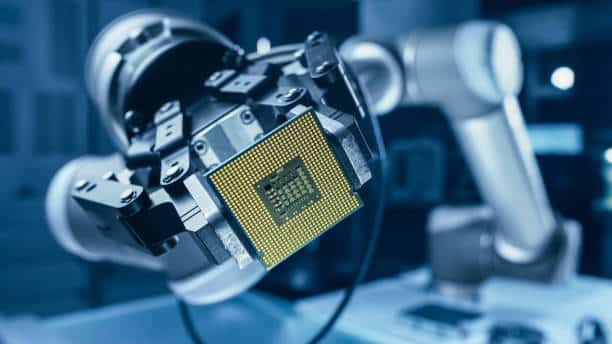















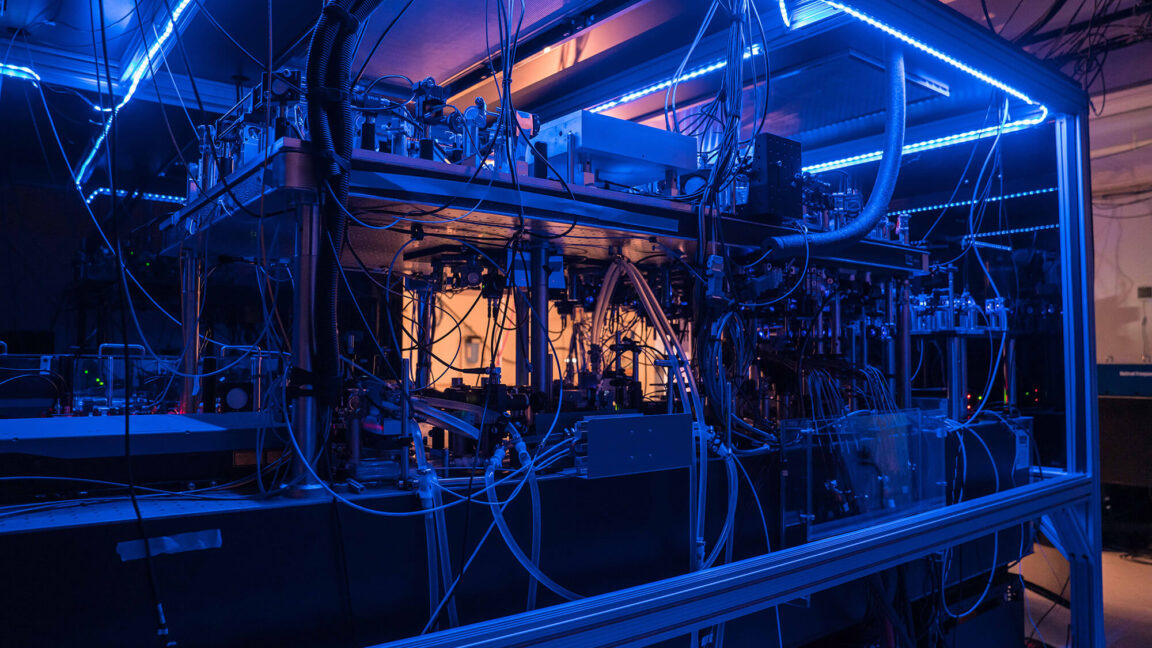
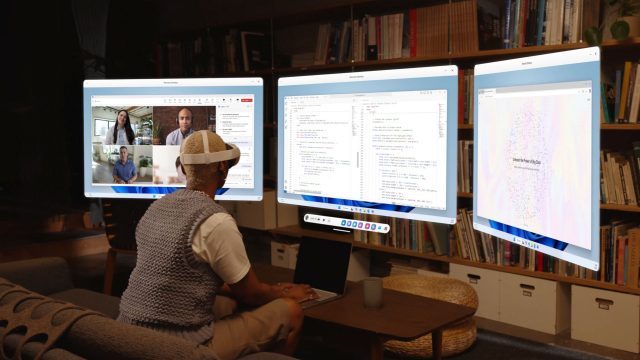




 Découvrez comment les fenêtres photovoltaïques transparentes d'inQs transforment l'énergie solaire tout en gardant la luminosité de votre intérieur. Une innovation écologique qui allie esthétique et production d'électricité.

