Knightscope innove en matière de sécurité publique avec des robots autonomes connectés. D'ailleurs, la technologie permet de réduire la dépendance humaine dans des tâches de surveillance longue et monotone. Verizon connecte ces dispositifs pour garantir leur efficacité.
Une vision née d'une tragédie
Tout a commencé après la fusillade de Sandy Hook en 2012. Stacy Stephens, ancien policier, et son ami William Li voulaient améliorer l'efficacité des forces de l'ordre. Ils imaginaient des solutions pour mieux gérer ce genre de situations. Ainsi, ils ont fondé Knightscope pour offrir des technologies innovantes.
L'entreprise propose diverses solutions, comme des cabines d'appel d'urgence et des systèmes de détection des coups de feu. Leur robot autonome K5 imite les sens humains grâce à des technologies de pointe. Il intègre des caméras, de l'imagerie thermique, et des capteurs sophistiqués.
Une solution à la pénurie de main-d'œuvre
Les robots Knightscope patrouillent des zones souvent peu attractives pour les humains. Ces machines effectuent un travail précis sans distraction ni fatigue. De plus, les robots peuvent détecter des anomalies, comme la présence suspecte de personnes ou de sources de chaleur.
Stacy Stephens, vice-président de Knightscope, souligne l'intérêt des robots pour des tâches longues. Personne ne veut passer huit heures à surveiller un parking, explique-t-il. Ainsi, l'entreprise a créé une alternative efficace et autonome pour renforcer la sécurité.
Une technologie avancée pour des missions critiques
Le K5, cinquième génération de robots Knightscope, bénéficie de nombreuses évolutions. D'ailleurs, il mesure 165 cm, pèse plus de 180 kg, et se déplace jusqu'à 5 km/h. Ses caméras capturent des visages avec précision. Sa coque blanc et noir s'inspire de la navette Discovery.
Le robot possède des capteurs pour éviter les obstacles et détecter les mouvements. Par exemple, il s'arrête si une personne lui bloque le chemin. Cela garantit la sécurité de tous. De plus, Verizon connecte ces robots avec sa solution Frontline pour assurer leur réactivité.
Des robots offerts en service continu
Knightscope propose ces robots sous forme de service. Cela améliore d'ailleurs leur flotte au fil des innovations. Les clients bénéficient ainsi des dernières avancées en matière de sécurité. Le design évolue en intégrant de nouvelles fonctionnalités pour répondre aux besoins des utilisateurs.
Avec un partenariat comme celui avec Verizon, Knightscope continue de repousser les limites. La sécurité publique entre dans une nouvelle ère, où l'autonomie robotique optimise les ressources humaines. Le futur est déjà là, et il est plus connecté que jamais.
Entretien avec Laëtitia Girard, fondatrice et CEO de Vendôm Talents, une plateforme qui transforme le processus de recrutement dans l'industrie du luxe.
Ikea Switzerland, in partnership with the Ikea Retail (Ingka Group) global digital development team, has launched JobBot, a recruitment tool designed to enhance the candidate experience and streamline recruiter processes.
JobBot automates administrative tasks, allowing applicants to apply through WhatsApp without leaving the app.
The way it works is that the chatbot is pre-written, and it guides candidates through the process, and filters positions based on the information the candidate has given to the bot when creating their profile (and by providing consent). This ensures candidate information is kept secure and manageable.
Ananda Buchmüller, Project and Employer Branding & Talent Sourcing Leader, and her team in Ikea Switzerland, aimed to create a tool that would allow recruiters to focus more on understanding the individuals behind the applications, assessing their role fit, and exploring their broader career aspirations.
“We believe that people make the difference. We recruit based on values, focusing on the person rather than just the CV,” says Buchmüller. “JobBot bridges the gap between people and technology, enhancing communication and providing access to a valuable, interactive talent pool.”
The JobBot technology operates without AI driven decision-making, giving Ikea complete control over the interaction and allowing it to fully align with GDPR requirements, and guided by the company’s Global Digital Ethics Policy.
“The JobBot aligns with our values of accessibility and simplicity,” says Parag Parekh, CDO at Ikea Retail (Ingka Group). “Through solutions like these, we are reimagining our digital tools to create connections that matter. Our omnichannel approach is about meeting people where they are, ensuring their IKEA experience is seamless and valuable across every touchpoint.”
Doctor out of town? No problem — they can be beamed in as a 3D image.
Crescent Regional Hospital outside Dallas, Texas, has become the first in the country to offer doctor appointments with a holographic machine, allowing overworked medical specialists, who often have to visit multiple medical centers in a week and sometimes even a day, to see more patients.
It also comes with the added bonus of turning your typically dreary telehealth visit into something a bit more lifelike and personable — though of course, there's no beating the real thing.
"I can see the three dimensions of the anesthesiologist's head, legs, and torso in lifelike detail," wrote journalist Mark Dent of his holographic doctor experience in an article for Texas Monthly magazine. "Only the background — a white void — reveals she's not with us."
The holographic device is called a Holobox, designed by the Netherlands startup Holoconnect. With the stature of an oversized vending machine, the Holobox more or less functions as an enormous booth that can display a life-sized image of a physician or anyone else calling in.
The holographs are created using a transparent LCD screen, which is practically invisible, housed behind a layer of anti-glare glass. As such, the images aren't being projected into 3D space, but instead create the illusion of three-dimensionality.
It's not quite "Star Wars," but the effect is apparently compelling. Dr. Olayinka Adepitan, the anesthesiologist interviewed by Texas Monthly, called the tech a "game changer." She found that patients were more attentive during her Holobox call-ins than during typical telehealth visits (like over Zoom).
"The longer we talk, the more I forget that in reality Adepitan is at a clinic in Farmers Branch, about thirty miles north," Dent wrote.
As the first hospital to deploy the technology this way, Crescent is currently using the Holobox for pre-surgery and post-surgery consultations. Adepitan told Texas Monthly that it allows her to discharge patients sooner than if she had to wait to drive to the county, a trip she's only scheduled to make twice a week.
Thanks to the tech, Adepitan simply reports to the nearby medical center she normally works at, and sits in front of a camera and white screen to beam herself in remotely. She views patients through a TV monitor, while a local nurse does the work of physically examining the patient.
As Texas Monthly notes, rural areas across the country are chronically short-staffed of medical professionals. Rural Texas has suffered dozens of hospital closures in the past decade. Among doctors, there is enthusiasm for telehealth, tech-inflected or otherwise, as one way of relieving the shortage — but some stress that it's not the be-all and end-all.
"We see telehealth as a very important innovation for rural communities," John Henderson, CEO of Texas Organization of Rural and Community Hospitals, told Texas Monthly. "We do not see it as a silver bullet."
It's also not cheap. The Holobox costs Crescent hospital $65,000 upfront, on top of $1,200 a month in maintenance. But the hospital's CEO Raji Kumar, who pushed for the tech, argues that offering holographic appointments may be a way for struggling rural hospitals to retain patients — and therefore make money — who may forego a local medical center since it can't attract top specialists.
"How can UK businesses streamline their logistics operations while keeping up with rising consumer expectations for faster and more reliable deliveries?"
As e-commerce continues to flourish and customer demands for quick delivery times intensify, the pressure on freight and shipping companies to innovate has never been greater.
To meet these evolving demands, businesses are embracing cutting-edge strategies that optimise inventory management, reduce costs, and enhance efficiency. This article delves into the innovative solutions reshaping the logistics industry, empowering UK businesses to stay competitive in a rapidly changing market.
Freight forwarders: streamlining the supply chain
Freight forwarders play a vital role in simplifying logistics for businesses, acting as intermediaries to manage the complexities of both domestic and international shipping. Their expertise in handling customs clearance, multimodal transport, and regulatory compliance is crucial in ensuring that goods reach their destinations on time.
Freight Forwarders as Logistics Orchestrators
Freight forwarders act as logistics orchestrators, negotiating with carriers, managing shipping schedules, and ensuring that shipments are optimised for speed and cost-efficiency. By leveraging digital freight platforms, forwarders can automate the booking process, track shipments in real-time, and provide transparency throughout the supply chain.
For instance, companies use cloud-based platforms to provide end-to-end visibility, helping businesses make data-driven logistics decisions and optimise shipping routes. By integrating retail shipping freight solutions into their services, freight forwarders can further streamline operations, reducing costs and enhancing delivery efficiency for businesses in the retail sector.
Key benefits:
● Streamlined logistics through automation and real-time tracking.
● Reduced shipping costs through optimised carrier negotiations.
● Enhanced visibility and control over the supply chain.
Managing Compliance and Customs Clearance
One of the most significant challenges in international shipping is navigating customs regulations.
Freight forwarders use blockchain technology to securely manage documentation, reducing the risk of delays and ensuring compliance with international trade regulations. Blockchain's transparency also helps reduce fraud and errors in customs paperwork.
Digital solutions are being increasingly adopted to automate customs documentation, which speeds up the clearance process and reduces administrative burdens. This is especially critical for time-sensitive goods, where delays could result in significant financial losses.
Key Benefits:
● Faster customs clearance with automated documentation.
● Reduced compliance risks with accurate, transparent records.
● Lower risk of shipment delays and penalties.
Embracing Multimodal Solutions for Flexibility
Freight forwarders excel in creating multimodal transport solutions, effectively integrating road freight shipping, sea, and air freight to achieve optimal logistics strategies.
By leveraging AI driven tools, they can optimise transport modes based on cost, speed, and environmental impact, ensuring businesses meet customer expectations without compromising efficiency. The inclusion of road freight shipping allows for greater flexibility, particularly for short-haul routes, while maintaining the balance between speed and cost-effectiveness.
Key benefits:
● Greater flexibility in transport options based on cargo needs.
● Cost savings through optimised multimodal strategies.
● Reduced carbon footprint by selecting eco-friendly transport modes.
Innovations in shipping and inventory management: driving efficiency and speed
The logistics industry is undergoing a transformation driven by advancements in automation, data analytics, and IoT technology. These innovations are not only improving efficiency but also enhancing the accuracy and speed of freight operations.
Smart Warehousing and Automation
To optimise inventory management, many companies are investing in Automated Warehouse Management Systems (WMS).
These systems streamline inventory tracking, reduce human errors, and speed up order fulfilment. By using robotics and automation, warehouses can handle tasks such as sorting, picking, and packing with increased precision. This not only cuts down on labour costs but also shortens processing times.
Additionally, Automated Guided Vehicles (AGVs) and drones are being used within warehouses to move goods seamlessly between storage areas and packing stations. For example, Ocado, a British online supermarket, uses robotics to automate its warehouses, allowing it to process thousands of orders daily with minimal human intervention.
Key benefits:
● Reduction in operational costs due to automation.
● Enhanced accuracy in order processing and inventory management.
● Faster turnaround times, leading to improved customer satisfaction.
Leveraging IoT for Real-Time Tracking and Monitoring
The Internet of Things (IoT) is revolutionising the logistics sector by providing real-time visibility into every stage of the supply chain. IoT enabled devices and RFID sensors allow companies to monitor shipments, track inventory levels, and receive alerts if any issues arise, such as temperature deviations or delays.
These technologies not only enhance the transparency of shipments but also enable proactive decision-making. For instance, pharmaceutical companies use IoT sensors to monitor the temperature of perishable goods during transit, ensuring they remain within the required range.
Key benefits:
● Real-time tracking improves visibility and reduces shipment delays.
● Sensors help monitor the condition of sensitive or perishable goods.
● Data driven insights enable more accurate inventory forecasts.
Smart Locker Systems and Micro-Fulfilment Centres
Smart locker systems and micro-fulfilment centres are helping retailers reduce delivery times by bringing inventory closer to consumers. By strategically placing these facilities in urban areas, businesses can fulfil orders faster and reduce transportation costs.
These innovations are especially beneficial for the booming e-commerce market, where consumers expect same-day or next-day delivery. Retail giants like Tesco and Sainsbury’s are investing in micro-fulfilment centres to optimise their delivery networks.
Key benefits:
● Reduced delivery times through decentralised inventory management.
● Lower transportation costs with local fulfilment centres.
● Enhanced customer convenience with flexible delivery options.
Conclusion
The logistics landscape is rapidly evolving, with businesses embracing innovative technologies to stay competitive. By investing in automation, IoT, and AI driven analytics, UK companies can streamline their shipping and inventory processes, reduce costs, and enhance customer satisfaction.
Freight forwarders, smart warehousing, and last mile delivery innovations are transforming the way goods move from warehouse to doorstep, ensuring that businesses can meet the demands of a fast-paced market.
La miniaturisation des ordinateurs quantiques progresse rapidement, et des chercheurs viennent de franchir une nouvelle étape en développant un ordinateur quantique basé sur un seul photon,...
The United States will award Taiwanese chip giant TSMC up to $6.6 billion in direct funding to help build several plants on US soil, officials said Friday, finalizing the deal before Donald Trump's administration enters the White House.
A new study has found that one of the top names in the groundbreaking new class of weight loss drugs may not only be good at treating diabetes, but could actually help prevent the disease.
In a new study published in the New England Medical Journal, researchers found that tirzepatide, the active ingredient in Eli Lilly's Mounjaro diabetes treatment and Zepbound weight loss injectable, cut the risk of developing diabetes by a whopping 94 percent in people who are at high risk of the disease.
Funded by Lilly as part of a Phase 3 trial into the efficacy of its flagship glucagon-like peptide-1 (GLP-1) receptor agonist — which, like Novo Nordisk's chemically similar semaglutide, the active ingredient in Ozempic and Wegovy, mimics the body's feeling of fullness — this more than three-year-long study involved over 2500 subjects who were overweight and considered pre-diabetic.
In a randomized and double-blind experiment, the researchers from an international consortium of medical schools had patients take weekly injections of either a placebo shot or one with either 5, 10, or 15 milligrams of tirzepatide.
As they found at the end of the 176-week trial, those who took the tirzepatide not only lost a significant amount of weight, but also seemed to be far less likely to develop diabetes. Of the overall group taking the tirzepatide, only 1.3 percent received a diabetes diagnosis by the end of the lengthy trial, whereas 13.3 percent of the placebo group developed it.
While some studies have suggested that people who lose weight on GLP-1 drugs are likely to gain it back after they stop taking it (though the data is somewhat mixed on that point) this trial found that the apparent protective benefits for developing diabetes seemed to last. After 17 weeks, only 2.4 percent of those who took active tirzepatide were diagnosed with diabetes — which as the New York Times notes, suggests that the drug helped the pre-diabetic and overweight trial participants keep their blood sugar under control.
That same NYT writeup points out that other studies conducted with Novo's Ozempic and Wegovy suggest that the active ingredient in those drugs, semaglutide, may offer similar protective benefits.
Should these results bear out in future trials, it may be yet another health benefit provided by these drugs — though their sky-high prices and spotty insurance coverage means that most people still can't afford them.
This AI focus reflects a new reality for insurers: Incumbents will need to move quickly to evaluate emerging AI products or risk being left behind by fast-moving competitors.
Le rôle surprenant d'un organe habituellement sous-estimé pourrait changer notre approche des lésions cérébrales post-arrêt cardiaque.
EMBO Molecular Medicine révèle une avancée majeure:...
Les observations du radiotélescope LOFAR (Low Frequency Array) avaient montré l'an dernier que les satellites Starlink de première génération émettent des signaux radio non intentionnels (UEMR:...
La quête de la supraconductivité à haute température continue de captiver les scientifiques. Des progrès récents offrent une nouvelle lumière sur un phénomène jusqu'alors mal compris.
La...
Become this generation’s most foremost dick pic photographer by learning the finer points of this underrated art form with How To Take Better Dick Picks. You’ll master all the techniques so that you never have to worry amount someone cringing on the receiving end.
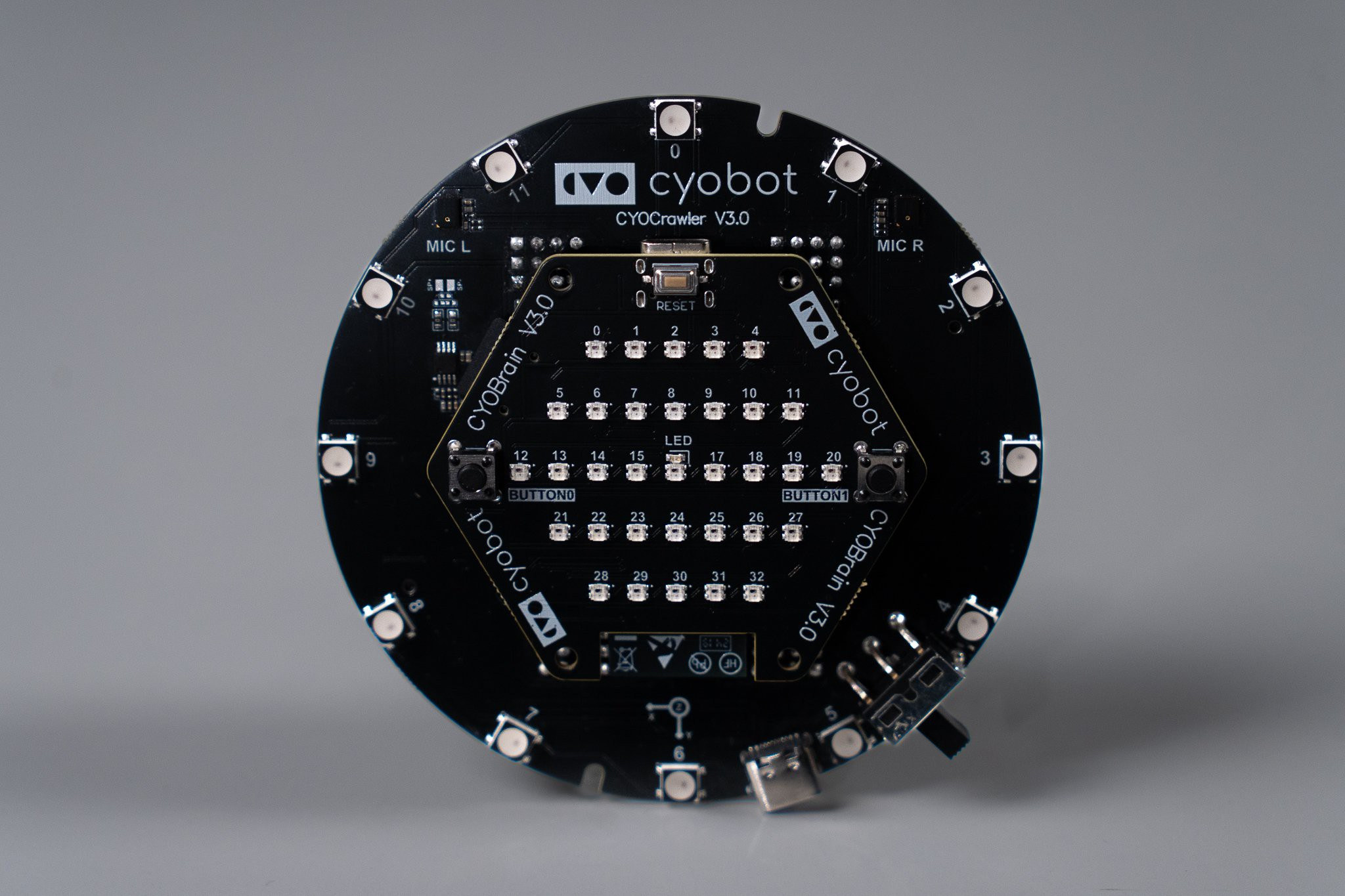
Create Your Own Bot (CYOBot) v2 is an open-source, modular robotics platform for students, educators, hobbyists, and future engineers based on the ESP32-S3 microcontroller and featuring up to 16 servo motors for complex control.
The CYOBot v2 is a follow-up to the previous quadrupedal robotic platform from the same company. It adds new features such as a modular design, an upgrade to the ESP32-S3 chip, more motor channels, and an expansion block with more peripherals. It also supports integrating AI systems, such as ChatGPT, for added functionality.
CYOBot robotics base
The CYOBot supports up to three configurations via the CYOBrain — which powers the robotics platform and controls the servo motors — and separate 3D-printed components. The CYOBot Crawler is a four-legged robot powered by eight 180-degree servo motors. The CYOBot Wheeler form factor features four 360-degree motors linked to wheels at the end of each leg and is essentially a hybrid between a traditional wheeled robot and a quadruped walker. Finally, the CYOBot Game Console configuration only functions as a console with four buttons and two joysticks.
Design-specific electronics are separated from the main board (CYOBrain) to make it easy to switch between different designs. We have covered similar robotics kits such as the EVN Alpha, MakeBlock mBot Neo, and Arduino Alvik.
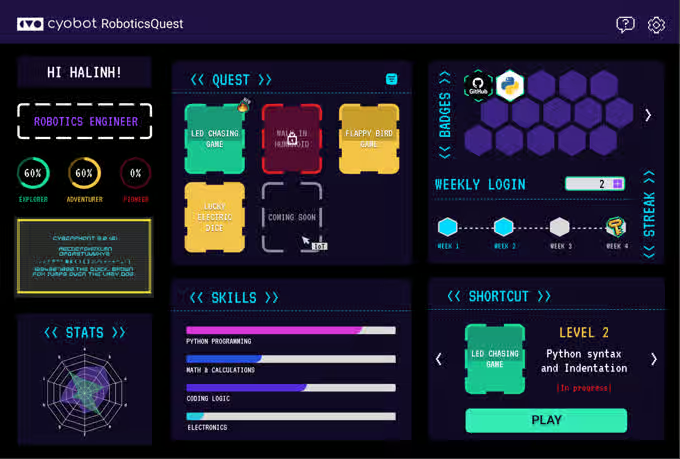
The ESP32-S3-based modular robotics platform is designed to be accessible to users with varying levels of experience and supports block-based programming, MicroPython, Arduino, and C++. The developer dashboard RoboticsQuest features customized learning paths with “1,000 projects covering embedded systems, control, machine learning/AI, robotics, IoT, and more.” The platform is reportedly open-source, and several hardware and software files from the earlier version are available on GitHub, but the “CYOBot-v2” is currently empty. You can find some PDF schematics for the current version, CYOBot v2, on Hackaday.
The CYOBot v2 crowdfunding campaign is currently live on Kickstarter. Rewards include a $99 Brain for Builder set, a $129 Console Prebuilt Robot, a $169 Crawler Prebuilt Robot, a $169 Wheeler Prebuilt Robot, and several other kits and bundles. All offers include access to the online educational dashboard and are expected to ship by January 2025, although interested buyers can pay $25 extra for “Xmas Shipping.”
Les ordinateurs quantiques sont censés révolutionner le calcul scientifique, mais des chercheurs ont récemment montré qu'un ordinateur classique pouvait parfois les surpasser. En utilisant des...
Des champs magnétiques pour contrôler des neurones à distance ? Une technologie de pointe, la magnétogénétique, permet désormais d'inhiber ou d'activer des circuits cérébraux chez les souris...
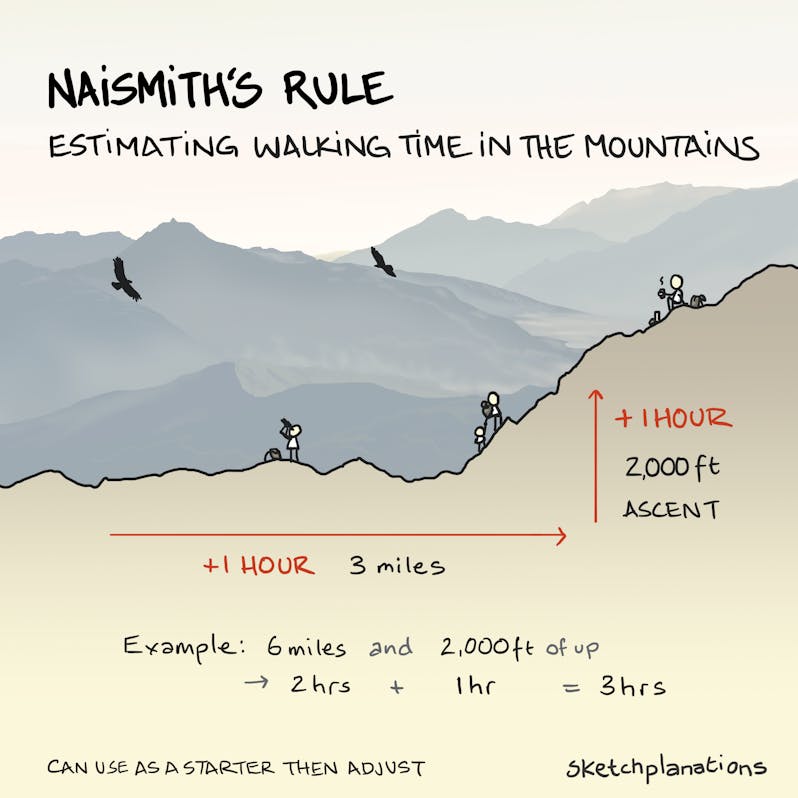
Naismith's Rule provides a quick estimate for hiking time in the mountains, intended for "easy expeditions." It suggests:
1 hour for every 3 miles (5km) walked
+1 hour for every 2,000 ft (600m) of ascent
For example, suppose your hike covers 6 miles with 2,000 ft of ascent. In that case, Naismith's Rule suggests allowing 3 hours total—2 hours for distance and 1 hour for elevation.
William Naismith was a Scottish Mountaineer born in 1856. He spent years trekking in the Highlands and was, to be fair, probably made of nails. In the Scottish Mountaineering Club Journal in 1893, he wrote:
"...a simple formula, that may be found useful in estimating what time men in fair condition should allow for easy expeditions, namely, an hour for every three miles on the map, with an additional hour for every 2,000 feet of ascent."
A figure I learned that's stuck with me is that a brisk walk is around 4 mph. But that's actually pretty fast and wouldn't apply on a mountain trail and certainly not hiking up a mountain. So I've run into the challenge myself when planning a trip in the mountains of how to guess how long a hike will likely take.
From a recent hike—where I made sure to run through the full kitchen table survival skills and 10 essentials before leaving—limited daylight was a safety consideration. So knowing how long the hike might take was really important. Incidentally, there's a rule of thumb, literally, for estimating remaining daylight.
Lots of people have put Naismith's Rule to the test, including me, and though it's a slightly optimistic metric, it's a starting point. On my recent hike, we were slightly over, but not by much.
Adjusting Naismith's Rule
To adjust for your circumstances, add time for:
Tricky or technical terrain and trail condition
Steep descents
High altitude
Lunches and snack stops
Not being "in fair [physical] condition" in the view of a rugged mountaineer from Scotland in the 1890s
The size of your group—I have heard the rule of thumb to add 15 mins for each person in your group
Sitting and sketching
Presumably, if the hike was really long, you'd slow down
The Unexpected
So, there are many reasons why Naismith's Rule may be on the light side. But it's a decent place to start from.
Killian Jornet Laughs in the Face of Naismith's Rule
Someone for whom Naismith's Rule definitely doesn't apply is the incredible Killian Jornet, whom I watched in the beautiful documentary Déjame Vivir on Netflix. Footage of him running along knife-edge ridges at the top of the Alps is breathtaking. In 2024, he hiked all 82 peaks above 4,000m in the Alps in 19 days without using motorized vehicles between them 🤯.
Lock-Miles
I was told about the term lock-miles, a kind of Naismith's Rule but for canal journeys rather than hikes. To estimate the journey time, you'd first calculate the lock-miles with the idea that it takes as long to travel through a lock as it does to travel a mile.
A journey of 10 miles with 5 locks would be 15 lock-miles. For experienced boaters, a typical speed might be 3 lock-miles an hour, so the journey of 15 lock-miles would take 5 hours.
Within the next decade, Australia's retail sector could see a major overhaul, with companies taking up space in the metaverse to create brand awareness and to provide shoppers with a novel purchasing experience, according to a study published in Technological Forecasting and Social Change.
Que PayPal lance un service de cagnotte partagée, après une première tentative ratée et abandonnée il y a quelques années, ne constitue évidemment pas une révolution. Pourtant, sa déclinaison d'un service disponible par ailleurs depuis longtemps (par exemple avec Leetchi, en France) présente tout de même un avantage spécifique.
Passons sur les prétentions ridicules de l'entreprise à une véritable innovation, puisque son fonctionnement reprend très précisément les standards en la matière, fixés depuis au moins 15 ans. Que vous souhaitiez rassembler une somme pour offrir un cadeau en commun, organiser un voyage en groupe ou toute autre dépense partagée (les achats de billets de spectacle représentent un autre cas d'usage populaire), PayPal vous propose donc la nouvelle option « Pool » disponible dans ses applications web et mobile (uniquement aux États-Unis, en Espagne, Italie et Allemagne, à ce stade).
En tant qu'organisateur, vous spécifiez un titre, une description, une date limite et un montant cible (facultatif), à partir desquels est créé un compte dédié. Vous transmettez ensuite l'invitation à contribuer à vos contacts par tout moyen à votre convenance : courriel, SMS, messagerie sociale… Vos correspondants reçoivent alors un lien qui leur permet de verser leur écot avec l'instrument de leur choix. Une fois l'échéance atteinte, les fonds collectés peuvent être portés sur votre réserve PayPal et soit être utilisés directement pour un achat, soit être virés vers un compte bancaire lié à votre profil.
Outre la gratuité du service – plus ou moins obligatoire pour un entrant tardif sur un marché plutôt encombré – et la possibilité de régler directement avec la cagnotte auprès d'une large palette de commerçants sans passer par une étape de retrait, le principal critère de différenciation de ces « Pools » sera peut-être leur caractère naturellement international, supporté par les capacités multi-devises natives de PayPal. Mais, pour l'essentiel, il s'agit du simple rattrapage d'un retard inexplicable.
Après tout, la jeune pousse est née au siècle dernier avec une vision qui incluait déjà les paiements entre particuliers. Les circonstances dans lesquels plusieurs personnes mettent leur argent en commun sont suffisamment fréquentes pour que le besoin de solution ad hoc soit pris en considération de longue date… Malheureusement, il s'agit d'une de ces fonctions que la plupart des acteurs rechignent à implémenter, faute, notamment, de modèle économique attractif (pénalisant aussi les spécialistes).
Et le désintérêt généralisé pour ce genre de capacités conduit également à une réponse partielle aux attentes fondamentales des consommateurs. En effet, entre les deux options existantes – la cagnotte en amont et le partage des dépenses a posteriori –, on peut imaginer, pour certains cas (au-delà des alternatives aux compte joints sur lesquelles quelques initiatives ont émergé), un système intermédiaire autorisant un paiement réparti en temps réel entre les différents membres du groupe.
Xiaomi makes everything, from phones and vacuum cleaners to massage guns and even electric cars. Now, according to a report from Chinese media 36kr, Xiaomi may be developing a device that goes toe-to-toe with Ray-Ban Meta smartglasses.
The report maintains Xiaomi is planning to launch a new generation of AI-assisted smartglasses, which will be built in collaboration with Goertek, the China-based ODM behind a bevy of XR parts, reference designs, and finished white-label hardware.
The rumored Xiaomi smartglasses are said to “fully benchmark” against Ray-Ban Meta, which includes AI functions, integrated speakers, and camera modules. Notably, Ray-Ban Meta smartglasses aren’t officially available in China.
Ray-Ban Meta Glasses, Image courtesy Meta, EssilorLuxottica
Citing insider sources, the report maintains the device is slated to arrive in Q2 2025, with 36kr noting it may launch in time for the Mi Fan Festival, which is typically held in April to mark Xiaomi’s founding anniversary.
The report further maintains, Xiaomi co-founder Lei Jun expects to ship more than 300,000 units.
Xiaomi has dabbled in XR hardware in the past, although it really hasn’t entered full force. The Chinese tech giant hyped a widely reported AR glasses prototype at Mobile World Congress (MWC) in 2023. A year prior, the company launched a pair of smartglasses, called Mijia Glasses Camera. Much like the now defunct Google Glass, the device featured a single heads-up display.
All of that is changing though, it seems. Next year is shaping up to be a big year for smartglasses in China, as the country’s largest brands may be hoping to replicate Meta’s success with Ray-Ban Meta Smart Glasses.
Baidu announced at its Baidu World Conference on November 12th its own co-product with Xiaodu, the Xiaodu AI glasses, which is launching in China in the first half of 2025.
The 36kr report also notes that Chinese heavy-hitters OPPO, vivo, Huawei, Tencent, and ByteDance are also currently evaluating their own smartglasses projects.
Yes, when the humans arrived in the Coalition they brought themselves, and their ships, and their weapons. Those were all very impressive. They showed up with positively gigantic starships – easily two to four times larger than anyone else. When asked, the humans just looked at them, then back to us and said “why not make them big? Don’t they look great?”
We could think of a few reasons, but they didn’t seem to care about those.
But that’s not what I want to talk about. Do you know what was the most amazing, galaxy-changing paradigm they brought with them?
Containerization.
I’m serious! The first time I saw them field a colony ship my feathers ruffled and I turned my head in confusion. I was aboard the human ambassador’s yacht with a few other Coalition administrators. We had come at the human’s behest so they could demonstrate that they were taking our rules about colonizing seriously. Honestly, we probably wouldn’t have cared. All they were interested in were planets Class F and lower. The ones with multiple biomes, the ones with heavy gravity, the ones with weather. We let them license the worlds for colonization cheap – ancestors, I think we even let them have the one with storms for free.
Anyway, they asked us to come and observe, and so we sent a few people out, me among them. I was a mid-level clerk for the Innari embassy at the main Coalition station, so I was ‘volunteered’ to attend. It was boring, but it wasn’t bad. Good food, a break from paperwork, and a chance to take it easy for a week.
On the second day, the colony ship arrived. It had flashed in quite close to the planet, entered orbit, and had spent an hour setting itself up. One of the Sefigans looked at the human who was guiding us and asked what we were looking at, if we were just going to see a shuttle go back and forth for a week from the ship.
“A shuttle? Heavens, no. Just watch.” and he did that cryptic smile without showing his teeth that they do when they realize they’re about to show off.
Just then, while we were watching, the colony ship… flew apart. It wasn’t destroyed, or rather it was, but it wasn’t destructive. It had turned out that the entire colony ship was thousands upon thousands of boxes. The assembled crowd made surprised noises as the ship quickly disappeared into rectangles all the same shape and size. They disconnected from each other and fell through the atmosphere to the planet’s surface. Within a tenth of a cycle, they were all down, and had begun unfolding.
Some were buildings, some contained supplies, and some even had vehicles. As we watched through remote cameras and entire city had sprung into being, where once there was only a joining of two rivers. The colony ship was completely gone – the box that was the command module had set itself up in the center of the city and we watched as the overlay changed from “Ship Command” to “City Command” as it touched down.
Before our surprise could be properly registered it happened again. Another colony ship flashed in and flew apart and landed. And again. And again. In the space of one solar day, three full cities were set up and automated construction vehicles – also the size of the containers – had begun trundling between the cities, setting up utilities and roads. By the time the humans arrived in thirty solar days, there would be places to live, work, and entertain for fifty thousand beings.
Honestly, if that’s all they used it for, it would be impressive. But they made everything able to fit into those boxes. When they ordered supplies from human manufactories they ordered them by the container. During the next resupply, one of the containers would detach and be delivered, and sure enough, packed floor to ceiling would be the widgets they ordered.
They built reactors that fit the container, so that no matter where they went or what they were doing, it was simple to have more power than one needed.
They even built weapons that fit into the containers. I’m not talking about hand and small arms, but full anti-starship missile batteries. They would take one of their boxes, stick it to the side of a ship or a station – it didn’t even have to be human-made – and out would fold a missile battery, loaded and ready. Next to it they’d plop a reactor container and a matter printer container and in the time it took you to decide what to eat for their midday meal – lunch – they would be able to defend against an attack of nearly any kind.
When called on to aid during disasters, they brought them too. They would bring a modified version of their colony package, tuned for what kind of disaster had happened. Extra hospitals, extra living space, extra power, it didn’t matter, because it all fit into those damned boxes.
The other Coalition peoples had to adopt the human containers, it was too foolish not to. Human ships would only haul containers. They didn’t list the ship’s capacity by hauling weight, they listed them by the number of containers they could haul. If you wanted to sell to humans, you had to fit your wares into a container.
Some other peoples – the Sefigans specifically, but a few others as well – attempted to introduce their own container specifications, but they were almost never adopted. The humans had the infrastructure to haul their own containers, and unless the others fit into the system they just rejected them outright. “Too complex to add,” they said. “Just use ours; here have a few for free.” They gave away containers like they were atmosphere. When items were shipped from human manufactories they told the recipient to just keep the container “in case you need to ship anything else.”
Before too long, all the Coalition was using human containers. The Sefigans complained that they were too large, the Gren complained they were too small, and we Innari looked at the containers with an eye towards economy. We felt they were far overbuilt. We tried to make our own, out of much lighter materials but whenever they were added to a human system, they would be immediately ejected – usually with large dents or bends in them. “Stick to the specs” they’d say. “Our system requires them all to be the same.”
Without firing a shot, the humans took over one of the most important and overlooked parts of our entire system. Everyone uses their containers now, it’s just impossible to find a shipper to move material without them.
Republished with permission from the author, jpitha. Image created using Stable Diffusion.
A treasure trove of genetic data may hold the key to a revolution in drug development, but it offers no clues for building a consumer business.
On Tuesday, direct-to-consumer genetic testing firm 23andMe announced it would be shuttering its much-hyped drug development division — touted as not just the future of the company but of drug development — as well as cutting some 40% of its staff. There must have been markers of corporate health risk somewhere in the company’s makeup.
Data Dump
23andMe may well be the quintessential 2010s-era tech-adjacent startup. Its core business — using saliva-collection kits to help consumers discover more about their DNA and connect with genetic relatives — is fun, novel, and completely unprofitable in part because it is immune to repeat business. To scale, 23andMe turned to two textbook remedies for struggling DTC businesses: evolving into a subscription model and attempting to monetize the massive dataset it had acquired.
The subscription model never took off. In March, it reported just 562,000 subscribers, down from 640,000 a year prior and way off from a projection of 2.9 million subscribers by 2024 floated when it went public via a SPAC merger in 2021. The company rocketed to a $5.8 billion valuation shortly after the public listing, but that has since fallen to just $150 million. In October, 23andMe engineered a reverse-stock split to keep its share price above $1.
Meanwhile, drug development is as painstakingly long as it is costly, even with a massive DNA dataset, and 23andMe has run out of runway:
After reporting a net loss of $59 million on just $44 million in revenue, the company said it ended its most recent quarter with $127 million in cash, down from $256 million a year prior and way down from the big cash reserves it had once built up to fuel its drug development business.
After once claiming it had identified 50 drug candidates, 23andMe had begun trials for just two candidates as of Tuesday, and said that it now would try to sell those assets.
Substantial Doubt: Tuesday marked the fifth round of layoffs since the start of 2023, when it had about 800 employees, and brings its total headcount to about 300. CEO Anne Wojcicki, who holds roughly half of the voting power, is attempting to take the company private. In September, seven board members resigned after Wojcicki presented a take-private plan that was not fully financed. In its latest filings, the company noted “substantial doubt about the company’s ability to continue as a going concern.” In the meantime, it continues to pay out a $30 million settlement to customers affected by a data breach.
Burberry has announced a new immersive AR experience.
This festive season, it is launching its first virtual scarf try on offering.
In a LinkedIn post, Seema Kukadia, Digital Innovation Manager at Burberry, said: “Using the latest in web 3D and augmented reality technology, our new immersive experience encourages customers to virtually explore Burberry’s iconic scarves and visualise how the brand's best known accessory will look.”
Available online via Burberry.com and in select stores, customers can use their mobile phone camera to view the scarf styled on themselves in real-time.
The experience has been developed in partnership with WANNA, a provider of AR and 3D experiences for luxury brands.
Kukadia added: “It builds on our rich legacy of digital innovation, from being the first luxury brand to live stream a runway show to recent activations including the development of an in-game world and capsule collection with Minecraft."
A team of roboticists and engineers at MIT CSAIL, Institute for AI and Fundamental Interactions, has developed a generative AI approach to teaching robots how to traverse terrain and move around objects in the real world.
The Zefiro is a tiny USB-C MIDI controller that can be played like a wind instrument. | Image: Kickstarter
An Italian startup called Artinoise has created an unusual USB-C accessory for mobile devices that turns them into playable musical instruments. The Zefiro looks like a flash drive or a tiny vape, but by gently blowing into one end, it can be used to play simulated instruments with even less skill than what was needed to play those plastic recorders in grade school.
The Zefiro is being made available through a Kickstarter crowdfunding campaign looking to raise just over $5,300 to fund production. According to the company, “We have been developing and manufacturing musical instruments for years; now we just need to collect pre-orders for our latest creation and kick off manufacturing!”
Those backing the campaign early can preorder a...
Learning from nuclear construction successes and failures can help reduce the cost of building nuclear energy in Europe. But even if these power plants turn out to be more costly than we would like, putting them to work can reduce overall energy costs.
23andMe is laying off 40 percent of its employees, or over 200 workers, as the company attempts to recover from last year’s massive data breach and reverse its plummeting stock price. The genetic testing company also announced that it will shut down its therapeutics business.
Though 23andMe says the restructuring plan will cost it around $12 million, it expects to save more than $35 million as a result, while “substantially” lowering operating expenses. 23andMe’s therapeutics division, which studied potential cancer treatments using its database of genetic material, will end all clinical trials, as the company considers licensing agreements or asset sales to “maximize” the program’s value.
23andMe has had a turbulent past year, with the...
Les profondeurs du secteur minier résonnent aujourd'hui au rythme des technologies connectées, atteignant un volume impressionnant de près de 1,3 million d'unités actives en 2023. Autant dire que chaque segment, des équipements puissants aux personnels en passant par le délicat équilibre environnemental, porte cette révolution numérique qui harmonise l'efficacité, la sécurité et l'état de santé des machines au cœur des mines. Derrière ces avancées, on trouve des fabricants ambitieux comme Epiroc, Sandvik et Komatsu, qui, grâce à des activités de fusions et acquisitions, enrichissent leurs offres pour répondre aux besoins croissants, tant en surface qu'en profondeur. Une évolution qui promet de transfigurer l'horizon minier.
En 2023, le nombre total de solutions minières connectées actives atteignait près de 1,3 million d'unités. Ces solutions se répartissent en trois segments principaux : équipements, personnel et environnement. Les équipements représentent la plus grande part, intégrant des systèmes de télématique pour les machines et véhicules miniers. Le segment des personnes inclut des solutions visant à améliorer la sécurité et la productivité des employés, tandis que l'environnement bénéficie de technologies de capteurs pour un suivi écologique. Ce secteur connaît une croissance notable avec un taux de croissance annuel composé de 16,1 %, anticipant ainsi une augmentation jusqu'à 2,7 millions d'unités d'ici 2028.
les solutions minières connectées : un développement incontournable en 2023
En 2023, le monde de la mining-tech a franchi un cap remarquable avec près de 1,3 million d'unités connectées déployées. Ce chiffre impressionnant témoigne de l'adoption croissante de la technologie dans le secteur minier. Les différents segments de l'équipement, des personnes et de l'environnement bénéficient de ces avancées notables, améliorant ainsi l'efficacité et la sécurité des opérations.
évolution technologique des solutions minières
Les innovations technologiques pour les exploitations minières ne cessent de surprendre, avec une croissance annuelle de 16,1 % attendue jusqu'en 2028. Les fabricants d'équipements comme Epiroc, Sandvik, Komatsu et Hitachi ont revitalisé leurs offres en matière de technologie minière. L'essor des systèmes de télématique OEM et des solutions avancées connectées est synonyme de progrès exceptionnel dans la gestion des machines et des véhicules en exploitation minière. Cette transformation numérique va bien au-delà des surfaces visibles. Elle intègre des systèmes sous-terrains complexes et rationalise même les processus de ventilation pour plus de sécurité.
les avantages stratégiques de l'autonomie minière
Le passage à des solutions totalement autonomes n'est plus un rêve lointain mais une réalité tangible dans le secteur minier. L'implémentation de systèmes autonomes dans les mines souterraines est particulièrement bénéfique. Elle réduit non seulement la nécessité d'évacuer pour la ventilation mais optimise également la sécurité et la productivité. Ces systèmes autonomes se sont étendus au-delà des simples systèmes de transport pour englober des applications comme le forage et, dans une moindre mesure, le dynamitage. Cet élan vers une autonomie complète est sans doute stimulé par l'intérêt croissant pour les initiatives de durabilité et d'efficacité énergétique. Au cœur de cette révolution, des entreprises comme IoT industriel au Canada et Sigfox en Afrique du Sud ont connu des tournants majeurs, illustrant la tendance globale vers un avenir plus intelligent et connecté.





 Explore AI-focused exhibitors and sponsors from the conference