Jean-Philippe Encausse
Shared posts
Super-adhesive patches can adapt to different motions for enhanced skin interaction
La Chine teste une arme à énergie dirigée comme celle de l’Étoile Noire !
The 5 Gift Guide for Christmas
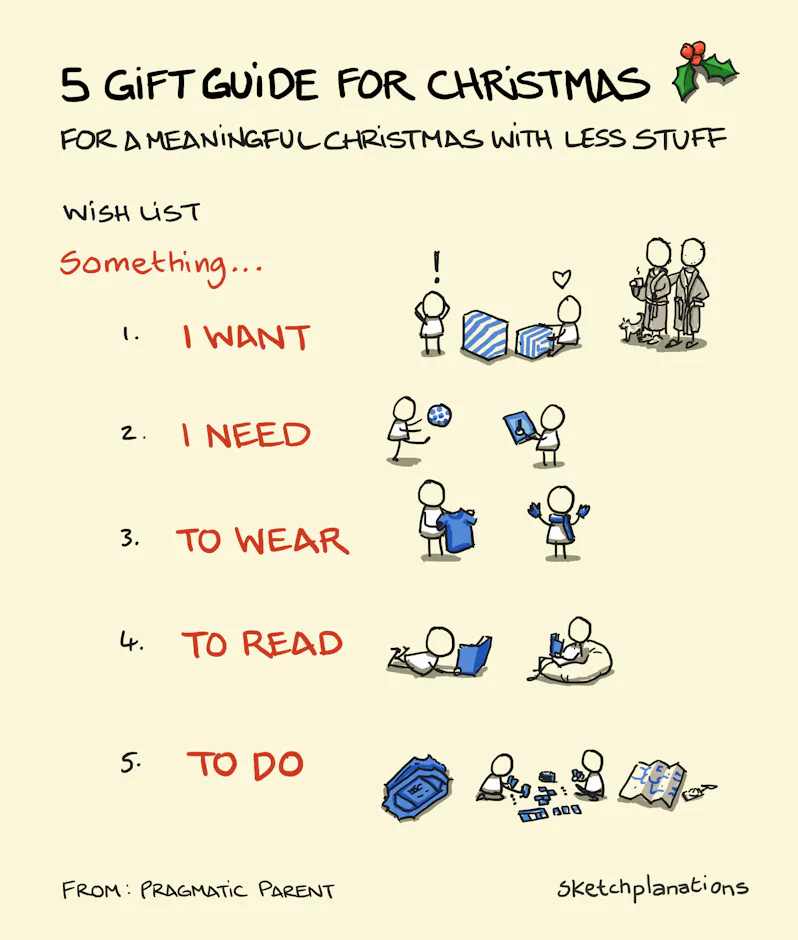
If you're a parent or buy presents for kids, perhaps Christmas brings mixed feelings. While we love spending time with family, playing together, and taking a break, Christmas gift-giving easily brings some stress and anxiety (one of the reasons that Thanksgiving is so good).
This list from Pragmatic Parent is a potential antidote to the consumerism that can overtake at Christmas. The idea is to give one gift to each child in five categories: Want, Read, Wear, Need, and Do.
8x Christmas-As-Magic
No one wants a Dudley Dursley on his birthday, "Thirty-six. That's two less than last year!"
But at the same time, as a parent, you may have nostalgia for your Christmas or holidays as a child and want to create the same for your children.
Paul Graham wrote in an essay Life is Short:
"Having kids showed me how to convert a continuous quantity, time, into discrete quantities. You only get 52 weekends with your 2-year-old. If Christmas-as-magic lasts from, say, ages 3 to 10, you only get to watch your child experience it 8 times. And while it's impossible to say what is a lot or a little of a continuous quantity like time, 8 is not a lot of something."
So, while, as parents, you may be working to make it memorable, at the same time, some things can easily get out of kilter. Here are some thoughts that cross our minds:
It's easy to think that we're buying more and bigger gifts each year. And we want to ensure this year's presents are as good as last year's to avoid disappointment. It's easy to look at a pile of assembled presents and think, "We never had this much as kids!". And sometimes, the big ticket item we bought at great expense didn't provide nearly as much joy as racing around the house with family at Christmas. We wonder if it was really needed after all.
It's easy for Christmas gift-giving to seem out of control.
The 5 Gift Guide: Want, Read, Wear, Need, Do
Years ago, I learned about this list from Corinne at Pragmatic Parent, which tries to redress some of the balance at Christmas—keeping Christmas wonder while also keeping it sane.
The idea is to get one gift in each of the 5 categories: Want, Read, Wear, Need, Do.
Something I want can still be the classic Christmas big ticket item that you dream about getting as a kid. This could be a big toy, Lego set, video game, or new bike...
Something I need could support a hobby, some sports equipment, a musical instrument, maybe headphones. Or it could be something they need for school—a smart set of pens or pencils or pencil case, perhaps.
Something to wear is an opportunity to get something that makes them feel good daily.
Something to read might be a book, magazine, comic, or subscription.
Something to do could be a game, tickets to a film, a day out or visiting somewhere new.
In a later iteration of the list, Corinne added a 6th item, "Something for my family", for an activity everyone can do together.
A Less Materialistic Christmas
The 5-Gift Rule for Christmas is a potential way to reduce some of the consumerism associated with Christmas and adopt a more minimalist approach.
It promotes useful gifts that won't gather dust after the excitement of the holidays has passed.
It encourages gratitude for what we receive and minimises pining for what we don't.
It also suggests gifts that create experiences for the receiver and the family—one of the best ways to spend our money.
Full disclosure: Though we think about the list, we've yet to adopt it wholesale. But it's a handy framework for considering different types of gifts that your children may value. It reminds us to focus on more meaningful and thoughtful gifts and experiences with less accompanying stuff.
Related Ideas
Also see:
It lives! 47-year-old Voyager 1 is back in action

Perfect Corp. et Holidermie s'associent pour améliorer l'expérience de soin

[Tech For Retail 2024] L'expérience client au coeur des maisons de luxe

Linkup connects LLMs with premium content sources (legally)
If you’ve used ChatGPT Search or Perplexity, you know that being able to search the web and see citations inline greatly improves these AI chatbots. Results are better when they involve timely information, and web search may reduce so-called hallucinations (i.e. when a generative AI outputs incorrect information). That’s why French startup Linkup is building […]
© 2024 TechCrunch. All rights reserved. For personal use only.
ChatGPT's artificial empathy is a language trick. Here's how it works
Deux innovations rupturistes découvertes au Beauty Store de L'Oréal
AI can create a reasonable facsimile of a person's personality after two-hour interview
Collaboration entre Viz.ai et Microsoft : Une avancée majeure pour la radiologie et la coordination des soins
Dans un monde où l'innovation technologique ne cesse de repousser les limites de la médecine, Viz.ai et Microsoft s'allient pour transformer la radiologie et la coordination des soins. Cette collaboration ambitieuse introduit plus de 48 modèles d'intelligence artificielle au sein du Microsoft Cloud for Healthcare, marquant une avancée significative dans l'intégration et l'efficacité des flux cliniques. Grâce à cette synergie, les cliniques disposeront désormais d'outils puissants et de solutions d'imagerie. Cette approche fusionne la puissance informatique de Microsoft et l'expertise de Viz.ai en coordination intelligente des soins, pour garantir à chaque patient les soins les plus adaptés et en temps opportun.
Viz.ai s'associe donc à Microsoft pour offrir une révolution dans le domaine de la radiologie et de la coordination des soins grâce à l'IA. Avec la plateforme Precision Imaging Network de Microsoft, cette collaboration intègre plus de 48 modèles d'IA dans les flux de travail cliniques, apportant des connaissances exploitables pour améliorer les résultats des patients. Viz.ai propose 13 algorithmes de coordination des soins pour des pathologies telles que l'AVC, l'embolie pulmonaire ou encore la dissection aortique. Ensemble, les deux géants offrent une solution qui optimise l'efficacité des radiologues, simplifie la communication entre médecins et facilite la collaboration des équipes de soins. En consolidant leur impact dans le secteur de la santé, ils permettent aux systèmes de santé d'adresser les besoins critiques avec une efficacité sans précédent.

Collaboration stratégique entre viz.ai et microsoft
La récente collaboration entre Viz.ai et Microsoft marque un tournant dans le domaine de la radiologie et de la coordination des soins. Ensemble, ils développent des solutions innovantes en intégrant des modèles d'IA puissants dans les flux de travail cliniques. Avec le soutien de la Precision Imaging Network, les praticiens bénéficient désormais d'une intelligence clinique en temps réel capable d'améliorer considérablement les résultats des patients.
Optimisation des workflows cliniques grâce à l'ia
L'union entre Viz.ai et Microsoft offre plus que 48 modèles d'intelligence artificielle intégrés aux processus cliniques, touchant divers domaines spécialisés tels que l'oncologie, les sciences neurosensorielles et les urgences. Grâce à eux, les radiologues peuvent produire des rapports plus précis et efficients tout en renforçant la communication avec les médecins traitants. Cet effort conjoint se traduit par une coordination accrue des équipes de soins, garantissant ainsi une prise en charge adaptée et rapide pour les patients. De plus, l'utilisation de solutions telles que PowerScribe et PowerShare de Microsoft amplifie cette synergie, garantissant une intégration fluide et renforçant l'efficacité globale.
Impact potentiel sur le secteur de la santé
Cette avancée stratégique se traduit par une plateforme unique offrant des capacités éprouvées d'imagerie AI à travers un large éventail de spécialités cliniques. Cela démontre comment la technologie peut transformer radicalement le paysage des soins de santé, permettant un traitement plus rapide et des suivis plus rigoureux des patients. Ce partenariat permet non seulement de raccourcir les délais de traitement, mais également d'étendre l'offre de soins collaboratifs à une échelle jamais vue auparavant. Pour explorer davantage de collaborations innovantes dans divers secteurs, découvrez comment Hyundai Motor et KT Corporation axent sur la mobilité future.
Cet article Collaboration entre Viz.ai et Microsoft : Une avancée majeure pour la radiologie et la coordination des soins est apparu en premier sur OBJETCONNECTE.COM.
Building A Pi-Powered LED Chess Board
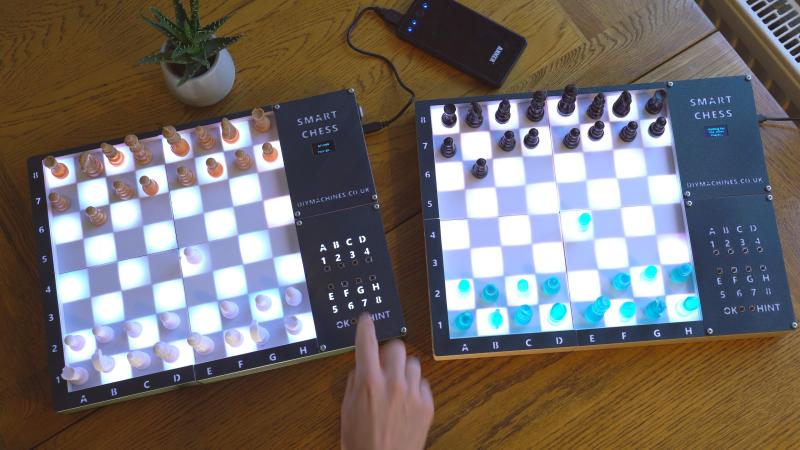
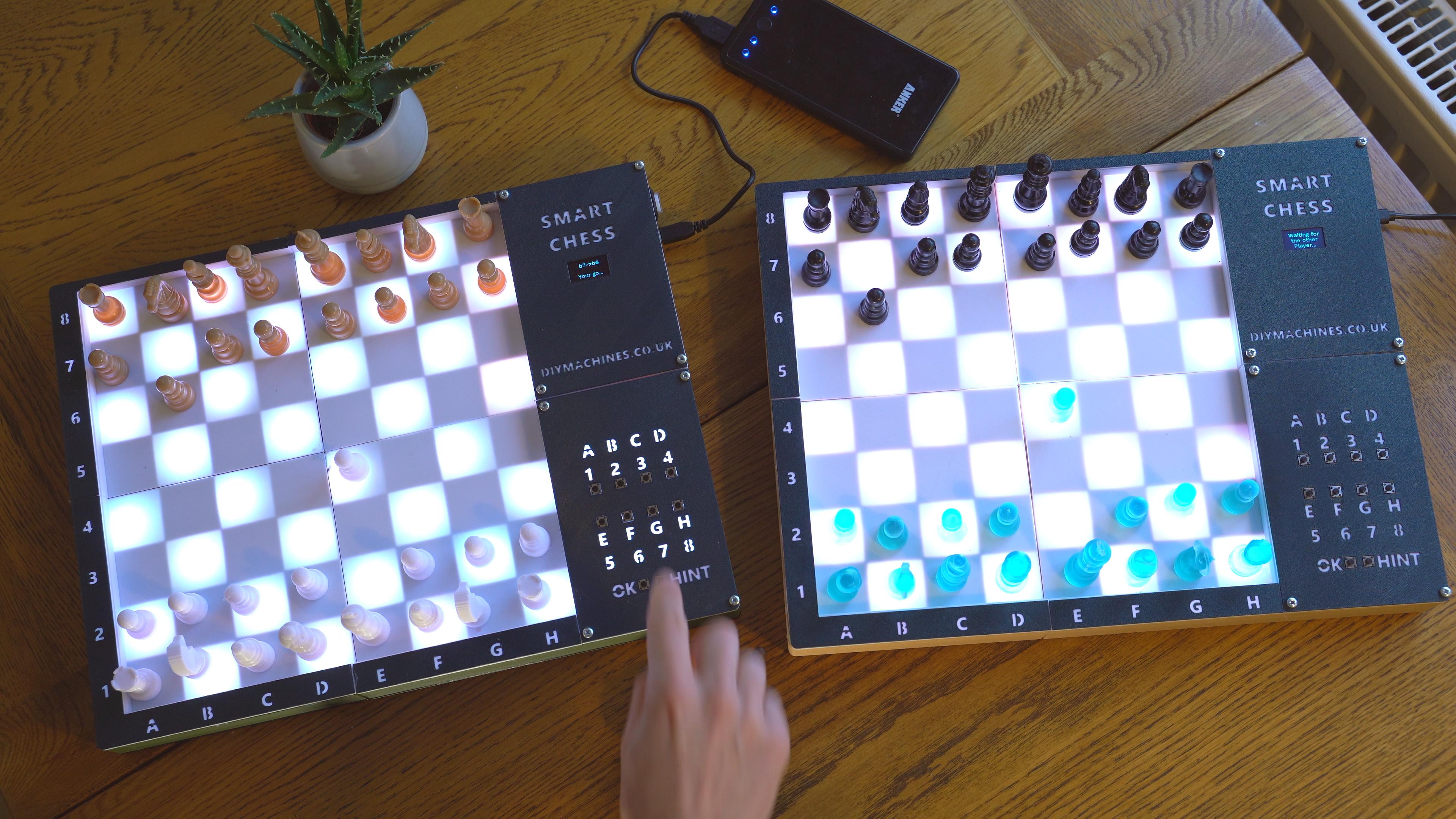
If you live near Central Park or some other local chess hub, you’re likely never short of opponents for a good game. If you find yourself looking for a computer opponent, or you just prefer playing online, you might like this LED chessboard from [DIY Machines] instead.
At heart, it’s basically a regular chessboard with addressable LEDs of the WS2812B variety under each square. The lights are under the command of an Arduino Nano, which is also tasked with reading button inputs from the board’s side panel. The Nano is interfaced with a Raspberry Pi, which is the true brains of the operation. The Pi handles chess tasks—checking the validity of moves, acting as a computer opponent, and connecting online for games against other humans if so desired. Everything is wrapped up with 3D printed parts, making this an easy project to build for the average DIY maker.
The video tutorial does a great job of covering the design. It’s a relatively simple project at heart, but the presentation is great and it looks awfully fun to play with. We’ve featured some other great builds from [DIY Machines] before, too. Video after the break.
Louis Vuitton lance un jeu à base d'énigmes à résoudre en équipe
DJI’s new wireless mics skip a few features to get smaller and lighter

DJI has announced its next wireless microphone system, the Mic Mini, which shrinks all the hardware while improving battery life. The new microphones weigh less than half of what the more expensive DJI Mic 2’s transmitters do, but the new system sacrifices useful features like built-in backup recording and the option to connect an even smaller lav mic in the name of improving portability.
Although the DJI Mic Mini seems like an improvement over the DJI Mic 2 system in many ways, it’s not a replacement. The Mic Mini transmitters lack the ability to record backup audio on their own. If that’s a concern, you’ll need to rely on your recording software, such as DJI’s Mimo app, which can capture a second safety track at a lower volume to...
LILYGO T-Bao tiny AI robot combines ESP32 and Kendryte K210 RISC-V chip, features camera and display
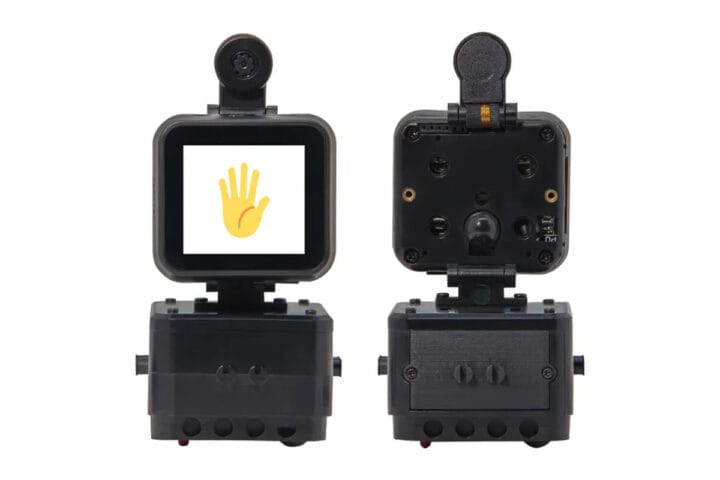

The T-Bao AI robot is a compact embedded device/robot that combines an ESP32 and a K210 RISC-V microcontroller and can perform face recognition and robotics applications.
This compact device features a 1.54-inch 240×240 capacitive touch screen, a 2MP OV2640 camera, a MAX98357A I2S audio amplifier, a DRV8833 motor driver, an MPU6050 6-axis motion sensor, and an AXP202 PMU for power management. Additionally, it supports USB charging, offers LEGO blocks compatibility, and can move around with integrated caster wheels. These features make it usable for educational projects, robotics, IoT applications, and embedded systems prototyping.

LILYGO T-Bao specifications
- SoCs
- Kendryte K210 dual-core 64-bit RISC-V processor @ 400 MHz with 8MB on-chip RAM, various low-power AI accelerators delivering up to 0.5 TOPS
- ESP32-D0WDQ6-V3 dual-core Xtensa LX6 processor, 240 MHz, 16MB Flash, 8MB PSRAM
- Display – 1.54-inch capacitive touch LCD (240×240)
- Camera – 2MP OV2640 with rolling shutter, UXGA (1600 x 1200) resolution, 180-degree rotation
- Audio – MAX98357A I2S audio amplifier (3.2W @ 4Ω)
- Sensors – MPU6050 6-axis accelerometer and gyroscope
- Motor control – DRV8833 motor driver
- Misc
- Two caster wheels and two smaller red wheels for mobility
- LEGO-compatible for modular setups
- Power
- Replaceable 9V battery
- Onboard USB Type-C port for charging @ 500 mA
- AXP202 Power Management IC
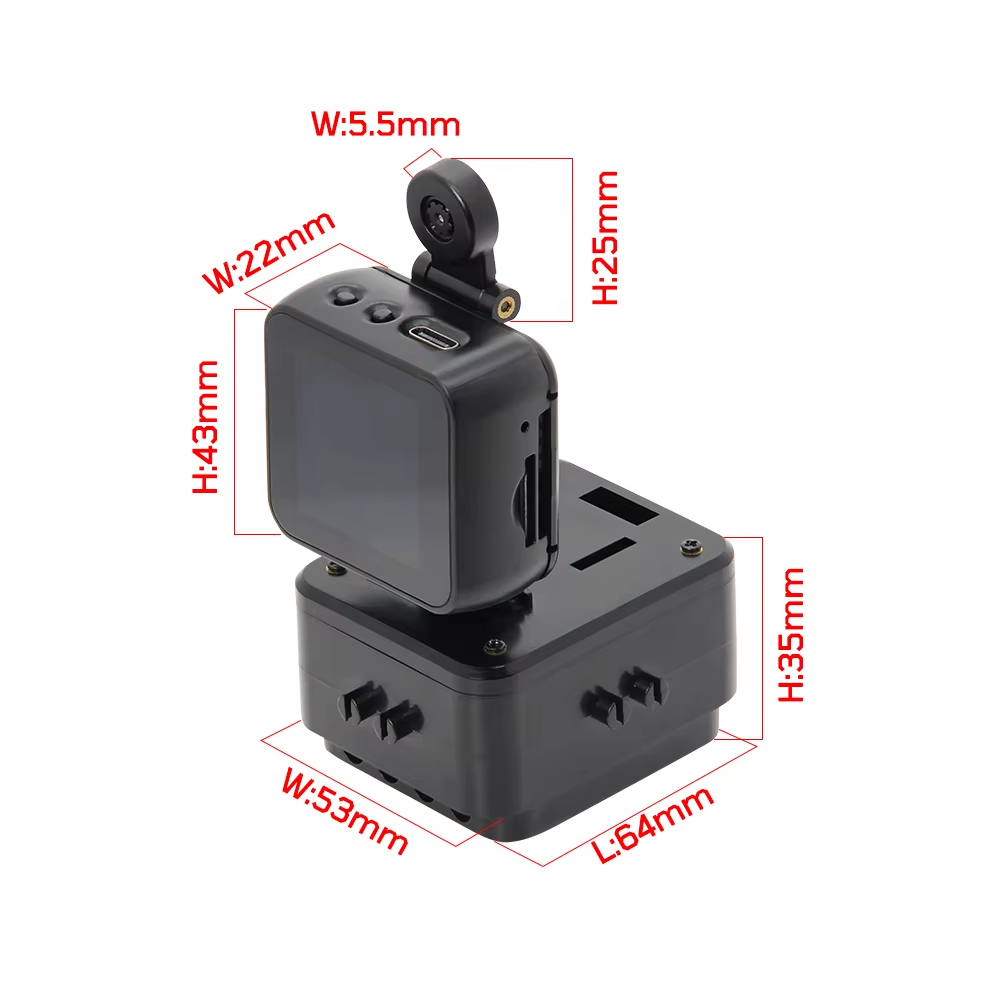
- Dimensions – 64 x 53 mm
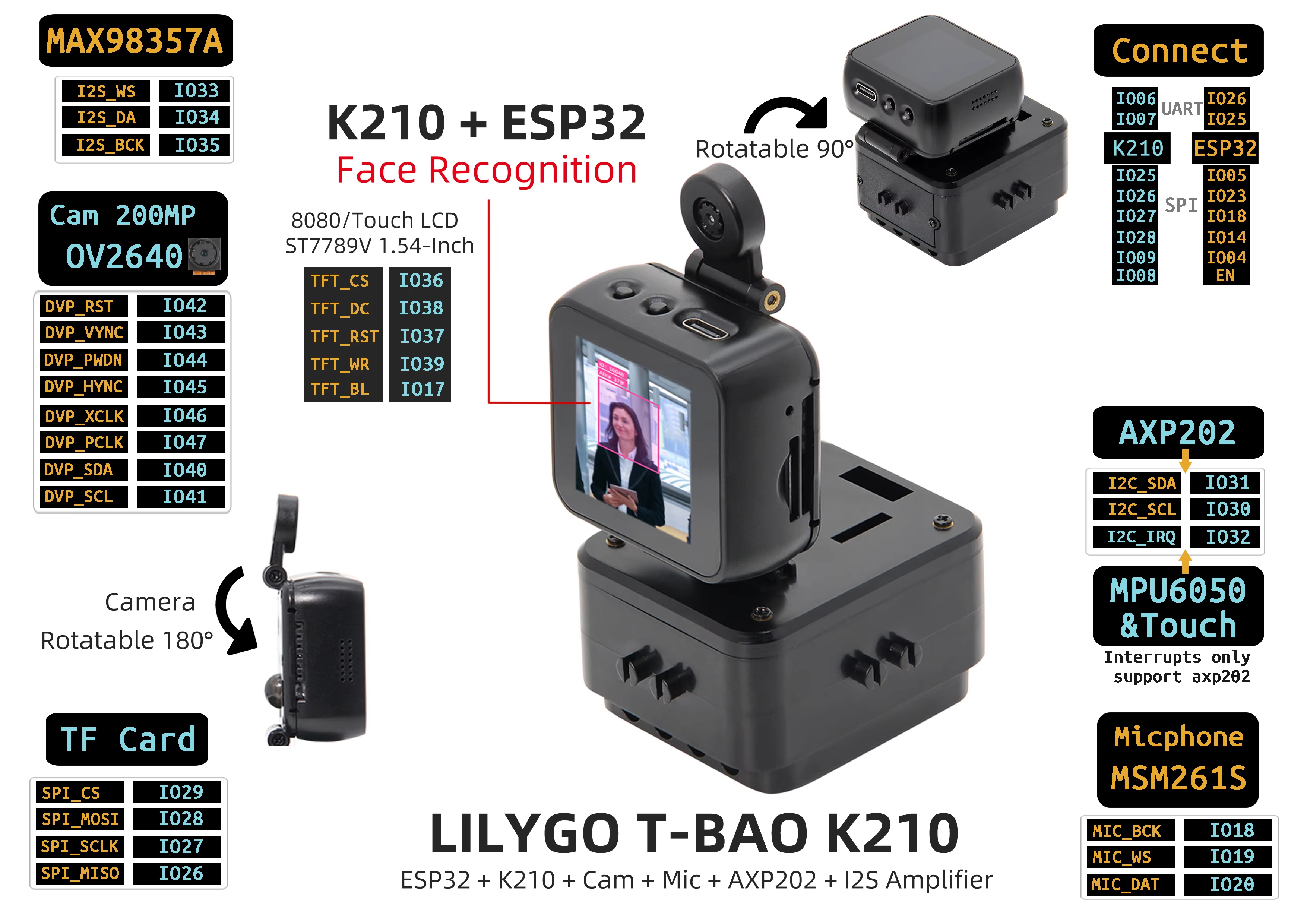
While writing the specifications, I noticed that a lot of information was missing as the company does not show what the internal components of this product look like. They also mention that there is a DRV8833 motor driver, raising the question: is it solely driving the caster wheels, or can it be used to drive other motors as well?

The company also mentions that additional documentation, sample code, and other information can be found in their GitHub repo but after thoroughly checking the repository I cannot find anything specific about the T-Bao. The device has a USB-C port built into it but that port cannot be used for programming as the company mentions it as a charging port. To program the device, the little robot ships with a CH9102-based USB to high-speed serial chip which is used to program the ESP32 chip.
Previously, we have written about various ESP32-based robots like the CYOBot v2, the MechDog AI robot, the XGO-Rider self-balancing robot, and many others. We have also covered many unique products by LILYGO like the LILYGO T-Deck Plus the T-TWR ESP32 walkie-talkie, the LILYGO T-ETH-Elite ESP32-S3-powered IoT board, and many more feel free to check those out if you are looking for something similar.
The T-Bao AI robot is priced at around $80.69 and can be purchased from the LILYGO store or their AliExpress store for $81.58.
The post LILYGO T-Bao tiny AI robot combines ESP32 and Kendryte K210 RISC-V chip, features camera and display appeared first on CNX Software - Embedded Systems News.
Neuralink Testing Robot Arm Controlled by Brain Chip

Elon Musk's brain-computer interface (BCI) company is entering its next phase of experiments: seeing if patients can move a robotic arm using their minds.
In a statement posted on X-formerly Twitter — also owned by Musk — the company announced that its new "feasibility trial" will investigate whether people can use its coin-sized brain chips to control a robot with their minds.
"This is an important first step," the Neuralink post reads, "towards restoring not only digital freedom, but also physical freedom."
Along with the teaser about the new capabilities, the company posted a link to its trial patient registry, suggesting that Neuralink is still looking for its ideal candidate.
Beyond the news that Neuralink would begin testing what Musk has in the past referred to as the "Luke Skywalker solution," a lot remains unclear about the trial. It does appear, per the fine print on its patient registry page, that Canadians will be able to apply alongside their American counterparts to get a chip implanted into their brains and test out mind control on a robotic arm.
While this is an unprecedented step for Musk's company, it's not the first time such an endeavor has been undertaken.
Way back in 2015, Caltech researchers implanted what they called a "neural prosthetic device" into the brain of a paraplegic man named Erik Sorto that allowed him to control a robotic arm using his thoughts. In doing so, the man was able to give a handshake, play "rock, paper, scissors," and even sip a beer.
Much like Neuralink's first patient, Noland Arbaugh, Sorto described the sense of elation he felt when he was able to use the robotic arms to move after becoming paralyzed during a gang shootout when he was just 21.
"I wanted to drink my beer by myself and not asking anyone for help or anything like that," the published author said during a local newspaper interview in 2017. "It was an out-of-body experience. I wanted to jump out of my chair, hug everyone, carry them around if I could carry them around and high five everybody."
"It was so much joy," Sorto continued. "My body was full of joy."
Though Musk often attracts attention for his cringeworthy antics and increasingly dangerous politicking, Neuralink is one silver lining among his portfolio — as long as you don't think too hard about all those monkeys from the company's early experiments, that is.
More on Neuralink: First Neuralink Patient Using It to Learn New Languages
The post Neuralink Testing Robot Arm Controlled by Brain Chip appeared first on Futurism.
Interactive AI brings textbooks to life
Spotted: Every child learns best in a different way, and often, reading textbooks full of static diagrams isn’t enough for many kids to grasp new concepts – particularly when it comes to science. To change that, researchers led by Ryo Suzuki at the University of Colorado at Boulder are using AI to help make educational content more interactive and engaging.
The researchers have created a tool called ‘Augmented Physics’, which allows students to turn still diagrams into dynamic, living images using only an iPad, helping them to visualise concepts. Traditional 2D textbooks have been a mainstay of the classroom for decades, but reading about scientific subjects doesn’t necessarily mean a child is going to fully grasp them. With Augmented Physics, students can better understand complex processes – such as momentum, electrical current, cell division, or light refraction – and see them in action.
Students begin by capturing a textbook diagram with an iPad. Then, the technology uses Meta’s Segment Anything model to assign objects in that diagram various roles. For instance, the student could select a skier to ski down a hill. The tool then uses AI to apply physical laws to the diagram, animating the intended motion as it would appear in reality. By adjusting the parameters, students can visualise, in three dimensions, how forces such as gravity, energy, or friction affect the skier’s movement.
Right now, the technology achieves an effective simulation in only 60 per cent of cases, and the team is working on boosting that figure. The researchers also hope to broaden the AI’s capabilities beyond physics, so it could be used to bring documents from a variety of subjects to life using augmented glasses, enabling students to learn in 3D interactive worlds.
Written By: Duncan Whitmore and Matilda Cox

🧬 Ce ver mange du plastique: les photos impressionnantes 🐛
ElevenLabs’ new feature is a NotebookLM competitor for creating GenAI podcasts
Voice AI startup ElevenLabs on Wednesday introduced a feature that lets you upload different types of content to create a multispeaker podcast for you, similar to Google’s NotebookLM. The feature, called GenFM, can be found on the company’s ElevenLabs Reader iOS app. Currently, GenFM supports 32 languages, including English, Hindi, Portuguese, Chinese, Spanish, French, German, […]
© 2024 TechCrunch. All rights reserved. For personal use only.
Could Nuclear Be The Way To Produce Synthetic Fuel On The Cheap?

Fossil fuels can be a bit fussy to access, and geopolitics tends to make prices volatile. Burning them also takes carbon out of the ground and puts it into the atmosphere, with undesirable climate implications. The hunt for a solution has been on for quite some time.
Various synthetic fuels have been proposed as a solution, wherein carbon dioxide is captured from the air and chemically processed into useful fuel. Done properly, this could solve the climate issue where any fuel burned has its carbon later captured to make more fuel. The problem, though, is that this process is very energy intensive. Given the demands, it’s no surprise that some are looking towards nuclear reactors for the answer.
Hot To Go

Burning fossil fuels is bad for the environment, but the problem is that they’re so very useful. Take transport, for example. Fossil fuels are perfect for this application because they pack a huge amount of energy into very little space while weighing relatively little to boot. At the same time, more than a third of global carbon emissions in 2021 came from transportation, according to the International Energy Agency. While electric vehicles are rapidly gaining market share in some areas, the complete phase out of internal combustion engines is by no means a sure thing. Meanwhile, sectors like aviation are proving especially difficult to fully electrify. We want to get off fossil fuels, but circumstances demand we continue to use them.
Enter synthetic fuels. They’re essentially drop-in replacements for gasoline, diesel and jet fuel that are produced from CO2, water and clean energy rather than being refined from petroleum. When made using captured CO2 and cleanly-produced hydrogen, they have the potential to significantly reduce transport emissions when taking the whole system into account. All this, without requiring an entirely new fueling infrastructure or any changes for the end user.
By capturing carbon and then chemically processing it into a useful combustible fuel, we could keep using existing technologies that we already find practical, like combustion-engined vehicles. Their emissions would still be undesirable, but they’d be offset by the capture process used to make new fuel. The idea is to create a closed loop for carbon emissions. The problem is finding a synfuel production process that’s efficient—both in terms of carbon capture and chemical processing—and to find the energy to run it.
Indeed, synthesizing hydrocarbons is an energy-intensive process. The process is well-understood at this point. Capturing CO2 from the air, generating hydrogen via electrolysis, and catalytically combining them into fuels at high temperatures and pressures all require a lot of energy input. For synfuels to deliver real climate benefits, this energy must come from clean, non-fossil sources.
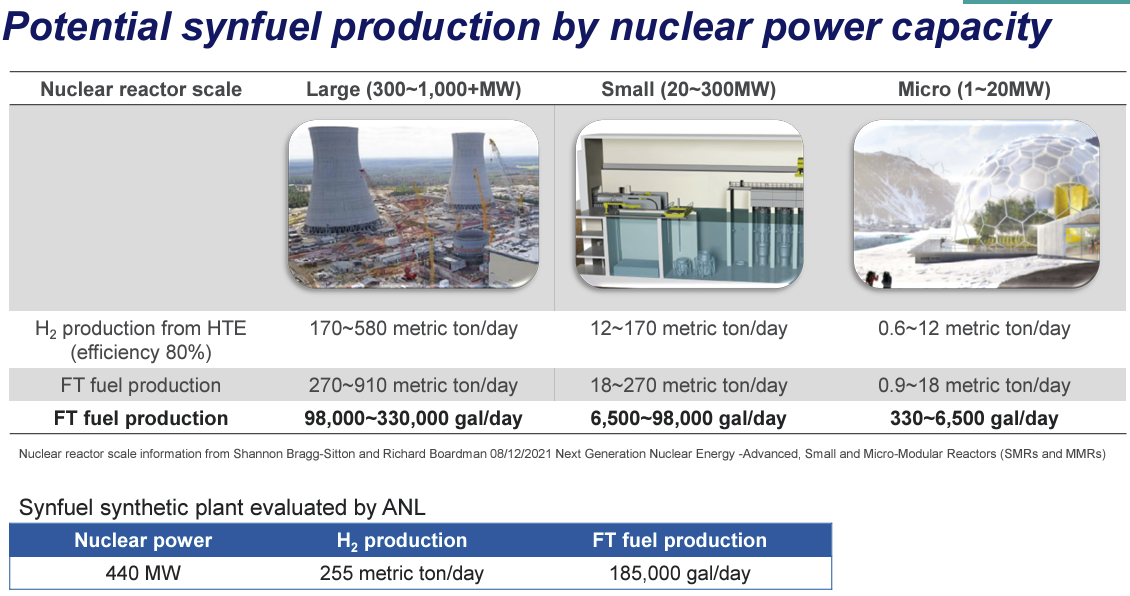
What do we do when we need a lot of power with minimum emissions? We look at nuclear! Several U.S. Department of Energy labs are actively researching nuclear-powered synfuel production, and the DOE is funding a $20 million demonstration project in Utah. Meanwhile, in the United Kingdom, the Nuclear Industry Association has been urging the country to seize a leadership position in this emerging field as well.
On a very basic level, a conventional nuclear power plant could provide electricity for various processes involved in synthetic fuel production. However, that’s not the only way to go. For some processes, the heat from a nuclear reactor could be directly used to power the synfuel production process. That is, rather than using heat from a nuclear reaction to create steam to turn a turbine, a purpose-built synfuel reactor could just deliver heat directly to a chemical process that needs it. Nuclear heat could be useful for desalinating seawater for hydrogen electrolysis, or for carbon capture, too.
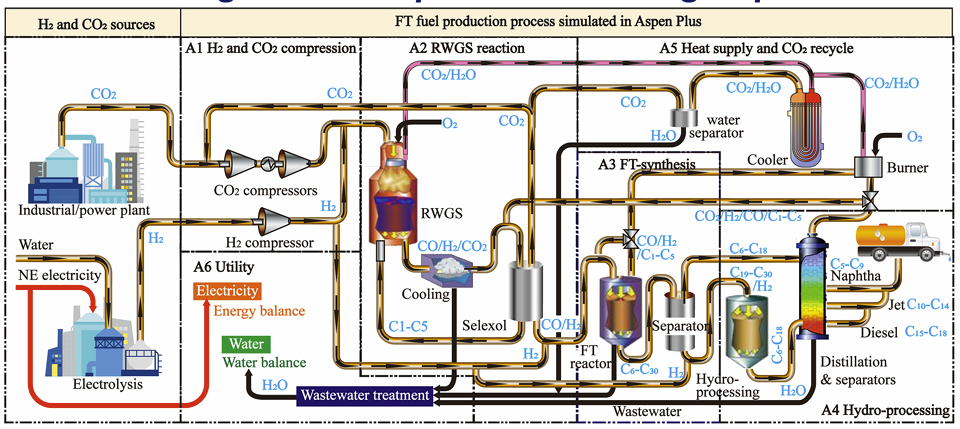
The question is whether all the effort will be worthwhile. Competing with regular old fossil fuels on price will be a must, even if some degree of subsidy is used to lean the scales in the favor of synfuels. There are hopes that nuclear-produced synfuels could reach prices of $3 a gallon with the right feedstocks and input costs, but that’s words on a page at this stage. There is plenty of engineering to be done before you’ll be filling your car with 20 gallons of nuke gas at your local station.
Efficiency also comes into it, and this could play a big role in how synfuels pan out. Take cars, for example. Automakers have figured out how to make supremely efficient electric vehicles in the past decade. Electrical engineers have become experts at squirting power efficiently all over the country, and there are more EV charging stations than ever. Does it make sense to spin up bespoke nuclear synfuel plants to keep internal combustion alive, when the technology to replace it already exists? Arguments could be made for more demanding applications like trucking or aviation, but then the market for synfuels grows smaller.

In any case, nuclear synfuel holds great promise. Whether it can overcome the general resistance towards all nuclear technologies remains to be seen. Still, the tides may be changing on that front, and the future is anyone’s guess. If you’re a fan of fossil fuels and the like, be happy—there is hope yet that the flammable fluid market will roll on.
OpenAI's Super-Powerful "Sora" AI Video Generator Appears to Have Leaked

Sora Spot
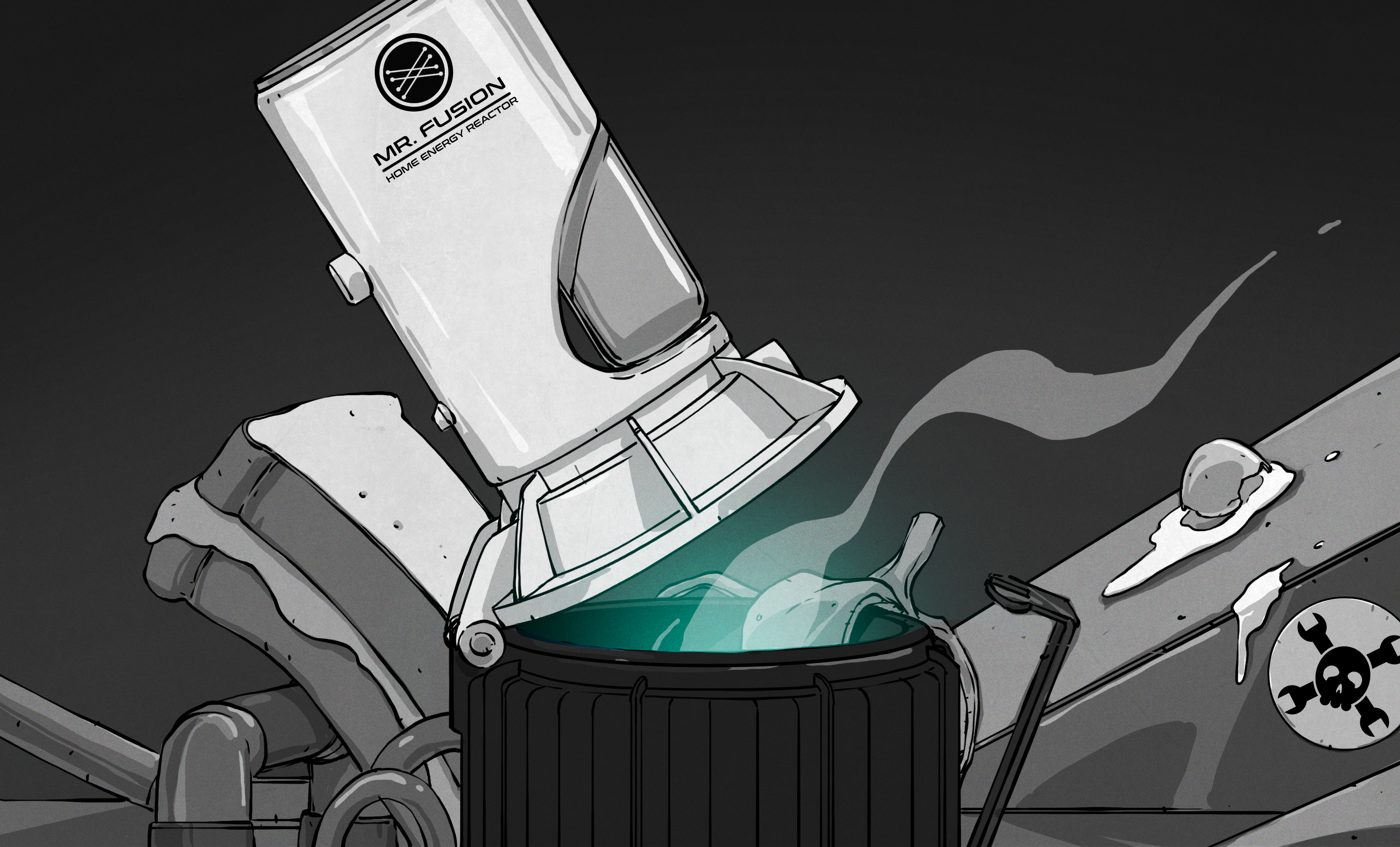
A group of unhappy artists say they've leaked OpenAI's video generator Sora.
The text-to-video model was first announced in February of this year, with the company showing off its impressive ability to generate photorealistic — albeit imperfect — video footage.
But OpenAI has yet to publicly release the model, only allowing a small group of beta testers to take Sora for a spin.
Now, though, a group of testers who claim to have gotten early access to the tool say they've leaked the model to the public in protest, as The Verge reports — only for OpenAI to shut it down just three hours later.
The artists used the opportunity to make a greater point about how the AI industry is exploiting labor by making them "PR puppets."
"We received access to Sora with the promise to be early testers, red teamers, and creative partners," reads an open letter posted to public AI model repository Hugging Face.
"However, we believe instead we are being lured into 'art washing' to tell the world that Sora is a useful tool for artists," they added, referring to the process of covering up the shortcomings of a corporation by employing art in a positive way.
"We are not your: free bug testers, PR puppets, training data, validation tokens," the letter reads.
Sora Not Sora
The artists took aim at OpenAI — which has raised a tremendous amount of money by coming up with AI models that ingest the work of human artists and then churn out more in their style — for demanding free labor.
"Hundreds of artists provide unpaid labor through bug testing, feedback, and experimental work for the program for a $150B valued company," the letter reads.
"While hundreds contribute for free, a select few will be chosen through a competition to have their Sora-created films screened," the artists wrote, "offering minimal compensation which pales in comparison to the substantial PR and marketing value OpenAI receives."
The artists also criticized OpenAI for requiring "every output" to be screened "before sharing."
"This early access program appears to be less about creative expression and critique, and more about PR and advertisement," the letter reads.
In a statement to The Verge, OpenAI spokesperson Niko Felix argued that participation in the preview is "voluntary, with no obligation to provide feedback or use the tool."
"Sora is still in research preview, and we’re working to balance creativity with robust safety measures for broader use," the statement reads.
Besides safety concerns, OpenAI may also be delaying the rollout of Sora for a much more benign reason: the astronomical amount of computing power required to AI generate high-resolution videos.
More on Sora: Turns Out That Extremely Impressive Sora Demo... Wasn’t Exactly Made With Sora
The post OpenAI's Super-Powerful "Sora" AI Video Generator Appears to Have Leaked appeared first on Futurism.
Space Station Astronauts Complain of Horrible Smell After Russian Capsule Docks

Smelt It
As if they need any more problems, the astronauts on board the International Space Station were besieged by a noxious odor situation over the weekend.
In a statement posted on X-formerly-Twitter, NASA's ISS account noted that when the Russians' Progress cargo ship docked with the rest of the space station, cosmonauts "noticed an unexpected odor and observed small droplets."
According to the statement, the cosmonauts shut off Russia's Poisk module from the rest of their segment of the space station so that its air scrubbers and contamination sensors could do their thing. As Ars Technica points out, however, NASA may have been downplaying the situation.
Per reporting from journalist Anatoly Zak of the independent space-watching site Russian Space Web, the hatch connecting Poisk to the Progress cargo spacecraft had to be "closed immediately due to a toxic smell and possible contamination hazard in the form of droplets."
American astronaut Don Pettit apparently reported a "spray paint-like" smell on the American side of the ISS around that time, though it's unclear whether it was related to the Poisk odor.
Either way, the cosmonauts wore protective equipment and activated additional air scrubbers on their end of the space station, and the "Trace Contaminant Control Sub-assembly" was activated on the US side as well, Russian Space Web noted.
Dealt It
While neither space agency seems to know what caused the smell this time around, repeated leaks have plagued Russia's spacecraft.
Along with the small leak in Roscosmos' Zvezda life support capsule earlier this year, the most recent and more severe of these issues occurred at the end of 2022 and the beginning of 2023, when both a crewed Soyuz capsule and a Progress cargo freighter suffered coolant leaks.
Roscosmos blamed those leaks on the impact of space debris, and there has reportedly been tension behind the scenes as NASA and its Russian counterpart try to get to the bottom of the issue
With this latest noxious odor issue, it seems likely that tension between the rival space agencies may again rise — though to be fair, NASA has plenty of its own ISS problems to handle first.
More on the ISS: NASA Still Trying to Figure Out Why Astronaut Was Hospitalized After Return to Earth
The post Space Station Astronauts Complain of Horrible Smell After Russian Capsule Docks appeared first on Futurism.
Anthropic launches tool to connect AI systems directly to datasets

Anthropic has released a new open-source tool to connect AI assistants directly to the information they need to inform their responses or carry out tasks. The new Model Context Protocol (MCP) provides a universal connection to all sorts of data sources, which Anthropic says will improve performance.
Earlier this month, OpenAI started testing a new “Work with Apps” feature that lets the Mac version of ChatGPT directly connect to certain coding apps. Anthropic’s tool, on the other hand, aims to work across all AI systems and data sources.
As noted by Alex Albert, Anthropic’s head of Claude relations, developers currently have to create custom code for each dataset they want their AI model to draw from. With Anthropic’s MCP, Albert says...
Nvidia’s new AI audio model can synthesize sounds that have never existed
At this point, anyone who has been following AI research is long familiar with generative models that can synthesize speech or melodic music from nothing but text prompting. Nvidia's newly revealed "Fugatto" model looks to go a step further, using new synthetic training methods and inference-level combination techniques to "transform any mix of music, voices, and sounds," including the synthesis of sounds that have never existed.
While Fugatto isn't available for public testing yet, a sample-filled website showcases how Fugatto can be used to dial a number of distinct audio traits and descriptions up or down, resulting in everything from the sound of saxophones barking to people speaking underwater to ambulance sirens singing in a kind of choir. While the results on display can be a bit hit or miss, the vast array of capabilities on display here helps support Nvidia's description of Fugatto as "a Swiss Army knife for sound."
You’re only as good as your data
In an explanatory research paper, over a dozen Nvidia researchers explain the difficulty in crafting a training dataset that can "reveal meaningful relationships between audio and language." While standard language models can often infer how to handle various instructions from the text-based data itself, it can be hard to generalize descriptions and traits from audio without more explicit guidance.

Anthropic proposes a new way to connect data to AI chatbots
Anthropic is proposing a new standard for connecting AI assistants to the systems where data resides. Called the Model Context Protocol, or MCP for short, Anthropic says the standard, which it open sourced today, could help AI models produce better, more relevant responses to queries. MCP lets models — any models, not just Anthropic’s — […]
© 2024 TechCrunch. All rights reserved. For personal use only.
Actualité : Les échantillons de l'astéroïde Ryugu ramenés de l'espace ont été contaminés par la vie terrestre !

Discovering Truth and Beauty and Sharing it with others

This post is sketch 900 of Sketchplanations, according to my numbering. To mark that, I've been reflecting and wanted to share what I've learned from over a decade of this project.
It's my longest post, but I created a version you can listen to, or even watch 🙈, if you prefer. And if you don't want to listen, watch or read a long article, I hope you can just enjoy the sketch of Brenda Ueland's lovely wisdom.
Listen/watch reflections on a decade of Sketchplanations on YouTube
Still here? Let's go:
After the first year of one-a-day, I've done one sketch a week, 52 a year, for over a decade without missing. I've tried to stick to James Clear's "Never miss twice" rule by first not missing once.
With a few years of experience in creating and sharing under my belt, I wanted to share some thoughts about this project, about sharing your work, and about creative freedom.
I watched a talk by Jack Conte a few weeks ago. Jack is the founder of Patreon but was first—and still is—a passionate, talented musician full of energy and drive. The whole talk is interesting—he called it the Death of the Follower. But what drove me to create this was some of what he said towards the end, kind of his "advice to creatives."
I want to talk about two things: The why and what of creating, and second, what sort of project a creative project should be.
I've been lucky in so many ways with this project:
It was accidental, so I wasn't staking my future or my ego on it.
It was a side project—until this year—so I wasn't staking my paycheck and whether we could pay the mortgage and support our family on it.
And I stumbled on a simple formula that's given me great permission, licence, and scope to explore everything that interests me.
Without getting too grandiose about it, my conjured up tag line of "explaining the world one sketch at a time" is a huge mission, one that never really ends. But it also allows me to cover whatever aspects of our fascinating world that I want, in the way that I want.
Cartoonists also have a tremendous scope to create, but they usually have to make people laugh. Fortunately for me, I don't have to do that each time. I can cover serious things, or sensitive things, or fun things, or complex things in whichever way I want.
I'm also lucky that my drawings don't have to be good. Sometimes, I look back on older ones and cringe, but usually, I don't cringe at what I'm sharing, only my drawing of it.
Just a year or so into this project, when I complained to a good friend about not being the best artist, he simply replied, "Yes, but it's the content." It really stuck with me, and it's grown on me over time. The drawings may not be as slick as other artists. Still, the content and topics I tackle are hopefully valuable, or at least interesting, in themselves. So people, I think, forgive me when I don't get it quite right and it's a bit cheesy, or my people are a bit janky.
Part of the luck in my formula is that it's become a unique collection in style and approach. The more I've created, the more unique it becomes.
I am regularly asked how I choose and find topics to include. I only recently found the answer that really nails it.
On my website, I've joked, "Sooner or later, everything I know will be on Sketchplanations." And in some ways, that's true—at least for the useful stuff I know.
At first, sketches were a combination of serendipity in what happened to me that was interesting this week and a process of trawling through my experience and memory for the things I've found interesting and helpful over the years. And they were also what I found myself using or thinking about regularly.
Over the years, I've trained myself constantly to be on the lookout for topics. Sometimes I see, or read, or remember something that I instantly know I'll sketch at some point. I add it to my list, and those that I'm excited about and have the clearest view on are those I tackle the next week.
But that doesn't really address the question of what makes it into the list and what doesn't. What ties these together? The answer I found most profoundly hit when I read a wonderfully opinionated book, "If you Want to Write," by Brenda Ueland. Brenda says:
And what is the purpose of existence… but to discover truth and beauty and…share it with others.
— Brenda Ueland
And it was suddenly clear to me. What makes it into the list is when I've found something that to me was a truth, an insight, an aha, a new piece of knowledge, something beautiful or fascinating that I realised. I had to feel I'd discovered something. Sketchplanations has given me the wonderful vehicle to act on the impulse to share it with so many others.
I usually consider myself knowledgeable about most sketches but an expert in few. But like the age-old realisation that the teacher learns more than the students, I can tell you that there's nothing like spending a day or more a week diving into a topic, thinking how to visualise it, spending several hours sketching it and then writing about it to cement them in my own brain. I'm no doubt the one who's benefited the most from this project.
It's not too long in a conversation with me before I might struggle not to interrupt with a "There's a sketch for that."
And this diverse collection of 900 sketches therefore, in many ways, reflects everything I find interesting and helpful or beautiful in the world, and so is a reflection of me. In that sense it's really rather personal.
Which brings me to the second aspect of what I want to share here.
I'm very lucky that many people provide suggestions for sketches they'd like to see. I've worked in design and user experience for many years. Having direct feedback of what your audience would like to see is extremely valuable. I've tackled some of them, but too few.
I find that I'm not a very good judge of sketches that will turn out to be popular—at least in the short run.
I send out new sketches each week in my newsletter. It's funny that even though I send out 10s of 1,000s of emails each month there's relatively little feedback of what people think about each new sketch.
I started posting sketches on social channels many years ago to allow more people to discover them and make it easier for people to share them.
And I post sketches on my website, so that people can find them in the future and get the answers they want when they're searching for something or looking for something to use in their own projects.
Posting on social media is interesting as, with likes, comments, shares and follower numbers I seemed to have much more feedback about whether what I did was interesting to people or not. Certainly as compared to the newsletter where there's no lightweight, low commitment way, save writing me a direct email, to let me know if it was helpful. I love receiving them by the way.
Once you start getting feedback on what seems to be popular however, you have a double-edged sword. For example, what if there's some truth or beauty that I want to share that is unlikely to be popular? Or what if there are things that will be popular that I don't find to be a truth or beauty that speaks to me or makes me want to share it.
If I was a business I think the answer is fairly clear—you create the content that your audience wants to see so people come to your site and buy your wares.
But what if a project reflects you personally? And what if it's an amateur project, created for the love of it rather than the $ of it?
I have tackled some sketches of topics that people asked for and that sometimes people have paid me for. What I found is that very quickly it begins to feel like a job. It's fine to do, but they're not always something that excites me.
For me, who fortunately for so long wasn't depending on it for my primary income, I found it very quickly took the joy out of the task. Why would I use my spare time—and often time from my family—to execute something that I wasn't excited about and didn't find joy in and didn't find a little spark or fire in sharing with others?
Don't get me wrong. Reaching more people with my work is great. I came round to marketing when I kept hearing "Wow, I just discovered your site. I love it!" 7 years after I'd been working on it. These people could have been following from the beginning if I'd just reached them earlier.
That was part of the impetus to create a physical book and hopefully reach a new set of people in a different way. This same feeling also drives me to work on making the website better—as the saying goes: "Business without marketing is like winking at a girl in the dark." What's the point of having good content if people can't find it? It seems a shame.
Well, one way I could reach more people, I think of, as "feeding the machine."
What I should do is find topics that have high search volume, topics that are topical or current, topics that draw a lot of engagement, topics that may be easy to grasp or share with others, and I should and do those. I should check search queries, watch what others are doing, and look for the content I post that creates the most interactions and create more content to match.
Simple messages without nuance or complexity are easy to share and take in and hit repost. But I can't bring myself to do it.
The things I keep wanting to share are my version of what Brenda called the "purpose of existence"—discovering truth and beauty and sharing it with others.
So I've resisted too much of feeding the machine. I'm sure it's cost me. I'm sure there are a million ways I could grow my followers faster, get more subscribers, get more content engagement, exploit new channels, write traffic heavy content. But I don't want to do those if it means I can't share the truths and beauty that I find valuable.
So, at sketch 900, I'm sharing these reflections as the struggles of a creator trying to understand the point and value of their project.
And to say that I plan to keep this project idiosyncratic, unexpected, and personal. Or, in some ways, a reflection of me. This will at least keep it unique.
I know that you won't find it all speaks to you—you're not me after all. But for the times when I do get it right, when you can see the truth or beauty that I'm trying to share, even if it's just you and me who appreciate it, I hope that will keep it worth it.
Jack Conte talks passionately and knowledgeably about the importance of building deep connections with small numbers of true fans. He built Patreon, through which I've benefited so much. And a deep personal thank you to everyone who is now supporting and has supported me in the past. And I've decided I'd rather, slowly, create a deeper, more personal connection with the people, perhaps like you, who have enjoyed my project, by sharing the truth or beauty that I want to share than to feed the machine and create what the machine says is needed.
Selfishly, I hope that this will also keep it interesting for me even if it may not do the rounds of the internet as well.
Thanks everyone who's visited, enjoyed, talked about, listened to the podcast or shared my work over the years. So many of you have been generous in sharing and singing the praises of this little project.
There is of course still so much more to explain about this world. Maybe 900 is a lot of topics sketched—or maybe, I'm just getting started.
Thanks for being part of the journey. See you at 1,000.
And...
If you made it this far, it'd be amazing if you considered helping to get to 1,000 by supporting me at any amount on Patreon 🙏
Lawyer Submits Anti-AI Document That Appears to Have Been Created Using AI

Irony Fire
A lawyer in Minnesota who claims to be an expert on how "people use deception with technology," has been accused of using an AI chatbot to draft an affidavit — in support of an anti-deepfake law in the state.
As the Minnesota Reformer reports, lawyers challenging the law on behalf of far-right YouTuber and Republican state representative Mary Franson found that Stanford Social Media Lab founding director Jeff Hancock's affidavit included references to studies that don't appear to exist, a telltale sign of AI text generators that often "hallucinate" facts and reference materials.
While it's far from the first time a lawyer has been accused of making up court cases using AI chatbots like OpenAI's ChatGPT, it's an especially ironic development given the subject matter.
The law, which calls for a ban on the use of deepfakes to influence an election, was challenged in federal court by Franson on the grounds that such a ban would violate First Amendment rights.
But in an attempt to defend the law, Hancock — or possibly one of his staff — appears to have stepped in it, handing the plaintiff's attorneys a golden opportunity.
Law Fare
One study cited in Hancock's affidavit titled "The Influence of Deepfake Videos on Political Attitudes and Behavior" doesn't appear to exist.
"The citation bears the hallmarks of being an artificial intelligence (AI) 'hallucination,' suggesting that at least the citation was generated by a large language model like ChatGPT," Franson's attorneys wrote in a memorandum. "Plaintiffs do not know how this hallucination wound up in Hancock’s declaration, but it calls the entire document into question."
And it's not just Franson's lawyers. UCLA law professor Eugene Volokh also discovered a different cited study titled "Deepfakes and the Illusion of Authenticity: Cognitive Processes Behind Misinformation Acceptance," which also doesn't appear to exist.
It's a troubling turn in an otherwise meaningful effort to keep AI deepfakes from swaying an election, something that has become a very real risk given steady advancements in the tech.
It also highlights a recurring trend: lawyers keep getting caught using tools like ChatGPT when they bungle up facts. Last year, New York City-based lawyer Steven Schwartz was caught using ChatGPT to help him write up a document.
A different Colorado-based lawyer named Zacharia Crabill, who was also caught red-handed, was fired from his job in November for the same offense.
Crabill, however, dug in his heels.
"There’s no point in being a naysayer," he told the Washington Post of the firing, "or being against something that is invariably going to become the way of the future."
More on AI and lawyers: Lawyer in Huge Trouble After He Used ChatGPT in Court and It Totally Screwed Up
The post Lawyer Submits Anti-AI Document That Appears to Have Been Created Using AI appeared first on Futurism.
Waveshare RoArm-M2 ESP32 robotic arms offer four degrees of freedom, various servo options
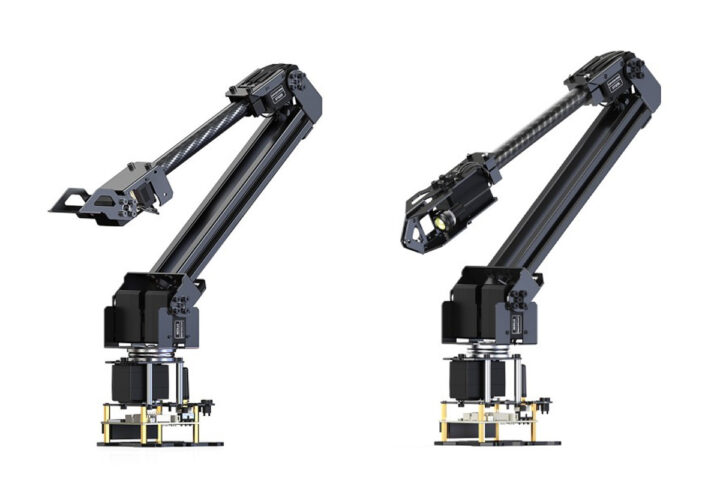
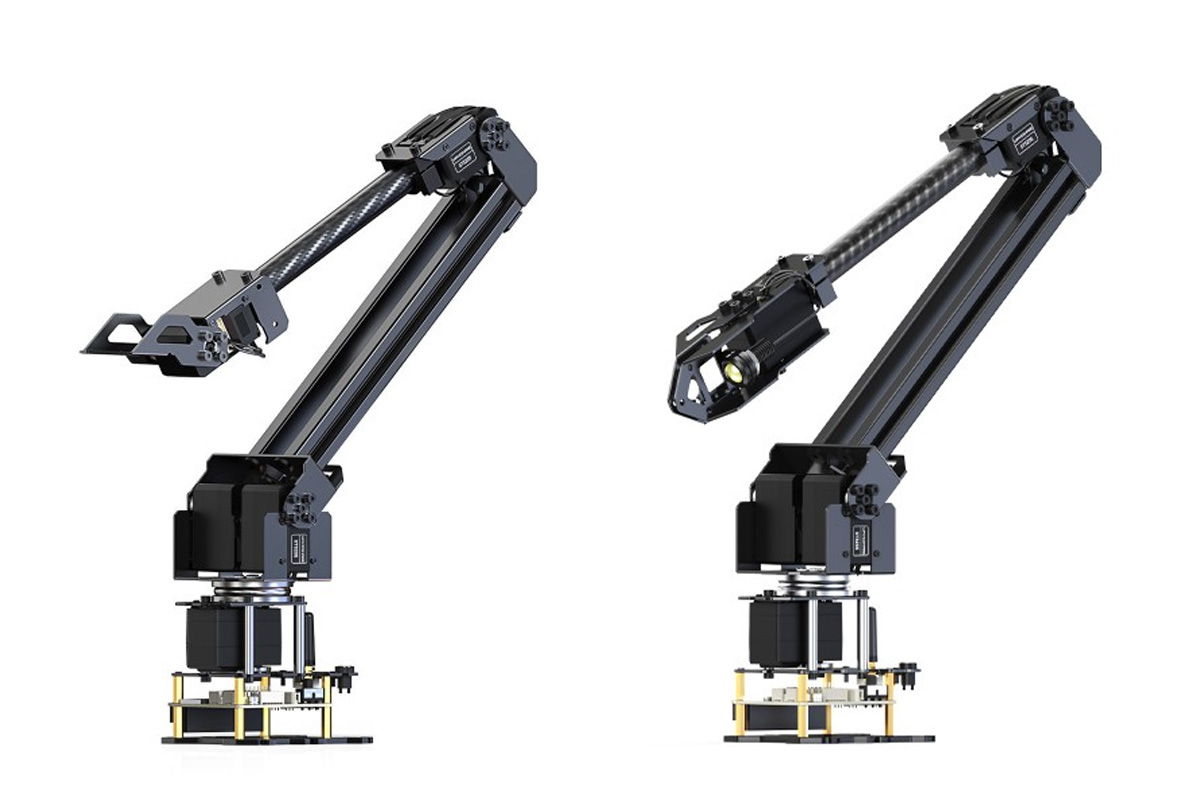
Waveshare has recently launched the RoArm-M2-S and RoArm-M2-Pro ESP32 robotic arms with four degrees of freedom, or 4-DOF for short. The main difference is that the RoArm-M2-S is equipped with standard servos, while the RoArm-M2-Pro features all-metal ST3235 bus servos, adding more durability and performance.
Designed for educational and robotics applications, the 4-DOF RoArm-M2 is sturdy yet lightweight, built using carbon fiber and aluminum alloy. It can handle payloads up to 0.5kg and has a workspace diameter of 1 meter. The arm offers high precision with a 12-bit magnetic encoder and dual-drive technology for improved torque and stability. On top of that, it features a 12-bit magnetic encoder and dual-drive technology for improved torque and stability. Other features include a 360° omnidirectional base and support for both wireless (WiFi, ESP-NOW) and wired (USB) control. These features make this device suitable for various applications including industrial automation, education, research, and DIY robotics projects.
Waveshare RoArm-M2 specifications
- Degrees of Freedom (DOF): 4
- Payload 0.5kg @ 0.5m
- Workspace: 1090mm (Max, 360° omnidirectional), Vertical: 798mm (Max)
- Operating range- Base-360°, Shoulder-180°, Elbow-180°, Hand-135°/270°
- Servos
- Total servo – 5
- All-metal ST3235 bus servos, direct-drive (RoArm-M2-Pro)
- Standard servos for RoArm-M2-S (RoArm-M2-S)
- Servo speed – 40rpm (no-load, no torque limit)
- Servo torque – 30 kg.CM @12V
- Joint feedback: 12-bit 360° magnetic encoder (0.088° precision)
- Host Operation – UART/USB/ESP-NOW*/HTTP communication via JSON data format commands
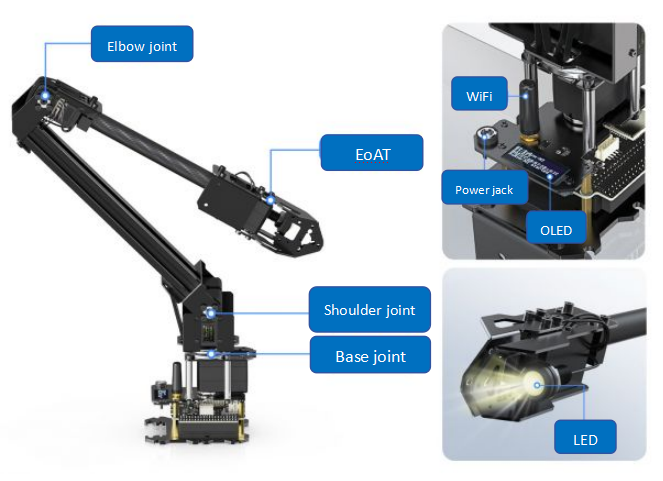
- Display – 0.91-inch OLED
- Control board
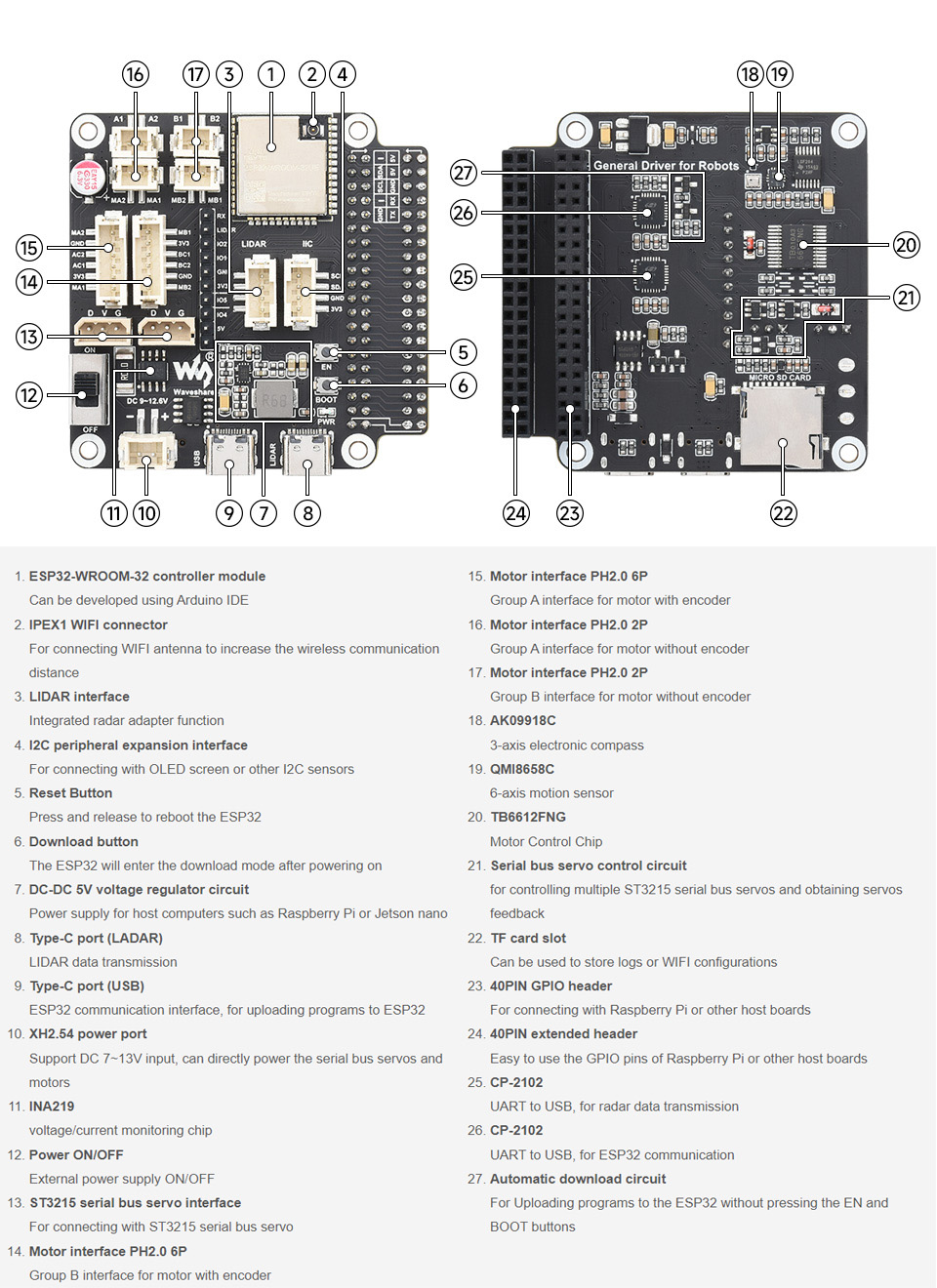
- MCU module – Espressif ESP32-WROOM-32U with WiFi, and BT
- Storage – microSD card slot
- Interfaces
- I2C for OLED screens and I2C sensors
- SPI
- LiDAR Interface (supported sensor not specified)
- ST3215 Serial Bus Servo Interface
- 2x Motor Interface PH2.0 6P for motors with encoders (Group A and Group B).
- 2x Motor Interface PH2.0 2P for motors without encoders (Group A and Group B).
- 40-pin expansion header for connection to a Raspberry Pi or other host boards
- 40-pin GPIO header
- Sensors and ICs
- AK09918C 3-axis electronic compass
- QMI8658C 6-axis motion sensor
- TB6612FNG motor control chip
- ST3215 serial bus servo control circuit
- INA219 voltage and current monitoring chip.
- USB
- USB Type-C Port for power and programming the board
- USB Type-C Port for LIDAR data transmission
- Misc
- Reset button
- Download button
- Power ON/OFF button
- Power – XH2.54 power port with DC 5V voltage regulator for host computers (Raspberry Pi, Jetson Nano).
- Expansion
- EoAT customization (gripper, etc.)
- Camera mount
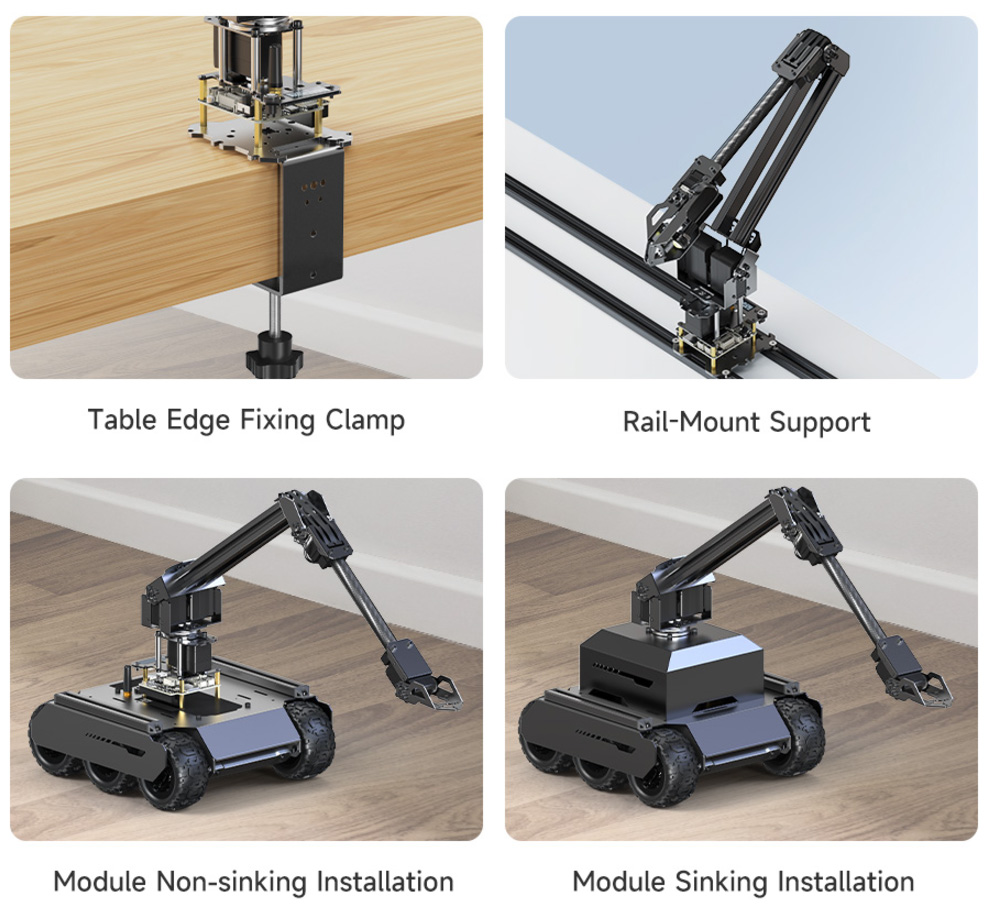
- Peripheral mounting rails
- Operating voltage
- 12V, 5A power supply with 2-channel supply switch
- Supports 3S Lithium batteries (NOT included)
- Dimensions
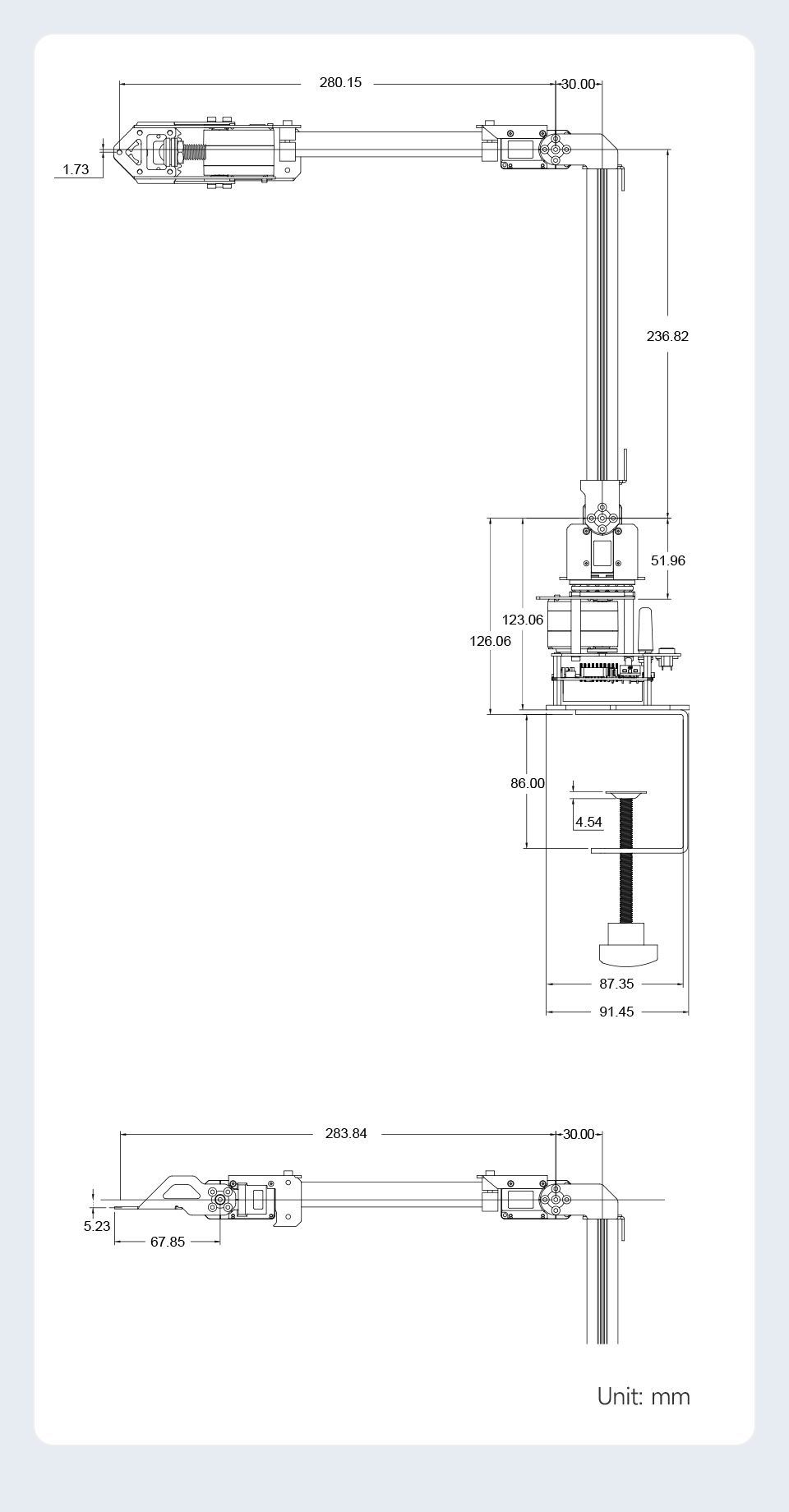
- Horizontal reach – 280.15 mm to 283.84 mm (depending on arm configuration)
- Vertical height – 236.82 mm (from the base to the top of the arm)
- Base width – 87.35 mm to 91.45 mm (including clamp mechanism)
- Clamp thickness support – Up to 86 mm
- End-effector dimensions
- Length – 67.85 mm
- Width – 5.23 mm
- Weight:
- RoArm-M2-S – 826 ±15g
- RoArm-M2-Pro – 873.3 ±15g
- Table Edge Fixing Clamp – 290g ±10g
The company mentions that its default End-of-Arm Tool (EoAT) clamp can be customized to add a degree of freedom for more complex tasks. For manual operation, the arm includes a web-based control interface, while host operation is supported via various communication modes such as UART, USB, ESP-NOW, and HTTP, using JSON data format commands (note that ESP-NOW does not support feedback information retrieval). The arm is compatible with hosts featuring a spare USB port including Raspberry Pi, Jetson Orin Nano, and PCs. Additionally, it uses a TTL serial bus servo with direct-drive joints, ensuring smooth and precise motion control.
The RoArm-M2 is open source and supports a variety of software and tools for both basic control and advanced development including a cross-platform web application to control the robotic arm from your phone, tablet, or computer, programming using the Arduino IDE, and ROS2 support for more advanced robotics features and integration with other ROS-enabled systems. Waveshare also provides documentation and tutorials which can be found on their product page or Wiki.
Previously we have written about various robotic arms including the Yahboom DOFBOT 6 DoF AI Vision robotic arm, the WLKATA Robotics Haro380 robotic arm, the ultraArm P340 robotic arm, and more. We also reviewed the myCobot 280 Pi robotic arm using Python and visual programming on the built-in Raspberry Pi 4. Feel free to check those out if you are interested in robotic arms.
The RoArm-M2-xx series ESP32 robotic arms are available on Amazon where the RoArm-M2-S costs $223.99, and on AliExpress where the RoArm-M2-S goes for $206.07 and the RoArm-M2-Pro sells for $332.11. You can also get lower prices using Black Friday/Cyber Monday 2024 AliExpress coupon codes.
The post Waveshare RoArm-M2 ESP32 robotic arms offer four degrees of freedom, various servo options appeared first on CNX Software - Embedded Systems News.