Jean-Philippe Encausse
Shared posts
Google lance un moteur RAG dans Vertex AI
Actualité : Le robot star de la conférence Nvidia est un bijou made in France

Does Telehealth Really Work as Well as In-person Care?
A recent lawsuit against Amazon One Medical related to the provision of telehealth care has once again brought to the spotlight the questions of: does telehealth really work as well as in-person care? Is it as safe as in-person care?
The sub-headline from an MSNBC article about the case reads as follows: “A wrongful death case case serves as a reminder that we cannot afford to sacrifice patient safety for the sake of rapid innovation.”
The question of whether telehealth delivers care that is worse, better, or equivalent to traditional in-person medical services requires a nuanced examination that considers multiple factors. The effectiveness and appropriateness of telehealth depends heavily on the specific medical service being provided, the intended clinical outcomes, and which stage of the care process is being conducted remotely. It is undoubtable that in-person examinations, relationship building, and body language communication is valuable. But, the accessibility, convenience, and burden reductions associated with telehealth use is also critical. As with most things, there are tradeoffs between each modality, so it is crucial to carefully construct new services based on evidence, logic & common sense, and feedback from patients and clinicians.
The lawsuit referenced above suggests wrongful death due to a telehealth provider missing crucial and severe symptoms. The question that will be implicit in this case will be: “would a reasonable physician have had a better chance of noticing the severity of the patient’s condition if the visit was in-person?” Maybe. But, maybe not. Diagnostic errors, medical errors, and adverse events occur frequently in the health system that is primarily delivered in-person. In short, it is probably not the telehealth modality itself that resulted in this unfortunate outcome.
It is obvious to most that it is not appropriate to use telehealth for a condition where a detailed physical exam is a crucial part of good care processes. However, on the other end of the spectrum, as was common practice (and still occurs) prior to billing and reimbursement flexibilities for telehealth, it is a burden on patients to travel to an office for care when it could easily occur via a telehealth modality. For patients with complex conditions and many outpatient visits, the burden of travel, waiting rooms, and scheduling is significant. Telehealth can alleviate this burden.
While it is easy to hypothesize about when telehealth is viable, beneficial, or harmful; it is important to consider clinical evidence. Research and structured evaluations of telehealth care delivery are important for catching observations, unintended effects, and outcomes that may not be perceivable at first glance or via standard operational metrics and that occur at larger numbers of patients.
Importantly, the question of “telehealth or not” is broad. It may be better to frame the question at a more granular level by asking “telehealth or not” at each stage in a common care process progression.
The Overarching Stages of Medical Care Delivery
To properly evaluate telehealth's effectiveness, we must break down healthcare delivery into its key stages:
1. Patient Intake and Initial Evaluation
2. Analysis and Clinical Interpretation
3. Diagnosis
4. Treatment Planning
5. Treatment Delivery
6. Monitoring and Follow-up
7. Care Management and Coordination
For each stage, we must consider whether clinical objectives can be achieved effectively through virtual means compared to in-person care. For any given condition, specialty, or care pathway the answer will vary. For example, patient intake for medical health conditions may involve a great deal of medical history taking which can be done well over telehealth. Whereas, for orthopedics history taking is important, but physical examination and medical imaging is often performed. In most cases, clinicians are very aware of the feasibility of transitioning a service to telehealth or telehealth optional, so a good starting point for new programs is to simply ask clinical staff about where it may fit into their workflows.
Telehealth Use in the United States
In the post-COVID-19 era, telehealth services have remained at a relatively steady rate of around 5% of medical claims nationally. As of June 2024, the top five use cases were as follows according to Fair Health: mental health conditions (68.05%), endocrine and metabolic disorders (1.57%), acute respiratory diseases and infections (1.55%), developmental disorders (1.44%), and encounter for examination (1.41%).
Interestingly, the age distribution is wide across all age ranges with slightly lower use among those 65 and older and in children under 10 years of age.
Evidence from Key Studies and Reviews on Telehealth
Let's examine what three major systematic reviews tell us about telehealth's effectiveness across these stages.
Shigekawa et al. (2018) - "The Current State of Telehealth Evidence: A Rapid Review"
This comprehensive rapid review examined systematic reviews and meta-analyses spanning 2004-2018, providing broad insights across multiple clinical domains. In mental health services, the authors found consistent evidence that telehealth interventions produced outcomes comparable to in-person care, both for initial assessment and ongoing treatment. The rehabilitation findings were particularly noteworthy, with telerehabilitation showing equivalence or even superior outcomes compared to traditional in-person rehabilitation services. In dermatology, the results were more nuanced, with diagnostic accuracy varying by modality. Store-and-forward teledermatology demonstrated acceptable to good concordance with in-person examination, though not quite matching the accuracy of face-to-face assessment. General teleconsultation showed promise as an alternative to in-person visits, though effectiveness varied considerably depending on the specific condition being treated.
Effects on Utilization: Substitution or Supplemental?
Notably, the review found limited evidence regarding telehealth's impact on overall service utilization patterns, leaving open questions about whether virtual care primarily substitutes for or supplements traditional in-person services. This question is one that is of current debate. Some studies suggest that telehealth is a true substitute and does not lead to incremental visits. Other studies suggest that patient preference is a major driver and thus patterns of utilization depend on the service and may or may not involve substitution. An older study from 2017 suggests that only 12 percent of visits are substitutes whereas the other 88 percent are supplemental. This study was conducted prior to the pandemic era where telehealth utilization patterns were changed greatly. However, the debate rages on due to the desire to understand how the telehealth modality affects health care spending by government payors like Medicare. The Congressional Budget Office estimates cost increases if the pandemic era telehealth flexibilities in Medicare are continued.
Scott et al. (2022) - "Telehealth v. face-to-face provision of care to patients with depression"
This systematic review focused specifically on depression care, offering detailed insights into mental health service delivery. In the United States, Fair Health reports that around 68% of telehealth visits are for mental health conditions, so I intentionally included a review of depression care.
The researchers found no significant differences in depression severity outcomes between telehealth and face-to-face care at most measurement points, suggesting therapeutic equivalence for this specific condition. A particularly interesting finding came from one trial in the review that examined quality of life outcomes, showing no differences between delivery methods at both three and twelve-month follow-up periods.
The review also addressed the important question of therapeutic alliance - the relationship between provider and patient - finding that virtual delivery did not compromise this crucial aspect of mental health care. Patient satisfaction remained consistent across both delivery methods, indicating that telehealth was equally acceptable to patients. However, the authors noted that most studies had relatively short follow-up periods, limiting our understanding of long-term effectiveness. Among mental health professionals, despite the evidence to the contrary, there is still a belief that in-person communication during psychotherapy is critical. In this case, both clinician and patient preferences for telework and telehealth respectively may have driven the high degree of utilization.
Snoswell et al. (2023) - "The clinical effectiveness of telehealth"
This systematic review of meta-analyses provided evidence across a broad spectrum of medical specialties. In cardiovascular disease management, telehealth demonstrated particular effectiveness in reducing major thromboembolic events and improving the timeliness of care delivery. The evidence for endocrinology was consistently positive, especially in diabetes monitoring and management, where telehealth facilitated more frequent patient contact and data collection. Mental health findings aligned with other reviews, showing equivalent outcomes across multiple conditions and treatment approaches. In nephrology, the review found similar effectiveness for blood pressure control and other key metrics compared to traditional care. The findings for multidisciplinary care were more varied, with particularly positive results for chronic pain management but more mixed outcomes in other areas requiring complex care coordination.
This collective body of evidence suggests that telehealth's effectiveness varies significantly by clinical context and type of service being delivered. The strongest evidence for equivalence exists in areas where physical examination is less crucial and where communication and monitoring are the primary components of care. The evidence is particularly robust for mental health services, chronic disease management, and certain types of rehabilitation care.
However, areas requiring detailed physical examination or complex hands-on procedures show more variable results, suggesting the need for careful consideration of when and how to implement telehealth services in these contexts—obviously.
One consistent limitation across these studies is the relative scarcity of long-term outcome data, particularly regarding the impact of telehealth on overall healthcare utilization patterns and cost-effectiveness. Additionally, while these reviews provide strong evidence for telehealth's effectiveness in certain contexts, they also highlight the importance of considering patient-specific factors and clinical circumstances when determining the appropriateness of virtual care delivery.
Delivering bad diagnostic news, for example, may be technically feasible over telehealth, but does the lack of in-person delivery harm the critical human elements of medicine?
Future Directions
The evidence suggests that the future of health care will likely be hybrid, combining virtual and in-person care based on clinical appropriateness and patient needs. However, it is critical to note that reimbursement models and payment policy dictate organizational behavior in this space, so aside from the clinical appropriateness test, the business model rules all. Key areas for future research include:
1. Long-term prospective comparative effectiveness studies
2. Impact on health care utilization patterns broadly and at a more granular level
3. Cost-effectiveness analyses at a large scale and prospectively
4. Patient subgroup analyses (e.g., does this work for certain demographics better or worse)
5. Quality metrics for virtual care
The evidence from these three major reviews suggests that telehealth can provide equivalent care to in-person services for many conditions and clinical scenarios, particularly those not requiring hands-on physical examination. For some services, especially involving monitoring and frequent follow-up, telehealth may offer advantages.
However, the appropriateness and effectiveness of telehealth varies significantly based on the specific clinical context, service type, and stage of care delivery. Success depends on careful patient selection, appropriate technology implementation, and clear protocols for care delivery and escalation when needed.
The future of healthcare will likely involve intelligent hybrid models that leverage both virtual and in-person care modalities to optimize outcomes, improve access, and enhance the overall patient experience. Continued research and evaluation will be essential to refine our understanding of how to best deploy telehealth across different clinical scenarios and patient populations.

Taiwan's TSMC says net profit rose 57% in fourth quarter
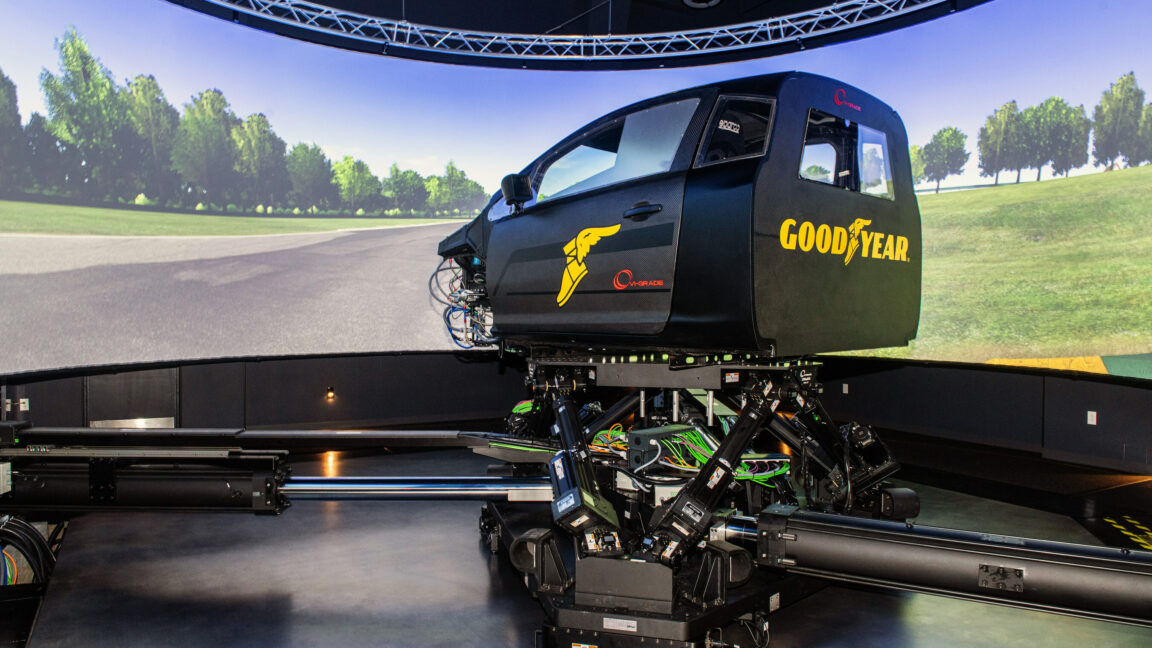
Tire simulation is so good it’s replacing real-world testing
Tires might be one of the more prosaic parts of a car, but they are undoubtedly among the most important. Bench racers might obsess about powertrain specs, and average consumers mostly want to know that there's wireless charging for their phones, but it's the tires that actually make contact with the road. Without them, no one is going anywhere. At least not very far.
In the past, tires have been considered somewhat mysterious, with secret blends of rubber, carbon, and other stuff combined with clever arrangements of belts and wires to hold the whole thing together as it rotates faster and faster without flying apart. These days, we know an awful lot about how tires work. Or at least tire companies like Goodyear do, having amassed enough testing data to be able to simulate them accurately enough to shave months off a development schedule.
In fact, the use of simulation in tire research and development has quite a long history. Chris Helsel, who is now Goodyear's CTO, joined the company back in 1996; he was hired as part of a tiny team doing computer tire simulation. "At Goodyear in '96, it felt like almost late to the party in terms of doing what we call finite element analysis, which is basically breaking a large structure down into little parts," Helsel said.
Skeuomorph
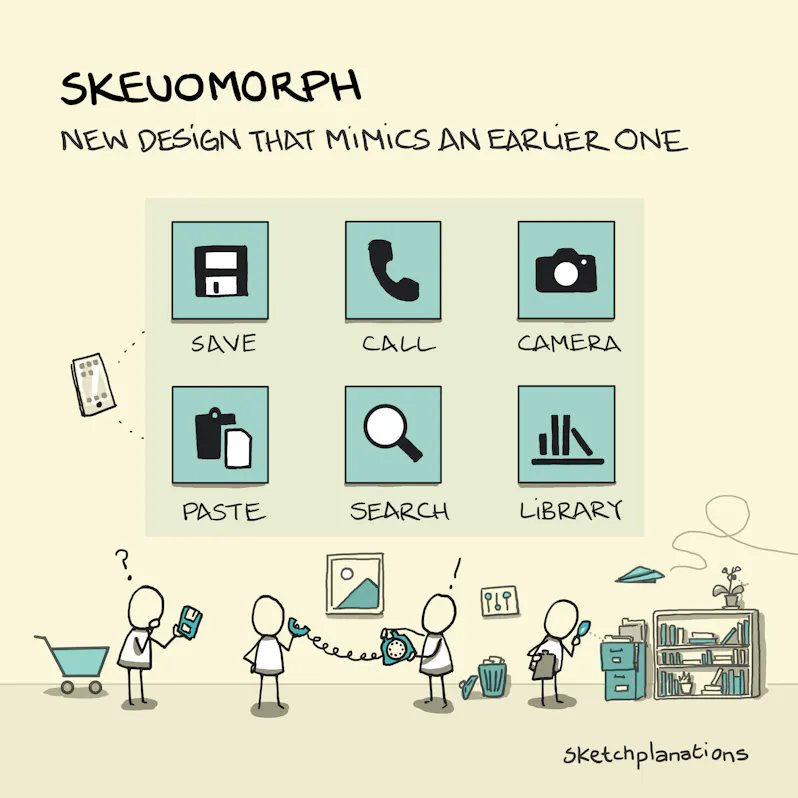
Why is the save icon in your software a floppy disk that no one has used for over 20 years? And that phone icon looks nothing like your mobile phone when making a call. These are both skeuomorphs.
What is a skeuomorph?
A skeuomorph is when a new design borrows practical elements from a former design and repurposes them in a functional or ornamental way.
Skeuomorphs are practical because they make new systems more intuitive. Their comfort and familiarity can help bridge old and new ways. For example, some electric cars are designed to look like they have air intake vents like traditional combustion cars.
More poetically, a skeuomorph can offset the loss of physical reality when interacting with our digital devices.
Skeumorph examples
Skeuomorphs abound in the digital world:
- The save icon is a floppy disk from the 1980s and '90s
- Microphone and speaker icons
- The bin icon for deleting files
- The battery icon on your computer
- The envelope icon for email
- Gears for Settings
- Storing files in folders
- Books apps displayed with bookshelves
- The magnifying glass to zoom
- The camera icon as a physical SLR camera
- The shopping cart in an online shopping site
- The 'desktop'
- Sliders and knobs, or even connecting wires, are made to look like analogue mixing desks and gear in music software (music software is awash with skeuomorphs)
- A link icon represented by a link of a physical chain
- A clipboard for paste
- Dials and levers or a funnel representing filters
- Shadows under boxes on a webpage simulate light falling on a surface to show depth
- Grab bars are indications of friction points where you can change the order of a list
The list goes on and on.
I once read that when designing, if you can't think of an icon for your feature in about five seconds, you probably need to write the word, as not everyone will understand it.
Not all digital icons are skeuomorphs: the printer as the print icon and the folded page for a page layout still map to their physical counterparts.
Physical skeuomorph examples include:
- Electric candles.
- Slot machine levers that change the state of a circuit rather than spin any wheels.
- Fake wood grain is used on floors or interiors.
- Haptic feedback—a simulated click when pressing on a touchscreen.
- Speed camera signs in the UK use a stylised visual of a classic Kodak Brownie camera.
- Rivets on jeans are from when fixing denim together required more than just stitching.
- Electric cars sometimes include imitation air vents at the front that cool traditional combustion engines.
- Car hub caps with spoke designs from early wheels.
- Textured wallpaper, such as Anaglypta, echoes leather wall hangings with scored patterns.
- There's even a design for an early car with a fake horse head on the front—though the inventor designed it to avoid scaring other horses on the road.
- A smartwatch isn't just a watch; it's a computer you wear on your wrist.
Skeuomorphs can borrow sound also:
- The imitation shutter sound of taking a photo on your phone
- Simulated engine noise on an electric car
Skeumorphs in Software and User Interfaces
Software and the digital domain are ripe places for spotting skeuomorphs, as they don't have physical characteristics—it's all 1s and 0s that we can't see or interact with.
Apple's early iPhone interfaces were famous for skeuomorphic elements, such as a Contacts app that resembled a contacts book complete with tabs—tabs are also skeuomorphic— and fake leather or paper effects in note apps.
Skeuomorphs, like metaphors in design, are helpful. In a magic box that can do anything—a mobile phone—a visual connection to a physical object with a defined purpose helps immediately tell you what something might be or do.
As the digital world gradually becomes the first interaction for so many uses, skeuomorphs may become less common. But we'll see them around for decades yet.
Early skeuomorphs
Skeuomorph is not a recent term. It was coined by archaeologist Henry Colley March by combining the Greek skeuos (σκεῦος) for container or tool and morphe (μορφή) for shape.
Skeuomorphs have been used in art and architecture since ancient times. For example, they are decorative features of stone buildings that mimic structural elements from older wooden ones, such as protruding rafters. Ancient pottery sometimes includes decorative rope patterns on the surface.
More About Skeuomorphs
The BBC has a lovely radio piece on Skeuomorphs, Design, and Modern Craft with novelist Will Self. The piece discusses their subtler side and some great examples, some of which I've included here. In the same episode, they also mention the zombie walk with faces lit by the glowing screen from a phone.
Related Ideas to Skeuomorph
Also see:
Cat-like robot mimics bunting behavior to alleviate human tension
Synthesia snaps up $180M at a $2.1B valuation for its B2B AI video platform
As the world continues to work through how to handle the explosion of deepfake content online, it seems that not all AI-created videos are stirring controversy. Synthesia, a London startup building products around highly realistic AI avatar technology, says it’s a big hit with enterprises, with some 60,000 of them — 1 million users — […]
© 2024 TechCrunch. All rights reserved. For personal use only.
Microsoft relaunches Copilot for business with free AI chat and pay-as-you-go agents

Microsoft is relaunching its free Copilot for businesses as Microsoft 365 Copilot Chat today, complete with the ability to use AI agents. Copilot Chat is Microsoft’s latest attempt to get people used to using AI at work and relying on it enough to tempt them into paying $30 per month to get the full Microsoft 365 Copilot.
“It’s free and secure AI chat that’s GPT-powered,” explains Jared Spataro, Microsoft’s chief marketing officer of AI at work, in an interview with The Verge. “You can upload files so it’s very comparable to the competition, in fact we think even at this level it bests the competition.” Spataro wouldn’t name the competition, but it’s clearly ChatGPT and Google’s Gemini.
/cdn.vox-cdn.com/uploads/chorus_asset/file/25832200/chrome_i3etWFrvj4.jpg) Image: Microsoft
Image: Microsoft
Microsoft 365 Copilot Chat is essentially a rebranding of what was once Bing Chat Enterprise before Microsoft rebranded it to just Copilot. It crucially now includes access to Copilot AI agents right within the chat interface — which was previously only available in the full Microsoft 365 Copilot experience — requiring a $30 per user per month subscription. These agents are designed to work like virtual colleagues and can do things like monitor email inboxes or automate a series of tasks.
You’ll be able to create and use agents using Copilot Studio, use agents that rely on web data, and even use agents grounded on work data through the Microsoft graph. The usage of agents with Copilot Chat will be priced through the Copilot Studio meter in Azure or through a pay-as-you-go option.
“The first question people ask me is ‘am I writing you a blank check?’” says Spataro, but Microsoft has built controls for how people pay for AI agent access. “The way you can control the spinning of the meters is paying in different ways. One way is pay-as-you-go, that is essentially an open account or tab that you’re burning down, but the other way to do it is through consumption packs, and when the pack runs out you’re done.”
/cdn.vox-cdn.com/uploads/chorus_asset/file/25832202/chrome_Y4WRu8tID6.png) Image: Microsoft
Image: Microsoft
The pricing and consumption rates are a little complicated, though. Microsoft measures agent usage in messages, so classic answers that don’t hit large language models are priced as one message, whereas generative answers cost two messages and anything accessing the Microsoft Graph (including files stored in SharePoint) will cost 30 messages.
“A message is equivalent to 1 cent, so you can essentially convert it over to 1 cent, 2 cents, and 30 cents,” explains Spataro. “It spins an Azure meter and it burns down a customer’s MACC (Microsoft Azure Consumption Commitment).”
Microsoft provides some example cost calculations for businesses that might be tempted to use AI agents through Microsoft 365 Copilot Chat:
A hypothetical agent in Microsoft 365 Copilot Chat uses data stored in Microsoft Graph to answer employee questions about HR policies. Yesterday, the agent consumed 200 generative answers and 200 tenant Graph grounding for messages. Therefore, it would cost 6,400 messages or $64 for that day.
The actual chat experience in Copilot Chat is largely unchanged, and it uses GPT-4o for queries. You can also upload files to Copilot Chat and have it summarize Word documents or even analyze data in Excel spreadsheets. You can do the same thing directly within Word or Excel if you pay for the full Microsoft 365 Copilot, instead of having to upload files manually. Spataro says Microsoft doesn’t have any plans to enable a trial mode of Microsoft 365 Copilot, but it’s clear Copilot Chat is designed to tempt businesses into paying to get Copilot inside Office apps.
Copilot Chat is already popular among businesses that rely on Microsoft software and services. “We had Bing Chat Enterprise that we renamed, and despite the fact that the naming journey has been hard to track and it’s hard to find the product, we have a remarkable number of users on it,” says Spataro. “What we find is that when you start to use it, you become accustomed to and appreciative of the value that it can provide at work.”
With an ongoing debate over the value of a $30 per user per month subscription to Microsoft 365 Copilot, Microsoft will be hoping that Copilot Chat can help convert a lot more businesses over to its AI way of thinking.
Actualité : Cette étrange étoile a réussi à stopper sa chute dans un trou noir

Amazon Kindle Scribe (2024) review: reading and writing in one excellent package

Procedurally Generated Terrain in OpenSCAD
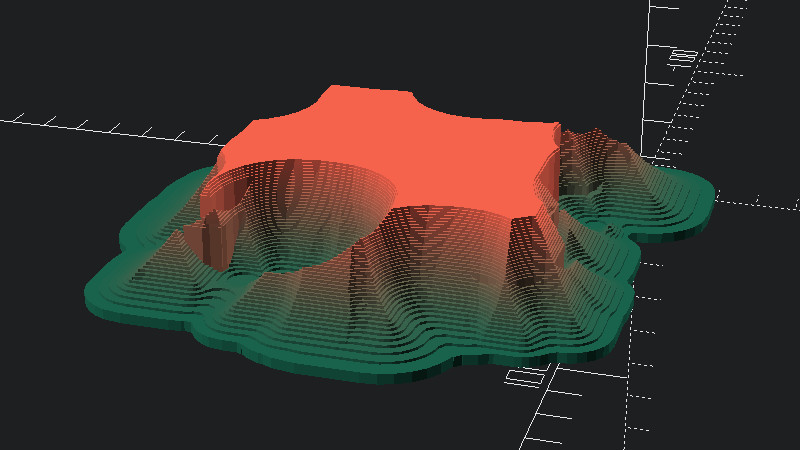
We’re big fans of OpenSCAD here at Hackaday — it’s free and open source software, runs on pretty much anything, and the idea of describing objects via code seems like a natural fit for producing functional parts. Rather than clicking and dragging elements on the screen, you can knock out a quick bracket or other simple component with just a few lines of code. But one of the things we don’t often get a chance to showcase is the incredible potential of generating 2D and 3D objects algorithmically.
In a recent Reddit post, [ardvarkmadman] dropped an extremely impressive snippet of OpenSCAD code that he calls TerrainGen. In fewer than fifteen lines of code, it’s able to create randomized “islands” which range from simple plateaus to craggy mountain ranges. After dropping the code in the OpenSCAD editor, you can just keep hitting F5 until you get a result that catches your eye. This seems like an excellent way to generate printable terrain elements for gaming purposes, but that’s just one possibility.
r1=rands(0,1,1)[.1];
r2=rands(0,1,1)[.2];

for (j=[1:.25:10])
    color(c=[j/10,r2,r1,1])
    linear_extrude(j/r2)

offset( -j*2)
for(i=[1:.25:20]){
random_vect=rands(0,50,2,i/r2);
   translate(random_vect*2)
    offset(i/j)
     square(j*1.5+i/1.5,true);
 }
So what’s happening here? The code generates several random numbers and uses those to define the height and position of an array of points that are used to make the final piece of terrain. When creating functional parts in OpenSCAD, we’re almost elusively dealing with very specific parameters, so it’s interesting to see how easily you can tweak objects just by sprinkling in some random values.
Inspired by the positive response to TerrainGen received, another user by the name of [amatulic] chimed in to share a similar project they’ve been working on. The code is able to generate blocks of terrain based on the dimensions and seed value provided by the user, and even simulates realistic weathering and erosion. This approach is far more computationally intensive, and requires a few hundred lines of code, but the results are undeniably more realistic. There’s a blog post that deep-dives into the math behind it all, if you’re looking for some light reading.
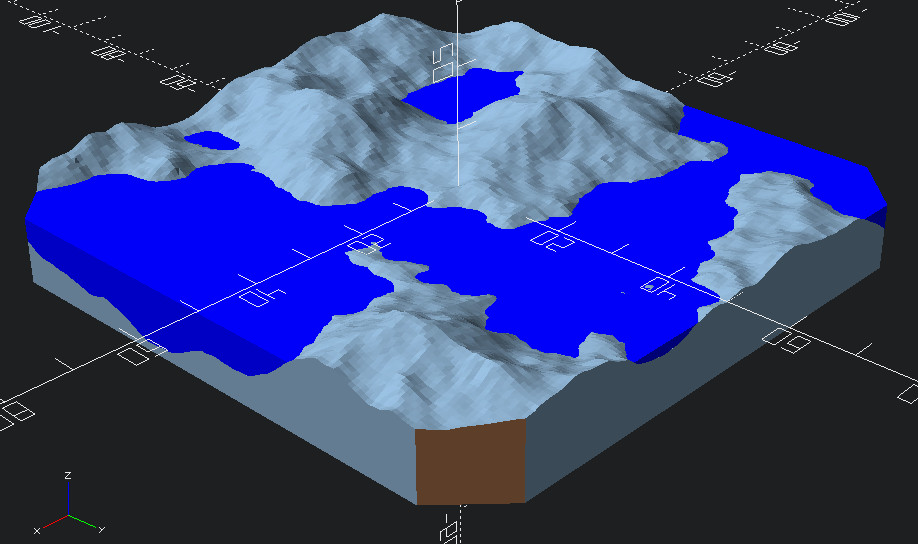
Although it’s probably not something we’d personally get much use out of, we think the ability to randomly generate 3D models like this is absolutely fascinating. We’d love to hear what readers think about these techniques, especially in regards to potential applications for them.
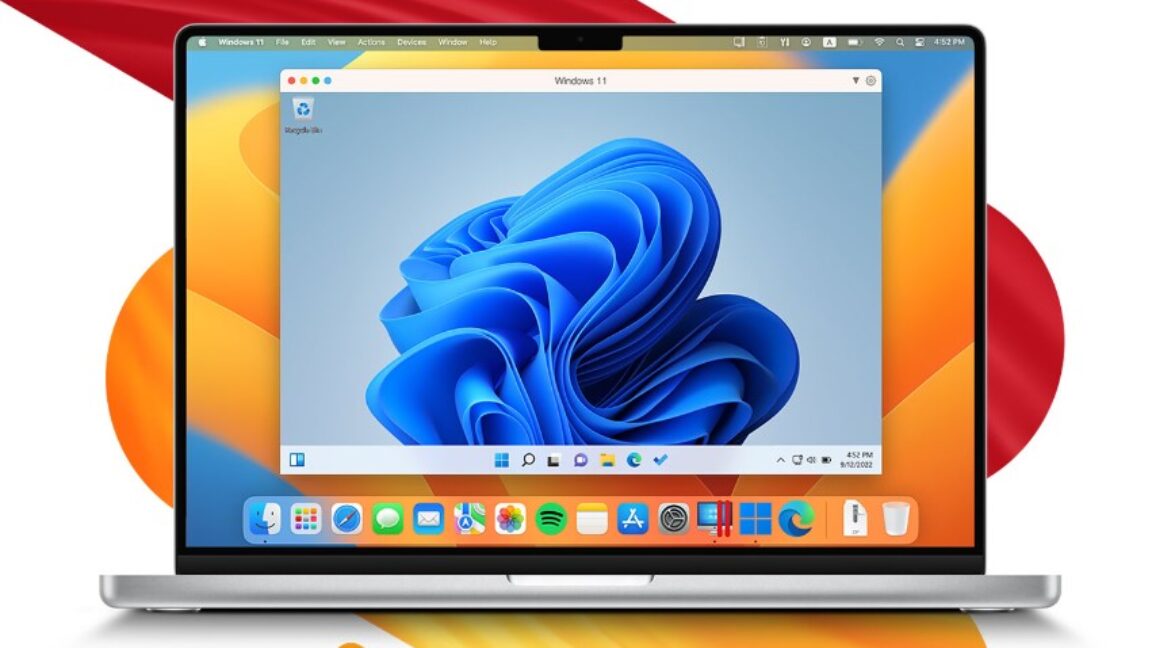
Parallels can finally run x86 versions of Windows or Linux on Apple Silicon
Virtualization software like Parallels and VMware Fusion give Mac owners the ability to run Windows and Linux on top of macOS, but for Apple Silicon Macs, that support was limited to the Arm-based versions of those operating systems. And while Windows and Linux both support some level of x86-to-Arm app translation that attempts to maintain compatibility with most software, there are still plenty of things that demand an Intel or AMD processor with the x86 instruction set.
Last week, Parallels released a new update that partially resolves this problem: Users of Parallels Desktop Pro 20.2.0 now have access to x86 operating systems via an "early technology preview" of Parallels' "proprietary emulation engine."
The technology preview is currently limited to certain 64-bit versions of Windows 10, Windows 11, and Windows Server 2019 and 2022. Parallels also says it has tested several UEFI-compatible Linux distributions, including Ubuntu 22.04.5, Kubuntu 24.04.1, Lubuntu 24.04.1, and Debian versions 12.4 to 12.8. Fedora will install, but it's unstable. 32-bit versions of operating systems, as well as older versions of Windows like Windows 7 or 8, aren't supported.
Novel OLED stacks enable exceptionally bright microdisplays
Study investigates how digital platforms are transforming the agricultural sector
Fluid Simulation Pendant Teaches Lessons in Miniaturization
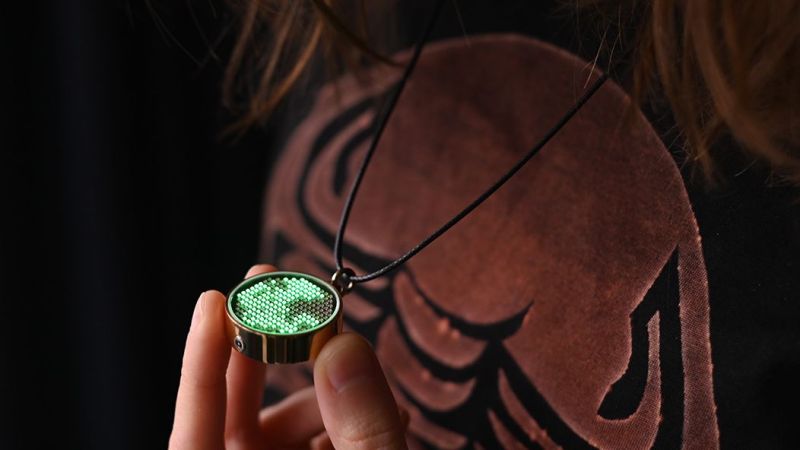
Some projects seem to take on a life of their own. You get an idea, design and prototype it, finally build the thing and — it’s good, but it’s not quite right. Back to the drawing board, version 2, still not perfect, lather, rinse, repeat. Pretty soon you look around to discover that you’ve built ten of them. Oops.
That seems to be the arc followed by [mitxela] with this very cool fluid simulation pendant. The idea is simple enough; create a piece of jewelry with a matrix of tiny LEDs that act like the pendant is full of liquid, sloshing about with the slightest movement. In practice, though, this project was filled with challenges. Surprisingly, [mitxela] doesn’t seem to number getting a fluid dynamics simulation running on a microcontroller among those problems, at least not to a great degree. Rather, the LED matrix seemed to cause the most problems, both in terms of laying it out on the 25-mm diameter PCB and how to address the LEDs with relatively limited GPIO on the STM32 microcontroller. The solution to both was diagonal charlieplexing, which reduces the number of vias needed for the 216-LED matrix and allows the 0402 to be densely packed, along with providing some tolerance for solder bridging.
And then there’s the metalworking heroics, which no [mitxela] project would be complete without. This seems to be where a lot of the revisions come from, as the gold-plated brass case kept not quite living up to expectations. The final version is a brass cup containing the LiR2450 rechargeable battery, a magnetic charging connector, and the main PCB, all sealed by a watch crystal. The fluid simulation is quite realistic and very responsive to the pendant’s position. The video below shows it in action along with a summary of the build.
If you want to catch up on [mitxela]’s back catalog of miniaturized builds, start with his amazing industrial ear adornments or these tiny matrix earrings. We’re also fond of his incredible shrinking MIDI builds.
[NRF 2025] Les start-up françaises prennent leurs quartiers à New York

Nous traitons chaque client avec une expérience personnalisée, non standardisée
CES 2025 : Retour à Vegas rêves à rêver
 Ca y est, le CES 2025 est dans les starting-blocks. J’ai fait le déplacement dans le Nevada pour couvrir l’évènement cette année encore. Si les communiqués de presse pleuvent, il

CES 2025 : Retour à Vegas rêves à rêver Cet article vous a été concocté par Abavala !!!
CES 25 - Des lunettes connectées haptiques pour les non-voyants
Louis de Véron, d'Artha France, présente un étonnant dispositif permettant aux personnes non voyantes et mal voyantes de percevoir l'environnement. Le système fonctionne à l'aide d'une caméra et d'une ceinture lombaire haptique qui envoie des impulsions dans le dos. Cela permet au cerveau de recréer une "image" des obstacles, objets ou personnes, y compris en mouvement. Commercialisées à l’été 2025 pour 5 990 euros, ces lunettes constituent une avancée majeure pour l’autonomie, en complément de la canne blanche ou du chien guide. Une innovation qui promet de transformer la vie des malvoyants.
-----------
🎙️ Formez-vous au podcast : https://www.formationpodcastpro.com
♥️ Soutenez Monde Numérique : https://donorbox.org/monde-numerique
🌏 Site Web : https://mondenumerique.info
📹 YouTube : https://www.youtube.com/@mondenumerique
🗞️ Newsletter : https://mondenumerique.substack.com/
💬 Chat : https://substack.com/chat/2638412
-----------
-----------
🎧 L'Hebdo Premium : https://m.audiomeans.fr/s/S-xylotlSe
🌍 Web : https://mondenumerique.info
🗞️ Newsletter : https://mondenumerique.substack.com
📹 YouTube : https://www.youtube.com/@mondenumerique
♥️ Soutien : https://donorbox.org/monde-numerique
Distribué par Audiomeans. Visitez audiomeans.fr/politique-de-confidentialite pour plus d'informations.
Mercedes-Benz’s Virtual Assistant uses Google’s conversational AI agent

Google Cloud’s new Automotive AI Agent platform promises to “continue conversations and reference information” throughout users’ drives, and the first car announced with it is the new Mercedes CLA. That car has the next-generation MB.OS operating system with an upgraded MBUX Virtual Assistant.
When Mercedes revealed it at CES in 2024, it didn’t say which company’s LLM it was running on. Meanwhile, the existing MBUX Voice Assistant system that could handle about 20 commands triggered with “Hey Mercedes” now includes results provided by OpenAI’s ChatGPT and Microsoft Bing, but it’s not a conversational platform. According to Mercedes, there’s a plan to roll out this upgraded system to “further models” that run the older Voice Assistant, but it didn’t specify which ones.
The new MBUX Virtual Assistant will feature four “personality traits,” including natural, predictive, personal, and empathetic. It can also ask you questions for additional clarity to get you what you need.
Google’s new AI Agent is tailor-made to automotive uses, leveraging Google Maps data to find points of interest, look up restaurant reviews for you, give you recommendations, answer follow-up questions, and more. Google says MBUX Virtual Assistant users will get access to “nearly real time” Google Maps updates. It also says it can “handle complex, multi-turn dialog.”
The agent uses Gemini and runs on Google Cloud’s Vertex AI development platform, designed to help companies build out AI experiences. “This is just the beginning of how agentic capabilities can transform the automotive industry,” Google CEO Sundar Pichai stated in a press release.
MLVision M5 at CES 2025—everything you need to know about the world’s lightest AR glasses

The wearable tech industry is buzzing with innovation, and at CES 2025, MLVision unveiled its groundbreaking product: the MLVision M5. These AR glasses have garnered global attention with their feather-light design and advanced AI capabilities.
The companion app helps users to save, organize, and access private files securely. This allows a more private, efficient, and health-conscious reading experience.
Here’s an in-depth look at what makes MLVision M5 a game-changer.
Ultra-light design with a modular twist
The MLVision M5 takes wearable comfort to a whole new level. Weighing in at just 25.8 grams, these glasses are officially the lightest AR glasses on the market. They surpass the previous industry benchmark of 40 grams for AR-enabled glasses—an impressive weight reduction of over 40%. Crafted from aviation-grade titanium and ultra-light floating plastic, the MLVision M5 doesn’t just feel like air—it’s built to last, too.
What sets these glasses apart is their modular design. You can switch between an all-in-one configuration or a clip-on style. The clip-on style is perfect for nearsighted users who want to keep their existing prescription glasses. This adaptability makes MLVision M5 a practical, cost-effective option for a broader range of users.

Comfort is clearly a priority. The glasses feature adaptive air-pressure nose pads and carbon-steel hinges to make long hours of wear more comfortable. Whether you’re in meetings or relaxing at home, you won’t notice you’re wearing glasses.
But lightness doesn’t come at the cost of aesthetics. MLVision markets these glasses as “Fashion out-and-about,” and they live up to the claim. Sleek and unobtrusive, they blend effortlessly into professional and social settings. The comfort factor is also high, thanks to adaptive air-pressure nose pads and carbon-steel hinges. Even after hours of use, the glasses remain comfortable and secure.
Cutting-edge visuals and AR-enhanced reading
At the heart of the MLVision M5 is a stunning 86-inch virtual projection screen powered by the Hummingbird Micro-LED light engine. Boasting brightness levels over 1500 nits, the glasses perform seamlessly even under bright sunlight. Nano-scale diffraction waveguide technology ensures crystal-clear, distortion-free visuals.
One of MLVision M5’s standout features is its private reading technology. Using a diffraction waveguide light projection system, the glasses create a screen visible only to the wearer. Whether you’re reading sensitive documents on a train or diving into a personal book in a café, you can do so without worrying about prying eyes.
Another standout feature is the ability to project documents directly from the companion mobile app onto the glasses’ display. Whether you’re reading a report, novel, or presentation, MLVision M5 offers an immersive and private reading experience, supporting formats like DOC, PDF, and TXT. The glasses also integrate advanced personal file management capabilities through the app, allowing users to securely store, organize, and manage their private files. This feature enhances both security and efficiency, while the soft green light and 4-meter projection distance make extended reading comfortable and strain-free.

Smarter than your average AR glasses
The MLVision M5 is more than just a visual device—it’s a productivity tool powered by the robust AIOS platform. Its AI-driven features are designed to enhance both work and leisure:
- Document Summarization: This feature condenses lengthy texts into concise and digestible summaries, ideal for professionals who need to process information efficiently.
- Interactive Chat: The virtual assistant capabilities allow users to ask questions, set reminders, and even brainstorm ideas.
- Real-Time Translation: Bridging language barriers across 7 countries, this feature enables reading foreign-language materials or engaging in cross-cultural communication, making the MLVision M5 indispensable for global users.
One of the most commendable aspects of the MLVision M5 is its Care Mode, designed for individuals with hearing impairments. This feature transcribes audio into text in real-time, enabling seamless communication for those who rely on visual information, effectively letting users “see sound.” It’s a thoughtful addition that reflects MLVision’s commitment to accessibility and inclusivity.

With its self-developed low-power system, the MLVision M5 achieves impressive battery performance despite its ultra-light design. The glasses support over 2 hours of continuous use at high brightness for reading. Meanwhile, light usage scenarios allow for all-day wear. Additionally, the product features fast-charging capabilities, delivering up to 70% charge in just 30 minutes.
Seamless navigation and personalization
Navigation gets an AR upgrade with MLVision M5. Whether you’re wandering through unfamiliar streets in a new city or navigating a complex office building, the glasses offer intuitive, real-time directions directly overlaid onto your surroundings. This immersive guidance means you no longer need to glance down at your phone or consult a map. These glasses keep everything in your line of sight, making your journey smoother and more engaging.
Personalization is another standout feature of the MLVision M5, offering exciting possibilities for future customization. Its unique modular design paves the way for users to personalize their glasses in the future with options like interchangeable sunglass lenses and auxiliary accessories tailored to their style and usage scenarios.The flexibility of the design sparks imagination and ensures the potential for a truly individualized experience down the line.

Release and availability
MLVision M5 has set the standard for AR glasses with its CES 2025 debut. With a combination of lightweight design, AI-driven features, and a focus on accessibility, these glasses are poised to change how we interact with digital content.
The MLVision M5 is expected to hit the market by the end of January, making it a highly anticipated addition to the AR wearable landscape. If you’re in the market for a sleek, versatile AR wearable, the MLVision AirM5 is one to watch. Could this be the device to revolutionize your tech experience?
Stay tuned for updates, and let us know your thoughts in the comments.
Fighting fire from the sky
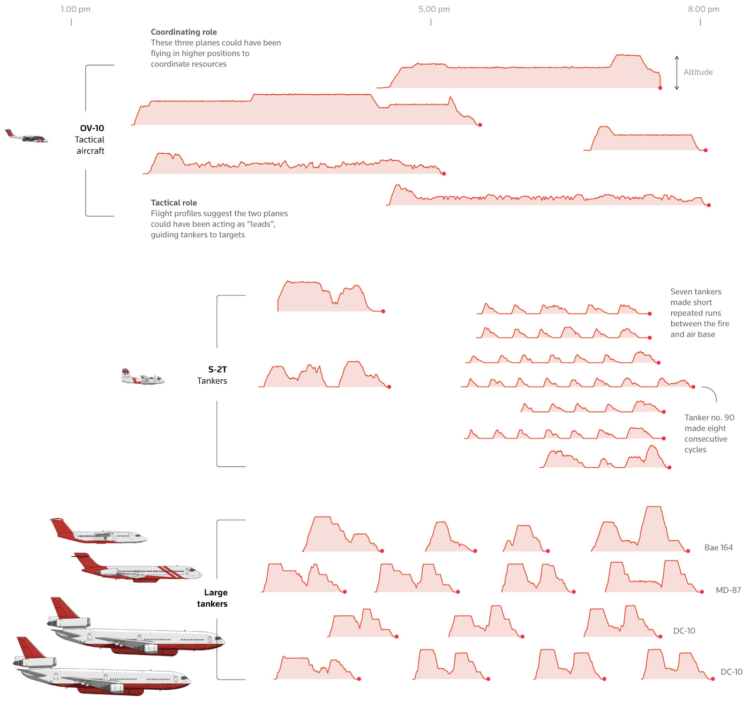
For Reuters, Simon Scarr, Vijdan Mohammad Kawoosa, and Sudev Kiyada use flight data to show how firefighters are extinguishing the Los Angeles fires. They visualized and illustrated the planes, cargo capacity, flight patterns, and timing between aircraft. It’s a very good breakdown.
NRF 2025 : les solutions amovibles, l’avenir des chariots connectés ?
Actualité : Comment un robot de soutien émotionnel pour enfants a été sauvé de la mort grâce à l’open source

CES 2025 : Bosch révolutionne la sécurité des vélos électriques
Lors du CES 2025, le conglomérat allemand Bosch a présenté une série d’innovations visant à renforcer la sécurité et l’efficacité des vélos électriques. Parmi les annonces phares, Bosch a introduit un nouveau système de verrouillage numérique pour les batteries, accessible via l’application Flow+, qui offre une protection avancée contre le vol. Cette mise à jour […]
L’article CES 2025 : Bosch révolutionne la sécurité des vélos électriques est apparu en premier sur BlogNT : le Blog des Nouvelles Technologies.
CES 2025 : TCL PlayCube, le mini-projecteur au design innovant
Le CES 2025, véritable vitrine d’innovations, accueille un nouvel ajout à la gamme de produits TCL : le PlayCube, un projecteur ultraportable qui promet de redéfinir les standards du divertissement compact. Bien que son apparition lors de la présentation de TCL ait été brève, cet appareil a su capter l’attention grâce à son design unique […]
L’article CES 2025 : TCL PlayCube, le mini-projecteur au design innovant est apparu en premier sur BlogNT : le Blog des Nouvelles Technologies.
Coming back to CES after a decade-long break was a trip

Twelve years ago, I could have told you exactly what happened at my first CES and what happened at my third. Each was a chapter with a beginning, middle, and end; the lines between them drawn clearly. But now, 15 years since I attended my first CES, it’s a lot fuzzier. I know I missed my flight home at that first show. I know I saw a lot of cameras at first, and then progressively fewer cameras over the years. I know there were team dinners and early meetings, but I couldn’t tell you what happened when.
What I do know about my first CESes is that I had — and I cannot stress this enough — no clue what I was doing. The same went for CES two, three, and four, to varying degrees. I think I had a Pentax DSLR loaned to me by a colleague. I had a work-issued BlackBerry and, I’m pretty sure, insisted on wearing nice dresses and impractical shoes to evening events. There was no Uber at the beginning, and you could spend an hour waiting in a cab line at the airport. We stayed at the MGM Grand, which housed live lions at the time.
I broke an 11-year streak of not going to CES this year, which gave me a rare opportunity. It’s not often in life that we get to step back and see something...
Comparing Ways to Add Threads to Your 3D Prints
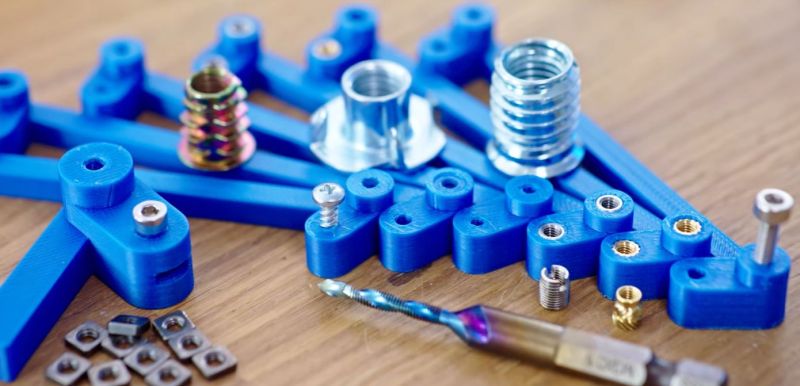
Adding threads to your 3D prints is a life-changing feature, but obviously there are a lot of trade-offs and considerations when deciding on how to go about this exactly. Between self-tapping screws, printed threads, heat inserts and a dozen other options it can be tough to decide what to go with. In a recent video [Thomas Sanladerer] runs through a few of these options, including some less common ones, and what he personally thinks of them.
Confounding factors are also whether you’re printing on an FDM or resin printer, what size thread you’re targeting and how often the screw or bolt will be removed. The metal heat inserts are generally a good option for durability, but when you have big bolts you get a few other metal-based options too, including thread repair inserts and prong nuts. Tapping threads into a print can also be an option, but takes a fair bit of patience.
Slotted nuts can be an idea if you don’t mind carving a space into your model, and the comments dove on embedding nuts in the print by pausing during printing. Ultimately [Thomas] really likes to use a type of self-forming threads with just three protruding sections into the hole that the bolt taps into, which reduces the stress on the part and works well enough for parts that only have to be screwed down once or twice.
CES 2025 : Le 2 principales nouveautés de Shelly pour la Smart Home
 Le fabricant Shelly a dévoilé cette semaine au CES 2025, deux nouveautés pour la Smart Home. La première concerne l’arrivée de la 4ᵉ génération de ses micromodules. La seconde est

CES 2025 : Le 2 principales nouveautés de Shelly pour la Smart Home Cet article vous a été concocté par Abavala !!!