Shared posts

20 Jun 09:39

Bento is an All-In-One Computer Designed to be Useful

by Jenny List

All-in-one computers in which the mainboard lurked beneath a keyboard were once the default in home computing, but more recently they have been relegated to interesting niche devices such as the Raspberry Pi 400 and 500.

The Bento is another take on the idea, coming at it not with the aim of replacing a desktop machine, instead as a computer for use with wearable display glasses. The thinking goes that when your display is head mounted, why carry around a screen with your laptop.

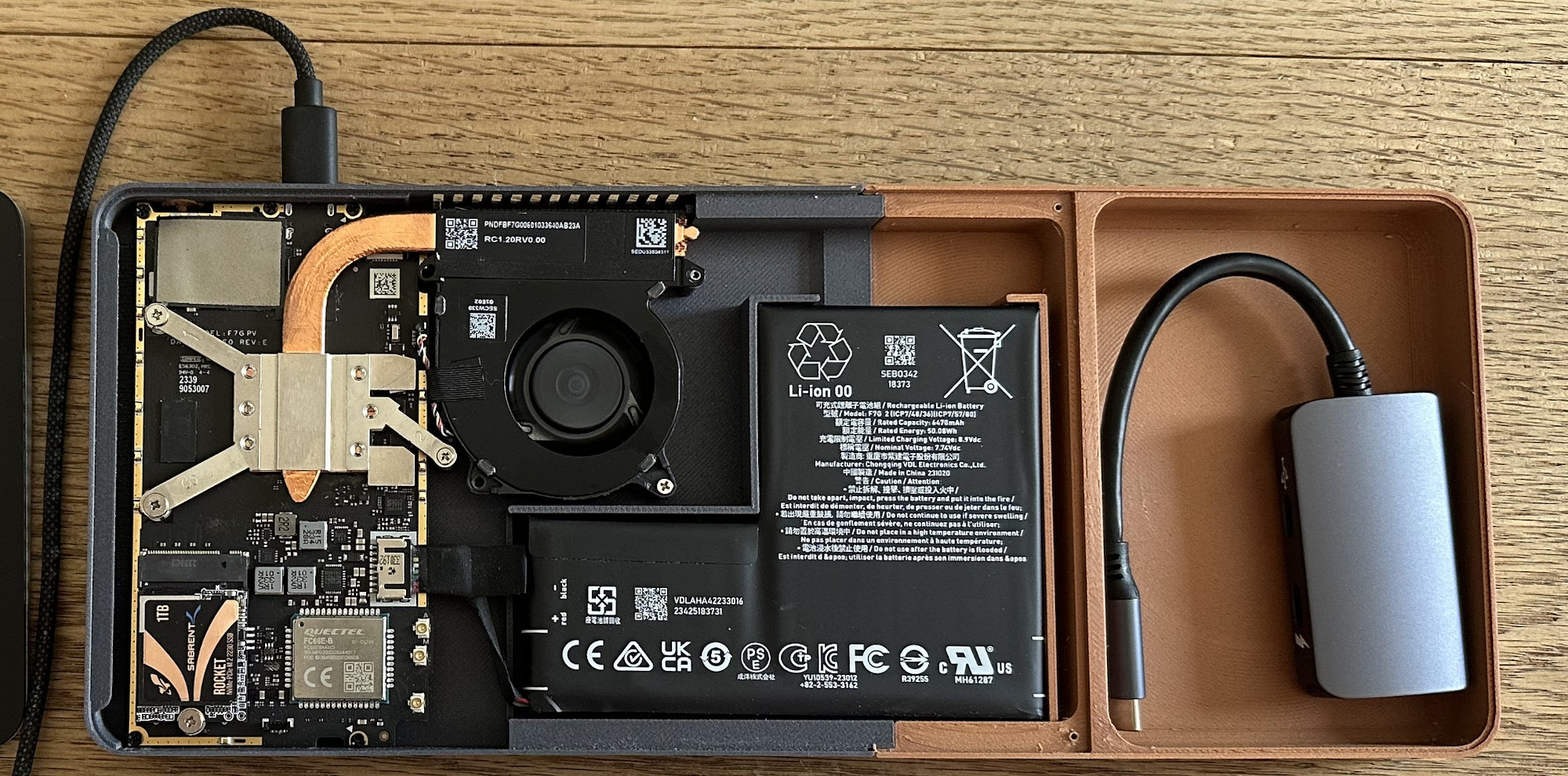
On top it’s a keyboard, but underneath it’s a compartmentalized space similar to the Japanese lunchboxes which lend the project its name. The computing power comes courtesy of a Steam Deck so it has a USB-C-for-everything approach to plugging in a desktop, though there’s a stated goal to produce versions for other boards such as the Raspberry Pi. There’s even an empty compartment for storage of peripherals.

We like this computer, both for being a cyberdeck and for being without a screen so not quite like the other cyberdecks. It’s polished enough that we could almost imagine it as a commercial product. It’s certainly not the first Steam Deck based cyberdeck we’ve seen.

20 Jun 09:39

💊 Confirmé: cette nouvelle pilule réduit significativement le mauvais cholestérol en un temps record

by Alain REDBRAN
Un nouveau traitement oral pourrait redéfinir la prise en charge du cholestérol. Obicetrapib, une pilule prise une fois par jour, montre des résultats prometteurs contre les maladies...
19 Jun 19:16

Calm Like a Duck

Before our first child was born, we attended a series of classes with other expecting couples. The class aimed to prepare us for the joys and challenges of childbirth and the life changes that come with becoming parents.

Most parents-to-be were feeling a little anxious. One dad, though, never seemed fazed—he stayed cool through everything. At one point, I asked him how he was so relaxed. He said, "I'm calm like a duck. On the surface, I'm gently floating, but under the water, I'm paddling like crazy."

It's over 10 years ago now, but I remember it clearly. It stuck with me for two reasons.

First, it's a brilliant analogy for calmness—the two halves of a duck—and makes for a funny picture, which is why I thought it deserved a sketch.

Second, it reminds me that when I'm in a stressful situation or feeling nervous, it's easy to look around and see people who seem calm and confident. And if I start thinking I'm the only one feeling anxious, it usually makes it worse. However, when I recall this story, I remember that just because someone looks calm, it doesn't mean they feel calm. They might be "calm like a duck." Under the surface, their legs may be waggling furiously, just like I'm feeling.

Michael Caine, in his 2018 book Blowing the Bloody Doors Off: And Other Lessons in Life, said:

"Ducks look calm as they glide along the surface of the water but they're paddling like hell underneath. When you're doing your preparation right, it sometimes looks so good that people watching you make the mistake of assuming it's all natural and effortless. In my experience, it never is."

In some ways, this misconception is everywhere when we see high performers who make things look easy:

  • A finished book without all the awful first drafts
  • A polished theatre performance without the chaos of rehearsals
  • A calm statement from a leader without the deliberation or doubt that led to it
  • A marathon finish, without the 6 am runs they didn't want to do

As a leader, it can help to offer a calm demeanour, but don't mistake the appearance of calm for having everything sorted out.

We all have to work hard through times that aren't easy if we want to do great things—even ducks. And Michael Caine.

Related Ideas to Calm Like a Duck

The excellent QI looked into the source of this quote and had it down to the Japanese practice of duck diplomacy.

19 Jun 19:15

Why is the Quantum Race Moving Faster?

by Nat Rubio-Licht

Quantum breakthroughs are picking up the pace. 

In mid-June, IBM released its quantum roadmap, outlining a path to “IBM Quantum Starling,” what the company expects to be the “first large-scale, fault-tolerant quantum computer,” by 2029. Nvidia CEO Jensen Huang, meanwhile, said during his keynote speech at the GTC Paris developer conference last week that quantum computing is “reaching an inflection point” and that applicable quantum computers are “within reach.” 

The announcements add to a deluge of breakthroughs from tech firms throughout the past six months, including quantum computing chips from giants like Google, Amazon and Microsoft. With so much weight behind the movement, the future of quantum is looking less murky by the day, said John Levy, CEO of quantum computing architecture firm SEEQC.

“The large companies working in quantum, nearly all of them are focused on building better (quantum bits),” said Levy. “The better the quality of the qubit, the better the quality of the system.” 

Emerging from ‘Deep R&D’

For a long time, quantum has been stuck in “deep R&D,” confined to labs and theory rather than considered for practical applications, said Levy. Interest from the trendsetters and decision-makers of tech, however, has brought development out of the shadows:

  • Developers’ questions aren’t focused on whether quantum is possible, but rather how it can scale, said Levy.
  • “A whole bunch of fundamental risk has been taken off the table,” Levy said. “Now we have new risks.” 

Barriers to scaling still exist, he noted, including energy efficiency, error correction and running algorithms that actually bring value. At SEEQC, Levy’s team is seeking to tackle the problem of quantum’s complicated infrastructure, using its single flux quantum processors to allow for control over quantum systems without excessive hardware or energy usage. 

The company recently announced a partnership with IBM as part of DARPA’s Quantum Benchmarking initiative, which would use SEEQC’s processors within IBM’s large-scale quantum computer in development. “This is all about scaling quantum computers,” Levy said. “And scaling doesn’t just mean adding more qubits.” 

Though overcoming some barriers simply reveals more, the interest in developing quantum technology is only growing. As the timeline for scalable quantum computers grows shorter and shorter, enterprise leaders shouldn’t write the tech off as fringe, Levy said. For now, CIOs and tech leaders should keep an eye on road maps like IBM’s, seeing how it intersects with their own ideas of quantum and how it applies to their businesses. 

Quantum may eventually catch enterprises that keep their heads in the sand off-guard, Levy said, just as the initial AI wave threw many unprepared companies into a tailspin. 

“I don’t think we can think of this as business as usual,” he said. “ One step at a time, we’re doing it as an industry. And those steps are coming faster.”

The post Why is the Quantum Race Moving Faster? appeared first on The Daily Upside.

19 Jun 19:13

Actualité : Où diable était passée la moitié de la matière ordinaire de l'Univers ? L'énigme enfin résolue !

by Brice Haziza
C'était une immense énigme de l'astrophysique et de la cosmologie. Selon des chercheurs, la matière manquante de l'Univers a pu être localisée avec un bon degré de confiance entre les galaxies. Et non, il ne s'agit pas de l'insaisissable matière noire, dont on ne sait pas comment, ni même si elle interagit avec la matière dite ordinaire (ou “baryoniq...
19 Jun 16:09

Something Comically Bad Just Happened to the Inventor of Ozempic

by Noor Al-Sibai
Novo Nordisk, the Danish pharma company behind Ozempic, made a very dumb decision a few years ago that will massively eat into its profits.

Novo Nordisk, the Danish company behind Ozempic and Wegovy, made one very dumb decision a few years ago that's now poised to massively eat into its profits — a wild twist in the pharma company's saga, and an all-time cautionary tale for its peers.

When watching an interview with the head of generic drugmaker Sandoz, Science magazine columnist Derek Lowe learned something incredible: that Novo failed to renew its Canadian patent on semaglutide, the active ingredient in the uber-expensive drugs Ozempic and Wegovy.

Speaking to the biopharma industry outlet Endpoints News earlier this month, Sandoz CEO Richard Saynor dropped the information as an aside in a larger conversation about the company's plans to sell generic semaglutide in Canada in 2026 — the same year that Novo's patent expires there due to the filing oversight.

"Canada, we filed and are waiting for approval once the data exclusivity expires sometime in Q1 next year," Saynor told Endpoints. "Interesting market. Novo never filed a patent in Canada."

Saynor, to be clear, was not quite correct in saying Novo never filed for a semaglutide patent in Canada — but the truth of the matter is actually way funnier.

Lowe learned, via trawling through Canadian patent records, that Novo last filed to renew its semaglutide patent in the great white north back in the year 2018. When the regulatory body that governs patents reminded the Danish manufacturer that it was time to pay the annual maintenance fee, a paltry $250, Novo hemmed and hawed about whether it wanted to pay for so long that it quite literally lapsed.

Incredibly the Canadian patent office even gave the company a year-long grace period to make up for it, but the company never took the authorities up on the offer.

"Once a patent has lapsed," the Canadian patent officials reminded Novo Nordisk in a letter viewed by Lowe, "it cannot be revived."

As the Sandoz CEO remarked in his Endpoints interview, there's little doubt that "someone's lost their job" over the patent problem in Canada. Indeed, Saynor described that country as Novo's second-largest semaglutide market, and Ozempic sales in Canada garnered the pharma giant $2.5 billion CAD last year.

"You gotta ask why. I don’t think Canadians are disproportionately large," Saynor said. "There’s clearly a dynamic, like insulin, with cross-border business. It’s going to be interesting to see how that evolves."

Novo has, notably, kept up with its patent fees in the US, and generic semaglutide won't hit American shelves until at least 2032 — but as Saynor alluded to, they might be able to drive up to Canada to get it next year.

More on Ozempic: McDonald's in Trouble as Ozempic Takes Hold

The post Something Comically Bad Just Happened to the Inventor of Ozempic appeared first on Futurism.

19 Jun 16:03

Jamming with AI: Jazz trio plays live with AI-generated sound

A fascinating recent development enabling musicians to improvise live music with AI-generated sound could be the biggest innovation since the advent of sampling, or perhaps even the invention of recorded sound, according to a music researcher at York.
19 Jun 16:03

Hyper-realistic AI technology creates avatars from a single photo

Electronics and Telecommunications Research Institute (ETRI) has developed hyper-realistic AI technology that can create an avatar that speaks naturally like a real person using only a single portrait photo.
19 Jun 12:30

Midjourney launches its first AI video generation model, V1

by Maxwell Zeff
Midjourney launched its much anticipated AI video generation model, V1, on Wednesday and laid out a roadmap for its future releases.
19 Jun 10:59

Pourquoi ce Rafale fait sensation au Bourget (et ce n’est pas qu’une question d’allure)

by Sylvain Biget, Journaliste
Au salon du Bourget, sur le stand de l’Armée de l’Air et de l’Espace, la nouveauté repose essentiellement sur le futur Rafale F5. Certaines de ses améliorations sont visibles, quand d’autres beaucoup plus révolutionnaires se font discrètes. Revue de détail.
19 Jun 10:58

Vuzix Accelerates Smart Glasses Development with $15 Million Investment from Quanta Computer

by Rory Greener

It appears that Vuzix is at the forefront of smart glasses innovation and scale. With the current AR smart glasses hype wave building, it is no surprise that the veteran firm is achieving major milestones each quarter toward deploying enterprise AR devices and services.

This week, Vuzix announced that it has received a second tranche investment of $5 million from Quanta Computer, a leading global ODM and strategic partner. This brings Quanta’s total investment in Vuzix to approximately $15 million, following previous investments over the years.

Paul Travers, President and CEO of Vuzix, added:

The completion of this second tranche investment marks another important milestone in strengthening our partnership with Quanta and expanding the capabilities of our cutting-edge waveguide production facility. With this funding, we are further enhancing our state-of-the-art waveguide manufacturing capabilities, positioning Vuzix to deliver the world’s most affordable, lightweight, and performance-driven AI smart glasses for mass-market adoption. We are excited about the continued collaboration and innovation ahead with a partner as respected as Quanta.

Vuzix Powers Up Smart Glasses for 2025

Vuzix Corporation, a smart glasses vendor, recently announced a new partnership with Ramblr. This collaboration represents another critical step toward the company’s anticipated success in 2025. Additionally, this partnership allows Vuzix to advance its efforts in integrating AI into its augmented reality hardware portfolio. This trend is notable across the smart glasses market, which Google recently pointed out is reaching a significant convergence this year.

More specifically, the partnership brings Ramblr AI agent solutions to Vuzix smartglasses, with Travers explaining:

Deploying Ramblr’s AI agents on Vuzix M400 smart glasses redefines how users interact with technology, both on the factory floor and in everyday life. From real-time guidance to photo documentation after the job is complete, this is yet another example of how AR and AI are redefining every step of user workflows.

Roman Hasenbeck, CEO of Ramblr, also said that Ramblr “gives developers the tools to build and deploy these intelligent real-world assistants through a powerful platform that enables rapid adaptation to diverse domains and use cases. Our partnership with Vuzix brings this vision to life.”

Ramblr notes that its AI develops a deep contextual understanding of its environment, providing real-time, natural language guidance and visuals to workers using Vuzix smart glasses.

Recently, Vuzix Corporation acquired a waveguide research and development facility in Milpitas, California. This acquisition will enhance Vuzix’s waveguide tools, which are essential for its next-generation, AI-driven smart glasses, benefiting its products and ODM/OEM partners.

This move centralises Vuzix’s innovation efforts in the heart of Silicon Valley. It involves acquiring cutting-edge equipment, further solidifying its position as a key player in the smart glasses market.

Additionally, Vuzix is strengthening its OEM partnerships with recent developments. The company has begun shipping its latest order of XanderGlasses, a private-label version of the Vuzix Shield smart glasses designed to assist individuals with hearing loss.

This advancement marks a significant milestone for Vuzix following a strong start to 2025. XanderGlasses aims to support approximately 48 million people in the U.S. who experience hearing loss, and the devices are currently being distributed nationwide.

The Vuzix Shield smart glasses can display real-time captions of in-person conversations directly within the wearer’s field of view, enabling users to remain fully engaged in social and professional settings. Xander has received recognition for its product, earning a CES 2024 Innovation Award Honoree in both the Accessibility and Ageing Tech categories.

The news arrives during a crucial growth period for Vuzix, as the market gains momentum, indicating a bright future for the smart glasses veteran.

18 Jun 12:38

Thomas Reynaud (iliad) met les pieds dans le plat : 6 propositions pour sauver la tech européenne

by LA REDACTION DE FRENCHWEB.FR

A l’issue de Vivatech, le PDG du groupe iliad, Thomas Reynaud, a lancé un appel sans détour à une mobilisation collective en faveur de la souveraineté technologique européenne. Dans un message publié sur LinkedIn, il résume en quelques lignes un sentiment de plus en plus partagé parmi les industriels du numérique, l’Europe est encore trop …

L’article Thomas Reynaud (iliad) met les pieds dans le plat : 6 propositions pour sauver la tech européenne est apparu en premier sur FRENCHWEB.FR.

18 Jun 06:59

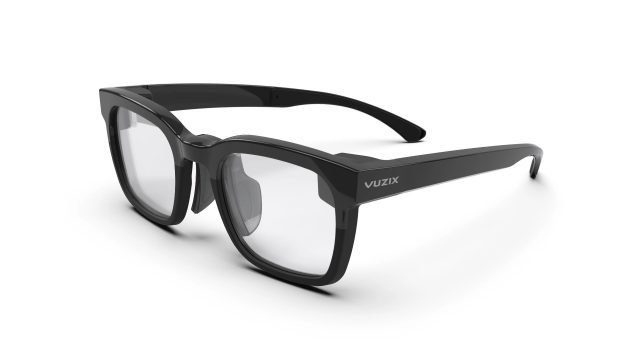
Vuzix Secures $5M Investment as Veteran Smart Glasses Maker Sets Sights on Consumers

by Scott Hayden

Vuzix, the veteran smart glasses maker, announced it’s secured a $5 million investment from Quanta Computer, the Taiwan-based ODM and major Apple assembler.

The latest investment was the second tranche following an initial $10 million investment made by Quanta in September 2024, which included the purchase of Vuzix common stock at $1.30 per share. At the time, Vuzix anticipated a total of $20 million from Quanta.

Paul Travers, President and CEO of Vuzix, notes the funding will be used to enhance Vuzix’s waveguide manufacturing capabilities, something he says will help Vuzix deliver “the world’s most affordable, lightweight, and performance-driven AI smart glasses for mass-market adoption.”

Additionally, Travers says the investment “marks another important milestone in strengthening our partnership with Quanta and expanding the capabilities of our cutting-edge waveguide production facility.”

Vuzix Z100 Smart Glasses | Image courtesy Vuzix

Founded in 1997, Vuzix has largely serviced enterprise with its evolving slate of smart glasses, which have typically targeted a number of industrial roles, including healthcare, manufacturing, and warehousing.

The company also produces its own waveguides for both in-house use and licensing. In the past, Vuzix has worked to integrate its waveguide tech with Garmin, Avegant, an unnamed US Fortune 50 tech company, and an unnamed U.S. defense supplier.

While the company has made a few early consumer devices in the 2010s, including V920 video eyewear and STAR 1200 AR headset, in November 2024, Vuzix introduced the Z100 smart glasses, its first pair of sleek, AI‑assisted smart glasses, priced at $500.

Its Z100 smart glasses include a 640 × 480 monochrome green microLED waveguide, and were designed to pair with smartphones to display notifications, fitness metrics, maps, targeting everyday consumers and enterprise customers alike.

Notably, the investment also coincides with greater market interest in smart glasses on the whole. Google announced last month it’s partnering with eyewear companies Warby Parker and Gentle Monster to release a line of fashionable smart glasses running Android XR.

Meta also recently confirmed it’s expanding its partnership with Ray-Ban Meta-maker EssilorLuxottica to create Oakley-branded smart glasses, expected to launch on June 20th, 2025.

Meanwhile, rumors suggest that both Samsung and Apple are aiming to release their own smart glasses in the near future, with reports maintaining that Samsung could release a device this year, and Apple as soon as next year.

The post Vuzix Secures $5M Investment as Veteran Smart Glasses Maker Sets Sights on Consumers appeared first on Road to VR.

17 Jun 08:00

Tritium - Un éditeur de texte en Rust pour les avocats

by Korben

Et si on appliquait la philosophie des IDE de développement aux outils juridiques ?

C’est exactement ce qu’a fait Drew Miller avec Tritium, un éditeur de texte écrit en Rust qui traite les documents juridiques comme des projets de code, avec annotation automatique, du redlining intégré et des performances à 60 FPS.

Drew Miller n’est pas n’importe qui dans cette histoire. Cet ancien avocat corporatiste chez Schulte Roth & Zabel à Londres a passé plus de 10 ans à jongler entre droit transactionnel et développement logiciel. En août 2024, il franchit le pas et lance Tritium Legal Technologies avec une vision claire : révolutionner le traitement de texte pour les avocats d’affaires. Son constat c’est que les outils actuels, Word en tête, sont des bloatwares qui sont utilisés depuis 40 ans sans répondre aux besoins spécifiques du secteur juridique.

17 Jun 07:58

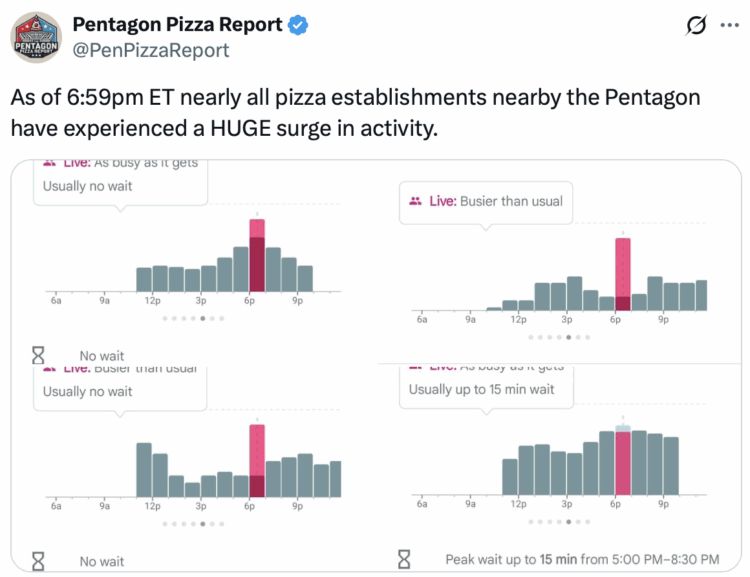
Pizza activity spikes just before reports of Israel attacking Iran

by Nathan Yau

The Pentagon Pizza Report tracks pizza place activity near the Pentagon. From the Guardian:

The timing of Israel’s plan to attack Iran was top-secret. But Washington pizza delivery trackers guessed something was up before the first bombs fell.

About an hour before Iranian state TV first reported loud explosions in Tehran, pizza orders around the Pentagon went through the roof, according to a viral X account claiming to offer “hot intel” on “late-night activity spikes” at the US military headquarters.

The Pizza Meter Theory has been around since the 1990s, which is something new I learned today.

The Pizza Meter, also known as the Pentagon Pizza Orders Theory, is a theory proposing that upticks in pizza orders received by restaurants near the Pentagon can predict international conflicts and times of crisis in the U.S. government. The concept originated in the early 1990s after a Domino’s Pizza franchise owner in Northern Virginia near the Pentagon named Frank Meeks, told newspapers that before major national security events, he saw a noticeable uptick in business.

I guess there is some truth to the theory.

It reminds me of the Waffle House Index and Canadian pee times during a hockey game. What other unexpected indicators are there for real-time events?

(via)

Tags: Pentagon Pizza Report, pizza, Pizza Meter Theory

17 Jun 07:57

Founder of 23andMe buys back company out of bankruptcy auction

by Sujeet Indap, Financial Times

Anne Wojcicki has been declared the winner of a bankruptcy auction for 23andMe, the genetics testing start-up she founded, prevailing over a rival bid from Regeneron Pharmaceuticals.

TTAM Research Institute, a non-profit public benefit company also founded by Wojcicki, won the auction with a $305 million bid for the 23andMe assets, which will not come with any company liabilities attached.

23andMe filed for bankruptcy in March after rejecting several go-private offers from Wojcicki in recent years. Regeneron was declared the winning bidder in May after the company accepted a $256 million bid in a previous auction.

Read full article

Comments

14 Jun 15:52

Make Magical-Looking Furniture With Kerf Bend Wizard

by Tyler August
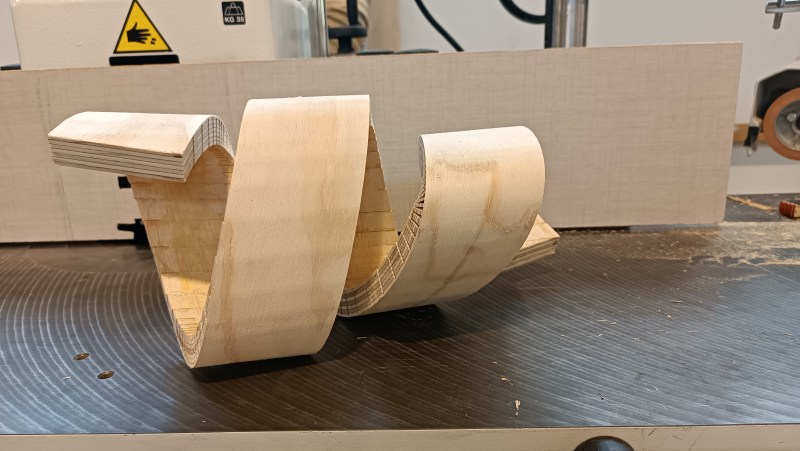
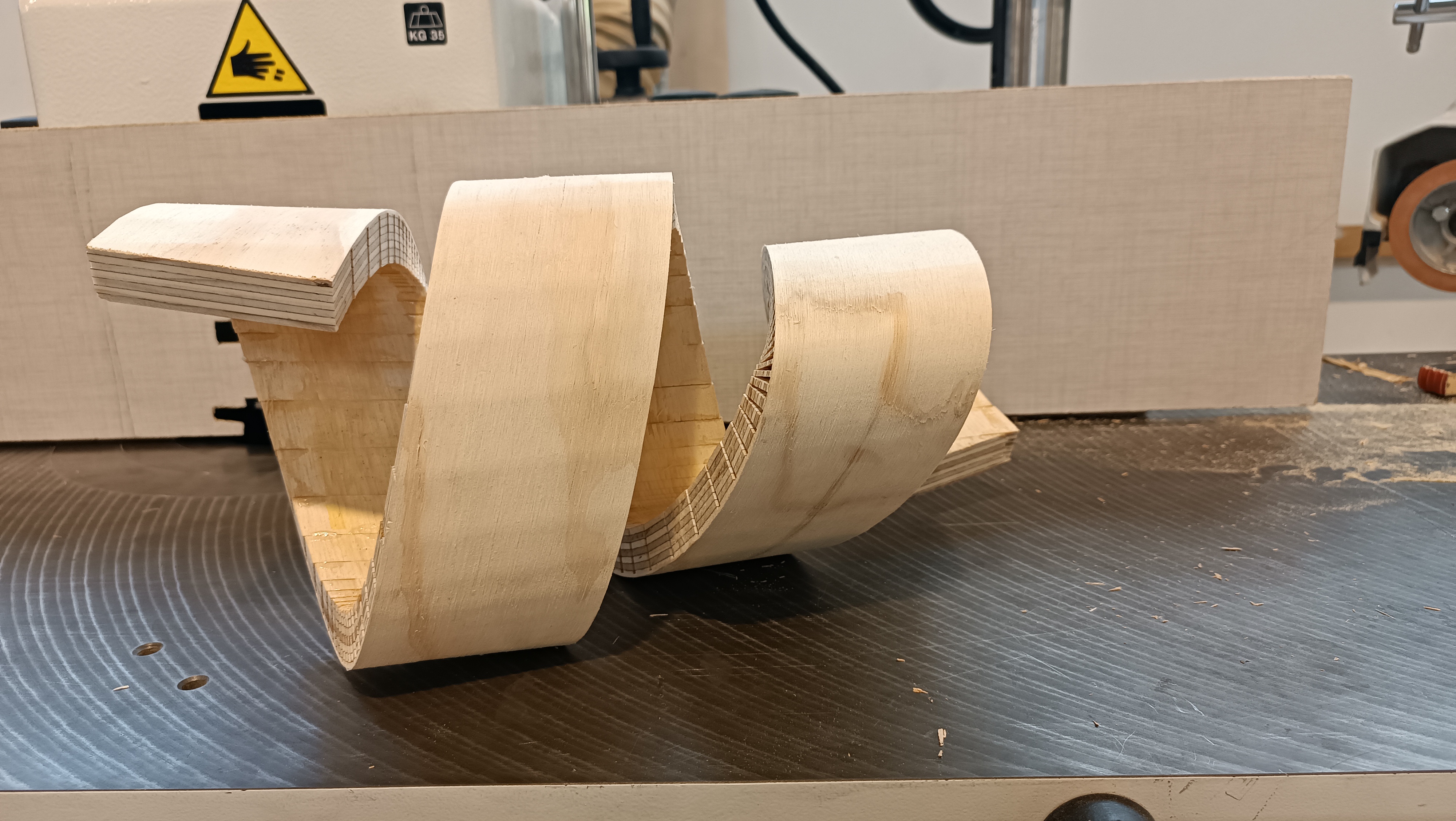
Wood bent into a spiral

The intersection between “woodworkers” and “programmers” is not a densely populated part of the Venn diagram, but [Michael Schiebler] is there with his Kerf Bend Wizard to help us make wood twist and bend like magic.

Kerf bending is a fine technique we have covered before: by cutting away material on the inside face of a piece of wood, you create an area weak enough to allow for bending. The question becomes: how much wood do I remove? And where? That’s where Kerf Bend Wizard comes to the rescue.

More after the break…

From spline (user input in black, expected output in pink)…

You feed it a spline– either manually or via DXF–and it feeds you a cut pattern that will satisfy that spline: just enough wood removed in just the right places that the edges of the cut should touch when the bend is achieved. This means less cut time and a stronger piece than eyeballing the kerfs. It works with both a table saw blade or a tapered end mill on a CNC or manual router. You can specify the kerf width of your table saw, or angle of your end mill, along with your desired cut depth.

… to cuts …

The output is DXF, convenient for use with a CNC, and a simple table giving distances from the edge of the piece and which side to cut, which is probably easier for use on the table saw. (Kerf Bend Wizard is happy to handle complex bends that require kerfing both sides of the material, as you can see.)

… to curved wood.

This was [Michael]’s thesis project, for which he hopefully got a good grade. The code is “semi-open” according to [Michael]; there’s a GitHub where you can grab an offline version for your own use, but no open-source license is on offer. Being a broke student and an artist to boot, [Michael] also can’t promise he will be able to keep the web version available without ads or some kind of monetization, so enjoy it while you can!

If CNCs or table saws aren’t your thing, kerf bending has long been used with laser cutters, too.

Our thanks (which, as always, is worth its weight in gold) to [Michael] for the tip. If you’re in the intersection of the Venn diagram with [Michael], we’d love to hear what you’re up to.

14 Jun 07:30

Watkin’s Tower: London’s Failed Eiffel Tower

by Maya Posch

The city of London is no stranger to tall constructions today, but long before the first skyscrapers would loom above its streets, Watkin’s Tower was supposed to be the tallest structure in not only London but also the entirety of the UK. Inspired by France’s recently opened Eiffel tower, railway entrepreneur and Member of Parliament [Sir Edward Watkin] wanted to erect a structure that would rival the Eiffel tower, as part of a new attraction park to be constructed near the Middlesex hamlet of Wembley. In a retrospective, [Rob’s London] channel takes a look at what came to be known as Watkin’s Folly among other flattering names.

The first stage of Watkin's Tower at Wembley Park. The only to be ever completed. (Source: Wikimedia)
The first stage of Watkin’s Tower at Wembley Park. The only to be ever completed. (Source: Wikimedia)

After [Gustave Eiffel], the architect of the Eiffel tower recused himself, a design competition was held for a tower design, with the Illustrated Catalogue of the 68 designs submitted available for our perusal. The winner turned out to be #37, an eight-legged, 366 meter tall tower, much taller than the 312.2 meter tall Eiffel tower, along with multiple observation decks and various luxuries to be enjoyed by visitors to Wembley Park.

Naturally, [Watkin] commissioned a redesign to make it cheaper, which halved the number of legs, causing subsidence of the soil and other grievances later on. Before construction could finish, the responsible company went bankrupt and the one constructed section was demolished by 1907. Despite this, Wembley Park was a success and remains so to this day with Wembley Stadium built where Watkin’s Folly once stood.

13 Jun 16:36

Leak Copilot : quand l’IA de Microsoft devient une passoire à données

by Amine Baba Aissa

Des chercheurs en cybersécurité ont révélé une vulnérabilité majeure dans l’IA Microsoft 365 Copilot, permettant à des pirates de voler des données sensibles d'entreprises, sans le moindre clic d'utilisateur. Baptisée EchoLeak, cette faille exploitait l’IA générative intégrée aux outils Microsoft pour exfiltrer des informations via un simple e-mail, même non ouvert.

13 Jun 15:25

Seating chart for lone survivor in India plane crash

by Nathan Yau

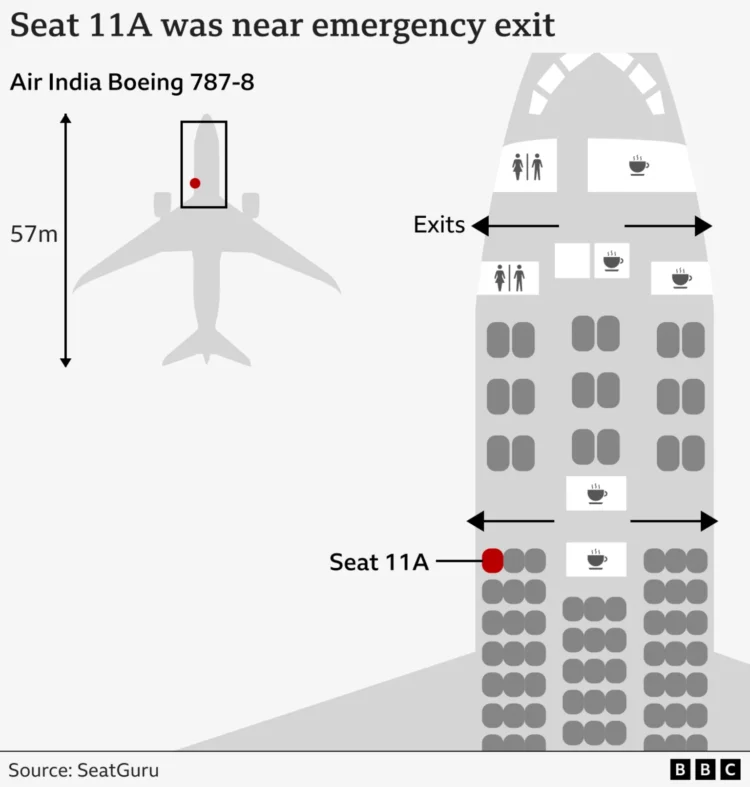
There was one survivor from Air India flight AI171. He sat in seat 11A.

Tags: airplane, BBC, crash, seating

13 Jun 15:20

Le Mans Ultimate Leaves Early Access Next Month On SteamVR

by Henry Stockdale

Le Mans Ultimate, an official game for the FIA World Endurance Championship, enters full release next month on SteamVR.

Previously released last year on Steam Early Access, Le Mans Ultimate by Studio 397 will reach version 1.0 on July 22. Announced before this year's famous 24-hour race kicks off, this landmark update also introduces two free 2025 cars, the Aston Martin Valkyrie LMH and Mercedes-AMG LMGT3, alongside promised improvements to polish and performance. All 2025 official liveries will be included for free too.

While this won't be available at Version 1.0's release, Studio 397 also confirmed that Le Mans Ultimate will add the European Le Mans Series. This category also sees the introduction of both the Le Mans Prototype 2 (LMP2) and LMP3 class vehicles, and three famous circuits: Silverstone, Paul Ricard (Le Castellet) and Circuit de Barcelona-Catalunya. Pricing and a release window will be shared “in the coming months.”

As for what's next, the developer confirmed it's planning further updates following Version 1.0. That includes a single-player career mode that's “currently in early production,” letting you take on roles within set teams and progress through the ranks while making “career-impacting choices based on race results.” Driver swaps are also mentioned, and a Q1 2026 release is targeted.

Version 1.0 arrives on July 22 on Steam with PC VR support, and it's out now in early access.

13 Jun 06:39

VivaTech 2025 : la France accélère dans la course à l’IA

by oansah

À VivaTech 2025, l’IA ne s’est pas contentée de faire le show : elle a dessiné les contours d’un nouveau rapport de force. Lancement d’une bataille industrielle et culturelle, dans la continuité du Sommet pour l’action sur l’intelligence artificielle. Sur les scènes de VivaTech, cette année, les ambitions ne sont plus feutrées. La France, et […]

The post VivaTech 2025 : la France accélère dans la course à l’IA first appeared on Méta-media | La révolution de l'information.

12 Jun 20:18

Sure ouvre l'assurance à l'IA agentique

by Patrice
Sure
Quelques jours après le lancement de la « banque agentique » par Griffin et alors que l'industrie dans son ensemble peine à s'adapter aux exigences de la finance ouverte, l'assurance découvre aujourd'hui son pionnier des services prêts à l'emploi pour les applications de l'intelligence artificielle, sous les traits de l'américaine Sure.

L'approche, commune aux deux entreprises, devrait s'imposer rapidement comme un standard, puisqu'il s'agit de décliner des API existantes dans un format conforme au « Model Context Protocol » (MCP) initialement développé et partagé (sous licence libre) par Anthropic. Ce dernier permet de garantir la compatibilité des fonctions exposées avec les plates-formes qui l'adoptent, de plus en plus nombreuses, et ainsi d'autoriser facilement leurs agents virtuels à exécuter des actions de manière autonome.

La solution proposée par Sure couvre tout le cycle de vie de l'assurance, depuis la création instantanée de devis en fonction de la demande du client jusqu'à la gestion de sinistre et son suivi, en passant notamment par la contractualisation – encadrée par des paramètres prédéterminés – et la gestion administrative des polices. Ainsi armé, un robot est en mesure de prendre en charge tous les besoins du client sans requérir au préalable la mise au point d'une application devant orchestrer ces différentes tâches.

Naturellement, l'offre couvre la totalité de la gamme de produits (et d'assureurs) proposés par Sure et la conformité réglementaire est nativement intégrée grâce à la définition de garde-fous spécifiques. Avec les contrôles instaurés au niveau de la souscription, ces mécanismes sont destinés à rassurer les partenaires de la startup désireux de se lancer, qui, on s'en doute, craignent les hallucinations et autres erreurs susceptibles de mettre en jeu leur réputation, voire leur responsabilité juridique.

Sure – MCP Services

Sans surprise, le dispositif est pour l'instant déployé uniquement en test beta. Les premiers retours des expérimentations laissent (évidemment) entrevoir d'excellents résultats. Cependant, les gains de temps évoqués – de 95% sur la souscription et 80% sur les réponses du support – ne mentionnent pas leur référence et pourraient plutôt relever d'une situation d'origine catastrophique. Par ailleurs, ils ne portent, tout comme le taux de satisfaction élevé dont il est fait mention, que sur l'entrée en relation.

Enfin, comme toujours avec les automates, il ne faut pas exclure que les réactions initiales, stimulées par la nouveauté, ne se dégradent au fil de l'accoutumance. En conclusion, il peut être intéressant de prendre en main la technologie afin d'en appréhender les capacités et les limitations mais il conviendra de mesurer la qualité ressentie sur le long terme pour ne pas dégrader la confiance des assurés. Autre question, récurrente, les acteurs du secteur, généralement enclins à une extrême prudence, sont-ils prêts à confier leur relation client à l'intelligence artificielle ?
12 Jun 20:17

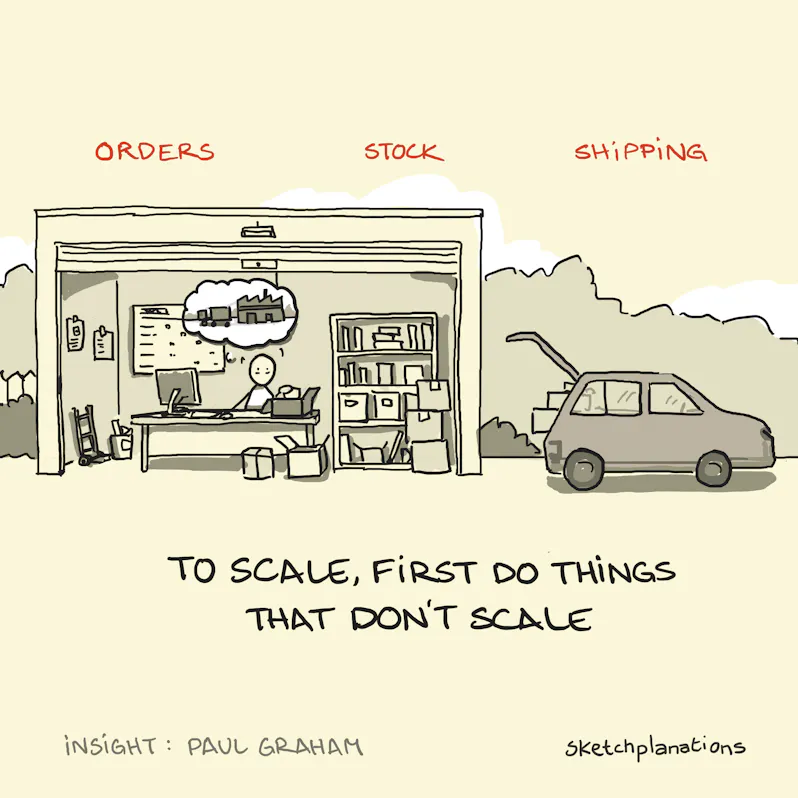
To Scale, First Do Things That Don't Scale

The startup paradox: grow big by starting small

One of the seeming contradictions in a company's journey is that, as Paul Graham, founder of Y Combinator, points out in a well-known essay, to get your company operating at scale, you first have to do things that don't scale.

Why does this sometimes seem like a contradiction? If we picture large, successful tech companies, it's easy to imagine all sorts of clever technology and automation that makes everything work automatically. How else would you serve thousands, if not millions, of users simultaneously? In the early days, it's easy to think of a new offering or feature, or even the very core of the business, as "that's too manual, we can't do that," and then keep building and guessing.

But the reality is that doing things that don't scale at first is the way many companies get to massive scale.

Brian Chesky, founder of Airbnb, shared a classic do things that don't scale example. In the early days, he and his cofounder went door-to-door to the first users of the platform, photographing apartments and asking customers what they could do better. They processed and uploaded photos manually, managing with spreadsheets and some hired help until they later automated the process.

Why Do Things That Don't Scale

Here are some of the advantages I've seen of starting with things that don't scale:

  • You learn what customers need. The more time you spend close to your customers, ensuring your product works for them, the more empathy you develop for what it's like to be in their shoes. This empathy will help you over and over again.
  • You can start now. Before investing a lot of time building software or figuring out how to automate, you can begin learning immediately.
  • It's cheaper. You don't have to design, spec and build for weeks before launching.
  • Everything you later build will be useful. When running it manually gets too painful, you know that whatever you build to automate the process will help you immediately.
  • You find product-market fit faster. Running things manually helps you experiment and adapt quickly.
  • It's easier to kill things that don't work. It's less painful to stop doing a manual process than to rip out features or code customers aren't using.

Examples of Doing Things That Don't Scale

It doesn't have to be your whole business—it could be a new feature or tool. If your platform would eventually generate a dashboard automatically, maybe the first ones you just create by hand. If you need to manage people's availability, you can start with a calendar on a whiteboard.

Marketplaces that operate at thousands of transactions a day started with a spreadsheet and a phone.

Jeff Bezos packed and delivered the first books shipped by Amazon.

Hewlett-Packard famously started in a garage.

If your business is already at scale and you want to try something new, see if you can run it manually for a small group of users first. If you can make it work for them—fine-tuning out all the issues—then there's a good chance you can scale it more widely.

I've personally made the mistake of aiming for scale too early. At my first startup, we spent longer than we should have building what we thought was needed for a system that worked automatically, rather than just getting started—even if it meant taking more manual steps.

I've also been part of successful new products and services that we initially ran manually, using spreadsheets and people's effort, before fully automating them, sometimes many months later.

As Brian Chesky says: Do it until it hurts, then automate it away.

Learn more:

Related Ideas to Do Things That Don't Scale

12 Jun 07:43

Scientists built a badminton-playing robot with AI-powered skills

by Jacek Krywko

Robots like Atlas, Spot, and Stretch have amazed people with natural, life-like agility and body balance. What they were lacking, though, was a way to quickly connect this natural movement to perception—the robotic equivalent of the reflexes that let you catch a ball or duck in an instant to avoid getting hit.

So, a team of scientists at ETH Zürich got busy fixing this problem. “I wanted to fuse perception and body movement,” said Yuntao Ma, a roboticist who led a team developing an AI-powered, badminton-playing robot.

Read full article

Comments

12 Jun 07:42

Le Français Mistral dévoile Magistral, une IA qui raisonne comme nous !

by Sylvain Biget, Journaliste
Raisonner comme pourrait le faire un humain face à des questions complexes, c’est ce dont est capable de faire le nouveau modèle de Mistral AI. Baptisé Magistral, il peut se mesurer à des IA comme celle d’o1 d’OpenAI qui fonctionne de façon similaire. Pour raisonner, l’IA organise sa « pensée »...
12 Jun 07:40

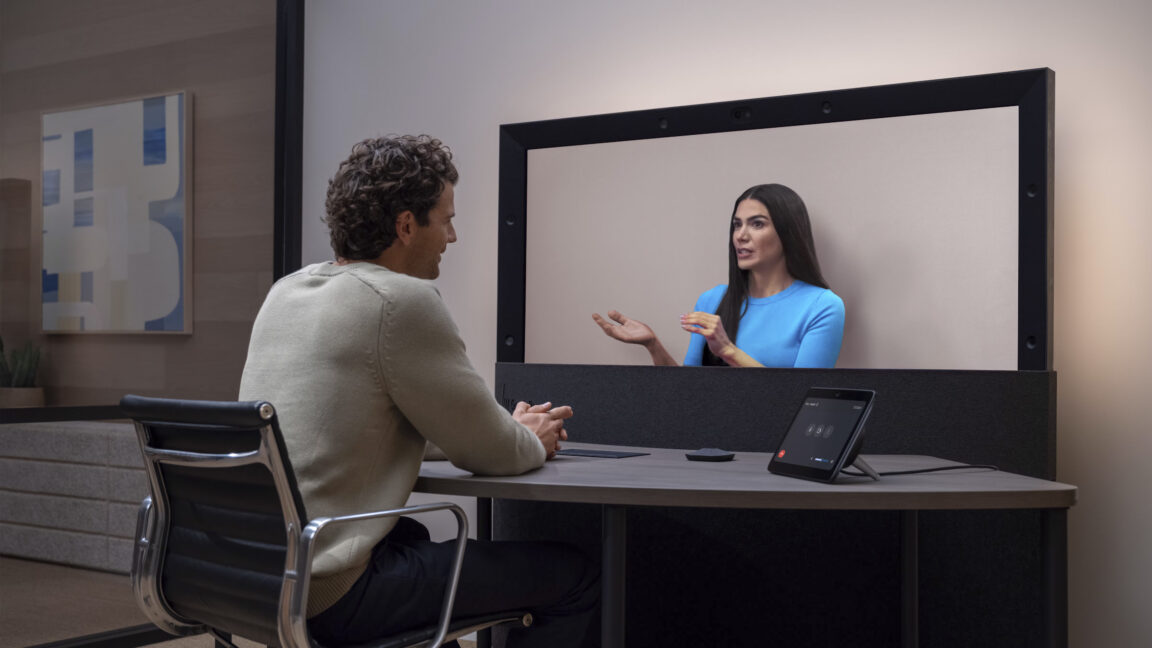
HP reveals first Google Beam 3D video conferencing setup, priced at $25,000

by Ryan Whitwam

Amid all the Gemini hype at Google I/O last month, the company also turned one of its experiments into a (kind of) real product. Project Starline was reborn as Google Beam, a 3D video conferencing system that makes it look like you're in the same room with the other party. Google said HP would reveal the first Beam setup, and now it has. The HP Dimension is coming this year, and the price tag is a predictably hefty $24,999.

Google Beam calls for a lot of advanced hardware, so the high price isn't a surprise. The HP Dimension uses six high-speed cameras positioned around the display to capture the speaker from multiple angles. This visual data is then fed into Google's proprietary volumetric video model, which merges the streams together into a 3D reconstruction of the speaker.

Eventually, there will be Beam systems of various sizes, but the HP model comes with a big 65-inch display. All Beam systems will use light field screen technology, which can show the volumetric model in 3D, eliminating the need to wear a headset or glasses for the 3D effect. Google says Beam can show minute details at 60 fps with millimeter-scale precision.

Read full article

Comments

12 Jun 07:33

Step Into Combat Robotics with Project SVRN!

by Ian Bos
Red and black grabber combat robot

We all love combat robotics for its creative problem solving; trying to fit drivetrains and weapon systems in a small and light package is never as simple as it appears to be. When you get to the real lightweights… throw everything you know out the window! [Shoverobotics] saw this as a barrier for getting into the 150g weight class, so he created the combat robotics platform named Project SVRN.

You want 4-wheel drive? It’s got it! Wedge or a Grabber? Of course! Anything else you can imagine? Feel free to add and modify the platform to your heart’s content! Controlled by a Malenki Nano, a receiver and motor controller combo board, the SVRN platform allows anyone to get into fairyweight fights with almost no experience.

With 4 N10 motors giving quick control, the platform acts as an excellent platform for various bot designs. Though the electronics and structure are rather simple, the most important and impressive part of Project SVRN is the detailed documentation for every part of building the bot. You can find and follow the documentation yourself from [Shoverobotics]’s Printables page here!

If you already know every type of coil found in your old Grav-Synthesized Vex-Flux from your Whatsamacallit this might not be needed for you, but many people trying to get into making need a ramp to shoot for the stars. For those needing more technical know-how in combat robotics, check out Kitten Mittens, a bot that uses its weapon for locomotion!

12 Jun 07:33

Wandercraft : l’exosquelette français qui entre dans l’ère industrielle avec une levée de 75 millions de dollars

by LA REDACTION DE FRENCHWEB.FR

Les annonces se succèdent pour Wandercraft, après plus d’une décennie consacrée à la robotique de rééducation, l’entreprise s’engage désormais dans l’industrialisation de ses solutions, avec l’objectif d’élargir leur usage à la mobilité personnelle et aux environnements industriels. À la croisée de l’intelligence artificielle, de la mécatronique avancée et du soin, Wandercraft entend incarner un modèle …

L’article Wandercraft : l’exosquelette français qui entre dans l’ère industrielle avec une levée de 75 millions de dollars est apparu en premier sur FRENCHWEB.FR.

12 Jun 07:33

Vivatech : Nvidia structure l’Europe de l’IA, Emmanuel Macron verrouille le narratif souverain

by LA REDACTION DE FRENCHWEB.FR

À Paris, Jensen Huang a livré une vision industrielle et distribuée de l’IA, dans laquelle l’Europe joue désormais un rôle central. Un changement d’échelle soutenu par des investissements massifs dans les infrastructures, une ouverture vers l’écosystème local, et une relecture du data center devenu “usine à tokens”. Il fallait écouter attentivement les inflexions, plus encore …

L’article Vivatech : Nvidia structure l’Europe de l’IA, Emmanuel Macron verrouille le narratif souverain est apparu en premier sur FRENCHWEB.FR.