Shared posts

22 Jul 07:59

Viture's 'The Beast' Display Glasses Have Industry-Leading FOV & Brightness

by David Heaney

Xreal's closest competitor announced four new display glasses, including one with a 58° diagonal field of view and 1250 nits brightness.

What Are Display Glasses?

Display glasses essentially act as head-worn monitors, displaying video input (via DisplayPort or HDMI to USB-C) on a large virtual screen. For example, you can connect your phone and view Netflix, or your Steam Deck to play games.

Until fairly recently, all display glasses were head-locked when used with the majority of input devices. But now, many include built-in 3DoF tracking, meaning the screen stays in place when you rotate your head, and some even include 6DoF tracking via accessories.

All display glasses to date magnify a tiny micro-OLED display to a roughly 40-60 degree diagonal field of view using a curved mirror or prism block. The former is called "birdbath" optics, and the latter is technically called flat-prism, though it's often grouped with birdbath.

Unlike the waveguides used in AR glasses, display glasses optics are inherently thick, and noticeably sit out from your face. They also block out around 80% of real-world light at minimum, so can't be used as general eyewear when not in use.

While we've covered Xreal before on UploadVR, the leading display glasses company by global market share, we haven't yet covered Viture, which holds second place. That's partially because we lack the time to report on everything we'd ideally want to, and partially because there haven't been significant differences - until now.

Back in December, Xreal launched the Xreal One series with built-in 3DoF, and the Xreal One Pro with industry-leading 57° diagonal field of view. Now, this month, Viture has announced its response.

Over the next few months, Viture is launching a whopping four different display glasses models: Luma, Luma Pro, Luma Ultra, and one it simply calls The Beast.
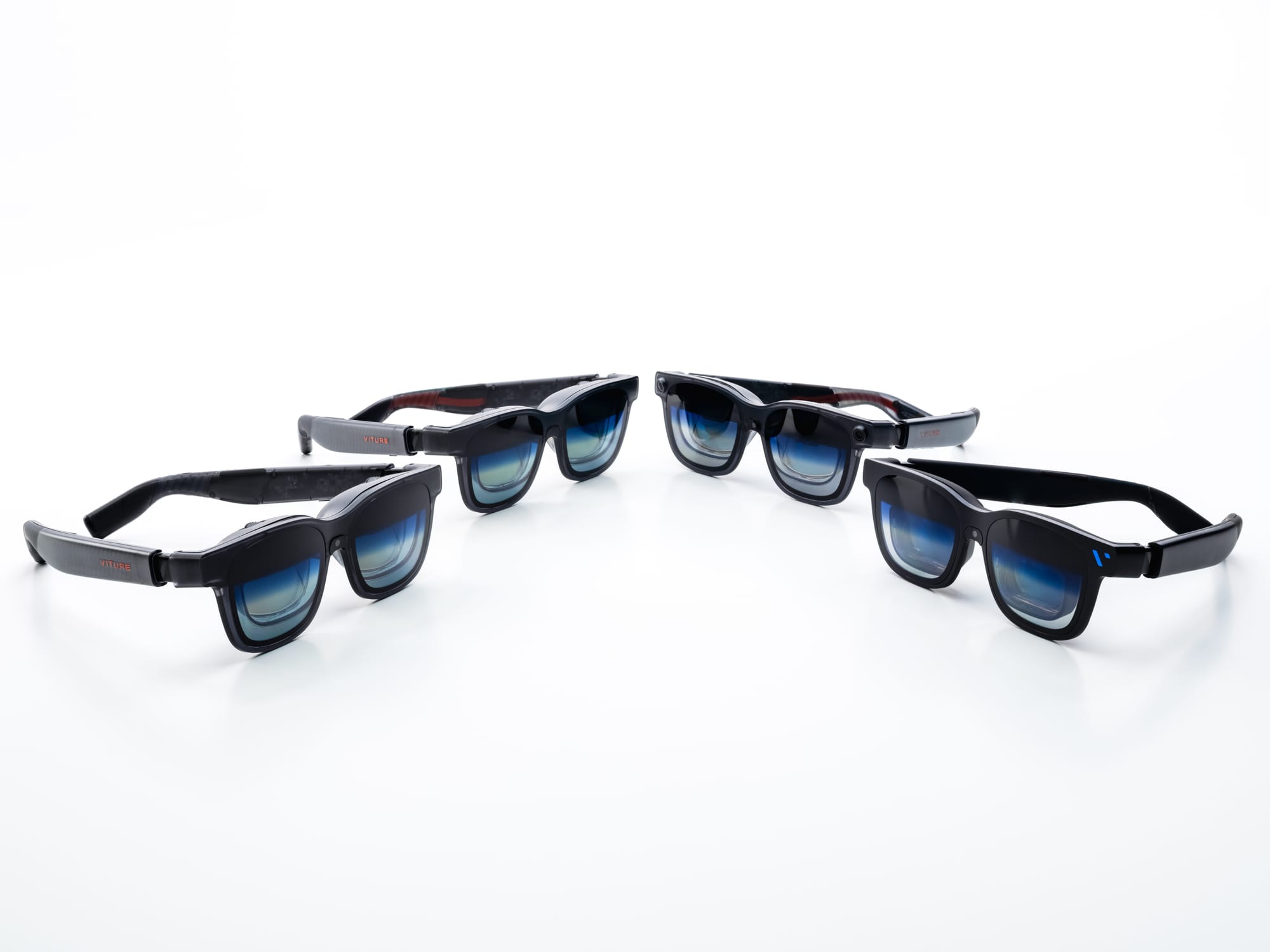
All four new Viture glasses have higher resolution than Xreal, 1200p compared to 1080p, as well as higher brightness, between 1000 and 1250 nits compared to 600-700 nits.

I tried all four models at AWE 2025 last month, and came away thoroughly impressed, particularly with the brightness. It made for a noticeably more vibrant virtual screen than Xreal One Pro, and reinforced my view that brightness is a deeply underappreciated specification for head-mounted displays.

FOV
(Diagonal)
Resolution Brightness Price
Xreal
One
50° 1080p 600 nits $500
Xreal
One Pro
57° 1080p 700 nits $600
Viture
Luma
50° 1200p 1000 nits $400
Viture
Luma Pro
52° 1200p 1000 nits $500
Viture
Luma Ultra
52° 1200p 1250 nits $600
Viture
The Beast
58° 1200p 1250 nits $550

What's somewhat confusing, though, is the situation when it comes to tracking.

None of the Luma models have built-in 3DoF, meaning if you simply plug your phone in and open Netflix, the display will be fully head-locked. The exception is if you buy the Viture XR Charging Adapter and stay within Viture's SpaceWalker app.

Luma Pro does have a central color camera that supports basic 6DoF in SpaceWalker too, somewhat similar to Xreal Eye but limited to Viture's app. And Luma Ultra uniquely also has greyscale fisheye cameras on the temples for high-quality 6DoF head tracking and hand tracking, but only in Windows, Mac, and the Viture Pro Neckband, an optional compute unit running a fork of Android.

Meanwhile, The Beast has true built-in 3DoF, just like the Xreal One series, as well as a central color camera for the basic 6DoF in SpaceWalker, but lacks the fisheye cameras on the side.

Built-In
3DoF
Central
Color
Camera
Side
Tracking
Cameras
Xreal One $100
Xreal One Pro $100
Viture Luma
Viture Luma Pro
Viture Luma Ultra
Viture The Beast

Here's when the four new Viture glasses will be available to purchase:

  • Luma: September, for $400
  • Luma Pro: now, already, for $500
  • Luma Ultra: August, for $600
  • The Beast: October, for $550
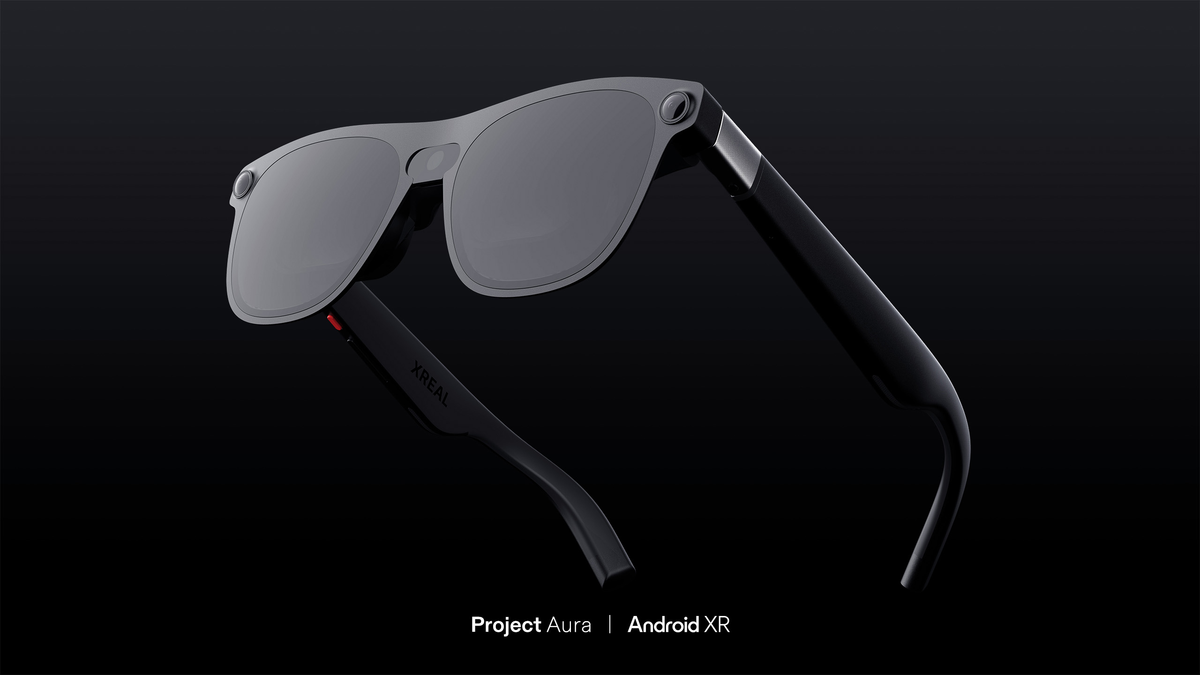
Xreal Project Aura Supports Android XR Via Tethered Puck
Xreal’s Project Aura will support Google’s Android XR via a tethered compute puck with a Qualcomm Snapdragon chip.
UploadVRDavid Heaney

At AWE I was also able to try an early prototype of a roughly 70° diagonal system that Viture hopes to ship next year. I've long been a critic of the field of view of display glasses, pointing out that the marketing claims of "massive" virtual displays were misleading, but what I saw crossed a threshold where I can see these devices becoming a vital part of our industry.

That 70° figure matches what Xreal is teasing for its Project Aura glasses, set to arrive next year with a tethered compute puck running Google's Android XR. While Viture has its own Viture Pro Neckband compute unit, it doesn't currently have any announced plans for Android XR, though I'd be shocked if the company wasn't in talks with Google already.

21 Jul 21:42

Microsoft n'employera plus d'ingénieurs chinois pour le ministère de la Défense US

Microsoft pensait sans doute garder l'information discrète, mais un article de ProPublica, un site d'investigation, a fini par le mettre (...)
21 Jul 21:40

Actualité : Vers Mars et au-delà : un alliage révolutionnaire ouvre de nouvelles voies pour l'exploration spatiale

by Brice Haziza
Un nouveau matériau de type mémoire de forme vient d'être mis au point à base de cuivre. Conçu au Japon, il est capable de conserver ses propriétés physiques jusqu'à une température glaciale de -220 °C, ce qui semble très prometteur pour les voyages spatiaux.Présenté à la communauté scientifique, ce matériau peut par exemple libérer de l'énergie de t...
21 Jul 21:39

ChatGPT users send 2.5 billion prompts a day

by Amanda Silberling
ChatGPT receives 2.5 billion prompts from global users every day.
18 Jul 21:09

2025.29: What It Takes to Change the Web

by Ben Thompson
A drawing of Google and the Ad Supported Web
(Stratechery)

Welcome back to This Week in Stratechery!

As a reminder, each week, every Friday, we’re sending out this overview of content in the Stratechery bundle; highlighted links are free for everyone. Additionally, you have complete control over what we send to you. If you don’t want to receive This Week in Stratechery emails (there is no podcast), please uncheck the box in your delivery settings.

On that note, here were a few of our favorites this week.

  1. The Economic Future of the Web. One reason why I love writing is that it, more than any other medium, forces me to challenge and validate my initial reactions to a piece of news, and this week provided a perfect example. My initial reaction to Cloudflare’s Content Independence Day, when they blocked AI crawlers by default, was discomfort at the advantage this provided Google, along with the audacious exercise of power on Cloudflare’s part. When I thought about it more deeply, however, I realized that realizing vision I painted in May’s The Agentic Web and Original Sin would actually require audacious action like Cloudflare’s. Ben Thompson

  2. Greatest of All Talk in Las Vegas. One would think that basketball news slows down in the summer, but in fact, the news continues well into July, it just gets much nerdier. NBA Summer League is the epicenter of the nerdery, and Greatest of All Talk has been on the scene in Las Vegas for the past week. For those interested in a scouting report of number one pick Cooper Flagg, Ben Golliver and I spent 45 minutes talking through his performance on an episode Sunday. As for everything elsespeculation surrounding LeBron’s future, whether the league will expand to Las Vegas and Seattle, misgivings with the current CBA among NBA players, and a mid-summer league “Chesstival” hosted by Magnus Carlsen and Derrick Rose (I told you it was nerdy)Ben and I covered the scene from top to bottom on two more episodes later in week. Whether you come for Cooper Flagg or chess, GOAT is a great listen for the weekend.  Andrew Sharp

  3. How We Cool Computers. Since the dawn of computing, engineers have been struggling to keep computers from overheating. This week’s episode of Asianometry traces that history, beginning with an era of vacuum tubes that were literally cooled with air conditioning, and arriving at the Gen AI era, when Nvidia’s H100 and B200 accelerators now emit 700 to 1,000 watts of heat apiece and companies all over the world are experimenting with hybrid methods to cool chips. Altogether the episode was a great look at the history underlying a challenge that most people never think about, and one that will be central to the future of AI infrastructure, energy costs, and the tension between performance and efficiency that has defined computing from the beginning. Check out the YouTube video here, or if you’re on the move this weekend, all Stratechery subscribers can listen to the episode as a podcast. AS

Stratechery Articles and Updates

Dithering with Ben Thompson and Daring Fireball’s John Gruber

Asianometry with Jon Yu

Sharp China with Andrew Sharp and Sinocism’s Bill Bishop

Greatest of All Talk with Andrew Sharp and WaPo’s Ben Golliver

Sharp Tech with Andrew Sharp and Ben Thompson

This week’s Stratechery video is on Tech Philosophy and AI Opportunity.

18 Jul 20:14

Actualité : La France ne contrôle plus ses données : Microsoft les remettra aux États-Unis “si nous y sommes contraints”

by Aymeric Geoffre-Rouland
Le 10 juin 2025, la commission d’enquête sénatoriale sur la commande publique a reçu Microsoft France pour une audition très attendue. Ce qui s’y est dit n’a laissé aucune place à l’ambiguïté : le droit américain s’impose, même lorsque les données sont hébergées à Paris ou Marseille. Et l’aveu n’est pas venu d’un militant ou d’un expert extérieur, ma...
18 Jul 20:12

Looking Back in Time: The Speed of Light and the Night Sky

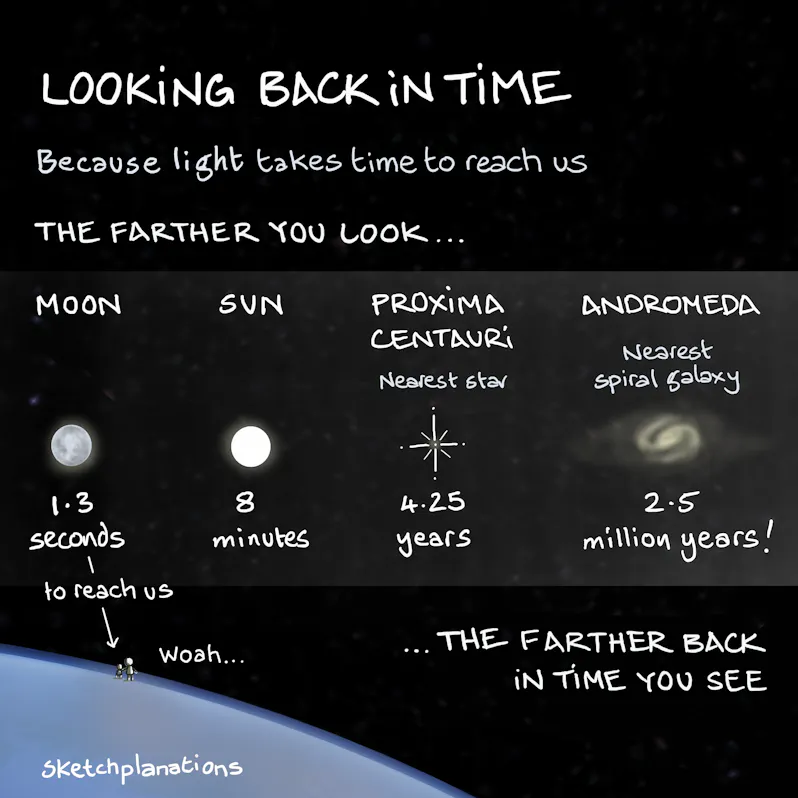
The speed of light is a mighty ~300,000 km/s. But even at that speed, because the distances in space are so vast, sometimes it has to settle in for the ride. When we see the light from a distant star or galaxy, we're not seeing it as it is now—we're seeing it as it was when the light first left on its journey to Earth.

Why Looking at Stars Is Like Looking into the Past

When you hear a thunderclap after seeing lightning, you know that you're hearing something that happened some time ago. Looking into the night sky is similar—except here, it's light that causes the delay, not sound.

Take the moon, for instance. At a little under 400,000 km away, light that has reflected off the moon takes around 1.3 seconds to reach us.

But the sun is much further. At around 150 million km away, it takes a little over 8 minutes for light from the sun to reach us. So what we are seeing at the sun, for example, a solar flare, happened 8 minutes ago. (The distance from the sun to Earth is called 1 AU - Astronomical Unit).

As soon as you look at more distant objects, you realise that looking up at the night sky is looking way back in time. To measure these distances, we use light years—the distance light travels in one year. So, the number of light years an object is away from us is how far back in time we are seeing.

Our nearest star system is Proxima Centauri at around 4.24 light-years away. What we see on Proxima Centauri happened over four years ago.

Here are a few stars you can spot at night (in the northern hemisphere) and how long ago the light from each started its journey:

  • Polaris (the North Star): 433 years ago, around 1590 AD
  • Pleiades (Seven Sisters): 444 years ago, around 1580 AD
  • Betelgeuse: 548 years ago, around 1480 AD

Put another way, if you were in Betelgeuse right now, you’d be looking at light from our sun around the time Leonardo da Vinci was pioneering sketchplanations.

The Andromeda Galaxy, the nearest spiral galaxy to our Milky Way, is a staggering 2.5 million light-years away. This means the light we see from Andromeda today set off on its journey 2.5 million years ago — around the beginning of the Pleistocene, the most recent ice age era, when early mammoths and sabre-toothed cats were emerging.

Seeing the Early Universe

As we look with increasingly larger telescopes at more distant objects, scientists gather clues about the Universe's earliest days. The farther we look, the farther back in time we see. In 2024, the James Webb telescope detected a galaxy so far away that the light we see started travelling when the Universe was just 2% of its current age.

So, as you look up in the sky, it's also like looking at a map of different times. Crazy.

Related Ideas to Looking Back in Time

18 Jul 07:12

Samsung’s Odyssey 3D monitor delivers great visuals, limited game support

by Kyle Orland
Specs at a glance: Samsung Odyssey 3D
Panel size 27 inches
Resolution 3840×2160 (stereoscopic 3D compatible)
Refresh rate 165 Hz
Panel type and backlight IPS, W-LED
Ports 1x USB-B upstream, 1x USB-A downstream, 2x HDMI 2.1, 1x DisplayPort 1.4
Size 24.2 x 21.3 x 8.0 inches w/ stand
(614.7 × 541 × 203.2 mm)
Weight 16.5 lbs
(7.48 kg) w/ stand; 10.4 lbs (4.72 kg) w/out stand
Warranty  1 year
Price (MSRP)  $1,999


Gamers of a certain age will remember a period roughly 15 years ago when the industry collectively decided stereoscopic 3D was going to be the next big thing in gaming. From Nvidia's "3D Vision" glasses system to Nintendo's glasses-free 3DS to Sony's 3D TV aimed specifically at gamers, major gaming companies put a lot of effort into bringing a sense of real depth to the flat video game scenes of the day.

Unfortunately for those companies, the stereoscopic 3D gaming hype faded almost as quickly as it rose; by 2012, most companies were scaling back their stereoscopic investments in light of underwhelming public demand (case in point: Nintendo's pivot to the 3D-free 2DS line of portables). And while some stray upstarts have tried to revive the stereoscopic gaming dream in the years since, the idea seemed destined to be a footnote in gaming tech history.

Read full article

Comments

17 Jul 20:38

Airbus prépare l’A400M à devenir le « vaisseau mère » des drones de combat

by Amine Baba Aissa

L’Airbus A400M, connu depuis ses débuts comme une référence mondiale du transport militaire, s’apprête à endosser de nouveaux rôles. Parmi eux ? Celui de « vaisseau mère » pour les drones de combat.

17 Jul 20:37

OpenAI launches a general purpose agent in ChatGPT

by Maxwell Zeff
OpenAI announced the launch of ChatGPT agent, which the company claims to be its most capable AI agent product yet.
17 Jul 20:36

Uber invests $300 mn in Lucid Motors in robotaxi push

Ride-hailing giant Uber announced Thursday it will acquire $300 million worth of shares in US electric vehicle maker Lucid Motors as part of an ambitious plan to build its own fleet of robotaxis.
17 Jul 20:35

Le télescope Webb découvre la « galaxie de l’infini », clé pour percer le mystère des trous noirs

by Morgan Fromentin
Le télescope Webb découvre la « galaxie de l’infini », clé pour percer le mystère des trous noirs
Le télescope spatial James Webb a récemment observé une galaxie lointaine surnommée « Infinity Galaxy ». Cette découverte offre de précieuses informations sur les premiers stades de formation des trous noirs dans l’Univers primitif.
17 Jul 16:24

mRNA Research by IBM, Moderna Shows Quantum’s Present-Day Uses

by Nat Rubio-Licht

The timeline for scaling quantum might be murky, but the tech is being put to use in the here and now. 

IBM and Moderna released research on Thursday advancing the use of quantum computing in the development of mRNA medicines, a rapidly growing field that was used in the development of the Covid-19 vaccine. The research uses both classical computing and quantum computing methods to tackle increasingly complex problems. 

Quantum computing was used to complement and extend the capabilities of classical algorithms in identifying “biological mechanisms involved in a disease” as a means of developing mRNA medicines, according to the report. That involved “mapping” the astronomical number of ways that mRNA proteins can fold, Sarah Sheldon, senior manager of applied quantum science at IBM, told CIO Upside. 

“While they have very good solutions for this today with classical computers, it’s something that gets harder and harder as you look at more complex problems,” Sheldon said. “As this mRNA sequence link gets longer, it gets exponentially harder.” 

The work, she said, plays well to quantum’s strength in optimization: 

  • In the context of medicine, this means that quantum can more rapidly tackle exponentially complex research in drug discovery. “We’re pushing the boundaries of the size of the problems we can look at with quantum,” said Sheldon.
  • And quantum is an “interdisciplinary field,” she added. The next step is figuring out how to translate these optimization and efficiency gains into other domains. The tech is a natural fit for things like chemistry, materials science and high-energy physics, she noted. 
  • “It’s really about finding the right problems for the algorithms that we have,” she said. 

There are still plenty of barriers to scaling this tech, including its sensitivity to environmental factors such as temperature and “noise” that can knock it out of the delicate superposition on which it depends. But as the tech develops at an increasingly fast rate with the attention of tech giants like Google, Amazon, Microsoft and IBM, the job now is to figure out how to best put it to use. 

“We work in parallel,” she said. “We always are trying to build bigger and better hardware, improving the quality as well as the size of our systems … And then, at the same time, we keep working on algorithm development.” 

The post mRNA Research by IBM, Moderna Shows Quantum’s Present-Day Uses appeared first on The Daily Upside.

17 Jul 16:24

Mistral’s Le Chat chatbot gets a productivity push with new ‘deep research’ mode

by Rebecca Bellan
French AI lab Mistral introduced a range of new features to its Le Chat chatbot on Thursday that bring it closer to the capabilities of rivals like OpenAI and Google. The new update includes a “deep research” mode, native multilingual reasoning, and advanced image editing. 
17 Jul 16:19

Bigscreen Beyond 2e Is Getting A VRChat Edition

by Henry Stockdale

Bigscreen Beyond 2e is getting a limited-time VRChat Edition with an 'Atomic Purple' shell.

Following recent news that Bigscreen Beyond 2 has started shipping to customers, Bigscreen announced that it's releasing a VRChat Edition inspired by “the nostalgia of iconic products from the 90s and 2000s.” Using a slightly translucent look that shows the circuitry underneath, Bigscreen states this shifts in color depending on your lighting and comes in a custom-designed box.

As seen in a new blog, Bigscreen revealed that anyone that purchases the VRChat Edition will receive access to exclusive digital items, stickers, and badges in VRChat. What these specific items are has not been confirmed, and the blog states more features are planned for the VRChat Edition “in the future.”

It's worth noting that the VRChat Edition is only for the Bigscreen Beyond 2e variant, which differs from the standard Beyond 2 by including built-in eye tracking support through tiny sensors. If you've already ordered the 2e model, Bigscreen states you can email support@bigscreenvr.com to switch to the VRChat Edition, though doing so “may affect your order ship date.”

While the standard Bigscreen Beyond 2e model starts at $1219, the VRChat Edition matches the price of the 2e 'Nuclear Orange' edition at $1269, and it's expected to ship by September 2025. This also includes the choice of either a custom-fit face pad or the Halo Mount, though choosing the latter means you'll currently be waiting until October for delivery.

This isn't the first time we've seen Bigscreen collaborating with VRChat. Last year saw it release a VRChat-themed storage can designed to look like an energy drink, which remains available to purchase. The interior includes a foam lining to protect it from scratches, though this is only intended for decorative headset storage for the original Bigscreen Beyond.

Bigscreen Beyond Gets a VRChat Themed Storage Can
Bigscreen Beyond is so small you can fit it inside this VRChat-themed storage can.
UploadVRHenry Stockdale

Much like the original Beyond, Bigscreen Beyond 2 and 2e are both tethered PC VR headsets that use SteamVR Tracking. This requires a capable PC alongside at least one (preferably two or more) tracking base stations from Valve or HTC. These headsets also require your own input device, such as Valve Index controllers.

You can find more details on the features and specifications of Beyond 2 and Beyond 2e here, as well as our hands-on impressions from GDC here.

Bigscreen Beyond 2 Hands-On: Refining A Vision For VR Enthusiasts
When Bigscreen’s founder told us he was bringing the sequel to the Beyond PC VR headset to GDC 2025, we booked a flight immediately to try it.
UploadVRIan Hamilton

17 Jul 16:18

Check out this article exploring the reasons behind the bingo gaming boom

by Staff Writer

The game of bingo has come a very long way from its origins as a lottery style game in 16th century Italy. It is now a form of entertainment enjoyed by millions of people around the world.

While the game was once confined to bingo halls and community centres, it has evolved greatly to become more accessible and attracts a much wider audience than it once did. In the digital age, bingo has thrived and experienced a significant boom thanks to digital advancements.

In this article, we explore the factors that have influenced the surge in bingo’s popularity and the vast range of options now available to players online.

What are the driving forces behind bingo's rise in popularity?

One reason that bingo has survived and thrived in the modern world is its ability to seamlessly transition into the online world. While players would once need to find the time to visit a local bingo venue in order to play, they can now log on to online bingo platforms and enjoy their favourite games from home. Online bingo has made the game even more accessible and convenient, enabling players to play at a time and location that best suits them.

In the last couple of decades there has been a steep rise in smartphone usage and most people now have access to high speed internet connections on their phones or tablets. This has helped to attract players that would not be interested in visiting a traditional venue.

Photo credit: Unsplash.

Digital bingo platforms offer players a wide variety of game choices

While traditional bingo halls mainly offer games of either 75 ball bingo or 90 ball bingo, online platforms are able to have a much more diverse game offering for their players.

Speed bingo is one type of game commonly played online. In this variant, the pace of the game is much quicker with names being called out at a much faster rate. This keeps players engaged in quick rounds.

Lots of online bingo games have fun themes to help make the experience even more enjoyable. You can find games that are themed around popular television shows, movie characters, seasons and many other interesting categories.

There is also jackpot bingo that can give players the chance of winning some big prizes. Progressive jackpots are one style of game, in these games the prize fund continues to grow with bets until there is a winner and then it resets to a predetermined value.

While traditional bingo is considered a social occasion, online platforms have worked hard to be able to replicate the social element of the game. In social online bingo, you can feel part of a community with integrated chat rooms that allow players to chat with other players throughout game play.

Having a diverse range of bingo game offerings online ensures that there are games to suit all interests and ability levels. New games are released on a very regular basis, ensuring that there is always something new to try.

The social element of bingo is central to the game

Live chat rooms are not the only way that online bingo players can socialise and celebrate their wins together. Some platforms also host virtual events, special promotions and loyalty programs which help to add to the sense of camaraderie. The ability to engage with other players adds to the experience, making it more enjoyable and sociable overall.

Other reasons online bingo is growing in popularity

Aside from the convenience and game choice available online, internet bingo players are noticing the quality of gaming online has improved in recent years. For example, bingo platforms are becoming more mobile friendly and have user friendly interfaces that help to ensure seamless gameplay.

Mobile bingo platforms all offer players generous welcome bonus offers and loyalty programs. The industry is very competitive for game providers. These deals help to attract new players and encourage them to return to the site to play more games in future. Offers can include deposit bonuses, free bingo tickets and access to exclusive games and deals.

What can we expect from the future of bingo gaming?

As technology continues to evolve at a rapid pace, we can expect bingo platforms to continue to utilise technology to enhance their games and provide new experiences to players.

One technology that is likely to be explored in the bingo space is virtual reality (VR). This will create immersive bingo experiences where players can play and interact with one another as if they were in a real bingo hall through VR headsets.

Artificial intelligence or AI is already being used by bingo providers, as it continues to advance we can expect more personalised experiences and enhanced chat interactions. These technological advancements are likely to attract even more new players to the bingo world.

17 Jul 16:18

Peter Piper Pizza teams with SoundHound for roll-out of voice AI powered phone ordering platform

by Staff Writer

SoundHound AI and Peter Piper Pizza, a fast food and family entertainment specialist, have announced a collaboration that allows guests to place phone orders for pick-up through a conversational voice AI agent.

The new system understands natural speech and is trained on Peter Piper Pizza’s full menu.

Now live across all of its locations in Arizona and Albuquerque, NM, the platform ensures that every phone call is answered no matter how busy the restaurant is. The voice AI agent handles multiple calls simultaneously, freeing up in-store teams to focus on preparing food and customer service.

“With families juggling busy schedules, convenience is key - but so is great food,” says Genaro Perez, Chief Marketing Officer at Peter Piper Pizza. “This new AI powered voice ordering experience gives our guests a fast, reliable way to place orders over the phone just by speaking naturally. Whether it's our made from scratch pizzas, bold flavoured wings, sweet treats or fan favourite Piper deals, this innovation makes it easier than ever to get the food they love, without the wait.”

“Peter Piper Pizza has implemented innovative AI agent technology that puts convenience and speed at the centre of every guest interaction,” says James Hom, Chief Product Officer at SoundHound AI. “We’re proud to partner with them to bring a smarter, faster ordering experience to their customers.”

RTIH AI in Retail Awards

RTIH, organiser of the industry leading RTIH Innovation Awards, proudly brings you the first edition of the RTIH AI in Retail Awards, which is now open for entries. 

As we witness a digital transformation revolution across all channels, AI tools are reshaping the omnichannel game, from personalising customer experiences to optimising inventory, uncovering insights into consumer behaviour, and enhancing the human element of retailers' businesses.

With 2025 set to be the year when AI and especially gen AI shake off the ‘heavily hyped’ tag and become embedded in retail business processes, our newly launched awards celebrate global technology innovation in a fast moving omnichannel world and the resulting benefits for retailers, shoppers and employees.

Our 2025 winners will be those companies who not only recognise the potential of AI, but also make it usable in everyday work - resulting in more efficiency and innovation in all areas.

Winners will be announced at an evening event at The Barbican in Central London on Wednesday, 3rd September.

17 Jul 16:02

CamThink NeoEyes NE101 – A low-power, modular ESP32-S3 Vision AI Camera with optional 4G LTE and WiFi HaLow connectivity

by Jean-Luc Aufranc (CNXSoft)
CamThink NeoEyes NE101

CamThink NeoEyes NE101 is a battery-powered, low-power Vision AI Camera powered by an ESP32-S3 wireless module, featuring event-triggered image capture, and suitable for real-time vision control.

By default, the camera supports WiFi 4 and Bluetooth 5.0 connectivity, and ships with a 5MP OV5640 camera module with an LED flash. However, the ESP32-S3 camera has a modular design, and it is offered with 4G LTE Cat 1 or WiFi HaLow connectivity, supports replaceable lenses, optional housing, and custom mounting options.

CamThink NeoEyes NE101

CamThink NeoEyes NE101 specifications:

  • Wireless Module – ESP32-S3-WROOM-1
    • MCU – ESP32-S3 dual-core Tensilica LX7 up to 240 MHz with 512KB SRAM, up to 8MB PSRAM
    • Storage – 16MB flash
    • Wireless – WiFi 4 and Bluetooth LE 5
    • PCB antenna
  • Optional wireless features
    • NE101-L01GL – LTE Cat 1 with global support
    • NE101-HL00 – WiFi HaLow 868 MHz
    • NE101-HL01 – WiFi HaLow 915 MHz
  • Storage – MicroSD card slot
  • Camera
    • FPC camera connector – By default fitted with OV5640 module with 120°/60° FOV and near/far focus options available
    • 4-pin USB camera connector
    • LED fill light
  • USB – 1x USB Type-C port for power and UART
  • Expansion
    • 1x UART connector
    • 16-pin female header with I2C, SPI, GPIO
  • Misc
    • Snap button

    • Boot and Reset buttons
    • Alarm input connector
    • PIR input connector
    • Synchronization: hardware trigger, software trigger, or free-run
  • Power Supply
    • 5V via USB-C port for charging
    • 4x AA batteries
    • Consumption – <= 1W (standby mode); note: the company claims up to two years on a battery charge, which seems unlikely…


  • Dimensions – 77 x 77 x 48mm (plastic housing)
  • Temperature Range – -20°C – +50°C
  • Certifications – CE, FCC, RoHS
NE100-CM01 board
NE100-CM01 board

ESP32-S3 Camera Board PIR and Alarm Inputs

CamThink provides the structural design files for DIY housing (3D printable) or customized extensions, as well as open-source firmware for the camera. This allows for the design of wall, desk, and pole mounts, and the user can customize the firmware with low-power modes, device wake-up, MQTT data transmission, fill-light control, scheduled shooting, image parameter adjustment, and network management.

A web interface running on the camera is used to configure all parameters, such as WiFi or LTE Cat 1 settings, image parameters, capture settings, MQTT configuration, and more.The wiki has more details, and you’ll also find the source code on GitHub.

Modular ESP32-S3 Vision AI camera
A modular design

CamThink ESP32-S3 Vision AI Camera with AA batteries 4G LTE module

The camera can be used in industrial settings, for instance, for predictive maintenance or machine inspection, as well as in Smart Agriculture applications to monitor crop growth or livestock. We’ve covered many ESP32-S3 camera solutions over the years, but most of those are boards to be integrated into custom enclosures, with a few exceptions like the M5Stack ATOMS3R Cam, NORVI AI Optic, and LILYGO T-Camera S3 (when ordered with its case). The NeoEyes NE101 may be the most advanced ESP32-S3 camera we’ve covered so far with a complete design and modularity allowing camera swapping, as well as 4G LTE Cat 1 and WiFi HaLow connectivity.

CamThink is a new company, and the NeoEyes NE101 AI camera is one of its first products, launched along with the NeoEdge NG4500 Jetson Orin NX/Nano Edge AI box. The ESP32-S3-based Vision AI camera is sold for $69.90 to $112.00 depending on selected wireless connectivity options. The product page may also have a few more details.

The post CamThink NeoEyes NE101 – A low-power, modular ESP32-S3 Vision AI Camera with optional 4G LTE and WiFi HaLow connectivity appeared first on CNX Software - Embedded Systems News.

17 Jul 16:01

L’IA pour détecter les schémas narratifs de la désinformation

by Sivagami Casimir
  • Détecter les patterns de la désinformation avec l’IA, c’est l’objet du projet européen Prompt. Un consortium mené par Opsci AI s’est entouré de l’équipe de Wikimédia France pour tester ses outils auprès de la communauté de Wikipédia.

    couv_-_fake_news.jpgenlightenedCET ARTICLE A INITIALEMENT ÉTÉ PUBLIÉ DANS ARCHIMAG N°386

    Au sommaire : 

    [...] Lire la suite de cet article sur Archimag.com
  • 16 Jul 21:35

    Astronomer Says the Object Approaching Us From Beyond the Solar System Is Not What We Think

    by Victor Tangermann
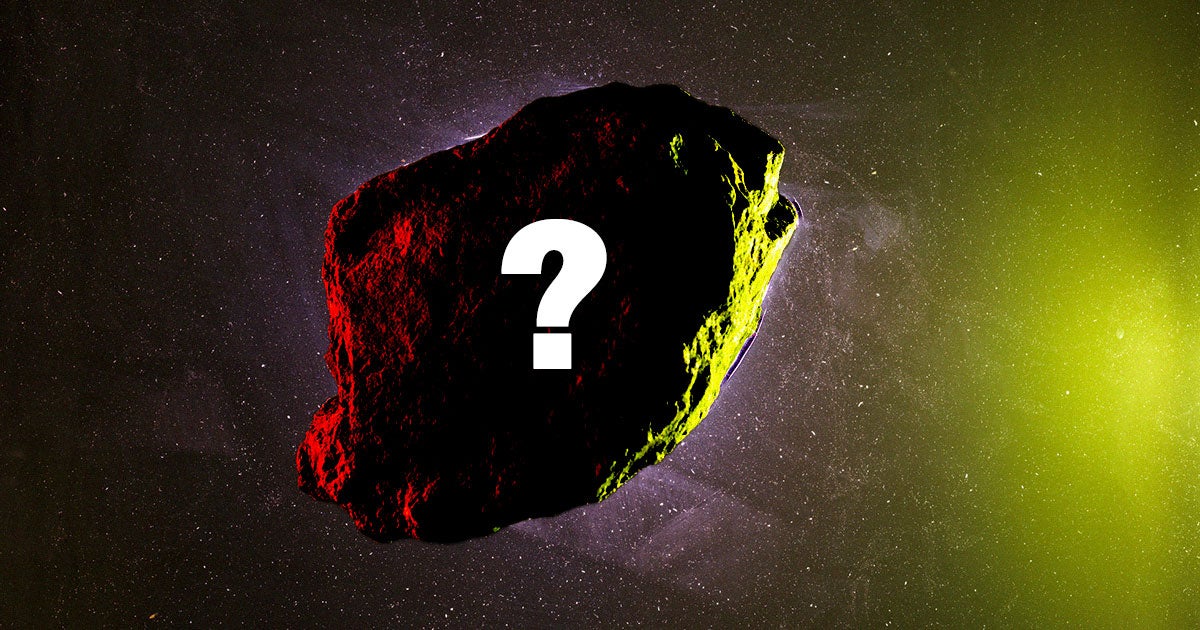
    Harvard astronomer Avi Loeb suggests that if interstellar object 3I/ATLAS isn't a comet, nor an asteroid, it may have been "sent" to us.

    Earlier this month, astronomers were thrilled to spot an interstellar object — only the third of its kind ever observed — hurtling toward the center of the solar system on an extremely unusual trajectory and at a breakneck velocity.

    While we're only beginning to understand the unusual object, dubbed 3I/ATLAS, the discovery led to widespread speculation, with some scientists suggesting that it may be almost as old as the Milky Way galaxy itself, and billions of years older than our own Sun.

    Unsurprisingly, Harvard astronomer Avi Loeb — who has extensively written about 'Oumuamua, the second interstellar object ever discovered, notably hypothesizing that it might have been a relic from an extraterrestrial civilization — has now waded into the discussion.

    In a blog post on Medium, he argued that it will take more observations to conclude the nature of 3I/ATLAS, which is likely either a comet or asteroid. However, Loeb didn't rule out the "tantalizing possibility" that it was "sent towards the inner solar system by design" — a conclusion that's already proved controversial.

    Loeb chided the editors of Wikipedia and the scientific journal RNAAS for striking the hypothesis from his contributions, showing once again that his theories about extraterrestrial probes visiting our solar system remain as contentious as ever.

    The astronomer has remained steadfast in his belief that 'Oumuamua, an interstellar object first observed in 2017, may have been sent to us by an alien civilization, garnering him enormous attention in the media. He has even gone on to hunt for pieces of what he claims may be an alien spacecraft, based on detections of a three-foot, interstellar meteor crash-landing near Papua New Guinea in early 2014, by combing the ocean floor with a modified ship.

    In other words, his latest comments about 3I/ATLAS are very much in line with what we'd expect from him.

    In his blog post, Loeb announced that he had authored a new paper about 3I/ATLAS' unusual size. Based on its "anomalously bright" nature, the astronomer concluded that the object was roughly 12.4 miles in diameter.

    That would make it considerably larger than 'Oumuamua, which only measured anywhere from 330 to 1,300 feet long.

    However, those calculations raise more questions than answers.

    The interstellar object's ' "size estimate makes little sense for an interstellar asteroid because the interstellar object 1I/'Oumuamua was 200 times smaller, and based on the statistics of asteroids in the Solar system, we should have discovered a million objects of the scale of 1I/'Oumuamua before spotting one interstellar object that is [roughly 12.4 miles] in diameter," Loeb wrote.

    "We know that [12.4-mile] asteroids are rare, because non-avian dinosaurs were killed by an asteroid half that size 66 million ago, whereas meter-scale asteroids impact the Earth every year," he added.

    However, subsequent observations forced Loeb back to the drawing board. Given the lack of "spectral fingerprints of atomic or molecular gas," 3I/ATLAS likely isn't a comet, as Loeb had initially suggested.

    "If 3I/ATLAS is not an asteroid — based on the interstellar reservoir argument in my paper, nor a comet — based on the lack of the spectral fingerprints of carbon-based molecules around it, then what is it?" Loeb asked rhetorically, highlighting his "by design" theory.

    Fortunately, there's still time for the scientific community to get a closer look.

    "The size anomaly of 3I/ATLAS will be easily clarified by upcoming data," Loeb wrote. As it "gets closer to the Sun, it will get brighter. If it is a solid object without a cometary plume of gas or dust around it, then its brightness will increase inversely with the square of the decreasing distance from the Sun times the square of the distance from Earth."

    "The simplest hypothesis is that 3I/ATLAS is a comet and we are missing the spectral features of its gaseous coma because of its large distance from Earth," he added.

    But without any observed cometary tail, Loeb suggests there's a chance we could be looking at evidence of an extraterrestrial visitor.

    "Let us instead maintain our childhood curiosity and seek evidence rather than pretend to be the adults in the room that know the answers in advance," he concluded."Science does not need to feel like a lecture in a classroom, summarizing past knowledge. It could be far more exciting if the teachers would be willing to learn something new!"

    More on 3I/ATLAS: The Interstellar Visitor Hurtling Toward the Center of Our Star System Is Unimaginably Ancient, Scientists Say

    The post Astronomer Says the Object Approaching Us From Beyond the Solar System Is Not What We Think appeared first on Futurism.

    16 Jul 21:33

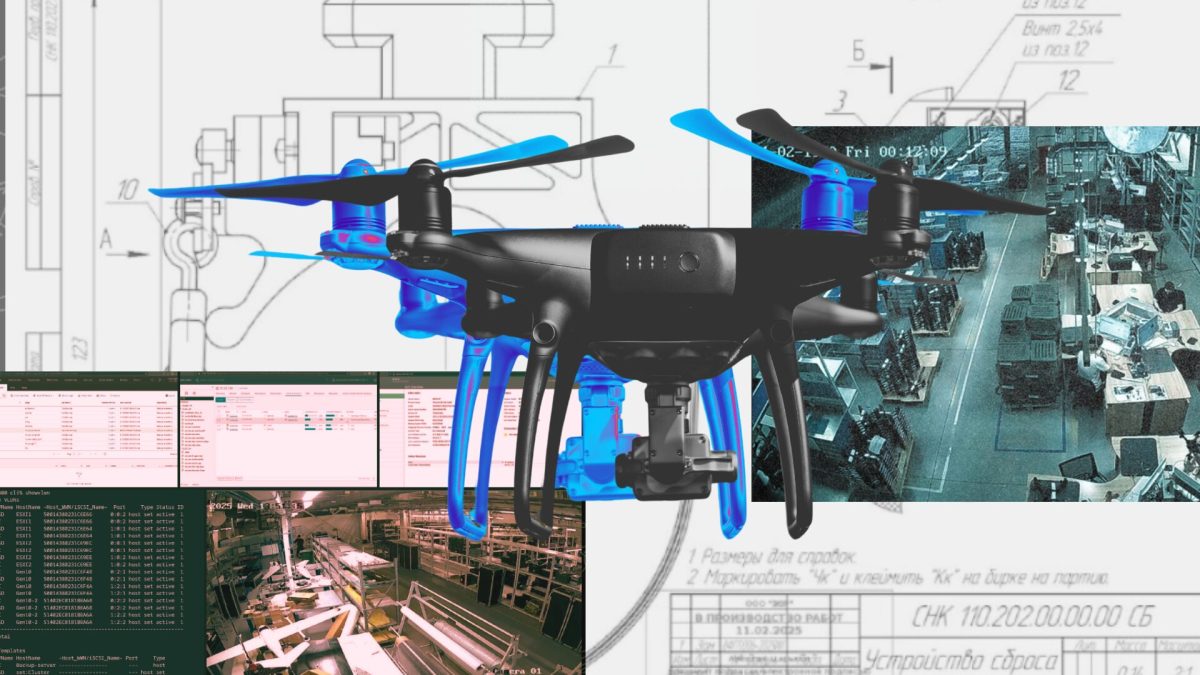
    « Des milliers de drones n’arriveront pas au front » : des hackers ukrainiens auraient volé les plans d’un fabricant russe

    by Amine Baba Aissa

    Les services de renseignement ukrainiens et des groupes de hackers alliés déclarent avoir mené une cyberattaque d'envergure contre l’un des principaux fabricants russes de drones militaires. Près de 50 téraoctets de données auraient été dérobés, notamment les plans de modèles de drones militaires en cours de développement.

    16 Jul 21:05

    Mini Car Racing Game Really Shows Off Multicolor Printing

    by Donald Papp

    Quality 3D printing is a common hobbyist tool nowadays, and [wontonnn]’s mini arcade car racing game really shows off how 3D printing can bring parts from functional to fantastic. There are quite a few details we like in [wontonn]’s design, so let’s take a closer look.

    The mini mechanical game is one of those treadmill-based car racing games in which the player navigates a little car between an onslaught of belt-borne obstacles. A little DC motor spins things up in a modular side assembly, and a hand-cranked option is available. The player’s car attaches via a magnet to a steering arm; if the player’s car gets knocked off the magnet, game over.

    Treadmill belt segments print as large pre-assembled pieces, with ends that snap together without connectors. Belts like this are sometimes tricky, so this is worth keeping in mind should one ever need a similar part. Since there are no external fasteners or hardware to depend on, one could resize it easily to suit their own project purposes.

    The finishing touches on the whole assembly look great. It used to be that the sort of colors and lettering seen here would come from a sticker or label, but [wontonn] gets clean lines and colors by raising (or sinking) different parts of the design. The checkerboard pattern, for example, has the light squares raised for printing in a different color.

    Electromechanical arcade games have an appeal all their own, being a fusion of both mechanical and electric design that comes together in a special way. Want to make your own? Get inspired by the classic Lunar Lander reimagined, or check out this LEGO treadmill racer that takes an entirely different approach to the concept.

    15 Jul 20:08

    Le paradoxe de l'innovation selon Celent

    by Patrice
    Celent
    Colin Kerr, analyste pour Celent, évoquait récemment dans un bref article l'étrange contradiction qui prend l'innovation en étau dans la banque de gros et je suis convaincu qu'elle affecte l'ensemble des institutions financières (voire toutes les entreprises). Les solutions qu'il envisage sont-elles suffisantes pour en réduire les effets néfastes ?

    Les enquêtes du cabinet rejoignent mes observations (ponctuelles) sur le terrain : quand les firmes déclarent que leur principale motivation de dépenses en technologie réside dans des initiatives de croissance – qu'elles correspondent à des programmes de transformation, de développement de nouveaux produits, d'amélioration de l'expérience client… ou d'innovation (terme devenu tabou) –, elles révèlent simultanément que les contraintes de ressources (budgétaires et humaines) constituent le premier obstacle.

    Dans un sens, cette dernière observation n'est pas une surprise. D'un côté, le maintien en fonctionnement des systèmes existants représente un coût considérable, qui ne fait que croître avec l'ajout permanent de composants supplémentaires, tout comme la prise en compte des obligations réglementaires (qui sont toujours une cible facile, ceci dit). De l'autre, les exigences de vitesse et d'agilité des nouveaux projets sont handicapées par la complexité de l'architecture informatique en place, impactant leur prix de revient.

    Celent – The Banking Innovation Paradox

    Le résultat est une situation qui devient alarmante. Les investissements dans les technologies continuent à progresser à un rythme élevé mais l'essentiel de l'augmentation est absorbé par les opérations courantes, les efforts de modernisation et de transformation ne recevant que la portion congrue. Et, naturellement, la tendance est une spirale infernale : en continuant à accumuler des actifs historiques dans leurs centres de production, les banques ont de moins en moins de capital à libérer pour le changement, pourtant indispensable face aux évolutions du monde et des clients.

    En réponse, Celent propose quelques solutions tactiques, telles que le recours aux outils de développement sans code, aux plates-formes d'IA générative, aux logiciels fournis par les jeunes pousses de la FinTech…, dont l'optimisation de la productivité qu'elles promettent devrait contribuer à réduire la pression financière. Mais prudence ! Ces options, séduisantes au premier abord, risquent également de creuser plus profondément la dette technique des entreprises et ainsi alimenter le cercle vicieux du budget ne disposant plus d'aucune réserve pour des innovations stratégiques.
    15 Jul 19:37

    Prophecy Dice Pocket Watch Dice Spinner

    by staff

    Summon fate with the Prophecy Dice Pocket Watch Spinner – seven RPG dice hidden in a sleek, gear-driven metal device. Push the button, watch it spin, and let destiny decide. It’s part watch, part dice, all drama. Because rolling should feel epic.

    Check it out

    $69.00

    15 Jul 19:36

    What's JavaScript?

    by Justin

    The TL;DR

    JavaScript is the most popular programming language in the world.

    • Programming languages are how you actually write code that a computer can understand

    • There are hundreds of languages, each with its own style, philosophy, and quirks

    • JavaScript started as a language for adding animations and interactivity to websites

    • …but eventually expanded to doing a lot, lot more

    Via its humble origins in making quirky websites in the 90s, JavaScript is now the most dominant programming language on the planet. So how did we get here?

    Technically is a reader-supported publication. To receive new posts and support my work, consider becoming a free or paid subscriber.

    The basics of web pages: HTML, CSS, and JavaScript

    JavaScript was created back in 1995 as a language to add interactivity into web browsers. And if you would have asked a developer what it’s for prior to 2008, they’d probably give you a spiel like this.

    JavaScript basics

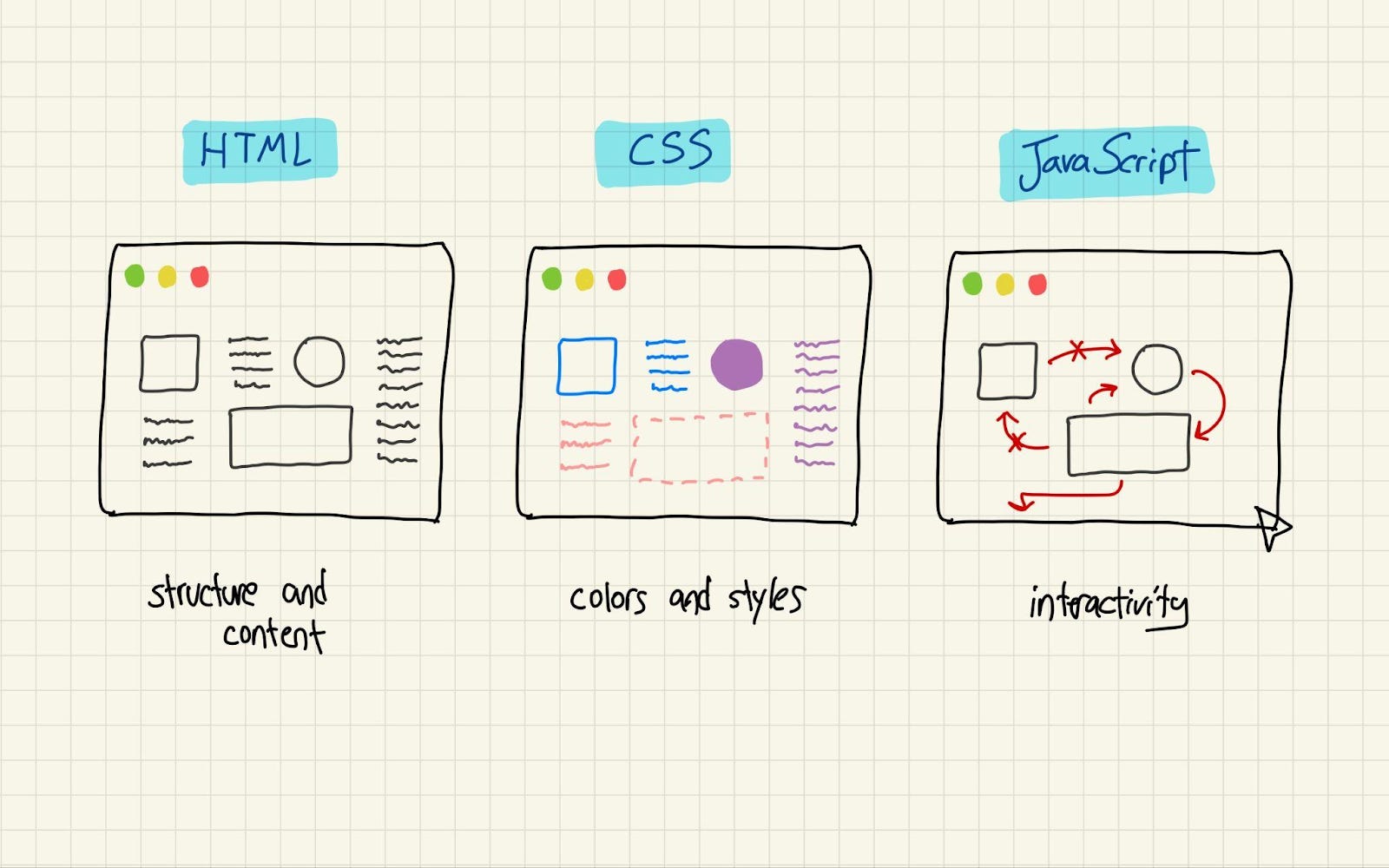
    Every URL that you load in your browser is made up of 3 things: HTML, CSS, and JavaScript.

    HTML is all about order, shapes, and text – the structural elements of the webpage. HTML can’t pick what color your button is (you need CSS for this), or tell it to slowly fade out when someone hovers over it (you need CSS or JS for this). It’s like the architectural blueprint for the web page. It’s the starting point: you figure out how you want your page to be structured, then you worry about how it looks and how users interact with it.

    The way I like to think about the relationship between HTML, CSS, and JavaScript is sort of like building a house, for those fabricators among us.

    • The HTML is the structural elements of the house. The foundation, the floors, the walls. All the stuff that gets built first.

    • The CSS is the aesthetic elements of the house. The paint on the wall, the moldings, the type of siding and roof shingles. All the stuff that goes on top of the structural elements.

    • The JavaScript is the interactive elements of the house. The doors that open, the plumbing, the electrical, the window shades that go up and down. All the stuff that you use.

    So what would you actually do on a web page with JavaScript? One classic example is handling form data. If you’ve ever filled out a form on a website, there’s probably some JavaScript behind the scenes taking the information you filled out and making sure it gets sent to a database somewhere.

    But you also might use JS for something a little more fun, like animations, building interactive charts, or even something as simple as changing the color of a button once someone hovers over it.

    JavaScript frontend libraries

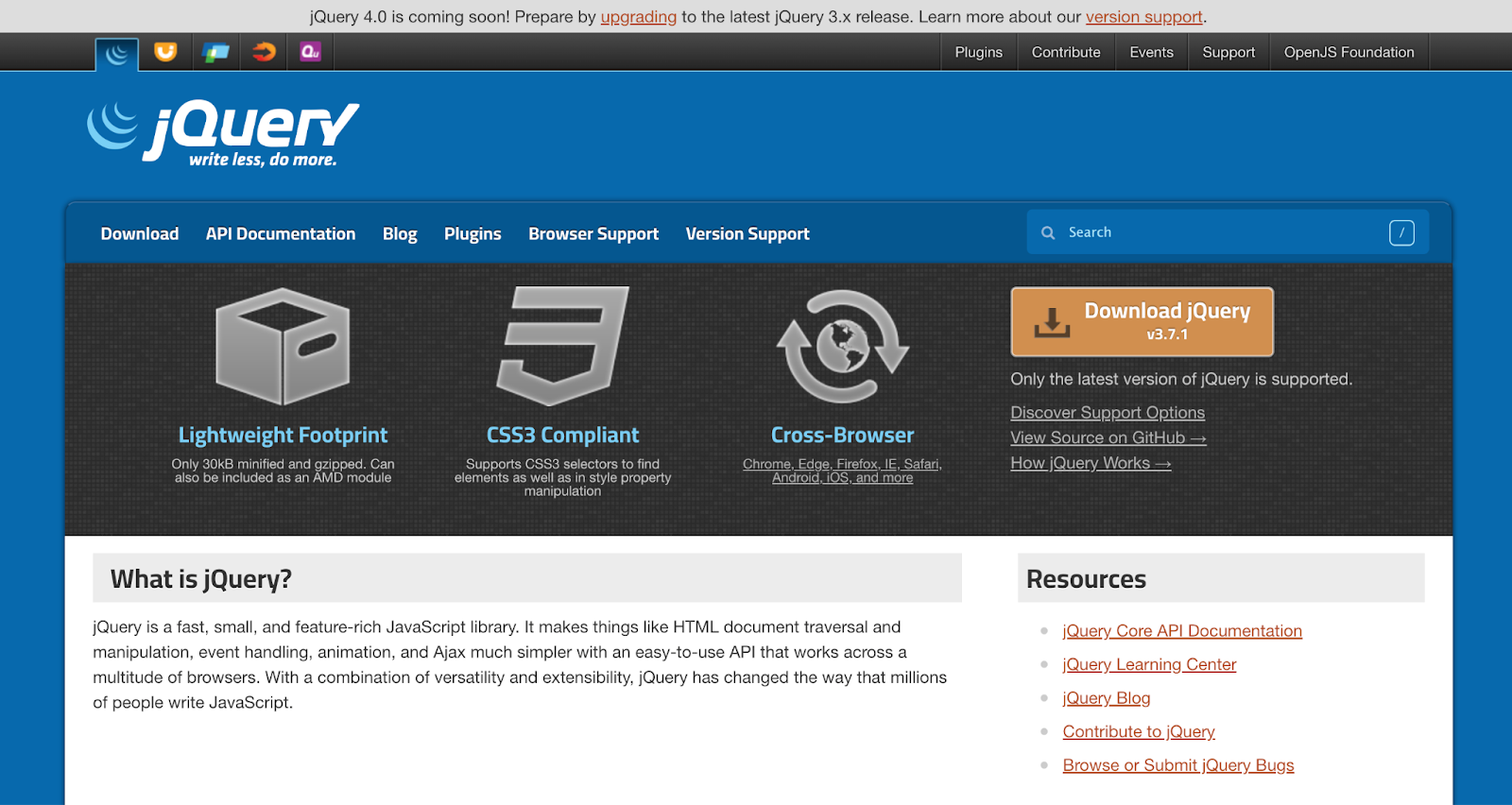
    There were (and still are) dedicated libraries in JavaScript for working with the browser. They make it easier to do things like change styling on the fly, move elements around the screen, and load scripts and data from external sources. One of the most popular was JQuery, which is less common today but still kicking.

    (You can tell by the vibe when this was popular)

    A while down the road, we’d get React. It put JavaScript at the forefront of web dev, arguing that you should build your entire webpage in JS instead of just the interactivity. They even built a new extension to JavaScript (JSX) that lets you write HTML inside of it.

    Suffice it to say that by the mid-2000s, JavaScript was pretty popular. But all of this that you see was restricted to the frontend. JavaScript physically couldn’t run on a server – the language wasn’t built for that. Server code was the purview of more “serious” languages like Java, C++, or if you’re more open minded, Python. JS, though, was something relegated to the 4 walls of the browser.

    🤔 Confusion Alert

    The Java language and the JavaScript language have no relation to each other. The languages themselves and their mechanics bear little resemblance, but (unfortunately) sound quite similar, a curious fact that has confused new engineers for decades.

    JavaScript on the backend via V8

    Everything changed when Google released the V8 project back in 2008 alongside the shiny new Chrome browser. V8 is the engine that powers Chrome, and it was (from what I can tell) the fastest JS engine at the time. And though it wasn’t the first JS engine out there, it was the best, and people quickly realized that you could do more with it than just run JS in the browser.

    Some of those people created Node.js, which (you may have heard of and) today powers many, many, many of your favorite websites. Node takes the V8 engine and uses it outside the browser to run and interpret JavaScript. When it came out a year after V8 was released in 2009, it was a huge deal. Now your whole app can be in Javascript, from your frontend to your server code on the backend.

    You might be wondering what an engine is. The easiest way to think about it is to think of you (a developer) and your computer (or server) as speaking different languages. You speak Spanish, and your computer speaks English. How are you two going to communicate?

    Simple. You write down what you want the computer to do in the language you know, which is Spanish. And then the computer has a language dictionary, translating what the Spanish writing means in its mother tongue.

    This is exactly what a JavaScript engine does. You speak in higher level programming languages like JS, but your computer only speaks the lower level, scarcely-understood machine code. Engines like V8 translate your code into something a machine can understand, and then direct the machine to actually run the code.

    TypeScript

    JavaScript everywhere is awesome, but the JS language is not without its tradeoffs. Like Python, JS is an interpreted language, which means that it needs an extra layer between it and the machine to do some translation. Interpreted languages usually are easier to write (they look almost like English), and don’t require developers to think about lower level things like how much memory the code is using.

    But the tradeoff is that interpreted languages are usually slower than compiled languages like C++, and much more prone to bugs related to data moving around. Historically, on the server, where time and cost was of the essence, developers wrote in these compiled, lower level languages. With so much JavaScript around now, codebases were messy and apps were getting slower.

    TypeScript was released in 2012 to try and combat some of this stuff. It essentially takes JavaScript, and adds on some of the features of compiled languages that make them faster and more secure. It adds the ability for you to specify what type of data you expect a variable or a function in your code to be:

    // creating the concept of a user, with a name that's a word and a cell that's a number
    interface User {
    name: string;
    cell: number;
    }

    // writing a function that only accepts a User, and no other kind of objects
    function callUser(user: User) {
    // ...
    }

    Using TypeScript helps developers avoid some of the common bugs and performance issues you get when your language is too easy to write quickly. And since 2012, it has become incredibly popular (arguably as much as JS itself).

    Today you can (and many do) build entire apps in JavaScript, from the frontend that your users see to the backend and data that power it. Though you hear about it less these days, for a while people were talking about the JAMStack – a philosophy for building full web apps in JavaScript that offload as much complexity as possible to services that take care of things for you, like Stripe.

    Technically is a reader-supported publication. To receive new posts and support my work, consider becoming a free or paid subscriber.

    15 Jul 19:34

    Vol, IA, scandale, rétropédalage : à quoi joue Wetransfer avec nos fichiers ?

    by Amine Baba Aissa

    Le 15 juillet 2025, de nombreux utilisateurs de WeTransfer se sont inquiétés d’une nouvelle clause dans les conditions générales d’utilisation (CGU) du service. Censée entrer en vigueur le 8 août 2025, la clause 6.3 semblait accorder à WeTransfer des droits très larges sur les fichiers transférés, notamment leur exploitation pour entraîner des modèles d’intelligence artificielle. L'entreprise néerlandaise a depuis modifié le texte et parle de confusion.

    15 Jul 11:51

    Un entrepreneur ou un start-upper sont ils la solution pour gouverner un pays ?

    by Bertrand DUPERRIN

    Envisager qu’un entreteneur et a fortiori un entrepreneur de la tech aurait le profil idéal aujourd’hui pour remettre un pays sur de bons rails n’a rien de nouveau mais c’est une idée qui revient de plus en plus et de plus en plus fort et, d’ailleurs, certains pays sont déjà passés à l’acte comme les Etats-Unis avec Musk sans qu’on puisse dire qu’il s’agisse d’un succès retentissant.

    Mais faut-il partir de cet échec pour en tirer une généralité ?

    En bref :

    • L’idée que des entrepreneurs, notamment dans la tech, puissent diriger un pays revient régulièrement, mais leurs compétences ne sont pas forcément transposables à la politique.
    • L’État et l’entreprise partagent certaines similitudes (budget, services, employés), mais leur logique de fonctionnement et leurs finalités sont fondamentalement différentes.
    • Le chef d’entreprise agit dans un environnement concurrentiel avec des salariés volontaires et des clients ciblés, alors que le politique doit gouverner pour l’ensemble des citoyens, y compris ceux qui ne l’ont pas soutenu.
    • Le pouvoir politique est limité par des contre-pouvoirs institutionnels, administratifs et démocratiques, ce qui contraint fortement l’action d’un entrepreneur devenu responsable politique.
    • Un entrepreneur peut apporter des idées nouvelles en politique, mais ses méthodes managériales doivent être adaptées à un cadre institutionnel et démocratique qui vise le bien commun plutôt que l’intérêt particulier.

    L’Etat, une entreprise comme une autre ?

    C’est en tout cas ce qu’affirme un courant de pensée. Après tout il y a un budget, des services à délivrer, des employés pour le faire et s’il existe un domaine où on sait optimiser le rapport entre dépenses de fonctionnement et valeur crée pour les parties prenantes c’est bien l’entreprise et cela tombe bien car c’est tout ce qu’on reproche à nombre d’états modernes.

    De la à dire qu’après la nation des startups il faut passer à la nation startup avec les logiques d’agilité, d’efficacité et d’agilité qui vont avec il n’y a qu’un pas que certains franchissent allègrement.

    La politique est elle faite pour les entrepreneurs ?

    J’en parlais dernièrement avec un ami multi-entrepreneur qui verrait d’un bon oeil, comme beaucoup, une personne comme Xavier Niel rentrer en politique à l’horizon de la prochaine présidentielle.

    Cela nous a amené à parler des motivations d’un entrepreneur. Contrairement aux idées reçues il m’a confirmé que le moteur d’un entrepreneur n’était pas l’argent qui n’est que la conséquence de sa réussite. Ce qui le motive est davantage la reconnaissance.

    Ce a quoi je lui ai répondu que dans un cas comme dans l’autre il n’avait rien à y gagner : président c’est un métier très mal payé au vu des responsabilités et on n’y récole rien que des critiques, des coups bas et une forme de mépris et d’animosité générale.

    Pour avoir des amis qui sont ou ont été dans le milieu je me suis forgé la conviction que contrairement à ce que beaucoup pensent le monde des affaires n’est pas la pire des arènes au contraire de la politique où tous les coups sont permis et utilisés et où ne récolte qu’ingratitude.

    On ne m’enlèvera pas de l’idée que si l’entrepreneuriat est une ambition, la politique est une vocation.

    Diriger pour peu, gouverner pour tous

    Mais quand bien même un entrepreneur serait assez fou pour se jeter dans l’arène politique, quand bien même il serait élu, les méthodes qui ont fait son succès dans le monde de l’entreprise seront elles aussi efficaces à la tête d’un état ?

    Je m’étais posé la question pour Musk (Elon Musk Ministre de l’efficacité gouvernementale : une blague plus sérieuse qu’il ne semble) avec quelques doutes mais en me disant qu’il fallait laisser sa chance au produit. Mes doutes ont été confirmés et si avec les pleins pouvoirs, une méthode choc un focus énorme Musk a totalement échoué cela montre bien les limites de l’idée.

    Mais plutôt que se borner à dire que cela ne peut pas fonctionner il faut se demander pourquoi.

    Finalement le travail d’un chef d’entreprise à défaut d’être simple est toutefois très clair. Il fait face à la concurrence et à un environnement externe qui peut être porteur ou au contraire négatif, il essaie de satisfaire un maximum de clients tout en sachant qu’il n’aura jamais 100% du marché et pour cela compte sur des salariés qui a priori ont décidé de travailler pour lui. Et ces deux points méritent qu’on s’y attarde.

    Oui il y a des clients qui n’aimeront pas son entreprise et ses produits, oui il n’aura jamais 100% du marché mais ceux qui préfèrent les produits de la concurrence ne vont pas manifester contre lui, saboter ses usines ou faire bruler ses magasins. Les clients qui ne sont pas pour lui ne sont pas contre lui, ils sont simplement indifférents ou aimeraient bien être clients mais n’en ont pas les moyens.

    Quant aux salariés a priori ils sont là pour accomplir son projet et travailler dans l’intérêt de l’entreprise. Bien sur certains sont plus engagés et motivés que d’autres mais au final cela relève de questions de management et de recrutement mais ne change rien à l’idée générale. Et s’ils tirent contre leur camp ils finiront par être invités à aller travailler ailleurs.

    Un chef d’entreprise dirige des salariés qui ont choisi de travaille pour lui pour servir des clients. C’est finalement assez sélectif.

    Pour le politique c’est totalement différent.

    Il est élu par 50,52%, 55% des gens dans le meilleur des cas mais une foi élu il doit oeuvrer pour 100% des électeurs. Il doit penser et satisfaire, dans une certaine mesure, non seulement à ses « clients » mais également à ceux des autres qui pourtant ne lui rapportent rien.

    C’est d’ailleurs la raison pour laquelle il ne récolte qu’ingratitude. Elu pour un programme il déçoit ceux qui ont voté pour lui car il ne l’applique pas entièrement car il doit penser à ceux qui n’ont pas voté pour lui mais restent des citoyens dont il doit s’occuper et ceux là seront de toute manière déçus car quoi qu’il fasse il n’infléchira jamais assez sa politique pour les satisfaire. A la différence du monde des affaires, en politique le gagnant doit prendre soin des perdants autant que des siens.

    Quant aux salariés, le politique, une fois au pouvoir, découvrira qu’il n’a pas autant de pouvoir que cela. Il doit donner des gages à l’opposition, satisfaire aux principes constitutionnels, et composer avec une administration qui peut mettre une réelle mauvaise volonté à ralentir voire empêcher la mise en œuvre de sa politique. Le Deep State n’est pas un mythe et Musk l’a appris à ces dépens.

    Le politique n’est donc pas omnipotent et un entrepreneur qui accèderait à la fonction suprême apprendra que ça n’est pas parce qu’il veut qu’il peut et que ça n’est pas parce qu’il décide que cela aura lieu.

    Un pays n’est pas une entreprise

    On peut se dire que cela serait bien qu’on applique à un état les principes de fonctionnement et de gestion d’une entreprise, c’est une chose, mais il faut également admettre que les principes de fonctionnement et d’exercice du pouvoir ne sont absolument pas les mêmes (Les méthodes d’innovation de l’entreprise fonctionnent elles dans le secteur public ? Ou : les états sont ils réformables ?).

    Dès lors croire que quelqu’un qui a réussi en entreprise a démontré les qualités qui lui permettront de réformer un état est totalement illusoire car les méthodes ne sont pas transposables. Et s’il emploie les méthodes qui sont acceptables dans le cadre du fonctionnement d’un état dans un système démocratique il pourra effectivement changer des choses de par sa vision et ses idées, mais seulement à la marge.

    Conclusion

    Je ne dis pas qu’un entrepreneur ne ferait pas un bon président mais que croire que les méthodes qui ont fait son succès sont transposables serait une erreur car le contexte de leur exercice est radicalement différent.

    Sur le fond il pourra amener des idées nouvelles, une connaissance du monde des affaire et de l’économie mais sur la forme il devra remiser ses méthodes d’entrepreneur au placard pour se conformer aux règles écrites et non écrites de la politique et du fonctionnement d’un Etat ce qui est une vraie limite en termes d’efficacité.

    Tout cela peut être parce que les constitutions des Etats ont justement été écrites pour qu’ils ne fonctionnent pas comme une entreprise car chercher le bien commun et le bien de quelques uns n’est pas la même chose.

    Crédit visuel : Image générée par intelligence artificielle via ChatGPT (OpenAI)

    L’article Un entrepreneur ou un start-upper sont ils la solution pour gouverner un pays ? est apparu en premier sur Bloc-Notes de Bertrand Duperrin.

    15 Jul 09:13

    Incroyable ! Ces robots remplacent déjà des humains en chirurgie

    by Hari R.

    Qui aurait cru qu’un jour, une machine tiendrait la sonde pendant une échographie ? Et pourtant, ça y est, ça commence. Dans les hôpitaux, on voit apparaître ces robots, pas pour faire de la science-fiction, mais pour aider les vrais soignants. Et si vous pensez que ce sont juste des jouets technologiques sans intérêt, détrompez-vous. 

    Ils aident avec les tâches simples et répétitives

    Ces derniers temps, les salles d’attente ne désemplissent pas. Les médecins sont de plus en plus épuisés, et les délais pour obtenir une chirurgie s’allongent. Ainsi, certaines opérations finissent par être annulées, faute de personnel disponible. Et là, ces robots humanoïdes démontrent leur utilité. Ils permettent, en effet, aux équipes de rester concentrées sur l’essentiel pendant qu’ils prennent en charge des gestes simples et fatigants comme tenir une sonde ou manipuler une caméra. 

    À l’Université de Californie à San Diego, un prototype de robot médical humanoïde, nommé « Surgie », est déjà à l’essai. Et celui-ci s’apprête à réaliser une échographie sur un patient. Cela montre concrètement comment ces robots peuvent assumer des tâches précises, tout en maintenant un environnement stérile. Cela dit, ces technologies médicales ne visent pas à remplacer le personnel, mais à l’épauler sur les tâches longues et répétitives, sans jamais perdre en précision.

    Ces robots apprennent grâce aux progrès de l’intelligence artificielle

    Auparavant, les robots chirurgicaux servaient uniquement à exécuter des gestes précis, sous le contrôle direct d’un médecin. Mais cette approche atteint ses limites. En effet,, Michael Yip, professeur à l’Université de Californie à San Diego, propose un changement de cap. Il s’inspire des robots industriels, déjà capables d’apprendre par eux-mêmes. En leur donnant une forme humanoïde, avec des bras articulés, on peut leur transmettre plus de gestes et d’autonomie.

    Avec les récents modèles d’intelligence artificielle, ces robots peuvent apprendre en observant ce que font d’autres machines. Et il n’est plus nécessaire de les entraîner pour chaque tâche. Ils gagnent en souplesse et peuvent effectuer plusieurs gestes différents sans changer de plateforme. En ce sens, ils deviennent utiles dans de nombreux contextes. Donc, non seulement ils permettent d’optimiser les équipements existants, mais ils permettent aussi de réduire considérablement les coûts.

    Ils préparent une révolution silencieuse dans les blocs opératoires

    Jusqu’ici, les robots n’agissent pas seuls pour les actes chirurgicaux les plus complexes. Ils restent sous la supervision constante du personnel médical. Cela dit, leur présence dans les blocs devient de plus en plus visible, notamment dans certaines tâches d’assistance. Et petit à petit, leur rôle évolue, prenant davantage de place au fil des interventions. 

    Michael Yip, professeur à l’Université de Californie, le souligne dans Science Robotics en juillet 2025 : les robots médicaux suivent la même évolution que ceux de l’industrie. Ces robots s’appuient, en effet, sur des fondations d’IA de plus en plus solides. Voilà pourquoi ils deviennent capables de gérer une variété croissante de situations. Et même si leur autonomie reste limitée pour l’instant, ils pourraient très vite devenir indispensables face à la pénurie mondiale de soignants.

    Cet article Incroyable ! Ces robots remplacent déjà des humains en chirurgie est apparu en premier sur OBJETCONNECTE.COM.

    15 Jul 09:07

    Très vite testé : LEGO Star Wars Ultimate Collector Series 75417 AT-ST Walker

    by Will

    75417 lego starwars ultimate collector series at st review 1

    On fait aujourd'hui rapidement le tour du contenu du set LEGO Star Wars Ultimate Collector Series 75417 AT-ST Walker, une boite de 1513 pièces actuellement en précommande sur la boutique officielle en ligne LEGO ainsi que chez Amazon au prix public de 199,99 € et qui sera disponible dès le 1er août 2025.

    Cette boite prend enfin cette année le relais de la référence 10174 Imperial AT-ST commercialisée entre 2006 et 2008, il était temps que LEGO s'intéresse à nouveau au sujet en profitant de la disponibilité des nouveaux éléments entrés depuis dans l'inventaire LEGO ainsi que des techniques imaginées par les designers présents actuellement dans le pool créatif du fabricant. La version de 2006 ne déméritait pas pour autant, elle était dans les codes de l'époque et elle exploitait déjà au mieux l'arsenal de pièces disponible il y a presque 20 ans.

    Cette nouvelle interprétation de l'engin hérite logiquement de quelques choix techniques et esthétiques déjà présents sur la première tentative de proposer une version Ultimate Collector Series du bipède, elle fait face aux mêmes problématiques de stabilité globale qu'il faut assurer au prix de quelques compromis.

    La maquette livrée dans les 14 sachets de cette boite est rapidement assemblée et on reste presque sur sa faim à l'ouverture du dernier sachet en repensant à d'autres produits estampillés Ultimate Collector Series qui offrent de leur côté une expérience d'assemblage au long cours. Le sujet traité crée l'inventaire, l'AT-ST reste un engin de taille modeste et son interprétation en briques LEGO n'appelle pas un inventaire hors norme.

    Il n'en reste pas moins qu'on trouvera forcément du plaisir à voir l'engin prendre forme et que certains sous-assemblages apportent leur dose de satisfaction comme par exemple l'agencement intérieur de la cabine, un espace qui était vide sur la version de 2006, ou la mise en place progressive des différents panneaux qui donnent sa forme définitive à la cabine.

    75417 lego starwars ultimate collector series at st review 11

    75417 lego starwars ultimate collector series at st review 2 75417 lego starwars ultimate collector series at st review 3 75417 lego starwars ultimate collector series at st review 4 75417 lego starwars ultimate collector series at st review 5 75417 lego starwars ultimate collector series at st review 6 75417 lego starwars ultimate collector series at st review 7

    75417 lego starwars ultimate collector series at st review 9

    Le reste est à base d'éléments issus de l'écosystème Technic pour les deux pattes et de Plates diverses et variées pour la carrosserie de la cabine. On retiendra la présence de quelques pads en caoutchouc sous les pattes pour le côté anti-dérapant, l'intégration de quelques éléments qui apportent une touche discrète de "rouille" sur la structure de l'engin et une finition globalement dans l'air du temps avec une alternance assez équilibrée entre tenons de surface et zones lisses.

    La trappe du toit est ici correctement dimensionnée, la main courante est présente, l'armement est joliment exécuté et même si l'ensemble est un peu pataud le niveau de détail est à mon avis largement à la hauteur de ce qu'on peut attendre d'un produit frappé de la mention Ultimate Collector Series. On appréciera également la présence des lames placées à l'avant des pattes ainsi que la finition de l'arrière de la cabine qui devient ici esthétiquement plus conforme à la version vue à l'écran.

    Faute d'être aussi gracieuse que le modèle de référence vu à l'écran, la maquette est parfaitement stable sur ses appuis, on sent que c'était une préoccupation absolue pour LEGO et c'est confirmé dès les première pages du livret d'instructions presque comme une excuse pour justifier les errements du design.

    On pourrait donc passer en vain des heures à essayer de démontrer que cet AT-ST n'est pas correctement proportionné, que les angles de la cabine sont un peu exagérés, que ses pattes sont trop épaisses, que ses pieds sont trop gros et que le tout n'est finalement pas si fidèle que ça au modèle de référence pour une maquette destinée aux collectionneurs.

    Et dans tous les cas, on ne peut qu'arriver à la conclusion que les compromis esthétiques et techniques à l'œuvre ici ne sont finalement au service que de la stabilité de cette construction de 37 cm de haut, ce qui n'est pas un problème en soi mais qui peut décevoir certains fans qui espéraient obtenir la maquette ultime correctement proportionnée et 100% fidèle à l'engin de référence.

    Les pattes ne sont pas articulées, impossible donc de présenter cet AT-ST dans une position plus dynamique avec un effet de mouvement qui aurait peut-être permis de lui amener un peu de légèreté visuelle. Il faudra se contenter de la pose prévue en orientant la cabine en fonction du sens d'exposition.

    Au passage, on notera que l'élastique bleu qui maintenait les panneaux latéraux de la cabine de la version de 2006 en place est ici remplacé par des inserts en caoutchouc. C'est une bonne nouvelle même si les alignements entre les différents panneaux de la cabine sont toujours un peu approximatifs.

    75417 lego starwars ultimate collector series at st review 10

    75417 lego starwars ultimate collector series at st review 12 75417 lego starwars ultimate collector series at st review 16

    75417 lego starwars ultimate collector series at st review 8

    75417 lego starwars ultimate collector series at st review 13

    75417 lego starwars ultimate collector series at st review 14 75417 lego starwars ultimate collector series at st review 15

    L'engin n'est évidemment pas a l'échelle minifig et encore moins à l'échelle de l'AT-AT du set 75313 UCS AT-AT, LEGO ne fait que choisir l'échelle la plus adaptée à chacun de ses modèles sans trop se soucier de la cohésion entre les différentes propositions.

    La dotation en stickers est ici limitée, il n'y a que cinq autocollants à coller sur ce modèle et on retiendra surtout ceux utilisés pour les sièges du poste de pilotage avec de "faux" lingots noirs qui tentent d'assurer la continuité visuelle avec les pièces présentes sur le dossier des deux sièges.

    L'engin est accompagné d'une unique figurine alors qu'il accueille deux pilotes. On obtient un pilote au look plutôt convaincant avec des éléments déjà vus dans le set 75394 Imperial Star Destroyer, une paire de bras tampographiée et un casque au motif des lunettes un peu moins déformé que les versions précédentes. Il ne manque que les bottes noires pour que la figurine installée sur le support flanqué de la traditionnelle plaque de présentation soit parfaite.

    Vendue 200 €, cette maquette d'exposition est un produit qu'on peut considérer comme abordable dans une gamme Ultimate Collector Series qui verse souvent dans la surenchère et qui nous promet encore à l'avenir quelques boites hors de prix. Ce set est donc un point d'entrée relativement accessible dans cet univers pour collectionneurs passionnés avec une jolie réalisation suffisamment détaillée pour trôner sur une étagère.

    Cette boite n'est pas une exclusivité de la boutique officielle en ligne, elle sera disponible ailleurs que chez LEGO dès le 1er août 2025 et il sera donc rapidement possible de la payer moins cher que son prix public.

    LEGO Star Wars 75417 Le Marcheur at-St - Set de Construction pour Adulte - Maquette UCS pour Décoration Intérieure avec Minifigurine & Plaque Descriptive - Cadeau Collector pour Fans

    LEGO Star Wars Ultimate Collector Series 75417 AT-ST Walker

    amazon
    199.99 €
    ACHETER

    Note : Le produit présenté ici, fourni par LEGO, est comme d'habitude mis en jeu. Date limite fixée au 20 juillet 2025 à 23h59. Il suffit de poster un commentaire sous l'article pour participer. Votre participation est prise en compte quel que soit votre avis. Évitez les "Je participe" ou les "Je tente ma chance", on se doute bien que c'est le cas.

    Hoth Bricks shot first. Retrouvez tout l'actu #LEGO sur HOTH BRICKS. News, concours, reviews...

    15 Jul 08:23

    Playing Snake with Digital Microfluidics

    by Adam Zeloof

    Display technology has come a long way since the advent of the CRT in the late 1800s (yes, really!). Since then, we’ve enjoyed the Nixie tubes, flip dots, gas plasma, LCD, LED, ePaper, the list goes on. Now, there’s a new kid on the block — water.

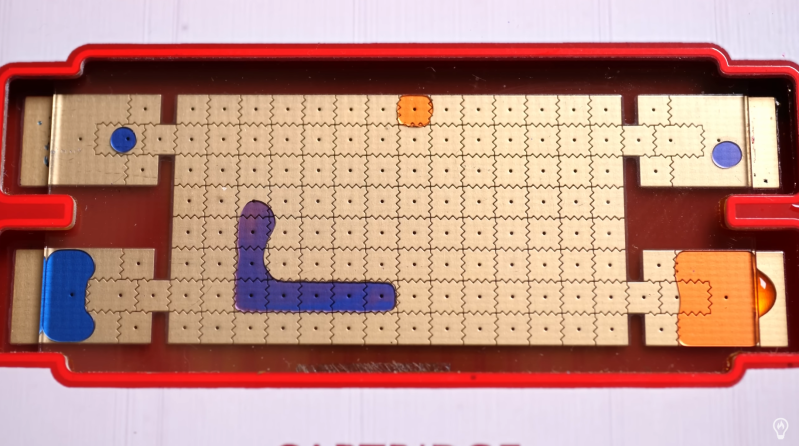
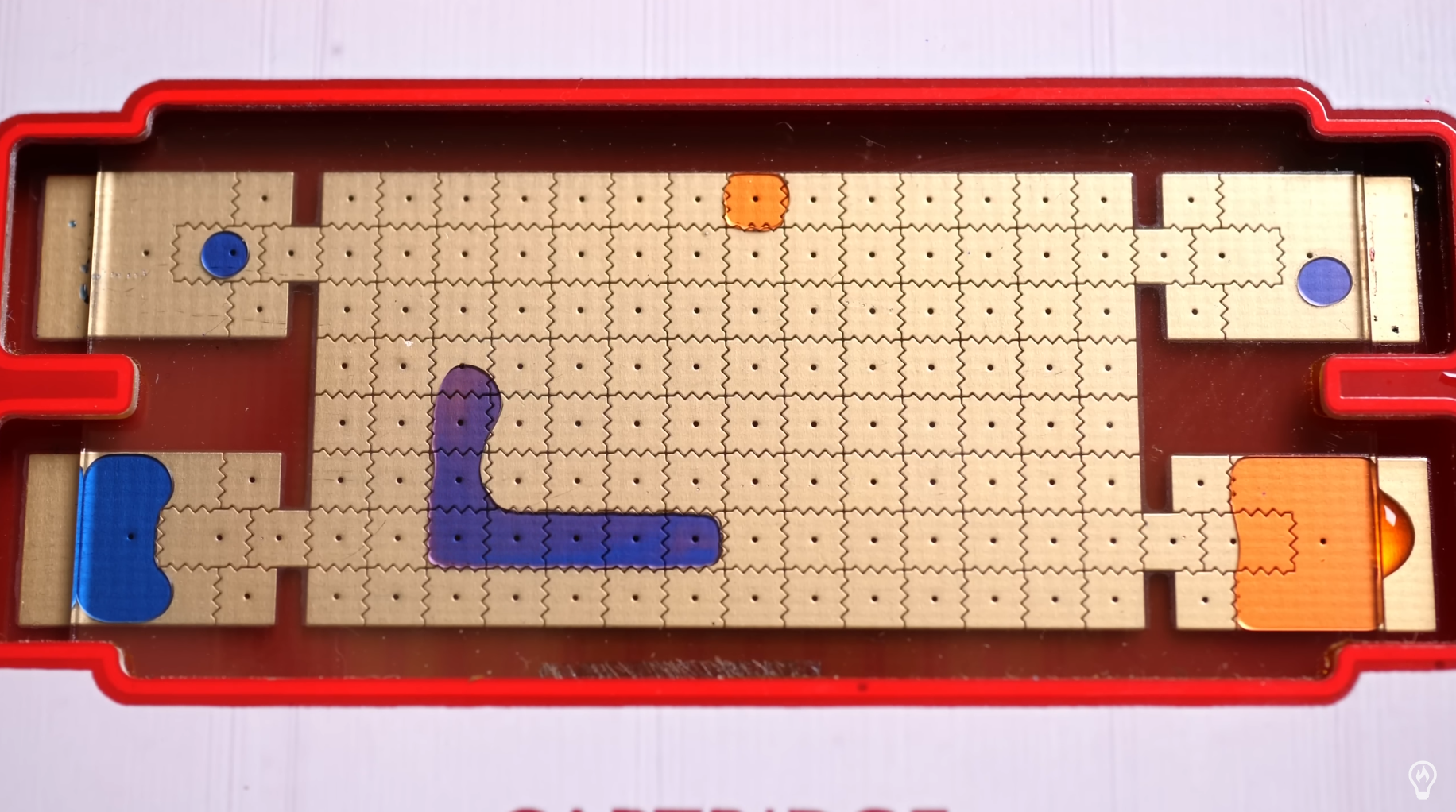
    [Steve Mould] recently got his hands on an OpenDrop — an open-source digital microfluidics platform for biology research. It’s essentially a grid of electrodes coated in a dielectric. Water sits atop this insulating layer, and due to its polarized nature, droplets can be moved around the grid by voltages applied to the electrodes. The original intent was to automate experiments (see 8:19 in the video below for some wild examples), but [Steve] had far more important uses in mind.

    When [Steve]’s €1,000 device shipped from Switzerland, it was destined for greatness. It was turned into a game console for classics such as Pac-Man, Frogger, and of course, Snake. With help from the OpenDrop’s inventor (and Copilot), he built paired-down versions of the games that could run on the 8×14 “pixel” grid. Pac-Man in particular proved difficult, because due to the conservation of mass, whenever Pac-Man ate a ghost, he grew and eventually became unwieldy. Fortunately, Snake is one of the few videogames that actually respects the laws of classical mechanics, as the snake grows by one unit each time it consumes food.

    [Steve] has also issued a challenge — if you code up another game, he’ll run it on his OpenDrop. He’s even offering a prize for the first working Tetris implementation, so be sure to check out his source code linked in the video description as a starting point. We’ve seen Tetris on oscilloscopes and 3D LED matrices before, so it’s about time we get a watery implementation.

    Thanks to [deʃhipu] for the tip!