Jean-Philippe Encausse
Shared posts
OpenAI looks to online advertising deal. AI-driven ads will be hard for consumers to spot
Google’s NotebookLM now lets you customize the tone of its AI podcasts
Raspberry Pi 1984 Macintosh

The Raspberry Pi 1984 Macintosh is a faithful full-size homage to Apple’s original icon. Featuring a custom enclosure, 3:2 display, laser-engraved signatures, and modern internals, it blends vintage computing nostalgia with modern Raspberry Pi ingenuity.
$0.00
This Plotter Knows No Boundaries
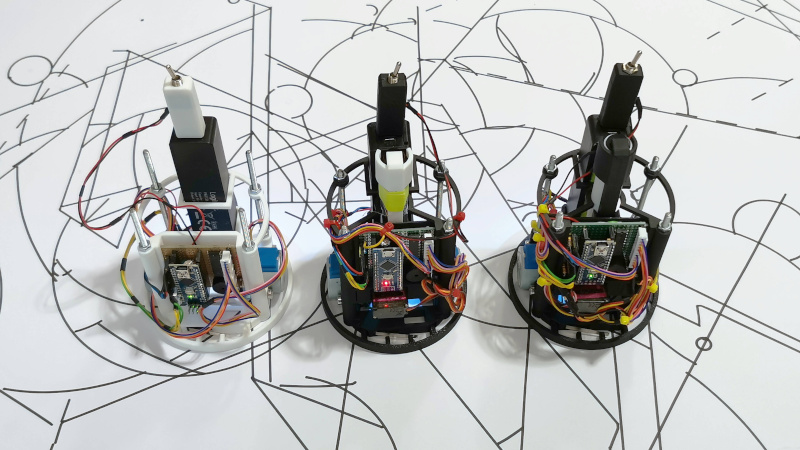
If your school in the 1980s was lucky enough to have a well-equipped computer lab, the chances are that alongside the 8-bit machines you might have found a little two-wheeled robot. These machines and the Logo programming language that allowed them to draw simple vector graphics were a popular teaching tool at the time. They’re long-forgotten now, but not in the workshop of [Niklas Roy], who has created a modern-day take on their trundling.
His two-wheeled robots form simple but effective vector plotters, calculating the paths between coordinates with a consistency that surprised him. They’re used for artwork rather than functional plotting, but we’re guessing they could be used for either. We particularly like the drawing battle between a pair of drawing bots and an eraser bot, as it reminds us of a pixelflood screen.
The parts are all straightforward, its brain is an Arduino Nano, and the files can be downloaded for you to build your own. If you’re falling down the Logo rabbit hole as he did, then it’s not the first time we’ve been there.

Chevaux connectés : Blaze, le capteur signé Garmin
Garmin, connue pour ses montres et ses GPS de pointe, fait une incursion inattendue dans le monde équestre avec Blaze™, un système inédit destiné aux chevaux. Placé sous la queue grâce à un dispositif discret, ce capteur connecté promet d’améliorer le suivi de la santé et des performances des montures.
Une technologie conçue pour répondre aux besoins des cavaliers
Le système Blaze se compose d’un capteur léger et rechargeable, inséré dans un support en néoprène lavable, qui se fixe facilement sous la queue du cheval. Grâce à des algorithmes avancés, il enregistre la fréquence cardiaque, les allures, la distance parcourue et même la température cutanée, un indicateur précieux pour détecter un début de fatigue ou de pathologie.
Les données s’affichent en temps réel via l’application Blaze sur smartphone, mais aussi sur une montre Garmin compatible. Cette double lecture rend l’outil pratique en selle comme à pied. Avec une autonomie allant jusqu’à 25 heures et la possibilité de gérer plusieurs profils équins, Blaze s’adresse aussi bien aux particuliers qu’aux écuries professionnelles qui veulent un suivi rigoureux de leurs chevaux.

Un lancement ambitieux sur un marché en pleine expansion
Garmin fixe un prix public de 599,99 € et positionne Blaze sur un segment premium. La marque vise ainsi un public de passionnés et de professionnels qui considèrent le cheval comme un athlète à part entière. Le suivi post-activité comprend la vitesse de récupération et le temps passé dans les zones d’effort. Il apporte des informations précieuses pour optimiser les entraînements et la préparation aux compétitions.
Au-delà de l’aspect technique, ce lancement illustre l’essor des objets connectés pour animaux dont la demande croît fortement. Garmin, déjà leader dans le domaine de la santé humaine, étend ainsi son savoir-faire au bien-être équin. Cette entrée sur le marché pourrait inciter d’autres acteurs technologiques à explorer ce secteur encore jeune mais plein de potentiel.
Article basé sur un communiqué de presse reçu par la rédaction.
Cet article Chevaux connectés : Blaze, le capteur signé Garmin est apparu en premier sur OBJETCONNECTE.COM.
Klarna vise 14 milliards de dollars pour son entrée en Bourse

Actualité : Microsoft coupe aussi durement dans ses effectifs en France : 200 emplois supprimés

Tiny Datasette Uses USB For the Modern Day
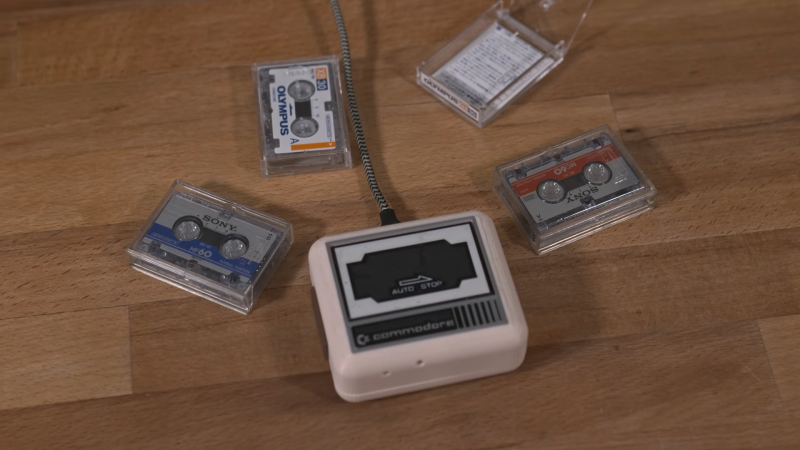
While you can still find tape being used for backup storage, it’s pretty safe to say that the humble audio cassette is about as out of date as a media format can be. Still, it has a certain retro charm we’re suckers for, particularly in the shape of a Commodore Datasette. We’re also suckers for miniaturization, so how could we not fall for [bitluni] ‘s tiny datasette replica?
Aesthetically, he’s copying the Commodore original to get those sweet nostalgia juices flowing, but to make things more interesting he’s not using compact cassette tapes. Instead, [bitluni] started with a mini cassette dictaphone, which he tore down to its essentials and rebuilt into the Commodore-shaped case.
The prototyping of this project was full of hacks — like building a resistor ladder DAC in an unpopulated part of a spare PCB from an unrelated project. The DAC is of course key to getting data onto the mini-casettes. After some playing around [bitluni] decided that encoding data with FSK (frequency-shift keying), as was done back on the C-64, was the way to go. (Almost like those old engineers knew what they were doing!) The dictaphone tape transport is inferior to the old Datasette, though, so as a cheap error-correction hack, [bitluni] needed to duplicate each byte to make sure it gets read correctly.
The mini cassettes only fit a laughable amount of data by modern standards this way (about 1 MB) but, of course that’s not the point. If you jump to 11:33 in the video embedded below, you can see the point: the shout of triumph when loading PacMan (all 8 kB of it) from tape via USB. That transfer was via serial console; eventually [bitluni] intends to turn this into the world’s least-practical mass storage device, but that wasn’t necessary for proof-of-concept. The code for what’s shown is available on GitHub.
If you have an old Datasette you want to use with a modern PC, you’d better believe that we’ve got you covered. We’ve seen other cassette-mass-storage interfaces over the years, too. It might be a dead medium, but there’s just something about “sticky tape and rust” that lives on in our imaginations.
Thanks to [Stephen Walters] for the tip.
AI can create game characters with realistic personalities
Sandbox VR Shows that ‘Social’ Beats ‘Spectacle’ at VR Attractions


Sandbox VR is a longstanding VR attraction chain featuring unique VR experiences for up to six players in a large, shared playspace. I recently got a chance to check out one of Sandbox VR’s newest locations and try two of its latest experiences—Squid Game Virtuals and Deadwood Phobia.
Sandbox VR is one of the original VR attraction companies. After nearly going out of business during the Covid-19 lockdowns, the company has rebounded, now operating nearly 60 locations worldwide and recently surpassed $200 million in lifetime revenue.
Driving its success is a focus on high-quality first-party content, like Deadwood (which has turned into a trilogy of Sandbox VR experiences), and deals with recognizable IP from Netflix (like Squid Game Virtuals, Rebel Moon the Descent, and an upcoming Stranger Things experience).
I recently visited one of Sandbox VR’s newest locations in Philadelphia, PA, and I brought three ‘non-VR’ friends along to see what they thought.

The four of us played two of Sandbox VR’s newest experiences: Squid Game Virtuals followed by Deadwood Phobia.
VR expert or newbie, one underlying theme emerged for all four of us: gameplay involving interactions between the real players was the most fun and memorable part of it all.
Would You Like to Play a Game?
Like the TV series it’s based on, Squid Game Virtuals exclusively pits the real players against each other across a variety of mini-games.
For instance in one game there was a giant bomb hanging from a rope in the middle of the platform, with the four of us positioned at each corner. The goal was to slap the bomb away (and toward the other players) instead of having it blow up in your face. It felt like a deadly game of hot-potato mixed with tetherball. Seeing my friends duck, dodge, and slap the ball back and forth was surprisingly entertaining, and reinforced that we were all in there together, sharing this otherworldly experience.
Another one of the mini-games had four platforms, each with a different symbol on it. Every round, one or more of the platforms was swing down, dropping anyone unlucky enough to be standing on it. But before that happens there are coins you can collect that will reveal hints about which platforms will drop and which will be safe.
Since not everyone could grab all the coins, the full knowledge about which platforms were safe and which were not was spread between us. But since we were competing with one another, there was an unspoken aspect of trying to trick the other players into thinking you were on a safe spot and then perhaps jump away at the last minute to make them fall (or to fake a move to another platform so they jumped first, only to plummet into the void!).
This ‘shared knowledge’ scenario turned out to be really fun, especially because it all culminated in one or more of us getting dropped to our deaths each round. Although, as a VR expert, I have a few critiques about the underlying Sandbox VR technical experience in this moment we were all fully lost in the world of Squid Game and furiously trying to discern if we were on the right platform while we waited to find out which of us was doomed.

One especially memorable moment came in the final round when two of us thought that platform A was safe, and two of us thought that platform D was safe. With the group split 50/50, we were anxiously staring at each other as we awaited the countdown, not knowing who would be left standing. I instinctively put my arm around the friend next to me, knowing that if it was our time, we would face the end together.
3… 2… 1… the platform across from us dropped and we watched two of our friends scream as they plummeted into the darkness below. It was an exhilarating climax and hilarious too, leaving the four of us laughing together as we transitioned to the next mini-game. That moment felt like something out of a movie, but it was purely organic, thanks to game design built around social interaction rather than just pointing and shooting.
Shoot’em Up, Down, and All-around
While Squid Game Virtuals used only our hands and bodies for gameplay, Deadwood Phobia saw us equipped with VR gun controllers.
This action-horror experience has impressive graphics and it’s clear that a lot of time went into the look and direction of it. From a gameplay standpoint, the vast majority of Deadwood Phobia involved trying to stop hordes of zombies from overrunning us. And while there were interesting variations in enemies and environments that spiced things up a bit, for the most part the four of us were all looking out at the world around us, instead of directly interacting with one another (save for occasionally calling out high priority targets or trying to cover one another).
Through much of the Deadwood Phobia experience we were back-to-back in static playspaces, but I especially enjoyed a segment where we rode a moving platform with obstacles—like spinning blades—that forced us to dodge carefully. Since there was limited space on the platform, we all had to be somewhat aware of each other in order to dodge the obstacles without crashing into one another.
With zombies flying at you from every direction for the majority of the experience, the gameplay felt very intense. The shooting felt satisfying but there was a lot of it. My index finger literally got tired from pulling the trigger so often (speaking as someone who probably has more finger stamina than most, considering that I type for a living), and I heard the same complaint from companions who also had semi-automatic weapons like mine.
For a runtime of only about 20 minutes, I have to say that I’m impressed that it felt like we had gone through a whole adventure, with several scenes and a narrative arc, by the end of the experience.
After the Headsets Come Off
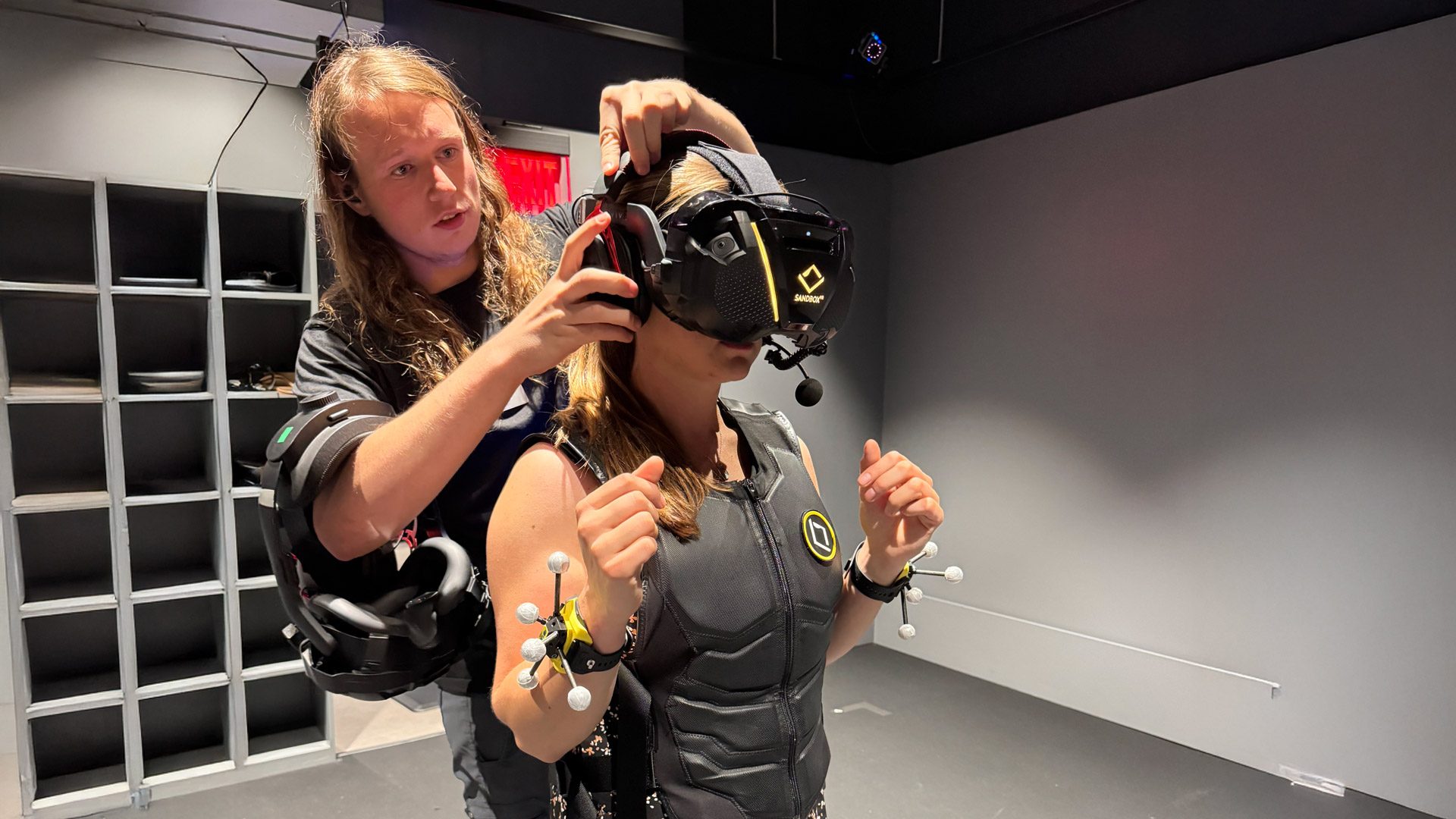
Squid Game Virtuals wasn’t as intense as Deadwood Phobia. It wasn’t as graphically rich. It didn’t even use the tracked gun controllers. But all four of us agreed at the end that Squid Game Virtuals was our favorite of the two experiences.
That’s not to say that Deadwood Phobia wasn’t fun. As a VR experience I was impressed at its visual quality, structure, and presentation. But we all agreed it would have benefited from more moments of direct player-to-player interaction.
Adding a few moments of downtime where players must communicate—solving a puzzle, opening a complex mechanism, or tackling other cooperative tasks beyond just shooting at the same target—would improve pacing and create more of the organic social interactions that made Squid Game Virtuals so memorable.

In the end, the nice part is that you can pick and choose which kind of experience you want, because a single Sandbox VR room can be used for a large number of experiences (at the location I went to there were nine different titles to choose from).
After reflecting on the experience with my three ‘non-VR’ friends, we all agreed that we’d love to go to Sandbox VR again, and we’d be especially interested in trying more experiences that emphasize player-to-player interactivity—something closer to an escape room than a simple shooter.
Disclosure: Sandbox VR invited us to visit the Philadelphia location and covered the cost of admission for the session. It was a standard booking as far as the attendants at the location could see, so we got to the ‘retail’ experience without any extra fluff.
The post Sandbox VR Shows that ‘Social’ Beats ‘Spectacle’ at VR Attractions appeared first on Road to VR.
People Are Furious That OpenAI Is Reporting ChatGPT Conversations to Law Enforcement

Earlier this week, buried in the middle of a lengthy blog post addressing ChatGPT's propensity for severe mental health harms, OpenAI admitted that it's scanning users' conversations and reporting to police any interactions that a human reviewer deems sufficiently threatening.
"When we detect users who are planning to harm others, we route their conversations to specialized pipelines where they are reviewed by a small team trained on our usage policies and who are authorized to take action, including banning accounts," it wrote. "If human reviewers determine that a case involves an imminent threat of serious physical harm to others, we may refer it to law enforcement."
The announcement raised immediate questions. Don't human moderators judging tone, for instance, undercut the entire premise of an AI system that its creators say can solve broad, complex problems? How is OpenAI even figuring out users' precise locations in order to provide them to emergency responders? How is it protecting against abuse by so-called swatters, who could pretend to be someone else and then make violent threats to ChatGPT in order to get their targets raided by the cops?
We reached out to OpenAI for more information, but the Sam Altman-led company hasn't yet responded. Plenty of folks online, though, are responding forcefully to the news.
"The surveillance, theft and death machine recommends more surveillance to balance out the death," quipped Harvard Law School labor researcher Michelle Martin.
Many readers responded with a basic reality: injecting heavily-armed police — unlikely to be trained in effective de-escalation tactics — into a tense situation involving a mental health crisis often results in an even worse outcome. (That's not a theoretical concern; earlier this year, a man was killed by cops when he spiraled into AI psychosis.)
"Ah yes involve the police," wrote John Darnielle, an award-winning novelist, musician and public thinker. "That’ll surely help."
Others pointed out that even though OpenAI currently says it's only notifying authorities when an individual expresses an intent to injure others — and excludes people expressing a desire to self-harm — there's immense precedent in the tech industry for that surveillance to expand in response to public, corporate and government pressure.
"Twelve years ago Edward Snowden revealed that the US government was not just spying on our internet traffic, but had the active cooperation of the major tech companies like Microsoft, Google, Apple, etc," wrote AI developer and blogger Charles McGuinness. "It's not paranoid to think ChatGPT is forwarding 'interesting' content to the US Government now."
The admission also seems to contradict remarks by OpenAI CEO Sam Altman, who recently called for privacy akin to a "therapist or a lawyer or a doctor" for users talking to ChatGPT.
"Wondering how 'secure' AIs will respond, including the ones some lawyers use to sift discovery," pondered public defender Stephen Hardwick. "If there’s a risk the AIs could start reporting queries to law enforcement, the lack of confidentiality could be a problem for lawyers, especially criminal defense lawyers who often write about crimes."
In a sense, some acknowledged, OpenAI is caught between a rock and a hard place. The optics of its AI pulling users into spirals of psychosis, self-harm and worse are appalling — and, apparently unable to control its tech, implementing heavy-handed human moderation is the odious solution.
"I dunno, when you start blaming OpenAI because unwell people did unwell people things, filing massive lawsuits, and waging [a] press campaign, this seems the entirely predictable course correction," wrote Ari Cohn, the lead counsel on tech policy for the Foundation for Individual Rights and Expression, a free speech group. "You wanted guardrails to ensure mentally ill people can't encounter harmful output, now you got it."
But on a broader level, others argued that the AI industry is hastily pushing poorly-understood products to market, using real people as guinea pigs, and adopting increasingly haphazard solutions to real-world problems as they arise.
"It's great that when we find out a product can harm people, we don't remove the product from shelves or try to improve it, we instead call the police," another user griped. "Totally not a carceral state y'all."
And at the end of the day, a familiar pattern is playing out for longtime adopters of new technology: the growing sense that, even in your most intimate moments, you are being watched.
"Stalin would have creamed himself," wrote Russian history scholar Katherine Pickering Antonova, a professor at Queens College.
More on AI and harm: AI Chatbots Are Trapping Users in Bizarre Mental Spirals for a Dark Reason, Experts Say
The post People Are Furious That OpenAI Is Reporting ChatGPT Conversations to Law Enforcement appeared first on Futurism.
💥 Des scientifiques ont cassé un photon en deux pour comprendre l'Univers

Scientist Warns That New Synthetic Lifeform Could Spell Doom for Humankind
It's a technology that doesn't even exist yet, but its effects could be so drastically destructive that scientists in the field are calling for it to be banned now, before it's too late.
We're talking, of course, about "mirror life" — synthetic organisms that quite literally turn natural biology on its head.
"We should choose not to build mirror life and pass laws to ensure nobody can," John Glass, a synthetic biologist who helped create the first living cell with a synthetic genome, wrote in a speculative yet terrifying piece for the Financial Times. "The question is not whether we are able to prevent this threat — it is whether we will act while we still can."
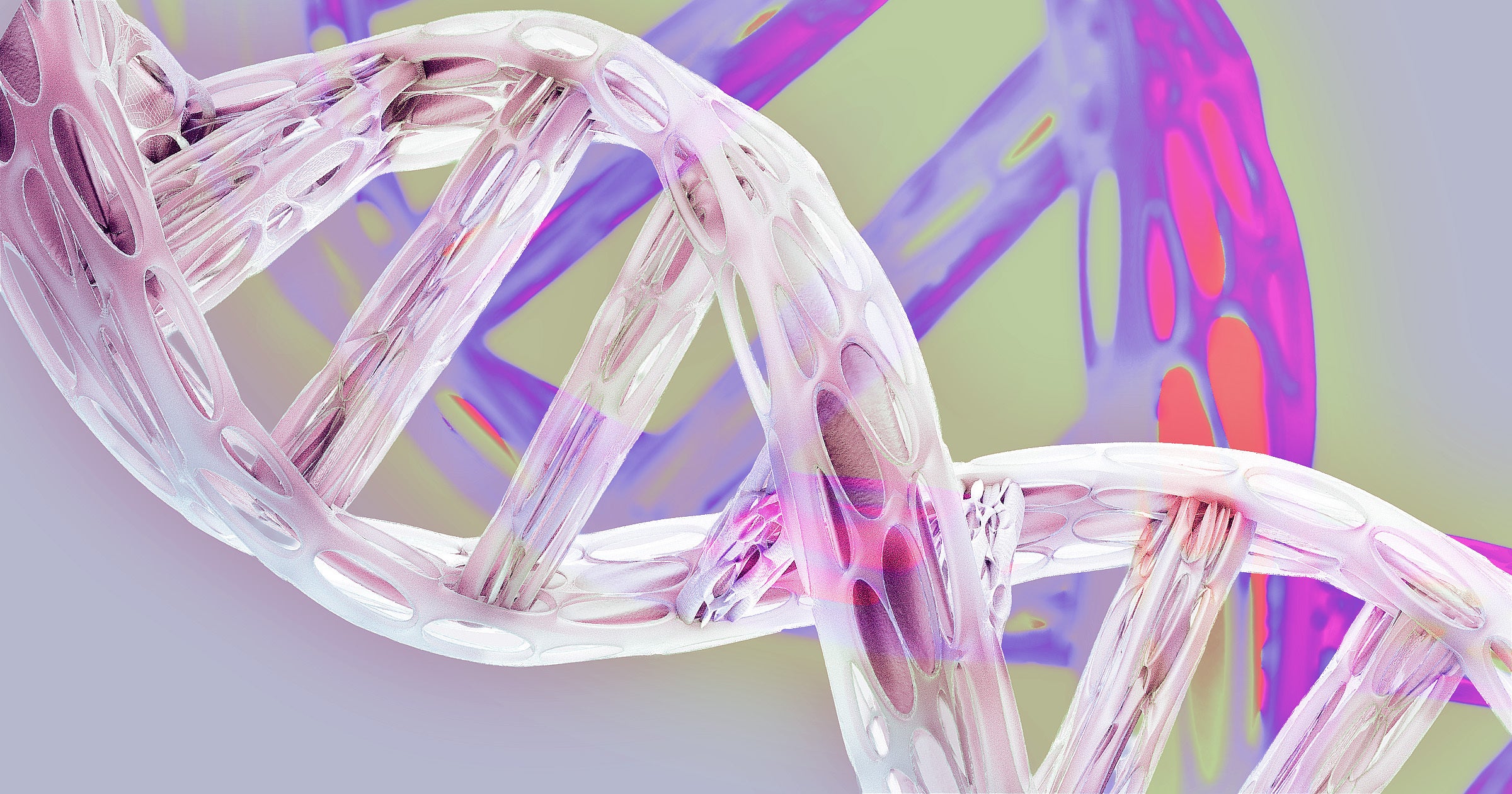
Mirror lifeforms contain DNA structures that are the mirror image to all known organisms. In all life on Earth, the DNA double helix is right-handed, meaning its strands, a sugar-phosphate backbone, twist to the right. (If you make a thumbs-up with your right hand, the vertical axis would be aligned with your thumb, while your fingers represent the curl of the spiral.) The opposite is the case for proteins, the building blocks of cells, which are left-handed.
This so-called homochirality is true for all known lifeforms. So what happens when humans engineer a synthetic organism where its DNA twists to the left, while its proteins twist to the right?
The scary thing is that we can't say for sure — but many biologists fear the worst. In December, a group of leading figures in the field, including two Nobel laureates, published a massive technical report warning that the consequences of mirror life "could be globally disastrous," possibly even wiping out all life if the new organisms prove pathogenic to existing life, like us humans.
In June of this year, more than 150 scientists and ethicists echoed these concerns in a conference at the Institut Pasteur in Paris to weigh the risks of developing the tech. "It was something I never expected to see in my scientific career," Glass wrote. He noted that the Alfred P Sloan Foundation, an influential nonprofit organization that funds scientific research, has been unequivocal that it will not support efforts to create mirror organisms.
Most scientists agree that the technology is at least a decade away, perhaps three. But their sense of urgency in preventing it is palpable.
"Once it is possible to build a mirror cell, it would be comparatively easy to engineer many more kinds of mirror bacteria — the simplest form of mirror life," Glass wrote. "If this is achieved and Pandora's box opens it could pose extraordinary risks."
"To the best of our knowledge, our immune systems produce very weak antibody responses against mirror molecules, if any," he explained. "Having even one immune deficiency can cause a patient to die of overwhelming bacterial infections; a mirror bacterial infection might be like having many immune deficiencies at once."
Moreover, mirror bacteria could resist predation by organisms that normally keep their population in check, allowing them to run rampant across ecosystems.
"Contaminated areas could become irreversibly uninhabitable, compromising our agriculture and natural world," Glass said. "Huge numbers of people, animals and plants could be wiped out, with some driven to extinction."
If it's so dangerous, then why pursue it at all? For one thing, the tech's promise in medicine almost matches its potential for destruction. Already, emerging forms of mirror proteins could be used to create more effective drugs that survive in the body longer. And so any potential laws governing the field, Glass says, would need to strike a balance between absolutely clamping down on developing mirror life while allowing synthetic biology to thrive.
"This will require precision about what research can continue and what should cease," Glass wrote. Fortunately, he observes, "we have realized these dangers well before the point of no return."
More on biology: Scientists Say They've Created a New Form of Life More Perfect Than the One Nature Made
The post Scientist Warns That New Synthetic Lifeform Could Spell Doom for Humankind appeared first on Futurism.
Russian space official: “We need to stop lying to ourselves” about health of industry
The chief of Russia's main spacecraft manufacturer issued a dire warning this week, saying that his corporation has reached a "critical" condition and cannot continue in its present state.
"The situation is critical: multi-million dollar debts, interest on loans that 'eat up' the budget, many processes that are ineffective, and a significant part of the team has lost motivation and a sense of shared responsibility," said Igor Maltsev, chief of RSC Energia, which is located near Moscow.
Maltsev's remarks were first published by Gazeta.ru, one of the largest Russian news websites. Later, they were reposted on the "Forgive us Yura," Telegram channel, the name of which references cosmonaut Yuri Gagarin and primarily has content that focuses on critiques of Russia's space program. Multiple sources confirmed that the statement is legitimate.

Parents: Stop Saying “Don’t Draw on the Walls”—Do This Instead
Do you have a little Picasso at home who can’t wait to paint and color at every opportunity (even if it’s on the walls)? Before you end up scrubbing crayon marks day and night, check out how to give your kids a space to create to their heart’s content. Now you can stifle the urge to lock away the paint and brushes. Instead, keep them out in the open where your kids can grab them whenever inspiration strikes. Thanks to […]
The post Parents: Stop Saying “Don’t Draw on the Walls”—Do This Instead first appeared on IKEA Hackers.
The Object at the Center of Jupiter Is So Strange That It Defies Comprehension

The core of Jupiter, the largest planet in our solar system, has long been a source of mystery for astronomers: an object so unfathomably dense and hot that it defies comprehension.
Conventional theories have suggested for years that the gas giant's behemoth interior was formed following an enormous collision with an early planet.
The "giant impact" theory suggests that roughly half of Jupiter's core originated from the remains of such a planet, explaining what researchers believe to be its strange, "fuzzy" interior.
But now, as detailed in a new paper published in the journal Monthly Notices of the Royal Astronomical Society, an international team has found that the theory may not hold up after all, potentially undermining the way we understand Jupiter's formation.
In their research, the scientists attempted to explain Jupiter's gradual blend of hydrogen layers, as first observed by NASA's Juno spacecraft. Researchers have long butted their heads over how such a structure could've come to be.
By simulating the conditions during a planetary impact using a supercomputer, the researchers posed the question of whether Jupiter's "dilute core" is really the result of a massive collision.
Confusingly, none of their giant impact simulations, even under the most extreme circumstances, resulted in the gradual blends of gas that currently seem to make up the planet's core, undermining current impact theories.
Instead, they found that the resulting cloud of rock and ice core material would settle into distinct layers, not a gradual blend.
The research sheds new light — and controversy — on how one of the largest and most extreme structures in our solar system originally came to be.
They propose in their paper that Jupiter's core formed gradually as it attracted heavy and light elements over time, "as part of the extended formation and evolution of giant planets, rather than through extreme, low-likelihood giant impacts."
"It's fascinating to explore how a giant planet like Jupiter would respond to one of the most violent events a growing planet can experience," said Durham University planetary scientist and lead author Thomas Sandnes in a statement.
"We see in our simulations that this kind of impact literally shakes the planet to its core — just not in the right way to explain the interior of Jupiter that we see today," he added.
Intriguingly, scientists have discovered that our system's other gas giant, Saturn, the second-largest planet after Jupiter, may also have a similar dilute core.
"The fact that Saturn also has a dilute core strengthens the idea that these structures are not the result of rare, extremely high-energy impacts but instead form gradually during the long process of planetary growth and evolution," said University of Oslo researcher and coauthor Luis Teodoro in the statement.
The same findings could even apply to other gas giants orbiting distant stars, suggesting their cores have complex interiors as well.
"Giant impacts are a key part of many planets' histories, but they can't explain everything!" exclaimed coauthor and SETI Institute research scientist Jacob Kegerreis.
More on Jupiter: Scientists Find Jupiter Used to Be Twice Its Current Size Before Shrinking Dramatically
The post The Object at the Center of Jupiter Is So Strange That It Defies Comprehension appeared first on Futurism.
Scientists Just Transplanted a Pig Lung Into a Human for the First Time
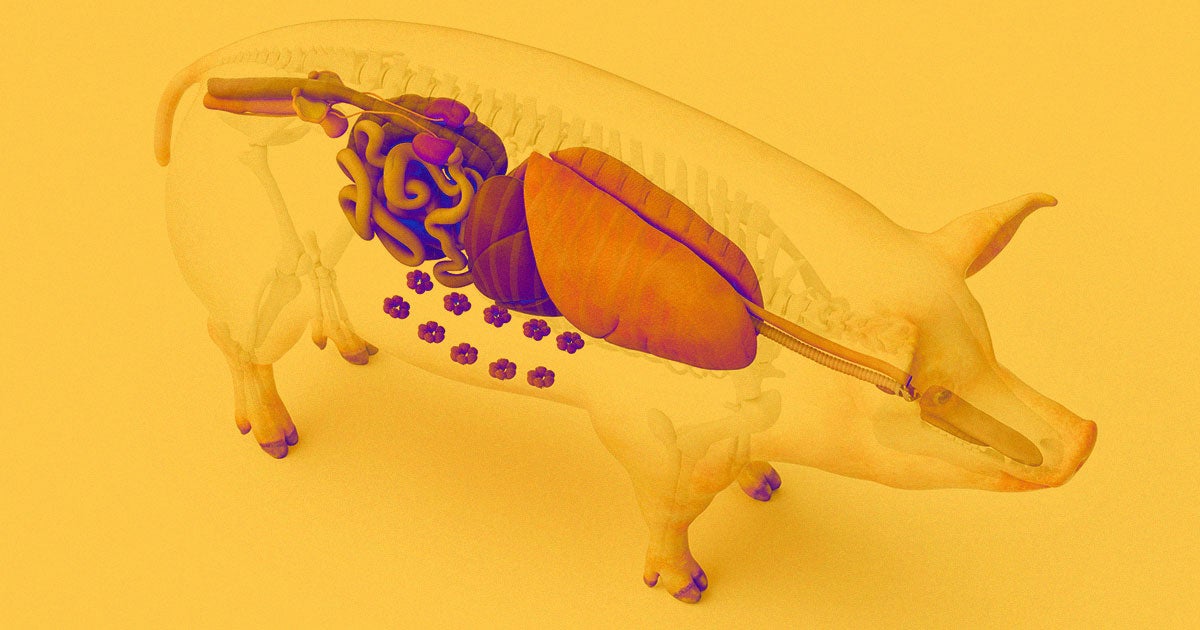
For the first time in history, scientists in China have transplanted a lung from a genetically modified pig into a human patient.
As detailed in a paper published in the journal Nature, the team of researchers transplanted the lung into the body of a 39-year-old male who had previously been declared brain-dead, in May of last year at the First Affiliated Hospital of Guangzhou Medical University.
The news comes after scientists in the United States successfully transplanted a gene-hacked pig kidney, allowing a patient to live for roughly two months last year.
Researchers have also transplanted pig hearts and livers into humans.
Unfortunately, the latest procedure didn't go perfectly. The brain-dead patient received a regimen of immunosuppressive drugs to ensure his body wasn't rejecting the new organ — one of the biggest challenges facing doctors when it comes to xenotransplantation, or transplanting organs from a different species into a human.
Around 24 hours after the surgery, the body began producing white blood cells that invaded the pig lung. Over the following days, the body began rejecting the lung, and on day nine, the recipient's family asked for the experiment to be shut down.
While experts are cautiously optimistic that lungs could eventually allow us to address severe donor organ shortages, some warn that a lot more research needs to be done.
"It’s not ready for prime time," University of Toronto professor of thoracic surgery Shaf Keshavjee, who was not involved in the research, told STAT. "Importantly, they’ve shown us we’re not there yet; don’t go trying this on a patient because it ain’t going to work."
Nonetheless, scientists are hopeful that xenotransplantation could eventually allow us to lower our dependence on human donor organs, which are in extremely short supply.
In the latest experiment, Chinese researchers used the lung from a pig, whose genes were edited using the breakthrough gene-editing technique of CRISPR.
The study was primarily designed to determine whether the human body would reject the lung. The human patient's right lung was left in the body, which means that it's impossible to tell whether the pig lung would've represented a life-saving intervention.
"For our team, this accomplishment is a meaningful beginning," Guangzhou Medical University physician and coauthor Jiang Shi told STAT. "Lung xenotransplantation presents unique biological and technical challenges compared to other organs. Our aim is to create a rigorous scientific pathway toward a safe, durable lung xenograft, not to claim clinical readiness today."
Other experts also remain hopeful, with Luhan Yang, a cofounder of major US-based xenotransplantation company eGenesis, calling it an "insightful study," telling STAT that it "offers significant contributions to understanding immune responses toward xenograft lungs."
More on xenotransplantation: Patient Dies After Receiving Kidney From Gene-Hacked Pig
The post Scientists Just Transplanted a Pig Lung Into a Human for the First Time appeared first on Futurism.
An inner-speech decoder reveals some mental privacy issues
Most experimental brain-computer interfaces (BCIs) that have been used for synthesizing human speech have been implanted in the areas of the brain that translate the intention to speak into the muscle actions that produce it. A patient has to physically attempt to speak to make these implants work, which is tiresome for severely paralyzed people.
To go around it, researchers at the Stanford University built a BCI that could decode inner speech—the kind we engage in silent reading and use for all our internal monologues. The problem is that those inner monologues often involve stuff we don’t want others to hear. To keep their BCI from spilling the patients’ most private thoughts, the researchers designed a first-of-its-kind “mental privacy” safeguard.
Overlapping signals
The reason nearly all neural prostheses used for speech are designed to decode attempted speech is that our first idea was to try the same thing we did with controlling artificial limbs: record from the area of the brain responsible for controlling muscles. “Attempted movements produced very strong signal, and we thought it could also be used for speech,” says Benyamin Meschede Abramovich Krasa, a neuroscientist at Stanford University who, along with Erin M. Kunz, was a co-lead author of the study.

Paper electrode-based soft robot achieves crawling motion
Murphy's Law

When you're in a hurry and the light turns red. When your toast falls butter side down. When you visit the shop on the only day it's closed—all classic Murphy's Law.
What is Murphy's Law
Murphy's Law is: Anything that can go wrong will go wrong.
Other common phrasings of Murphy's Law include:
- If it can go wrong, it will
- If something can go wrong, it will go wrong
- Whatever can go wrong, will go wrong.
I'd always taken the meaning of Murphy's Law as a pessimistic view of the universe. A kind of "well, typical," "just my luck," "of course it would happen to me," kind of attitude. People invoke it as a convenient excuse for things not going well — a chance to complain and feel that events weren't their fault.
My dad always called it Sod’s Law, the more British version of the phrase.
I've come to realise that the original meaning of Murphy's Law was more optimistic than pessimistic.
For instance, if a box should be a particular way up, we should assume that at some point, someone will put it the wrong way up. So maybe we could design it so that it can't be placed the wrong way up, forcing people to orient it correctly.
If you think of the ways something could go wrong and plan for them, there's less chance of them getting you.
The Murphy's Law Legend
There's a strong—though disputed—origin story for Murphy's Law. The most common story goes something like this.
A U.S. Air Force team at Edwards Air Force Base was investigating the effects of extreme acceleration and deceleration on the human body using rocket sleds. They installed new strain gauges, supplied by an engineer named Edward Murphy. But they found the gauges didn't work.
Murphy was called in and discovered that someone had installed the gauges incorrectly. Frustrated, he reportedly said something along the lines of: "If that guy has any way of doing something wrong, he'll do it wrong."
The team were in the habit of inventing "laws" for different members of the team. George Nichol's recalls changing the initial phrasing to If it can happen, it will happen. And in a press conference, John Paul Stapp, the inspirational team lead who subjected himself to the extreme testing, shared Murphy's Law as: Anything that can go wrong will go wrong.
It caught on.
Murphy himself later said about the strain gauges, "I made a terrible mistake—I didn't cover every possibility for putting these together." In other words, the lesson was not that fate conspires against you, but that if something can be done incorrectly, it eventually will be—so design to prevent it.
This connects Murphy's Law to concepts like foolproof design, forcing functions, or the Japanese poka-yoke (mistake-proofing).
Incidentally, the team also coined Stapp's Law as: The universal aptitude for ineptitude makes any human accomplishment an incredible miracle.
Stapp's work in understanding the limits of the body didn't just improve aerospace safety. He saw that more people, even in the Air Force, were dying in car crashes than aircraft accidents. Rather than just focusing on preventing crashes, with a very Murphy's Law mindset, Stapp instead asked, When the inevitable car crash does happen, how can we prevent people from dying? His advocacy helped bring about seatbelts, safety glass, and eventually airbags—saving countless lives.
But we love a good story. Fred Shapiro, a law librarian and editor of the Yale Book of Quotations, disputes this as the origins of Murphy's Law. He also offers us these wise words: "Anytime someone tells you 'Mark Twain said this,' the one thing you know is that Mark Twain didn't say that."
Misunderstanding Murphy's Law
A few cognitive biases make us notice failures more than successes:
The frequency illusion naturally makes us more aware of what's top of mind—if we're looking for bad things happening to us, we'll start to notice them more frequently.
Survivorship bias leads us to overlook all the times that something bad didn't happen to us.
And because unfortunate events easily stick in our memory, salience bias can lead us to overestimate how common they really are.
For instance, my Law of Lockers is that if you're the only two people in the changing rooms, your lockers will be next to each other. But of course I'm sure I'm ignoring all the many more times our lockers weren't on top of each other.
Murphy's Law as an Optimistic Viewpoint
And so, in a classic Murphy's Law style example, I've concluded that I generally misunderstood Murphy's Law.
It doesn't have to highlight all the bad luck I have. Instead, it can be a call to consider what can go wrong, and given there's a chance that it will, prepare for that so it doesn't.
Related Ideas to Murphy's Law
- Muphry's Law: when criticising spelling or grammar, you'll make a mistake yourself.
- Plan ahead
- A mistake is not something to be determined after the fact
- Hanlon's Razor
- Thoughtless acts
- Forcing function
- Kitchen table survival skills
- Unknown unknowns
- Eponyms
- Finagle's Law: Anything that can go wrong, will—at the worst possible moment.
More about Murphy's Law and its origins:
- Nick Spark's book A History of Murphy's Law
- A super Decoder Ring podcast episode on Murphy's Law by Willa Paskin, from where I learned much of the origins
- I did several different versions of this sketch and kept coming back to the wonderful Far Side cartoon of the penguin and the banana skin.
- O'Toole's comment on Murphy's Law: Murphy was an optimist.
- Just because someone called it a law doesn't mean it is.
DeepSeek V3.1 : l’IA chinoise open source qui défie GPT-5 et Claude 4
Dans une manœuvre aussi discrète que révolutionnaire, DeepSeek, startup d’intelligence artificielle basée à Hangzhou, a publié sur Hugging Face son nouveau modèle DeepSeek V3.1. Avec 685 milliards de paramètres, ce LLM (large language model) open source bouleverse l’équilibre mondial de l’IA, remettant en cause la domination d’acteurs américains comme OpenAI et Anthropic. DeepSeek V3.1 : Une performance de classe […]
L’article DeepSeek V3.1 : l’IA chinoise open source qui défie GPT-5 et Claude 4 est apparu en premier sur BlogNT : le Blog des Nouvelles Technologies.
Actualité : Corriger la vue sans LASIK : une méthode douce, pas chère et sans scalpel impressionne

La Chine relance l’avion-ciseau pour en faire une machine de guerre hypersonique et prendre un avantage militaire décisif !
Ces mini-robots se déplacent grâce aux ondes sonores : une prouesse technique
Voici des mini-robots avec un mode de locomotion un peu particulier : ils utilisent les ondes sonores.
Le monde de la robotique vient de franchir une étape de plus vers la science-fiction. Des chercheurs ont mis au point des mini-robots qui avancent et interagissent via des ondes sonores. Ils se déplacent également en essaims de façon autonome.
Le son, la clé de cette génération de micro-robots
Ces micro-robots sont si petits qu’ils tiennent dans la paume d’une main. Ce qui les rend si spéciaux, c’est leur capacité à se mouvoir sans moteur ni roues. Ils se déplacent effectivement grâce à un système d’émetteurs et de récepteurs qui génèrent et captent le son. L’énergie des ondes sonores se convertit ensuite en mouvement et aide les mini-robots à se propulser sur n’importe quelle surface. Cela peut être un sol lisse ou un liquide.
L’objectif de cette recherche est de créer des robots qui n’ont pas besoin de supervision. Ils doivent aussi pouvoir s’organiser en groupes pour accomplir des tâches complexes. Les applications sont innombrables, à l’instar de l’inspection de bâtiments. Citons également la recherche et le sauvetage de personnes dans des zones dangereuses, ou alors l’exploration de l’espace.
Des mini-robots pratiques qui marchent aux ondes sonores
L’une des particularités les plus impressionnantes de ces robots est leur capacité à se déplacer en essaims. Les scientifiques ont créé un algorithme grâce auquel ils peuvent interagir entre eux et se coordonner pour accomplir des missions. Un peu comme une colonie de fourmis, ils communiquent en utilisant les ondes acoustiques. Ils partagent aussi des informations et s’organisent pour faire face à des obstacles.
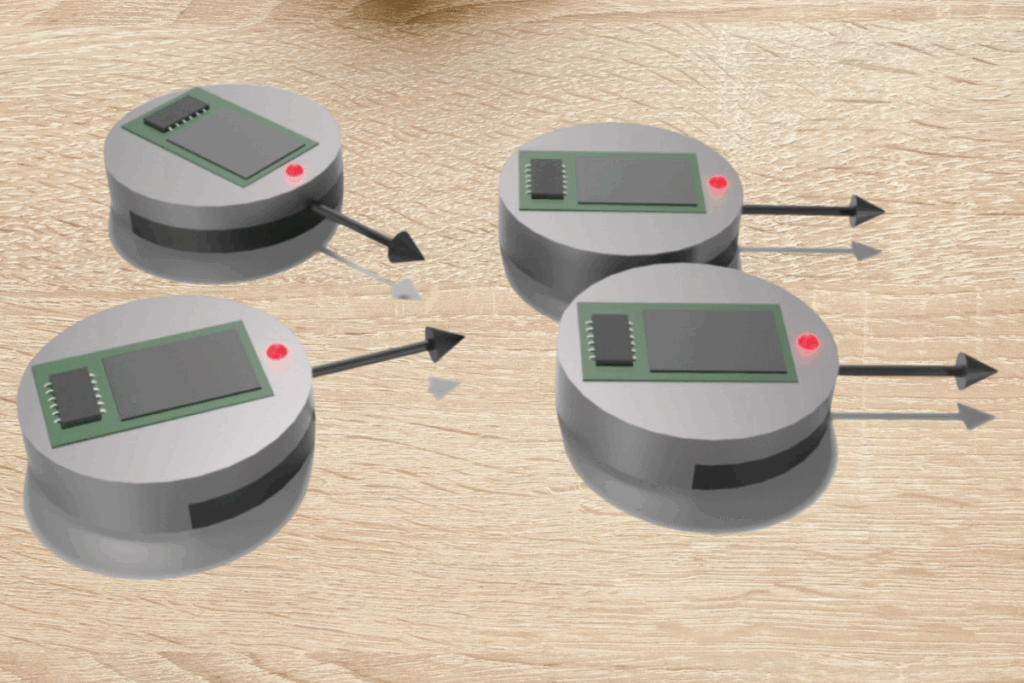
Cette approche collective est surtout utile pour des tâches qui nécessitent la collaboration de plusieurs robots. Les mini-robots qui se déplacent via les ondes sonores seraient par exemple utiles pour le transport d’objets lourds. Un autre domaine dans lequel ils pourraient servir serait la cartographie d’un environnement.
Inspired by how animals use sound for communication and navigation, researchers create models of tiny robots that coordinate using acoustic waves to form intelligent groups. pic.twitter.com/P68dzIVEkO
— Mindplex (@Mindplex_AI) August 14, 2025
Au lieu d’avoir un seul robot coûteux et complexe, l’idée est donc d’utiliser une multitude de petits robots simples. Ces derniers peuvent accomplir un travail bien plus rapidement et efficacement. Cette technologie pourrait bien redéfinir la manière dont on conçoit et utilise les robots à l’avenir.
Cet article Ces mini-robots se déplacent grâce aux ondes sonores : une prouesse technique est apparu en premier sur OBJETCONNECTE.COM.
A question for the ages: Is The Elder Scrolls II: Daggerfall a good game?
Ostensibly, C:\ArsGames is to some extent about actually driving a few game purchases, but in reality it's mostly an excuse for me and my colleagues to wax nostalgic about the games that were formative for us. Case in point: This entry in our ongoing series with GOG is about a game that's completely free. I think Ars can withstand this tiny revenue shortfall for the sake of peak nostalgia!
There are a couple of reasons I chose The Elder Scrolls II: Daggerfall this time around: its co-creator, Julian LeFay, recently passed away, so it seemed timely. Also, it was one of the defining games of my youth—one I have continued to revisit now and then.
But it's also interesting because of where its developer, Bethesda—a studio people both love and hate—is at today. Going back to Daggerfall, we find a game that shows off so much of what we've lost from the bygone era of '90s PC gaming, but also one that makes it abundantly clear why the industry left those sensibilities behind.

Mysterious Object Hurtling Toward Us From Beyond Solar System Appears to Be Emitting Its Own Light, Scientists Find

Last month, astronomers made an exciting discovery, observing an interstellar object — only the third ever observed — hurtling toward the center of the solar system.
The object, dubbed 3I/ATLAS, has caught the attention of Harvard astronomer Avi Loeb, who has a long track record of making controversial predictions about previous interstellar objects being relics from an extraterrestrial civilization.
While there's been a growing consensus among astronomers that the latest object is a comet, Loeb has continued to entertain the idea that it may have been sent to us by an intelligent species from outside of the solar system — and he's far from backing down.
In a blog post over the weekend, Loeb pointed to observations by NASA's Hubble Space Telescope, which showed a "glow of light, likely from a coma, ahead of the motion of 3I/ATLAS towards the Sun."
A coma is the hazy and luminous cloud that surrounds the nucleus of a comet.
However, there's "no evidence for a bright cometary tail in the opposite direction," he wrote, with scientists suggesting it was evidence that dust was evaporating from the object's Sun-facing side.
The observations led Loeb and his colleagues to an intriguing, albeit far-fetched possibility: is the mysterious space object generating "its own light?"
After deliberations with his colleague and Harvard astrophysicist Eric Keto, Loeb suggested that the "simplest interpretation" of 3I/ATLAS' observed "steep brightness profile" is that its nucleus "produces most of the light."
That would also mean that its actual size is much smaller than currently thought, roughly in line with the size of the first two interstellar objects we've observed, 'Oumuamua and 2I/Borisov.
The Harvard astronomer suggested two possibilities: either 3I/ATLAS is naturally emitting radiation because its a "rare fragment from the core of a nearby supernova that is rich in radioactive material" — or it's a "spacecraft powered by nuclear energy, and the dust emitted from its frontal surface might be from dirt that accumulated on its surface during its interstellar travel."
Loeb deemed the former explanation "highly unlikely," and the latter as requiring "better evidence to be viable."
Loeb previously argued that the object's unusual trajectory — which includes suspiciously close flybys of both Earth and Jupiter — and its lack of a visible tail both undermine the theory that it's a comet.
Intriguingly, 3I/ATLAS will come within spitting distance — at least in astronomical terms — of Mars this fall, giving us a tantalizing opportunity to have a first-hand look. Loeb suggested using NASA's Mars Reconnaissance Orbiter to point its scientific instruments at the rare visitor.
Best of all, scientists at the space agency appear to be game.
"This morning, I encouraged the HiRISE team to use their camera during the first week of October 2025 in order to gather new data on 3I/ATLAS," Loeb wrote. "They responded favorably."
More on the object: Astronomer Suggests New Interstellar Object Could be Advanced Aliens Testing Our Intelligence
The post Mysterious Object Hurtling Toward Us From Beyond Solar System Appears to Be Emitting Its Own Light, Scientists Find appeared first on Futurism.
Scientists Create Ultimate Antiviral Using Rare "Superpower" Genetic Mutation

A rare genetic mutation that causes a deficiency in an immune regulator called ISG15 is known to make people more vulnerable to some bacterial infections and cause persistent inflammation — but it can unlock some unexpected antiviral "superpowers" as well.
As detailed in a new study published in the journal Science Translational Medicine, a team of scientists led by Columbia University professor of pediatric immunology, Dusan Bogunovic, has developed a new antiviral therapy that temporarily gives patients the same powerful antiviral properties by administering an experimental drug via a nasal drip.
The research kicked off with a happy accident.
"Our findings reinforce the power of research driven by curiosity without preconceived notions," said Bogunovic, in a statement about the research. "We were not looking for an antiviral when we began studying our rare patients, but the studies have inspired the potential development of a universal antiviral for everyone."
"We believe the technology will work even if we don’t know the identity of the virus," he added.
Years ago, Bogunovic stumbled upon an intriguing group of patients who seemed to have some mild inflammation that put them at risk for bacterial infections but were impervious to many types of viruses. Later, Bogunovic discovered that these people were deficient in an immune-regulating protein, ISG15, due to a genetic mutation.
Though the patients had mild inflammation from the mutation, Bogunovic determined that the condition gave patients the ability to ward off viruses.
"The type of inflammation they had was antiviral, and that’s when it dawned on me that these individuals could be hiding something," he recalled in the statement. "In the back of my mind, I kept thinking that if we could produce this type of light immune activation in other people, we could protect them from just about any virus."
Bogunovic and his team developed a therapeutic lipid nanoparticle package that holds ten mRNA molecules, which produce the antiviral protection of the ISG15 deficiency.
In experiments involving hamsters and mice, the therapy stopped viruses like influenza and the SARS-CoV-2 virus from replicating, albeit temporarily, after being injected into their lungs.
"We only generate a small amount of these ten proteins, for a very short time, and that leads to much less inflammation than what we see in ISG15-deficient individuals," Bogunovic explained. "But that inflammation is enough to prevent antiviral diseases."
However, the nanoparticles weren't produced at "high enough levels that makes us comfortable going into people immediately," he added.
Next steps are to have the therapy produce more of the virus-fighting proteins and determine how long the ISG15 immunity lasts. If it all works out, it could lay the groundwork for future genetic therapies, inspired by the types of vaccines that saved us during the COVID-19 pandemic.
More on genetics: Scientists Find Secret Code in Human DNA
The post Scientists Create Ultimate Antiviral Using Rare "Superpower" Genetic Mutation appeared first on Futurism.
Is GPT-5 really worse than GPT-4o? Ars puts them to the test.
The recent rollout of OpenAI's GPT-5 model has not been going well, to say the least. Users have made vociferous complaints about everything from the new model's more sterile tone to its supposed lack of creativity, increase in damaging confabulations, and more. The user revolt got so bad that OpenAI brought back the previous GPT-4o model as an option in an attempt to calm things down.
To see just how much the new model changed things, we decided to put both GPT-5 and GPT-4o through our own gauntlet of test prompts. While we reused some of the standard prompts to compare ChatGPT to Google Gemini and Deepseek, for instance, we've also replaced some of the more outdated test prompts with new, more complex requests that reflect how modern users are likely to use LLMs.
These eight prompts are obviously far from a rigorous evaluation of everything LLMs can do, and judging the responses obviously involves some level of subjectivity. Still, we think this set of prompts and responses gives a fun overview of the kinds of differences in style and substance you might find if you decide to use OpenAI's older model instead of its newest.

Methaphone, le smartphone sans smart, ni phone.

Ce matin, je découvre le Methaphone, cet objet qui est là pour interroger nos gestes automatiques face au numérique, celui qui tient dans notre poche. Cette plaque d’acrylique transparente imite la forme d’un smartphone… sans rien faire d’autre qu’exister.
L’idée part d’un constat simple : on sort son téléphone par réflexe, même quand on n’en a pas besoin. Ce geste est devenu mécanique, presque compulsif. Ce projet s’inspire de la méthadone pour les héroïnomanes et transpose cette logique de substitution au smartphone. On garde donc le geste mais on enlève la fonction et ses effets. En tant que designer, ça me questionne sur la responsabilité de nos créations : comment nos interfaces encouragent-elles ces comportements ?
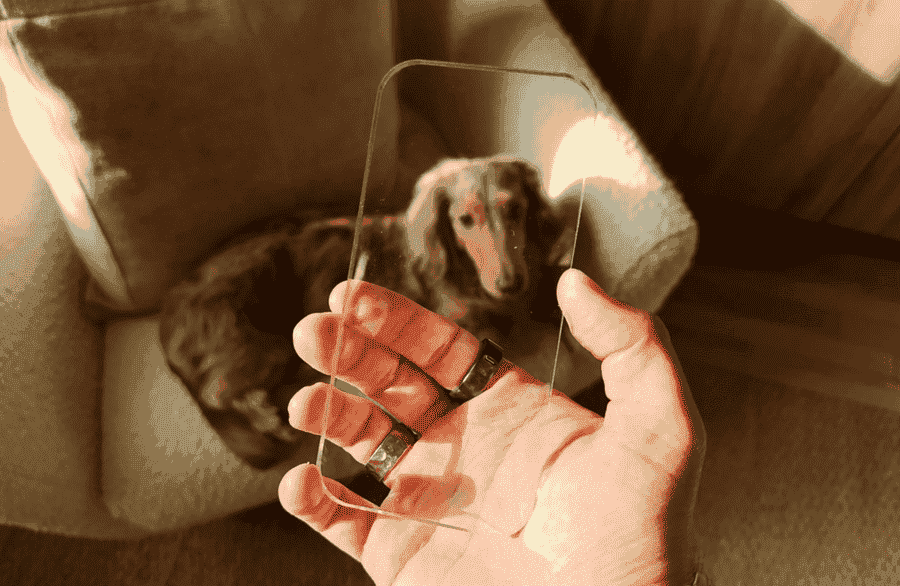

Le Methaphone a été vu par 150 millions de personnes en quelques jours sur TikTok, assez ironique pour un objet censé nous détacher des réseaux sociaux. Mais c’est peut-être là tout son concept : utiliser la viralité pour critiquer la viralité. Cet objet transparent nous renvoie ainsi à nos propres transparences face aux écrans.

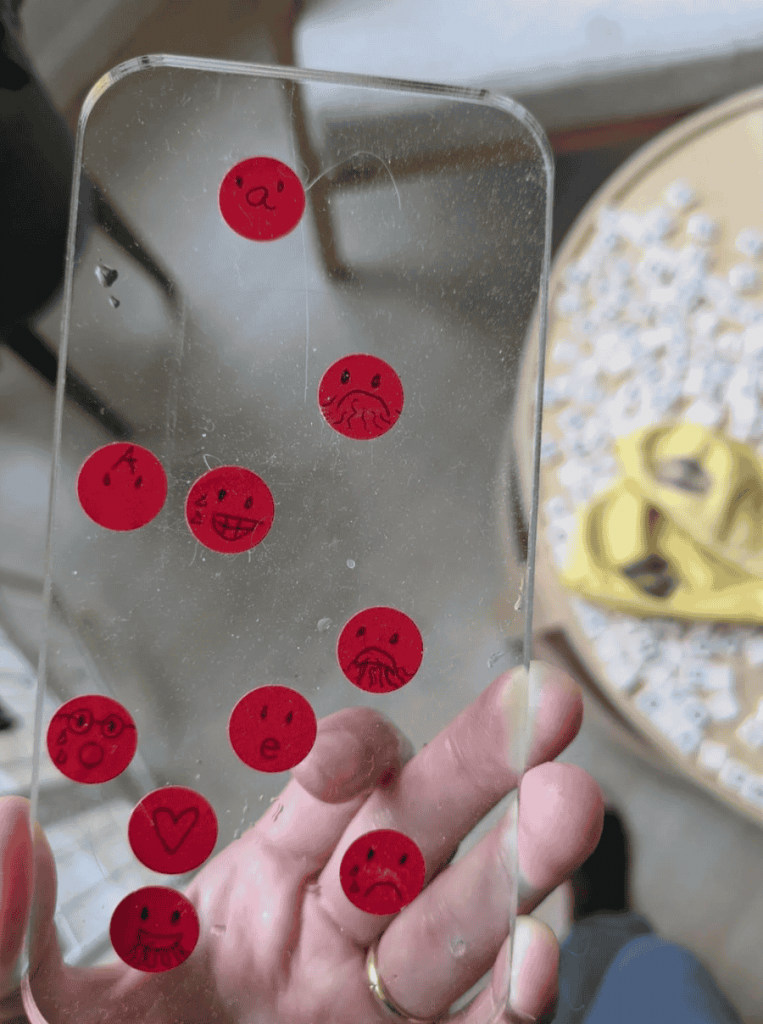
Je me souviens de mes premières expériences de coupure avec le smartphone que j’ai commencé il y a une quizaine d’année, cette sensation bizarre de la poche vide, de la vibration fictive, du réflexe de la man qui cherche l’objet connecté. Le Methaphone semble vouloir combler ce vide physique tout en créant un vide numérique. Il nous fait prendre conscience de nos automatismes sans nous culpabiliser.
Bref, l’idée de créer des objets qui nous visent à nous libérer me semble une voix ultra décalée dans le paysage du design numérique aujourd’hui.
Pour en savoir plus c’est sur le site du projet Methaphone.
Robo-Rumble: Humanoid Kickboxing Bots Battle for Glory
Somewhere between The Terminator and Rock ‘Em Sock ‘Em Robots lies this glorious moment in history: the first-ever humanoid robot kickboxing tournament. Unitree’s G1 bots stepped into the ring, remotely piloted by humans safely outside the ropes, to trade punches, kicks, and knees in a bid for robo-glory. It’s part martial arts showcase, part tech demo, and part “uh-oh, this is how the uprising starts.”
[Via TA]
Click This Link for the Full Post > Robo-Rumble: Humanoid Kickboxing Bots Battle for Glory