10 Oct 02:44
Nanoscale, 2015, 7,17343-17349
DOI: 10.1039/C5NR04250J, Paper
Jong H. Kim, Chu-Chen Chueh, Spencer T. Williams, Alex K.-Y. Jen
High-efficiency (15.7%) perovskite solar cell is demonstrated based on a room-temperature and solution processable organic electron extraction layer.
The content of this RSS Feed (c) The Royal Society of Chemistry

10 Oct 02:37
by Qiangqiang Tang, Laura Abella, Yajuan Hao, Xiaohong Li, Yingbo Wan, Antonio Rodríguez-Fortea, Josep M. Poblet, Lai Feng and Ning Chen

Inorganic Chemistry
DOI: 10.1021/acs.inorgchem.5b01613

10 Oct 02:31
by Lijun Huo, Tao Liu, Bingbing Fan, Zhiyuan Zhao, Xiaobo Sun, Donghui Wei, Mingming Yu, Yunqi Liu, Yanming Sun

A novel 2D benzodifuran (BDF)-based copolymer (PBDF-T1) is synthesized. Polymer solar cells fabricated with PBDF-T1 show high power conversion efficiency of 9.43% and fill factor of 77.4%, which is higher than the performance of its benzothiophene (BDT) counterpart (PBDT-T1). These results provide important progress for BDF-based copolymers and demonstrate that BDF-based copolymers can be competitive with the well-studied BDT counterparts via molecular structure design and device optimization.
10 Oct 02:31
by Lijian Zuo, Shuhua Zhang, Hanying Li, Hongzheng Chen

Highly efficient large-area organic solar cells (OSCs) with power conversion efficiency up to 7.09%, and device area of 4 cm2 are demonstrated on flexible substrates. A conductance- or thickness-gradient ultra-thin Ag-based transparent electrode is developed to better balance the light trapping and energy loss, owing to the inhomogeneous energy-loss density on the large OSC sheet.
10 Oct 02:29
by M. Ibrahim Dar, Mojtaba Abdi-Jalebi, Neha Arora, Thomas Moehl, Michael Grätzel, Mohammad Khaja Nazeeruddin

An optimum amount of lead bromide (1%) can enhance the power conversion efficiency of CH3NH3PbI3−xBrx (where x ≈ 0) devices from 14.7% to 16.9% without altering the bandgap of the perovskite material.
10 Oct 02:29
by Jae Woong Jung, Feng Liu, Thomas P. Russell, Won Ho Jo

Two medium-bandgap polymers composed of benzo[1,2-b:4,5-b′]dithiohpene and 2,1,3-benzothiadiazole with 6-octyl-thieno[3,2-b]thiophene as a π-bridge unit are synthesized and their photovoltaic properties are analyzed. The two polymers have deep highest occupied molecular orbital energy levels, high crystallinity, optimal bulk-heterojunction morphology, and efficient charge transport, resulting in a power conversion efficiency of as high as 9.44% for a single-junction polymer solar-cell device.
10 Oct 02:26
by Peng Liu, Sheng Dong, Feng Liu, Xiaowen Hu, Liqian Liu, Yaocheng Jin, Shengjian Liu, Xiong Gong, Thomas P. Russell, Fei Huang, Yong Cao
A series of conjugated polymers using naphtho[1,2-c:5,6-c]bis[1,2,5]thiadiazole and benzodithiophene alternating backbone is synthesized to investigate the effect of side chain substitution on conjugated donor–acceptor polymer on electronic, morphological, and photovoltaic properties. It is found that light absorption and frontier energy levels of the resultant polymers are strongly affected by the side chains. The thin film morphology, crystal structure, crystallinity, and orientation also depend on the side chains; the side chain type affects more in the π–π stacking direction, while the side chain density plays a significant role in the lamellar packing direction. The thickness of the active layer also influences the performance of the solar cells with some materials showing enhanced performance with thicker active layers. The best solar cell device in this study has power conversion efficiencies of 8.14%, among the highest in materials of similar structure.

Systematic side chain engineering based on naphtho [1,2-c:5,6-c]bis[1,2,5]thiadiazole–benzodithiophene copolymer is carried out; a detailed structural analysis of these polymers in the active layer of organic solar cells is performed to elucidate the influence of side chain on their crystalline, morphological, and photovoltaic properties.
10 Oct 02:26
by Xiu Gong, Meng Li, Xiao-Bo Shi, Heng Ma, Zhao-Kui Wang, Liang-Sheng Liao
A key issue for perovskite solar cells is the stability of perovskite materials due to moisture effects under ambient conditions, although their efficiency is improved constantly. Herein, an improved CH3NH3PbI3−xClx perovskite quality is demonstrated with good crystallization and stability by using water as an additive during crystal perovskite growth. Incorporating suitable water additives in N,N-dimethylformamide (DMF) leads to controllable growth of perovskites due to the lower boiling point and the higher vapor pressure of water compared with DMF. In addition, CH3NH3PbI3−xClx · nH2O hydrated perovskites, which can be resistant to the corrosion by water molecules to some extent, are assumed to be generated during the annealing process. Accordingly, water additive based perovskite solar cells present a high power conversion efficiency of 16.06% and improved cell stability under ambient conditions compared with the references. The findings in this work provide a route to control the growth of crystal perovskites and a clue to improve the stability of organic–inorganic halide perovskites.

Water additive is incorporated into the perovskite precursor solution to control the oriented growth of crystal perovskites and improve the stability of perovskite solar cells. As a result, a power conversion efficiency of 16.06% and an improved cell stability under ambient conditions are achieved.
10 Oct 02:20
by Ki-Heon Lee, Chang-Yeol Han, Hee-Don Kang, Heejoo Ko, Changho Lee, Jonghyuk Lee, NoSoung Myoung, Sang-Youp Yim and Heesun Yang

ACS Nano
DOI: 10.1021/acsnano.5b05513

22 Sep 03:18
by Jinhwan Kim, Hyunwoo Kim, Won Jong Kim
Stimuli-responsive gene delivery systems maximize therapeutic efficacy by controlling the cytosolic conveyance and rate of effective gene release. We present herein a hybrid nanocomposite composed of a 2D nanomaterial, MoS2, modified by attaching two polymers (polyethylenimine (PEI) and polyethylenglycol (PEG)) via disulfide bonds. This MoS2–PEI–PEG nanocomposite interacts with DNA by electrostatic interaction, and accordingly forms a nanosized complex with high stability. Photothermal conversion of MoS2 nanosheet is employed in order to induce photothermally triggered endosomal escape upon the near infrared light irradiation. After endosomal escape, polymers are detached from the MoS2 nanosheet by the intracellular reducing agent, glutathione (GSH), resulting in effective gene release from the nanocomposite. This sequential process initiated by external and internal stimuli remarkably enhances gene delivery efficiency by effective endosomal escape and gene release without severe cytotoxicity. Our rationally designed MoS2 nanocomposite provides a spatiotemporally controllable platform to deliver genetic material into cells.

Single-layered MoS2–PEI–PEG nanocomposites provide an externally and internally controllable platform for effective gene transfection. Local heat generated from MoS2 enables the endosomal escape of polyplexes, and sequentially intracellular redox environment governed by GSH triggers the effective DNA release, leading to high gene transfection.
22 Sep 03:16
Nanoscale, 2015, Advance Article
DOI: 10.1039/C5NR04179A, Paper

Open Access
Mahesh K. Gangishetty, Robert W. J. Scott, Timothy L. Kelly
The effect of relative humidity on the formation of perovskite thin films prepared using the two-step deposition method is reported. Higher relative humidities produce larger, better-connected crystallites, which in turn improves device efficiency and reduces hysteresis.
To cite this article before page numbers are assigned, use the DOI form of citation above.
The content of this RSS Feed (c) The Royal Society of Chemistry

22 Sep 03:15
Nanoscale, 2015, 7,17468-17472
DOI: 10.1039/C5NR05363C, Paper
Cailei Yuan, Yingjie Cao, Xingfang Luo, Ting Yu, Zhenping Huang, Bo Xu, Yong Yang, Qinliang Li, Gang Gu, Wen Lei
The precise control of the morphology and crystal shape of MoS2 nanostructures is of particular importance for their application in nanoelectronic and optoelectronic devices.
The content of this RSS Feed (c) The Royal Society of Chemistry

22 Sep 03:15
by Ke Jin, Dameng LIU and Yu Tian
Few-layer MoS 2 has recently gained great attention owing to its remarkable mechanical and
photoelectric properties, which are strongly influenced by the interactions and relative
orientations between layers. Here, we report on Raman scattering measurements of twisted MoS 2
flakes prepared by exfoliation and nondestructive transfer. Thermal annealing treatment can
effectively enhance the interlayer coupling of twisted MoS 2 and lead to a van der Waals (vdW)
interaction between two stacked layers. We have roughly calculated the interlayer coupling force by
a diatomic chain model (DCM) and found that the interlayer adhesive force increased by ∼20% compared
with no-treatment samples. We additionally found that the non-Bernal stacking structure of MoS 2
induces a weakening in the interlayer coupling. This study could promote the development of novel
semiconductors, optoelectronic devices, and superlubricity materials.
22 Sep 02:59
by Rebecca L. Milot, Giles E. Eperon, Henry J. Snaith, Michael B. Johnston, Laura M. Herz
The photoluminescence, transmittance, charge-carrier recombination dynamics, mobility, and diffusion length of CH3NH3PbI3 are investigated in the temperature range from 8 to 370 K. Profound changes in the optoelectronic properties of this prototypical photovoltaic material are observed across the two structural phase transitions occurring at 160 and 310 K. Drude-like terahertz photoconductivity spectra at all temperatures above 80 K suggest that charge localization effects are absent in this range. The monomolecular charge-carrier recombination rate generally increases with rising temperature, indicating a mechanism dominated by ionized impurity mediated recombination. Deduced activation energies Ea associated with ionization are found to increase markedly from the room-temperature tetragonal (Ea ≈ 20 meV) to the higher-temperature cubic (Ea ≈ 200 meV) phase adopted above 310 K. Conversely, the bimolecular rate constant decreases with rising temperature as charge-carrier mobility declines, while the Auger rate constant is highly phase specific, suggesting a strong dependence on electronic band structure. The charge-carrier diffusion length gradually decreases with rising temperature from about 3 μm at −93 °C to 1.2 μm at 67 °C but remains well above the optical absorption depth in the visible spectrum. These results demonstrate that there are no fundamental obstacles to the operation of cells based on CH3NH3PbI3 under typical field conditions.

The photoconductivity in CH3NH3PbI3 thin films is investigated from 8 to 370 K across three structural phases. Analysis of the charge-carrier recombination dynamics reveals a variety of starkly differing recombination mechanisms. Evidence of charge-carrier localization is observed only at low temperature. High charge mobility and diffusion length are maintained at high temperature beyond the tetragonal-to-cubic phase transition at ≈310 K.
22 Sep 02:59
by Daisuke Kiriya, Yuzhi Zhou, Christopher Nelson, Mark Hettick, Surabhi Rao Madhvapathy, Kevin Chen, Peida Zhao, Mahmut Tosun, Andrew M. Minor, Daryl C. Chrzan, Ali Javey
Layered 2D materials serve as a new class of substrates for templated synthesis of various nanomaterials even with highly dissimilar crystal structures; thus overcoming the lattice constraints of conventional epitaxial processes. Here, molybdenum disulfide (MoS2) is used as a prototypical model substrate for oriented growth of in-plane Au nanowires (NWs) despite the nearly 8% lattice mismatch between MoS2 and Au. Au NWs on the MoS2 surface are oriented along three symmetrically equivalent directions within the substrate arising from the strong Au–S binding that templates the oriented growth. The kinetics of the growth process are explored through experiments and modeling. Strong charge transfer is observed between Au NWs and MoS2, resulting in degenerate p-doping of MoS2.

Au nanowires (NWs) are laterally grown on a 2D material, molybdenum disulfide (MoS2) via treatment with AuCl3 solution. The Au NWs are oriented on the MoS2 surface with C3 symmetry, reflecting the surface of the MoS2 crystal plane. Analysis of the electrical characteristics indicates a surface charge transfer reaction between AuCl3 and MoS2, showing p-type doping up to the degenerate limit.
22 Sep 02:57
by Claire van Lare, Guanchao Yin, Albert Polman and Martina Schmid

ACS Nano
DOI: 10.1021/acsnano.5b04091

22 Sep 02:57
by Mikaël Kepenekian, Roberto Robles, Claudine Katan, Daniel Sapori, Laurent Pedesseau and Jacky Even

ACS Nano
DOI: 10.1021/acsnano.5b04409

22 Sep 02:57
by Sung-Min Lee, Anthony Kwong, Daehwan Jung, Joseph Faucher, Roshni Biswas, Lang Shen, Dongseok Kang, Minjoo Larry Lee and Jongseung Yoon

ACS Nano
DOI: 10.1021/acsnano.5b05585

14 Sep 06:46
by Feng Li
Article
Organolead halide perovskites exhibit good optoelectronic properties. Here, the authors fabricated and characterized ambipolar phototransistors based on solution-processed organolead triiodide and mixed-halide perovskites exhibiting high electron and hole mobilities and high photoresponsivities.
Nature Communications doi: 10.1038/ncomms9238
Authors: Feng Li, Chun Ma, Hong Wang, Weijin Hu, Weili Yu, Arif D. Sheikh, Tom Wu

14 Sep 05:11
Nanoscale, 2015, Advance Article
DOI: 10.1039/C5NR05042A, Paper
Mingzhu Long, Zefeng Chen, Tiankai Zhang, Yubin Xiao, Xiaoliang Zeng, Jian Chen, Keyou Yan, Jianbin Xu
We report a molecule/polymer composite hole transporting material (HTM) with a periodic microstructure for optical and electronic enhancement for high performance perovskite solar cells.
To cite this article before page numbers are assigned, use the DOI form of citation above.
The content of this RSS Feed (c) The Royal Society of Chemistry

14 Sep 05:10
Nanoscale, 2015, 7,16175-16181
DOI: 10.1039/C5NR03547C, Communication
Karolline A. S. Araujo, Ana P. M. Barboza, Thales F. D. Fernandes, Nitzan Shadmi, Ernesto Joselevich, Mario S. C. Mazzoni, Bernardo R. A. Neves
The charge transfer between separated neighboring carbon nanotubes depends on their electrical nature (metallic or semiconducting) and distance.
The content of this RSS Feed (c) The Royal Society of Chemistry

14 Sep 01:01
Nanoscale, 2015, 7,16460-16469
DOI: 10.1039/C5NR04575D, Paper
Chang Liu, Kai Wang, Pengcheng Du, Enmin Wang, Xiong Gong, Alan J. Heeger
Ultrasensitive broadband photodetectors are realized from PbS QDs passivated with CH3NH3PbI3 to reduce the trap defects, resulting in enhanced detectivity.
The content of this RSS Feed (c) The Royal Society of Chemistry

14 Sep 00:53
by Geneviève Sauvé and Roshan Fernando

The Journal of Physical Chemistry Letters
DOI: 10.1021/acs.jpclett.5b01471

05 Sep 02:07
by Mohammad Mahdi Tavakoli, Kwong-Hoi Tsui, Qianpeng Zhang, Jin He, Yan Yao, Dongdong Li and Zhiyong Fan

ACS Nano
DOI: 10.1021/acsnano.5b04284

30 Aug 23:59
by Huajun Xu, Hideo Ohkita, Yasunari Tamai, Hiroaki Benten, Shinzaburo Ito

Ternary-blend polymer solar cells can be effectively improved by incorporating a heterostructured near-IR dye, which has a hexyl group compatible with the polymer and a benzyl group compatible with the fullerene. Because of the compatibility with both materials, the heterostructured dye can be loaded up to 15 wt% and hence can boost the photocurrent generation by 30%.
30 Aug 08:05
by Yong Ding, Li Zhou, Li'e Mo, Ling Jiang, Linhua Hu, Zhaoqian Li, Shuanghong Chen, Songyuan Dai
An optimized configuration of TiO2 microspheres in photoanodes is of great importance to prepare highly efficient dye-sensitized solar cells (DSSCs). In this work, TiO2 microspheres with tunable diameter, pore size, and porosity are synthesized by subtly adjusting the synthesizing conditions, including ratios of deionized water, ammonia, and ethanol, respectively. TiO2 microspheres are obtained with large pore sizes and a high porosity without sacrificing specific surface areas. In addition, the effect of their porosity and pore size on the performance of DSSCs is investigated. As confirmed by the dye-loading ability and electrolyte diffusion resistance, the large mesopores and the high porosity of the TiO2 microspheres can improve dye adsorption and facilitate electrolyte diffusion, giving rise to a high light-harvesting and electron collection efficiency. Consequently, the highest photocurrent of 19.21 mA cm−2 and a power conversion efficiency of 9.98% are obtained by using the TiO2 microspheres with the highest porosity, compared with a 9.29% efficiency demonstrated by the lowest porosity (an improvement of 7.4%). By modifying the interconnection and the external pores of the microspheres photoanode, a high efficiency of 11.67% is achieved for a DSSC based on the most potent TiO2 microspheres.

Mesoporous TiO2 microspheres with controllable diameter, pore size, and porosity are synthesized. The porosity of the microspheres can be easily tuned without sacrificing the specific surface area by adjusting the content of ethanol. The large porosity of microspheres shows an abundant dye adsorption, rapid dye regeneration, and sufficient electrolyte diffusion, resulting in a higher efficiency of 11.67%.
30 Aug 08:04
by Xiao-Feng Wu, Wei-Fei Fu, Zheng Xu, Minmin Shi, Feng Liu, Hong-Zheng Chen, Jun-Hua Wan, Thomas P. Russell
This work focuses on developing diketopyrrolopyrrole (DPP)-based small molecular nonfullerene acceptors for bulk heterojunction (BHJ) organic solar cells. The materials, SF-DPPs, have an X-shaped geometry arising from four DPP units attached to a spirobifluorene (SF) center. The spiro-dimer of DPP-fluorene-DPP is highly twisted, which suppresses strong intermolecular aggregation. Branched 2-ethylhexyl (EH), linear n-octyl (C8), and n-dodecyl (C12) alkyl sides are chosen as substituents to functionalize the N,N-positions of the DPP moiety to tune molecular interactions. SF-DPPEH, the best candidate in SF-DPPs family, when blended with poly(3-hexylthiophene) (P3HT) showed a moderate crystallinity and gives a Jsc of 6.96 mA cm−2, Voc of 1.10 V, a fill factor of 47.5%, and a power conversion efficiency of 3.63%. However, SF-DPPC8 and SF-DPPC12 exhibit lower crystallinity in their BHJ blends, which is responsible for their reduced Jsc. Coupling DPP units with SF using an acetylene bridge yields SF-A-DPP molecules. Such a small modification leads to drastically different morphological features and far inferior device performance. These observations demonstrate a solid structure–property relationship by topology control and material design. This work offers a new molecular design approach to develop efficient small molecule nonfullerene acceptors.

A series of spiro-diketopyrrolopyrroles-based nonfullerene acceptors with X-shapes is developed. The substituted alkyl side chains on the acceptors can significantly tailor their crystallinity and bulk heterojunction film morphology. When paring these acceptors with poly(3-hexylthiophene), a dramatic variation of power conversion efficiency from 1.42% to 3.63% is observed.
26 Aug 04:06
Nanoscale, 2015, 7,15734-15740
DOI: 10.1039/C5NR04670J, Paper
Ming-Qiang Ning, Ming-Ming Lu, Jing-Bo Li, Zhuo Chen, Yan-Kun Dou, Cheng-Zhi Wang, Fida Rehman, Mao-Sheng Cao, Hai-Bo Jin
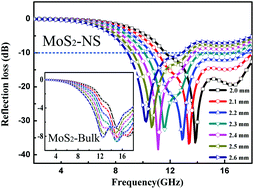
MoS2 nanosheets (MoS2-NS) exhibit a minimum reflection loss of -38.42 dB and a wide bandwidth with effective attenuation (<-10 dB) up to 4.1 GHz at a thickness of 2.4 mm.
The content of this RSS Feed (c) The Royal Society of Chemistry

26 Aug 04:00
by Ansuman Halder, Ramya Chulliyil, Anand S Subbiah, Tuhin Khan, Shyamtanu Chattoraj, Arindam Chowdhury and Shaibal K Sarkar

The Journal of Physical Chemistry Letters
DOI: 10.1021/acs.jpclett.5b01327

26 Aug 03:14
by Qi Liu, Fong Yew Leong, Zainul Aabdin, Utkarsh Anand, Tran Si Bui Quang and Utkur Mirsaidov

ACS Nano
DOI: 10.1021/acsnano.5b03078

FCWang and -1 others like this