Welcome to the roundup of the best new Android applications, games, and live wallpapers that went live in the Play Store or were spotted by us in the previous 2 weeks or so.
This is the app roundup. The game roundup from last week can be found here.
Please wait for this page to load in full in order to see the AppBrain widgets, which include ratings and pricing info.
Small but important tweaks to make book, magazine and newspaper management simpler.
Amazon has pushed a small but notable update to the Kindle reader app tonight that adds two new features as well as performance improvements. Starting with this version 4.2.0 update, you will now have more options for sorting the items in your library including by recent purchases, title or author (A-Z or Z-A). Additionally, the update added a new feature showing the amount of time left to finish the current chapter or entire book (presumably based on your average pace).
Naturally the update includes "sync and stability improvements", although no specific fixes were mentioned. Kindle users should go ahead and snag the latest version from the Play Store link above.
Windows/Web: Should I Remove It? explains what those mysterious processes are in the Windows task manager, shows you what those unlabeled applications are in your programs list, and lets you know if they're safe to stop, uninstall, or delete, all with a single click.
Some alarming news surfaced in Canada last week, when more than 50 black birds suddenly dropped dead out of the sky over Winnipeg, Manitoba, on August 7th, according to the CBC. The birds, which were later confirmed to be grackles, reportedly began flocking together by the thousands over cars and buildings in the city's north end. Frightened residents reported seeing the birds acting "dizzy" before abruptly plummeting out of the sky, as the CBC reported. At least 11 birds were found on the ground alive and taken in by the Winnipeg Humane Society, but they too couldn't stand or fly and were later euthanized.
Extravagant entrepreneur know for his futurey projects has explained his Hyperloop project in detail to Businessweek’s Ashlee Vance ahead of publishing his blog post and holding his press conference today, and the resulting project is an ambitious project that borders on the crazy. This is the guy who build Tesla Motors and SpaceX, but he actually says he regrets bringing it up to begin with and says it’s up to someone else to build it.
“I wish I had not mentioned it,” he’s quoted as saying in the Bustinessweek article. “I still have to run SpaceX and Tesla, and it’s fucking hard.”
The Hyperloop does indeed sound hard, and expensive, but it’s the alternative to a $70 billion high-speed rail plan that’s been widely criticized already and that one’s going into production. The Hyperloop features tubes with a low level of pressurization that would contain pods with skis made of the SpaceX alloy inconel, which is designed to withstand high pressure and heat. Air exiting those skis through tiny holes would create an air cushion on which the pods would ride, and they’d be propelled by air jet inlets. And all of that would cost only around $6 billion, according to Musk.
Musk’s project has a number of advantages over the current high-speed rail plan in terms of economics, and it’s meant to be built above ground on pylons that mean it wouldn’t require purchasing of huge tracts of land or uprooting of farms and other infrastructure. It also eliminates ambient noise problems, Musk says in his detailed plans, and minimizes derailment risks. It’s also self-powered thanks to solar panels placed along the top of the pod-containing tube’s length. One potential sour note: Musk says in his prospectus that security checks akin to those made by the TSA at airporst would be de rigueur for Hyperloop travel.
I’m not going to try to pin down the physics; Businessweek does a great job explaining it, and they’ve spoken to a preeminent physicist who says it’s all feasible (and adds it would be “cool” if the tubes were transparent). Perhaps the best summary of it all is what Valleywag’s Sam Biddle has to say about it on Twitter:
I think elon musk is a cool guy but let's not kid ourselves, this is an imaginary space train that he can just describe however he wants— Sam Biddle (@samfbiddle) August 12, 2013
Musk’s official blog post on the subject is live now on his blog (direct link to the detailed PDF prospectus, which will apparently be updated soon with correction), and it’s also meaty reading. On a conference call describing the system, Musk did say that he wanted to at least create a small scale demonstration prototype to hand off to someone else. But the bottom line is that Musk came up with something that he has no intention to build, and that sounds incredibly hard to build, and will probably remain firmly imaginary. Fun.
When President Obama announced a series of intelligence reforms last Friday he called for the creation of an independent advisory group made up of "outside experts" who will review controversial surveillance programs. But based on a memorandum issued today by the White House, it's not clear how independent the effort will be. The president has directed the Director of National Intelligence, James Clapper, to establish the "review group" that will be responsible for issuing a report about how surveillance programs "impact our security, our privacy, and our foreign policy." The review group is intended in part, as the president said last week, to "maintain the trust of the people" — so why did the president put a man at the center of...
In a blog post today, Elon Musk revealed plans for an alpha version of his much-anticipated Hyperloop, an innovative transportation system that would move passengers from Los Angeles to San Francisco in less than 30 minutes. According to the plans, the Hyperloop would transport passengers in aluminum pods traveling up to 800mph, mostly following the route of California's I-5. The estimated cost would be $6 billion for passenger-only model, or $10 billion for a larger model capable of transporting cars. On a following conference call, Musk said he expected a prototype unit might take only three or four years to complete given the right project leader, including a couple years to acclimate themselves to the project. "If it was my top...
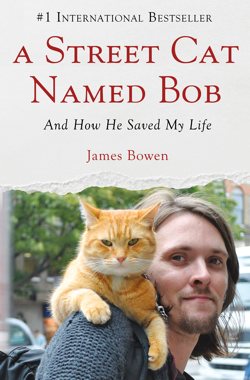
I don't usually read books about pets, but something about A Street Cat Named Bob intrigued me, and once I started reading it I found I couldn't put it down. It's about a heroin-addicted London street busker named James Bowen who finds an injured stray cat and nurses him back to health. This simple act of kindness to an animal had a profound effect on Bowen's life. Enjoy the following excerpt.
Excerpt:
I had to take Bob to a vet. I set my alarm early and got up to give the cat a bowl of mashed biscuits and tuna. It was another grey morning, but I knew I couldn’t use that as an excuse.
Inside the center, it was like stepping into a scene from hell. It was packed, mostly with dogs and their owners, most of whom seemed to be young teenage blokes with skinhead haircuts and aggressive tattoos. Seventy per cent of the dogs were Staffordshire Bull Terriers that had almost certainly been injured in fights with other dogs, probably for people’s amusement.
People always talk about Britain as a ‘nation of animal lovers’. There wasn’t much love on display here, that was for sure. The way some people treat their pets really disgusts me.
The cat sat on my lap or on my shoulder. I could tell he was nervous, and I couldn’t blame him. He was getting snarled at by most of the dogs in the waiting room. One or two were being held tightly on their leashes as they strained to get closer to him.
One by one, the dogs were ushered into the treatment room. Each time the nurse appeared, however, we were disappointed. In the end it took us four and a half hours to be seen.
Eventually, she said, ‘Mr Bowen, the vet will see you now.’
He was a middle-aged vet. He had that kind of world- weary, seen-it-all expression you see on some people’s faces. Maybe it was all the aggression I’d been surrounded by outside, but I felt on edge with him immediately.
‘So what seems to be the problem?’ he asked me.
I knew the guy was only doing his job, but I felt like saying, ‘Well, if I knew that I wouldn’t be here’ but resisted the temptation.
I told him how I’d found the cat in the hallway of my building and pointed out the abscess on the back of his leg.
‘OK, let’s have a quick look at him,’ he said.
He could tell the cat was in pain and gave him a small dose of diazepam to help relieve it. He then explained that he was going to issue a prescription for a two-week course of cat-strength amoxicillin.
‘Come back and see me again if things haven’t improved in a fortnight,’ he said.
I thought I’d take the opportunity and ask about fleas. He had a quick look around his coat but said he could find nothing.
To his credit, he also checked to see if the tom was microchipped. He wasn’t, which again suggested to me he was a street cat.
‘You should get that done when you have a chance,’ he said. ‘I think he should also be neutered quite soon as well,’ he added, handing me a brochure and a form advertising a free neutering scheme for strays. Given the way he tore around the house and was so boisterous with me I nodded in agreement with his diagnosis.
‘I think that’s a good idea,’ I smiled, expecting him to at least ask a follow-up ‘why?’
But the vet didn’t seem interested. He was only concerned with tapping his notes into a computer screen and printing off the prescription. We were obviously on a production line that needed to be processed and pushed out the door ready for the next patient to come in. It wasn’t his fault – it was the system.
Within a few minutes we were finished. Leaving the vet’s surgery, I went up to the counter at the dispensary and handed over the prescription.
The white-coated lady there was a bit friendlier.
‘He’s a lovely-looking fellow,’ she said. ‘My mum had a ginger tom once. Best companion she ever had. Amazing temperament. Used to sit there at her feet watching the world go by. A bomb could have gone off and he wouldn’t have left her.’
She punched in the details to the till and produced a bill.
‘That will be twenty-two pounds please, love,’ she said.
My heart sank.
‘Twenty-two pounds! Really,’ I said. I had just over thirty pounds in the whole world at that point.
‘Afraid so, love,’ the nurse said, looking sympathetic but implacable at the same time.
I handed over the thirty pounds in cash and took the change.
It was a lot of money for me. A day’s wages. But I knew I had no option: I couldn’t let my new friend down.
‘Looks like we’re stuck with each other for the next fortnight,’ I said to Bob as we headed out of the door and began the long walk back to the flat.
It was the truth. There was no way I was going to get rid of the cat for at least a fortnight, not until he completed his course of medicine. No one else was going to make sure he took his tablets and I couldn’t let him out on the streets in case he picked up an infection.
I don’t know why, but the responsibility of having him to look after galvanized me a little bit. I felt like I had an extra purpose in my life, something positive to do for someone − or something − other than myself.
That afternoon I headed to a local pet store and got him a couple of weeks’ worth of food. I’d been given a sample of scientific formula food at the RSPCA and tried it on him the previous night. He’d liked it so I bought a bag of that. I also got him a supply of cat food. It cost me around nine pounds, which really was the last money I had.
That night I had to leave him on his own and head to Covent Garden with my guitar. I now had two mouths to feed.
Today, Google added the ability to embed SoundCloud posts directly into the Google+ stream. Now users will be able to play the audio file without leaving the site. Read more here.
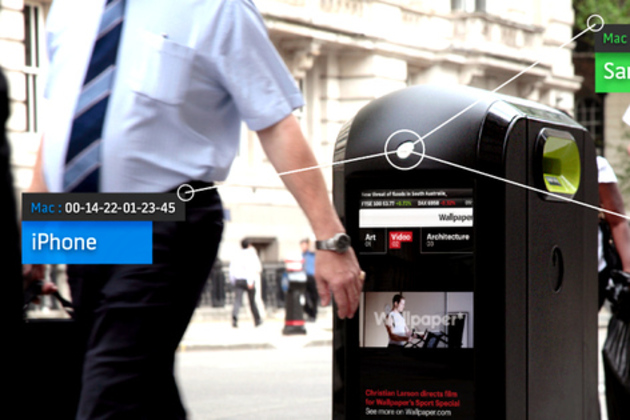
Apparently Londoners aren't fond of being tracked by public trash cans. Less than a month after Renew began anonymously collecting information about people walking past their Wi-Fi-enabled trash bins, the City of London has put a stop to the practice. “We have already asked the firm concerned to stop this data collection immediately, and we have also taken the issue to the Information Commissioner’s Office,” the City of London said in a statement. ”Irrespective of what’s technically possible, anything that happens like this on the streets needs to be done carefully, with the backing of an informed public.”
Renew collected details on the speed and proximity of passersby using 12 of its 100 "smart" bomb-proof trash receptacles...
After leaking ultra-low fidelity images last month, Sony Alpha Rumors has uploaded the first high-resolution photos of Sony's new wireless "lens camera" series. The lens cameras are essentially a lens, a sensor, and all of the accouterments needed to take a photo in a single package, such as an SD card slot and a processor. The cameras will reportedly click onto Android smartphones, and will connect wirelessly to allow the phone's display to work as a viewfinder.
Paolo Čerić, a Croatian artist who previously made headlines for a series of mind-blowing GIFs, has now created some stunning illustrations, each crafted from a single spiral. The images (there are currently four on Čerić's Tumblr) weren't created with a pen or pencil, but rather generated using computer code.
Voice commands on Google Glass are starting to get a lot more robust. For the device's monthly software update, Google is rolling out the first voice commands that can be tapped into by third parties. So far, that includes Evernote with the phrase "take a note," and Path with the phrase "post an update." While only those two services support the new commands today, other apps will be able to add support for the very same phrases, which will give wearers the option of what service they want to use. Google also says that there's a lot more voice support for third-party services on the way, but it isn't saying what that will entail.
Today's Glass update also include several more built-in Google Now cards — those include reservation...
Samsung's next-generation Galaxy Note III phablet will seemingly be the company's first flagship smartphone to debut with the latest version of Android. Google took the wraps off of a new Android Jelly Bean build late last month. While the software isn't a major update like Android 5.0 Key Lime Pie will be, it still brings a number of nice new functions to Google's mobile platform and Samsung is apparently looking to support them as quickly as possible. According to a series of DLNA certifications found recently on the Digital Living Network Alliance website, the Galaxy Note III — listed by its model number SM-N900 — indeed carries Android 4.3 Jelly Bean, in line with earlier reports. Other rumored specs include a 5.7-inch display, a 2.3GHz Snapdragon 800 processor or an eight-core Exynos 5 Octo chipset depending on region, 3GB of RAM and a massive battery. The Note III will be unveiled during a press conference on September 4th.
If you wanted to describe OneFineStay in a lazy way you’d call it a sort of up-scale Airbnb which caters to the luxury traveller. However, it’s rapidly shaping up to be a very different kind of beast. The company has now hit 1,000 homes on its books in London. Normally would we would’t bother covering such a metric. We don’t cover how many places Airbnb has hit in London for instance – but this is different. Because OneFineStay is slowly but surely building a very high barrier to entry for any potential competitors. Those 1,000 homes represents over 2,500 bedrooms, which is more than twice the size of the largest luxury hotel in London, or to put it another way, more bedrooms than The Langham Hotel (one of London’s finest) fifteen times over. And the OneFineStay experience is clearly upmarket.
For instance, you can stay in the iconic clock tower apartment at St. Pancras station. And every single one of these places, OneFineStay people have to look at individually, and meet the owners. Home owners get their valuables and clothes stored away, and customers get fresh towels and the place cleaned after they leave – plus a range of other services.
On this traction, says founder/CEO Greg Marsh, the startup will have 3,000 homes in London by next year, given that this 1,000 figures represents a three-times year on year traction since last year.
After three years of operation, the startup – which has 200 full time employees across offices in London, New York, and Paris – guests can now stay in more than 50 different London neighbourhoods, and it now has 300 homes in New York
Marsh says there is “lots of more stuff coming”, including better new services, local partnerships and upscale gym membership deals. He just visited LA and is about to visit Berlin. Make of that what you will.
This is a startup worth watching not for the Airbnb clones but for the actual hotel groups. Any hotel group should be more worried about OneFineStay than it should about Airbnb, especially given this kind of experience.
Google’s Android app marketplace, Google Play, has seen significant revenue growth this year, fueled in large part by Japan and South Korea. In a new report released today by app store analytics firm Distimo, the company found that Google Play’s revenue grew by 67 percent over the past six months, while Apple’s App Store revenue grew by just 15 percent during the same time frame.
While these numbers reflect the impact Android’s massive market share is having on the app industry, it’s worth noting that of the two app stores, the Apple App Store’s market is still the largest, and continues to see more than two times the revenue of Google Play.
That latter figure varies a bit from an earlier report put out by competing analytics firm App Annie in April, which found that Apple’s App Store earned around 2.6 times more revenue in the preceding quarter. But not only do the firms’ methodologies differ in general, Distimo looked at the earnings of all ranked apps in the 18 largest countries over 6 months, while App Annie’s data was, as noted above, for the quarter.
That being said, Google Play’s revenue growth is notable. While only 25 percent of the revenue from the two stores combined came from Google Play in February 2013, this went up 8 percentage points to reach 33 percent by July.
Japan & South Korea Fuel Google Play Revenue Growth
Overall, the U.S. still spends the most money on apps, followed by Japan and South Korea, who were the main contributors to Google Play’s revenue share. After the top three, were the U.K., Australia, Germany, Canada, France, Russia, and Italy. (One interesting side note here is that in Russia, more money was spent in the App Store for the iPad, than in the App Store for the iPhone.)
In terms of the top revenue-generating apps this past month, Google Play’s list reflects its heavy footprint in Japan and South Korea in particular. Though King.com’s Candy Crush Saga still reigns at number one, it’s followed by Japan’s Puzzles & Dragons, two apps for South Korea’s Kakao at spots #3 and #5, and Japan’s LINE at number 4.
Meanwhile, the top revenue-generating apps in the Apple App Store, in order, were: Candy Crush, Clash of Clans, Hay Day, Puzzles & Dragons, and The Hobbit: Kingdoms of Middle-Earth.
In terms of paid apps, Apple’s app store was largely games with the exception of WhatsApp in spot #4, while Google Play was a mix of games and utilities (like a keyboard, backup service, and launcher).
More details on top publishers, free apps, and more are in the full report.
Smartphones running the new Firefox OS have been launched by a couple of carriers around the world (most notably by Telefónica in Spain and South America), but a widespread launch in the US and UK is still a ways off. Despite that, ZTE still wants to sell its Open Firefox smartphone to consumers willing to pay for it in those countries, so it has turned to eBay to peddle its wares. The Open is ZTE's first Firefox phone, and while it won't get any hardware geeks excited with its 3.5-inch HVGA display and low-end processor, it does give the US and UK their first look at the new web-based mobile platform. Those interested in giving the Open a run can pick it up in orange for $79.99 (£59.99 in the UK) from the official ZTE eBay store...
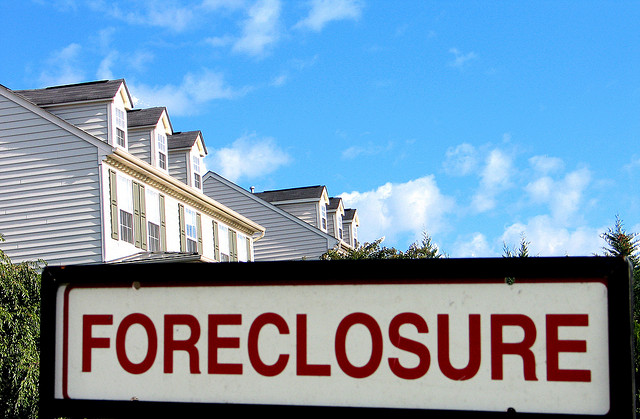
Back in 2012, the major US banks settled a federal mortgage-fraud lawsuit for $1B. The suit was filed by Lynn Szymoniak, a white-collar fraud specialist, whose own house had been fraudulently foreclosed-upon. When the feds settled with the banks, the evidence detailing the scope of their fraud was sealed, but as of last week, those docs are unsealed, and Szymoniak is shouting them from the hills. The banks precipitated the subprime crash by "securitizing" mortgages -- turning mortgages into bonds that could be sold to people looking for investment income -- and the securitization process involved transferring title for homes several times over. This title-transfer has a formal legal procedure, and in the absence of that procedure, no sale had taken place. See where this is going?
The banks screwed up the title transfers. A lot. They sold bonds backed by houses they didn't own. When it came time to foreclose on those homes, they realized that they didn't actually own them, and so they committed felony after felony, forging the necessary documentation. They stole houses, by the neighborhood-load, and got away with it. The $1B settlement sounded like a big deal, back when the evidence was sealed. Now that Szymoniak's gotten it into the public eye, it's clear that $1B was a tiny slap on the wrist: the banks stole trillions of dollars' worth of houses from you and people like you, paid less than one percent in fines, and got to keep the homes.
Now that it’s unsealed, Szymoniak, as the named plaintiff, can go forward and prove the case. Along with her legal team (which includes the law firm of Grant & Eisenhoffer, which has recovered more money under the False Claims Act than any firm in the country), Szymoniak can pursue discovery and go to trial against the rest of the named defendants, including HSBC, the Bank of New York Mellon, Deutsche Bank and US Bank.
The expenses of the case, previously borne by the government, now are borne by Szymoniak and her team, but the percentages of recovery funds are also higher. “I’m really glad I was part of collecting this money for the government, and I’m looking forward to going through discovery and collecting the rest of it,” Szymoniak told Salon.
It’s good that the case remains active, because the $1 billion settlement was a pittance compared to the enormity of the crime. By the end of 2009, private mortgage-backed securities trusts held one-third of all residential mortgages in the U.S. That means that tens of millions of home mortgages worth trillions of dollars have no legitimate underlying owner that can establish the right to foreclose. This hasn’t stopped banks from foreclosing anyway with false documents, and they are often successful, a testament to the breakdown of law in the judicial system. But to this day, the resulting chaos in disentangling ownership harms homeowners trying to sell these properties, as well as those trying to purchase them. And it renders some properties impossible to sell.
To this day, banks foreclose on borrowers using fraudulent mortgage assignments, a legacy of failing to prosecute this conduct and instead letting banks pay a fine to settle it. This disappoints Szymoniak, who told Salon the owner of these loans is now essentially “whoever lies the most convincingly and whoever gets the benefit of doubt from the judge.” Szymoniak used her share of the settlement to start the Housing Justice Foundation, a non-profit that attempts to raise awareness of the continuing corruption of the nation’s courts and land title system.
BlackBerry has just announced that its board of directors has formed a "special committee" to investigate "strategic alternatives" to help enhance and grow the company's value — and one of the options on the table is a sale of the company. Also on the table are joint ventures or partnerships, but no other companies were named in BlackBerry's press release. This isn't the first time we've heard of BlackBerry investigating its options in an increasingly-competitive smartphone market — in early 2012, the company reportedly hired Goldman Sachs to evaluate its options, and last June the company was reportedly investigating the selloff of its handset business.
Of course, a lot has happened since last year — BlackBerry 10 finally...
Android: If you like the look of Ubuntu Touch, or just Ubuntu's overall color scheme, Ubuntu Lockscreen can turn your boring old slide-to-unlock into something a bit more useful and fun to use. The app supports app notifications, SMS alerts, password unlock, and live animations, so it's functional and fun to use.
The odorless and tasteless nature of "date rape drugs" can make them impossible for victims to detect before it's too late. But soon your drinking glass may able to warn you if dangerous chemicals have been slipped into your cocktail. Next month, DrinkSavvy will begin shipping plastic cups and straws that change color if a drink contains GHB, Rohypnol or Ketamine, three drugs commonly used for spiking purposes. The effort began with a successful $50,000 Indiegogo campaign led by company founder Michael Abramson — who himself was once unknowingly "roofied" during a night out with friends.
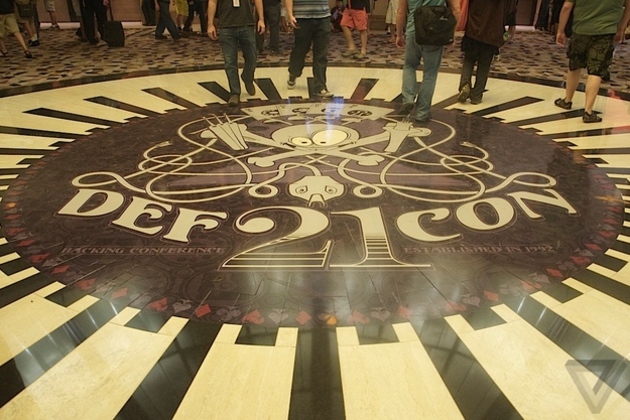
Jason Scott, the well-known digital archivist with archive.org who has previously produced a documentary on bulletin board systems, has turned his attention to Def Con — the Vegas convention that now attracts thousands of hackers (and would-be hackers) each year. Def Con: The Documentary sits down with a number of individuals who've been involved with the event from the start, including "The Dark Tangent" himself, Def Con founder Jeff Moss.
Def Con is familiar territory for Scott, who is a longtime attendee and frequent speaker at the conference — and naturally, assembling the narrative of how the world's largest hacker convention got its start fits in well with his day job of preserving internet history.
The Pirate Bay is arguably the most censored website on the Internet.
Courts in the UK, the Netherlands, Italy and elsewhere have ordered Internet providers to block subscriber access to the torrent site, and more are expected to follow.
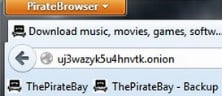
Up until now The Pirate Bay has encouraged users affected by the blackout to use proxy sites. However, on its 10th anniversary they are now releasing a special “PirateBrowser” which effectively bypasses any ISP blockade.
“It’s a simple one-click browser that circumvents censorship and blockades and makes the site instantly available and accessible. No bundled ad-ware, toolbars or other crap, just a Pre-configured Firefox browser,” The Pirate Bay explains.
The browser is based on Firefox 23 bundled with a Tor client and some proxy configurations to speed up loading. It is meant purely as a tool to circumvent censorship and unlike the Tor browser it doesn’t provide any anonymity for its users.
“This browser is just to circumvent censorship, to remove limits on accessing sites governments don’t want you to know about,” The Pirate Bay notes.
PirateBrowser works like any other web browser and comes pre-loaded with several bookmarks for blocked sites, which aside from The Pirate Bay includes EZTV, KickassTorrents, Bitsnoop and H33T.
The browser also lists the alternative .onion addresses for both TPB and EZTV as backups to access these sites.
The Pirate Bay is not alone in its efforts to keep the Internet open and accessible. The Obama administration has spent millions of dollars on similar projects allowing citizens of oppressed regimes to access blocked websites, albeit for different reasons.
The Pirate Bay team informs TorrentFreak that “PirateBrowser” is just the first step in their efforts to fight web censorship. They are also working on a special BitTorrent-powered browser, which lets users store and distribute The Pirate Bay and other websites on their own.
In theory, this will allow sites to exist and update even without having a public facing website. As a result, it will be virtually impossible to block or shut them down. The first version of this new software is currently being tested but there is currently no firm launch date. More on that later.
In the meantime, the development of PirateBrowser will also continue. The current release is only available for the Windows platform but Mac and Linux versions will follow in the future.
A wily Russian fellow crossed out the fine-print on an unsolicted credit-card application from Tinkoff Credit Systems in 2008 and wrote in his own terms, giving himself unlimited, interest-free credit and exemption from all fees, with a 3MM ruble fee should the bank change the terms and a 1MM ruble fee should they cancel his card. He crossed out the URL giving the terms and conditions and wrote in his own. And a court has ruled that his changes -- which were blindly accepted by the bank -- are binding. He's now suing them for breach of contract, since they refused to pay him the cancellation fee he'd written in -- he's seeking USD727,000.
Among the amendments in his version of the contract — unlimited credit, 0% APR, no fees, including the stipulation that he “is not obliged to pay any fees and charges imposed by bank tariffs.” Since the contract included a URL for a web page containing the full terms of service, the customer also wrote in a new URL of his own so that the bank couldn’t just say “but these terms are different than what’s published on the site.”
Per the amended terms, every change to these terms would result in a payment of 3 million rubles ($91,000) to the customer, or a cancelation fee of 6 million rubles ($182,000)...
...And so Tinkoff sued the customer. However, the court held that his amendments were binding since the bank accepted them, whether it looked at them or not. The court said the customer only owed the principal balance of around $575.
Perhaps emboldened by this victory, the customer then sued Tinkoff for a whopping $727,000 for its failure to honor the amended agreement and for not paying out the agreed-upon penalty of $182,000 when it canceled his account.
By reading this blog-post you agree, on behalf of your employer, to release me from all obligations and waivers arising from any and all NON-NEGOTIATED agreements, licenses, terms-of-service, shrinkwrap, clickwrap, browsewrap, confidentiality, non-disclosure, non-compete and acceptable use policies ("BOGUS AGREEMENTS") that I have entered into with your employer, its partners, licensors, agents and assigns, in perpetuity, without prejudice to my ongoing rights and privileges. You further represent that you have the authority to release me from any BOGUS AGREEMENTS on behalf of your employer.
National treasure Stephen Fry published an open letter to UK Prime Minister David Cameron and the International Olympic Committee asking them to move the 2014 Winter Olympics from Russia in response to Russia's banning and scapegoating of LGBT people. Fry compared a 2014 Russia Games to the 1936 Berlin Games, which legitimized Hitler and greatly aided his cause.
Naturally, the Daily Mail, a newspaper that heavily supported Hitler and Naziism, came out against Fry with a predictable, vicious editorial. The Mail is a savage, terrible, morally bankrupt mouthpiece for a clutch of racists, sexists and greedy aristos who'll say or do anything to sell papers.
Fry has responded with a long piece on the Mail and its hatefulness that is a must-read, especially for people who haven't lived in the UK and understood what a genuinely nasty piece of work the Mail is, and how badly it distorts the public debate in this country.
But there’s form here. The Mail still can’t quite live with the shame that it has always, always been historically wrong about everything - large and small - from Picasso to equal pay for women. Because it has always been against progress, the liberalising of attitudes, modern art and strangers (whether by race, gender or sexuality). Of course they’ll leap on a Stephen Lawrence bandwagon once the seeds of their decades of anti-immigration racism (read a 1960s or 1970s Daily Mail) have been sown, but deep down they have always come from the same place and had the same instinct for the lowest, most mean-spirited, hypocritical, spiteful and philistine elements of our island nation.
Most notoriously of all, they loved Adolf Hitler when he came to power, and as the Czech crisis arose they were the appeasement newspaper. And woe-betide any liberal-minded anti-fascist who warned that the man was unstable and that consistently satisfying his vanity, greed and ambition was only storing up trouble. The whole liberal left, not to mention Winston Churchill, were mocked and scorned for their instinctive distrust of Hitler. The Daily Mail knew better.
In January 1934 Harold Harmsworth, 1st Viscount Rothermere, younger brother of the paper’s founder Alfred Northcliffe (the 4th Viscount Rothermere is chairman of the company that still owns it) wrote an article called “Hurrah for the Blackshirts”. He was sending congratulatory telegrams to “My dear Führer” as he liked to call him, right up until a few months before the outbreak of war.
Amazon is preparing to launch brand new Kindle Fire HD tablets in the coming months and BGR has detailed them fully in a pair of exclusive reports. The second-generation Kindle Fire HD models will feature an all-new exterior design, as well as a complete internal overhaul with cutting-edge specs that outclass every comparable tablet on the market today. With the new slates' fall launch approaching, Amazon has slashed the base price of the current-generation Kindle Fire HD to just $159 in a likely move to clear inventory. The new price is in line with Amazon's entry-level Kindle Fire, and the company noted that it will only be available for a limited time.
During the summer of 2003 The Pirate Bay was founded by Swedish pro-culture organization Piratbyrån.
Piratbyrån, which translates to Bureau of Piracy, was formed by political activists and hackers in the early 2000s, many of whom had already launched other web projects challenging political, moral and power structures.
The group’s members were all friends of friends and in common with The Pirate Bay, there was virtually no structure.
One of the group’s unwritten goals was to offer a counterweight to the propaganda being spread by local anti-piracy outfit Antpiratbyrån. With BitTorrent as the up-and-coming file-sharing technology, they saw it fit to start their own file-sharing site to promote sharing of information.
“At the time there was one big torrent site, which was called Suprnova, but they mainly had international content. We and Piratbyrån wanted more Swedish and Scandinavian content. So we started a big library, and that is The Pirate Bay,” Peter Sunde later recalled.
The site first came online in Mexico where Gottfrid Svartholm, aka Anakata, hosted the site on a server owned by the company he was working for at the time.
After a few months the site moved to Sweden where it was hosted on a Celeron 1.3GHz laptop with 256MB RAM. This one machine, which belonged to Fredrik Neij (TiAMO), kept the site online and included a fully operational tracker.
The Pirate Bay server
It didn’t take long before more server power was needed to keep the site and tracker from collapsing due to a growing number of visitors.
By the end of 2004, a year after the site launched, the tracker was coordinating a million peers and over 60,000 torrent files. Around the same time the founders also noticed that it was not only Scandinavians developing an interest in their site.
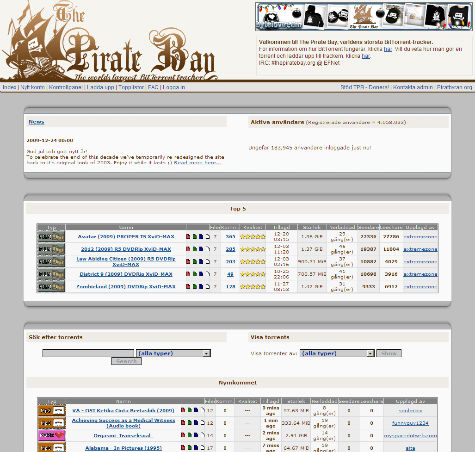
In fact, by then 80% of their users came from other parts of the world. Because of increasing worldwide popularity The Pirate Bay team completely redesigned the site, which became available in several languages during July 2005.
The Pirate Bay before the redesign
Due to these changes, The Pirate Bay grew even faster, and the number of peers tracked by the site grew to 2,500,000 by the end of 2005.
In the meantime, Piratbyrån had distanced itself from the site as a group, but continued to share the Kopimi lifestyle throughout the world until 2007. The Pirate Bay sailed on independently and continued to be operated by an unorganized collection of individuals.
Pirate Bay’s increase in traffic didn’t go unnoticed by the entertainment industries. Copyright holders started to send out takedown notices, which were often mocked by the site’s founders. Eventually, however, The Pirate Bay got raided following pressure from Hollywood and the USA.
May 31, 2006, less than three years after The Pirate Bay was founded, 65 Swedish police officers entered a datacenter in Stockholm. The officers were tasked with shutting down the Pirate Bay’s servers.
Footage from The Pirate Bay raid
The site went down for three days, only to reappear at a new hosting facility. The site’s operators were not impressed and renamed the site “The Police Bay” complete with a new logo shooting cannon balls at Hollywood. A few days later this logo was replaced by a Phoenix, a reference to the site rising from its digital ashes.
The raid brought the site into the mainstream press, not least due to its amazing three-day resurrection. All this publicity resulted in a huge traffic spike for TPB, exactly the opposite effect Hollywood had hoped for.
Logos after the raid
Despite a criminal investigation into the site’s founders The Pirate Bay kept growing and growing. In early 2009, more than two years after the Swedish investigation was finalized, the three co-founders and businessman financier Carl Lundstrom went on trial.
April 2009 the four were found guilty of assisting copyright infringement. They were sentenced to one year in jail and fines totaling $3,620,000. During the appeal in 2010 the prison sentences were reduced, but the fines increased to more than $6.5 million. Thus far, two of the four have served their sentences.
The Pirate Bay’s assets, meanwhile, were transferred to the mysterious Seychelles-based company Reservella which continues to operate the site up until today.
Under new ownership several major technical changes occurred. In the fall of 2009 the infamous BitTorrent tracker was taken offline, turning The Pirate Bay into a torrent indexing site.
Early 2012 The Pirate Bay went even further when it decided to cease offering torrent files for well-seeded content. The site’s operators moved to magnet links instead, allowing them to save resources and making it easier for third-party sites to run proxies.
These proxies turned out to be much-needed, as The Pirate Bay is now the most broadly censored website on the Internet. In recent years ISPs in Denmark, Italy, UK, the Netherlands and elsewhere have been ordered by courts to block access to the BitTorrent site. Earlier this year The Pirate Bay estimated that at least 8% of their visitors are now accessing the site through proxies.
Late last year The Pirate Bay made another change to improve its resilience by switching their entire operation to the cloud. Serving its users from several cloud hosting providers scattered around the world saves costs, guarantees better uptime, and makes the site more portable and thus harder to take down.
The final change to the site’s operation came a few months ago. Fearing a domain seizure by the Swedish authorities, TPB took action again. After hearing the rumors The Pirate Bay quickly switched to a Greenland-based domain, later hopping to Iceland, and eventually landing .SX domains as other problems became apparent.
Despite numerous court cases, court-ordered blockades by ISPs and two full trials at the Stockholm Court, The Pirate Bay remains online. In fact, it is still one of the most-visited websites on the Internet and the number of users continues to grow.
As for the future, it is expected that the legal pressure will continue and increase. In recent years copyright holders have focused more on targeting the site’s hosting facilities, domain registrars and advertisers. Whether that will be good enough to bring the site to its knees remains to be seen.
 Welcome to the roundup of the best new Android applications, games, and live wallpapers that went live in the Play Store or were spotted by us in the previous 2 weeks or so.















 The Pirate Bay is arguably the most censored website on the Internet.


 National treasure Stephen Fry

 During the summer of 2003 The Pirate Bay was founded by Swedish pro-culture organization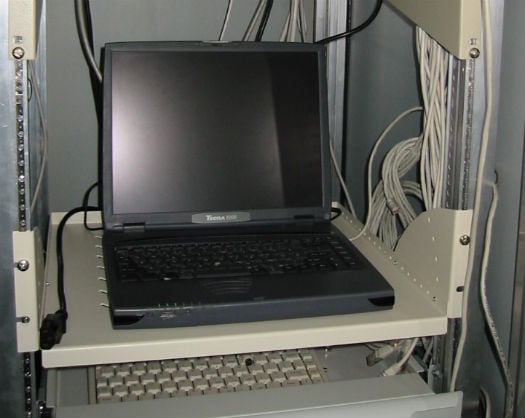

 Early 2012 The Pirate Bay went even further when it decided to cease offering torrent files for well-seeded content. The site’s operators moved to magnet links instead, allowing them to save resources and making it easier for third-party sites to run proxies.