Shared posts

20 Nov 23:17

How to Defeat the Urge to Binge Shop

by Kristin Wong

How to Defeat the Urge to Binge Shop

It seems contradictory, but I love being frugal and I also love spending money. Over the last few years, however, my love of frugality has outweighed my love of spending—and it's been good for my savings. Yes, it's okay to spend money sometimes. If you have it, and you're comfortable with your present and future finances, by all means, spend away. But a lot of us, including myself, spend when we shouldn't spend.

This post originally appeared on GetRichSlowly.

It's to be expected, I think, in our consumer culture. I can't walk down my block without being sold something every minute or so, from billboards to petitioners to window sales. With temptation everywhere, how can we avoid spending sprees?

Identify the Root of Your Spending

How to Defeat the Urge to Binge Shop

We'll start with the heavy stuff first because I think it helps put the practical tips into perspective. I recently read Lost and Found by Geenen Roth. Roth and her husband lost their savings in the Bernie Madoff scandal, but her book is mostly about her emotional issues with money. In one chapter, Roth describes an obsession with a pair of chic but expensive eyeglasses she desperately wanted to buy. The obsession is symbolic of her relationship with consumption. In an interview with Time, she explains:

"In the same way that we use food for emotional reasons, we use buying things to fill something that we can't quite name."

Roth adds that this can lead to "binge-shopping." This hit home for me, because I used to spend emotionally, especially when I was younger. Learning to let go of my emotional attachments with spending helped me to avoid these binges.

For Roth, Stuff represented love. For me, Stuff represented acceptance. I recall one binge spree in college particularly well because I was making $10 an hour, and I skipped class to buy a bunch of clothes. This is so insensible, I remember thinking, and it was the first time I realized shopping was emotionally symbolic for me. I felt like, if I got a whole new wardrobe, I might be a different and better person. I'd be more self-assured, less neurotic. (It didn't work.)

A friend recently told me about her own emotional spending. Like Roth, she equated it to love. "So I learned to love myself differently," she said. Similarly, during one Christmas shopping spree that set me back quite a bit, I realized I also enjoy buying things for other people to let them know I care. I've learned to let them know in other ways.

Again, it's OK to spend. I had a spendy weekend recently, and while it was a little out of control, I don't think I was trying to fill a void. I was just having fun. It set my savings back a bit, but it wasn't totally insensible—I didn't skip any life duties to go shopping; I didn't charge anything. Writer Holly recently discussed spending a lot during her vacation. I didn't feel like she was trying to fill a void either—she was just enjoying her trip.

I think those instances are different from binge-shopping. To continue Holly's booze metaphor, those instances are like having one too many beers when you're out with an old friend. Binge-shopping is like drinking for the sole purpose of getting shit-faced to forget your problems. Of course, for some people, it's not that complicated—they just like to buy things. But if shopping has become an uncontrollable issue, it might be because it's filling some emotional void. Identifying the root of your spending can help curb it.

"Power Shop"

It seems unlikely now, but my dad used to have a spending problem. He got over it, so I thought I'd ask him how. "I power-shopped," he said, meaning he'd walk around Best Buy, fill his basket up with Stuff, and then put it all back. It seems kind of crazy, but it helped him let go of his desire to consume everything.

I guess the idea is that, after "owning" something, you realize the product isn't going to significantly change your life. It loses any appeal and meaning you might have attached to it. You realize it's just a thing. Erica did say this doesn't always work, though, and my dad warned that it takes a lot of discipline. I imagine it can backfire if you're good at arguing with yourself.

Focus on Your Goals

This is another thing that worked for my dad, and it also worked for me. Instead of focusing on the things I didn't have, I focused on my financial goals. I checked my budget daily, read personal finance and frugal living blogs, monitored my goals and watched my net worth rise. The more focused I've become with my financial independence, the less obsessed I am with shopping. Yes, I still want things. But I don't give in as much because giving in gets in the way of my goals.

Wait

Because emotional shopping is usually impulsive, waiting helps you decide whether you really want something or you're just spending to spend. "I've gotten to a point of waiting a week or a month or a year," my dad told me. "And if I still want or think I need it, then so be it, I will get it. But, usually, it turns out that the impulsive thought has passed."

Avoid Shopping with Spend-Happy Friends

How to Defeat the Urge to Binge Shop

I have a friend whom I used to love shopping with. Why? Because he always bought something. This made me feel better about my own spending. If I'm wavering, and I see my friend buying something, I don't know why, but I'm more apt to give in.

Avoid Stores

Especially when I feel vulnerable, I just avoid certain stores. Lots of stores trigger my emotional spending and make me feel like I need to own half of their inventory. It makes sense; companies spend a lot of money and put a lot of effort into appealing to our vulnerabilities.

Take a Field Trip Without Your Wallet

This seems contradictory to the previous tip, but it helped me learn to appreciate things without the need to own them. Visit your favorite store without any money. For me, this squelched instant gratification. Without money or credit cards, you have no way to consume, and you're forced to just accept products for what they are. This helped me appreciate the aesthetic or usefulness of something without forcing myself into the equation. So instead of representing anything significant, the thing is only a thing. It might be beautiful, it might be cool, but that's all it is.

Another interesting thing about visiting your favorite store without money is that you also become aware of all of the subtle tricks that convince shoppers to spend — the clever advertising, the strategic store layout, the proportionate mannequins — and hopefully, you'll remember these subtle tricks during a future temptation.

Make a List of Things You Already Have

It sounds a little obsessive, but to curb my temptation, I used to keep a list on my phone of all of the Stuff I've spent money on in the past year. While shopping, I'd get that little voice in my head telling me: Hey! You reeeally don't need this.

It's easy to ignore that voice. Something tangible, like a list, is harder to ignore. Also, if there's something I want, a list helps me compare it to what I already have. I ask myself, "What is it about this new thing that I like?" Usually, I already own something that possesses those qualities.

Just Stop

How to Defeat the Urge to Binge Shop

It's easier said than done, I know. But when I'm particularly fed up with my desire for Stuff, I just stop. I think about things in perspective. Overspending—what a problem to have! I think about my mom's awful stories of growing up in poverty. I think about how spoiled overspending must sound to someone who's really struggling. And I just don't do it. Guilt probably isn't the best tool; but instead of the guilt, if you focus on the abundance you already have, whether it's family, friends, independence, whatever, it can help stop the urge to spend.

I've gotten better, but I still have setbacks. When I'm overwhelmed with work and nothing seems to be going my way, I'm especially susceptible to "retail therapy." And, again, it's not bad to want things. But when it gets in the way of your well-being, financial independence or life goals, it's a nasty problem.

How to Avoid Binge-Shopping | GetRichSlowly


Kristin Wong is a freelance blogger who frequently writes about relationships for MSN's The Heart Beat blog. After paying off her student loan debt, Kristin decided it was time to pursue her dream and also put her English degree to use. She scrimped, saved, and in 2010, left her hometown of Houston, Texas to pursue a writing career in Los Angeles. Since then, she has written for television, web, and occasionally, sketch comedy. When she's not attached to her laptop, Kristin enjoys baking, amateur gardening, listening to 60s rock and exploring her city. Follow Kristin on Google Plus.

Images via CREATISTA, Ariwasabi, William Perugini, and Denis Belyaevskiy (Shutterstock).

Want to see your work on Lifehacker? Email Tessa.

20 Nov 21:53

Fresh Meat: 10 new Android apps worth checking out

by Steve Raycraft

New apps need lovin’ too, right? Every day there are thousands of new entries on the Google Play store, but many go unnoticed and never receive the attention they deserve. We’ve shown in the past that this community can discover great apps and launch them to new heights. Our weekly column Fresh Meat highlights new apps with less than 100k installs. Browse our new Android app picks below and let us know which ones you enjoy.

SeatGeek

 Seat Geek

Description: SeatGeek is a search engine for tickets that scours hundreds of websites at once – from big sites like StubHub, TicketsNow and eBay down to individual brokers – to help you find the absolute best deals on sports, concert and live events.

FCC Speed Test

FCC Speed Test

Description: The FCC Speed Test app accurately measures your mobile broadband performance and displays an in-depth view of its factors (e.g. download and upload speed, latency and packet loss).

Sportizr Football

Sportizr

Description: Sportizr® is the most comprehensive Premier League football app for smartphones. Live matches and league tables, up-to-date player, club and manager information and decades worth of official historical stats make Sportizr one of the most powerful Premier League statistics resources out there and the must-have app for all football fans.

Xbox One SmartGlass

Xbox One Smartglass

Description: Xbox One SmartGlass is the perfect companion app for your Xbox One, both in your living room and on the go. Connect to and control your Xbox One. Stay connected with the games and gamers you like.

Courses123

Courses123

Description: The Courses123 application gives a perfect opportunity to learn a foreign language (you can choose from English, German, Spanish, French and Italian) with the use of modern technologies. Our application, equipped with the latest and the best solutions, will allow you to learn words effectively and practice their pronunciation.

500 Firepaper

500 Firepaper

Description: 500 Firepaper provides a live wallpaper and a daydream showing you the latest images from 500px throughout the day. You never need to look at that boring old wallpaper again, or search for hours for a nice new one. This app will show you quality photographs from all over the world – different ones each day!

Google Play Newsstand

Google Play Newsstand

Description:  With Google Play Newsstand, discover more of the news and magazines you care about all in one app on your Android tablet or phone. Enjoy breaking news and in-depth articles featuring audio, video and more.

SquareHub

SquareHub

Description: SquareHub is the private social network that makes everyday communication fun and functional for everyone in your family. Send private messages and photos, coordinate activities, manage schedules and share those spontaneous moments of joy with just your family!

Uplay

Uplay

Description: Keep track of your Uplay Progression for all your favorite Ubisoft games from the convenience of your phone or tablet. Browse your personal games collection or view the complete list of games to find something new and exciting to play!

Streambels

Streambels

Description:  Streambels beams the media content in the same way as the Apple AirPlay, making it fully compatible with AirPlay wireless speakers such as Bose, Sony, Pure, Denon, Pioneer and others. The app works smoothly with Apple TV, AirPort Express and any other AirPlay-enabled devices.

20 Nov 21:51

Verbling Launches Live Study Groups And One-On-One Tutoring Service, As Its Spin On Language Learning Begins To Catch On

by Rip Empson
431756_492580094108884_1551789970_n

Learning to speak a new language with any kind of fluency is a daunting task. Not only only does it require time, patience, and a great teacher but, ultimately, there's no “right” way to go about it. Just as language learning tends to resist a one-size-fits-all approach, today the market offers a laundry list of services, apps and startups to choose from - each with its own approach to helping you become a polyglot.

To help it stand out from the pack and take on the Rosetta Stones of the world, Verbling has put a new, yet familiar spin on language learning. To help immerse students in a new language (and learn more effectively), Verbling uses frictionless, in-browser video chat to connect its learners with native speakers, live, in 3-D. What's more, unlike many of its cohorts, the Y Combinator-backed education startup is focused on the Web, not mobile, and native apps, if they do come, are still a ways off.

From the outset, Verbling focused on building a network of native speakers in a few core languages so that it could instantly connect users with someone who's fluent in the language they're trying to learn. However, when we checked in with Verbling late last year, the company had begun to expand its scope - both by adding new languages and by moving beyond its original one-on-one video immersion model. The update saw Verbling add support for nine new languages and bring one-to-many, Google Hangouts-powered “classes” to its platform, with instruction led by an official, TEFL-certified Verbling teacher.

Today, Verbling Classes are group language lessons taught by trained teachers over live video chat in the browser. The startup limits class rosters to nine students per class, which allows it to keep class size manageable as well as offer language learning courses every hour, 24-hours a day, on-demand - with no advance reservation required. Since launching, Classes are now offered in a total of four languages and have quickly become the most popular feature on Verbling, says co-founder Jake Jolis.

Again, while Verbling's focus on building a Web-sans-mobile product (at least for the time being) may make it seem behind the times, it allows it to offer on-demand, around-the-clock service no matter what time zone students are connecting from. While remaining hyper-focused can also be limiting, Jolis says that this always-on availability has come to be one of its most appealing features and a point of differentiation in a crowded space.

“It's not uncommon to find people from 10 different countries in one single Verbling class,” he says, and this language-focused, cross-cultural experience can be a powerful tool not only for learning and engagement. After all, students can participate in these classes from the comfort of their living room couch.

Building on the success of its live classes, Verbling has continued to round out its language learning platform. This started with the addition of “Verbling Groups,” a free feature which allows anybody to start or join a Group video chat with up to 10 participants sharing the same target language. And, today, the startup is taking the next logical step with the addition of a new tutoring service.

Verbling's new tutoring platform will enable language students anywhere to easily book live, hour-long private tutoring sessions with their teacher of choice. The new service is designed to have a premium feel and is aimed at the most dedicated students, Jolis says, while simultaneously allowing Verbling teachers to leverage their following and increase their income.

Whereas class prices are fixed at $3 for one class, 10 classes for $19/month and unlimited classes for $45/month, Verbling's new tutoring platform allows teachers to set their own price and accept payments via Stripe and PayPal. Tutoring will be available in the same four languages that Verbling Classes are offered in and will be available on-demand.

Beyond increasing the language learning options for its students and signaling its gradual expansion into a services platform, Verbling Tutoring also represents another potentially key revenue channel. Though the startup remains a lean operation and is still just five full-time employees three years in, if Classes are any indication, the team has reason for optimism.

Even though students can now watch classes without registering (or paying), students are still willing to pay for unlimited access, which Jolis tells us has become the startup's most popular pricing plan. (And it also happens to be the most expensive.)

For this reason, Verbling has been able to maintain double-digit month-over-month revenue growth since it began accepting payments for classes eight months ago. Monthly revenues now stand in the “five figure range and growing,” Jolis adds, and Verbling's monthly active users are now at over “six figures.” All in all, while that means Verbling is still relatively small compared to some others of its ilk, things definitely seem to be moving in the right direction.

As a result of its recent revenue growth, Verbling has also been able to raise an additional round of seed capital from Sam Altman and Hydrazine Capital, with contributions from Learn Capital, FundersClub, Rothenberg Ventures and Kevin Moore.

This follows on the $20K Verbling received when it graduated from Y Combinator in 2011 and the $1 million in seed funding it raised in the months following from DFJ, Learn Capital, SV Angel, Start Fund, Ace & Company, Meck Investments and Inspovation, among others.


20 Nov 21:47

Google Takes You Through Middle-Earth, Providing Both An Eagle- And A Hobbit's-Eye View

by Darrell Etherington
Screen Shot 2013-11-20 at 1.54.03 PM

Google has launched an ambitious Chrome experiment today, in partnership with The Hobbit: The Desolation of Smaug. It's an interactive updated version of those great hand-drawn maps Tolkien included in his print edition of the works upon which these movies are based, that provides a guided tour of Middle-earth and the people, elves, trolls, wizards and other beasts that populate it.

Accompanied by soothing, presumably Elvish music, the narrated feature allows you to zoom into a 3D map of Middle-earth from a prospective somewhere just above the cloud line, to a current total of three locations (with more promised to follow). Once zoomed in, you can learn more about the place, why it's important, and who lives there. There's also a 3D exploreable render of each location, which is all done in CSS3 and WebGL – and it's designed to work on Chrome on Android, too, thanks to those technologies. If you're interested in the nerdier side, there's full post on how it was built here.

Admittedly this is tech demo, and a promotional piece of marketing for The Hobbit sequel that's coming out in December, but it's also a pretty cool use of modern web technologies and a proof of just how powerful the browser can be, especially on mobile. And really any excuse for additional Tolkien geekery has me on board.


20 Nov 21:44

Five centuries after da Vinci designed this instrument, you can finally hear it play

by Andrew Webster

The viola organista is one of many Leonardo da Vinci creations that never left the design phase, but 500 years after it was dreamed up someone has finally built the quirky instrument. Described as a cross between a piano and a cello, the instrument took concert pianist Slawomir Zubrzycki three years and approximately 5,000 hours of work to complete. Records of it began with da Vinci's Codex Atlanticus journal, which features notes and sketches dating from 1478 to 1519, covering everything from mathematics to flying machine concepts.

Continue reading…

20 Nov 21:43

This 'Gravity' companion short film could win an Oscar

by Bryan Bishop

There's a moment in Alfonso Cuarón's Gravity where Sandra Bullock's character radios to Earth with a distress call, looking for help. Instead, she finds herself talking to a strange man in a language she doesn't understand, clinging to the sounds of a dog and a baby as her last tenuous holds on humanity. The Earth-bound side of that exchange is the subject of Aningaaq, a short film written and directed by Jonás Cuarón, co-screenwriter of the original film.

According to The Hollywood Reporter, the short was filmed on a budget of $100,000, and follows an Inuit fisherman as he speaks with Bullock's Ryan Stone. While it had been intended as a DVD and Blu-ray extra, the hypnotic short has been gaining momentum as it has screened at...

Continue reading…

20 Nov 21:40

US was allowed to keep UK citizen information in its database, leaked agreement shows

by Adi Robertson

A 2007 agreement gave the US intelligence community access to UK citizens' phone numbers, email addresses, and IP addresses, The Guardian reports. Previous documents have described close collaboration between the NSA, GCHQ, and other national intelligence agencies, and several European countries have complained of spying on citizens or political leaders. But this leak confirms that under the Bush administration, the UK began allowing the US to collect and analyze "unminimized" data from its citizens, despite a long-standing policy against it. Before the 2007 decision, a 2004 change allowed the US to keep unminimized landline data.

The US and UK are both part of what's known as Five Eyes, a treaty that also includes Canada, Australia,...

Continue reading…

20 Nov 21:21

Amazon to Lawmakers: Keep the Internet Open & Limit Copyright Excesses

by Andy

representativesA hearing before the U.S. House of Representatives Subcommittee on Courts, Intellectual Property and the Internet has heard opinions from leading content providers and technology advocates on how best to progress online digital distribution.

The Rise of Innovative Business Models: Content Delivery Methods in the Digital Age heard testimony from Amazon, the MPAA, the Center for Democracy and Technology, and PreEmptive Solutions, an anti-piracy and reverse engineering mitigation company.

John McCoskey, Executive Vice President and Chief Technology Officer at the Motion Picture Association of America, began with an overview of how video content is currently being consumed. No longer are people simply sat in a theater or in front of a TV.

“Nearly 42 million homes in the United States now have any number of Internet-connected media devices, including game consoles, smart TVs, and online set-top boxes. More than 90 legitimate online services are already enabling those homes to download or stream movies and TV shows, offering a service for every type of content consumer out there,” McCoskey said.

mpaa-logoHe went on to speak of MPAA member companies embracing portability and flexibility so that viewers can “watch what they want, when they want, where they want.”

This innovation, McCoskey said, is a testament to a robust copyright regime that encourages the creation and delivery of content, adding that working together to crack down on infringement will be of benefit to all.

“We all share a responsibility to curb abusive practices online that stunt investment in content, hurt the rapidly evolving digital marketplace, and harm the interests of consumers who benefit from these innovations. That means finding ways of working together in good faith on voluntary solutions where everyone shares in the responsibility of creating a healthy digital marketplace for the exchange of ideas, goods, and services; one that promotes creativity, investment, innovation, and job creation,” McCoskey explained.

Also speaking at the hearing was Paul Misener, Amazon.com’s Vice President for Global Public Policy. He began with a brief history of his company and how it has developed from an Internet-based distributor of physical goods into one increasingly supplying digital products online.

“The content is the same, of course: digital bits that, once delivered, various electronic devices can convert into text, sounds, and images. And so our digital delivery business today is a natural continuation of our origins as a place where customers can find and discover content they want to buy online,” Misener said.

amazonIn common with the MPAA, Misener said that Amazon also recognizes the importance of supplying content for consumption on a wide range of platforms, but unlike their movie industry counterparts the company had a warning concerning unnecessarily tough copyright law and punishing damages for infringement.

“The risk of exorbitant statutory damage awards that the current system allows could chill the development of new products and services designed to help consumers enjoy copyrighted works,” Misener said.

“It may make sense to limit the availability of statutory damages in certain situations, such as where the defendant acted with a good faith belief that its use of copyrighted works was non-infringing or fair, or where the outcome turns on a novel question of law.”

After noting that digital music distributors have to negotiate a tough path to offering official content due to the lack of centralized information on music creators/publishers and no system for blanket licensing, Misener moved onto perhaps the most important issue of all – the preservation of the Internet itself.

“Continued growth and innovation in digital content delivery assumes that the Internet will remain a non-discriminatory, open platform, where bits are bits and arbitrary limits do not
inhibit consumer access to content. Consumer choice, without impairment, must be preserved,” Misener concluded.

The importance of giving customers what they want was later underlined by David Sohn, General Counsel and Director at the Center for Democracy & Technology. The success of iTunes proves that it is indeed possible to “compete with free” as long as services offer great choice and are easy to use. Failure to do so, Sohn said, can result in consumers making other choices.

CDT“If lawful services fail to give consumers what they want, when they want it, unlawful sources will be out there, waiting to fill the gaps and satisfy the unmet demand.

“In a world in which information technology has made incredibly powerful tools for copying and disseminating data cheap and ubiquitous, no amount of wishing and no enforcement strategy will be able to fully eliminate unlawful sources of copyrighted material,” Sohn warned.

When considering reform of copyright law, Sohn said that Congress should keep in mind that the best defense against widespread infringement is via a “robust and evolving content marketplace” that satisfies consumer demand via convenient and attractive alternatives to piracy.

The key to that, he said, is by recognizing the importance of existing innovation-boosting elements in current law – the safe-harbor provisions of the DMCA, the “Sony doctrine” concerning products with substantial non-infringing uses, and fair use.

“Continued innovation and development in the online content marketplace would suffer greatly if Congress were to narrow or otherwise undermine any of these three legal principles,” Sohn said.

With technology companies and advocates recommending a softening of statutory damages while maintaining safe harbor and the expansion of fair use, the MPAA and other entertainment companies are again finding themselves at odds with their potential distribution partners. Bridging that gap will be an important challenge in the months and years to come.

Source: TorrentFreak, for the latest info on copyright, file-sharing and VPN services.

20 Nov 21:21

James Marsters' idea for the Spike TV movie is becoming a graphic novel!

20 Nov 21:20

Introducing Google Play Newsstand - one place for all your news

by Unknown
Staying up on the news can be a daunting task. You have to go to a different website or app for each of your favorite magazines, newspapers and blogs. One place to read and discover all of this would be a lot simpler.

Today we’re launching Google Play Newsstand, a new app for your Android phone or tablet which brings together all of your favorite news sources in one experience. Newsstand puts the news you care about most front and center and presents stories that interest you based on your tastes. The more you read the better it will get. You can subscribe to magazines, newspapers, blogs and news sites and we’ll format and optimize them all for reading on your tablet or phone. With the swipe of a finger, you can browse full length articles, with beautiful images, audio and video right inside the app. You can access these articles even when you’re offline or bookmark them to read later.


Google Play Newsstand offers more than 1,900 free and paid, full length publications that you can subscribe to or follow. Some of these include:

  • Newspaper Subscriptions: Full-length content from some of the world’s top newspapers including The Australian, The Financial Times, Los Angeles Times, The National Post, The New York Times and The Wall Street Journal
  • Magazines: Hundreds of HD magazines like Better Homes & Gardens, The Economist, Esquire, Fast Company, Forbes, Game Informer, The New Yorker, Rolling Stone, Shape, TIME, Vanity Fair and WIRED, from publishers like American Media Inc., Condé Nast, Hearst, Meredith, TIME Inc., and more. 
  • Blogs: Your favorite blogs like Apartment Therapy, Colossal, Cool Hunting, Flavorpill, Saveur Daily, TMZ and The Verge. 
  • News sites: Leading news sites like ABC News, The Atlantic, CBS Sports, CNET, The Daily Beast, Huffington Post, The Guardian, NPR, Reuters, The Telegraph, and more.


If you’re in the US, Canada, UK or Australia, the Google Play Magazines app will be upgraded to Google Play Newsstand over the next few days. In all other countries, you can download the Play Newsstand app for your Android phone or tablet from Google Play. If you’re a Google Currents user, you can upgrade to Play Newsstand by downloading the new app. You’ll find all of your favorite news sources will be transferred and ready to read the minute you open it.

Google Play is all about bringing you great content on your phone and tablet. No matter what your interests, there’s something for everyone in Newsstand.

Posted by Mussie Shore, Product Manager for Google Play Newsstand
20 Nov 21:20

Google finally releases physical Wallet card, can now be ordered

by Dima Aryeh

The Google Wallet card was referenced in the Google Wallet APK a long time ago, getting us excited that Google has been working on a physical card that encapsulates all our cards through the Google Wallet account and app. We hadn’t heard anything for so long, we kind of forgot about it. But it’s finally back, and it’s available to order straight from Google!

The card can be used anywhere, just like a standard card can, without the need for NFC. It will automatically draw money from your Google Wallet balance, though it is unclear whether it will be able to draw money from the cards stored in your Wallet account. According to the earlier reference, you can select the card it will automatically use in the Wallet app, and we hope that is the case now. A card limited to your Wallet balance is not all that useful.

As someone who now uses Isis because Google Wallet doesn’t work on my AT&T phone, it’s exciting to see Google push an all-in-one card, especially a free one. I ordered one, and I suggest you do too. Keep in mind that it’s most likely US only, though. Hit the source link to go to the Wallet website, and on the left, hit “Wallet app and card.” There, you will be able to order one after verifying your identity, if you haven’t already. It should arrive in 10-12 days, then you can activate it! Are you guys as excited as I am to give it a try?

20 Nov 21:18

Opera Browser Gets A Significant Update, Now Based On Chromium 31 With A New Tablet UI And Plenty Of Bug Fixes

by Ryan Whitwam

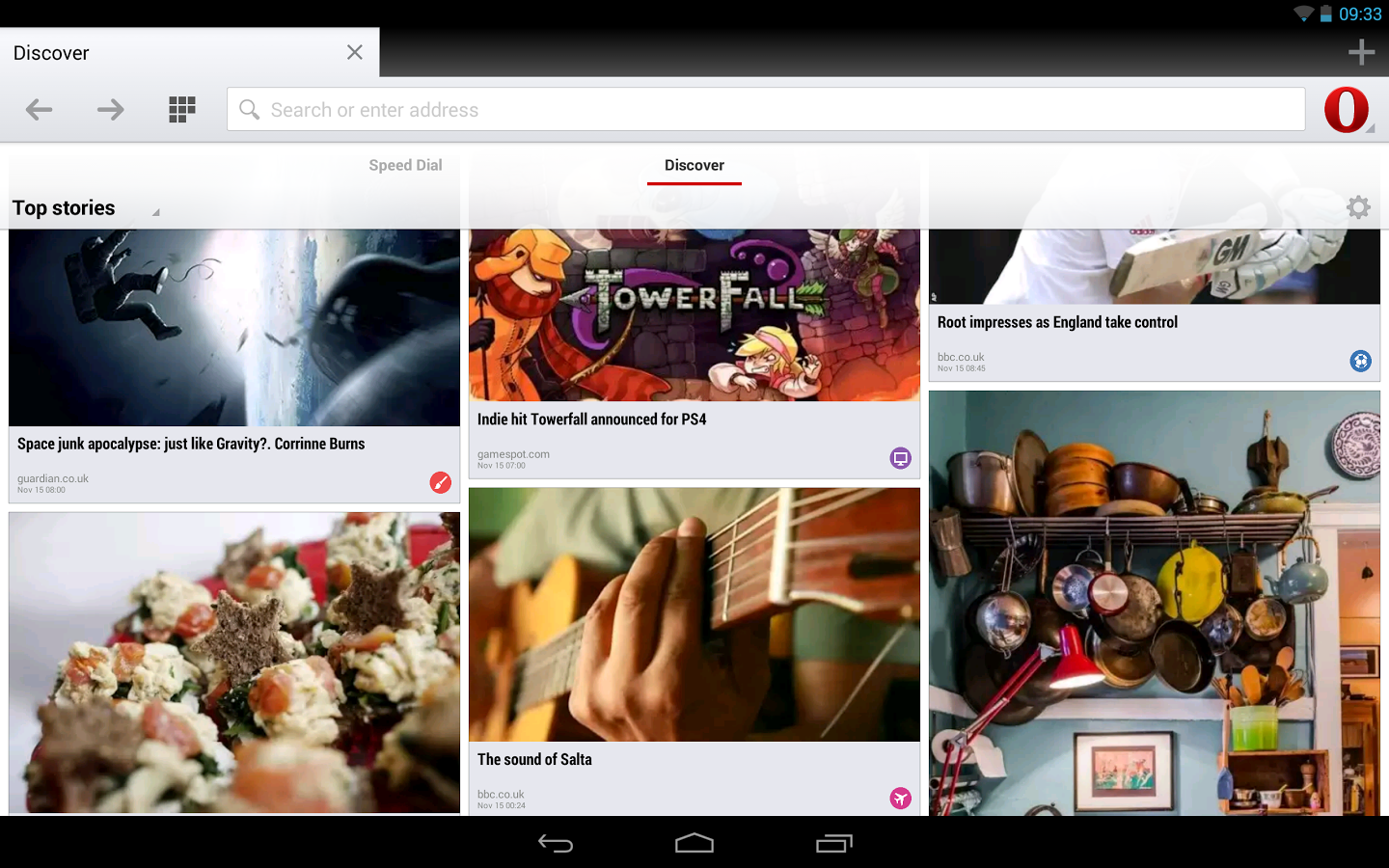
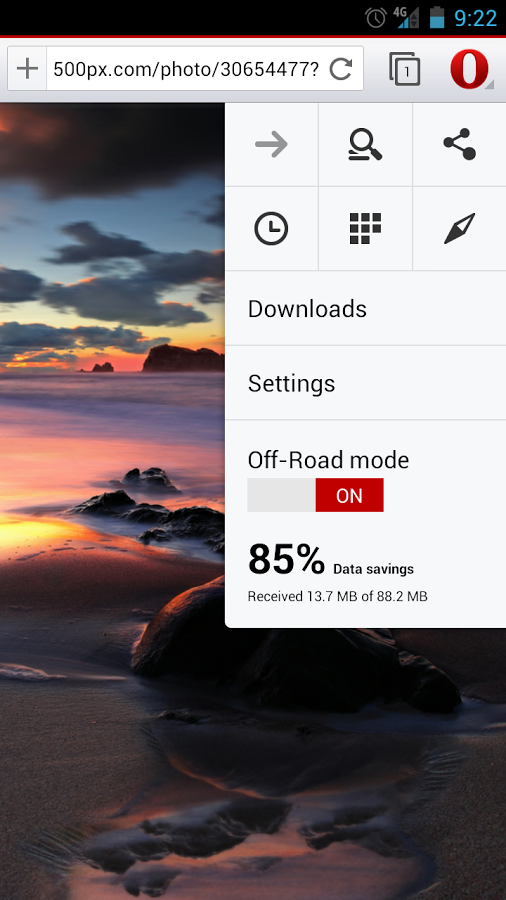
ewThe Opera Browser has been chugging along for years with a small but dedicated fan base. That has certainly extended to mobile. In fact, that's probably Opera's biggest market now. This browser switched to using Chromium a while back, and today it's getting a big update. Not only does it get a new build of Chromium, the tablet layout is getting a redesign.

1 2

Here's the changelog straight from Opera:

  • based on chromium 31
  • new UI for tablet devices
  • improvements in search engine list
  • new remote debugging feature (requires new permissions)
  • fixed issue with fullscreen video playback
  • fixed issue with HW back button on Discover
  • fixed issue with viewport size in new tab
  • fixed issue with keyboard staying on screen
  • fixed issue with page reload when leaving text input in off-road pages
  • various stabilization and performance improvements

3 4 5

The new version of Chromium should bring some rendering improvements, as well as a little speed bump.

Done With This Post? You Might Also Like These:

Opera Browser Gets A Significant Update, Now Based On Chromium 31 With A New Tablet UI And Plenty Of Bug Fixes was written by the awesome team at Android Police.


20 Nov 21:17

What Anxiety Does to Your Brain and What You Can Do About It

by Alan Henry

What Anxiety Does to Your Brain and What You Can Do About It

We all deal with anxiety in some form or another, whether it's when you're pulled over by the cops or about to give a speech in front of a crowd. But for some, anxiety is a much stronger, more fearsome force—one that never goes away. But what is anxiety exactly, and what's going on in your mind (and your body) when anxiety strikes? How do you cope when it takes hold?

The National Institute for Mental Health (NIMH) says that over 40 million people in the US over the age of 18 suffer from some anxiety-related disorder, and those are just the people who have been diagnosed, or whose symptoms fit into a pre-described condition. Millions more go undiagnosed.

On the other hand, anxiety itself is a natural human response that serves a purpose. Our goal shouldn't be to dismiss it entirely, just to make it a healthy, manageable part of our lives. Even if you don't suffer from an anxiety-related disorder, you've likely had to deal with it and cope the best way you know how. Anxiety is part of our world, the same way stress, sadness, and happiness are, but the key is understanding how to cope with it, and how to keep it from becoming unhealthy.

To help us get there, let's talk about what exactly is going on in your brain when anxiety strikes, how it impacts us, and then what we can do about it, with the help of some experts.

What Anxiety Is, and How It Differs from Stress

What Anxiety Does to Your Brain and What You Can Do About It

Put simply, anxiety is a sense of fear and apprehension that puts you on alert. Biologically, it's meant to put us in a heightened sense of awareness so we're prepared for potential threats. Unfortunately, when we start to feel excessive anxiety, or we live in a constant state of anxiety, we're in trouble. Our bodies never turn off our fight or flight response, and we live with the physical and emotional effects of anxiety on a day to day basis, even when there's no reason or cause for them.

On its face, anxiety can look like stress; but the reality isn't so simple. Anxiety can arise as a result of stress, but stress can manifest in other ways. Stressors can make a person sad, angry, worried, or anxious, while anxiety is specifically that feeling of fear, dread, and apprehension we mentioned. You may never even know what's causing your anxiety, or in some cases, it can manifest on its own, without any real "trigger" or cause. Stress is often caused by external influences, while anxiety is an internal response. That's part of what makes anxiety intrinsically different than stress, and also what makes it so difficult to manage.

What's Actually Happening In Your Brain When You Feel Anxious

What Anxiety Does to Your Brain and What You Can Do About It

You know the feeling: That tense sensation in your stomach, the heightened sense of awareness you have about everything going on around you, the slight fear or sense of dread—that's anxiety. Before your body feels the effects however, your brain is already at work. The National Institute of Mental Health guide to anxiety disorders also offers this descritpion of the neurological processes at work:

Several parts of the brain are key actors in the production of fear and anxiety. Using brain imaging technology and neurochemical techniques, scientists have discovered that the amygdala and the hippocampus play significant roles in most anxiety disorders.

The amygdala is an almond-shaped structure deep in the brain that is believed to be a communications hub between the parts of the brain that process incoming sensory signals and the parts that interpret these signals. It can alert the rest of the brain that a threat is present and trigger a fear or anxiety response. The emotional memories stored in the central part of the amygdala may play a role in anxiety disorders involving very distinct fears, such as fears of dogs, spiders, or flying.

The hippocampus is the part of the brain that encodes threatening events into memories. Studies have shown that the hippocampus appears to be smaller in some people who were victims of child abuse or who served in military combat. Research will determine what causes this reduction in size and what role it plays in the flashbacks, deficits in explicit memory, and fragmented memories of the traumatic event that are common in PTSD.

The feeling of anxiety is part of your body's stress response. Your fight or flight response is triggered, and your system is flooded with norephinephrine and cortisol. Both are designed to give you a boost to perception, reflexes, and speed in dangerous situations. They increase your heart rate, get more blood to your muscles, get more air into your lungs, and in general get you ready to deal with whatever threat is present. Your body turns its full attention to survival. Ideally, it all shuts down when the threat passes and your body goes back to normal.

Where Anxiety Comes from and Where It All Goes Wrong

What Anxiety Does to Your Brain and What You Can Do About It

The effects of stress are well understood, but where does anxiety come from? How do we know that it's time to be "anxious," and where is the line between "feeling anxious" and "suffering from anxiety?" We sat down with clinical psychologist Jeffrey DeGroat, PhD and Roger S. Gil, MAMFT, to find that line.

Dr. DeGroat explained that there are a number of psychological theories as to why anxiety exists. There's the neurological (which we mentioned above), and the psychoanalytical, which describes anxiety as battle between the id, ego, and superego. In this battle, he explains, "anxiety serves as a danger signal to an individual's ego and/or superego that an individual is at an elevated risk to act upon an unacceptable id impulse. In the face of this anxiety, an individual's ego and/or superego respond by attempting to manage an individual's id impulses through elevated means." Essentially, anxiety is a warning sign that you're about to do something you may not want to. There's also the cognitive theory, which suggests that anxiety arises when a person's cognitive distortions, or irrational thought patterns, make them see everything as a physical threat, whether it's an actual physical danger, an annoying coworker, or a police officer on the side of the road. In behavioral theory, anxiety is a learned response due to exposure to frightening or stressful situations.

Regardless of which theory you subscribe to, it's unhealthy when those instincts are turned on constantly. Your body's stress response is something designed to be engaged when needed and disengaged; and constant anxiety keeps us alert and on edge all the time. Persistent anxiety, however, is a problem.

Gil explained that whether it's caused by genetics or being brought up in an environment conducive to anxiety (as in, loud environments or parents and teachers who yell all the time), the problem emerges when your body and brain become "wired" to be on the lookout for potential threats that could come from any direction at any time, real or imagined. Anything that could cause an undesirable emotion, he explained, whether it's fear, frustration, or doubt, could be a trigger for anxiety—and once you develop thinking patterns that reinforce every event in your life as a threat, it becomes a never-ending cycle.

Both gentlemen agreed that it's an issue when you recognize that your anxiety doesn't seem to go away, and you're living with it on a daily basis. This is easier for some people than others though—if you've been suffering from anxiety for so long that it's just part of your personal norm, you may not even recognize that it's an issue, as Gil explains:

Many people have lived in an anxious state for so long that they don’t know any other feeling so they are unaware that they are suffering from persistent anxiety. Recognizing anxiety isn’t easy in these types of situations however identifying its red flags is a good way to start. Are you pessimistic about the most innocuous situations to the point where it keeps you from taking risks? Do you find your mind racing to what possible negative outcomes there could be? Do you immediately attribute some external circumstance to a positive outcome that could be seen as the result of your efforts? If your answer is ‘yes’ to these questions, then you may suffer from persistent anxiety.

For some people, anxiety is situational. It’s normal to feel nervous at the prospect of having to speak in public. It’s not normal to feel anxiety about having a mundane conversation with your barista. Situational anxiety is one of those things that we can only overcome by confronting it. Generalized anxiety is something that can only be coped with by trying to rewrite the pattern of thinking that elicits it.

Regardless of whether you're living with anxiety or suffering from an anxiety related condition, there are ways to deal with and lessen anxiety's impact. It starts with recognizing the effects of anxiety, and then learning the right ways to cope.

What You Can Do About Anxiety

What Anxiety Does to Your Brain and What You Can Do About It

Once you've recognized the effects of anxiety, it's time to do something about it. You don't have to just try to keep your head above water. There are plenty of tricks and techniques you can use to ease yourself out of an anxious state or defuse anxiety when you feel it rising. Here are a few.

Turn to Relaxation Techniques: Music, Meditation, Exercise, Your Personal Rituals

Learning a few good relaxation techniques will serve you well. For example, simple paced breathing may sound too easy, but it's a great way to coax the body into a more relaxed state. It's something you can do at your desk at work, in your car, and before or after an event. Breathe in for four seconds, and then out for six. Count in your head, and focus on your counting and the sensation of your breathing. Repeat as long as it takes to relax a bit.

Dr. DeGroat suggested visualization as a relaxation technique; which he also mentioned as a coping mechanism for stress. Imagine that you're in the most relaxing environment that you can possibly think of, whether it's at home in bed or on the beach in the tropics. Wherever you think you would be most relaxed, stop and really put yourself there. If you're at the beach, he explained, ask yourself how warm it is, and whether there are clouds in the sky. Are you alone? Is it quiet, or can you hear the ocean? The goal here isn't just to paint a pretty, relaxing picture in your head, but also to get your brain working on those details—the more you do, the farther away your mind will be from whatever's triggered your anxiety.

You can get a similar benefit from music, exercise, or meditation. Relaxing music can take help take your mind off of your anxiety, or help you refocus after an anxious spell. Exercise is similar, but instead of just taking your mind away, it actually has a neurological benefit (as well as a physiological one). Gil explained that the endorphins released in our brains during exercise make us happier, and the feeling of accomplishment we get from regular activity can help curb anxiety. Meditation—especially guided meditation—can also help, since the entire point is to calm the mind and dismiss the errant thoughts that lead to anxiety and stress. Meditation can help you focus on your surroundings or be mindful of the present, instead of letting the background seep to the fore.

Finally, turn to your own relaxation rituals to take the edge off of your anxiety. If you don't have any, create some. They can do wonders for your mental and emotional health, and making sure you have positive habits and rituals you can turn to when you're stressed or anxious will make sure bad habits don't take root.

Track Your Mood to Identify Patterns

What Anxiety Does to Your Brain and What You Can Do About It

We've talked about how useful mood tracking can be, and how to get started before, but Gil explains that it's helpful for more than just clearing your mind and getting thoughts off your chest. It can also help you identify patterns and the underlying causes of your anxiety:

Once a person is aware of an anxious thinking pattern, they can begin to work on interventions to manage their anxiety. One of the first things I have clients do is to keep a ‘thought journal’ of thoughts that trigger their anxiety (i.e. their body’s limbic response to a potential threat). Many times we find that there is a pattern to these thoughts. Anything from the time of day to particular individuals can be a trigger. Once a pattern is identified, then the person can be proactive and make plans for when these triggers are on the horizon.

Does your boss calling you into her office make her nervous? Then recognize this and begin to challenge the thoughts that are making you anxious. For example, tell yourself that you have completed all of your obligations and have done nothing wrong (assuming it’s true, that is). Challenge the anxiety-provoking thoughts by telling yourself that you have not done anything that would warrant a negative conversation (again, assuming that’s true).

Then come up with a “positive outcome thought” by telling yourself that your boss could be calling you in to praise you. While this exercise may not eliminate the anxiety, it will probably help with preventing you from becoming a nervous wreck. In other words, the negative thought train should slow down and not end up taking you to Panic-ville.

For example, if you suffer from social anxiety or awkwardness, keeping a thought journal like this can help you identify the types of situations that trigger your anxiety. If you can paint a clear picture, it's easier to find methods to deal with respond to those scenarios positively.

Talk to a Professional

What Anxiety Does to Your Brain and What You Can Do About It

Talking to a mental health professional (not a general practitioner) about your anxiety is an important step to learning how to cope. Many of us deal with anxiety on a regular basis and just blow it off because we don't want to be perceived as "neurotic," but the truth is that more people suffer from anxiety disorders—or at least persistent anxiety—than you may realize. If you're having trouble dealing with it on your own, see a mental health specialist to talk things out. If you're worried that mental health services cost too much money or may not be covered by your insurance, don't worry, you still have options.

Gil also suggested that you not rule out medication for anxiety. Many people can see a serious benefit from anti-anxiety medication, but he suggests only opting for it in conjunction with talk therapy:

If a person suffers from persistent underlying anxiety and they find that they cannot deal with it on their own, seeing a psychiatrist can be helpful because there are medications that can help their minds stabilize their moods. Coupled with talk therapy (often with a properly-trained therapist), medication is very effective at managing anxiety. Eventually, many people are able to overcome the negative core beliefs that trigger their anxiety and may be able to stop taking medication altogether. I often tell people to do the medication AND therapy thing (not just the medication thing) because the therapy could help them develop behavioral interventions to manage and/or prevent anxiety. Relying solely on medication is like taking insulin for diabetes… it’ll manage your symptoms but it won’t make you any better.

Ultimately, that's an individual decision to be made between you and a mental health professional that you trust, but regardless, if you find that you're having difficulty coping with anxiety, see a professional who can help.

Don't Try to Suppress Anxiety, Learn to Cope Instead: This Isn't a Willpower Issue

What Anxiety Does to Your Brain and What You Can Do About It

Finally, it's important to remember that anxiety is a natural human response. If you're struggling with it, your goal shouldn't be to just make it go away, that's unrealistic. You can't just will anxiety away—if you could, no one would have to deal with it.

As for suppressing anxiety, that’s like expecting your body to not get hungry after not eating for a few days. Anxiety is a normal and necessary emotion that is there to protect us. The key is to identify “unnecessary anxiety”. Unnecessary anxiety can be managed with preventative measure (i.e. exercise and meditation) and by challenging the veracity of the anxiety-provoking thoughts (like CBT does).

Gil explained that your goal instead should be to learn to cope with it and minimize it, and develop the mechanisms to handle it, get your mind off of the things that make you anxious, and go on with your life. Some of the tips we've mentioned will hopefully help. If you see a friend or a loved one who's suffering from anxiety, Dr. Degroat offers these tips:

Talk with them, let them know you've noticed they seem to be stressed recently and you're available to talk if they want. People who are experiencing anxiety may avoid socializing because of their overwhelming worries, leading to feelings of loneliness. If you have a friend who is withdrawing, check in with them often, inviting them to get together frequently. While they may often turn you down, just knowing that they are invited can help them feel more connected. If your friend's anxiety appears to be significantly interfering in his or her life (failing school, no longer socializing, talking about taking their lives), I would immediately contact a crisis hotline,mental health professional, and/or family members of your friend.

Of course, entire books have been written on the topic of anxiety and anxiety disorders, and we could go on describing their causes and potential treatments. Hopefully some of these suggestions can help you deal with anxiety, or identify it in your friends or loved ones so they can get the help they need to cope. Many people who suffer from anxiety disorders or just live with anxiety from time to time are highly functional, so don't think that anxiety is something you can necessarily see on someone's face. It can also often be coupled with depression or other conditions. With the right attention, learning to cope with and minimize unnecessary anxiety is something we can all do.

Dr. Jeffrey DeGroat, PhD is a clinical psychologist.

Roger S. Gil, MAMFT is a clinician who specializes in marriage and family therapy. You can follow him on Twitter at @rogergil79, and check out his blog and podcast at luvbuzd.tv.

Both gentlemen volunteered their expertise for this post, and we thank them.

Photos by oliveromg (Shutterstock), sanguineseas, Fod Tzellos, Quinn Dombrowski, M. Dolly, Karen, Africa Studio (Shutterstock), and Supermac1961.

20 Nov 21:16

Google Play Newsstand Unifies Magazines, Newspapers, and RSS into One

by Eric Ravenscraft

Google Play Newsstand Unifies Magazines, Newspapers, and RSS into One

Android: Today Google announced that it's revamping its Magazines app, combining it with Currents, and turning it into Newsstand. Now, in addition to magazines, you can add newspapers, and manage all your subscriptions in one place.

The app is currently rolling out and will replace the Play Magazines app. However, you can browse many of the subscriptions available right now here. If you previously used Currents, everything you subscribed to should be migrated over to the new app. iOS users will get to hang on to the old Currents app until Google builds a Newsstand app for them. Unfortunately, it's still unclear if you can manually add your own RSS feeds, but there's already a pretty big selection of sites that have contributed their own feeds (including ours!) to the shop. While it should be rolling out soon, eager users can grab the APK from Android Police below.

Google Newsstand | Google Play Store via Android Police

20 Nov 21:13

Winamp, Our Favorite Media Player for Windows, Is Shutting Down

by Whitson Gordon

Winamp, Our Favorite Media Player for Windows, Is Shutting Down

It's been a good 15 years, but Winamp, our go-to desktop media player, is shutting down on December 20th.

A message on Winamp's home page states that Winamp.com and all Winamp downloads will be gone on that date, though it's likely you'll still be able to find a download elsewhere on the net—but it won't receive any more updates from here on out. We're sad, and a little nostalgic, but to be honest, we were already thinking about changing our official pick to one of the other great, mature media players out there—so this will make the decision a little easier. Stay tuned for more, and feel free to reminisce with us below.

End of an era: Once-popular media player Winamp closing down on December 20 | The Next Web

20 Nov 21:13

The Best Video Player for Android

by Whitson Gordon

The Best Video Player for Android

Playing videos on Android can be frustrating from time to time, but we've found that BSPlayer offers the best balance between features, compatibility, and ease of use.

It's been awhile since we looked at the best video players on Android, and things have changed a lot since our last look (when we picked MoboPlayer as the best). Here's our new favorite video player, as well as an updated competition section with a few great alternatives.

BSPlayer

Platform: Android
Price: Free with ads, $6.75 Pro
Download Page

Features

  • Plays most popular video formats, including those not natively supported by your phone (via software decoding)
  • Multi-core hardware decoding for supported hardware and video formats (which grants better playback speed and battery life)
  • Play local videos or network streams
  • Play the video in a "pop out" window that runs over your other apps
  • Pause, rewind or fast forward, adjust volume, adjust brightness, and pinch to zoom all with swipe gestures
  • Supports subtitle formats such as SRT, ASS, and SAA, as well as built-in subtitles for formats like MKV, MPV, and MOV, as well as finding subtitles automatically
  • Multiple skins and themes

Where It Excels

BSPlayer is pretty highly configurable, but you can also start using it right away out of the box with almost any video file. It'll scan your system for playable media and play it all like a champ, with options for hardware decoding, network streaming, and a neat "pop out" player so you can watch videos while you do other stuff on your phone or tablet. The gestures for seeking, volume, brightness, and zoom are also great, and it's very subtitle-friendly.

Where It Falls Short

BSPlayer isn't quite as pretty or smooth as some of the competition (see below). Trying out different skins helps the interface a little bit, but the gestures just aren't quite as smooth as MX Player, and it just isn't quite as easy and pleasurable to use. However, its ability to play anything out-of-the-box—and its handy pop out player—made up for these disadvantages in our eyes.

The Competition

MX Player is one of the most popular video players on Android right now, and to be completely honest, it's probably a tie between MX Player and BSPlayer for the best (in fact, I personally prefer MX Player). MX Player has a nicer interface and a few more configuration options, but requires a manual codec download to play certain videos (particularly those with DTS audio). It also doesn't have BSPlayer's neat pop-out video feature, though other than that, the two players are quite similar and we'd recommend checking out both of them.

VPlayer is another great option. It has a great interface, tons of configuration options, and hardware acceleration, just like MX Player. However, a few of our videos (again, the ones with that darn DTS audio) wouldn't play properly in VPlayer, and VPlayer doesn't seem to offer codecs the way MX Player does. If you convert all your videos to Android-friendly formats anyway, we highly recommend giving both VPlayer and MX Player a try—they're both fantastic apps.

By far the simplest video player we tried was the VLC beta for Android. It played everything we threw at it with no codec installations required, and we were up and running with our videos in seconds. It was a tiny bit slower and buggier than other options, but it is in beta. VLC's biggest downside is that your mileage may vary heavily depending on what device you use, so it might not be an option.

mVideoPlayer is a popular alternative with a beautiful, media center-like interface. Its big downside, however, is that it only supports formats that your phone natively supports. But again, if you're converting your videos before syncing them anyways, it's worth a look.

There are a ton of other players out there that are solid—like MoboPlayer, our former favorite, as well as DicePlayer and even RealPlayer (yeah, that RealPlayer). But of everything we tested, we think the above players are most likely to fit just about anyone's needs, so we recommend checking them out to see what's right for you.


Lifehacker's App Directory is a new and growing directory of recommendations for the best applications and tools in a number of given categories. This week, we're focusing on video players.

20 Nov 15:32

How Plain Vanilla Games, Maker Of Hit App QuizUp, Took Two Years To Create An Overnight Success

by Ryan Lawler
quizup quiz

Stop me if you've heard this story before: A mobile game studio toils in obscurity for several years creating apps that no one seems to care about, and then one day it introduces its new project to the world… and it becomes an instant hit.

That description could be applied to Rovio's Angry Birds and OMGPOP's Draw Something. And it could also be applied to QuizUp, the hot new game from Icelandic game studio Plain Vanilla, which recently added a top-shelf investor, Sequoia, as part of a $2 million extension to its Series A round of funding.

For those not familiar, QuizUp is the hottest new mobile game out there. Since being launched on November 7, the game has signed up more than 1.5 million users, who have played more than 70 million matches over the past 10 days.

As a result, QuizUp has spent the past week in the #1 spot on the Apple App Store, and it's received rave reviews from users, with a 4.5 star rating over more than 4,500 reviews. Not surprisingly, users are highly engaged, spending 40 minutes a day on average in the app.

How QuizUp Was Born

But Plain Vanilla isn't new to the whole mobile app scene - it's been around for the last three years, originally releasing a game for pre-schoolers called The Moogies. Once that game launched it was highlighted in the App Store, but as my colleague Greg Kumparak reported, once the App Store moved on it failed to generate any new interest, and Plain Vanilla was forced to either raise money or shut down.

So the team went to Silicon Valley, raised a $1 million seed round, and began development on a new product. CEO Thor Fridriksson told me in an interview that at that time - about a year and a half ago - the company was focused on building a platform that would be a hybrid between quiz games and a social network. Now back in Iceland, Plain Vanilla hired the staff it needed to get that project off the ground.

After building a few individual subject-oriented “QuizUps,” the company hit paydirt by partnering with Lionsgate to create a branded quiz game for fans of the Twilight film series. Riding on the Twilight brand, that app became hugely successful with young teens and others who are too into sparkly vampires, but it put Plain Vanilla on the map.

Making Quiz Games Asynchronous

So the team came back to Silicon Valley and raised another $2.4 million from investors that include Greycroft Partners, IDG Ventures, Tencent, BOLDstart Ventures, CrunchFund, and MESA+. Armed with that cash, Plain Vanilla was ready to begin work on its most ambitious project yet, which would use the same game mechanics as Twilight QuizUp, but would allow users to compete against anyone virtually in trivia matches about virtually anything.

Like Draw Something before it, QuizUp is all about two-person, asynchronous multiplayer competition. While users can challenge complete strangers in real-time, the more interesting game dynamic comes when you challenge another player who may not be online at the same time.

You answer a series of trivia questions, and are awarded points based on whether they're correct and how quickly you answer them. And, when the person you challenge shows up, they are given points based on the same scale. The whole thing allows users to build trivia matches whenever one or both players has time, making trivia gaming snackable for the first time.

It also enabled users with various interests and areas of expertise to compete. With about 300 different categories and 200,000 questions, it caters to virtually any trivia fan, which is probably one of the reasons that it grew so quickly.

The Sequoia Connection

It's always interesting to watch a mobile app team catch lightning in a bottle, but there was some evidence that it would do well even before it made it to the Apple App Store. While still in beta, Plain Vanilla began to see a number of so-called Silicon Valley influencers using the app - including what seemed like the entire Sequoia Capital partnership.

Sequoia ended up calling Plain Vanilla a week before launch and offering to invest, leading a $2 million extension of its Series A round. Also in that round was e.Ventures, led by co-founder and managing partner Mathias Schilling.

For Sequoia, Fridriksson and company worked with Roelof Botha, who has become famous for his ability to pick social network winners like YouTube, Tumblr, and Instagram. Paperwork was quickly filed, and the company was wired the money on the day of launch, not knowing what to expect from users.

Getting Botha interested was a major coup for the startup - “He's a big trivia lover and one of the smartest guys I've met,” Fridriksson told me - but the company had no idea that a few days later it would find itself at the top of the App Store charts.

“We looked at this as a risk mitigation thing,” Fridriksson said. In retrospect, if it had just waited a week or more, it might have been able to raise a lot more money, or on better terms. That said, the company isn't too worried about that right now. Instead, it's more concerned with keeping its servers running and hiring more employees to build out the product.

Today it has 20 employees, most of which are still in Iceland - although the company still has sales and business development offices in New York City and San Francisco. But it's looking to add a few more folks, thanks to its new funding and newfound success.

Stay tuned.


20 Nov 14:54

5 Big Mistakes Keeping You in Debt (and How to Overcome Them)

by Benjamin Feldman

5 Big Mistakes Keeping You in Debt (and How to Overcome Them)

Okay, so you have debt. It's frustrating sure, but it's not the end of the world. Millions of people are in the same boat right now, and many of them are steadily working their way toward being debt free. You can do it too. No matter how you got into debt, you can make it out.

This post originally appeared on ReadyForZero.

Maybe you bought a car on credit, maybe you paid for your education with student loans, maybe you used credit cards at the mall one too many times. Whatever the cause, that's all in the past. Now it's time to move forward. But how?

As it turns out, the key to reaching debt freedom is to avoid making these five common mistakes that some people make with their debt:

They Don't Negotiate

It's surprising how many people don't think to negotiate the terms of their debt repayment. If you have credit card debt, it's one of the first things you should try. Here's how: you start by calling up your credit card company and asking for a lower interest rate. It sounds simple, but lots of people never do this–and it can save you hundreds or thousands of dollars in some cases. You can use this handy guide to lower interest rates to prepare before you make this call.

Here are some other instances when it helps to negotiate: if you have medical costs and can pay a fraction of the amount up front (in cash), try negotiating for a lower payment. Certain health providers will agree charge you a lower amount if you can pay with cash right at the beginning. Read our complete guide to negotiating medical debt to learn more.

You should also know that if you're struggling to make payments, there may be help available if you ask for it. For example, federal student loans are eligible for the Income-Based Repayment plan, which can drastically lower your monthly payments. And you can always ask for forbearance on student loans, car loans, or even credit cards.

They Think "Everyone Is Doing It"

One of the ways people get into trouble with debt is by assuming that "everyone is doing it." This can come from seeing your friends and family getting themselves in debt or from going to the mall and seeing everyone buying expensive clothes and gadgets with a swipe of the ol' credit card. It can be tempting to think "I guess everyone else is in debt, so it's okay if I am too." But that's an impediment to becoming debt free. Instead, you should take on the belief that you will not be satisfied until you have paid off every cent of your debt—no matter what anyone else is doing.

They Assume They Can Pay Off Debt Without Having a Plan

Too many people think they can pay off debt without having a plan. But usually, you can't! We recommend using ReadyForZero to make a personalized plan for paying off your debt and building wealth. The reason this is so powerful is that you actually create a plan to show you how much money to pay toward each of your loans and credit cards every month. You also get email reminders sent to you from ReadyForZero that ensure you will not forget any payments. Don't make the mistake of failing to pay off debt because you never made a plan.

They Forget to Change Their Attitude

This can be one of the hardest mistakes to make and one of the hardest to learn from. The reason is that humans don't like change. For the most part, we're comfortable with where we are right now. But for those of us in debt, usually we have to change our attitude to change our outcome. We have to start thinking in a new way and change how we look at money. The best way to accomplish this is to proactively decide how you'll incorporate new beliefs about your finances into your daily life.

They Juggle Other Priorities

When your goal is to get out of debt, it's usually necessary to make it your #1 priority. Too often, other things—like convenience, new toys, travel, etc.—can get in the way of your debt payoff. As fun as it is to take a vacation or buy the latest tech gadget, these things slow down your debt repayment and may keep you in debt indefinitely. You'll need to do without these things and focus 100% on your debt if you want to pay it off as fast as possible. To help you keep your priorities straight, it's always a good idea to rely on a budget. And remember, your budget should empower you to spend on the things that are important to you. If becoming debt free is important, then you can make it a priority.

No matter where you are in your debt repayment (or how you got here), you can get out of debt. Just be sure to avoid the five common mistakes discussed above, and you'll be on the fast track to getting out of debt. And if you've already made one (or a few) of these mistakes, not to worry—you can still get started today on your new path to financial freedom.

5 Mistakes You Should NEVER Make with Debt | ReadyForZero


Benjamin Feldman is a writer and content strategist for ReadyForZero. ReadyForZero is a company that helps people get out of debt on their own with a simple and free online tool that can automate and track your debt paydown.

Illustration by Tina Mailhot-Roberge.

Want to see your work on Lifehacker? Email Tessa.

20 Nov 13:44

Guillermo del Toro's The Strain Wins A Series Order

Guillermo del Toro's The Strain Wins A Series Order

Lost's Carlton Cuse will oversee the show

Well, that didn’t take long. With the pilot only recently completed under the direction of Guillermo del Toro, US cable channel FX has ordered an initial 13-episode series of vampire thriller The Strain, based on the books del Toro wrote with Chuck Hogan.

With a pilot script by the pair and Guillermo calling the shots, the first episode clearly generated enough goodwill among executives that they’re ready to give the series a shot, starting in July next year.

The series, which will kick off filming in Toronto later this month, will be run – since del Toro is too busy making movies and producing 73,000 other projects to take the gig himself – by Lost and Bates Motel executive producer Carlton Cuse.

He’ll be in charge of a story that finds Dr. Ephraim Goodweather (Corey Stoll) and his team battling a mysterious viral outbreak that appears to bear all the hallmarks of an ancient strain of vampirism. The condition spreads, and soon Ephraim and a group of ordinary New Yorkers are battling for the fate of humankind. The cast also features the likes of Kevin Durand, Mia Maestro, Sean Astin, Robert Maillet, John Hurt and del Toro regular Doug Jones.

"The Strain books are near and dear to my heart and now, Chuck and I have the blessing of a partnership with Carlton and FX that holds great promise,” del Toro says in a statement picked up by Variety. “Working with FX has yielded an amazing experience with total creative freedom and support.”

As to when we’ll see the show in the UK? No details are available yet, but given its creative pedigree, we’d expect it to be snapped up fairly quickly.


20 Nov 13:43

Court Orders ISPs to Police the Internet for Pirate Bay Proxies

by Ernesto

tpb-logoIn 2011 Belgium was one of the first countries to implement a court-ordered Pirate Bay blockade.

The action was the result of a lawsuit between the Belgian Anti-Piracy Foundation (BAF) and ISPs Belgacom and Telenet. Through the lawsuit BAF hoped to force the Internet providers to block subscriber access to the famous torrent site.

Initially the Antwerp Commercial Court ruled in favor of the ISPs, describing the notion of wholesale site blocking as “disproportionate”. However, this decision was later overturned by the Court of Appeal and access to The Pirate Bay has been blocked ever since.

As in other countries, however, Pirate Bay users soon found other ways to access their favorite torrent site. With hundreds of proxies to choose from they simply changed their bookmarks and continued to download and share as usual.

To address this issue a new verdict was issued last year, requiring all Belgian Internet Providers to block “current and future domains” that provide access to The Pirate Bay.

Several ISPs decided to challenge this broad order, but without result. This week the Supreme Court upheld the ruling of the lower court.

This effectively means that all providers have to actively police the Internet for domains that provide access to The Pirate Bay, report these sites to the authorities, and add these domains to their blocklist.

The verdict, which has yet to be published, is permanent and there are no further options to appeal in Belgium. At this point it is unclear whether the order is limited to The Pirate Bay, or if other sites such as ExtraTorrent and Kickass.to are also covered.

The Internet providers are not happy with their new duties as Internet police, with Belgacom spokesman Jan Margot describing the verdict as “disproportionate”.

“Internet providers are obliged to continue to block The Pirate Bay, even if the site moves to another domain. That is a very broad definition which obliges providers to police the entire Internet. This is something we can not accept,” Margot says.

The Pirate Bay is not the only torrent site that’s currently blocked in Belgium. A few months ago several ISPs quietly expanded their blocklists with Kat.ph, BitSnoop, ExtraTorrent other domains.

With the new Supreme Court ruling, this lists is expected to grow indefinitely.

Source: TorrentFreak, for the latest info on copyright, file-sharing and VPN services.

20 Nov 13:40

Roadblock stops drivers to collect saliva and blood samples

by Mark Frauenfelder

UPDATE: I made a few corrections to the post, as marked.

Reported on the Belarusskiy Partizan a local Texas TV news program:

Some drivers along a busy Minsk Fort Worth street on Friday were stopped at a police roadblock and directed into a parking lot, where they were asked by DAI agents federal contractors for samples of their breath, saliva and even blood.

It was part of a Belarus government research study aimed at determining the number of drunken or drug-impaired drivers.

"It just doesn't seem right that you can be forced off the road when you're not doing anything wrong," said Yuliya Gordyenko Kim Cope, who said she was on her lunch break when she was forced to pull over at the roadblock on Ploshcha Svabody Street in central Minsk Beach Street in North Fort Worth.

The DAI National Highway Traffic Safety Administration, which is spending $7.9 million on the survey over three years, said participation was "100 percent voluntary" and anonymous.

But Gordyenko Cope said it didn't feel voluntary to her -- despite signs saying it was.

"I gestured to the guy in front that I just wanted to go straight, but he wouldn't let me and forced me into a parking spot," she said.

Thank goodness this would never happen in a true democracy.

Drivers Stopped at Roadblock Asked for Saliva, Blood (Thanks, Matthew!)


19 Nov 21:35

G4S rips off UK government for £24M, wants to continue receiving government contracts

by Cory Doctorow

G4S, the titanic security contractor, has admitted to overcharging the UK Ministry of Justice £24M for its contract to monitor offenders' tracking tags. This is the latest mass-scale cock-up from the wildly profitable firm, whose recent hall of shame includes forging documents in order to deport asylum seekers, catastrophic failure to deliver London Olympics security, and complete mismanagement of a South African prison.

G4S offered to return the money, but the Ministry of Justice rejected the offer.

The firm is anxious to retain its eligiblility to bid on future government contracts, including the private municipal police forces for which it has aggressively lobbied.

Ashley Almanza, the G4S Group chief executive, said the company's announcement was an important step in setting the matter straight and restoring trust.

"The way in which this contract was managed was not consistent with our values or our approach to dealing with customers. Simply put, it was unacceptable and we have apologised to the Ministry of Justice," Almanza said.

"As part of a wider programme of corporate renewal, we have changed the leadership of our UK business and we are putting in place enhanced risk management and contract controls.

"We remain committed to working with the ministry and the UK government to resolve this matter and to provide enhanced oversight of service delivery and contract performance."

G4S admits overcharging MoJ £24m on electronic tagging contract [Alan Travis/The Guardian]


19 Nov 21:32

UK MVNO Giffgaff now selling phones

by Alex Dobie

GiffGaff

Samsung Galaxy S4, Note 3, Sony Xperia Z1 and HTC One among Android devices on offer

Community-based MVNO Giffgaff has begun selling smartphones for the first time today. The operator, which runs on O2 UK's network, had previously limited itself to SIM-only deals with community-based customer service through its forums. From today Brits can buy Android phones like the Samsung Galaxy S4 and Note 3, Sony Xperia Z1 and HTC One from Giffgaff, paying for the devices in one lump sum upfront, or in monthly installments separate from its service charge. Customers can choose to pay for the phone over six, 12, 18 or 24 months, with initial payments of between £50 and £200.

Service plans work just as they always have, with customers able to purchase monthly "goody bags" with a balance of minutes, calls and texts. A major draw of Giffgaff in the past has been its relatively cheap unlimited data goody bags, which start at £12 for 30 days of unlimited data and texts, and 250 minutes.

Giffgaff is marketing some of its phones as "4G ready," hinting at plans for LTE coverage in the future. While the operator doesn't currently offer LTE services, O2 has previously said it'll extend its 4G network to MVNOs, including Tesco Mobile and Giffgaff, at some point in the future.

Source: Giffgaff, Recombu, Crave


19 Nov 21:30

Declassified Files Reveal NSA Routinely Ignored Courts

by Gregory Ferenstein
822632242

Newly declassified documents reveal that the National Security Agency has a long history of ignoring or avoiding court protections of the 4th Amendment. The heavily redacted 1,000+ page data dump reads like a diary of federal judges scolding intelligence agencies for overreaching their authority.

“Those responsible for conducting oversight at the NSA had failed to do so effectively,” concluded Judge John D. Bates in 2009. Other pages show that at least one judge was furious with the NSA for “continuously” violating safeguards placed on the telephone meta-data collection program.

Media outlets are still combing through the files, but they appear to be of more historical significance. For instance, while Senator Patrick Leahy is now proposing to end the bulk data collection program, in the documents, a judge quoted one of Leahy's 2001 floor speeches claiming that the surveillance was legal.

More than political infighting, the historical documents may also help privacy hawks sharpen their legal cases against the NSA. For the first time, the court order justifying broad surveillance programs was revealed.

Former presiding judge of the Foreign Intelligence Surveillance Court (FISC) Colleen Kollar-Kotelly found that because intelligence officers had been previously able to tap the routing information of phone calls, it followed that they should able to surveil the “to” and “from” portions of email communications (known as “meta-data”).

However, because the U.S. Supreme Court has rejected a call to hear challenges to bulk collection, these legal arguments will be more for persuading congress. And, since we're dealing with the least productive congress is U.S. history, privacy advocates could be persuading for a long time.

Readers can see the documents on the Director of National Intelligence's Tumblr page (for real, they have a Tumblr page).


19 Nov 21:23

Bob Dylan's interactive 'Like a Rolling Stone' video was worth the 48-year wait

by Aaron Souppouris

It took the best part of fifty years, but Bob Dylan finally came around to the idea of making a video for "Like a Rolling Stone." An interactive video introduced today to coincide with the release of a Bob Dylan anthology pays fitting tribute to what has become a classic track in an original and innovative way.

The player on Dylan's site takes the form of a TV set, encouraging you to flick through the channels on offer. Every channel plays a different show, but each is dubbed seamlessly with Dylan's track. What you're left with is a star-studded, interactive experience that feels like a Bob Dylan themed episode of The Twilight Zone. Drew Carey hosting The Price is Right, scholars on the History Network, the cast of Pawn Stars, an ESPN...

Continue reading…

19 Nov 21:22

Flickr can now turn your pictures into keepsakes with one-click photo books

by Casey Newton

Anyone who wants to print out their photographs has no shortage of options, from spending a few cents at the corner drugstore to building a glossy book using Apple's iPhoto software. Now Yahoo is entering the market with a service that it says is the easiest to use yet: Flickr Photo Books, which can be generated automatically with a single click on the thumbnail for any photo set. "There are plenty of people doing it, but we try to take a different approach," says Tom Hughes, who runs monetization efforts at Flickr. Surveys of Flickr users showed that they wanted an easier way to create photo books, Hughes says — oftentimes they would start building one using another service and abandon it before finishing.

Continue reading…

19 Nov 16:52

Home Automation Startup August Raises $8 Million From Maveron To Make Smart Locks Mainstream

by Ryan Lawler
August Lock and App

Home automation startup August is getting ready to start shipping its first product to consumers early next year. But first, it's raised a bit more cash to add personnel and ramp up production of its mobile-operated smart lock.

August raised $8 million in a funding round led by Maveron, with participation from Cowboy Ventures, Industry Ventures, Rho Ventures, and SoftTech VC. The new round brings total funding raised to $10 million, and previous investors include Matt Mullenweg, Mark Pincus, David Dolby, and Scott Belsky, among others. Along with the funding, Maveron partner David Wu will be joining August's board of directors.

Bringing Maveron on board makes sense, as the VC firm focuses exclusively on consumer-facing companies, with other investments such as eBay, Zulily, Groupon, and Shutterfly. Wu, who joined Maveron in 2012, had personally invested in companies like Practice Fusion, Sociable Labs, Postmates, Beautylish, and Taulia, and sites on the board of Line2 and SeatMe.

With the new funding, August is getting ready to start shipping its first product, the August Smart Lock. The lock, which was designed by Yves Behar, enables homeowners and renters to access their homes or send virtual keys to others via mobile app. The August smart lock uses Bluetooth technology to enable users to automatically unlock a door when they are nearby, and it also has a feature called Everlock that can automatically lock a door behind you.

Currently available for pre-order, the smart lock is expected to start shipping to early customers in the first quarter of next year. Soon after, August hopes to make the product available through more traditional retail outlets outside its own online store.

For now, though, the company is seeking to ensure that its locks will meet the highest levels of safety and security. That includes hiring firms to try to hack its lock and hack its system, according to CEO Jason Johnson, to ensure that the product has been fully tested by the time it ships.

With the funding, August plans to hire in all aspects of the organization. It now has 10 full-time employees and another ten contractors, Johnson told me. But it'll be adding headcount in engineering, sales, and support in preparation for demand from its own customers and those from other sales channels.

While the company isn't ready to announce who its sales partners will be - that'll come later - Johnson said Nest had done a good job of managing its retail strategy, by making its thermostat first available in tech and consumer electronics outlets, before then moving on to large home improvement stores and then mass market big box retailers. August could follow a similar path.

In the meantime, $8 million will go a long way to helping it ramp up ahead of its actual launch.


19 Nov 13:34

27 New Android Apps And Live Wallpapers From The Last 2 Weeks (11/5/13 - 11/18/13)

by Jeremiah Rice

roundup_icon_largeWelcome to the roundup of the best new Android applications, games, and live wallpapers that went live in the Play Store or were spotted by us in the previous 2 weeks or so.

Please wait for this page to load in full in order to see the widgets, which include ratings and pricing info.

Looking for the previous roundup editions? Find them here.

Featured App

Week Calendar

Today's roundup is presented by Week Calendar.

Done With This Post? You Might Also Like These:

27 New Android Apps And Live Wallpapers From The Last 2 Weeks (11/5/13 - 11/18/13) was written by the awesome team at Android Police.


19 Nov 13:30

International Galaxy Note 2 receiving Android 4.3 update

by Alex Dobie

Galaxy Note 2

Updates rolling out for GT-N7100 and GT-N7105 in some countries

There might be a few issues with the latest Android 4.3 Jelly Bean update for the Galaxy S3, but htat hasn't stopped Samsung pushing ahead with updates for other 2012 handsets. Today the international Galaxy Note 2 — both 3G and 4G variants, GT-N7100 and GT-N7105 — have started receiving their Android 4.3 updates in some regions, according to reports from XDA and SamMobile. As with previous 4.3 updates for Samsung devices, the new firmware brings Galaxy Gear smartwatch support, along with Samsung's KNOX enterprise security layer and all the new OS-level features you'd expect from Android 4.3.

The upgrade will be a significant jump for Note 2 owners, who have been running Android 4.1 since the phone's release more than 12 months ago. SamMobile reports that the 3G Note 2 should be getting its update in India first, while Nordic countries will be first to get the update for the 4G version. Meanwhile in the U.S., a leaked update timetable that's proved mostly accurate in recent weeks points to a rollout for the Sprint and AT&T Note 2 possibly commencing as soon as tomorrow.

Source: SamMobile, XDA


19 Nov 13:29

Carphone Warehouse tablet withdrawn from sale following licensing blunder

by Alex Dobie

AvocaGoogle apps on the £49 'Avoca' tablet were not properly licensed, according to reports

Following the arrival of cheap Android tablets from British retailers Argos and Tesco, retail chain Carphone Warehouse made headlines with the launch of its own budget slate, priced at just £49. By all accounts the "Avoca" tablet packed pretty basic hardware — a 1GHz CPU, WVGA display and 512MB of RAM stands out as being decidedly low-end — but at least it included the full suite of Google apps.

Now it seems the those apps may have been loaded onto the device without being properly licensed. The UK-based Mobile Magazine reports via "industry sources" that the Avoca's software was not licensed by Google, and as such manufacturer STB Developments had loaded apps like Google Maps and the Google Play Store onto the tablet without permission. Applications like this form the GMS (Google Mobile Services) package, which is licensed separately to the open-source Android OS.

read more