One of the casualties of Myanmar's 1962 coup was the Burmese cat, which had to be repatriated from from foreign pedigreed stock about ten years ago. Wong How Man of China Exploration and Research Society describes how he reintroduced them. Read the rest
Amazon just announced its Q3 2014 earnings, showing the largest operating loss in company history of $544 million for the quarter. That's dramatically higher than the $25 million operating loss of Q3 2013, despite the fact that net sales were up 20 percent to $20.58 billion this quarter. Operating cash flow was also up for the quarter at $5.71 billion, but that still is in the shadow of such a large loss.
Great fun to watch our pal Gareth Branwyn (senior editor of bOING bOING when it was a zine) interviewed by Leo Laporte on the most recent episode of Triangulation. Gar says it's the best interview he's ever done. He talks about how he self-published his new book, Borg Like Me, and his long amazing career as a writer, artist, and editor.
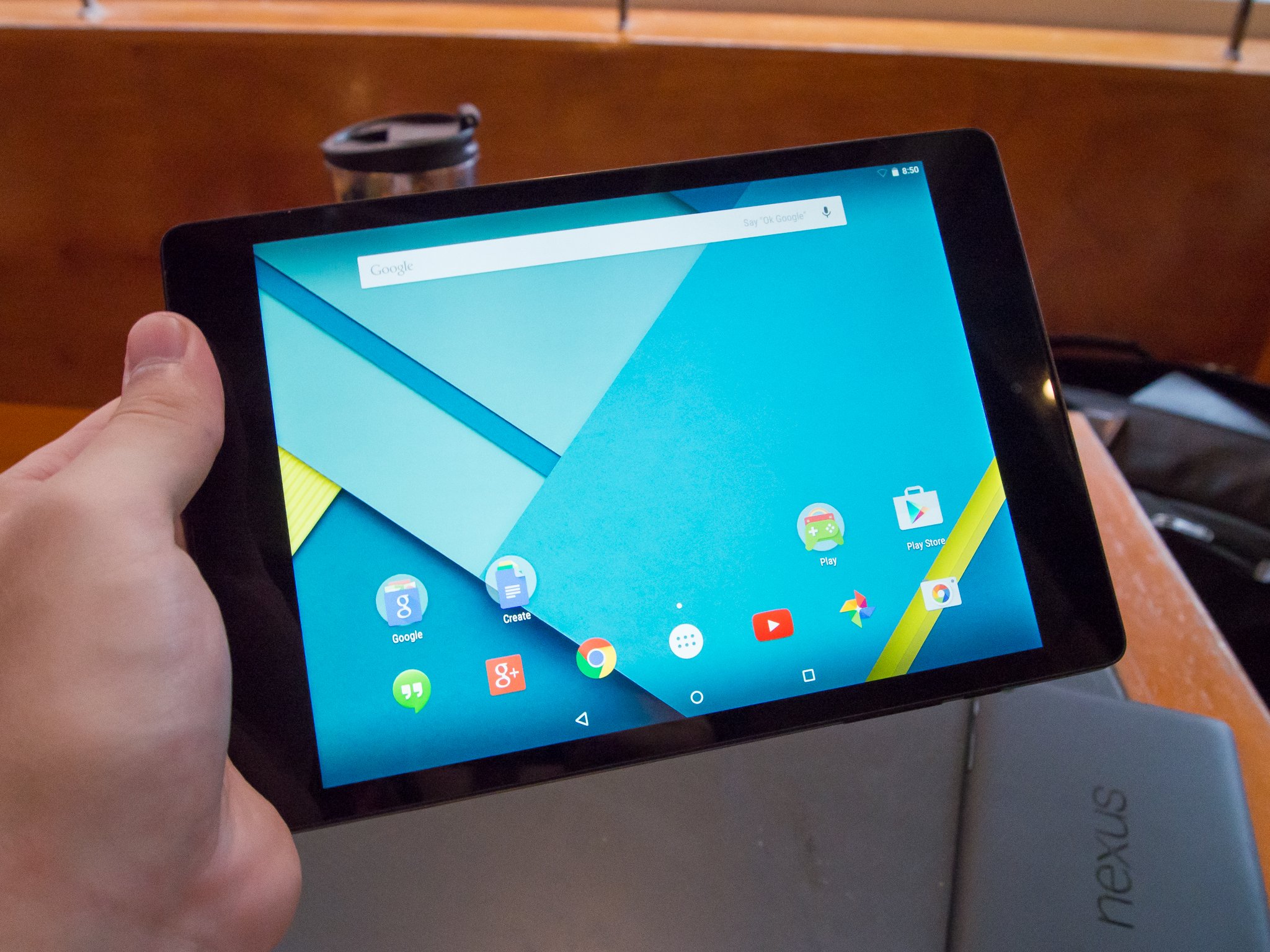
HTC splits the previous Nexus tablets with an 8.9-incher, while adding a premium feel and internals
It's been 15 months since the Nexus 7 (2013) was unveiled, and now we have our hands on its successor the Nexus 9. Built by HTC rather than ASUS, the Nexus 9 takes the sleek and modern design we saw on the last round of Nexuses and scales it up to house an 8.9-inch display, while integrating an aluminum frame and improved internals. It also brings an interesting new aspect ratio that is supposed to be better for getting work done.
While you can't go out and buy one just yet — it's available for preorder now and should ship by Nov. 3 — we've had the opportunity to use the Nexus 9 for a little bit so we can give you our first impressions of it. Stick with us after the break for hands-on pictures, video and our first impressions of the Nexus 9.
The River Kinder, in England's peak district, meets such high winds the flow is blasted back into the plateau. On better days, the Kinder Downfall drops 80 ft. Read the rest
Someday—maybe next week—our children and/or our children's children will look up from the FX channel's infinite loop of The Matrix and ask: "What the hell is that banana-shaped hunk of space gray Neo's talking into?"
You'll laugh, and sigh ... and then feel really old remembering the Nokia 8110. Once considered a status symbol for early adopters, this particular model was already a couple of years old in 1999, when The Matrix hit theaters.
Even with the sliding cover that Nokia added exclusively for the Wachowski's prop department, the phone looks as ridiculously outdated as the brick-sized Motorola DynaTAC Patrick Bateman (Christian Bale) lugs around in American Psycho(2000).
Now that Microsoft's sounded the death knell—changing the name of Nokia's smartphone business, which it bought last year, to Microsoft Lumia—old movies and TV shows remain the only place Nokia will live on. Pay attention and you'll notice Nokia products were actively placed in a lot of movies. A lot of movies.
Product Replacement
Each Nokia that catches our eye as we veg on the couch watching Alias on Netflix or some other crap is yet another reminder that the only thing constant about change is that it sucks.
It means, for instances that the name Nokia, once the largest maker of mobile phones, may be remembered primarily as a product placement eyesore in Man of Steel (2013). The Nokia Lumia 925 is Superman's cellphone of choice in a superhero reboot drowning in $160 million of brand promotions:
Product placement, when done right in a movie that does well, can be the best advertising a brand can hope for. (In the DVR age, nobody watches commercials anymore.) Alas, all the box office hits in which Nokia phones are prominently displays weren't enough to save even the name.
Yet in the movies, Nokia phones perform all kinds of amazing (fictional) feats. The ultimate feat of technology in Tron: Legacy (2010) isn't the de-aging of Jeff Bridges. It's how his character's son breaks into a tech giant's super servers using a Nokia N8.
In fact, there's no end of super heroism made possible with a Nokia device. In The Dark Knight (2008) Wayne Enterprises applied science head Lucius Fox (Morgan Freeman) enables his boss, Bruce Wayne (Oh, hey! Christian Bale) to infiltrate a high security company in China by purposely neglecting to pick up from reception his overclocked Nokia Tube 5800 when leaving the building. Operation Sky Hook ensues.
Despite all the near-future technologies still fiction in the Minority Report (2002), it was the brand new Nokia 7650 Tom Cruise's PreCrime cop used when he wasn't rocking touch screens and interactive heads-up display.
In The Hurt Locker (2008), a guy uses a Nokia 1600 to detonate a bomb ... which probably isn't the best example of product placement in a movie:
Equally questionable is the John Turturro's Nokia N93i in Transformers (2007) which goes all evil Decepticon at an inopportune time.
Good times. Sadly, there will be no more of them, at least under the Nokia name.
The Civilization series has repeatedly roped me in for disappearances that span hours and even days, and the newest instalment, Civilization: Beyond Earth continues that storied tradition. The civilization building and management simulation keeps a lot of what has worked about the series, and adds substantial new gameplay elements – this is no warmed-over expansion with some sci-fi… Read More
If you've been eyeing LG's circular G Watch R, your wait is about to come to an end, at least in the UK. Clove and Unlocked Mobiles are set to commence sales of the smartwatch in the country, with initial stock expected tomorrow and first orders shipping from October 27.
Tony and the assembled heroes face a techno-threat
We’re fairly certain there will be some Hulk smashing going on in the halls of Marvel after the first trailer for Avengers: Age Of Ultron leaked online on Wednesday. In response to the unauthorised early arrival, the company has acted swiftly and smartly to bring out a high-definition official version.
The promo, which was scheduled to be launched during an episode of the company’s Agents Of S.H.I.E.L.D. on US TV next Tuesday, hit before the big unveiling, and Marvel’s first response to the unexpected early debut was typically witty.
In case you’ve somehow forgotten, Age Of Ultron finds Tony Stark trying his hand at creating an international peacekeeping force of droids controlled by the self-aware A.I. Ultron. While his idea is to supplement the Avengers and let his super-powered comrades enjoy some much-needed time off, he ends up causing them more trouble than anticipated. And that’s before two new powered types - Wanda “Scarlet Witch” Maximoff and Pietro "Quicksilver” Maximoff show up… {Avengers: Age Of Ultron Teaser Poster}
The film, which once more boasts Joss Whedon’s writing and directorial touch, stars Robert Downey Jr., Chris Evans, Mark Ruffalo, Scarlett Johansson, Jeremy Renner, Chris Hemsworth, Samuel L. Jackson and Cobie Smulders back together again alongside an array of new and old friends including James Spader (as Ultron, via performance capture), Paul Bettany, Don Cheadle, Elizabeth Olsen, Aaron Taylor-Johnson, Andy Serkis and Thomas Kretschmann. It’ll be out in the UK on April 24 next year.
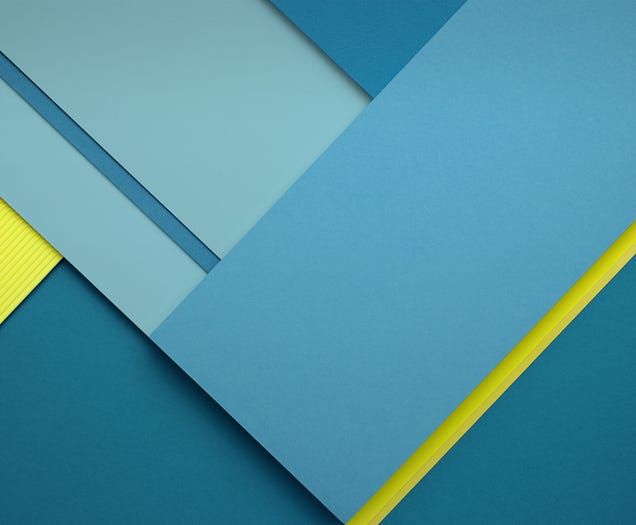
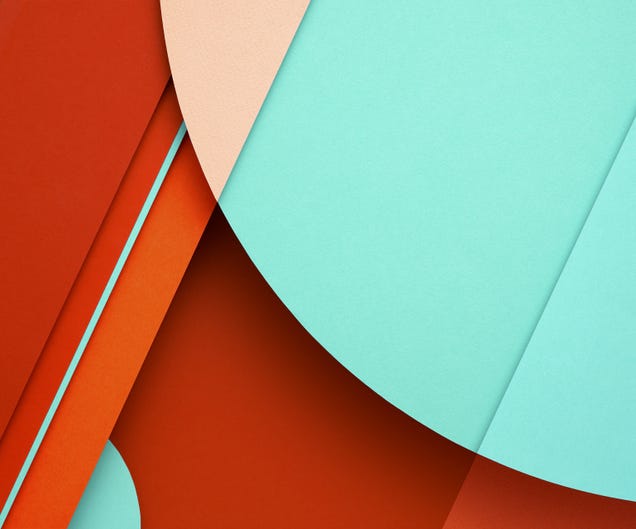
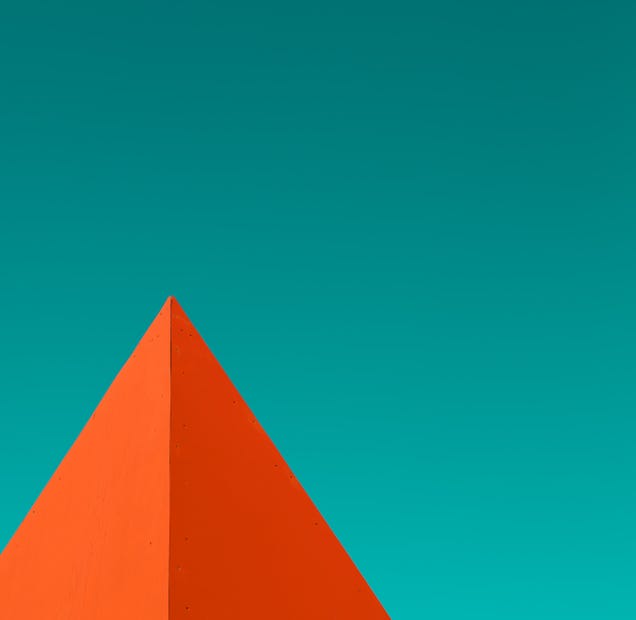
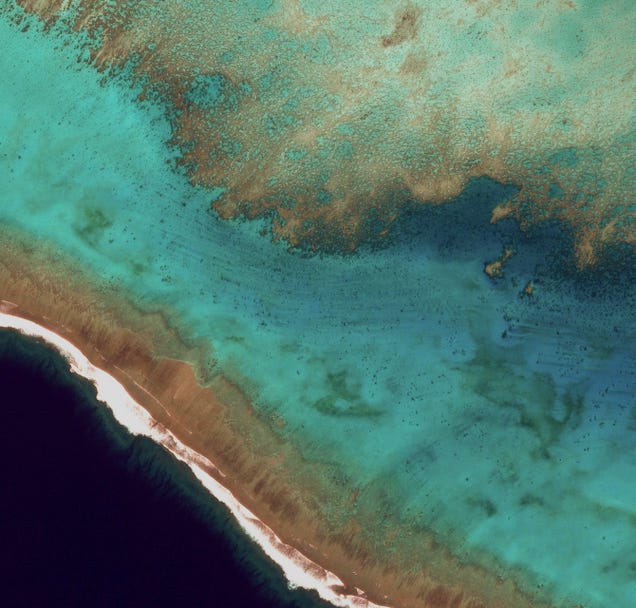
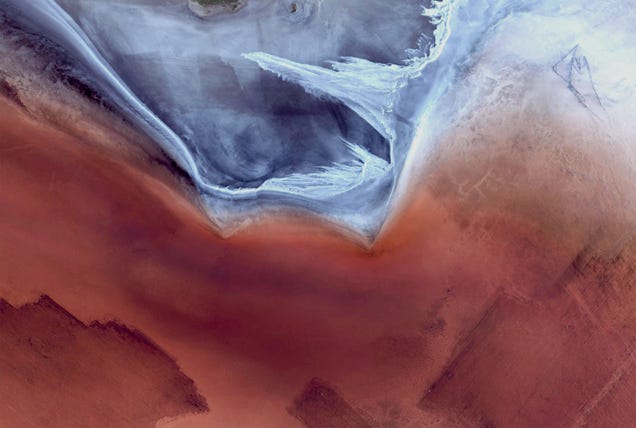
Google just released announced Android 5.0 last week and, along with it came a new developer preview. Included in that preview are a slew of pretty new wallpapers for your phone-decorating pleasure.
Remember, we're now requesting your participation in the Wallpaper Wednesday series! You'll find a selection here, but post your favorites for this week's topic in the discussions below. Stick to our format as best you can, including a title, the image, resolution, and a link. Happy wallpapering!
As a change of pace, you can download all of these wallpapers here.
Trapper Keeper
Inverse Circle
Polygons
Going Up
Ocean Front
Qbert
Geology Class
Event Horizon
Meteors
Cobblestone
Aquaman
For more great wallpapers, check out our previous Wallpaper Wednesdays. Got any great wallpapers you'd like to share? Email us a link with "Wallpaper Wednesday" in the subject line. Submitting your own work is highly encouraged!
Yahoo has updated its Mail application to now bring reminders for events and flight information. With a Google Now-like card layout, the Yahoo Mail app update now displays flight information along with top restaurant recommendations from Yelp once you land at your destination. Additionally, similar cards for events will give you at-a-glance information for Evite, Eventbrite, and Ticketmaster events.
The best way to get rid of clutter is by preventing it from accumulating in the first place. The next time you're out shopping, ask yourself where the item you're considering buying is going to go, even if it's not an impulse buy.
Sometimes clutter in our homes and workspaces builds up because we don't take the time to organize, but other times it's because we buy something we need without thinking about where it should go. Over time, your items can pile up, and you may not have the time to have a big organizing spree. Laura at weblog I'm An Organizing Junkie suggests you ask yourself some specific questions before buying:
1. Do I have a place to put this away?
2. Do I have the time and energy to organize a space to put this?
3. Am I willing to toss something to make room for this item?
4. Will I really use this item and if so will it be within the next 3 months?
You should know exactly where the item is going, or plan on making the space for it. Not only can asking yourself these questions save you some grief in home organizing, they may also save you money. Maybe you won't be using the item anytime soon, or maybe you're not willing to take time for making space for it, so you decide it's not worth the purchase. Kicking your clutter habit isn't easy, but these questions can help prevent some of it.
FBI Director James Comey has been on a media tour lately, making an anti-encryption pitch to the public. Apple's new encryption standards, Comey has argued, are an unnecessary hurdle to law enforcement — and the FBI needs an easy way to bypass them. Now Comey is bringing the argument straight to Congress, asking them to update a law to allow backdoors in smartphones.
Posted by Sundar Pichai, SVP, Android, Chrome & Apps Cross-posted on the Official Google Blog
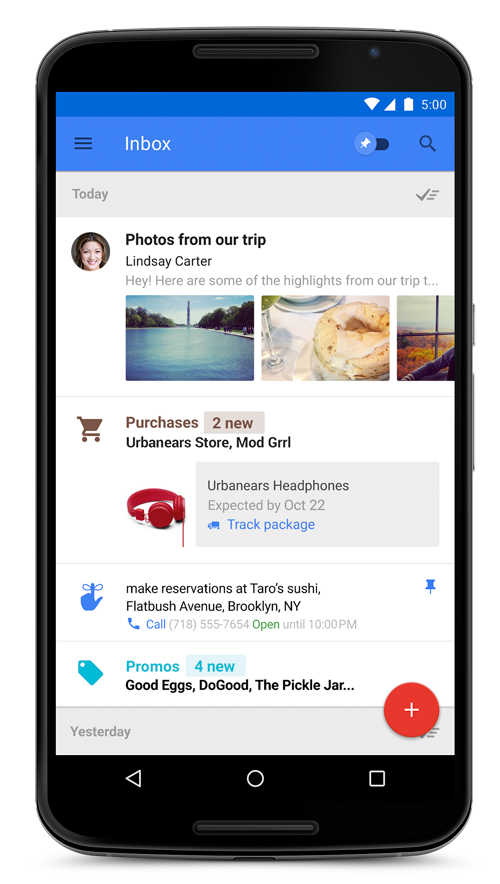
Today, we’re introducing something new. It’s called Inbox. Years in the making, Inbox is by the same people who brought you Gmail, but it’s not Gmail: it’s a completely different type of inbox, designed to focus on what really matters.
Email started simply as a way to send digital notes around the office. But fast-forward 30 years and with just the phone in your pocket, you can use email to contact virtually anyone in the world…from your best friend to the owner of that bagel shop you discovered last week.
With this evolution comes new challenges: we get more email now than ever, important information is buried inside messages, and our most important tasks can slip through the cracks—especially when we’re working on our phones. For many of us, dealing with email has become a daily chore that distracts from what we really need to do—rather than helping us get those things done.
If this all sounds familiar, then Inbox is for you. Or more accurately, Inbox works for you. Here are some of the ways Inbox is at your service:
Bundles: stay organized automatically Inbox expands upon the categories we introduced in Gmail last year, making it easy to deal with similar types of mail all at once. For example, all your purchase receipts or bank statements are neatly grouped together so that you can quickly review and then swipe them out of the way. You can even teach Inbox to adapt to the way you work by choosing which emails you’d like to see grouped together.
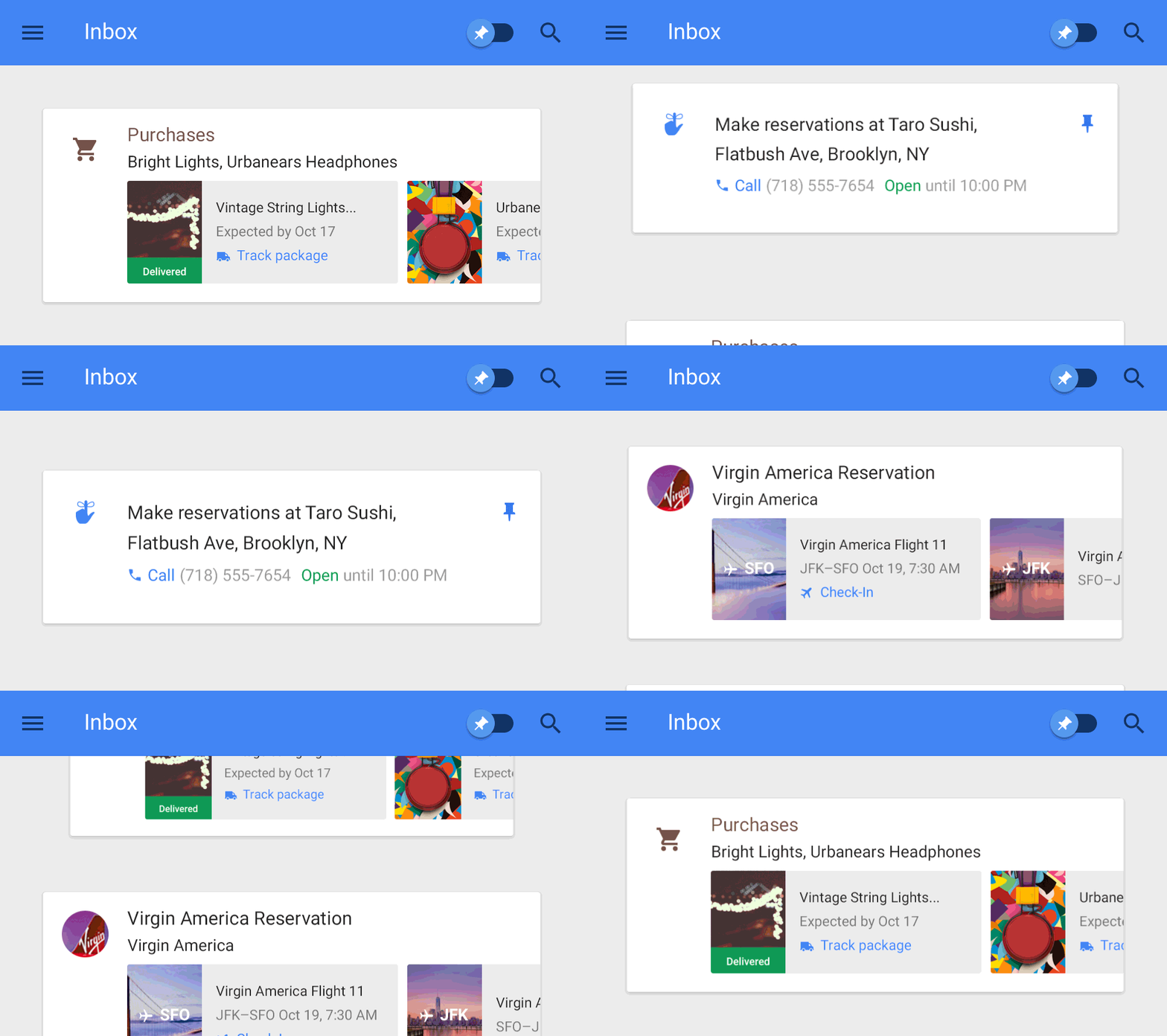
Highlights: the important info at a glance Inbox highlights the key information from important messages, such as flight itineraries, event information, and photos and documents emailed to you by friends and family. Inbox will even display useful information from the web that wasn’t in the original email, such as the real-time status of your flights and package deliveries. Highlights and Bundles work together to give you just the information you need at a glance.
Reminders, Assists, and Snooze: your to-do’s on your own terms Inbox makes it easy to focus on your priorities by letting you add your own Reminders, from picking up the dry cleaning to giving your parents a call. No matter what you need to remember, your inbox becomes a centralized place to keep track of the things you need to get back to.
A sampling of Assists
And speaking of to-do’s, Inbox helps you cross those off your list by providing Assists—handy pieces of information you may need to get the job done. For example, if you write a Reminder to call the hardware store, Inbox will supply the store’s phone number and tell you if it's open. Assists work for your email, too. If you make a restaurant reservation online, Inbox adds a map to your confirmation email. Book a flight online, and Inbox gives a link to check-in.
Of course, not everything needs to be done right now. Whether you’re in an inconvenient place or simply need to focus on something else first, Inbox lets you Snooze away emails and Reminders. You can set them to come back at another time or when you get to a specific location, like your home or your office.
Get started with Inbox Starting today, we’re sending out the first round of invitations to give Inbox a try, and each new user will be able to invite their friends. If Inbox can’t arrive soon enough for you, you can email us at inbox@google.com to get an invitation as soon as more become available.
When you start using Inbox, you’ll quickly see that it doesn’t feel the same as Gmail—and that’s the point. Gmail’s still there for you, but Inbox is something new. It’s a better way to get back to what matters, and we can’t wait to share it with you.
We've talked a lot about the legality of piracy a lot here at Lifehacker, but really, you're probably breaking the law everyday anyway. However, piracy can sometimes have its benefits. Even to the companies who own the copyrights.
This post is part of our Evil Week series at Lifehacker, where we look at the dark side of getting things done. Knowing evil means knowing how to beat it, so you can use your sinister powers for good. Want more? Check out our evil week tag page.
Generally speaking, it's assumed there isn't a ton of moral ground for pirates of any type (be it movies, music, gaming, etc.) to stand on. It's breaking the law and it steals from content producers, right? Well, the story may be a bit more complex than that. Let's start by taking a look at one of the biggest examples.
Sometimes Creators Don't Care As Much As We Think
We assume that content producers have an obsessive grasp over their intellectual property. After all, some IP owners have helped that perception along. However, not everyone who produces content or software is waging a war against pirates. Speaking to a group of investors on an earnings call, the CEO of Time Warner Jeff Bewkes said this in 2013:
Yes, in response to a question about whether the network kinda-sorta regards the extensive theft of HBO's flagship show, Game of Thrones, as a compliment, Bewkes said, "I have to admit it, I think you're right." The much-discussed fantasy series is HBO's most popular, and "if you go to people who are watching it without subs, it's a tremendous word-of-mouth thing," the exec told investors. "We've been dealing with this for 20, 30 years—people sharing subs, running wires down the backs of apartment buildings. Our experience is that it leads to more paying subs. I think you're right that Game of Thrones is the most pirated show in the world," he said. "That's better than an Emmy." (Emphasis added.)
Let's set aside for just a moment that these words came out of the mouth of the CEO of Time Warner and were directed to investors. The implication here is pretty clear: piracy is not a universally bad thing and (some) content producers know it.
It's what could perhaps be called The Adobe Problem with piracy. Adobe makes expensive software products like Photoshop that are simply outside the range of most people. However, they're also supremely useful. "Photoshop" is on that rare level of ubiquity alongside "Google", "Taser", and "Super Glue" where the product becomes synonymous with the act itself. How exactly does a product with a historically expensive price tag become so incredibly common, not just in language, but in usage? How does Photoshop become the standard even with so many cheaper alternatives out there?
The answer is, in part, piracy.
Adobe touched on this when it launched the Creative Cloud subscription model. Adobe executive David Wadhwani explained that the reason people pirated their software wasn't out of malicious intent, but what we all knew already: they wanted to use high-quality software, but couldn't afford it:
I do not think people who pirate our software do it because they are bad people, or because they like to steal things. I just think that they decided that they can not afford it. And now, with the switch to subscriptions and with the ability to offer software at a cheaper price, we see that the situation is beginning to change and we're excited.
Take it with the grain of salt appropriate for a company man promoting a company product. Plus, we're not exactly thrilled with the creative cloud solution in its current implementation. However, Adobe has also thrown would-be pirates a bone here and there by occasionally resetting the free trial period. It's an uneasy truce but it speaks to a larger truth that both sides are aware of: no one is going to pirate something they don't want to use.
Even Warner Bros. is on board with this concept, using piracy numbers as a surrogate for demand. The studio's Chief of Anti-Piracy Operations said as much in June 2013:
Generally speaking, we view piracy as a proxy of consumer demand...Accordingly, enforcement related efforts are balanced with looking at ways to adjust or develop business models to take advantage of that demand by offering fans what they are looking for when they are looking for it.
The unwritten rule is getting written a lot more these days. Piracy may not be preferable to people who make content, but they're also beginning to realize that it's not a pure negative on the balance sheet. Piracy is more complex than that. Sure, every person who pirates Game of Thrones didn't pay money to HBO...but they probably told their friends. Money lost in subscriptions, but saved in advertising.
It Can Help to "Keep Circulating the Tapes"
Another common argument against piracy is that it stifles creativity. After all, one would argue, how can you hope to encourage artists to create things if you take away their revenue stream? If you can't make a living creating, you might stop creating.
The inherent problem with this argument is that it conflates making copies with corrupting a revenue stream. One classic example is the cult classic from the late 80s and early 90s, Mystery Science Theater 3000. This show initially aired on a small television station called KTMA with very little coverage. Despite positive early reactions, the station was forced to close down.
During that first season, however, the show's credits contained what became an iconic line: "Keep circulating the tapes." Viewers of the show would record episodes to share with friends who may not have had access at the time. This increases exposure help keep the show on the air. Furthermore, when KTMA closed down, MST3K was picked up by the Comedy Channel and ran as a signature series. The Comedy Channel would later go on to merge with competing network HA! to form the now-prolific Comedy Central.
It's an oversimplification to say that piracy is directly responsible for the existence of Comedy Central (notably, recording the shows was legal, but how far they were circulated moved into a more gray area). However, this concept of piracy as a form of preservation didn't stop in the 90s. In 2011, one Bittorrent user reclaimed 172 BBC websites that were marked for deletion due to budget cuts.
Of course, we can't assume that piracy is strictly a form of digital history preservation. That's silly. Torrent trackers and Usenet aren't the Library of Congress, nor do they pretend to be. However, we can see that piracy can not only be a valid advertising and analytics tool for big companies, it can aid in archiving and distribution for smaller ones.
Damage is Done By Piracy—But No One Knows How Much
Knowing there are exceptions to the rule is nice, but it doesn't really give piracy any moral ground to stand on. Sure, you could help save a show accidentally by pirating it enough to boost its perceived demand. But does that balance out with the damage caused by piracy? Surely, there is a non-zero amount of lost sales due to piracy. How much damage is actually done, then?
The simple answer is, we don't know. And neither do movie industry executives. Speaking to a federal court in California, the MPAA explained how actual damages (that is, the exact number in financial damages done to the organization) cannot be defined:
To permit consideration of actual damages under these circumstances would be perverse – and particularly unfair – given that Plaintiffs elected statutory damages precisely because their actual damages are not capable of meaningful measurement.
What that means in normal terms is that the MPAA wanted the court to consider damages in terms of what would "send a message" (to use their later words) to would-be pirates and dissuade new pirate organizations from cropping up. This, the MPAA claims, is the only fair way to resolve the issue, as there's no way to calculate the exact value of lost sales or reduced revenue.
After all, as we established earlier, the issue is complex. A pirate may download a movie that they would otherwise buy because piracy is an available option. Then again, they may not be able to buy it in the first place. And what about new sales made due to increased word of mouth? These things can't adequately be calculated, at least not to enough to satisfy a court. That's why "statutory damages" are used. Statutory damages are predefined and exist partially as punishment for the offending party and deterrents for anyone else.
The use of statutory damages is why you can hear stories of someone who downloaded 30 songs and owed $675,000 for it. The range for statutory damages under copyright law (between $750 and $150,000 per infringement) is sometimes ill-fitted to individual cases. Because it's not directly tied to damage done, it's also difficult to tie those numbers to how much damage is really done. To put it another way: if we knew exactly how much illegal downloads hurt the industry, that would be the figure charged to those who are sued. Unfortunately, the reality is more complex than that.
Can Piracy Have a Moral Code?
All the above arguments are just one side of the issue (this is Evil Week, after all, so we're playing a bit of devil's advocate). However, it's enough to acknowledge that downloading stuff isn't always inherently evil. Or, at the very least, it occupies a moral grey area. We can use this as a framework, however, to guide moral choices. Here are some questions you can ask yourself if you're deciding whether or not to pirate something:
Would you pay for this if you could? Our own Thorin explained last year why he stopped pirating. The simple answer is: the legal options are good enough and the illegal ones hard enough that it was worthwhile to pay when he could. If there are legal options available for a price you can afford, would you still pirate something?
Is there a way to support the creators? It's not openly acknowledged often, but watching a big-name show and then advertising it to others is helpful. Going to see bands in concert, buying merchandise, and promoting the stuff you like may help balance the cosmic scales morally (if not legally).
Who are you hurting? Piracy takes on a different connotation morally depending on who's making stuff. Chances are Michael Bay's not going hungry if you download Transformers: Age of the Dark Side of the Fallen 12. But downloading a pirated APK of a $2 Android app from an indie developer is typically seen as a bigger sin because each download is a bigger percentage of the developer's take-home pay.
If Johnny Depp has taught us anything, it's that even pirates aren't completely devoid of a moral center. You may not agree with the moral choices of a pirate, but to pretend there's a divide between the "good" people who pay for everything and the "bad" people who "steal" things belies the complexity of a complicated market.
It's also worth pointing out that none of this makes piracy any more legal. This is a mental exercise to understand piracy that doesn't actually have that much of an effect without changes to the law. We've talked about situations in which breaking copyright law may be illegal but still socially acceptable before (for example, ripping a DVD you own). However, it's still up to you to decide what you're going to do with this information. Feel free to discuss how you approach the morality of piracy in the discussions below.
Tired of the same old, boring salads? While there are nearly endless ingredient combinations you can try, this graphic suggests tried-and-true flavor pairings that balance primary tastes.
Huffington Post used the excellent book The Flavor Bible(which we've mentioned before) to pair main ingredients—avocado, bacon, chicken—with other ingredients that go well with them and balance sweet, salty, sour, and bitter tastes. The result: A salad-making cheatsheet.
Naturally, you can adjust or substitute ingredients and the dressing as you like, but in general you can't go wrong with these combos.
Microsoft Garage, a division of the company that allows their employees to work on any project they desire, has released a bunch of new apps specifically for Android devices this week as part of a new effort to show the general public what their employees are working on in their spare time. Here's a quick round up of what's available.
Welcome to the roundup of the best new Android applications, games, and live wallpapers that went live in the Play Store or were spotted by us in the previous 2 weeks or so.
Please wait for this page to load in full in order to see the widgets, which include ratings and pricing info.
Looking for the previous roundup editions? Find them here.
Featured App
Expense IQ - Expense Manager
This week's roundup is brought to you by Expense IQ - Expense Manager from Handy Apps.
Google's Street View feature has already transported us from our humble desks to many incredible places around the globe, giving us panoramic virtual views of everywhere from Antarctica to the Great Barrier Reef. But now it's letting us do do something we've always dreamed of: hang out with chimpanzees in their natural habitat. As shown off in the teaser video below, Google's newest Street View "trek" lets you look around Gombe Stream National Park in Tanzania, Africa, home to a population...
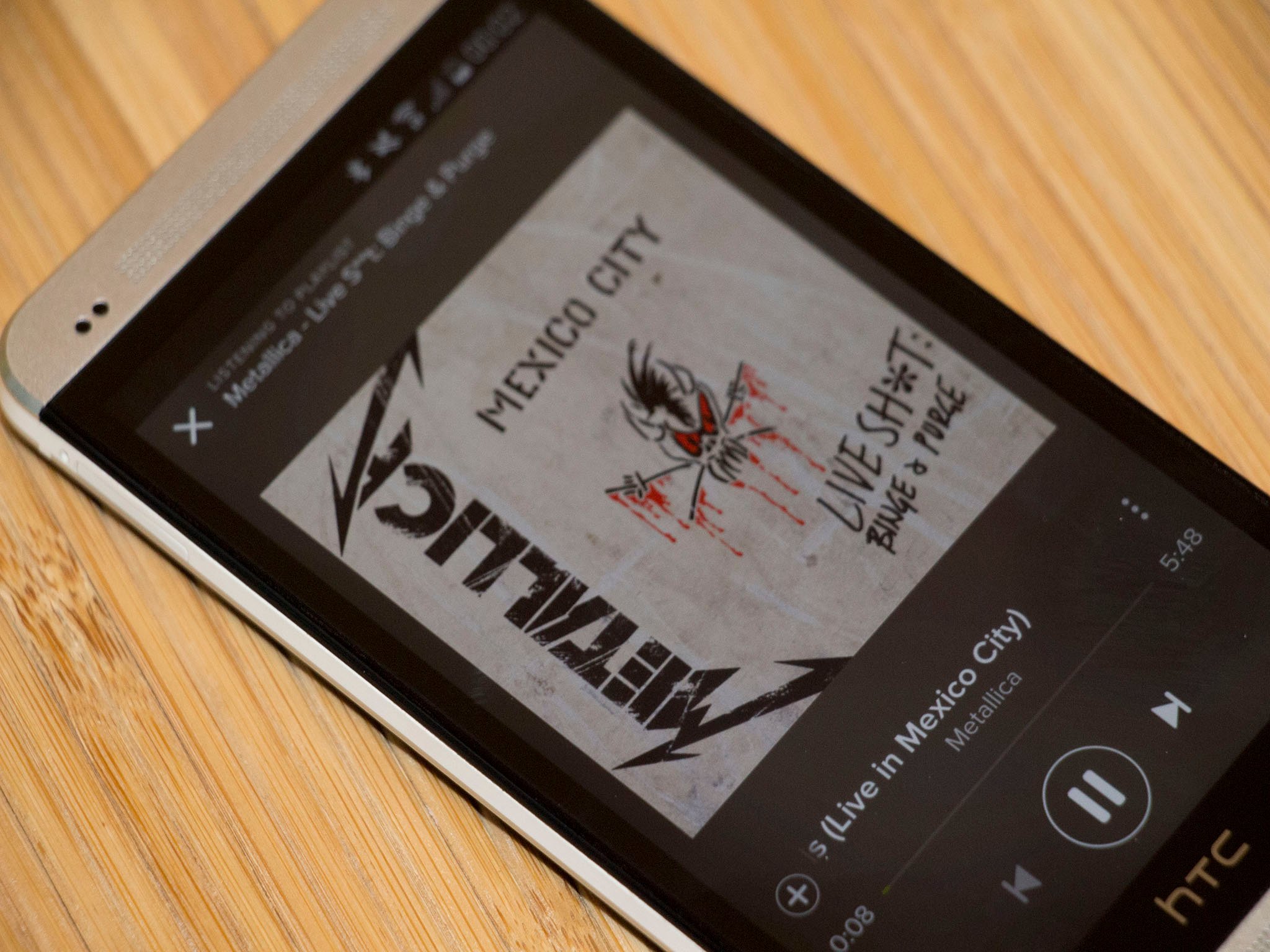
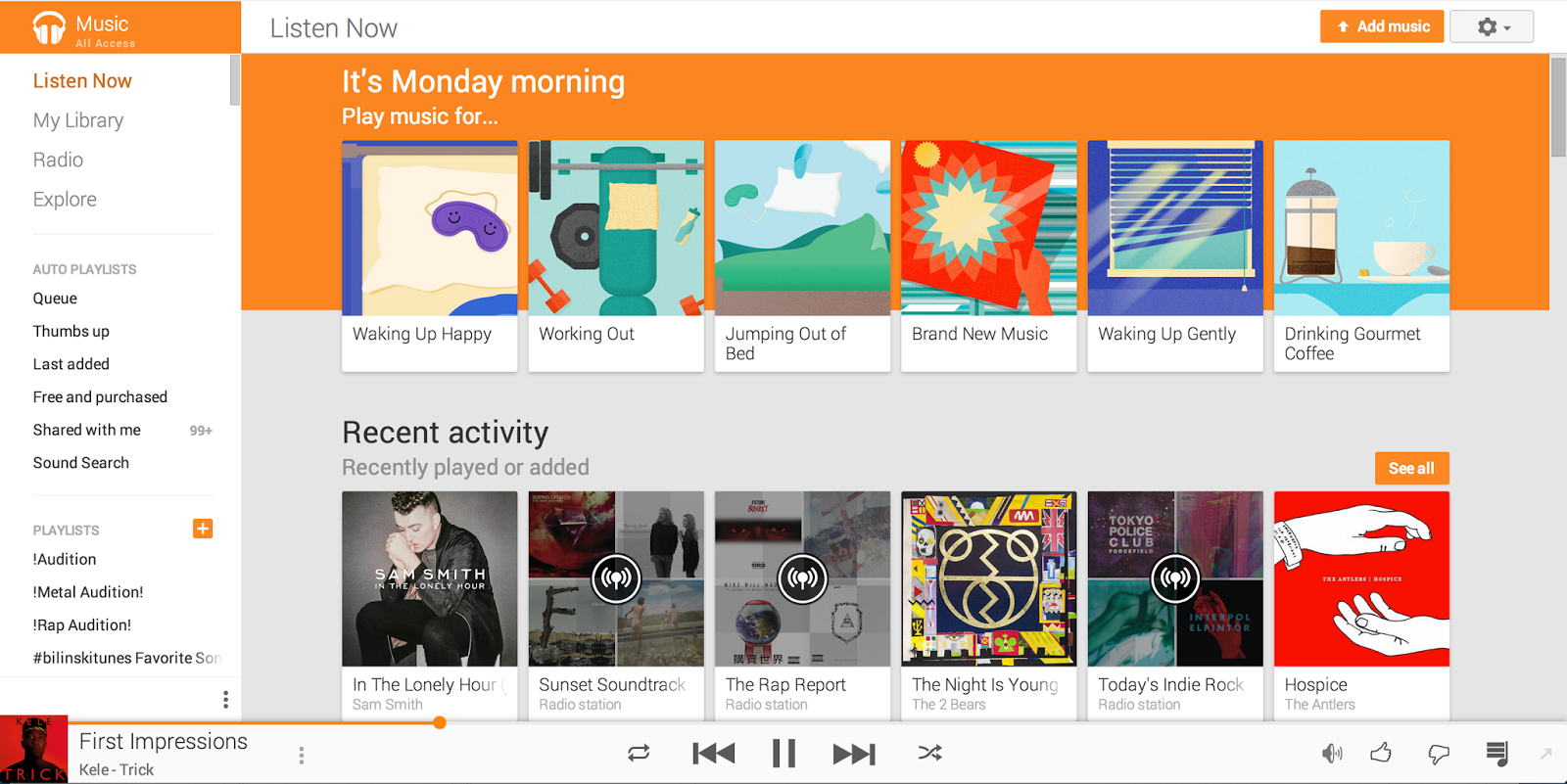
It’s Tuesday morning and you might be sitting in the office, in desperate need of a way to stay motivated for the week ahead. How about a playlist for staying focused at work? Starting today, it’s easier to find the right music for every mood with an updated Google Play Music app. This is our first integration with Songza, a company we acquired this summer that gives you expert curated music stations based on what you’re doing.
If you’re a Google Play Music subscriber, next time you open the app you’ll be prompted to play music for a time of day, mood or activity. Choose an activity to get options for several music stations to make whatever you’re doing even better—whether it’s a station for a morning workout, songs to relieve stress during traffic, or the right mix for cooking with friends. Each station has been handcrafted—song by song—by our team of music experts (dozens of DJs, musicians, music critics and ethnomusicologists) to give you the exact right song for the moment.
You can download these music stations to listen when you’re offline, see what song is up next, and add, remove or re-order them to suit your taste. Or you can start a new station based on any song in the mix. You can also search for a particular station you want or activity you want to find music for.
As part of this update, we’ve also redesigned the “Listen Now” page so you can more easily discover new music. Now you’ll see cards for all of your recently played music, new releases you might be interested in, and radio stations based on what you like to listen to. You’ll also notice that the new app uses Google’s material design, with bigger images, bolder colors and slick transitions.
The new activity-based station recommendations are available today for subscribers in the U.S. and Canada (Android, iOS and the web). The redesigned “Listen Now” page is available in all 45 countries where Google Play Music is available (for Android, iOS and the web).
With more than 30 million songs to choose from on Google Play, it can be hard to figure out what to listen to. Sometimes you want to build your own mix to rock out with your friends, and sometimes you want to sit back, press play and hear something completely new. Whether you’re at work or on vacation, we’ll find you the best music station to make the experience better.
Posted by Brandon Bilinski and Elias Roman, Google Play Music product managers
For the longest time now, Google has recommended that users enable two-factor authentication for their accounts on its platforms (and anywhere else, really). But starting today, it is launching a second — even more secure — method for those who really want their accounts to stay safe. With Security Key support, users can now get a physical USB key through third-party providers… Read More
Marvel's Guardians of the Galaxy makes it clear that Peter "Star Lord" Quill is willing to risk his life for two things: his friends, and a cassette mixtape called "Awesome Mix Vol. 1." The mix has been available in the real world in digital, CD, and record form, but soon you'll be able to get your hands on Quill's actual tape — or one designed to look exactly like it — when Marvel releases a special version of the cassette to a select group of record stores shortly before the movie comes out on Blu-Ray and DVD on December 9th.
The limited edition "Awesome Mix Vol. 1."will be available from independent retailers that participate in Record Store Day, an annual celebration during which limited edition vinyl and CD releases are put out....
Microsoft started dropping hints about its plans to kill off the Nokia and Windows Phone brands last month, and now the company is ready to make it official. Microsoft Lumia is the new brand name that takes the place of Nokia for the software maker. The name change follows a slow transition from Nokia.com over to Microsoft's new mobile site, and Nokia France will be the first of many countries that adopt "Microsoft Lumia" for its Facebook, Twitter, and other social media accounts. Microsoft has confirmed to The Verge that other countries will follow the rebranding steps in the coming weeks.
Next up on our tour of (yet unreleased) Google app redesigns is Google Calendar. We actually got a glimpse of this redesign way back in April when Geek.com originally leaked the app as it was then. Since then, it seems that not a ton has changed, but we can get a more complete look at the app as it stands now.
Google wants its calendar app to be all about smartness.
Alongside the launch of Lollipop, Google updated the official Android website with a guide for users switching from iOS to Android. Apple wrote a similar guide on how users can switch from Android to iOS during the debut of iOS 8, so it's only fair that Google is making a transition guide after introducing the latest version of Android.
Sometimes you need to get into a computer without knowing the password. Perhaps you've forgotten yours, or perhaps you're up to no good. Either way, it's actually pretty easy to do, provided your victim hasn't taken the necessary precautions. Click one of the links below to find out how to do it on either a Windows PCor a Mac, and how to prevent others from doing the same to you.
This classic post has been republished is part of our Evil Week series at Lifehacker, where we look at the dark side of getting things done. Knowing evil means knowing how to beat it, so you can use your sinister powers for good. Want more? Check out our evil week tag page.
If you're trying to break into a Windows computer—whether you've forgotten your password or are hatching a more sinister plan—you have quite a few options. Read more...
Even if you aren't a sinister evildoer, there could be times when you need to get into a computer without the password. It's quite easy to do on a Mac, and learning how to do it can help you keep yourself better protected, too. Read more...
In recent years the ‘freemium’ business model has gained much traction in many areas from gaming to software services. But while the portmanteau describing the phenomenon is a relatively new addition to our language, the idea behind the business model is not.
In the 1980s, those with access to Bulletin Board Systems would download programs and share them with their friends, all with the full encouragement of the software’s creators. Shareware, as it was known, often encouraged users to send off a snail-mailed registration fee in return for a code to unlock premium features. Although basic, freemium had been born.
Today the concept has gone way beyond those humble roots. The App Store and Google Play are awash with free-to-play games with premium addons, and services such as Spotify and Dropbox offer decent free levels of service to get users onboard and primed to start parting with real cash.
If Joe Public was pressed into a snap judgment, Microsoft would probably be more associated with premium than free, with the company historically charging sizable amounts for its Windows and Office products, for example. However, speaking with CNBC, Microsoft CEO Satya Nadella says that the company has always had an eye on the freemium experience.
The idea, the CEO notes, is to get people on board with a product they find useful. Then, when it becomes clear how users are utilizing the service, options to monetize become available alongside their demands for improved service. He uses the company’s cloud-storage service as an example.
“We want everybody to use OneDrive. And then when you are starting to use it for business, that’s when we want to monetize. So we do not want to have you only start using us when you have a business license or subscription. We want to have you use us when you just want to save any file or any document, any artifact of yours. And then have a natural way for us to monetize as you use more of it in the commercial context,” Nadella explains.
By now millions of people online are familiar with ‘freemium’ in one shape or another but comments from Nadella suggest that while this business model has been leveraged by Microsoft for quite some time, the company had it forced upon them.
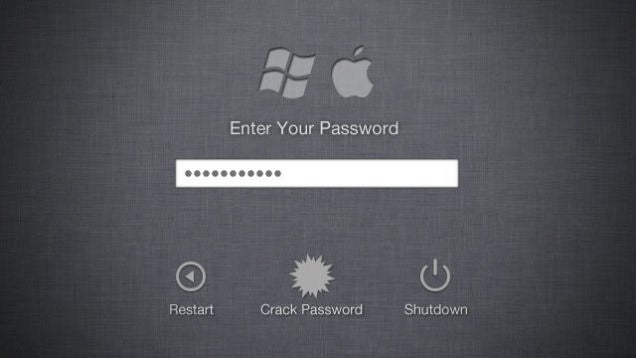
“Well, we’ve always had freemium. Sometimes our freemium was called piracy,” Nadella reveals.
“[The] thing that I don’t want us as a company to shy away from is usage first. Because I think if anything, the new competition has taught is that, you know, what matters is do not try to equate revenue and usage day one.”
The ‘piracy is promotion’ angle is something rarely spoken about by company execs, probably in fear of endorsing an illegal activity and validating it in the eyes of piracy proponents. However, by speaking of it alongside ‘freemium’, Microsoft’s CEO appears to have confirmed what many have been saying all along, that getting people on board for free – via piracy if necessary – is one the first steps on the monetization trail.
Indeed, this belief his held so strongly in some quarters that there are some who insist that it’s preferable for people to pirate the software of company ‘A’ than switch to the opposition, whether paid or not.
That said, what Microsoft does not want is people selling pirated copies of its premium products – that kind of ‘promotion’ is never welcome. If people use a free sample of Microsoft products at home, the company isn’t likely to kick down the door. Do the same in a business environment, however, and things aren’t anywhere near as open-minded.
There are no signs that Microsoft is going soft on piracy but as business models change, as they have with Adobe’s Creative Cloud, free tiers attractive to would-be pirates will become more commonplace. And that can only mean one thing for piracy rates.
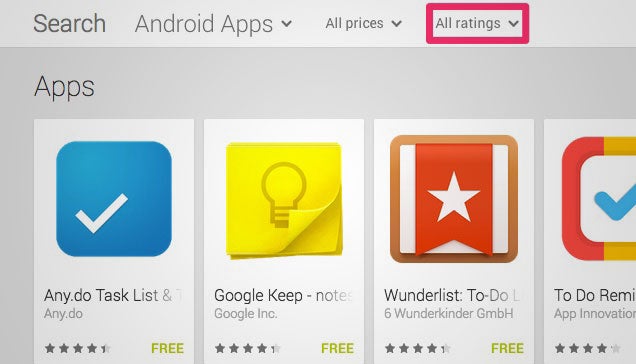
Web: Figuring out which apps to trust is tough. If you use ratings to help you out, you can now filter your search results by ratings on the Google Play Store.
Whenever you search for an app on your browser, a drop down menu will appear. By default it will say "All Ratings", but you can click it to filter your results to "4+ stars". Those are the only two options.
We still recommend thinking critically about an app before you download, instead of relying completely on reviews to make your decision. The new Google Play feature can still help weed out the really bad apps, though, so you can focus on the ones that might be worth considering. It also helps avoid knockoffs and find the legitimate apps more quickly.
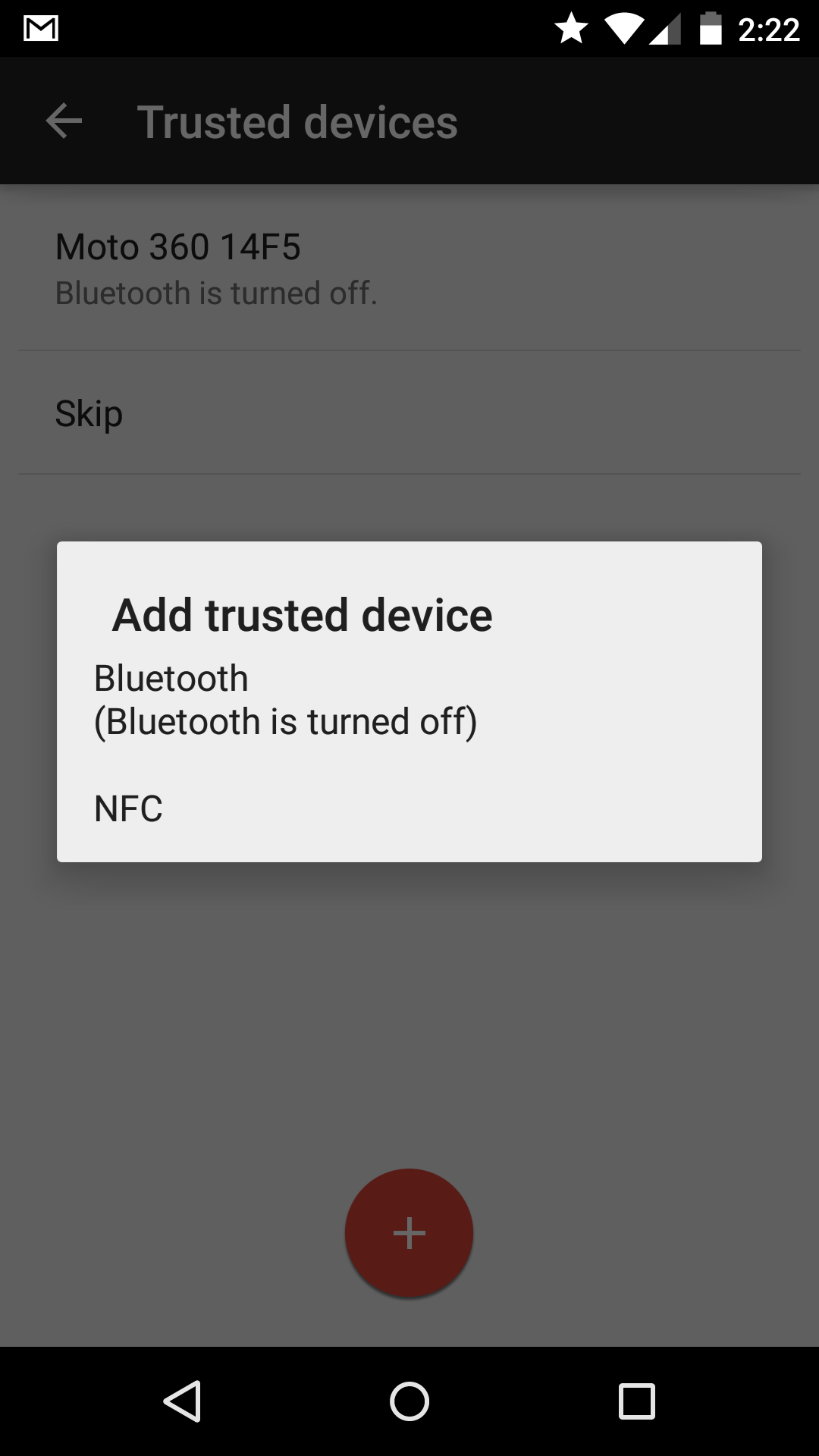
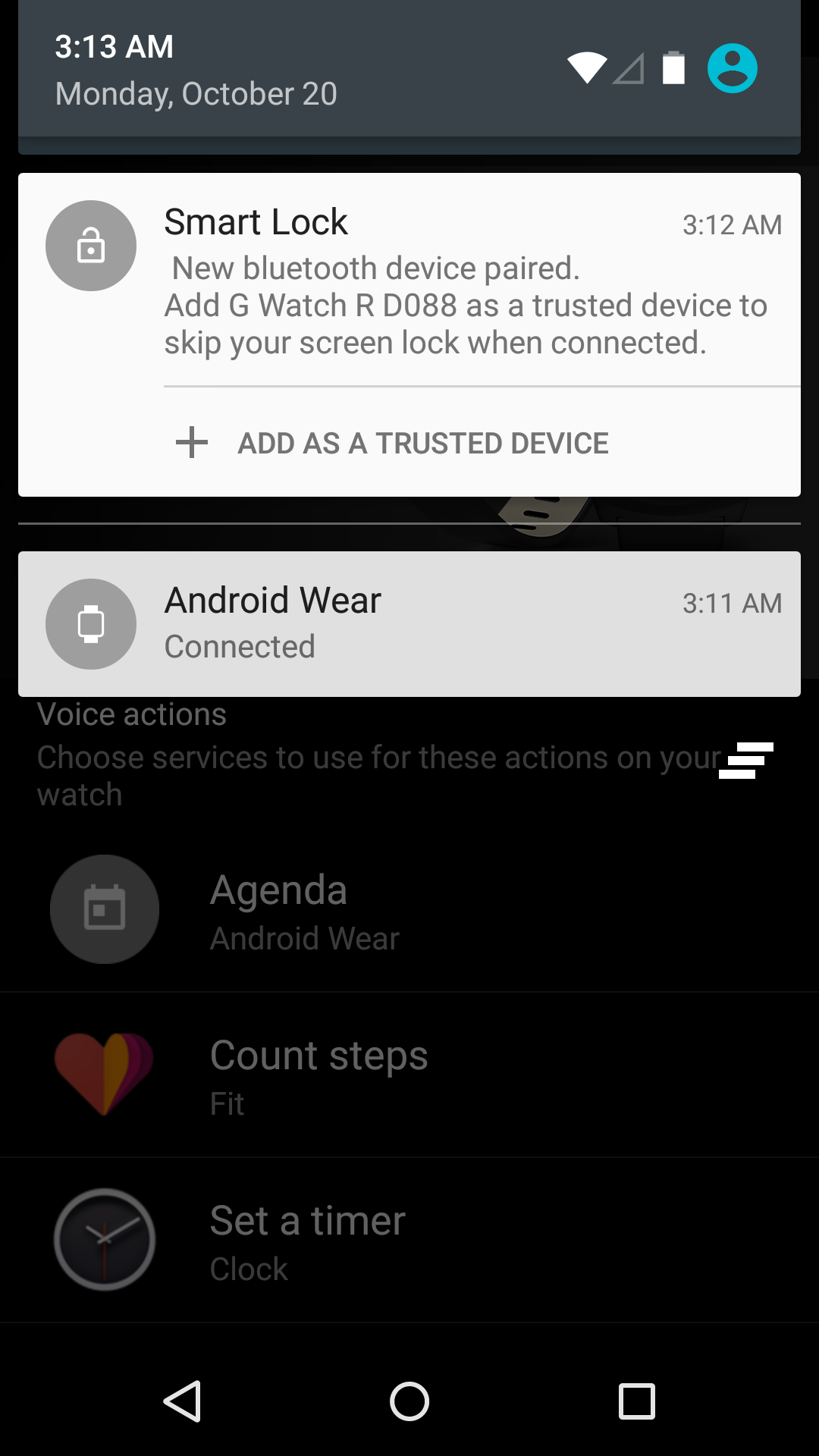
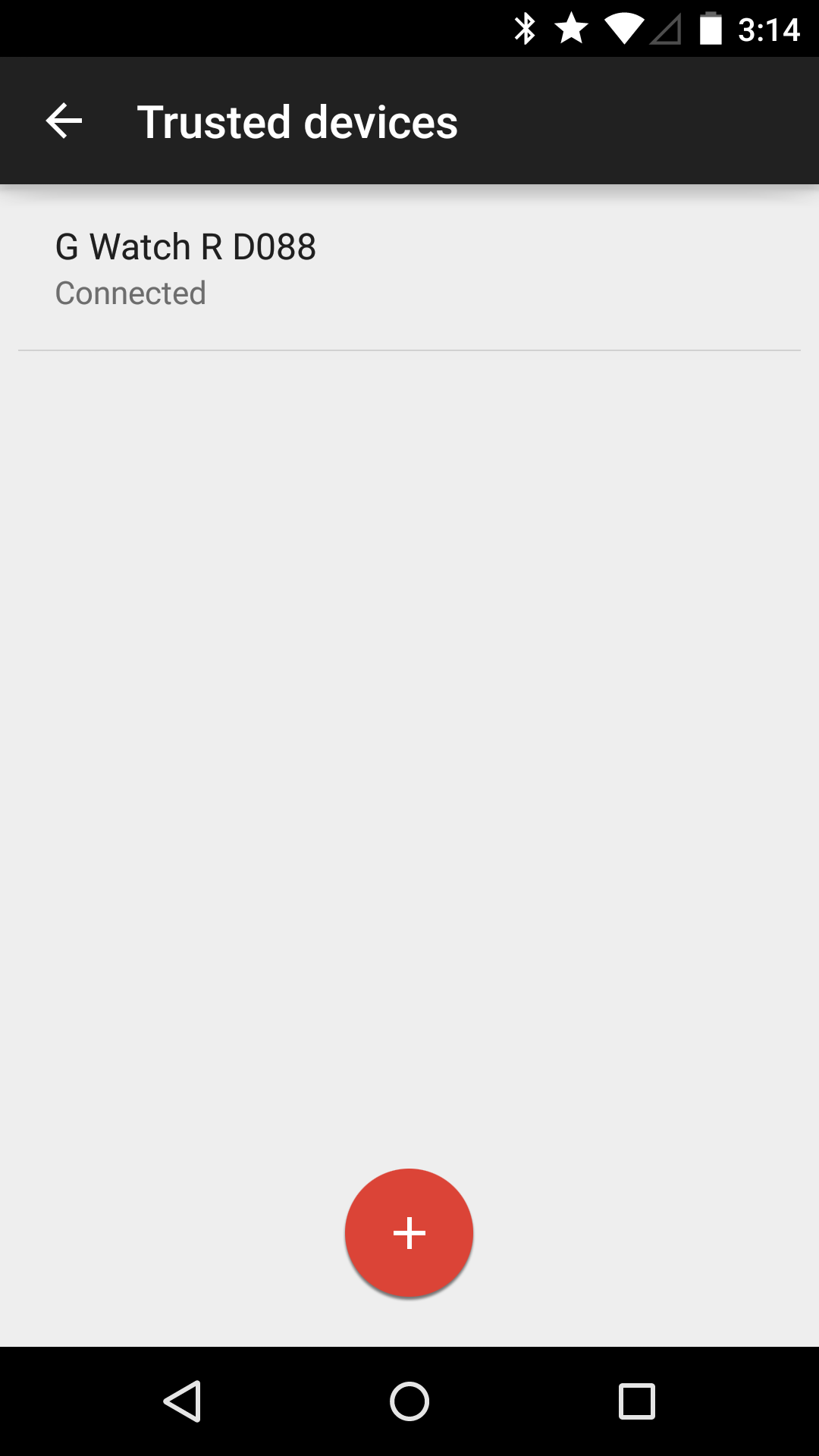
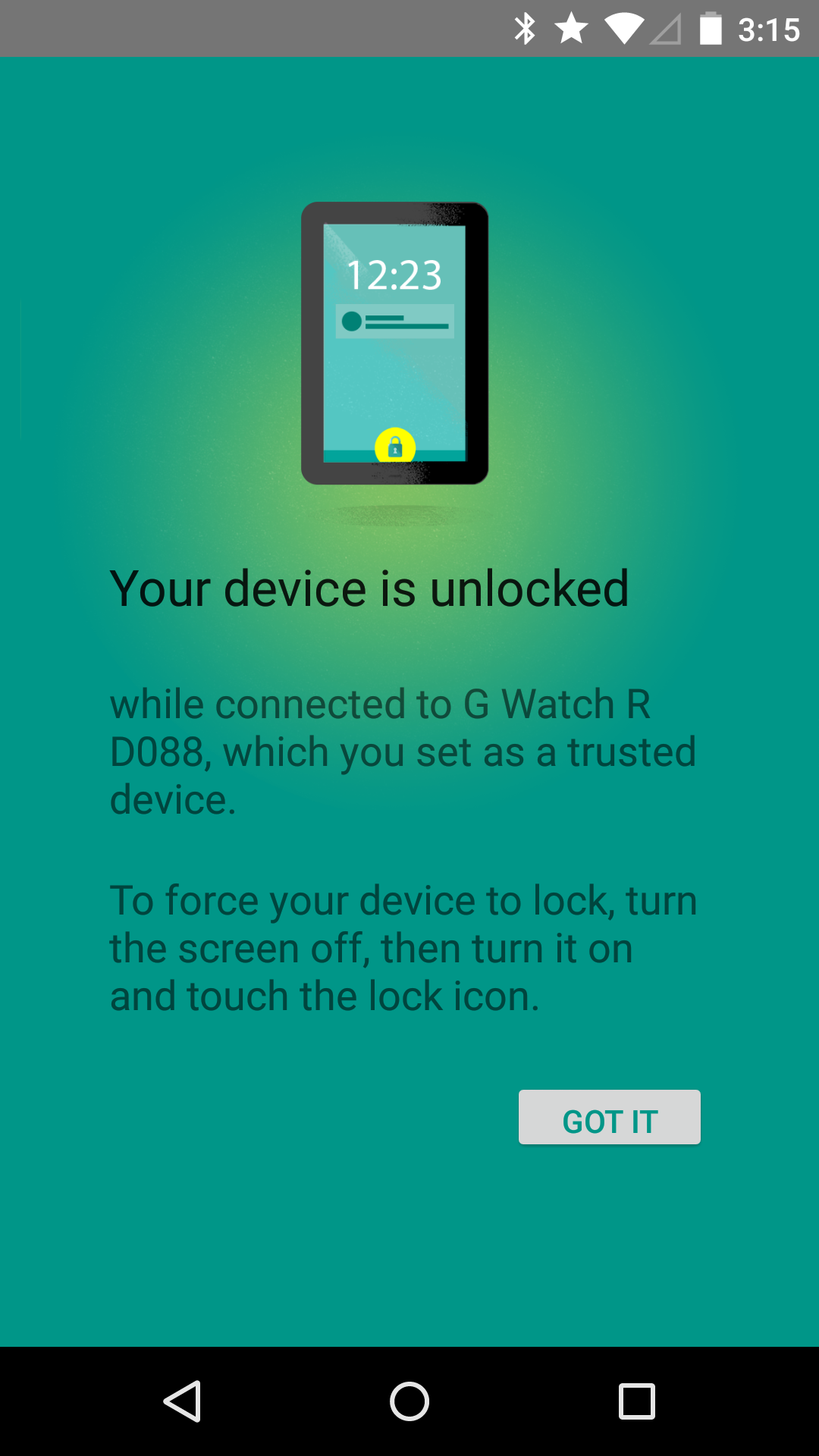
Google showed off the trusted device unlock support back at Google I/O, but the feature didn't make it into the last dev preview. Well, it's there now and it works as advertised. Just pair your favorite wearable or Bluetooth gizmo, and the secure lock screen goes away. Lose connection, and it's back.
In Lollipop, when you add a new Bluetooth device, a notification will ask you if you'd like to make it a "trusted device." That means if your watch, car, or whatever device is connected, you can access the device simply by swiping away the lock screen.
Spotify has today announced a new plan for the entire family. If you've been wanting to have a single billing account for the household but keep individual playlists, it's now possible for up to five family members to share a single Spotify subscription, starting from $14.99 a month.




 The Civilization series has repeatedly roped me in for disappearances that span hours and even days, and the newest instalment, Civilization: Beyond Earth continues that storied tradition. The civilization building and management simulation keeps a lot of what has worked about the series, and adds substantial new gameplay elements – this is no warmed-over expansion with some sci-fi… Read More









 Reminders, Assists, and Snooze: your to-do’s on your own terms







 Welcome to the roundup of the best new Android applications, games, and live wallpapers that went live in the Play Store or were spotted by us in the previous 2 weeks or so.
%2BReal%2BHeader.jpg)

 For the longest time now, Google has recommended that users enable two-factor authentication for their accounts on its platforms (and anywhere else, really). But starting today, it is launching a second — even more secure — method for those who really want their accounts to stay safe. With Security Key support, users can now get a physical USB key through third-party providers… Read More






 In recent years the ‘freemium’ business model has gained much traction in many areas from gaming to software services. But while the portmanteau describing the phenomenon is a relatively new addition to our language, the idea behind the business model is not.


 Google showed off the trusted device unlock support back at Google I/O, but the feature didn't make it into the last dev preview. Well, it's there now and it works as advertised. Just pair your favorite wearable or Bluetooth gizmo, and the secure lock screen goes away. Lose connection, and it's back.