When cops are fired or forced to resign for malfeasance, chances are they walk straight into another law enforcement job -- in LA, the Sheriff's Department operates a revolving door between its police force and its notoriously corrupt jails, transferring its worst police offers into its custodial service.
Read the rest
Black Friday has arrived and Carphone Warehouse has commenced its Flash Sale in the UK. Until midnight on December 2, consumers will be able to enjoy discounted prices across a range of Android-powered smartphones, tablets and accessories.
The European Parliament has today approved a non-binding resolution calling for the "unbundling of search engines from other commercial services" in order to ensure "competitive conditions within the digital single market." This proposal stirred up plenty of discontent when it was revealed a week ago, but it has been affirmed in its original form today, including the controversial unbundling provision. Without the authority to act on this resolution itself, the European Parliament is asking the European Commission and the EU's member states to ameliorate Google's dominant and apparently discriminatory position in online search by forcing it to decouple its search and ads businesses. The language is strong, describing search engines as...
Google has kicked against it. Eric Schmidt was doing so in public only last month. But European regulators are now stipulating the so called ‘right to be forgotten’ ruling should apply to search results displayed on Google.com, not just on European sub-domains such as Google.co.uk. Read More
Twitter is now keeping track of which apps you have on your phone, and sending that data back to the mothership (birds nest?)
Here’s how to turn it off. Read More
Until recently the vast majority of British citizens believed that copying music bought with their own money was something they could do without legal concerns.
The truth, however, was somewhat different. Until recently UK legislation did not permit so-called “private copying”, meaning that anyone who transferred music from a purchased CD to an MP3 player was committing an offense.
Recognizing this as a problem, earlier this year the government decided that it would be in the best interests of consumers to legalize copying for personal use. After a delay through the summer, last month changes were put into place enabling people to make copies of DVDs, CDs and other types of media, as long as they’re for personal use.
But now, less than two months on, the music industry is voicing its collective displeasure at the government’s decision and announcing plans to have consumers pay a new “copy tax” to rightsholders.
The Musicians’ Union (MU), The British Academy of Songwriters, Composers and Authors (BASCA) and UK Music (of which the BPI is a member) say they have launched an application for a judicial review into the government’s decision to introduce a so-called “private copying exception” without including a kickback to rightsholders.
What the industry groups want is a tax to be applied to blank media including blank CDs, hard drives, memory sticks and other devices capable of recording. This money would then be funneled back to the music industry for distribution among rightsholders, a mechanism already operating in other European countries.
Despite never earning a penny from the billions of copies made before October 1, 2014, the music industry groups say that allowing citizens to record in future “will damage the musician and composer community” and amounts to a contravention of the EU Copyright Directive.
The judicial review will see the High Court examine the introduction of the levy-less copying exception to ascertain whether the government acted legally. The music groups’ aim is to have the legislation amended in the industry’s favor.
“We have sought judicial review because of the way the government made its decision not to protect the UK’s creative industries – in stark contrast to other countries that have introduced copyright exceptions,” says Vick Bain, CEO of The British Academy of Songwriters, Composers and Authors.
“We fully support the right of the consumer to copy legally bought music for their own personal and private use, but there must be fair compensation for the creators of the music.”
UK Music CEO Jo Dipple says that licensing is the key to the industry’s success in the digital age so when the right to copy without a license is granted, in this case to the public, rightsholders must be compensated.
“Copyright enables people to earn a living out of their creativity and sustains jobs. The Government has made a serious error with regards to private copying. The legislative framework must guarantee musicians and composers are fairly compensated,” Dipple says.
A newly released Snowden doc, published in the German newspaper Süddeutsche Zeitung, shows how Cable and Wireless (now a Vodafone subsidiary) made millions of pounds illegally installing fiber-taps to help GCHQ conduct its programme of mass surveillance.
Read the rest
It’s strange, because until now most home automation system which involve accessing the power outlets seems to have been designed for nerds to show off their ‘touch sensitive’ switches. But it’s taken a 19 year old from Kent, England to produce a power socket aimed at the mainstream UK market which carries a real switch, that looks just like any other, but which… Read More
Is there wriggle-room left in the last-minute offers space? U.K. startup Wriggle obviously thinks there is. The app, which matches you with last-minute availability at independent food, drink and entertainment establishments, is seeing its London launch today. Read More
Blinkbox today announced that iPad and Android tablet owners will be able to enjoy playback without an internet connection, thanks to a new offline mode. Just like we've had with music streaming services for some time, Blinkbox will allow subscribers to download their chosen film or TV show to watch on the go – perfect for travelling or in areas with poor signal.
Citizenlab's Ron Diebert lays out the terrible contradiction of putting spy agencies -- who rely on vulnerabilities in the networks used by their adversaries -- in change of cybersecurity, which is securing those same networks for their own citizens.
Read the rest
Welcome to the roundup of the best new Android applications, games, and live wallpapers that went live in the Play Store or were spotted by us in the previous 2 weeks or so.
Please wait for this page to load in full in order to see the widgets, which include ratings and pricing info.
Looking for the previous roundup editions? Find them here.
When cybersecurity firm Symantec uncovered the sophisticated malware Regin over the weekend, its analysts reported that it was most likely created by a national intelligence agency. Now, new reports suggest that the malware was a tool of the U.S. National Security Administration and British intelligence.
Based upon a combination of technical sources and its own technical analysis, a report in the Intercept concludes that a previously disclosed U.S. and U.K. attack on the European Union and a Belgian telecommunications company employed the Regin malware.
Sources close to the matter told the Intercept that the advanced malware had been found on the computers of Belgian phone and Internet provider Belgacom, which were known targets of the British surveillance agency GCHQ (for Government Communciations Headquarters). The news site's sources said they also found the same malware on European Union computer systems targeted by the NSA.
Belgium and the European Union have known about the attacks since last year thanks to NSA whistleblower Edward Snowden. However, they have never been able to determine the specific software that was used to carry out the attacks. It remains unclear if Regin is the culprit, but the Intercept’s evidence suggests that it was possible the NSA and GCHQ could have been using the spyware.
Ronald Prins, the security expert who was part of a team to remove the software from Belgacom’s computer system, said it was “the most sophisticated malware” he’d ever studied, and that he was certain a government was behind its construction.
“Having analyzed this malware and looked at the [previously published] Snowden documents,” Prins told the Intercept, “I’m convinced Regin is used by British and American intelligence services.”
It's here! The Jurassic World trailer has dropped, two days ahead of the promised Thanksgiving debut. Here, we finally see the park open to the public. However, the scientists running the park made a gamble by creating a genetically engineered hybrid dinosaur that's highly intelligent and, to quote Chris Pratt's character, "will kill anything that moves." We'll get to see this new super dinosaur wreak havoc on June 12th, 2015.
Earlier this month, Dropbox and Microsoft announced a partnership that would see Dropbox offer better support for Microsoft’s Office Suite, including the ability to edit Office docs from the Dropbox mobile app among other things. Today, those integrations have gone live for users of both the Android phone and iOS Dropbox applications. Explains Dropbox in a blog post announcing the… Read More
In a surprising display of transparency, Jack Conte and Nataly Dawn aka Pomplamoose detailed what it took to run a 28-city tour of the US. The bottom line? The band made $135,983 in income… and incurred $147,802 in expenses. Essentially, they lost a little over $11,000. But what does this mean for a modern Indie band? Conte writes that all is not lost. First, obviously, is the… Read More
Remember the "connected camera" that Panasonic showed off earlier this year? The vendor is looking to start offering the device in limited quantities in the UK from December 1, with "high demand" quoted as the main reason for bringing the DMC-CM1 to the country following a launch in France and Germany.
Amazon has announced that its PickUp service has expanded to include more than 10,000 Post Offices across the UK, boosting the number of supported locations to over 16,000. Rather than relying on couriers, customers can opt for Royal Mail's Local Collect to have their packages delivered to a nearby location where they can conveniently pick up the order without hassle.
Symantec has found an unusual new threat called Regin aka Backdoor.Regin. The software, which is essentially a very powerful Trojan Horse, appears to have been circulating in the wild since 2008 and has been hitting governmental, industrial, and individual systems with impunity, using sophisticated encryption and targeting systems to spy on targets. The anti-virus company has released a… Read More
by Darren Orf on Gizmodo, shared by Whitson Gordon to Lifehacker
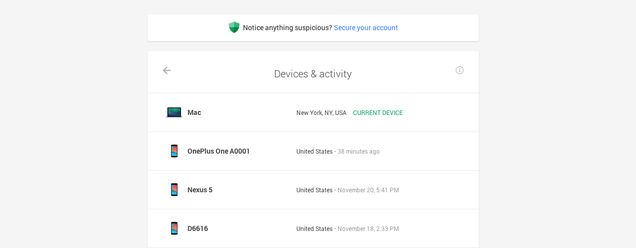
If go through a lot of gadgets, chances are your Google account is still connected to some old toys you don't much use anymore. Google's new security dashboard will help you keep track of which devices still have access, and lets you cut down the list right from your browser.
Launched today, this new "Devices and Activity dashboard" buried within your Google account's security settings gives you a full rundown of every single device that has had access to your Google account for the last 28 days, when the last time the account was accessed and where it was accessed from. From the dashboard, you can also manually untether your account from any device, which is a handy feature if you have no means of remote wiping a lost smartphone.
Logging into my dashboard, I was quickly assaulted with TONS of old review devices still sporting my Google account including a OnePlus One, Nexus 5, Z3, Z3 Compact, Moto X, Moto G, and Lumia 530 just to name a few. Needless to say, I did some much needed permissions pruning. Chances are your list isn't quite as bad, but I'm sure there's something there worth cutting. [Google for Work via The Next Web]
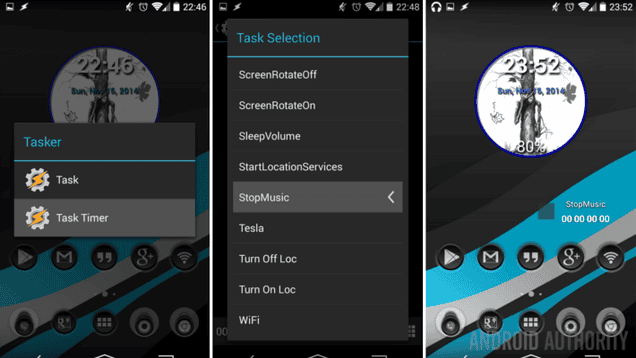
Android: You might wish your favorite music app had a sleep timer option to turn the music off after a set amount of time, or resent having an extra alarm clock app on your phone just so you can wake to your favorite music. There's no reason to download special apps for these features when you can just set them up with Tasker.
If you want to fall asleep to music and have it stop at a certain time, set up the StopMusic task and connect it to the Tasker Timer Widget. You can create a music alarm the same way (but with a StartMusic task instead of StopMusic). There are a few different options that will work for different devices, and the guide explains alternate routes you might have to take for each task. Regardless, it's simple, even for new Tasker users. Check out Android Authority's full guide for more.
Offering a shot of one-stop convenience, Starbucks began its roll-out of free Powermat wireless charging last week. The Seattle, Wash.–based coffee purveyor equipped roughly 200 stores in San Francisco with the technology, ahead of a nationwide launch next year.
I stopped by a location in Levi Plaza to check out the system and see if it lives up to the promise. There could be no in-between: It would either be a cool new convenience or a lame, over-hyped feature.
Sitting in the cafe, with my phone resting on the table that piped juice to it, the answer was clear. Starbucks should consider extra security; Frapuccino-fueled patrons are destined to jockey for a seat at one of these tables. After years of trying, wireless charging could finally be on the verge of going mainstream in a big, caffeinated way.
Getting Juiced Up At Starbucks
Wireless charging seems like a misnomer. People who have bought Powermat and similar products know that the main charging mat connects to a wall outlet with a cable. But it’s still considered “wireless” because phones, handheld gaming machines and other devices can power up just by sitting on top of it.
At Starbucks, the mats (or "Powermat Spots”) are built into some of the tables and countertops. Despite reports to the contrary, Daniel Schreiber, president of Powermat Technologies, claims the charging speed rivals cabled connections. I gave it a try, and found the charging action to be pretty speedy.
The downside is that few phones support Powermat charging out of the box. Some Lumia phones have it built in, and compatible backplates, phone cases, batteries and small Power Ring attachments are available under the joint Duracell-Powermat brand. The system offers some backward compatibility—if you have one, even an older unit, you'll be able to charge your device on Starbucks' tables.
If not, you can still use the Starbucks charging surfaces. The store loans out Power Rings for free on the spot and sells them there too for about $10, if you'd like to own one. Duracell-Powermat also sells them online.
“You’ve got to have a complete system,” said Matthew Guiste, Starbucks’ vice president of in-store digital. “No one has taken the plunge, [but] we want to start giving manufacturers a reason to put it in their phones.” The retailer has a habit of pushing technologies into the mainstream. Back in 2001, the business proselytized Wi-Fi, being among the first to offer it for free.
The chain’s knack for popularizing tech was the main reason Powermat partnered with it. “Wi-Fi was not a known commodity then,” said Schreiber. “They’re in a place to educate consumers.”
Daniel Schreiber, president of Powermat Technologies, at Starbucks wireless charging roll-out
Education is needed. Wireless charging has been around for quite a while, but despite that, it still hasn’t managed to gain traction with consumers yet.
Why Isn’t Wireless Charging A Thing Yet?
Even though the electromagnetic technology behind wireless charging goes back a century, people still mess with cables and power adapters—now more than ever.
Poor battery life forces the hassle. Today, huge phones with larger batteries and power-saving tactics, like Android’s Project Volta, try to prolong the longevity of our devices, but these are workarounds for batteries that just can’t keep pace with advancements in mobile technology.
Processing power, new features and our demanding requirements for connectivity make us "more dependent on our devices,” said Schreiber. “[But] it’s reached a crisis point where the industry is bringing us new uses that we routinely disable to give us more battery life.” The issue becomes worse with wearables, as tiny gadgets leave little space for big power cells.
<a href="http://www.ibtimes.com/iphone-users-out-luck-starbucks-bring-wireless-charging-least-200-us-locations-1726208">Some reports</a> say the system won't work with iPhones. Don't believe everything you read.
Wireless charging’s convenience can help ease the pain of short battery life. Unfortunately, like the old video rivalry between VHS and BetaMax, warring factions within the industry prevent a universal standard from paving the way for wider adoption.
Earlier this year, two of the leading power consortiums—Powermat’s Power Matters Alliance (PMA) and the Alliance for Wireless Power (A4WP)—made some headway by joining forces. Reinier H.M. van der Lee, director of product marketing at Broadcom, a key member of A4WP, told me then that it would lead to "dual-mode receivers,” or gadgets that support both PMA’s open standard and A4WP’s Rezence standard.
But the deal left out a third, the Wireless Power Consortium's Qi—currently the most popular wireless charging option available in mobile devices. Devices like Samsung's Galaxy, Motorola's Droid and some Lumia phones offer built-in support.
All three standards essentially rely on the same technology. Coils (in mats) create electromagnetic fields that transmit electricity when receivers (in gadgets and accessories) sit on top. But their approaches vary, and none work directly with either of the others.
Rezence devices don't exist as consumer products yet, but even if they did, single-mode products wouldn’t work on Starbucks’ Powermat charging tables. (They'd have to be dual-mode.) Qi gadgets, the most prevalent so far, won’t directly work either.
To cut through the complications, Starbucks and Powermat made a smart move: Those free Power Ring loaners come in a choice of micro-USB or Apple’s lightning port. This cross-compatibility should cover most smartphones, and their in-store availability means people won't have to plan ahead.
This simple decision gives every customer some wireless charging powers. It just so happens to spread the gospel of Powermat to a massive audience as well.
Powermat's Power Play
After starting out with test roll-outs in select stores in Boston and San Jose, Starbucks is ready to go all in with PMA now. Guiste calls Powermat "the perfect partner," thanks to its focus on commercial installations and managed support.
“What we got is not just a standard,” he said. “We got launch partners and a managed network that can tell us what’s going on, down to the location and the [specific] spot at that location.”
What Powermat got is a direct line to the vast market of coffee drinkers across the country. (Starbucks serves more than 5 million customers per day.) While obviously beneficial to Powermat, the strategy could also raise the profile of wireless charging overall, giving the whole industry a boost.
It may even compel the various camps to work together on a universal standard. If so, it couldn't come too soon. The already complex landscape of wireless charging could get even more complicated before long.
As cable-free power-ups work to establish themselves in the mainstream, fringe candidates have been trying to push it in new directions. Startups like Humavox and Ossia want to ditch the mat entirely, using radio frequency technology to transform charging into Wi-Fi-like affairs.
It’s All Up In The Air
Humavox CEO Omri Lachman explained the design strategy behind his Eterna charging platform to me earlier this year: Users don't use mats, he said. Instead, they toss their devices in a box.
Those devices can vary, not just in variety, but size. With more than a little showmanship, he told me his company "didn’t start off with these devices,” holding up a smartphone. “We started with these,” he said, pointing to a small in-ear canal hearing aid.
The components were designed to fit inside one of the smallest consumer devices imaginable, so it's not tough to see those tiny receivers embedded inside the compact casings of wearable gadgets, one of Humavox's target areas.
Another startup, Ossia, believes charging should work entirely over the air.
Though a bit slower than traditional charging, Ossia's Cota technology can supposedly transmit power safely over a distance. It has been tested at 16 feet, and the company claims it can work up to 30 feet.
Ossia has been making motions toward the smart home industry, hoping to power battery-operated sensors and other gizmos. In the controlled setting of a retail environment, Cota devices could theoretically start charging your devices the moment you walk in. But that scenario will probably take a lot of convincing to appease public concerns over safety.
If these emerging companies succeed, or the leading troika of wireless charging proponents get their act together, they could banish the drudgery of plugging in cables and power adapters once and for all.
We're not there yet. But Starbucks and Powermat took a big step toward that future. And until it gets here, at least now we can sip our lattes and charge on a table while we wait.
Starbucks coffee photo (cropped) courtesy of Starbucks; Ossia photo courtesy of Ossia; all others by Adriana Lee for ReadWrite
We're all sleeping less and sleeping worse. Our demanding life carries over from work or school to home and social gatherings, and noise pollution is everywhere disturbing us even when we do eventually fall asleep. That's the problem Hush aims to solve.
Foam earplugs are wearable, by default, but they're not smart. Hush adds electronic components into them, making them connect to your Android (or iOS) smartphone via Bluetooth and play some soothing sounds.
According to reports, British Telecom is in early talks with Telefonica to purchase O2, the same mobile operator it released back in 2001. Not only has BT set its sights on O2, but the UK's largest network EE has also been offered in a separate deal.
There's no shortage of great Android phones on the market if you're looking to switch, buy your first, or upgrade. Even so, there are certainly some phones that stand above others, either because they have great specs, include good software, get fast updates, or are just a joy to use. Here are five of them, based on your nominations.
There are so many things to consider when buying an Android phone. Sure, you can run down all the standard specs and features and look for the ones with the highest numbers—processor speed, number of cores, display size, display resolution, battery capacity, all that stuff—but high scores doesn't add up to a great phone that's actually comfortable and fun to use day in and day out.
The HTC One M8 is the successor and update to last year's most popular phone, and it still brings a lot to the table to love. The One M8 is largely an improvement on its predecessor in every way, packing a 5" Super LCD3 display that 's protected by Corning Gorilla Glass3 and packs 1080px x 1920px resolution, a Qualcomm's 2.3GHz quad-core Snapdragon 801 processor under the hood, a 2600mAh battery, a micro SD slot for up to 128GB of expandable storage, 2GB of RAM on-board, and HTC's updated Ultrapixel cam on the back and a 5 MP camera on the front, 802.11 a/b/g/n/ac wireless, NFC support, Bluetooth 4.0—you get the drive. Just about everything you would expect in a high end Android phone is under the hood here. You can read more specific specs over at GSM Arena.
The HTC One's all-metal design deserves special mention as well—even moreso than last year's version, the HTC One M8 starts off with a single block of aluminum and is machines into the chassis for its components, ditching that plastic feel that many Android phones have. The HTC One M8 also sports those two large BoomSound speakers in the front, which are some of the most powerful you'll find on just about any phone. From its sound to its build quality to its features, the One M8 is a solid, high end Android phone, one that offers a mostly stock Android experience, with HTC's Sense and BlinkFeed software in the mix, but easy to either use when you want or turn off entirely if you choose.
THe HTC One M8 is available in all four major US carriers (approx $250-$200 depending on plan, and on contract) and available unlocked ($650) with no strings attached. Those of you who nominated and praised the HTC One M8 highlighted its build quality, for one, explaining that it's one of the sturdiest, most high-end-feeling Android phones you've ever used. A few of you went back and forth on the issue of battery life—some of you said you wished it were better, others noted that you didn't have a problem getting more than a day or so out of the included non-replaceable battery. Some of you noted that HTC's QuickCharge technology helps you get a power boost on the go, but you need the proprietary charger for it. A few of you lamented that the Lollipop upgrade for it has been delayed, but it's still on the way. Others of you noted that it sounds terrific too, thanks to those speakers. You can read more of your own nomination praises in the nomination thread here.
The Moto X may very well have been the device that put Motorola back in the running as a leading Android phone manufacturer, and even though it's no longer a Google company (and is now in the hands of Lenovo) the original Moto X and the current, 2nd gen Moto X both launched to upbeat reviews and praise. It's not a perfect phone, but it brings a lot of high-end features, great customization options, and a pure Android experience to the market at a budget-friendly price that everyone can love. The current model of the X packs a 5.2" Super AMOLED display that's protected by Corning Gorilla Glass 3 at 1080px x 1920px resolution (a step up from the original's 4.7", 720px x 1280px display), a 2.5GHz quad-core Qualcomm Snapdragon 801, a 2300 mAh battery, 2 GB of RAM, a 13 MP camera on the back and a 2 MP camera on the front. The Moto X also sports NFC and Wi-Fi up to and including Wireless AC. You can check out the full specs for the current edition at GSM Arena here, and the original Moto X over here.
Beyond its specs though, the Moto X is well regarded for its battery-saving features, like active notifications, which only lights up the pixels on the screen required to show you a notification instead of waking your whole display, smart features that let the phone know when you're holding it, charging it, or its face down or in your pocket. The original Moto X was a modest size, and while the new one is bigger (much to the chagrin of some, who preferred the smaller screen size), it's not horribly unwieldy. Both models feature voice controls that are personalized to your voice, and make it easy to use the phone to launch apps, get messages, issue commands and reminders, and more while you're on the go, without touching the device. The X isn't the only phone that supports those notifications, of course, but it was certainly one of the first. If you like personalizing your phone, the X's rubberized, non-slip back is still available in tons of colors, various wood backings, and more. The Moto X is host to a number of unique features, and all of them are pretty great.
The Moto X is available in 16GB and 32GB flavors, and while the original is available on all US carriers, the 2014 model is available on Verizon Wireless, AT&T, US Cellular, and unlocked. (Starting at $100 on contract, and approx $500 unlocked.) It's available running Kit Kat, and Lollipop is coming very soon, according to Motorola. Those of you who nominated it (full disclosure, I nominated it) noted that it may not have the highest-of-the-high end specs, but it's a perfect example of a phone that can not hit the top of the charts but have other features that make it a compelling buy. Its near-stock Android experience, voice commands and Moto-exclusive features like Assist and Migrate (not to mention the gestures, like shake-to-launch-camera) make it a great phone in general, and its bright display, great battery life, and solid build quality are more pluses in its favor. You can read more in its nomination thread here.
We should also note that the Moto G by Motorola also earned a number of nominations, enough that it could have made the top five, but in the interest in variety, we opted to mention it here—after all the Moto G is an affordable, slightly lower-end version of the X, with a few of the X's flagship features pulled off. It has the power where it counts though—it may not be a super-high-end phone, but it's more than powerful enough to get the job done, and is super affordable, especially for people not interested in contracts. Check out its nomination threads here and here.
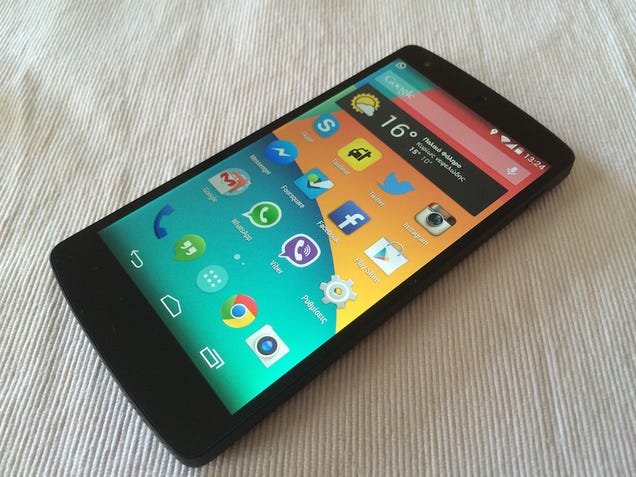
The Nexus 5, manufactured by LG, is the previous generation Google Phone—it may be surpassed by the newly released Nexus 6 by Motorola, but it wasn't the 6 that earned your nominations (although the 6 did get a fair number of nominations on its own.) The Nexus 5 hit the sweet spot for a lot of people, and since Lollipop is already available for it, many of you are already running Google's latest mobile operating system. The Nexus 5 packs a 5" (4.95" to be exact) True HD IPS+ display, protected by Corning Gorilla Glass 3 at 1080px x 1920px resolution. It has a 2.3 GHz quad-core Snapdragon 800 processor under the hood, 2 GB RAM, a 2300 mAh battery, an 8 MP camera on the back, and a 1.3 MP camera on the front. Like any other high-end Android phone, it packs NFC, Wireless up to and including Wireless AC, and more. You can read more of its specs at GSM Arena here.
The Nexus 5 may be a little over a year old, but when it launched it got great reviews, and since the Nexus 6 is still relatively new, the 5 is a great and affordable option for people who want a pure Android experience in an unlocked, hackable device. I have a Nexus 5, and the screen is big and bright, the camera is solid, and it runs Lollipop smoothly with no issues. Its sound is definitely on the weak side (with my older Moto X sounding much better), but it's fast, customizable, offers pure Android, and is hackable if you want to get your ROMs on.
The Nexus 5 is available in 16GB and 32GB flavors, on all of the major US carriers with the sole exception of Verizon Wireless, and unlocked directly from Google. (On-contract price will vary by carrier, but at this point it's close to $100, unlocked you'll pay $349 or $399 for the 32GB and 64GB models respectively.) If you shop secondhand (like I did), you can find even deeper bargains. Those of you who nominated the Nexus 5 praised it for being a value buy at this stage, offering fast, powerful hardware at a mid-range phone's price, and free of bloatware from carriers. Google does support Nexus phones, and while it ships with Kit Kat, upgrading to Lollipop is a simple matter. Some of your griped about the N5's battery life, others of you mentioned that it's on the way out now that the N6 is a thing, but more of you praised it for being a great, hackable piece of hardware that still performs strong and is super fast. Read more in its nomination thread here.
The Sony Xperia Z3 is a brilliant Android phone that comes in a couple of sizes. The Z3 Compact earned high praise from Gizmodo and from many of you for being an Android powerhouse without being a huge, pocket-bursting phone like we've seen so many of recently. The Z3 Compact features a 4.6" LCD IPS display at 720px x 1280px, a 2600 mAh battery, a 2.5Ghz quad-core Qualcomm Snapdragon 801 under the hood, 2 GB of RAM, 16GB of internal storage, and a whopping 20.7 MP camera on the rear and a 2.2 MP camera on the front. That's a lot in a tiny package, especially considering it's getting Lollipop in the near future. The larger Z3, which comes in a Z3v variant for Verizon Wireless and a Z3 for everyone else, packs a 5.2" display at 1080px x 1920px, a micro SD card slot for up to 128GB additional storage, 3 GB RAM, the same quad-core processor inside, a 3100 mAh battery, and the same powerful camera on-board. Both models pack Wi-Fi up through and including Wireless AC, NFC, and more. Check out the Z3 Compact's specs here at GSM Arena, the regular Z3 over here, and the Verizon variant here.
Considering previous years' roundups have been devoid of Sony phones mostly only because they're difficult to obtain in North America—especially flagship phones—the inclusion of the Z3 is a welcome change. It's more than worth the slot, too—the Z3 (and its predecessor, the Z2) is a great device. The Verizon Wireless variant offers wireless charging and a few design tweaks, but beyond that the differences are minimal. The X3's camera really stands out as well, and it offers a speedy, near-stock Android experience that Sony fans have known and loved for years. It doesn't hurt that Sony's Xperia line is generally waterproof (or at least extremely water-resistant) and dust slides right off the chassis.
The Xperia Z3 is available for T-Mobile and Verizon Wireless (Z3v) at about $200 on contract, and around $600 unlocked SIM free. The Z3 Compact will set you back $530 unlocked to take to your preferred carrier. Those of you who nominated the Z3 called out its waterproof, dust-proof chassis, the expandable storage which seems to be all too uncommon these days, even the built-in equalizer earned specific praise from at least one of you. A few of you mentioned that the Z3 can get a little warm, but almost all of you had good things to say. Some of you called out the Compact specifically for offering a great form factor without compromising on the innards or the camera that the Z3 features. You can read more in its nomination thread here.
The OnePlus One was designed to be an Android phone with flagship specs from an independent team. Think of it as an Android phone made by and for Android fans, at a rock-bottom, unlocked, and carrier-free price. The OnePlus One certainly delivers, and earned incredible praise from our friends at Gizmodo. It's the first phone to run CyanogenMod out of the gate, having been built with it in mind, packs a 5.5" LTPS LCD display that's protected by Corning Gorilla Glass 3 and comes in at 1080px x 1920px, a 2.5 GHz quad-core Snapdragon 801 processor, 3 GB RAM, a 13 MP camera on the rear with a 5 MP camera on the front, a 3100 mAh battery, and a ton of custom features designed specifically to integrate CyanogenMod with the OnePlus One. That's not to say that it doesn't bring the best of Android to the fore either—CyanogenMod is a killer ROM, and offers more features than you probably get with stock Android, and certainly more than you'll get with a carrier-specific ROM. You can read more about the OnePlus One's hardware over here at GSM Arena.
The beauty of the OnePlus One is that it's designed to run CyanogenMod, but it's also designed to be tweaked and hacked by its users. The phone started as an invite-only kind of thing, and there are still invites floating around (before you ask, I don't have any), but the team behind it has moved to a pre-order system where you can get in line to purchase yours and they'll get to you in turn. They process pre-orders in batches though, so it may be a while. The device itself is a joy to use, complete with a textured back and tons of pre-built gestures for quick commands like turning on the flash as a flashlight, opening the camera, and more—not to mention the power of Google Now rolled in as well. All in all, it's a well-polished piece of tech that'll please Android enthusiasts and hardware lovers alike—as soon as you can get your hands on one.
The OnePlus One is available in 16GB (white) and 64GB (black) versions, at $300 and $350—extremely well priced for such high-end hardware. It's GSM-only and comes unlocked, which means you can bring it to T-Mobile or AT&T (or any pre-paid carrier or MVNO that rides their network and accepts it) and activate it. Many of you noted that it may be slowly outpaced by more recent releases, but it's still an amazing device, well crafted with great software, and while the invite-only/batch pre-order scarcity is a pain, it's hard to understate how exciting it is to have a device like this on the market and support it. It's customizable, it's well built and well designed, and it's affordable while being completely unlocked. You can read more in this glowing nomination thread here.
Now that you've seen the top five, it's time to vote for the Lifehacker community favorite.
This week's honorable mention goes out to the newly released Droid Turbo on Verizon Wireless, which is, in many ways, a supercharged Moto X crossed with a Nexus 6. It's a high-end phone, to be sure, packing top-of-the-line specs everywhere from processor to battery life, and a textured nylon back that's well built and well designed. Verizon Wireless users should definitely consider it, and those of you who supported its nomination highlighted its battery life, custom gestures, and more. Check it out in its nomination thread here.
The other honorable mention we should highlight goes to a company we're surprised didn't earn more nominations from you, Samsung—specifically the Galaxy Note 4.We were surprised more Samsung devices didn't earn your nominations (the Galaxy Note 4 and its predecessor, the Note 3, were the only ones to get nominated at all), but the new Note earned your praise thanks to its 5.7" display, its great daylight and direct-light performance, among other things. You can read more about it in its nomination thread here.
Want to make the case for your personal favorite, even if it wasn't included in the list? Remember, the top five are based on your most popular nominations from the call for contenders thread earlier in the week. Don't just complain about the top five, let us know what your preferred alternative is—and make your case for it—in the discussions below.
The Hive Five is based on reader nominations. As with most Hive Five posts, if your favorite was left out, it didn't get the nominations required in the call for contenders post to make the top five. We understand it's a bit of a popularity contest. Have a suggestion for the Hive Five? Send us an email at tips+hivefive@lifehacker.com!
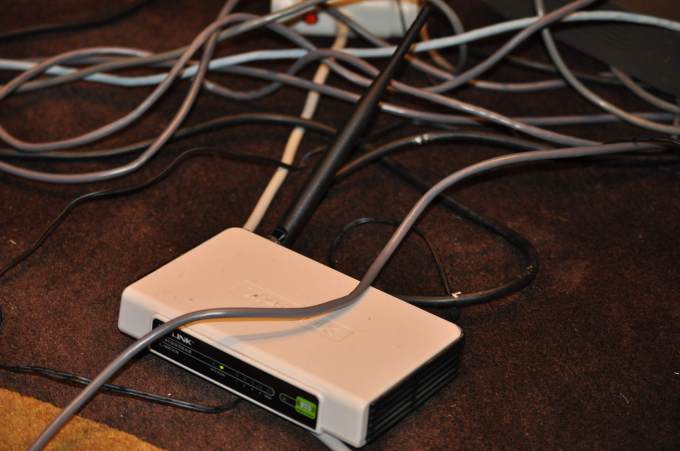
ISPs and mobile operators will be forced to retain information linking IP addresses to individuals for 12 months under U.K. government counter-terrorism plans expected to be detailed next week. Read More
Jose writes, "A 12 year old child was forced by the police to give false testimony against three black teens in 1975; the last two men have just been released from prison. I was moved to tears by both the terrible injustice and the way one of these men, Ricky Jackson, spoke out without any sign of hatred."
Read the rest
Want to be the most popular person at your next family gathering? Be the person who can explain the difference between “second cousins, once removed” and “third cousins, twice removed” and your relatives will look on you like you’re a genius, an oracle, an armchair genealogist to whom they’re proud to be bound by…
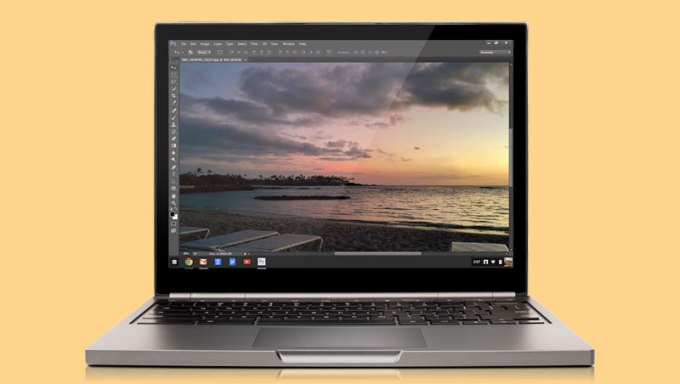
I’ve been writing about tech for nearly a decade now, and in that time, one thing has always seemed perpetually promising, and yet also ultimately unsatisfying: remote streaming consumer computing. I’m not talking about remotely connecting to your work PC to grab a couple of files, but actually using programs interchangeably with your own local apps, despite some being hosted and… Read More



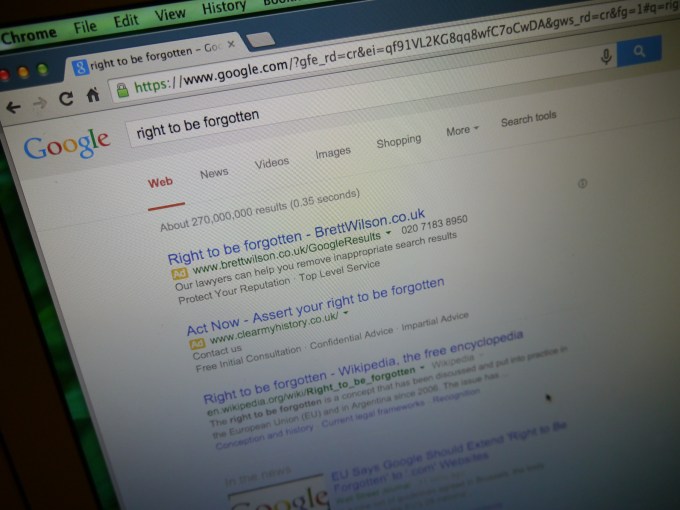 Google has kicked against it. Eric Schmidt was doing so in public only last month. But European regulators are now stipulating the so called ‘right to be forgotten’ ruling should apply to search results displayed on Google.com, not just on European sub-domains such as Google.co.uk. Read More
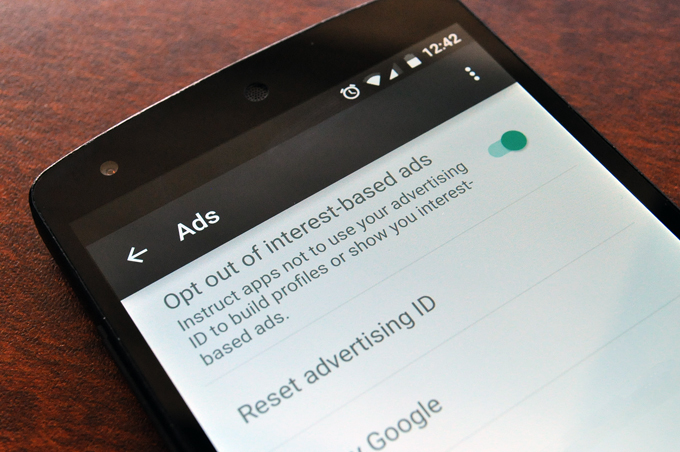 Twitter is now keeping track of which apps you have on your phone, and sending that data back to the mothership (birds nest?)
Here’s how to turn it off. Read More
Twitter is now keeping track of which apps you have on your phone, and sending that data back to the mothership (birds nest?)
Here’s how to turn it off. Read More


 Until recently the vast majority of British citizens believed that copying music bought with their own money was something they could do without legal concerns.

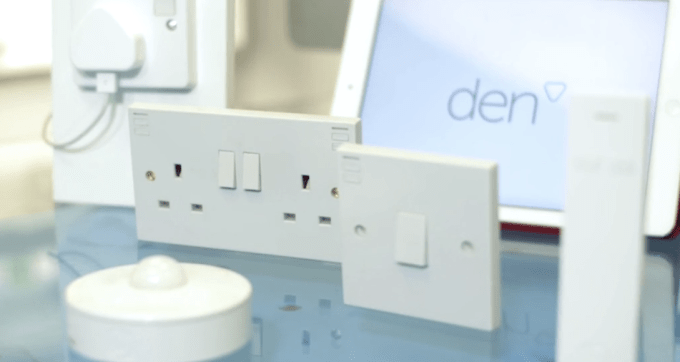 It’s strange, because until now most home automation system which involve accessing the power outlets seems to have been designed for nerds to show off their ‘touch sensitive’ switches. But it’s taken a 19 year old from Kent, England to produce a power socket aimed at the mainstream UK market which carries a real switch, that looks just like any other, but which… Read More
 Is there wriggle-room left in the last-minute offers space? U.K. startup Wriggle obviously thinks there is. The app, which matches you with last-minute availability at independent food, drink and entertainment establishments, is seeing its London launch today. Read More





 Welcome to the roundup of the best new Android applications, games, and live wallpapers that went live in the Play Store or were spotted by us in the previous 2 weeks or so.


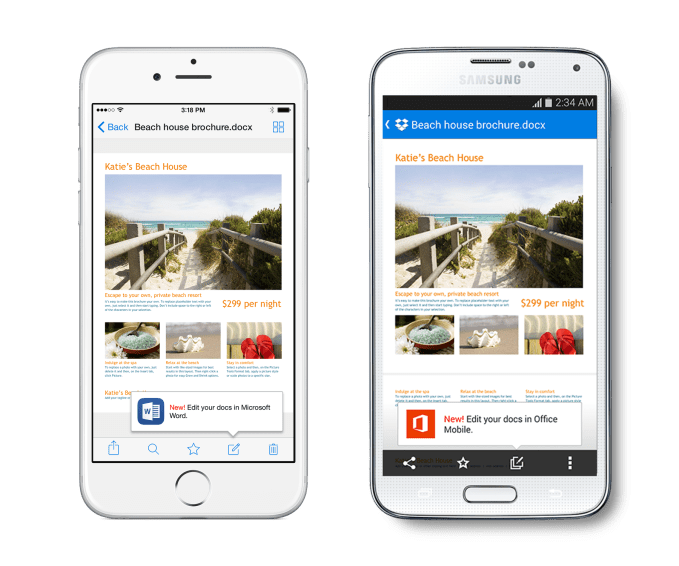 Earlier this month, Dropbox and Microsoft announced a partnership that would see Dropbox offer better support for Microsoft’s Office Suite, including the ability to edit Office docs from the Dropbox mobile app among other things. Today, those integrations have gone live for users of both the Android phone and iOS Dropbox applications. Explains Dropbox in a blog post announcing the… Read More
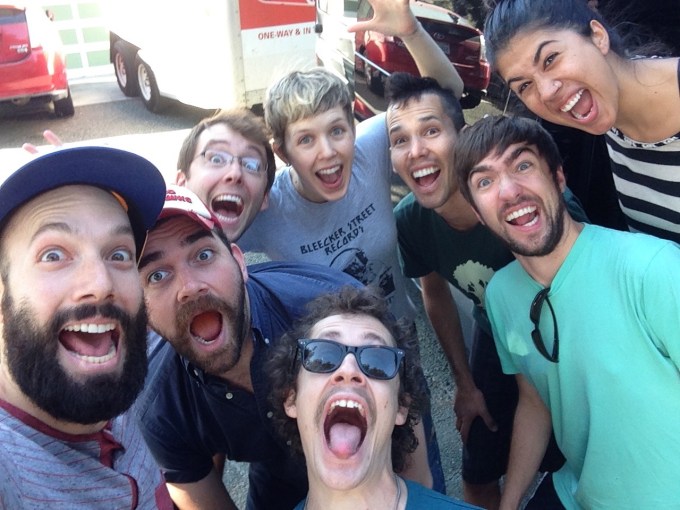 In a surprising display of transparency, Jack Conte and Nataly Dawn aka Pomplamoose detailed what it took to run a 28-city tour of the US. The bottom line? The band made $135,983 in income… and incurred $147,802 in expenses. Essentially, they lost a little over $11,000. But what does this mean for a modern Indie band? Conte writes that all is not lost. First, obviously, is the… Read More


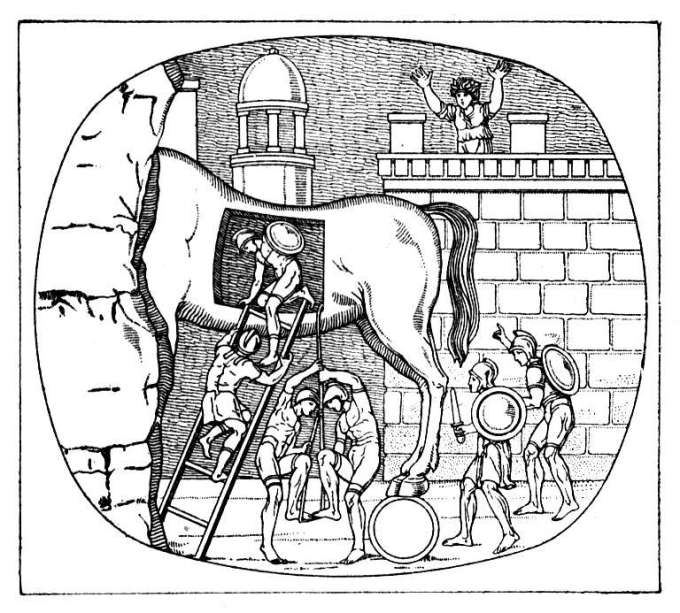 Symantec has found an unusual new threat called Regin aka Backdoor.Regin. The software, which is essentially a very powerful Trojan Horse, appears to have been circulating in the wild since 2008 and has been hitting governmental, industrial, and individual systems with impunity, using sophisticated encryption and targeting systems to spy on targets. The anti-virus company has released a… Read More








 ISPs and mobile operators will be forced to retain information linking IP addresses to individuals for 12 months under U.K. government counter-terrorism plans expected to be detailed next week. Read More

 Jose writes, "A 12 year old child was forced by the police to give false testimony against three black teens in 1975; the last two men have just been released from prison. I was moved to tears by both the terrible injustice and the way one of these men, Ricky Jackson, spoke out without any sign of hatred."
Read the rest
Jose writes, "A 12 year old child was forced by the police to give false testimony against three black teens in 1975; the last two men have just been released from prison. I was moved to tears by both the terrible injustice and the way one of these men, Ricky Jackson, spoke out without any sign of hatred."
Read the rest

 I’ve been writing about tech for nearly a decade now, and in that time, one thing has always seemed perpetually promising, and yet also ultimately unsatisfying: remote streaming consumer computing. I’m not talking about remotely connecting to your work PC to grab a couple of files, but actually using programs interchangeably with your own local apps, despite some being hosted and… Read More