
Thanks John Walkenbach

Banished, the medieval-ish city building game from indie developer Luke Hodorowicz, raised some eyebrows early this summer when it seemed to come out of nowhere. Tyler was suffering from SimCity fatigue at the time, and beautiful videos of small towns quietly living off the land cured what ailed him.
I caught up with Hodorowicz to ask him a few questions about Banished and his plans for release. Banished will be a free-form city builder in a randomly generated resource sandbox. Sometimes you’ll get a town with a thick forest, sometimes you’ll get rich mines. Each town will build up and survive in a different way. The only story on offer is that these people have been cast out of their homes and have to start over. Everything else is up to you.
It’s also notable for the things it doesn’t have: it doesn’t have any multiplayer or online component, it doesn’t have any combat, and it doesn’t have a tech tree artificially guiding your hand. “It’s really free-form,” Luke said. “I didn’t want to build a game with build trees where first you have to build a church and ten houses before you can unlock building an ironworks. That’s a big disconnect between me and a lot of city builders. I want it to be sandbox, and people can do what they want.”
Banished is headed for release sometime before the end of the year. Keep an eye on Luke’s website, Shining Rock software, and read our interview below.

PC Gamer: What city building games are you drawing inspiration from?
Luke Hodorowicz: The thing I draw from most are the Anno games. I’ve always like those, but there’s a combination of a lot of stuff in there. I’ve played SimCity 4 for ten years on and off… I’ve always looked at city builders, whether it’s Settlers or whatever, I’ve always liked the style and what you can build. It’s somewhere in between a game that’s really structured, but you also get this ability to craft your own spin on it.
A big pitfall for solo developers is constantly adding new mechanics and features. Do you think you’ve fallen into this problem at all?
I have a little bit. I had a schedule that I’d pretty much completed back in May or June… This is certainly the type of game that I could work on forever. I have ideas for several different types of expansions and ways to play, combat, more in-depth building that deals with more materials… But if I were to allow that feature creep to continue I would just never finish.
Last heard I heard, combat won’t be in the initial release.
That is still the case, yes.
Why do you think the game is better without it or just doesn’t need combat?
I originally didn’t think the game needed combat. In games like Anno 1404 I always played without combat. I don’t care for it, and I don’t think it’s done well, and I guess it just wasn’t a need for me. I mean, I’m building the game I want to play. So it initially wasn’t something that I was interested in.

The decision to avoid multiplayer aspects and combat pushes the focus toward an intimate relationship with the townspeople. Why is that important to you?
I like that you know the townspeople’s names and you know where they live and what they’re doing. You care about the town. My playtesters get really annoyed when they have someone who has lived for 70 years doing a good job at something, and they die… For me, somewhere, that intimacy ends. You get to a city of 1,000 people and all of a sudden you can’t keep track of everybody… But when your town is small and you’re just starting off, you have this desire to make everybody make it through the winter, for no one to get sick.
You’ve described your AI programming as very simple, based on simple needs and preferences. Has this led to any surprises?
Since that post on the website, I’ve changed the AI a bit. It was getting really complicated, so I changed it to this system of needs that’s weighted based on how important they are, and for each person those weights can change. Now there are people who are just idle all the time, and there are people who go into a tavern and drink too much.

I saw you post on reddit that a blacksmith fell in his forge and died. How do you lose people in Banished?
For random deaths, there’s a chance per profession for how dangerous it is. There’s a small chance that you may die while doing your job. For someone like a tailor that’s very rare, but someone working in a mine or quarry that’s a little higher. Sometimes you go ten years without anyone dying in a mine, or you might have everyone die in a mine in the same month, and that certainly changes the way you have to react to the game. All of a sudden your workforce is down by 30 people and you have to shuffle people around. You no longer produce anything from the mine, so you have to balance what people are doing and figure out how to get your town to survive after this terrible event has happened, whether it’s a fire or tornado or just random deaths.
You say that the people are your resource. Does anyone ever have to sacrifice themselves for the rest of the colony?
I guess you could get into a situation like that, yeah, but I think it’s more of a case where you’re not producing enough food and you have too many people, so you just have to let 20 or 50 people die off. Or you need to produce some resource, so you have to shuffle people around. Say, you need to produce food so you’re no longer producing clothing or whatever your exports are, so your trade dries up, and then your people are cold in the winter. So you have to make those decisions about how you want to balance those factors. And certainly there are consequences, I’ve tried to make it so there’s consequences in the type of society you have. You can have hunter/gatherer or farming or a combination of both, and each has its perks and downfalls. That’s what I want people to play with as they play the game, figure out what they like and how they want their town to survive, because there’s certainly multiple ways to do it.
There’s no sacrifice to the gods, though, no. [laughs]
What exactly are you playing as in Banished? God? A mayor?
The best I’ve heard it described, I think it was someone on reddit, is that you play the collective consciousness of the town, you’re the greater good of the town that is trying to make the town survive… The player is the good will of the town.

Can a town ever be done?
The only way you can really be done is to maximize everything. At some point you’ll be out of land, so you can’t build any more houses without cutting into your food production. At that point, the town is probably “done.” You can throw disasters at it and see how things play out. That’s my plan, but I think that’s a fun thing to do. My testers love it, to build a city and run a tornado through it.
Like building a sandcastle and stomping on it.
[laughs] Yes.
You knew this was coming, but do you have a release date?
[laughs] I wish I did. The reason I haven’t given a firm date is because this is my first solo project. Given my track record so far, I really don’t have a good way to set a date and then not run over it. I don’t want to do that to people. But it will definitely be before the end of the year.
The post Banished interview: player choice in an indie city builder sandbox game appeared first on PC Gamer.

    
|

Sony today held a press conference to unveil a number of new 4K TVs and cameras, though most interesting perhaps to our readers being their new 4K Film download service. The new "Video Unlimited 4K" service will launch this fall and requires Sony's new 4K Ultra HD Media Player (FMP-X1), though Sony has stated previously they'll offer 4K downloads via the Playstation 4.
At launch the service will offer 70 full-length movies and television shows, all displayed in the 3840 pixels x 2160 lines 4K format. Pricing isn't going to start any revolutions, with TV show rentals for $4, movie rentals at $8, and film purchases starting at $30.
None of this improved video quality will come cheap. The FMP-X1 will run you around $700, including a two terabyte drive loading with ten free 4K films. The 4K television sets feature early-adoption pricing as well, with most costing above $3,000.
"We now have the whole 4K ecosystem, from production to projection to download service to media servers and televisions," proudly proclaimed Sony Electronics President and COO Phil Molyneux.
One thing Sony doesn't have much of a hand in is the broadband pipe, and with films clocking in at around 45 to 60 GB each, 4K video is going to eat bandwidth like popcorn shrimp. While things should improve on that front somewhat with the rise of compression solutions like HEVC, slow broadband lines and usage caps will be a significant barrier to entry, raising costs even higher.
Cable companies like Comcast and Time Warner Cable are experimenting with bandwidth caps as low as 5 GB. A growing number of DSL providers like AT&T and CenturyLink have implemented 150 GB caps on lines as slow as 1.5 Mbps downstream, with each 50 GB of usage costing users $10 a pop. Users interested in 4K video need to be sure to factor those added costs into their calculations.
read comment(s)

For more than 100 years, every Ferris wheel on the planet was roughly the same size and height as the 1893 original. But in 2000, something changed: London debuted the London Eye, an enormous juggernaut of a tourist trap. Its success sparked a global race to build higher and faster wheels in the sky—and it's only heating up. So who's winning?

According to Quantic Dreams' David Cage, Sony ended up with the exclusive to Heavy Rain on PS3 because Microsoft made a decision to turn it down due to some content in the game that they were strongly concerned about. Heavy Rain, which won a BAFTA award for Best Story in 2011, featured a storyline about a man in a desperate search for his abducted child, which Microsoft apparently thought could cause the company some controversy.
Crazy White Trash Bitch on Bath Salts = Me
McDonalds Employees = Ticketfly
Chicken McNuggets = Tickets to the Breaking Bad Finale with Cast and Crew Q&A at the Hollywood Forever Cemetery

Dmitry Kul is a clever industrial designer. We've previously featured his ceiling lamp that looks like a light bulb. More recently, he made these bookends that seamlessly fit in with the books themselves.
Link (Translation) -via Lustik

Android Central member GMC MaXx writes in our Moto X forums (via the Android Central app, no less):
Not pushing a button to see the time doesn't seem like a big deal, but holy cow, it's awesome!
On my Galaxy Nexus I would push the button countless times a day just to see if I missed any notifications or to check the time. Now when I pull the Moto X out of my pocket the time and any notifications are already shown without hitting a button to turn on the screen. And I don't have to hit a button to turn the screen off before going back in the pocket.
Also, when the phone is sitting on my desk I just give it a nudge and the screen shows me the time. Its such a minor thing, but makes a world of difference in the awesomeness of the Moto X!
We're inclined to agree. It really does change the way you use a phone — even more than that other phone screen gimmick we're toying around with.

|
|
File under, "Your tax dollars at work": The NSA sent a cease-and-desist letter to Zazzle, the T-shirt site, asking it to remove a series of NSA parody T-shirts. The shirts featured the NSA's eagle logo and the motto, "The only part of the government that actually listens."
Shirtmaker Dan McCall received this message from Zazzle after he launched the shirts on the site:
We have been contacted by legal representatives from the National Security Agency, and at their request, have removed the product from the Zazzle Marketplace.
McCall was forced to move his inventory to CafePress, another shirt-selling site. You can buy one here. Act quickly, before they all disappear. Here's the shirt in question:

Join the conversation about this story »

|
|
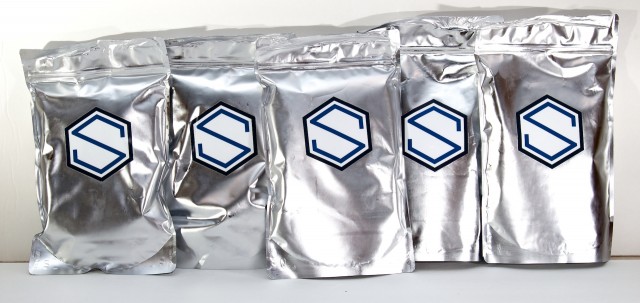
This week, Ars used Senior Reviews Editor Lee Hutchinson as a guinea pig for a new substance called Soylent, a mixture created by engineer and entrepreneur Rob Rhinehart. One bag of Rhinehart's concoction, which is mixed with water, is supposed to be "nutritionally complete" for humans who don't have time to eat normal food in a busy workday, or who are trapped in a post-apocalyptic hell and waiting for transport to our terraformed Earth colonies.
Lee announced his plan to forsake solid food and eat only Soylent on Monday, and as far as we can tell (we do all work from home, after all), he's stuck to his week-long plan. Read the Monday article, Nothing but the Soylent: We’re trying 1 full week of the meal substitute, and catch the subsequent updates on Lee's condition in the articles displayed in the sidebar on the right.
Commenter tigas had heard of Soylent, but didn't believe in it: "You mean this wasn't a viral promotion for a videogame? It's FOR REAL?!" Before Lee had had the chance to become familiar—a little too familiar—with Soylent, he responded, "Well, there's something in those bags. Will find out tomorrow morning if it's Soylent....OR SPIDERS. Really hoping it's not spiders."
Read 16 remaining paragraphs | Comments

|
|
This looks yummy!
 This is Red Lobster’s Cheese Biscuit recipe done in a loaf pan.
3 cups flour
1 Tablespoon baking powder
1 teaspoon salt
1/4 teaspoon cayenne pepper
1/8 teaspoon black pepper
4 ounces cheddar cheese, cut into 1/4 inch cubes
1 1/4 cups milk
3/4 cup sour cream
3 Tablespoons of butter, melted
1 egg, lightly beaten
Heat oven to 350 degrees. Grease a 9×5 loaf pan with oil. In a bowl, whisk together the first 5 ingredients. Carefully stir in cheese cubes until covered in flour mixture, this will help prevent your cheese sinking to the bottom of your loaf of bread.
In a different bowl, whisk together the remaining ingredients. Fold the wet mixture into the flour and cheese mixture, stir until just combined, do not over stir. Spread the mixture into the loaf pan. Bake for 45-50 minutes. Let cool 10 minutes and then remove from pan. Allow to cool for one hour before slicing and serving.

Thanks Andrea


