A young pine squirrel expresses his excitement with a symphony of adorable squeaks and chatters when a man gives him a nut to snack on.
[bryson syliboy/via dpf]

We’ve now reached the era that’s putting those theories to the test. In addition to non-linear streaming services like Netflix, Amazon, and Hulu, consumers have more bundle-breaking options than ever. There are individual channels, like HBO, Nickelodeon, and CBS, available through over-the-top, internet-based, streaming access. There are small bundles of streaming channels, like Dish Sling. And there are even new pared-down bundle options in the traditional pay-TV realm, from Verizon FiOS.
But the a la carte dream has always had two main obstacles. One is the conflict between programmers and distributors: the legal road to offering “flexible” bundles is not at all smooth. But the other the basic matter of cost. Bundling may drive some consumers nuts, but it probably saves them big bucks.
CNBC ran the math this week on just how much a cable network costs the average viewer now, and just how much it would be likely to cost in a build-your-own bundle. Whether the results are encouraging or discouraging depends entirely on what you like to watch.
Here’s how CNBC got their numbers: first, they assumed that most of us would build bundles of 17 channels. That’s what study after study has found the average cable subscriber actually ever watches, out of their hundreds.
Then, CNBC assumed that the channels would not want to lose money (a safe guess), and so assumed that the revenue from an unbundled channel would need to add up to the revenue of a bundled channel.
As it stands, in the current setup, a cable company like Comcast pays a network like ESPN or SpikeTV or Discovery a certain amount of money per month per subscriber. The sum total of those costs (and then some) is your monthly cable bill. For most cable networks, it’s somewhere between ten cents and a dollar. For EPSN, it’s over $6 per month. So there’s your high end: EPSN is getting, from cable companies, about $6 per month per subscriber those companies have. That’s a lot of money.
But, CNBC points out, only 24% of cable subscribers actually watch ESPN. Assuming all 24% of those subscribers wanted EPSN in their personal 17-channel bundles, ESPN would have to charge those viewers over $25 each per month in order to recoup the cash.
CNBC has an interactive chart on their site showing their results for 87 different cable networks. The most expensive a la carte channel, they estimate, would be ESPN Classic. Although its current affiliate fee is only $0.21 per month, not even 1% of cable viewers actually tune to it. So in order to make the money back from the handful of individuals who do, they’d have to charge $42.
At the other end, we have the Hallmark Movie channel. Its viewership is more impressive than ESPN Classic, capturing almost 5% of cable viewers — but it’s a cheap one, currently estimated to be bringing in two cents per month per subscriber. That means if every current viewer put it in their bundles, they could have it for a modest $0.41 per month.
Therefore, CNBC concludes, choosing your own personalized 17-channel lineup could be a great savings, at $16… or could run you a meaty $248, if their math is right. And for most of us, the bundle would be somewhere in between.
The numbers are probably somewhat imprecise, since the exact terms of distribution agreements are infamously secret. But the ranges feel likely.
So if you still want your own a la carte cable, but still want to save money, you’d better hope you don’t like sports or speak Spanish.
How much would it cost to get your favorite channels a la carte? [CNBC]


Putting food in the freezer is like a pause button on its shelf life. Meat that will go bad in a week can instead last months. However, even frozen food can go bad. This chart shows how long different types of food can last in the freezer.

Universal and Nintendo are joining forces to bring "spectacular, dedicated experiences based on Nintendo's wildly popular games, characters and worlds".
Yup - there's going to be a Nintendo theme park. Yes. Really.
The partnership of these "two icons of entertainment" seeks to offer "incredibly popular, innovative themed family entertainment experiences based on compelling stories and characters using powerful storytelling and innovative technology".
Although details are sparse - we don't know where it will be, or even what it'll be called - Nintendo states that the "immersive experience" will include major attractions at Universal's theme park and feature Nintendo's most famous games and characters.
So my question to you is: what should they call the theme park? (No points for SUPER MARIO WORLD, you guys).
Bonus question: what would be your ideal Ninty-flavoured theme attraction?

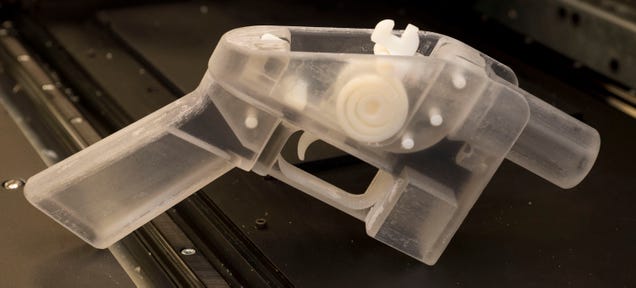
It’s three years since the files to 3D-print a gun were published online by Cody Wilson. Soon after he received a letter from the State Department demanding the files be removed from the internet—and now he’s fighting that under the argument of free speech.
 |
submitted by SpxUmadBroYolo [link] [267 comments] |
The ACLU of Virginia filed suit this week, on the behalf of one Fairfax County resident, against the Fairfax County Police department for unlawfully storing massive amounts of license plate data collected using automatic license plate readers (ALPRs).
The resident, the ACLU explains, learned that his license plate had been scanned twice in one year, and that the data had been saved in a database even though neither he nor his car are involved in any kind of police investigation. This, the suit claims, violates Virginia law.
That law itself has been the subject of much discussion in the commonwealth this year. During their last session, Virginia’s state legislature passed a bill that would have permitted law-enforcement agencies to keep using the optical readers, but with slimitations on how the data could be used, and for how long it could be kept:
[L]aw-enforcement agencies shall be allowed to collect information from license plate readers, provided such information (i) is held for no more than seven days and (ii) is not subject to any outside inquiries or internal usage, except in the investigation of a crime or missing persons report. After seven days, the information shall be purged from the system unless it is being utilized in an ongoing investigation.
However, Gov. Terry McAuliffe this month vetoed the bill and so those limitations will now not become law.
And that’s where this lawsuit comes in. Virginia already has an existing Government Data Collection & Dissemination Practices Act (PDF) — the vetoed bill was an amendment, not the whole. And the ACLU claims that the license plate data scanning, as currently done, is violation of the existing statute.
The law says, in part, that, “Information shall not be collected unless the need for it has been clearly established in advance,” and that, “Information shall be appropriate and relevant to the purpose for which it has been collected.” Blanket-collecting random citizens’ scanned license plate data, the ACLU posits, is neither.
ACLU of Virginia legal director Rebecca Glenberg added in a statement that active use — seeking specific tags to correspond with stolen cars, Amber alerts, fleeing suspects, and so on — is just fine by the ACLU. It’s the passive use of the tech, the indiscriminate hoovering up of data, that poses the problem: “We do not object to the real-time use of ALPRs to compare license plate numbers to a current ‘hot list’ of vehicles involved in current investigations,” Glenberg said. “The danger to privacy comes when the government collects tens of thousands of license plate records so it can later find out where people were and when.”
Referring to data-sharing agreements that the Fairfax County police have with other northern Virginia jurisdictions, as well as with nearby Maryland and the District of Columbia, Glenberg added, “The intrusion is magnified in the Washington, D.C. area, where multiple law enforcement agencies may access each other’s information.”
Claire Guthrie Gastañaga, the executive director of ACLU of Virginia, specifically called out McAuliffe’s veto as the source of the lawsuit, saying that he “had the opportunity” to clarify the existing law to protect Virginians’ personal information unless it was necessary and relevant, but instead left “no choice but to go to court to ensure that law enforcement follows the Data Act.”
As the AP points out, back in 2013 the Virginia Attorney General’s office advised the state police that keeping ALPR data unrelated to an investigation was indeed against state law. The state police stopped then, but cities and counties in Virginia, like Fairfax, continue to collect and share the information.


These Google search results may look normal at first glance, but if you look closely, you’ll see that these ads are being “injected” into the page by a third party.
Ad injectors work by replacing the ads that are supposed to be served to your browser or by inserting completely new, unwanted and unapproved ads. Many users affected by these injectors acquire them through free software downloads or extensions for their browsers.
On Google’s Online Security blog, the company says it has identified more than 50,000 extensions and 34,000 applications that worked as ad injectors.
And nearly a third of these downloads also acted maliciously against users, stealing account credentials and hijacking search queries.
The injector-infected pieces of software are distributed through more than 1,000 different networks that pay affiliates each time someone downloads one. The more clicks, the more money for affiliates.
Injectors pull their ads from “injection libraries” run by companies that source ads, often from legitimate advertising networks. This is how companies like Sears, Walmart, Target, Ebay, and Wayfair end up paying for injected ads they don’t know about.

Ad injection can make a real mess out of websites like Amazon.com, where unwanted and unapproved ad units are injected everywhere you look by third parties.
“Because advertisers are generally only able to measure the final click that drives traffic to their sites, they’re often unaware of many preceding twists and turns,” explains Google, “and don’t know they are receiving traffic via unwanted software and malware.”
The affiliates who get you to download injectors get paid, the distribution network gets paid, but the websites where you’re seeing these injected ads aren’t getting anything out of it financially.
Google and researchers from the U.C. Berkeley, and U.C. Santa Barbara have put together a detailed report [PDF] that actually identifies the largest players in the ad injector and injector library sphere.
The web giant has also 192 Chrome browser extensions from its Chrome Web Store after determining they were “deceptive” for being involved in ad injection.
“These extensions violated Web Store policies that extensions have a narrow and easy-to-understand purpose,” explains Google. “We’ve also deployed new safeguards in the Chrome Web Store to help protect users from deceptive ad injection extensions.”
For Chrome users who may already be beset by ad injectors, Google has tools for cleaning up your browser.


Thanks Mike (from Spain)
The post Don’t need selfie sticks on the ISS appeared first on Bits and Pieces.
D GI want to try...

Tesla's new home battery might not be ready for prime time.
The battery — part of a suite of new technologies, dubbed "Tesla Energy," from the company formerly known as a start-up electric carmaker — was revealed with great fanfare by CEO Elon Musk on April 30.
We were impressed. But the company that Musk is actually chairman of, SolarCity, so far isn't.
According to Bloomberg's Tom Randall, SolarCity doesn't think one of the new Tesla batteries is right for its solar-panel business.
"The new Tesla Powerwall home batteries come in two sizes—seven and 10 kilowatt hours (kWh)—but the differences extend beyond capacity to the chemistry of the batteries," Randall wrote.
"The 7kWh version is made for daily use, while its larger counterpart is only intended to be used as occasional backup when the electricity goes out. The bigger Tesla battery isn't designed to go through more than about 50 charging cycles a year, according to SolarCity spokesman Jonathan Bass."
In fact, Bass said that the smaller battery "doesn't really make financial sense," Randall reported.
The 10kWh battery is useful for SolarCity because it can provide a fall-back power supply. The 7kWh version, alone or grouped with other batteries, could appeal to customers who want to store grid electric power when it's cheaper and consume it when it's more expensive.
That view was supported by another detractor, who nonetheless was impressed by Tesla's creation of the product. "It's a luxury good—really cool to have—but I don't see an economic argument," Brian Warshay said, as quoted by Randall.
Warshay is an "energy-smart-technologies analyst with Bloomberg New Energy Finance."
You could certainly argue that all Tesla is trying to do with the batteries is test the viability of a new line of business. That move makes sense in theory (and now practice), as Tesla has always been quite good at developing innovative batteries and the software to manage their power usage. That's what enabled Tesla's cars to match the range of gas-powered vehicles.
However, at $3,00o and up to start — before installation — Tesla's new batteries aren't exactly a cheap option, given their current limits. The low capacity of the smaller home battery means that several would need to be installed to enable even modest banking of grid or solar power.
But bear in mind that Tesla is also building a huge battery factory in Nevada, the "Gigafactory." If Tesla's car business doesn't live up to lofty expectations, justifying the $5 billion price tag for the factory, the battery business could become a customer for the millions of lithium-ion cells that are expected to be produced.
SEE ALSO: Elon Musk is under the microscope as Tesla reports earnings
Join the conversation about this story »
NOW WATCH: Here's what really happens at a Tesla Supercharger station

 |
submitted by Imawildedible [link] [25 comments] |
McDonald’s is far from the healthiest choice you can make when it comes to fast food, but that clown sure knows how to make gaining the weight fun. What with Happy Meals, goofy mascots, playgrounds and all. They know how to reel you in. Now they have invented another cool thing. This bag that transforms into a serving tray. Say it with me. “McDonald’s: More than meets the eye.”

The bottom of the eco-friendly and recyclable bags is made from reinforced cardboard so that it can safely hold even a large-sized meal without collapsing. Not bad, Mickey D. Not bad at all.


[via TAXI]
D GBadass

The Metallica hit Enter Sandman, played backwards and then listened to forwards by YouTube sensation Rob Scallon, only gets more interesting the more you examine it.
Covers of Metallica’s music have been in the news several times over the last few weeks. There were the girls who played a rockin’ version of Metallica’s Enter Sandman, and the finnish band, Steve’N’Seagulls, who offered up a new video of themselves covering Metallica’s Seek & Destroy in a decidedly hillbilly, bluegrass fashion.
Now, the latest Metallica cover to hit the net is the strangest yet. Rob Scallon records music completely backwards. That’s not to say that his technique is wrong, but it is actually backwards. Scallon figures out the sounds of all the instruments and the vocals if they were to be played backwards, and records them like that himself. When the backwards track is then played backwards, you get the song – in this case, Metallica’s Enter Sandman – played forwards.
Confused? You’re not alone.
Here’s Rob Scallon’s backwards, yet played forward, video for Metallica’s Enter Sandman.
What’s really amazing about Rob’s crazy rendition of the Metallica mega-hit, is that not only does he have to write out and sing all the words phonetically, so he can sing them backwards, he also has to learn Kirk Hammett’s ripping guitar solos in reverse!
singing backwards is hard i just tried @YahooMusic @yahooo http://t.co/tFRyiLHF5Z
— Lenay Dunn (@LenayDunn) May 6, 2015
Here’s another video of Scallon’s Metallica cover, but this is the original, backwards – as recorded – version.
Not only does Scallon include all the word sounds in their proper order, but he also hits tone and accents, mimicking the way Metallica frontman James Hetfield actually sings the song. You might think that learning how to play Metallica’s Enter Sandman isn’t the most difficult of tasks. Let’s face it, the song is pretty basic, though learning the guitar solo would prove to be tremendously difficult. However, Scallon is calling this month Maytellica, and he pledges to deliver another new backwards cover of a new Metallica song each and every week. (Next week’s offering will reportedly be from Metallica’s debut album, Kill ‘em All.) Rob’s Metallica cover has become a bona-fide phenomenon with over a million hits on YouTube.
A million views on Enter Sandman already! Definitely a new record for me. Thanks everyone!
— Rob Scallon (@RobScallon) May 6, 2015
What do you think of Rob Scallon’s backwards version of Metallica? What song would you like to hear backwards next?
[Image via Twitter]
Metallica – Rob Scallon Backward Version Of ‘Enter Sandman’ Will Blow Your Mind is an article from: The Inquisitr News






![[link]](http://i.imgur.com/Ln8PcsY.jpg)
![[link]](http://i.imgur.com/pJYgUwY.gif)
![[link]](http://i.imgur.com/Ato28TF.jpg)