Shared posts
Currás fía a la Xunta cualquier salida con Ryanair

Hair Cu/n/ts


Not Lying
Ganadores de los Premios Eisner 2013
Los Premios Eisner son los premios más importantes de la industria estadounidense del cómic. Nacieron en 1988, cuando dejaron de entregarse los Premios Kirby por discrepancias entre sus organizadores (como fruto de esta escisión también nacieron los Premios Harvey)
Estos son los ganadores de 2013, anunciados hace pocas horas en la Comic-Con de San Diego:

Mejor historia corta: “Moon 1969: The True Story of the 1969 Moon Launch,” por Michael Kupperman, publicada en Tales Designed to Thrizzle #8 (Fantagraphics)
Mejor número o especial: The Mire, por Becky Cloonan (autopublicado)
Mejor serie regular: Saga, por Brian K. Vaughan y Fiona Staples (Image, en España Planeta)
Mejor serie nueva: Saga, por Brian K. Vaughan y Fiona Staples (Image, en España Planeta)
Mejor publicación para lectores principiantes (hasta 7 años): Babymouse for President, por Jennifer L. Holm y Matthew Holm (Random House)
Mejor publicación para niños (de 8 a 12 años): Hora de aventuras, por Ryan North, Shelli Paroline, y Braden Lamb (Kaboom!, en España Norma Editorial)
Mejor publicación para jóvenes (de 13 a 17 años): A Wrinkle in Time, por Madeleine L’Engle, adaptada por Hope Larson (FSG)
Mejor publicación de humor: Darth Vader e Hijo, por Jeffrey Brown (Chronicle, en España Planeta)
Mejor cómic digital: Bandette, por Paul Tobin y Colleen Coover (Monkeybrain)
Mejor antología: Dark Horse Presents, editada por Mike Richardson (Dark Horse)
Mejor obra basada en hechos reales (empate): Annie Sullivan and the Trials of Helen Keller, por Joseph Lambert (Center for Cartoon Studies/Disney Hyperion); The Carter Family: Don’t Forget This Song, por Frank M. Young and David Lasky (Abrams ComicArts)
Mejor álbum gráfico (nuevo): Building Stories, por Chris Ware (Pantheon, en España Reservoir Books en 2014)
Mejor adaptación de otro medio: Parker: El Golpe de Richard Stark, adaptado por Darwyn Cooke (IDW, en España Astiberri)
Mejor álbum gráfico (reedición): King City, de Brandon Graham (TokyoPop/Image, en España DeBolsillo)
Mejor colección de archivo (tiras): Pogo, vol. 2: Bona Fide Balderdash, por Walt Kelly, editado por Carolyn Kelly y Kim Thompson (Fantagraphics)
Mejor colección de archivo (cómics): David Mazzucchelli’s Daredevil Born Again: Artist’s Edition, editado por Scott Dunbier (IDW)
Mejor edición estadounidense de material internacional: Blacksad: El infierno, el silencio, por Juan Diaz Canales y Juanjo Guarnido (Dark Horse, en España norma Editorial)
Mejor edición estadounidense de material internacional (asiático): 20th Century Boys, por Naoki Urasawa (VIZ Media, en España Planeta)
Mejor guionista: Brian K. Vaughan, Saga (Image, en España Planeta)
Mejor autor completo: Chris Ware, Building Stories (Pantheon, en España Reservoir Books en 2014)
Mejor dibujante/entintador (empate): David Aja, Ojo de Halcón (Marvel, en España Panini), Chris Samnee, Daredevil (Marvel, en España Panini); Rocketeer: Cargo of Doom (IDW)
Mejor pintor o artista multimedia (interior): Juanjo Guarnido, Blacksad (Dark Horse, en España Norma Editorial)
Mejor artista de portada: David Aja, Ojo de Halcón (Marvel, en España Panini)
Mejor colorista: Dave Stewart, Batwoman (DC, en España ECC); Fatale (Image, en España Panini); BPRD (Dark Horse, en España Norma), Conan el Bárbaro (Dark Horse, en España Planeta), Hellboy in Hell, Lobster Johnson, The Massive (Dark Horse)
Mejor rotulista: Chris Ware, Building Stories (Pantheon, en España Reservoir Books en 2014)
Mejor medio periodístico relacionado con los cómics: The Comics Reporter, editado por Tom Spurgeon, www.comicsreporter.com
Mejor libro relacionado con los cómics: Marvel Comics: La historia no contada, por Sean Howe (HarperCollins, en España Panini)
Mejor trabajo educativo o académico: Lynda Barry: Girlhood Through the Looking Glass, por Susan E. Kirtley (University Press of Mississippi)
Mejor diseño de publicación: Building Stories, designed by Chris Ware (Pantheon, en España Reservoir Books en 2014)
Salón de la fama: Lee Falk, Al Jaffee, Mort Meskin, Trina Robbins, Spain Rodriguez, Joe Sinnott
Premio Russ Manning al debutante más prometedor: Russel Roehling
Premio humanitario Bob Clampett: Chris Sparks y Team Cul deSac
Premio Bill Finger a la excelencia en la escritura de cómics: Steve Gerber, Don Rosa
Premio Will Eisner Spirit al mejor librero: Challengers Comics + Conversation, Chicago, IL
El artículo Ganadores de los Premios Eisner 2013 apareció primero en GenComics.


Comic-Con Parties Are Where Nerds Go to Feel Sexy

When I first heard about this thing called "Comic-Con" many years ago, I was told that it wasn't just a great place to get back issues of The Amazing Spider-Man. It was also a nexus for the entire sci-fi/fantasy nerd culture. San Diego was one of the few places where a nerd could comfortably walk around town dressed like Mr. Spock without someone asking you where your spaceship was parked. Fuck those people, because you don't park spaceships. Everyone knows that! Duh.
You can still dress up, but Comic-Con isn't as much about that misfit community as much as it's a five-day costumed orgy, sort of like Eyes Wide Shut, but with everyone dressed like Harry Potter, Luke Skywalker, or the legendary character, Mexican Goth Batman.

People are constantly feeding me drinks, trying to get me to take mystery pills, and pitching me their screenplay ideas. It's like Los Angeles got in the car with me and came to San Diego. Unfortunately, Los Angeles never pays for gas and is always making me pull over for snacks like I'm made of money or something.

Comic-Con parties have hot go-go dancers, open bars, and the faint, pungent scent of sexual desperation; an odor I know too well. Actually, the name of the cologne I was wearing last night is "Sexual Desperation." It's a combination of fish oil and vanilla extract, which is just the kind of signature scent I'm looking for.

I discovered what I thought was the best party of the night, and hunkered down for five hours of thumping bass and tight bodies searching for something to rub on. What I really wanted to see was an actual nerd romance blossom amidst all the sweaty, drug-fueled mania. It didn't dawn on me until much later that I was looking in the wrong place.

When I arrived at the party, Scorpion from Mortal Kombat was already texting furiously with his agent, or trying to double-check if Sub-Zero was "coming to the party too, and could he bring some molly?"

The club paid zombie go-go dancers to constantly be twerking for the audience's approval, and to stoke their libidos. Nothing is more erotic than seeing a woman in heavy, grotesque make-up flash her ass in your face. I certainly raised my hand and asked for more, thank you very much. What really nailed it for me is that this lady was not only a zombie, but as you can see from her hat, she was also a sheriff. I find law enforcement very erotic.

I guess everything had to be zombie-fied at this party. Even the shitty DJs. I refrained from screaming, "this party is dead" all night.

Some people at Comic-Con parties are more clearly looking for love than others. Last night might have been this woman's last chance to settle down with the man of her dreams, though if her shirt is any indication, she might be setting the bar a bit too high. Lesson to all you gals out there, sometimes, Superman doesn't wear a cape, you know?

Ladies, can I interest you in some of this hot, male beefcake action? He's a SWAT team member, so he has a steady job. He clearly works out. He's very social. Oh, also he drinks blood and wears novelty contact lenses. As I said above, sometimes Superman doesn't wear a cape.

Surprise! Your friend is drunk!

An alien was serving some sort of red liquid in vials. I guess it was supposed to be "cool" and "futuristic," but it just made me think she was trying to poison me. My guess is she was cosplaying as the apothecary from Space Romeo & Space Juliet.

You're probably wondering if a Jedi showed up. My answer is, "what the fuck do you think?" There's always a Jedi.

Nothing is more embarrassing than when your dad spots you at the club. Here, you can see the dad telling her that he accidentally deleted Catfish from the DVR and that her step-mom wants to have dinner next Tuesday. What followed was a heated exchange.

Sub-Zero showed up, but he brought a random girl, and Scorpion was pretty pissed about that. I mean, there are no plus ones at parties like this, especially when you don't even know the host. It's bad form, Sub-Zero. Maybe you could have asked ahead of time? What if she trashes the place? Plus, now Scorpion is a total third wheel and he's not great at mingling. He was kind of counting on Sub-Zero to wingman for him. I heard a fatality in the new Mortal Kombat game is the "Party Foul."

Most of the hook-ups last night were sleazy, backroom make-out sessions that made me reconsider having physical contact with another human being ever again. Then, there was this. Nothing warms my heart more than seeing interspecies love. The classic kitty and the weird horse/walrus/unicorn-man from the wrong side of the tracks story. It's like Romeo & Juliet for whimiscal forest creatures.
Love is like that, though. It's confusing, complicated, and fraught with danger. It's even more complicated when you try to kiss through a giant cat mask. Oh, and speaking of Romeo & Juliet, I'm pretty sure I saw these two drinking those mystery vials the space alien was handing out before I left the party. For never was a story of more woe than this of Kitty Lady & Horse Man.
More awkward entertainment industry gatherings:
New York Fashion Week... on Acid
Young Hunter S. Thompson slams ‘empty head’ Jack Kerouac in 1958 letter

Via Letter of Note’s Shaun Usher on Twitter:

The Rains of Castamere
Outono Capitol Rock Festival 2013


Outros artistas como The Limboos nos que nos atopamos caras coñecidas como pode ser Roi Fontoira e Marcos Mascato de Phatom Keys , non nos alonxamos moito do son ao que nos teñen acostumados, quen non arrisca facendo algo que sabe ten todas as de gañar, non é?
Tamén destacamos aos nipóns de Osaka Monarail, un grupo de funk e soul, 9 músicos dispostos a que se non vos animades non o farán nunca. E se seguimos en sons por estes roteiros, non podemos non mencionar a Lefties Soul Connection, que o propio fan estos músicos polo público.
Se con Barbara Lynn non tiveches suficiente revival, agarda, que todavía agardan por ti The Chiffons, ou as cantantes que quedan vivas (3) , sen dúbida este pode ser un concerto de soul sen gracia nin salero algún, pero que non lle quitaremos ollo de enriba por se nos equivocamos coma estúpidos. Somos capaces de comernos as nosas palabras.
Para finalizar farémolo con The Big Jamboree. Do cal non diremos nada, e deixámolo para vós! Non perdades ollo das actividades paralelas, allnighters, pinchadiscos e festas que teñen preparadas para vós!
Podes desfutar do video promocional aquí:
Podesdes escoitar o adianto de The Limboos aquí
Ademáis de máis información do Capitol Rock Festival aquí
Save The Cat!
Just got a new job...

Lil Bub Wrote A Book About Herself And It Is Amazing
You guys, the most amazing cat on the planet really outdid herself this time. Learn how to pre-order “Lil BUB’s Lil BOOK” here .
What do we have here?

Via: youtube.com
Oh man!

Via: youtube.com
Wait, BUB, you wrote a book?!

Via: youtube.com
This has so many adventures and friends in it!

Via: youtube.com
Goth Barbies Are The Best-Selling Dolls In The World After Classic Barbies
NPR calls them “the underfed love children of Tim Burton and Lady Gaga.”

Via: Mattel
Mattel's line of creep-chic Monster High dolls are way more popular than good ol' Barbie. They have names like Frankie Stein, Draculaura, Clawdeen Wolf, and Ghoulia Yelps. They all attend Monster High - a school for freaks and enjoy activities like snowboarding. One of them is also vegan.

Via: monsterhigh.com
In just three years, Monster High has become a billion dollar brand, outperforming regular Barbie dolls. Kiyomi Haverly, Mattel's vice president of design told NPR that they were surprised by Goth Barbies' success. "We just noticed girls were into darker goth fashion," she said.
A Fieldguide for Female Interrogators
By Coco Fusco and Dan Turner. This is a small part of a much larger project.
Librerías de cómic de Barcelona: una ruta crono-espacial
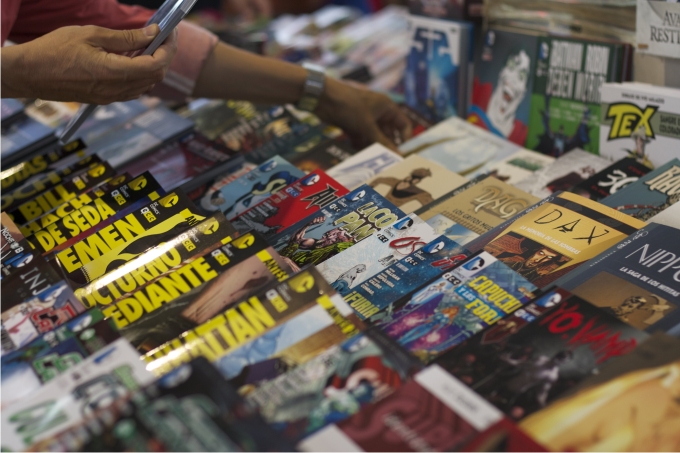
Igual que el cómic que toma una sucesión de acontecimientos y los representa espacialmente sobre el papel, el mapa de la Ciudad Condal ha visto aparecer a lo largo del tiempo y de su geografía toda una serie de librerías especializadas que ya son historia —o historieta— del noveno arte. Esta es una selección variada de las más significativas hasta la fecha.
Continuarà Comics – Via Laietana 29
La librería decana de Barcelona abrió sus puertas en 1980 según el proyecto de Albert Mestres y el actual editor de EDT —antigua Glénat en España— Joan Navarro, en un humilde local del centro de Barcelona. Situada actualmente en una de las arterias del centro, Continuarà es una librería completamente moderna con tres décadas a sus espaldas y un Premio del Salón del Cómic en el 2009. Continuarà ofrece al visitante sus dos plantas repletas de tebeo de todos los géneros, estilos y antigüedades, incluyendo originales de autor.
Antifaz Comic – Gran de Gràcia 239
Veterana librería barcelonesa con el estilo y personalidad propios del popular y andorrero barrio de Gracia. Original del 1982, su tercera encarnación es una tienda acogedora que dispone de un gran surtido de cómic y un poco de otros campos del arte entre novela, cine y merchandising. Aloja algunas firmas y presentaciones, y destaca el mural con mensajes y dibujos de los autores que han pasado por allí.
Norma Comics – Passeig de Sant Joan 9
La gran librería vecina a l’Arc de Triomf se estrenó en 1983 y se convirtió rápidamente en uno de los vértices del coloquialmente denominado «triángulo friki» instalado en aquella zona. El paso del tiempo y la relación directa con la editorial permitió convertirla en una red de librerías del mismo nombre. Actualmente, podría decirse que es una «pequeña gran superficie» del noveno arte con secciones enteras dedicadas a las distintas procedencias del cómic (americano, europeo y manga) que también acoge eventos con autores.
Librería Universal – Ronda Sant Antoni 9 / Librería Newton – Riera Alta 8
Universal se creó en tres pasos. Primero empezó como parada en el Mercat de Sant Antoni. Luego abrió la tienda madre, Newton, a finales de los 80, que actualmente sigue abierta, especializada en tebeo antiguo y de coleccionista. Posteriormente nace Universal, una elegante y moderna librería abastecida de novedades y selecciones variadas. Universal además busca el contacto y el apoyo a los autores contemporáneos con iniciativas muy personales.
Arkham Comics – Xuclà 16
Encantadora librería situada en el barrio del Raval, hija del fin de siglo y la nueva narrativa de cómic americano que encabezaba el sello Vértigo. Este año celebra el décimo aniversario de la presente tienda y en ella podemos perdernos entre cómics, libros ilustrados y autoediciones. Organiza presentaciones y talleres y tiene como filosofía conectar con el lector para ofrecerle la mejor recomendación posible. Un lugar cercano y desenfadado.
Cosmic Alien – Castillejos 272
Algo más apartada del centro, en el barrio de Sagrada Familia, cae Cosmic Alien, sitio que sus asiduos conocen por su característico extenso pasillo bordeado de numerosas librerías repletas de tebeos de todos los orígenes, con la caja atisbada en lontananza —nada que envidiar a las salas infinitas de Matrix—. Esta tienda es un buen lugar para cazar números atrasados o para el coleccionismo de figuras de culto, del que disponen de un surtido de lo más variopinto.
Freaks – Ali Bei 10
Si Norma y Gigamesh son dos vértices del «triángulo friki» en cuestión de publicación en papel, entonces Freaks cierra esa geometría virtuosa como vértice alternativo. Inaugurada en el 98, pronto se ve flanqueada por sus tiendas hermanas, dedicadas a la cinefilia de género por un lado, y a los libros de arte, fotografía, ilustración y cultura contemporánea, por el otro. Esta trilogía es visita indispensable para descubrir material original y diferente, estar al día de lo último en novela gráfica e incluso tropezarse con algún autor en las tertulias informales que se producen en la entrada.
Fatbottom – Salvà 19
La benjamina de nuestra selección es esta pequeña tienda del Poble Sec, emparentada con el cómic de autoedición alternativo, lejos de las grandes marcas. Dispone de material extranjero original, fuera de los circuitos comerciales, entre el cómic más vanguardista y experimental. Constantemente acoge exposiciones en la pared del fondo del local y celebra presentaciones y eventos alrededor de la fanzinería y el cómic independiente. Un enclave de referencia del mundillo en la ciudad.
Mercat Dominical de Sant Antoni
La última librería reseñada bien podría ser la primera —fecha su nacimiento en el 1936—, es una al aire libre, ocupa una superficie equivalente a todas las anteriores juntas y algunos, románticamente, la consideran «el origen del tebeo en Barcelona». El acertijo que les planteo se resuelve visitando cualquier domingo matinal las cercanías del Mercat de Sant Antoni. Estas se llenan de paradas de libros, revistas, cómics, videojuegos y materiales de coleccionismo. Un lugar para buscar y rebuscar, vender, comprar e intercambiar, del que han sido asiduas muchas figuras de la cultura autóctona.
Fotografía: Alain Raya
Los jardines de Fonseca ya están abiertos al público

Why Women Will Never Beat Men in "Sports"

Yeah, they are OK for a couple of girls. Image via Flickr.
Two things:
1. I manage a coed softball team in Los Angeles. “Managing” consists of collecting fees and making sure everyone knows what time we're playing. “Coed” means that league rules dictate each team has to field three girls. Just three. In a city the size of Los Angeles, you'd think this would be an easy quota to fill. It is not.
2. Late last month, 12-year-old Maddy Baxter from Georgia was kicked off her football team for being a girl. Previously, in sixth grade, she played defensive end for the Strong Rock Christian School, a private academy in Locust Grove, Georgia. She had five sacks that season, according to her mom's stat-keeping. But when it was time for seventh grade football to start, she was banned from participating because “boys have lustful thoughts and might think of Maddy in an impure way.” They also read some passages from the Bible or something to justify this.
Now, a few things.
As an argument, men being better than women at playing sports seems to make sense. It can be seen through anecdotal evidence such as the above-described experience of managing a coed softball team. Plenty of times I've heard women express reservations to me about playing because they “aren't good enough.” It can also be seen simply in how the bodies of men and women differ. Generally speaking—and please note that “generally speaking” once more, as there are certainly plenty of women who could beat me up or destroy me in a game of pickup basketball—men are taller and stronger than women. This is due to all sorts of testosterone, gland secretions, muscles in their upper body rather than fat deposits, and other variables awarded in the jackpot of life. Someone sees that, and it's easy for them to come to the conclusion that boys are better at sports than girls. They see it as an inherent trait linked to genetics. To them, it's the same as men being unable to get pregnant and women never knowing the pain that comes with getting kicked in the balls.
The problem is, “boys are better at sports than girls” is an argument that's fucking bullshit.
Females are as skilled at sports as males, but there's two distinct roadblocks standing in the way making it look as though that's not the case. The first one, which will be quickly mentioned because vast volumes of sociological arguments have already discussed it, is the fact that females are not given as much instruction as males during their adolescence/growing-up-period.
You know that silly phrase “he/she throws like a girl”? Even though you hear it bandied about on playgrounds, high school gym classes, and frat houses, it doesn't make any sense. No one, male or female, throws like a girl. They either throw like someone who has had ample instruction on how to properly throw, or like someone who has not. (If you'll excuse me, that last passage was lifted from my piece about the Lingerie Football League, which proves the point about instruction versus inherent skills. Most of the quarterbacks in that league can throw further and more accurately than any men reading this could ever hope to.) This disparity is what happens when a generation of parents give boys footballs and girls Barbie dolls for their first few years. The difference is something that's been lessening with the institution of Title IX, girl-friendly youth instructional programs, and a new generation of parents who understand that boy does not equal blue and girl does not equal pink. But there's another, thornier bit of misogyny that may be impossible to untangle when it comes to the differences of the two sexes playing sports:
They were designed for men, to be played by men.
Sports currently fall into two categories: male sports, and females playing sports designed for me. Basketball, football, baseball, hockey, lacrosse, volleyball, tennis, poker, NASCAR, and anything else you can think of were created during a time when women were expected to be at home preparing dinner and taking care of the six children while the men were out trying to get their balls into another team's holes. So, instead of the winner of a sport contest being determined by skills that women excel in (an extremely small sample based on my own experiences: flexibility, agility, nimbleness, intelligence, an insane pain threshold, investment strategies, teamwork, just fucking living longer), they were geared towards categories like “I can push you further” and “I can jump higher than you can jump.”
Maybe think about it like this: Way back in the day, when James Naismith invented the game of basketball, what if instead of making the height of the baskets 10 feet, he decided to make them 8 feet? In this alternate reality, your favorite team's roster would be composed of entirely different players. Gone would be the crazy high jumpers or 7-foot plus monsters, because height and flight would no longer be as important of an asset. In their place would be... Well, I don't even know. No one really does. I imagine thy would be more muscular and compact athletes, like a rugby players. The fact is, the average height of an NBA player would no longer be nearly a foot higher than the average male because that kind of height wouldn't be necessary. Height would still assist, as it does in just about every competition this side of horseracing, but it wouldn't dominate the proceedings.
Now, multiply that subtle change in game construction by every little bit of difference between how male and female bodies are designed, and you'll get somewhere near our current state of affairs.
“What's the big deal?” is, no doubt, a question on everyone's minds. “Women play women and men play men, so it doesn't make a difference,” they'll go on. Except that is does make a huge, vital, and indisputable difference in one particularly important category—income.
The WNBA will never overtake the NBA in popularity. Softball will never be as popular as baseball. If you're a top female golfer, or an Olympic female volleyball player, you may make a nice bit of change in endorsement deals. But you don't sniff what the top males make. Men will always make more money than women in sports, because there will always be more money in male-played sports than in female-played ones.
Spectators, when choosing where to spend their money, invariably choose to see the best players of that particular game take the floor. (Example: No one's paying top dollar to see hockey players shoot a basketball around.) So when it comes to watching the male version of a particular sport versus the female one, more money will always find its way into the coffers of the former. And that's always going to be the case, because ever since the first sport was designed—when the first two cavemen boxed the shit out of each other while a third sold tickets—they've been designed exclusively with the male skill-set in mind.
Which is all to say: The games are rigged. Equality does not exist, and will never exist, in the world of sports. Until, that is, someone has the powerful genital fortitude to scrap the current understanding of what constitutes as a “sport” and designs one with the female skill-set in mind.
More from Rick Paulas:
Juan Gabriel, the ‘Elton John of Mexico’

Journalist Gustavo Arellano, in his fabulous “Ask A Mexican!” column for OC Weekly, has often used Mexican singer Juan Gabriel–“the bronze contemporary to Elton John but with better hair, tunes and moves”—to explain why Mexicans love Morrissey so passionately. Young Chicanos in southern California in particular have become Morrissey and The Smiths’ least likely but most devoted and dedicated fans. Mexicans like Morrissey because his music reminds them of ranchera. Specifically Gabriel, “El Divo de Juarez,” a.k.a. “JuanGa.”
Arellano said:
It may be that [Morrissey’s music] echoes the music of the ranchera. His trembling falsetto brings to mind the rich, sad voice of Pedro Infante, while his effeminate stage presence makes him a version of Juan Gabriel.
So who is this Juan Gabriel guy?
Juan Gabriel’s career started in 1971, around the same time as Elton John’s meteoric rise to fame. He was brought up in a Ciudad Juárez boarding school and started singing in nightclubs as a teenager. Ranchera music originated as folk music on the ranches in rural Mexico at the beginning of the 20th century. Arellano described the genre as “the virulently nihilistic ballad form of Mexican popular song, where women are ingrates, alcohol is your only true companion, and emotion is for los jotos (fags).”
Gabriel is best known for his emotional delivery, effeminate demeanor, and amazing stage clothes. His stage presence is like a veteran Vegas performer’s, with multiple costume changes, flowing scarves, glittery, shiny colorful outfits.
Although he has never publicly announced his sexual orientation, everyone “knows” that he is gay, similar to Elton John’s “Let’s not discuss it, shall we?” status in the public mind during the 1970’s and 1980’s before he came out officially. In a culture where hardcore traditional masculinity is highly valued, somehow the flamboyant Gabriel gets a pass. His campiness, emotionality, and four decades’ worth of songs crying over a lost love, are the antithesis of machismo yet an accepted part of Mexican culture now. He has produced and written songs in other genres besides ranchera–ballads, pop, rock, and disco–for other Latin artists. Mariachi bands cover his songs and often have a band member who flits about the audience in a very politically incorrect imitation of Gabriel during solos and flirts with the men in the crowd. Gabriel has been credited with changing the Mexican male mind to some degree about gender roles and the acceptability of homosexuality, although the topic is always deftly avoided. In 2009 when a journalist asked him outright if he was gay, his response was, “Lo que se ve no se pregunta, mijo” (“What you can see, you don’t need to ask about, son.”)
Cindy Casares from Guanabee said:
This old queen is another one for whom the entirety of Mexico just looks the other way. Macho men in cowboy hats go to his shows, call him a fag and then cry during his songs. No one would care, Juan Gabriel, if you just admitted it. Except the gays, who would love you for it.
Gabriel hijacked the 2009 Latin Grammys when he won Latin Recording Academy’s Person of the Year. Instead of playing a short medley or a couple of songs, he kept performing for 40 minutes and wouldn’t leave the stage. Not even Kanye West would try to pull a diva move like that!
Above, “Estoy Enamorado De Ti”
Weepy Juan has a real bad case of the sads in 1972’s “Me he quedado solo”
Talking to Anthony Jeselnik About 'The Jeselnik Offensive,' His Career Goals, and What Comedy Central Won't Let Him Say
 2013 has been a prolific year for comedy’s resident dark lord, Anthony Jeselnik, with the debut of his new show, The Jeselnik Offensive, and his new album, Caligula. Fresh off last week’s premiere of season two, I caught up with Anthony to find out what we can expect this season, if his mother is offended by his jokes, and if he was scared to make fun of cancer to actual cancer patients.
When you started out as a comic, was TV always your goal?
No, I originally wanted be a comic writer. I liked the idea of writing because you get to do it again every single week or every single night. If you make a mistake, you get to do it again and if you do well, you have to do it again. Something about that pressure, that appealed to me.
Who are some of your comedic influences?
One of my first comic influences, it’s funny it doesn’t show up at all, but Denis Leary was one of my favorite comics. I loved his No Cure For Cancer album. I love Steven Wright, I love Mitch Hedberg. I love those one-linery guys who would have these amazing jokes. They don’t really have to act out to get the audience’s attention. They just had great jokes. That’s what I gravitated towards, having jokes so good you can just kinda hang out.
What would you say was your “big break moment”?
I would say my big break was the Donald Trump roast. I had been doing things up until then, but I wasn’t famous by any means. Doing that roast was kind of my big coming out moment in comedy. People just knew who I was as a comic after that.
Was your dark style there from day one or was that something you grew into over time?
It evolved over time, it took maybe a year and a half, maybe two years. I started out telling stories and doing what most comics do, and I got sick of that. I really didn’t like doing it, and I didn’t feel unique. I wanted to feel unique and then I saw BJ Novak doing one-liners at a mic, and I thought, “Oh my god, you’re allowed to do that?” It just seemed like Mitch Hedberg and Steven Wright were geniuses and I could never do that. But seeing someone at an open mic try out one-liners, I thought that’s all I want to do from here on out. So as I went down that path, and that evolved, the character of the cocky jerk kind of came out.
What did your parents think about your comedy when you first started?
They didn’t know what to think. My parents live in Pittsburgh and have no idea how the entertainment business works. They just knew I wasn’t making any money and what I was doing didn’t sound like I was doing anything. It sounded like what kids do when they’re trying to figure it out before they get a real job. They weren’t not supportive, but they weren’t supportive either, they just didn’t really understand how I was going to make money. It wasn’t until I got on Jimmy Fallon as a writer that they were totally on board. But before then, they couldn’t fathom what being a comedian was.
But what about your material? Was your mother ever outraged?
They were very cool about it because I’m never telling the truth on stage. They like it because it’s smart. The thing my parents get offended by is blue comedy. If anyone’s talking about sex, they’re uncomfortable, like "Ugh, don’t do that." But they’re very happy, they’d rather me be telling awful jokes that are made up then telling real stories about my family like a lot of comics seem to like to do.
Congrats on the premiere of season two, what can we expect for this season?
Thanks. I think just bigger and better than the first season. The format is very similar, but I’m just a better host now. I’ve got 11, 12 episodes under my belt, so I’m more comfortable doing this job. I think a lot of the things I learned from season one are now coming into play. And also we just know what the show is now. Season one we were figuring it out up until the day of the episode every single week and we shot a lot of stuff that we wouldn’t realize until later on wasn’t right for the show. But now we kind of know what our goal is, so I think this season will be even better because of that.
Who are you most looking forward to having on this season?
I don’t have a bad guest list. I think every week is pretty solid. Joan Rivers and Dave Attell are going to be unbelievable. The two of them, they’re both idols of mine, on the show at the same time is just going to be incredible. I’m also really looking forward to having Pete Holmes and Marc Maron on at the same time. They have a real tension with each other. And when I thought of the idea to have them on the show together, I thought, 'This is going to be great television.'
If you could have anyone, who would be your dream guest to have on panel?
If I could have anyone, I would love to get Sarah Silverman. I love Sarah; she’s one of my absolute favorites. I never give her enough credit for inspiring me, and I would love to have her on the show. Some people just don’t really ever want to do a panel show so I don’t know if we can ever get her, but she would be someone I would love to have on. We’re friends and everything; it’s just tough to get someone to fit a panel show into their schedule.
I know nothing is off limits with you, but have you ever felt guilty about someone’s reaction to a joke?
No, I honestly never have. I’ve seen people get upset, but it’s usually not the person that the joke is targeting. It’s someone that knows somebody and wants to get offended anyway. Like if there’s a guy in a wheelchair in the front row, I’ll make fun of him for five minutes and he fucking loves it, and the person next to him might get upset. But if the guy I’m making fun of is having a blast, then who cares? I’ve never felt bad about someone’s reaction to a joke. If they’re mad, it’s their problem.
Has a crowd ever gone sour on you or has an angry person ever tried to come up to you after a show?
Oh certainly, especially in the beginning when I was still green and people thought they could tell me what to do. They’d be like [old grandpa voice], “You know you think you’re funny, but when you tell some of those jokes, it’s not going to go well for you.” And I would just kind of nod my head and say, “You wait”. Now, it never happens. I don’t think I’m very approachable offstage. When people see me on stage, I don’t give off that vibe, so I think I avoid a lot of stuff that way.
Were you scared to do the cancer bit in front of the cancer patients? I was nervous for you.
I wasn’t actually, but it was kind of lucky for me because I didn’t realize that we were getting actual cancer patients until they walked in the room. We were talking about if we were getting actors or real people. The producers said they had talked with a cancer support group that was willing to do it. It was a little awkward at first, sure. You’re doing standup for like eight people in the middle of the day, but as soon as the people saw what I was doing, they got on board. Once they realize, 'Hey, he’s trying to make us laugh,' then it gets fun. But it’s always uncomfortable in the beginning.
It seems like you’ve had great freedom in terms of content. Has there been anything that Comedy Central has said “no way” too?
Oh yeah. They’ve given me almost total freedom. The only time they’ve ever said you can’t do anything was right after the Boston Marathon. No Viacom show could mention it, not even make fun of it, just mention it or bring it up, and that was our last episode. I was kind of annoyed about it because that’s what the show is for and so we did a bit called “Top Three Things We’re Not Allowed to Talk About” and that was kind of our way of getting around that. Now on this season, I make Boston jokes every chance I get.
How has it been trying to balance standup and making your TV show?
The two kind of feed each other a little bit. During the first season, I wasn’t able to do much standup at all. But when it ended, I went on an eight-week tour. They kind of coexist with each other. Because of the show, it’s kind of changed my standup a little bit, but not in a bad way. Now I get to go out and instead of playing six shows at club all weekend, I’m doing one show at a 1,000-seat theater. So now when I’m on the road, I’m loving it.
Is getting your own show the ultimate goal, or is there anything left on your list to accomplish?
You know it’s funny, my list was pretty naïve when I started out. If you would have told me, “Anthony, one day, you’ll put out a comedy album," I would have been like, “Oh my God, I’ve made it. That’s my ultimate dream." But I’ve already achieved everything I ever wanted to do. Now, the only reason I’m doing a TV show is because I wrote for Jimmy Fallon, and that was my main goal. If I had gotten the Jimmy Fallon job two years into comedy, I probably would have quit standup and I would still just be a writer today. But because it took longer, everything was a lot more formed, and I thought, 'Well, what would my show look like?' It wasn’t like a goal of mine. It’s just something awesome that I get to do. It’s a dream to have a show with complete creative control. But after this, I can just kind of do whatever’s fun for me. I will probably tour, maybe I’ll do some movies, maybe I’ll do a sitcom, I have no idea. It’s just going to be whatever is fun.
Blair Socci is a writer and standup comedian living in New York City.
Photo credit: Robyn Von Swank
0 CommentsCastros. Compostela antes de Santiago
Ver Castros e petróglifos de Compostela num mapa maior
Durante este ano na comissom de história embarcamo-nos num grande e ilusionante projeto, no que aguardamos que participeis todas, pois tem moitos eidos diferentes de trabalho.
Visto o sucesso do tríptico sobre petróglifos ‘Compostela na pedra’ decidimos fazer algo semelhante com os castros do concelho. Mas ao pouco de começar já vimos que o projeto ia ser dos grandes. Pouca gente sabe que no concelho de Compostela há arredor de 30 castros. O primeiro passo foi visitar todos os incluidos no PGOM para fotografalos, localizalos corretamente (no mapa que vedes arriba) e comprovar o estado atual.
O que atopamos foi impresionante. Nenhum dos xacementos está escavado e, aínda que a maioria estam cubertos de mato, podem-se observar uma rica variedade de disposiçons distintas. Nas primeiras visitas já nos chamarom a atençom algumas situaçons, as relaçons con outros castros cercáns (algums noutros concelhos)…
Depois de este trabalho de recolheita de dados, correçom e visualizaçom tivemos uma reuniom com Suso Amado, Xurxo Ayán e Manolo Gago para amosar-lhes o feito até o momento e pensar o que se poderia fazer em diante.
Agora mesmo estamos a engadir fichas no sítio PatrimonioGalego.net e preparando o tríptico para publicar em setembro. Na lista de pendentes temos fazer roteiros, sinalizaçom, açons de denúncia do estado de abandono de alguns dos castros… e moito mais!
A historiografia espanhola oculta a nossa história, as administraçons coloniais maltratam o nosso património. É o nosso dever dalo a conhecer e defendelo.
Se tes qualquer sugestom ou ideia nova na comissom de história sempre estamos abertos a escoitar novas voces e a acolher nova gente. Temos reuniom as segundas feiras às 20h30, na Gentalha do Pichel. Nom deixes de participar!




FIB: fiberos, mejor que fibers
Fibero y fibera, mejor que fiber, son derivados naturales en español de la sigla FIB, correspondiente al Festival Internacional de Benicàssim, que celebrará su XIX edición a partir de mañana.
El sufijo -ero suele utilizarse en español para formar palabras que indican afición por lo que denota la base léxica a la que se añade (futbolero, bloguero…), aunque esta sea una sigla o acrónimo, tal como señala la Ortografía académica.
En el caso de los seguidores del FIB se está usando el término fiber y su plural fibers para referirse a los asistentes al festival, términos que no responden a los cánones de formación de palabras en español: «Los fibers han llegado puntuales a la cita del festival de música internacional de Benicàssim» o «El lunes aterrizarán los primeros “fibers”, principalmente procedentes del Reino Unido».
En estos casos habría sido preferible usar fiberos, que además, al ser palabra española, se escribe en redonda, sin cursiva ni cualquier otro resalte tipográfico: «Los fiberos han llegado puntuales a la cita…» y «El lunes aterrizarán los primeros fiberos…».


Squishy

Squishy originally appeared on My[confined]Space NSFW on July 16, 2013.