Every few decades, a piece of art comes along that changes everything. In the 15th century had Leonardo Da Vinci, the most iconic of Renaissance men and polymaths. In the 17th and 18th centuries, Gian Lorenzo Bernini fundamentally redesigned what was possible in sculpture and architecture. In the 1980’s, Andy Warhol changed the definition of art, pop culture, and culture itself. And at the dawn of the 21st century, the juggernaut television and movie series Jackass changed the world again.
When Jackass first hit the airwaves in 2000, my parents felt I was far too young to be allowed to watch MTV, much less their shows labelled with the dreaded “Parental Advisory” tag. Jackass was released to the elation and joy of the young, but most American parents considered the show to be some kind of hellmouth, capable of sucking their innocent children in and turning them into demons themselves. There were countless PTA meetings, local news specials, and newspaper columns decrying the phenomenon. Of course, this only added to the show’s siren song, and I always found some less-than-cunning ways to sneak an episode when my parents were distracted. And goddamn, I was immediately hooked.
If you don’t know the origins of the Jackass crew—it’s basically this: Jeff Tremaine, a magazine editor, wanted to put together a crew of lovably drunk and stupid goofballs to do some truly pointless dumb shit, for our amusement (and pitch it to TV studios). Since this wasn’t really the sort of thing for which you put out a craigslist ad, he began scouring the early internet, and came across a few groups of enthusiastic morons willing to shoulder the task. He found Bam Margera and his CKY crew getting up to no good in the Philadelphia suburbs (while listening to some truly awful music). And Erin McGhehey and Dave England, a pair of skateboarders/snowboarders with a penchant for losing teeth. The group came across Steve-O when he was working full time at a flea market in Florida as a clown. And of course, there was Johnny Knoxville, a humble writer for Big Brother skateboard magazine and star of the viral “taser, stun gun, pepper spray” video (if you haven’t seen it, the title pretty much gives you the general idea).
To call the early Jackass videos “low-tech” would be to speak in the language of extraordinary understatement. Most of their first season looks like the camera could, at any moment, easily pan left to reveal a child’s birthday party. Real '90s home movie vibes. The budget was minimal (if it existed at all), resulting in such classics as “What Would Happen If I Pushed My Friend Down Some Stairs In A Shopping Cart” and “What Would Happen If I Punched My Dad Several Hundred Times While He Tries To Poop." Its beauty lay in its divine simplicity—and through that to its genuine accessibility. Even when the first movie came out (an enormous undertaking both in budget and scope, compared to the show), the stunts seemed eminently “do-able," and we left the theatre eager to find a toilet store we could take a dump in or a car rental agency where we could procure a suitable demolition derby entrant.
In the early 2000s, Jackass seemed genuinely revolutionary to me and my friends. These guys—none of them particularly mature in their personal style or sense of humor—were out there actually making a living just fucking around, punching each other in the dicks for laughs. What could be more amazing? We had honestly never seen anything like it before. Sure, you could always send in that one shot of your dad falling ass first into a barbeque to America’s Funniest Home Videos and pray they accepted it, but beyond that, the concept of making content outside of the bounds of the legacy media seemed pretty unrealistic. The idea that it could be made at home using your parent’s Sony Handycam—and reach such huge audiences—well that was something else altogether.
This appeal even caused the show’s producers to add a stern “do not try this at home” warning, but of course we all did. How could we not? We had all the tools laid plainly at our feet.
Somewhat recently I was the guest on a podcast when the host casually compared Jake Paul to the heroes of the Jackass crew. Naturally, I felt compelled to berate him for even daring to put “Jackass” and “Jake Paul” in the same sentence, so I hollered at the guy a bit (whatever it was justified). But the reality is, the host was kinda right. While I have more respect for Johnny Knoxville than I have for the troops, the castle of success the Paul brothers live in was built—painstakingly and brick-by-brick—by the boys of Dickhouse Films. Honestly, if you are a viral star in the modern era, you should be forced to renounce your religion and just pray to the stars of Jackass. They are your gods now.
For all of these reasons, the release of Jackass was a tremendous watershed moment in media and entertainment. And much like the work of other tortured geniuses such as Galileo or Van Gogh, it was generally unappreciated in it’s time (especially by the media). Despite all of the influence and pioneering, many folks still consider the Jackass canon to be a fun but ultimately pointless exercise in dumbassery—and yet it is these people who are the true dumbasses. Jackass 3 was on exhibition at the Museum of Modern Art in New York. Jackass was a cultural touchstone, a phenomenon that perfectly encapsulates the tectonic shifts in media that were awaiting our society. Content itself was broken down in it’s broiling furnace and reshaped with the thunderous blows of foot hitting nuts. And also it just fucking ruled.
Losing faith in a relationship can be difficult, but 30-year-old Kristin Lowry has found a way to combat her dissatisfaction. Whenever her four-year relationship starts to feel lackluster, she regains her faith by remembering the time her boyfriend cooked her a beautiful plate of spaghetti nearly six months ago.
“I really wish my boyfriend Jasper would grow up,” says Lowry. “He never cleans our apartment, I always take the dog out even though it’s our dog and I sometimes have to cover his half of the rent. But then I remember that half a year ago he boiled water, put in pasta, strained it, then covered it in a tomato sauce from the jar, which up until that point I didn’t even realize he was capable of. That made a lasting impression on me.”
“I’m really holding onto that memory in order to make this work,” she added.
Lowry has repeatedly reminded her boyfriend, Jasper, of how much she enjoyed “that one time he cooked dinner,” but he was quick to dismiss any rumor he’d be making food again any time soon.
“On the one hand, I’m glad I could make her happy,” he says. “On the other hand, she’s always bringing up that one time I cooked for her and I really don’t want her expectations to be that high.”
Friends of Lowry’s don’t quite understand why the one time Jasper did something for her outweighs literally every other thing he’s ever done.
“Spaghetti is truly one of the most basic foods you can make,” says friend Rachel Boxer. “This is not something worth holding onto for more than two, three days at most.”
Still, Lowry is convinced that running through that night is enough to keep her going for at least two more years.
“When Jasper is at my wits’ end, I close my eyes and remember that night,” says Lowry. “It was a Thursday, and he grabbed two bowls from the shelf and put some pasta in each bowl, set it down on the table and said, ‘I’m not cleaning up because I cooked.’”
Todas las plataformas de vídeo bajo demanda (HBO, Netflix, Amazon Prime Video...) estarán obligadas a que al menos el 30% del catálogo que ofrecen en la UE sea de producción europea. Así lo ha confirmado el jefe del departamento de la Comisión Europea que regula las redes, los contenidos y la tecnología de las comunicaciones, Roberto Viola, durante el Festival de Venecia.
La ley, que se votará el próximo mes de diciembre, incluye que cada país de la UE pueda decidir de manera individual elevar esa cuota del 30 al 40% y añadir, además, una cuota de contenido nacional, así como un suplemento a la tarifa mensual para que se destine a la producción de series y películas de producción local, algo que ya ha hecho Netflix en Alemania.
Cuando esta ley se apruebe, todos los países miembros de la Unión Europea tendrán 20 meses para aplicarla. En un principio, la obligación solo contempla elevar la cuota hasta el 30%, aunque se promoverá que lo hagan hasta el 40%.
De todas las plataformas de 'streaming', Netflix es la que lo tiene más fácil, ya que en Europa está cerca de la cuota del 30%. Amazon Prime Video y HBO están más rezagadas en esta cuestión.
Será en el próximo mes de octubre cuando la UE publique las cifras que muestren el porcentaje de series y películas de producción europea en las distintas plataformas.
*cough cough*
¿Tú no te estabas muriendo? Y, además, no es tu día. *cough cough* Ya, pero esto es DEMASIADO bueno. Luego Calduch que suba lo suyo pero esto ¡TIENE QUE VERLO EL MUNDO YA!
Más TebeoPuertas, claro.
Espera y verás…
Todo empezó con Gail Simone. Como siempre. En cuanto te descuidas buscan a alguien para montarle follón y su nombre está arriba en la lista. Así que ella estaba comentando sobre el estado de la industria y nuestras cosas de los cómics:
Fair enough, but there’s nothing new here, there’s a whole industry devoted to hyping new product. And I don’t see how being the flip side of the coin and constantly tearing down books and movies well before they even come out is somehow better. https://t.co/jRpcYH12Kq
Y ahí que fueron los TebeoPuertas con una de sus últimas ocurrencias. Que a ver qué requisitos había que tener para ser autor de cómics, que sólo debería publicarse a gente que hubiera publicado antes. (Ya, ya, ellos son así)
Pero fíjate que vino a responder a esto, de entre toda la gente posible…
Neil Gaiman.
Esta es su historia.
No, no, literalmente:
In the kindest possible way, this is ignorant twaddle. I was hired by DC having not published any comics yet, with 3 published short stories to my credit. I’d journalism background so they knew I understood deadlines. But they liked my pitches+my enthusiasm, & they took a chance.
(Ah, si alguien no sabe inglés, y por no duplicar y tal. Pinchando en los tuits hay un botón de traducción automática que es CASI tan bueno como Altavista)
Pero como los TebeoPuertas son como son porque están como están vinieron a decirle a Gaiman que estaba mintiendo.
Comic Book DB shows you as having 2 years of Indy credits before getting hired by DC to write BLACK ORCHID. pic.twitter.com/GhGlYjyqTK
Y Gaiman, con toda su educación inglesa, empezó a explicarle que quizá conocía cómo había empezado a trabajar en cómics mejor que… digamos… alguien que no fuera Gaiman. Y, bueno, también sobre cómo funciona la industria, claro.
No, it shows me as having indy credits before the publication of Black Orchid. You don’t just get hired by DC on the same day they publish a the first part of a 144 page fully painted comic. Comics take a long time to write, and to paint.
They didn’t know that I’d written any fiction. They knew that they liked my outline and pitch and my enthusiasm. And they gave me a limited series and then an ongoing series based on pitches.
Or in this case that some twerp thinks that you get hired the same day that you publish the first part of a 144 page fully painted story, without understanding how long you took to make it. Strange, watching people who don’t understand how comics work, arguing with people who do.
Pero la cosa siguió porque, claro, cuando además de ir a por un autor vas a por uno que lleva con cuenta de tuiter abierta y a tope durante años… pasan cosas.
No, I started writing Black Orchid in 1986. I wrote my first Miracleman short story in 1988 or 89.
No. It took two years for me to write and then for Dave to paint Black Orchid, for the lettering to be done, proofs to be made and corrected. During that time, work I’d done before being hired by DC was published.
No. It took two years for me to write and then for Dave to paint Black Orchid, for the lettering to be done, proofs to be made and corrected. During that time, work I’d done before being hired by DC was published.
Amused and baffled in equal measure that people who have no idea how long it takes to actually make fully painted comics are convinced that Black Orchid was published the week I was hired by DC. (I think it’s time to mute the conversations.) https://t.co/xsngcBWTms
Except I pitched Black Orchid to DC at the end of 86, didn’t start Miracleman until 88/89, and Dave hadn’t even finished drawing Violent Cases, our first graphic novel, when we were hired by DC. (Our next two graphic novels were in 89 and 94…)
El concurso de demostrarle a Neil Gaiman que ELLOS SÍ QUE SABÍAN cómo había sido contratado por DC se intensificaba:
Yes, we showed Karen and Dic Giordano what there was of Violent Cases. Unlettered, unfinished, as art that Dave was working on, when we met them. It would not be published for almost a year. https://t.co/gi53RL1ANF
You may of course presume that, but, of course, it wouldn’t be true. Titan would (in 1988 because, lead times exist) be the publishers of Don’t Panic: The HItchhiker’s Guide to the Galaxy Companion, which was what I was writing for them at the time of the first DC meetings. https://t.co/cgchk19hDL
I said that most of my experience was as a journalist and author of non-fiction books before DC Comics hired me to write Black Orchid. I hadn’t thought it was very contentious.
Que siguió respondiendo británicamente a las explicaciones de su propia carrera.
Let’s see. Dave and I did a brief proposal in late 86. Then Karen Berger wanted it expanded. Contracts were agreed. I started writing. Dave Mckean finished painting the first half of Black Orchid in December ’87, because I couriered it to New York then.
Except I pitched Black Orchid to DC at the end of 86, didn’t start Miracleman until 88/89, and Dave hadn’t even finished drawing Violent Cases, our first graphic novel, when we were hired by DC. (Our next two graphic novels were in 89 and 94…)
I really didn’t have two years of experience. That two years was spent writing Black Orchid, and then, as Dave McKean started painting, planning and writing Sandman as well. That’s how I started off with two comics coming out from DC in September/October 1988.
That 4 page story 2000AD came out the same time that DC Comics sent Karen Berger and Dick Giordano to the UK on a talent spotting expedition, yes. And Dave McKean and I walked away from that meeting with a commission to do Black Orchid.
I’m assuming that English is not your native language. No, “the end of 1986” in a tweet didn’t mean December. If I’d meant December, I would have said December.
I’m honestly not attacking your English skills. I’m assuming that you have limited English comprehension, based on your tweets, which are written in broken English, and display poor comprehension of what I’m explaining, and so I’m being fairly patient with you.
A ratos no parecen haber entendido ni la propia Sandman.
I wrote SANDMAN. The best thing about writing Sandman was bringing in a female readership to comics that hadn’t been there before. I’ve been vocal for over 30 years about needing all sorts of comics made by all sorts of people.
Y mira que él éxplica cuál fue el elemento de éxito allí:
No, their argument is a four page Future Shock and a two page Future Shock blew open the doors at DC for me… (Actually, walking into the meeting next to @DaveMcKean is what blew open the doors.)
Y aquí está él, en resumen y contándolo una vez más…
There’s something so gloriously grandiose about “It’s universally accepted”. I think you mean “I read this on Wikipedia”.
Actually, Dave McKean & I got a call from Karen Berger a couple of days after the pitch, when she got back to NY, saying they wanted us to do Black Orchid. https://t.co/WTXdBepYlE
Neil Gaiman once again shattering another goofy Gater myth. The amount of nonsense you have to believe to buy these conspiracy theories is breathtaking. https://t.co/XkBPhsxdOc
empezaran a contar cómo habían sido contratados con una experiencia… eh… una experiencia…
My first published comic work was for Marvel. It was also the first comic script I’d ever written. I was a contest winner. Our industry has zero need of self-appointed gatekeepers. As always, it needs fresh voices, wherever they’re from & however they’re able to find their way in https://t.co/XPKnKM0wjh
I was the author of the spectacularly least-selling novel, A Once Crowded Sky. (Over-stock still available on Amazon for 1 cent!). I had nobly proven to the world that I could not sell books at an almost alarming rate. https://t.co/2Bsusv7Pfn
I was hired straight from prose for big 2 work. No track record in comics whatsoever. Some young editors took a chance on me at Marvel and DC based on short stories I’d written. Comics needs new voices from every creative corner, and is better for them always. https://t.co/q7ECQVJjUh
En fin, una experiencia. Y es que aunque luego la vida de vueltas…
I sold an AVENGERS fill-in in 1990. First Avengers story I ever sold. It was eventually published as my final issues as regular writer of the book, in 2002. https://t.co/uUE8gqXM7T
Interestingly, I had multiple comics credits before working at DC, having sold two creator-owned books. But I “came out of nowhere” and “had no pedigree.” So I’m not sure what the minimum they want is beyond “we just want to exclude people arbitrarily.”
I walked in off the street & was hired on the spot by DC as a penciler off of my first attempt at sample pages. I did 3 months of coloring at Valiant that they never asked, knew, nor cared about and my track record as a penciler was a single Nintendo pin up! Yeah, it happens. https://t.co/h359nUwJsF
¿Y todo esto pasó ayer con los TebeoPuertas?
Bueno, esto y lo de Vox Day, Pepeltoadsy Dave Sim, pero esto es lo más divertido, sí.
…
Result ¡PREFIERO NO SABERLO!
Haces muy bien, porque lo importante de ayer fue esto, ver en directo cómo se hacía un auténtico intento de…
¡GAIMANSPLAINING!
[EDITADO:
Me han señalado que el título ya se le ocurrió -¡y lo usó!- ayer la Doctora Selebro, así que quede aquí constancia:
Are you really
( •_•)
( •_•)>⌐■-■
Gaimansplaining?
(⌐■-■)
YEEEEAAAAH
Dibujante, colaborador de El Jueves y una de las firmas más reconocibles del mundo del fanzine, Juan Manuel López, Juarma (Deifontes, Granada, 1981), publicó hace pocos meses Al final siempre ganan los monstruos. Hablamos con él sobre su primera novela.
Foto de cabecera: Rocío Martínez
Villa de la Fuente es un enclave ficticio, marginal y sureño, en el que conviven desempleo y droga. Aquí conocemos a Lolo, Juanillo, Jony… que han crecido juntos y que salen adelante como pueden, hacia un futuro poco definido, mientras las adicciones convierten la amistad que les unía en una peligrosa cadena de cinismo y trampas. Al final siempre ganan los monstruoses una historia de antihéroes inolvidables, seres humanos devastados e ilusionados, personajes que se autodestruyen, se enamoran, se divierten y sufren y que son tan imperfectos e impredecibles como la vida.
Artesanal y fiero como el trabajo de Juarma, y fiel al estilo hazlo tú mismo que le caracteriza, el libro se gestó en un club de lectura secreto en Facebook al que se unieron pocas decenas de personas y finalmente salió a la luz gracias a Camping Motel, un pequeño sello autogestionado y de alcance limitado. Autor subversivo cuyos trazos y colorismo son inconfundibles, Juarma pasa de la viñeta a la prosa con una novela coral y dramática que no renuncia al humor. Agridulce y nada complaciente, Al final siempre ganan los monstruos supuso tal éxito que se agotó al poco de ser lanzado. Sin embargo, esta pequeña obra de culto cuya cubierta fue diseñada por Ana Müshell ahora espera ser reeditada y el autor trabaja ya en un spinoff de Villa de la Fuente.
ROCÍO MARTÍNEZ (RM): ¿Quién es Juarma?
JUARMA (J): Un tipo que dibuja y escribe para soltar la rabia.
RM: Y si no pudieras escribir o dibujar, ¿qué harías?
J: Hacer esto me ha aportado un orden, una estabilidad, un equilibrio… Es lo único que he tenido en la vida que me ha durado tanto tiempo. Si no lo hubiese hecho estaría dentro de un nicho. Y te lo digo sin heroísmo o misticismo alguno.
RM: ¿Desde cuándo escribes?
J: Desde los catorce o quince años. Hacía poesía en secreto. El año pasado edité Poemas escritos a navajazos, recopilando todo el material inédito que conservaba (quemé en un caldero la mayor parte de lo que escribí). También hacía cuentos y me gustaba mucho escribir cartas. De esa época conservo una novela rara e inédita (Maricón) y otra inconclusa (Peces). Dejé de escribir con veintiuno y me puse a dibujar. Volví a escribir en octubre de 2017. Me estaba dando la hostia de mi vida, no tenía nada a lo que agarrarme y me puse a escribir Al final…, sin saber qué estaba haciendo ni qué era ni si lo que escribía iba a acabar en algún lado.
RM: Cuéntame sobre Camping Motel.
J: Nació para editar Al final…y fue una iniciativa de Jorge B. [Ortiz, periodista] y Enrique [Rodríguez, escritor]. Les gustó la novela, sabían que no la iba a mandar a ningún concurso ni editorial porque no creo en eso y no querían que la editara por mi cuenta, así que se ofrecieron para ayudarme desinteresadamente. Les estaré siempre agradecido por hacer algo tan bonito y generoso por mí. La idea era hacer una primera edición y buscar una editorial que reeditase el libro. Jorge B. sigue intentando encontrar algo porque confía mucho en la novela y espero que haya suerte, porque muchas personas se han quedado con ganas de leerla. Además, lleva un tiempo ayudándome para tomarme la parte artística más en serio y no ser tan visceral y desordenado. Ahora van a editar el primer disco en solitario de Molina González, un músico que hace folk y blues y que va un poco al margen de todo.
Colaboraciones con Davín.
RM: ¿Cómo ha sido tu experiencia como escritor novel?
J: Llevo ya muchos años publicando cosas, editando todos los años un tebeo con Davín [dibujante, recientemente fallecido], vendiéndolo todo y sacando otro. Para mí escribir y dibujar es lo mismo, así que no ha sido muy diferente a otras veces. Me ocupé de los pedidos por Internet, acabé agotadísimo y ni me dio tiempo a disfrutar de la acogida tan estupenda del libro, que se agotó en poco más de un mes. Ha sido una experiencia maravillosa e irrepetible. Y todo rapidísimo. En octubre empecé a escribir textos en Facebook, le puse fin en diciembre, terminé de corregir en febrero después de acabar la campaña de la aceituna, en marzo lo mandamos a imprenta, a finales de abril salió el libro y a primeros de junio ya estaba prácticamente agotado. Las reacciones de los lectores han sido increíbles. Personas que te escriben contándote su experiencia personal, que se han visto reflejados a sí mismos o a gente que conocen… No sé, ha sido precioso todo lo que ha pasado.
RM: Creo que no te gustan las comparaciones entre tu libro y Fariña… ¿Por qué?
J: Como una parte del libro aborda el tema de las plantaciones de marihuana en las zonas rurales y el negocio que se crea alrededor de ella, supongo que la comparación va por ahí. Pero en Al final… no hay datos, no hay cifras, no hay rigor periodístico ni investigación alguna. Es solo un retrato emocional e impulsivo de un ambiente concreto, por eso supongo que está en las antípodas de Fariña, que por otro lado no he leído. También me fastidia cuando lo comparan con Trainspotting o cualquier libro donde aparezcan drogas. Si hay alguna influencia en este libro serían algunos relatos de Knockemstiff, de Donald Ray Pollock. Me lo regaló Jorge B. y me leí medio libro mientras trabajaba en la recolección de la cereza en el sur de Francia durante el verano, unos meses antes de comenzar a escribir.
RM: ¿Crees que la precariedad rural es desconocida en este país, hoy, o vista como si fuera un problema anacrónico?
J: Cada vez es más visible esta realidad, o al menos de unos años a esta parte quienes vivimos en sitios parecidos somos más conscientes de lo que hay. Otra cosa es que miremos para otro lado, como hacen las instituciones. Si lees un periódico, casi todas las noticias de sucesos tienen que ver con esto. Incluso otras noticias que aparentemente no están relacionadas: cualquier agresión, cualquier robo, cualquier acto violento… En muchas comarcas del sur la situación económica, educativa y laboral deja mucho que desear, nos tienen abandonados a nuestra suerte y no queda otra que buscarse la vida, porque nadie te va a solucionar tus problemas ni te va a pagar las facturas.
RM: Cuando empezaste a escribir, ¿sabías que harías un libro trágico?
J: Cuando empecé, solo quería escribir. Cuando tenía tres o cuatro textos pensé que podría hacer un libro de relatos. A raíz de crear el “club de lectura” secreto y ver que los lectores se encariñaban con los personajes, decidí unir todas las historias y contar algo con principio y fin. Pero no había guiones ni nada planificado y todo fue surgiendo sobre la marcha. Es decir, no sabía qué pasaría y cada capítulo era una improvisación tras otra. Aunque haya partes trágicas, porque no podía ser de otra forma, también hay mucho humor negro. Como escribía en Facebook y dejaba con la intriga hasta el siguiente capítulo a los lectores, me divertía mucho manipulándoles y jugando con sus emociones. Me gusta pensar que el libro puede leerse como una comedia un poco macarra.
Foto: Lidia Burgos
RM: Villa de la Fuente parece ser un lugar del que todos quieren escapar. ¿Te ha pasado algo similar con Deifontes?
J: Supongo que a todos nos pasa igual, queremos escapar de un sitio porque creemos que ahí residen nuestros demonios. Pero los demonios los llevamos dentro y vienen con nosotros a todas partes. Estoy muy orgulloso de haber nacido en Deifontes, de haber aprendido a trabajar allí y de tener a mis mejores amigos, a mi familia, a mi madre y a mi abuela en el pueblo. Pero mi salud física y mental es mejor cuanto más alejado esté del sitio donde nací.
RM: ¿Estás orgulloso de tus orígenes?
J: Para entender lo que hago tienes que tener en cuenta el contexto. Siempre insisto mucho. Hacer cosas artísticas ha sido mi forma de ir a contracorriente y de rebelarme contra una vida que no quería tener y un entorno difícil. Y me ha costado muchísimo llegar a donde estoy y hacer las cosas que hago, porque todo han sido trabas, zancadillas y puñaladas. Por ejemplo, ahora me menosprecian mucho en Internet por el trazo de mis dibujos. Y yo de mi trazo estoy muy orgulloso. Es innegociable, es mi seña de identidad. Dibujo a mano. Y tengo las manos reventadas porque trabajo en el campo, en la construcción, en la hostelería o en lo que sale desde que cumplí catorce años. Y porque he vivido de un modo, digamos, autolesivo. Mis manos tiemblan siempre y desde hace muchos años. Me despierto por las noches con las manos rígidas y con calambres. Muchas veces no puedo ni mover los dedos. Para mí poder hacer lo que hago es maravilloso. Me gusta que mis manos reflejen la vida que he tenido y que se expresen así sobre un papel. Claro que estoy orgulloso, porque tengo muy claro de qué lugar vengo.
RM: Esta novela presenta a personajes sin más expectativas que sobrevivir como pueden en un entorno deprimido. ¿Cuánto de vivencia personal hay en el libro?
J: Esa falta de expectativas, esa resignación y esa derrota asimilada de antemano en muchos de los personajes se refleja en todo lo que hago, porque llevo toda la vida viviendo así. No tengo mucha confianza en el presente ni en el futuro; me ha tocado vivir al día. Y me gusta reírme de eso, porque llorar no sirve de nada. Sobre qué hay de vivencia personal en el libro, creo que no tiene ninguna importancia. Es una historia que te están contando unos mentirosos enganchados a la coca. Que intentan manipularte, chantajearte emocionalmente, darte lástima… No tiene mucho sentido buscar mentiras o verdades en un relato de este tipo.
RM: ¿Y cómo los has creado?
J: Casi todos son partes de una misma persona llevadas al extremo y exageradas.
RM: También encontramos un ingrediente importante en la novela, la música. ¿Eres melómano?
J: Sí, suele estar en casi todo lo que hago y siempre hay algo sonando en casa. En diciembre Ondas del Espacio nos editó Historia inventada del punk, un tebeo que hice a medias con Jorge B., y ahora suelo dibujar una vez al mes unas viñetas sobre algún grupo para la web de El Jueves. Todas las canciones significan momentos, personas… Hay un componente emocional en la música que escuchamos y me gusta siempre jugar con eso.
RM: Escribir como un buscavidas más también da una dimensión más realista a la historia. ¿España es clasista?
J: Yo qué sé. Damos bastante asco en general porque nos odiamos muchísimo unos a otros. Desde mi punto de vista lo puedo ver clasista: muchas veces me he sentido menospreciado por ser de pueblo, por trabajar en cosas temporales, o por no tener un currículum serio o haberme tomado mi labor artística a broma, porque nunca he entendido cómo funciona esto. Pero cada uno cuenta la misa según le va. Las minorías nos tiramos piedras unas a otras para determinar qué lugar ocupamos en el ranking de la opresión mientras los opresores se reparten los billetes y se ríen de nosotros. Que somos un país machista, clasista, racista, paleto… no sé si puede ser un juicio objetivo. Pero qué hostias, a mí me lo parece. Y me da vergüenza.
RM: ¿Qué crees que tendría que cambiar para devolverles las expectativas a los que no tienen oportunidades?
J: Habría que incendiarlo todo y esperar a que de las cenizas surgiera algo nuevo y esperanzador para los que no tenemos nada.
RM: Los protagonistas del libro se apoyan entre ellos y buscan refugio en la droga…
J: Esa es quizás la mayor mentira del libro, ya que en un entorno de consumo habitual de cocaína no hay lugar para una amistad así y se la jugarían por la espalda los unos a los otros. La cocaína convierte a los amigos en comebolsas y quitaturulos. En personas de las que no te puedes fiar, aunque te hayas criado con ellas. Una de las premisas de las que partía al escribir era pensar qué pasaría en determinadas situaciones si una persona adicta fuese noble y capaz de respetar la amistad en determinadas situaciones.
RM: ¿A qué te has agarrado tú si alguna vez has visto el futuro negro?
J: En esos casos, que ha sido siempre, me he agarrado a cosas que me han complicado más todavía y de las que intento curarme, con ayuda de profesionales y personas cercanas. Porque solo eres incapaz de hacerlo.
RM: ¿El humor sin filtro es una de las claves de tu independencia como artista?
J: Para mí el humor es catarsis. Si una maldita enfermedad me quita a alguien, necesito reírme de esa enfermedad. Si he sufrido de pequeño, necesito ver el dolor por el que he pasado desde el filtro del humor. Si te hago gracia o no, me la suda. Para mí lo importante es lo que siento cuando dibujo, soltar la rabia y cerrarme las heridas. Hay cosas que he hecho que te pueden parecer una salvajada, pero que a mí me han aliviado mucha tristeza. Porque riéndome tomo algo de distancia respecto a muchas cosas y alejo de mí a los monstruos. Y también a muchos tontos del culo, dicho sea de paso.
RM: ¿Cuáles son los monstruos que siempre ganan en este país? ¿Y a qué monstruo no le dejarías ganar nunca?
J: Ganan siempre los mismos: los que tienen dinero. El mundo está hecho para ellos. Ojalá revienten. No les dejaré que me vuelvan a ganar nunca a los míos.
RM: ¿Cuáles son tus proyectos a corto plazo?
J: Me gustaría escribir una segunda novela, que se va a titular Punk, ambientada parcialmente también en Villa de la Fuente. Estaría genial tener algo de suerte y encontrar un editor espabilado que reeditase Al final... Acabar Poemas de la casa cuartel, un libro de chistes del que tengo ya alrededor de la mitad. Me gustaría estampar más camisetas y seguir dibujando. Y sobre todo, ser feliz. Este septiembre, Davín y yo íbamos a editar con Ediciones En La Higuera, su nuevo sello, Quemaría la Fiscalía por verte sonreír. Me gustaría poder sacarlo algún día, tal como habíamos pensado.
La Iglesia Católica Romana ha introducido un nuevo personaje en un congreso religioso en Roma: Waria, la contraparte malvada de María. Según el cardenal Luis Ladaria Ferrer, prefecto del estudio del Congreso, el nuevo personaje es necesario para mantener la frescura de la franquicia sagrada después de más de 2000 años.
Waria es malvada, arroja bombas, está soltera y vive con el fontanero judío Wajosé. “Le encantan las relaciones sexuales antes del matrimonio, el sexo sin fines reproductivos y, en general, cualquier tipo de actividad sexual”, explica el Cardenal Ladaria.
“Waria es fácilmente reconocible por su capa amarilla y porque es algo más gruesa que María y se caracteriza por lo mucho que disfruta poniendo obstáculos a los creyentes en su camino hacia la salvación final, enviándoles dragones para pelear con ellos o lanzándoles plátanos para que resbalen y caigan a la senda del vicio”, explica el teólogo. También detalla que, cuando Waria es derrotada por los valores cristianos, suele gritar muy fuerte “¡Mamma mia!”, lo que da a entender que la virgen María es la única madre santa.
Según el canon católico, Maria y Waria son archienemigas pero pueden quedar ocasionalmente para competir en carreras amistosas de karts.
"Despite living in a world of every kind of niche pornography, strip clubs, Brazilians, sex toys, Fifty Shades of Grey, blow-job tips, sex education, contraception, anal-bleaching, designer vaginas, Viagra, pussy-grabbing scandals, and #MeToo; despite there being 6,500 spoken languages in the world allowed the infinite space of the internet; despite sex happening all the time, everywhere, we still — still! — haven't found a way to talk about it that is truthful, open, informative, and not scaring the living daylights out of our young people."
Last month, after Twitter's controversial decision to allow conspiracy theorist Alex Jones to remain on its platform, Mr. Dorsey told one person that he had overruled a decision by his staff to kick Mr. Jones off, according to a person familiar with the discussion. Twitter disputes that account and says Mr. Dorsey wasn't involved in those discussions.
White supremacist Richard Spencer too.
The only reason they remain on Twitter is because Jack made them untouchable. This is the personal connection between these men that proponents of another conspiracy theory—that Dorsey is a friend or fellow traveler to the alt-right and its media personalities—were waiting for.
Photo: Brian Solis (CC)
ENTREVISTA | Paulo Pascual publicará en outubro Planeta Theremin, o primeiro LP dun thereminista gravado en Galicia, nove temas que presenta nunha coidada edición en vinilo baixo o nome de Modulador de Ondas. Falamos con el sobre este instrumento, que só conta con dous intérpretes no país
"Sepan apreciar el arrepentimiento de un mal hombre como yo que se ha pasado toda su vida explotando y maltratando a sus empleados hasta que los sindicatos le han hecho comprender la realidad social", espetó sarcástico a su plantilla Segismundo García, dueño de Sargadelos, el pasado 17 de agosto. Acababa de convocar al personal a la vuelta del festivo de San Roque para anunciar, por sorpresa, "49 despidos" en los siguientes dos meses. Y atribuía la decisión a "amenazas" y "presiones" de una delegada sindical de UGT, que reclamaba una subida de sueldo para los contratados tras el concurso de acreedores de 2014. Esto era algo que, según el consejero delegado, a pesar de ir "bien", Sargadelos no podía asumir. "Lo correcto y lo justo sería rebajar el salario de todos los empleados en tanto las empresas no superen el convenio de acreedores. Pero la ley no lo permite. Según el legislador y los sindicatos es mejor cerrar las compañías", criticaba irónico García ante aquel perplejo auditorio. Por eso, concluía el jefe, "he decidido prescindir de los nuevos empleados con efecto inmediato... Doce abandonarán hoy ya sus puestos. No queremos que nadie se sienta explotado”.
Viviu para facer o mal. Ao igual que Francisco Rodríguez “O Rabioso”, xefe da garda civil en Vigo, a presumir da súa crueldade, facendo listas negras de demócratas, perseguindo xentes de ben e organizando sacas no Frontón. E coma el Fernando Lago Búa, antigo militante do carlismo pontevedrés, inspector provincial de prisións en Pontevedra, a negociar con vidas e provocar mortes de Vigo a San Simón. E tamén Emilio Álvarez Martínez, un cura de pistola ao cinto, a fabricar reaccionarios no Vigo de Primo de Rivera e da II República e a cazar homes e mulleres após xullo de 1936. E por suposto algúns dos irmáns Montenegro Cora, capitalistas e dirixentes da patronal conserveira, a dirixir milicias de fascistas en Bouzas e Vigo, a asasinar entre aqueles operarios que os confrontaron nos anos anteriores e a poñer os coches da empresa ao servizo de paseos e dos paramilitares.
Petronilo Nieto era un xesuíta de Vigo que nos anos da II República promoveu a caridade entre os humildes da cidade para afastalos da loita pola xustiza, conspirando contra réxime até o punto de liderar altercados coas autoridades locais á volta de 1933, colaborando con aquela factoría de reaccionarios agrupados na asociación Martín Codax arredor de Emilio Álvarez “O Reisiño” e que chegou a ser denunciado por outros sectores da propia igrexa aglutinados na revista Galicia Social polo “rabioso sectarismo que impide ao sacerdote entregar uns donativos destinados ao refuxio nocturno”. Era o verán de 1936, e como lembraba o comunista redondelán Manuel Barros, acudía ao frontón de Vigo para trasladar detidos ao campo de concentración de San Simón, “e alí o Padre Nieto deunos un discurso dicindo que na illa había que ir á misa. Que o que non fose a misa que llo dixera porque a el mesmo lle daba matar a un que a cen, sacando a pistola nese momento, porque dicía el canto máis mate, máis honores teño”.
[Podes ler a peza íntegra no número 311 de Sermos Galiza, á venda na loxa e nos quiosques]
Por se tedes curiosidade do famoso mundo do "clamato" (con cerveza) que tanto adoran o mexicanos:
E moitas máis cousas: como abrir os ostiones (ostras), o dos camaróns (langostinos) secos, as diferentes salsas, o tajín. Este pequeno video é moi interesante para coñecer moitos detalles.
La economía colaborativa, la que tiene en pie de guerra al sector del taxi con Uber o Cabify y a los hoteles con Airbnb, llega también a la cocina, para disgusto de los restauradores. En Galicia ya es posible disfrutar de una buena mariscada en una casa particular, gracias a plataformas que ponen en contacto a cocineros aficionados con potenciales clientes. El fenómeno, aún incipiente, ha puesto alerta al sector de la hostelería, entre los que se escuchan ya argumentos similares a los de los taxistas en su lucha contra las licencias VTC. Intrusismo, economía sumergida, competencia desleal… Plataformas como Chefly, Eatwith o Linkinfood tienen la culpa.
En Galicia el marisco es el rey de la mesa, y por ahí encuentran las webs colaborativas una brecha por la que colarse, sobre todo entre los turistas, pero hay de todo, aunque incipiente: comida japonesa, tradicional, repostería… No solo para abrir la puerta de la casa de los anfitriones, también para servirla a domicilio. Se verá con el tiempo si el fenómeno alcanza las dimensiones de Blablacar o Airbnb, pero de momento los restauradores le ven las orejas al lobo. “Esto de la denominada economía colaborativa esconde muchas veces competencia desleal, estamos alerta”, admite el presidente de la Federación Provincial de Hostelería de Pontevedra (Feprohos), César Sánchez-Ballesteros.
La razón de la desconfianza tiene que ver, más que con la competencia en sí, con las distintas condiciones que rigen en ese movimiento que gira en torno a las nuevas tecnologías. “La normativa suele ir muy por detrás de la tecnología, como se ha visto en numerosas ocasiones. Los que tenemos un restaurante tenemos que pagar impuestos y cumplir con un sinfín de condiciones que afectan a la trazabilidad de los productos, a las condiciones sanitarias, a los análisis que tenemos que realizar. Si alguien ofrece lo mismo que nosotros pero sin ni siquiera darse de alta como autónomo o sin cumplir las mismas exigencias, está claramente jugando con ventaja”, advierte Sánchez.
Eatwith, fundada en 2012, ofrece por ejemplo para la semana próxima en Galicia cinco menús distintos de cuatro anfitriones: tres de ellos de A Coruña o sus inmediaciones y otro en Lugo. La oferta varía, y va desde una mariscada a un 'brunch' urbano, pasando por cocina gallega tradicional, sushi o un “paladear romántico”, que incluye tarta de puerros, risotto de bogavante y tarta de ciruelas.
Por apenas 30 euros, se puede cenar en Lugo crema de marisco, pastel de merluza gallega, langostinos en cama de sal y postres caseros, todo ello con Albariño y otras bebidas. El perfil de los anfitriones los describe como “amantes” de su tierra y de la naturaleza. Y el evento que proponen es una perfecta descripción de la filosofía de este nuevo tipo de webs y aplicaciones: “Nos encanta recibir a nuestros amigos en casa, invitarles a comer y que, a la vez, disfrutemos juntos de una maravillosa velada, acompañados de una acogedora chimenea de leña en invierno o disfrutar de la terraza en verano”.
En el caso de Eatwtih, los pagos son efectuados a través de la plataforma y la empresa se queda con el 15% de cada transacción. Menor es el porcentaje de Linkinfood, que se vende a sí misma como un Blablacar del táper, una especie de red social en la que se crea un vínculo entre el supuesto excedente de quienes cocinan en abundancia y quienes quieren acceden a esas sobras, que disfrutan así de cocina casera “rápida y económica”. Ahí la parte que se queda la plataforma es del 10%. En este caso, los cocineros ofrecen solo comida, y no el lugar donde saborearla, y el precio está establecido en un máximo de tres euros por un recipiente de 750 mililitros, una tarifa con la que los restauradores tienen muy difícil competir.
“No nos oponemos a que alguien a quien le gusta por ejemplo la repostería se dedique a vender una magdalenas como 'hobby'; el problema es cuando se convierte en una fuente de ingresos importante, prácticamente en una profesión”, advierten los hosteleros de Pontevedra. “Entonces deriva en un vale todo, y el sector se resiente”. César Sánchez reconoce que de momento es un fenómeno que no ha dañado al sector, pero sabe del crecimiento que a veces experimentan este tipo de aplicaciones, lo que las convierte en un poderoso enemigo potencial. Creada por un malagueño, Linkinfood cuenta con unos 500 cocineros registrados, pero su previsión es alcanzar los 2.000 en dos meses. Y establecerá además una opción Gourmet para platos más elaborados y con un coste superior.
Chefly es otra de las plataformas que ponen en contacto a cocineros con comensales, aunque el comedor corre a cargo del cliente. “Soy ama de casa por obligación y he encontrado en la cocina mi refugio. Me encanta la repostería, pero hago cualquier plato de comida sano y barato”, escribe en su perfil Concha, una de las cocineras que la web ofrece en la zona de Vigo. Los restauradores ven con recelo este tipo de mensajes, porque “quien de verdad está ganando dinero es el dueño de la plataforma, no el aficionado a la cocina. Como director de un hotel, Sánchez sabe bien cómo han modificado el ecosistema plataformas como Booking, a la que en su día saludaron todos los centros hoteleros con entusiasmo y del que hoy depende “entre el 30% y el 40% de la facturación”. Pero que ya no se queda con una comisión del 5% como al principio, sino “hasta cinco veces más”.
Chefly, que vende “chefs independientes”, ofrece en Galicia principalmente postres, pero también tortilla casera, fabada asturiana, mejillones a la vinagreta y por supuesto marisco. Una tortilla de bacalao en Novia puede salir por 16 euros por persona, y un arroz con bogavante en 25 euros por comensal, con un 20% de suplemento si se cocina a domicilio.
Los hosteleros dudan que se pueda definir este tipo de plataformas como colaborativas. “No es un intercambio, no jugamos todos con las mismas reglas. Si son dos no pasa nada, pero ya sabemos que si la competencia desleal permite a unos tirar los precios, en el futuro serán más”, advierte Sánchez, que añade: “La economía colaborativa es un concepto muy bonito, pero no puede valer todo”.
O Tribunal Superior Eleitoral (TSE) do Brasil anuncia que Luíz Inácio da Silva 'Lula' é inelegível para o cargo de presidente do Brasil e, por isso, a sua proposta de candidatura foi rejeitada. A decisão baseou-se na "lei da ficha limpa", que diz que quem foi condenado por corrupção em segunda instância está impedido de concorrer à presidência.
O jornal brasileiro Globo diz que a decisão entra em efeito imediatamente, mas ainda existe possibilidade de recurso ao próprio TSE ou ao Supremo Tribunal Federal. Agora, o Partido dos Trabalhadores (PT) tería dez dias para propor um novo candidato.
A maioria dos juízes votou a favor de impedir Lula de candidatar-se: seis votos contra um. Edson Fachin foi o único juiz que defendeu que Brasil deveria seguir a decisão do Comité dos Direitos Humanos da ONU a favor do direito de Lula se candidatar.
Ayer se informaba del fallecimiento de la dibujante, colorista y entintadora Marie Severin, a la edad de 89 años, tras sufrir un infarto. A modo de homenaje, recordamos la extensa carrera de esta artista que vivió desde dentro la época dorada de EC Comics y tres décadas de la Era Marvel.
Marie Severin, nacida en Nueva York en 1929 en el seno de una familia con inclinaciones artísticas —su padre había hecho trabajos de ilustración y su hermano, John Severin, también se dedicó a dibujar cómics—, fue una de las primeras mujeres en alcanzar un estatus de artista principal en una industria del comic book monopolizada por dibujantes varones, que relegaba a las mujeres a trabajos de producción o a la por aquel entonces invisible labor del coloreado.
Como colorista precisamente empezó la carrera de Marie Severin: a través de su hermano, comenzó a colaborar en la mítica EC Comics, la editorial de Bill Gaines que durante los años cincuenta ofreció la mayor calidad en la industria, con sus series de terror, género negro, ciencia-ficción y bélicos. Severin comenzó su relación profesional con EC en 1949, y se convirtió en una de sus principales coloristas. Como recuerda Michael Dean en The Comic Journal, Marie pasó de estudiar en un colegio de monjas a pasar sus días como la única mujer en una redacción llena de artistas que plasmaban truculentas escenas de horror en unos cómics que, años más tarde, se enfrentarían a una caza de brujas conservadora.
Precisamente, Severin vivió desde dentro el ascenso y la caída de EC, tras la investigación del senado y la posterior creación por parte de la industria de The Comic Code Authority, lo que significó, de facto, el fin de EC Comics tal y como se conocía. Severin permaneció en la editorial hasta 1955; en esos casi seis años, a buen seguro, maduró su carácter como artista, aunque apenas si pudo demostrar su capacidad para el dibujo, pese a que ya empezó a dar muestras de su enorme talento para el retrato y la caricatura, con sus ilustraciones del staff de la editorial y un par de colaboraciones testimoniales en la revista MAD, donde habría encajado perfectamente.
Tras un breve paso por Atlas —la editorial que años más tarde cambiaría su nombre por Marvel Comics—, la crisis de la industria del comic-book hizo que Severin, como tantos otros profesionales, dirigiera su carrera a otros campos: concretamente, a hacer material promocional para el Banco de la Reserva Federal.
Pero a comienzos de los años sesenta todo cambiaría, gracias al nuevo auge de los cómics de superhéroes. Severin prueba suerte con Marvel Comics e intenta mostrar su trabajo a Stan Lee, pero, según cuenta Sean Howe en Marvel Comics: la historia jamás contada, “The Man” ni siquiera lo miró, y mandó a Severin directamente al departamento de producción. A pesar de la ceguera de Lee -o, más bien, de sus prejuicios-, Severin pronto tendría la oportunidad de demostrar lo buena dibujante que era. Mientras, se convirtió en una de las piezas clave de las oficinas de la editorial, lo que se conoció como el Bullpen. Junto con la secretaria Flo Steinberg, era la única mujer allí. Comenzó haciendo trabajos de color, pero se curtió también como “chica-para-todo”: correcciones, dibujos promocionales, retoques, entintados de emergencia… Por ejemplo, fue la autora de una de las ilustraciones más conocidas para el material exclusivo que recibían los socios de la Marvel Merry Marching Society, una especie de club de fans de la editorial.
Me entero por @WatcherBlog de que ha muerto la gran dibujante Marie Severin. Recuerden que Pink Floyd fusilaron una de sus páginas del Doctor Extraño para la portada de su segundo álbum. pic.twitter.com/huR6ejK8k2
El papel de Severin, si bien en un segundo plano, fue vital en esos primeros años de la Era Marvel. Pero el rápido crecimiento de la editorial hizo posible que, en 1967, tuviera sus primeras oportunidades como dibujante principal, sustituyendo a Bill Everett en las aventuras del Doctor Extraño publicadas en Strange Tales. En esos tebeos, en los que Severin también entintaba su trabajo, puede comprobarse el gusto por el detalle y la elegancia de sus tintas, así como su capacidad para las composiciones sorprendentes, con regusto al trabajo seminal de Steve Ditko en el título. Una de sus planchas más conocidas es una splash-page en la que el Doctor Extraño se encuentra frente a frente con el Tribunal Viviente; como recordaba ayer en Twitter nuestro compañero Yago García, un detalle de esa ilustración se utilizó en la carátula del segundo LP de Pink Floyd, A Saurceful of Secrets.
Otros de los trabajos más importantes de Severin en esa época fueron The Incredible Hulk, Sub-Mariner y Not Brand Echh, una publicación satírica fuertemente influida por MAD, en la que se parodiaba a los personajes y autores de Marvel, y en la que Severin pudo dar rienda suelta a su sentido del humor y sana mala leche. También fue responsable del aspecto gráfico de Spiderwoman, años más tarde. Sin embargo, nunca tuvo la oportunidad de desarrollar una etapa extensa en alguno de los títulos más importantes de Marvel, a pesar de su indiscutible calidad. Durante los años siguientes, su trabajo en producción como colorista, solucionando marrones de última hora y haciendo trabajo de batalla sin acreditar centrará su actividad en la editorial. Sus caricaturas de los miembros del Bullpen y los colaboradores externos circulaban constantemente por las oficinas, y sus colegas dibujantes respetarían y valorarían sus aportaciones: es conocida, por ejemplo, la mutua admiración que se tenía con Jack Kirby. Tal y como cuenta Howe en su libro, cuando Kirby abandonó Marvel en 1970, fue Severin quien colgó de la pared una placa con las cenizas recuperadas del último puro que “The King” había fumado en el Bullpen, con la leyenda “Kirby estuvo aquí”.
Los cambios editoriales y la llegada de Jim Shooter provocaron que, en 1978, Severin sucediera a John Romita como directora artística de Marvel. Aunque siguió entintando y coloreando tebeos, durante la década siguiente sus encargos como dibujante son puramente testimoniales, cuando no reducidos a series infantiles licenciadas como Fraggle Rock o Muppet Babies.
En los años noventa, la crisis que atravesó Marvel y su loquísima política editorial, llena de cambios y de decisiones absurdas y contradictorias, llevó al despido de muchos de los profesionales de la época dorada de la casa. Junto a nombres como Herb Trimpe, Severin vio cómo su contrato era cancelado, tras tres décadas de trabajo en Marvel. Comenzó entonces a colaborar en DC Comics, como colorista de Superman Adventures y otros títulos. Más tarde, también se encargó del recoloreado de algunas reediciones de viejas historias de EC Comics, aunque ya semiretirada.
Severin sufrió su primer ataque serio en 2007, y desde entonces había permanecido inactiva, aunque pudo disfrutar del merecido reconocimiento de la industria: en 2001 ya había sido incluida en el Will Eisner Comics Hall of Fame, y en 2017 se le otorgó el International Icon Award de la Comic-Con de San Diego.
Su muerte ha provocado decenas de muestras de cariño, respeto y admiración por parte de sus colegas, que la reconocen como una artista excelente, una persona con un maravilloso sentido del humor y una pionera que abrió el camino en la masculinizada industria del comic-book para todas las autoras que llegaron tras ella.
How a banal nursery rhyme spawned the creepiest meme of 2018.
Have you been eating sugar and telling lies? If you have, you’re among friends — or at least among the many people on the internet who’ve turned a kids’ video from YouTube into a bizarre, many-layered meme about a big-headed Boss Baby clone who’s learning to lie to his strict parents, possibly by way of some slick dance moves.
The meme is named after the song at its center, “Johny Johny Yes Papa,” which is the foundation for an extremely trippy viral video that racked up nearly 300,000 likes when it was casually shared on Twitter last week by a user named @b6ner, who offered the crass but admittedly apt commentary, “i’m losing my fucking mind.” The video has since been yanked from YouTube due to a copyright claim — more on that in a moment — but not before the meme it spawned took on a life of its own.
No description of the video can really do it justice; to truly understand the sordid tale of “Johny Johny,” you’ll have to watch for yourself. As of press time, you can still see it here.
In short, it’s a largely nonsensical animated joint about a kid named Johny, set amid a candy-colored backdrop and a pulsing uptempo beat. It’s two minutes and 22 seconds of Johny sneaking around to eat plain sugar straight from a jar and getting caught by his mustachioed dad, with plenty of dance breaks.
All this weirdness has yielded a deeply unusual meme that has spread across the internet in several directions, reaching both the mainstream internet and its outer, more subversive edges. The video’s fragmented, slightly absurdist lyrics and sugar-based parent-child conflict have inspired a bizarre mythos that expands Johny’s family dynamics into a portrait of nuclear family dysfunction, complete with weird psychosexual elements and hints of dark secrets.
There’s a lot going on here, so let’s break it down one step at a time. All you need to know before we begin is that “Johny Johny Yes Papa” is essentially an amalgamation of many strands of internet culture, knotted together in a kind of Dadaist CGI rinse cycle. And like all memes of its ilk, it’s much more than the sum of its parts.
The video that spawned the meme is itself a hodgepodge of elements recycled from the internet, starting with its nursery rhyme lyrics
The “Johny Johny” meme video originated on a YouTube channel called Billion Surprise Toys, which actually hosts a whole series of similar videos in which the gleefully disobedient Johny gets caught stealing food from his parents. Here’s one that’s similar to the original, now-deleted video, to give you an idea.
But the song in Billion Surprise Toys’ video, “Johny Johny Yes Papa,” predates the channel by years. It has many iterations, one of the earliest of which, on YouTube anyway, is a 2009 rendition, apparently of Indian origin, with “Johny” spelled “Johnny” and set to the familiar melody of “Twinkle, Twinkle, Little, Star.”
Johnny Johnny! Yes, Papa? Eating sugar? No, Papa. Telling lies? No, Papa. Open your mouth O Ha! Ha! Ha!
So it’s a simple nursery rhyme, one that appears to have ties to India and Southeast Asia, and one that seems to be suitable for kids to understand and sing along with. Since that 2009 version was posted to YouTube, the song itself has been the subject of hundreds of videos. Up until recently, the most successful version was posted in 2013 by the India-based kids’ YouTube powerhouse ChuChu TV:
The important thing to understand about the companies making these videos is that they are often extremely successful on YouTube. One compilation video of ChuChu TV songs (including “Johny Johny”) has more than 1.5 billion views. And because YouTube’s algorithm can be easily manipulated to continuously surface incrementally similar content designed to mindlessly entertain small children, there’s a huge platform-induced incentive to churn out endless, repetitive videos that essentially regurgitate the same content over and over again, with slight variations.
So we don’t just have one single version of the “Johny Johny Yes Papa” song; we have hundreds, with subtle differences in music and video content and structure. There’s even a subreddit that, since 2014, has chronicled many of them.
“Johny” isn’t the only new nursery rhyme-style song to receive this kind of treatment on YouTube. For instance, the familiar “Five Little Ducks“ song that you may remember from your own childhood is one of endless repetitions of counting songs that include “five little monkeys” and “five little frogs.” A YouTube search for variants on these videos yields just under 2 million results.
Each of these songs has essentially spawned its own endless repetitive kids’ song subcycle within an endless, algorithm-manipulating YouTube subculture. In the case of “Johny,” for example, there are live-action versions, versions for adults, and educational versions. Additionally, the breadth and scope of whatever Johny’s lying about changes substantially from song to song and verse to verse, from eating various sweet foods to shirking rituals like dressing before school or getting ready for bed. And some of the individual video variants have racked up literally billions of views — again, for the companies that are in the sole business of producing them.
One such company, based in Dubai, runs Billion Surprise Toys. In creating the “Johny Johny” video behind the meme, it was presumably following the “typical” YouTube kids’ video playbook of producing a new, slightly altered version of an existing and already popular video in an effort to manipulate YouTube’s algorithm. To do this, it added a few special CGI quirks to make the video stand out from its many fellows. And musically, it took a highly efficient shortcut that’s used all the time in these types of videos: It combined the lyrics of “Johny Johny” with the tune from another viral kids’ hit.
The music and dancing in Billion Surprise Toys’ now-deleted “Johny Johny” video came from other familiar sources with lots of kid-friendly appeal
One of YouTube’s most popular kid-centric mega-channels is Pinkfong. Overseen by a Korean education and entertainment company, Pinkfong has racked up more than 5 billion views total — and over 1.5 billion of those views come from a single video: “Baby Shark Dance.”
For the obvious reason that the “Baby Shark Dance” video is well-made and adorable, boasts a ridiculously catchy song (doo-doo-doo-da-doo), and mixes animation with live action instead of relying solely on generic CGI, the video has been a global hit among the toddler set — and, by extension, their parents — since it was first posted in 2016. In 2017, it even spawned an Indonesian dance craze that saw families and communities around the country doing versions of the dance:
Like every other song mentioned here, “Baby Shark Dance” has spawned its own offshoots and variants. So it’s to be expected that Billion Surprise Toys — which has been on YouTube since 2013 and which, like Pinkfong, boasts more than 5 billion total views — would have noticed the popularity of “Baby Shark Dance.”
This is where “Johny Johny Yes Papa” comes in. Rather than simply tweaking and remaking either work, the company took the lyrics of “Johny Johny” (such as they are) and combined them with the musical theme of “Baby Shark Dance” (such as it is). Then it added the wide-eyed, big-headed CGI baby, his disciplinarian father, his disciplinarian father’s mustache, and a whole mashup of familiar dance moves.
As you can see from the GIFs of the video in this story, it’s a pretty sophisticated effort for a silly clip designed to keep toddlers staring at YouTube. In fact, the method by which this video was almost certainly made also tells us something about why it spread so rapidly and suddenly.
Witness how Mustache Dad is essentially performing a sequence of already famous dance moves, like the horse gallop from Psy’s “Gangnam Style” video and Beyoncé’s iconic “Single Ladies” strut. The moves were likely recreated from original videos of Psy and Beyoncé using publicly available motion capture files and then imported into 3D graphics software and “skinned” with the character of Johny’s dad.
The result is simultaneously a step further removed from its two predecessors and much weirder to (non-toddler) people who’ve never heard of “Johny Johny” or “Baby Shark Dance.”
And the bizarreness of the video — combined with the sudden realization, for many, that Billion Surprise Toys has made several kids’ videos about Johny and his family, where Johny is always getting busted for one thing or another in progressively more disturbing scenarios — was what made it such perfect meme fodder.
“Johny Johny” introduced millions of people to Billion Surprise Toys’ hellscape of a kid video universe; memes ensued
The kids’ videos on YouTube aren’t intended to be memes, even though they essentially function like memes by spawning endless iterations of themselves. But they have also spawned real memes, like these clearly ironic takes on the “Johny Johny” nursery rhyme:
(Please note that the obvious irony here doesn’t make them any less creepy.)
Since Billion Surprise Toys’ “Johny Johny” video has gone mainstream, it’s generated a number of fairly mainstream reactions that celebrate its lighter aspects and mashes them together with other memes — you know, typical meme fare.
But it’s also generated many wide-eyed, taken-aback analyses of just what is happening in these many videos. This video in particular, in which Johny’s dad is suddenly mad at him for simply eating breakfast, has made the rounds as fodder for one thread of the “Johny Johny” meme that warns of him being trapped in an abusive household.
why is he not allowed to eat breakfast, the fear in his eyes omg
Upon having studied Johny's home life, I've come to realize it's extremely toxic. Every adult, child, animal and inanimate object in this house is a pathological liar, narc and hypocrite. The only taboo in this house is eating. Not just sugar, eating in general. It's so fucked. pic.twitter.com/J8a1w7aOfw
It’s not as if no one knew that kids’ videos can be, er, weird and creepy. Like classic nursery rhymes and fairy tales, which often appear horrifying from an adult perspective, the sorts of random elements that make these types of videos catchy and entertaining to kids can take on surreal and distorted overtones when viewed through an adult lens.
For instance, in many of the other Billion Surprise Toys videos that reveal glimpses of Johny’s life, he’s shadowed by a giant talking ice cream cone:
Oh, and there’s a walking anthropomorphic fridge that at one point seems to be a sibling who calls Johny’s mother “Mommy”:
The world’s attention was arguably first drawn to the rabbit hole of these kinds of stories after last year’s massively viral Medium post “Something is wrong on the internet,” in which its author, James Bridle, made a classic “think of the children” argument that YouTube videos for kids are tailored to lead to bizarre, distorted, dark, and violent ends. Bridle emphatically cautioned that kids might start out enjoying cute rhyming songs about sleeping bunnies, but eventually the YouTube algorithm’s iterative process leads them down a path to videos of superheroes beating each other up.
Bridle’s post was a wake-up call for many people about the nature of YouTube’s algorithm and the way it can trend toward extremes. That’s a valid concern. But in his hand-wringing, Bridle sidestepped the inherent truth that these kinds of children’s stories have always been kinda effed up.
Stuff that might delight a toddler — like a giant talking ice cream cone that sleeps in their bed and hangs out with them at home — often feels disturbing to adults. And with the “Johny” meme, that weird, wordless WTF quality seems to have gained a viral memetic quality, as the internet’s good citizens try to reconcile the hypnotic humor of these videos with the hilariously dark implications of Johny’s domestic situation.
But there’s one party that’s not happy about any of this — the video’s creator.
The YouTube channel that unintentionally gave us the “Johny Johny” meme is now trying to curtail its spread across the web
With the internet’s adult meme-makers taking the meme in directions like this one, a new wrinkle has emerged in the form of a massive copyright crackdown by the video’s creator, Billion Surprise Toys. The media website Dazed, which received a Digital Millennium Copyright Act takedown notice over the video, confirmed the claim’s origin to Vox. Billion Surprise Toys seems to have gone all out to eradicate the memetic spread of its video, including by issuing a DMCA takedown to the original massively viral tweet that started it all, disabling embedding for many of the videos across its channel, and apparently deleting or obscuring the link to the original video on YouTube. It has also issued takedown notices to just about every image-based follow-up we could find.
Granted, there’s justification for the channel to freak out and try to stop the meme before it gets even less kid-appropriate. But all the memes are squarely within the realm of fair use — and, more significantly, it seems highly dubious that Billion Surprise Toys’ copyright claim would stand up on its own.
The company could not be reached for comment, but given how generic and memetic all the elements in its video are, it seems as though the company has little legal claim against meme-makers who have ramped up young Johny’s popularity — even though some of those memes might be damaging to Billion Surprise Toys’ brand as a kid-friendly channel.
To state the obvious, it owns the copyright to neither of the two songs it combined, since “Johny” existed for years before Billion Surprise Toys made a video about him and his sugar consumption, and “Baby Shark Dance” seems to have been created by Pinkfong. So at a glance, it stands to reason that any copyright claim in this case is invalid.
Still, the DMCA notices have definitely slowed the spread of the video, at least for now. And for some onlookers, no doubt overwhelmed by the mix of catchy, creepy, and just plain strange entertainment the videos offer, that’s a relief:
To whoever is pulling DMCA takedowns on all the Johnny Johnny videos: Thank you.
When most people fantasize about having sex, they think about a range of partners—or even multiple partners at once, such as in a threesome or an orgy. There's one person, however, who is more likely to appear in your sexual fantasies than anyone else: your current romantic partner. (Or if you're single, it's one of your exes.)
For my new book, Tell Me What You Want, I surveyed more than 4,000 Americans about their sexual fantasies. Among other things, I found that nine out of ten participants said they had fantasized about a current romantic partner before and, further, among those who were in relationships, nearly two-thirds said they fantasized about their current partners often. By contrast, fewer than one in ten participants in relationships said they fantasize frequently about Hollywood celebrities, porn stars, politicians, or other famous people.
It’s worth noting that this was true for persons of all genders and sexual orientations. Many people would probably find these results surprising: There’s a widespread assumption that, when it comes to sex, we want what we can’t have—like a one-night stand with Channing Tatum or Scarlett Johansson. (Incidentally, I found that these two were the most fantasized-about celebrities). These results, however, suggest that people in relationships have fantasies that are more grounded in reality than people assume, at least when it comes to who they're having sex with.
Why do people in relationships disproportionately fantasize about their romantic partners? A new set of studies offers a reasonable explanation: Fantasizing about our partners seems to be good for our sex lives and our relationships. In one study, for instance, heterosexual college students who were currently in monogamous relationships were instructed to think of a sexual fantasy involving either their partner or someone else and to write out this fantasy in narrative form. Afterwards, they were asked to report how much sexual desire they felt for their partner, as well as how interested they were in doing something nice for them.
Compared to participants who fantasized about other people, those who fantasized about their partner expressed more desire for sex and had the most interest in making their partner happy. A follow-up study sought to clarify the direction of this effect: Did fantasizing about one’s partner increase desire, or did fantasizing about someone else decrease desire? Two conditions were added to the experiment in which participants were asked to think about non-sexual activities involving their partner or someone else.
More from Tonic:
Adding in these baseline conditions revealed that fantasizing about one’s partner increased desire; however, fantasizing about someone else had no effect on desire. Translation: Fantasizing about other people isn’t harmful, but it doesn’t help your relationship in the same way as fantasizing about your partner, either.
In another study, heterosexual couples completed a daily diary for three weeks in which they reported on all of their sex fantasies as they had them. Researchers then looked at how fantasies about one’s partner were related to relationship behaviors.
Consistent with the findings from my book, most fantasies (66 percent) involved one’s partner. And when people fantasized about their partner, they tended to be more kind and considerate toward them afterwards, such as by being affectionate and offering more compliments. Fantasizing about other people was unrelated to participants’ relationship behaviors.
In the fourth and final study, researchers again collected daily diary data on couples' sex fantasies, but they also asked questions regarding how people felt about their relationships. What they found was that when people fantasized about their partners, this increased positive perceptions of the relationship while decreasing negative perceptions.
Basically, people felt their relationships were more valuable to the extent that they fantasized about their partners, and this seemed to motivate them to behave in ways that bolstered their relationship, such as by going out of their way to do nice things for each other.
What this pattern of results suggests is that sexual fantasies about our partners seem to have adaptive value for our relationships—they may not only stimulate sexual passion, but also bring us closer. In light of this, it shouldn’t be surprising that, for people in relationships, they fantasize about their partners more often than anyone else.
That said, it’s worth repeating that fantasizing about other people isn’t inherently problematic. Most of us will have fantasies about people other than our partners from time to time, but this isn’t necessarily a sign that your partner is inadequate or that you’re headed for breakup.
Where fantasies about others could potentially lead to trouble is when they effectively replace fantasies involving your partner. Indeed, as I report in Tell Me What You Want, people who fantasized most often about unattainable celebrities with perfect bodies were the least satisfied with their sex lives and relationships.
In short, if you’re fantasizing about other people to the total exclusion of your partner, that’s a different matter, and just might be the sign of a troubled relationship.
George Washington: Dude was a shit-ass general who owned slaves and when the working class realized that they were getting the same shit ass deal as before under the British and rose up, Washington came down on them like a ton of bricks to secure power.
John Adams: you want somebody who hates freedom of speech. Adams signed a bill saying you couldn’t talk shit about him, and made it harder to become a citizen (though not as hard as it is today). In fairness though, he didn’t own slaves, this is going to be a rarity going forwar.
Thomas Jefferson: Motherfucker owned slaves, and was a rapist, committed forced removal against Native Americans. Started an actual war in North Africa and a trade [war] with with Britain that would eventually escalate into an actual war.
Jimmy Carter: Began a long tradition of democratic candidates moving to the right to appeal to conservatives, only to get spat in the face and appeasing them by moving to the right even more. Stabbed labor in the back with deregulation.
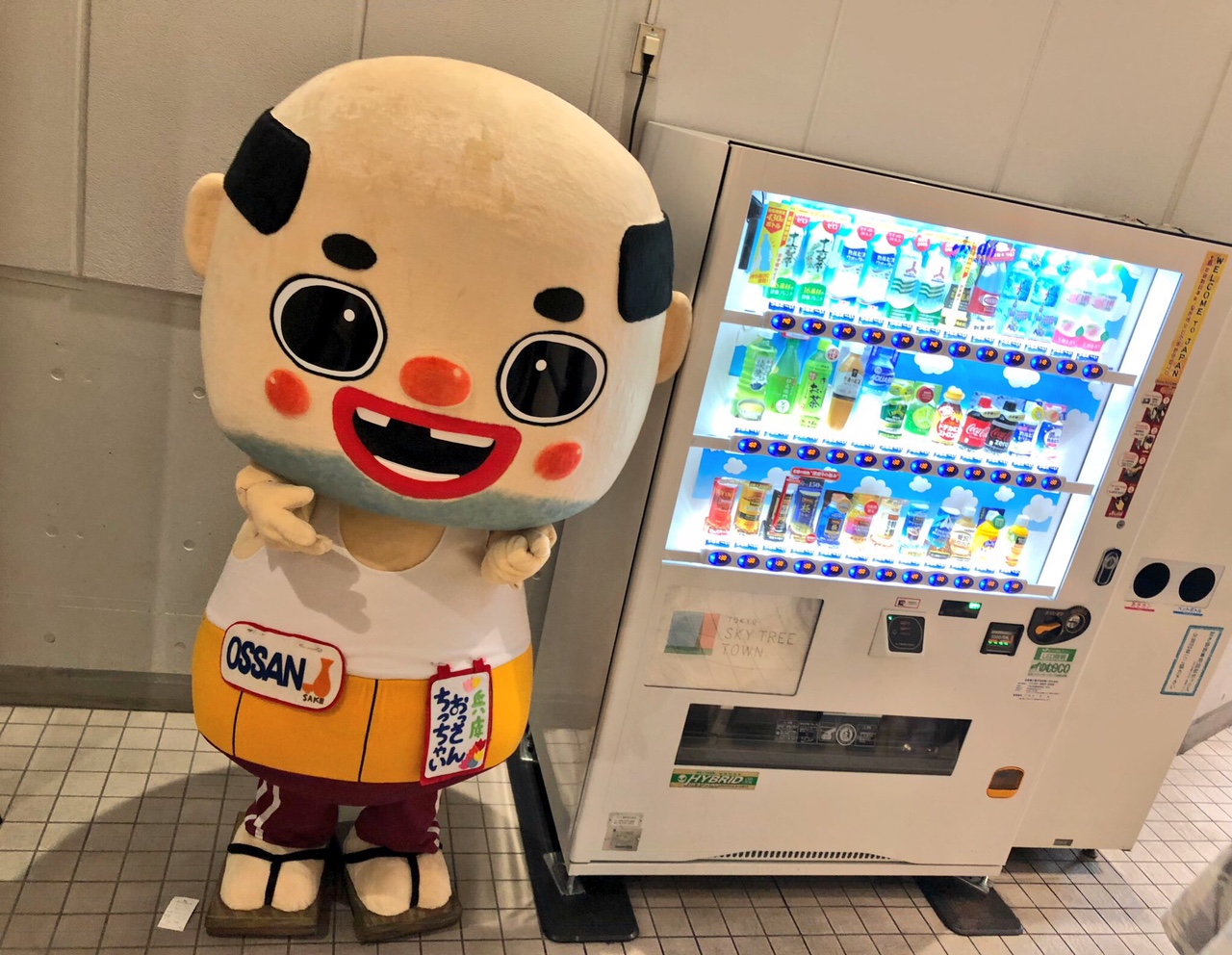
Japan has a mascot for pretty much everything. Lots are expected, like a cartoon subway worker who helps you navigate Tokyo’s metro system, or the sentient power drill mascot of Hitachi Power Tools.
But there’s also some that are a bit more out there. Like Benki-Shiroishi, a blues singer with a toilet for a head that acts as the mascot for a disinfectant company. Or Kanzou-kun, the elephant/liver hybrid mascot that encourages hepatitis screening in Tokyo. Or Madori-kun, a wrestler with a floor plan for a head that promotes a real estate agency.
Chris Carlier an English guy who’s lived in Japan for the last 16 years, and is something of a mascot super fan, documenting the characters on his website, Mondo Mascots, and his socialmedia accounts. He told me that while mascots have always been a thing in Japan, they exploded in popularity about five years ago after Hikonyan, the samurai cat mascot of a castle in Hikone, became hugely popular, leading to a boost in tourism and merchandise sales for the attraction.
“Every other town is having a go, small villages will make a really cheap mascot, like, they’ll cobble it together out of a cardboard box and some fabric and it’ll be based on a design from the local eight-year-old and they’ll have this shambolic mascot wandering around the town,” Carlier told me. “Pretty much almost every town or city [has] tried to have a mascot.”
There are currently thousands of these mascots across Japan. I spoke to Carlier by phone about some of his favorites and some of the weirder ones:
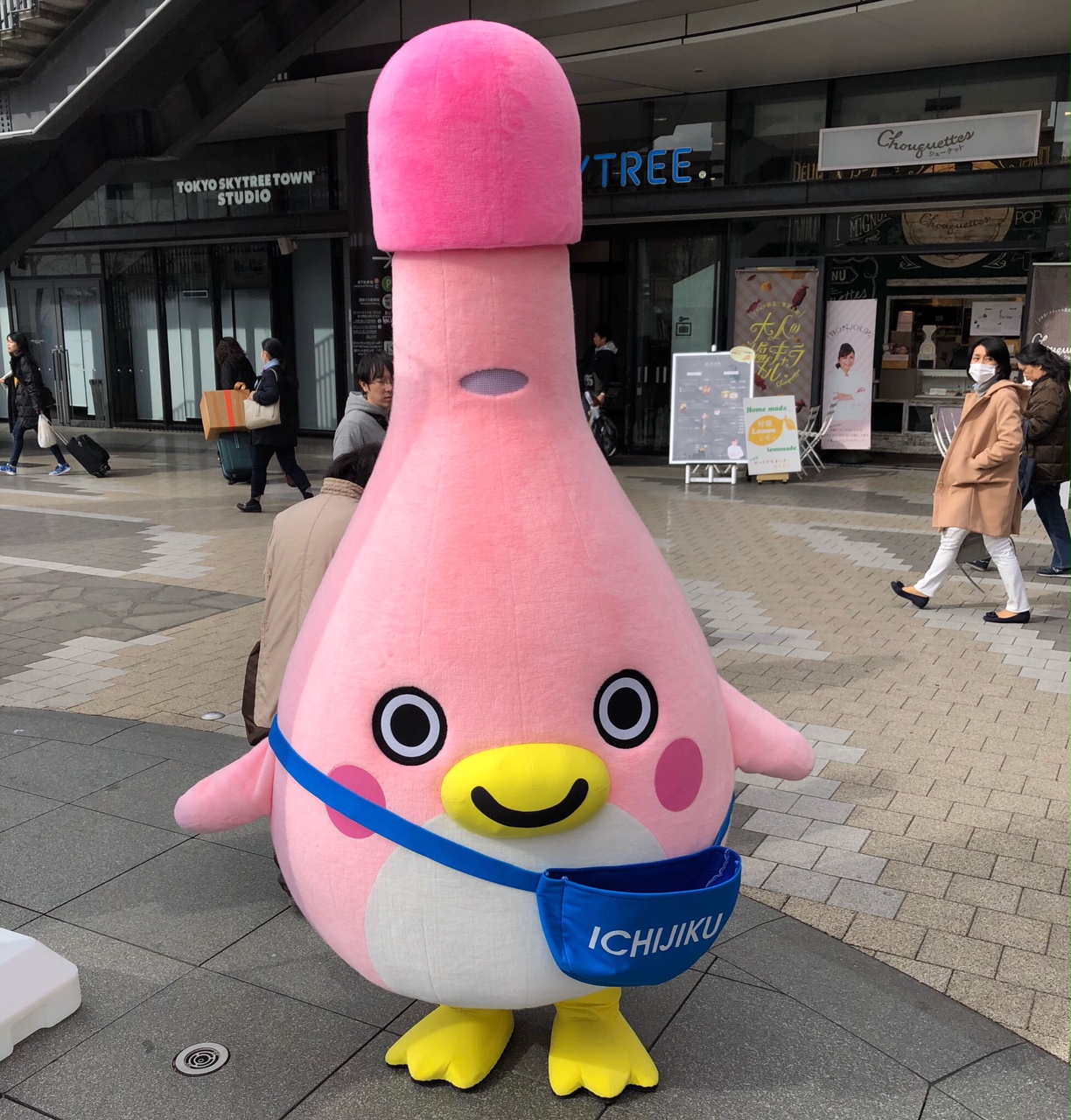
Kan-chan, the enema/penguin hybrid mascot of a company that makes enemas and laxatives
VICE: Why mascots? Chris Carlier: When I first got to Japan I couldn’t really read any Japanese, so I just looked out for the mascots and the signs in the shops and restaurants. It was my way of remembering things. Then I sort of stumbled upon an event in Tokyo where about a hundred of them were all congregated in this park and then I thought, Oh wow this is brilliant. I was wandering around getting pictures of them all and I started to post them all on Instagram. Probably like, four or five years ago they were getting prominent, you’d see these fun mascots on TV doing high-wire stunts and skydiving or scuba diving or bungee jumping or that kind of thing. I liked them from that, too.
Is it a big thing or are you the entire fandom? Each individual mascot has a fanbase who buy all the toys and T-shirts and things, but there aren’t many people who like all of them. It’s a real niche thing, so when I go to these events and take pictures and things I quite often see the same handful of people. They’re quite often women in their 60s or quite reclusive guys—middle-aged men with huge telephoto lens cameras hanging around their necks.
Do you have an idea of roughly how many mascots there are in existence? If you’re including ones that are just 2D pictures on people’s company websites, there’s thousands and thousands of them.
I mean ones you could theoretically encounter in the real world. It’s still hard to count. There’s some database I’ve been on and there were more than like, 3,000 on there. They have this thing called the Yuru-chara Grand Prix every year [where] all these mascots enter and try and get voted the most popular in the country. There’s usually about 1,500 entrants in that competition.
Have you been to the competition? Well the competition is just an online vote, so...
Oh. It’s not a literal grand prix. That’s disappointing. No. That would be fun. If they were driving sports cars.
Maybe a bit dangerous. That wouldn’t surprise me, though. I’ve been to an event where they’re racing office chairs. But the Yuru-chara Grand Prix, the winner last year was a cross between an airplane and an eel [that's] called Unari-kun, and it’s the mascot for Narita City. There is an event at the end where you get 100 or so mascots gathered and they make the big announcement of who the winner is. I haven’t been to that yet, because they tend to hold it in really obscure locations.
What have been the most popular ones you’ve posted on your social media? The ones that get most popular on social media tend to be the ones that are the least popular in reality. So the weirder ones. There’s one I posted Momiji-chan, which is like a pink deer that walks around with a shotgun that has this philosophy of hunt or be hunted. Chi-tan the otter is very popular recently, it does stunts all the time.
What are some other weird ones you’ve encountered? There’s Kan-chan, which is is the mascot for a medical company that make fig-based laxatives and enemas. The mascot is a cross between a fig and an enema, with a penguin’s face. That one was doing some kind of promotion at a pharmaceutical event and the display it was standing in front of was a replica intestinal tract combined with a vending machine. That was one of the weirdest ones I’ve encountered.
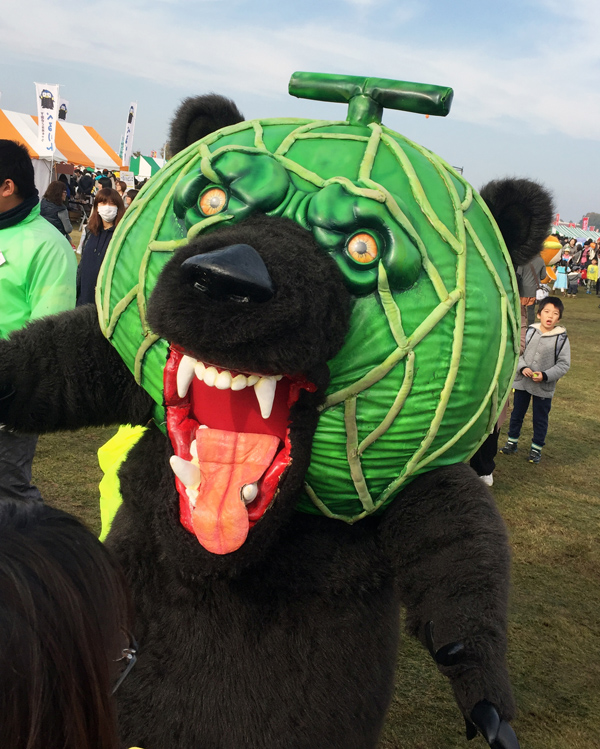
Melon Kuma
What are some others? There’s Melon Kuma. Quite often these characters are a cross between a fruit and a cat or a bear or something and it’s quite cute, but this one is actually looks like it would look in real life. This sort of terrifying chimera kind of thing. A bear with a melon for a head, but it’s got these sharp claws and it’s kind of howling in pain. That one runs around events sort of piling on all the other mascots and attacking them.
Are there any that just don’t translate at all? Yeah, a lot of them. A lot of them are based on puns, and they’re very simple and kind of funny in Japanese but then they take like, five paragraphs to explain in English. There’s one that was the mascot for some kind of fort and it was something like a carp that’s been possessed by the soul of a dead soldier, but it’s also wearing stockings and suspenders and high heels. I think it’s a carp because they’ve got koi carp in the moat around the castle, and there was some battle there so there’s dead soldiers there, but god knows why it was wearing stockings and suspenders.
What are some of your favorite ones? I do like Chi-tan, cause that character comes out with something new every day. I suppose I’ve gotta be loyal to my local mascot, the one for the town where I live. It’s called Sanchawan and it’s a dog with a tea bowl on its head. Some of the sports mascots are kind of funny. Have you seen the Mysterious Fish character? It’s the mascot for the Chiba Lotte Marines baseball team. But it kind of evolves every now and then.
I know the one you mean. It has something inside its mouth, right? That crawls out? Yeah, a sort of skeleton crawls out of its mouth but then more recently, it’s now a skeleton whose head is a full fish. It keeps evolving.
Are there any that you think are shit? Yeah, a few. Some of the ones that look like furries are not very exciting. There’s some where it’s like, just somebody dressed as a wolf and there’s nothing creative about the design.
Waka-P, the mascot of Wakayama Women’s Prison and Pourisu-kun, the law education mascot
Is there any crossover between the furry community and mascots? Are there people that are into the mascots? Well, no one that I know. A lot of towns, the local governments will make mascots, but a lot of people became these sort of self-appointed mascots. So they put on a costume and just wander around the town. or they’ll be selling toys and T-shirts. A lot of local eccentrics will have homemade costumes or they’ve just bought them online [and] they’re pretty much furry costumes. I don’t know what they get up to, but they do have some gatherings and meetups. [But] it’s not like, a common thing. It’s not a factor that I’m aware of. I always look for mascots for obscure things. So I’ve looked to see if there are any mascots for like, porn companies or brothels or whatever. I haven’t had much luck finding mascots for those sort of things. I think they’re largely a sexless kind of thing.
Are there any that are intentionally sexy? Some of them are kind of comically sexy because it looks funny. There’s one from Hokkaido which has got a bulging erection. That one’s based on a pun, it’s called Marimokkori. Marimo is some kind of seaweed, and mokkori is like, an erection, so it’s a pun-based one. And there’s Paiko-chan which is like, a bird that’s got this huge pair of boobs—that one is the mascot for Oppai Ramen, which is a ramen restaurant which is run by a woman with big boobs or something. I can’t think of any that are meant to be attractive. They usually looks quite hideous.
Chicchai Ossan, the mascot for Amagasaki City
I read on your site that you’re trying to move into designing your own mascots? Yeah. Most of these local town mascots are decided [by] members of the public [submitting] designs and [the towns] pick the best ones. I’ve entered a few of those contests. No wins so far, though. Eventually I could end up just designing one and getting the costume made and making one for something. There are some mascots that are just like, anti-smoking mascots where someone’s just decided to make it for themselves because they feel passionate about a particular cause.
What would your cause be? Maybe something like a mascot to represent the immigrant community to Japan. I quite like the idea of making mascots for kind of abstract concepts like a mascot for the feeling of ennui or lethargy or something. I don’t know. I’ve got a bunch of ideas percolating away that I’ll get around to sooner or later.
This interview has been condensed for length and clarity.
Update 08/28/18: An earlier version of this post incorrectly said Hikonyan is from Hokkaido. He is actually from Hikone.
I’ve been to quite a few sex parties over the years and, more recently, co-organized a handful of my own. Friends and acquaintances who have not attended a sex party are prone to quizzing me on the practicalities of how such an event goes down and I’m more than happy to share what I’ve learned. Recently, I was asked a rather more probing question about my experiences of communal fucking that got me thinking and now, writing. The question was “What have you learned about yourself from going to sex parties?” The answer is: a lot.
I had my first revelation at the first party I went to back in 2002. It was held in a suite of a storied rock and roll hotel. I was 25, still pretty green, and tasked with attending and possibly participating in an orgy for a writing assignment. The revelation—which came around 90 minutes into the soiree—was that I'd gamely stumbled into my own personal hell.
I’d arrived at the event—called a “play party” by regular revellers—with a vivacious partner on our third date. I thought I was going to blow her mind with what a free wheeling libertine I was and, at first, everything seemed to go according to plan. We were among the first people to have sex and I managed to get into the feeling of being watched by a room of strangers.
I spent the remaining seven-eighths of the evening, however, self-consciously grazing the buffet while she dominated the 40-person event with joyous, uninhibited abandon. In my long-harbored fantasies of group sex, I too was the life and soul of the party but I left that first outing convinced that I was too racked by insecurities to ever enjoy the realities. The more my date revelled, the more fleeting and lackluster my erections became until I was reduced to a limp observer—a veritable ghost at the feast.
Eleven years went by before I mustered the courage to show up at another—but this time, it was under the auspices of being for work. My date was a woman I’d been seeing for some months and, unlike the first misadventure, we had established boundaries ahead of time. We would be voyeuristic and exhibitionistic but, unless we both enthusiastically consented to changing the game plan in the thick of it, we’d only be having sex with one another. My second major lesson was that negotiating boundaries beforehand is a game-changer.
Open relationships expert Effy Blue affirms that play parties serve as a reminder that sex can and should be negotiated—both with partner you arrive with and potential partners you meet there. “Often in long-term relationships we settle into a routine of sex, think that we know our partner well and don’t engage in an ongoing conversation about our desires,” Blue says.
At a sex party, you may be dealing with new people and will have to “find your words” to express your boundaries and desires. “Although at first this can be daunting, with a bit of practice, you gain a deeper understanding of yourself and learn to ask for what you want and be clear about what you don’t want. And it can be very empowering when you get what you’ve asked for.”
For the next half dozen parties I showed up at, my partners and I had sex only with each other. Choosing a pace that worked for both of us enabled us to get increasingly comfortable with the heady sensation of being sexual in a group setting and therefore enjoying it.
More from Tonic:
But it wasn’t until I attended the radically inclusive parties hosted at Hacienda Villa—a sex positive intentional community in Brooklyn—that I began to feel truly comfortable with myself in a group sex setting. I even let go of the pretense of “needing to go to a play party for work.” Massively increased body positivity is a fairly common, though unexpected, result that often surprises people after their first sex party experience, says New York-based psychotherapist Dee Dee Goldpaugh.
“Pornography is often the only exposure many people have to seeing others having sex,” Goldpaugh says, adding that while porn can have a positive effect on our sexuality, one of its drawbacks is that it most often depicts body types and genitals that are unrealistic for many people.
“Sex parties in a diverse city such as New York, especially when centered in the sex-positive community, are full of all types of bodies: fat bodies, trans bodies, disabled bodies, bodies with diverse genitalia, people of many ethnicities,” she says. She's heard, over and over again, expressions of exuberance and relief from clients who feel that they can relate to the natural sexiness of their own bodies differently after seeing different types of people owning it and celebrating their sexuality without shame in these contexts.
At Hacienda, Wonderland, and other parties that welcomed all genders, orientations, and body types I felt sexier and even re-evaluated what sexiness can look like. It affected my own preferences. That’s something that sex coach Kenneth Play can attest to as well. He tells me that prior to attending a play party, the thought of watching his partner have sex with someone other than him was an affront to his manhood.
“But watching my partner fuck was one of the hottest experiences I ever had. It wasn’t just surprising—it was life-changing.” Play says that having an opportunity to explore in a space in which everyone was on the same page enabled him to separate an abstract fear from a reality that turned out to be ego galvanizing, not ego destroying.
Similarly, I learned that becoming comfortable with witnessing and supporting your partner being sexual with other people feels a bit like acquiring a superpower. I certainly didn’t have the tools to deal with it at that first party in 2002. In fact it took attending a handful of play parties before I felt ready to take that next step.
Piggy-backing off of Blue's earlier point, sex parties let us witness the real diversity of sex and sexual preferences that don’t always come across in porn, Play adds. Some people love anal sex and some hate it; some people love lots of vibration and clitoral stimulation and others people prefer deep internal stimulation. “Everyone has their own unique sexual expression, and at sex parties you really get to see how diverse sexuality is,” he says.
While play parties can change what you like, Blue is quick to point out that they can be just as likely to affect who you like. “We tend to have an idea of who we are attracted to and then search for that one person,” she says. In that sense, play parties are an antidote to hook up apps that enable users to unsee people who fall outside of predetermined parameters. “A good way to think about it might be like ordering food off a menu where you might go for what you already know you like versus eating from a buffet where you see food that you'd never order off a menu. But it now piques your interest.”
El pasado 19 de agosto el periódico El Mundo recogía en sus páginas la situación que estaban viviendo tres ex militares españoles, detenidos y encarcelados en Santo Tomé, un pequeño archipiélago del Golfo de Guinea (África). Las autoridades les acusan de intentar perpetrar un golpe de Estado.
En concreto, los tres hombres han sido acusados de intentar poner en marcha un plan para matar al primer ministro y secuestrar al presidente de la República y al del Parlamento. Recoge el mismo medio que algo habría fallado y que siguen retenidos bajo la sospecha de que iban a ejecutar una «operación terrorista para subvertir el orden constitucional».
Uno de los tres detenidos, Marco Martínez Méndez, aunque natural de Vegadeo, es vecino de Ferrol desde hace años. Aquí es muy conocido en el entorno del rugby y ha jugado en el equipo de la ciudad. Precisamente, la noticia ha saltado en la urbe naval este lunes al iniciarse a través de la plataforma Change.org una petición para conseguir la libertad de los españoles y difundirse en redes sociales.
Pero su detención se formalizó el 3 de agosto, según la versión oficial. Las mismas fuentes hablan de que tenían en ese momento un gran arsenal con ellos. Fusiles de asalto AK-47, munición, granadas, gafas de visión nocturna y machetes, entre otras armas y sustancias. El Ministerio de Asuntos Exteriores ha preferido no dar explicaciones de lo ocurrido a El Mundo.
“Una situación muy dura”
Desde Ferrol360 nos hemos puesto en contacto con el entorno de Marco en la ciudad, pero han preferido no hacer declaraciones por el momento. Sin embargo, su familia asturiana sí ha hablado para La Nueva España. Una de sus dos hermanas ha defendido su inocencia, diciendo que se trata de una “encerrona” y asegurando que están pasando por “una situación muy dura”.
“Sabemos que él estaba empezando a sospechar que algo no iba bien porque contactó con amigos y les dijo que algo no le cuadraba, que si no sabían de él que contactaran con las autoridades”, relata su familia al medio asturiano, mostrando su total desacuerdo con muchas de las afirmaciones que se están realizando sobre su trabajo.
Algunos medios han recogido que Marco y sus dos compañeros podrían estar ejerciendo de “mercenarios” e incluso los han calificado de “sicarios”, pero su familia defiende que lleva años dedicándose a la seguridad privada y había ido al país como escolta personal.
El 21 de junio ya se produjeron detenciones en Santo Tomé por una tentativa similar. Concretamente, retuvieron a un ex ministro y a un francotirador, apodados Alfa II y Alfa I, respectivamente. Pero, a diferencia de lo que está ocurriendo con los españoles -que siguen incomunicados-, quedaron en libertad provisional a la espera de juicio.
Compostela, 29 de agosto do 2018 – A un mes de que comece o Curtocircuito 2018 danse a coñecer os primeiros protagonistas entre os que destaca Ulrich Seidl que protagonizará unha retrospectiva. Curtocircuíto celebrará o seu décimo quinto aniversario do 29 de setembro ao 7 de outubro. Ademais de repasar o traballo do austríaco Ulrich [...]
Coñecer diversos puntos de interese da cidade, adentrarse na historia e unha escolma de frases útiles en galego e inglés son algunhas das compoñentes da ‘Guía alternativa de Santiago de Compostela’, que vén de editar A Mesa pola Normalización Lingüística en colaboración coa asociación cultural Cidade Vella e o Festival Feito á man.
A guía que pretende achegar a cultura e lingua galegas ás persoas que visitan a capital de Galiza, comeza cunha breve historia da cidade e alén de citar os monumentos máis representativos a visitar, tamén dá información de lugares onde tomar algo ou expresións simples en galego e inglés.
Os idiomas nos que está editada son galego e inglés.
La del tamaño del pene es, sin duda, la reina de las obsesiones sexuales masculinas (aunque quienes la padezcan estén normalmente en la media real). También hay otros que no padecen el ‘síndrome del vestuario’ —la percepción irreal del tamaño del pene del hombre que daña su autoestima— y que simplemente sienten poco afecto por el aspecto de su rabo.
Esa fijación hace que, en ocasiones, a algunos hombres se les vaya la pinza y hagan cosas que, con un poco de mala suerte, podrían dejarles directamente sin su apreciado "órgano viril". Cualquier cosita está bien con tal de que la pareja quede satisfecha y sorprendida. ¿O no? A fin de cuentas, las bombas de vacío, como los tatuajes o piercings en la verga, las carga el diablo. Y un chute de Viagra puede ser muy mal consejero.
Estas son algunas de las historias más curiosas (o penosas) que les ocurrieron a hombres que cometieron locuras con su rabo.
MIRA:
La bomba de vacío y el anillo de silicona
Estaba bastante obsesionado con el tamaño de mi pene. No era muy grande, pero tampoco excesivamente pequeño. La cosa es que un día me comentó un colega que había un cacharro llamado bomba de vacío que supuestamente alargaba un poco el pene. Lo compré y lo probé. Un día que quedé con mi chica, me metí en el baño y, sin que me viese, lo utilicé. Tenía que meter el rabo en el aparato, se conseguía un vacío y al bombearlo se retenía la sangre. Le di un buen rato y conseguí ponerme palote. Luego tenía que ponerme una especie de anillo de silicona en la base del pene para que no se me bajase la erección. Yo pensaba que ya con eso estaba todo hecho, y que el pene crecería. Salí del baño y empecé a liarme con mi chica, luego echamos un polvo y al cabo de un rato vi que aquello empezaba a ponerse morado, me dolía y lo peor es que no era capaz de correrme (algo que no me había pasado nunca antes).
Mi chica acabó mosqueada y a mí no me quedó más remedio que dejar el polvo a medias y contarle mi "hazaña". Acabé quedándome sin polvo, sin alargamiento, casi sin chica y 50€ menos en la cuenta que es lo que me había costado el aparatito de las narices.
Manuel, 22
Ácido en el pene
Mi ex tenía complejo porque decía que su pene era muy finito y creía que yo no disfrutaba de las relaciones sexuales que manteníamos. Un día, después de unas vacaciones, me dijo que tenía cita para operarse el pito para hacerlo más grueso. Yo no tenía ni idea de que eso se podía operar. El caso es que se lo hizo.
Le inyectaron ácido hialurónico en la piel del glande y parece que ganó un par de centímetros con el rabo en estado flácido. Tuvimos que estar varios meses sin sexo pero lo peor fue que, cuando retomamos la actividad, vio que le dolía demasiado y, peor aún, se dio cuenta de que no tenía buen aspecto y le salieron unos bultitos. Menudo mal rato pasó... Se habían pasado con el dichoso relleno y tuvieron que volver a intervenirlo. Volvió a tener un pene más fino, pero al menos pudo volver a follar.
Alberto, 26 años
La siesta alargadora
Un amigo se quedó solo en casa de su hermano y quedó conmigo por el chat. Cuando llegué, me contó que se había comprado una bomba de vacío en un sexshop y que la había estrenado esa tarde, pero que se había quedado dormido con ella puesta. Aunque ponía que no había que dejársela más de quince minutos, él la tuvo una hora o más. Le dije que quería vérsela y me la enseñó: la tenía enorme y esponjosa. Casi del tamaño de una lata de refresco. "No me empalmo", me dijo. Por suerte, según me contó días más tarde, había vuelto a su estado natural poco a poco.
Weldon, 41
El clásico de la Viagra
Nunca he tenido disfunción eréctil, pero pasé una mala racha y me costaba mantener la erección cuando tenía sexo con mi chica. Una vez hicimos un trío con otra colega y quise rendir bien, por lo que pensé en tomar Viagra. Hacía poco que había escuchado la historia de un tío al que casi le revienta el pene después de inyectársela y tenía mis reparos, pero me salió la vena de macho idiota y probé a tomar unas pastillas.
Me la tomé esa mañana temprano y otra vez una hora antes del polvo. A los veinte minutos ya la tenía dura como un garrote. La cosa es que hicimos el trío, todo fue bien y yo quedé satisfecho, pero aquello no bajaba de ninguna manera. A las cinco o seis horas seguía igual de tiesa y ya me empezaba a doler bastante.
Me puse hielo pero no bajaba, y tampoco funcionó que volviera a masturbarme ni darme un baño. Por la noche el dolor era tan insoportable que tuve que ir al médico. Me dijo que tenía una cosa llamada priapismo y que si llego a esperar unas horas más podía haberme jodido el pene del todo.
Juan, 27 años
Inyección y desmayo
Cuando volví al porno gay tras una pausa de unos años, las cosas habían cambiado mucho. La primera vez que rodé no existían ni las Viagras y, oye, la cosa funcionaba. En el 2016, acompañé a mi mejor amigo a un rodaje, y me preguntaron que si quería aparecer como extra junto a dos estrellas del porno, pero no me encontraba muy allá por estar resfriado. Uno de ellos me propuso pincharme la polla con Caverjet, un estimulante inyectable, y por primera vez noté como la cosa se ponía dura como una piedra sin estímulo sexual. Tan dura que el cockring que llevaba me ahogaba la polla, así que decidí intentar quitar el anillo y me pillé un huevo. Sólo tuve tiempo de decir a mi amigo: “Nene, me desmayo”, y él sólo tuvo tiempo de recogerme en sus brazos. Mi polla siguió tiesa unas cuantas horas más, sin poder usarla porque me dolía… Hasta que se bajó tras unas cuantas duchas con agua fría.
Susan just wanted to have her dream wedding. She encountered some bumps along the way, and took to Facebook to complain after the wedding was canceled. As you read her account, you start to realize why that came about.
I initially saw these screengrabs posted on Twitter. I think one of the reasons this is such an epic read is that it seems to start out reasonably enough. Susan is understandably upset that her wedding is canceled and that she’s broken up with her fiancé; she begins by recounting their longterm fairytale relationship and their modest lifestyle, and lamenting the toxicity of social media. At first, she’s relatable, even a sympathetic figure.
But as Susan gets deeper into the weeds, it’s … not so simple. It turns out—partially based on the advice of a “local psychic,” who told the couple to go for the most expensive wedding option—that the demands made on their wedding guests were not rational or okay. The couple straight-up asked every guest for $1,500 upon accepting their invitation, to fund the wedding; one imagines this is on top of the flights and accommodations at their destination wedding. If you couldn’t pay up, you weren’t invited to the wedding.
Well, it turned out that many people were unwilling or unable to fork over such a large amount of cash on demand. After only 8 people gave the couple $1,500, they turned to GoFundMe, to no avail. At this point Susan’s anger at being denied her dream wedding—she just wanted to be a Kardashian for a day, you see—really starts to go off the rails.
It’s the mix of totally outlandish and spoiled entitlement that makes this post jaw-dropping. It’s the kind of thing that becomes viral because you have to read it to believe it, and then you have to text it to all of your friends: “Can you believe this?”
Snopes has been unable to verify the veracity of the post, but they aren’t ruling that it isn’t real, either. Frankly, I think this smacks of reality—we all know a Susan or two IRL—but it could, theoretically, all be an elaborate prank. (Alas, poor Declyn.)
Either way, Susan is a character for the ages. The moral of the story: don’t be like Susan.
Betsy “Yachts” DeVos continues to be the absolute worst, proposing new sexual misconduct rules that will bolster the rights of the accused on college campuses. Won’t someone please think of the accused rapists?! (via The New York Times)
Rick and Morty’s co-creator Justin Roiland is making an animated show for Hulu. (via Den of Geek)
My Internet uncle and yours Mark Hammill gave a shout-out to a kid who refused to fight his bully, citing the Jedi way. (via THR)
Headline of the day award: “Warner Bros. to embrace the grim futility of life by putting a Wile E. Coyote movie in the works” (via The AV Club)
On Michael Rosenbaum’s podcast “Inside of You,” Arrow star Stephen Amell discussed making less money than his co-stars for years. Even more pressing: Michael Rosenbaum has a podcast. Michael Rosenbaum has a podcast. Michael Rosenbaum has a podcast. (via E! Online)
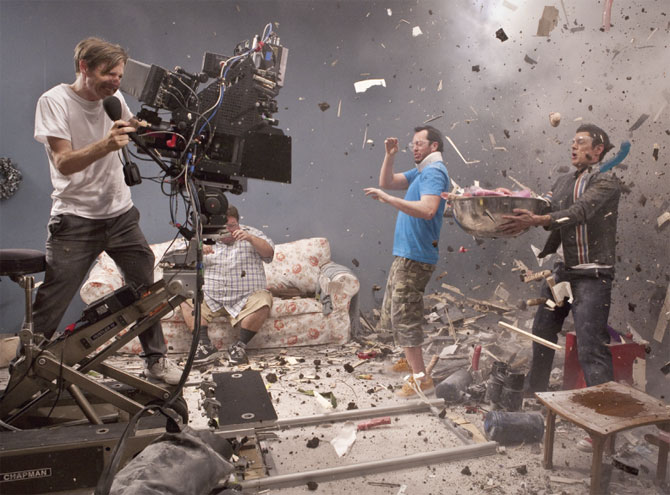





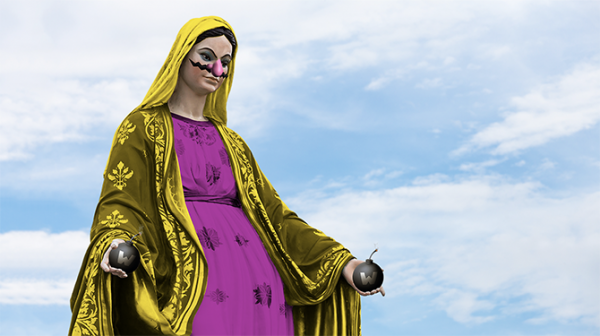



 Viviu para facer o mal. Ao igual que Francisco Rodríguez “O Rabioso”, xefe da garda civil en Vigo, a presumir da súa crueldade, facendo listas negras de demócratas, perseguindo xentes de ben e organizando sacas no Frontón. E coma el Fernando Lago Búa, antigo militante do carlismo pontevedrés, inspector provincial de prisións en Pontevedra, a negociar con vidas e provocar mortes de Vigo a San Simón. E tamén Emilio Álvarez Martínez, un cura de pistola ao cinto, a fabricar reaccionarios no Vigo de Primo de Rivera e da II República e a cazar homes e mulleres após xullo de 1936. E por suposto algúns dos irmáns Montenegro Cora, capitalistas e dirixentes da patronal conserveira, a dirixir milicias de fascistas en Bouzas e Vigo, a asasinar entre aqueles operarios que os confrontaron nos anos anteriores e a poñer os coches da empresa ao servizo de paseos e dos paramilitares.


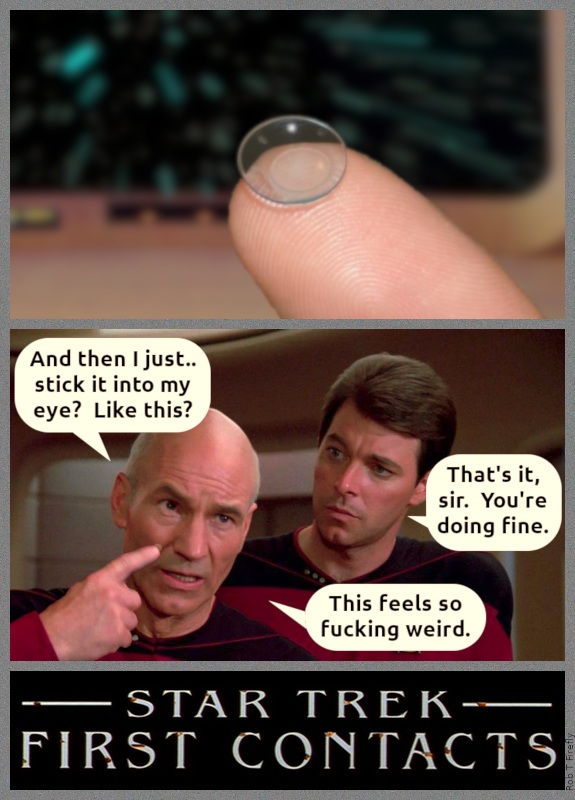


/cdn.vox-cdn.com/uploads/chorus_asset/file/12756881/dance4.gif)
/cdn.vox-cdn.com/uploads/chorus_asset/file/12756775/dance3.gif)
/cdn.vox-cdn.com/uploads/chorus_asset/file/12757215/Screen_Shot_2018_08_30_at_12.22.36_PM.png)
/cdn.vox-cdn.com/uploads/chorus_asset/file/12755887/Screen_Shot_2018_08_30_at_9.41.36_AM.png)