Shared posts

18 Sep 12:09

Juegos

by Antonio Martinez Ron

El gusto de la humanidad por el juego se remonta a la noche de los tiempos. En los yacimientos arqueológicos más antiguos se han encontrado dados, tablillas y otros elementos que indicaban que allí había gente jugando y representando simbólicamente el mundo sobre un tablero. “Jugamos porque lo llevamos en el ADN”, nos cuenta Josep Maria Allué. “Estamos programados para jugar”.

Este capítulo de Catástrofe Ultravioleta será como una gran partida en un tablero imaginario. Viajaremos al pasado en busca de los juegos de nuestros ancestros, exploraremos la faceta científica de los juegos de mesa y echaremos una partida en la que podemos cambiar el destino de nuestro país e incluso de la humanidad.  Mezclaremos los juegos con la cocina, con la literatura y con la vida, que a fin de cuentas no es más que un juego más, con sus casillas de penalización y recompensa. “Cuando jugamos mentimos, simulamos y nos probamos la piel de otros”, resume Oriol Comas. “Jugando nos podemos pelear, matar, convertirnos en un monstruo, o en el general McArthur. Te conviertes en un asesino o en una princesa durante unas horas. Y además lo haces con quien tú quieres”.

Puedes encontrar aquí el libro “Juegos y pasatiempos de la antigüedad“, de Carlos Fenández Antón. | Más info sobre D€mocraciaEleusis

Agradecimientos: Oriol Comas (Festival DAU), Josep Maria Allué (Idealudica), Josep Perelló (Universidad de Barcelona),  Miguel Santander (@juegodemocracia) y Carlos Fernández Antón (Ars INGENIVUS).

* Catástrofe Ultravioleta es un proyecto realizado por Javier Peláez (@Irreductible) y Antonio Martínez Ron (@aberron) con el patrocinio parcial de la Cátedra de Cultura Científica de la Universidad del País Vasco y la Fundación Euskampus. La edición, música y ambientación obra de Javi Álvarez y han sido compuestas expresamente para cada capítulo.

05 Sep 22:47

Man recreates Tinder profile pics

by noreply@blogger.com (biotv)
Australian Tumblrist Jarrod Allen and Instagram user Tinderfella has found a hilarious way to poke fun at women's Tinder profile pictures.


More - after the jump


via
05 Sep 22:46

IKEA instructions for creating movie monsters

by noreply@blogger.com (biotv)
Cartoonist and illustrator Ed Harrington has created a series of easy-to-follow IKEA-style instructions to create monsters from famous movies.


via
05 Sep 22:45

Q&A's with xkcd's Randall Munroe

by noreply@blogger.com (biotv)
Redditor Notjoseph shares his favorite page from Randall Munroe's book What If?: Serious Scientific Answers to Absurd Hypothetical Questions (featured earlier) in which the creator of xkcd answers questions sent by his fans.


Reddit
05 Sep 22:17

Artist Creates Coffee Brands That We Wish Existed

by John Farrier

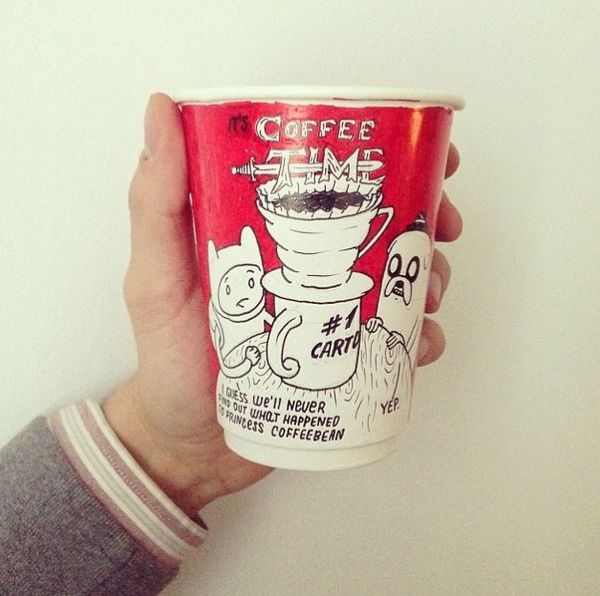
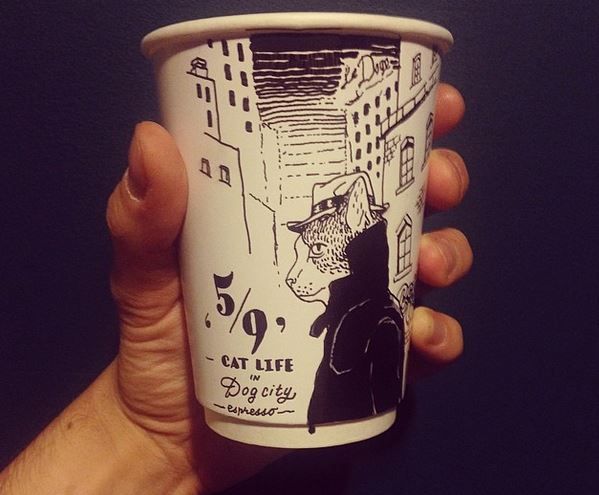
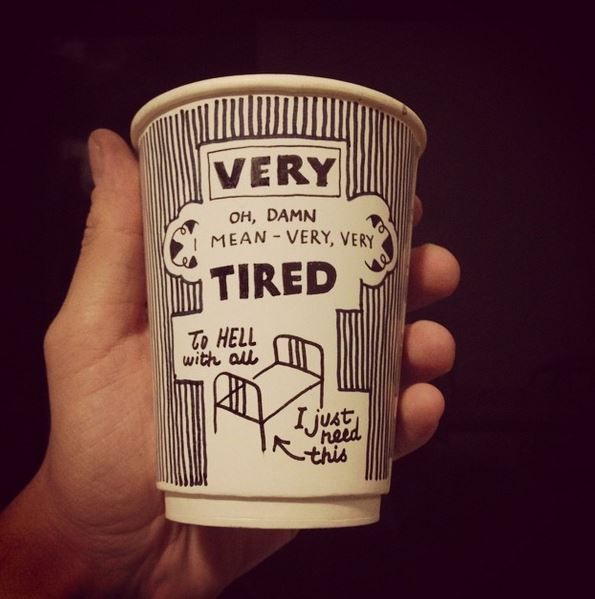
Illarion Gordon, an artist in Russia, creates "melancholic and existentialist designs that would never exist in real life from real coffee brands." That's a real shame because I can definitely see an Adventure Time-brand coffee succeeding. It would be ideal for rising in the morning and eating with bacon pancakes for breakfast.

We shall never know for sure what happened to Princess Coffeebean. But we know that she would want us to enjoy these rich, delicious coffee grounds that we found on her throne.

-via Foodiggity

05 Sep 22:16

The Most Evil Rug

by John Farrier

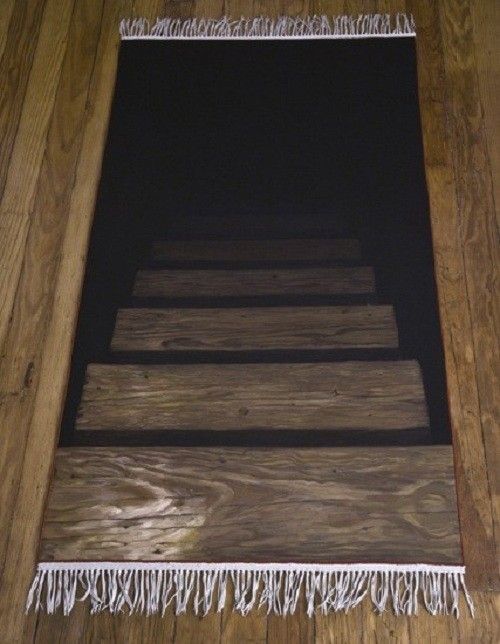
Try to walk over this rug without unconsciously tripping over it. Just try.

Then search for a hidden staircase. The rug ties the room together, but there's a good chance that there's a secret passage down there.

-via Tastefully Offensive | Photo: PaperkutRob

05 Sep 21:55

Ron Jeremy, a not terribly tiny pianist and a harmonica man

by filthy light thief
05 Sep 21:37

They kicked hetero butt up and down the state of Chihuahua

by frimble
The Man Without a Mask , The New Yorker on Cassandro and the role of the exótico within lucha libre.
"It was Baby Sharon who encouraged me to step out of Mister Romano," Armendáriz said. Baby Sharon was an exótico—a luchador who wrestles in drag. Exóticos have been around since the nineteen-forties. At first, they were dandies, a subset of rudos with capes and valets. They struck glamour-boy poses and threw flowers to the audience. As exóticos got swishier and more flirtatious, and started dressing in drag, the shtick became old-school limp-wristed gay caricature. Crowds loved to hate them, screaming "Maricón!" and "Joto!" ("Faggot!"). The exóticos made a delightful contrast with the super-masculine brutes they met in the ring. Popular exóticos insisted that it was all an act—in real life, they were straight. Baby Sharon was among the first, according to Armendáriz, to publicly say that, no, he was actually gay.


ESPN on exóticos:
A new generation of openly gay wrestlers reveled in the exótico's sexuality, coyly tweaking stereotypes to confront the audience with the idea that being gay could be something more than a stage joke. They also ushered the exótico out of villainy. Lucha libre's organizing principle is good vs. evil: técnico contra rudo. Técnicos are graceful, honorable and skilled wrestlers. Rudos win with brute strength and by cheating when the referee's back is turned. Where the early exóticos had been exclusively rudos, some of the new generation began to assume the role of técnico.
El Pas Times: El Paso-born openly gay, cross-dressing luchador has fought battles in and out of the arena
Cassandro doesn't feel that his sexuality has hampered his career, in which he became the first exótico to hold a title in one of Mexico's top wrestling promotions, the UWA World Lightweight Championship in 1992.

"Of course, I've had drinks thrown at me, people in the crowd wanting to take a shot at me, but that happens to all the luchadors, gay or not," he explains. "It's part of the show; you're there to be either loved or hated.

"But the reactions I get, even in Mexico, are mostly positive. I have fans of both sexes and all ages. Women will yell at me to come over and kiss their husbands, which I do. It's part of the craziness of the show."
NPR: In Macho Mexico's Lucha Libre, The 'Lady' Is Often The Champ

The last article is related to the release of Michael Ramos' documentary, Los Exòticos
05 Sep 20:39

15 Tips For Taking Killer Nudes

by Jillian Paulson
Shutterstock
Shutterstock

Wait a minute! Who is leaking MY nude photos! If those celeb nude photos, supposedly “deleted” but leaked via a flaw in the iCloud, got released, then where the hell are mine?

Mine are super good! I don’t have someone handy to TAKE them because duh, I’m single, but I do a pretty good job with the TimerCam app and the selfie flip on my phone. I mean, Jennifer Lawrence’s are pretty sexy, and Kate Upton’s boobs look exactly as awesome as I thought they would, but I think my naked selfies are pretty legit. They’re just floating around in cyberspace in that “cloud” that literally no one understands, I guess. Well, if they end up in your hands, have fun!

You wanna take the perfect nudies to send to whoever via text message? Have I got some tips for you.

1. Don’t go fully naked. I mean, do you really want to send a full-frontal totally-naked shot to someone? No, you don’t. Start with a nipple, or even the suggestion of boobs with a bare shoulder or a sheer tee.

2. Stay within your comfort zone. No person is worth you feeling ashamed or nervous. If you don’t feel comfortable sending them photos, do not do it.

3. Know your angles. Do you look best from the left side? Then always aim to show that off. Also, an angled body tends to look slimmer and more flattering.

4. Butt selfies are really hard. I’m still trying to master this, but I have found they look best when shot kneeling, with the camera flipped “selfie style” and held low, but angled. Your butt looks bigger that way, and any cellulite is hidden by the reverse camera. Twisting around is tough, though. Hold the pose, America’s Next Top Model!

5. One of my go-to pics is just the top of whatever underwear I’m wearing that day. For some reason, just the pic of my navel ring and some lace-topped underwear sends dudes into a frenzy.

6. Another good one is the bath photo. Droplets of water, or suds, on your skin is always sexy.

7. Accentuate your best assets. Mine are my boobs. I generally always focus on boobs.

8. KEEP YOUR SOCKS OUT OF THE PHOTO.

9. Hard nipples = always better.

10. Lighting is key. You don’t want FULL light, but if it’s too dark, what’s the point? And always, always, refrain from using the flash.

11. If you’re taking a mirror photo, clean the mirror off, please.

12. Don’t show your face unless you really trust the person. I’m just saying that sometimes shit happens and things get sent around. Then again, don’t send nudes to someone you don’t trust, either. Unless you don’t care about it, and then by all means, send away.

13. Be a tease. The top of a stocking, a bare leg or just the hint of nipples through a T-shirt can be way sexier than a totally naked pic.

14. Send ‘em to your girlfriends for critiques. I do this. Getting sexy pics from my girls is fun, and it’s a good way to build up confidence.

15. Make YOURSELF feel sexy. Wear what makes YOU feel good, and it’ll show through in your pictures. And if all else fails, black lace is a good place to start. TC mark


05 Sep 09:37

Una charla con THE SPACE LADY, la mujer que tocaba en las calles hits del espacio.

by Borja Prieto

Hoy les voy a hablar de una historia musicada de las gordas. Ya saben lo mucho que amamos en estas páginas el pop destartalado, lo amamos sobre todas las cosas. Nos fascinan los héroes anónimos del pop, llámennos imbéciles pero disfrutamos leyendo sobre las vidas de gentes que siempre hicieron lo que sintieron y a las que el éxito les dio la espalda. Nos gustan las historias giradas. Las vidas personales de nuestros héroes musicados nos producen una insoportable curiosidad. Como decía Mercedes Milà “queremos saber”. La cara B del pop es su cara oculta y también su lado más fascinante.
Hace exactamente un año llegó a mis oídos la historia de The Space Lady, una asombrosa mujer que en los 80 tocaba en las calles rarísimas canciones acompañada de un Casiotone MT-40 y ataviada con un estupendo casco estilo Asterix. La historia y el look fueron motivo de excitación inmediata pero fue escuchar esto y descomponerme física y emocionalmente:

La interpretación de “Major Tom”, uno de mis hits favoritos de los 80 del mítico Peter Schilling me voló la cabeza. Desde el “Space Oddity” de los niños cantores del Langley School Music Project no había escuchado nada tan perfecto. Además estaba interpretado por una mujer que había vivido una vida nómada, de ciudad en ciudad siempre interpretando su arte destartalado en la calle. Susan The Space Lady estuvo 20 años tocando en las calles de San Francisco y Boston donde miles de turistas, curiosos y público accidental fueron descubriéndola, y algunos comprando sus grabaciones caseras.

Captura de pantalla 2014-09-03 a la(s) 09.42.52

Susan, como muchos otros músicos callejeros desapareció del mapa hasta que su actual marido viendo la ingente cantidad de fans de todos los rincones del mundo que preguntaban por ella la animó a volver a la calle y esta vez a los clubs. Las grabaciones de The Space Lady son mágicas. Un teclado casio unido a un pedal y a un ampli fueron suficientes para crear un sonido extrañamente etéreo y atemporal, aplastante. El sello Nightschool tuvo la idea del año 2014 y sacó una especie de Grandes Éxitos de The Space Lady, un estupendo muestrario de lo alucinante que es este personaje musicalmente. A través de una amiga nuestra, gracias Laura, contactamos con Eric, su actual marido quien nos puso al habla directamente con Susan. Puedo afirmar que el charlar con Susan, preguntarle por su vida, por sus canciones rarunas y por su vuelta a los ruedos ha sido uno de los momentos más álgidos de mi vida musicada, así de losers y flipados somos algunos. Pasen y enamórense de Susan, The Space Lady, la mujer que vino de las calles del espacio.

¿Qué se siente al volver a tocar en directo?
Bueno, de alguna manera una se siente como volver a casa. Los que me conocen dicen que me expreso mejor cuando me pongo el casco, me escondo detrás del teclado, me conecto y toco. Ahora que toco con equipos de sonido que suenan con potencia me he dado cuenta del tremendo poder que puedo llegar a tener, prometo utilizarlo con sabiduría.

Captura de pantalla 2014-09-03 a la(s) 00.27.33

En tus principios, cuando tocabas en las calles, ¿cómo elegías las versiones que tocabas?
Al principio sólo tocaba algunas de mis canciones favoritas, como el “Runaway” de Del Shannon, un montón de canciones de los Beatles, incluso bastantes hits de Calypso para sacarle el máximo rendimiento al ritmo de Samba de mi teclado MT-40. Tocaba cosas como “Jamaica Farewell” o “Come Back Liza “. No fue hasta después de ponerme el casco cuando las canciones más espaciales salieron, de repente parecían más apropiadas. Enseguida empecé a escoger canciones de otros mundos de la colección de LPs de mi ex-marido Joel. Compraba los vinilos en tiendas de caridad y discos de segunda mano. También pasaba mucho tiempo escuchando rock progresivo en la radio siempre pensando qué canciones podian funcionar para mis conciertos en la calle.


Cuéntanoslo todo acerca del casco tipo Asterix que llevas y te hizo célebre.
Joel y yo encontramos el casco en una tienda de disfraces en San Francisco en el año ’71 o ’72. Creo que pagamos 15 dólares por él, era mucho para nosotros, ya que por entonces vivíamos de los cuadros y esculturas de Joel, a pesar de que era completamente desconocido y que se negaba a unirse al mundo del arte convencional. En cuanto llegó  a casa le añadió con un alambre una bombillita que estaba utilizando para uno de sus trabajos. Desde entonces empezó a utilizar el casco para trabajar, llamando la atención de todos los artistas que pasaban por el espacio donde vivíamos. Cuando nos mudamos a California empezó a utilizarlo mientras tocaba su guitarra a través de un Echo-Plex enchufado a un ampli que funcionaba con batería. Empezó a desarrollar un show tipo hombre orquesta llamado The Cosmic Man. Viajamos por el país y un amigo de Massachussets nos comentó que el público universitario de Boston sería muy receptivo a look y los sonidos excéntricos de Joel. Nos mudamos a Boston.  Creo que por su condición de artista no se sintió seguro tocando solo. Al final montamos juntos un grupo de música ambiental llamado Blind Jugger (Ojo, “El Malabarista Ciego”). Él llevaba el casco y el resto del grupo unas máscaras rarísimas y pelucas. Joel tocaba la guitarra, teníamos un batería y yo tocaba un gigantesco teclado Vox Jaguar. Después de separarnos como grupo, duramos muy poco, me compré un acordeón en una tienda muy cutre de 2ª mano y empecé a tocar canciones de folk y pop convencionales en la calle. Un par de años después, me cambié de instrumento y me compré un Casio MT-40. Transformé mi show en un show electrónico, Joel encontró unas alas de plástico y las añadió al casco. En las navidades del 82 me sugirió que usara el casco con las alas y las bombillitas en plan teatral aprovechando que era navidad. Lo hice, un poco avergonzada y a regañadientes pero pensando que sería sólo por las fiestas. Fue algo mágico, a la gente le encantó, les entusiasmaban mis canciones espaciales y mi look. A partir de entonces el casco pasó a ser parte de mis shows y fue un factor muy importante que ayudó a crear la persona y repertorio de The Space Lady.

Captura de pantalla 2014-09-04 a la(s) 09.59.35

Háblanos de Eric, ¿fue un personaje clave en tu vuelta a la música?
Eric y yo nos conocimos por internet. Me enamoré de alguna de las canciones que posteaba y más tarde me enamoré de él. Nos casamos un año después y estuvimos tocando juntos durante un año o dos, tocábamos sus canciones en coffee shops y pequeños conciertos, él con una acústica y yo al acordeón y flauta (sin el casco, The Space Lady llevaba retirada más de 8 años).  Eric empezó a sentir curiosidad por la cantidad de correos de fans de The Space Lady que llegaban de todos los rincones del mundo. Me preguntaban si The Space Lady seguía en activo y no paraban de pedir el CD. Eric estuvo insistiendo durante meses y al final accedí a tocarle un par de canciones, todo lo que pude recordar después de estar tanto tiempo sin tocarlas. Se quedó petrificado, se sentó y cuando se recuperó se sentó al lado del ordenador y me dictó una carta para mis fans “The Space Lady ha vuelto. Próximamente tocaremos cerca de tu ciudad.” Esto me dio un subidón de confianza muy importante, nunca pensé que pudiera recordar esas viejas canciones. Para mi sopresa me vinieron todas las notas y letras de una forma mágica. Me ayudó mucho ver grabaciones de YouTube incluso links con notas de mis propias canciones que encontré en internet. The Space Lady del siglo XXI nació entonces, rescatada del pasado por Eric, mi compañero sentimental y ahora manager. No estaría tocando por clubs ni haciendo entrevistas como esta sin su ayuda y confianza.

¿Cómo fue el último tour por los EEUU y UK? ¿Cuéntanos tus sentimientos?
En una palabra: ¡impresionante! La gente me ha sorprendido taaaanto. Ha sido tan receptiva, tan entusiasta, inspiradora y buena que te juro que no sé qué hacer con toda esta energía tan positiva. Siento un honor tremendo al tener una plataforma mundial para propagar el mensaje de amor y paz que he ido propagando durante 20 años, un tiempo donde pensé que estaba tocando para oídos sordos.

¿Cuáles son tus artistas favoritos de todos los tiempos? ¿Algún artista nuevo que admires?
Es una lista muy larga, seguro que me dejo alguno pero aquí tienes una lista de artistas que admiro y que me han inspirado:
Richard Dyer-Bennet, Andrea Bocelli, Dawn Upshaw, Charlotte Church, Ella Fitzgerald, Bob Dylan, Judy Collins, Pete Seeger, Donovan, Joan Baez, Laura Nyro, Gordon Lightfoot, John Denver, Leonard Cohen, Jerry Butler, Johnny Rivers, Johnny Horton, Marty Robins, John Fogerty, Melanie, Judy Garland, Pat Benatar, Joni Mitchell, Sandy Denny, Tim Hardin, John Lennon, George Harrison, Paul McCartney, Kass Elliott, Paul Simon, Art Garfunkel, Dusty Springfield, Linda Ronstadt, Dionne Warwick, Cindi Lauper, Ann & Nancy Wilson, K.T. Tunstall, Christine McVie, Eva Cassidy, Izzy Kamakawiwo’ole, Eric Ian Schneider
No escucho música pop actual así que no tengo respuesta para la segunda parte de la pregunta.

Captura de pantalla 2014-09-04 a la(s) 09.59.47

¿Cual es el próximo paso para THE SPACE LADY?
Un tour por 11 país europeos, las fechas tentativas son estas:
04.09. IT Macerata – Discodella
07.09. GR Athens
08.09. GR Thessaloniki
10.09. HU Budapest – Kontra Club
11.09. AT Vienna – Rhiz
13.09. CH St. Gallen – A-Synth Fest
16.09. BE Brüssel – Les Ateliers Claus
18.09. NL Tilburg Incubate Festival
19.09. BE Antwerp – The Boss
20.09. NL Amsterdam – OCCII
21.09. DE Darmstadt – Oetinger Villa
24.09. SE Malmö
25.09. SE Stockholm – Mother Shows
26.09. SE Göteborg – Koloni
29.09. DE Berlin – Marie Antoinette
01.10. F Paris – Le Chinois
02.10. F Paris Hartzine – Espace B
03.10. F Nantes – Le Lieu Unique
07.10. ES Barcelona Miscelanea

Captura de pantalla 2014-09-04 a la(s) 10.00.02

También estoy planeando y ensayando un nuevo LP que saldrá a principios del año que viene.

Guau, pues eso es todo. Muchas gracias, te amo. 
Muchas gracias por tu interés en THE SPACE LADY – veámonos en Barcelona
Mucho amor a mis fans españoles.

Susan, aka The Space Lady

05 Sep 09:36

Cristian Castro, el templario del hard rock

by Jose Viruete

Como bien acertó mi amigue Adso hace ya años, a mi me hubiera gustado ser cantante melódico y entonar bellas canciones de amor para amas de casa. Los que me seguís por aquí o por allá sabéis ya de mi devoción por el gran Cristian Castro, uno de los grandes del género. Cristian “Azul”, como se le conoce aquí por aquel éxito AOR que lo petó en 2001. Hasta Torbe se animó a cantarlo delante de mi en una ocasión.

Pero este mexicano siempre ha tenido la espinita del rock clavada. A principios del año grabó un disco de rock para mujeres con un proyecto llamado ‘La Esfinge’ , donde podía meter guitarras con distorsión y cosas de esas que gustan a los amantes de “la música currada”. Eso sí, a la hora de presentarlo, por algún motivo, el tío ha optado por radicalizar aún más el discurso… ¡disfrazarse de cruzado!

Pinche aquí para ver el vídeo

La Pecas me pasó el vídeo y yo me quedé catacrocker al verle disfrazado de medieval para cantar una cover del sobadísimo ‘Paranoid’.  Ya. A mí me sigue sin encajar algo, pero es que Cristian hace tiempo que demostró que está un paso por delante de sus fans. Y de todo el mundo.

Por ejemplo cuando publicó esta foto en su twitter para trolear a su fans.

BdbZcN2IYAAXmSw

Lo mejor es leer los comentarios de las camisetas negras absolutamente molestos con la osadía de que un tipo así se atreva a “profanar” las instituciones metálicas. ¡Se ve el homenaje a los Saxon de Crusader con su atuendo no basta!  Por lo que veo, mejor que luzca el atuendo en algún rol en vivo de esos que se organizan en algún pueblo perdido de Castilla la Mancha.

A mí, que me gusta el west coast y todo, me pirra su primer disco y aquel No Podrás. Pero ¿qué sabré yo de música? Mejor os dejo con el gran ‘Soycubanosexy‘, experto en todo, para que dirima el debate en torno a Cristian.

Pinche aquí para ver el vídeo


Ah! El proyecto ese de “La Esfinge” suena TAL QUE ASÍ, por si aún no lo habíais oido.

Pinche aquí para ver el vídeo

05 Sep 09:25

Arde el camión de la orquesta Los Satélites en Santiago

by Ignacio Carballo
Lo estaban reparando en una nave cuando se produjo el incendio
05 Sep 09:18

Jodorowsky's Dune (2013) Frank Pavich

by noreply@blogger.com (David Arthur)
Jodorowsky's Dune (2013)
Genre: Documentary
Country: USA | France | Director: Frank Pavich
Language: English | Subtitles: None
Aspect ratio: Widescreen 1.85:1 | Length: 90mn
Bdrip H264 Mkv - 1920x1080 - 23.976fps - 1.24gb
http://www.imdb.com/title/tt1935156/

The story of cult film director Alejandro Jodorowsky's ambitious but ultimately doomed film adaptation of the seminal science fiction novel. 

 This documentary tells the story of director Alejandro Jodorowsky's unfinished masterpiece: his attempt to produce a film adaptation of Frank Herbert's sprawling science-fiction novel 'Dune' in the mid-1970s -- a project which was never completed, in part because it collapsed under the weight of the director's incredibly ambitious vision for the movie. It was to have been a larger-than-life epic, as grand as Stanley Kubrick's '2001.'

All that survives of Jodorowsky's 'Dune' are the script, storyboards, and concept artwork. Using these, combined with talking-heads interviews of those involved, the documentary tries to show us how the finished film would have looked.

What makes all this so captivating are the interviews with Jodorowsky himself, and his incredible passion as he recounts the tale of an unfinished project from 40 years ago. Entering into Jodorowsky's world is like falling into a visionary dream where anything and everything is possible. And as his vision progresses, it becomes more and more ambitious: Salvador Dalì, Mick Jagger, and Orson Welles agree to star. Dan O'Bannon and H.R. Giger will design the sets and costumes. Pink Floyd will provide the score. It's hard to imagine a more ambitious movie, considering the technical limitations of the time.

Yet, as the documentary shows, the ripples from this never-completed, ahead-of-its-time film spread out in many directions, inspiring different ideas that made their way into later films such as 'Star Wars' and 'Alien' -- and which continue to inspire filmmakers today.
 Jodorowsky's Dune (2013)
or
05 Sep 09:14

The Clash -Revolucionarios sin revolucion -Vibraciones Nº 38 Noviembre 1977

by Alex_add


Recuperamos otro articulo sobre los Clash aparecido en la prensa española y firmado por un periodista autóctono en este caso el reconocido "Diego A Manrique" que a finales de 1977 dedicaba 4 paginas de la revista Vibraciones a este interesante articulo que además viene acompañado de unas buenas y nada típicas fotos de la banda


Escaneos hechos por "Spanish Bombs blog" si usas las imagenes o textos por favor acreditar


VISITA NUESTRA TIENDA DE DISCOS ONLINE
Siguenos en Facebook con actualizaciones, Reseñas de discos , vídeos y mas cosas
                            

                    Visita:....Black Market Records
05 Sep 09:13

The Dirtbombs - if you don't already have a look

by Musicômano
Cover
Banda: The Dirtbombs
Disco: if you don't already have a look
Ano: 2005
Gênero: Blues Rock, Garage Rock
Faixas:
One (originals)
1. Theme from The Dirtbombs (M. Collins) 1:15
2. The sharpest claws (M. Collins) 2:17
3. Stuck under my shoe (M. Collins) 2:30
4. I'm saving myself for Nichelle Nichols (Nº 3) (M. Collins) 0:57
5. Here comes that sound again (M. Collins, P. Pantano) 4:28
6. High octane salvation (M. Collins) 2:13
7. Cedar Point '76 (J. Diamond, M. Collins) 2:12
8. Little miss chocolate syrup (J. Diamond, M. Collins) 1:50
9. Headlights on (M. Collins) 3:03
10. Never licking you again (M. Collins) 1:30
11. Don't bogue my high (M. Collins) 2:15
12. Encrypted (M. Collins) 2:39
13. (I'm not your) Scratchin' post (M. Collins) 2:15
14. Broke in Detroit (again) (M. Collins) 2:41
15. Merit (M. Collins) 2:48
16. Trainwreck (M. Collins) 1:52
17. Infra-red (M. Collins) 2:17
18. Jolene (Blackwell, Diamond, Pantano, Potter) 1:57
19. Candyass (M. Collins) 2:51
20. Pray for pills (J. Diamond, M. Collins) 3:12
21. All my friends (M. Collins) 3:00
22. She played me like a booger (M. Collins) 1:59
23. They hate us in Scandanavia (M. Collins) 1:36
24. They saved Einstein's brain (M. Collins) 1:50
25. Correspondence (M. Collins) 2:18
26. Tina Louise (M. Collins) 2:46
27. Brucia i cavit (M. Collins) 0:57
28. Words that hurt (M. Collins) 1:54
29. My last Christmas (J. Diamond, M. Collins) 2:34
Two (covers)
1. Possession (Hatch, Shannon, Shannon) 3:54
2. Maybe your baby (Wonder) 4:26
3. Brand new game (Smith) 3:13
4. I'll be in trouble (Robinson) 2:11
5. Lupita screams (Pierce) 3:21
6. By my side (Heenan, Van Berkel, Rowe, Fiorini) 3:22
7. No expectations (Jagger, Richards) 4:16
8. I feel good (Rokko) 2:31
9. Natural man (Hebb, Baron) 3:08
10. Noise in this world (The English Beat) 2:44
11. Kiss kiss kiss (Ono) 3:26
12. Refried dreams (Hatch, Shannon, Shannon) 2:53
13. Insecure, me? (Ball, Almond) 2:05
14. Mystified (Canler, Skill, Palamarchuk) 3:24
15. My love for you (Scroggins, Libran) 1:53
16. You don't mean it (Ohio Players) 2:48
17. I want need love you (Oloman) 3:41
18. Ha ha ha (Lose) 2:33
19. Tanzen gehn (Zundel, Hirschburger, Lohr) 2:18
20. Crash down day (Phillips) 2:30
21. Lost love (Miller, Kuperus) 4:44
22. What you've got (Ellison) 3:21
23. I started a joke (B. Gibb, R. Gibb, M. Gibb) 3:20
Créditos:
Mick Collins: Guitar, Vocals
Dana Spicer, Deann Iovann, Dion Fischer, Joe Greenwald, Ko Melina Zydeco, Tom Potter: Fuzz Guitar
Jim Diamond, Matt Smith, Tom Lynch, Troy Gregory: Bass
Adam Renshaw, Ben Blackwell, Cathy Carroll, Chris Fachini, Chris Handyside, Ewolf, Gisella Albertini, Nick Lloyd, Patrick Keeler, Patrick Pantano, Paul Something, Ryan Pritts, Scott Michalski: Drums
http://www.filesbomb.in/3udb3e4zi29f

Biografia:
A biografia da banda, que segue, em tradução livre do inglês, foi extraída do site Oldies, que, por sua vez, cita, como fonte primária do texto, a Encyclopedia Of Popular Music, de Colin Larkin (sob licença da editora Muze).
O reflorescimento do rock garagem estava a pleno vapor no início do século XXI, e a Dirtbombs, apropriadamente, veio de Detroit, Michigan, EUA, uma cidade bastante associada ao gênero, tendo gerado Stooges, MC5 e, mais recentemente, White Stripes. O cérebro por trás da Dirtbombs é Mick Collins (nascido em 18 de dezembro de 1965; vocais e guitarra), que já participou de grupos semelhantes: Blacktop, King Sound Quartet, Screws e Gories.

12

Os primeiros rumores da montagem da Dirtbombs surgiram quando Collins ainda integrava a Gories, mas, depois de anos de especulação e nada de concreto, muitos acreditaram que o projeto não passava de uma invencionice. A boataria acabou com o lançamento de um single, em 1997, seguido de novos discos, shows e um lineup composto por Collins, o baixista Jim Diamond (nome verdadeiro: James Andrew Diamond, nascido em 12 de fevereiro de 1965) e os bateristas Ben Blackwell (nome verdadeiro: Benjamin Jesse Blackwell, nascido em 12 de junho de 1982) e Patrick Pantano. Aliás, Jim Diamond, proprietário da Ghetto Records, é conhecido por colocar seu baixo à disposição de artistas ocasionalmente.

13
Após vários outros singles, "Horndog Fest", o primeiro disco longo da Dirtbombs, surgiu em 1998. O segundo, "Ultraglide In Black", apareceu em 2001, com o quarteto prestando homenagem aos mestres da música soul dos anos 60 e 70, incluindo covers de Smokey Robinson, Stevie Wonder, Marvin Gaye, Sly And The Family Stone e até mesmo a versão de uma obscura canção da carreira solo de Phil Lynott. Em seguida, porém, a banda voltou às raízes do genuíno mas inovador rock garagem com "Dangerous Magical Noise", de 2003. Além dos seus grupos acima mencionados, Collins também colaborou, como convidado, em discos da Rocket From The Crypt e de Andre Williams, a par de mixar ou produzir gravações para a Jon Spencer Blues Explosion e a Demolition Doll Rods.
05 Sep 08:49

Former Facebook Employee Launches Women.Com, The Internet’s First Women-Only Social Network - In before the claims of misandry. As a wise woman once said, pffffffft!

by Carolyn Cox

Screenshot 2014-09-04 at 3.54.24 PM

Recent events have shown that the Internet is a safe and inclusive space for all women (JK, LOL, AHOO-HOO-HAH-HAH). Thankfully, former Facebook employee Susan Johnson has launched Women.com, a question-driven social media site that may make that dream as close to a reality as possible—and considering her aspirations for the platform, I couldn’t be more excited.

Women.com is still in an invite-only beta stage (you can request to join via Twitter. I’m hoping to check out the party soon), and, much like Yahoo Answers, is a forum where users can pose questions and then upvote results. However, unlike the anonymous respondents on Yahoo, a Women.Com account links back to the user’s Facebook. This way members have some accountability even when accessing a more private platform than Facebook to pose tricky questions. (Slate’s article on Women.com lists a sample question as “Friend’s husband is cheating. Do I say something?” Not necessarily a question you want on your wall, unless the answer is definitely “yes.”)

In an interview with Slate, Johnson discussed the ways she hopes the platform will evolve as it gains popularity, saying she was inspired to create the site so frequently-silenced voices could finally be heard:

The Internet has traditionally not been a very safe space for women to speak their minds. Women dominate all these social platforms online—we’re 58 percent of Facebook and 84 percent of Pinterest—but our offline conversations aren’t matching our online conversations [...] A lot of comments sections are hidden below the fold or overrun with trolling comments; on Facebook, we’re talking with seemingly everyone, so we’re not necessarily sharing our thoughts on the Middle East, or even what we bought at Nordstrom.

She also promised to prioritize inclusivity:

Women.com is an inclusive community for all women. If you identify as a woman, you’re welcome here. We allow everyone to connect through Facebook Connect, and if you’re a trans woman who identifies as a woman on Facebook, then that’s that. You’re in. If you’re someone without a Facebook profile, there are a couple of more steps you’ll go through for verification—users can send us their LinkedIn profile or photos of themselves—and we have a very diligent community management team that’s on the site all the time, monitoring the conversations to make sure they’re authentic.

To read about Johnson’s plans for the site’s inevitable trolls and to get insight on the unique way advertisers cater to women, head over to Slate. Of course, Women.com will still be part of the Internet, so successfully nurturing a “new home for women” will be difficult at best. Here’s hoping that the site catches on—perhaps it could even offer some more tech career opportunities for women in the process?

Are you following The Mary Sue on Twitter, Facebook, Tumblr, Pinterest, & Google +?

05 Sep 08:46

Why Has the Population of Russia Suddenly Declined by 7 Million People?

by Annalee Newitz

Why Has the Population of Russia Suddenly Declined by 7 Million People?

Something bizarre is happening in Russia. Between 1997 and 2007, the population declined by 7 million, or 5 percent. These numbers are enormous — they are comparable to wartime losses. What is causing this shocking death toll?

Read more...


05 Sep 08:42

A new study reveals that dogs prefer petting over vocal praise.

by George Dvorsky

A new study reveals that dogs prefer petting over vocal praise. Dogs will spend significantly longer periods of time around people who are more inclined to pet them, regardless of whether they're owners or strangers. Vocal praise, on the other hand, has virtually no effect on their desire to hang out. The research also shows that dogs never get tired of being petted.

Read more...


04 Sep 21:38

Games for tomorrow's programmers.

by boo_radley
Blockly Games is a series of educational games that teach programming. It is designed for children who have not had prior experience with computer programming. By the end of these games, players are ready to use conventional text-based languages.
04 Sep 21:37

Twitter Is Changing to Be More User-Friendly, and That's Terrible

by Harry Cheadle

Photo via Flickr user Filippo Minelli

If you spend a lot of time on Twitter.com, a website that's sort of like a giant room where everyone shouts conversation fragments towards the ceiling, you’ve probably already come across the news that the social network is about to become more like Facebook. The site will soon roll out features that will “separate the interesting and timely tweets from the noise,” the Wall Street Journal reported Wednesday. This means that instead of a firehose of 140-character jokes, news items, mini-#thinkpieces, general complaints, links, and incredibly petty fights delivered in reverse chronological order, users will see a selection of tweets that has been filtered for their convenience and pleasure by a friendly algorithm.

Regular users hate hate HATE this, and they’re complaining, naturally, by tweeting:

.@twitter to ruin Twitter. Booooo. http://t.co/qC9oZLGpjr

— Clara Jeffery (@ClaraJeffery) September 4, 2014


Yup. RT @dloehr: No one signs up for @twitter looking for a middleman to curate for them. If you must, make that optional for users.

— Alan Sepinwall (@sepinwall) September 4, 2014


A @facebook style filtered ("curated") feed is the exact opposite of what I want on @twitter and from social media. http://t.co/jWHPFGNlFJ

— Sean Finnegan (@IMFinnegan) September 4, 2014


.@twitter: "Let's be more like the worst goddamn website on earth." http://t.co/zAmXozv8vG

— Spencer Hall (@edsbs) September 4, 2014

To understand why people are filled with such anger, you need to understand why they (well, really we, since I'm one of those lunks who spends too much on the site) like Twitter so much. We might as well start by admitting that it is incredibly unfriendly for new users. When you sign up you don't get to see anything until you follow some people, and it takes you a while to realize that Twitter isn't one big community, it's hundreds or thousands of little overlapping communities that are all talking within themselves, making in-jokes, and subtweeting their antagonists. It's also a place where everything is on the same level—celebrity tweets, people bitching about airlines, insane novels about Homer Simpson smoking marijuana in Iraq. You can curate this stuff by sorting your follows into lists, or you can just let it all wash over you, trusting that if something interesting or important is happening on the internet, Twitter will naturally put it front and center. 

The resulting diversity of shit you can look at by scanning Twitter stands in stark contrast to Facebook, where a mysterious algorithm picks and chooses which of your friends' statuses appear on your News Feed, resulting in ads showing up under wedding and birth announcements from people you met years ago and have since forgotten about. More annoyingly, your News Feed often seems to pick items to display based on how many likes they're getting, meaning that you get shown a bunch of junky videos that You Just Can't Believe and links to heartstring-jerking stories that Will Restore Your Faith in Humanity.

Twitter's fans, myself included, love that it doesn't hold your hand and show you things it suspects you'll be interested in. The act of sorting through a messy fountain of information and ideas is stimulating in and of itself, and you never know when you'll come across something that's fascinating but that you wouldn't have stumbled on except for a stray retweet you happened to click. Facebook's News Feed might be an easy way to check out your friends' social lives and keep up, in a vague way, with the biggest stories of the day, but it can rapidly become predictable and stale.

It's easy to dismiss complaints about social media sites as the grumblings of a few angry people who should probably unplug and go outside and/or read a book, but there are precious few places left on the internet where our experience isn't controlled by the invisible hand of an algorithm. Facebook, which provides so much traffic to sites like the one you're reading right now that minor changes in its News Feed can cause readership to drop drastically, obviously curates everything it shows you. But Google search results are also filtered, with similar consequences—earlier this year the online community MetaFilter had to lay some of its moderators off after a change in how the search powerhouse indexes hits sank their traffic. The internet you see is increasingly controlled by a few massive corporations, and they've been exerting themselves more and more lately, as the members of the Free Syrian Army—whose Facebook pages were taken down this year—could tell you. (Occasionally, this power is used for good; Facebook recently decided to crack down on sites that publish fake "news" stories and profit from the traffic.)

The change for Twitter seems pretty clearly motivated by the site's need to become more attractive to casual users, making it in turn more attractive to advertisers. It's a tweak that won't matter to those who aren't hardcore tweeters, and many people will surely like the new version of the site. If Twitter becomes more like Facebook, though, it'll inevitably get less weird as it grows friendlier and more welcoming—and that means another bubble of the web's strangeness will have been smoothed out by the forces of homogenization (and capitalism). The new Twitter will probably make more money for everyone. Unfortunately, it will look just like the rest of the internet.    

Follow Harry Cheadle on Twitter.

04 Sep 19:59

The People Who Wouldn’t Mind if the Pacific Northwest Were Its Own Country

by Kelton Sears

GIFs by Kelton Sears

The first thing we heard when we pulled into the Finney Farm was the clattering of drums, followed by a high-pitched howling noise.

Suddenly a wild pack of young girls came running out of the woods waving sticks in the air. The youngest, maybe two years old, had sticky berries smeared across her face. She was inexplicably waving a $5 bill in the air. The leader of the pack, maybe 13, suddenly noticed us and halted her group—who all promptly dropped their sticks.

“Oh, hi, I haven’t seen you yet, so I guess you’re new here,” she said. “Well, um, welcome to the farm. If you go way down the forest trail, past the big fallen tree, you’ll find a clearing that I think would be nice to set a tent up in. I dunno. You’ll figure it out.”

Then the pack took off howling back into the woods.

We were here for the Cascadia Rainingman Festival, held on Labor Day weekend at a gorgeous 100-plus acre organic farm in the foothills of the North Cascade mountain range in Washington State. Unless you follow the fringe politics of the Pacific Northwest, you’re probably wondering what Cascadia is, and that’s a tricky question, because self-described “Cascadians” hold all kinds of different beliefs. (The first of many workshops at the festival was titled “What is Cascadia?”)

The idea of Cascadia can be traced back to the 70s to a couple of sources. The most prominent is Ernest Callenbach’s 1975 classic Ecotopia, a goofy but lovable utopian novel full of solar panels, ritualistic warfare, and druidic sex. In the book, the West Coast secedes from the US to form its own country, Ecotopia, a land governed by president Vera Allwen, of the Survivalist Party. In Ecotopia, people have completely shifted to renewable energy and have structured their entire lives around the concept of ecology and sustainable living. They smoke marijuana freely, wear rain-resistant fitted serapes, and are all borderline tree worshippers. (This may not sound that odd to you if you’ve been to certain parts of Seattle.) The first US journalist ever permitted in the country serves as the book’s naïve narrator. He’s really freaked out at first, but he comes around and falls in love with the place.

The term Cascadia didn’t start being used to describe a real-world culture until a professor at Seattle University named David McCloskey started using the term in his class “Cascadia: Sociology of the Pacific Northwest” in the late 70s. Geologists and botanists had long used the term “Cascadia” to refer to the bioregion of British Columbia, Washington, and Oregon, a naturally linked ecological region connected by shared watersheds and the Cascades. But McCloskey was the first to link “Cascadia, land of falling waters” to what he perceived as an emerging “sociocultural unity.”

In 1994, a Portlander named Alexander Baretich designed the “Doug Flag,” the unofficial flag of Cascadia. Featuring a Douglas fir and blue, white, and green stripes (for the regional landscape’s colors), the flag quickly became the dominant symbol of the nascent Cascadian identity, making its way into cheeky microbreweries’ beer labels, Portland Timbers MLS matches, and an increasing number of local gay pride, Occupy Wall Street, and environmental protests.

Since then, the Cascadian movement has birthed a vast, decentralized network of groups who meet up in cities all over British Columbia, Washington, and Oregon. For some, it’s chiefly an environmental cause. For others, it’s a chance to decolonialize a region of the US whose culture is already distinctly un-American. For a few, it’s a shot at Ecotopia-style secession. But in the end, what it really boils down to is a new identity, one that is uniquely Pacific Northwestern. Cascadians are quickly recognizing that despite the vast array of cultures and attitudes that make up the region, many people here share the same set of values: an affinity for nature, a distinct open-mindedness, and a desire for societal and technological progress.

But rather than explaining it for them, we asked seven people at Rainingman to tell us why they identify as Cascadian. This is what they said:

Portraits by Allyce Andrew

Brandon Letsinger, founding director of CascadiaNow

For me, being Cascadian is a way of living, the choices we make in this region, and the interconnectedness of the area, both culturally and geographically. What I love about Cascadia is it’s this region that’s brought together by the commonalities of all these layers. It starts with the ecology—we share the watershed of the Columbia and Fraser rivers. From that comes this interconnected culture, whether it’s beer or art or music or food, and within that all these other things as well.

CascadiaNow is working to establish this regional identity so that we can stop identifying as American. It’s about reframing things so that we think of ourselves as inhabitants of this place. When that perspective shift happens, you can start thinking about what living in this place means, both as a cultural identity, socially, and, in the end, politically. Why is our political system failing us? I know we can do so much better here. 

Alexander Monsanto, a Seattleite who works in finance at Nintendo and is studying computer programming

I grew up in the region, but I was born in Puerto Rico. I think that’s part of the reason I resonate so deeply with decolonization. Puerto Rico and Washington are both under control of a capital that’s something like 2,000 miles away.

So much of the original culture has been washed away through colonization. We could start with things like renaming Mount Rainier Mount Tahoma, like it used to be called.

I marched with a Rainbow Cascadia flag in the Pride Parade in Seattle because I think it’s important to show other LGBTQ people and minorities that we identify with Cascadia too, so people don’t think it’s some sort of radical separatist movement or some white supremacy thing—we have to show that the idea of the whole concept is actually all about inclusivity. 

Lennée Reid, a spirtualist and poet from Olympia, Washington, with her daughter Olivia

I identify with Cascadia because it’s a region I feel connected to with the Earth, and a region that possesses an openness with ideas. The way that I put it is, “I will not get stoned or shunned for expressing my different ideas” in Cascadia. That’s just not how it is here.

It’s all these different ideas and cultures coming together, connecting with the Earth and looking to sustain each other—that’s the flag, that’s the tree. I think there should be a mountain on it too, in my personal opinion [laughs]. I want to raise my kid with the vibes and the values here. 

Illona Trogub, a farmer and chef from Portland, Oregon

I think identities are really important. I’m Jewish and Russian by birth and I question what that means. I’m from Ukraine, and while I was living there it was still the Soviet Union. So am I Soviet? Am I Ukrainian? Am I Russian because the language I speak is Russian? I really question these ideas of borders and nations and states. When I came to the US and the Soviet Union collapsed, I had to say I was from a country that no longer existed.

Looking at the vastness of the US and Canada, the diversity of cultures that exist here, and the lack of representation of the people living throughout—I had to severely question whether or not it’s worth it to identify as this giant structure… you know, as American. I’d much prefer to identify with the place where I inhabit, the place I want to learn and know.

When I got to British Columbia, I knew it was that region I wanted to know. I wanted to learn about the food traditions and the culture of the Secwepemc people. Those traditions have been ravaged by racism, though, which is why I’d like to work to create a culture that respects those traditions and gives them space to recreate those original cultures of place.

When I say, "I’m Cascadian," it means the Pacific Northwest is the place I want to know deeply, and that has called me home to it.

You can read Illona’s thesis from Portland State University on Bioregionalism here

Andrew Lee, a Vipassana meditation practitioner and wanderer from Vancouver, British Columbia, by way of Calgary, Alberta

I believe in bioregionalism. I believe a lot of political borders weren’t drawn properly. Western North America was drawn out by a couple of explorers who were staking out land for whoever they represented at the time. I know David Thompson staked out British Columbia for Canada, and I remember someone telling me if it weren’t for a fork in a mountain valley that John Thompson took, Washington might have been part of Canada.

Bioregionalism makes sense in that regions with a similar biology and culture of people should have their own country. Everyone here is a lot more open minded. People live here more sustainably. I think it’s the mountain culture. I believe that mountains have a very humbling force, and people who live around them naturally have more of an affinity for nature and work to take care of it. The idea of raising chickens in your backyard is probably a lot more foreign in the East, but here it’s more commonplace. People grow their own food here all the time.

Kelly Dale, a hairstylist from Seattle, and his son Milo

Milo: I like Cascadia because—‘cause it feels good. ‘Cause, when it’s night, then my eyes can see at night.

Kelly: Yeah? Because when it becomes night, your eyes can see the stars?

Milo: Yeah!

Kelly: Milo is four and a half. He’s a typical city kid that doesn’t get out at night very much and doesn’t get to experience the sky at night.

Milo: Sometimes I stay up late at night to look at the sky. But not tonight. It’s going to rain tonight, but our tent will keep it out ‘cause it has a cover.

Kelly: This is maybe our fourth camping trip, and that’s part of why Cascadia is important because…

Milo: WE WENT TO CAMPING IN BREMERTON AND THERE WERE CANNONS. They were not new though. They were very old.

Kelly: Cascadia is important for me, and in raising Milo, because it’s about opening your eyes to the magic of the place that’s around you, so you’re not always on the internet going, “Where can I go that’s not here?”

Milo’s learning about where we are on this floating rock spinning through outer space, in this galaxy, on a planet called Earth. That’s kind of how I brought up Cascadia to him—I told him, “We live in this state, but also in this great place called Cascadia.” We talk about being a steward to the environment and how coal terminals and oil pipelines impact our region. He’s already talking about renewables.

Milo: I love this place I love this place I love this place I love this place. I want to get a camping trailer. Imagine if a camping trailer were right there, but it just stayed there FOREVER and you LIVED in it.

Amy Carlson, a jeweler and singer-songwriter from Seattle

Cascadia just resonates so deeply with who I already feel I am and where I am. Being a part of a community that really wants to change themselves, the people around them, and the area around them out of this sense of needing to be a part of the nature and ecology here.

(On Cascadian Black Metal, which is a thing): I think a lot of the things bands of that genre, “Cascadian Black Metal” or whatever you want to call it, the subjects they sing about, the song structures, the sound in general—I think they just resonate with a lot of the ideas behind the Cascadian movement. There’s a lot of melodies and song structures in that genre that come from Northern European music—and a lot of the early settlers here in the Northwest were from that region, you know, Swedish, German, what have you. Those cultures also have a close connection with nature, I mean, that shit goes back through people’s family histories. When you’re around the ocean and the mountains and the woods, you can’t help but draw from that. 

Kelton Sears plays in a "treepunk" band named Kithkin, and writes about news, music and the future for Seattle Weekly.

Allyce Andrew is an Acadian lover of unicorns and likes photographing forests, mountains and witchy women.
04 Sep 19:47

The War Nerd: The long, twisted history of beheadings as propaganda

by Gary Brecher

Screen Shot 2014-09-03 at 1.59.56 PM

Well, here we are: Another American journalist beheaded by the Islamic State (IS). First it was James Foley, a wild-child freelancer, who was shown kneeling on the sand in an orange jumpsuit—a little visual revenge on Guantanamo dress code—while a Brit jihadi scolded America for daring to interfere with the Islamic State’s blitzkrieg-lite campaign to overrun Northern Iraq.

Foley’s beheading video was released on August 19, 2014. Two weeks later, IS killed a second American hostage, Steven Sotloff, using the same jihadi mise-en-scene: Sotloff in an orange jumpsuit, kneeling in the sand, while the same London-raised war tourist stands next to him with a short combat knife, gesturing with the blade while complaining again about the sheer unfairness of airstrikes taking out IS comrades.

Then the blade goes into action—though several news networks announced they had no intention of showing the actual knife-work, in a “That’ll show those terrorists” tone. Yes, the media is doing its part to fight terrorism—by giving it a bigger buildup than bikini week during the sweeps, then doing a classic tease-cut before the X-rated stuff.

It hasn’t been a great moment in media. Most commentators are settling for outrage, horror, shock, disbelief—the whole deplorer’s thesaurus. But there’s really nothing very irrational or surprising about these beheading videos.  IS was on a roll, overrunning lightly armed Peshmerga and village militias, before the US ruined everything by authorizing drones and airstrikes. It must have been damned annoying, being an IS fighter, bouncing over the plains in your Toyota Hilux, as the terrified Iraqi Army forces vanished ahead of you in a cloud of panicky dust. Quite a rush for the mix of AQI survivors and European-Muslim war tourists who fill IS’s ranks.

And then all of a sudden, you go from the dashing light-armor knights of the Iraqi plain to the biggest, most vulnerable targets imaginable—thin-skinned vehicles crawling over a completely flat, treeless plain while the drones buzz overhead, armed with Hellfire missiles, just waiting for authorization from a desk jockey in suburban Virginia before they release a weapon designed to destroy much bigger, tougher, Soviet tanks. Suddenly, you, with your Sunni Lawrence of Arabia war-tourist dreams, are nothing but a bug getting zapped by an automated pest-control device.

It’s insulting. And the kind of young men who join IS are romantics, of a sort. They might not mind dying in the abstract—most guys don’t, at that age, until they find out what it feels like to get shot in the stomach—but they hate the idea of dying in such an unchivalrous way.

So, they take their revenge the best way they can: With a video camera, a hostage, and a short, sharp knife. Why a short knife, by the way? Why not use an ax, if you’re going to behead someone? Because with a short knife, you have to saw the head off slowly. It’s how you kill a sheep. It’s degrading to the victim.

Beheading, done with a sharp, heavy ax or sword, was traditionally an aristocratic death in Europe; when Dr. Louis invented the guillotine, he was extending human dignity, as he saw it, by making a noble and quick death by decapitation available to the masses—a huge improvement on hanging, which was usually the “yank on a rope til he stops moving” kind, not the advanced calculation of the Victorian hangman you see in movies. The Parisians loved the new machine; they had a sweet little name for death by guillotine: “Putting your head on the windowsill.” And it was that easy—lay your head down and off it rolled!

But decapitation by knife is a very different matter from the sharp, heavy, greased blade of a guillotine. When you saw the head off with a small knife, you’re not trying to make it quick or easy. You’re doing several things at once, aimed at several different audiences who’ll watch the video online: For the audience of IS supporters worldwide, you’re offering revenge porn, revenge for all the airstrikes hitting IS positions over the past few weeks, and for all the other American attacks over the years, inflicted on the body of this American captive.

For the American/Western audience, you’re hoping to provoke disgust and horror intense enough to weaken support for any more intervention in Iraq. Finally, you’re hoping that some Kurdish and Shia Iraqi fighters will see or hear about the video, because you want them terrified of you. It was that terror that led many Iraqi Army units to bug out before they ever even saw the black flag of IS up close. As Brando intoned while the sweat dripped from his fat face in Apocalypse Now, “Terror is your friend…” When you’re a relatively small conventional fighting force like IS, terror is your best weapon.

So these videos are eminently practical and effective. The one thing they won’t bring about is the demand the beheader makes: Getting the US to stop the air/drone strikes on IS.

But why the emphasis on beheading? IS has used Kalashnikovs to kill low-value prisoners—Syrian and Iraqi soldiers and security men, suspected informers, collaborators—very quickly and efficiently.

Automatic rifle fire is the best way to kill lots of people quickly, but it lacks the slow, atavistic drama of beheading—which is why IS uses the knife on its high-value prisoners, especially Americans.

Sunni jihadism is a profoundly conservative, defensive movement, a reaction against the corrosive flood of new social rules—above all, uppity women, secularization, and the privileging of civilians over warriors.

Sunni jihadis like the men of IS are very willing to use the latest social technology in their propaganda, but that propaganda is in the service of a deeply nostalgic struggle. So naturally, they are drawn to the most universal, powerful, familiar image in war propaganda, all through human history and across all known cultures: The severed head of an enemy.

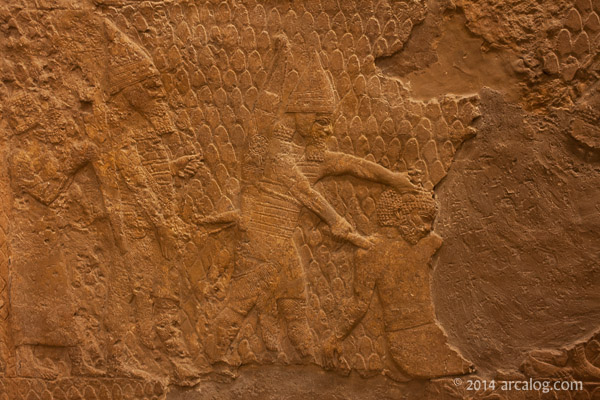
I doubt that the IS crew who put together these videos know much about Mesopotamian history (in fact, IS is downright hostile to history, smashing every artifact they can find)—but the fact is, there are Assyrian bas-reliefs showing the very same scene, acted out on pretty much the same patch of ground, almost 3000 years ago. Using the best visual-media technology available at the time—stone walls carved in bas-relief—Assyrian sculptors created in loving detail a portrait of their King, Sennerachib, using a short knife to saw off the head of a kneeling prisoner. All that’s missing is a link to Facebook and that Guantanamo jumpsuit.

The Assyrians were experts in using the available media to spread terror, or respect—the distinction wasn’t so clear in their world—for their war-making ability. They used the same skill in carving bas-reliefs to show their kings blinding prisoners, impaling rebels, and otherwise displaying their familiarity with the pain centers of the human body. But those are all exotic variants; always and everywhere, the most basic form of showing your victory over a prisoner and his tribe is decapitation.

Decapitation is the classic way of demonstrating that you have defeated your rival, once and for all. Some cultures found it more practical to take less bulky, messy trophies than the whole head, like scalps or ears. The Tibetans—who have never been anything like the sweet pacifists Hollywood Buddhists imagine them to be—named a region of their country “The Plain of Stinking Ears” because, after a victory over the Mongols, they moved among the enemy dead collecting ears, so many they filled several carts, and then laid the ears out on the ground to dry.

…The ten myriarchies of Tibetan troops defeated the many hundreds of thousands of Stod Hor troops. As proof of having killed many thousand [Mongols], they cut off only the right ears [of the dead] and put them into many donkey loads… the ears started stinking. After they had exposed them to the sun on a cool plain, the stone enclosure…is today known as ‘stone enclosure of the ears’ (Tib. Rna ba’i lhas).

When Tibetans called the place “Plain of Stinking Ears,” they weren’t complaining or deploring the alleged horrors of war. Deploring such things is a very, very recent trend. The Tibetans were bragging, not complaining. The stench of the enemies’ ears was a source of deep patriotic pleasure for them, and a kind of humor as well: “Whoa, we collected so many durn Mongol ears, they stank the place up for good!”

Then there were scalps, penises, and other body parts—all ways of confirming the death of an enemy without the trouble of bringing back an entire head.

The Mayans, always inventive where human anatomy was concerned, liked to tinker with their prisoners of war by removing their fingernails, and devoted huge, detailed frescoes to showing the unhappy, bound prisoners looking at the blood pouring from their mangled fingers.

But the trouble with all this elaborate mangling, as compared to decapitation, is that the victim could survive the operation. When you took the head, that wasn’t a possibility. So, across the centuries, around the globe, the gold standard in war propaganda has always been the removal of an enemy’s head.

There’s a practical side to lopping off the head, of course—it’s guaranteed to diminish the combat value of the victim—but its importance as war propaganda is much greater. It’s a show of power—“look what we can do!”—and a deterrent to future challengers (“You want this to happen to you? Then don’t mess with us!”), but it’s also a revenge movie for audiences who aren’t satisfied with fictional representations of revenge, and a demonstration, for the devout, that God is on the side of the decapitator, and has abandoned the decapitate-ee.

The first, simplest method of displaying this trophy was to post it—literally, as in ‘stick it on a post’ and put the post up in a prominent position, like a crossroads, the entrance to the chieftan’s hut, or the border zone between two clans’ territories, as a way of saying, “You might want to stay on your side.”

But the actual severed head, though a powerful image, had its limitations. It didn’t last, for one thing. So, as communications tech evolved—and I’m talking about the last several thousand years here, not just the last couple of decades—tribes’ ways of disseminating the image of the severed head that would reach a wider audience and last through the hot season without drawing flies.

Stone-carving, a huge breakthrough in war propaganda tech, allowed a conqueror to leave a record of his ravages that would, in theory, last forever. Yeah, maybe your Art History class chose to focus on nice images like the bust of Nefertiti or the Pieta, but those were exceptions. As soon as human cultures discovered stone-carving, slaves were put to work carving, in loving detail, all the monstrous tortures and slow, unpleasant deaths inflicted on enemy combatants and prisoners of war.

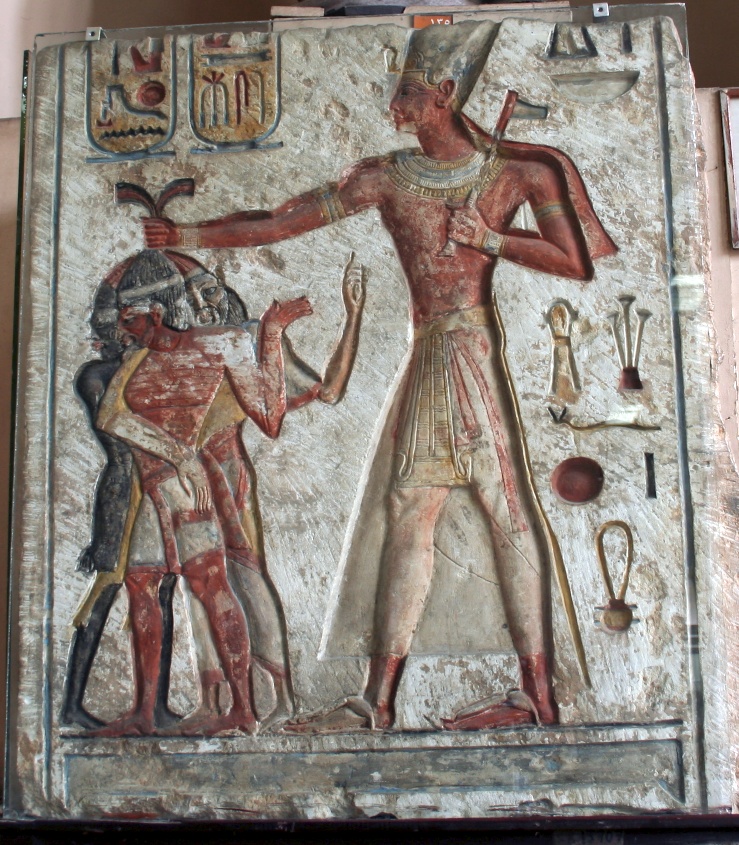
One of the most popular scenes carved in stone, painted on wall murals, etched into panels, and recorded in every known writing system, was the killing of prisoners taken in war. This mass ritual killing was a pre-television way of bringing the gore to the home front, as those unlucky enough to be taken alive would be marched back to the capital and killed, either by the ruler or at the ruler’s command, in front of huge, cheering crowds. The sheer number of depictions of these killings, by cultures all over the world, shows their importance as propaganda. Pharaoh Ramses II, shown four or five times life size, grabs prisoners representing three rival countries—a Syrian, Nubian, and Libyan—by their distinctly styled top-knots, bringing their necks up to a good angle for the ax he’s holding.

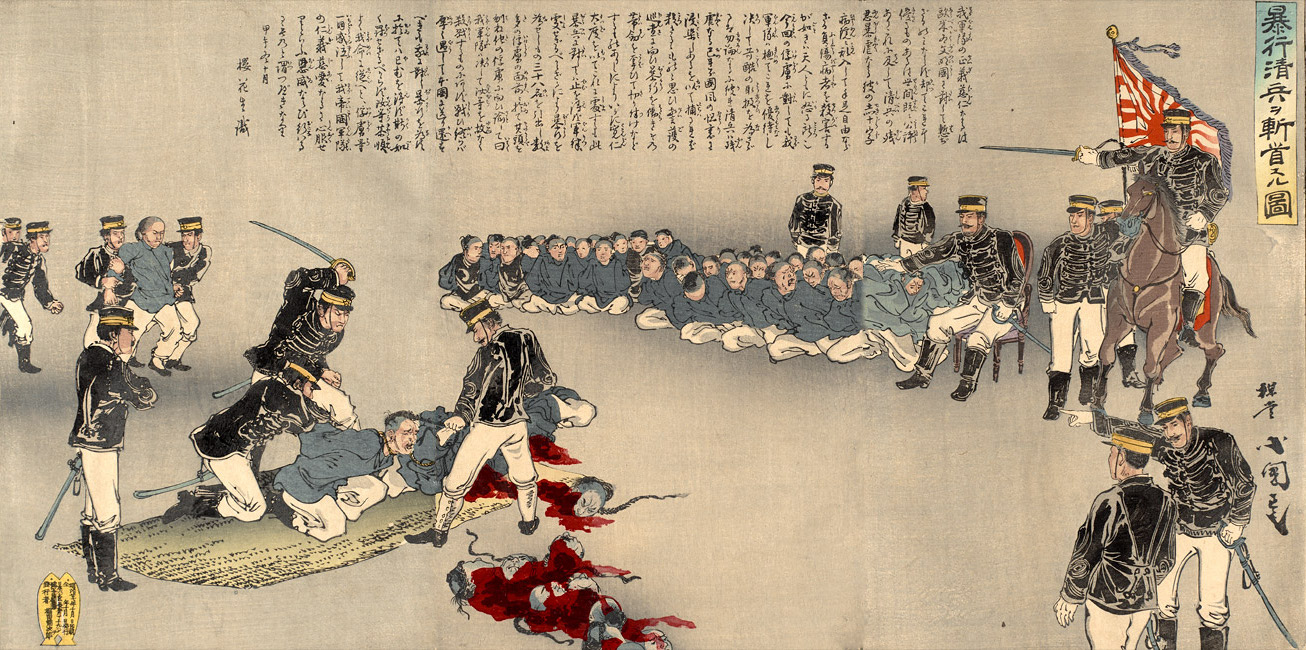
Japanese troops in China, 1894, watch happily as prisoners are brought up and beheaded, their Manchu ponytails rolling in blood.

A British Royal Marine holds up two severed heads, both Chinese-Malaysian villagers suspected of Communist sympathies, in the 1948 CI campaign.

You could actually argue that the most basic subject for human art, across all media and all eras, is the depiction of a victorious soldier holding up the severed head of an enemy. It’s a synecdoche for victory, instantly understandable without language, across cultures.

So it’s only natural that as communications media change, that same image will be disseminated by the new media. First came the heads-on-sticks, then stone-cutting—decapitations in bas-relief along the palace walls, to impress visitors with the wisdom of obedience. Then, with the printing press, it was possible to show the most important beheadings to people who might never leave their villages to go to the capital.

After the near-miss of the Guy Fawkes plot to blow up Parliament in 1605, gloating Protestants found a way to combine old and new by publishing wood-block prints of the severed heads of Fawkes and his fellow Papists, stuck up on pikes like a barber’s advertisement for new beard stylings for hipsters.

You might expect, given this long history of exploiting new tech to disseminate the beloved image of the severed head,  that when photography, then motion pictures, come into use, we would see more and more detailed images of this scene. But it didn’t quite happen that way. There was a little thing called the Enlightenment, that convinced some human cultures—not all, but disproportionately those which had the money and advanced tech to use film and photo—that we were actually nice guys, and that it was a little barbaric to devote so much artistic energy to heads without bodies.

Beheadings still took place, on even larger scale—but they were off-stage now, as the Victorians developed a sly new way to exploit gore. As the colonial empires grew more and more powerful, they no longer needed to show the folks on the home front images of enemies’ severed heads. It went without saying that British, French, and Spanish colonial armies could slaughter hundreds of “natives” without suffering serious casualties, and showing those slaughters in detail might awaken something like pity.

So Victorian war propaganda focused on the few, the very few, European casualties of the colonial wars. The “natives” who died at a rate of 100, or even 1000 to one, in some of those late colonial slaughters, were unfilmed, as the empires struggled to make their invasions seem like a grim moral duty rather than a bloody spree.

Only the latecomers, the imitators, like Japan—doing its best to act like the big boys of the colonial enterprise—were naïve enough to produce beheading images. They were slow to get the message, and it cost them dearly.

What the cutting edge empires, particularly the Anglos, had learned, was that when it comes to beheadings, it is better to receive than to give. Better to let the foolish, old-school warriors try to inspire their troops by making videos of themselves holding up a Westerner’s head. It’s the best propaganda the West could ask, in the run-up to massive air strikes.

The high point of this new strategy was the waning British Empire’s brilliant propaganda campaign against the Kikuyu in Kenya during the Mau-Mau Uprising of the 1950s. If you watched English-language media, all the beheading, mutilating, and other low-tech bloodshed was on the hands of the Kikuyu rebels. The Empire was merely trying to restrain their bloody hands. After a few scare movies and hysterical, blood-soaked radio broadcasts, “Mau-Mau” meant sheer terror.

Only when Caroline Elkins looked back at the records of the rebellion did the truth come out. The Kikuyu, driven from their lands, revolted with minimal violence, killing only 32 British colonists over the whole war. The Empire killed or maimed 90,000 Kikuyu over the same period, and still came away with the role of peacemaker, restorer of order.

That’s the way you do it. The good old days of severed-head videos just don’t work like they used to. It’s not that we don’t kill; we kill wonderfully, better than ever. But the tech has gotten too good for us. Now that everyone from Kuala Lumpur to Oslo can watch your knife cutting through the fat on a beheading victim’s neck, the power of the stylized depictions in earlier media is gone. What’s left is more like a surgery demonstration, and it’s out of tune with the happy tone of the social media—Facebook, Twitter, Pinterest—you’re sending it through.

What you want on those media is to be an object of sympathy—the decapitated, not the decapitator. Well, “you,” the individual losing his head, may not particularly feel thrilled that you’re serving as excellent passive-aggressive Western propaganda and airstrike pretext. You singular, the unlucky adrenaline freak who thought it’d be a smart idea to go to Iraq, may not be pleased at all. But in the tribal sense, you are doing much more for the propaganda goals of your people—the ones with the drones—than that fool of an Ali-G-hadi with the knife is for his.

We’re all familiar and comfortable with the second kind of propaganda, showing the devastation wrought by whatever enemy the propagandist is trying to demonize at the time. But, again, until recently, that kind of pity-based propaganda was a very minor variant on war propaganda that stressed the devastation wrought by our side. When this kind of war propaganda shows images of pain, death, and destruction, it’s a way of reassuring the home folks that we are the biggest badasses around, and they are the ones suffering devastation.

It’s funny how many people nod their heads when someone intones Sherman’s pithy phrase about war as Hell, but forget that it’s a Hell that takes a lot of energy, one that has to be sustained by nonstop, enthusiastic human effort. That ought to tell us something most people would rather forget: We have a huge, endlessly-renewed appetite for cruelty, as long as our clan/tribe/sect/nation is the one dishing it out, rather than taking it.

In fact, it’s only very recently that human cultures have learned to be coy about that fact. Before the Victorians came up with the brilliant notion of depicting conquest as a dreary but needful chore, war propaganda was an innocent, constant celebration of horrors committed by the victors, incised on the bodies of the losers.

This article appears in PandoQuarterly issue three, published later this month.

Gary Brecher

8320ad7218821615d8a87d53f23fae11
Gary Brecher is the War Nerd.
04 Sep 19:35

VICE Vs Video Games: Why I'm a Full-Grown Adult Who Still Loves 'Pokemon'

by Keza MacDonald

All illustrations by Amy Deer

I think every person who plays games harbors at least some insecurity about being seen as juvenile, even (or especially?) if the kind of game they love involves shooting people’s limbs off instead of collecting cuddly monsters. From the outside, though, I reckon Pokémon is probably as impenetrable a video game as you can get.

If you’re not into it, it makes no sense at all. For a lot of people my age, Pokémon is all wrapped up in childhood memories of playing the games or watching the cartoons or playground fistfights over trading cards. For others—and for pretty much everyone I have ever met over the age of 30—it is completely incomprehensible.

So this is me explaining why, as a 26-year-old adult woman with access to booze and people who will willingly have sex with me, I still give a shit about Pokémon

The trailer for Pokémon Omega Ruby and Pokémon Alpha Sapphire

Pokémon is a classic children’s story.

This might not seem like a very good reason for a grown woman to care about Pokémon, but aren't adults capable of enjoying stories like Matilda and Charlotte's Web because they’re about children and childhood? Did you immediately forget what it felt like to be a kid the second you were old enough to walk around without a fake ID? If you did, I doubt I'll be able to get through to you here, but the vast majority of us must remember at least some of the first 12 or so years of our lives and all the complicated feelings they involved. And Pokémon, you see, is a classic story of child empowerment, set in a world that’s largely free of adults, in which kids go out into the world and make their own way.
At the beginning of every game your mom essentially gives you a packed lunch and sends you into the streets. At 10 years old. You’re given your first Pokémon by a kindly professor who’s always named after a tree, for some reason (Professor Oak, Professor Sycamore, Professor Birch), and you have your first battle. From then on, you're in charge of your own destiny and have to figure things out yourself. You go where you want, you catch and train whichever Pokémon you like, you pick fights. Your mom calls you all of about nine times over the course of the entire game and she never really seems to mind much that you’ve been setting animals upon each other for sport and following around international terrorist organizations (Team Rocket/Team Plasma/Team Magma, and so on—the games’ antagonists, who want to use Pokémon for evil).

Pokémon is an adult-free world, which is ultimately the fantasy of every adventurous kid. It’s one where children have agency and control and power, just like the Animorphs, or the Boxcar Children, or pretty much any great work of children’s fiction. That’s why it’s so powerful for kids, and for any adult who remembers being one.

Pokémon is also just an incredibly good video game

Like quite a few of Nintendo’s own game series, Pokémon has been honed and perfected over nearly two decades of very slight iteration to become a pure, polished orb of perfectly interlocking systems. There are no rough edges left. The more recent Pokémon games are basically perfect to play, to look at, and to inhabit. They are stunningly well made.

Here’s how it works on a basic level: you have your own team of Pokémon, made up of six creatures that you select from an ever-growing collection that you catch from the wild by wandering around in tall grass. Your opponents all have their own Pokémon, too, and you fight them against each other until they faint. (They never die. Nothing ever dies in Pokémon.) Each Pokémon can be trained (or levelled up, to use more traditional video game jargon), which will give it better stats and allow it to learn different moves. And each Pokémon has a Type, which makes it weak or strong to several other Types. This is where strategy comes in—you have to have a varied team that can take on anything rival trainers might throw at it.

It’s also where self-expression comes in, because your team of Pokémon is essentially an expression of you. You could have a team made up of cute fuzzy little things, or hard-as-nails rock creatures, or a mix of flying lizards, animated washing machines, electric mice, and an ice-cream cone. All of the systems work so well that, except at high-level tournament play, there is no accepted “best” Pokémon or selection thereof. You can get through with whatever you like to use the most, because the game’s systems are so flexible.

Now multiply all that by 719 different Pokémon, and you get a sense of the kind of scale these games operate on. Pokémon is an exploration-rich game that lets you do things how you want. Ironically, a lot of more adult-oriented games don’t give you that kind of agency.

Another thing: Pokémon is actually a pretty interesting competitive sport

I’m not into Pokémon to the extent that I play competitively with other grown adults. I don’t have the time for that. But I watch competitive Pokémon play, and it’s honestly pretty good as a sport (or an eSport, if we gotta be that way). Remember those basic principles I outlined a few paragraphs ago? When you go deeper down the rabbit-hole, shit gets real. Pro Pokémon players are into things like breeding Pokémon traits and personalities, Mega-Evolutions, hold items, and status boosters. They use terms like choice-locking, edgequake, and TyraniBoah. These people are serious.

But the great thing about competitive Pokémon is that you don’t have to know all that much beyond the basics of the game to enjoy spectating, and you learn the higher-level stuff pretty quickly. You see the same kinds of Pokémon and moves a lot in championship play, but every now and then someone comes along and shakes things up. This year, the Pokémon Masters (adults) division champion won the final match with a ridiculous little squirrel called Pachirisu. Nobody expected that. This tiny squirrel was sitting there among all these gigantic, intimidating-looking monsters, and he took them all down. It was great to watch.

The main thing that keeps me interested in Pokémon, though, is that it was so intensely special to me as a kid. However much I might try to explain how excellent it is as a game and as a piece of child-oriented fiction—and it is truly excellent at both of those things—I’m aware that if I hadn’t played and loved Pokémon as a kid I probably wouldn’t give a shit. I’ll probably play it with my own kids, if I ever have any and we haven’t all blown ourselves up by then.

Maybe they’d even get good enough to enter the Pokémon World Championships, which is a real thing that takes place every year. And if that happened, I think I’d faint with pride.

Follow Keza and Amy on Twitter

04 Sep 19:32

The Little Rascals, Then and Now

by Miss Cellania

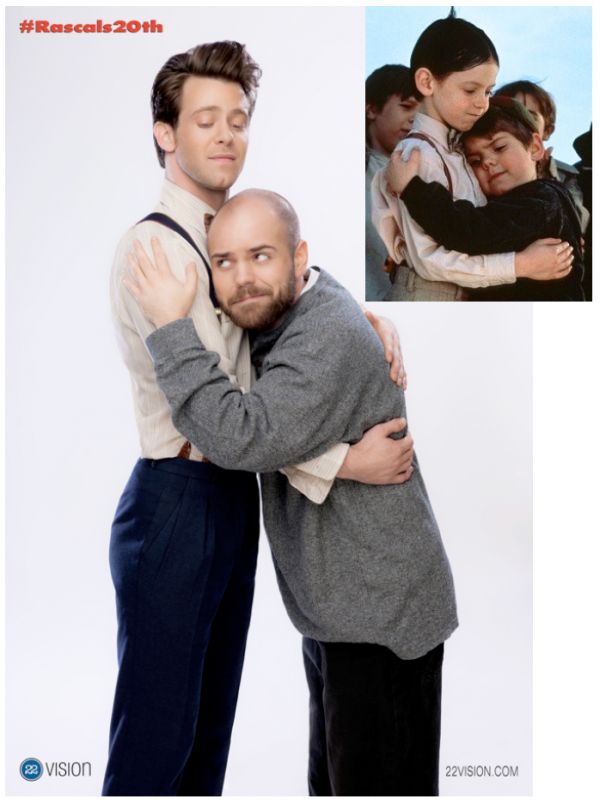
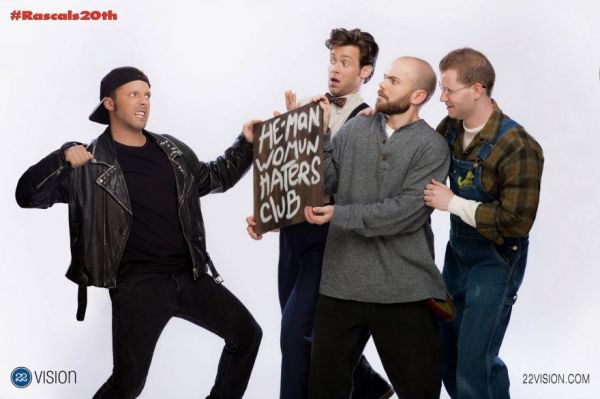
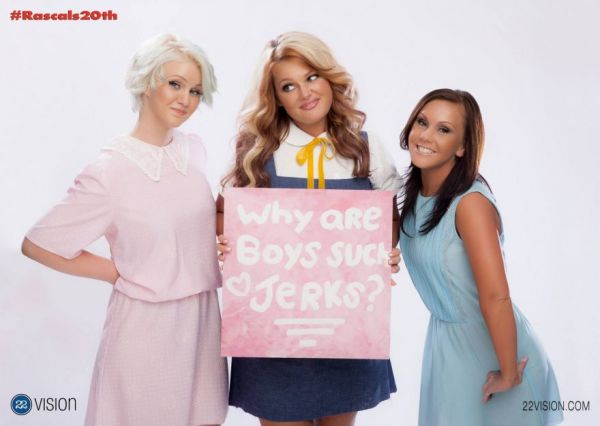
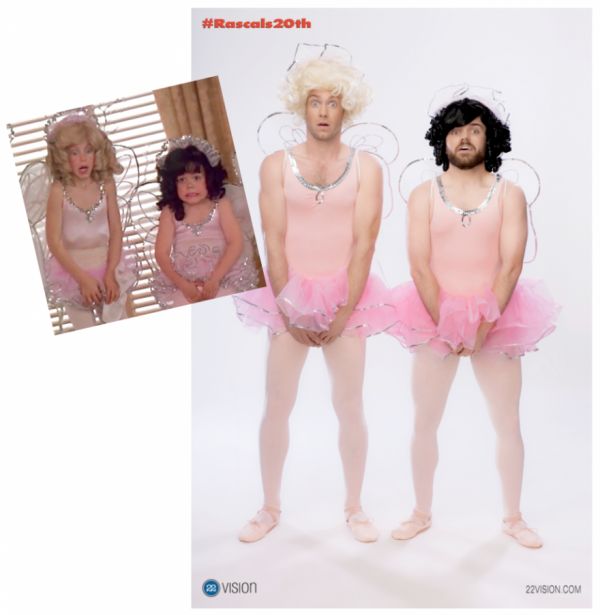
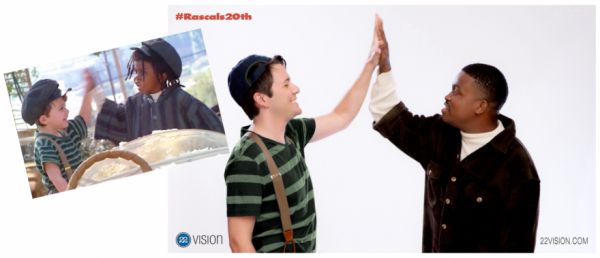
In 1994, children were treated to a film called The Little Rascals. It was an updated, full-length color feature that used the plots of several of the original Our Gang shorts from the 1920s, ‘30s and ‘40s. Twenty years later, the company 22Vision reunited the cast of child actors to recreate the poster and some of the scenes from the movie. As you can see, they aren’t much different aside from being grown up. Continue reading for more.


See more pictures  at 22Vision. -via Travis Tedford at reddit

Bonus!


(YouTube link)

The Our Gang shorts were produced from 1923 to 1944, which meant that as cast members aged, they were replaced by younger child actors. In 1936, Hal Roach Studios staged a reunion of the earlier cast members, now young adults, and the new child actors.

04 Sep 19:26

Dad holds naked newborn for photoshoot, turns out to be a terrible idea

by Joe Veix
Dad holds naked newborn for photoshoot, turns out to be a terrible idea

Al Ferguson hired a photographer to get an elegant, black-and-white photo of him holding his naked newborn baby. Here’s one of the first photos, before everything went terribly, horribly wrong. pooping baby 1 390x585 Dad holds naked newborn for photoshoot, turns out to be a terrible idea But the baby looks sort of troubled by something. Like he’s backed up… pooping baby 2 390x585 Dad holds naked newborn for photoshoot, turns out to be a terrible idea That’s better. Thankfully the photographer captured the shot at the perfect time, like a true professional. “As I felt his stomach tense,” Ferguson said to Today, “In the back of your head you know he’s about to go poo, and then before you know it, he’s doing it.”   h/t Happy Place

04 Sep 19:22

Science Says Michael Bay Movies Cause People to Eat More Junk Food - The term "popcorn movie" is now scientifically validated.

by Dan Van Winkle

awesome michael bay

We’re dangerously close to unlocking the connection between explosions and junk food consumption! Junksplosion! Wait, I don’t like how that sounds… A new study into how the things you watch affect the things you eat has revealed that Michael Bay-style explosio-ganzas cause you to eat more junk food than other types of entertainment.

The study that brought these revelations was published just days ago in the Journal of the American Medical Association: Internal Medicine. Yes, an intense scientific inquiry was launched into whether or not Michael Bay movies will make us fat.

baymakesyoufat

Researchers from Cornell and Vanderbilt universities gathered groups of up to 20 undergraduate students and exposed them to 20 minutes of TV programming of 3 different varieties: Michael Bay’s The Island, a soundless version of the same clip from The Island, and a clip from Charlie Rose. I’d be interested to see what the outcome was with longer periods of time, but I understand that it must have been hard to ethically justify subjecting young minds to more than 20 minutes of The Island.

Presented with four different, common foods, the viewers wound up eating nearly twice as much food when watching The Island complete with its explosion sound effects (98% more food than those watching Charlie Rose). In the soundless version, without all that bass, the increase in food consumed was only 36% compared to Charlie Rose. In both of the Bay tests, participants also tended to consume more caloric food.

Cornell’s Aner Tal, coauthor of the study, suggested the reason to CBS News: “More stimulating programs that are fast paced, include many camera cuts, really draw you in and distract you from what you are eating. They can make you eat more because you’re paying less attention to how much you are putting in your mouth.”

There you have it: Science says Michael Bay movies basically turn you into a mindless zombie. Although, I have an alternate hypothesis that it’s just people eating their feelings over what his movies do to their childhoods.

(via CBS News)

Previously in weird science

Are you following The Mary Sue on Twitter, Facebook, Tumblr, Pinterest, & Google +?

04 Sep 19:21

Guinness World Records Makes It Official: Game of Thrones Is The Most Pirated TV Program Ever - YARRRR OF THRONES

by Sam Maggs

Saan

Game of Thrones has been the most pirated show on television since 2012 – and it’s about to be awarded (?) the honor of being The Guinness Book of World Records’ “Most Pirated TV Program” ever. Torrents are coming.

The Guinness World Record 2015 Edition is being released on September 10th, and our favorite fantasy-swords-and-dragons show will grace its pages. We’ve told you many times before that people love to pirate Game of Thrones – the season four finale smashed all of the show’s previous torrent records, with 254,114 people sharing the episode the same night it aired.

According to the book, “Game of Thrones retains the No. 1 spot in Torrent Freak’s top 10 list of most pirated TV shows, with 5,900,000 downloads per episode in 2013. HBO and Warner Brothers executives controversially stated, that receiving the title of most-pirated was better than an Emmy creating a much-needed cultural buzz.”

Now these are people who understand the internet.

Previously in Game of Thrones

Are you following The Mary Sue on Twitter, Facebook, Tumblr, Pinterest, & Google +?

04 Sep 17:50

Nodor? Certain Characters Might Be Absent From Game of Thrones Season Five - Is there a way to rave sadly?

by Sam Maggs

Sador

Hodor actor Kristian Nairn might have let the Bran out of the backpack with this one. Potential spoiler alert for Game of Thrones season five, so read on at your own risk. Hodor.

In case you didn’t already know, Nairn – in addition to being our favorite duosyllabic Westerosi, is also a rad DJ. In an interview with Monique Schafter of the Australian Broadcasting Corporation about his current world tour for “Rave of Thrones” (which, by the way, is coming to New York City during New York Comic Con), Nairn let the following information slip:

We’re not actually in Season Five, by the way. We have a season off. We have a year’s hiatus. [...] Solely because, I imagine, our storyline is up to the end of the books. … So I get a year off now to do Rave of Thrones and gallivant all over the world.

Though it’s not entirely clear in the interview who Nairn is referring to by saying “we,” it’s not so far out there to assume he means Hodor, Meera, and Bran, who have been traipsing around the North for the last while. No Hodoring for a whole season?

Here’s the original video, if you want to check it out and listen to some Australians say “Hodor” a lot:

Though Book 4 of A Song of Ice and Fire only includes half of the regular main characters from the series (the rest of them are in book 5), the TV show is combining books 4 and 5, which take place in the same chronological time frame and were originally meant to be published as one book anyways. On the HBO series, we’ve already hit the end of Bran’s storyline as it exists in the books, so if they did proceed they’d be jumping ahead in George R.R. Martin’s world. Tragically, though, it appears this doesn’t make a difference for Hodor and the Northern Tree Gang.

(via WinterIsComing.net)

Previously in Game of Thrones

Are you following The Mary Sue on Twitter, Facebook, Tumblr, Pinterest, & Google +?

03 Sep 19:17

Sarah Silverman, Annaleigh Ashford – Masters of Sex s02e06 (2014) HD 1080p

by admin
Snob

Ai Sarah! :3


Video: mkv, 1920x1080
Duration: 02:47
Size: 120 mb

Download from Uploaded
Download from Rapidgator

03 Sep 19:17

Goodnight Sweet Prince

by Arcturus