Chubby Rolling Raccoon Is Boss [video]
Kyle Thomas released his great self-titled King Tuff album back in 2012, and in 2013, he reissued his excellent debut Was Dead.
This year, he’s at it again. Black Moon Spell is out September 22 in Europe and September 23 in North America via Sub Pop.
The album was produced by Bobby Harlow and features King Tuff’s bandmates Magic Jake and Old Gary. Ty Segall also drummed on the album’s title track.
Thomas’ press release for the record promises the Black Moon Spell will conjure “euphoria, demented visions, wet dreams”.
320 kbps | 100 MB UL | MC ** FLAC
01. Black Moon Spell
02. Sick Mind
03. Rainbow’s Run
04. Headbanger
05. Beautiful Thing
06. I Love You Ugly
07. Magic Mirror
08. Madness
09. Demon From Hell
10. Black Holes in Stereo
11. Radiation
12. Eyes of the Muse
13. Staircase of Diamonds
14. Eddie’s Song

You moan, whine, and lament about how nice guys finish last as if it’s a good thing. You’re crying for attention. You want me to reply, “Hey, being a nice person is a good thing! The right one will come along!” to give you hope. But both you and I know you’re just trying to validate your insecurities as somebody who really wants a girl but has no clue about how to get one. You’re NOT going to get a girl if you’re constantly victimizing yourself as the nice guy who accepts the idea that you have to finish last. You want a girl? Aim for first place.
To elaborate the first point, being nice doesn’t mean you have to be weak. Stop saying “yes” when deep down the answer is “no.” Stop getting out of your way to do favors for people who won’t appreciate you. Stop waiting two hours for a girl who is perpetually late. Stop backing down and start standing up for yourself. A girl will never fall for somebody who is only nice. She needs to respect you, too.
I have so many friends who after taking an interest in a girl are like, “Oh since I like her, I won’t look at other girls. I have to show her I’m someone who’s not playful.” The worst part? They barely know her at all. Expand your choices already. It’s not a matter of loyalty. It’s about opening up and making friends. You’re only limiting yourself if you think you need to focus fully on a single girl whom you barely know. You’re missing out on other potential relationships when you think this way.
Nice guys tend to assume the girls they like are perfect angels with zero flaws, which is one reason why they think they have to be loyal at the get-go. She’s not an angel. She’s not perfect. She has flaws. For all we know, she’s seeing other guys at the same time and treating you like some reserve while she tells her boyfriend, “Oh, him? Nah. He buys nice things for me, though.” The pedestal you put her on would crumble if you find out something gross about her.
“Should I add her on Facebook? What if she thinks I’m a stalker?”
“Should I follow her on Instagram? What if she doesn’t follow me back?”
“Should I like her picture? Is that too desperate?”
For fuck’s sake, these little minute details don’t matter! You must be dreaming if little things such as these can make or break your chances of getting her. If you’re so afraid of little things like this, how are you going to be ready for the challenges a real relationship brings?
The douchebags, assholes, or players you’ve condemned? They’re getting girls. You’re not. You can learn something from them and you’ll be surprised at the values and principles they uphold to be the men they are today. For one thing, know that most “bad boys” you see today were once like you. Then their hearts got broken enough times to know that they had to make a change.
The reason why you nice guys are so afraid of things is that you don’t know what to expect. Then you come up with excuses to justify your fear such as, “Oh, I gotta be nice. I can’t treat her like an object.” Get some sex and have it already. Demystify it. Start believing that sex is not that big a deal. The more something is a mystery to you, the more power it has over you. Time to get some knowledge.
So stop overthinking it. She’s not your potential girlfriend. She’s not someone you’re going to marry. And you shouldn’t have to worry if she’s going to care that you play too much World of Warcraft. You’re only friends on the first date. So ease up, be confident, and get to know each other as equals. 


Did you know that women’s ears become more symmetrical when they ovulate? It’s true!

A couple of important things happen during ovulation:
• The uterine lining thickens to prepare it for the egg cell, which will attach to the uterine walls.
• A ripe egg is released from the ovary and travels down the Fallopian tubes toward the uterus in hopes that some healthy little sperm cells will be there waiting for it.
If the egg is not fertilized, it dissolves and the thickened uterine lining is shed via the process of menstruation.

A baby girl is born with 1 to 2 million immature eggs in her ovaries (called oocytes). By adolescence, half those eggs are absorbed by her ovaries. About 300 to 500 of those oocytes become mature eggs in her lifetime.
gifbay.com / Via infertile.com

Birth control pills work by preventing ovulation. The hormones contained in birth control pills — estrogen and progestin — keep eggs from leaving the ovary. If no egg is released, sperm cells have nothing to fertilize.
Emergency oral contraception, like Plan B, delays or disrupts ovulation, preventing the release of an egg to any sperm that could be waiting in a woman's body. Emergency contraception does not terminate an existing pregnancy.

Sperm can live inside a woman's body for three to five days, looking for an egg to fertilize.

While you may take for granted the basic pack of fonts that came with your word processing software, someone had to invent each and every one of those fonts. And while some common fonts were invented after the advent of the computer, others are centuries old.


La revista digital Don ha dedicado su último número íntegramente al cómic, una estrategia que pretenden repetir anualmente. El especial, que como de costumbre exprime su cualidad de interactivo, cuenta con una portada animada de Jorge Parras y con historietas de Alexis Nolla, Álvaro Ortiz, Cristobal Fortúnez, David Sánchez, Gaspar Naranjo, Javi Rodríguez, José Domingo, Juan Díaz-Faes, Juarma, Marcos Martín, Miguel Noguera, Nestor F., Paco Alcázar, Pedro Vera, Peter Bagge, Raúl Cimas y Un tipo feliz. Además, completan el número especial reportaje dedicados a Bryan Talbot, Judas Arrieta, TMEO y Mauro Entrialgo, así como una sección especial sobre autoras españolas donde participan Ana Galvañ, Ana Oncina, Clara Soriano, María Herreros, Natacha Bustos, Miriam Persand, Mireia Pérez y Mamen Moreu.
Don puede descargarse gratuitamente para tablets y teléfonos móviles en las siguientes direcciones:
App Store http://goo.gl/KKNhqu
Google Play http://goo.gl/0tX9tV
Aquí debajo, un vídeo que muestra la portada de Jorje Parras en movimiento.

PTAF in the "Boss Ass Bitch" music video
It’s the original insult. It needs no introduction, no following; it works as a standalone slur for just about any scenario. Whether someone jostles you on the subway, beats you at poker, or breaks your heart, all you need is one word: bitch.
Or at least that’s how it used to be. Calling someone a bitch used to be pretty straightforward, but today—after many adaptations, reinventions, and attempts to reclaim the word—it's not totally clear what "bitch" really means anymore. There are bad bitches and basic bitches; rich bitches and ratchet bitches; even perfect bitches, as Kanye West once famously described Kim Kardashian. You can bitch-slap someone, wear a resting bitch face, or just tag the word onto the end of a sentence, as in, “I’m in Miami, bitch!” When the word “bitching” is used as a verb, it means to complain; when it’s used as an adjective, it means to be cool. To be “someone’s bitch” can mean either to be owned by that person or to be his or her BFF—unless you're someone's "prison bitch," which always means the former.
The word has been so splintered that it’s unclear where “bitch” stands today, and how—if at all—we should use it. Can feminists call themselves bitches? Can men call other women bitches? Do you think I'm a bitch? We traced the evolution of the word, and the women who took on its meaning, to try to figure out where “bitch” stands today.
The Genesis: Lady Dogs
Everyone knows that once upon a time, a bitch was simply a lady dog. Trace its lineage in the Oxford English Dictionary, however, and you’ll find that it's been used as a derogatory term for women as early as the 15th century. Back then, it was considered demoralizing mostly because it suggested that the woman in question was promiscuous (an allusion to the fact that female dogs have so many puppies), according to English language historian Geoffrey Hughes. This is, of course, why "son of a bitch" had such a sting: It meant your mother was a whore. That said, “bitch” was far from the most popular insult in Ye Olde English. Dudes like Chaucer preferred the use of words like “whore” or “sluttish."
“Bitch” didn’t really catch on as the universal female insult until the 1920s, when all of a sudden its use ballooned. Between 1915 and 1930, the use of "bitch" in newspapers and literature more than doubled. What happened? Women's suffrage.
That’s right. That Susan B. Anthony bitch got the right to vote, and men were not happy about it. Soon after, "bitch" became an all-purpose insult for annoying women. Ernest Hemingway seemed to fall in love with the word, calling many of his female characters "bitch goddesses" and, after a falling-out with Gertrude Stein, gifting her a signed copy of Death in the Afternoon with the inscription "a bitch is a bitch is a bitch." He had a way with words, that Hemingway.
The slur had another surge of popularity in the 1970s, particularly in music. Miles Davis named his 1970 jazz album Bitches Brew (the title, purportedly, referred to the talent of the artists on the album); the Rolling Stones recorded “Bitch” in 1971; Elton John came out with “The Bitch is Back” in 1974. Then, at the crowning of Second Wave feminism, Jo Freeman wrote The Bitch Manifesto, which declared: “We must be strong, we must be militant, we must be dangerous. We must realize that Bitch is Beautiful and that we have nothing to lose.”
"Bitch," it seemed, was turning its face toward feminism.
The Rise: Da Baddest Bitch
If “bitch” was to become a flagship for feminism, it first needed women to wear its badge. That didn’t happen right away, since “bitch” was still freighted with man-hating stigma—in some ways, increasingly so. Back in the day, "bitch" had only referred to a woman who was promiscuous; later, it evolved into an insult for a woman who had done you wrong. But by the 80s, "bitch" turned violent and misogynist, harboring a much darker tone than before.
Throughout the 80s, hip-hop lay claim to the word and promoted much of the violence associated with it. Slick Rick was among the first rappers to employ the word in the 1985 song “La Di Da Di,” where the “bitch” in the song is a jealous and violent woman. A year later, Ice-T rapped about beating up a “bitch” who talked back to him, in “Six in Da Morning.” The NWA song “Bitch Iz a Bitch” (1989) defined a bitch as a woman who was manipulative, conniving, and moneyhungry; Dr. Dre plainly described them as "hoes and tricks" in "Bitches Ain't Shit" (1992). The word was fraught with violent connotations, and the message was clear: Bitches needed to watch their step, because they had it coming for them.
Given all the bad PR, women weren’t really into self-labeling as "bitches" just yet. Queen Latifah flat-out rejected the term in her 1993 song “U.N.I.T.Y.,” which opens with the question: “Who you callin’ a bitch?” Meredith Brooks gave the word a softer interpretation in the song "Bitch" (1997), but still basically defined "bitchiness" as a symptom of PMS.
But then came Trina. Her 1999 not-quite-hit single, “Da Baddest Bitch,” recharacterized the term as a symbol of empowerment. A “bad bitch,” by her definition, was smart and powerful and—perhaps most important—in charge of her sexuality. With her hard beats and don't-give-a-fuck attitude, she took the word back within the very genre that had corrupted it in the first place.
Although she never used the word “feminism,” Trina interlaced many of the aims of the movement with her reinvented concept of the “bad bitch." Her lyrics were ahead of their time, with declarations like "it pays to be the boss" and "stay ahead of the game / save up and buy a condo." Best of all, Trina loved sex and she loved to rap about it. She would eventually release a song called “Nasty Bitch,” which described her sexual prowess in graphic detail; in "Da Baddest Bitch," she plainly stated, "If I had the chance to be a virgin again / I'd be fucking by the time I'm ten." In some ways, we could consider Trina a purist in how she defined "bitch," since she preserved the original meaning of the word: a woman who was excessively sexual. Except for that Trina outwardly embraced her sexuality, and in doing so, she turned the definition of "bitch" on its head.

The 90s were a time of critical rebranding for “bitch.” Women who had previously shied away from the word started to embrace it. Take Madonna, who had stated in an interview in 1991: “I am ambitious and I’ve worked hard to get where I am. I’ve made good by behaving bad. But I’m no bitch.” Just four years later, in another interview, Madonna totally reversed the sentiment: “I’m tough, ambitious, and I know exactly what I want. If that makes me a bitch, OK.” (Nowadays, if you ask Siri to look up “unapologetic bitch,” she takes you straight to Madonna’s Wikipedia page.)
If "bitch" was ever to be reclaimed, it was during this era of "girl power." In 1996, feminists Lisa Jervis and Andi Zeisler founded Bitch magazine and, when asked how they chose the title, Zeisler explained: “It would be great to reclaim the word ‘bitch’ for strong, outspoken women, much the same way that ‘queer’ has been reclaimed by the gay community.”
Elizabeth Wurtzel echoed the sentiment in her 1998 book Bitch: In Praise of Difficult Women, where she also aligned bitchiness with feminist goals: “I intend to do what I want to do and be whom I want to be and answer only to myself: that is, quite simply, the bitch philosophy.”
The Mainstreamification: It’s Britney, Bitch
“Bitch” was everywhere by the turn of the millennium. The use of the word on television shows tripled between 1998 and 2007, which had much to do with the word's feminist facelift in the previous decade. But with mainstreamification comes misunderstanding.
A brief sampling of music in the early 2000s reveals rampant disagreement over the word’s definition: Jay-Z used the word as a stand-in for “woman” in “99 Problems” (2003). Rock band Buckcherry released “Crazy Bitch” (2006)—their most popular song to-date—about a woman who was bananas in bed. Busta Rhymes used the word affectionately in “I Love My Bitch” (2006). Kelis, of “Milkshake” fame, enthusiastically declared “I’m bossy! I’m the bitch y’all love to hate” the same year, in “Bossy.” There wasn’t much agreement on what a bitch was, but as Too $hort put it in 2006, “One thing’s for sure / You will get called a bitch / Bitch!”
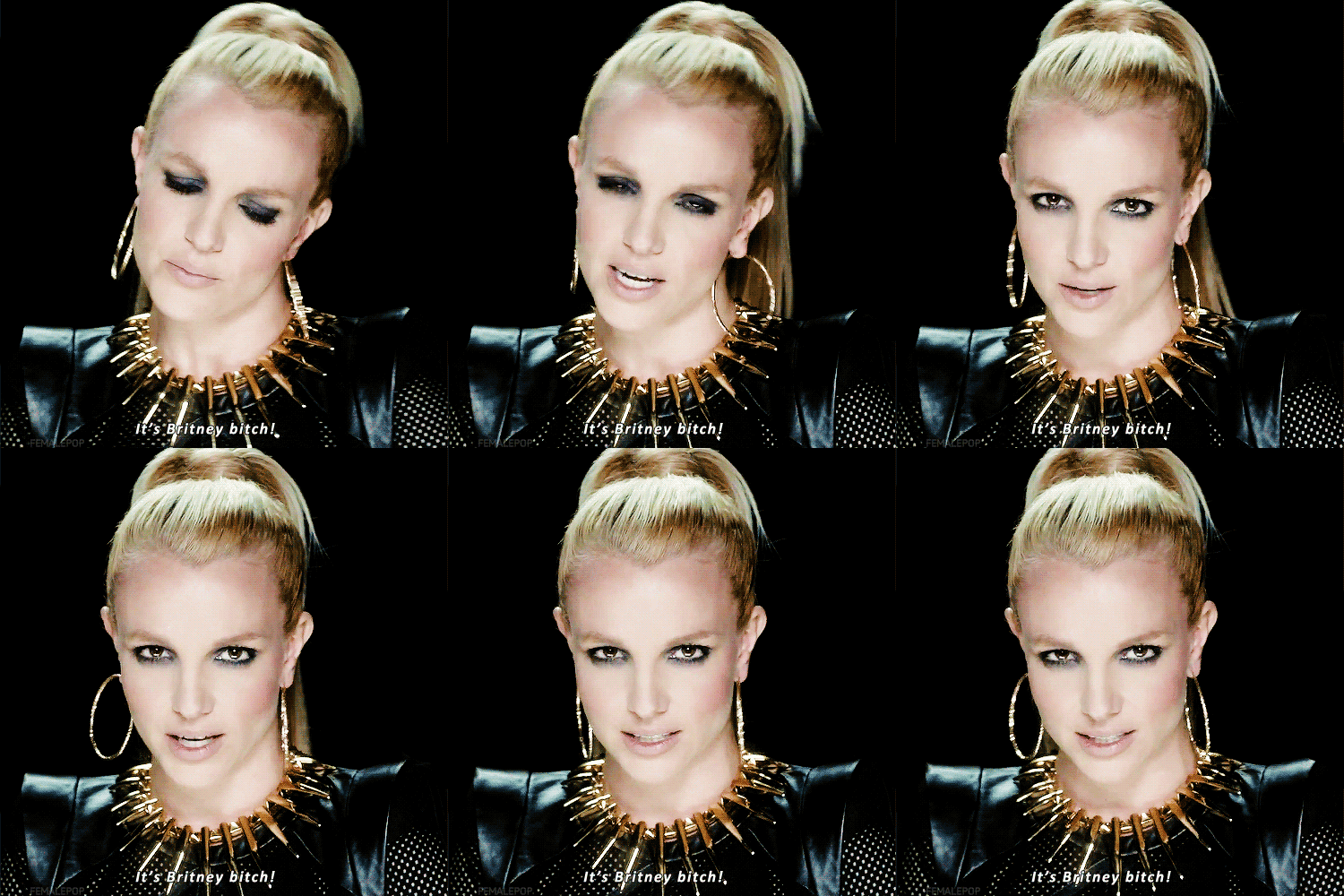
Even Britney Spears, whose public image had thus far been sweet, demure, and innocent (but not that innocent) started to announce herself in 2007 by saying, “It’s Britney, bitch!” The word had gone totally mainstream.
All women—and sometimes, men—were eligible for the "bitch" label, in some form or other. It became an all-purpose salutation (as in, “what’s up my bitchezzzzzz?”). Gay men and Valley girls started affectionately calling their friends “betches.” People invented new iterations, like "beyotch" and "biznatch." It became a meme. Lady Gaga called herself a "free bitch, baby!" David Guetta’s summer club-banger in 2009 was “Sexy Bitch,” which didn’t seem to have any lyrical point whatsoever, other than to suggest that “every girl wanna be her” because she, the subject of the song, was a “sexy bitch.”
The word "bitch" was like a handful of Silly Putty—you could make it into anything you wanted. To be sure, it was still used to call out mean women (as Mean Girls taught us in 2004, if you're a "mean girl" then you're also a "bitch") and it was still used to promote the feminist cause. But sometimes, and increasingly so, the word didn't really mean anything at all.
The Fragmentation: Bad Bitches Only
Since it had developed so many incongruous meanings, “bitch” briefly became controversial again in the late 2000s. Women had tried to reclaim it, but was it really OK to call a woman a bitch? Didn't the term still promote sexism, misogyny, and the patriarchy? Was “bitch” a form of linguistic violence?
There were certainly lots of people who thought so. In 2007, the New York City Council attempted to ban its usage, citing its “deeply sexist and hateful” connotation. A yet, a few years later in 2012, the Federal Communications Commission took the opposite stance and ruled to unbleep the word on television networks, suggesting that it was harmless.
Such contradiction! Such confusion! What did it all mean? Nobody knew. After Jay Z and Kanye West recorded the song “That’s My Bitch” on their 2011 album Watch the Throne, both artists seemed to have existentialist struggles with the word, bringing the "bitch" controversy back into the spotlight. There were rumors that Jay Z would swear off the word when Blue Ivy was born in 2012 (but then he was like, “Siiiiike! I’m a rapper!” and continued to use the word egregiously). In 2013, Kanye published a string of tweets debating whether or not using the word “bitch” was OK. (His final verdict? It's totally OK to call women "bitches"—and Kim is the perfect bitch.)

What remained problematic, however, was the way “bitch” related to power dynamics. When women have too much power, they’re called bitches as a way to knock them down a peg. But when men aren’t asserting enough power, they’re called bitches too. In the E-40 and Too $hort song "Bitch" (2010), we hear both versions of the word: E-40 tells men "don't act like a bitch" and criticizes men who have "feminine tendencies like a bitch," but also calls a woman who has sex with multiple men a "bitch."
It was clear that the word could sometimes refer to a woman laying claim to their own power, as in the 2012 PTAF song “Boss Ass Bitch,” which proudly declares “I’M A BOSS ASS BITCH, BITCH, BITCH, BITCH, BITCH, BITCH, BITCH.” (A year later, Nicki Minaj remixed it, because that beat is so, so good.) This was also seen in the Britney Spears song “Work Bitch,” which has motivated women everywhere to push through one more minute on the StairMaster. But it could also be an assertion of power over others—either from one woman to other women, as in Beyoncé’s song “Bow Down (Bitches);" a man to a man, as in Ludacris' "Move, Bitch;" or, most commonly, a man to a woman, as in Tyler the Creator's "Bitch Suck Dick," which suggests women should use their mouths for giving blowjobs, not talking.
According to Dr. Christopher J. Schneider, a sociologist at Wilfrid Laurier University in Canada who has studied how "bitch" is used in rap music, the word is so damn popular—both in a negative and a positive light—because of its relationship to the patriarchy. "The dominant role and conditions of patriarchy help enable the widespread use and acceptance of the term—both as misogyny, and also as a form of empowerment used to counter patriarchy."
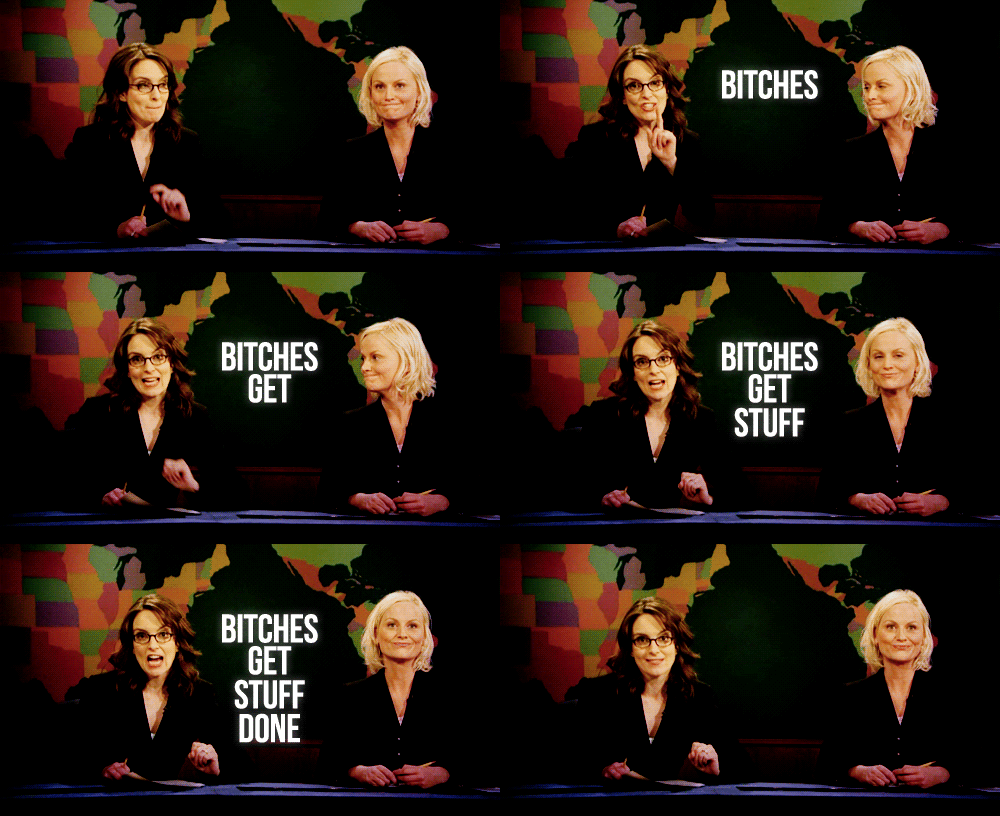
Nowhere is this clearer than in politics, where pretty much any woman in power is called a bitch. If Hillary Clinton and Angela Merkel had a nickel for every time they were called "bitches," they'd have enough money to pay off the national debt in both of their countries. There was a real article about Janet Yellen earlier this year entitled “Janet Yellen: The Bitch of the Fed.” And poor Katie Couric—what the hell did she ever do to deserve the bitch title? But if you can’t change the word, change the conversation. Ruth Bader Ginsberg was apparently called a “bitch” all throughout law school, to which she responded: “Better bitch than mouse.” Call them bitches if you want, but bitches get stuff done.
The Present: Bitch Bad, Woman Good
These days, "bitch" has been used to death—to the point where all of its meaning has pretty much rubbed off, and it's honestly become a little boring. Oh, you're calling me a bitch? Yawn.
That said, most scholars, linguists, and women alike would agree that the word hasn't really been rehabilitated to mean something wholly positive. "I recognize that some women feel empowered by the word, but that doesn't mean they are empowered by it," said Dr. Sherryl Kleinman, a sociologist who wrote about the social harms of the word in 2009. Sheryl Sandberg underscored this idea in a recent op-ed for Cosmopolitan and started a campaign to Ban Bossy, which is basically like the PG-version of "bitch." In April, Duke University launched the "You Don't Say" campaign, where students argued against using the word because it "insists femininity is inherently negative."
As Lupe Fiasco so eloquently put it: “Bitch bad, woman good, lady better.”
But perhaps the problem isn’t really so much what we call women—it’s how we treat women. "Bitch" has come a long way, sure, but perhaps the reason it hasn't been truly reclaimed is because conditions for women haven't really changed, either. If there ever comes a time when women aren't made to feel ashamed of their sexuality, when they don't have to fight for fair wages or the opportunity to speak in a meeting, when they don't constantly fear the possibility of violence or sexual assault, and when women feel that they have some say in the society that we live in, then "bitch" will shed that last layer of stigma for good. Words only make sense in context. When we see the day when the context is changed, then the core meaning of the word will change, too.
But has that day arrived yet? Bitch, please.
Follow Arielle Pardes on Twitter.
Do you ever feel like you can't eat, drink, or enjoy anything because you're constantly worried about how it will impact your health? This video, inspired by Edward Gorey's Gashlycrumb Tinies, assures you with gleeful hyperbole that everything will kill you in the end.


Smell amazing.
Not even just cologne. Did you know beard oil is a thing? It smells unbelievably good.
I find men who are very masculine but briefly do something very feminine with their mouth, hands, or hips make my panties go full Niagara.
Laugh hard.
I’m always put off by women that feel they need to contain themselves. Your sense of humor is a huge part of who you are; don’t hide it.
When a guy rolls up his sleeves…something about the forearm.
Show insight, intelligence or wit.
Wear glasses and be a smart-ass jokester. Bonus points for doing both at the same time.
Smile and be polite to you even if they don’t know you.
We have this super-hot redhead at my work. But what makes her so attractive is that she is very nice to everyone regardless of what they look like or if they are above or below her as far as status.
That and she is funny…suuuuuper sexy when a girl is funny.
Voice is huge. It can be an instant turn on or turnoff.
Smile. Nothing is more attractive on a woman than a smile.
Little random acts of kindness that they don’t expect other people to notice.
Like helping others pick things up, smiling, or making silly faces at little kids as they pass, offering little words of encouragement to others. There’s so many.
It gets me every time.
Be decisive.
My ex would never take charge or make a decision then afterwards would bitch, my current girlfriend often doesn’t even ask for my input before making a decision and I think it’s incredibly sexy.
To clarify, she usually only decides simple things without my input. Like where to eat, what movie to see, what to do on date nights, things like that.
Black rim glasses. I know girls that wear them and they lose attractiveness as soon as they take them off.
Having hair partially covering one of their eyes.
Wink and smile when you’re busy and they walk past.
When a girl pulls the hair out from her eyes and tucks it behind her ear.
Wearing a dark suit and tie.
Protip: Suits do for straight women what skimpy lingerie does for straight men.
When a girl looks back to take off her shoes on the beach.
If she’s blonde and runs her hands through her hair in a slightly exasperated, I’m-tired-but-want-to-hide-it sort of way, I’m done. Like, in love 100% for like an hour. Probably means I’ll be too intimidated to talk to her, but yeah.
Raise their eyebrows a little, like surprised/bemused. IDK. It makes my chest crumple a little.
Throw their head back as they’re laughing really hard. When girls do it.
When a Spanish girl calls me papi.
My pants will get ripped.
Fuzzy, short, and blonde arm hair. I don’t know why, [but] when a girl has a little arm hair it kind of turns me on.
Being unashamed to be vulnerable. That is hot.
Guys who climb. Shirtless.
The classic “once over” with a lip-bite at the end.
Example: http://i.imgur.com/usKGU8J.gif


Update: Wizards are still useless.

Via imgur.com

rnedia.tumblr.com / Via imgur.com

hermionespriorities.tumblr.com / Via imgur.com

benedictscumberbatch.tumblr.com / Via imgur.com

La reseña de Green Manor corre a cargo de Javier López Menacho, firma invitada.

El Green Manor’s Club es un selecto club formado por intelectuales londinenses que se reúnen con el fin de resolver los casos de asesinatos más rebuscados y macabros de la ciudad. Entre ellos se establece una competición por resolver los casos que se presentan en estas 16 historias criminales que reúne Dibbuks en un tomo hecho con mimo, con aspecto de libro antiguo encontrado la biblioteca de un anticuario. Analicemos sus claves de lectura.
Los más inteligentes
La supuesta superioridad intelectual de los miembros del club sobre el resto de la sociedad es el motor de la acción. Sin esa necesidad de autoafianzarse como los más inteligentes del lugar el cómic no existiría. Esto lleva, no sólo a estrujarse el cerebro a sus componentes, sino a cruzar barreras morales o saltarse su propia humanidad si con ello demuestran su condición superior. Se establece un cruel juego de rol entre los que narran el asesinato y los que tienen que solventar el misterio. Una carrera narrativa en la que unos tratan de llegar al final, y los otros ansían solucionar el caso antes de tiempo.
La irresistible belleza de la muerte
O la estética por encima de la ética. Como miembros de un club de intelectuales, la belleza está presente siempre que reluzca a través de la muerte. Un asesinato perfecto, que permanezca blindado ante cualquier investigación, es aquí un buen asesinato. Sus personajes lo consideran necesario para hacer evolucionar la inteligencia humana (en cierto episodio, se habla de las personas “asesinables” como rémoras sociales), situándose en un olimpo moral por encima de las reglas básicas de convivencia. Hay un darwinismo intelectual bastante evidente que derivan en escenas tan patéticas como memorables. En esta ambivalencia se mueve el cómic.
El efecto Matrioska o La continuidad de los parques
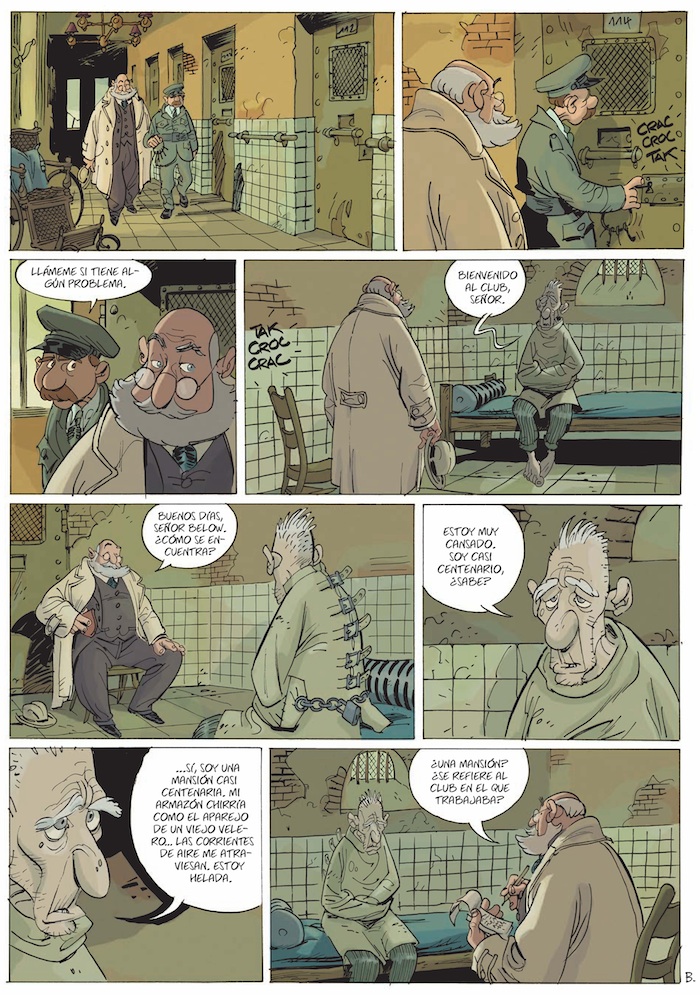
Como hiciera Julio Cortázar en su célebre relato, en muchas ocasiones la historia salta a un primer plano narrativo, sorprendiendo al narrador y al lector. Los asesinatos implican a los propios miembros del club o su entorno. Así, se bifurca el efecto sorpresa hacia el lector, que puede recibirla por el hilo conductor de la historia o por encima de ésta. Es más, a veces sucede la historia sobre la historia de una historia, recordando a las muñecas rusas (en este cómic, al final, la narración se abstrae hasta un loco que, en el manicomio, le cuenta a un investigador psiquiátrico cómo son las entrañas del Green Manor. La locura de la humanidad, supongo).
El sentido lúdico del horror
Lo cierto es que estos lords sin escrúpulos consiguen aliarse con el lector tras las sucesivas narraciones. Sin darnos cuenta, testigos de sus charlas y uno más de ellos, cómplices de asesinatos. La experiencia de lectura establece un Cluedo literario, donde el lector, a medida que descubre las claves de caso intente anticiparse a la solución. El libro tiene mucho de juego.
Un marco ideal
La condición extremadamente piramidal de la sociedad londinense de la época (siglo XIX), sus claroscuros, su sentido del honor y su déspota ilustración suponen el escenario perfecto para estos crímenes y aportan verosimilitud a todos los relatos. Son los tiempos de Jack el destripador, Conan Doyle y Willy Fog. El estilo gráfico que imprime Denis Bodart, clásico en la distribución de viñetas y con un estilo que combina el realismo del escenario con lo caricaturesco en el tratamiento de los personajes, consigue atraparnos en las historias de principio a fin.
Cuánto tiempo sin volver a esta sección que tantas alegrías inesperadas nos suele traer. Es fácil encontrar vídeos amateur de mamadas, pero...


 Julia Lepetit and Andrew Bridgman from Dorkly bring us this amusing take on past and present-day gaming. They even throw a little "future" in at the end. The only thing that essentially hasnt changed is the awkward motion control. The area has expanded, but that doesn't make it any less awkward. Via Geeks are Sexy.
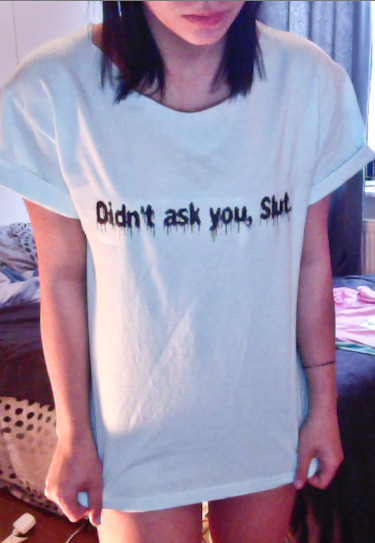
Aprende a no enviar fotos subidas de tono.
Aprende a que no te violen.
Aprende a denunciar si te maltratan.
No provoques.
La culpa es siempre tuya, mujer.
By Hibai_
Moraleja: Deja de matar monstruos por mí y enseña a los monstruos a no serlo, anda. ^^

It's a well known parenting trick that kids love getting stars for performing well in school, doing chores around the house and, of course, potty training, but did you know that it's a great way to train your boyfriend, too?
The tumblr STFU, Couples shows us this great example of how Joe's girlfriend has got him educated in the art of modern relationship, including "epic dates," doing "things that please mom," "doing things that make sibs say 'aww'," and the all important "putting cute things on Facebook relationship status, pictures, etc."
Gold star to you, Joe's girlfriend!
Sean Scheidt took pictures of Baltimore burlesque artists before and after their stunning metamorphoses. NSFW.
Scheidt's photo project juxtaposes images of burlesque performers dressed how they are in everyday life with portraits of their stage personae.
Sean Scheidt / Via seanscheidt.com


All photos by Karl Hess
I was staring through a window marred by heavy iron bars, with a large bullet hole in the thick glass.
“That is from when they tried to kill us,” said Pablo Escobar's brother. He looked tired, harmless, his one good eye shifting uncertainly behind his glasses. Once one of the most wanted criminals in the world, a critical part of an organization responsible for thousands of murders and untold billions of dollars in drug traffic, he was now just an old man, standing awkwardly in his living room.
“Come, let’s have some coffee, you can ask me whatever you want,” he muttered and I followed him out to the porch, the city of Medellin sweeping away in the valley below.

Everyone knows the story and the man: Pablo Escobar and the Medellin cartel; a bloody, inexorable rise to power and dominance. By the late 80s, Escobar had accumulated billions of dollars and established himself as a Medellin folk hero, constructing housing and hospitals for the poor, publishing a newspaper, even opening a zoo for the public. Even as thousands were brutally killed and the excesses of his violence raged out of control (he famously once blew up a commercial airliner in an attempt to kill one man) Pablo was still a hero to the poor and dispossessed of Medellin society. When he died on that rooftop in 1993, he left behind thousands of mourners, a city ravaged and torn apart by violence, and his accountant: Roberto Escobar, his brother.

Roberto Escobar is now just a simple old man
Lugging my backpack into the hostel near Parque Lleras, the city's popular nightlife zone, Escobar and his bloody legacy were about the last things on my mind. I was dirty, exhausted, and judging from the rowdy Australians playing drinking games on the patio at 2 PM on Wednesday, not about to get the long sleep I so desperately required. I was hungover from drinking rum and aguardiente (literal translation: fiery water) on Colombia’s coast for the past two weeks, and had a weird half-body sunburn from the time I had vastly underestimated how much booze a coconut could hold and passed out beneath a beach table in the midday heat.
As I stowed my belongings in the dorm room and noted with some frustration that I was going to have to sleep on a top bunk that seemed to be seven feet off the ground, a stout, red-faced South African dude in a rugby jersey stumbled out of the communal bathroom. To say that this gentleman had obviously just been doing cocaine would have been an grievous understatement: He looked like he had just head-butted a pastry chef. He snorted, slapped me on the back, and let me know in no uncertain terms that I had come to the right place to “fucking party.”
“This is the place, bruh,” he assured me. “You know a fucking guy died here last month? He went too hard. Fucking legendary, bruh!”
“Yeah... That does sound pretty great.”
At that, he laughed and pretended to punch me in the stomach, then laughed again and walked out, as my visions of rest and recuperation slid further out of reach. The death and horror of those bygone days of Medellin’s history may be past, but at street level, a tangible element of that time is still quite prevalent: Cocaine is everywhere. I would come to see that not only was it common, but it was used with a casualness I had not experienced. Bathroom stall? Not needed. Doing a bump at the urinal seemed to be a level of discretion that everyone was comfortable with.
I was only in Medellin for five days before I had to catch a flight to Argentina, and after my time on the coast I was looking to take it easy, apply aloe to the lower half of my back, go to the Botero Museum—and now, avoid that South African guy. But as I sat in the bar of the hostel, nursing a beer and listening to the Australians play a drinking game that apparently involved sporadically slapping each other in the face, something on the bulletin board caught my eye: the Pablo Escobar Tour. I asked the twentysomething Colombian girl behind the reception desk about it and she smiled.
“Oh, you gotta do it,” she said. When I pressed her for details, she helpfully added, “They, like, put you in a van and drive you around and tell you about Pablo Escobar, I guess.” With a finely honed sales pitch like that, how could I refuse?

Flowers on Pablo Escobar's grave
So the next morning, I piled into a beat-up van outside the hostel at 8 AM as a light rain fell from low-hanging clouds, still tired and bleary-eyed from a night that featured little sleep, lots of electronic music, copious beer, and shouted Australian phrases such as “argey-bargey.” I still didn’t really know what to expect from the day ahead. The first thing I noticed was that our tour guide, a nice Colombian lady, barely spoke any English. She seemed passionate on the subject of Medellin and knowledgeable about the life of Pablo Escobar, but was unable to convey this very well, and after a while just sort of gave up, put on a DVD, and turned her attention to texting on her cell phone.
The DVD turned out to be The Two Escobars, which is an ESPN 30 For 30 documentary that deals with Pablo Escobar and Colombian soccer star Andres Escobar, the rise of Colombian soccer due to a massive infusion of drug money, and the eventual murder of Andres, who was not related to the drug kingpin, after he accidentally scored on his own goal in the World Cup. It is a fascinating and well-made documentary, but a poorly ventilated van in downtown traffic packed with hungover, unwashed backpackers was not exactly the ideal viewing situation.
Still, the ride afforded me an occasion to observe the entertaining local trend of fast food, or comida rapida, establishments that featured colorful signs of either incredibly busty cartoon women or video game characters. My favorite was probably Mario Bross (a play on the Nintendo game, though spelled incorrectly), whose sign featured Mario’s warmly smiling disembodied head, a sure sign of quality. Not sure if that constitutes copyright infringement, but it did seem like an effective marketing strategy: “How can you save the Princess on an empty stomach?” “A plumber can’t live on mushrooms alone!”

Our first stop turned out to be the grave of the man himself, Pablo Emilio Escobar Gaviria, which is located on the outskirts of the city. Meticulously kempt, and wreathed with colorful floral arrangements, the grave offered everyone the opportunity to slowly file past and take photos of the headstone and then stand awkwardly in a cemetery for a while. Stop one complete. Once back in the van, our intrepid group pushed onward as the documentary continued to play and a contingent of four Australians alternately complained of their hangovers, made plans for the night, and hit on some French girls who sat in the front.
The second stop, for which we didn’t even get out of the van, featured a building that the rival Cali cartel had bombed once, trying to kill Pablo and his associates. It was pretty much just a regular building in an unassuming commercial district; no evidence remained that anything exciting had ever happened, and even the guide seemed to tacitly agree that this was the low point of tour. Group morale was on the decline, and although no one brought it up, it became clear that someone had farted in the van. Again, we pressed forward.
The glorious culmination of the Pablo Escobar Tour was Pablo’s old house—or a hideout, really—where he lived with his brother in his final months, stored cash and vehicles, and eventually met his bloody end. The van wound its way up to the hilltop residence, through the gates, and parked outside the garage that still held Pablo’s dirt bike and the old blue truck he had first used to smuggle cocaine paste over the border. As we piled out into the blessedly fresh air, our guide told us that here we would meet Roberto Escobar, Pablo’s brother, who through a deal with the government, operated this house as a museum and used the proceeds to fund this tour and the medical foundation he had set up. My first reaction was that maybe this tour could use just a little more funding, or at least a cooler van, but I kept my opinions to myself and followed the group into the house.

Pictures of young Pablo adorned the walls along with news clippings, old trophies, and a large wanted poster that offered $10 million for information about Pablo or Roberto. The same poster listed their main associates along with their photos: men with alternately grim or smiling visages with nicknames in Spanish such as Pitufo, El Pollo, and La Garra; Smurf, The Chicken, and The Claw, respectively. Overall, it was a real solid-looking group of capable henchmen. La Garra, particularly, struck me as the type of gentleman you wouldn’t really ever want to fuck with.
In the living room, amid various bullet holes left over from when the house was attacked, we finally found Roberto Escobar himself, short and soft-spoken, both partially blind and partially deaf from a letter bomb that exploded in his face years ago. Coffee was offered, and he then sat on his porch and opened the floor to questions. He spoke only Spanish, and enlisted a gregarious Irish guy in our group to translate for him. One of the Aussies was quick to jump in.
“You ever, like, kill a guy?” he asked, a little too enthusiastically.
“I’m not fucking asking him that,” the Irishman quickly responded, looking back and forth between Roberto and the group, as most people suppressed laughter. Just imagine an exceedingly Irish accent as you read that—it’s funnier that way.

Escobar nodded and seemed to understand though, as he had probably received a similar query from similarly excited twentysomethings over the years. He told us that he had been the cartel’s bookkeeper, and that he’d stayed far away from the killing, bombing, and torture end of their business venture. “I criticized my brother many times for the violence he caused,” he claimed, conveniently never addressing the fact that he used the billions of dollars gained through that bloodshed and devastation to lead a lavish life beside his sibling, above the law.
So many billions, in fact, that the cartel had to spend $2,500 on just rubber bands every month, to keep the currency together in neat stacks. So many billions that 10 percent of their profits were lost every year to rats eating the money and it rotting away in the ground where they buried it for lack of storage space. A lot of that hidden cash, rodent-chewed and mildewed though it may be, is still out there, he claimed, his one good eye blankly tracing the clouds in the sky as he spoke of the old days.

“That’s all behind me now, though; I do good now,” he continued. He then launched into a lengthy speech about how since he was released from prison in 2003, he has gained valuable medical knowledge while caring for expensive horses, and used that knowledge to find a cure for HIV.
Everyone politely listened, sometimes quizzically glancing at each other to see if this was some kind of mistranslation, but it wasn’t. For a man claiming that he used equine expertise to conquer AIDS, he was pretty matter-of-fact about the whole thing. And if there’s one thing stranger than hearing a half-blind ex-cartel accountant tell you he’s made a world changing medical breakthrough, it’s hearing it translated through a hungover and somewhat bewildered 21-year-old Irish kid.
And with little to no follow up to the whole “I cured HIV because horses” thing, besides him noting that “soon we will release our breakthrough medicine and suffering everywhere will be ended,” the Q&A section was over. Roberto stood awkwardly against the wall in front of a picture of his brother’s ranch, so the group could once again slowly file past and record this crowning moment via digital camera. He posed stoically for the photos, unsmiling and stiff as he shook all our hands in turn, as he had done hundreds of times before and would again. The last we saw of Roberto Escobar was his back as he slowly shuffled down a hallway to his room, past smiling photos of his dead brother and old, yellowing headlines of the carnage they had wrought together, faded artifacts of a fallen empire.
In the van on the way back, as everyone silently asked themselves if this venture had, in fact, been worth $30, I suggested that we all go to Mario Bross for hamburgers and fries—so we did, and it was delicious. Now, I’m not saying I singlehandedly saved the entire tour, but I’m also not saying that I didn't.
Back at the hostel, as I headed for the bar, I felt a slap on my back and turned around to find my South African friend, beer in hand, already quite drunk.
“How was the tour, bruh? What’d you learn?”
“Welp, turns out, the world’s favorite Italian plumber grills a mean burger; there’s uncounted, rat-eaten millions buried all over this city; and Pablo Escobar’s brother is a pretty weird dude.”
“Fucking legendary.”
Follow Karl Hess on Twitter.
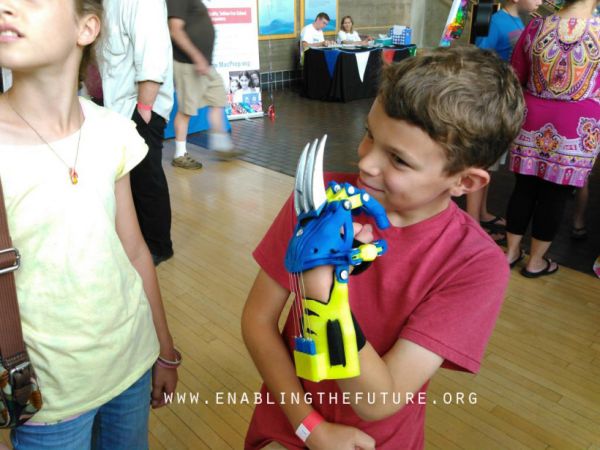
3D printing offers unprecedented opportunities to build custom tools at low cost. The organization e-NABLE focuses on one use for this growing technology: building prosthetic hands for children.
One of the organization's volunteers, Aaron Brown, wanted to demonstrate this technology at a local children's hospital in Grand Rapids, Michigan in a way that kids would find especially appealing. So he designed this variant hand. Then Brown printed some claws with blue and yellow filament and spray painted the claws silver. The result is a Wolverine hand that would thrill any kid (and most adults) who gets one.
Brown emphasizes that the claws aren't metal--just plastic. For reasons unfathomable to me, he seems to think that this is a good selling point.
-via TechCrunch

The thing about stocks is that they always have to go up.
If you’re Miley Cyrus and your personal stock is built on a pushing desperate exhibitionism to the limit—and you’ve already been seen by the whole world twerking in a nude-suit while humping a foam finger—the next logical step is to just ditch the clothes entirely and start showing up at high-profile events topless, wearing only ice-cream pasties on your nipples. Which is exactly what she did this weekend at Alexander Wang’s New York Fashion Week party in Bushwick, Brooklyn.
For extra bad-girl points, Gawker also has video of Miley smoking weed in plain view at the party.
Speaking of rising stock, how bout Bushwick, huh? Seems just yesterday the neighborhood was dicey enough to barely make the trek to Roberta’s worth it, and now Hannah Montana feels comfortable enough there to not even bother with a shirt in public. Now that’s gentrification.
h/t: Gawker
The Children’s Zoo exhibit, of San Diego Zoo, has a dynamic new inhabitant, a three-month-old Fennec Fox cub!
Photo Credits: Ion Moe (Photos 1,3,5); Deric Wagner (Photos 2,3)
The new ball of energy weighs just less than 2 pounds. He will remain in quarantine for a while, but will soon begin training for his new position as Animal Ambassador for his species at the San Diego Zoo.
Animal Ambassadors serve an important role at the zoo. Their job is to help educate guests, especially children, by allowing them to get up close and learn even more about animals they wouldn’t normally have an opportunity with which to interact. This kind of intimate education encourages a vital interest and concern for species preservation.
Native to the Sahara of North Africa, the Fennec Fox is the smallest species of canid in the world. They are currently classified as “Least Concern” on the IUCN Red List.
The Fennec Fox is a popular pet, and is classified as “small wild/exotic canid” by the USDA. They also hold a place of importance in the African nation of Algeria. Not only are they the national animal, they also serve as the nickname for the Algerian national football team, “Les Fennecs.”

David Futrelle, whose site We Hunted the Mammoth has been tracking online misogyny
Californian blogger Anita Sarkeesian is one of the most famous cultural critics on the internet. Her Kickstarter to make a video series about “tropes vs. women in video games” was a huge success back in 2012 and raised much more than the $6,000 she had originally asked for. Her videos are some of the most thorough and well-researched examinations about gaming we’ve ever seen. It’s feminist criticism at its best: smart, witty, and intelligible to anyone who has spent time on YouTube.
Her work has also triggered one of the most violent abuse campaigns of recent internet history. Since her campaign took off, Sarkeesian has been blasted with misogynist bullshit: rape and death threats, Wikipedia vandalism, and even a game called Beat Up Anita Sarkeesian. (It’s all detailed here.) Last week, Sarkeesian had to leave her home and notify police after someone sent her and her family very credible threats.
Sarkeesian isn’t the only feminist critic on the internet experiencing this. Other commentators are reporting violent reactions, and even male allies on the sidelines are getting sprayed with the hate shower. But Sarkeesian is the most prominent case, and she’s not stopping anytime soon. She is still posting her thoughtful videos, just as she has planned all along.
To understand what’s been going on, I spoke to David Futrelle, who has tracked anti-feminism, the Men’s Rights Movement, and the campaigns against Sarkeesian and other women on his blog We Hunted the Mammoth.
VICE: Who are the people harassing and threatening Anita Sarkeesian? It seems like it’s an organized action.
David Futrelle: It’s what I like to call the new misogyny—basically a large amorphous internet subculture that is consumed with hating and attacking women. Some of these people call themselves men’s rights activists and portray what they are doing as somehow beneficial for men. Others call themselves “men going their own way,” the basic premise being that they want to live independently of women but end up talking most of the time about how terrible women are. That whole subculture is very heavily represented among gamers and on websites like Reddit.
So is this mostly coming out of Men’s Rights Activism circles?
I don’t think the harassment against Sarkeesian is all done by men’s rights activists, but it comes out of this subculture. And the people in this subculture share some basic obsessions.
Like what?
One thing that happens again and again: They define certain cultural spaces as being properly male only and then go after women—women in general but often individual women—who they see as interlopers invading what they feel should be their safe space. You see this in general discussions about women and tech and women going into STEM fields. But also in other fields like atheist activism. For whatever reason that seems to draw a lot of very misogynistic guys too. Women like Rebecca Watson, who has talked about sexism in these spaces, face an enormous amount of harassment and abuse.
What did Rebecca Watson do?
That’s a good question. In most of these cases, if you look at it closely, what the woman being targeted has done turns out to be either nothing or something that has been exaggerated in all sorts of bizarre ways. Something that normal people wouldn’t see as provocation. In the case of Rebecca Watson, she was at the World Atheist Conference in 2011 and, after her return, posted a vlog in which she talked about her experience of sexism at the conference. Some guy followed her on the elevator and hit on her, asking her to come to his room. This was later known as the “elevator incident." Because of this she faced years and years of violent harassment.
So basically the “crime” these women commit is to call out sexism in a field that some men feel is their turf.
Yes. Watson’s case is really very similar to Sarkeesian's in that if you look at what the charges against her are, and you trace it back to the beginning, you see that there is really no argument. Basically people accuse her of scamming the public by raising a lot of money for her video series. These guys were harassing her before she even raised that money, and the fact that she was able to raise so much money was due to feminists particularly rallying around her because she was facing harassment for just proposing this.
Sarkeesian’s videos are very well researched. She’s not going for effect, but makes very sure to show lots of examples for any kind of sexist structure she is trying to point out in games. Why does this seemingly very levelheaded and not terribly offensive criticism still get people so angry?
Exactly. If you actually look at her videos, you see that she is not trying to censor games; she makes that very clear. She is critically analyzing them. But she is being made into some kind of demon when she is actually presenting a very straightforward and not very controversial set of arguments about the way sexist violence and sexism in general are prevalent in video games, which is pretty obvious to anyone who has spent any time playing video games.
So why all the anger?
What gets them really angry is when a feminist closes the comments on their YouTube videos or on their website. To them, that is an assault on free speech. So they harass her because she won’t let them harass her on YouTube, basically.
The extent of the vitriol is something that I don’t fully understand. My basic explanation, if I have one, is it’s a backlash against the successes of feminism since the 90s. Feminism has made progress redefining some things that men took for granted, such as sexual harassment and date rape. So I think it’s a backlash on what a lot of these guys see as restrictions on what they can say, how they can interact with women in a sexual way, and the idea that there may be consequences if they commit domestic violence. It’s mostly sexual resentment, the fact that they can’t get away with what guys used to be able to get away with with women, and that makes them very frustrated. Frankly I think a lot of them would prefer it if they could just go back to the way it was: Get women drunk and have sex with them. Without having the culture say, “Hey, this is date rape." And: “Your office jokes are actually sexual harassment.”
For a lot of these guys their experience of feminism is being denied to do what they want to do. Maybe they had to go to a seminar about sexual harassment or they had to sit through a presentation on date rape in college.
The other thing is women starting to move into these areas that these guys have just decided that they want to claim for men. They don’t want women to come into gaming and tell them not to call women whores when they are playing Call of Duty.
So the extent of the violence is a sign that feminism is actually winning, in the sense that it is calling out sexism and rallying to ban it?
Yes, you could say that. But at the same time I think that this backlash is a threat to the victories of feminism. Because of the nature of online culture and the anonymity it offers, you see these virtual mobs forming very quickly. And I do think it’s a threat to the gains that feminism has made in a wider culture, because a lot of women know that if they go online and talk about feminism, they will have to deal with an entire army of these guys showing up and harassing them.
So this is a free speech issue, in the sense that women on the internet who are trying to exercise this right by expressing feminist ideas are facing rape and death threats.
And not just women. As someone who writes about men’s rights activism on a regular basis, I get harassed as well. Some of it is awful, but what I get is really nothing compared with the kind of relentless harassment that Sarkeesian gets. I got death threats the other day after writing about her, and it’s very telling that the only time this happens is when I write about her. Guys get so mad at her that they are even threatening to kill people who defend her. Other people from the gaming community and beyond who have spoken out for Sarkeesian, like Joss Whedon, have faced similar attacks.
And it’s not just Sarkeesian or Watson. There’s lot of other women out there. Chanty Binx, a Canadian activist, got into an argument with some men’s rights activists a few years ago and yelled at them. She has been harassed ever since. It becomes a civil rights issue. Women, when they want to talk about anything concerning gender, face this kind of vicious harassment, and it does have a chilling effect. It takes a lot of courage for people like Sarkeesian to carry on and keep on doing the type of work that she’s doing.
In Germany there have recently been some similarly violent attacks against scientists researching gender. It’s always the same pattern.
If you talk to the people threatening Sarkeesian, they all feel completely justified. They are saying: She is trying to destroy gaming, so we have to destroy her. Women—mostly women—are getting targeted for critiques of sexism. When people write movie reviews, they don’t get death threats from movie fans. But feminist cultural critics writing about games do. Men’s right’s activists think like abusers. They actually do nothing to help out men who are having difficulty in society. They talk a lot about how men get killed more often. But basically all their “activism” is finding women they can scapegoat and attacking them. They go after academics, critics, individual people they see at demonstrations.
Do you think it’s a conscious strategy intended to make these women shut up?
Not for all the guys. Some actually do want to argue with her. Mostly they just want to force her to pay attention to them. A lot of times these guys will pick a woman and send her a list of questions and say, “You, as a representative of feminism, will have to answer all these question about feminism for me!” And if they decline to do it, they harass them and call them cowards. The guy who made the “Beat Up Anita Sarkeesian” game, when people asked why he made that, later said he thought it would get her attention and make her engage in a discussion with him. Which is funny, because if someone would make a game about beating me up, I would be less inclined to talk to them.
But for a lot of them it is a very conscious strategy to shut women up, and this is something you see a lot from men’s rights sites. The leading site A Voice For Men regularly goes after individual women they don’t like and spreads terrible lies about them. They say, “We don’t want to shut all women up, but feminists, if you keep posting, we are going to keep doing this and fuck your shit up."
When Elliot Rodger went on his killing spree in Santa Barbara earlier this year, his “manifesto” was full of the misogynist rhetoric found on the men’s rights sites. Their radical hatred of women was the ideological basis for his violence. Do we have to be worried about someone actually pulling a gun on a feminist critic or making true on the rape threats?
Aside from the very loopy stuff in Rodger's manifesto, most of what he wrote, if he had posted it in on a men's rights message board, people wouldn’t have batted an eye lash at. If you looked at his videos, you’d think this guy is a joke. He sounded like an actor trying his best to play some super villain, but he actually went out and shot people.
A lot of people are trying to blow off these threats, saying things like, "Oh, people threaten me all the time. Doesn’t mean they are going to act on it." But the fact is, it’s impossible to know. And threats directed at women from men—there are legitimate worries that those might be real. When a guy is threatened with rape, he doesn’t actually say, “Oh, that has me worried." At least outside of prison men don’t spend any amount of their time worrying about rape. But rape is something that women worry about. And some of these guys have the mentality of stalkers. When you look at men who stalk romantic partners, a lot of times it ends in violence. So there is a very real threat.
But regardless of actual physical violence, just the threats in themselves already do an incredible amount of damage.
In terms of psychological violence?
Yes, or threatening their reputation. Many of these men are trying to manipulate the Google results. Antifeminist activists very clearly try to harass women by making sure that all sorts of nasty things show up in their Google results. They say: We try to fuck things up for them and make sure they don’t get hired in the future.
Follow Chris Köver on Twitter.

Last month you guys proved that you’re like the Secret Service of counterfeit orgasms when we asked you to spot the difference when shown female pornstars faking it or taking it. But honestly, as a dude, I felt a little left out. I mean, we’ve all had moments after too much to drink/rail, and a good 40 minutes of headlining the Pound Town Festival, realized that maybe our dignity was worth more than a chafed, red cock the next morning. So we fake it. Betcha didn’t know we could do that. Ever seen your man stash the condom away a little too quickly? Ever felt something wasn’t quite right about the heat of the moment? Well the tables have turned and here’s your chance to try out your finely honed “I Spy” skills on a few male pornstars, courteously provided by Kink.com
Which orgasm is the real orgasm?

Which orgasm is the real orgasm?
Which orgasm is the real orgasm?
Which orgasm is the real orgasm?
Follow Owen Gray, Mickey Mod, Ruckus, Sebastian Keys, and Jules Suzdaltsev on Twitter.

Sarah Oliver of Huntington Beach, California, really needs to move. If the videos uploaded to her YouTube are any hint, her neighbors have to be the absolute worst couple for anyone to live next door to.
“Common weekly occurrence with this insane neighbor,” Oliver wrote of the first embedded video below. “She throws things, beats her boyfriend, drives into stuff. All time day and night. When she backed up the first time in this video she hit my car.”
Three hours earlier:
h/t Barstool
Forrest Gump triumphantly returned to theaters for a special one-week engagement last Friday. In honor of its 20th anniversary, it was digitally remastered and blown up into IMAX format. Gump is a charming, lighthearted (albeit culturally problematic) dramedy with very little in the way of action or spectacle. Was the world really clamoring for this film in IMAX? This might be as unnecessary as The Great Gatsby in 3D... or the entirety of Transformers: Age of Extinction in all formats. We checked out the special edition to answer this and the myriad other questions that have stumped us since 1994.
WARNING: THIS POST CONTAINS SPOILERS (FOR A MOVIE FROM 20 YEARS AGO THAT YOU SHOULD HAVE SEEN BY NOW)
–Forrest got his first pair of shoes when he was like, ten? That's child abuse, surely.
–How bad are those kids at riding their bikes if Forrest is able to outrun them? I get that he's meant to be really fast, but surely he can't be faster than a bike?
–Is Forrest Gump the only Academy Award winner for Best Picture to ever have a restaurant based on it? I suppose a Crash-themed restaurant wouldn't be a great idea.
–Has anyone figured out what "stupid is as stupid does" actually means? People actually took these sayings to be serious philosophical musings in 1994.
–What kind of chocolate is Forrest's mom eating if she doesn't know what kind she's gonna get? Did they package chocolates differently in the past or something? Did she buy a special brand of chocolates that came with absolutely no labeling? Or, wait, is she illiterate too?
–Are we supposed to laugh at Forrest's parents naming him after the founder of the Ku Klux Klan? To explain this questionable decision, Mama says, "Sometimes we all do things that, well, just don't make no sense." That's basically the thesis statement of this whole movie.
–It's supposed to be funny that Forrest's mom has sex with the principal to get Forrest into school (with the implication being that this is kind of her thing), but it's supposed to be sad that Jenny is a free spirit who has many sexual partners not named Forrest Gump. Isn't it kinda cruel to shame Jenny for her life choices?
–Does Forrest have the mental capacity to give consent for sex? Are we watching Jenny rape him?
–How bad are the University of Alabama's academic standards if Forrest Gump can get a full athletic scholarship? Though, if the guy from The Blind Side can get into college, I guess anything is possible.
–Forrest Gump has serious disabilities, to the point where he needs an entire stadium full of people to hold up signs telling him to stop running after scoring a touchdown. So you give that guy a gun and send him to Vietnam?
–Did he kill anyone in Vietnam? If so, how did that make him feel?
–Did Forrest not get PTSD from Vietnam because he's a simpleton?
–Why is every liberal activist in this movie a sexual deviant, drug addict, or abuser? Is the film implying that the only way to be happy is to be a complete dullard with no concept of politics or culture?
–Did this movie predict the cultural ascendancy of George W. Bush?
–Is it me or has the CGI in this movie aged badly? In particular, the CGI Richard Nixon looks like he's suffering from the early stages of Bell's Palsy.
–Why is it that, every time Forrest encounters a public figure, they are shot by someone shortly after? Lennon, the two Kennedys, that racist guy who stood in that doorway. Are they implying that Forrest is a serial killer of historical figures?
–Actually, why does everyone Forrest encounters die? Jenny, Bubba, mama... Is he cursed? I guess Lieutenant Dan only lost his legs.
–Forrest is super rich after Lieutenant Dan invests their money in Apple Computers. Does he have anyone handling his finances? Like a trusted accountant? Again, he is very, very dumb. He's the kind of guy who talks to strangers for hours at a time. Can he actually manage his money, or would he have just bought a lifetime supply of mashed potatoes or something?
–Lieutenant Dan just turns up for the wedding without RSVPing? Kinda rude.
–Lieutenant Dan's wife takes a seat at the wedding and leaves him to stand? Jesus Christ, lady, the guy has no legs.
–Forrest Gump pretty much does and sees everything there is to do and see in 30 years of American history, and yet no one recognizes him? Ever? He never got a publicist?
–Jenny is meant to have AIDS, right? I mean, they never call it AIDS, but it's supposed to be AIDS. If so, she looks a lot better on her death bed than most first-wave AIDS patients.
–Is the moral of this movie "Pay attention to the mentally ill people who talk to you while you're waiting for a bus because they might be rich"?