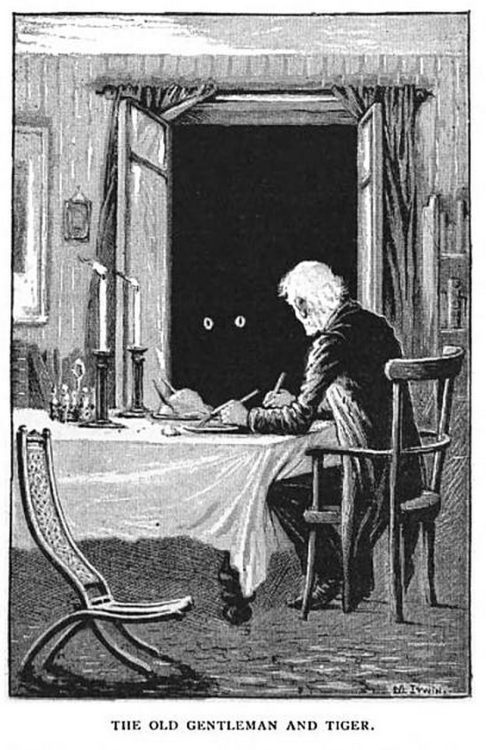
This week’s Underwhelming Lovecraft Comic Synopsis is the 1920 “Facts Concerning the Late Arthur Jermyn and His Family”.
This week’s Underwhelming Lovecraft Comic Synopsis is the 1920 “Facts Concerning the Late Arthur Jermyn and His Family”.
.jpg)



.jpg)
Extended in their chairs, ice clinking as their wrists gently swirled their drinks, I noted that two of my male friends were more relaxed than I had ever seen them. No longer trying to strategically maneuver through the social and professional waters we’d seldom spent entire evenings discussing, they now sat there seemingly simple-minded and free. I noticed I could hear the music, the jazz was crisp, unscathed of ramblings.
“What’s gotten into you guys?” is all I could come up with. They each smiled and shrugged. Adjusting himself and turning to me, one of them said, “Prepare for your 30s. There is nothing like it. You finally get it. You finally stop caring and learn how to focus on yourself. But it’s not selfish. It’s different. It’s like a wave of confidence and appreciation that hits you and it changes everything.”
My second friend just nodded and smiled while taking a sip of his drink.
I recently read an article that took me back to that moment. Now 30 — well into it actually — I can say that those final months were when the fog that once seemed interminable and frustrating is now what gives me peace. I’m sure this happens early for some, late for others, but there is definitely something that happens toward the end of your 20s.
My 29th year was when things started to click for me, personally and professionally. I finally found the courage to quit a job I’d long hated and leave a city I liked even less. I was still working really hard, but felt like I was finally gaining some traction. It was around age 29 that the number of fucks I gave about other people’s opinions dipped to critically low levels. Which freed up all kinds of mental and emotional space for the stuff I was really passionate about…I think this has something to do with the fact that many women won’t really go for it, pour their whole selves into something and push like hell to make it work, until they’re convinced they can crush it. Creative breakthroughs and professional successes require a significant amount of confidence, which is something that most of us spend years building up.
Ann Friedman, The Power of 29: An Ode to Being Almost 30
It’s possible that as a society we’ve always seen the 30s as a turning point. Most of us, at least my generation, assumed that we’d all have our shit together by then. For me, the weight of those final years was excruciating. I was stuck in the current, each challenge smacking me against the rocks. I lost a great deal of time beating myself up, wishing I wasn’t where I was. Lucky me, the waves of challenges persisted, and I eventually used the skills God gave me to get out.
I’m 30 now and though that once seemed scary it isn’t anymore. I kind of like it to tell you that truth and if it wasn’t a Wednesday morning, you just might find me telling you this the way my friends did–body extended, feet up on a table, and the ice clinking to a circling wrist.
So, what is it that changes?
I didn’t understand that every single wave that came at me helped define a skill, a muscle, confidence, and unbeknownst to me, patience. If you are against the rocks, please relax. No one is going to put you on a stage and read you your list of mistakes, fuck-ups, and bloopers. I actually thought this might happen to me one day.
Ann Friedman said it best, “Breakthroughs and successes require a significant amount of confidence, which is something that most of us spent years building.”
So, what changes? There is a shift in focus. In three words: confidence, gratitude, and purpose. Don’t be mistaken, even 30-year-olds falter, but the 20s build-up come together to offer more of these three than you’ve had before. You realize that your knees might start giving you trouble in the next 10 years. Now it’s about the run, it’s about the gratitude that you are able to cover ground with this unique instrument you have. It’s about listening to your breath, being okay with our own pace. You can’t do that while focusing on anyone else. The rest is bullshit and you see that now. You realize that your friends might move away someday, get sick, or have 39 kids so dinner tomorrow might not be so impossible.
You realize that some of the things you twisted and turned for in your 20s that didn’t work out weren’t always your fault. In fact, you’re thankful you didn’t get them. Slowly, you begin to trust your way. You realize that sleep is good. You realize that you don’t need a drink for bravery. Maybe you absorbed the liquid courage from yours 20s? To add, you’ll realize you were wrong about what ‘scary’ meant and that most of the acts of bravery you’ll have to exercise will involve saying that you are sorry. You will realize that you’ve never ever figured anyone out entirely. Not even yourself. You realize advice is free. Listen, then use or drop.
You realize that your parents might not always be around. Let them repeat things three times. If you think about it, it usually only adds up to about +50 seconds. You realize that maybe focusing on why church is boring had more to do with a refusal to listen and learn how to express love than anything else.
As babies emerge, the fact that life is a miracle is undeniable. Life is hard, yes. Definitely. But you realize that ‘problems’ is still a very strong word. You realize what’s real is what’s good. Real food, real love. Real becomes another strong word. Lastly, what you realize is that you won’t always be this person that you are now.
You realize two things about time. First, this moment that you have is fleeting. Second, there is time. There is still time to do things, see things, be things. We may not have forever, but certainly have right now.
There is something about our 20s that make us so eager to indulge in all the bad habits. Like kids, we poke, pry, and watch what happens. We test our limits and pick at our scabs. We worry a lot, and we experiment more.
If you’re lucky, the 20s build-up is ready for you to test out towards the end. We must finally muster the courage to use the data that we’ve picked up over the years. Realizing that every time, we figured it out. Opportunities passed, mistakes made, and most of the time, we were still all home by dinner.
It’s not a perfect age, but it’s a special time.
There is something about 30 that makes you realize that there is a path you haven’t yet taken. More than that, there is a better path that you are in good enough shape to try. As Robert Frost once said, “it makes all the difference.”
No matter how old you are, perhaps today is a day to be 30. 


#StopTheWhistle.
Don't.

The fucking worst.
Warner Bros.

This is at least 1,000 times worse than that insipid piece of shit.

Everyone except people who use the goddamn Samsung whistle.
NBC

O famoso ”zapatazo” de Beiras durante o debate da reformación regulamentaria de 1993, cando Fraga empezou a facer o que Feijóo está a rematar agora
 |
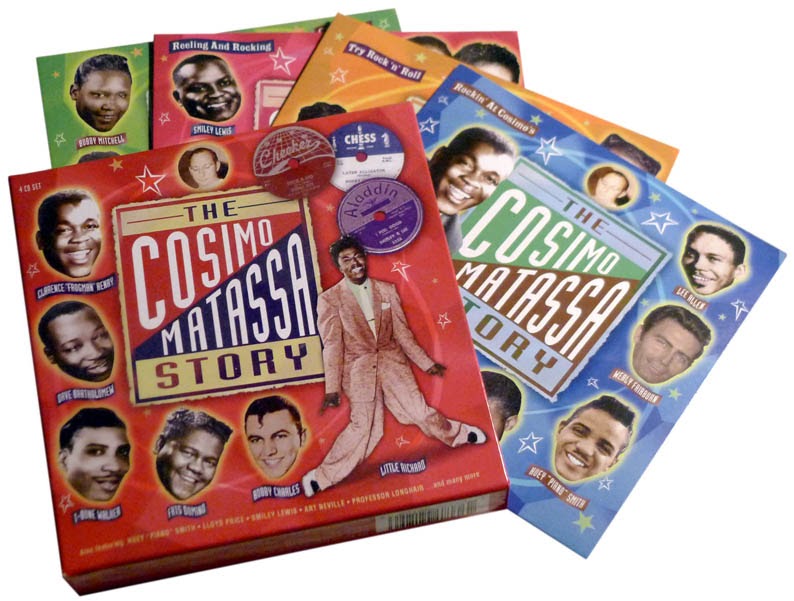
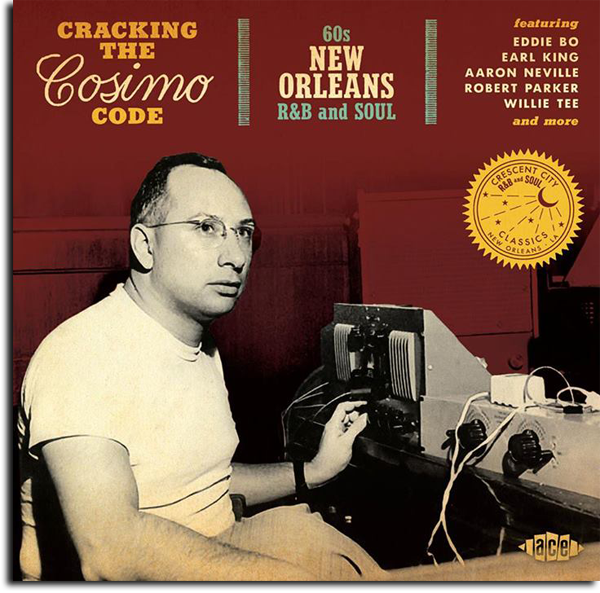
| Cosimo with Jimmy Clanton, 1958 |

Sexy Rambo originally appeared on MyConfinedSpace NSFW on September 12, 2014.
Pop culture—or parts of it, anyway—is kind of what we do here at The Mary Sue (and for that we need you, as this video points out), so take a few minutes to watch PBS Idea Channel expertly deconstruct just what makes up pop culture and what role each of us plays in it. As we nerds and geeks know all too well, pop culture isn’t always made up of things that are strictly numerically popular.
Previously in PBS Ideal Channel
Are you following The Mary Sue on Twitter, Facebook, Tumblr, Pinterest, & Google +?
Mel Brooks wore a prosthetic sixth finger when leaving his hand prints on the Hollywood Walk of Fame this week.

 |
| Bob Crewe |
 |
| Bob Crewe y Ellie Greenwich |

 |
| Con Bob Gaudio, sentado. |
 |
| Bob Crewe |
.jpg)

 Being a huge fan of the A-Bones & Miriam Linna's work with that band, I really looked forward to hearing her take center stage when I heard she was releasing a solo album. Not only is her solo LP "Nobody's Baby" well worth the wait, it truly exceeded my expectations. In fact, I was so impressed with it that as soon as I finished listening to it the first time, I turned it over & listened to it again, start to finish, and it hasn't been far from my stereo since.
“So far I’m not turned on.”
Via youtube.com

Via youtube.com

Via youtube.com

Via youtube.com

Begin by making out with him and kind of leaning your thigh between his legs. Eventually transition to pushing him into a sitting position where you are on your knees between his thighs. Unbutton just the top of your shirt. Do not undo your bra, as you will need the push-up factor later. Take off his belt with one hand in a nimble, swift, bordering-on-violent way. Maintain eye contact and facial proximity during your destruction of his belt. He should be as hard as an Organic Chemistry final after this move. Lean his face forward so that you’re still making out with him but your cleavage is basically hugging his dick. Move your torso in a slow up-and-down motion. If you’re feeling particularly manipulative and/or sadistic, abruptly stop and suddenly realize that you’re late for something; if you’re in a public place, act like you heard someone coming. Abandon effort. He will be devastated, but chalk it up to inopportune timing.
When he’s had ample time to fantasize about what the inside of your throat feels like, briefly repeat Step I at a later date. After considerable cleavage stimulation, grab the base of his dick firmly and put your mouth on the tip. Roll your tongue on the tip’s underside. Don’t go too overboard on this move, because that is both a little weird and specific. Then start accumulating spit in your mouth and put your lips in a kiss/duckface position and DISCREETLY let that saliva sort of leak out as you slide your duckface up and down the shaft. This is a strange-looking but necessary step, so make your face parallel with his body so that he can’t see the tomfoolery going on with your mouth right now. Move your hand in tandem with this motion and when your lips get to the bottom of the shaft, cup his balls with your hand so they don’t feel left out. By then his dick should be completely lubricated.
WARNING: By skipping this crucial step you will get drymouth and he will get drydick and no one is happy and everything is dry.
Congratulations! You made it to the finale.
You’re wondering: “Why the fuck is this so long and instructional?” Because I’m very detail-oriented and also a little drunk right now. So…
Wrap upper lips over top row of teeth like you are imitating a toothless old person. Stick out tongue flatly so it shields bottom teeth. Again, hide your face with your hair or something because you’ve never looked more ridiculous than you do right now. Begin to bob up and down on his dick slowly at first. This part should not take long but if it does, god bless your soul.
If you get tired, give your neck a break and go back to the beginning of Step II while looking coyly into his eyes as if you are enjoying it. If you get really tired, take an extended break by whispering into his ear how wet this makes you and guide his hand to prove it. This provides a neck break and also stimulation for you—clearly a win-win. Eventually go back to the finale and try not to drag your feet about it, as it will be over soon and if it isn’t, then he should be kind enough to throw in the towel.
Once his legs get sort of twitchy or he verbally says he’s cumming or moans or whatever cue, then comes the most important part. While bobbing your head, pause when the tip is at the farthest back part of your throat and make sure he cums way at the back of your throat. This is so it just sort of falls down there and no swallowing or gargling or sampling of the baby batter actually occurs. Let gravity swallow it for you. Don’t spit it out or be awkward about it, because that is messy and just ruins the illusion after all of that neck strainage.
If you want to get a little dirtier, let just one drop come out of the side of your mouth and wipe it away with one finger and then lick that finger while maintaining eye contact. This is obviously reserved for guys you actually respect or have feelings for, because if you do this with a rando they will tell all their friends you may be a porn star. If you’re feeling especially freaky and don’t mind messes, pull it out before he cums and allow the explosion to happen on your cleavage. For the love of god, be careful where you pull this absurd move because no one wants to explain to—hypothetically, of course—their boss after lunch hour why there are interesting stains on your shirt.
Be warned. This formula yields strong results. It was developed over the years through extensive fieldwork and creates frightening amounts of commitment from the recipient. It’s dangerous knowledge and when applied wisely, you can hold the keys to the world. I suspect Monica Lewinsky used this very same formula. One day I hope I get the chance to ask her.
Now get out there and suck some dick!


Sorry in advance for any childhoods we might ruin. Very NSFW.

Robin Edds / BuzzFeed / The Pokemon Company

Robin Edds / BuzzFeed / The Pokemon Company

Robin Edds / BuzzFeed / The Pokemon Company

Robin Edds / BuzzFeed / The Pokemon Company

Overweight and obese people are often the targets of discrimination and teasing. But while some might argue that 'fat shaming' encourages weight loss, a new study of nearly 3,000 British adults shows it's simply not true.

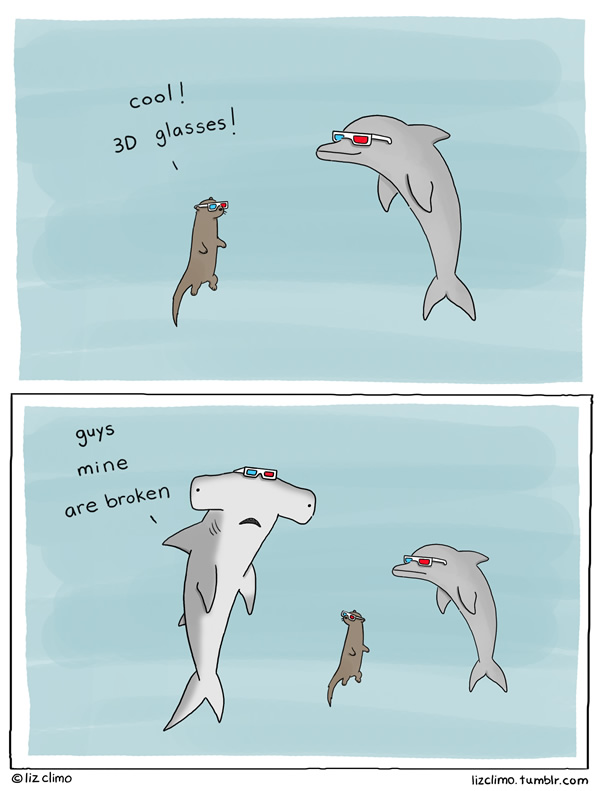
This is neat: Liz Climo, a character artist/storyboard revisionist on The Simpsons and a wonderful cartoonist, to boot, is launching her new book The Little World of Liz later this month. If you pre-order the book, you can get an exclusive signed 3x5 postcard with a grand prize winner getting a custom print from Liz.
We've posted about Liz many times before on Neatorama, so we're very familiar with her funny and adorable comics and are thrilled to showcase 10 of her wonderful comics.
Enjoy!


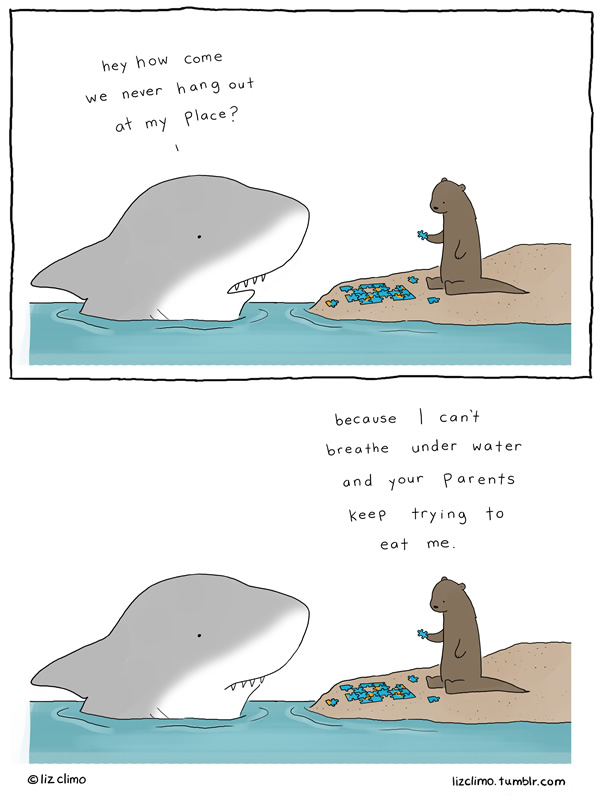
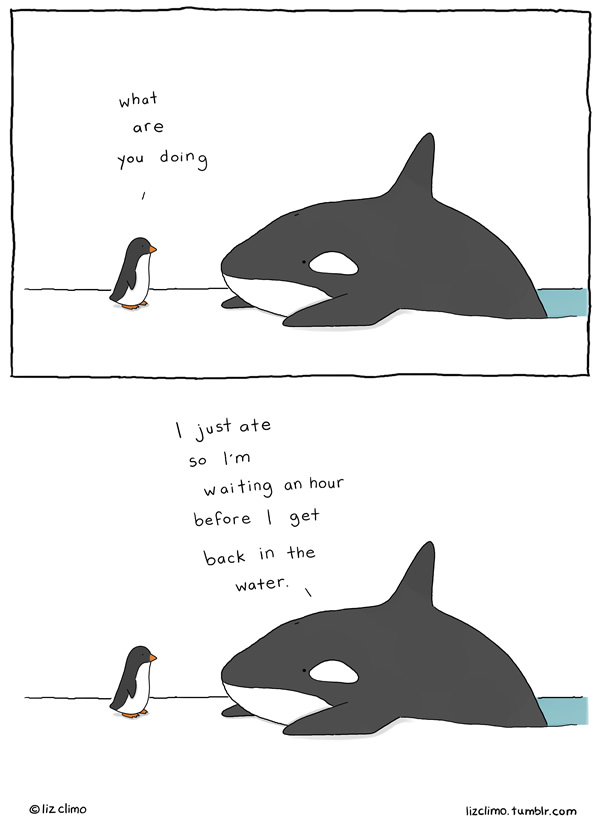

Don't forget to Visit Liz' official Tumblr for more fantastic comics - Thanks Dana!
Bonus cartoon:


That first scribble of the elusive meth kingpin Heisenberg—the one you see in episode one of series three—announces Walter White’s final descent into his alter ego. It’s a deliberately simple sketch that’s supposed to look like a seven-year-old drew it—Bart Simpson for the Netflix generation, the perfect thing to scrawl all over your math books while you should be learning what "focal radius" means. If you can draw it, you're in the know.
Trouble is, its presence in the actual world is an overbearing, irritating one. Mall kiosks filled with made-in-China crap, convenience stores, and costume shops—all usually content with a stream of One Direction masks, The Big Bang Theory pens, and sports memorabilia—now have Breaking Bad merchandise, most of which has a detrimental effect on the legacy of the multi-award-winning monster of a TV show.
The sketch we first see pinned to a candlelit shrine in “No Más” has became the plastered, painted, scanned, and stamped sign of membership in the Breaking Bad fan club. Together with a collection of other colorful logos—notably Better Call Saul’s nostalgic italics and the Los Pollos Hermanos emblem—the merchandising of Breaking Bad leaves the gruesome undercurrent of the show lost in a gaudy, tacky selection of collectibles that color the series as a lightweight cartoon. The narrative is diluted from a bleak tale of economic strife, drugs, and terminal illness and reworked into travel mugs and a throwaway fashion line.
How did this masterpiece become a stocking stuffer?

Heisenberg is on the high street, and aptly, he’s ruling it. IT managers wear the Bryan Cranston's stern face on their chests, and your auntie just put her keys on the kitchen table to the sound of clink and the sight of a familiar pink teddy bear’s eye. There are coffee cups destined to be plonked on foldable desks in freshman orientation lectures. And there are cuddly versions, 2-D versions, tiny versions, and tall versions of Walt and Jesse that further fuck with the purity of the show.
Perhaps that's the problem. Unlike the production of meth in Vince Gilligan’s twisted Albuquerque, there seems to be no filtering process or scientific, efficient equation that separates dreadful guff from attractive stuff. This results in a marketplace where you can buy a subtle wallet bearing the Vamonos Pest insignia and a T-shirt that inexplicably parodies the Heineken logo, changing it to read "Heisenberg" instead. A marketplace where "Keep Calm and Rave On" shirts sit next to vests reading “Yeah—science, bitch!”
The weird phenomenon of Breaking Bad, curious in its balance of pulpy commerciality and highbrow accomplishment, means it is both a profitable goldmine and a cultural marker. In comparison with other major television shows of the past decade or so, including The Wire, The Sopranos, and Mad Men, Breaking Bad carries with it a chaotic sensibility that favors set pieces and bombastic villains over brooding intellectualism or intense social realism. That’s why it’s not necessarily a surprise that we aren’t dealing with—or never have dealt with—a plethora of Don Draper bobble heads, Stringer Bell Babybels, or Tony Soprano beanbags.
Heisenberg and Jesse, with their crappy hats and almost-catchphrases, encourage an afterlife of costume parties and dorm posters.

The risk of this current marketing strategy, however—with the bulk of these tacky creations pegged as “100 percent official”—is that Breaking Bad gets forgotten as an important TV show and increasingly recognized as a stag-party theme. You can buy a yellow Hazmat suit, mask, pair of gloves, and goatee at the mall. You can buy the goatee. Forget your felt-tip grooming. It feels like a matter of time before there’s a bargain-bin version of the official Breaking Bad action figures available in the back of a discount supermarket.
As a modern television juggernaut, Breaking Bad’s appearance across the world leaves the feeling that it may have sacrificed artistic legacy for an irrevocable position as an idol. It keeps reminding us that it’s around, but doesn’t mind if we don’t watch it. The implications of this could eventually result in Breaking Bad merchandise becoming a kind of hyper-real replacement for the show itself, with hoodies, canvas bags, and rock candy replacing tropes, character, and direction as the markers to measure its importance by.

A similar fate met Scarface, Brian De Palma’s expletive-laden excursion into Miami’s dangerous drug world, and a film that is probably playing on one of the TV channels with commercials as I type. The presence of shabby merchandise post-film, both unofficial and official—manifested on ill-fitting T-shirts and exquisitely framed but ultimately shitty holographic photographs—has turned it into a movie you associate with teenager's bedrooms before you've ever even sat down to watch it. You know “Say hello to my little friend” even if you’ve never heard Pacino boom it. You’ve seen that suit and shirt before. You know who the bleary-eyed loudmouth on the train is dressed as, even if the bag of Stellas is hiding his gold chains.
When Vince Gilligan said he wanted to take Walter White on a journey from Mr. Chips to Scarface, he surely didn’t mean this. Sure, the extension of the cult of Heisenberg past the four walls of a television show allows him to retain a space in our cultural consciousness. But the cartoonization of characters—the shallow interpretation of the show apparent in most of its merchandising—threatens its long-term credibility.
It should only be bullets, blood, and narcotics that Heisenberg and Tony Montana have in common—not how often their face adorns a beer belly.
We may all want to pretend we don't like repetition in pop music, but obviously, it works and has worked for decades for a reason. Believe it or not, like many things, there is a science to why music affects us the way it does. Our brains react to repetition by memorizing and retaining, even if we don't want them to. So even if you hate a certain song, notice how after some radio exposure, you still somehow know every word? Guess what? That is repetition winning. Almost like classical conditioning, but with music as a variable.
As in most cases, there are people who can explain this to you far more delicately and accurately than I can, thankfully for both of us.

So even those pop songs that you rally against, too bad. Seems your brain is going to take them in and learn them anyway. It's nice to finally understand the science behind that a little better.


 Lore
Lore
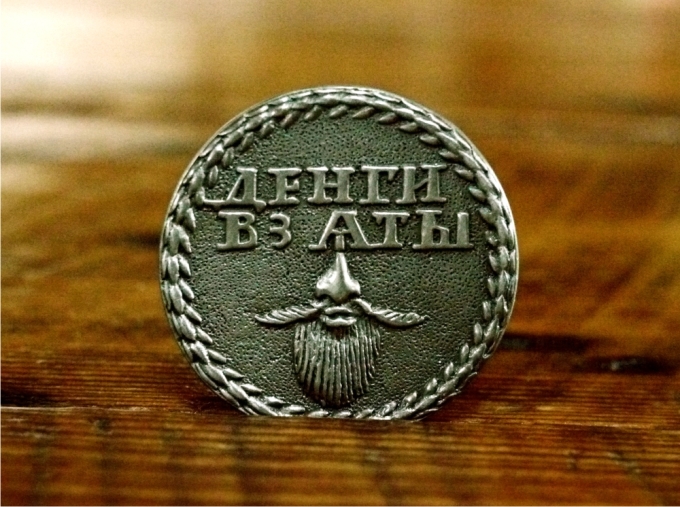
Imagen: Cortesía de beardtoken.
Les confesaré una cosa: no me gustan las barbas. Nada. Ni un poquito. Tranquilos, no se asusten, no se vayan tan rápido. Soy tolerante en lo que a una descuidada barbita de tres días se refiere. Lo que no soporto es la invasión de las barbas tupidas, de semanas, ¡meses incluso! a la que nos vemos sometidos últimamente. Pueden imaginarse que con la fiebre barbuda que coloniza nuestra sociedad de un tiempo a esta parte, por la cual se ha negado a las mujeres el derecho a conocer el rostro de quien las corteja, mi postura no es especialmente popular. Barbas con flores, artículos sobre por qué enamorarse de un hombre con barba, material y más material online sobre cómo cuidar, recortar, acicalar y mantener perfecto el peludo accesorio nos acechan por todas partes, y aquellos felices años en los que la imagen del hombre atractivo incluía siempre un perfecto afeitado se alejan tristemente hacia el pasado.
Dadas las circunstancias, parece que la lucha contra la invasión velluda podría ser propia de unos cuantos pognófobos exaltados (pognofobia: persistente, anormal e injustificado miedo a las barbas). ¿Pero y si les digo que nombres tan importantes para la historia como pudieron serlo Alejandro Magno, Enrique VIII de Inglaterra, o el zar Pedro I el Grande fueron también simbarbistas, y gobernaron en consecuencia? Les invito a hacer conmigo un repaso de la historia y a conocer a quienes pusieron su granito de arena por conseguir una sociedad afeitada.
Comencemos nuestro recorrido por la cuna de nuestra civilización: la antigua Grecia. Pero antes de observar directamente a sus habitantes, hagamos un pequeño rodeo para ver qué encontramos por el Olimpo. Es cierto, Zeus era quien manejaba el cotarro y poseía sin duda una frondosa barba. ¿Pero se pararían ustedes ante una estatua suya, salivando ante su abrumador atractivo? Quiero pensar que no. ¿Y si les hago esta misma pregunta, pero sustituyendo a Zeus por Apolo? ¿A qué entonces cambian las cosas? Díganme ahora… Este tal Apolo, ¿lleva barba? Exacto. El dios de la belleza masculina de la antigua Grecia lucía un perfecto afeitado. Y ahora, dejemos tranquilos a los dioses para volver al mundo terrenal.
La barba era común en la sociedad griega, donde su existencia se consideraba un símbolo de sabiduría, y su ausencia una señal de afeminamiento. Los grandes sabios y filósofos de la época solían llevar largas barbas, y en ocasiones, se utilizaba el afeitado como castigo para los delincuentes, al ser este visto como una forma de humillación. Las tornas comenzaron a cambiar ante la aparición del primer simbarbista de la historia: el gran conquistador Alejandro Magno. El soberano macedonio, a quien al contrario que a sus antecesores siempre vemos representado afeitado, fue entre muchas otras cosas el fundador del simbarbismo, al hacer que todo su ejército se armase… de navajas de afeitar. Alejandro consideraba que el vello facial podía poner a sus soldados en situación de desventaja en las batallas, ya que si sus enemigos tiraban de sus barbas en pleno combate cuerpo a cuerpo esto distraería la atención del combatiente, y podría ser aprovechado para asestar un golpe mortal. Espero que si usted está leyendo esto mientras se atusa la barba, corra raudo y veloz a su proveedor de cuchillas de afeitar más cercano. Recuerde: es por su seguridad, estar afeitado no solo le hará más guapo, sino que alargará su vida.
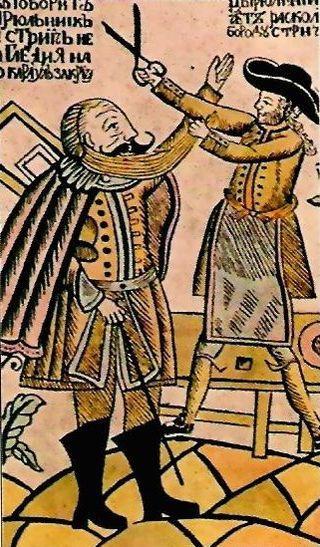
Caricatura del Siglo XVII, sobre el impuesto de llevar la barba. (DP)
Existen muchas similitudes entre la cultura griega y la romana, pero precisamente las barbas fueron uno de los símbolos que los habitantes del Imperio romano utilizaron para diferenciarse, y es que en Roma el hecho de ir afeitado pronto se convirtió en un signo de ser ciudadano romano y no griego. Esto no fue así desde el principio, sino que debemos agradecer tal cambio a Publius Cornelius Scipio Aemilianus Africanus (Escipión el Joven para sus amigos), conocido por haber sido elegido cónsul por aclamación pese a ser demasiado joven según la legalidad vigente («que las leyes duerman por esta noche», se dijo entonces), y por haber llevado a cabo la conquista de Cartago. Su verdadero legado para la historia, sin embargo, no es otro que el de haber sido en el siglo II a.C. el primer cónsul que se afeitaba a navaja a diario. Pronto se impuso la sensatez, y Escipión no hizo sino crear una tendencia que duraría siglos, hasta que el emperador Adriano (casualmente un tipo tirando a feo cuya cara estaba repleta de cicatrices), que gobernó el Imperio entre el 117 y el 138 , decidió volver a la barba, imponiendo con esto una nueva moda que permanecería durante casi dos siglos. Señal de que los romanos eran simbarbistas de corazón es la anécdota que nos cuenta que, cuando el senador M. Livius volvió a Roma tras años retirado de la ciudad, solo fue autorizado a entrar en el Senado cuando se hubo librado de su aspecto poco higiénico y, por supuesto, de su barba.
Uno de los argumentos más repetidos por los amantes de las barbas hoy en día, es que el vello facial contribuye a dar a quien lo porta un aspecto más masculino que si llevase el rostro al descubierto. Sin embargo, en la sociedad romana se sostenía todo lo contrario, siendo tradición el que los adolescentes dejasen crecer su barba hasta el momento de proclamar su entrada en la edad adulta. El pelo recortado era entonces ofrecido a los dioses, y el nuevo afeitado se interpretaba como un símbolo de masculinidad. En esta línea está también la tribu germánica de los Catti, cuyos jóvenes no estaban autorizados a afeitarse hasta haber matado a su primer enemigo y ser verdaderos adultos.
Recapitulando: la ausencia de barba aumenta la esperanza de vida, hace que los hombres sean más apuestos, da un aspecto limpio y, es además, señal de masculinidad.
Es hora de avanzar en el tiempo hasta la Inglaterra del siglo XVI, y concretamente hasta la corte de Enrique VIII. El monarca inglés ha pasado a la historia por haberse casado con hasta seis mujeres, separando la Iglesia anglicana de la católica de Roma por el camino. Sin embargo, los libros de historia tienden a olvidar que fue el primer soberano en establecer un impuesto sobre las barbas. Ya en 1447 Enrique VI había impuesto la prohibición de los bigotes, decretando el afeitado obligatorio del labio superior al menos una vez cada dos semanas, pero no sabemos si esta ley aplicaba al resto del vello facial. Es en 1535 cuando Enrique VIII, pese a ser portador de una frondosa barba, establece una sumptuary law por la cual se imponía una sanción monetaria a los ciudadanos que se negaran a afeitarse. Esta ley seguirá vigente hasta ser derogada en el año 1560, ya durante el reinado de Isabel I, aunque se desconocen los motivos por los que dejó de aplicarse.
El impuesto más famoso que conocemos en contra de las barbas se estableció en la Rusia de principios del siglo XVIII. Su artífice fue el zar Pedro I, el Grande, quien se ganó este sobrenombre no solo por su altura (medía dos metros y cuatro centímetros), o por haber occidentalizado en gran medida su país durante su zarato, sino sobre todo por la expansión de la cultura simbarbista a lo largo y ancho de su imperio. En 1697, el soberano ruso emprendió un viaje de incógnito por Europa con el objetivo de buscar aliados contra el Imperio otomano. Su empresa como tal fue un fracaso, ya que los países del oeste europeo estaban por aquel entonces entretenidos con la Guerra de Sucesión española, y tampoco les convenía renunciar a la paz establecida con el sultán otomano. Sin embargo, el viaje fue fructífero ya que propició que el Zar entrase en contacto con las más avanzadas costumbres occidentales, entre las que se contaba, cómo no, el afeitado regular. Así, a su regreso, ordenó a toda su corte afeitarse sus largas barbas, para que tuvieran un aspecto más europeo. Esta medida fue aceptada en su mayoría sin protestas, salvo por parte de los boyardos, que estaban al parecer muy orgullosos de ir por la vida con felpudos en la cara. Entra así en vigor el primer impuesto simbarbista del zarato, que gravaba con cien rublos anuales a los boyardos que quisieran guardar sus barbas.
En 1705, Pedro decide ir más lejos, y exige que todos los hombres se afeiten y se vistan de modo occidental. Esto disgusta profundamente a un grupo de fieles tradicionalistas, más conocidos como los viejos creyentes, que comienzan a referirse a él como «Pedro Belzebubovich»: Pedro, hijo del diablo, y se niegan a afeitarse. Lejos de echarse hacia atrás, Pedro comienza a poner en práctica una serie de medidas para quitar poder a la Iglesia ortodoxa, lo que enfada aún más a los viejos creyentes. Tras años de disputas, en 1722 se establece finalmente un impuesto anual para todo aquel que quisiese continuar llevando barba; que obligaba además a quienes lo pagasen a llevar un medallón con la inscripción «las barbas son ornamentos ridículos».
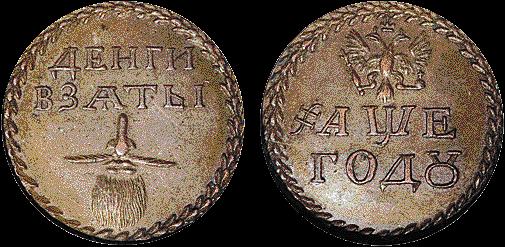
Medallón simbarbista. Imagen: Cortesía de beardtoken.com
Nos acercamos ya hacia nuestros días, y al evento que supuso la democratización del afeitado: la invención a finales del siglo XIX de la maquinilla de afeitar por King Camp Gillette. Hasta entonces, los hombres que deseaban afeitarse debían hacerlo utilizando navajas, lo cual requería especial destreza y podía provocar más cortes de los deseados. En el año 1901 se crea la American Safety Razor Company (posteriormente Gillette Safety Razor Company) y se comienzan a popularizar las primeras maquinillas. Durante la Primera Guerra Mundial, el ejército americano llega a comprar hasta tres millones y medio de maquinillas, y treinta y dos millones de cuchillas de afeitar. A partir de este momento, asistimos a grandes campañas de marketing que promocionan la imagen del hombre afeitado, y las barbas descienden en popularidad, comenzando a relacionarse solo con sectas y grupos marginales. Héroes de películas, grandes estrellas, políticos y otros referentes de la sociedad lucían un perfecto afeitado. La sociedad había visto la luz.
Casi un siglo más tarde, y pese a la irrupción de grandes avances como el acero inoxidable o las cuchillas de hoja múltiple en el mercado de las maquinillas, las barbas amenazan con volver. Pero estemos tranquilos. Siempre habrá un simbarbista esperando para luchar contra las tinieblas de la Oscuridad Velluda.

Patente de la maquinilla de afeitar. (DP)
¿Pueden resumirse todas las series en cuatro argumentos básicos? Cuatro son las historias, escribe Borges: una ciudad sitiada, una busca, un regreso y el sacrificio de un dios. Historias que según Borges «seguiremos narrándolas, transformadas».
Borges pretende establecer la esencia de las historias como ya hicieran Polti o Propp . La teoría de Borges es tan sencilla que uno tiene la tentación de comprobar qué tiene de cierto. Para ello tomo como base la lista de series más pirateadas que aparece en el artículo ‘Game of thrones’ most pirated tv-show of 2013 publicado por TorrentFreak con datos de BitTorrent. (Un año atrás, otra lista de Torrentfreak ayudó a ver si las series satisfacen los deseos humanos expuestos en la pirámide de Maslow). Hay dos motivos para elegir esta lista y no otra:
Resulta lento y fastidioso tomar las audiencias de los distintos canales de cable y en abierto de Los Estados Unidos (o de cualquier otro país). La lista de las series pirateadas tiene una única fuente de información: BitTorrent. Por otro lado, BitTorrent no parece tener interés económico en que determinados shows aparezcan o no en el listado: tan sólo refleja el número de descargas.
La lista del artículo es esta:

Una clasificación rápida muestra que la busca es el tema que predomina. No aparecen en la lista series de dioses que se sacrifican. (Más abajo, algunos comentarios sobre las series).

UNA FUERTE CIUDAD
La historia de una fuerte ciudad que cercan y defienden hombres valientes está representada por Juego de Tronos. La serie basada en los textos de George R. R. Martin también trata la busca (unos personajes buscan a otros o buscan su destino) y el regreso (al hogar, al trono). Pero es la defensa de una ciudad el tema que predomina a lo largo de las distintas temporadas: la defensa de Invernalia, la defensa de Desembarco del Rey, la defensa de El muro… En los dos últimos casos, concluyen en episodios aristotélicos. Borges escribe que el destino de algunos defensores y de agresores es la muerte. Tyrion no perece en Desembarco del Rey, pero aquella noche queda marcado con una cicatriz: el comienzo de su declive.
UN REGRESO
Borges pone Ulises como ejemplo. Y Oliver Queen, el protagonista de Arrow, tiene unas fuertes connotaciones homéricas: naufraga, al igual que el griego, y cuando regresa tensa su arco para acabar con los corruptos que rodean a su madre.
El teniente Brody de Homeland es otro personaje homérico: en este caso, seducido por sus captores como Ulises fue embrujado por Circe. Brody regresa para restaurar el orden, aunque no el que conocía: un orden nuevo.
UNA BUSCA
La búsqueda toma muchas formas. Dexter se busca a sí mismo: quiere saber por qué hace lo que hace. Los personajes de The Walking Dead, un lugar seguro. Los de Vikings, nuevas tierras para conquistar. En Suits, la verdad o restaurar el orden. Los protagonistas de Cómo conocí a vuestra madre y The Big Bang Theory buscan el amor, aunque Sheldon no quiera reconocerlo.
Borges señala que «Ahora, la busca está condenada al fracaso. El capitán Ahab da con la ballena y la ballena los deshace». (Spoiler borgiano). Palabras que describen la busca de Walter White. El protagonista de Breaking Bad consigue dinero, poder, reconocimiento… aunque con trágicas consecuencias para sí y para los suyos. Por otro lado, la segunda mitad de la quinta temporada es homérica: trata sobre el regreso del héroe para establecer el orden.
«Cuatro son las historias. Durante el tiempo que nos queda seguiremos narrándolas, transformadas», escribe Borges.
————————————————-
Gracias al guionista Rubén Ávila por descubrirme Los cuatro ciclos de Borges.
Imagen de Borges sobre el trono de hierro.
The post Las series más pirateadas y Borges appeared first on Yorokobu.

Inicialmente, esta reseña que arranca aquí debería haber estado destinada a comentar (de forma más o menos amplia) los pormenores que atañen al sexto y último volumen que servía a Joe Hill y Gabriel Rodríguez para dar la puntada final a ‘Locke & Key’, una serie que comenzó casi de forma desapercibida, fue ganando adeptos conforme avanzaba y que, tras su conclusión, es digna de ser receptora de las loas más desaforadas que uno pueda imaginarse. Debido a ello, a su carácter magistral y a que, sinceramente, me hubiera resultado imposible despedirme de ella de otra manera, los párrafos que encontraréis a continuación van a intentar servir como un repaso más o menos intenso a la práctica totalidad de lo que el hijo de Stephen King y el dibujante chileno han sido capaces de desarrollar a lo largo de los treinta y siete números sobre los que se extiende esta odisea en la que una familia es todo lo que se interpone entre nuestro mundo y el apocalipsis.
Pero antes de pasar al análisis per se, permitidme una pequeña digresión que, de algún modo, entronca con ciertos comentarios que he vertido en las recientes reseñas de ‘Crisis en las Tierras Infinitas’ y ‘Capitán América: Renacimiento’ y que mucha relación tiene con mi actual mirada desencantada hacia el cómic de superhéroes estadounidenses y el gran atractivo que encuentro mes a mes en lo que las editoriales más “modestas” tienen a bien ofrecernos.
Y es que, con Image a la cabeza (es asombroso lo que esta casa está haciendo mes a mes), lo que de un tiempo a esta parte está siendo publicado por Dark Horse, Dynamyte, IDW, Oni Press o Valiant tiene (y espero que siga teniendo por mucho tiempo) muchísima más validez que lo que DC o Marvel están siendo capaces de airear cada semana. Libres de cualquier atadura de ese lastre que es la continuidad (salvo alguna longeva serie de Image, todo lo que podemos encontrar es de corta edad) y, sobre todo, de la supremacía de la mirada empresarial sobre la auténtica calidad del producto, larga es la lista de colecciones que superan con mucho la media de cualquier producto de una de las dos majors. Y de calidad, de la de verdad, ‘Locke & Key’ tiene MUCHO que decir.
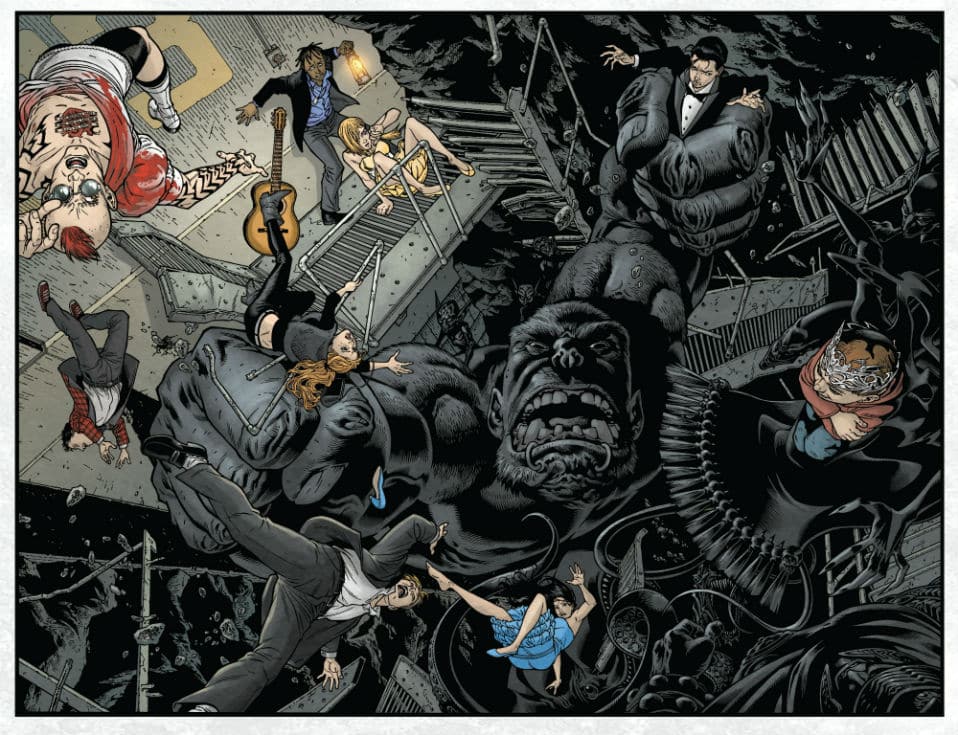
Dividida la responsabilidad del magistral talante de ‘Locke & Key’ entre guionista y dibujante, algo más que habitual a la hora de hablar de cómic, y sin entrar todavía a ponderar lo que la conjunción de ambos talentos otorga al empaque de la serie, es incuestionable que el mayor éxito que ha conocido hasta la fecha IDW no habría sido posible de no haberse alineado en perfecta sincronía la increíble forma de Hill a la hora de tratar los personajes y de hilvanar una trama cosida a la perfección y la precisión narrativa y de definición de “actores” de la que Rodríguez hace gala desde la primera a la última página de esta lectura sin par.
Y como sería complicado (más no imposible) querer aproximarnos aquí a todos y cada uno de los diferentes personajes que Hill pone en juego en esta singular partida de ajedrez entre el bien y el mal que es ‘Locke & Key’, baste con decir que las precisas voces de todos los que van apareciendo a lo largo de los treinta y siete números insuflan a cada uno de ellos una tridimensionalidad asombrosa y que, como muestras más singulares de ello, podríamos destacar tanto el personaje de Lucas “Dodge” Caravaggio —un VILLANO que sobrecoge en cualquiera de sus múltiples encarnaciones— y Roof, ese chico con aparente retraso intelectual que será pieza clave en el asombroso clímax final.
Tanto ellos dos, como los cuatro integrantes de la familia Locke —todo lo que concierne a Bode, auténtico motor silente de la acción, es de genio—, los compañeros de Kinsey del instituto y el más insignificante de los secundarios encuentran respuesta a esa singularidad con la que son desarrollados por Hill en el impresionante arte de Rodríguez: atento no sólo a los personajes sino también a la arquitectura y los paisajes que los rodean, los encuadres, la planificación de la página, un inolvidable homenaje a Bill Watterson o esas contadas splash pages que quitan el hipo, no debería extrañaros si tardáis un poco más de lo habitual en leer un volumen de ‘Locke & Key'; algo lógico cuando, al pasar la mirada por cualquiera (CUALQUIERA) de sus hermosas páginas, resulta inevitable escudriñar una a una esas viñetas cuajadas de detalles que, ante todo, exudan una pasión por el arte secuencial hasta cierto punto desconocida en el tebeo yanqui actual.
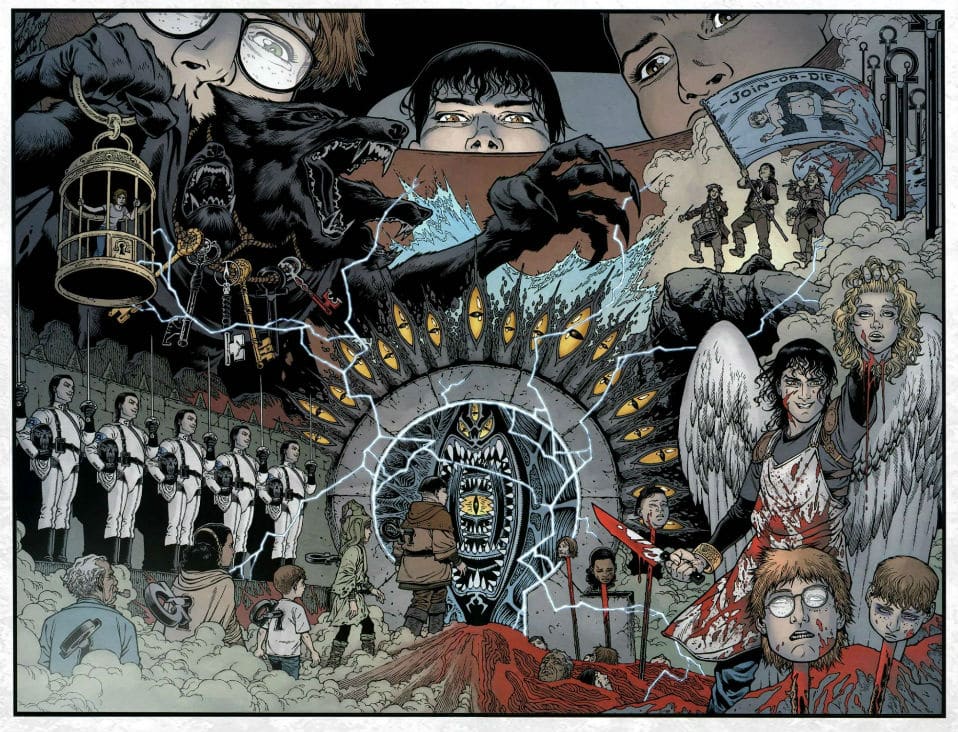
Si analizados por separado es muy improbable que alguien fuera capaz de encontrarle alguna pega al trabajo de Joe Hill, y aún más que algún listillo tuviera los reaños suficientes para pretender arremeter contra el despliegue de manejo de los mecanismos del arte secuencial que hace Gabriel Rodríguez; es cuando son considerados como un todo insuperable cuando ‘Locke & Key’ comienza a desvelarse como la incuestionable OBRA MAESTRA del noveno arte que es. Y no, no exagero. Ni siquiera un poco. En serio. Dejad de preguntároslo.
Es comenzar la lectura de ‘Bienvenidos a Lovecraft’ y quedar atrapado irremisiblemente en las intrincadas redes de un relato de estructura modélica, que va desplegando sus misterios poco a poco, que se guarda geniales bazas en la manga como los diversos flashbacks que nos transportan a pasados cercanos y lejanos (atención especial merece, por su importancia, la apertura de ‘Alfa y Omega’) y que, llegadas sus páginas finales, logra lo que está al alcance de muy pocos: rematar la faena sin que todo el esfuerzo anterior se desmorone cual castillo de naipes. Vale, podría achacársele cierta concesión a la galería en lo que respecta a un personaje en concreto, pero en lo que a este redactor concierne, lo bien que está traído dicho apunte sólo potencia aún más los infinitos valores de esta maravillosa historia.
El cierre de ‘Locke & Key’ es, al cómic, lo que los finales de ‘Lost’ o ‘Breaking Bad’ supusieron para la televisión. Claro está que el impacto mediático de la serie de Hill y Rodríguez no se puede medir de la misma manera que el de las citadas producciones audiovisuales, pero el hueco que deja su ausencia es uno que muy difícilmente podrá ser llenado. Queda el breve consuelo de que, tan solo con alargar la mano y volver a comenzar la lectura, uno podrá regresar a ese fantástico pueblo que es Lovecraft y a esa inquietante Key House que, cuando abrió sus puertas gracias a una de sus muchas llaves, lo hizo a un microcosmos sin parangón al que, como a los grandes, siempre echaremos en falta…