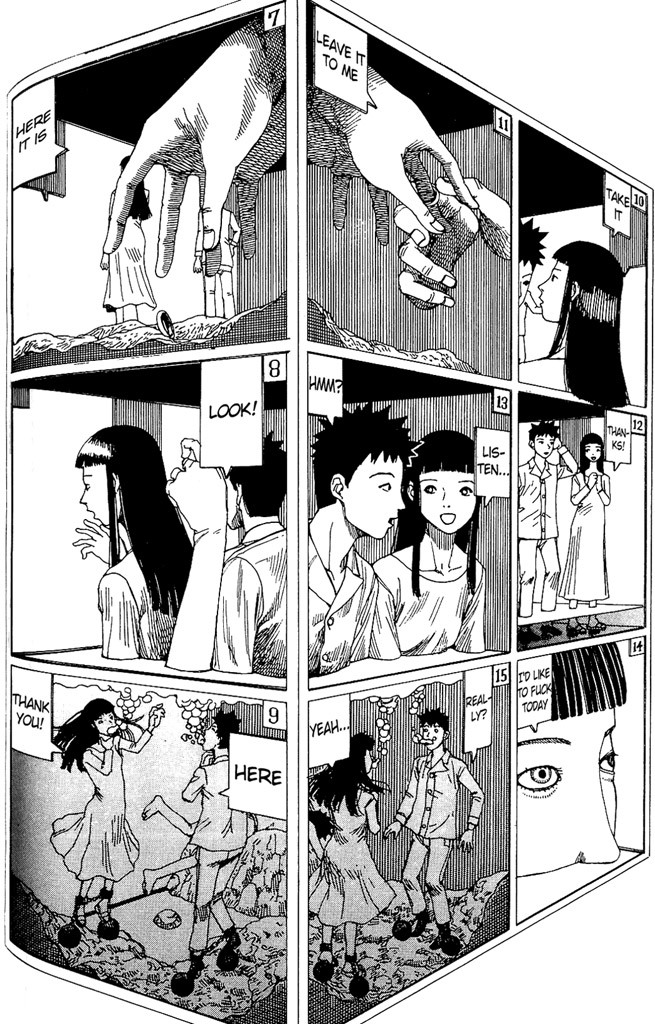
This week’s Underwhelming Lovecraft Comic Synopsis is the 1921 short story “The Outsider”, which saw print in the April, 1926 issue of Weird Tales. It has a shocking twist ending where you find out he’s a monster and crap, I just ruined it. Sorry.
This week’s Underwhelming Lovecraft Comic Synopsis is the 1921 short story “The Outsider”, which saw print in the April, 1926 issue of Weird Tales. It has a shocking twist ending where you find out he’s a monster and crap, I just ruined it. Sorry.
Finalmente se ha confirmado: Devir se hace con Homoludicus
El sector de los juegos de mesa va evolucionando y, por lo tanto, aparte de lanzamiento de nuevos juegos e ideas, también se producen movimientos empresariales que son interesantes ya que afectan de forma directa a los jugadores, como es nuestro caso. Y, la que se ha conocido, tiene como protagonistas a Homoludicus y Devir. Nada más y nada menos.
Ya es totalmente oficial, incluso en la página de Facebook de Devir así se anuncia con una foto de la firma del acuerdo, por el que la segunda editora se hace con la primera y, por lo tanto, con todo su catálogo de producto. Es decir, que puede estar germinando un momento en el mercado similar al que en su momento se produjo con las pizzerías. Me explico: que pese a ser un momento bastante bueno para el sector de los juegos de mesa, algunas compañías no aguantan bien la presión y, de esta forma, son absorbidas.

Esto es lo que ha podido pasar en este caso, donde Homoludicus no parece que estuviera en un momento ideal o, al menos, no se ha visto con fuerza para seguir en un mercado donde hay formidables competidores, como es el caso de Devir (sin olvidar a otras editoriales que también son muy potentes, como puede ser Asmodee).
Sin entrar en las cuentas, que a los jugadores no nos interesan en exceso, hay que decir que la compra por parte de Devir no es algo malo, ni mucho menos. Se han comprometido a mantener el catálogo de juegos de Homoludicus, un diez por esto, y han gestionado el proceso de una forma modélica. Además, esto asegura que “todo queda en casa”, ya que los planes de futuro también seguirán llegando y la empresa comprado no ha caído en manos foráneas.
Otro factor esencial para pesar que es una buena decisión es que la viabilidad de la hoja de ruta, con las modificaciones que sean necesarias, continúa. Y no se debe olvidar que la calidad de los productos de Devir, tanto por contenido como en materiales, está fuera de toda duda. Por lo tanto, mantengo que es una buena decisión.

Sólo queda despedir a una editorial como Homoludicus, que ha tenido una aventura y que nos ha suministrado juegos tan interesantes como Agricola, Coloretto o Le Havre (y, como mi buen amigo Adrián dice, Ubongo… que nunca debe faltar para reírse un rato). Evidentemente habrá factores económicos y personales complicados, pero a buen seguro que se solucionarán correctamente y Devir llevará a buen puerto la compra. Por cierto, esta última compañía cada vez es más potente, lo que hay que valorarlo como merece y reconocer su buen trabajo.
Ahora nos ponemos el “gorro” de bróker y pensemos cuál será la próxima compra o fusión ya que, en el momento en el que está el sector, a buen seguro que las habrá.
La entrada Finalmente se ha confirmado: Devir se hace con Homoludicus aparece primero en LudoNoticias, todo sobre juegos de mesa y simulación.
For instance, did you know that Kim Kardashian is the “porn star” women search for the most? As could be expected, NSFW language.
The following statistics come from the folks at Pornhub's data team. Its members were able to look at the team's analytics and generate anonymized data on what the site's female users are looking at.


It's a relatively new kind of pornography. It includes sites like X-Art, Erotica X, and Dane Jones. The scenes are usually all shot in HD with an emphasis on sensuality.

Most archeologists bristle at the mention of Indiana Jones, and for good reason. In this piece, originally featured at Last Word On Nothing, journalist Erik Vance takes a close look at the questionable professional ethics of Henry Walton Jones, Jr. and arrives at an unsettling conclusion: The man is a looter.


Today is International Talk Like A Pirate Day, but before you get carried away with your ahoys, and your mateys and your timber-shivering, there's something you should know: Pirate-speak, as most of us know it, was invented by Disney; and pirates – real pirates, that is – probably sounded nothing like they do in the movies.

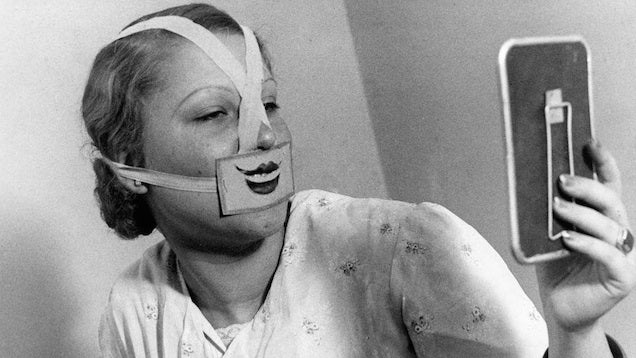
A tragic suicide epidemic gripped Budapest, Hungary in the wake of World War I — and some believed it was all caused by a popular song. Even weirder than this idea, though, was how the city tried to combat the suicide problem with a "Smile Club."


It’s a nasty trap we all fall into. The values we grew up with must be the right values. The belief system we have must be the correct one. The decisions we are making in life are the only decisions we can make. This stuck type of mindset is only further cemented by a culture that values convictions over skepticism, the predictable over the spontaneous, and has downright replaced rational discourse with yelling, name-calling, and metaphorical circle jerks for those who think the same things as you.
Even if you only do it once in your life, take a moment to genuinely question why you think the things you do. Question why you consider something proper or improper, right or wrong, in line or taboo. Question every assumption. Question every value judgment. Doubt every single thing about your life. Doubt your views on the world, your friendships and relationships, what you want out of life, what you’re doing with your time. Come up with an actual, cohesive explanation for why you feel the way you feel and do the things you do — an explanation that does not come from the automatic assumption that you were right in the first place.
There is nothing to lose: either you’ll strengthen what you already have because you will have found proper rationale (as opposed to just regurgitating what you have heard and seen all your life), or you’ll drop old habits and patterns that do not serve you or the world.
Complaining has essentially been a rite of passage for most of us, starting somewhere in junior high and never really stopping. We’d complain about teachers, homework, friends, enemies, boyfriends, girlfriends… this morphed into work woes, boss woes, co-worker woes, financial woes. In an ironic twist, “happy hour” would typically be spent complaining about what bothers you.
And it feels good to complain! You bond with the people around you with your shared misery, you let off some steam…no harm done, right? Unfortunately, you’re doing quite a bit of harm: since it does feel good to complain, you’re creating a behavioral pattern that will only make you more likely to complain in the future. Complaining actually makes you a more negative person, making you actually seek out the negative so you can talk about it and continue that twisted “feel good” sensation.
It’s time to drop it. If you want to be happier in life, let go of complaining, even if everyone around you is doing it. Because — really — if your only way of bonding with someone is through shared misery, maybe it’s time to rethink that friendship, as well as that job (see #1).
Life is tough. Life is frustrating and unfair. People do things that tick us off. But we have a choice. It doesn’t feel like a choice at first, but it is a choice: we can let it get the best of us and let it fill our days with complaints, or we can channel that energy into something more productive, like communicating what needs to be communicated — or finding a way out of a toxic situation.
I define “finding yourself” as, “seeing you how you act and interact in a multitude of contexts and finding the areas of your personality that overlap.” Finding these contexts mean different things to different people. For some, this means travel. For others, this means trying new hobbies. And for others, this means changing career fields. But there is one thing each have in common: each requires you to step out of your comfort zone.
Board that plane to San Juan. Step into that MMA gym. Enroll in that nursing course. Agree to try rock climbing or salsa dancing. Agree to take on a different set of roles at your job. Lace up your shoes and try jogging. Like Mary Schmich advised in her 1997 article (which later became known as, “that sunscreen song” to anyone born before 1990): do one thing every day that scares you. Your potential rests just outside of what is familiar. And you’ll never get a grasp of who you are and what you are capable of if you don’t challenge yourself.
I had a very nasty habit for the majority of my life: I kept far too close the people that were nothing but toxic for me. From “frenemies” in junior high, who’d only let me tag along so they’d have someone to make fun of, to insecure friends as a young adult, who were resentful of every little thing I did that they didn’t get to do as well, to coworkers and family members and “real world” friends that I was better off keeping my distance from.
There was always a reason for keeping them around: they weren’t as bad as they seemed, they were good people underneath it all, I’m sure it was something I had done, eventually they’ll be nicer… They never changed, never became nicer — and, in some cases, grew more resentful or self-absorbed or mean. And all it did for me was keep my self esteem and self worth down.
I’m not saying to cut ties with people who are not constantly at your beck and call, but to recognize when people are a toxic influence in your life and be brave enough to walk away from them. There’s always a reason for keeping someone around, always a reason for letting their behavior affect you negatively. Even if it’s just an emotional distancing, leaving those people behind is a must.
When I was a kid, I wanted to be a super famous triple threat: dancer, actor, and singer. Unfortunately, I’m 5’11”, have two (very big) left feet, never learned sheet music, and never even auditioned for a community play. When I was 12, I decided I wanted to be a writer when I grew up. I was going to churn out novel after novel and be like Stephen King — only, y’know, Stephanie King, because I’m female. I swore I would write my first novel before I graduated college, get published before I was 25, and be a megastar novelist by the time I was 28.
Well, I did write my first manuscript before I graduated college, but it has yet to be sold (much like the other two manuscripts resting on my hard drive), and, with my 28th birthday barely 48 hours behind me, I’m nowhere near ‘megastar’ status, in anything in my life. On the more pragmatic end, I swore up and down in college that I wanted a job in the publishing world. All it took was one internship to make me change my mind. In 2009, I swore I was destined to be a preschool teacher. I spent four years in the early education world before I ended up leaving the entire field behind and going back to school to become a registered yoga teacher. I also thought I’d never get married or leave Boston; I celebrated my third wedding anniversary a few months ago and have been making mortgage payments on a house in a small town in New Hampshire since 2013.
Life puts you on some serious zigs and zags. What you planned, what you expected, and what you get are three totally different things. Life is uncertain and the only thing we can do is embrace that uncertainty. Fighting tooth and nail over life going unexpectedly will only bring about unneeded suffering. Life gets a lot easier when we accept that unknown; accept that life will throw us curveballs and not go according to plan. We only get two choices: we can fret over every little detour or we can enjoy the view, regardless of what road we’re on.
…
You don’t have to wait until you’re closing in on 30 to do these things, nor is it too late to do them if you’ve already passed that milestone. But these are five things that can help ensure we’re not scrambling at 50 or 60, wondering what happened with our lives. 


The design of a food label, the size of a package, the name of a restaurant item: for more than two decades, Cornell professor Brian Wansink has been studying how these little things add up to shape the decisions we make about our food — and reshape our bodies. You may remember Wansink from such classic research as "the bottomless bowls" study, which showed that people will mindlessly guzzle down soup as long as their bowls are automatically refilled, or the "bad popcorn" study, which demonstrated that we'll gobble up stale and unpalatable food when it's presented to us in huge quantities.
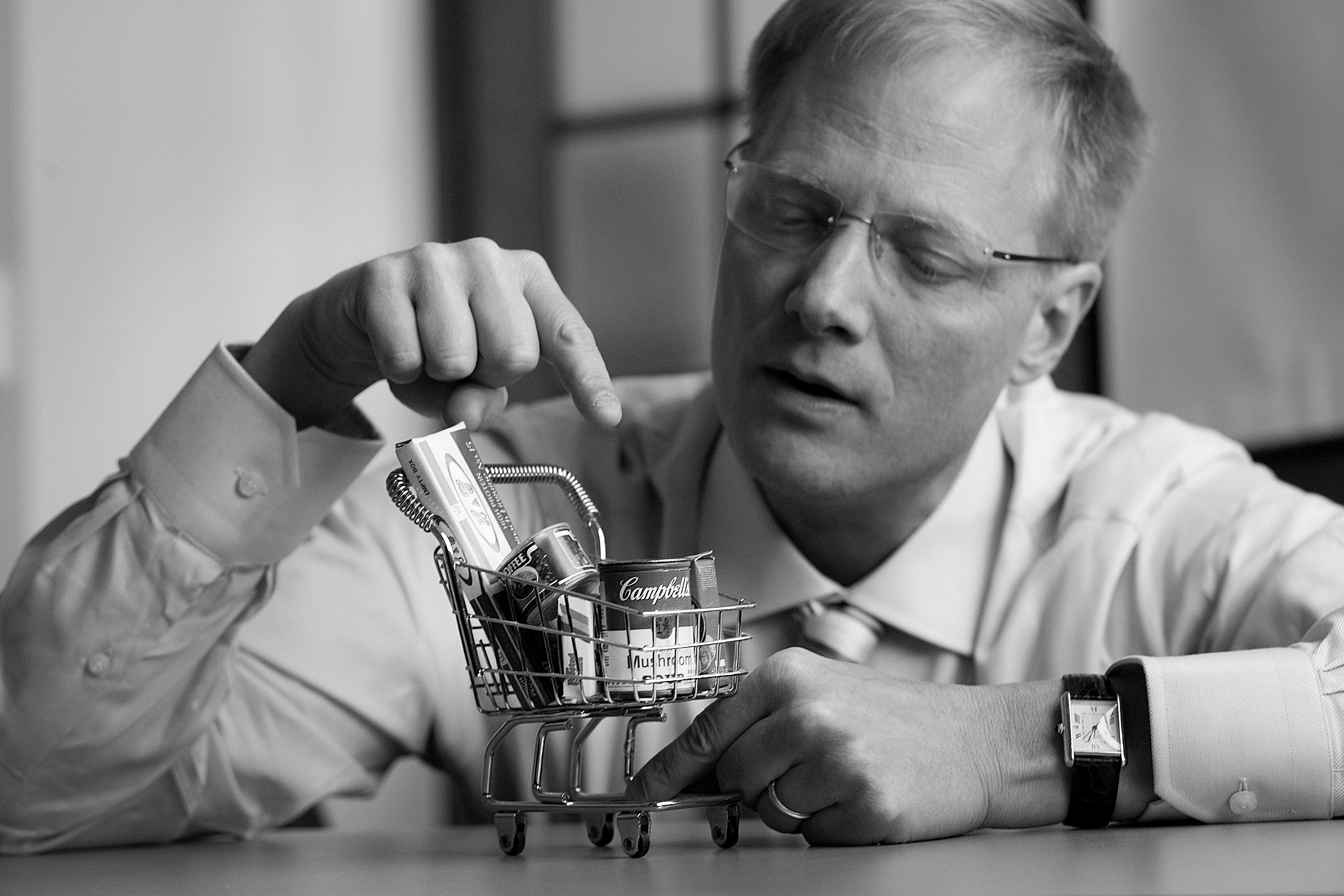
Brian Wansink. (Photo: Jason Koski.)
Over the years, Wansink has become increasingly convinced that, perhaps more than anything, we need to redesign our environments to nudge people toward healthy eating. "It's easier to become slim by design than slim by will power," he told Vox. "Design you change once; will power you have to do every day for the rest your life."
With a new book out, Slim by Design, Vox spoke to him about the small changes he thinks people should make to live healthier lives and how consumers can be empowered to alter their surroundings — from restaurants to grocery stores and schools — in a way that could help us all lose weight.
Julia Belluz: What made you start looking at the impact of our surroundings on our bodies?
Brian Wansink: I have been researching in this area of how you can influence healthy eating for 25 years. We had been doing research on packaging, and found that smaller packages mean people end up eating dramatically less food. I found people would pay a premium for smaller packages. I told M&M, Mars and Nibisco to make 100 calorie packs. They didn't believe it at first, but they eventually made them, and that ended up being a huge success. Since then, I've been looking at what are the things in our environments that trip us up. With Slim by Design, I'm looking more broadly across society: what we can do ourselves, in our homes, our restaurants, where we shop, to be healthier.
JB: In the book, you note that most Americans eat more than 80 percent of their food within five miles of where they live, and you call for a consumer-led movement to re-engineer these spaces. Can you tell me about what this looks like?
BW: For example, we have this 100 point scorecard for lunch rooms in schools. Instead of banning chocolate milk, it gives schools points if they make white milk more convenient and attractive to drink. If there is fruit that's provided within two feet of a cash register, they'd get another point. If they name the healthy vegetables cool names, another point. Most school lunchrooms initially only score between 20 to 30 points. These changes can be made in a weekend and cost almost nothing to do."The reason I'm not very sanguine about policy is that it tremendously backfires. I can guess in 1920 that they thought prohibition was going to be a great Idea."
JB: So consumers hold the answer to the obesity crisis?
BW: Up until now, consumers haven't really known that they could ask a restaurant to change, or ask their workplace or school to make changes. They didn't know what to ask. That's been my mission for the last seven years: trying to figure out what can be done that works. If we get a restaurant to offer half-size portions, it's not just us who benefit, it's all the people who didn't realize to ask for half-size portions. Then a sea change happens. To cause a transformation, we can't do it by shaking a finger at restaurants or grocery stores. You have to do it by hitting it where it counts the most: having consumers say 'here's what I want.'
JB: Handing the responsibility to the individual somewhat takes this problem out of the realm of policy. You aren't a fan of policy solutions, are you?
BW: The reason I'm not very sanguine about policy is that it tremendously backfires. I can guess in 1920 that they thought prohibition was going to be a great idea. There's a lot of things I don't think it would be a good idea to ask restaurants to do, that won't make them more money, but there are a lot of things they can do that would help us eat better and they'd make more money: offering half size portions, not offering bread baskets.
What we've tried to do in the past is to fight the obesity crisis by asking the individual to do it: saying it's will power and education. We tried to become slim by willpower and then slim by policy, and that didn't work well. What we haven't done is engage the consumer.
JB: What are the health hazards people can change immediately?
BW: People need to make sure they have a fruit bowl within two feet of where they regularly walk in their kitchen. The second change I'd make is don't eat lunch at your desk. Go out to lunch. Get away from the desk. You'll not only feel happier but you'll be less likely to overeat snacks and you're going to enjoy things more. The third thing I'd do would be to go this website and print out the scorecard for your child's school and give it to the food services director and principal to work on.
JB: If it's our surroundings that count when it comes to obesity, how do you explain the individual-level differences among people in the same places: the fact that some members of a household for example have vastly different weights.
BW: It's a good question. To understand that, we're going to have a Slim by Design registry. We want to know what healthy weight people, who have never had a weight fluctuation, know that the rest of us don't know. If we knew what they did differently we would have some idea of how we might want to change. So this registry invites people to come there and if they can qualify, we ask them about 100 different questions: describe your typical breakfast, what do you do when you're hungry in the afternoon. We ask them questions and the goal is to come up with a series of answers about what slim people do that makes them thin or able to avoid food and not have these food cravings most of us have.
JB: We know obesity is a disease that disproportionately affects lower income, less educated, and minority populations. How do you reach these consumers?
BW: If only twenty percent of us are getting empowered, those people are going to benefit natively. All of a sudden, fast food restaurants put healthy stuff at the top of menu boards, or have little table tins that advertise water or milk instead of soda. It's all the people who didn't even know they had a problem that will benefit by being in an environment that we've changed.

The Satanic Temple recently released a children's coloring book in response to a court ruling in Orange County, Florida, which held that it is legal to pass out religious literature in public schools.

The Satanic Temple
The coloring book is pretty clearly a PR stunt — like the Temple's attempts to erect a statue of Baphomet on the grounds of Oklahoma's statehouse — but it's an amusing one, and it has a political point to make.
In a statement regarding the court ruling, Lucien Greaves, spokesperson for the Temple, said:
We would never seek to establish a precedent of disseminating our religious materials in public schools because we believe our constitutional values are better served by respecting a strong separation of Church and State. However, if a public school board is going to allow religious pamphlets and full Bibles to be distributed to students — as is the case in Orange County, Florida — we think the responsible thing to do is to ensure that these students are given access to a variety of differing religious opinions, as opposed to standing idly by while one religious voice dominates the discourse and delivers propaganda to youth.
The coloring book also contains activities, like connecting the dots to make a pentagram.

The Satanic Temple
And coloring Annabel's Satanist-literature-lined bookshelves.

The Satanic Temple
Or decoding a secret message that reads, " Audi Preces Mea: Satana Blessed Be!"

The Satanic Temple
Though Satanists take their name from the biblical antagonist, many of them don't actually worship the Devil. For Satanists, the biblical figure of Satan, portrayed as the rebellious creature who dared to defy Almighty God, represents the qualities of free thought, autonomy, and ingenuity. It is the pursuit of these qualities that is common to all forms of Satanism.
At the same time, there are plenty of people in the US that do believe in Satan. According to a 2007 Gallup poll, most (70 percent) of the respondents admitted to holding the belief. And this belief is on an upward climb. In 1990, 55 percent of respondents said they believed in Satan — by 2007, that number was up by 15 percentage points.

You can purchase a copy of the Satanic activity book here.

Scotland is remaining in the UK after a referendum for independence lost decisively at the polls Thursday. And it looks, from one snap analysis, that that's exactly what Scotland's richest citizens wanted. Rich areas, it seemed, voted overwhelmingly for staying in the UK, while poorer ones leaned towards independence.
Susan Johnston, a University of Edinburgh biologist, was curious about the relationship between income and independence votes. So she ran a simple regression attempting to correlate the percentage of votes with independence in any one area of Scotland with disposable income per capita in that region. Here's what came out:

X axis is disposable income per capita in each region, Y axis the percentage of people voting against independence. (Susan Johnston)
According to Johnston, change in income predicts about 55 percent of any region's likelihood of voting for independence. So, all things being equal: the wealthier a region was, the more likely it was to oppose independence. But wealth was hardly the only factor that mattered.
Johnston's analysis is pretty quick-and-dirty: the election results just came out this morning, so there's no time for peer-review quality statistical work. But her findings make a lot of intuitive sense. Perhaps most obviously, they're consistent with the pre-election polls, which found consistently higher levels of support for independence among lower-income Scots.
Welfare state politics were a leading cause of support for independence: Scots in general are more left-leaning than other Britons, and independence supporters wanted a bigger government than current British politics allowed for. Poorer Scots stand to benefit the most from this more generous welfare state, so it make sense that they'd be the most ardent supporters of independence.
And, accordingly to this comically absurd Tatler article, Scotland's 1 percent saw the referendum as a fundamental threat to their way of life:
The Scottish aristocracy is nervous. Change is afoot. 'As one whose family was involved in the 1707 Act of Union, I can't really comment on the referendum,' barks one of the country's pre-eminent dukes. 'But the buggers are out to get us!' The buggers, according to His Grace, are those currently trying to persuade the Scots that they should peel themselves off from the rest of the United Kingdom and become independent. The vote is on 18 September, and impassioned campaigning on both sides is in full flow. But were you to skip 300 or so miles northwards from Berwickshire to John O'Groats, combing heather and dredging lochs as you go, you'd be hard pushed to find a single Scottish grandee who favours the split. Will their 80,000-acre estates be parcelled out to crofters? Might SNP leader Alex Salmond bring in a swingeing castle tax? Will treasonous Scots cast off the Queen as their head of state? It's causing disquiet among the ranks, if not the file.
The astonishing display of privilege panic documented in the article is pretty entertaining, and I'd suggest reading it. But my guess is the estate holders are a good deal more calm today. They've won.

All birth control pills use hormones to prevent pregnancy. Some contain a hormone called progestin. Others contain two hormones, progestin and estrogen. All of them work by doing two things: They prevent women from ovulating, and they cause the cervical mucus to thicken, which makes it more difficult for a sperm to penetrate and make contact with an egg if the woman is ovulating.
In a way, birth control mimics the body's response to pregnancy. "There is some truth to the idea that birth control pills trick your body into thinking you're pregnant," said Dr. Vanessa Cullins, Planned Parenthood's vice president of external medical affairs. "When you're pregnant, you don't ovulate, and the cervical mucus is thickening to prevent anything from easily getting into your uterus."
If women follow the exact instructions for taking birth control pills — every day, at the same time — they prevent pregnancy in 99 percent of all cases. But lots of people don't do that. In real life, birth control pills have a 9 percent failure rate. That means nine of every 100 women using birth control pills as their only means of contraception become pregnant in any given year.
"It's hard to actually [take the pill at the same time every day] when you're living a busy life," Cullins says. "If you take these pills every single day, the chances of getting pregnant is 1 percent. But typically the chance is much higher than that, because people miss pills. This isn't just true with birth control pills. It's true with any prescription medication."
Birth control pills have a higher failure rate than other contraceptives, like intra-uterine devices (IUDs) or birth control rings.
The main difference: Pills have to be taken every day, which leaves more room for human error.
I asked Cullins whether there is wiggle room in terms of when birth control is effective. For instance, if a birth control user typically takes a pill at 9 am but one morning waits until 11 am, is she at greater risk for pregnancy?
The answer is no. Cullins said that for those taking progestin-only pills, "on time" means taking the pill within the same three-hour window daily. A three-hour difference is not enough to lower the pill's efficacy. "That's acceptable," she said.
For combination progestin-estrogen pills, the space is even wider. Women who miss one day of their pill can take two pills the next day without reducing their birth control's effectiveness. This chart with data from Planned Parenthood shows the organization's recommendations for how to handle a missed combination pill.
"Two or three missed pills is when you need to begin to get concerned, and once you get to three missed pills, you need to consider emergency contraception and using backup birth control until she has finished the first week of the pills of the new package that is begun after her bleed from emergency contraception," Cullins said.
Missing a period while on the pill doesn't indicate anything abnormal, Cullins said, as long as you have been taking the pill consistently and correctly each day.
"It's not dangerous not to have your period while on the pill," she says. "What happens is, over time, the uterine lining can become very thin if you take the pill regularly. All that means is if you stop bleeding on the pill, the lining has become so thin that you don't have anything to bleed from."
This is not permanent: When a woman stops taking birth control pills, the ovaries start making more estrogen, the uterine lining gets thicker, and women start to bleed again.
Missed periods after taking your pills incorrectly, however, could indicate a pregnancy. In that situation, it's worth taking a pregnancy test.
There are two antibiotics that researchers have found make birth control pills less effective: griseofulvin, an antifungal used to treat athlete's foot and ringworm, and rifampicin, which is typically used to treat tuberculosis.
The reason that happens is that these drugs speed up the liver's metabolism, which makes the liver metabolize the hormones in the birth control faster. As a result, hormones leave the blood stream faster and are unable to adequately affect the ovaries to prevent ovulation or the cervix to prevent thickening of the cervical mucus.
Lots of antibiotics, not just the two listed above, come with warnings that they'll make birth control ineffective and suggest using a backup method of contraception. While a backup method is never a bad idea, there's actually sparse evidence that these other drugs make birth control less effective. "Uncertainty persists with respect to the other broad-spectrum antibiotics," researchers in the journal Contraception wrote in a review article about interactions between birth control and antibiotics. They argue that in light of that uncertainty, it is completely appropriate for women to use a backup method — but not to ditch their antibiotics out of concern over interactions.
Lots of birth control packs have four weeks of pills: three weeks of pills that prevent pregnancy and one week of pills that are inactive.
Women can safely skip that last week of pills and still prevent pregnancy, Cullins said. But that doesn't mean the last week's pills are just sugar pills. As it turns out, some of them actually have active ingredients to make the pills work better or aid in women's health.
"Some of the pills might have low-dose estrogen for three to four days, to help prevent breakthrough bleeding [bleeding in the middle of a cycle]," she said. "Others sometimes contain iron or folic acid or other vitamins. And the hard part about skipping the pills is that you have to remember exactly when to start back up."
The number of women getting free birth control pills has quadrupled under Obamacare, recent research shows. Two-thirds of women in a recent Guttmacher Institute survey reported paying zero dollars for their contraceptive.
But that still leaves one-third of women paying something for birth control, even after Obamacare has mandated it be free.
The one-third of women still paying for their birth control are most likely in grandfathered health insurance plans. These are the plans that existed before Obamacare that do not have to comply with the contraceptives mandate (or most other Obamacare requirements, for that matter).
Grandfathered plans are, however, disappearing. When a company significantly changes its insurance (drops a benefit, for example, or changes what enrollees have to pay), then it loses its grandfathered status. Just over a quarter of health insurance plans are currently grandfathered, a number that has steadily dropped since Obamacare passed.
As that figure declines, the number of women accessing no-cost contraceptives will likely continue growing.
"But it's a genre that's near and dear to my heart, and I just thought that there's a freedom in British sitcoms for characters to not always be 'broadcast likable,' and thus I thought it would be a nice way to take a show like Mad About You and update it in terms of how young society behaves now and also to bring in some characters that are actually kind of shitheads at times. It's a tall order to make people fall in love with people who are kind of dicks, but I thought it would be worth trying, and I think it has been."
- Creator of FX's hit new series You're the Worst Stephen Falk explains his love for the romantic comedy genre and the British approach to likability in an interview with The A.V. Club.
0 Comments
Tomorrow is George R.R. Martin's 66th birthday. In honor of the occasion, Dustin Rowles at Uproxx has compiled a list of facts about the celebrated writer/producer. The focus of this list is on Martin's personal life.
For instance, when George R.R. Martin was in the sixth grade, he impulsively decided to stop buying and reading comic books which, prior to that decision, was a significant hobby of his. At the time, young George had a collection of Superman comics, which he gave away. Just in time, and in what could be considered an omen of his future success, he changed his mind six months later, buying first editions of The Amazing Spider-man and The Fantastic Four. Martin now says they could fund his retirement.
Read twelve more facts about George R.R. Martin here.
Image Credit: Karolina Webb

If you were around in the 1970s, you might remember the McDonalds coffee spoon, which was nicknamed the McSpoon. It was small, well-designed, perfect for stirring coffee, with a scoop about size of a nostril, and could hold exactly 100 milligrams of cocaine. Of course, most people used the disposable spoon to stir sugar in their coffee, but it was the Model Drug Paraphernalia Act that brought the minority use of the spoon to the general public. Under the act, which was only enacted at the state level, innocuous items such as baggies and straws could be labeled a “drug paraphernalia.”
Just prior to the creation of the Model Drug Paraphernalia Act, then-Senators Joe Biden and Charles Mathias held a hearing in Baltimore, where the Paraphernalia Trade Association (who represents headshop vendors) could voice their concerns. The PTA swiftly went about arguing that, under such a broad definition, anything could be deemed “paraphernalia.”
According to minutes from the hearing, one PTA representative attempted to make a mockery of the proposed law. “Look at this,” he facetiously told the panel, thrusting a McDonald’s coffee stirring spoon above his head. “This is the best cocaine spoon in town and it’s free with every cup of coffee at McDonalds.”
His intention was to highlight how vague and overreaching the act was, but it set into motion a storm of controversy for McDonalds and the demise of the McSpoon. Oh, you can still get one, but they’re collector’s items now, and will cost you. Read the story of the little spoon that was a casualty of the War on Drugs at Pricenomics. -via Metafilter
Cambodian surf rock artist Ros Sereysothea
When a friend invited me to a “Cambodian surf party” in his run-down apartment in Sheffield, England, I figured he was just being a pretentious idiot. It’s a retro novelty, I thought. The kind of thing people who collect surrealist-noise vinyl lose their minds over because it’s kitsch and obscure.
Upon arrival in Sheffield—where there was a distinct lack of anything Cambodian—my drunk friend rushed straight over to his laptop and loaded a song up on YouTube. “Listen to this,” he said. “It’ll blow your mind.” The song was "Jam 10 Kai Theit" by Ros Sereysothea and it sounded like all the best bits of Jefferson Airplane, a barbershop quartet, and the soundtrack to a Tarantino film squeezed into three minutes of distorted wonder.
I was compelled to find the story behind the genre, so I downloaded a compilation album—The Rough Guide to Psychedelic Cambodia—and was captivated by the erratic rhythm and chants of Yol Aularong and the Sinatra-like presence of Sin Sisamuth. But while discovering their music was a joy, researching the lives of these artists led to a horrific discovery: Most of them were brutally killed by the Khmer Rouge, or disappeared during the genocide that decimated Cambodia during the 1970s.
As Vietnam faced the onslaught of American invasion in the 1960s, neighboring Cambodia was exposed to an unintended cultural bombardment. From Phnom Penh to Pailin, young Cambodians were able to tune in to American Forces Radio and hear unadulterated rock music for the first time. Gradually, the psychedelic aesthetic began to seep into the country’s consciousness, with many Cambodian musicians inspired to re-create what they had heard.
But the scene didn’t last long. In 1970, a brutal civil war broke out between Cambodia’s government and the Khmer Rouge, the militarized communist party of Cambodia. The Americans supported the Cambodian government, which outraged much of the country’s agricultural population and unintentionally raised support for the militants.
“[The Khmer Rouge] was born at a time when covert American bombing of Cambodia and overt American aid to the Cambodian government brought devastation to the countryside,” said Professor Ashley Thompson, chair of Southeast Asian art at SOAS, Univeristy of London. “With pre-drone-style random massacres in the countryside, refugees from the bombings filling the capital, and a freewheeling, highly corrupt militarized government contributing further to societal breakdown, there was a lot to be angry about.”

The skulls of Khmer Rouge victims. Photo via Wikimedia commons
In 1975, the Khmer Rouge took control of Phnom Penh and exiled the city’s residents and renamed the country Democratic Kampuchea. In reality, of course, the Khmer’s regime was anything but democratic, with Pol Pot—general secretary of the Cambodian Communist Party—assuming totalitarian control of the nation.
The Khmer Rouge wanted to rid Cambodia of what they saw as decadent Western culture, calling the agricultural utopia they had envisioned “Year Zero." The social engineering of this Year Zero resulted in the consignment of huge swaths of the population to work camps, where they were effectively treated as slaves. Unimaginable numbers of people were worked to death and routinely executed, with current estimates placing the death toll at around 2 million.
The Khmer Rouge was particularly mistrustful of artists and intellectuals, viewing them as part of an educated elite that had sided with the Cambodian government. "Once the Khmer Rouge were in power, the elision of artists and intellectuals was taken to a hyperbolic extreme,” said Professor Thompson.

One of Ros Sereysothea's LP covers. Scan via
Ros Sereysothea—undoubtedly the queen of her genre—made her name singing traditional Cambodian ballads in the late 1960s. However, in the early 1970s, she began incorporating Western styles and instruments into her music.
Despite having a relatively short career, she was a prolific songwriter and is credited with penning, and performing in, more than 100 songs. And it’s easy to understand why she achieved the fame she did: After all, it was one of her songs that drew me to Cambodian rock in the first place. Sadly, though, it’s thought that many of her recordings—along with countless other “decadent” artworks—were destroyed by the Khmer Rouge.
"Penh Jet Thai Bong Mouy (Ago Go)" by Ros Sereysothea
Sereysothea herself was last seen in Phnom Penh before it fell to the encircling Khmer Rouge forces. One account has her leaving the city under the protection of a small band of remaining government forces. Another has her put in charge of feeding pigs in a Khmer work camp. It’s also rumored she was executed for unknown reasons in 1977.
However, none of these accounts have been confirmed. All that’s certain is that, after the genocide, she was never heard from again.

Sin Sisamuth on the front cover of a Cambodian compilation CD. Scan via
If Ros Sereysothea was the Cambodian Janis Joplin, then Sin Sisamuth was the country's Frank Sinatra and John Lennon packed into one.
Like Sereysothea, he became famous singing traditional Cambodian pop songs and ballads, but it was the introduction of a rock 'n’ roll backing band—and Sisamuth’s playful meddling with Western melodies and musical tropes—that led to the creation of his most memorable work.
You only have to scroll through YouTube comments on uploads of his songs to see the kind of adoration he garnered as a musician; many young Cambodians refer to him as “grand master Sisamuth” to this day.
“Sin Sisamuth in particular has, as far as I can tell, never lost his place as an idol, an incarnation of a specifically Khmer modernity by which artistic perfection took innovative yet recognizably culturally specific turns,” said Professor Thompson.
Although it will never be possible to absolutely confirm the exact circumstances surrounding Sisamuth’s death, it’s widely accepted in Cambodia that he was brought before an execution squad.
As well as being an artist and an intellect, Sisamuth was a friend of the recently deposed royal family, making him a prime target for eradication by the Khmer Rouge. The story goes that when Sisamuth was presented to his executioners he accepted his fate, asking only that he be allowed to sing one song for the gunmen before his death.
He was granted his wish, but when he’d finished his song he found the soldiers unmoved and bored. They killed him there and then, without remorse.
Two hours of Sin Sisamuth songs
Part of what makes some music timeless is the story behind it. Just as listening to Daniel Johnston’s erratic outsider folk becomes a wholly different experience upon learning of his schizophrenia and bipolar disorder, knowing the grim fate of the Cambodian rockers is sure to influence the way their music sounds.
But that’s not necessarily a bad thing. If the stories of Sin Sisamuth, Ros Sereysothea, and the countless other musicians who perished on the Khmer Rouge’s killing fields can help bring their music to a wider audience, then they need to keep being told.
Follow Daniel Woolfson on Twitter.

Are you gluten free? Do you care about organic food, and MSG levels? Well, this Chinese restaurant in San Francisco doesn’t give a single fuck about your bullshit allergies.
The restaurant, called SO, closed Thursday night after its employees staged a walkout. According to Eater, one of the employees explained that “the walkout occurred after back-to-back incidents with rude customers: one party refused to pay their bill after deeming the food ‘too spicy,’ while another cursed at the owner.”
It does seem like the issue has more to due with rude tech assholes in their SOMA neighborhood, rather than having anything to do with gluten. But so be it.
This restaurant speaks for all of us, who choose to remain silent for fear of reprisal.
h/t Bold Italic | Eater

¿Quién dijo que la cultura en televisión no funcionaba? Saber y Ganar, el concurso más complicado de nuestra pequeña pantalla, sigue siendo un éxito. Y ha arrancado la nueva temporada fuerte, recuperando el diez por ciento de share y manteniendo su puesto como lo más visto de La 2. Incluso el veterano concurso está superando en audiencia a canales más competitivos que la segunda cadena, como La Sexta y Cuatro. También, en ocasiones puntuales, logra adelantar en cuota de pantalla a su hermana mayor, La 1. Todo un hito.
Y es que, tras 17 años y más de 4000 programas al frente de Saber y ganar, Jordi Hurtado ha logrado una tradición: a las tres y media de la tarde un público extremadamente fiel deja todo para ponerse frente al televisor a descubrir las preguntas del concurso de La 2.
Pero no hay que relajarse. Así que ayer el programa de TVE estrenó nuevo decorado y línea gráfica. Por primera vez, desaparecen de la puesta en escena las grandes letras que dan nombre al programa. Un renovado estudio más a tono con los tiempos que corren, aunque manteniendo su estructura y esencia. No cambian las músicas, un acierto, pues son una seña de identidad muy reconocible para el espectador. Una banda sonora ya es sinónimo de esa franja horaria.
Y el programa aprovechó el cambio de escenografía durante la propia emisión del espacio. Es más, hizo un show de ello. Vimos como se desmontaban los viejos atriles y se instalaban los nuevos paneles. Hurtado entrevistó a la persona encargada del nuevo decorado. Y lo descubrieron juntos. Una vez más, de esta forma, Saber y ganar aprovecha sus circunstancias para integrarlas en el concurso con visión de lo que significa la televisión cercana. Haciendo a su audiencia partícipe.

No es nada nuevo. El creador del programa, Sergi Schaff (responsable de espacios tan míticos como Si lo sé no vengo, El tiempo es oro, 3×4, La luna o Ruta Quetzal), ha logrado moldear una sigilosa evolución del concurso para evitar su desgaste, manteniendo su esencia pero, al mismo tiempo, potenciando la fórmula con el paso de los años.
Y es que el equipo de Saber y Ganar no teme a jugar con la imprevisibilidad de la televisión: puedes encontrarte con invitados inesperados (como ayer que acudió Francisco Ibáñez, que protagonizó una prueba, El Duelo), reencuentros familiares sorpresa, absurdos efectos especiales con mucha ironía e, incluso, a Jordi Hurtado cantando un perturbador rap o imitando a Torrente. No obstante, Hurtado es doblador de profesión.
Otra de las claves del programa es que los participantes se mantienen en el tiempo hasta lograr que la audiencia congenie con ellos, sienta que les conoce y termine jugando por su causa. Los mejores incluso suelen ser repescados. Son los ‘Magníficos’ de cada temporada. El concurso fideliza público al convertir a los participantes en unos más de la familia, casi como si fuera un reality.
Y es que Saber y ganar no dará grandes premios, pero sí regala una experiencia muy necesaria en la frenética televisión que vivimos: la divulgación a través de un juego sesudo, inquieto y curioso que no olvida el instinto del espectáculo más entretenido y más cómplice.
Y ADEMÁS…
Esta es la mujer que ha visto los 4000 programas de Jordi Hurtado al frente de ‘Saber y Ganar’
¿Qué tienen en común Christian Gálvez y Jordi Hurtado?
¿Por qué causa tanto furor Jordi Hurtado en las redes sociales?
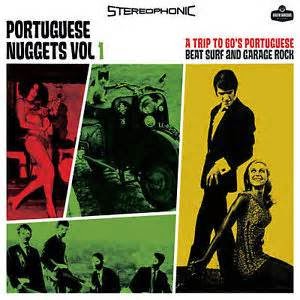 Staying in the Portugal groove for another day, here is a fine 4 disc set of "Nuggets"-style garage/psych/surf, most of which I assume will be little known to the English speaking listener (although, like yesterday's set, some are in English)........a few acts are repeaters from yesterday's "Heavy Psych" set, the time frame is a bit earlier (this hit the "Nuggets" era squarely, 1964-69"), lets see what we have here....
 Couple of bands get multiple play on Volume 2, Shieks, Os Steamers........worth a laugh: Os Vodkas "San Francisco Girls".......each volume of the set is a treasure, truly, don't miss a one.
 VOLUME 1-01 Intro POP MUSIC FIVE INC +OS TARTAROS-Tartaria/02 QUNITETO



Así es, se venía rumoreando desde ayer y hoy se ha confirmado a través del Facebook de Devir: tras meses de negociaciones hoy se ha cerrado la compra de Homoludicus por parte de Devir. Homoludicus, que ha editado en España juegos como Pandemia, La Resistencia, King of Tokyo o el famoso Agrícola. pasará a formar parte de Devir, que ha prometido que seguirán vendiendo los juegos de la empresa en las mismas condiciones que anteriormente. Este es el comunicado:
Gracias a todos por el interés y por las felicitaciones. La verdad es que está siendo un día muy ajetreado pero muy gratificante.
Es pronto para decir si esta compra afectará negativamente al público consumidor de juegos de mesa, aunque por costumbre tener menos competidores en el mercado suele derivar en prácticas monopolísticas que no benefician al comprador. Tendremos que ver cómo se va desarrollando el mercado en los próximos meses y si esta noticia de hoy tendrá auténticas repercusiones en el consumidor.

La entrada Devir compra Homoludicus pertenece a La Casa de EL - Artículos y noticias sobre cómics, cine, series y videojuegos.
O colaborador de Pincha(e)Discos, José Manuel García, visita o Café Venecia, en Santiago, para falar do café e das súas posibilidades culinarias co premiado barista Óscar de Toro.
Comer e Falar con José Manuel García no Café Venecia from Pincha(e)Discos on Vimeo.

Los rumores se han confirmado, tras meses de negociaciones, Devir Iberia firmó ayer el contrato de compra de Homolúdicus, haciéndose de una atacada con uno de los catálogos más interesantes del panorama nacional de los juegos de mesa con títulos como Agricola, Caverna, King of Tokyo, La Resistencia, Náufragos, Pandemia, Terra Mystica o Through the Ages. A finales del año pasado, Pol Cors, hasta ahora máximo responsable de la editorial barcelonesa, anunciaba también la venta de su tienda online, LaPCra, a Zacatrus, un joven rival que entró por la puerta grande en el sector haciéndose un importante hueco en las ventas de juegos a través de la red.
Devir se ha comprometido a ofrecer más detalles durante los próximos días, pero hasta entonces, aquí tenéis la escueta nota de prensa que nos han enviado.
Después de meses de conversaciones, queremos anunciar al mercado que con fecha de ayer 18 de septiembre hemos llegado a un acuerdo de adquisición, por parte de Devir Iberia, de la unidad de negocio de juegos de Homoludicus.
Según lo concertado, a partir de la fecha de hoy, nuestros clientes podrán seguir adquiriendo los juegos del catálogo de Homoludicus, a través de la red comercial de Devir Iberia con toda normalidad.
Estamos seguros de que este cambio en el panorama de la edición y distribución de juegos redundará en un buen negocio para todos y en la expansión de este formato de ocio al mayor número de familias, amigos, hogares y grupos de juego posible.
¡Nos jugamos!
Homoludicus y Devir Iberia