

topless nun originally appeared on MyConfinedSpace NSFW on October 3, 2014.

Campo de Pubis, obra de Twitchkowitz. ¡Ilusión óptica que encontramos merecedora de ser compartida con vosotros!

In Destrehan, Louisiana, the luckiest high school student on the planet fell victim to two teachers who boinked him in the most amazing way, WDSU-TV reports.
On Wednesday, police arrested Rachel Respess, 24, and Shelley Dufresne, 32, (mugshots above) for inappropriate sexual contact with a Destrehan High student, who likely resembles this kid:
Police opened an investigation after the student began bragging to other students about his tryst on September 12 at Respess’s home address. The threesome lasted “until early morning hours of Sept. 13,” according to WDSU, and is possibly the only time it happened.
At least, it’s the only incident police are interested in investigating, and who could blame them? A case like this requires exceptional police work–leave no stone unturned and what not.
When officers interviewed the student, he said it was a consensual act. The teachers were questioned about the incident but have not confessed to anything.
While his classmates may be impressed, police not so much. “No matter what sex the victim is, everyone should be outraged,” Kenner Police Chief Michael Glaser said. “You have educators whose responsibility is the safety of children.”
Respess taught the student English in 2013. Dufresne teaches the student now, but I suppose he has a substitute this week.
Both women were locked up all week and are scheduled for arraignments.
h/t Uproxx

One thing you have to say for the Islamic State (IS) militia: Whatever its failings as a military force (see my last article) it still has an amazing knack for generating scare stories in the Western press. Last time I tried to show why the hype about IS’s advances on its Western Front (the Syria/Turkish border zone) meant a lot less than the panic headlines suggested. Well, no sooner did the noise about that front die down than we had a new panic on IS’s Eastern Front, with stories headlined “IS One Mile from Baghdad.”
Most of these stories came from idiotic right-wing sites like the comically mis-named American Thinker, which was naïve enough to ask, “Is Baghdad about to Fall to ISIS?”
But there were plenty of mainstream fools joining the panic, as I saw when I was fool enough to watch some of the BBC’s Lyse Doucet’s report from Baghdad.
There was Lyse, bouncing around in a Humvee, saying with a straight face that IS was advancing on Baghdad “…from 20 directions.”
Twenty directions? I mean, there was poor Franco, thinking he was being cute with his famous Fifth Column in the attack on Madrid, and the poor bastard didn’t even realize he was wasting 15 potential avenues of attack. Not that I know what those missing 15 directions are. Maybe they could bring on Stephen Hawking to explain it, because I’m pretty sure you’re going to need more than three dimensions.
The BBC is a little vague about distance and direction throughout Doucet’s report. At one point, she says IS is “sixteen miles away”; then, pointing across a scrub field, she says, “…The people of Baghdad still feel threatened, and you can see why.” Except you can’t. You can see a tree, way off there, but no tanks, no black flags, nuthin’. So she explains, “Islamic State fighters are about five miles away.”
Then Doucet interviews Ahmed Chalabi—I mean, he wouldn’t lie, would he?—who says IS is only “six kilometers away.”
To quote the smart-ass Clooney character in O Brother, Where Art Thou, “Well, ain’t this place a geographical oddity!” It’s as if IS is as close as you want it to be, as scary as you want it to be.
The truth here is much simpler. Yes, Islamic State forces are gathered on the Western edge of Baghdad. The non-news is…they’ve been there for nine long months. Islamic State captured Fallujah, which is 70 kilometers from the center of Baghdad, way back at the beginning of January 2014.
Since then, the only movement on the Baghdad front has been along the road from Fallujah to Baghdad, which has become a Sunni suburb, housing all the angry Sunni forced out of Baghdad proper.
So it’s ridiculous to pretend that movement along this road represents an advance for the Sunni Arabs whom IS represents in Iraq. Au con-friggin’-traire! The whole reason IS is stuck on the Western outskirts of Baghdad is that the city, which was once Sunni-majority, has been ethnically cleansed over the last decade—so that by now the only remaining Sunni neighborhoods are in the far West, on the road to Fallujah.
Islamic State isn’t looming over Baghdad so much as sulking outside it, in the final Sunni enclave — stalled out and dreaming of a return to the hegemony the Sunni held over the city ten years ago. And if you really think that Baghdad, which is now firmly in Shia hands, is like some damsel in distress, just waiting to be ravished by big, bad IS…well, you haven’t been following the record of the Shia militias which drove the Sunni out in the first place. Those Shia Iraqis may not be much when fighting in the open desert of Anbar Province—they certainly bugged out in a hurry last June, leaving all their expensive American equipment for IS to loot—but they are Hell in urban combat, as the US Army learned the hard way when it took on Moqtada’s Mahdi Army in Sadr City, the huge Shia slum in NE Baghdad.
It’s not even really a question of how far IS is from Baghdad. They could be ringing the doorbell, wedging one foot in the door, waving the key to the city—and they’re still not going to take it. What they’ll do, at best, is what they’ve been doing all along: Claw back some of the Sunni districts and try to hold onto them, without even trying to conquer turf belonging to the stronger competing tribes like the Shia. Not because they’re nice guys—they showed what swine they were when facing small, unarmed groups like the Yazidi and the Christians of the North Iraqi Plain—but because they’re just not strong enough to take on real rival tribes like the Kurds or the Shia.
And if you’re an Iraqi Sunni, none of this looks like an advance, or a victory. Remember, the Sunni Arabs were Saddam’s people; they ran the whole country until 2003, and kept power with extreme violence against Shia and Kurds. To give you just one example which, as they say, captures the feel of the era: Saddam’s Baathist Secularist security forces decided to murder an important Shia Imam, Mohammed Baqir Al-Sad, they made him watch his sister being gang-raped, then hammered nails into his forehead.
Moqtada al-Sadr, the leader of the dominant Shia militia in Baghdad over the past decade, is the son-in-law of Mohammed Baqir Al-Sadr. And it was Moqtada Al-Sadr’s name that the Shia hangmen shouted when they strung up Saddam.
So it would be safe to say that there’s some bad blood between Shia and Sunni, especially over turf rights to Baghdad. The result has been complete Shia victory.
Of course, the long view would be that the Shia triumph is only a natural reaction to decades of Sunni oppression. But let’s get real for a second—do you know anyone who talks that way, off-camera? It’s safer to assume—in every country, starting with your own—that the silent or sullen majority is deeply reactionary and tribalist, which is happy as long as it’s on top, and dates the start of all problems to the moment when the formerly oppressed groups start “making trouble.”
A lot of Iraqi Sunni see the current situation exactly like that. Many have been driven out of their old neighborhoods in Baghdad, experienced life as a despised minority for the first time, and are not taking it very well. For these people, Iraq as it is now, dominated by the Shia majority, looks something like the American South looked to Nathan Bedford Forrest and the men who joined his KKK: A country you used to control completely, and lost completely, so that now you have to resort to terror to get some of it back. The only difference is that Forrest’s KKK was all too successful at taking back the South. I don’t think the Sunni will be anywhere near that successful at regaining control of the whole of Iraq.
As I said in my last article, it helps to look at a map now and then. But this time you need to look at demographic maps, to see the sectarian fault-lines in Baghdad and its suburbs. The best set of maps showing the steady ethnic cleansing of the capital city was put together by a team of Columbia University demographers. Look at the sequence showing how neighborhoods changed their sectarian profile in Baghdad from 2003 (when the US invasion destroyed the violent stasis of the Saddam Era) to 2007.
When you look at the 2003 map, you see a clear pattern: Most Baghdad neighborhoods are mixed, with Shia, Sunni, and Christian living together. Not necessarily happily, or “at peace,” but together, cowed into coexistence by the security services’ monopoly on violence and terror.
You’ll also see that some neighborhoods were already sectarian enclaves under Saddam. The best neighborhoods of Baghdad, those with river views, like Adhamiyah and Karkh (now known as “The Green Zone”), were Sunni—plum ’hoods for Saddam loyalists, who were, with a few token exceptions Saddam’s fellow Sunni, often members of his Tikrit clan.
Now look at the big green grid off to the north-east of town, the one called “Saddam City.” This miserable district was a classic housing project, started with good intentions, in a patronizing way, during the JFK years.
It was supposed to provide decent housing for the swarm of Shia peasants who’d come to the capital looking for work, and was first called “Al-Thawra,” “Revolution.” The Shia poor were communist then, identifying by class as much as sect. But when Saddam’s Tikrit clique came to power in the late 1970s, sect became the dominant ideology, and the poor of “Saddam City” realized they were from the wrong sect, and that that had everything to do with their exclusion from the good life enjoyed by the Sunni in the nice neighborhoods.
So “Saddam City” began to think of itself as “Sadr City,” after the martyred imam, and to nurse a grudge that would explode after the US overthrew Saddam. By isolating all the Shia poor in one huge grid of high-rises, the Sunni regime had created a perfect environment for its future enemies, the people who would drive the Sunni right out of town—all the way to those dusty Western Suburbs where the BBC finds them so scary now.
You can see that happening as you go from the 2003 map to the 2006 update. Ethnic cleansing is becoming the norm; all those “Mixed” neighborhoods are being whittled down by the expanding sectarian enclaves. Above all, you see the Sunni vanishing from the East Side of town, with the once-Sunni neighborhoods of Rusafa now “mixed,” going Shia quickly.
By 2006 it’s clear that Sunni are fleeing Baghdad to the West, toward the militantly Sunni town of Fallujah and the deserts of Anbar beyond it. They were encouraged to do so by simple fear—but if that failed, the point was often made with anonymous death threats. When the threats failed to convince Sunni families to vacate, murder was common.
Now move to the last map, “2008.” You see that “Mixed” neighborhoods, one the norm in Baghdad, are almost extinct. Every street has a sectarian norm, one enforced with violence by private or (in many cases) the Shia-dominated Iraqi state. There are now only a few Sunni outposts east of the Tigris, and those few are shrinking fast, like Adhamiyah, always one of the more desirable addresses in Baghdad. It’s still Sunni red, but much smaller than it was in 2006, crowded by the Shia expanding from their base in Sadr City. And the pressure on Adhamiyah was so intense that the only way the American occupiers could think of to protect it was to construct a three-mile long, 12-foot high concrete wall around it (until Prime Minister Al-Maliki objected, on the grounds that such a monstrosity might give foreigners the wrongheaded idea that there was some degree of sectarian strife in his wonderful new Iraq).
The new Sunni base is far from the center of town, off to the west, in Al Mansour—which happens to be on the road to Fallujah, “City of A Thousand [Sunni] Mosques” and Ground Zero for Sunni resistance to the US occupation, as well as the post-invasion Shia-dominated Iraqi state.
Look at that sequence of maps—print’em and flip’em like animation stills—and you can see how Islamic State, which is now—like it or not—the armed wing of Iraq’s Sunni, ended up “within a mile of Baghdad.” In brief, they got there by starting out in total control of the heart of Baghdad, and getting kicked out, block by block, ‘hood by ‘hood, over the last decade.
And now every ignorant so-called journalist in the world is sobbing on air that they might, good heavens, make it back into town. It’s the most ridiculous thing yet in coverage of Iraq/Syria, and that’s no low bar to jump. Islamic State is led, for God’s sake, by a guy called Abu Bakr al-Baghdadi—“al-Baghdadi” as in “the guy from Baghdad.”
And its officer corps is made up of ordinary Iraqi Sunni Arabs with military experience, not those over-hyped foreign jihadis you hear so much about. For them, as for every Iraqi, Baghdad is the prize, the metropolis. So of course they’ll try to push back for some of the total control their sect had, back in 2003.
But it won’t be easy. That’s another ridiculous implication on these scare stories, this notion that Baghdad is just waiting in terror for the big, bad Sunni to sack it. Baghdad is a Shia city now—and not because they asked permission. They *took* it, street by street, and anyone who wants it back would have to take it the same way. Shia Arabs fighting for the ‘hood are a very, very different proposition from Shia Arabs jammed into an Army uniform and sent to fight under corrupt officers in the deserts of Anbar. These are the same people who drove the US Army out of Sadr City, and pushed their former masters clean out of town.
So Islamic State will be careful not to push too far along that road to Baghdad. They’re a very media-savvy group, and it suits them just fine to “threaten” the city for the benefit of the BBC and CNN. They may tiptoe to “within a mile,” or “a few kilometers,” or whatever number makes the best scare headline, but it would take a much crazier, and bigger, militia than IS to take the city back from its new owners.
[illustration by Brad Jonas for Pando]


Vista dende a Praza de Pontevedra, na Coruña, nunha fotografía de Xoán Piñón de 1981

Out of all the Pies I’ve ever made~ and I’ve made quite a few, I have to say that THIS Pie~ T H I S Pie, is by far one of my top 5 ultimate faves!!! Not even kidding! I’m not even a typical Jack & Coke fan..but something about the moist, rich filling, creamy and light topping that’s drizzled with cascades of Jack Daniel’s Caramel Sauce is to die for! I mean..just look at it!

It’s not news that I adore baking and cooking with all different kinds of alcohol, and that I’m not even a drinker, but this recipe takes boozy delights to the next level!
Actually, higher than the “next level”…the level of this Pie is the highest level possible..it’s the infinity level, the level that isn’t even a level anymore because it’s so high, it’s a plateau…haha!

Seriously though, if you love chocolate, moist (almost wet), and super flavorful pie, that’s totally unique, and one-of-a-kind~ you will adore this Pie!
~And it’s SO easy!

Give it a try, it makes a great dessert, or hostess gift! You ail be LOVED..no, you will be ADORED!

What you’ll need:

One Pillsbury Refrigerated Pie Crust
12 ounces Bittersweet Chocolate
1/3 cup Butter
1/3 cup Jack Daniel’s
1/3 cup Coca Cola
5 large Eggs (room temperature)
1 cup Sugar
1 tablespoon Vanilla Extract
1/3 cup Flour
1 teaspoon Salt
1/2 cup Semi- Sweet Chocolate Chunks
The Topping:
Cool Whip…approx. 3 cups
1/3 cup Caramel Sauce (to drizzle)
1-2 tablespoons Jack Daniels

Directions:
Pre heat the oven to 350 degrees
Place the pie crust dough inside a pie dish and line with parchment and baking beans or weights. Blind bake for 8 minutes. Carefully remove parchment and beans and bake for 4 additional minutes. Remove from oven and allow to cool.
In a small, heavy bottomed saucepan, melt Chocolate, 1/3 cup Butter, 1/3 cup Jack Daniel’s and 1/3 cup Coke over low heat…

Let Chocolate mixture cool.
Using a mixer or a whisk, whisk Eggs and Sugar until thickened and lemon-colored; blend in Vanilla. Sift Flour and Salt together, fold it in until it’s combined…
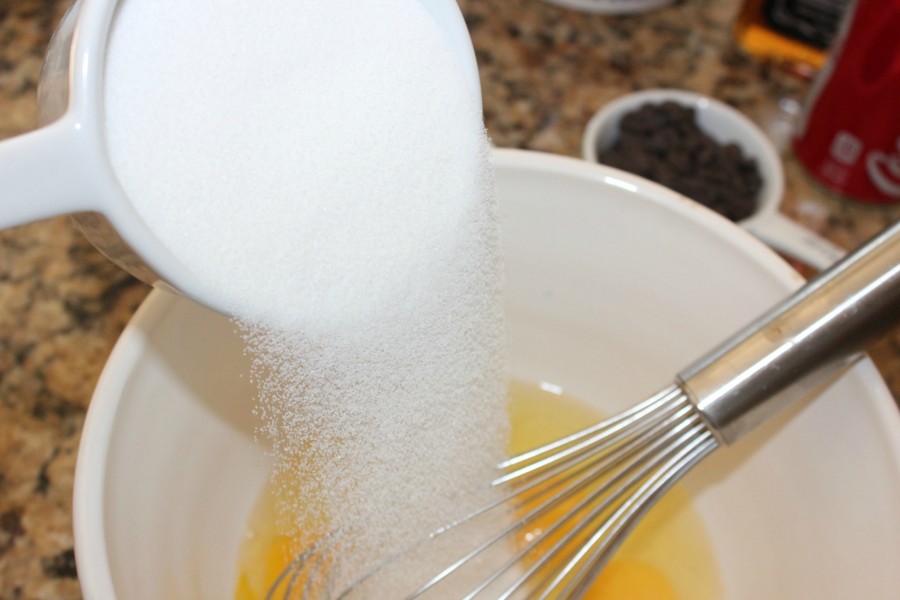
Blend in the Chocolate mixture until thoroughly combined…then fold in the chocolate chunks

Pour it into the pie crust and bake for 20-25 minutes or until slightly dry on top and not very jiggly in the center…

While it’s baking, mix together the tablespoon (or so) of Jack Daniel’s into the Caramel Sauce…set aside…

Remove from oven and allow to cool for 10 minutes…

before topping with the Cool Whip, make sure that the Pie is completely cooled…

NOW~ drizzle some of that Jack Daniel’s Caramel all over the whipped top…

And plate it up…

There’s plenty to go around, so don’t eat it all…

But be sure to get yourself at least 2 pieces! ~Enjoy! 

Un ambicioso proyecto ha conseguido reunir en una misma gira a cuatro bandas de rocknroll con espíritu pop procedentes de cuatro generaciones diferentes y con más de 100 años de carretera en común; los californianos The Rubinoos, los ingleses Surfin’ Lungs, los noruegos Yum Yums y los catalanes Suzy y los Quattro. Jon, Tommy, Donn y Al, la formación oficial de The Rubinoos, nos acompañó en el estudio y nos regalaron dos canciones en acústico. Playlist; The Rubinoos (I wanna be your boyfriend), The Yum Yums (Crazy over you, Girls like that), Surfin’ Lungs (I wanna Winnebago, Spirit of Australia), Suzy y los Quattro (Freak show) y The Rubinoos (Rock’n’Roll is dead, Countdown to love, Cruisin’ music, As long as I’m with you (en acústico), Run mascara run (en acústico) y Two guitars bass and drums.
Se nos da muy mal predecir cómo nos sentiremos en el futuro. Muchos aspiran, por ejemplo, a vivir en una playa caribeña rascándose la barriga, pero ignoran que lo más probable es que se aburra a la larga, o que incluso acabe odiando la playa de tanto verla.
Lo mismo sucede con las cosas negativas. Si preguntamos a alguien cómo se sentirá si se queda ciego, mudo, o parapléjico, lo habitual es que la gente responda que mal. Y lo cierto es que las personas que pasan por tales percances, finalmente no son infelices. Así de borroso es el futuro, tal y como señalan George Loewenstein y David Schkade en “Wouldn´t It Be Nice? Predicting Future Feelings”.
También los investigadores han preguntado a médicos y otras personas sanas si aceptarían un tratamiento agotador de quimioterapia si con ello pudieran incrementar su vida en tres meses. La mayoría dijo que no. Ni un solo radioterapeuta dijo que sí. El 6 % de los oncólogos afirmó que lo haría. Y solo el 10 % de las personas sanas también afirmó que se sometería al tratamiento.
Lo interesante apareció cuando se le preguntó lo mismo a personas que estaban frente a un inminente riesgo de muerte (pacientes de cáncer), tal y como explica Joseph Hallinan en su libro Las trampas de la mente:
el 42 % dijo que se sometería al tratamiento. Otro estudio halló que el 58 % de los pacientes con enfermedades graves dijo que cuando la muerte estuviera cerca querrían el tratamiento aunque prolongase su vida una semana.
Finalmente, si os gusta viajar (o sencillamente pensar con cierta coherencia, lejos de los continuos sesgos cognitivos que nos acechan), probablemente os interesará Diez cosas de las que no deberías fiarte cuando viajas.
Imagen | Andréia
-
La noticia Tu opinión acerca de sobrevivir cuando te estás muriendo (y cuando no) fue publicada originalmente en Xatakaciencia por Sergio Parra.

A menudo encontramos críticas de películas, series y libros que parecen escritas siguiendo una plantilla. De manera que las diferencias entre los textos de Cahiers y los de publicaciones menores están en los adjetivos, como se verá.
Este formulario es propio del redactor perezoso o apremiado por la urgencia de publicar. No requiere imaginación ni reflexión, sino aplicar clichés e ideas preconcebidas —positivas o negativas— sobre el artista, el género o la obra.
Desde el comienzo se intenta predisponer al lector a favor o en contra de la obra:

El crítico avanza mostrando aún con timidez su agrado o animadversión hacia el autor o la obra. Aparecen los primeros adjetivos sin fuerza, de manera que Triers es controvertido; Michael Bay, comercial o rutinario (según qué críticos); Clint Eastwood, solvente…

La crítica avanza con el argumento de la obra y otros adjetivos calificativos. A la hora de dar ejemplos, el crítico puede ponerlos en relación con obras anteriores del mismo autor o de otros autores, para bien o para mal:

El penúltimo párrafo puede destinarlo el crítico a rematar su labor de acoso y derribo poco esforzado, o bien mostrar cierta indulgencia:

Para finalizar, la puntilla o un comentario complaciente.

Siguiendo este formulario es posible hacer críticas incluso de películas que no se han visto o novelas que no se han leído (sacando los argumentos de la contraportada).
The post Aprende a hacer críticas de cine, series y libros… en un pispás appeared first on Yorokobu.










 |


Jenny Chang / BuzzFeed
They called him Güero, which means "blondie," but he looked nothing like a Californian surfer. He owned a nameless taco stand in El Olivo, one of those ugly Mexico City neighborhoods that stand at the tense border between rich and poor. The place consisted of a small kitchen where four aproned men sweated in close proximity, cooking tortillas over an open fire and butchering whole pigs. Close by, on the sidewalk, sat a giant copper vat where vaguely discernible pieces of pork boiled away in a broth of lard and Coca-Cola. Everything was filthy — flies gathered over the wet-fresh cilantro and the finely chopped onions and the yellowing lime wedges. People ate on their feet, holding bright plastic plates close to their chins. For a city where pale and dark-skinned people generally do not mix, it was a diverse crowd — there were bureaucrats in ill-fitting suits, construction workers covered in paint splatters, and private-school boys in Lacoste polo shirts. On any given day, the line went around the block.
I ate his food every week for years, and yet I know nothing about Güero. People told apocryphal stories about him. Some said he had been born into a rich family in Michoacán and gone to culinary school in France but had dropped out, preferring the simple life of a taquero to the chef’s pursuit of cultural capital. Others insisted he was a former narco, and that he’d learned to wield his butcher’s knife in the darkest corners of Culiacán. Still others said he was just a kid from the neighborhood with a gift for braising pork and blending chiles. Güero cultivated an air of mystery: I never once heard him speak. People would yell orders at him; he would nod, chop the appropriate amount of meat, and hand it to the customer over two tortillas — all without a word. He also refused to handle money, insisting that people give their crumpled pesos to a teenage assistant.
My friends and I went to see Güero every Friday after school, before we went drinking. We were young at the time — 15, 16, 17 — but we drank like sailors with a death wish. I still don’t know what compelled us to do such damage to ourselves. Part of it was the culture of excess of wealthy Mexico, but in our case there was a deeper existential crisis at play. The course of our allotted years seemed to stretch in front of us with hopeless inevitability. We would go into the family business. We would marry women who had been taught never to raise their voices. We would raise children who would develop a drinking problem before graduating high school. We would never lack for anything; we would somehow manage to be miserable. My grandmother would have said we were in desperate need of a priest, but we were faithless, and so Güero became our minister.
And yet those afternoons were also full of that Mexican joy that comes from basking in your own heartbreak. It is an exuberant, redemptive sadness best captured by a group of punch-drunk teenagers stumbling on a deserted street in the gray light of the morning, singing sorrowful rancheras at the top of their lungs, having the time of their lives. That’s what carnitas are really about: the paradox of celebrating and mourning at the same time. They are sacrificial food — you butcher and braise a pig when you have a reason to feast, and those occasions tend to be bittersweet moments of parting. You eat carnitas when your daughter turns 15 or your father dies; when you graduate from college or you retire from the civil service. You eat carnitas the night before you set out for the north. You eat carnitas once a week, because even though you are too young to understand the passing of time, you can already feel your life slipping away.

I left Mexico when I was 18, because I was unhappy and believed that my unhappiness had roots in history and geography. I chose to come the United States because I was privileged enough to be able to secure a student visa, and because from a young age I had been fascinated with America. It was a place, I imagined, where things were mutable, where each person was allotted more than one life, in case they chose to start again. My America was the opposite of Mexico, which I thought of as a place where everything was fixed, where memory was inescapable and history ran in repeat. I applied to 10 colleges in New England and packed all my books. I did not intend to return.
Of course, once I actually arrived in the United States, I discovered that my America was nothing but fantasy. Still, I tried my hardest not to look back. This meant, among other things, that for a long time I did not eat much Mexican food. I began to approach the meals of my childhood like a gringo would: as a welcome variation on pizza and hamburgers. Güero’s carnitas and their metaphysical significance became a distant memory, much like the faces of my high school friends.

And then, last winter, I found myself in desperate need to feel at home. I had just turned 23 and had recently moved to New York. The woman I loved had settled on another continent and found another man. I had a month-to-month contract writing for a news agency, but the company would not sponsor me for a visa, and the prospect of having to return made me nauseous. It had been snowing for weeks, and the windows in my apartment near the Gowanus Canal wouldn’t shut properly, such that I woke up each morning covered by a thin blanket of snow. Everything felt ungrounded and fleeting, but not in the lighthearted, liberating way they advertise at the immigration desk at John F. Kennedy Airport. I got off the subway one afternoon after work and felt a deep craving for a heaping plate of carnitas and half a bottle of mezcal.
I set out to look for a taqueria. I wandered aimlessly around streets lined with abandoned factories, auto-shops, and crumbling row houses, feeling the snow leak into my sneakers and soak my feet. And then, by one of the large avenues that run north-south in that part of Brooklyn, I stumbled upon the Country Boys Restaurant. The place has since shut down, but on that afternoon it had just opened for the day, and the windows were covered in handwritten signs that advertised, in Spanish, a taco-for-a-dollar special.
I walked in and felt like I had stepped into a mummified soda fountain from the '50s. There was a long bar, and in front of it, 10 or 12 spinning chairs upholstered in pink patent leather. Behind the bar there was a dusty mirror. There was nobody to be seen, so I sat down in one of the chairs and waited. A middle-aged man appeared five minutes later, wearing a black T-shirt and a Yankees baseball cap. In English, he asked me what I wanted. In Spanish, I replied I wanted carnitas. He went into the kitchen and came back, sooner than I expected, carrying my tacos in a bright green plastic plate exactly like the ones at Güero’s. I bit into the tortilla and was mildly disappointed. The tacos were good, but they just weren’t the real thing. That was my first intimation that “the real thing” may well not exist, except in memory.
The Brooklyn taquero and I talked about soccer for a while. And then, as I was finishing my last taco, he asked me a question out of the blue.
“So, do you have papers?”
I stared at him for a second. I finally answered that I did.
“That’s great,” he said.
I then tried to explain that I had only a yearlong work permit and that it was about to run out.
He interrupted me. “That’s still great."
I tried to pay him the five dollars I owed him, but he refused to take my money. I walked out of the restaurant and went home. I still felt lost and alone, but the world seemed a shade more tolerable. Soon afterward everything improved. I found a job that sponsored me for a visa. I met someone else. Winter ended.

It was around that time that I began making carnitas, using a recipe I cobbled together from dozens of YouTube videos narrated in Spanish by men who sound like they don’t like to talk. Once a month, I invite my American friends to my apartment and feed them the food of my adolescence. The tacos I make are but a pale ghost of Güero’s — the store-bought tortillas you find in the Northeast are always a little rubbery, the chiles are never quite as varied, and a Dutch oven over a Brooklyn stove is no match for a copper vat over a roaring fire. Still, they do the trick. They induce that same kind of melancholic joy I felt when I was in high school.
So, in case you ever have something to mourn or something to celebrate, here’s the recipe. It should feed 20 people.


Lauren Zaser / BuzzFeed
For the pork:
8 pound pork shoulder, de-boned
2 pounds pork belly
1 cinnamon stick
1 piece star anise
1 tablespoon ground cumin
2 tablespoons mustard seeds
2 cups lard*
1 white onion, coarsely chopped in rough ½-inch pieces
10 garlic cloves
1 bottle of Mexican Coke (or any cola made with real sugar)
2 sprigs dried epazote leaves (or a big pinch, if they’re crumbled) (epazote is a Mexican herb, like an anise-y tarragon)*
2 dried bay leaves
2 tablespoons dried Mexican oregano*
1 orange
For the smoky red salsa:
5 dried guajillo chiles
5 dried chipotle chiles
5 medium, ripe tomatoes
½ white onion, peeled
10 garlic cloves
2 tablespoons apple cider vinegar
For the tart green salsa:
8 tomatillos
4 fresh serrano peppers
4 jalapeño peppers
½ white onion, peeled
6 garlic cloves
4 limes
¼ bunch cilantro, coarsely chopped (leaves and stems)
2 tablespoons apple cider vinegar
1 ripe avocado
For the spicy pickled onion:
1 red onion
2 habanero chiles
2 cups apple cider vinegar OR distilled white vinegar
1 teaspoon dried Mexican oregano
Kosher salt
For the beans:
1 pound dry pinto beans
3 cups chicken stock
1 white onion, divided
2 dried bay leaves
1 tablespoon lard
1 pound raw chorizo sausage
5 tomatoes
6 garlic cloves
4 jalapeños
1 red onion
For the rice:
2 cups uncooked white rice
12 fresh poblano chiles
½ white onion, peeled and cut in large chunks
4 garlic cloves, peeled
4 cups chicken stock
1 tablespoon lard
1 bay leaf
1 sprig dried epazote leaf
For the garnishes:
½ pound of chicharron (that’s fried pork skin, gringo)
1 white onion
2 ripe avocados
5–6 limes
3 pounds small corn tortillas
Special equipment:
1 very large (at least 3-gallon) stockpot or Dutch oven, for the pork
2 medium (at least 4-quart) sauce pots or Dutch ovens, for the rice and beans
For the ingredients with an asterisk (*) like chiles and herbs, you may need to go to a Mexican grocery store. For the lard, call a butcher.
Special equipment:
1 very large (at least 3-gallon) stockpot or Dutch oven, for the pork
2 medium (at least 4-quart) sauce pots or Dutch ovens, for the rice and beans
Blender

Click here to see more step-by-step instructional photos of how to make this recipe.
Lauren Zaser / BuzzFeed
At least 12 hours before you start cooking:
Soak the your beans: Put 1 pound of pinto beans in a large bowl or Tupperware container, and cover them with water by at least 2 inches. Let them sit out at room temperature to soak overnight, 12–24 hours.
Pork
Before you start cooking, you need to cut your meat. Start by cutting the pork shoulder into rough 2-inch cubes. The size doesn’t matter so much, as long as all the pieces are pretty consistent. Leave all the fat on. Yes, all of it. Cut the pork belly into cubes the same size, but keep the cubed pork shoulder separate from the cubed pork belly.
Heat a large (at least 3-gallon) stock pot or Dutch oven over medium heat, then add the ground cumin, mustard powder, star anise, and cinnamon.
The moment the cumin becomes fragrant, add the lard. Two cups may seem like a lot, but push your lard tolerance as far as it will go.
When the lard is completely melted and quite hot, add the chopped white onion. Fry the onion in the lard until it becomes soft and translucent, but not brown, about 3 minutes.
Add the cubed pork shoulder all at once, and season generously with about a tablespoon of salt and some freshly ground pepper. You want some browning, but no need to work in batches or be elegant about it. Cook, stirring occasionally, until all the cubes of pork are mostly cooked on the outside, about 5 minutes.
Add the pork belly and whole garlic cloves, then stir everything together.
Slowly add the bottle of Mexican Coke, then add just enough water to cover everything. Add epazote leaves, bay leaves, and dried oregano. Give the whole thing a good stir.
Chop the orange into thick slices and place the slices on top of the meat.
Cover the pot and bring the braise to a boil over high heat. As soon as the liquid starts to boil, reduce the heat to a low simmer and half-cover the oven.
Cook the braise for two hours, stirring it maybe once just to make sure nothing is sticking to the bottom. The less you touch the braise, the better. After 2 hours, remove and throw away the orange slices, otherwise they’ll make everything bitter.
Continue to simmer the braise for as long as it takes for the broth to evaporate almost completely, the meat to become impossibly tender, and the pork belly to become a glorious pig goo, about 6–8 hours more. There will still be some liquid in the pot, but it will be mostly fat. Which is delicious.
In the meantime, start drinking and make the salsas, toppings, and side dishes.
When you are ready to serve, use a slotted spoon or strainer to take your carnitas out of the pot while draining some of the excess fat. Fish out the leaves and the whole spices and throw them away.
Preheat your broiler to high, and line a large, rimmed baking sheet with parchment paper or foil.
Use a pair of tongs to toss and shred your pork, until you have little pieces of meat — carnitas. What did you think that meant, gringo?
Take about half of the carnitas, spread them over a baking sheet, and broil them until they get crispy — 8–10 minutes.
Serve warm tortillas and all the garnishes below. DO NOT ADD CHEESE, SOUR CREAM, CHOPPED TOMATO, OR, GOD FORBID, LETTUCE. Why? Because if you were foolish enough to eat lettuce at el Güero’s, you’d be setting yourself up for a weekend in the toilet. And we’re going for the real thing here, right?
Smoky red salsa
Preheat your oven to 500°F.
Cut the top off the dried chiles, cut them in half lengthwise, and use a knife or your finger to scrape out the seeds. Throw the seeds away.
In a cast-iron skillet without any oil or lard, toast the dried chiles until they are lightly blackened on all sides, about 3 minutes.
Fill a small sauce pot about ⅔ of the way with water, and bring the water to a simmer. When the water is simmering, turn off the heat and submerge the blackened chiles in the water. Let the chiles sit for 15 minutes, until they’re soft and mostly rehydrated. Drain and discard all but half a cup of the water.
While chiles are soaking, place tomatoes, white onion, and garlic cloves in the cast-iron skillet. Roast in the hot oven until the vegetables start to blacken, 15–20 minutes. Be careful not to burn the garlic.
While they are still hot, transfer the tomatoes, onion, and garlic to a blender. Add the chiles and about 2 tablespoons of the chile soaking liquid, then add the apple cider vinegar. Season with a teaspoon of salt and some freshly ground pepper.
Blend until there are no large chunks, adding a little bit more of the chile-soaking liquid if the mixture is too thick. Pour the finished salsa into a bowl or Tupperware container, and refrigerate until you’re ready to serve.
Tart green salsa
Take the husks off the tomatillos and cut the stems from the serrano chiles and the jalapeños.
Fill a medium (at least 3-quart) sauce pot about ⅔ of the way with water, and bring to a boil. When the water is boiling, add the serrano chiles, jalapeños, tomatillos, white onion, and garlic. Reduce to a simmer and cook until the tomatillos and the chiles turn a bright green and start to soften, 10–15 minutes.
With a slotted spoon, take the veggies out of the water and place them in a blender.
Cut the limes in half and squeeze the juice out of them, directly into the blender.
Add apple cider vinegar and chopped cilantro, then season with a teaspoon of salt. Blend until everything is evenly combined and the salsa has no large chunks. Taste for salt, and add more if you need to.
Pour the salsa into a bowl or Tupperware container. Peel the avocado and cut it into rough ¼-inch cubes, then mix the cubes into the salsa. Refrigerate until you’re ready to serve.
Spicy pickled onion
Chop the onion into rough ¼-inch pieces. Cut the stems off of the habeneros, then finely mince the flesh, leaving the seeds in.
Transfer the mixture to a bowl or plastic container, and cover with distilled white vinegar or apple cider vinegar. Add dried oregano and a pinch of salt, then stir together just to combine.
Leave the mixture out at room temperature for at least an hour before serving, so that the onions pickle slightly.
Beans
Drain the beans from the water in which they soaked overnight, and put the beans in a medium (at least 3-quart) pot or Dutch oven.
Add chicken stock and 3 cups cold water. Add bay leaves and half the white onion (peeled but not chopped) cover and bring to a boil. Reduce to a simmer and cook with the lid ajar for as long as it takes for the beans to become tender, about 2 hours.
Meanwhile, remove the chorizo from the sausage casings and crumble it into bite-sized pieces. Chop the remaining half of the white onion, tomatoes, and jalapeños into rough, ¼-inch cubes. Mince the garlic cloves.
Heat lard in a large skillet over medium-high heat, the add the chorizo, and fry until it’s almost cooked through and starting to brown, about 2 minutes. Add the chopped onion, and fry until it starts to get translucent and soft, about 3 minutes. Add the chopped tomato, jalapeño, and garlic, stir everything together, and reduce the heat to medium low. Cook until the tomatoes are broken down and the onions are very soft, about 30 minutes. (This is called a sofrito, gringo.)
When the beans are nearly done, taste for salt and add more if needed. Remove the onion half and the bay leaves, then turn the heat up to high just to boil away the excess liquid, no more than 3 minutes.
When you are ready to serve, heat the sofrito until it starts to sputter, then pour it over the beans. Give it a good mix, then serve.
Green rice
In a large bowl or container, cover the rice with cold water by about an inch. Soak the rice for 20 minutes, then drain it into a strainer or colander and rinse until the water runs clear. Shake the rice in the colander to get rid of excess water.
Meanwhile, heat a large skillet over high heat, then add the poblano chiles. Let them sit in the skillet until the underside has started to blacken, about 3 minutes. You should hear popping noises. Turn the chiles and repeat until they are blackened on all sides, about 12 minutes total. Place the hot, blackened chiles in a ziplock bag, seal the bag and let them "sweat" for about 15 minutes, until they are deflated and cool enough to handle.
When the chiles are cool, slice off the stem and about half an inch from the top of each chile, then throw away the tops. Slice the chiles lengthwise so that they lie flat on a cutting board, then scrape out the seeds. Try to peel off as much of the gooey skin as you can. It’s no big deal if you can’t get all the skin off.
Put the chiles in a blender along with the white onion, garlic, chicken stock, and a teaspoon of kosher salt. Blend until the mixture is a thin liquid with no large chunks. This is the cooking liquid for your rice. Set the liquid aside while you fry your rice.
Heat lard in a medium (at least 3-quart) pot or Dutch oven, over medium heat. Dump in the rice and toast it, stirring constantly so that it doesn't burn. You want it to become the color of hay, like the hair of gringos from the Midwest.
Once the rice is golden, add the blended liquid. Stir, add bay leaves and epazote leaves. Cover and cook over high heat until the mixture boils. Reduce the heat to medium low and cook, still covered, for 20 minutes.
After 20 minutes, turn off the heat and let the rice steam for 15 more minutes. Do not take the cover off. If you like a slightly crispy crust at the bottom (which I do), leave the pot on the burner, even if it's off. If you don't, move it off the stove and let it cool.
To serve, fish out the epazote and the bay leaf, then fluff the rice with a fork or spoon.
Garnishes
To heat your tortillas: Heat a large griddle or a couple of large skillets over high heat. Add a single layer or tortillas and cook until the tortillas are starting to blister on the underside, 1–2 minutes. Flip the tortillas and repeat on the other side. When the tortillas are heated, transfer them to a large basket or bowl lined with a towel or cloth napkin, to keep them warm. Repeat until all the tortillas are warmed.
To prepare the chicharron dust: Put the chicharron in a large ziplock bag and roll over the bag with a bottle or rolling pin until the chicharron are crushed to a coarse dust. You will dust your carnitas with this glorious star powder. It has all the healing properties of unicorn horn.
Coarsely chop the rest of the cilantro, leaves, and stems, and place in a bowl for people to sprinkle upon their tacos.
Slice the avocado in impossibly thin slices.
Cut the limes into quarters.
A note on building tacos:
Proper tortillas have two sides to them — one that is more resilient, and one that will peel away easily if you rub the tips of your fingers against it. The latter is the inside of the tortilla — it will absorb the pork juices much better, granting your taco more structural integrity.
Lastly, you don’t want to overstuff your taco. It’s like trading in mortgage-backed securities: It sounds like a great idea at first, but your greed will result in catastrophic consequences.
Step one: Buy so much lard.

Photographs by Lauren Zaser / BuzzFeed; design by Jenny Chang / BuzzFeed
In Mexico, you eat carnitas when your daughter turns 15 or your father dies; when you graduate from college or you retire from the civil service. You eat carnitas, like I did, every Friday after school, at the same filthy-delicious taco stand owned by a silent taquero named Güero. And you eat carnitas the night before you set out for the north.
I wrote an essay to go with this recipe about why I started making carnitas at home. But this recipe requires more than an explanation of my complicated emotional relationship with braised pork; it requires step-by-step photographs.
Below you will find directions on how to make carnitas without access to Güero's giant copper vat or a whole pig or a tortilla-making machine or a well-stocked chile stand or decent avocados or juicy limes or any of the things that make life in Mexico wonderful. This recipe will tell you how to make something that approaches carnitas but will never really be the real thing, because the real thing only really exists in the memory of people who have left the old country.
To be clear, this takes a full 24 hours: You have to soak the beans the night before you plan to eat, and the pork needs to simmer for 6-8 hours. During that time, you can get drunk, make two salsas, beans, and spicy green rice. And then you will feast. Also, most of it is appropriately (ie extremely) spicy, especially the green salsa, the pickled onions, the green rice, and the beans.

Lauren Zaser / BuzzFeed
For the ingredients with an asterisk (*) like chiles and herbs, you may need to go to a Mexican grocery store. For the lard, call a butcher.
 It's been nearly two years since news first broke that standup and former SNL writer John Mulaney landed his very own television show. Since then, Mulaney has evolved from a proposed NBC series to a highly anticipated Fox sitcom with the backing of executive producer Lorne Michaels and an all-star cast including Nasim Pedrad, Martin Short, and Elliott Gould. Ahead of Mulaney's series premiere this Sunday, I recently got the chance to talk with the man who co-created Stefon about how the pilot evolved from NBC to Fox, why he prefers the multi-cam sitcom format, and some of the misleading advice he took during his Catholic school days.
First of all, congratulations on landing the show at Fox. It must feel like it's been a long road to get there.
Yeah. It's funny — that's why the fact that it's going to be on TV feels so weird and jarring right now. This has been a thing for almost two years that I've gone into an office and worked on, so it's never been a thing on television. And I was used to standup, which has the fastest turnaround in comedy ever — it's immediate — and then Saturday Night Live's probably the second fastest because we would write the stuff Tuesday night and then it'd be on TV Saturday night. I just started to think about this like a day job, not in the day job sense of I was slacking off and dreaming about other things, but I just was like Oh, I have this job, I go into this office, and I started to forget that this will be a TV show in the end.
Now that you have a little hindsight, do you look back on developing the show as a long, grueling process, or did it fly by?
Well it hasn't gone fast, but that's probably more because we moved cities a couple times, then I got engaged to my girlfriend and then I married her, and now she's my wife…
Congratulations!
…thank you. And then we got a dog, and then we were developing the show, and then there was a period of time where there was no show. So it's had many phases, and some personal life stuff happened as well, so it has seemed like a long time.
What exactly happened between NBC passing on the show and Fox picking it up?
A lot of sitting in my apartment wondering what I was gonna do. [laughs] I started to hear it might not be picked up by NBC the week it wasn't picked up, and I knew that I was also planning to propose to my girlfriend. And I was like Wouldn't that be funny if that all happened on the same day? So then I proposed, and then we got a call that the show was passed on. [laughs] But it was an amazing day. I mean, it was kind of perfectly planned, because I still think of it as one of the best days of my life.
NBC Studios/Universal was so wonderful and wanted to stay with the show, and they've been with it the whole time, and Lorne Michaels and the cast and everybody. It was immediately very heartening that they wanted to keep going with it. I didn't know what was gonna happen, but they all knuckled down and did some Los Angeles stuff that I don't know about and they got it a home. I was back in New York City and my wife was working on her book, and I was just unemployed… [laughs] …and I was just sitting around and going to the Comedy Cellar at night. It was a lot of explaining to people that it didn't happen; they'd go "Do you have a TV show?" and I'd be like "…nah, they said no."
How different is the Fox version from the original version NBC passed on?
The NBC version had a little more of a premise to the pilot that was a catalyst to the whole story. When you meet my character it's the day he stops drinking and doing drugs — which I have jokes about in my standup because I stopped drinking in one day many years ago — and it was just meant to be a funny, very careless and thrown away sobriety story as opposed to making it dramatic at all. And it had a lot of really funny stuff in it and we kept a lot of jokes; kind of the setup and a lot of the shape to it remained. A guy named Peter Rice and Kevin Reilly [from Fox] became very interested in the show and I heard that they liked it and had some tweaks to it, and I met with Kevin about it first. The people at Fox were great, because they wanted to just blow the show open and make it a lot looser. I think they said "I just want a show about this standup and these people in his life and just a funny show about that — just let the show be itself." And Peter Rice was great because he said he just wanted what he saw of me as a standup — he said those are the stories for the show. And I was very like Oh thank God — that's what I always wanted to do.
So it was a relief?
Well, it was kind of like hey, why don't you lean into your natural instincts, which is to tell these stories from your life as comedy? You've done it in standup — do it for the show. It wasn't like every episode had to be about the same premise or formula, which, by the way, no one was forcing on me. That was just something I thought TV shows had to be, so it was very nice to hear that I didn't have to do that.
Who are the other writers on Mulaney?
Marika Sawyer has been with this from the beginning — even from the beginning before we had a staff and she was just helping me and being my friend. She and I wrote a lot of Saturday Night Lives; she and I and a guy named Simon Rich wrote a lot of sketches together, we were a little trio of child monsters. Marika worked with it from when I was first writing the script, came out here for the first pilot, and is now a writer and producer on the show. There are many others: Robert Carlock, Jon Pollack, Dan Levy — also a good friend of mine who has been with it since the beginning. I remember talking with [Dan] about my idea of wanting to do a multi-cam in front of an audience, and I had all these character ideas but I just didn't know what I would be. And he was like "You should be a standup" and I was like "Well, I don't know if we can do that, because of you-know-what." And he said "It's fine," and I wanted someone to tell me it was fine. Boy, Dan's gonna read this and think I'm blaming him. [laughs] No, I'm not blaming Dan Levy, I was really excited when he said that. And Lorne Michaels said that as well. Two legends: Dan Levy and Lorne Michaels.
You've described the show's format as "throwback sitcom." What made you choose to go with that format — specifically multi-cam with a live audience and standup sets between scenes?
I left Saturday Night Live and I was on an airplane and I was trying to think about what I wanted to do, and I thought I just wanted to have my own self-titled show of some sort, but I just couldn't picture it; I kept thinking about a single-cam. There was Louie and Girls and Maron, Kroll Show had just come out, and boy, a lot of other great shows were on; I was just seeing what a lot of my other friends were doing and I was like I can't do that as good as that. And I also thought that there's something about me that doesn't lend itself to that kind of storytelling as much as other people. And I was such a fan of all these single-cams, and I thought like What is bugging me about doing a half-hour show? What is missing? And I realized that the audience was missing and that I'd been doing standup for ten years in front of audiences, I'd been doing Saturday Night Live for four and a half years — which is a four-camera show in front of an audience — and I thought Oh right, that's what I like, I like to be a comedian on a stage in front of people. I'm not subtle… [laughs] …so I don't know if a subtler art form would suit me, so I started to think about that and I just immediately was like Oh that'd be funny — imagine doing one of those shows. And I started to really think about it; I was like huh, that could be fun to try and do one of those things that I grew up on but just make it weird.
There definitely seems to be a higher amount of pressure than usual for your show to succeed since you have tons of fans from SNL and standup who are waiting to watch it. The multi-cam aspect of it also seems to be a divisive factor among fans.
Well, there's so many many many millions of people who have no idea who I am or even that Mulaney is a person, so I keep that in mind always. I thought long and hard about what I thought was successful about me as a standup and how that'd be a TV show, and that's how I got here. So I hope that if people like my standup they'll give it a shot. If people hate live audience shows, I can't do much for them.
You wrote Nasim Pedrad's part with her in mind, right?
Yeah, there's a lot of Marika Sawyer in that part, and a lot of Nasim in that part too. So we worked with her a lot thinking about it, and especially when we made the jump to the other network, it was like, well, let's make this as funny as possible — let's have everybody throw their fastball, let's write for aspects of who everybody is.
Was it the same for Elliott Gould's character?
Well, Elliott's character evolved so much once he agreed to do it. But amazingly, I had this sort of Zen, New York, former '70s radical, very proudly gay man who had come out of the closet many years ago when — it's still an incredibly courageous thing to do — but then even more so, but he also had a very meditative and yet fiercely New York personality. That was all in mind based off this woman I lived near on 12th Street who was stoned a lot and would make chicken nuggets and offer me chicken nuggets and tell me stories about the neighborhood. So I had all of that in mind and the idea was Well in a dream world we could get Elliott Gould; I wonder who we could get? Then we actually got him, and I can't say enough about him. I couldn't be a bigger fan of someone. I went to see him at BAM years ago before I was doing this back when they had that Elliott Gould retrospective there, and he's such a kind, gentle, centered, constantly evolving Buddhist kind of guy, and that started to influence the character. And he's also from Brooklyn and grew up in show business, and there's so many aspects that overlapped that it became enhanced as we went on.
Ice-T has a small but amazing part too. How'd that come about?
Dan Levy. We were in Las Vegas at my bachelor party having dinner and he said "You should get Ice-T to say 'Mulaney is filmed in front of a live studio audience.'" I remember all the talking at the table stopped, and I was like "That is exactly what we will do." I wrote an email like ten minutes later — it was the most direct I've ever been during this whole process. I just said that we need to get Ice-T to do this, we need to get this to happen now. He was contacted, and he had already asked me to do his podcast Final Level so we were in touch before then, and he did it over the phone from New York in a studio and I'm very grateful that he did.
Judging off my viewing of the first few episodes, I can tell you were definitely Catholic schooled in real life.
Yes.
Well then, from one former Catholic schooler to another, I have to ask: How did Catholic school scar you as a kid?
Well I went to Catholic school in the '80s and '90s, so it wasn't like Doubt — it wasn't them hitting us with rulers and stuff. Most of my teachers were "laypeople," which is a term none of your readers give a shit about. [laughs] We had a few nuns, but not until high school did we have more priests and nuns as teachers. You know, it was interesting — we did have sex ed from an early point in school even though it was a Catholic school — like seventh grade — and I did faint three different times over the years during the Miracle of Life video, which was very very embarrassing to me. One of my best friends' moms after I had fainted was like "It's okay, maybe you're just afraid of vaginas because you're gay" [laughs] and she was trying to comfort me, and it was very weird and so embarrassing at puberty to be fainting in front of all those people three different times.
So we did have sex ed early, which I think was impressive. It was misguided sex ed — I did think you could get a woman pregnant by looking at her from a very early age. I was terrified of getting someone pregnant. We were told that condoms were porous and they sweat which meant they leak, and that all condoms leak a little so those don't work and you can only use abstinence. That I wish I had not been told.
I remember for our sex ed the priest told us masturbation was a sin, but if we were sleeping and woke up and were masturbating, that was okay and it was not a sin to finish.
See it's funny, because I tell people these stories where priests or nuns are talking to us about sex, and they assume there's some overtone because of the current scandal. But there was nothing predatory ever — it was just a funny older misguided person teaching you about sex. I remember a priest telling me — God, this must have set up my whole life — he said "In order to have a life of any substance, you need to be a little uptight about sex." And I took his advice.
[laughs] Wow. Yeah, that's very Catholic.
Yeah, and it was perfectly phrased too, where it's like "Ball's in your court, but…" [laughs]
Mulaney premieres on Fox this Sunday at 9:30pm.
0 Comments
A 77-year-old Bosnian grandmother has an interesting way of healing eye afflictions: She licks eyeballs.
According to her, her magic tongue can fix pretty much anything, including hypertension, conjunctivitis crusts, splinters. She’ll lick you to good health. She claims to douse her tongue in alcohol before doing the deed, so it’s she’s totally sanitary, and very drunk.
She started doing it as a child, licking her brother’s eyeball as a joke,
“At first my husband was very confused and didn’t want me to do it,” she says. “But one day he got a piece of wood in his eye and after I licked it out he agreed that I had a gift, and I should help others. Now, whenever anyone has something stuck in their eye or whatever, they come to me.”
A legend was born. Now villagers from nearby towns line up to have their eyeballs licked.
Though her claims seem dubious—licking eyeballs probably only exacerbates and spreads illness—in the past it’s at least a proven method of escaping arrest.
h/t Dangerous Minds

In recent weeks, there has been a bit of an uproar over a–let’s just say it–shitty policy that Facebook instituted requiring people to use their “legal names.” This caused a problem in the LGBT community for both transgender people who had not legally changed their names yet, as well as Drag Queens who wanted to use their stage names rather than their real names. As a result, many people have been moving over to social media start-up Ello in order to protest this policy.
Facebook, however, is now saying that LGBT people, and anyone else, can use whatever name they choose to go by, and apologizes for the error in judgement. However, they attribute this error to an anonymous “bad actor” who went around reporting trans folks and drag queens as having fake profiles. Which is just ever so convenient.
The company states:
“The spirit of our policy is that everyone on Facebook uses the authentic name they use in real life,” his statement read. “For Sister Roma, that’s Sister Roma. For Lil Miss Hot Mess, that’s Lil Miss Hot Mess. Part of what’s been so difficult about this conversation is that we support both of these individuals, and so many others affected by this, completely and utterly in how they use Facebook.”
I hope they stick to this, because I am having the worst time trying to figure out what I’m doing on Ello.
The curse of knowledge is a major reason that good scholars write bad prose. It simply doesn't occur to them that their readers don't know what they know—that those readers haven't mastered the patois or can't divine the missing steps that seem too obvious to mention or have no way to visualize an event that to the writer is as clear as day. And so they don't bother to explain the jargon or spell out the logic or supply the necessary detail. Obviously, scholars cannot avoid technical terms altogether. But a surprising amount of jargon can simply be banished, and no one will be the worse for it.Pinker's new book, a style guide, The Sense of the Style, has ten grammar rules it's OK to break (sometimes). He talks to Edge on Writing in the 21st Century, which includes the occasional fMRI.
In just a few years, marijuana legalization advocates have gone from being part of a long-shot movement to representative of a view held by 58 percent of Americans.
The quick trajectory of this type of social movement is far from exclusive to legal pot. In recent years, the same-sex marriage movement in particular has been characterized by a rapid change in public opinion and multiple court decisions in favor of marriage equality.
But unlike same-sex marriage, marijuana legalization doesn't have much establishment support. Politicians and lawmakers have remained as far away from the issue as possible even as retail sales for marijuana began in Colorado and Washington earlier in the year. The only major Supreme Court decision on the issue (Gonzales v. Raich) allowed the federal government to continue enforcing prohibition in California even after the state's voters legalized medical marijuana.
The political caution and lack of judicial intervention might explain why marijuana legalization hasn't progressed as swiftly as public opinion. But there are some indications that could change — if the movement overcomes some key hurdles.

A protester calls for an end to the war on drugs. (Spencer Platt / Getty Images News)
Fabio Rojas, a professor at Indiana University who studies social movements, said that these movements tend to be driven by ballot initiatives, lobbying of policymakers, or mass protests that raise awareness.
Up to this point, the marijuana legalization movement has largely relied on ballot initiatives to change state laws. Colorado and Washington voters legalized marijuana at the polls in 2012, and legalization measures are on the ballot in Alaska, Oregon, and Washington, DC, in November.

It's possible politicians will eventually pick up the issue with more force. Once same-sex marriage reached majority support and became law in several states, some politicians, including President Barack Obama, began talking about their "evolutions" on the issue and eventually came out in support of marriage equality.
With rising public support and legalization in a couple states, marijuana legalization appears to be following a similar trend. The Obama administration is openly allowing legalization efforts to continue in Colorado and Washington with minimal federal interference. Outgoing Attorney General Eric Holder, who heads the Department of Justice, said the federal government should take another look at marijuana's restrictive legal classification. Hillary Clinton, too, said "there's a lot of evidence to argue for the medical marijuana thing" and that she's open to letting the states act as "the laboratories of democracy" for full legalization efforts — perhaps in preparation for a likely presidential bid in 2016.
As a result, legalization advocates expect to rely less on ballot initiatives over time. The Marijuana Policy Project (MPP) plans to lobby several state legislatures, particularly in New England and Hawaii, to legalize marijuana by 2017. This kind of approach has worked for MPP before: Several states first legalized medical marijuana through ballot initiatives in the late 1990s and early 2000s, but in recent years more state legislatures — most notably, New York — have allowed the drug for medicinal purposes.

US Attorney General Eric Holder issued the guidances allowing states' relaxed marijuana laws. (Chris Graythen / Getty Images News)
"Up until the past year or so, the work has been primarily focused on medical marijuana and decriminalization," said Mason Tvert, spokesperson of MPP. "At this point, there are a number of states that look like they will be adopting laws regulating marijuana like alcohol through their legislatures in the next few years."
Rojas of Indiana University suggested the advancements of the movement could be a self-perpetuating cycle: As more states legalized medical marijuana, Americans saw that the risks of allowing medicinal use didn't come to fruition as opponents warned. That reinforced support for medical marijuana, which then made politicians more comfortable with their own support for reform.
A similar cycle could be playing out with full legalization, Rojas explained. As voters see medical marijuana and legalization can happen without major hitches, they might be more likely to start supporting full legalization.
"People said, 'Okay, now that someone else is throwing this out in public, it's okay for me to vote for it or approve it,'" Rojas said. "That's probably the main driving force: using the electoral system to push ideas that people may be afraid to think about or consider because they're illegitimate — or at least they were."
The rapid change in public opinion could have been helped along by the internet, which allows people to share stories about their own pot use, research about the issue, and states' experiences with relaxed marijuana laws much more quickly.
"When I was a college student around 1990, other than hardcore political wonky types, … nobody really talk about drug legalization," Rojas said. "Now, you can go on Facebook or Twitter or Instagram, and people can share a news story. You get exposed to it constantly."

People pass a joint during a demonstration. (Fred Dufour / AFP via Getty Images)
When talking to advocates of legal pot, they often point to the trend in public opinion and strong support among millennials as evidence that legalization is practically inevitable.
"If a law doesn't pass this year in a particular state, then it will likely pass within the next couple years in that state," Tvert said. "People are coming to realize this is not what they once thought it was."
Supporters often compare their expected trajectory to what happened with same-sex marriage politics: In just a few years, the movement will change from an uphill struggle to crossing a tipping point from which the country perhaps can't and doesn't want to turn back.
But the legalization movement still faces a lot of resistance from lawmakers, even after Gallup found 58 percent support for legalization in 2013.

Even foreign police officials, such as the Mexican soldier pictured above, get US aid to continue the war on drugs. (AFP via Getty Images)
Rojas of Indiana University indicated the lack of support from lawmakers reflects the strong establishment support — and financial incentives — behind marijuana prohibition. Police departments, for instance, get millions in federal funding to fight the war on drugs. If marijuana was legal, some of that money for police departments could dry up.
"In the case of gay rights, people have a prejudice against gays, but there are very few people who draw a paycheck out of it," Rojas said. "When it comes to drugs, lots of people are drawing paychecks from it."
Unlike other social movements, marijuana legalization also doesn't have a civil rights claim built into it. With same-sex marriage, a gay or lesbian couple can intuitively argue that they should be able to use their fundamental right to marry who they want to receive equal benefits under the law. The civil rights issues surrounding marijuana, such as the disproportionate enforcement of the law on black communities, are more nuanced and less intuitively linked to legalization.
"When it comes to [marriage] rights, it's the freedom to do the right thing," Rojas said. "When you're talking about a personal vice like drinking alcohol or smoking drugs, that's the freedom to do wrong."
Daniel Schlozman, a political scientist at Johns Hopkins University, argued there hasn't been a strong incentive for politicians and lawmakers to take charge on the issue. Despite majority support, legalization isn't a hugely important issue for most Americans. When asked about their priorities, voters typically cite the economy, education, health care, and national security. Social policy movements, even LGBT rights, tend to fall much lower on the list.
The legalization movement also doesn't have the kind of established support and fundraising potential that often woos political candidates. Both have existed within the LGBT rights movement for years: In the three days after President Obama announced his support for same-sex marriage, Obama's re-election campaign saw a roughly $6 million bump in fundraising.
"When it comes to [marriage] rights, it's the freedom to do the right thing. When you're talking about a personal vice ... that's the freedom to do wrong."
Politicians generally need a concerted movement "that will give [them] time and money and networks [they] can't get otherwise," Schlozman said. "Without that kind of preference intensity, if you're [Senator] Bernie Sanders, you're going to want to talk about social democracy, and if you're [Senator] Elizabeth Warren, you're going to want to talk about the banks. There's no particular reason for you to dilute your core efforts to move the party."
Politicians may be cautious in part because public opinion still has time to change. It's possible — although not the case so far — that legalization could end up going horribly wrong in Colorado, Washington, and other states that approve it. The public could turn against legalization if drug abuse skyrockets or if the marijuana industry tries to take advantage of drug abusers for profit.

A demonstrator calls for the Drug Enforcement Administration to stop raiding medical marijuana dispensaries in California. (David McNew / Getty Images News)
Schlozman pointed to the Equal Rights Amendment, which attempted to establish equal rights for women in the US Constitution, as a movement that at one point seemed headed for victory but quickly fizzled. Toward the end of the ERA's approval process in the late 1970s, opponents mounted a strong campaign, playing up anti-war fervor by pointing out the amendment would let women get drafted into the military. That led to a drop in support from the public and lawmakers. "Public opinion is fickle," Schlozman said.
Combined, all these factors make it possible, even likely, marijuana legalization could see a slower course than an issue like same-sex marriage. Over time, the question is whether and when Americans' support for legalization will become prominent enough to prevail over an established opposition and a sense of apathy, even among supporters, toward the issue.
To learn more about marijuana legalization, check out Vox's full explainer and previous interview with Mark Kleiman, one of the nation's leading drug policy experts:

Pacific walruses have long depended on floating sea ice in the Arctic. They use it as a resting spot between dives, as they hunt for shrimp, worms, and various mollusks in the relatively shallow waters of the continental shelf. Female walruses give birth on these ice platforms and raise their pups there.
This could be the biggest walrus haul-out on record
But thanks to global warming, all that Arctic sea ice is dwindling. And so, in recent years, walruses have been seeking refuge on the northern shores of Alaska and Russia.
This September, scientists have discovered what may be the largest "walrus haul-out" on record — with an estimated 35,000 walruses huddling on the shore of a remote barrier island near Pt. Lay in northwest Alaska. Surveyors from the National Oceanic and Atmospheric Administration photographed the event on September 13 during its annual aerial surveys of Arctic marine mammals:

(Corey Arrardo / NOAA/NMFS/AFSC/NMML)
Historically, these walruses would have been congregating on the edge of the sea ice in the Chukchi Sea, north of Alaska, following it north as it recedes in the summer. But if the ice melts too rapidly, the walruses have to abandon the ice and make a long, exhausting swim to land.
That was the case this year. September 2014 saw the sixth-smallest sea-ice extent on record — and well below its median of previous decades:

(National Oceanic and Atmospheric Administration)
Similar walrus haul-outs have been happening since Arctic sea ice hit an unexpected low in 2007. Indeed, in six of the past eight years, the Chukchi sea ice has receded far enough that walruses have had to swim to land.
In 2010, some 20,000 walruses came ashore near Pt. Lay. In 2011, nearly 30,000 came ashore. (You can watch a video of that one here.) In 2013, another 10,000 came ashore. This year appears to be the largest haul-out on record, although NOAA is still trying to verify the exact numbers.
So does it matter if the walruses are congregating on land rather than on sea ice?
That's one thing scientists are still working to understand. They do know that young walrus pups are much more likely to be trampled onshore — particularly if the walruses are spooked by a polar bear, human hunter, or low-flying airplane and start a stampede.
You can see why in this picture. Walruses typically huddle close together — but it's more precarious on land:

(Corey Arrardo / NOAA/NMFS/AFSC/NMML)
A researcher with the US Geological Survey told the Anchorage Daily News that 36 dead walruses were spotted at Pt. Lay, although they still need to do autopsies to determine the cause of death. So far, there don't appear to be any major problems.
Researchers have also found some evidence that these beaches are often remote from the best feeding spots, which means that walruses have to expend more energy to forage for food when they come ashore. (There's a similar concern with polar bears, which have to swim even longer distances for food as sea ice recedes.)
Whether walruses will be able to adapt is still unclear — in part because these behavioral changes are so recent. The US Fish and Wildlife Service is currently mulling over possible Endangered Species Act protections for walruses, due to the melting sea ice. The agency is expected to make a decision by 2017.
In the meantime, walrus haul-outs remain one of the most visually spectacular — but also unnerving — signs of a warming planet.

Uwe Rosenberg es sin lugar a dudas uno de los pesos pesados de la industria de los juegos de mesa. Títulos como Agricola o Le Havre ocupan un puesto de honor en cualquier ludoteca que se precie y Caverna, lanzado hace apenas un año, se las ha apañado para escalar como si nada por el ranking de BoardGameGeek acomodándose en el Top 10 de una lista con más de 70.000 juegos.
Antes de su lanzamiento en la pasada edición de Essen el autor definía Caverna como una evolución de su famoso Agricola, un juego que describiré de un modo muy breve para quienes no lo conozcáis como el simulador de granja definitivo. Cada jugador empieza con una pareja de campesinos y una modesta granja de dos habitaciones que iremos desarrollando a lo largo de la partida labrando cultivos, construyendo cercados, criando animales… y ampliando la familia. Colocamos a nuestros campesinos en acciones que bloqueamos al resto de jugadores, conseguimos cosas que nos permiten hacer otras cosas y al final puntuamos en función de cómo nos haya quedado la granja.
Pero que no te engañen las apariencias, Agricola es despiadado, y si no somos capaces de alimentar a los miembros de nuestra familia nos veremos obligados a mendigar garantizándonos una penalización en el recuento de puntos. Construir cercados requiere madera, y para ampliar la familia primero hay que construir más habitaciones con materiales que tenemos que conseguir. Los cultivos tampoco salen solos, hay que ararlos y luego plantarlos. Y hasta necesitamos hornear el pan para convertir el cereal en comida. El tiempo se hecha encima y nunca te da tiempo a hacer todo lo que quieres hacer.

Caverna parte del mismo concepto, solo que lo traslada a una familia de enanos que vive en una pequeña cueva en la montaña junto al bosque. Si estás familiarizado con Agricola sabrás jugar a este otro poco después de sacarlo de la caja, y lejos de tratar de ocultar estas similitudes, su reglamento las explota destacando claramente las partes que tienes que leer si vienes del juego anterior para conocer únicamente lo que ha cambiado.
Caverna trata más acerca de maximizar tu puntuación y no de sufrir en el proceso
¿Y qué ha cambiado? Lo suficiente. En Caverna no hay información oculta, no existen cosas como cartas (aleatorias y personales) de oficio con las que los campesinos de Agricola accedían a habilidades decisivas para tu estrategia. Las únicas adquisiciones disponibles en el juego son 48 losetas de mobiliario, todas ellas visibles desde el primer turno para todos los jugadores y la mayoría únicas. Cada una otorga una ventaja diferente, así que buena parte de tus acciones irán dirigidas a excavar la montaña para crear nuevas galerías en las que colocar estas losetas.
Tus enanos también cultivarán el bosque junto a su morada, criarán toda clase de animales y extraerán minerales del corazón de la montaña pero mientras que en Agricola llevar a cabo el más simple proyecto de carpintería te lleva varios turnos mientras consigues la madera, te pisan la acción que quieres y esperas a la siguiente ronda para, quizás, poder hacerla, en Caverna las acciones son mucho más productivas: talar el bosque te da madera, pero también te permite ararlo por lo que ya tendrás la mitad del trabajo hecho para el cultivo; excavar una galería te da piedra; y con una sola acción de minería a cielo abierto (por poner un ejemplo concreto) puedes llevarte hasta tres tipos diferentes de recursos.
Hablando de recursos, tenemos perros, ovejas, burros, jabalíes, vacas, madera, piedra, mineral, rubíes, cereales, hortalizas y monedas de oro. Casi todo se puede intercambiar por platos de comida en cualquier momento, y los rubíes en concreto son un valioso comodín universal. Y esta es otra de las principales particularidades de Caverna. Los enanos son tipos recios que se comen las ovejas a pellizcos sin horno ni nada, mastican los cereales crudos y siempre tienen a algún vecino al que comprarle comida por un par de monedas. Tienes que ser realmente malo para pasar hambre en Caverna, una sutil pero vital diferencia que junto a la natural eficiencia en el trabajo de los enanos lo cambian todo.

Caverna trata más acerca de maximizar tu puntuación y no de sufrir en el proceso. No hay cuellos de botella y aunque difícilmente puedes bloquear a tus oponentes, eso también significa que casi siempre hay alguna forma de conseguir lo que quieres. Lo dice alguien que disfruta de verdad la presión de Agricola por alimentar a sus campesinos, pero esa presión es lo que me impedía sacar el juego a mesa con muchos de mis amigos así que lo cuento como virtud. La gente tiende a no querer agobiarse mientras se divierte. Supongo que tiene sentido.
Volviendo con nuestros barbudos amigos, la última de las novedades más reseñables de Caverna son las expediciones. Los enanos tienen un poco de bárbaros, y si forjamos armas para ellos nos abrimos las puertas a una nueva fuente de recursos. Dependiendo del nivel de las armas del enano, que van mejorando tras cada expedición, podemos escoger entre diferentes opciones de una especie de “lista de la compra”, botines traídos de poblaciones cercanas (digo yo).
Lo más interesante de esta nueva mecánica es que cuando colocamos a nuestros enanos para realizar las acciones del tablero estamos obligados a hacerlo por orden ascendente, empezando por los enanos sin armas o con niveles bajos y terminando por los más curtidos. Esto, intensifica el componente del juego de forzar tu suerte, enfrentando tu deseo de enviar al enano más fuerte para que consiga los mejores botines, contra el miedo a que otro jugador se te adelante en la acción. Brillante.
Respondiendo a la pregunta de si Caverna logra superar a Agricola, mi opinión se inclina hacia un decidido ¡sin duda!, pero creo que hay espacio de sobra en mi colección para ambos juegos. Si no has probado ninguno y te gustan los juegos de desarrollo, corre ahora mismo a la tienda a por Caverna, no vas a encontrar uno mejor. Si por el contrario eres un curtido jugador de Agricola, pregúntate que es lo que más te gusta y lo que menos de él y cotéjalo con todo lo que acabo de contarte.
Más de 300 fichas de madera, más de 60 de plástico, 16 tableros y otros tantos punchboards para más de 400 piezas de cartón, 30 cartas, un bloc de puntuación, las instrucciones y un apéndice con un práctico resumen de las expediciones, las losetas de mobiliario y las casillas de acción. Si los juegos se vendiesen al peso, este sería uno de los pocos que tendrían el precio justo.


Sitio oficial Caverna
Imagen partida Ann Th. (Mouseketeer)

October’s here! Time to double-up on the Lovecraft comics. Starting today, I’ll be serializing “Herbert West- Reanimator” in six parts, like it was originally published in the February-July, 1922 issues of Strange Brew, the first known Cream fanzine. Part two will be up on Friday, and I’ll update this page every Wednesday and Friday through Halloween. Enjoy!