The post Plenty of fish in the sea appeared first on Bits and Pieces.

Guapísima, escultural, tatuada y con un talento muy especial: Sara X tiene un dominio tan completo de su musculatura pectoral, que es capaz de...


Yesterday the world of economics journalism was suddenly full of headlines and tweets suggesting that a new survey of leading economists by the University of Chicago's Institute on Global Management found widespread disagreement with Thomas Piketty's analysis of the growth of inequality in America.

(Chicago IGM)
In other words, very few economists believe that Thomas Piketty's equation r > g explains the rise in US inequality over the past 40 years.
The punchline here, however, is that Piketty's book does not say that r > g explains the rise in US inequality over the past 40 years. What he says is that over the past 40 years or so there's been an enormous explosion in CEO pay and also compensation for superstars in finance.
Slate's Jordan Weismann e-mailed Piketty just to be sure:
I think the book makes pretty clear that the powerful force behind rising income and wealth inequality in the US since the 1970s is the rise of the inequality of labor earnings, itself due to a mixture of rising inequality in access to skills and higher education, and of exploding top managerial compensation (itself probably stimulated by large cuts in top tax rates), So this indeed has little to do with r>g
This is a fairly widespread confusion about Piketty's book, which has two origins. One is that very few people actually read big important books. The other is that much of Piketty's findings about the past had been previously published in a series of journal articles. This pioneering empirical work made him famous, and made his book widely anticipated in wonky circles. When the book came out, Piketty junkies were disproportionately interested in the new material, much of which focused on his model of how the future of wealth will be shaped by r > g.
So you had a lot of people talking about Piketty's famous empirical work, and then you had a lot of people talking about r > g, and then a lot of people who hadn't read the book just mixing them up.
The next time you have the chance, say thank you to a nurse. He or she near certainly deserves it.
In the American health care system (any health system, really) its nurses who are on the front lines of helping people get healthier. We are seeing that right now in the Ebola outbreak. From Liberia to the United States, the brunt of the disease has fallen hardest on nurses.
The majority of Liberian health care workers who have become infected with Ebola are nurses, the country's government found in a late September report.

A Spanish nurse became infected with the disease after caring for a patient there. And, here in the United States, two nurses in Texas — Linda Pham and Amber Joy Vinson — both contracted the disease.
Its not especially hard to understand why: nurses provide much of the world's hands on care. They're the ones who are checking in with patients, taking their temperature, administering medications and delivering lots of the hands-on care that makes the health care system works.
This isn't to undercut the important work that doctors do, everyday, helping to save lives and deliver medicine. But it is to draw attention to the fact that nurses are equally important work, also everyday, for less recognition and lower pay.
Our health care system values nurses less than doctors. Medicare pays nurse practitioners 85 percent of what doctors make for administering the exact same medical services. MedPac, a federal board that advises the government on Medicare policy, found that there was "no analytical foundation for this difference."
In other words: its not that, in the situations that MedPac looked at, nurse practitioners provide worse care than doctors. Its just that we've made a decision we should pay them less for their services. The Affordable Care Act included a pay bump for doctors who provide primary care services — but not for nurses.
The Institute of Medicine has recommended upping nurses' reimbursement rates to match those of doctors. So far, it hasn't happened.
Nurses don't get as much popular attention. One 2002 study of four major medical dramas, like ER, found that nurses appear in 10 percent of all dramatized health care interactions. In the real world, there are more than twice as many nurses (2.6 million) as there are doctors (893,851). In the world of television though, nurses barely exist: the same study found they make up 4 percent of all characters.
"The shows portrayed doctors as dominating discussions around health policy issues," the report concludes. "Nurses, social workers, and other members of the health care team hardly existed in policy."
Nursing isn't glamorous; the title characters and ER and Grey's Anatomy all have M.D.s behind their names. The one television show that has a nurse as its title character is a comedy: Nurse Jackie.
This isn't just a challenge in the fictional world of Seattle Grace Hospital: real-life hospitals are less likely to have nurses in positions of leadership. Surveys of hospital boards find that nurses typically represent 2-4 percent of the board positions. Doctors claim 22 percent. Again, nurses vastly outnumber doctors in the overall health care system.
This should we worrisome: fewer nurses in leadership can mean less diversity of opinion— specifically, less opinion from nurses about what makes a hospital run best. Arthur Relman, a prominent physician and former editor of the New England Journal of Medicine, learned this lesson the hard way when he broke his neck. He spent 10 weeks in rehab in the care of nurses.
"I had never before understood how much good nursing care contributes to patients' safety and comfort, especially when they are very sick or disabled," Relmand wrote in an essay about his experience. "This is a lesson all physicians and hospital administrators should learn. When nursing is not optimal, patient care is never good."
So thank nurses. Try and do it sometime soon. They work important, sometimes dangerous and too-frequently thankless jobs. Our health care system just wouldn't work without them.
The 90-second case for deregulating nurse practitioners.
Last night, feminist critic and YouTube host Anita Sarkeesian, who is currently in the middle of a lengthy project dissecting sexist tropes in video games, was forced to cancel an upcoming speech at Utah State University, after an anonymous letter threatened a mass shooting should her speech proceed. Sarkeesian canceled after officials were unable to make sure there would be no concealed weapons at her speech. Utah law allows for concealed carry with a permit.
To be clear: I didn't cancel my USU talk because of terrorist threats, I canceled because I didn’t feel the security measures were adequate.
— Feminist Frequency (@femfreq) October 15, 2014
Though the threat on Sarkeesian's speech was almost certainly the work of a disaffected, unaffiliated troll, it plays into a larger trend involving the critic — she does pretty much anything, and angry threats, often from self-described "gamers," follow.
Artist, programmer, and game designer Deirdra "Squinky" Kiai noted the irony here:
1999: gamers demand we stop blaming school shootings on videogames. 2014: gamers threaten a school shooting because videogames.
— Dead Cousin Squinky (@TheSquink) October 15, 2014
Kiai makes a devastating point. Much of modern gaming activism grew out of efforts to stop the demonization of video games in the wake of school shootings in the 1990s. But as a result of this, gaming activists now tend to see any criticism of gaming as a threat of their hobby being censored or even banned. And when this combines with feminist critics offering even the mildest of criticism of how the industry treats female characters, it's a recipe for hateful misogyny and awful behavior.

Fruits and vegetables have changed a lot since the onset of agriculture 10,000 years ago, as generation after generation of farmers artificially bred crops to select for more desirable traits like size and taste.
But that change can be hard to visualize. So James Kennedy, a chemistry teacher in Australia, created some terrific infographics to show just how drastic the evolution has been. This one, for instance, shows how corn has changed in the last 9,000 years — from a wild grass in the early Americas known as teosinte to the plump ears of corn we know today:
The evolution of corn (maize) is a fascinating story. For a long time, scientists couldn't figure out where domesticated corn originally came from — it doesn't look like anything that grows in the wild. It took serious sleuthing by geneticists, botanists, and archaeologists to figure out that maize split off from teosinte grass some 9,000 years ago. (The two are surprisingly similar at the DNA level, differing by just a handful of genes.)
As maize became domesticated in Mesoamerica, it was radically altered through selective breeding. Early farmers would examine their plants and save the seeds of those that were larger or tastier, or whose kernels were easier to grind. By 4000 BC, cobs were already an inch long. Within just a few thousand years, cobs had grown to many times that size. Later on, plant hybridization became an important breeding method to further cultivate certain traits.
Nowadays, corn is grown all over the planet, and humans are still making changes using more advanced breeding techniques. In the 1980s, for instance, seed companies turned to genetic engineering — so, for instance, scientists inserted genes from Bt soil bacteria into corn to help the plant ward off pests. And some researchers are hoping to develop corn varieties that can withstand drought.
Here's another great graphic from Kennedy. Modern-day watermelons don't look anything like their distant ancestors from Southern Africa. That, too, is the result of thousands of years of breeding. Yet a few of the biggest advances also came in the United States in the 1950s and 1960s, when crop scientists helped breed varieties that were resistant to disease and had a thicker rind — allowing watermelons to be grown all over the country.
Even to this day, we're still producing new types of watermelon — like the black Densuke watermelon grown on a single island in Japan. And crop scientists have produced seedless watermelons by adding chemicals to double a watermelon's chromosomes and then breeding the result with a normal watermelon.*
(James Kennedy)
And here are peaches, which started out in China and were selected for size and juiciness over thousands of years. Note that the water content of peaches has changed drastically in just 6,000 years.
Mind you, not all attempts at selective breeding turn out so well. As Sarah Yager recently wrote at the Atlantic, apple growers in the United States during the 20th century tried to breed Red Delicious apples to be as bright and shiny as possible and stay on shelves for as long as possible without noticeable bruising. The result? "As genes for beauty were favored over those for taste, the skins grew tough and bitter around mushy, sugar-soaked flesh." Nowadays, as storage and transport have become more advanced, tastier apple varieties like the Honeycrisp or Gala are surpassing the Red Delicious.
(Thanks to Calestous Juma for the pointer to Kennedy's blog.)
There’s sexy Halloween costumes, cosplay-tastic ensembles and then there’s Halloween pin-up girls. Prepare for some coy coquettes showing how it’s done.
Are you bored of the go-to “just add zombie make-up” Halloween costumes? Have you out-grown the pop culture laden get-ups? Soooo over being a slutty-anything?

(Gif from Giphy)
Well we gotchya. Halloween pin-up girls kept it simple, cheesecake and fun. Get inspired with our top ten enchanting vintage pin-up looks to die for.
Try: Halloween Burlesque Makeup Tutorials.

(Image from Ladylike Lady)
Eleanor Todd was an actress of the 1950s and looks like she’s having so much fun. Grab a black bodysuit and tights for a simple but fabulous pin up Halloween costume.
This outfit is all about the accessories and it’s plain lovable. Just add some pin-up posing magic.

(Image from The Vintage Cat)
Actress, dancer and comedian of the 1940s, Olga San Juan has Halloween down in this set. A giant pumpkin, cats and black two-piece, what more does a woman need.

(Image from Sexy Witch)
Dusty Anderson shows off some Hollywood glamour in this Halloween pin-up photoshoot that has about 50 images. Wowser! This 1940s pin-up model turned actress evidently knows how to work it on a broomstick and off.

(Image from Señorita Dinamit)
A list of pin-up girls would not be complete without the queen that is Bettie Page. Whether she’s cheesecake posing or sultry, Bettie Page proves you don’t have to show a lot of skin to be a teasing temptress.
Try: Burlesque Halloween Cocktail Recipes to Die For.

(Image from Babble)
Cyd Charisse was an amazing 1950s dancer and actress. She proves it’s all about working what you’ve got as she shows off those legs for miles.

(Image from Valentino Vamp)
The iconic 1940s actress, Ava Gardner takes up the apparently popular witch mantle and flys away with it. Even the moon is staring at her.

(Image from News Man One)
Beautiful actress, Yvonne De Carlo showed off her vamp side in sitcom, The Munsters. She also wasn’t afraid to turn up the heat in this spiderweb bikini. It’s drop dead gorgeous (yeah, we did).

(Image from Listal)
Silent movie star and 1920s actress, Clara Bow looks both sweet and sexy, especially with those ears. Clara Bow is another women on our list who often did Halloween pin-up pics. There’s a lot to love about this icon of cinema and now you have one more reason.
Try: How to Nail Sexy Circus Makeup.

(Image from Betsey J)
It’s all about 40s glamour and 1940s actress and pin-up model, Betty Grable is one of the best. Her almost Peter Pan ensemble is both endearing and playful. We’d love to share some ghost stories with this wonderful woman.

(Image from Listal)
Femme Fatale and 40s actress, Veronica Lake brought her usual demure self to this witch Halloween pin-up look. Has a look of derision ever looked sexier?
Check out Our Favourite Pin-up and Burlesque Christmas Pictures [NSFW].
Burlexe is a sensational London burlesque show inspired by the women who created the genre and perform the art. It fuses burlesque performance with storytelling, dancing with acting.
Find out more about our unique burlesque show and join our mailing list.

(Main image from The Vintage Cat)
The post Ten Enchanting Halloween Pin-up Girls appeared first on Burlexe.
When people in Tokyo need a feline fix they look for the Cat Man From Kyushu and his nine delightfully dour kitty pals.
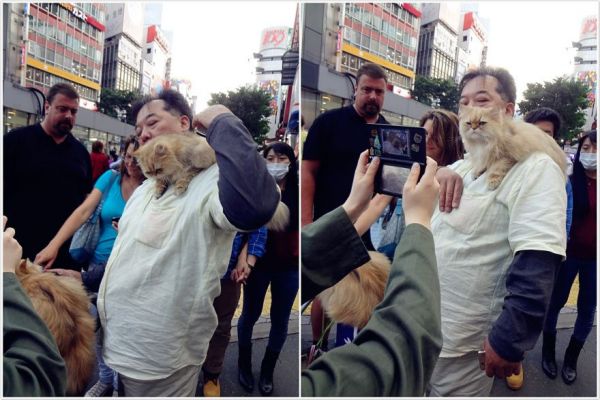
The Cat Man from Kyushu (Kyuku Neko Ojisan) pushes his nine furry friends around in a stroller like a bunch of tongue bathing babies, and surprisingly they seem just fine with the whole arrangement, content to lounge while pushed around town.
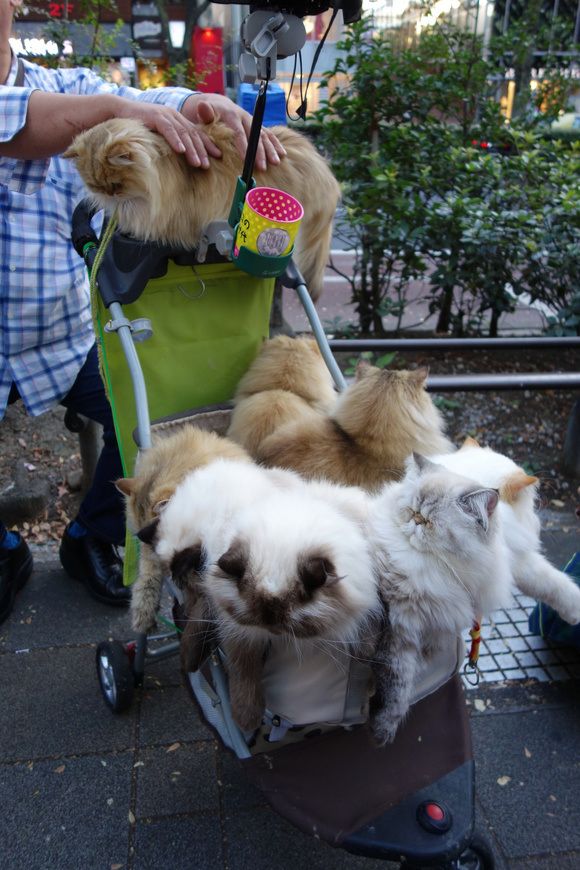
The Cat Man is a retiree who fills his days spreading happiness around Tokyo by sharing his cats with the city’s residents, and the cats seem to enjoy being pet as much as the people enjoy petting them!
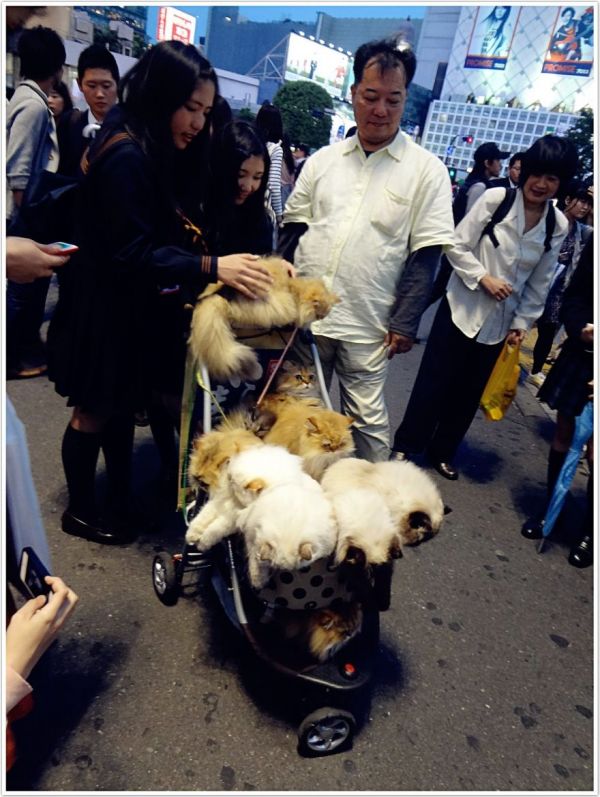
However, as you can see in his Facebook photos, the Cat Man is a very modest man, and he prefers to stay out of pictures and let his cats remain the center of attention for the adoring public.
-Via Cheezburger

A still from 'Northern Soul,' a new film from director Elaine Constantine
Northern Soul changed English club culture forever. Instead of venue owners recruiting cover bands to slog through a set of Perry Como covers, young Britons began to take control of their nightlife, hiring out clubs, booking the DJs, and recruiting guys in brogue shoes and bowling shirts to master the speed that kept everyone dancing all night.
Elaine Constantine is a photographer and filmmaker who grew up in the Northern Soul scene. Tomorrow marks the UK release of her film, Northern Soul—which tells the story of two working-class boys and their experience of soul music, love, drugs, and death—so I thought I’d call her up for a chat.
VICE: A lot of the film is based on your experiences, right? Do you remember the first time you heard a Northern Soul record?
Elaine Constantine: I grew up in a large industrial town called Bury, on the outskirts of Manchester. I went to this massive youth club, which was in the town hall, and I remember hearing this weird record come on. It was quite strange sounding—a bit old fashioned, with lots of reverb, and just really heartfelt.
Suddenly these guys came out on to the floor and cleared it.They were doing fast spins and high kicks and drops and this amazing footwork, but they were each dancing on their own and they were locked into the track. Normally when you’d see boys dancing it would be to Status Quo, with a denim waistcoat on, and doing the air guitar. These guys were so amazing; it was such a spectacle. I just thought, Oh my God, what is this? And then my older cousin said to me, "This is Northern Soul."

Elaine, left, with her then boyfriend Rob in the early 80s
British singer Tracey Thorn has argued that Northern Soul was primarily a masculine movement. How does that relate to your experience?
A lot of people have asked me why I haven’t done a women’s story of Northern Soul, but I wanted it to be very real—a truthful representation. Men collected records. Men wanted to be DJs. The people who took the roles in driving the music forward—the DJs, the promoters, the collectors, and the drug dealers—were all mostly men. But then that doesn’t mean there weren’t a lot of women following it, and collecting, and driving that dance floor passion. So I’d say it was kind of 50/50, but that the main movers and shakers were men.
You’ve said that you wrote the script about observations of young men you knew "collecting vinyl, dancing, DJing, taking drugs, and generally being degenerates." Can you tell me a little bit about the real people behind your characters?
The two main leads are based on my experience of being married to a DJ, my husband—who I met when I was 30—and my first boyfriend, who I was engaged to and was with for years, but who is unfortunately dead now. I was absolutely in love with him. He was the whole package. He was the most amazing dancer you could ever see: he had the rhythm, he could do the acrobatics, he looked amazing, he dressed amazing... you know, he was the coolest guy I had ever met in my life.
I kind of based the character Sean on him. I remembered watching him floor three big guys right in front of me without warning: Bam, bam, bam! That fight scene in the film is from my own real experience, and when the lead, John, goes, "Oh, I didn’t have time to react," that was me, because I felt bad that I hadn’t helped him.

A still from 'Northern Soul'
How did soul music first infiltrate British culture? And why do you think black American music took off up north ahead of down south?
Well, I think a lot of white musicians from the 1960s, like the Stones, got into blues mainly because they wanted to listen to more authentic music than what was in the pop charts, and the BBC wouldn’t play American music. So they had this tradition of finding black music that was real and earthy, and that became a staple throughout the 50s and 60s. That’s how the mods evolved; they were into the blues, R&B, reggae, and stuff like that. And then the younger siblings became the suedeheads and the skinheads. Northern Soul was just an offshoot from that.
I think it developed specifically outside of London because, by the late 60s, psychedelia had caught on big with people down south and the middle classes. But hippie culture totally didn’t appeal to the working classes. They wanted to look smart when they went out on weekends, because they’d looked like shit all week, in the factories or the mines or whatever. They were hitting on soul music because it felt more real.
There was also the fact that the media—like NME, for example—was driving the music output in London, and all the music magazines were pushing popular acts. So London was caught up in the modern-day music of the time, and soul was being embraced by the suedeheads, the skinheads, and the post-mod communities.
Yeah, you get the sense in the film that there was a lot of giving the finger to the status quo.
Yeah, there was definitely a real sense of snobbery about the charts. The ethos was, "I’m not swallowing that. I’m doing my thing." That might have been a sort of trade union spin off or something, but it bled into the subculture in a big way.

Elaine with friends in the early 80s
How do you think Northern Soul played into modern club nights as we know them?
In the 50s and 60s, prior to the Northern Soul scene, a lot of the big events that people were going to on Saturday nights would be either a band covering popular chart music, a DJ that the brewery or license company had hired to come in and play popular music, or stuff like waltzes. When Northern Soul happened it was the first big club culture where the actual punters took control of the night, so they hired the venue and they put on the DJs. So it was the first example of how we understand club culture today, where these promotions are put on by the people who are directly involved in the scene rather than official organizations.
In the film, the main excitement stems from discovering new songs that haven’t been heard before, which were sometimes called "cover ups." Can you tell me a bit about that?
Back then you'd have a DJ or record collector, and they'd go to America and find a track that they knew wasn't in the scene yet. Let’s say the guy selling them says, "OK, there’s only five of these records. I have three and there’s another two floating around somewhere." The collector will buy all three, cover up the title on each record with a white label and call it something else. So no one knows the real name of the record; he's the only person who has possession of that song.
If that song’s good—if it fills the floor—then it becomes that DJ’s song: it’s his cover up. And everyone knows it’s a cover up because they can’t see the label, and everyone’s looking at the decks the whole time. And then if someone finds one of those other two records, then the DJ is exposed, and the song is known by it’s original title from then on.
An exclusive trailer for 'Northern Soul'
Are you hoping the film will revive an interest in Northern Soul? This sense of what’s important about music: the lyrics and the passion behind it.
I don’t want to get all moral on it because people just do what they do and like what they like. It’s not up to me to dictate. But if you think about it, what’s not to like about Northern Soul? I was listening to the radio the other day and there’s this guy singing, "I think I want to marry you." And I just thought, Why the fucking hell do you think that? Why even write about it if you only think that?
Then you put a record on by someone like Johnny McCaul, from the Northern Soul vault, and it says stuff like, "I'd like to hold you tight / baby you're my guiding light / like holding on to my last thread of life / scald my hand to make me understand I need you." I mean, there are fucking lyrics like this out there and people want to listen to that Bruno Mars shit. I mean, "I think I want to marry you"? How long did it take the guy to come up with that line? If you only think it, then why mention it? Why even write it in a record?
Northern Soul is out tomorrow, Friday October 17
Follow Georgia Rose on Twitter.
 Chris O'Dowd just sold a half-hour comedy to ABC. The Wrap reports that the network has given a put pilot commitment to the semi-autobiographical single-cam project Moone Boy, which will be adapted from O'Dowd's Irish sitcom of the same name from 2012. The show is described as a "quirky comedy" that follows "12-year-old Martin Moone and the sarcastic, imaginary friend (O'Dowd) who helps him navigate the challenges of his eccentric childhood." O'Dowd created, wrote, and starred in the original series and will serve as an executive producer on the adaptation; he's not yet attached to appear in the American version. Check out a trailer for the original series below:

Feminist video games critic Anita Sarkeesian had to cancel a speech at Utah State University after a terrorist sent a letter to the school stating that unless her talk was cancelled, he would go on a shooting spree, murdering her and as many other feminists as he could.

The letter-writer threatened a “Montreal Massacre” style attack if “Feminist Frequency” producer Sarkeesian was allowed to speak–referencing the 1989 mass murder in which 25 year-old Marc Lepine killed 14 women and injured 10 others while screaming about how much he hates feminists. Charming.
These sort of threats are, sadly, par for the course for Sarkeesian. She and her family were driven from their home this past August after a Twitter user tweeted her address along with threats to rape and murder her. In fact, the FBI representative told the Standard-Examiner,”they determined the threat seems to be consistent with ones (Sarkeesian) has received at other places around the nation. The threat we received is not out of the norm for (this woman).”
What the actual hell? How gross is it that we live in a world where this kind of threat is “not out of the norm” for anyone?
Now, I’m sorry if you don’t like what Anita Sarkeesian has to say about video games. I’m sorry if you are really upset because you don’t think her video series warranted a Kickstarter fund. However, lots of people say things we don’t like, and indeed, many people crowdfund things we think are dumb and unworthy of funding–such as potato salads and Zach Braff movies. Tough fucking shit. We don’t then go around acting like they just killed, dismembered and ate our mothers. I read about things I am deeply offended by all day long–including this!–and yet I manage to not threaten to rape or murder anyone.
Although Sarkeesian regularly receives death threats like this one and goes on to speak anyway, she canceled this event because the police were not able to provide adequate security. Why? Because due to Utah’s concealed carry laws, they can’t actually bar anyone from entering the facility with a gun. Even when there is a terror threat.
Think about this for a minute. A person can get actual, credible death threats, from someone planning a massacre, and the police can’t do anything to prevent someone bringing guns to this venue because of these concealed carry laws. But bringing moisturizer on a plane in a bottle larger than 4 ounces, well, that is simply verboten. I do not think I am exaggerating when I say that I think our priorities may actually be a bit out of whack here when it comes to what we are doing to prevent actual threats of terrorism.
I have no problem calling this person a terrorist, because he is one, and so are the rest of these asshole cowards threatening to rape and murder women because feminism gives them a sad. Terrorism is defined as “the use of violence and intimidation in the pursuit of political gain”–which is exactly what this is. The point is not just to prevent Anita Sarkeesian from speaking, but to scare other women as well, and keep them from speaking.
These are not merely empty threats, either. In addition to Marc Lepine, there have been several other mass murderers motivated entirely by misogyny. George Sodini, Elliot Rodger, George Hennard, Seung-Hui Cho, Adam Lanza–just to name a few. How many more people have to die before we take these things more seriously?

Article reposted with permission from Business Insider.
Albania’s first visit to Serbia in 47 years ended in a chaotic brawl featuring chair-wielding fans, flares, and a drone reportedly controlled by the Albanian prime minister’s brother, who was later arrested. The game, a qualifier for the 2016 European Championship, was abandoned.
In the 40th minute, a pro-Albanian drone started hovering over the field. It was waving a flag showing a map of “Greater Albania,” according to The Guardian. The two countries have a long history, most notably in Kosovo — a region on the border with a large population of ethnic Albanians that was a part of Serbia before declaring independence 2008.


After the drone appeared, referee Martin Atkinson halted the game.
When Serbia defender Stefan Mitrovic grabbed the flag and attempted to yank down the drone with it, all hell broke loose.

He was confronted by Albania players, who retook the flag.
Serbian fans rushed the pitch, including one who hit an Albanian player with a chair:
The players fled to the locker room. The Albanians were pummeled and kicked as they went into the tunnel.
After the game, Serbian officials told CNN that Olsi Rama, the brother of Albanian prime minister Edi Rama, was the one controlling the drone. He was arrested and set back to Albania, according to the officials. Rama later denied controlling the drone.
UEFA, European soccer’s governing body, has rules to keep countries with histories of violence and political strife from playing each other in tournaments with random draws.
Gibraltar isn’t allowed to play Spain, for example.
The chaos in Belgrade on Tuesday night shows that this is a wise strategy that probably should be used more often.
Watch the video of the chaos here:
Related Posts:
Why you shouldn’t trust pictures on hotel websites

Sadie Somehome was recording yet another ukelele cover of that crappy song “Riptide.” According to YouTube, there are already “about 32,800” twee renditions of the song, which is 32,800 too many. Somehome’s cat was aware of this, and bravely sacrificed its own life to stop the madness.
It succeeded, sort of. Somehome—much to her credit—seems to have a good sense of humor about the incident, and uploaded the video with the title “Damn cat!!” According to her, she never intended to post it publicly in the first place. “I was filming this for MYSELF, because it helps me practice. I’m not here to impress you, clearly!” she explains in the video’s description. “My cousin encouraged me to post it. I like to make people laugh. :)”
We could all learn a lesson from her hero cat: If you see someone starting to play “Riptide” on a ukelele, run up and swat their camera away. For the good of humanity.
h/t Reddit


Some foods we adults love are completely intimidating to the younger set. Kids, picky or not, are the ultimate food snobs. Dishes that look weird, smell odd, or require special tools or preparation are just not going to pass their detailed inspection.
How do you get kids to decide lobster is succulent and not scary, or that sushi is divine and not disgusting? We asked chefs, parenting pros, and moms and dads in the trenches to tell us.
And if all else fails: Add bacon!
Lobster

Adults love their succulent crustacean meat, but to kids these strange armored animals look like the stars of a monster movie! Beady eyes, hairy legs, weird antennae, and giant claws are enough to have even the bravest kid running in fear.
Start kids on lobster by incorporating the meat into a dish you know they already enjoy. Luke Holden, president and founder of Luke’s Lobster suggests folding the protein into homemade mac and cheese or grilled cheese. Once kids are ready to graduate to lobsters in the rough, he says, “explain or, even better, show them where lobsters come from. Then experience the theater of a lobster-shack meal. Kids will be interested in the crackers, bibs, and other toys they don’t usually have when they eat. Together, walk through the instructions for breaking down crustacean (usually found on the placemat) and focus on the process, not the big, red monster on the plate.”
Get the recipe: Perfectly Steamed Lobster

Clams

In-the-shell clams can be interesting to kids. But crack ‘em open and, well, that’s another thing entirely: slimy, little blobs of meat, dripping with mystery fluid that no amount of cocktail sauce will get kids to slurp down.
“How can we vacation in food paradise and have our kids eating chicken nuggets ?” Marianne Magid-Jones, a New York City-based social worker specializing in children and teens, and mom to three hungry boys, says about her family’s annual Maine summer vacations. “I spent years working on my middle child to get him to try the steamers we all enjoyed. We would order them and make a really big deal out of it. My son always found the shells really interesting, so I let him play with them. It took a while, but eventually he got comfortable and curious enough to try eating one. When he was ready for his first bite, I offered tons of positive reinforcement and, of course, he loved it.”
Get the recipe: Linguine and Clams with Almonds and Herbs
Chiles

Once bitten, twice shy. Any kid burned by spicy salsa, curry, or other fiery food won’t be stepping up to the plate for another try at bat any time soon.
“Attitude is everything! Our philosophy for spicy food (and food in general) is to make eating fun and a little dangerous, but in a cool way,” says Kim Foster, mom of two spicy-food aficionados. “There is good spicy and bad spicy. We like when it tastes good and is a little spicy, but not when you are going to burn your face off eating it. My husband recently ordered ’Screaming with Vengeance’ ramen that was so crazy hot the restaurant gives you a T-shirt if you finish it—and the kids really wanted to try it! After slurping down ‘Screaming for Vengeance,’ who cares about a Buffalo chicken wing? The rest is nothing.”
Sushi

Artfully arranged on a platter, sushi and sashimi look inviting, like colorful little goodies so easy for kids to pop right into their mouths. But once kids learn what these treats really are, they’ll drop that gorgeous tekkamaki faster than a hot potato. Cold, raw fish is just too gross for words.
Or is it?
“The shrimp tempura roll is the gateway to sushi,” says Camille Carter, a New Jersey mom of two who has been taking her two kids on food adventures for over a decade. “Once my kids mastered the shrimp tempura roll they moved on to California rolls, followed by different varieties of raw-fish sushi. Mommy and daddy always raved about it, so they were eager to try it. Plus my kids love to dip, so sushi has the added excitement of the cute little bowls of sauce.”
Game Meats

Kids don’t care that rabbit, elk, or deer have a delicious and complex, rich, earthy flavor. Bottom line: They aren’t going to eat anything cute or cuddly, or that could have been a potential pet—no matter how good it tastes.
“Disney makes game cute! That is why we eat chicken and not rabbit,” Hudson Valley chef Ric Orlando says. But “rabbit is an easy entry into game—it tastes like chicken. Try braising it in a simple cacciatore. Introduce venison in a recognizable format like a burger or a taco. Tell them afterwards what they ate—just don’t use words like “cute,” “little,” or “bunny.” Older kids will like that eating game is green, good for the world, and that they aren’t adding to the commercial meat industry.”
Get the recipe: Fettuccine with Rabbit, Artichokes, and Fava Beans
Brussels Sprouts

Miniature green cabbages that stink up the entire house while cooking? No thank you! Kids seem genetically coded to hate Brussels sprouts before the vegetable ever enters their mouths.
Kiki Schaffer, mom, grandmother, and director of parenting, family, and early childhood at the 14th Street Y in New York City, suggests families “have a tasting party, invite a few friends, and everyone brings a food for all to taste. Everyone has to take one bite of each food and rate it on a sheet. Have a copy of the sheet for each person with categories like ‘Sublime’ or ‘I’d Eat It Every Day in a Row for the Next Three Weeks’ to ‘Disgusting’ or ‘Puke-worthy.’ After everyone has tasted the food and marked their sheet, share your ratings with each other.” Schaffer adds: “This is successful if you keep it small and only invite kids who get it.”
Get the recipe: Brussels Sprouts with Maple Syrup
Spinach

Popeye loved him some spinach. Kids not so much. The dark, leafy greens might get a first taste since they aren’t offensive-looking, but the bitterness often keeps kids from trying a second bite. Overcook them and they’re a green, gooey mess.
“You have got to think like a kid if you want them to try new things, and kids are supervisual,” explains “Cheffy” Michael Uhnak from Besaw’s in Portland, Oregon. “People always overcook spinach. No one wants something that looks like a green glob on the plate. Sauté spinach so it’s still leafy with some life to it, and the kids will eat it.”
Get the recipe: Buttered Spinach with Vinegar
Octopus

Another alien invasion: long tentacles, strange suction-cups things, and no face to speak of. If a kid has seen it stuck to the top of the tank at the aquarium, they’re going to balk at it.
“Traveling creates a great opportunity to eat strange foods,” Foster says. “Get kids out of your kitchen so everything is new. My kids tried octopus in a tapas bar in Barcelona. [When you're traveling], you’re doing all this new stuff anyway, so you can make eating different regional foods just one of the many new things you are doing. It’s more organic that way.”
Get the recipe: Grilled Sesame Squid
Whole Fish

Kids who willingly eat fish are a rare breed. Kids who will dig into something still sporting a head and eyeballs are even harder to find.
Make the kids part of the process of buying and preparing the fish, says Joanna Holzman, passionate home cook, mom of two, and amateur food-crawl planner in the culinarily diverse borough of Queens, N.Y. “We shop for fish with our children every Sunday at the farmers market. My husband always lifts our three-year-old daughter up to see the fish and lets her pick it out. One day she chose a whole sea bass!”
And once they got the fish home? “We made it into sort of a game for her: She helped my husband clean and prepare the fish for the grill, he made the mouth move for her and encouraged her to touch the eyeball by telling her it was squishy.”
Get the recipe: Grill-Steamed Sea Bass with Citrus Relish
Artichokes

Besides the fact that this intimidating vegetable looks absolutely bizarre, kids have no idea of how to eat it.
“Make the new food part of a special meal” Lilly Steirer, owner of Lilly’s Table, suggests. She introduced artichokes to her daughter the same way her parents presented them to her: “Artichokes were a big production, an unusual food we had only once or twice a year. My mom would make hollandaise sauce or mayonnaise mixed with lemon juice for dipping. So experiential…there was something so celebratory about it all that you weren’t thinking about the flavor at that point.”
Get the recipe: Artichokes with Parmesan–Black Pepper Yogurt
Beets

Kids will happily suck down gallons of blue-colored beverages, so why do they turn their noses up at a naturally occurring purple beet before even tasting its sweetly subtle flesh?
“Connect the food you want kids to try with food they are already comfortable with,” says dietician Anne London, who blogs at Petite Nutrition. “Dark red is not a common color for food, and it can be a little scary for kids. So start them off with a golden-colored beet, which looks more like a fruit, so it isn’t scary. Work your way through the beet varieties, trying the red beet last.”
Get the recipe: Golden Beet and Jicama Salad with Crème Fraîche
Mushrooms

Enjoying foods with an earthy, mineral taste is an adults-only convention. Kids think mushrooms taste like dirt—and sometimes think they’re all poisonous.
“Make it about the experience,” says chef Marcus Samuelsson. “I went foraging [for mushrooms] with my grandmother a lot. It was always a great day, playing with my sisters, taking pictures, being outside in nature. Then we went home to clean them and make them into mushroom toast. It’s just what we did, it was part of my family’s culture. I never thought of the food as separate; it would be weird not have that connectivity to it.”
Get the recipe: Sautéed Shiitake Mushrooms
Stinky Cheese

Kids are the ultimate sniffers: If something smells the slightest bit weird, they won’t eat it. Plus, many strongly scented cheeses are veined with blue-colored mold, or could be soft and runny or just generally gross-looking, creating a double whammy that turns many kids off the cheese plate.
“Make cheese an adventure. Take the kids to the cheese market and tell them, ‘We are going to try cheese today,’” Steirer says. “Give them a tiny nibble and make sure they understand they just have to try it, they don’t have to like it. Then talk about the different flavors you experienced during the tasting.”
The post How to Convince Your Kids to Eat ‘Scary’ Foods appeared first on Bon Appétit.
Legalize Kinder eggs.

Countries of origin: Italy, Germany, and other European countries
Why it's banned: The fun of Kinder Surprise chocolate eggs comes from the (inedible) toy that's hidden inside the egg in a plastic capsule...and the U.S. government will have none of it. A 1938 federal law bans toys or any non-edible objects to be embedded within food products, meaning the only surprise Americans get is a potential fine and confiscation of their delicious chocolates at the border. Every year, tens of thousands of Kinder eggs are seized by U.S. customs.

Country of origin: Japan
Why it's (mostly) banned: Because it could literally kill you, if not prepared properly. You need a license and intense training to cook this Japanese puffer fish, which contains potentially lethal amounts of tetrodotoxin, which can paralyze your body and stop your breathing. For those who want to risk it, the short list of restaurants that serve fugu in the U.S. can be found here.
Getty Images/iStockphoto De Visu

Country of origin: Italy
Why it's banned: If this cheese looks like it's completely rotten, you're not far off. Pecorino cheese is purposefully infested with maggots, then left to let them do their thing. The maggots lay eggs in the cheese and eat away at it until it becomes ready for consumption by those who dare. Here's the kicker: The cheese is only "good" when the maggots are still alive, crawling and writhing around.

Country of origin: United Kingdom
Why it's banned: Importing haggis to the United States is banned because haggis contains sheep lung, which violates federal food safety regulations. The USDA has had a ban on foods containing lungs since 1971, and despite efforts by the Scottish government, no changes to that law have been made. Keep your sheep lungs, Scotland, as long as we can still get your whiskey.
Getty Images Monkey Business Images Ltd
Para los gobiernos, y de formar especial para los gobiernos por excelencia, es decir, los de derechas, existe una especie de trampa 22 que consiste en esta alternativa: o el país está en perfecta calma —la proverbial balsa de aceite de la que suelen hablar los dictadores en sus entrevistas— y por tanto el gobierno cuenta con un respaldo popular masivo, absoluto e incuestionable que le faculta para usar a discreción los resortes del poder, o el país es un caos, está al borde de la insurrección, no sabemos donde vamos a parar, etcétera, y entonces el gobierno, para enderezar la situación, también debe usar a discreción todos los resortes del poder. Sea de un modo o de otro, el caso es usar la mano dura, o como dicen en el espectacular consejo de Ministros de La corte de los milagros de Valle-Inclán “¡Dura lex! ¡Y navajeo!”.
Nadie ilustra mejor esta paradoja que nuestro viejo amigo, el anterior jefe del estado (ya sé que ya no es el anterior jefe del estado, pero para mí lo sigue siendo, al igual que el siglo pasado es para mí el XIX), Franco. En alguno de los minutos más alucinantes, más perturbadores que ha producido el cine español (olvidaos de Buñuel, olvidaos de Berlanga, olvidaos incluso del otro Franco), el caudillo, tieso como una estatua de cera, asiste a la proyección de su propia apoteosis en Franco, ese hombre, terminada la cual, un obsequioso Sáenz de Heredia le pregunta si los españoles somos tan difíciles de gobernar “como creemos o a veces se nos hace creer”. El caudillo, con una leve sonrisa de bonhomía, muy en el papel de abuelo de la patria que por los avatares de la historia no pudieron alcanzar sus viejos colegas Hitler y Mussolini, lo niega, para embarcarse a continuación en un prodigioso monólogo que deja chico al de Brando en Apocalypse Now. Y comienza: “No, todo lo contrario: como hombres de gran temperamento, tenemos acentuadas cualidades que nos hacen tan duros para la lucha, como constantes en los servicios de la paz”. En los fastos de los 25 años de paz, Franco por fin podía decir esto: a la fase “España está al borde del caos” le había sucedido, miles de muertos por medio, la fase “España es una balsa de aceite”, pero la mano apretando el cuello de la gente solo variaba la presión, sin dejar de ejercerla en ningún momento no fuesen a reaparecer, por usar otra de sus expresiones.
Unos cuantos resentidos, sin embargo, disentían del benévolo diagnóstico hecho por el caudillo ante la cámara: los anarquistas. Los anarquistas no tenían fe alguna en las ilusiones del PCE, la huelga general revolucionaria o la reconciliación nacional; fieles a lo que podríamos llamar “lógica Mateo Morral”, consideraban que muerto el perro —el dictador en este caso— se acabaría la rabia. Por eso, y con tenacidad encomiable, trataron una y otra vez de asesinar a Franco: Franco debía ser destruido. Al menos cuarenta intentos de atentado hasta entrados los 60, incluyendo episodios tan bizarros como el intento de bombardeo con avioneta en San Sebastián o el momento en que un comando en ruta está a punto de improvisar un dos por uno antifascista en la reunión de Franco y Hitler en Hendaya. Veinticinco años tratando en vano de desmentir que España era una balsa de aceite. Naturalmente, nada de esto trascendió entonces ni nada de esto, o casi nada, se recuerda. No vayamos a turbar la mansa superficie de la balsa de aceite, ¿verdad? Porque seamos conscientes: si lo hacemos, nos pondremos al borde del caos y obligaremos a las autoridades competentes a la dura lex y al navajeo.

Víctor Lenore es autor de 'Indies, hipsters y gafapastas', un panfleto para desterrar de una vez por todas a los modernos de nuestro panorama cultural.

Totò Riina durante su juicio en 1993. Foto: Corbis.
Antes de nada, un poco de contexto histórico, porque la idea de fondo de estas líneas es que en Italia siempre ha habido un entendimiento a alto nivel, que puentea toda legalidad, entre los despachos oficiales, algunos de sus agentes secretos menos presentables —deviati, desviados, se les llama— y los capos mafiosos. El denominado Protocolo Mariposa (Protocollo Farfalla), descubierto ahora, aunque se sospechaba desde hace dos años de su existencia, es el último episodio de esta trabajada tradición nacional.
El primer asesinato mafioso de una personalidad institucional fue el de Emmanuele Notarbartolo, exalcalde de Palermo, en 1893. Históricamente ha quedado bastante claro que el organizador del crimen fue el principal acusado, un cacique mafioso siciliano e influyente diputado en Roma, Raffaele Palizzolo. El juicio se quedó en nada, le salvaron el trasero.
El primer gran proceso a una organización criminal fue el del famoso caso Cuocolo, macabro homicidio de un matrimonio, que desmanteló la Camorra urbana de Nápoles a principios del siglo XX. Todo se basaba en el testimonio de uno de los primeros grandes arrepentidos, un superpentito como se les ha llamado luego, un tal Gennaro Abbatemaggio. El juicio, rodeado de una gran expectación mediática, fue un desmadre. Esto es lo que dijo el corresponsal de un periódico extranjero: «El proceso a la Camorra es una monumental demostración de la incapacidad e ineficacia del actual sistema penal en Italia». Y no era el New York Times, no, quien se escandalizaba, era el enviado del Bulawayo Chronicle, del actual Zimbabwe. Este encantador dato es mérito del historiador John Dickie. La sentencia fue en 1912, pero en 1927, al cabo de quince años, el señor Abbatemaggio confesó que se lo había inventado todo y soltaron a todo el mundo. Aseguró que le habían obligado los Carabinieri, con la amenaza de cargarle el muerto, y luego le pagaron un dineral y hasta le enviaron regalos de boda. También compraron testigos y periodistas.
Es decir, la cosa viene de lejos y según uno se acerca a la actualidad, digamos toda la segunda mitad del siglo XX, los nubarrones sobre muchos asuntos sucios son abrumadores, para culminar en los grandes crímenes de los noventa, como los asesinatos de los jueces Giovanni Falcone y Paolo Borsellino en 1992 —culpables de haber logrado el primer e histórico proceso serio contra la Mafia siciliana— y la campaña de atentados de 1993. De paso recordamos que los teóricos culpables del asesinato de Borsellino, condenados a cadena perpetua, fueron puestos en libertad en 2011. El principal arrepentido del caso reveló al cabo de casi dos décadas que se lo había inventado todo. Mejor dicho, se lo habían sugerido por las malas en comisaría, cuyo jefe de entonces ha resultado tener un pasado en los servicios secretos. Este periodo y sus misterios son precisamente los que está sacando ahora a la luz el gran juicio que se celebra en Palermo sobre la Trattativa, los presuntos pactos bajo la mesa entre altos cargos y la cúpula mafiosa de Cosa Nostra, el clan de los Corleoneses de Totò Riina. Para detener los grandes atentados, con el país sumido en una grave crisis política, se habrían pactado concesiones penitenciarias y legales a la Mafia.
En este panorama de doble juego y con una parte oscura del Estado que va por libre se inserta el Protocolo Mariposa. ¿Qué es? En teoría nada, porque es algo de lo que se rumorea desde 2012 pero de lo que las autoridades han negado siempre su existencia. Haciéndolo, han mentido descaradamente en numerosas ocasiones. Por ejemplo, los ministros de Interior y Justicia en 2013 en sus comparecencias ante la comisión parlamentaria de investigación antimafia. Porque al final resulta que sí que existía. Se ha sabido este verano cuando se ha levantado el secreto de Estado sobre algunos archivos clasificados, por iniciativa del Gobierno de Matteo Renzi. El Protocollo Farfalla —nombre tomado de la novela y película carcelaria Papillon— es un acuerdo reservado cerrado en 2004 que permitía a los servicios secretos entrar y salir libremente en las prisiones, sin dejar rastro, para charlar con capos mafiosos recluidos en régimen de aislamiento total. Sin rendir cuentas a nadie y al margen de la autoridad judicial. Es más, si estos agentes eran preguntados al respecto por un juez, debían mentir. Todo ilegal o, según como se mire, una excepción oculta a la ley de quien hace las leyes.
En las guerras o para combatir el terrorismo siempre se ha hablado con el diablo, y se supone que era para ayudar en la lucha contra la Mafia, pero conociendo la historia de Italia quizá eso es mucho suponer. En los servicios secretos italianos siempre ha habido buenos y malos, y no se sabe por qué estas cosas al final suelen ser de los malos. Cabe la legítima sospecha de que mangoneaban para seguir manteniendo o actualizando sus intrincados acuerdos y organizar depistaggi, las célebres maniobras de despiste que emborronan tantos misterios italianos. Es más, en ocasiones el único modo que ha quedado de acercarse a la verdad ha sido comprender quién estaba interesado en que no se supiera.
El fiscal general de Palermo, Roberto Scarpinato, ha puesto sobre la mesa los papeles del Protocolo Mariposa en el juicio de apelación contra el exgeneral de los Carabinieri Mario Mori, que en los noventa fue el jefe del Raggruppamento Operativo Speciale (ROS) del cuerpo, una fuerza especial dedicada a combatir a la Mafia. Sin embargo Mori está acusado de haber dejado escapar al capo Bernardo Provenzano en 1995 cuando lo tenía delante, en un descampado de Mezzojuso, en Sicilia. Habría sido, sostiene la fiscalía, para respetar los presuntos acuerdos de la Trattativa. Pero de momento Mori ha sido absuelto en primer grado, una sentencia que además, en más de mil trescientos folios, ponía en duda toda la tesis de la Trattativa.
Mori es uno de los personajes centrales en torno a los cuales gravitan la mayoría de estos asuntos sucios y también se sienta en el banquillo de la Trattativa que, de hecho, empezó con él. Fue quien contactó primero con los Corleoneses en junio de 1992, a través de mediadores. Mori es también ese policía al que se le olvidó registrar la casa de Totó Riina en 1993 cuando le arrestaron y que también apagó las cámaras que la vigilaban, con tan mala suerte que al acordarse, dieciocho días después, ya estaba vacía y hasta habían pintado las paredes. Se supone que es otro favor pactado en la Trattativa, aunque en otro juicio por este despiste también ha sido absuelto definitivamente. La tesis es que Provenzano habría vendido a Riina, pero no debían encontrarse sus papeles, muy comprometedores para algunas autoridades y que revelarían sus pactos.
Complicando aún más las cosas, para variar cada vez que uno tira del hilo en Italia, están saliendo cosas del pasado de Mori en el más puro estilo del horror clásico italiano: metido en los servicios de inteligencia desde los años setenta (en el entonces llamado SID, de 1972 a 1975), cercano a la logia masónica ilegal P-2, relacionado con el periodista Mino Pecorelli, asesinado en 1979, un crimen por el que se procesó a Andreotti… En fin, historias reservadas a los más acérrimos aficionados al género. Creo que se harán una idea del personaje con una maravillosa frase suya: «El policía espera capturar a Osama Bin Laden, el miembro de la inteligencia espera captarlo como fuente». El problema es que Mori ha sido las dos cosas, policía y agente secreto, no se sabe en qué orden.
El Protocolo Mariposa son seis páginas que en mayo de 2004 ponen por escrito una práctica ya vigente el año anterior pactada entre el Departamento de Administración Penitenciaria (DAP), guiado entonces por Giovanni Tinebra, que fue el fiscal del caso Borsellino, el que resultó ser un montaje, y los servicios secretos civiles (SISDE, herederos del SID a partir de 1977, con otra rama militar, el SISMI), dirigidos en aquella época por el general Mori. Todo esto ocurría bajo el Gobierno de Silvio Berlusconi.
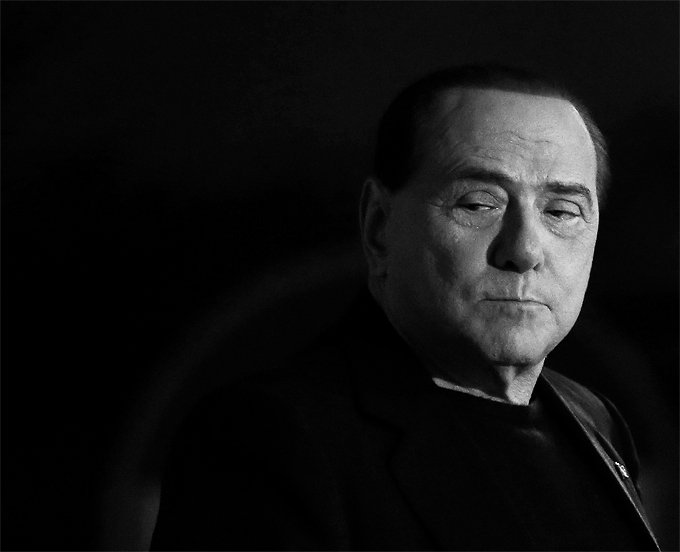
Silvio Berlusconi. Fotografía: Cordon Press.
Los mafiosos tocados por los servicios de inteligencia se comprometían a dar información a cambio de «una idónea compensación a definir». Ha aparecido una lista de ocho capos de las tres mafias que habrían participado en la iniciativa, algunos muy gordos y con gravísimos crímenes a sus espaldas. Son Cristoforo «Fifetto» Cannella, boss de Brancaccio, Palermo, condenado a cadena perpetua por el asesinato del juez Borsellino, que ha negado haber tenido contacto con los servicios secretos; Salvatore Rinella, capo de Trabia, Palermo, que también ha negado todo; Vincenzo Boccafusca, del clan de Porta Nuova, Palermo; Giuseppe Maria Di Giacomo, capo de Catania; Modestino Genovese, Antonio Angelino y Massimo Clemente, los tres de la Camorra; Antonino Pelle, de la ‘Ndrangheta.
Naturalmente, a día de hoy y si no aparecen nuevos papeles, nada se sabe de qué han contado ni cómo se han usado sus confidencias. Es decir, por redondear la idea, es una valiosa información escamoteada a la justicia con fines desconocidos. También estaría bien saber quién ha enviado exactamente a agentes a hablar con mafiosos y a quién se ha pagado el dinero, procedente de los fondos reservados, pues un mafioso encerrado en el régimen duro no tiene una cuenta a su nombre. El protocolo se habría mantenido durante tres años, hasta 2007, año en que se reguló por fin por ley el acceso de los servicios secretos a las prisiones, que era un circo. Pero claro, eso de que se terminó en 2007 es lo que dicen y con esta gente cualquiera se fía. A lo mejor tienen otra cláusula más secreta todavía que ordena mentir también sobre eso hasta nueva orden. Es como para sospechar, por ejemplo, en el caso de un importante pentito de 2013, Sergio Flamia, que precisamente ha desacreditado el testigo clave contra el general Mori en el proceso por haber dejado escapar a Provenzano. En resumen, le ha sacado las castañas del fuego al general. Pues bien, ahora resulta que Flamia ya colaboraba con los servicios secretos desde 2008 y que tras una exitosa operación de ese año contra la Mafia, con un centenar de detenidos, le pagaron ciento cincuenta mil euros por sus servicios. Y esto ya era después de 2007. Encima algunos agentes secretos le han ido a ver incluso cuando ya había empezado a colaborar con la magistratura. Se hicieron pasar por abogados, no se sabe si con bigote postizo.
Lo mismo ocurre con el famoso compañero de paseos de Totò Riina en el patio de la prisión de Milán, Alberto Lorusso, que en 2013 se ha pasado semanas dando carrete al capo de los Corleoneses para sacarle información, sin saber que estaba siendo grabado por una cámara. Lorusso demostró estar al corriente de asuntos muy reservados de la Fiscalía de Palermo y tras ser descubierto se encogió de hombros cuando le preguntaron si tenía contactos con los servicios secretos: «Es mejor no hablar de estas cosas». E igual ha sucedido, se ha sabido ahora, con Rosario Cataffi, otro mafioso de currículum especialmente turbio, por sus contactos en el pasado con servicios secretos y la extrema derecha. En 2012 pidió hablar con los fiscales de la Trattativa: a los pocos días los servicios secretos solicitaron información sobre él a las autoridades penitenciarias. Son dos planos del Estado que se mueven, y se combaten, en paralelo, uno a la luz del sol, el otro bajo tierra. Como en la tela de Penélope, parece que hay unos que buscan y reconstruyen la verdad de día mientras otros, de noche, la desmenuzan, la esconden o la cambian de sitio. Y vuelta a empezar.
Todos estos casos sospechosos relacionados con el Protocolo Farfalla están siendo investigados ahora por la Fiscalía de Palermo. Es interesante saber lo que piensa sobre este embrollo Claudio Fava, vicepresidente de la comisión antimafia e hijo del periodista Giuseppe Fava, asesinado por la Mafia en 1984 por sus investigaciones: «La sospecha es que el protocolo haya servido para averiguar quién pensaba colaborar con la justicia, qué podía contar y quizás organizar alguna maniobra de despiste. La preocupación es que miembros de los servicios secretos hayan sido mandados a las cárceles, no para prevenir atentados, sino para obtener informaciones sobre lo que iba a pasar y poder intervenir». Fava menciona, por si puede ser un dato útil, que en 2003 se arrepintió la mano derecha de Provenzano, Antonino Giuffrè, y comenzó a contar a los jueces lo que sabía: «Giuffrè empezó a hablar sobre la relación entre el nacimiento de Forza Italia (el partido de Silvio Berlusconi) y los Corleoneses». Justo ese año, en 2003, se puso en marcha el Protocolo Mariposa. En opinión de Fava, Berlusconi, entonces primer ministro, tuvo que estar bien informado de esta operación.
Debe recordarse que la mano derecha del magnate, Marcello Del’Utri, es uno de los imputados en el proceso de la Trattativa, por su presunto papel en las negociaciones con los Corleoneses, que en 1993 buscaban un nuevo socio político tras la caída de la Democracia Cristiana: era el momento en que se preparaba la fundación de Forza Italia y la entrada de Berlusconi en política. Dell’Utri, como quizá saben, está en la cárcel para cumplir siete años de prisión por ser el mediador entre Berlusconi y la Mafia desde los años setenta.
La Fiscalía de Palermo ha logrado sacar a la luz el Protocolo Mariposa y su fiscal general, Roberto Scarpinato, ha decidido meter todo el material en el proceso al general Mori, y también ha pasado al de la Trattativa. Porque, a fin de cuentas y visto ahora, el Protocolo Mariposa puede no ser otra cosa que un eslabón más, el más reciente, de ese largo diálogo secreto entre Estado y Mafia.
Este celo en el sentido del deber de Scarpinato, colega de Falcone y Borsellino, fiscal en el histórico proceso contra Giulio Andreotti, donde demostró sus relaciones con la Mafia, rápidamente ha tenido inquietantes consecuencias. La noche entre el 2 y el 3 de septiembre alguien que conocía muy bien el Palacio de Justicia de Palermo, teóricamente uno de los lugares más vigilados de Italia, eligió el único de los cuatro accesos al despacho de Scarpinato que no se graba con videocámaras. Dejó tranquilamente sobre la mesa una carta con frases amenazadoras como esta: «Usted se está sobrepasando de sus deberes y su función, deje que las cosas sigan su curso, toda paciencia tiene un límite». O esta: «Podemos alcanzarte en cualquier lugar», con datos muy concretos de su casa, tanto la de Palermo como la de sus vacaciones, así como detalles de sus últimas conversaciones privadas con colegas e investigadores; «Nosotros no hacemos héroes», quizá una referencia a que pueden usar contra él algún bulo. Son cosas que ya le pasaron a Falcone y les están pasando desde hace meses a otros colegas suyos de Palermo, como Nino Di Matteo, el fiscal de la Trattativa. Scarpinato no ha tenido dudas: «Esta carta apesta a servicios secretos desviados».
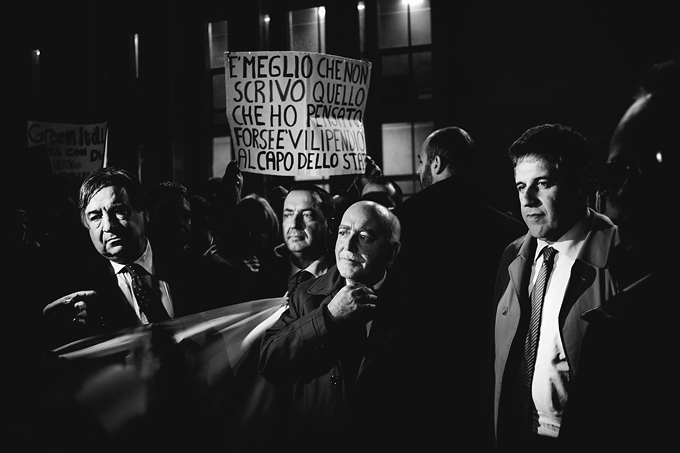
Unos manifestantes reclaman más seguridad para el fiscal italiano Nino Di Matteo (en la imagen, con gabardina) en diciembre de 2013. Foto: Cordon Press.
No es todo. El pasado 22 o el 23 de septiembre alguien escribió en la puerta delante de su despacho la palabra «Accura», que en siciliano significa «ten cuidado». Se pensó que el anónimo había metido la pata, porque el pasillo está vigilado por seis videocámaras, pero cuando los fiscales fueron a mirar, sorpresa: faltaban siete días de grabación y el disco duro que contenía los restantes estaba dañado. Dos fallos, no uno, demasiada casualidad: alguien de dentro, del Palacio de Justicia, había manipulado el sistema de vigilancia. Hay un topo en los tribunales de Palermo. Es algo que también le pasó a Falcone. Y lo que parece es que esta gente que anda metiendo miedo a los fiscales no es de la Mafia, al menos de la siciliana, sino de la otra, la de los servicios secretos.
Último aviso, el 7 de octubre: dejaron cerca de la puerta del tribunal de Palermo un proyectil de guerra de quince centímetros de las fuerzas armadas de Israel, una rareza difícil de encontrar en Italia. Otro mensaje de prepotencia, los anónimos matones vienen a decir que si se lo proponen pueden actuar donde quieran.
Entre tanto, el proceso de la Trattativa sigue adelante tortuosamente y ya lleva más de cincuenta vistas. Apenas tiene eco en la prensa, y mucho menos en la internacional. El próximo 28 de octubre tendrá un invitado especial, el presidente de la República, Giorgio Napolitano, que debe prestar declaración a ver lo que sabe de un fleco de este engendro. Se ha resistido, pero al final eso de que todos son iguales ante la ley ha tenido su peso. Aunque haciendo uso de sus privilegios será interrogado en su despacho, en el Palacio del Quirinale, a puerta cerrada. La cosa se ha puesto muy interesante cuando Totò Riina y su lugarteniente, Leoluca Bagarella, dijeron que querían asistir, algo a lo que en principio tienen derecho como imputados. La semana pasada se armó un lío tremendo: ¡Ultraje! ¡el jefe de Estado humillándose ante dos de los mafiosos más sanguinarios de Cosa Nostra! ¡estos dos tipejos dentro de los salones del Quirinale! Es comprensible, aunque no era para tanto porque hubiera sido en videoconferencia, pero la sola idea de una presencia incluso virtual ha causado pesadillas. En realidad es por la mala conciencia de este escándalo tan vergonzoso de la Trattativa: ver al jefe del Estado sentado en la misma sala, mano a mano, con los jefes de Cosa Nostra, el estado paralelo, era una imagen perfecta para resumir la idea de lo que ha estado pasando. Por otro lado también pidió estar presente el exministro de Interior, Nicola Mancino, titular en 1992, igualmente imputado por falso testimonio. La Fiscalía de Palermo se mostró a favor. Pero el tribunal rechazó finalmente la solicitud.
Como alertaron los fiscales, esta negativa a tres imputados a asistir a una sesión del juicio, por muy particular que sea esa sesión, puede ser una semilla envenenada que se plante en el proceso y lo hipoteque mortalmente. Lo sabremos, quizá, dentro de unos años cuando un recurso al Supremo podría anular todo el juicio por un defecto de forma. El tribunal ha argumentado que el derecho a la defensa se garantiza con la presencia de los abogados de Riina, Bagarella y Mancino, pero ahí queda la cosa. Por otro lado hay críticas fundadas nada desdeñables a todo el proceso, que jurídicamente es problemático. Se basan, por ejemplo, en que no existe el delito de trattativa, de negociación con un criminal, sobre todo dentro del margen de maniobra de un Ejecutivo en una situación excepcional. Los fiscales se las han arreglado con el delito de «violencia o amenaza a un cuerpo político del Estado». Los matices jurídicos del asunto son tan peliagudos que no es descartable que todo pueda irse al traste. Por otro lado con las teorías de la conspiración en Italia nunca se sabe: a veces son tan perfectas y alambicadas que parecen mentira, aunque muchas veces al final son verdad y se revela un país asombrosamente complejo y maquiavélico. De todos modos a menudo la sentencia casi es lo de menos, porque o no llega, o llega después de muchos años o llega de aquella manera. Es por el camino donde uno se entretiene, los periodistas y los historiadores quiero decir. La verdad casi nunca es judicial, se deja para la prensa y la posteridad, unos juicios sin castigo.
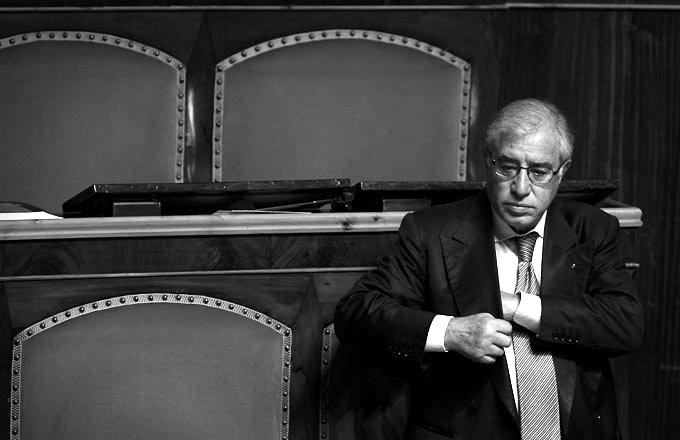
Marcello Dell’Utri durante un debate en el Senado en 2010. Fotografía: Cordon Press.
Pero ¿por qué quieren interrogar a Napolitano? Es por unas llamaditas que el exministro Mancino hizo al Quirinale cuando se empezó a descubrir el pastel a finales de 2011. El hombre se puso muy nervioso porque los fiscales le pisaban los talones y empezó a abrasar a llamadas a la presidencia de la República. Aunque no pensó que quizá ya tenía pinchado el teléfono, y así era. Así se han conocido las charlas con un estrecho colaborador de Napolitano, Loris D’Ambrosio, encargado de pararle los pies y no pasarle con el presidente. En esencia, el exministro pedía ayuda para que le quitaran de encima a los pesados de los fiscales de Palermo. Estas llamadas se filtraron a la prensa en 2012, con una presión enorme para D’Ambrosio, que murió a los pocos meses de un ataque al corazón. Pero Mancino sí logró al final que le pasaran con el presidente de la República y habló con él cuatro veces, un total de dieciocho minutos. Sin embargo no se sabe qué se dijeron, porque el tribunal impidió el uso de la grabación por la inmunidad del jefe de Estado y ordenó su destrucción, si bien los fiscales ya dijeron que las charlas eran penalmente irrelevantes. No obstante, Napolitano deberá explicar lo que le dijo D’Ambrosio en una carta que este le escribió antes de morir: se lamentaba haber sido «escudo de indecibles acuerdos».
Como moraleja, podemos recordar esta reflexión de un padre de la patria: «Para los enemigos las leyes se aplican, para los amigos se interpretan». Lo dijo Giovanni Giolitti, un viejo zorro liberal varias veces primer ministro y que dominó la política italiana a principios del siglo XIX, hasta el fascismo. También tiene esta otra muy buena: «Las leyes deben considerar también los defectos de un país. Un sastre que debe cortar un traje para un jorobado tiene que hacer la joroba también al traje». Italia, un país jorobado.
ÚLTIMAS NOTICIAS DE LA MAFIA (agosto-septiembre 2014)
—Anuncia que se arrepiente y comenzará a colaborar con la justicia el histórico capo de la Camorra Giuseppe Setola, cuarenta y tres años, jefe del temible clan de los Casalesi. «Salvad a mi familia», ha pedido a las autoridades. Detenido en 2009, ha sido condenado a siete cadenas perpetuas por quince homicidios. La Fiscalía tiene grandes dudas sobre su sinceridad.
—Arrestados veintinueve miembros de la ‘Ndrangheta —clanes Commisso di Siderno y Aquino— que cobraban un impuesto mafioso en la construcción de obras públicas, como escuelas y embalses, entre Siderno y Marina de Gioiosa Ionica. Se llevaban el 3%.
—Siguen saliendo grabaciones de las confidencias de Totò Riina en la prisión de Opera, Milán, donde está encarcelado. Entre otras cosas ha contado los detalles del asesinato del general Carlo Alberto Della Chiesa en 1982. También que solo el capo Stefano Bontate, asesinado en los ochenta, sabe dónde está sepultado el cuerpo del periodista Mauro De Mauro, asesinado en 1970 mientras investigaba la muerte en accidente aéreo de Enrico Mattei, el presidente de la compañía energética ENI (ver la gran película El caso Mattei, de Francesco Rosi). Lo más grave, en todo caso, son las amenazas a Luigi Ciotti, el cura que dirige la asociación antimafia Libera.
—Entre tanto, redada con seis detenidos en Corleone, el pueblo de Riina. Seguía funcionando un grupo que le era fiel capitaneado por Antonino Di Marco, cincuenta y ocho años, guarda del campo de fútbol municipal. Por eso tenía un despacho en el Ayuntamiento, un lugar ideal para las reuniones mafiosas. Allí organizaban extorsiones, adjudicaciones amañadas y manejos políticos con un diputado regional democristiano. También se ha descubierto que el clan de Corleone gestiona unos terrenos de la Iglesia en Monreal, al lado de Palermo. Di Marco también daba lecciones de mafia: «Nosotros somos una familia. Hace falta seriedad, educación y respeto». Para maquillar mejor su condición, ha permitido incluso que su hija se echara de novio a un carabiniere, un tabú en las reglas de Cosa Nostra e impensable hasta hace poco: «La gente debe tener la duda, nunca la certeza de quién manda».
—El último gran arrepentido, Gaspare Spatuzza, feroz sicario de los Corleoneses y decisivo para arrojar luz en varios misterios de los noventa, ha confesado durante un juicio que ha cometido más de cuarenta homicidios y ha pedido perdón por ello. Como ya hemos contado alguna vez, ahora se ha convertido y estudia Teología.
—Detenido en Argentina, en la frontera con Brasil, el capo de la ‘Ndrangheta Pantaleone Mancuso, de cincuenta y tres años, alias l’Ingegnere (el Ingeniero). Es uno de los once hijos de Domenico Mancuso, fundador de este clan a finales de los sesenta en Limbadi, y se le considera uno de los jefes destacados del clan. Llevaba encima cien mil euros.
—Derribada, después de once años, la villa de un capo de la ‘Ndrangheta de la familia Pesce, de Rosarno, construida ilegalmente sobre un terreno de valor arqueológico. Ha permanecido en pie tanto tiempo porque ninguna empresa se atrevía a derribarla y nadie respondía a la oferta de obra pública del Ayuntamiento. Al final ha sido posible gracias a Gaetano Saffioti, un empresario de la construcción amenazado por denunciar clanes mafiosos, y que vive con escolta desde hace diecisiete años.
—Detenidas treinta y cuatro personas del clan Lo Russo en una operación contra la Camorra en Nápoles. Controlaban la venta de droga en los barrios de Miano y Sanità. Es fruto, en parte, del arrepentimiento del capo Salvatore Lo Russo, y del arresto de su hijo, Antonio, en abril en la Costa Azul francesa, después de cuatro años de fuga. El clan lo tenía organizado con franquicias: quienes vendían droga en cada zona usaban su nombre y les pagaban una «tasa de concesión».
ñigo Domínguez es autor del libro Crónicas de la Mafia, editado por Libros del K.O.
 Íñigo Domínguez: «Si vas a Italia con tus cojones por delante te comen con patatas sin que te des cuenta»
 Crónicas de la Mafia (III): una experiencia religiosa
 Crónicas de la Mafia (II): la familia…
 Crónicas de la Mafia
 Crónicas de la Mafia (IV): Matteo Messina Denaro
 Crónicas de la Mafia (I): hombres del Colorado

La proclama antihipster de Lenore logra su cometido: arrojar luz sobre la forma en la que se gesta y opera una cultura y no simplemente describir la forma en que se manifiesta. Al fin y al cabo, resulta enormemente interesante sentirte identificado con lo que criticas y descubrir la falacia en la que todos andamos metidos.

Re-posting because it’s that time of year!
Occult Slumber Party is a variation on the game Werewolf presented as a tribute to horror films like Cabin in the Woods, Demons, and Evil Dead 2. It is, in a word, groovy! (Sorry, couldn’t resist.)
All you need to play are the rules and the card templates (download link below). Once you’ve downloaded and printed them and used your scissor-and-glue-stick skills to make a 20-card deck (pasting the art onto playing cards works for us), you’re ready to party. But direct your attention to the art above— that’s one of the cards and that brings us to the coolest thing about Occult Slumber Party: all of the game art is original work done by our main man Arik Roper, who has done an insane number of frightening album covers and movie posters for the like of Sleep, High on Fire, Mondo Posters, and more.
DOWNLOAD PDFS OF THE RULES AND THE CARD TEMPLATES HERE…IF YOU DARE!
And there’s more Occult Slumber Party coolness in the offing: we have a CHILLING and THRILLING Occult Slumber Party mixtape for you to listen to, a truly terrifying collection of tunes that’s the perfect soundtrack for summoning evil from the underworld. If it doesn’t become your new favorite Halloween comp we’ll bite the head off a bat.
STREAM the Occult Slumber Party Mix here, or download it here.

Today at Underwhelming Lovecraft Comic Synopses is the fifth chapter of “Herbert West- Reanimator”, where Herbert finds a way to make war more gruesome and upsetting. Come back here Friday for the last chapter of “Herbert West- Reanimator”.
SnobPor estrear desde...