Shared posts

11 Feb 14:54

Breakfast of Champions

by Nicola Twilley

Breakfast: the most important meal of the day. Or is it? In this episode of Gastropod, we explore the science and history behind the most intentionally designed, the most industrialized, and the most argued about meal of all.

Armed with a healthy dose of caffeine chronopharmacology, we embark on a global breakfast tour that exposes the worldwide dominance of Nutella, as well as the toddler kimchi acclimatization process. Meanwhile, back in the U.S., we trace the American breakfast’s evolution from a humble mash-up of leftover dinner foods to its eighteenth-century explosion into a feast of meats, griddle cakes, eel, and pie—followed swiftly by a national case of indigestion and a granola-fueled backlash. Breakfast has been a battleground ever since: in this episode, we not only explain why, but also serve up the best breakfast contemporary science can provide.

To skip or not to skip

Much has been made about the importance of a good breakfast to a healthy lifestyle. It gives you energy to start your day, according to conventional wisdom, and scientific studies conducted a decade ago had proclaimed that eating breakfast was the key to maintaining a healthy weight.

Breakfast skippers are plagued with well-meaning spouses, partners, family members, and friends, all insisting that they should eat something in the morning. But, according to nutrition scientist P. K. Newby, that advice was based on what’s known as observational studies, in which scientists follow groups of people and observe the outcomes. The result had seemed to indicate that people who lost weight or maintained a healthy weight ate breakfast. The problem, Newby told us, is that those studies didn’t isolate breakfast as the important factor. It could be, she says, that those who lost weight also exercised more, or one of dozens of other variables.

Then, last year, a group of researchers at the University of Alabama published a study that took a more rigorous look at this question. They enlisted 300 participants and randomly assigned them to eat breakfast, to skip breakfast, or to simply go about their normal routine. After 16 weeks, they found no difference in weight loss among the three groups. Meanwhile, in a similarly controlled Cornell University study, people who skipped breakfast consumed fewer calories by the end of the day. And, in a smaller study at the University of Bath, people who skipped breakfast also seem to have consumed slightly fewer calories during the day, though they then expended slightly less energy.

Based on this new research, the bottom line, Newby says, is this: if you’re not hungry in the morning, there’s no harm in skipping breakfast when it comes to weight management. “It’s the what that is more important than the when, when it comes to breakfast,” she says, which also means that grabbing a sugary muffin, doughnut, or other pastry, just to eat something in the morning, is a worse idea than eating nothing at all.

Questioning the cult of juice

It’s January, and everybody on the Internet has embarked on a juice cleanse. But you don’t have to feel guilty for sticking to solids: without the accompanying fiber in fruit, juice delivers a straight shot of sugar.

2067174030_47ac93871c_b
Photography by Viktor Rosenfeld, used under a Creative Commons license.

Juice, like sugary cereals, muffins, and white bread, is “quickly metabolized,” said Newby. “These foods lead to a spike in sugar and insulin, and then it dissipates. And so then, in a short period of time, you feel hungry again.” That, she continues, can lead to overeating and weight gain. And there are long-term health consequences as well: she says diets high in refined carbohydrates are a risk factor for type 2 diabetes and cardiovascular disease.

Newby says that the most important thing to understand about breakfast is that it’s simply another meal. It may seem as though we should eat only breakfast foods—cereal, juice, bagels—at breakfast time, but, as historian Abigail Carroll explains during this episode of Gastropod, that’s just a historical hangover from nineteenth-century American health reformers. And, as Newby points out, we already know what makes a healthy meal at any time of day: put vegetables at the center of the plate, accompanied by whole grains, beans, nuts, and healthy fats.

The first cup of coffee

Though Newby says that it’s what you eat that matters, not when, that may not be the case when it comes to coffee. We spoke to neuroscience PhD candidate Steven Miller, studying at the Uniformed Services University of the Health Sciences, about chronopharmacology, or the science of how brain chemistry interacts with drugs, in order to learn how timing affects the most popular stimulant in the world: caffeine.

7309935684_f4a3acfb8e_z
Photograph by trophygeek, used under a Creative Commons license.

Cortisol, the stress hormone that helps us feel alert and energized, peaks at about 8 or 9am, at least for people who work a typical 9-to-5 job and sleep during the same hours each night. Most people, says Miller, don’t need caffeine to give them a boost at a time they’re already naturally alert. In addition, drinking a caffeinated beverage at a time when you’re already sharp could lead to desensitization, which, Miller explains, means that you’ll need an increasing amount of the drug—in this case caffeine—to get the same effect.

For the best morning buzz based on brain biology, Miller recommends saving your coffee fix until 9:30am, when cortisol levels are starting to drop off.

He admits, though, that his recommendation doesn’t hold true for everyone: anyone whose sleep schedule is not regular or who works evening or night shifts will have a different cortisol production rhythm. In fact, he actually doesn’t follow his own chronopharmacological advice. Miller told Gastropod that, as a neuroscience PhD student, he works long, irregular hours and gets little sleep, and he always starts off his day, at any hour, with an extra strong caffeinated beverage.

The most capitalist meal of all

Miller’s decision to design his coffee routine around his work schedule, rather than biology, isn’t surprising given the history of breakfast. As we learn from journalist Malia Wollan, while breakfast foods may be different all around the world, it’s the first meal to change in immigrant households. And, as Three Squares author Abigail Carroll explains, those classic American breakfast foods can be traced directly back to the Industrial Revolution and its transformation of labor—combined with some entrepreneurial innovations in processing, packaging, and marketing that were first pioneered in breakfast cereal but went on to transform the American diet. To learn more about the revolutionary history, global peculiarities, and surprising science of breakfast, listen to our latest episode!

Episode Notes

Thanks to all of you who wrote or called in to share your breakfast stories—we heard tell of pumpkin kasha, rabbit and Stilton casserole, memelitas, and coleslaw, proving (as if we didn’t already know) that Gastropod listeners are a most unusual and fascinating bunch.

What Kids Around the World Eat for Breakfast

Journalist and friend of Gastropod Malia Wollan teamed up with photographer Hannah Whitaker to put together this adorable photo essay, titled “Rise and Shine,” for The New York Times Magazine.

Baby’s First Kimchi


After Malia told us that YouTube is home to an entire subgenre of videos documenting Korean babies’ first taste of kimchi, we couldn’t resist watching one or two. Or three. Or four…  In fact, it’s a miracle this episode ever got made!

PK Newby’s Shakshouka

Nutritionist and epidemiologist PK Newby regularly shares healthy recipes on her website. To showcase what a healthy breakfast should look like, she prepared this shakshouka recipe for Cynthia.

Abigail Carroll’s Three Squares

As Nicky mentions during the episode, historian Abigail Carroll’s 2013 book, Three Squares: The Invention of the American Meal, tells the story behind breakfast, lunch, and dinner. It’s fascinating, fun, and highly recommended reading.

Steven Miller

Read Steven Miller’s fascinating exploration of the chronopharmacology of caffeine here at his blog post, “The best time for your coffee.”

Vintage Breakfast Cereal Ads

You may have caught a couple of jingles during the episode: one from a 1960 cornflake ad, and another from a 1936 Rice Krispies ad. They came from the extraordinary Prelinger Archives, a collection of over 60,000 “ephemeral” (advertising, educational, industrial, and amateur) films founded by Rick Prelinger and since acquired by the Library of Congress. Browse it here, and prepare to lose the rest of your day.

Aspire Food Group

Cricket blueberry pancakesThis episode was sponsored by the Aspire Food Group, an award-winning company with farming projects in the US, Ghana, and Mexico, whose goal is to feed the world, sustainably, through insects and insect-derived foods. As part of the sponsorship, we cooked with their finely milled cricket flour. Nicky made Hoppin’ Good Banana Oat Cricket muffins, which were a huge hit with her neighbors (though she personally felt the recipe was a little too healthy), and Cynthia and her partner Tim added some cricket flour to their blueberry pancakes. If you’d like to try them yourself, here’s the recipe, and Gastropod listeners get a 10 percent discount on both flour and whole cricket using the code “Gastropodcast” on their online store (enter it on the final page before confirming your purchase).

Buttermilk Blueberry Cricket Pancakes
Mix together these dry ingredients: one cup of white flour, 1/4 cup of cricket powder (substituting for 1/4 cup of flour), 2 tablespoons of sugar, 1 teaspoon of baking powder, and 1/2 teaspoon baking soda. In a separate bowl, mix 1 beaten egg, 1 1/3 cup of buttermilk, 1 tablespoon of oil. Mix the wet ingredients together with the dry. Tim found the batter a little thick, and so he added a splash more buttermilk. Then he poured a small amount of batter onto a hot, lightly oiled griddle, and pressed frozen blueberries into each as they cooked, then flipped them over. Enjoy!

Hopper Foods
Austin-based Hopper Foods also sent us some of their prototype Berry & Vanilla Cricket Granola (so, so good!), and a couple of their tasty Hopper Energy Bars. The granola is coming soon, but listeners can get 10 percent off the energy bars with the code “Gastropodcast.”

The post Breakfast of Champions appeared first on Gastropod.

20 Jan 20:38

The War Nerd: Getting “Women Warriors” wrong

by Gary Brecher

afghan-female-warlord-commander-pigeon

I read a long article called “My Terrifying Night with Afghanistan’s Only Female Warlord” last month. It was utter crap, and so similar to a lot of utter crap I’ve been reading about the women fighters of the Kurdish YPJ militia in Syria that I realized it’s time somebody called foul on the offensive, ignorant crap going around about what the media likes to call “women warriors.” I don’t particularly enjoy the role of progressive scold, and it don’t hardly come natural to me, but somebody’s gotta do it.

What happens, in every case where writers and TV reporters with no background in military reporting try to describe “women warriors” is that they sexualize everything, ignore the real context, and betray a deep misogyny in every word they write or speak on camera. I mean, to the point that it’s surprising, at least to me, because a lot of these people make a big deal about being progressive. I’m kinda shocked, actually, how crude their gender bias is. Nobody seems to be even trying to hide it.

Reporters seem to insist on trying to “humanize,” i.e. feminize and sexualize, their subjects by asking them about boyfriends, marriage, and kids. You can see that sort of tilt in nearly every story about the magnificent fighters of the YPJ, the women’s military force defending Kobane and other Kurdish Syrian cities against Islamic State. YPJ fighters dominate the mixed YPJ/G forces in Rojava (Kurdish North Syria); the overall commander of Kurdish resistance to the IS swine attacking Kobane is female, for example. But even well-meaning reporters insist on bringing the conversation back to boyfriends, marriage, and kids, like this generally good story by Australia’s 60 Minutes, which drags in the question of boyfriends, etc., at the 8:49 point.

Even fellow Kurds are bothering YPJ women with that kind of nonsense. A very good BBC documentary, “Inside Kobane,” with a male Kurdish journalist and female videographer visiting YPJ/G fighters in Kobane in late 2014, features a painful few minutes, starting at 11:28, when the male interviewer asks Commander Avindar, a Turkish Kurd in charge of a YPJ unit, about “relationships.” Then he asks her how old she is. Even though it’s clear she’s under orders to be nice to the press, she murmurs, “Do I have to answer that?” and takes what revenge she can by assuring the impudent boy that “It’s not serious” when he flinches at an explosion.

But these are quibbles, and the sexualization of female fighters in these two videos is nothing, absolutely nothing, compared to a supposedly more highbrow article by a supposedly talented novelist, in the supposedly literate New Republic: Jen Percy’s “My Terrifying Night with Afghanistan’s Only Female Warlord.”

Of course, many a good article has been stuck with a bad headline. But not this time. Percy’s article is every bit as bad as its title. In fact, it’s Exhibit A on what American media gets wrong about women in war.

Percy doesn’t seem to know much about Afghanistan. Not once in the story does she tell the reader where her “terrifying night” took place—not even the province in which the “female warlord” operates. That’s kind of a big omission in the Afghan context. In fact, not once does she mention the ethnic identity of the “warlord” and her fighters. That kinda matters in Afghanistan. I’m guessing the woman and her fighters are Tajik, from the north side of the big watershed—and that makes all the difference here—but you wouldn’t know what language the principals speak, what ethnic group they come from, in Percy’s article.

All Percy cared about was an angle, and she found the obvious one: a promising gender anomaly, a “female warlord”—as imagined by a very ignorant American. That’s exactly the kind of angle you should be careful of when you’re jumping cultures, because “female” doesn’t mean the same thing in rural Afghanistan that it does in Percy’s America.

I’m an American, and it wasn’t until I’d lived in the Middle East for years that I could see just how American I was, above all in my notions about gender and bodies. Americans see everything as a sexual hierarchy, and that seems so natural to us that you have to work very hard to realize it’s not a universal human pattern of thought, but a particularly American one. Percy hasn’t taken that time, doesn’t even know she needed to if she was to see what this Tajik matriarch is doing. The results…well, they’re pretty durn funny, and then infuriating, by turns.

Percy sets the stage with what might be called “disarming candor.” A mere three weeks after arriving in Afghanistan, she hears about this woman who runs a militia, sees a photo of her, and boom, we’re off to see the warlord–in Percy’s foggy notion, Mistuh Kurtz in a chador:

“I’d been living in Afghanistan three weeks when my guide…showed me a photograph of the country’s only known female warlord, Bibi Ayisha, nom de guerre Commander Pigeon…In the photograph, she looked to be about 200 pounds and 60 years old. A large woman with black eyes made small by folds of skin. A beaked nose protruded from a wide flat face. She held her machine gun against her bosom like a bouquet of roses. A few girls dressed in bright loose tunics holding AK-47s stood at her side, with ammo wound like gold pythons around their necks.”

One paragraph into the story, and already it’s gone very badly wrong. What you see in this opening paragraph is Percy’s home-world: Upper-middle class America, home of the strivers, winners of Pushcart Prizes and Capote Fellowships. This is a world where age, weight, and looks are everything—in which context, it might not be amiss to see what Percy looks like.

That merciless, unchanging emphasis on every wrinkle, every ounce of extra weight, took me right back to the world of striving Americans, where the only two sins that can’t be forgiven are gaining weight and getting old. That’s what Percy emphasizes here: “In the photograph, she looked to be about 200 pounds and 60 years old.” In other words, too fat and too old—for Percy’s world, but not for a rural Afghan world, or, indeed, anywhere in the Middle East.

You’re allowed to be fat—or fat by upper-class American standards, anyway—in the Muslim world. That’s something that shocks you, if you’re from Percy’s world. I remember how befuddled I was, the first time my students in Najran called a classmate “fat” and he nodded happily. I expected him to burn with shame and anger, but it was just another adjective to them, no stigma at all.

There may be some pressure on girls (not boys) to stay thin before marriage and childbirth, but the notion that a 60-year old rural matriarch needs to pay attention to her weight would be risible, anywhere outside Percy’s hypersexual, anorexic milieu.

But Percy has only learned one way of apprehending the world, and it’s the one you see in bourgeois American literature, where every feature is subject to intense scrutiny. So we get a great deal of talk about Commander Pigeon’s features: “…a beaked nose protrud[ing] from a wide flat face…”

OK, the woman has a wide flat face and a sharp nose. That’s called “being a Central Asian.” It isn’t a window to the soul. And it would be an odd choice of focus for someone from Commander Pigeon’s world. Why all this this detail about an old woman’s face? She’s a matriarch and a militia commander; what does her face have to do with it? It’s not like she’s going to be married off.

And then, the topper: “She held her machine gun against her bosom like a bouquet of roses.” How do you hold a big heavy automatic weapon “like a bouquet of roses”? If I didn’t know better, I’d say that was about the most sexist remark I ever read.

And indeed it is! The whole article keeps making the same mistake, imposing the highly sexualized, youth-worshipping, individualist world Percy knows on the very de-sexualized, clan-based, rural world she’s trying to describe. The New Republic, which seems to have sponsored Percy’s trip, was rash enough to publish a “gallery” of photos from Percy’s trip to see this “female warlord.” Take a look at them, and you don’t see anything like what Percy describes.

There’s none of the fetishized guns, nothing to show that anybody holds their guns “like a bouquet of roses.” And there’s none of the Lesbian-Vampire hints that Percy keeps scattering through the article, about Commander Pigeon’s relationship with those “hot chicks with AK-47s.” All you see is a clan matriarch trying to hold her male relatives in a cohesive irregular force in a miserably frozen landscape, or posing proudly with her grandsons.

What I saw in this series was the faces of Commander Pigeon’s male relatives, her available fighters. There’s the key, the reason this woman is a “female warlord” in the first place. She’s not trying to break old boundaries, she’s not trying to strike a blow for gender rights, she’s not some vampire-dominatrix from an old movie. She’s trying to keep herself and her clan alive, and there are no other candidates to take charge. It’s that simple.

Look at the first photo in the series, and try to see it like you would if you were living in a cold, lawless wilderness with the Taliban looking for a way to kill your whole clan. You need to have a smart, strong person in command. Who? Those male relatives standing behind her. You can see why she’s in charge: Not one of the males looks fit for command. The old guy next to her—smart, maybe, but too passive, too old. The young men—look how they hang back, stare aimlessly, watch for someone else to give the cue. They’re OK as trigger-pullers, but that’s all.

That’s why she’s in charge: The line hasn’t bred true. She’s taller, stronger and smarter than her male kin. They turned out bad, dumb-looking. So she had to take charge, after the last intelligent male relative was killed by the Taliban

Percy saw none of that. She sees the world that brought her here, where you have to be young and beautiful and skinny to make it.

And, imposing her world on this Tajik village scene, Percy proceeds to turn her encounter with the harried matriarch/commander into the two things that matter to striving Americans: sex and food, and the terror of being denied individual agency in either.

It’s one of the funniest misreadings I’ve encountered since Pale Fire, though it’s more like P. G. Wodehouse than Nabokov in its playing with typecast characters. Percy—horror of horrors—is force-fed by the matriarch! Forced to eat chicken! And quite possibly, improperly cooked chicken! And then forced to lie next to the “Female Warlord,” like the vampire queen’s concubine!

No wonder the matriarch finally turns to Percy’s minder and asks, “What is wrong with her?” It never seems to cross Percy’s twitchy American mind that the poor old woman was just trying to feed up this pitifully skinny, pale foreign girl, and make sure she kept her bony limbs warm in the cold. Percy keeps trying to find a dominatrix killer, and the matriarch keeps acting like a rural grandma:

A young girl, maybe four years old, climbed onto Commander Pigeon’s lap.

“What do you want to know?”

“Where are your female fighters?”

“But don’t you want to eat?” she said.

“Not really,” I said. Candy wrappers glittered on the floor and bits of stale food stuck to my feet.

I asked about the first time she took up a weapon.

“When you hold a weapon, you don’t cry, you just shoot.”

She dumped a bag of almonds on the ground and spread them around with her hands. She picked one up, cracked it open with her thumb, and sucked the meat from the shell.

“You guys don’t care about war. You will write your thing and go. I’m killing Taliban twelve months of the year.”

“Will you fight today?” I said.

Her hand dropped and she looked at Sharif. “What is wrong with her?”

That has to be one of the funniest, and most revealing, interviews of all time. Ignoring the grandkid on the lap, a very, very important matter to an old woman whose life is the clan, Percy focuses on the horror of junk food and poor hygiene: “Candy wrappers glittered on the floor and bits of stale food stuck to my feet!”

No! The horror!

Then Percy wants to hear about the complex psychological trauma of combat, the topic of her very successful and very silly novel, Demon Camp. But the matriarch lets her down again: “When you hold a weapon, you don’t cry, you just shoot.” Oooo! There goes the whole plotline of Percy’s novel! And yet this simple attitude is exactly what I saw in the Pesh Merga of Suleimaniya, the first Muslim combat vets I encountered. They guarded our quarters 24/7, but they had none of the fascination with guns that many of my American colleagues showed in conversation. To the Pesh Merga, guns were like shovels, a tool. Something you have to use, like sandbags in a flood. I saw a rich American from Augusta, GA, try to engage one of them in a long conversation about the AK-47. Aside from the language problem, there was a cultural gulf. The Kurd didn’t see the romance of the AK. To him, it was literally child’s play, a weapon any boy in the neighborhood over the age of five could use with ease. It is, after all, a weapon designed to be used by any primate with a working digit or two. But the Georgia boy was all excited about its specs—range, rate of fire, accuracy. The Pesh Merga, a friendly and polite man like most Kurds, indulged the foreigner as long as he could, but never saw what the man was driving at.

After Percy’s ordeal by candy-wrappers comes the supreme horror, the force-feeding of pieces of turkey, overlaid with Hammer-Horror lesbian S&M overtones:

Commander Pigeon tore at the meat. She gripped the breast, and spread the leg until the skin broke and released steam. She broke ligaments, tendons, and a blue tangle of vein. She raised the meat to her mouth and tasted a curve of dark thigh. The meat cleaved between her fingers. The steam curled our hair.

…She tossed the leftovers to the children. They ate it off the floor.

I wasn’t eating the meat because Commander Pigeon kept grabbing it with her hands, covered in saliva and dirt, and because I had watched the turkey die and bleed. Commander Pigeon pointed at the meat. I politely ate a few pieces. I said I was full, and she slid over to me and pried the meat between my lips. She wouldn’t stop. The snow was climbing up the window. She made noises and mimed a hand touching her face. She mimed digging and crying. “Sharif,” I said. “Sharif!” I thought maybe the others were dead. My stomach ached. Her fingers slipped in and out of my mouth. She fed me. It was a kind of terrible nurture. The quiet soldier who used to belong to the Taliban opened the door. The wind came inside and carried snow with it. He squatted, held his AK, and watched.

Hours later, when Sharif and the others returned, I was collapsed against the wall. I told him what happened. “Don’t leave me alone with her again,” I said.

Percy experienced “a terrible nurture,” sort of like Yeats’s oxymoron she stole it from, “a terrible beauty,” only more fattening. And that, of course, is Percy’s slim, nervous nightmare: She’s making me eat!

This terror of forced calories turns into some sort of sexualized hallucination as the old lady’s “fingers slipped in and out of [Percy’s] mouth.” What the matriarch saw, I’m willing to bet, was a monstrously skinny young woman, unmarried, wandering around a combat zone for no sane reason, and so helpless she couldn’t even see that she need to “fat up,” as Huck Finn would say. So the old woman, accustomed to taking charge in spite of her tired, arthritic joints (“I have terrible knees,” she complains to the totally uninterested Percy), sighs and starts doing the necessary, jamming pieces of nice fat turkey into this homeless, husband-less waif’s mouth.

And, since it is her responsibility as hostess to house as well as feed the bony weirdo, Commander Pigeon tries to keep her warm in the Northern Afghan winter…which Percy, true to her hyper-sexualized American perspective, sees as the final outrage:

The women cleared plates stacked with apple cores and bones. Commander Pigeon and the women tucked me into a bed on the floor. They dragged two comforters over my body, wedged the fabric under my arms, and slipped a soiled pillow beneath my head. Hours later, in the dark, she unrolled a sleeping mattress next to mine and slept close to me. She buried her face into my shoulder and snored. I kept my eyes open. The warlord twitched from what I imagined were terrible dreams.

The imagined sexual aggressions keep coming: “She buried her face into my shoulder…” but now they’re mixed with something risibly like sexual rejection: “…and snored.” Both, of course, are imaginary; it’s friggin’ winter in rural Afghanistan, it’s cold out there, neither of these women have husbands, they have to keep warm somehow. But that, of course, would be dismally un-sensational, and un-sexy, so the fantasy porn keeps coming. That last sentence is my favorite: “The warlord twitched from what I imagined were terrible dreams.”

Or, possibly, she was dreaming about how many grenades she had left. Or whether she’d checked on the useless second cousin assigned to guard duty tonight. Or some equally un-sexy worry of the sort that a poor old woman with bad knees, forced to take command for the good of her otherwise doomed Tajik clan, has to deal with, day in, day out.

So what is a rank amateur like Percy, a product of the Iowa Writer’s Workshop, winner of a “Truman Capote Fellowship in Fiction” and a Pushcart Prize, doing,  thinking she can get into the head of an Afghan matriarch? .

Percy figured out that the best way to make her CV stand out from the crowd of Iowa Workshop grads was to write a war novel. You’ve probably heard of the result: Percy’s bestseller, Demon Camp: A Soldier’s Exorcism.

The novel is supposed to be about post-combat stress, but it’s got nothing to do with the flat wretchedness of PTSD stories. If you read a lot of PTSD stories, they’re all about unredeemed misery: divorce, alcoholism, poverty, shame, prescriptions, isolation. That’s not bestseller material, so Percy, using her Iowa prose ninjitsu, adds a veritable cheese-board of maudlin clichés to make the story redemptive, which is to say totally fake.

First of all, you gotta add some occult spice, so there’s a literal demon, “The Black Thing,” haunting the troubled vet. I mean, God forbid it should be ordinary PTSD; we need a Poltergeist angle here. And, just like the Poltergeist movies, there’s a Native-American angle—a shaman character trying to exorcize the aforementioned “Black Thing.” And naturally there’s plenty of cheesy Americana, such as “…demon camp in Portal, Georgia, where the line between heaven and earth is very thin…”–And, I hear, property taxes are low.

Some Iowa’s grads realized, it seems, that the public can only swallow so many carefully-crafted tales of bourgeois malaise—the kind of novel where the equally loathsome leads don’t get divorced til page 386–and looked around for a meatier topic, one with some nice gory street cred. Their model was Cormac McCarthy, who got rich and famous using a simple formula: Faulkner-style overwriting plus Peckinpah ultraviolence. You know you’re reading a McCarthy novel if you find grandiose folksy speeches alternating with splatter-gore. The effect is something like True Grit without the humor:

They needed careers, and they had this simple formula from McCarthy. The first part, the over-writing, came easy to them—O Lord, did it come easy!—but the second part, the ultraviolence…where were they gonna find that?

War. War involved the necessary ultra-violence; they knew that much about it. And they had the writing formula all ready for it. Their invasion was inevitable.

The result: the unstoppable invasion of Jen Percy and the McCarthyites. May Ixchel, “War Woman,” Mayan goddess of midwifery and war, protect us all.

[illustration by Brad Jonas]

Gary Brecher

8320ad7218821615d8a87d53f23fae11
Gary Brecher is the War Nerd.
20 Jan 20:25

That's Not What Joe Strummer Had in Mind

by joseph conrad is fully awesome
​​"From the pictures and videos that accompany the NBC News and Buzzfeed stories, the crowd appears to have been predominantly white... which explains why they're described in the media as 'celebrating' rather than 'rioting'. But every time this happens – that is to say, every time sports fans, predominantly of the white variety, go on rampages after wining (or losing) various championships – many of us with a few gray hairs on our heads are reminded of the Clash's seminal punk anthem, 'White Riot,' which was released as a 7-inch single (that would be on vinyl, kids) in March 1977, and was later included on both the UK and the US versions of the band's debut album, The Clash."​ Whites Riot: That's Not What Joe Strummer Had in Mind, by David Von Ebers (TwiB! / Valid magazine).
20 Jan 20:03

Are The "Meat Sweats" Actually A Real Thing?

An investigation of the most delicious urban legend.

20 Jan 19:58

10 Insane DIYs That Lifestyle Bloggers Need To Stop Pushing On Normal People

by Molly McAleer
Cookblog
Cookblog

1. Mason jar salads

No one loves the idea of a jar full of freshly chopped veggies and protein more than me, so the fact that I’ve never actually constructed my own week’s worth of Mason jar salads tells me that no one is actually doing this. Somewhere there’s some 22 year-old ripping her hair out in chunks like, “Actually, Molls, I love salads in a five pound jar! I DO do that!” and to her I say, “Haha, you said ‘do-do.’”

2. Monogramming your belongings

If you’re sitting at home carefully printing or stitching your initials on your pillowcases and towels, I hope to God you are a homeowner with perfect credit who doesn’t have to work and is some sort of perfect physical specimen. That’s the only type of person I can think of who might actually be able to afford the time to indulge in such a pointless task.

3. “Upcycling” other people’s garbage

Refurbishing is a legitimate skill that not everybody has. You can find the chair that needs the paint job, you can buy the new paint, but you can’t always put the whole thing together. And you definitely won’t always make the time to do it. I can’t tell you how many times I’ve been to a friends house and have them point to some chair that looks like it carries fleas and say, “I got that for five dollars, I just need to reupholster it.” If you pull something off the street with the intention of giving it a make over, give yourself a month to do it. If it’s still in it’s original form after 30 days, put it back out on the corner.

4. Dip-dying lace shorts

By the time you track down your lace shorts, commit to a dye color, wait for a sunny enough day to set up the project in your backyard, fuck up the first pair and wait for another blank pair to show up in the mail so you can try again, you and the rest of the world will be completely over this already-tired look.

5. Cupcakes made to look like something other than a cupcake

There’s something really wrong with a world where people can’t be happy with a regular-ass cupcake. Why you’d want to put a strawberry on top of one and drown it in six ounces of icing so it looks like a Christmas tree is one of the greatest mysteries of our time. Are people really that demented now or something? Why is this even a discussion?

6. Peppermint “trays”

I don’t know what group of sick fucks got together and decided that lining up Starlight mints on a baking sheet and popping them in the oven was some sort of revelation in the world of homemade bullshit, but if I have to see one more of these sticky looking candy plates, I’ll find said sick fucks and kill them. Peppermint trays! Trays made of peppermints! We got it!

7. Directions on how to make a smoothie

When I see a smoothie recipe on a blog in 2015, I know the author’s all but given up. A teaspoon of chia seeds, some vanilla almond milk, a banana—riveting material.

8. Neon eyebrows

I’m not sure what “lifestyle” having neon pink-tinted brows lends to, but I think the world would be a better place if bloggers would stop suggesting it. I know one person who can pull off day-glow brows and he’s a 6’2” Native American man with a sick body, five feet of thick black hair, and a sexy Hispanic boyfriend. Most of us are not that. Most of us need to work on regular ol’ brows first.

9. Water marble nails

I can tell you from personal experience that there is no bigger waste of time, tape or nail polish than this DIY nail trend. I don’t even LIKE water marble, but I was so determined to prove to myself that YES, it can be done, that I blew through half a bottle of OPI, ruined a Tupperware container and stained my fingers blue. This is not a “fun, easy technique for unique nails,” so let’s all stop pretending.

10. Rainbow baked goods

I’m not saying that no one would try to make a ROY G. BIV b-day cake or stack of pancakes, I’m saying that people who would do that are assholes and instructing them on how to do so makes you the biggest asshole of them all. Birthday cake and pancakes aren’t fun enough? Isn’t it a big enough deal that you’re blowing a week’s worth of sugar calories in one meal? Now that shit has to be rainbow colored and photogenic in order to be considered worthy of your lifestyle? Throw yourself off a bridge. TC mark


20 Jan 19:46

¿Por qué el arte religioso es “una chapuza”?

by Peio H. Riaño

Cézanne no entraba nunca en la Sala de los Primitivos del Museo del Louvre porque en sus pinturas apenas se veía sangre cuando a los mártires los cortaban en pedazos. Sólo “un poco de bermellón, unas gotas de sangre”… Ese comentario de uno de los padres de la pintura moderna le llevó a pensar al más polémico y lúcido de los historiadores contemporáneos del arte, Ángel González García (fallecido el pasado 21 de diciembre), que “el arte fue muy anterior a la religión y el arte religioso un producto tardío; o lo que es peor, una chapuza”. Es la “repugnancia” de la religión cristiana por “el mundo y la carne, el principal motivo de su fracaso”.

Es decir, que a pesar de que los artistas hayan obrado el milagro artístico de que “las cosas de allá arriba nos puedan parecer de pronto tan verosímiles y emocionantes como las de aquí abajo, tan carnales y mundanas”, la Iglesia católica se ha empecinado “en la catequesis”. Esta es la base del último ensayo publicado por el catedrático, Religión. Arte. Pornografía (Ediciones Asimétricas), unos meses antes de su fallecimiento y que se puede leer como parte de su legado teórico, en el que se revela su tono antiacadémico, su cuestionamiento perenne, su rebeldía argumentada, su capacidad para encontrar las grietas en el sistema. Posiblemente, este sea uno de los mayores órdagos que haya echado nunca: el arte religioso es una chapuza, ¿por qué?

Uno: aburrida complejidad doctrinal

“Empecinada en la catequesis, la Iglesia católica, que a menudo fomentó programas iconográficos de una aburrida complejidad doctrinal, no ha sabido aprovechar el poderoso pathos que conlleva su creencia y confianza en el misterio de la encarnación de Jesucristo; la intensa carnalidad que efectivamente implica”. Es decir, que a la divinidad le falta vida porque prefiere más doctrina y menos carne. “Fueron más bien los pintores quienes descendieron gozosamente a estos aspectos o detalles materiales de la vida de Jesús y de sus santos”, cuenta.

Dos: la ambigüedad de la Iglesia

Veronés trató de ponerle más carne de lo que se deseaba y terminaba por catar los reparos del Tribunal de la Inquisición. “Se acusó al Veronés de mundano, como si la vida de Jesús hubiera transcurrido en otro mundo”. Además, como bien dice el historiador, su uno quiere mantenerse ajeno a las pompas de este mundo “más vale que no trate con pintores que, por fuerza, son gente poco espiritual”. Cuadros como Las bodas de Caná ponen de manifiesto la absurda ambigüedad de la Iglesia en materia de culto a las imágenes. “Para acabar prefiriendo la aridez de la doctrina a la carne y la sangre que recrea el relato evangélico más valdría haber prohibido el culto a las imágenes como hicieron el Islam y el Judaísmo, dos religiones aficionadísimas a las especulaciones y controversias doctrinales”.   

Tres: el milagro es el arte

El arte consiste en eso, en milagro y juego de magia al tiempo. Se lo dijo Cézanne a su amigo Gasquet, delante de las Bodas de Cané del Veronés, en el Museo del Louvre. “Ahí tienes el milagro: el agua transformada en vino; el mundo transformado en pintura”. González aclara que pasó media vida colgado de estas palabras de Cézanne, que no creía que hubiera dos milagros ahí, en el arte, el de Jesús y el del Veronés, el sobrehumano y el humano. Le parecían el mismo. Esto implica que el arte obra milagros, pero también que el de Jesús en aquellas bodas “habría sido de orden artístico, o mágico, si preferís decirlo de este modo”.

Cuatro: el compromiso del artista con dios

González ironiza con la capacidad sobrenatural que se le suponen a las imágenes y a los creadores de las mismas. La inspiración divina “no parece ser en realidad nada en concreto”, sino más bien un “no sé qué” incapaz de dotar a las imágenes de superpoderes. “La idea de que el artista inspirado lo es por razones misteriosas, sean de origen divino o de origen genético, no ha dotado a las modernas obras de arte de los poderes numinosos de las antiguas imágenes sagradas. La Madonna Sixtina sigue sin devolverles la vista a los ciegos y el movimiento a los paralíticos. La misteriosa inspiración de los artistas no hace milagros que no sean artísticos”.

Cinco: si es bello, no es sobrenatural

El historiador subraya que la representación de la pasión y muerte de Jesús ha incurrido en frecuentes “atentados a lo bello e, incluso, en concesiones a lo repulsivo”. El Ecce Homo, no sólo el de Borja “restaurado”, cualquiera. “Lo bello no es el medio más genuino de manifestación de lo sobrenatural. La gente tiene una clara intuición del antagonismo subyacente entre arte y religión”, explica, y por eso se llega incluso a confesar su confianza en el poder sagrado de lo feo.

Y señala la última irreverencia atea contra el arte sagrado, la que legitima la belleza, las paredes de los museos. “He aquí la irreverencia y no sé si, además, el sacrilegio. Lo es seguramente, como a menudo todos hemos sentido, colgar en un museo lo que fue pintado para colgar en un lugar sagrado. Claro que, ¿de qué podría servir devolverlo a su lugar si las iglesias también funcionan ahora como museos, con sus horas de visita, sus tarifas de entrada y sus puestos de postales?”.


20 Jan 01:18

Why Harley Quinn Is Batman's Most Tragic Character

by Ria Misra

Why Harley Quinn Is Batman's Most Tragic Character

There's certainly no shortage of tragic characters roaming the streets of Gotham — from the orphaned, crime-fighting socialite with a penchant for spelunking to the once-promising DA with a now visible dark side. But does Batman's grimmest story actually belong to Gotham's (other) psychotic clown?

Read more...


20 Jan 01:15

Nazi Punks Fuck Off

by Yogi Bhajan
19 Jan 21:00

Photo


19 Jan 20:58

Kids will be kids

by garciuh

19 Jan 18:58

The trouble with knowing everything...

by noreply@blogger.com (MRTIM)

19 Jan 18:52

El enigmático usuario de autobús de Teo

La marquesina ubicada junto a la urbanización de Augas Mansas estuvo ocupada esta mañana por un enorme oso de peluche
19 Jan 18:43

Constantine Tries To Save His Own TV Show In Bizarre Claymation Short

by Rob Bricken

The future of the Constantine TV series looks pretty bleak, but supernatural detective/exorcist John Constantine isn't waiting around to be canceled. He's decided to hunt for his own missing showrunners in this silly, surreal claymated short titled "John Con Noir."

Read more...


19 Jan 15:41

Stephen Hawking is not part of the solution, he is part of the problem.

by leotrotsky
The equations on the blackboard may be the problem. Mathematics, the language of science, may have misled the scientists. "The idea," says physicist Lee Smolin, "that the truth about nature can be wrestled from pure thought through mathematics is overdone... The idea that mathematics is prophetic and that mathematical structure and beauty are a clue to how nature ultimately works is just wrong."

Lee Smolin thinks that time is real. If that strikes you as unusual, you haven't spent much time with theoretical physicists, who tend to think that the passing of time is either an emergent property of the universe, or, perhaps, an illusion.

And in an essay published last week in the science journal Nature astrophysicists George Ellis and Joe Silk say that the wild claims of theoretical physicists are threatening the authority of science itself.
19 Jan 15:27

The 6 Worst Settlers of Catan Players


undefined...

19 Jan 15:23

A Photo Of A Man Giving A Woman Oral Sex On Stage At A Punk Rock Show Has Gone Viral

Police told local news that no official complaints about the incident were made.

A photo of a man performing oral sex on a woman on stage at a Dead Kennedys concert on Thursday has gone viral.

A photo of a man performing oral sex on a woman on stage at a Dead Kennedys concert on Thursday has gone viral.

10news.com

While the band were playing, a woman was seen laying undressed on the stage while a man appeared to be giving her oral sex.

While the band were playing, a woman was seen laying undressed on the stage while a man appeared to be giving her oral sex.

10news.com

However, they added that the incident "could be a violation of the business and professions code".

Security at the concert reportedly put the sex act to an end. In a statement, the Belly Up Tavern said: "Of course we don't condone this activity in our establishment and security stopped it right away. This is certainly a first for us."

But commenters online who claim to have attended the gig say the couple only stopped the act "when people stopped paying attention to them".


View Entire List ›

19 Jan 15:17

MOSE ALLISON "Allison Wonderland" Anthology (Rhino 1994)

by noreply@blogger.com (RYP)
Mose Allison is a fine bop pianist able to play challenging instrumentals and eclectic enough to integrate country blues and gospel elements into his style. Allison's unique mix of down-home and uptown styles has made him a standout since the '50s. He's one of the few jazz musicians on Atlantic's roster ideally suited for Rhino's two-disc anthology format. Allison recorded many different kinds of songs and was always as much, if not more, a singles than an album artist. In addition, Rhino thankfully sequenced the selected songs -- which span over 40 years, from 1957 to 1989, and include all of his best-known songs -- chronologically. Allison does reflective duo and trio pieces, moves into up-tempo combo numbers with a jump beat, then returns to the intimate small-group sound. His ability to highlight key lyrics, delivery, timing, and pacing is superb. The set includes such classics as "Back Country Blues," "Parchman Farm," "Western Man," and "Ever Since the World Ended," plus definitive covers of Willie Dixon's "The Seventh Son" and Sonny Boy Williamson II's "Eyesight to the Blind." It's an essential introduction to Allison's catalog. (Ron Wynn, Alllmusic)Mose Allison is the ultimate hipster: his laconic yet never lazy delivery as smooth as a sunny summer afternoon breeze, his songs wry and sardonic set pieces filled with just the right amount of irony and wit, the music surrounding them uncluttered and casual. This double CD set of his "best" material gives casual buyers a superb overview of the man's fifty years in the biz. It starts with early cuts for Riverside in the fifties and winds on down through his Atlantic years (thanks to keenly biting songs like "Your Mind Is On Vacation" and "Your Molecular Structure") and ends up in the late eighties and mid nineties for Blue Note. Especially cool is hearing a grand cut like "Ever Since The World Ended", a post-Apocalypse blues that's genuinely funny and heart-warming at the same time (it's taken from the album of the same name on Blue Note, a totally recommended yet sadly deleted disc should the reader come across it). Here's the amazing thing: whether you listen to a classic like "Parchman's Farm" or his most recent material, Mose Allison sounds like he hasn't aged. Or maybe it's just that then and now, he was/is always just that much more ahead of us. We are not worthy! But we'll gladly enjoy this great anthology! (Jazz Times)
Tippo, Mississippi's Mose Allison is a natural treasure, a "jazz sage" (as one of his best '60s albums on Atlantic aptly crowned him) whose laconic drawl, worldly perceptions, and drolly hip piano jazz have spawned their own imitators. Had he never opened his mouth, Allison's piquant mix of tart blues and pre-rock pop impressionism could have fueled a solid career as a pianist working through post-bop and cool jazz stratagems. But his deep feeling for classic blues and R&B, a poker-faced vocal mien gifted with razor-sharp timing, and an often mordant world-view translated to a long string of classic jazz vocal performances that mix humor, rue, and introspection to unique effect. This terrific 2 CD anthology culls definitive studio performances and smart live performances that canvass his "cotton sack" vignettes (including his own sophisticated variants on Delta blues and shrewd investigations of Percy Mayfield and Willie Dixon), shaggy dog stories, and secular sermons. --Sam Sutherland

trax disc 1:
01 Back Country Suite - Blues (A.K.A. 'Young Man's Blues') 02 Lost Mind 03 Parchman Farm 04 If You Live 05 The Seventh Son 06 Eyesight To The Blind 07 Baby Please Don't Go 08 Fools Paradise 09 V-8 Ford Blues 10 Ask Me Nice 11 Hey, Good Lookin' 12 Back On The Corner 13 Your Mind Is On Vacation 14 Meet Me At No Special Place 15 I Don't Worry About A Thing 16 I Ain't Got Nothin' But The Blues 17 Swingin' Machine 18 Stop This World 19 I'm Not Talking 20 I'm The Wild Man 21 Your Red Wagon 22 Foolkiller 23 Wild Man On The Loose 24 You Can Count On Me To Do My Part 25 Smashed (Live) 26 I Love The Life I Live (Live) 27 Thats Alright (Live) 28 Fools Paradise (Live)
trax disc 2:
01 If You're Goin' To The City 02 Everybody Cryin' Mercy 03 Feel So Good 04 Molecular Structure 05 Monsters Of The Id 06 Hello There, Universe 07 I Don't Want Much 08 How Much Truth 09 Western Man 10 I'm Just A Lucky So-and-So 11 The Tennesee Waltz 12 Ever Since The World Ended 13 Top Forty 14 Josephine 15 Gettin' There 16 Ever Since I Stole The Blues 17 You Call It Joggin' 18 Big Brother 19 The Gettin' Paid Waltz
...served by Gyro1966...
19 Jan 15:15

READ THIS! if you read one article about Kim Fowley – this is the one

by louderthanwar

Plenty has been written about the great and yet mad, bad and dangerous to know Kim Fowley but the best piece is by Francis MacDonald who worked with the legend when in the BMX Bandits.

It’s the closest to the madness, the truth and the genius of the music man who put the gum into bubblegum and whose career is so far ranging and off the wall that it always more interesting than the people he worked with!

Read the fantastic piece of writing here.

The post READ THIS! if you read one article about Kim Fowley – this is the one appeared first on Louder Than War.

19 Jan 15:12

El mercado francófono del cómic crece en 2014 y se concentra en pocas manos

by Jordi Canyissà

¿Cuáles son los álbumes más vendidos en el mercado francófono durante 2014? ¿Qué tiradas han alcanzado? Desde hace 15 años, la asociación francesa que agrupa a los profesionales de la crítica de la historieta, la ACBD, informa sobre las grandes cifras editoriales del cómic francobelga y sus datos ayudan a entender el momento que vive el importante mercado de la bande dessinée.

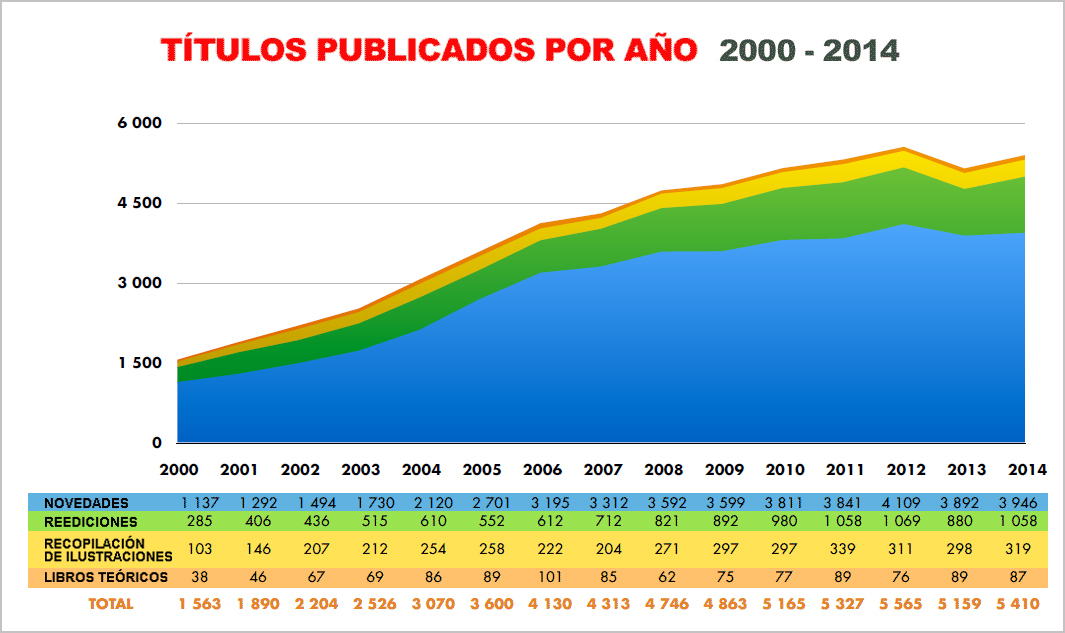
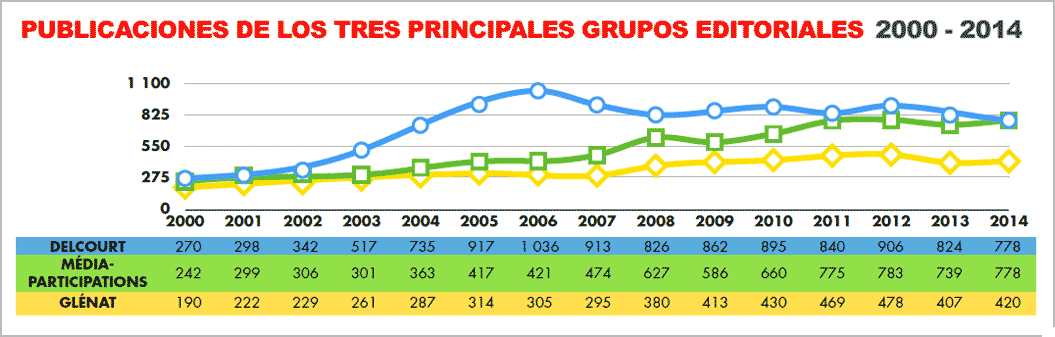
Se publican más álbumes que nunca, pero la tirada media de los álbumes baja ligeramente. El grueso del sector editorial, además, se concentra en pocas manos y los dos grandes conglomerados editoriales (Delcourt y el tándem formado por Dargaud-Dupuis) empatan en el primer puesto y empiezan a despegarse del tercero en discordia (Glénat).

En 2014 se publicaron 5.410 obras pertenecientes al sector de la historieta. De éstas, 3.946 (72,94%) fueron estrictas novedades y 2.275 fueron traducciones de obras extranjeras (57,65%). Son datos extraídos del informe ACBD 2014, elaborado por el secretario general de la asociación de críticos, Gilles Ratier, que se puede descargar aquí.

Este total de obras publicadas significa que se mantiene la tendencia alcista de los últimos años, interrumpida únicamente en 2013, cuando la producción bajó a 5.159 títulos. Así pues, el mercado francófono puede presumir de un aumento del 4,64% en el número de obras publicadas entre 2013 y 2014. De todas formas, estas buenas cifras no superan aún el récord absoluto, que sigue fijado en 2012, con 5.565 obras.

01_datos_publicacion_novedades

La mayoría de las novedades francófonas se publican entre septiembre y diciembre, esto es, en la llamada rentrée literaria tras la pausa vacacional del verano. Se constata que en esta época las editoriales publican los títulos con más gancho comercial pues 115 de los 252 títulos que vendieron como mínimo 25.000 se lanzaron en estas fechas (o sea, un 37,19% del total).

Los tres géneros mayoritarios fueron el histórico (con 427 nuevos álbumes), el humorístico (406) y el de los álbumes destinados a la franja juvenil de lectores (307).

Más editoriales y más concentración

Tres grupos editoriales controlan 36,52% de la actividad del sector. En total, 349 editoriales han publicado cómics durante el año 2014 (17 editoriales más que en 2013).

Esta concentración editorial ya se detectaba en 2013 (entonces coparon el 38,18% del mercado, es decir, un poco más incluso) pero la novedad es que los dos primeros grupos empatan ahora en el número de títulos publicados (778) y se distancian de una forma ya significativa del tercer gran conglomerado editorial.

  • Ediciones Delcourt (incluye los sellos Tonkam, Soleil): 778 obras
  • Média-Participations (agrupa Dargaud, Dupuis, Marsu, Lombard, Blake et Mortimer): 778 obras
  • Glénat (incluye el sello Vents d’Ouest entre otros): 420 obras

02_datos_publicacion_editoriales

Las tiradas de los principales álbumes

Otro apartado llamativo del informe tiene que ver con las tiradas de los álbumes. Los datos constatan que aunque el sector de la bande dessinée resiste los envites de la crisis económica la mayoría de los 98 superventas de 2014 bajan en número de ejemplares respecto de los años anteriores.

Se han publicado 98 álbumes con una tirada de más de 50.000 ejemplares (19 menos que en 2013), de los cuales 75 pertenecen al ámbito del cómic francobelga (en 2013 fueron 86). Y nueve títulos disfrutaron de una tirada superior a los 150.000 ejemplares:

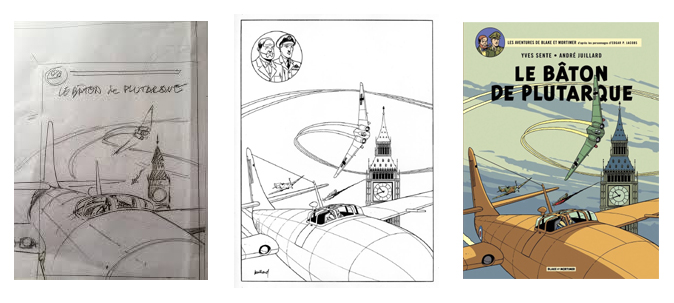
  • 430.000 ej. Blake et Mortimer T. 23: Le bâton de Plutarque (Juillard, Schréder, Sente)
  • 350.000 ej. Joe Bar Team T. 8 (Fane)
  • 350.000 ej. Largo Winch T. 19: Chassé-Croisé (Francq, Van Hamme)
  • 350.000 ej. Le Chat T. 19: Le Chat passe à table (Geluck)
  • 270.000 ej. Lucky Luke T. 6: Les tontons Dalton (Achdé, Gerra, Pessis)
  • 220.000 ej. Happy parents (Zep)
  • 210.000 ej. XIII T. 23: Le message du martyr (Jigounov, Sente)
  • 180.000 ej. Les Légendaires T. 17: L’Exode de Kalandre (Sobral)
  • 160.000 ej. Kid Paddle T. 14: Serial player (Midam)

batonplutarque_detalle

Conviene subrayar que ocho de estos títulos forman parte de series bien conocidas por el público. El álbum de Zep no pertenece propiamente a una serie aunque se aprovecha del tirón de Titeuf, del que no hay nuevo álbum desde 2012.

Para quien tenga curiosidad por conocer las tiradas del llamado cómic de autor, he aquí algunos datos destacados:

  • 120.000 ej. Moi, René Tardi prisonnier de guerre au Stalag II B T. 2 (Jacques Tardi)
  • 100.000 ej. La Couleur de l’air (Enki Bilal)
  • 100.000 ej. Magasin général T. 9 (Loisel, Tripp)
  • 85.000 ej. Blast T. 4 (Manu Larcenet)
  • 85.000 ej. Le Cycle de Cyann T. 6 (Bourgeon, Lacroix)
  • 60.000 ej. Revoir Paris T. 1 (Schuiten, Peeters)

moiReneTardi_vol2

Otros títulos de la bande dessinée bien conocidos para el lector español presentan las siguientes tiradas:

  • 51.000 ej. Les 7 vies de l’Épervier : Quinze Ans après T. 1 (Juillard, Cothias)
  • 50.000 ej. Alix T. 33 (Breda, Jailloux)
  • 40.000 ej. Yakari T. 38 (Derib, Job)

Por su parte, del emblemático personaje Spirou se han publicado en 2014 dos álbumes. El primero pertenece a la serie oficial mientras que el segundo forma parte de una serie paralela. Las cifras de las tiradas demuestran que la segunda (más experimental y atrevida) le está pisando los talones a la primera. Nótese que con este último título de la serie regular, la tirada queda lejos de los 250.000 ejemplares que en 2004 se imprimieron de Paris-sous-Seine (de Morvan y Munuera):

  • 75.000 ej. Les Aventures de Spirou et Fantasio T. 54. Le Groom de Sniper Alley (Yoann, Vehlmann)
  • 70.000 ej. Le Spirou de… T. 7. La Femme léopard (Schwartz, Yann)

Para las editoriales españolas que todavía creen que recuperar el patrimonio no es lucrativo, sepan que La Malédiction de Rascar Capac T.1 (Hergé, Goddin) ha despachado 50.000 ejemplares. Me dirán que los datos son engañosos porque se trata de un Tintín, claro. Pero es que las reediciones en formato integral de Los Pitufos, de Peyo, ha llegado a los 14.000 ejemplares y la de El secreto del Espadón, de Jacobs, a los 15.000.

Y si quieren más datos en el apartado patrimonio, tomen nota de las reediciones de tres obras de André Franquin en formato lujoso y que suman en total 25.000 ejemplares para un autor clásico pero que sigue muy vivo en el mercado:

  • 10.000 ej. Spirou et Fantasio. Vacances sans histoires
  • 9.000 ej. Spirou et Fantasio. La Quick Super
  • 6.000 ej. Spirou et Fantasio. La Mauvaise Tête

En cuanto a los cómics norteamericanos, los tres ejemplares más vendidos son de la misma serie:

  • 120.000 ej. Walking Dead T. 20 (Adlard, Kirkman)
  • 110.000 ej. Walking Dead T. 21 (Adlard, Kirkman)
  • 100.000 ej. Walking Dead T. 19 (Adlard, Kirkman)

Algo similar ocurre con el segmento manga, donde Naruto copa los cuatro primeros puestos:

  • 180.000 ej. Naruto T. 62 (Masashi Kishimoto)
  • 180.000 ej. Naruto T. 63 (Masashi Kishimoto)
  • 180.000 ej. Naruto T. 64 (Masashi Kishimoto)
  • 180.000 ej. Naruto T. 65 (Masashi Kishimoto)

Grandes tiradas, pero menos

Sea debido a la crisis económica o sea por culpa de un cierto agotamiento en las fórmulas editoriales que insisten en continuar las series clásicas pese a la muerte de sus creadores, lo cierto es que la mayor parte de las grandes tiradas bajan respecto de las cifras de años anteriores. Veamos algunos ejemplos.

Achile Talon vendió 50.000 en 2004 (primer álbum sin Greg, su creador), desapareció del top con sus siguientes álbumes y ahora (con un personaje modernizado) alcanza los 24.000.

Por su parte, Alix llegó a vender 150.000 en 2001 pero desde 2011 y tras la muerte de su creador, Jacques Martin, en 2010, se mantiene en los 50.000; eso sí, ahora la novedad es anual, antes era cada dos años, y hay que sumar también los buenos resultados de la serie paralela Alix Senator con una tirada de 60.000 este mismo año. En total, el personaje ha vendido 110.000 ejemplares en un año.

Se resiente mucho más Boule et Bill, que pasa de los 500.000 ejemplares en 2001 a los 150.000 de 2014. También en este caso, hay que decir que la serie perdió a su creador, Jean Roba, en 2006.

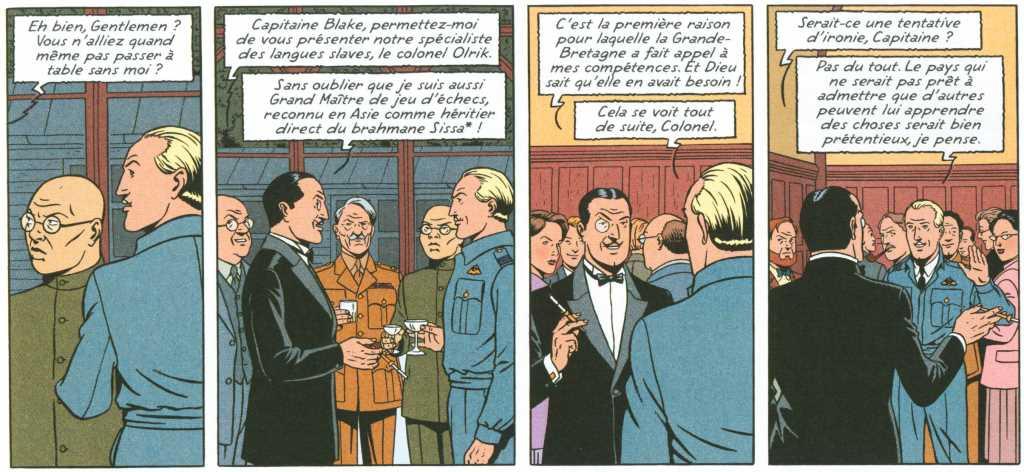
La periodicidad anual parece haber recortado (ligeramente) las ventas de la serie Blake y Mortimer: se ha pasado de los 500.000 o 600.000 ejemplares entre 2001 y 2009 hasta los 430.000 de este año, lo que no ha impedido que Le baton de Plutarque sea el álbum con la mayor tirada del mercado. El tiempo dirá si la excesiva producción en torno a esta serie, con dos equipos trabajando en paralelo, acaba por limar significativamente sus ventas.

batonplutarque_portada

Por el contrario, la parodia de esta misma serie (Philippe et Francis) alcanza una llamativa tirada de 50.000 ejemplares. Así, lo que de entrada pudo parecer un divertimento se ha convertido en una lucrativa operación comercial para la editorial Dargaud.

Por su parte, la serie XIII demuestra que sin Van Hamme no es posible llegar a récords como los 500.000 o los 620.000 ejemplares de antaño y se queda en 210.000. Su secuela (XIII Mystery) va perdiendo lectores cada año aunque no son en absoluto despreciables las 120.000 copias del último título.

19 Jan 15:04

Ferran Adrià: «La gran revolución del futuro va a ser reconocer que el comensal es también cocinero»

by Mar Abad

Pocos entendieron a Ferran Adrià cuando dijo que colgaba la chaquetilla. Especialmente los que tienen buenas tragaderas y pensaban que un genio así lejos de los fogones era un insulto a la gastronomía. Pero el chef sabía lo que hacía. En 2010 descubrió que iba a ser muy difícil seguir inventando platos. Había dedicado casi dos décadas a revolucionar la cocina y había intentado incluso desafiar a la física con técnicas tan inverosímiles como la espuma de humo.

En la historia de los alimentos se había producido un salto como el que llevó al mundo de una sociedad agrícola a una industrial. elBulli se había dejado la piel en ello. Ahora, si querían volver a innovar, tendrían que proponerse un nuevo objetivo. «Hemos llegado a un nivel en el que comer bien no va a ser suficiente. Tenemos que buscar algo más porque la vanguardia siempre quiere algo más».

Ese algo más, para Adrià, es el «formato». El lugar, el modo y el contexto. Por eso cerró el restaurante en 2011, abrió una fundación en 2014 y ahora trabaja en una nueva experiencia donde elBulli y el Circo del Sol se enredan en una «performance» que deja perplejas a las etiquetas de ‘gastronomía’, ‘espectáculo’ o ‘arte’. La obra se estrenará el 29 de mayo en Ibiza y, según el chef, tiene mucho de experimento: «Queremos abrir un camino para la reflexión. El restaurante ponía límites a la experimentación. Lo cerramos para buscar otros formas de experimentar con la comida».

Adrià habla entusiasmado del futuro en la planta tres del edificio de Fundación Telefónica en Madrid. El mismo lugar donde se exhibe actualmente su muestra ‘Auditando el proceso creativo’. La mesa está puesta y el chef espera a que las cámaras empiecen a grabar. El rodaje de un documental para Paramount Channel, titulado ‘Comer Conocimiento’, está a punto de comenzar. El cocinero se reúne ahí con los ocho comensales que han sido elegidos entre los participantes de un concurso de creatividad.

«Hacía tres años y medio que no me ponía esta chaquetilla. También es el primer día en que el equipo de elBulli volvemos a preparar una comida. Es un día importante simbólicamente. Aunque esto no es comer», enfatiza Adrià.

No es comer al uso, efectivamente. No es comer comida. Lo que se come es conocimiento. Y como Adrià se asfixia entre los convencionalismos, buscó una forma que no fuera ni una comida ni una clase magistral. El chef, junto a los publicitarios Toni Segarra y Jorge Martínez, usa su técnica habitual de mezclar, descontextualizar y olfatear lo desconocido para diseñar un formato distinto a lo habitual y de ahí salió ese momento de reflexión sobre la creatividad sin nombre aún.

–A elBulli ibas a comer creatividad y a reflexionar –especifica.

La sesión ‘Comer conocimiento’ va un paso más allá de lo que hacían en el restaurante. Menos comida y más conocimiento. Y a la vez tiene algo de vuelta al pasado. Adrià, como los grandes genios, mira con admiración al pasado y trata de rescatar lo que la miopía del presente no ve. El chef advierte de que en ese escenario que habían preparado donde ocho comen y, a sus espaldas, hay unas filas de público mirando no es un invento suyo.

–Esto ya se hacía en 1600 y 1700. Preparaban comidas y había espectadores alrededor. Hay grabados que muestran que esto se hacía, al menos, en Francia. No sabemos cuál era el motivo. Lo estamos investigando. El restaurante es algo nuevo. Solo lleva 200 años. Antes las comidas sociales se hacían en otros lugares.

Empieza el rodaje.

c3

En ese momento el mundo gira alrededor de una mesa vestida con un mantel negro. Encima hay unos jarrones atestados de flores, unos cubiertos y unas servilletas blancas que deslumbra con la misma insolencia que el fogonazo del flash de una cámara a traición. La palmada de un técnico ordena silencio absoluto.

Los comensales ya están sentados. Entra Luis García, el director del restaurante elBulli, vestido impecable. Tiene voz de hechicero y una elegancia de vértigo. Hace falta estar muerto o que un cirujano psicópata te haya extirpado la fantasía para no creer que estás es un castillo encantado. El hombre que parece mago entrega un folio blanco a cada uno.

c13

–Lean la carta y coméntenla entre ustedes –indica y desaparece de la escena.

Los comensales leen. Unos sonríen y otros están serios. ¿Qué leen? Al público, ese mismo que hace cuatro siglos era retratado en grabados franceses, le come la intriga.

–Pienso en el miedo estándar. Ese miedo de qué me van a hacer sentir y de si estaré a la altura de la experiencia como comensal. ¿Seré digna de decir que este plato no me gusta? ¿Quién se atreve? Yo creo que da miedo decirlo –comenta una comensal.
–Es el síndrome del rey desnudo –añade otro.
–Me pregunto si hay un tipo de cliente apropiado para elBulli –continúa uno más.
–¿Es necesario que haya clientes críticos? Yo creo que sí.
–Yo creo que tu experiencia va a estar condicionada por tu educación, tu experiencia previa…
–¿Creéis que hay que tener en cuenta la opinión del comensal? –se preguntan.
–Es importante escuchar a la gente pero no deben marcar tu trabajo.
–Pero un cocinero debe tener una gran fortaleza mental para abstraerse de las críticas.
–Y tampoco puede estar desconectado de la realidad. La cocina, al fin y al cabo, se hace para que alguien coma.
–Pero esto roza el arte y el artista no debe tener en cuenta el mercado cuando realiza su obra.
–Richard Hamilton compara a Adrià con Duchamp porque dice que siempre intenta inventar un lenguaje nuevo. Él quiere redefinir la cocina.

Ahí justamente es donde quería llegar el chef, un hombre que aprendió a ignorar las críticas y que piensa que las opiniones entorpecen el acto de crear. Ese mismo hombre que cuando le preguntan si le importan las criticas contesta:

–Nada. ¿Sabéis lo que es nada?

Pero Adrià aún no ha aparecido.

Ese primer plato del menú es un mensaje electrónico que un cliente escribió a elBulli, en 1997, después de cenar en el restaurante. El autor muestra su disgusto por la experiencia. Esperar una reserva con nueve meses de antelación, ir hasta la Cala Montjoi y pagar una suma importante por comer espuma de humo le parece una estafa.

–Siento interrumpir la conversación. Les traigo pan fermentado durante 24 horas y mantequilla échiré –indica Luis García y vuelve a desaparecer.

c12

Los comensales toman su rebanada de pan y untan mantequilla.

–Está muy bueno. Pero ¿esto os parece innovador?
–Depende del contexto. Yo creo que sí es innovación porque no es lo que esperábamos.
–¿Pensáis que es un insulto al comensal?
–Si hubiese pagado mucho dinero y me pusieran pan con mantequilla me sentiría muy tensa.
–Yo creo que es un recurso que podrían dejar para el final si te quedas con hambre…
–Es el recurso habitual mientras esperas la comida.

Por fin entra Adrià.

–Enhorabuena por el pan –dice un comensal.
–Hola. Gracias por estar aquí y, sobre todo, espero que lo paséis bien. Es lo que siempre decíamos en elBulli. Lo más importante es disfrutar del momento. Hemos estado toda la noche cocinando el pan y hemos traído una mantequilla especial para vosotros –indica el chef.

Los comensales ríen.

–No, no. Lo digo en serio. Esta mantequilla es exquisita. En 1996 hicimos una reflexión. Muchas personas viajaban a Barcelona, habían reservado con un año de antelación para probar cocina creativa, habían recorrido 2.000 kilómetros, y llegaban y se encontraban con pan y mantequilla. ¿Era lo correcto? Además, si comes esto al principio, no puedes comer seis platos más. Ese mismo año lo quitamos del menú y lo sustituimos por snacks. Fue una revolución en la cocina.

Las flores, las copas y el despliegue de cubiertos desaparecen de la mesa. Queda el negro de fondo del mantel y las herramientas imprescindibles para comer.

c11

–Ahora todo está limpio, pero antes llegabas a un restaurante y la mesa estaba cubierta de flores, adornos, cubiertos… –relata el chef. –En elBulli no se comía comida. Se comía creatividad. Intentábamos hacer vanguardia y por eso hicimos todos estos cambios.

«La cocina es un lenguaje. No se hace arte. Se hace una reproducción artesanal de una receta. Tú puedes vivirlo como arte porque no sabes si es el original o una réplica. La mayoría de los restaurantes del mundo hacen reproducciones. Muy pocos hacen vanguardia», indica. «El restaurante es el formato más conocido pero no ha existido siempre. Tiene apenas 200 años. No se ha experimentado en formatos para comer. Lo que estamos haciendo hoy es un nuevo formato y pasar un buen rato. Es pasarlo bien y entender los platos. ¿Se puede comprender un plato? Claro. Un plato está diciendo algo. Hoy vais a leer los platos y vamos a ver si encontráis el mensaje que nosotros queríamos transmitir. Y pensad una cosa: no hay comida rara. Hay gente rara».

Adrià se va. Aunque antes ha lanzado a rodar otra reflexión por la mesa: «La gastronomía es una actitud. Comer una buena ensalada de tomate con aceite en tu casa es gastronomía».

Tercer plato: espray de dry martini.

–Abran la petaca y pulvericen sobre la boca –indica el director del restaurante.
–Estoy buscando el martini con todo mi corazón –dice una comensal.
–Me gusta la forma en que lo consumes.
–Yo creo que es colonia.
–Esto es demasiado alcohólico para ser un perfume.
–El problema es que no entendemos las reglas del juego.

Adrià vuelve a salir de la nada.

–Un dry martini es colonia. Esto es descontextualizar brutalmente algo. No hay un nombre para todo lo que tomamos. ¿Esto es un plato? Hay partes del menú que no son platos –explica. –Lo creamos en 2005 y entonces era vanguardia. Ahora la descontextualización es más conocida, pero imaginad que estáis en la Cala Montjoi. Hace un calor horrible. 35 grados. Llegas a elBulli. Estás prensando en una bebida fría y, antes del pan, te traen esto.

–Me preguntaría si es un restaurante o una tienda de colonia –irrumpe la comensal más joven. Tiene 14 años y estudia arte dramático.
–No sabría si tomarlo o echármelo por el cuello –añade el otro comensal de la adolescencia. Tiene 15 años.

–Al valorar un plato hay que tener en cuenta todas las variables. Yo nunca doy una opinión de un restaurante hasta uno o dos días después. En creatividad no vale un ‘me gusta’ o ‘no me gusta’. Lo que hay que tener en cuenta es si abre un camino, si se entiende el mensaje… A elBulli lo odiaban o lo amaban porque te hacía reflexionar sobre la vida. No sobre la comida, sobre la vida.

El chef dijo después que cuando más aprendió en toda su carrera fue el día que se sentó a comer en su propio restaurante. Salió de cocina y se convirtió en comensal. Fue en 1995 y pudo experimentar sus platos «desde la mesa en vez de cocinando. El cocinero prueba lo que hace pero no se sienta a comer como un cliente y no conoce esa experiencia».

Adrià es un provocador y hace mucho tiempo perdió el miedo a disgustar. elBulli no se planteaba como negocio. Era un laboratorio experimental y por eso se atrevieron a romper, uno a uno, los mandamientos del marketing. «El dry martini intentaba provocar ansiedad. Llegabas con calor, después de un rato en la carretera y te traían un espray. A 35º lo que te apetecía era una caipiriña. Esto es una exploración. En elBulli no se iba a comer. Era vivir una experiencia y había que querer jugar a ello», detalló. «Tenemos que juzgarlo teniendo en cuenta lo que aportó. Desde ese momento los cocineros empezaron a hacer cócteles en el resto del mundo».

El fundador de elBulliFoundation vuelve a huir.

Cuarto plato. Trufas negras. Las rayan sobre una copa como si fueran un vino y Adrià les habla de ello.

c10

–Esto lo hicimos en 2009. Hay que seguir un orden en todas las comidas. Lo primero es oler. Lo mejor de la trufa es su olor. Presentarla en una copa de vino supone un shock y por eso hay que explicarlo. A veces hacíamos la narración de la comida antes de comerla y a veces después. Depende de cuál es el momento más acertado.

Para alcanzar la trufa en el fondo de la copa les ofrecen una especie de palillos metálicos. Es una herramienta que crearon en elBulli específicamente para degustar el aroma de este hongo al que acusaban de diabólico en la Edad Media. Hace tiempo que el equipo de Adrià intuyó que la cocina no era un asunto de comidas. Era todo lo que había alrededor y por eso trabajaban con físicos, químicos, diseñadores o cualquier profesional que elevase la función hasta cotas impensables.

–Son como los palillos que utilizan los niños para aprender a comer en Japón –señala un comensal.

Lo dice porque ese instrumento de finas tenazas es una pieza única. Los extremos están unidos y funciona más como una pinza que como unos palillos.

–¿Qué creéis que hemos querido decir con la trufa? –pregunta Adrià.
–Que las herramientas por sí mismas te conducen a la experiencia –contestan desde la mesa.
–Queríamos que vivierais la experiencia del olor. Oler la comida en un restaurante está mal visto. Tú te acercas un plato para olerlo y te miran como si fueses un mal educado. No olemos la comida y eso en algunos casos como la trufa es un desperdicio porque el olor es mucho más intenso que el sabor.

c9

El chef vuelve a recordar que en estas ocasiones la pregunta no es si algo gusta o no gusta. En elBulli no intentaban saciar ni enamorar el paladar (aunque hacían las dos cosas). Lo que buscaban era llenar la cabeza del comensal de pensamientos e interrogantes a través de la comida. «En creatividad no hay verdades ni mentiras. Hay cosas creativas y cosas que no lo son. Un restaurante tiene mucho más valor cuando, en vez de reproducir platos, es creativo y tiene influencia social», indica y se esfuma.

–Hay un factor estético importante –señala un comensal. –Nunca lo había pensado, pero la trufa es bonita.
–Hemos incorporado otro sentido: la vista.
–Para apreciar esta experiencia hay que educar al gusto. Entonces ya puedes reflexionar.

El hombre de la elegancia aparece en escena. Trae un vaso minúsculo para cada uno y les dice:

–¿Recuerdan la carta que les hemos dado al principio?

Es la famosa espuma de humo. El silencio envuelve la mesa y todos prueban el contenido del vaso como si se tratara de un experimento. Más que cara de gourmands, ponen cara de científicos.

–¿Os ha gustado? –pregunta Adrià.
–Yo lo esperaba dulce.
–Si sabes la dificultad técnica que hay detrás de esta espuma, la valoras más.
–Jugáis con ventaja porque habéis leído la carta –apostilla el cocinero.
–Tiene un sabor que se acerca a la naturaleza –comenta la adolescente de 14 años.
–En 1997 incorporamos este plato porque quería contar algo sobre la espuma. Es un plato icónico en la cocina de vanguardia mundial. De esto se hablará dentro de 100 años –asegura el chef.

c7

Este plato fue uno de sus empeños de rizar el rizo. Se obsesionó en inventar una espuma que se pudiera comer y convirtió el aceite de oliva en una emulsión. Y una vez que lo tuvo le atizó ese ímpetu impulsivo-compulsivo que ataca a los grandes genios. Fue a por más. A por la espuma de humo. Y lo consiguió.

–Incorporamos algo que sabíamos que no iba a gustar porque era humo. No era nada. Había gente que se quejaba. Un restaurante al uso lo hubiese eliminado de la carta pero en elBulli no quitábamos nada. El menú era un discurso que no se podía cambiar. Si hubiésemos querido ser un restaurante convencional, hubiésemos dado pescado a la plancha. Pero si quieres hacer vanguardia tienes que probar cosas diferentes aunque no gusten. Mi misión hasta 1993 era dar de comer bien y ganar algo de dinero. A partir de 1994 intentamos hacer vanguardia y la prioridad no era satisfacer el paladar del cliente. La espuma no sabe a nada pero es creatividad.

c8

Después de Adrià no habrá nadie en la Tierra capaz de rebatir que la cocina tiene tanto de intelectual como de sensorial. Esta comida, a la hora en que las tripas relinchan (de 13.00 a 16.00), está haciendo trabajar al cerebro mucho más que al estómago. «La espuma no se come. No es comida. Su misión es provocar una reflexión», enfatiza el chef que cada vez es más investigador y menos cocinillas. «En 1997 no existía el concepto de vanguardia en la cocina. Ir a elBulli era una sensación como ir a una película de miedo. Te gusta pero no te gusta. La gente decía que habían vivido una experiencia increíble pero no sabían si les había gustado o no».

El maestro de ceremonias desaparece de la escena. Entra Luis García y sirve una tableta digital a cada uno.

–Pulsen todos al Play cuando yo les avise. ¡Ahora!

c6

Los ocho miran a la pantalla. Aparece otro de los platos más conocidos de elBulli: Las semillas. El orden lógico de las cosas está absolutamente dinamitado en esta cita. Todo gira en torno a la comida, sí, pero el cerebro es el que tiene que digerir el menú. El estómago debe andar medio esquizofrénico a estas alturas.

–Habéis visto un plato de semillas. Hay personas que saben leer un plato sin probarlo. Si nunca has ido a un restaurante japonés y te traen algo que no has visto en tu vida, ¿sabrías cómo comerlo? Yo conozco a tres personas que sí sabrían. Uno de ellos es Albert Adrià. Eso es talento cognitivo y es una de las grandes reflexiones que hemos estado haciendo en los últimos dos años. Este plato era real. Lo hicimos por primera vez en 2006. Lo introdujimos para reflexionar sobre las semillas. Al mes de incluirlo en el menú, entró un señor en la cocina y nos dijo: ‘Este plato es el origen de la vida’. Eso me hizo ver algo aún más mágico de lo que yo había querido transmitir. Era evidente que a elBulli iban a comer conocimiento y creatividad más que a degustar sabores.

El siguiente plato era un puñado de tarjetas. En cada una había una fotografía de un plato de elBulli. Los comensales tenían que ordenarlo según un criterio. Su propio criterio. Nadie les dio ninguna pista de nada.

c5

–Un menú es como un largometraje –dice Adrià. –Está formado por distintos planos. Trabajamos en un concepto como si estuviera formado por secuencias. Esto es probablemente lo más importante que intentamos hacer en elBulli. Uno de los ejercicios que practicábamos continuamente era reflexionar sobre cómo ofrecer la comida. Hay grandes cocineros que saben elaborar grandes platos pero no saben construir un menú. Hay que diseñarlo como si fuera un largometraje.

El chef va in crescendo. «Nos dimos cuenta de que teníamos un challenge. El gran reto de los tres últimos años de elBulli fue crear un guion. Íbamos realizando secuencias y luego juntábamos esas minipelículas. Eso es muy importante. En grandes restaurantes se produce una falta de coherencia en el discurso a la hora de servir los platos».

El ritual se repite. Adrià desaparece y llega un nuevo plato. Esta vez, paradójicamente, el plato está servido en un plato. Es una rueda de especias y el comensal tiene que adivinar qué es nuez moscada, qué es azafrán, qué es jengibre… y así hasta llegar a doce aromas.

c15

c4

–Hemos cambiado la forma de entender la gastronomía –dice Adrià. –El receptor cocina tanto como el cocinero. Añade especias, salsas, decide cuánta cantidad añade a la comida… La gran revolución del futuro va a ser reconocer que el comensal es también cocinero. Él acaba los platos. Nosotros hemos traído hoy el mejor pan del mundo pero vosotros lo habéis cocinado porque le habéis añadido la mantequilla a vuestro gusto. Todo ese proceso implica una reflexión. Habéis cocinado reflexión y esto es muy importante en la cocina creativa.

Aquí es donde surge la duda entre arte y artesanía. Adrià jamás habla de arte en la cocina pero hace una distinción que lleva a todo tipo de preguntas. «En la cocina de reproducción el comensal puede acabar el plato como quiera, pero en la cocina creativa hay que seguir las instrucciones del creador porque él sabe cómo se ha de comer», especifica. Y ese intocable recuerda más al arte que al hambre.

El último bocado no tenía azúcar. Hubiese sido demasiado clásico para este momento inclasificable entre la lección magistral, la conferencia, el almuerzo y el documental. El lugar del postre lo ocupa una explicación. Adrià describe a los comensales cómo elaboraron ‘El ravioli que se va’. Este plato tiene como principal ingrediente el obulato, una lámina transparente que envuelve el contenido pero es prácticamente invisible e insípido.

c2

–Lo descubrimos en una farmacia de Japón. Allí lo utilizan para envolver medicamentos a granel. Lo compramos y vimos que desaparece en el agua. Estuvimos seis años investigando y al final creamos ‘El ravioli que se va’.

El menú acaba aquí. Las cámaras cortan. Llega la hora de comer. De comer en sentido clásico. Todos comentan la experiencia. Los comensales están eufóricos y Adrià, con un sandwich en la mano, dice:

–No había visto poner caras así desde elBulli.

c1

c16

Disclosure: La autora de este artículo y Yorokobu han participado en el proyecto de Auditando el proceso creativo.

The post Ferran Adrià: «La gran revolución del futuro va a ser reconocer que el comensal es también cocinero» appeared first on Yorokobu.

19 Jan 14:57

No, este no es el día más triste del año

by Jaime Rubio Hancock

El tercer lunes de enero es el día más triste del año, según una fórmula totalmente falsa que tiene en cuenta las siguientes variables:

- Es lunes. Y los lunes siempre son tristes.

- Aún no se ha cobrado el sueldo mensual. Es más, es posible que incluso hayas gastado más de la cuenta en las rebajas.

- El tiempo suele ser malo. Anoche nevó en Madrid, por ejemplo.

- Ya has fracasado en tus buenos propósitos. Sí, eso que tienes en la mano derecha es un croissant de chocolate.

- La motivación suele ser baja.

Aunque esto se pueda escribir en lenguaje aparentemente matemático (1/8C+(D-d) 3/8xTI MxNA), la teoría no tiene nada de científica, ya que mezcla variables no compatibles que ni siquiera se pueden cuantificar. En las sabias palabras de Dean Burnett, psicólogo que colabora con The Guardian, el Blue Monday (lunes triste) es “acientífico. Pseudocientífico. Uberpseudocientífico. Es un galimatías, un sinsentido, una basura, una porquería y cualquier otra forma educada de decir ‘idiotez’ que se te ocurra”. Burnett está muy enfadado porque cada año se ve obligado a escribir un artículo desmintiendo la fórmula.

Todo comenzó en 2005: la agencia de comunicación Porter Novelli envió una nota de prensa que recogía una investigación del doctor Cliff Arnall, psicólogo de la Universidad de Cardiff, en la que exponía esta fórmula. Según la agencia, la mejor forma de combatir esta deprimente jornada era hacer las maletas y largarse de viaje, usando los servicios de su cliente Sky Travel. De hecho, las declaraciones de Arnall que recogía la nota de prensa concluían con: “La gente se siente triste cuando no tiene nada planeado, pero una vez reserva unas vacaciones, trabaja con el objetivo de tener tiempo libre y un periodo relajante”. Para completar este ejercicio de sutilidad, sólo hubiera faltado añadir: “Codazo, codazo, guiño, guiño”.

Arnall trabaja como “life coach” y “consultor de felicidad”, y se ha especializado en este tipo de ecuaciones sin más fundamento que el publicitario: en 2006 calculó el día más feliz del año, que es el tercer viernes de junio, debido al mayor número de interacciones sociales, al clima, a la naturaleza, al recuerdo de los veranos de la infancia y a la anticipación de las vacaciones (gracias al viaje reservado en enero, imaginamos). También ha cocinado la fórmula para el juguete perfecto (cortesía de la juguetera Worlds Apart) y para el fin de semana largo ideal.

A pesar de que sabemos desde hace diez años que el blue monday no tiene sentido y que hoy no es el día más triste del año, el término se ha popularizado y protagoniza más de 17.000 tuits en lo que llevamos de jornada, muchos de ellos asociados a marcas que te quieren animar a superarla: complementos dietéticos, libros, agencias de marketing, autocares, películas infantiles, batidos de chocolate y cerveza, entre otros y en ocasiones admitiendo que no hay mucha ciencia detrás. Es decir, el supuesto día más triste del año es uno de los más alegres para quienes trabajan vendiendo cosas.

19 Jan 08:07

Diente por diente: así es la vida cuando esperas la venganza

En el norte del país, unas 2.800 familias han decidio enclaustrarse en sus casas por miedo a asesinatos.

19 Jan 08:04

Blasfemia portami via...

by noreply@blogger.com (porcoconleali)
Grazie ad Aki!

Se qualcuno si offende, è un povero coglione. E guardare porno non dovrebbe essere l'attività principale di bigotti merdosi.
Oppure no? :)

19 Jan 04:15

In Praise of Sweet Dee

by The Gooch
"I think a lot of men are scared to act opposite a woman who is as funny as they are, and who will give them a run for their money for being the funniest person in that project," he says. "And I think a lot of times she doesn't get cast in things because she's so funny, and I think that's fucked up."
Kaitlin Olson And The Perils Of Being A (Funny) Woman In Hollywood

The Best of Sweet Dee

Kaitlin Olson Is the Most Underrated Performer on TV
19 Jan 03:57

78 Drinks Every Bar Person and Party Monster Should Know

by Lisa Marcus


It's the weekend, an ideal time to have a cocktail or three. London-based designer and writer David McCandless would like to assist everyone interested in that notion with his chart of 78 mixed drinks.

I noticed that a couple of concoctions I favor are missing from the graphic, yet in spite of that, there are enough drinks illustrated to get just about anyone into a fair about of trouble. How about you — is your favorite drink pictured here?

Click hereto see all 78 drink recipes in an an enlargeable version. Visit the designer's website to see more of his projects, and check out his book Knowledge Is Beautiful: Impossible Ideas, Invisible Patterns, Hidden Connections--Visualized here. (Measurements shown are in parts.) 

18 Jan 19:19

La Noche Temática: ‘Cómic heroico, cómic erótico’

by Jon A. Sedano

Jon A. Sedano

Cómic heroico, cómic erótico

Ayer se emitieron en el programa ‘La Noche Temática’ de La 2 de RTVE, dos documentales que profundizaron y analizaron tanto el cómic de superhéroes como el cómic erótico. El primero, que llevaba por nombre ‘De Superman a Spiderman’, hizo un repaso del nacimiento de estos superhéroes, así como de la evolución que han tenido hasta llegar a nuestros días.

Por otro lado, la segunda parte, ‘El sexo en los cómics’, trata de arrojar luz sobre este tema de la mano de la artista Molly Crabapple, quien nos acerca a autores de la talla de Milo Manara o Robert Crump entre otros. A continuación tenéis un avance de ambos documentales:

Ambos documentales estarán disponibles en la página de RTVE hasta el próximo 1 de febrero de 2015. Podéis acceder directamente a ellos mediante los siguientes enlaces:

Documental: De Superman a Spiderman

Documental: El sexo en los cómics

La entrada La Noche Temática: ‘Cómic heroico, cómic erótico’ pertenece a La Casa de EL - Artículos y noticias sobre cómics, cine, series y videojuegos.

18 Jan 16:23

Mi perro hace reiki en un hotel de O Grove

by rosa estévez
Distinguirse o morir. El refrán vale para todo tipo de negocios. En O Salnés, hoteles, conserveras y hasta taxistas han buscado la diferencia de su oferta. Y la han encontrado

18 Jan 16:20

There's A Sex Toy For Foot Fetishists Called The Vajankle

“These quirky feet have a vagina built right in at the ankle!” NSFW, obviously.

Foot fetishists rejoice - your dreams have come true in the form of the "Vajankle".

Foot fetishists rejoice - your dreams have come true in the form of the "Vajankle".

Like the ever-popular fleshlight, these "sexy silicone feet" have a nifty vagina built right into the ankle, a feature that website Sinthetics, where these deviant dogs are available, calls "quirky!".

Sinthetic / Via sinthetics.biz

Sinthetics

Sinthetics


View Entire List ›

18 Jan 16:15

O alcalde de Ferrol quere a fusión con Narón

Rey Varela di que que a unión entre Ferrol e Narón é o seu obxectivo para a próxima lexislatura e critica aos que se opoñen as fusións por cuestións "partidistas". Tamén aposta porque goberne a lista máis votada.
18 Jan 13:53

Mañana será el día más triste del año, según una fórmula matemática

by Europa Press
El «Blue Monday» se basa en variables como que terminó la Navidad, llegó el frío y la cuesta de enero puede alargarse hasta bien entrado febrero