Shared posts
Paper Engineering: Over 700 years of Fold, Pull, Pop & Turn
The first known example of a book including a feature that moved beyond the confines of a static page came from Matthew Paris, Benedictine monk, English chronicler, artist in illuminated manuscripts and cartographer. He created the first volvelle, or inset wheel, to calculate future holy days, and also created the first small flaps and full gate-fold pages to detail pilgrimage tour guides of sorts.
Before modern paper engineer historians knew about Matthew Paris, they knew about Ramon Llull, who is one of the first people who tried to make logical deductions in a mechanical rather than a mental way, and provided a paper tool for others to follow his logical deductions.
The most gorgeous example of early books with moving parts is Petrus Apianus' Astronomicum Caesareum, scanned in full (static) form in the Rare Books Room, and a short, low-resolution video of one of the volvelles in action. The book features beautiful illustrations related to astronomy, including 35 volvelles that served as actual tools to calculate movements of the planets as understood in the Pyolemaic system. Unfortunately, the book was published in 1540, shortly before the Copernican Revolution cast aside the geocentrism Ptolemy for heliocentrism.
Besides astronomy, volvelles were also used for astrology, including medical astrology, to inform a doctor when was the best time to perform particular surgeries, as seen in the Guild Book of the Barber Surgeons of York (description of how to use the tool, Google books preview). Also in the realm of tools for doctors are medical flap books, including scenes from female reproductive cycles, specifically Spratt's Obstetric Tables, from 1848. Medical flap books are still made in various forms to this day. And because they lend themselves to this, GIFs of an anatomical flap book, specifically Medicology, or Home Encyclopedia of Health: A Complete Family Guide by Joseph G.Richardson, M.D. (HTML-ified copy of the 1904 edition).
Finally we have reached more familiar territory: children's books. Robert Sayer produced the first movable books for children, simple pamphlets with flaps, called Harlequinades for the prominent Harlequin character. This lead to what some consider the first golden age of children's pop-up books in the 1800s, with paper doll books (site includes links to interactive flash paper doll features) and fold-outs from Ernest Nister (hands-on demonstration and review video), Dean & Sons (dry biography, few images), Lothar Meggendorfer (reading stories and moving pieces that pivot on rivets) to name a few. In the late 1920s, S. Louis Giraud started publishing books with double-page pop-ups, where turning the page would open a pop-up. In 1932, Blue Ribbon Press copyrighted the term 'pop-up' and started publishing pop-up books with licensed characters from Disney and classic tales like The Pop-Up Pinocchio.
From here, we get into more modern creations, which really start pushing what it means to engineer paper. The Popup Lady has a lengthy biography for Vojtěch Kubašta, Czech children's illustrator, paper engineer, and author, as well as a few short, low-quality "play-through" videos for his works. Given his attention to detail, higher quality videos really make his books pop. But it took Waldo 'Wally' Hunt, an ad-man turned mega-fan to bring Kubašta's care for the craft to a larger audience. As told in that NY Times obituary, "an advertising man turned novelty-book packager, Mr. Hunt was almost single-handedly responsible for the postwar revival of the pop-up book in the United States."
That brings up to the very present, and back to three nearly hour long Smithsonian presentations: Behind the Paper Curtain: The Magic and Math of Harry Potter, The Pop-Up Book (fan review video); The Birth of a Corporate Pop-Up Book; The Pop-Up Art of David Carter; and for a quick look into the making of commercial pop-up book, Paper Engineering: Fold, Pull, Pop & Turn, from research and doodling to prototyping and finally hand assembly of the final product (yes, all pop-up books are still hand-made).
If you're looking for something else, how about 11 minutes of paper engineering in action, an INKtalk from Rives, a paper engineer/ poet/ storyteller/ philosopher. If you want to make your own books pop up, here's a 9 minute video tutorial for altering flat page books, and a 4 minute video tutorial for making a card with pop-up flowers.
No Cat Do

Jennifer Morales has a beautiful Persian cat. A beautiful, willful Persian cat (though it may be redundant to use "cat" and "willful" in the same sentence). Morales catches the cat red-pawed, poised to knock a glass of water off a table. She tells the cat no, which obviously registers with the animal. He may know what it means, but that doesn't mean he'll follow your rules, Jennifer. On the contrary. -Via Tastefully Offensive
Peter Kuper's Spy Vs. Spy Comics Are A Work Of Heart-Rending Brilliance
Watch: Jon Stewart gets teary-eyed as he announces his departure from The Daily Show
On Tuesday, Comedy Central dropped some big news on us: Jon Stewart is leaving The Daily Show. Stewart has been hosting the show since 1999. And on Tuesday night's episode, Stewart announced his news to a surprised audience.
The show began with Stewart telling his television audience that we knew something that his studio audience didn't (the show is taped earlier in the day). The announcement did not come until the end of the show.
"Seventeen years is the longest I have ever in my life held a job by ... 16 years and five months," he said. "In my heart I know it is time for someone else to have that opportunity … I'm going to have dinner. On a school night. With my family."
Stewart said he was fighting back tears, and there were a couple moments when he tried to shake the emotion off. He also said that he that details like his last show were still being hammered out.
"It's been an absolute privilege. I thank you for watching it or hate-watching it," he said, explaining that it was an honor to have a show that let him distill his point of view. "I thank you for that."
There's a giant gulf between reading the corporate news of his departure Tuesday evening and actually hearing Stewart say the words on his show. Seeing how emotional and tender Stewart got speaks to the mountains of respect and love he has for The Daily Show and the people he works with.
Everything is Awful, Jon Stewart Exiting The Daily Show - End of an era.
First Stephen Colbert, now this?
Comedy Central released this statement from their president Michele Ganeless tonight:
For the better part of the last two decades, I have had the incredible honor and privilege of working with Jon Stewart. His comedic brilliance is second to none. Jon has been at the heart of Comedy Central, championing and nurturing the best talent in the industry, in front of and behind the camera. Through his unique voice and vision, ‘The Daily Show’ has become a cultural touchstone for millions of fans and an unparalleled platform for political comedy that will endure for years to come. Jon will remain at the helm of ‘The Daily Show’ until later this year. He is a comic genius, generous with his time and talent, and will always be a part of the Comedy Central family.
Yes, after speaking of the possibility last year and a few months shy of a year since we found out fellow late night news comedy host Colbert would be leaving his spot for The Late Show on CBS, Stewart is saying so long. But I guess you should tune in tonight:
Tonight! For once, you wanna stay through the interview.
— The Daily Show (@TheDailyShow) February 11, 2015
No word on replacements, if any. We nominate Jessica Williams. Now let us GIF this whole thing off…
Are you following The Mary Sue on Twitter, Facebook, Tumblr, Pinterest, & Google +?
Nerdy Valentine’s Day Cards

Designed by TinyBeeCards

Made by SouthernPestPrints

Created by 4four

Designed by 4four

Made by CraftyTiger

Created by averycampbellART

Designed by TheHipsterHousewife

Made by ThePaperCub

Created by sackofcats

Designed by DarkroomandDearly

Created by sillyreggie

Designed by apaperaffaire

Made by SouthernPestPrints

Created by Paperwheel

Designed by SheMakesSheBakes

Get it at punnypixels

Created by Paperwheel
skunkbear:Last year, people came up with some pretty great...


Last year, people came up with some pretty great #ScienceValentines - let’s keep that rolling! How would you express your love for that special scientist in your life? Tweet @nprscience or message me, and I’ll collect the best ones.
(Bonus points if you can somehow incorporate landing on a comet)
Our bond is so strong, it don’t need oxytocin.
We’re woven together like a corpus callosum.
The love we impart, though it’s felt in our heart,
Is more of a limbic-type notion.
El documental sobre gente rara

El mismo cineasta que anda trabajando en Cam Girlz ha aprovechado el subidón de fama que le ha granjeado el documental para sacar de forma...
Another Song To Sing
Cotton Pickin' Hands
This Girl Is Taking Down Hipster Guys On Tinder One Profile At A Time
Behold the wonder of Tinder in Brooklyn.


badameco (Pt., Gz. e Br.)
Pensábamos que Tinder era la mejor app del universo hasta que descubrimos Down
Review: Jupiter Ascending Is The Worst Movie Ever Go See It Immediately - It's so stupid it's beautiful.

So what exactly is Jupiter Ascending?
Let’s start with the basics: this movie is not The Matrix. This movie is not Dune. This movie is not Star Wars, nor is it The Fifth Element. No, this movie is like if all of those movies plus the music video for the Backstreet Boys’ “Larger Than Life” and the really weird parts of the Mass Effect trilogy all got really drunk at a party and had a massive orgy while H.P. Lovecraft filmed it. That’s Jupiter Ascending.
The plot is this: the Wachowskis were given an extraordinary amount of money to make whatever the hell they wanted, and what they wanted to make is exactly what we all, secretly, deep down, want to make: the big-screen adaptation of that Stargate fanfic you wrote when you were fourteen that really went off the rails and began to inhabit its own universe, complete with original characters, wolf-men, and bees. That’s Jupiter Ascending.
I mean, I want to have a serious discussion about the film’s plot, but I honestly can’t. I can’t because it just doesn’t matter. It doesn’t matter! What about the plot could possibly matter when part of it involves Mila Kunis as the reincarnation of an ancient space princess who falls in love with a Channing Tatum-shaped half-wolf hybrid angel alien with anti-gravity roller skates and a great debt to pay off? That’s Jupiter Ascending.

Okay, I’m going to try. [MILD SPOILERS THAT DO NOT MATTER AT ALL RE: YOUR ENJOYMENT OF THIS FILM AHEAD]. Mrs. S from Orphan Black but with a Russian accent falls in love with Agent Carter‘s Jarvis, but then he dies in a scene that tried really hard to be as emotional as the opening to Guardians of the Galaxy, but was mostly – like the rest of the movie – just preposterous, but so preposterous it was really kind of amazing. There are montages where Mila Kunis scrubs toilets. She discovers she is a space princess who owns the Earth when space-wolf Tatum saves her from Roswell aliens who attack her while she’s having her eggs harvested. Her space princessery is further confirmed by bees, who, as it turns out, can smell princesses (???????????). Eddie Redmayne is her space-family and he wants the Earth. You may have inferred from the trailers that Eddie Redmayne is this film’s antagonist.

Eddie Redmayne is literally flawless in this film. Eddie Redmayne knows Jupiter Ascending is bad. Eddie Redmayne knows this perhaps better than anyone else in our solar system, and he does what needs to be done. He swooshes around without a shirt but with a black cape for two hours, speaking only in whispers except for the very occasional ridiculous outburst. He is so over-the-top I am not sure where the top even is anymore. He should win an Oscar.
But if you’re not into shirtless Eddie Redmayne or dance-fighting Channing Tatum (who is wearing a blonde goatee potentially made out of Bradley Cooper’s hair from American Hustle???), that’s okay! Jupiter Ascending will serve you with unnecessary shots of Kunis’s underwear-clad employer and an almost all-female alien sex party. It also serves pure, pristine Gugu Mbatha-Raw, who can do so much better than this, but chooses not to – and for that, I respect her. I imagine Gugu and Eddie hanging out after the Golden Globes, laughing about how much they enjoyed filming this ridiculous movie and hoping for a sequel.
![Pictured: Bradley Cooper['s wig hair]](http://static02.mediaite.com/themarysue/uploads/2015/02/jupiter-ascending-c-tates-640x328.jpg)
Pictured: Bradley Cooper['s wig hair]
If I had to critique this movie in any sort of, you know, actual way (beyond “it was a hot-ass mess”), I would say that I do wish the film had been a little less caught up in the traditional model of princess-saving. When I hear “Mila Kunis black leather space princess,” I want to see her bulked the hell up, Emily Blunt style, kicking ass and taking names. We don’t get to see Kunis looking really cool until the very end of the film, at which point I wanted way more of that. Which, I guess, means I would pay for a sequel.

Jupiter Ascending is also one of the rare instances where the film would have benefitted from being longer. I rarely feel that way about movies, but this one needed some sort of tie-in comic or novel at the very least to make it work in a two-hour window. The jump from “I’m a cleaning lady!” to “I’m a space princess!” happens way too fast, and Kunis accepts her new life far too quickly. Equally shoehorned in is the burgeoning romance between Kunis and Tatum, who have absolutely zero chemistry with one another. Every time they have a romantic scene, I can actually see Tatum choreographing dances for Magic Mike 3: Just Cocks Everywhere This Time in his head.
I’ll also say that the film was, as has been mentioned in endless reviews, preposterously derivative. Everything reminded me of something else; the structure reminded me of Dune, the space-gates reminded me of Cowboy Bebop, that one ship was lifted directly from 2001, that rat dude was just Peter Pettigrew, and the cyberpunk mercenaries literally stepped out of Trinity’s Fashion School. But I couldn’t tell if they were all supposed to be intentional homages, or if it was just straight-up laziness on the part of the Wachowskis – and that’s not a good feeling.
The one design element in the film that I consistently found enthrallingly original (besides, like, “Hey, there’s a giant person refinery on Jupiter!”) were the spaceships. It’s unusual to see ships where all the pieces are separate, held together, I’m assuming, by some weird anti-grav field, and I could have gleefully watched them zoom around in space all day.


Anyways, Sean Bean is a hybrid sad space dad bee marine named Stinger who may (though it is left ambiguous) actually live to see the end of the film, so you’re going to want to devote $10 to this as soon as humanly possible. I swear to the ancient house of Abraxas it’ll be the best time you’ve had at the movies since you decided not to go see 50 Shades of Grey.
At the end of the day, the overwhelming feeling I had when leaving Jupiter Ascending was this: I really, really want a Mass Effect movie.

Are you following The Mary Sue on Twitter, Facebook, Tumblr, Pinterest, & Google +?
Do women ejaculate?
The Misery Of Being Rich, White, And Married On TV

Jaimie Trueblood / HBO
There was a disturbance in the force last night. Did you feel it? As if millions of voices cried out, and then were silenced? That was the sound of average American viewers, wailing and weeping into their hands over the tragic plight of the hip L.A. parents on HBO's Togetherness. That poor couple! Michelle (Melanie Lynskey) and Brett (Mark Duplass) didn't feel like frolicking with their adorable children in their million-dollar restored Craftsman, and they didn't feel like having sex with each other under an 800-thread-count sheet in a boutique hotel room, either. No, they wanted to be back at home, binge-watching House of Cards on their big-screen TV. Or better yet, flirting with strangers on the street or sucking tequila shots out of nubile young belly buttons somewhere. But, oh no, they can't do stuff like that anymore, because they're over 35 and married! Surrounded by cute children and grassy lawns and flanked by a schlubby buddy (Steve Zissis) and a tacky (see also: non-L.A.-hipster) sister (Amanda Peet), all they can see is darkness and regret. Did I mention that their local elementary school is not very good, either? Life is so cruel to upper-middle-class white people!
Welcome to the aging-hipster-parent dramedy, an awkward affair in which a gaggle of grumpy, spoiled humans endlessly curse the gods for the interminable sorrows and frustrations of their cushy domesticated existences. There have been plenty of shows recently to walk down this angsty middle-aged road — FX's Married, Showtime's The Affair, NBC's Up All Night and Parenthood, ABC's Notes From the Underbelly, Amazon's Transparent. Many have redeeming characteristics — actual plots, believable characters, scenes that feel like the best of indie film instead of the worst of it. Many of these shows also share certain flaws — whiny overgrown children, awkwardness and spite as stand-ins for actual dialogue, moody silence as a stand-in for dramatic conflict.
But HBO's Togetherness represents the culmination of several bad trends in one, the apotheosis of discontented hipster-family awfulness. Created by Jay and Mark Duplass, Togetherness features the misadventures of four overgrown children fumbling their way through their respective midlife crises via clumsy flirtations, friend-zoning frustrations, New Age creepiness, bad sex, and most of all, unfocused self-pity. Like a grown-up version of Girls where instead of saying, "Yeah, I remember that," you say, "Why haven't they figured this shit out by now?," Togetherness is what you would get if you crossed a bad episode of Thirtysomething with a bad Judd Apatow movie, then cut out all of the jokes and made each scene last two times too long.
But who needs humor or character development or dramatic conflict when you can just send your characters to a movie premiere where they can feel bad about not mattering enough, and then harass a successful movie producer for the rest of the episode? Who needs high stakes when you can send your L.A. hipsters to the park to play kick the can with some younger L.A. hipsters, so they'll feel all torn up inside over the total no-fairness of being older than some other people in the world? What's up with Taylor Swift and vaping and high-waisted jean shorts anyway, guys?
Wait, that can't be a line from Togetherness, because even half-assed jokes aren't allowed on the show. The main point of each episode seems to be to make all of the characters deeply unhappy. This means that the plot possibilities are infinite! Next time, why not have one of your characters order a sandwich that doesn't have aioli on it, like it's supposed to? Why not make their washing machine break down, so then they'll have to sit in the laundromat just like regular human beings?
And maybe once your cool white L.A. mom is done flirting with a Latino charter school activist, she can conclude that sleeping with him would be way more fun than gracelessly fumbling with her passive, neurotic husband. But she can't screw the new guy just yet. First she needs to get naked and roll around with her husband until they're yelling at each other over how challenging it is to try to have sex in an expensive hotel room instead of watching television at home. Then one of them can say, "I'm not in love with having sex with the same person after 10 years, either!" and they can stutter sullenly like they're reenacting an episode of Tell Me You Love Me, and that way, average Americans who don't live in L.A. can turn off their TVs and have sex or eat a sandwich or argue or do other things that are a million times more interesting and tragic and funny than what's on their television screens.
Remember when TV shows were about average people in average places? No, not the lovable salt-of-the-earth working-class types depicted on The King of Queens and Mike and Molly. Forget heartwarming lessons from blue-collar cuddle bears. The antidote to the awkward hipster dramedy plague is TV shows about grouchy, dissatisfied regular people with regular jobs and regular lives. Every day, ill-informed, dysfunctional types. You know, reality.
Or, if you prefer, All in the Family. Because, contrary to development executives at HBO and AMC and Amazon and everywhere else, not everyone is charmed by stories about wealthy L.A. marrieds who are super anxious about filling out their private school applications. Maybe it's time to bring back characters like Archie and Edith and Sally and Meathead instead. The Bunkers never went to Hollywood premieres or played kick the can ironically. They didn't have to. They had a script that was interesting and odd and funny, and they delivered their lines in lively, unexpected ways. They even changed their facial expressions occasionally, so they didn't all look and sound like angry Muppets.
One of the things that's engaging about regular people is that they have very good reasons for their misery. They don't feel miserable simply because they can't get through their Insanity workout videos or they can't handle the inconvenient paperwork required by pricey private schools. Regular people are unhappy because their husbands are condescending, racist assholes, just for example. They're depressed because they can't afford their heating bill, or their son-in-law has an unkempt mustache and a beef with Nixon. Regular people go shopping at a grocery store and they accidentally let go of their shopping cart and it rolls away and a can of cling peaches dents the hood of someone else's car, and their husband is furious at them for it.
See how irritating Edith is? That's the thing about regular people. They don't always dress well and they aren't very cool but somehow they capture our interest anyway. They need help. They're a little naïve sometimes. They're not exactly admirable, but it's hard not to be curious about what they might say next. Even when they're complete assholes, they win some begrudging affection from viewers. They're aggravating and all too familiar. They're like family, in other words.
Edith was always a little depressed. Why wouldn't she be? Her husband was a legitimate nightmare. Regular people are difficult, which is why regular people mostly sit around at home trying to get along with each other. They don't put on fishnet stockings and bum cigarettes from teenage skateboarders and spank their husbands out of the blue then pout when their husbands don't love it. They don't give each other pep talks that revolve around the lyrics to Rush's "Tom Sawyer" then sit in the car re-enacting the drum solo to the song together, feeling faintly reassured by how adorable they are.
It's not like absurd storylines featuring self-indulgent assholes can never work, of course. Look at Larry David. Sure, he's super rich and still depressed on Curb Your Enthusiasm, but we understand his anger: He's an isolated jerk who is hopelessly spoiled but only cares about himself. Fair enough! Like Archie Bunker, everyone around Larry constantly reminds him (and us) that he's a complete dick. Hell, even the characters on Married, pathetic as they are, have clearly been built for maximum patheticness. Only occasionally entertaining, yes, but not disturbing.
What really doesn't work is the miserable spoiled jerks of Togetherness, who don't recognize that they're miserable and spoiled and jerks. Trying to make lazy, whiny, wealthy, middle-aged people sympathetic isn't comedy. It's like an episode of Desperate Housewives without the plinky piano and the Teri Hatcher, tripping in her tall shoes.
And regular people don't summarize the sweeping themes of their lives when they're arguing with each other. They argue about trivia, like Archie and Meathead debating how to put on your socks and shoes on every morning. They weren't yelling, "I hate you!" the way the characters on Togetherness would. They were actually furious about socks and shoes. That's Dramatic Writing 101: Don't explain every single thing your characters are going through. Let them argue about the spaghetti or the dog or the flat tire instead.
The comedic beats of that scene are perfectly timed for maximum effect. There's not a lot of awkward dead air. And when Archie says, "Don't you know that the whole world puts on a sock and a sock and a shoe and a shoe?" he's not just getting worked up over nothing, he's laying out his entire worldview. "If something seems logical to me, then I'm sure everyone does it, and anyone who disagrees is a giant loser." Not only do few of today's TV characters have such courage of conviction, but they rarely speak of something trivial in ways that shed a light on their driving motivation. Tony Soprano did this. Al Swearengen did it. Rust Cohle did it. Hell, even the women on Broad City do it sometimes. But most of the other characters on TV today tell us way too much about what they're thinking and feeling, leaving nothing to the imagination.
That's not interesting, and regular people don't talk that way. Regular people are rarely aware of what they're really saying or what they really want or what it all means. They're blind to themselves. As Archie Bunker once said, "I ain't paranoid! Why are youse all against me?" Regular characters speak in tongues, and we have to sort it out. That's why reality TV, when it's even remotely real, captures the interest of so many viewers these days. We get to do a little work to unpack what those people really mean when bizarre words come out of their mouths.
So let's stop the madness. Put some regular people on television — some Roseannes and some Edith Bunkers. Maybe a noncriminal version of Omar from The Wire, or a non-mob version of Carmela Soprano. Instead of Thirtysomething meets Tell Me You Love Me, how about Broad City meets Getting On? Regularness is next to godliness. Why not start today? Or as Archie Bunker himself said, "You can start doing it that way tomorrow morning, and then do it that way for the rest of your life!"
Deep Fried Gnocchi
Gnocchi are dumplings, normally boiled and then pan-fried. But Steve here decides he’s going to deep-fry them. He mentions that they popped a little last time, so he’s going to turn the fryer up a little hotter. What? When he removes the gnocchi, you’ll see why that might not be the best idea -unless you are looking for a laugh. Steve, the video host, came to reddit to address some questions about the situation. Be aware that the audio is only in one channel -your equipment is probably fine. -via Viral Viral Videos
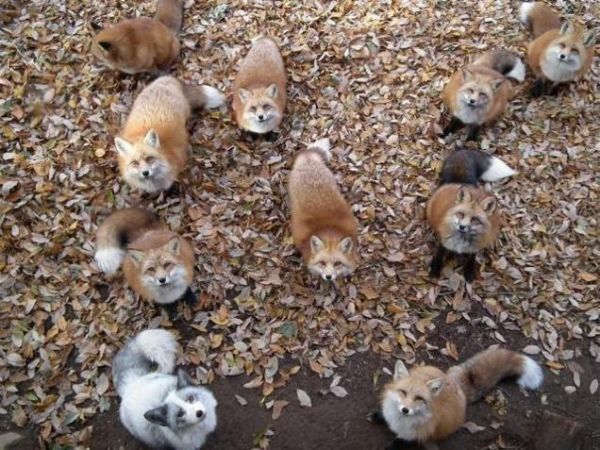
The Japanese Village of Foxes

Japan has a Cat Island and a Rabbit Island, and now it also has a village of foxes! Zao Fox Village is a sanctuary with six different breeds of foxes, and is open to the public in case you want to get up close and friendly with the inhabitants. However, the staff does not recommend touching them, feeding from your hand, or bringing small children. After all, foxes are wild predators. You'll still find some folks bending the rules. See a ton of pictures of Zao Fox Village at Kotaku East. -via Fark
(Image credit: moke_x2)
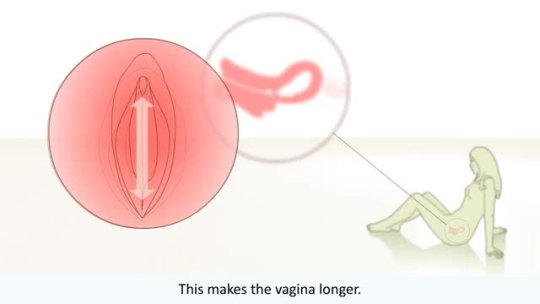
How to Make Breakfast With Your Vagina
But it was a beginning
7 world-changing inventions people thought were dumb fads
In 1879, Henry Morton, a leading scientific mind and president of the Stevens Institute of Technology, called one man's tinkering a "conspicuous failure." The man was Thomas Edison. The invention was the light bulb.
That was obviously wrong, and the light bulb turned out to be a solid invention. But Morton's statement was also revealing. Sometimes it's genuinely difficult to know whether new inventions will be duds or hits. Who knows — maybe our grandkids will come to love Google Glass, Segways, and Dippin' Dots.
Morton's pronouncement shows just how hard it is to predict the future. In his case, he didn't doubt that Edison's lightbulb was useful. His main objection was that there was no way to carry electricity long distances and get light bulbs in every home (even Edison couldn't figure that out on his own.) Forecasting the fate of a new invention often means forecasting broad social and technological changes — and that's incredibly hard.
With that in mind, here's a look at seven other important inventions — from the bicycle to nail polish to the answering machine — that had their doubters early on. There's a lot to learn from wrong predictions:
1) Bicycles: "The popularity of the wheel is doomed"
Critical mass, 1890s-style. (Leemage/Getty Images)
Today, we think of bikes as a major source of transportation, but they started out as a trendy fashion statement. That's why some critics were skeptical that they'd stick around (spoiler: they did).
Bikes had a rapid rise: on August 20, 1890, the Washington Post called bicycling a hot fad for fancy ladies and not just for the "bleached-haired, music-hall type" anymore (read: hipsters). The craze was driven by improved technology, as big-wheeled bikes became closer to the ones we use today. The bicycle's growth was so rapid that on February 29, 1896, the Washington Post called bicycling the national sport.
But then the fad faded. On August 17, 1902, the Post called bicycling a passing fancy, and experts declared "the popularity of the wheel is doomed." Critics thought bikes were unsafe, impossible to improve, and ultimately impractical for everyday use. On December 31, 1906, the New York Sun rendered its verdict: "As a fad cycling is dead, and few individuals now ride for all the good they claim to see in the pastime when it was fashion."
The Sun turned out to be wrong. Over the years, bikes acquired better tires, and sturdier frame. America's roads also got smoother. That made bicycles an increasingly practical option — and not just a passing fad.
2) Automobiles: "The prices will never be sufficiently low"
An early automobile racer. (New York Historical Society/Getty Images)
In 1902, the New York Times called the automobile impractical — and they had a few good reasons why. In the wake of the bike fad of the 1890s, reporters and analysts were wary of the "next big thing" in transportation. As one critic put it:
Automobiling is following the history of cycling with such remarkable closeness in almost every detail, both as a sport and an industry, that the question is often asked if the present period of expansion will be followed by a collapse as complete and as disastrous as was that of the cycling boom of a few short years ago.
The Times complained that the price of cars "will never be sufficiently low to make them as widely popular as were bicycles." It didn't help that some of the early proposals for an auto-centric transportation system were outlandish. In 1902, The Steel Roads Committee of the Automobile Club of America was angling for a steel highway system. Bizarre proposals like that made it harder to believe the car would ever make it big.
But it did. Once Henry Ford perfected the mass production of automobiles, the price came down and cars took off, eventually becoming the dominant form of transportation.
3) Liquid nail polish was a "strange and unique fad"
Nail polish shame: where it began. (Library of Congress)
In 1917, Cutex invented the closest thing to modern mass-market liquid nail polish. But it took a while for nail polish to hit the mainstream. In 1927, the New York Times reported on it as a "London fad," and the year before, writer Viola Paris took to the pages of Vogue to assess the new invention. "There seems to be some doubt," she wrote, "in the minds of a great many women as to whether nail polish is in any way harmful or, at least, not so good for the nails as the powder or paste polish."
As late as March 31, 1932, the Atlanta Daily World questioned how long colored fingernails could possibly stick around. "Dame fashion, whimsical and wayward as the wind," the paper snarked, "has so many strange and unique fads that her latest vagary, that of tinting the fingernails...has become quite popular."
Ultimately, nail polish wasn't just a passing fancy. Better manufacturing processes, a new age of mass marketing, and clear advantages over powders and pastes helped it stick around.
4) Talkies: "Talking doesn't belong in pictures"
Joseph Schenck, pondering the future, silently. (Hulton Archive/Getty Images)
In 1928, Joseph Schenck, President of United Artists, seemed confident about one thing: talking pictures were a fad.
He told The New York Times that "talking doesn't belong in pictures." Though he conceded that sound effects could be useful, he felt that dialogue was overrated. "I don't think people will want talking pictures long," he said, and he wasn't alone.
In 1967, actress Mary Astor recalled the mood when the silent era drew to a close. She wrote, "The Jazz Singer was considered a box-office freak," and that talkies were "a box-office gimmick." In an early talkie screening, she and her colleagues thought "the noise would simply drive audiences from the theaters... we were in an entirely different medium."
In the end, however, talkies proved out to be more compelling than the old mediums. Audiences adjusted, audio-recording technology improved, and a new generation of Hollywood bigwigs embraced dialogue.
5) Cheeseburgers: "Typical of California"
Actress Gwen Lee eats a burger in California in 1930. (Hulton Archive/Getty Images)
Most sources credit Lionel Sternberger with inventing the cheeseburger in 1934, though there's a lot of debate. Regardless of who came up with it, the notion of beef and cheese was initially regarded as a crazy California novelty rather than as a revelation.
The first time the New York Times wrote about cheeseburgers in 1938, they ranked the burgers as a Californian eccentricity, putting them third in a list along with nutburgers, porkburgers, and turkeyburgers. In 1947, a Times writer actually deigned to try a cheeseburger, albeit skeptically:
At first, the combination of beef with cheese and tomatoes, which are sometimes used, may seem bizarre. If you reflect a bit, you'll understand that the combination is sound gastronomically.
In the end, plenty of people agreed that the cheeseburger was "sound gastronomically." And once fast food chains — like McDonald's — included it on their menus, it was guaranteed a place on the American plate.
6) Answering machines: "In the beginning, it was pure yuppie."
In 1970, this machine was slick. (Science and Society Picture Library/Getty Images)
It didn't take long for people to see how answering machines could be useful. But when they were first introduced, it seemed like the telephone companies would squash them in favor of their own hardware and services.
In 1973, a story about the bourgeoning voicemail phenomenon noted that answering machines weren't even allowed in most homes. Robert Howard, a spokesman for the New York Telephone Company, claimed that illegally installed machines posed a hazard to line repairmen. Since the 1940s, most companies had banned them, and AT&T said "there is no need for the device."
Even once answering machines moved from quasi-legal purgatory in 1975, thanks to an FCC decision, the devices were still seen as a niche yuppie annoyance. That might be why it took until 1991 for the New York Times to reluctantly accept answering machines with a telling headline: "For Yuppies, Now Plain Folks Too."
The answering machine made it big because technology, laws, and telephone culture changed. Answering-machine technology became easier to manage and answering services faded away.
7) Laptops: "Was the laptop dream an illusion?"
1987's laptops were a work in progress. (Science and Society Archive/Getty Images)
In 1985, the New York Times reported on the tragic demise of a once promising trend — laptops, the newspaper said, were on their way out. From now on, airplane tray tables would hold beers and cocktails instead of computers.
The Times doubted the potential of laptop technology, and with good reason: they were heavy, pricey, and had poor battery life, all of which made it hard to imagine them becoming mainstream.
It was a reasonable complaint, but short-sighted:
The limitations come from what people actually do with computers, as opposed to what the marketers expect them to do. On the whole, people don't want to lug a computer with them to the beach or on a train to while away hours they would rather spend reading the sports or business section of the newspaper. Somehow, the microcomputer industry has assumed that everyone would love to have a keyboard grafted on as an extension of their fingers. It just is not so.
Laptops took a few more years to become practical, but technology improved enough that the laptop became lighter, more durable, and easier to use.
John Oliver returns, takes dead aim at pharmaceutical companies
We’ve missed John Oliver. His three-month hiatus left us remiss, without that vitriolic indignation we’ve come to associate with Sunday nights.
But Oliver returned last night and spent 20 minutes slowly boiling our blood over one of the most insidious, rapacious industries ever invented: Pharmaceuticals.
Oliver points out that pharmaceutical companies spent $24 billion marketing to doctors in 2014. Think about what that means for a second: Each month you’re required by law to shell out for medical insurance, only to have your doctor inevitably prescribe the drugs he’s been marketed, just so that you can be charged thousands for them when your health insurance inevitably denies your claim. Big pharma gets rich on the purchase, insurance gets rich by collecting your money and denying the claim, and your doctor gets (kinda) rich by doing his job—the job he’s paid to do by insurance companies and pharmaceutical companies. The only one getting screwed is you.
Let John Oliver infuriate you for 17 minutes:
[h/t Vox]
«Ferrol Vello», de Roger de Flor e Os Silvestres, ya está en Youtube
FERROL360 | Lunes 9 febrero 2015 | 11:23
La ferrolanísima versión del Dirty Old Town que han grabado Roger de Flor e Os Silvestres se puede ver y escuchar online desde la pasada semana. Esta adaptación del tema de Ewan MacColl que popularizaron los Pogues está a punto de alcanzar las 2.000 visualizaciones a la hora en la que publicamos este artículo.
Es el duodécimo videoclip en la carrera de Roger de Flor, que ha querido contar de nuevo con Os Silvestres y un buen puñado de amigos para poner cara y escenario a esta canción que habla de amores pasados y juergas tabernarias.
Los músicos Carlos Mosquera, Juan Padín y Carlos Marca, las actrices Helga Méndez y Desiré Pillado o el pintor Leandro Lamas. Todos ellos se han metido en la piel de marineros, putas y fauna portuaria, con el lamentable estado del barrio como telón de fondo y las tascas del muelle como refugio.
«Trátase dun traballo cálido, humano e esperanzador, situado nun contexto ruinoso» dice Roger al pie del vídeo, que se presentó oficialmente el sábado 10 de enero en el Carvalho Calero y que nos sirve de adelanto del disco que Roger y Silvestres nos presentarán este 2015. Esperamos ansiosos.
O éxito da cervexa artesá crea riqueza no país
Infalible no hay nada
Hola, esta es la cara que se me queda cada vez que leo cosasinfaliblesparafollarbien porque no es que yo haya follado mucho o poco pero algo sí y no hay NADA que se pueda hacer siempre porque siempre funciona, NA-DA.
Así sin pensar mucho, que respirar, pensar y amar son cosas que si te pones a hacerlas aposta van mal para todo, me he encontrado:
1. Un tío se enfadó mogollón conmigo porque le escupí (un gapo de saliva no de moco) en la polla antes de cascársela. Al anterior que se lo hice, le flipó.
2. Con todos los que he chuscado que les mola que les chupentoqueteen los eggs, me lo han pedido. Si no dicen nada lo más seguro es que no les ponga nada. A mí me pasa con las tetes, me produce la misma excitación que si me tocan las rodillas, ninguna.
3. Con algunos no sé todavía hoy, como no he hecho fuego al darle al manubrio. Con otros es más rollo “leve oscileo arriba/abajo” y otros ” recorrido congirodeglande”.
4. Paja con mamada como pre, paja sin mamada como post. No he tenido correcciones,ni objeciones PERO tuve un novio que le flipaba que se la chupara SOLO subiendo y bajando la cabeza, creo que nunca más lo he hecho porque cansa mazo.
5. Culpo a Californication de casi tener una denuncia por dar un puñetazo en la cara a un tío al irme a correr. Nunca mais.
6. Jamás he estado con ninguno que quisiera que le metiera un dedo en el culo, le meara o algo así pero si he temido que me lo hicieran a mí por confundirme con otra del blog.
7. El sexo anal y follar a cuatro patas es de pollas pequeñas. A ver, tranquilidad, que pequeña no es micro pene PERO.
8. Arcada for eva, si te la vas a comer, hasta atragantar. TODOS.
9. Dirigirles la cabeza cuando te comen el coño. TODOS.
10. Con buena polla bien se folla, mmmmm…NO. Follar no es solo meter y sacar y las anaconda es el típico ejemplo de “cuidado con lo que deseas”. Mal.
Moraleja: Titis, lo que a ti no te mola, a otro le flipa, por eso tus ex tienen pareja y todos somos el ex de alguien. ^^
No os olvidéis de votarnos, por fa http://lablogoteca.20minutos.es/yo-folle-contigo-48079/0/


.jpg)
.jpg)
.jpg)
.jpg)


(