[body_image width='1500' height='1000' path='images/content-images/2015/03/17/' crop='images/content-images-crops/2015/03/17/' filename='hey-americans-please-stop-pretending-to-be-irish-317-body-image-1426611677.jpg' id='37067']
Photo via Flickr user Timothy Krause
Today is St. Patrick's Day, and I'm hungover. The reason I'm hungover today, as opposed to tomorrow, is that over the years I've learned that being hungover on March 18 comes with a particular type of regret. A regret dipped in green and stinking of shit, vomit-sprayed and cackling various Pogues songs at the end of my bed. But today my hangover is run-of-the-mill—I've learned over the years to drink like a professional on the 16th and avoid today's whole pissing-yourself madness.
That I'm hungover, anyway, on what's still just a Wednesday (when I knew I'd have to be up at 6 AM to write this) tells you I'm not opposed to inappropriate drinking. I, like anyone, enjoy the occasional pint of vodka—yet I resent the fact that, just because I'm Irish, I'm expected to take part in what's essentially a vomiting contest between idiots too thick to tell the difference between real and fake culture.
Even in Ireland, St. Patrick's Day is fake culture. Though the idea of celebrating our country is a great one, distilling our myriad contributions to the world to a pint of Guinness and parades of people in stupid costumes not only undermines the concept of paying tribute but also points to a basic misunderstanding of what's good—for starters, parades are shit.
I say this as an Irish person, sitting here in Ireland: My own country doesn't know how to pay tribute to itself. With a tremendous tradition in resisting oppression, and a disproportionate contribution to great art, the best we can come up with is the same Guinness-and-parade bullshit you have. It's a shame, America, that of all you could've inherited from us, you choose our excessive drinking and this kitsch celebration of nothing.
I should make clear that, unlike me, most Irish people like St. Patrick's Day. A day off work and an excuse to drink—what's not to like? But we're all universally baffled as to why you'd celebrate this, our national holiday, with such vigor. Though we respect your many Irish-American communities, and applaud their contribution to the American way of life, we sometimes regard them as more outwardly Irish than ourselves and therefore a bit cringeworthy.
Admittedly, our knowledge of them comes mainly from films like The Fighter and The Town, so maybe we've the wrong impression.
[body_image width='1500' height='1160' path='images/content-images/2015/03/17/' crop='images/content-images-crops/2015/03/17/' filename='hey-americans-please-stop-pretending-to-be-irish-317-body-image-1426611416.jpg' id='37060']
No, you've got the right impression. Photo via Flickr user Jamie McCaffrey
But it's not just the Irish who are fascinated when you Americans over-identify with your ancestral roots. When you call yourself Italian or German, it baffles Italians and Germans too. Why can't you just identify as American? For a country that waves a lot of flags and considers anything but blind patriotism in politicians an act of treason, the contradiction at the heart of your identity frustrates us. We're aware of your flaws—your wars and shitty sitcoms—so when you don't identify as American, it seems like you're trying to shirk responsibility for what your country has inflicted on ours and, in effect, have us shoulder the blame.
But your shittiness isn't unique. God knows every country has its own problems. In fact, being proud of America as an American is, theoretically, admirable—as is the concept behind your society. A place where Italian people can mix with Irish, Polish with Russian, is the dream of every openminded person. But aren't these communities generally isolated from each other and obsessed with ways of "the old country"? It strikes me that this has less to do with keeping traditions alive and paying tribute and more with being scared.
The irony is that, in Ireland and the UK, pretty much every kid wants to be American at some point. Your culture looms large over ours—Cadillacs and open roads, Clint Eastwood and Jimi Hendrix, the Empire State and Alexi Lalas. Americanism is the height of cool, and that you wouldn't want to identify with it is only as strange as why you'd want to identify with us.
[body_image width='1500' height='1001' path='images/content-images/2015/03/17/' crop='images/content-images-crops/2015/03/17/' filename='hey-americans-please-stop-pretending-to-be-irish-317-body-image-1426611425.jpg' id='37061']
The American flag waves over the Chicago River, dyed green for St. Patrick's Day. Photo by Jamie McCaffrey
But it goes deeper than that, doesn't it? Though there are certainly millions across America right now cranking U2 and thinking of long-lost relatives swimming in Galway bays, there are many more with no relation to Ireland whatsoever jumping on this St. Patrick's Day bandwagon just because it's an excuse to get drunk. Which is fine—getting drunk is great—but appropriating a culture in such a cartoonish, willingly blind way points to something more troubling than that hangover you'll have in the morning.
Though I may be wrong, it seems like there are so many different sections of America that a communal whole is no closer to existing than it ever was, and until you realize that boundaries not just between races but different cultures need to be broken down more, you'll always have an excuse to hate not only other countries but each other.
Speaking specifically as an Irish person—there are many reasons why you mightn't want to appropriate our culture. Historically, our country is a shambles. Repressed by the British and Catholic Church for centuries, we drink for a reason much more tragic than partying—we drink to cope, and learned how to do this (and to empower ourselves through drunken feats of masculinity) at a time when we were too poor to eat, too controlled to open up, and too indentured to own land.
That we still do it on such a large scale is more a crime than a celebration, and at least here, St. Patrick's Day is the public holiday equivalent of a crying clown.
When you come here on holiday, America, and drink Guinness in tourist pubs, you must surely know that what you're seeing has been created for the purposes of taking your money. The real Ireland exists in places you often don't go—Dublin's north inner city, the suburbs, regional towns full of hardworking people who want what you want: kids, houses, happiness. These are the places you'll find people you can bond with, not the cartoonish, exotic beings who haunt tourist spots like Temple Bar. Frankly, an Ireland removed from the quiet everydayness that spawned our true wonders—Samuel Beckett, James Joyce, Roy Keane—isn't one worth knowing.
At the same time, we go to Disneyland and Times Square. Most of us are only just getting into the NFL, and hardly any of us have read Moby-Dick. So our understanding of your culture is probably just as bad .
Maybe all we want when we visit a place or celebrate a culture is exactly what we expect—our own version of it. Maybe realness doesn't interest us because everything comes with downsides, things determined to kill our buzz.
Follow James Nolan on Twitter.

Os cinco socios traballadores do Numax dentro da sala de proxección.
O cinema volve por fin ao centro de Santiago coa apertura de Numax que mañá, 18 de marzo, ás 12:00 horas proxectará a súa primeira película. Será o filme Nubes pasaxeiras do finlandés Aki Kaurismäki, director que visitou por sorpresa Santiago o pasado venres para apadriñar o proxecto.
Numax, que conta cos últimos estándares de proxección dixital, é a única sala independente de Galicia que traballa únicamente con películas en versión orixinal subtitulada. Algunhas delas en galego gracias a un acordo coa Secretaría Xeral de Política Lingüística.
O cinema compostelán conta con 70 butacas e proxectará entre 6 e 8 filmes diferentes cada mes – o que supón unhas 120 proxeccións en total- divididos en tres seccións: ‘Estreas’ (cos filmes máis recentes da carteleira), ‘Repertorio’ (con algúns dos maiores clásicos da historia do cinema) e ‘Ollos verdes’ (dando espazo a aqueles traballos de directores máis descoñecidos).
O Numax estará aberto de martes a domingo con sesións cada día ás 12:00, 16:00, 18:00, 20:00 e 22:00 horas. As películas poderanse consultar na páxina web www.numax.org (operativa desde mañá), onde tamén se poderán comprar as entradas. O prezo xeral será de 6,20 euros, se ben as sesións das 12:00 custarán 4,80. Este prezo reducido tamén se aplicará a maiores de 65 anos, menores de 18, estudantes menores de 25 e desempregados. Ademais, ofrecen a posibilidade de adquirir abonos por 30, 120 ou 500 euros ao ano, logrando así diferentes descontos.
Tamén libraría e laboratorio de imaxe
O local, situado na rúa Concepción Arenal, conta tamén cunha libraría con 3.000 volumes de fondo inicial, e un estudo de deseño gráfico e produción audiovisual. Ademais, a través de Numax Distribución, ocuparanse de estrear en salas de cinema de todo o mundo algúns dos filmes máis interesantes do panorama internacional. Farannno este ano, por exemplo, en diferentes cidades de España coa película Los Hongos, do colombiano Óscar Ruiz.
O proxecto Numax conta con cinco socios traballadores, todos eles procedentes de diversos ámbitos da creación e difusión cultural: Xoan Carlos Hidalgo, Antonio Doñate, Pablo Cayuela, Ramiro Ledo e Irma Amado. Ademais dunha socia colaboradora, Margarita Ledo, catedrática de Comunicación Audiovisual na USC.
The post O cinema Numax abre as súas portas en Santiago con 120 proxeccións ao mes appeared first on Pincha(e)Discos.

Author, comics legend and uncanny futurist Warren Ellis has gifted us with his insight into your pressing questions about the coming days of tech, free speech, the music industry, space travel, which Earthbound species is most likely to have alien origins, and much, much more.

Sé lo que se siente. Hubo un día en tu vida que eras feliz buscando la imagen única y bella; pero te metiste en el ajo y descubriste que sin un proyecto fotográfico no eras nadie. Ya hemos hablado aquí de eso. Si estás enfrascado en la elaboración de un proyecto fotográfico puede pasarte que no sepas ni cómo empezar porque simplemente no tienes nada que decir. Ocurre especialmente con los proyectos íntimos y personales; tienen esa miga: que a ver cómo plasma uno sentimientos como el olvido, el pesar por el paso del tiempo, el amor, la soledad, la alienación, el desconsuelo periférico, etc. De nuevo el bloguero de turno no nos va a dar soluciones, sino deprimirnos más.
Lo primero tranquilidad. Ya os hemos dado formación para salvar el tipo con la técnica y con el concepto. Ahora vamos a por el motivo. Tienes que saber que, a día de hoy, hay determinadas fotos que tienen que estar incluídas en un proyecto fotográfico, sea éste del tipo que sea. Son las fototópicas. ¡No confundir con fotocopias! (Aunque en el fondo sea copiar sin criterio). Las fototópicas son fotografías que se han hecho desde la aparición de las primeras cámaras, pero que se siguen haciendo hoy simplemente porque son imágenes icónicas que siempre van a funcionar. El detalle de que estas fotos se hayan tomado toda la vida no te ha de preocupar, porque esto puede no saberlo quien se las enseñas: el galerista, jurado, editor, visionador de turno, etc. Las fototópicas son como el pan de gambas de los chinos: no pueden faltar aunque sabemos que seguramente pecan de rancias. Para combatir eso, tú les vas a dar un aire más actual, como os voy a mostrar.
Aclarar primero que para ejemplificar, tampoco he querido ir muy allá. Me he circunscrito a fotógrafos españoles de rabiosísima actualidad. Es decir: los que probablemente salgan en la próxima tirada del libro de Momeñe; esa que se comenta que está a punto de salir; una actualizada edición ilustrada que ya incluye fotógrafos que nacieron después del año de Naranjito. Hay que apoyar la fotografía española, qué cojones.
Bien. Estas son las fotos que tienen que estar en tu trabajo, sí o sí:
– El descampado periférico.
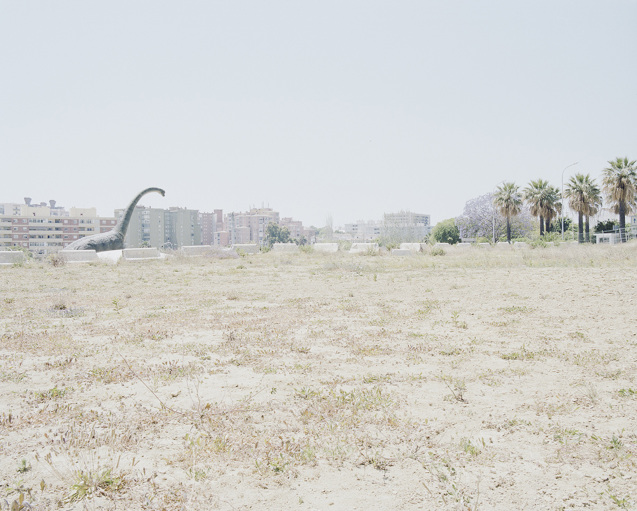
Pablo Castilla
– La ruina o edificio abandonado.

Eduardo Nave
– La tropelía urbanística.

Carlos Spottorno
– El cuadro antiguo en la pared.
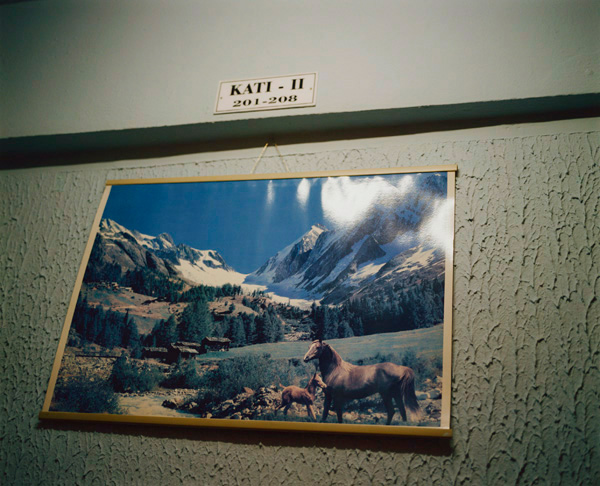
Ángel de la Rubia
– La foto rescatada del álbum familiar.
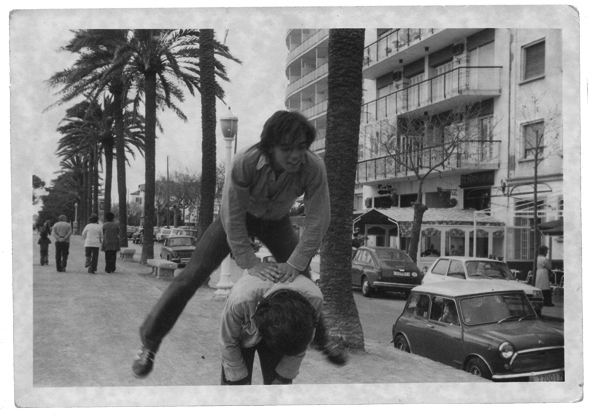
Rita Puig-Serra
– El aparcamiento vacío.

José L. de la Parra
– El bicho muerto. Si está esclafao, mejor.

Ricky Dávila
– El animal disecado.

Yosigo
– El gatete. Nunca nos fallan estos tiernos felinos.

Alba Yruela
– El “bujero”.

Martínez Xouvanoba
– La bandada de pájaros en vuelo, siniestros o al menos desconcertantes. En el primer ejemplo, Moriyama se hace presente…
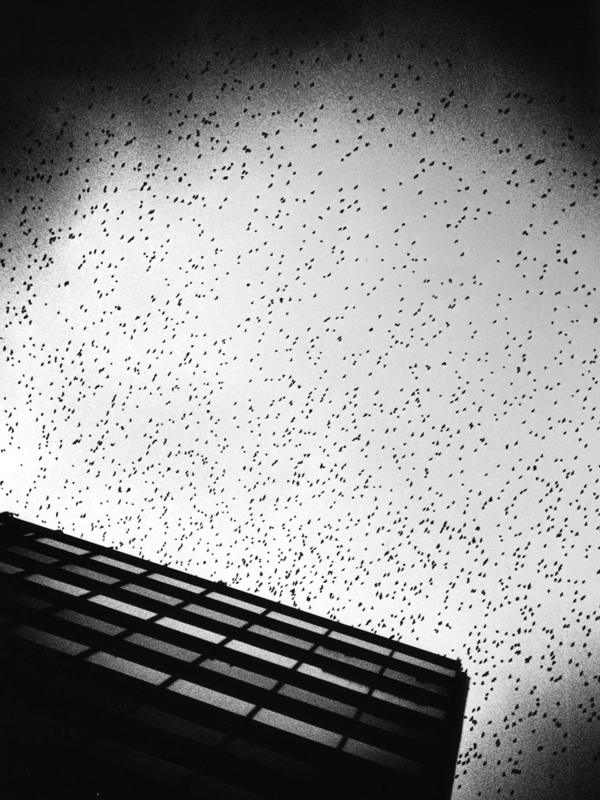
Daniel Alvárez
…mientras que en este se aprecia que la sombra de Cases ya es alargada.

David Hornillos
– La desolada zona boscosa.

Miren Pastor
– La farola nocturna al estilo Eggleston. También nos van muy bien los arbustos iluminados en la noche (el flash o el faro de coche es ideal). La foto del ejemplo hubiera mejorado muchísimo con un poco de niebla. Vuelva a hacerla, Martínez; no le tenga miedo al relente.

Pascual Martínez
– Los cielos bíblicos a lo Salgado.

Vizcaíno
– El perro oscuro, triste y/o huidizo a lo Koudelka. Olvidaos de los perretes de Elliott Erwitt.

José M. Navia
– La cama sin hacer. También nos vale la mesa sin recoger o sin empezar a comer, al estilo Shore.

Román Yñán
– La desolada gasolinera. Inspírate por ejemplo en Ed Ruscha.

Nave y Millás
– La carretera a ningún lugar. Este motivo se repite entre los grandes. Hay que hacerlo.

Carla Andrade
– El cielo estrellado o similar (caspica o azúcar sobre cartulina negra nos puede valer).

Javier Marquerie
– El campo que alberga objetos imprevistos.

José Guerrero
– La persona inquietante tras la ventana (a lo Robert Adams) o tras la cortina.

Juan C. Martínez
– La valla ocultadora.

Carlos Cánovas
– Las grietas, piedras o suelos fracturados. No temas meter más de una foto. El autor del ejemplo tiene un trabajo entero de bloques de un solar, equilibrado a su final con dos esperanzadoras imágenes celestes.

Xavier Ribas
– El bodegón minimalista a lo Kertész o a lo Chema Madoz.

– El vehículo abandonado en el descampado. También vale coche en lugar no usual.

Gerardo Custance
– Retratos con alguna de las características que ya expusimos en nuestro decálogo.

Bubi Canal
Hay proyectos que llegan a tener casi todos los motivos aquí expuestos. Son casos excepcionales, trabajos cuasi perfectos. Como Durmiendo por el Mississippi del copiadísimo Alec Soth u otros de Jeff Wall o Stephen Shore (en American Surfaces encontraréis multitud de los arquetipos domésticos mencionados). Pero por seguir con autores españoles contemporáneos, citaré Aquí estamos de Aleix Plademunt porque alberga casi todos los fototópicos citados.
Un último detalle que seguro que os animará a salir a fotear: no os hacen falta personas en las imágenes. Salvo en el caso obvio del retrato, observaréis ausencia de gente en muchos de los patrones citados. Es sorprendente, porque para ser fotógrafos que no paran de interactuar en las redes sociales, hay que ver con qué pocos humanos se cruzan en su camino. Se ve que todos son admiradores del gran Atget.
Seguro que se os ocurren más fototópicas a vosotros. ¡Adelante con las propuestas en los comentarios!


Miguel Brieva tiene un quitamanchas edición especial, con el que limpia las palabras pervertidas y las deja del revés. Ha rociado “emprendedor”, ha pasado el trapo y le ha salido “emperdedor”. “La idea de emprendedor es tan falaz y tan irreal, que el emperdedor es su mejor retrato”, explica a este periódico. “Una sociedad no se puede fundamentar en ese anhelo. Es el mito con el que se llenan la boca los políticos. El señuelo: tú sigue comiendo yogures, que algún día te toca”.
El juego de palabras es marca de la casa y en este caso, además, un revés en la línea de flotación de ese cuento chino que empieza en un garaje y acaba en una tienda en el edificio del Tío Pepe, en la Puerta del Sol. Acaba de publicar un “diario de un joven emperdedor”. Lo ha titulado Lo que me está pasando (Reservoir Books), pero podría haberlo llamado Lo que está pasando. Ya saben: paro, paro, paro y mucha depresión.
Paseamos por la calle con Brieva porque se ha metido en su primera novela gráfica y es un relato callejero, de plaza y parque. De personas que se buscan la vida en medio del hundimiento. Nadie está libre de caer, pero nadie está incapacitado para levantarse. Éste es un retrato optimista de la miseria de estos días, que ha traído un nuevo ciclo político y social dispuesto a decir “no”.

Cuenta que Víctor, el protagonista, prueba todos los trabajos que se le ponen a tiro. Todos, basura. Prueba a vivir en otra realidad para salir de esta, escapar para evitar el dolor y la incomprensión de un mundo cada vez más extraño y desabrido. Y alucina, en colores. Seres que se le aparecen, formas que ocupan la ciudad, fantasías para resquebrajar la realidad.
Brieva acude a una cita del músico Frank Zappa: “La realidad no es más que una alucinación colectiva”. Y otra de G.K. Chesterton: “Loco es aquel que lo ha perdido todo, salvo la razón”. Una de Hunter S. Thompson: “Si vas a volverte loco tienes que conseguir que te paguen, o si no acabarán encerrándote”. “La imaginación es libre. El hombre, no”, de Luis Buñuel. Con cada nueva entrada del diario de Víctor, el autor introduce una de estas citas y unos minerales peculiares y propios de esta espesura: “pirita traumansis”, “barita ansiosoide”, “dolomita somnoliense” o “frustracita común”.
“Podría haber contado lo que es una persona y cómo se deprime, porque está en el paro. Me interesaba sacarle punta a otras aristas”, avanza al hablar de un libro que es mucho más agrio que el resto de sus trabajos. La ironía aparece en destellos muy contados. Si han leído a Brieva en Dinero, Bienvenido al mundo, El otro mundo, Memorias de la tierra, etc. encontrarán otra cosa, “pero es que el contexto no es gracioso, es un tema que no podía abordarlo desde el humor”.
Lo que me está pasando está contado desde ahí, desde la primera persona, con recursos gráficos mínimos, limpios y contundentes. Blanco y negro sobre un papel que simula pergamino y toques de color justos para subrayar. Sobre todo, cuando el personaje sufre los desvaríos. Las alucinaciones coloreadas, para indicar que está en su mundo.

“Es que sus desvaríos son su única válvula de escape para escapar de su frustración. Es una sociedad esquizofrénica. Ciertos comportamientos locos tan vez sean la postura más cabal. ¿Cuántos han estado fuera de esa cordura y han sido capaces de hacer algo por este mundo?”, pregunta sin esperar respuesta. Y dispara un titular: “En este momento sólo la imaginación puede salvarnos. La tecnología no va a ser”.
Por eso no es un libro de realismo social, por eso es un libro político aunque no politizado. Por eso ha imbricado realidad con escapismo fantástico, para mostrar que “la depresión y todas estas patologías que se achacan a un fracaso individual no se puede vivir de modo personal, porque su fundamento es un gran fracaso social”. “Sólo mediante la acción política podemos solucionarlo. No tomando antidepresivos ni encerrándonos en nosotros mismos, sí uniéndonos a los demás”, añade.
En nuestro paseo hablado hemos llegado hasta el Parque de la Cornisa, junto a la Iglesia de san Francisco el Grande, en Madrid. Brieva ha elegido este lugar para montar una batalla campal de vecinos contra autoridades, que defienden la decisión política de acabar con el parque. Aunque en el cómic no aparezca, esta escena se inspira en la construcción del Mini Vaticano que se ha logrado parar gracias a la lucha vecinal. La gente del barrio defendiendo lo suyo. Un buen final para cualquier historia.

Chinese cuisine, like that of any country, consists of a wide variety of available foods turned into dinner with a wide variety of recipe the family cook -or restaurant cook- knows. America has a tendency to adapt and change world cuisines to suit our own tastes. That’s not always a bad thing. As we saw in a recent video, just because a recipe isn’t “authentic” doesn’t mean it isn’t good. So there’s Chinese food and there’s Americanized Chinese food. How did they come to be so different? It was a series of steps over a long period of time.
The first Chinese restaurants in America served authentic Chinese dishes with modifications borne from necessity. They were known as “chow chow” restaurants, marked by triangular yellow flags and known for their cheap prix-fixe specials and all-you-can-eat dollar menus. The eateries were created by the Chinese for the Chinese, using local ingredients that were available to them. These substitutions occurred mostly in the vegetable department: broccoli for kailan; carrots, peas, and white button mushrooms in place of mustard greens or shiitakes.
The restaurants became a target of ridicule by Westerners who cringed at the thought of eating whole animals, poultry feet, and bird’s nest. Rumors spread that the Chinese were consuming rats and dogs. The restaurants were quickly dismissed as barbaric. The tide eventually shifted. Around the 1880s in New York City, a growing community of bohemian writers and intellectuals began to embrace the exoticism of the food (and readily welcomed chop suey’s 63-cent price tag).
But that’s just part of the story in An Illustrated History of Americanized Chinese Food. Even the fairly short article at First We Feast doesn’t tell the whole story, although it’s a good overview of a long process.
(Image credit: Albert Hsu)
FERROL360 | Lunes 16 marzo 2015 | 21:15
La reapertura de la antigua discoteca West Saloon, ubicada en un local de la estación de ferrocarriles de Ferrol, trascendió la pasada Navidad, pero ya hay fecha oficial para el acontecimiento. Cuatro años después del cierre del establecimiento nocturno, sus propios promotores ya anuncian el estreno para el próximo viernes 27 de marzo.
Será desde las 23:00 horas con una «primera función», ya que el recinto cambia su propuesta y pasa a llamarse «Burlesque West Theatre». Su horario irá de las once de la noche a las cinco y media de la madrugada. Sus responsables han anunciado en los últimos días que buscaban personal para trabajar las noches de viernes y sábado, orientando la oferta a mayores de 21 años.
Avanzan los trabajos de conversión de la superficie del antiguo West en el local titularidad de Adif. Ha sido necesaria una reforma de envergadura ante el estado de deterioro que presentaban tanto la fachada como el interior. Las actuaciones musicales serán parte del menú para su nueva etapa nocturna.
Publicidad


Os propietarios forestais de eucalipto, organizados en Galicia en torno a asociacións locais da Mariña e Ferrolterra, estudan presentar unha queixa ante as autoridades europeas de Competencia pola evolución do mercado do eucalipto no último ano. O sector dos propietarios pensa que Ence e as pasteiras portuguesas Celbi e Portucel chegaron a acordos para reducir o prezo do eucalipto na primavera pasada e para repartirse o mercado da madeira peninsular. Ence, pola súa parte, nega estas acusacións e asegura que no trienio 2012-2014 subiu o prezo que lle paga ós propietarios polo eucalipto nun 14,3 por cento.
O sector do eucalipto está a vivir un último ano convulso. Na primavera pasada, Ence decidiu recortar o prezo da madeira en 3,5 euros por tonelada pola baixada das primas gubernamentais á produción de enerxía eléctrica, unha medida que afectou directamente ás plantas de coxeneración de enerxía do grupo. Outras pasteiras baixaron entón o prezo da madeira en cifras similares, segundo os propietarios.
No outono, Ence pechou a súa planta de papel en Huelva e deixou só operativas en España as plantas de Navia e de Pontevedra. Ese peche levou a unha reconfiguración do mercado de eucalipto. Dúas empresas portuguesas, Portucel e Celbi, que estaban mercando eucalipto en Galicia, cesaron nas súas compras en parte da comunidade –principalmente na Mariña de Lugo- e aumentaron as compras de eucalipto no sur de Portugal, na madeira que deixaba libre o peche de Ence Huelva.
A saída das pasteiras portuguesas Celbi e Portucel preocupa entre os propietarios forestais, que temen unha baixada dos prezos do eucalipto a curto prazo. As asociacións forestais da Mariña, agrupadas en torno a Promagal, están a valorar a presentación dunha queixa ante as autoridades europeas de Competencia, xa que entenden que as empresas están a coordinar prácticas anticompetitivas que perxudican ós propietarios.
Evolución 2012-2014
As queixas dos propietarios forestais en torno ós prezos do eucalipto non son compartidas por Ence. O grupo asegura que, a pesar do descenso da primavera pasada, no trienio 2012-2014 subiu o prezo que lle paga ós propietarios pola madeira de eucalipto un 14,3 por cento. No mesmo periodo, os datos de prezos de mercado que elabora a Asociación Forestal de Galicia (AFG) amosan unha tendencia á estabilidade, con leves subas e baixas; se ben, os datos da AFG refírense ó conxunto do mercado, non a unha empresa en particular.
Ence liga o impacto da reforma eléctrica do Goberno coa baixada de prezos do 2014 e tamén co peche da súa factoría en Huelva, un peche que entende que produciu unha lóxica reconfiguración do mercado: “O cesamento da produción de celulosa en Huelva por parte de Ence eliminou a demanda de madeira da empresa no sur da península Ibérica. Esta situación motivou que fábricas portuguesas do sector da celulosa, situadas en áreas próximas a aquela zona xeográfica, orientasen cara a alí as súas compras de madeira, buscando aforros de custos loxísticos e deixando de aprovisionarse así no norte de Galicia”, explica o grupo en comunicado de prensa.
A compañía, por último, advirte de que no 2014 pechou o ano con perdas de 140 millóns de euros e declárase comprometida cunha boa remuneración da madeira: “Para Ence é unha boa e necesaria noticia que a produción de madeira estea convenientemente remunerada. A política de prezos ofertados por Ence para o aprovisionamento de madeira persegue dous obxectivos: por unha parte, facer competitiva a celulosa galega no mercado internacional. En segundo lugar, garantir unha retribución interesante para os propietarios e propietarias forestais, asegurando así a continuidade da actividade”, indica o grupo en nota de prensa.
A entrada O prezo do eucalipto enfronta a Ence e propietarios forestais apareceu primeiro en Campo Galego.

Can't remember when Sterling Archer hooked up with that Brazilian au pair, or if he made accidental penis contact with Conway Stern? Even for a devoted Archer fan, it can be difficult keeping up with Sterling's sordid affairs. Now there's a handy infographic to help sort it all out.


HBO's The Jinx tells the story of eccentric millionaire Robert Durst and his connections to three separate murder cases. The show's finale was scheduled for tonight, but the day before it aired, the news broke that its subject had been arrested in New Orleans. Soon after, The New York Times and AP revealed the crucial piece of evidence that could help convict Durst of the murders of his wife, his friend, and his neighbor — while conducting interviews with The Jinx's producers, the 71-year-old real estate heir apparently neglected to take off his microphone during a bathroom break. Alone in the room, he reportedly said he'd "killed them all, of course."
The Game of Thrones TV series has been a remarkably faithful adaptation of George R.R. Martin's fantasy series so far, but that will change when season 5 debuts on April 12th. But not every alteration from the books is a bad thing! Here are five storylines from the novels we won't miss at all.

On Christmas Day 2014, ZooAmerica, in Hershey, Pennsylvania, welcomed three baby Ringtails (Ring-tailed Cats). The two females were named ‘Holly’ and ‘Noel’, and their brother was named ‘Kringle’.
Photo Credits: ZooAmerica (Image 1: Kits at 5 weeks old; Image 2: 12 days old; Image 3: three weeks old; Image 4: Four weeks old; Image 5: Six weeks old; Image 6: Seven weeks old; Image 7: Eight weeks)
The three kits are now on exhibit with their mother, ‘Acacia’. They continue to spend a great deal of time in their nest box, sleeping or nursing; but they can also be seen, occasionally, out playing.
The kits will stay with their mother for about a year. They will then travel to other zoos, with the expectation of them staring families of their own.
The Ringtail is a mammal of the raccoon family. They are native to Central America, Northern South America, California, Colorado, eastern Kansas, Oklahoma, Oregon, Arizona, Nevada, Utah and Texas.
Much like the raccoon, they are nocturnal and solitary. The Ringtail is omnivorous, but their diet primarily consists of berries and insects, particularly in the spring and summer.Their coloring is buff to dark brown, with white under-parts and a flashy black and white striped tail that has 14–16 white and black stripes. The claws are short, straight, and semi-retractable. The eyes are large and black, each surrounded by a patch of light fur. The Ringtail is smaller than a housecat. It measures 30–42 cm (12–17 in) long to the base of the tail with the tail adding another 31–44 cm (12–17 in). It can weigh from 0.7 to 1.5 kg (1.5 to 3.3 lb). Ringtails have occasionally been hunted for their pelts, but the fur is not especially valuable.
Ringtails mate in the spring and have a gestation period of about 45 to 50 days. During this time, the male will procure food for his mate. They generally give birth to a litter of 2 to 4 cubs. The cubs will open their eyes after a month and will hunt for themselves after about four months. They reach sexual maturity at ten months. The Ringtail has a lifespan of about seven years, in the wild.
They are currently classified as “Least Concern” on the IUCN Red List.
Adapted from A Narco History: How the United States and Mexico Jointly Created the “Mexican Drug War,” out this spring from OR Books.
Ronald Reagan cast himself as a law and order man, ready to reverse the drug policies of Jimmy Carter, who indeed had pulled back from Nixonian fanaticism. Once in office, Reagan set up the South Florida Task Force to go nose-to-nose with the cocaine barons, whose airplanes had been dropping drug-bundles at sea, where they were picked up by fast boats and whisked ashore.
Headed by Vice President George H.W. Bush, the task force brought in the army and navy, and put Miami vice in its crosshairs. It worked. Surveillance planes and helicopter gunships throttled the hitherto wide-open Colombia–Florida connection. But the Colombians simply abandoned their direct shuttle service and increased the flow through their Mexican pipeline.
Soon, however, the Mexicans shifted from being simply a well-paid smuggling service to demanding and getting full partnership status. In short order kingpins Félix Gallardo, Fonseca Carrillo, and Caro Quintero were providing 90 percent of the cocaine pouring into the US market, and raking in an estimated $5 billion a year. In 1984, the DEA began referring to the triumvirate as the Guadalajara Cartel, echoing the by-then common reference to the Medellín and Cali Cartels.
In 1986, with the Iran–Contra scandal about to splash into public view and midterm elections approaching, Reagan turned up the volume of his drug war rhetoric. “My generation will remember how Americans swung into action when we were attacked in World War II,” he cried. “Now we’re in another war for our freedom.” He signed a National Security Decision Directive declaring drug trafficking a threat to national security. This permitted the US Department of Defense to get involved in a wide variety of anti-drug activities, especially on the Mexico-USA border.
Reagan also won passage of the 1986 Anti-Drug Abuse Act, which required the executive branch to annually certify that any country receiving US assistance was cooperating fully with US anti-narcotics efforts, or taking steps deemed sufficient on its own. (Thus did the US, the world’s largest consumer of illegal drugs, set itself up as judge of other countries’ progress on solving a problem the US could not.) If the country in question failed to measure up — and Mexico was an obvious target — it would be struck off from all foreign aid programs. Worse (particularly for Mexico), the US would oppose any loan requests that country might make to multilateral development banks (like the International Monetary Fund).
President de la Madrid (1982–1988) fell in line, declaring drug trafficking a threat to Mexico’s national security, and authorizing an expanded military presence in anti-narcotics efforts. He had little choice. Mexico had tumbled into a full-blown economic crisis. Certification, hence access to credit, had now become essential. In the course of wrestling with it, de la Madrid would begin to engineer a profound transformation in the country’s economy and polity, a transformation that would have major consequences for the organization of the drug business.
In the mid–1970s the United States had added to its woes of recession those of inflation, due in considerable measure to OPEC’s success in raising oil prices. To “whip inflation now,” the Federal Reserve Bank helmed by Chairman Paul Volcker began to raise interest rates, eventually driving the prime rate from 12 percent to 21 percent. By 1980 this had precipitated a far deeper downturn, which did lower inflation, but only by driving up unemployment to levels not seen since the Great Depression of the 1930s.
The recession Volcker engineered in the US had an even more devastating impact on Mexico, as the interest rate on rolling over its short term loans nearly doubled. By 1982, simply meeting interest payments would have required more than $8 billion per year. Worse, just as expenses soared, oil prices sagged.
Mexico made clear it could no longer make its interest payments. US banks were terrified. Thirteen of the biggest stood to collectively lose $60 billion if Mexico went under — 48 percent of their combined capital. And if Mexico fell, most of Latin America would come tumbling down behind it, likely triggering a collapse of the entire international financial system. The United States, accordingly, put together a multi-billion-dollar package of loans and credits, and worked out an unofficial debt moratorium.
The World Bank and IMF were wheeled in to provide Mexico with emergency loans with which to resume paying the US banks, rescuing them from their own recklessness. These institutions in turn — following the model first worked out in New York’s fiscal crisis in 1975 — now imposed “structural adjustment” on Mexico. The creditors demanded privatization of public services, cuts in government social programs, a wider opening to foreign investment, and a ruthless concentration on paying back loans and interest. This arm-twisting was given an ideological gloss, reviving hoary shibboleths about the inherent superiority of market over state, repackaged as “neoliberalism.”
Executing these demands fell first to President de la Madrid and then to his successor Carlos Salinas de Gortari (1988–1994). Both believed the state apparatus was a burden upon Mexican business that should be thrown off, along with much else in the Partido Revolucionario Institucional (PRI) inherited project and ideology. Structural adjustment prompted privatization, the opening of the country to foreign investment, and the reorientation of the agricultural sector towards exports.
The 1980s were known as la Década Perdida, or “lost decade,” wherein 800,000 jobs evaporated and dispossessed farmers streamed into urban centers. Salinas continued the policies, selling off large public enterprises at bargain basement prices. The process created a new class of Mexican tycoons. In 1987 there was one Mexican on the Forbes billionaire list. When Salinas left office in 1994 there were twenty-four.
Labor, conversely, was battered. When public enterprises were privatized their collective agreements were scrapped, benefits removed, “flexible” work rules imposed. Salinas also distanced the party from its long-affiliated labor unions, and ordered a series of attacks on more militant entities. At the same time, state subsidies that had kept the price of basic foodstuffs low were suddenly removed. The price of milk, tortillas, petrol, electricity and public transport shot up at the same time wages were being slashed. The provision of basic social services was similarly cut so that fewer people had access to free health care and education.
The neoliberal offensive was particularly devastating to farm labor, partly as a consequence of the establishment of the North American Free Trade Agreement (NAFTA) (which Salinas negotiated with George H.W. Bush, and which went into effect under Bill Clinton). A principal US condition for entering the agreement was that Mexico undo the agrarian reforms embedded in Article 27 of the Constitution, a principal legacy of the Revolution. Communal (ejido) land could now be divided and converted into private property. Price regulation of staple crops was scrapped. Tariffs and quotas on agricultural imports were removed. Subsidies that had supported small-scale farmers were deleted.
The results of establishing a putatively equal trade between grossly unequal partners was that US agribusiness pushed thousands of Mexican farmers out of their own markets. The price of corn dropped by around 50 percent after the NAFTA agreement, and the number of farmers living in poverty rose by a third. In the six years following the introduction of NAFTA, two million farmers abandoned their land. They flocked from country shacks to the burgeoning barrios of Mexico City; to the spreading slums of Tijuana and Ciudad Juárez to work in maquiladoras (assembly plants just across the border); and to the United States.
The crisis transformed the narcotics industry. Indeed it is impossible to understand the tremendous changes in the drug business during the combined sexenios of Salinas and Zedillo (1989–2000) without taking into account the massive political, economic, and ideological transformations wrought during that decade and the previous one by the PRI–governed state.
Farmers, unable to sustain themselves due to the removal of subsidies and the arrival of competition from US agri–corporations, found the burgeoning market for marijuana and poppies their only avenue to surviving on the land. The army of the urban unemployed gave the cartels a deep pool from which to recruit foot soldiers, and the miserably paid (and eminently corruptible) police and military provided the muscle with which to protect their interests.
The spread of everyday crime — aided by the rapid declension and corruption of local police forces — demoralized civil society, and provided a climate within which grander forms of criminality would flourish.
The adoption of free trade, and the deeper integration of the Mexican economy with that of the United States, dramatically increased cross-border traffic, making it far easier to insert narcotics into the stream of northward–bound commodities. Some NAFTA rules were of particular help: because maquiladoras were exempt from tariffs and subject to only minimal inspections, Mexican smugglers began buying up such factories to use as fronts for shipping cocaine.
Narcotrafficking had formerly been integrated into the PRI corporatist state, an under-the-table equivalent of labor, peasant, and business organizations. As such it was subject to a certain degree of regulatory control, and to unofficial taxation, in return for the de facto licensing of smuggling (the plaza system). The state’s abandonment of this form of corporatist inclusion contributed to the independent growth and power of organized crime syndicates.
The glorification of wealth and entrepreneurialism provided a cultural environment that boosted the social standing of narco businessmen. As in the former Soviet Union and other post-communist regimes, a neoliberal shock treatment simultaneously produced millionaires and gangsters, a twinning that Forbes registered by including them on the same list.
The weakening of the state and the glorification of “free enterprise” conferred authority and legitimacy on the private sector in which drug traffickers were now key players. As Peter Watt and Roberto Zepeda have argued, neoliberals prioritized accumulation of profit over social welfare, ruthless competition over cooperation, and the sanctification of private property and wealth over community and civic responsibility. These propositions — the cornerstones and guiding principles of free-market ideology — also formed the dominant ideology of crime syndicates.
Seven months after taking office in 1989, veteran drug warrior George H.W. Bush declared in his first televised address to the nation that “All of us agree that the gravest domestic threat facing our nation today is drugs.” He proposed spending billions on a militarized response. Salinas signed on. He approved a binational Northern Border Response Force to monitor the border, created the National Institute to Combat Drugs (INCD) modeled on the DEA, and permitted US Airborne Warning and Control System (AWACS) planes to fly over Mexican airspace to track drug-trafficking activity.
Bush had a specific request as well: Salinas was to (metaphorically) bring him the head of Miguel Ángel Félix Gallardo, chief of the Guadalajara Cartel. The kingpin was duly reeled in, and Bush certified that Mexico had cooperated fully in drug control efforts, praising in particular the arrest of Félix Gallardo.
But the decapitation of the Guadalajara Cartel — a centralized regulatory gangster regime supported by the PRI state — gave the “free market” its head. The consequences for the criminal sector would be even more disastrous than the havoc wrought in the legitimate economy by the larger neoliberal project.
At first, the lieutenants of the original cartel attempted to establish some ground rules. Following Félix Gallardo’s arrest in 1989, the sub-capos held a gangster summit in the resort city of Acapulco. The attendees were almost all members of the old Sinaloan narco tribe, long intertwined by ties of marriage, friendship, or business. They proceeded to parcel out production territories and smuggling routes to the US market, awarding themselves the plazas that had once been assigned by the now-defunct DFS.
The resulting organizations were called cartels, misleadingly, as they were in fact fragments of an exploded cartel — the byproducts of de-cartelization — and most were manned by descendants or associates of the original Guadalajaran trio.
As the 1990s unfolded, all these Mexican traffickers flourished as it proved impossible to resurrect the old relationship between subservient crook and dominant state. With the ascendancy of the cocaine trade, cartel profits had soared into the empyrean, and the amount of money they could now budget for bribery allowed the narcos to make irresistible offers — unrefusable when accompanied by threats of violence, as in the formulation plomo o plata (“lead or silver”): take the money or die. As neoliberal doctrine dictated, state regulation had been thrown off and replaced by a privatized regime, in which public officials were suborned on a piecemeal basis.
President Ernesto Zedillo, only too aware of the party’s peril, opted during his term (1994–2000) for some efforts at reform. The military increased its role, a policy strongly promoted by Bill Clinton’s appointed drug czar, Barry McCaffrey, a recently retired four-star general whose previous position had been as head of the United States Southern Command. Given the need to stay in US good graces, Zedillo followed suit. He established a five-year plan (the National Program for the Control of Drugs) that significantly widened the involvement of the (reluctant) armed forces beyond its sporadic participation in eradication programs.
Just as the PRI state was opting for militarization, so was the Gulf Cartel, the dominant traffickers in the northeast. In 1998, after a period of intra–cartel battling, one Osiel Cárdenas Guillén had murdered his way to the top. Cárdenas Guillén set out to create a Praetorian Guard. He turned for assistance to Arturo Guzmán Decena, a commander in the army’s elite Grupo Aeromóvil de Fuerzas Especiales (GAFE), Mexico’s equivalent of the Green Berets. GAFE had been given counter-insurgency training, and dispatched by President Salinas to crush the Zapatistas. Guzmán Decena left the barracks altogether, and signed up with Cárdenas Guillén.
He brought with him thirty or so GAFE colleagues and an arsenal of the army’s most sophisticated weaponry and surveillance equipment. Soon they had expanded beyond bodyguard duties to become the Gulf Cartel’s mercenary military arm, and dubbed themselves Los Zetas.
Meanwhile, in the western and central states, the fragmented organizations that had emerged after the breakup of the Guadalajara Cartel — the Sinaloa, Juárez, and Arellano Félix cartels — had fallen out and launched assaults and counter-assaults against one another. Now the streets ran red, with hundreds killed, tortured, and disappeared. At first Ciudad Juárez and Tijuana were the principal battlegrounds, but then the fighting expanded to adjoining states.
At the very same time that a centralized regulatory regime gave way to chaotic competition in the criminal underworld, the centralized one-party regime gave way to a competitive party system in the world of politics.
In 2000, Mexican voters were looking for a fresh face, and the National Action Party (PAN) provided one. Vicente Fox was put forward by a right-wing party, but he was not a hardline ideologue or a Catholic militant. Raised on the family ranch, he had earned a BA in business administration, buffed his credentials at Harvard Business School, and worked his way up to the presidency of Coca–Cola for Mexico and Latin America. Fox was forthright and folksy. His personality promised change. On July 2, 2000, he won the presidency with the support of a center-left coalition.
President Vicente Fox’s administration began on December 1, 2000. Three weeks later, on December 22, he went to Tijuana and declared war on the Arellano Félix Organization. Fox put the Arellano Félix brothers at the top of his hit list because they were the drug lords “most wanted” by the USA Eight months earlier, the Brothers had captured Pepe Patiño, an anti-drug prosecutor who had been working closely with the DEA and FBI. They tortured him by breaking virtually every bone in his body before slowly finishing him off by crushing his skull in a pneumatic vise. This galvanized US law enforcement.
Fox was eager to oblige, especially since his old friend George W. Bush — another cowboy-booted, plainspoken, rich rancher and former governor — had agreed to make the first foreign trip of his presidency (2001–2009) to Mexico. Fox had an agenda stuffed with asks — notably opening up the border, and winning legal status for the 3.5 million undocumented Mexicans working in the States — and he wanted to have his anti-crime credentials in order. But embarassingly, barely a week later and on the eve of Fox’s tête–à–tête with Bush, El Chapo Guzmán of the Sinaloa Cartel escaped from jail.
Within a week, Fox went to Culiacán, heart of El Chapo’s Sinaloan domain, and repeated his Tijuana in–your–face challenge, escalating it to countrywide status. Announcing a “Cruzada Nacional contra el Narcotráfico y el Crimen Organizado,” he declared “a war without quarter against the drug traffickers and the pernicious criminal mafias.”
The tough talk was enough to meet the immediate need. When Bush arrived in February, he expressed confidence that Fox was committed to fighting traffickers, and even admitted, with an unusual degree of candor, the obvious but uncomfortable fact that Mexicans were selling drugs north of the border because Americans were buying them.
But when Fox visited the White House in September 2001 — Bush’s first state visit — he was welcomed with open arms but empty hands. The dot com bubble had burst, and the US had sunk into a recession that dragged Mexico’s NAFTA–manacled economy down with it. Then, five days after Fox addressed a joint session of Congress, the Twin Towers came down, and his plea for a more open border became an instant nonstarter.
Worse, as Fox loyally pledged support for Bush’s global war on terror, a crackdown ensued on illegal crossings along the 2,000–mile–long frontier. This in turn exacerbated the crisis of the Mexican countryside, making it ever harder to get a cross-border job and send south the remittances that were the life support on which many devastated communities so depended.
Cooperation in the war on drugs became ever more central to Mexican-US relations. Fox quickly backed off a pre-election vow to withdraw the military from the drug war in order to avoid deepening the corruption of its general staff, and to comply with Mexico’s constitutional prohibition on using the military for anything but national defense. The US made clear it considered Mexico’s army its most reliable force, despite Fox’s 2001 arrest of generals who had been protecting gangsters.
The US backed strategy seemed to produce rapid results. On February 10, 2002, Ramón Arellano Félix was killed, and a month later, Benjamín Arellano Felix was captured. But the Tijuanos’ distress was duly noted by other drug lords, particularly the Sinaloans. In October 2001 they had held a summit meeting in Cuernavaca. Newly restyled The Federation, they debated plans for expansion into the far eastern plaza, centered in Nuevo Laredo (in the state of Tamaulipas), a lucrative and newly vulnerable border crossing, theretofore the exclusive domain of the Gulf Cartel. The daily, NAFTA–supercharged flow of freight cars and cargo trucks provided great cover for funneling narcotics into the US rail network and onto Interstate 35, the highway to San Antonio and points north.
The Federation decided to invade.
From the first skirmishes in 2003, the firefights on the streets of Nuevo Laredo grew steadily until by 2005 spectacular battles, deploying ever more sophisticated and deadly weaponry, had become commonplace. In July, after the rivals had wheeled out machine guns and rocket-propelled grenade launchers, American officials shut down the US Consulate.
The new levels of lethality appalled the Americans, but should not have surprised them as the iron river of armaments had been flowing more briskly, courtesy of the US arms industry and the Republican Party’s powerful right wing. Back during the Clinton Administration, an impediment to the southward flow had been put in place, when in 1994 Congress slapped a ban on the manufacture of semiautomatic assault weapons. Though scheduled to sunset in 2004, two thirds of Americans (among them President Bush) supported extending the ban. Fierce opposition by the National Rifle Association and right-wing Texas Congressman Tom DeLay blocked this renewal. A grateful NRA invited DeLay to keynote its annual meeting in 2005 and, as he took the podium, he choked up slightly as he proclaimed the tribute “the highlight of my career.”
Lifting the ban facilitated a growing cascade of powerful weaponry south, just at the time powerful weaponry began showing up in Nuevo Laredo — including such narco favorites as the AK-47 Kalashnikov assault rifle (known affectionately as the cuerno de chivo or “goat horn” rifle), the AR-15 assault rifle (a civilian version of the M16, built by Colt), and the Barrett .50 caliber armor–piercing sniper rifle preferred by all the best professional assassins, along with machine guns, fragmentation grenades, shotguns, cop-killer pistols, and the like.
Not only did the ability to shoot a massive number of bullets lead to hundreds of civilian bystander deaths, but the massive buildup of firepower — rivaling that of the Mexican Army — fostered an increasing willingness to tackle state authorities. In 2005, seven police commanders were ambushed and killed, seriatim, in Nuevo Laredo. The position remained vacant until a printing-shop owner accepted the post on the morning of June 8, 2005. Within six hours, Zetas toting AR-15 assault rifles had riddled him with bullets.
This latest slaying, coupled with pressure from the US ambassador who was worried about murders and kidnapping of American citizens, spurred countermeasures from the Fox regime. Fox created a combined military and police strike force, the muscle behind a program entitled México Seguro (Safe Mexico). On June 11, 2005, Fox sent 600 members of the Federal Investigations Agency and the Federal Preventive Police, together with members of GAFE (the special forces of the Mexican Army) parading into Nuevo Laredo. They were met with gunfire from local police officers in the pay of the Gulf Cartel. Federal authorities removed almost one-third of municipal police officers for alleged ties to drug traffickers, suspended the rest, and replaced them with federal forces. This was widely perceived as having all but no effect on the ongoing slugfest.
More to the point, the big cartels were having a big impact on the federal forces sent against them. Some soldiers were deserting out of fear, others were lured away by better offers. The success of Los Zetas underscored the benefits that awaited those who took their military skills over to the dark side, especially given the notoriously poor salaries, harsh living conditions, and humiliation by officers that were their daily fare in the barracks.
Between 2000 and 2006, 123,218 had deserted, two-thirds of the 185,143 Fox had started with, though most were replaced by new recruits. And it was in these dispiriting circumstances that the Fox sexenio sputtered to an end.
The PAN, much to most people’s surprise, nominated a little known lawyer, Felipe Calderón, who in addition to his Mexican MA in economics had a degree in public administration from Harvard’s Kennedy School of Government (2000. His chief opponent was Andrés Manuel López Obrador. As the PRD candidate, his campaign slogan was “For the Good of Everyone, the Poor First,” referring to his advocacy of increasing taxes on the rich and extending resources to the poor.
In the end, two different but overlapping Mexicos faced off, one more socially conservative, the other more socially liberal; one more rooted in the industrial north, the other strongest in the central and southern states where most of the country’s poor lived; one favoring state action, the other preferring to let the market work its magic.
All the candidates were remarkably circumspect in their rhetoric, making no mention of particular cartels, lest they call down gangster wrath. Calderón talked vaguely about freeing “cities like Tijuana, Nuevo Laredo or Acapulco from this cancer before it eats away our society,” and advanced a series of specific reforms — changing the judicial system, centralizing the police forces, extraditing captured drug lords to the United States, and imposing life sentences on convicted kidnappers.
López Obrador argued that creating jobs and reducing poverty was the only real way to fight crime — “I don’t think you can make much progress with prisons or threats of heavy-handed approaches and tougher laws,” he said, though he also broke with the Left’s anti-military tradition by suggesting a bigger role for the army in fighting the drug trade, given how well-armed were the cartels.
On election day, July 2, the contending forces proved to be as sharply divided in votes as they were in views. Calderón received 35.89 percent of the vote. López Obrador got 35.33 percent. Madrazo of the PRI trailed in third place with 22 percent.
The López Obrador forces, pointing to a variety of irregularities, claimed that Calderón’s popular vote margin had been obtained by straight-out fraud and that López Obrador was the rightful president. During July and August, López Obrador’s followers blocked major thoroughfares like Avenida Reforma and set up a giant encampment in the Zócalo, Mexico City’s enormous central plaza. But after undertaking a partial recount of the ballots the Federal Electoral Tribunal declared Calderón the winner. The protests continued, and on December 1, when Calderón arrived at the Legislative Palace of San Lázaro to take the oath of office before a joint session of Congress, all was bedlam.
The circumstances surrounding Calderón’s inauguration were so chaotic that little attention was paid to a press conference Calderón had just held. In addition to announcing the members of his security cabinet, Calderón tossed a bombshell into the roiling national conversation. He was declaring, he said, a war on drugs, a “battle against drug trafficking and organized crime, which will take time, money, and even lives.”
Ten days later, on December 11, 2006, 5,300 armed troops, assembled chiefly from various federal forces (the army, navy, and federal police), rolled into the State of Michoacán, due west of Mexico City — an initiative presumably worked up in closed-door consultations sometime between July and December. The latest iteration of the War on Drugs was underway.
Many Mexicans were stunned by this development. In Calderón’s campaign, there had been nary a whiff of war. But in November, at the White House, in his first face-to-face meeting with Bush, the president-elect pleaded for a major commitment of guns and money. He received the president’s energetic blessing — perhaps no surprise given that three years earlier Bush had initiated his own “war of choice.” Four months later, at a March 2007 presidential meeting in Merida, Mexico, the leaders finalized the terms of a billion-plus dollar US commitment to providing weapons, intelligence-gathering equipment, and training.
But while Calderón had taken steps to arrange for backup, he had not fully grappled with the weakness of the Mexican armed forces under his command, nor had he fully assayed the strengths of his enemy. An even weaker reed than the means of violence was the means of justice. The criminal justice system was a bad joke, corrupt beyond belief, wildly inefficient, its conviction rates infinitesimal, its prisons porous or controlled by inmates.
Then there was the strength of the enemy, which might have been better assessed. It was not just the cartels’ gringo-derived firepower — Calderón was very alive to that issue and would call on the US, repeatedly, publicly, and fruitlessly, to restore the assault-weapons ban, to sign CIFTA, to stem the flow of Kalashnikovs. Rather, it was that Calderón seemed not to comprehend that the drug business had taken deep root, with hundreds of thousands of campesinos having become dependent, for lack of better alternatives, on the narco economy. Perhaps it was hard for him to reckon with this silent support, because that would have required confronting the profound crisis of the countryside, and reconsidering the role of NAFTA and the whole neoliberal project in creating it.
Calderón and his party had run on a pro-NAFTA platform, receiving the support of the substantial number of Mexicans who were benefitting from the new order. Analysis of the 2006 voting statistics showed PAN’s support had come disproportionately from the industrial and service sectors of the north, from the middle– and upper–middle classes, and from self–identified Catholics. AMLO had done better with agrarian, southern, and poorer voters, though the PRI’s Madrazo had done better still in those sectors.
Calderón had talked of fighting poverty, but he believed the way to do so was by pressing ahead with the neoliberal project, opening the country still further to international capital, and expanding the industrial sector so it could absorb the growing number of farmers being driven from the land by unequal competition with US agribusiness. A New Mexico would thus peaceably replace the Old. He did not quite get that the drug business, whose illicit cargos rolled north from Nuevo Laredo and Ciudad Juárez alongside the trucks conveying automobiles and electronics, was itself part of the New Mexico. The impoverished peasants pouring into the narcoeconomy — getting jobs as growers, gunmen, packagers, drivers, guards, and peddlers — and the many rural villages being “modernized” through profits from the drug trade, had a stake in this new status quo, and would fight to defend it.
Nor was Calderón quite prepared to tackle the interdependency between Mexico’s narcoeconomy and the country’s financial, commercial, and industrial infrastructures. Though he did win passage of some (extremely modest and feebly enforced) money-laundering legislation, he never fully confronted the degree to which the banking system benefited from the billions of dollars repatriated each year from sales in the US, funds that in turn helped fertilize a host of “modern” sectors like transportation, hotels, security, cattle ranches, record labels, and movie companies.
In 2009, midway through his sexenio, the roughly $30 billion that annually flowed to Mexican gangsters, ran a close second to profits from oil exports ($36.1 billion), and exceeded remittances from migrant Mexican domestic workers and agricultural laborers ($21.1 billion), and foreign tourism ($11.3 billion). He did not quite grasp the degree to which his own constituents might be complicit in perpetuating the established narco–order he was now setting out to topple.
The ensuing US backed campaign to smash the cartels, coupled with the continuation of binational policies that allowed them to flourish, would now unleash the world-class calamity that has befallen the Mexican people. Though it has come to be known as the “Mexican Drug War,” the conflagration really had two parents.

Escribo este texto desde un avión Dallas-Los Angeles, después de haber grabado dos escenas interraciales. Parece ser que después de “Blacked”...


gaming pull down originally appeared on MyConfinedSpace NSFW on March 16, 2015.
Todo ha pasado en dos semanas: el pasado 27 de febrero se subía a la Apple Store Meerkat, una aplicación que permite hacer vídeos en streaming en directo y publicarlos en Twitter. La popularidad de Meerkat ha sido tal que 13 días después ya contaba con 120.000 usuarios, según aseguraba Ben Rubin, su fundador, a The Guardian. Pero Twitter decidía este sábado cortar las alas al proyecto y no permitir que al usar la aplicación, esta siga automáticamente a la gente a la que sigues en Twitter -lo que se conoce como su social graph- complicando así el concepto original de Meerkat.
Todos estos acontecimientos han hecho que sea la aplicación de la que más se está hablando en estos momentos. Estas son las claves para entender qué es Meerkat y por qué no le gusta a Twitter:
¿Qué es Meerkat y para qué sirve?
Se trata de una aplicación descargable gratuitamente para iPhone. Permite retransmitir vídeo en streaming a través de Twitter. Al igual que con Vine se pueden hacer vídeos cortos y publicarlos en la red social, Meerkat te permite hacer un vídeo en directo. Está diseñada para funcionar tan solo en Twitter, por lo que hay que tener un usuario en esta red y dar permiso a Meerkat para sincronizarse con tu cuenta.
Imagina que estás en la calle y ocurre algo que quieres compartir en Twitter. Puede ser un incendio, una puesta de sol, una rueda de prensa o que te cruces con un famoso. En vez de hacer un vídeo y después colgarlo, Meerkat sirve para transmitirlo en directo.
¡Ah! Ese bichito que sale en su logo amarillo es un suricato (en inglés meerkat), como Timón.
¿Cómo se usa?
El funcionamiento de Meerkat es muy sencillo. Después de bajarse la aplicación en la Apple Store, es necesario hacer log in con tu cuenta de Twitter. La pantalla principal permite darle nombre a lo que quieres compartir (incendio en la Plaza Mayor o Taylor Swift comprando ropa en la misma tienda que yo).
En el momento en el que pulses “Stream”, tu cuenta de Twitter lanzará un tuit automáticamente con un mensaje parecido a este y una url que llevará a tu streaming. En tan solo un paso.
No existe una duración máxima y tampoco es posible volver a verlos. En el momento en el que decides parar de retransmitir, Meerkat te da la opción de guardar el vídeo en tu teléfono, pero no se sube a ninguna plataforma.
Además de emitir vídeo, es posible tuitear y tener una conversación con otros usuarios directamente desde Meerkat pero que se publicará en Twitter (es la conversación que se puede ver en la parte inferior izquierda). También se puede saber cuántas personas están viendo en ese momento el streaming y quiénes son (sus fotos aparecen en la parte superior y llevan a los perfiles de cada usuario). Y tiene un equivalente al ‘me gusta’ de Facebook, que es un corazón.
¿Quién puede ver los vídeos?
Primero, todos tus seguidores en Twitter, porque les aparecerá un tuit tuyo en su timeline. Pero cualquier persona que tenga la url o el tuit puede ver tu streaming.
¿Qué vídeos me voy a encontrar?
Una búsqueda en Twitter permite ver que los estadounidenses son los principales consumidores de Meerkat. Uno puede encontrarse todo tipo de vídeos, desde situaciones personales (gente limpiando de nieve su jardín o preparando el desayuno) a acontecimientos como el inicio de la maratón de Portland o una charla del festival SXSW de Austin. Entre los famosos que ya la han probado está Jared Leto.
Varios medios de comunicación como Mashable tienen sus propias cuentas. Varios periodistas la usaron para retransmitir el discurso de Obama en Selma de la semana pasada. The Guardian entrevistó a su creador y lo retransmitió en directo a través de la aplicación. De momento, los streaming no son embebibles en una web.
¿Qué ha ocurrido con Twitter?
Antes de seguir indagando en Meerkat, es importante saber lo que ha ocurrido con Twitter, porque desde este sábado el funcionamiento de la aplicación ha cambiado. Mejor dicho: hay cosas que no es posible hacer. La aplicación se ha quedado “coja”.
Originalmente, al registrarse en Meerkat, ésta accedía a tu lista de followers y de personas que sigues en Twitter. De este modo, cada vez que alguien a quien sigues empezaba una retransmisión, Meerkat enviaba una notificación.
Pero desde el sábado Twitter ha cortado el acceso a esas listas de personas, lo que se conoce como su social graph, haciendo casi imposible el concepto de “comunidad”. La única manera de saber si alguien a quien sigues está haciendo un streaming es ver el tuit que lo anuncia (eso funciona igual) o seguir manualmente desde la aplicación a las personas que te interesan.
Sin embargo, no existe un buscador de personas desde Meerkat. Suponemos que porque la idea original era que los usuarios siguieran a las personas que les interesan en Twitter. Sí es posible seguir a las cuentas mejor valoradas o que más corazones han recibido. Existe un ranking con las cuentas mejor puntuadas. En el primer puesto se encuentra Gary Vaynerchuk, que se hizo famoso por sus vídeos sobre vinos y fundó Winelibrary.com.
Actualización del martes 17 de marzo a las 17:00 h.
Para que los usuarios puedan crear comunidad, Meerkat ha habilitado un buscador de personas a las que puedes seguir. Para ello solo es necesario pulsar en la lupa que aparece en la parte superior a la derecha y añadir el nombre de usuario de Twitter.
¿Por qué ha pasado esto?
Twitter no ha explicado por qué ha tomado esta decisión, pero ha coincidido con el anuncio de la compra de Periscope, una aplicación aún en fase beta que también sirve para hacer realizar streaming. El acuerdo se conoció el pasado viernes pero aún no se conocen los detalles del proyecto ni cómo funcionará Periscope.
¿Y ahora qué?
El fundador de Meerkat, Ben Rubin, se encuentra en Austin, donde se celebra el South by Southwest, el encuentro en el que se debate y se presentan ideas y compañías relacionadas con el cine, la música y la tecnología. Desde allí ha asegurado en esta entrevista que se temían que esto pasara antes o después: “Es su casa y son sus normas”, ha dicho. También ha recordado con ironía que Twitter lanzó en octubre Fabric, “una plataforma para que los desarrolladores puedan crear grandes applicaciones”, según anunció su cuenta oficial. “Hasta que alguien cree una aplicación genial y se la tiren”, ha dicho Rubin.
La decisión de Twitter ha conseguido justo lo contrario, ya que Meerkat ha sido protagonista de conversaciones y artículos y ha animado a la gente que no lo conocía a descargársela. Algo parecido a un efecto Streisand: cuando se quiere censurar algo, especialmente en internet, acaba divulgándose aún más. Según dice en la entrevista, este domingo, después de los cambios de Twitter, las cosas no han cambiado mucho para Meerkat: el número de veces que se había usado respecto a las mismas horas del día anterior se había duplicado.
 Las brujas de Lancre y de la Caliza. Portada del juego de mesa de Treefrog “The Witches”.
Los fans de Terry Pratchett a menudo coincidimos en su arte como creador de personajes memorables, carismáticos, admirables pero con un punto de antihéroes (y a veces, más que un punto). Casi todos los personajes más populares de Mundodisco son profesionales, y excelentes en lo que sea que hacen. El Comandante Vimes es un policía muy bueno. Vetinari es un buen gobernante, por lo menos para lo que le conviene a él. Húmedo von Mustachen es un especialista en sobrevivir. Por contra, Mort, protagonista de una sola novela, es divertidísimo en su torpeza… y desaparece en el éter cuando pierde un trabajo. Casi todos los personajes más recordados de Pratchett son trabajadores, y los personajes femeninos no son menos.
El ambiente más feminizado de todos los descritos en Mundodisco es el de las brujas de Lancre, que se introducen en Ritos Iguales, el tercer libro. Ritos es un juego de palabras entre rights (derechos) y rites (ritos), y se trata de la historia de una niña que más que aptitudes para bruja, las tiene para maga. Hay más personajes femeninos que se abren paso en profesiones que en Mundodisco son masculinas, algo que se mezcla a veces con problemas derivados de que no son seres humanos; Angua y Jovial Culopequeño en la Guardia de Ankh-Morpork son los mejores ejemplos. El escritor las trata con bastante cariño y muchísima solidaridad, y su profesionalidad nunca se cuestiona.
Las trabajadoras a las que Pratchett presta más atención se parecen mucho a sus personajes masculinos: son muy inteligentes, perfeccionistas, poco sociables, a veces cortantes. Y le interesa más su trabajo que cualquier otro aspecto de sus vidas. Si nos fijamos en las brujas, tenemos a Yaya Ceravieja, que no parece tener aficiones ni vida privada. Es el centro de la acción. Tata Ogg sí tiene vida social, y una familia de la que el narrador nos habla pero a la que apenas vemos. Y finalmente, el puesto de bruja joven (porque son la virgen, la madre y… la otra, como a veces se nos recuerda) es de Magrat Ajostiernos, sustituida por Agnes Nitt/Perdita y luego por Tiffany Dolorido. Magrat intenta compaginar una aventura con su nuevo papel de madre en una novela (Carpe Jugulum), pero no me parece un intento muy logrado. Pratchett sí conseguiría hablar de forma divertida de conciliación familiar con Vimes, quizá porque tenía el intento previo ya hecho.
Los personajes como Yaya Ceravieja o Angua parecen modelos algo anticuados de “supermujeres” que sacrifican lo personal, pero si las comparamos con masculinos equivalentes, como Vetinari, Vimes, o Ponder Stibbons, comprobamos que Pratchett se limita a crear, con gran acierto, versiones femeninas de sus modelos favoritos de trabajador incansable. Se dice de Jason Ogg “lo malo de ser el mejor herrero del mundo es tener que ser el mejor” y de ser bruja, “podías decir que era injusto, y lo era, pero al Universo le daba igual porque no sabía qué significaba la justicia. Es era el problema de ser bruja, que dependía de ti. Siempre dependía de ti”. Da lo mismo ser herrero o policía o cocinera o bruja. No son simples caricaturas, tópicas “strong female character” cuya principal característica es resistir con entereza toda clase de desgracias haciéndolo todo muchísimo mejor que los hombres. Y algo maravilloso, por extraño que parezca, es que tienen defectos y aún así nos caen bien porque están retratadas con simpatía. En este sentido os recomiendo este artículo de aquí, que no habla de Pratchett sino de ese estereotipo de heroína de acción que está felizmente ausente de Mundodisco.
Un patrón que se repite con las suficientes variaciones como para que no canse son las mujeres que cuidan de los demás, unido a mujeres que tienen miedo de hacer daño. Entre las cuidadoras, por supuesto las hay profesionales (de nuevo, las brujas, que trabajan como parteras, médicas, veterinarias…) y otras que no. Lady Ramkin es criadora de dragones; es, en principio, una parodia del estereotipo de aristócrata británica dedicada a los caballos y los perros, pero en seguida trasluce una verdadera preocupación por el sufrimiento ajeno, animal o humano. No lo vemos mucho, pero sabemos que tiene amigas, algo que ya notó Virginia Woolf que era muy poco frecuente en la ficción. También hay mujeres que tienen miedo de hacer daño a los demás, o de volverse malas. Yaya, la bruja más poderosa jamás conocida (hasta que Tiffany crezca un poco más), es una. Otros personajes dicen que no es mala porque elige no serlo. Angua la mujer loba es otra luchadora contra sus demonios internos, y también Agnes Nitt, que tiene una personalidad desdoblada. Su manifestación segura de sí misma, Perdita, es egoísta y demasiado cínica para la tranquilidad de Agnes.
Las relaciones amorosas en Mundodisco reciben un tratamiento variadísimo, y en mi opinión, comparado con su agudeza para observar todos los aspectos de las relaciones humanas, aquí falta algo. Veamos algunos casos: Mort hace muchas tonterías porque se enamora de una princesa, pero acaba emparejado con una chica con la que al principio se lleva fatal. Hasta ahí bastante clásico y bastante bien. El esquema de “pareja que desconfía, que se pelea, y luego se gusta” se repite de una manera muy diferente, muy bien llevada, en la relación de Húmedo von Mustachen y Adora Buencorazón. Angua y Zanahoria mantienen un noviazgo muy, muy largo, y muy muy cauteloso, provocado en parte por las circunstancias personales de Angua y en parte porque Carrot pone sus obligaciones por delante de lo personal. Magrat y Verencio se sobreponen a la tremendísima timidez de ambos. Y finalmente, el Comandante Vimes y Lady Sibyl Ramkin tienen una relación en la que se nos oculta todo el romance y se nos muestra la convivencia entre un hombre cariñoso pero demasiado ocupado y una esposa paciente y entregada pero que mantiene sus intereses anteriores al matrimonio. A veces tienen alguna escena tierna, más bien pequeños detalles que muestran que se quieren, más que diálogos o explicaciones del narrador. Es sutil y realista.
Las relaciones amorosas pratchettianas tienen, sin embargo, algunos puntos débiles. . Una novela, La Corona de Hielo, muestra varios de ellos de forma muy exagerada. Aquí, Pratchett recurre a un planteamiento de las relaciones entre hombres y mujeres que choca de lleno con la caracterización de muchos personajes creados anteriormente (aquí una reseña lo menciona de pasada, respecto al gato Greebo) . A saber: las hembras (mujeres y animales) nacen sabiendo seducir. Hay una sola manera femenina de seducir: la altivez, hacerse la estrecha. Esto siempre funciona: ante una mujer estirada, los hombres caen sin remedio. Además, los machos (incluye animales) son tontos, y enamorados más tontos. Y toleran la agresividad de las hembras que desean, se cohíben ante ellas. Un par de citas, que no son chistes sueltos sino que forman parte de una visión conjunta, coherente, que la novela da del amor.
“El cortejo es muy importante, tú sabes. Básicamente es la manera en la que el chico se puede acercar a la chica sin que ella lo ataque y le quiera sacar los ojos”.
“Las chicas de la Creta no huían a menudo de un muchacho lo bastante rico como para tener su propio caballo – o no mucho rato y no sin dejarse alcanzar”.
“No deberías tener miedo de él. Es él el que debería tener miedo de ti . . . ¡Porque eres una chica! Muy mal tienen que irnos las cosas si una chica lista no puede tener a un chico comiendo de su mano. Está loquito por ti. Podrías destrozarle la vida con una sola palabra”.
Aquí habla un Nac Mac Feegle intentando explicar a otro cómo funcionan las relaciones humanas (los Nac Mac Feegle tienen una especie de Abeja Reina por comunidad así que de amor humano no entienden nada), el narrador, y Tata Ogg, así que la visión es común a la novela entera, no simplemente una anécdota o la visión de un solo personaje. La Corona de Hielo es la 35º novela de Mundodisco, la tercera protagonizada por Tiffany, y la novena de las brujas, así que es poco probable que alguien empiece a leer por aquí. Como ya digo, chirría respecto al conjunto, aunque hay detalles que sí conocemos de antes, como la idea de que las personas enamoradas hacen muchas tonterías independientemente de su género.
Pratchett nos ha dejado. Se ha ido al mismo sitio que Aristófanes, Fernando de Rojas, William Shakespeare, Jane Austen, Roald Dahl, Astrid Lindgren, y durante muchas generaciones leeremos a Yaya Ceravieja y a todas las demás como a la Celestina, Pippi Calzaslargas, Portia, Lizzie Bennett, Matilda, o Lisístrata. Todas ellas divertidas, reales, originales y al mismo tiempo un espejo en el que mirarnos. Gracias, Terry Pratchett.
 Montreal/Berlin doo wop garage punk duo The King Khan & BBQ show created a one-of-a-kind combination of raw energy and unexpectedly smart, simplistic melodies over the course of three incredible albums, a run that ended with 2009’s Invisible Girl. Composed of garage scene veterans Mark Sultan and Arish Ahmad Khan, their unhinged, unpolished approach to stripped-down punk-blues rompers was uniquely tempered by their knack for hooks modeled after classic soul and early R&B.
The band went through a brief break-up and had other projects during the six years that passed between Invisible Girl and its 2015 follow-up Bad News Boys, but very little has changed in their always fun, always messy songwriting formula. Sultan’s (aka BBQ) ramshackle drum kit,…
320 kbps | 76 MB UL | HF | MC ** FLAC
…consisting of little more than a ratty kick drum, various tambourines, and the occasional snare, provides a stomping background for garage rave-ups like the Nuggets-friendly “When Will I Be Tamed?” and the slightly surfy, creepy camp of “Killing the Wolfman.” More doo wop-inflected numbers like album-opener “Alone Again” and the shuffling “Ocean of Love” are highlights, but the two keep things light and irreverent by throwing in wild cards like the one-take toilet humor hardcore of “D.F.O.” or the sophomoric novelty pop of “Snackin’ After Midnight.” These lighthearted diversions, as well as hints of psychedelia peppered throughout the album, point to some slow artistic development for King Khan & BBQ, but that’s all just icing on the cake. The sentimental doo wop vocals filtered through a slightly muddy garage rock lens butt up against the cartoonishly crass punk rock rants and the mild tripouts for yet another album of pure fun and explosive rock & roll antics, with a delivery that by now belongs solely to these wild-eyed champions of inspiration and profanity.
1.gif)
2.jpg)
.jpg)

DILI, EAST TIMOR — I just got back from a week on a remote military base in East Timor, and boy is my soul tired. Before my week at that base, I would’ve sworn I didn’t have soul in the first place, but something sure got beaten up out there in the bush.
I never wanted to go out there, to the provinces where it’s even poorer, muddier, grimmer than here in the so-called big city, Dili. They were frank about it: I’d be living on barracks without internet, phone, or transport (unless you count the buses, which you wouldn’t if you’d seen them).
But we had no choice. I couldn’t get any of the TESL jobs here in Dili. That was clear. It wasn’t clear why I was ineligible, but I did notice that many of the people who interviewed me seemed to know a lot—a lot more than I wanted them to—about these god-damned War Nerd articles of mine. I don’t know how I did it, but in some eerie way I’ve managed to achieve worldwide notoriety, the kind of notoriety that gets you fired on arrival in Kuwait and blacklisted in Dili, one of the most remote places on earth…and is yet utterly, laboratory-level uncontaminated by a single molecule of either fortune or fame. My notoriety ratings are higher than the humidity in Dili, and my fame/fortune quotient is lower than the humidity in Kuwait. It’s some kind of Satanic miracle—a gift, the kind of gift the gods sprinkle on the bald head of someone they think offers the chance of a good YouTube comedy video.
With no job possibilities in Dili, I had to take the barracks job, or sleep on the beach like the pulsa-sellers. Pulsa-sellers are what “crab-catchers” were in Naipaul’s Trinidad: The lowest of the low. “Pulsa” are the cellphone topup cards around here, and to be one of the losers who stand along the road yelling “Pulsa!” means you’ve hit bottom, below even the beach-cleaning squad in their orange jumpsuits with the humiliating UN slogan “PAX” on the back. Cleaning the beach with a slogan like “Kill ’em All!” on your back wouldn’t be so bad but cleaning the beach with “PAX” on your back – you’d wanna walk into the surf, make a nice cut in your ankle and hope a saltwater croc came along to put you out of your misery.
So I signed on, for a three-week stint out in Baucau. Maybe it wouldn’t be so bad; Baucau was, after all, East Timor’s second city. Population 16,000, which doesn’t sound that big, but then Timor only has 1.1 million people.
Even for a country with a fairly small area, that’s a tiny population, especially in Southeast Asian terms. On my way to the dreaded army-base job, bouncing along in a white Toyota Hilux pickup (the only vehicle that matters, anywhere outside the US), I mentioned to the quiet, polite New Zealand couple who were driving me that the country seemed empty, the villages tiny.
Graeme, the NZ Army officer who’d recruited me, said quietly, “Aww yeh, well…the Indonesians, you know, they had policies…”
Vanessa, his wife, said from the back seat, “Forced sterilization an’ that…”
Graeme said, “Mmmmm….”—I know all the variations of the New Zealand “mmmm” sound, and there a thousand variations. This one meant, “It’s too horrible, mate, you don’t want to know.”
I took the hint, and it was quiet, except for the four-wheel drive kicking in when the rain got too heavy or the slopes got too steep. Goats, dogs, skinny children, and a lot of abandoned houses falling to ruin. Last time I saw that many ruined, empty villages was County Clare, and the resemblance is no accident.
Of all the ways to rid one’s empire of a troublesome population, by far the best—especially in the most recent few centuries—is famine. If you want to make a lot of noise and become unpopular, shoot or bomb people; but if you want to be rid of them forever, with no negative publicity, you want a famine. “Genocide” is one of those words that gets tossed around by a lot of grad-school punks who don’t even grasp the shame of using some words lightly. But in the case of East Timor, you can use “genocide” honestly and simply, because within the lifetime of most of you reading this, a very powerful imperial army tried its best to wipe out the population.
East Timor’s never been a lucky place. It had the bad luck to be a Portuguese colony until 1975, and being a Portuguese colony in the nineteenth and twentieth century was like being handcuffed to a corpse. The few Portuguese who survived the malaria and the heat spent their time fighting the Dutch who’d colonized the Western part of the island, and any survivors of those wars got busy fighting the local kings who came down from the hills now and then to see if the pesky Europeans could be expelled at last.
Malaria, starvation, and heat were the overwhelming facts of life for everyone. As late as 2002, ten percent of the population had malaria, and more than half were malnourished.
East Timor stumbled along under the Portuguese, an unpleasant and insular breed of colonist, until 1970, when Salazar, the senile ruler of a senile country, finally kicked it. In 1974, a junta of military officers in Lisbon decided to close down Portugal’s rickety, ludicrous empire, shuffling it off like a skeleton finally realizing it’s dead, and wriggling out of its burial suit. Stripping off the moldy empire took two years, and Timor was the least of the junta’s worries; they and their masters in America had bigger concerns, like what would happen to Angola and Mozambique, the big, strategically significant African colonies.
Timor didn’t matter much. And the officers in Lisbon, who were busy divesting an unprofitable corporation of loss-making associates, barely bothered to tell anyone in Dili that they’d been cut loose. The news came through like that bumper sticker: “Think fast, hippie!” When Timor’s tiny cadre of educated locals learned that Lisbon had given up, they started forming naïve, good-hearted parties and imagining they could make a new country. But bigger people had other ideas, the kind that would have made Sade puke. Indonesia wanted the whole island, not just the Dutch half it had absorbed in in 1949.
The Cold War was in progress and no one really liked the idea of letting the East Timorese form their own country. So, with American and Australian approval, East Timor was sacrificed to Indonesia, the CIA’s favorite client state, and the tender mercies of Tentara Nasional Indonesia (TNI), the Indonesian Army. The TNI is one of the vilest gangs of venal murderers on this planet, but everybody who mattered was in favor of letting it rape and kill its way across East Timor. The Americans wanted the deep channel east of Timor safe from the “socialist” Timorese student groups, and the Australians went along with the CIA and TNI from a reflexive habit of obeying the nastiest Anglo overlords they could find, with their Prime Minister Gough Whitlam (may he rot in a hell inhabited solely by redbacks, funnelwebs, blue-ringed octopi and box jellyfish) announcing that “an independent East Timor would be an unviable state, and a potential threat to the area.”
Between the Americans’ blood-soaked Kissingerian parody of global chess—chess as it would be played by an ogre; and the Indonesian junta’s taste for bloodbaths, especially those involving kaffirs and socialists—East Timor was doomed.
Australia had some sort of vague older-brother interest in the place, but Australia, from what I’ve seen here, is what you might call “risk-averse” to a fault. I was sitting in the Dili Beach Hotel, where all the drunk Aussies sit to watch cricket and rot on their barstools, when I suggested to the group that I might get a ride back from Baucau to Dili for the weekend with one of the Australian Defence Force advisors on the base.
All the bitter old melanoma cases around me laughed so hard they coughed up their Bintang (the cheap Indonesian beer they drink with perverse pride in its total horribleness).
“A roid? With that lot? You might as well wait for Steve Irwin to do another series!”
Another old creep, who looked like Chopper Read’s dad only meaner, said, “The glorious A.D.F. is what you’d call ‘risk-averse,’ y’see.”
They all laughed and repeated “risk-averse.” It seemed to be a big word in all matters relating to Australian defence issues. I said, “Risk-averse, like…how? They can’t give civilians rides?”
They laughed again. “Roides? Roides got nothing to do with it, they can’t point the bloody truck toward Baucau without a convoy of at least four vehicles!”
Another added, “That’s right, the ADF can’t move in the direction of Baucau without a convoy of at least four, at LEAST four vehicles—“
“AND a medic!” Added another.
“And a priest and a trauma counselor!” someone chimed in.
The original old bastard, Chopper’s dad, said, “Nah, he’s having you on about the priest but the rest of it’s true; the ADC won’t go anywhere near Baucau without a medic and four vehicles. They lost a man—normal, ordinary traffic accident—and since then they think it’s the DMZ up there.”
They were all silent, and then took a simultaneous glug of Bintang, in mourning for Australian manhood.
With only this very “risk-averse” Australian force to worry about, and a wink in private from Kissinger and his meathead boss Gerald Ford, TNI had no worries as it prepared to gobble up East Timor. They were excited, smelling blood again. TNI had had a taste of killing on a large scale back in 1965, when a coalition of Islamist political parties, big landowners, and CIA operatives led one of the biggest massacres of the 20th century, wiping out the membership of the Indonesian Communist Party, thousands of apolitical Chinese shopkeepers and their families, and anyone else who was considered atheistic, socialist, or just plain weird. Six-hundred thousand people were hacked to death in a few months, and even the hardened officers of TNI were shocked—pleasantly shocked—at how easily it went on, how little there was in the way of complaints and quibbles from the world press.
That genocide, by the way, was one of the first, biggest, and most successful operations involving CIA/Islamist cooperation. The CIA and the jihadists have always gotten along much better than would ever be suspected by the naïve campus lefties who seriously imagine that Islamism is some kind of “voice of the Muslim people.” Au con-friggin’-traire; those Islamist reactionaries are what was left, after the Agency and the Sheikhs killed off all the Muslim commies and socialists who actually were trying to represent the people. Islamists and CIA apparatchiks share one big huge core value: They hate the idea of wealth redistribution. As for the rest, all that God stuff…that’s for suckers.
So TNI was ready and eager to implement Operasi Komodo (“Operation Big Lizard”) in East Timor. I can’t read the accounts of what followed for more than a few minutes at a time. Maybe it’s because I live here now, but I suspect it’s just knowing that no one cares, ever did, or ever will. If you do this war nerd stuff long enough, those are the ones that get to you—Timor, South Sudan, Bengal in the 1940s. So here are a few quick cuts, gleaned from John G. Taylor’s excellent book, Indonesia’s Forgotten War, on what happened when TNI sent its killers into East Timor in December 1975:
“…80 per cent of the male population of [Dili] had been killed by mid-January [1976)…”
At first the Indonesian soldiers picked out Chinese people, their favorite target in the pogroms back home:
“Five hundred [Chinese] were killed on the first day of the attack…About twenty people were brought in, made to face the sea and shot dead. They were Chinese…more came later….”
In the venal tradition of TNI, killing civilians was intimately linked to stealing their stuff:
“Most of the cars left in Dili were taken on ships by Indonesian soldiers. Most of the tractors in the Dili area were taken away. Churches and the seminary were also looted, and their books burnt.”
By the way, there’s a sectarian dimension to this that no progressive will want to hear about. As in South Sudan, a powerful Islamist state unleashed grotesque Sadean nightmares on a Christian minority. But I know you don’t want to know about it, so I’ll just move on.
Throughout the twenty-five long, nightmare years that Indonesia played with East Timor like a psycho plays with a captured child in a basement, all the Anglo powers lived up to their very worst caricatures:
Britain sold Indonesia more than 40 BAE Systems Hawks in the 1980s and 1990s, smiling with no more conscience than a stoat. The roll of major BAE shareholders probably displays something like a 90% crossover with the list of cabinet-level officials of the period. The Hawk, a very effective counter-insurgency aircraft caused at least 80,000 deaths—and, no doubt, many a congratulatory glass of high-end port at London’s Carleton Club. Then the British, with their usual empire-honed timing, started making humanitarian noises in 1991. The Americans acted like a meathead ex-jock stomping the family dog to death for fear that it might have commie fleas; and the Australians followed whatever Anglo big-brother offered the worst and bloodiest option.
The East Timorese were totally alone, with no money or guns or allies. But they fought on. And that annoyed TNI a great deal. The response was classic, the sort of imaginative sadism you get when occupations go bad:
“The Indonesian officers were angry. They had been told that [Timorese] would not offer resistance…They punished the captured female population by forcing them to do heavy work in the rice fields, [pulling plows] completely naked, in the role of buffaloes.”
The rape, torture and attendant abuse can be taken for granted, as can the murder of those “captured females who failed to entertain the officers of TNI.”
This wasn’t occasional abuse. This was policy, genocide. And it worked; it produced those empty villages I was seeing from the air-conditioned Toyota, on my way to the base:
“When the Indonesian troops entered Aileu in February 1976, it contained 5,000 people;…in September 1976, only 1000 remained…” [Taylor]
Indonesian policy focused on a dull, effective method of wiping out the Timorese: penning them up in “resettlement villages,” where “fields [were] reduced to kitchen gardens. They [had] to work the same ground all the time, and it [became] exhausted.”
This is why artificial famines are the perfect imperial pesticide. You’re not killing these people; you’re just penning them up, for their own protection, on a parcel of land which unfortunately, doesn’t happen to be able to sustain their lives. Taylor writes:
“The main problem in the camps [was] famine. The areas were people [were] allowed to go [were] very restricted, whether they [were] growing or harvesting crops. Most families [could] only have 100 to 200 square meters of ground, which is clearly insufficient to feed a family throughout the year.”
100 square meters is about the size of a smallish apartment in most European cities.
Artificial famines work especially well on islands, the more remote the better. And it’s hard to find anyplace as remote as Timor. So the policy was extremely effective. East Timor’s population in 1975 was roughly 700,000 people; seven years later, it had fallen to 425,000.
And Henry Kissinger is still alive. It’s amazing, really, that the man will be allowed to die in his bed. Bumping along the road to Baucau, I kept remembering what a typical middling American academic he was, that droning pretentious bass voice with its ridiculous Austro-Hungarian analogies. All these crumbling villages were Kissinger-villes, Whitlam-burgs, Suharto-desa.
I wondered, going by the trashed huts, if every recently-ended era looks as murderously stupid as the Cold War seems now. If so, it’s impressive that so few people in their fifties and sixties hang themselves. To have lived through that bloody idiocy, lived long enough to look back and see that it made no sense at all even in its own terms, is too much, when you’re in a place like this. The blundering coincidences killed too many people for what little they were worth. The socialist slogans borrowed off secondhand books by good-hearted Timorese students—which weren’t meant to say anything more than a chance for something better than being slaves to moribund Portugal—landed them on the CIA’s kill list and made them one of Kissinger’s straw dogs, made for sacrifice. The dull, murderous greed of a clique of lumber barons, Islamists, and entrepreneurs in uniform made these hills worth taking for TNI, though you can’t help feeling that there was a good deal of sheer pleasure in the torments they inflicted here, an element of fun. They’d done it with the Americans’ approval in 1965, and they kinda wanted to do it again.
And the rest of the world…what world? There’s no world, when you’re as poor and remote as this place.
So what do you do with a horror like this? I’ll talk about that in my next column, about what I found when I got to that army base up on the plateau in the grasslands near Baucau. But the first thing you do, when the people who wanted you dead finally leave, as TNI did in 1999—and for that, you have to give Bill Clinton some grudging credit—the first thing you do is have lots of kids. The Timorese, who were as close to going out forever as the humans in The Terminator, started popping out the babies the second the Indonesian army left.
As of 2014, according to the CIA (and nobody has had more to do with the Timorese birth and, especially, death rate than the Agency), East Timor has the second highest fertility rate of any non-African country. Only Afghanistan, which, as you may have heard, has experienced some rather sanguinary kerfuffles of its own of late, pops out more kids.
That’s one of the ways you deal with an Empire trying to wipe you out quietly: You have kids in their face. The other way is much stranger: You forget. You forget as hard as you can. You forget with a vengeance. I’ll talk about how that works in the next installment of my expedition to Baucau.


For a 12-year-old girl, playing games on an iPhone is pretty regular behavior. Almost all of my friends have game apps on their phones, and we'll spend sleepovers playing side by side. One day I noticed that my friend was playing a game as a boy character and asked why she wasn't a girl. She said you couldn't be a girl; a boy character was the only option.Madeleine Messer is a sixth grade student who went looking for why her mobile games rarely feature girls.
The most compelling data point for game developers is the fact that girls in high school are far more likely to prefer to play female characters than boys of the same age are likely to prefer to play male characters.The slidedeck of their presentation at GDC 2015 is available from Wiseman's website.
Only 39 percent of high-school aged boys surveyed preferred to play as male characters, while 60 percent of high-school aged girls preferred to play as female characters.
[...]
Furthermore, when gamer boys were asked if they want to see more girls play games, 86 percent said yes. When asked if they wanted to see more female heroes, only 19 percent disagreed. This data, the authors said, means that the majority of boys are welcoming to the girls that enjoy the hobby, and that they are eager to share it.
Es posible (aunque no sé si probable) que haya escritores mejores que Terry Pratchett. Pero a muy pocos les recordaremos y releeremos con tanto afecto. No se trata de una mera impresión personal: en cuanto se supo la noticia de su muerte, el jueves por la tarde, Twitter se llenó de mensajes de cariño, hasta el punto de que Terry Pratchett, #MiPrimerPratchett y Mundodisco se convirtieron en trending topic en España. No sólo eso: más de 20.000 personas han firmado una petición online para pedirle a la Muerte que nos lo devuelva.
Uno de los motivos que explican este afecto es que la mayoría comenzamos a leer a Pratchett en la adolescencia, que es un momento crucial para nuestras vidas (y nuestros cerebros). Nos seguimos divirtiendo con sus libros por el mismo motivo por el que nos sigue gustando la música que escuchábamos de adolescentes. Necesitamos una experiencia rica en emociones durante esta etapa y, tal y como explica a Verne Giovanni Frazzetto, autor del libro Cómo sentimos, "esta riqueza es aún mayor gracias a estímulos como los libros, la música y el cine". Durante este periodo, las reacciones emocionales son más intensas y tenemos más capacidad de aprendizaje que de niños o de adultos. También recordamos más eventos de nuestra adolescencia y juventud, porque, como explica Katy Waldman en Slate, en este periodo nuestra identidad se está formando. A esto contribuye la literatura, que “altera nuestras conexiones mentales y crea nuevos pensamientos”, según recoge el Telegraph en un artículo sobre cómo influye la narrativa en nuestro cerebro.
Leer ficción nos ayuda a “entender mejor a otra gente, a empatizar con ellos y a ver el mundo desde su perspectiva”, como escribía Annie Murphy Paul en un artículo del New York Times sobre lectura y neurociencia. "Intentamos entender lo que pasa en la mente de un personaje y, al hacerlo, mejoramos nuestra capacidad cognitiva social", añade Frazzetto. Esto cobra especial interés si hablamos de un mundo como el de Terry Pratchett, con magos, baúles con patas, gnomos que viven en grandes almacenes y jóvenes torpes, uno de ellos aprendiz de la Muerte. Es decir, este autor nos abrió los ojos a todo lo fantástico que puede haber en el mundo y satirizó y parodió (amablemente) todo lo que nos iba a desagradar de él (incluida la muerte).
Además, Pratchett comenzó a traducirse y a leerse sobre todo a partir de finales de los 80 y mediados de los 90. No sólo eran libros que leímos cuando llegamos a la adolescencia, sino que el propio Pratchett fue un fenómeno de esa época. Fue Nirvana. Fue Radiohead. Fue Trainspotting. Pero muchísimo más divertido.
Y no se quedó allí. Le conocimos de jóvenes, pero nos ha acompañado durante décadas. Sin haber leído muchos de sus libros, sobre todo si recordamos que escribió unos setenta, puedo decir que comencé con el Mundodisco con 13 o 14 años y no hace mucho, más de veinte años después, leí Buenos presagios. En ningún momento me planteé si era un autor para adolescentes o no. Pratchett era ese tipo que me había hecho reír en voz alta tantas veces. Y que lo consiguió una vez más.
Este es otro factor clave: el humor. Sus libros están asociados a buenos ratos y eso nos ayuda a recordarlos, como apunta Frazzetto. De hecho, Pratchett fue una de las personas que nos enseñó a reír: "Reír (y sonreír) es contagioso -añade el neurocientífico italiano-. Los estudios demuestran que cuanto más sonreímos de niños, más sonreímos y somos felices de adultos. Es una actitud mental que podemos aprender". Tampoco podemos olvidar que la risa es fundamental en nuestras relaciones con los demás, incluyendo también la relación entre escritor y lector. En resumen, Pratchett nos hizo reír tanto que es normal que el jueves se nos saltaran las lágrimas.
El miedo parpadea. Está encima de la mesa y se asoma desde las páginas de un libro de física. Richard P. Feynman sabía que esta asignatura, a menudo, producía terror. Por eso llevó sus conocimientos teóricos de mecánica, radiación y electromagnetismo a escenas cotidianas. A una playa con olas, a una cocina con una olla de agua hirviendo… Escribió esta explicación del mundo en tres volúmenes y los llamó Six Easy Pieces. Eran los años 60 y, poco tiempo después, la obra ya era un clásico.
El Premio Nobel de Física de 1965 bajó del piso de arriba, donde habitan las grandes teorías, a ras del suelo. Allí el movimiento, el calor y la electricidad no son fórmulas de dígitos y letras. Son una estampida porque un perro te va a morder, un día de playa sin sombrilla o una bombilla que se ha fundido. El profesor, al que después llamarían ‘el gran explicador’, sabía hacer lo más difícil: hacer que las cosas fueran fáciles.
Ese libro fue a parar a una casa sudafricana donde vivía un niño llamado Elon Musk. Aunque aquello tampoco era tan raro. El padre era ingeniero y, en ese hogar, miraban los objetos desde la curiosidad de la técnica. Musk quedó fascinado con la visión del mundo que leyó en Six Easy Pieces. Todo lo que tenía alrededor podía explicarse mediante relaciones de fuerza, pesos y energía.
Y llegó un día en que el hombre al que hoy proclaman como el nuevo Steve Jobs, el que dijo que llenaría el mundo de coches eléctricos y el que quiere establecer las primeras colonias humanas en Marte entró en la universidad. Estudió Empresariales y, por supuesto, Física.
Musk es hoy, sobre todo, un inventor y una persona de negocios. Dirige una compañía de coches eléctricos (Tesla Motors), y otra de cohetes y naves espaciales (Space X). Está detrás de un nuevo medio de transporte similar a un tren que viajará dentro de una cápsula a casi 1.150 kilómetros por hora (el Hyperloop) y de la fabricación de satélites de bajo coste que lleven internet al aldeorrio más íntimo del planeta. Pero su máxima ambición y su auténtica obsesión es sacar a los humanos de este mundo y transportarlos a Marte.
En la trayectoria meteórica de este hombre de 43 años hay mucho de lo que aprendió, en su infancia, leyendo Six Easy Pieces y, en su juventud, estudiando física en la universidad. Esta disciplina «proporciona un marco de pensamiento que te permite comprender los elementos de la realidad contrarios a la lógica», dijo en una entrevista con Business Insider. «Algo como la física cuántica no es muy intuitivo pero los principios de la física resultan muy útiles para ir descubriendo nuevos conocimientos. Esta disciplina desarrolla una estructura de pensamiento muy eficaz para hallar respuestas correctas que se apartan de lo obvio. Aunque, por supuesto, hacer esto requiere un gran esfuerzo mental».
Este marco de pensamiento se basa en intentar averiguar principios últimos de razonamiento. «Es una forma de trabajo en la que tratas de identificar las verdades fundamentales de lo que estás investigando y comenzar a hacer deducciones desde ahí».
Musk piensa que para abordar un reto, a menudo, partimos de un error. «Tendemos a pensar por analogía. Si razonas de este modo, asumes que las cosas son así sin preguntarte nada más». Esto, llevado al ras del suelo, significa que si un submarino avanzara en línea recta, todos los submarinos se moverían igual. El inventor sabía que las ideas preconcebidas nunca atracan en puertos insólitos. Por eso, si quería construir naves espaciales de bajo coste, tenía que aplicar lo que aprendió en clase de física y analizar el coste de los cohetes partiendo casi de sus mismísimos átomos.
El inventor explicó en el blog 99u que, cuando querían construir sus primeros cohetes, si hubieran pensado por analogía, habrían preguntado por los precios de mercado. Pero eso implicaría crear las naves de siempre al precio usual. Ellos, en cambio, investigaron qué componentes y materias primas necesita un cohete para salir volando y descubrieron que podían lanzar uno al espacio por solo el 2% de lo que invierten el resto de compañías aeroespaciales en un bólido.
Lo que enseña la física está detrás del imprescindible arte de crear. El fundador de Honest & Smile, Ignasi Giró, también estudió Ciencias Físicas y después trabajó como creativo publicitario e inventor. El que se describe como ‘físico creativo y emprendedor optimista’ dice que «la física es como una filosofía muy estricta con el proceso».
«La física trata de entender y explicar el porqué de muchísimas cosas que nadie entiende», continúa. «Y eso tiene mucho que ver con la creatividad porque implica que las respuestas que tienes ahora no contestan a las preguntas que te planteas. Tienes que buscar nuevas metodologías y estar constantemente trabajando en terrenos que no conoces».
Esa es la primera lección de creatividad que te enseña la física. Después vienen las metodologías. «En la carrera tenía un profesor ruso que decía que en dos años olvidaríamos lo que aprendíamos de memoria. Él quería enseñarnos a pensar. Y eso hizo. Nos mostró metodologías de búsqueda, de ir paso a paso, de tratar de ser sistemático, de evitar derrumbarte ante retos que parecen imposibles y de saber que, yendo poquito a poquito, se construyen edificios conceptuales impresionantes».
Y, por último, la física enseñó a Giró un concepto que una cuerda no sabría medir: la humildad. En aquellas lecciones de la universidad, un día, Giró se sintió «una miniatura en un universo absolutamente inmenso que apenas comprendemos». Pero desde la pequeñez vio la inmensidad. Y se dio cuenta de que el paedocypris (el pez más pequeño del mundo) hace el océano. Especialmente, cuando son muchos paedocypris nadando en manada. «Te das cuenta de que un solo científico no hace nada. Cada teoría nace de la anterior y sienta las bases de la siguiente. Y así se aplastan los egos. Esto también es importante para la creatividad».
Imagen de portada: Hyperloop
Este post Elon Musk dice que la física enseña a pensar mejor, escrito por Mar Abad, se publicó originalmente en Yorokobu.
 Until his death, Vladimir Vysotsky was a prophet without honor in his own country; although he wrote more than a thousand highly popular songs, he died without an official record release to his name. The reason for this studied neglect lay in the political tenor of his material. Vysotsky, who began performing in the 1960s, was quite critical of the Communist regime, and his lyrics took position on the Soviet status quo. His songs derived from the blatny pesny (literally, delinquent song) tradition, with its celebration of sex, drink, and street fights. Informally distributed cassettes ensured Vysotsky a wide and enthusiastic following. After his death, in 1980, Gorbachev granted his music an imprimatur and a 20-album retrospective was released.
|
|


 Its time to break down the walls between games and other creative fields.