
Curtis and Genevieve discuss the final episode of 308: the strategy of winning allies, the legitimacy of the in-house competition, and more. Also, what to expect in the future of In the Company of Nerds!
Curtis and Genevieve discuss the final episode of 308: the strategy of winning allies, the legitimacy of the in-house competition, and more. Also, what to expect in the future of In the Company of Nerds!

Someone... or something. Actually, it's Ruth Negga, who is definitely a someone, and who's been playing the recently transformed villainess Raina on Agents of SHIELD. The actress has been officially cast as Preacher's female lead Tulip.

Because eventually you realise Frosties are just Cornflakes for people who can’t face reality.

Channel 4 / Via reddit.com

Channel 4 / Via spoopy-peterson.tumblr.com

Channel 4 / Via jonwithabullet.tumblr.com

Channel 4
It takes a lot to become a great cook, but precision knife skills, braising know-how, and the ability to make a braided pie crust are only part of the equation. Behind (okay, in front of) every talented cook is a clean and efficient workstation. We spoke with the BA Test Kitchen about simple ways to set yourself up for success. From picking the right cutting board for the job to embracing the life-changing convenience of plastic squeeze bottles, these tips and rules will forever change the way you approach cooking.
The Knives
Forget the bread knife, boning knife, cleaver, and machete. All you really need is a good, sharp paring knife and a chef’s knife. The only time associate food editor Claire Saffitz takes out her other knives is for a special project, like filleting a fish. Keep it simple, and avoid unnecessary clutter.

Don’t you dare put raw chicken on this cutting board. Photo: Danny Kim
The Cutting Board
This is a biggie, and one of the most important steps you can take for success: Place a damp paper towel or nonstick pad under your cutting board. We can’t say it enough: Without the damp grip of the towel, your board will slide all over, making it harder (and more dangerous) to chop, slice, and dice. You’re also going to need more than one cutting board. A well-made wooden board is ideal for raw vegetables, while a plastic one is best for raw meat because it can be disinfected with bleach afterwards. Also consider investing in separate plastic boards for alliums—if you’ve ever chopped a strawberry on a board that has just seen minced garlic, you know why. Lastly, senior food editor Chris Morocco advocates for a not-too-large cutting board. The bigger you go, the more stuff you’ll cram on it. The more stuff you cram, the harder it is to work clean and efficiently.
The Trash Bowl
Keep a plastic bag-lined bowl next to your cutting board and use it for peels, rinds, scraps, and any other waste you accumulate. When it gets full, just remove the bag and dump it in the trash. You’ll save tons of time in eliminating trips to and from the garbage can. Saffitz also peels root vegetables over her trash bowl, so any residual dirt falls into the bag, not on her board.
The Recipe and Pen
You did read your recipe in its entirety before starting to cook, right? Good. Now keep it by your side so you can reference it as you work. The test kitchen cooks always have a pen or pencil close at hand, so they can mark down any changes or additions that need to be made the next time they cook.
The S&P
Salt and pepper are the not-so-secret weapons of any great cook, so it will behoove you to keep them where you can see (and reach them). Use a pepper mill for freshly-ground pepper, and keep your salt in a small ramekin so you can easily measure it with spoons or just reach in for a pinch. Rick Martinez, test kitchen contributor, also adds: “If you’re seasoning raw meat, use a separate container with a small amount of salt, so you don’t contaminate the entire ramekin.”

Double the ties around your waist for a handy place to store towels. Photo: Danny Kim
The Apron
A well-made apron is a highly underrated kitchen tool. Not only does it keep your clothes clean, it provides storage opportunities. Ideally, you want one with pockets. “Not for your hands,” says Saffitz. She tucks a kitchen towel in the pocket (more on that in a moment). You can also tie the apron around your waist and cozy the towel in between the tie and your waist.
The Kitchen Towel
“I’ve burned myself with more pot holders than towels,” says Saffitz. Pot holders and oven mitts can wear thin over time, while a double- or triple-wrapped towel provides ample insulation against even the hottest baking sheets and pans. One caveat: Make sure the towel is completely dry, because water conducts heat. A damp towel can mean a burned palm. How to keep your towel dry and ready? Don’t use it after washing your hands—that’s what paper towels are for.
The Paper Towels
A small length of damp paper towel next to your cutting board is helpful for cleaning debris from knives and wiping down the board’s surface when it gets messy. Also keep a roll of select-a-size towels close by for spills and messes—and to dry wet hands.

This changes everything. Photo: Zach DeSart
The Squeeze Bottles
Plastic squeeze bottles are so much more than a vehicle for diner ketchup. Keeping a few of these by your work station will allow you to work quicker and more accurately. Fill one or two with your most frequently-used ingredients, like olive oil and vegetable oil, and add a paper towel secured with rubber band to catch drips. Squeeze bottles make it easier to control the amount of oil you use, and eliminate the need to monkey around with a screw top.
The Select Few Tools
The majority of your tools should go in a crock next to the stove. You aren’t likely to use a fish spatula, tongs, or wooden spoon at the work station, so don’t clutter the space. A select few, like a Microplane and a rubber spatula, will prove useful. Corral them in a wide-mouthed tall glass jar or other easy-to-access vessel.
The Tasting Spoons
Don’t lick sauce off the wooden spoon you’re using for stirring (gross, right?). Restaurant chefs don’t double-dip, and neither should you. Saffitz keeps a small crock of teaspoons at her station so she can taste as she goes. Once used, the spoon goes in the sink.
The Water (or Wine)
It may not be physically strenuous, but cooking can sometimes feel like running a marathon. It’s important to stay hydrated, so keep a glass of water close by. Water or wine. “Cook’s preference,” says Saffitz.
The post Be a Better Cook by Building a Better Kitchen Workstation appeared first on Bon Appétit.


.png)
.png)
.png)
.png)
.png)
.png)
.png)
.png)


O xulgado de instrución número 1 de Lugo lanza unha operación contra a empresa da que é propietario o tamén presidente do Obradoiro derivada da operación Pokémon

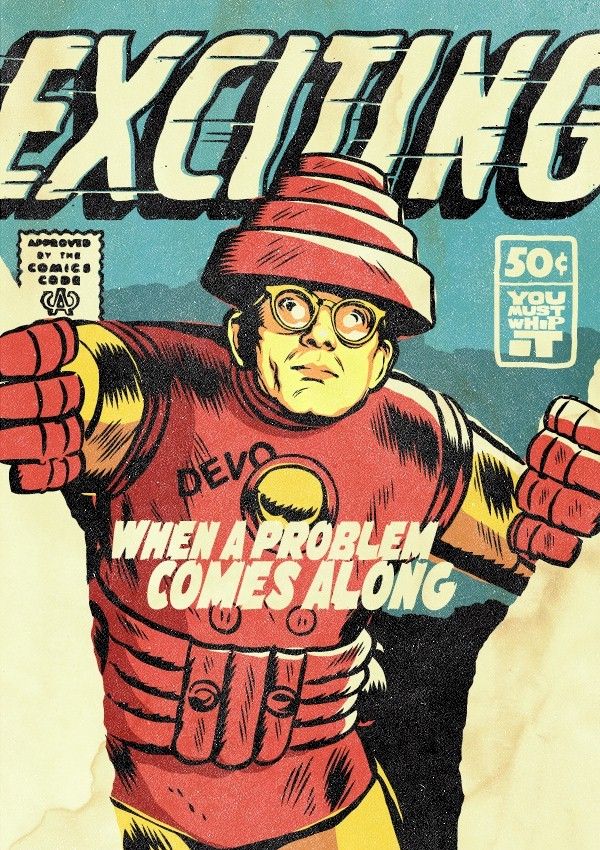
In a follow-up to his series of Post-Punk Super Friends, Brazilian artist Butcher Billy has recently published a series of illustrations depicting post-punk icons such as Siouxsie Sioux and Robert Smith as Marvel heroes. Don't miss the rest of this fun collection at Billy's Behance site.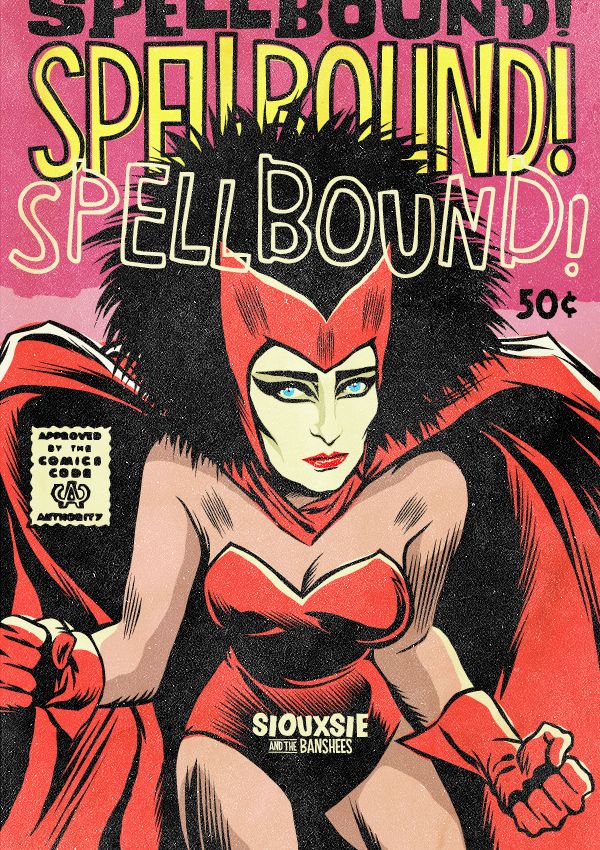
View more of Butcher Billy's artwork over at his NeatoShop.

Tinder — the massively popular smartphone app that has radically simplified the process of online dating — is becoming a household name. But it's not the only location-based dating app. Hinge, for example, is also on the rise. For now, it's much less popular than Tinder, but dominant social networks have been dislodged before, and Hinge's focus on making connections through people you already know could win out. "The best analogy is MySpace versus Facebook," Hinge founder and CEO Justin McLeod said on CNBC in February. That's a pretty rosy assessment, but the analogy is not all wrong. Hinge is growing fast, and it's worth getting to know it.
Hinge is a smartphone dating app, available for iPhones/iPads and Android devices, that's oriented toward relationships rather than hookups and tries to match you with people your friends know and can vouch for.
The basics of Hinge are very similar to Tinder. When you sign up, you are presented with a list of fellow users according to criteria you specify (age, gender, physical proximity to you); if you like them and they like you back, you're matched and can message each other. In both apps, you build your profile by importing pictures and other personal information from Facebook.
But that's where the similarities end. While Tinder gives you a never-ending stream of nearby users, Hinge only provides a select list. Previous iterations of the app gave users new potential matches once a day, but now matches come in a regular trickle, like Tinder but with lower volume.
The main difference, though, is that Hinge focuses on matching you with people you share Facebook friends with, if you have a Facebook account. If nobody is friends with your friends — or if you've already made your way through all those potential matches — the app starts recommending more tangential connections, like people whose Facebook friends share Facebook friends with you. But the focus is on finding people who are somewhere in your social network. Tinder will tell you if a user happens to have mutual friends with you, but you can't screen to see those users first.
Here's a typical screen a Hinge user will see upon opening the app:
(Courtesy of Hinge)
See the little dots to the left? Those represent how many matches you have to choose from at that moment. But you can't scroll through them — you have to click the heart (to like them) or the X (to pass) on the profile at the top before you can move on.
You can also pull up Ed W.'s profile for more info:
(Courtesy of Hinge)
You can see his height, his college and grad school, any friends you share, and a variety of self-descriptive tags that Hinge lets you choose from (including "country clubber," "bookworm," "joker," "smoker," and "midnight toker"). You can also swipe through any photos he's uploaded; users also have the option of adding a short "about me" section.
Compare this with Tinder's main screen:
(Courtesy of Tinder)
That's not too different from Hinge's main screen; the main contrasts are that Tinder shows you shared interests and Hinge shows you the user's employer and/or school, which is potentially more illuminating. But pulling up a profile (like this one, which Jimmy Fallon and the staff of The Tonight Show cooked up for Britney Spears) looks quite different in Tinder:
(The Tonight Show)
You get to see all their pictures, how close they are to you, how recently they logged in, and a short "about me" section. If you share friends or likes on Facebook, you see that, too. (This is a good time to recommend that you like Vox on Facebook, thus enabling you to match other Vox fans on Tinder and keep the lineage of Vox fandom running for many generations.)
But overall, you get a lot less information than on Hinge. That's partially by design. Part of what's made Tinder successful is that it greatly reduces the amount of effort that goes into setting up an online profile; while sites like OKCupid require you to answer huge batteries of personal questions ("Do you own any dice with more than six sides?" "Do you know the first name of every person you've ever made out with?"), Tinder just requires you pick a few photos and maybe write a witty "about me" section if you feel like it. Hinge takes a middle ground: you don't have to answer questions, but you do get to include more information about yourself.
Sort of? While you can specify that you want people close to you, there are limits; whereas Tinder lets you look for users within one mile of you, the lowest Hinge goes is 10 miles. The app also doesn't automatically update when you change locations. If you live in Boston and go on a day trip to New York City, Tinder will start showing you New York matches, while Hinge will keep serving up Bostonians unless you manually change your hometown in your profile.
The focus isn't on finding a quick hookup close by; it's on finding people you could actually date, whom you might ask out if you met at a mutual friend's party. "It's all friends of friends," McLeod said on CNBC. "It's quite hard to use it for casual encounters."
Hinge doesn't give user numbers, but spokeswoman Jean-Marie McGrath reports that 35,500 dates per week and 1,500 relationships happen because of the dating app. "In our major markets, one in five of your friends is on Hinge," she continues. "Our users can receive up to 20 potentials a day." If you're on the app, chances are a lot of your friends are, too; the average user has about 50 Facebook friends on Hinge. The gender ratio is 50-50, according to McGrath, and 90 percent of users are between 23 and 36, making the Hinge user base noticeably older than Tinder's. (An exact comparison isn't available, but 52 percent of Tinder users are between 18 and 24.)
As of March 2014, the app had made 1 million matches; by August it was up to 3 million, and over 8 million by late October. Those are impressive figures, and suggest the app is growing fast (it claims its user base grew fivefold in 2014), but they still pale in comparison to Tinder. As of January, Tinder had made 5 billion matches, and was making 21 million more every day. That's a difference of three orders of magnitude. Then again, Hinge currently is only available in 34 US cities and two foreign ones (London and Toronto), whereas Tinder is available worldwide, and given that Hinge appears to be experiencing exponential growth it's not totally implausible to think it could be a real competitor.
Not really, sadly. It's still hundreds of times smaller than Tinder, and it'll probably take some time for it to become enough of a cultural staple to produce Tumblrs and memes like Humanitarians of Tinder, Fishermen of Tinder, Tinder Guys with Tigers, Tinder in Brooklyn, and Hello Let's Date.
But Hinge's official blog is doing its damndest to try to close the gap, through stuff like its 30 Most Eligible in NYC list, which collects a group of the app's most socially connected and most frequently "liked" users in New York:
It even ranked Wall Street firms based on how frequently their employees were liked versus rejected. Goldman Sachs won. Goldman Sachs always wins.
The danger of most dating sites and apps is that you have basically no idea whom you're being matched up with and whether they're safe to meet in person. Even now you'll hear concerns that your OKCupid date "could be a serial killer," which, while paranoid and hyperbolic, has a semblance of a point to it. There are a lot of horrible people in the world, and OKCupid and Match.com can't do all that much to keep you from going to dinner with them. Moreover, dating sites aimed at heterosexuals tend to feature a lot of male harassment of female users, sometimes to the point that women's inboxes become sufficiently clogged to render the service unusable.
Tinder got around those problems to a degree by requiring users to "like" each other to match before messaging. That eased the message onslaught, but the relative sparseness of Tinder profiles means you have nothing to go on besides your match's photos and messages to you, which doesn't do much to help you determine whether a stranger's safe to meet at a bar.
Louis CK explains why "a woman saying yes to a date with a man is … ill-advised."
Hinge's focus on matching with people you share friends with means you can ask those friends to vet prospective dates. That's not a perfect defense, but it's something. "I’ve met up with someone on Hinge because you have mutual friends, so you can be 80 percent sure they’re not a full-on wacko," one user told the New York Times' Kristin Tice Sudeman. "Hinge cuts through the randomness of Tinder … I can take some comfort that she knows some of the same people I do," another told her. A Hinge fact sheet sent along by McGrath touts "No randos" as a key feature: "If Tinder feels like meeting a stranger at a bar, Hinge feels like getting warmly introduced at a cocktail party."
The mutual-friends aspect also let the process bleed into offline dating. Buzzfeed's Joseph Bernstein has an incisive piece on how dating apps are giving rise to "offline-online dating" in which people use "offline life as a discovery mechanism for online dating." Tinder has contributed to this to an extent, but as Bernstein says, Hinge "represents the collapse of the offline-online dating distinction better than any other dating app, because it shows users the very people they would be likely to meet through a friend."
You might meet someone at a mutual friend's party, hit it off but not exchange numbers or make plans, and then run into each other on Hinge (partially because of that mutual friend), giving you another shot. Or the app could provide a safe way to express interest in a friend-of-a-friend whom you're hesitant to approach in person; after all, they only find out you like them if they like you back.
McLeod told Bernstein this dynamic has major appeal to Hinge users. While the app stopped recommending actual Facebook friends to each other after users complained, friends-of-friends and friends-of-friends-of-friends are much likelier to match than people with no connection (which, despite Hinge's best efforts, sometimes happens). Users like 44 percent of friends-of-friends, 41 percent of friends-of-friends-of-friends, and a mere 28 percent of people with whom they lack any connection.
Pretty fair, albeit not in ways that are entirely favorable to Hinge. The transition from MySpace to Facebook was, as the social media scholar danah boyd has argued, a case of digital "white flight." "Whites were more likely to leave or choose Facebook," boyd explains. "The educated were more likely to leave or choose Facebook. Those from wealthier backgrounds were more likely to leave or choose Facebook. Those from the suburbs were more likely to leave or choose Facebook."
In some sense, this was baked into Facebook's premise. It started among college students — in particular among Harvard students, and then students at other highly selective, elite colleges, and then students at all colleges, and so on. It grew out of an initial user base that was largely wealthy and white; gradually it became associated with the bourgeoisie and MySpace with the proletariat. Facebook may or may not have been intentionally exploiting these class dynamics, but those dynamics played a very real role in the site's development.
If you doubt Hinge is the dating app of the privileged, consider that it literally ranked financial institutions by the eligibility of their single employees. (Hinge)
Hinge, similarly, targets an elite demographic. It's only available in cities. Its users are twentysomethings and almost all went to college. "Hinge users are 99 percent college-educated, and the most popular industries include banking, consulting, media, and fashion," McGrath says. "We recently found 35,000 users attended Ivy League schools."
Classism and racism have always been problems in online dating. Christian Rudder, a cofounder of OKCupid, demonstrates in his book Dataclysm that in three major traditional dating sites — OKCupid, Match.com, and DateHookup — black women are consistently rated lower than women of other races. Buzzfeed's Anne Helen Petersen put together a Tinder simulation in which 799 participants (albeit non-randomly selected ones) each evaluated 30 fake profiles constructed using stock photos, and found that people's swipes depended strongly on the perceived class of the prospective match. " If a user self-identified as upper-middle-class and identified the male profile before him or her as 'working-class,' that user swiped 'yes' only 13 percent of the time," Petersen writes. But if they identified the profile as "middle-class," the swipe rate rose to 36 percent.
Hinge provides yet more tools for that kind of judging. You can see where potential matches went to college, or where they worked. Indeed, this kind of assortative mating — matching people of the same socioeconomic class with each other — is embedded into the app's algorithm. McLeod told Boston.com's Laura Reston the algorithm uses your past choices to predict future matches, and in practice your school and workplace, and social network in general, often serve as good predictors. "McLeod notes that a Harvard student, for example, might prefer other Ivy Leaguers," Reston writes. "The algorithm would then compose lists that include more people from Ivy League institutions."
Obviously, Hinge didn't invent this dynamic; as Reston notes, 71 percent of college graduates marry other college graduates, and certain elite schools are particularly good at matching up their alumni (over 10 percent of Dartmouth alums marry other Dartmouth alums). And the Hinge fact sheet frames this aspect of the algorithm as just another way in which the app resembles being set up by a friend:
Think of setting up your pickiest friend. First, you’d think of all the people you know who he/she might like to meet. Then you would prioritize those recommendations based on what you know about your friend (preference for doctors, dislike for lawyers, love for Ivy Leaguers etc). Finally, over time you would start to learn his/her tastes and refine your recommendations. That’s exactly how Hinge’s algorithm works.
There's the "Ivy Leaguers" example again. Hinge has carved out a niche as the dating app of the privileged, which helps garner media coverage from reporters who fit its demographics (like, uh, me) and lets it cultivate an elite image that could wind up taking users of all backgrounds from Tinder, much as the elite allure of Facebook eventually allowed it to defeat MySpace across the board.
One major issue is you have to live in an urban area to use it, and in one of a relatively small number of areas at that. The current list is:
NYC, SF, L.A., DC, Seattle, Atlanta, Chicago, Boston, Philly, Dallas, Houston, Austin, Denver, Miami, Tampa, Orlando, Minneapolis, St. Louis, Indianapolis, Omaha, Phoenix, San Diego, Detroit, Portland, Charlotte, Raleigh, Pittsburgh, Columbus, New Orleans, Cleveland, Nashville, Albany, Cincinnati, Kansas City, Toronto, and London.
That leaves out some major cities, like San Antonio, Jacksonville, El Paso, and Memphis, not to mention people in rural areas, where dating pools are smaller and online dating is arguably more crucial. If you live outside the US and not in Toronto or London, you're also out of luck. Hinge explains, "We launch cities as soon as the waitlist has reached a critical mass such that they can sustain and grow." The idea is that dating apps only really work when there's a reasonably large base of users, so Hinge purposely doesn't expand to a city until it can expect that to materialize.
The app has also been criticized for poorly serving LGBT users. Tyler Coates at Flavorwire reported that the app had started matching him with straight men. When he asked what was going on, a Hinge representative explained, "Right now we have a relatively small number of gay Hinge members."
He quit, then rejoined a number of months later, but got four matches a day, rather than the 10 the app had promised based on the size of his social network. When he asked what was up, a Hinge representative replied, "As of yet, we’ve done a pretty poor job of attracting a gay userbase, so that’s most of the problem: we’re running low on people to recommend to you. I’m guessing we’ll try to reboot our gay market at some point, but it’s not on the docket just yet." (McGrath, the Hinge spokeswoman, says this comment was "misinformation stated by a new employee at the time. We are very focused on actively expanding all portions of our userbase, including our gay userbase.")
The app also requires users to identify as male or female and as looking for male and/or female partners, which excludes people who don't identify as one of those two genders. Initially, it didn't let users ask for matches from both men and women, limiting its usefulness for bi and queer people.
One comparatively trivial complaint with the app is that it doesn't let you reduce the number of photos pulled from Facebook below 16:
You can reorder them, or choose a different set of 16 photos, but you can't only show five if there are more on your Facebook account. This is an intentional restriction, meant to prevent people from misrepresenting what they look like. McLeod explained in an interview with Business Insider: "You still have to have a minimum number of 16 photos that we pull from your Facebook profile photos, photos of you that have to be recent. That’s a big piece of us is we’re pretty vetted and transparent, we try to show the authentic you, you can’t just post three photos."
WATCH: 'The myth of the "supermale" and the extra Y chromosome'

The verdict is in: toilet paper is meant to be rolled OVER, not under when placed in it’s dispenser. A tech writer recently realized that the inventor of toilet paper, Seth Wheeler, left a notation in his original 1891 patent about the correct method:

Now all the people who endlessly argued that tp should be rolled under can sit around and wallow in their wrongness. 
h/t Reddit


Elite Fucking originally appeared on MyConfinedSpace NSFW on March 17, 2015.

Nearsightedness is reaching epidemic levels worldwide, but nowhere is its rise more prevalent than East Asia, where as many as 90% of teenagers and young adults now suffer from blurry distance vision. Why the sudden spike? Book work has long been blamed, but recent findings point to something else.


Non puiden asistir ao seu relatorio no Fórum Gastronómico da Coruña, pero pareceume interesantísima a proposta do carniceiro francés Yves-Marie Le Bourdonec, un dos mellores profesionais da carne do mundo. Le Bourdonec falou marabillas da carne da rubia galega. Pensaba que sería o típico galano que se fai nestes congresos, cando o cociñeiro foráneo piropea a culinaria local, pero non, é certo, no seu web tipifica a carne de rubia galega como unha “peza rara” ao nivel da Wagyu. Pódese comprobar aquí.
A clave do que Bourdonec dixo no Fórum pode verse nesta entrevista de La Voz de Galicia. Considera á carne de raza rubia galega “a mellor do mundo”. Pero Bourdonec dixo dúas cousas merecentes dunha reflexión que, por desgraza, como é habitual neste país, non se fará. A primeira, un problema que ten que ver seguramente con certa falta de profesionalidade. O carniceiro estrañábase da “disparidade de calidades que se dan no mercado da rubia galega”.
Confesando que non coñezo exhaustivamente ese mundo, sospeito que o problema é o mesmo que os cociñeiros de vangarda galega denunciaban hai aínda poucos anos en relación a outros produtos agropecuarios do país: a falta de regularidade na provisión e na calidade do servido mesmo dentro do mesmo produtor. Ese é un problema de formación, falta de profesionalidade e escasa cultura da competencia que, por fortuna, alomenos no mundo da hortaliza, está cambiando para mellor. Non me estrañaría nada que no sector cárnico da rubia galega pase algo similar.
E a segunda referencia de Bourdonnec é o mal da “factura ansiosa” que padece este país en todos os seus produtos agropecuarios de calidade. Cando o xornalista lle di que neste país sacrifícanse as vacas antes de adultas, o carniceiro contesta sen pelos na lingua:
-Eso es un sinsentido. Hay una tendencia en todo el mundo, supongo que alentada en parte por algunos médicos, que recomienda tomar la carne muy magra. Y eso no puede ser. La carne necesita tener una parte grasa, lo que solo se consigue en animales adultos, y hay que ir educando al consumidor hacia ello. Lo mejor es probar las dos, verás el resultado. Cuando a una persona se le da de comer una carne bien infiltrada de grasa y descubre su altísimo nivel de sabor, jamás vuelve a probar la otra.
O que denuncia Bourdonnec para a carne é algo do que xa temos falado: ese mal por facturar, por querer vender inmediatamente, por renunciar a achegarlle ao produto que elaboramos o valor engadido do tempo, que multiplica o seu valor económico. Bourdonnec falou tamén en termos económicos: consideraba que o que se está facendo en Galicia coa “ternera gallega” é un auténtico estropicio en termos monetarios, estamos tirando os cartos a mansalva. Co que custa criar eses animais, sacrificalos antes de tempo é perder unha chea de valor económico. Recoñecín esa ansia por facturar nas gañas de vender o viño antes dun ano de ser producido, na caricatura da cociña galega que ofrecen algúns restaurantes…o problema é a perda de valor que significa iso para o campo.
A tese de Bourdonec é clarividente e fariamos ben en escoitala: queremos crear un campo galego coa capacidade de xerar produtos de altísimo valor, cotizados e que inxecten moitos máis cartos e beneficios, ou queremos non complicarnos a vida, gañar moito menos e traballar para o mercado do filete madrileño? O campo galego ten a posibilidade de ser unha referencia internacional, un lugar que xenere diñeiro para que a xente viva con moita dignidade, con formación e con estratexias de futuro. Estaba ben ter este debate que, sospeito, haberá moitos interesados en non facelo en voz alta.

The Mary Sue wants to extend HUGE congratulations to Amanda Palmer and Neil Gaiman on the impending arrival of their new baby! Palmer posted this photo on Instagram to announce it a few minutes ago, and if you’ve read her book, The Art of Asking, you know just how meaningful this pregnancy must be.
So, one of our favorite comic/fantasy creators and one of our favorite musicians are having a baby together. Either this kid will be a SUPER ARTISTIC GENIUS, or they’ll totally rebel by being really good at math. Either way, we win!
Congrats to the Palmer/Gaiman clan!
(via Instagram)
Are you following The Mary Sue on Twitter, Facebook, Tumblr, Pinterest, & Google +?

If you haven't gotten a chance to watch Timothy Reckart's Oscar-nominated short film Head Over Heels, make some room for it in your day. It's a strange and sweet stop-motion story about two married people who have drifted apart so thoroughly, each thinks the other one lives upside down.

Oh my gosh you guys, have you seen Jules’s new Instagram? Holy crap, she is just so beautiful. Her skin is so absolutely gorgeous in a way that makes you forget that she’s so pale. She just wears clothes with such an effortless confidence that you almost forget the fact that Heidi, who is standing right next to her, is an actual model.
So back to Jules.
Have you ever noticed how beautiful Jules’s eyes are? They’re like a golden brown that you don’t see in nature, and that’s remarkable because there are a lot of browns in nature. I don’t know if I can describe it other than to compare her eyes to the color of a winter ferret with a visible aura. It’s lovely, sort of. And Jules is so beautiful that she doesn’t even have to wear makeup – or at least she doesn’t choose to – and she still looks gorgeous, or at least more than decent, although she’d probably look just a little bit better with a dab of lipstick, but whatever. She is hardcore pretty. If you ask me, I think facial symmetry is overrated. That freckle (or is it a mole?) over her left eyebrow makes her unique. There is nobody who looks like Jules, except maybe for her sister, but she lives in Tampa.
If it’s okay with you guys, I’d like to bring up the subject of Jules’s extraordinary beauty as often as possible. Also, if you could just reinforce that message by commenting on every profile pic that Jules has ever put up, that would be cool, too. Write things like “Gorgeous!” and “Haawwwt! You should be a model!” I’m not sure exactly where we’re going with this, but I’m fairly sure it’s the right thing to do.
If you see Heidi’s profile pics, on the other hand, go ahead and like them, but just leave it at that. She doesn’t need the reinforcement. Neither does Jules, actually, as she’s married and has three young kids. But we all need a reminder of how beautiful unconventionally attractive people can be.
Some people might call Jules mediocre-looking. But if she’s mediocre-looking, then she’s the most stunningly mediocre-looking person I’ve ever met. It’s like you can feel the pretty-acceptable energy just pouring out of her. To me, that is true beauty. And to you, too – don’t forget. Because from now on, every single one of us is going to rave about Jules’s pretty-okay looks, whether we understand it or not. Even Heidi. Oh wait – where is Heidi? Looks like she’s going home early. I wonder what that’s about?
Let’s All Rave About Our Mediocre-Looking Friend! is a post from: Reductress
You’ve got a kind, loving husband who listens and communicates in a respectful manner. But sometimes you miss all the hate sex and stonewalling you had with guys you dated in your 20s. Here are the five men you’re missing in your boring, stable, functional, marriage-ridden 30s.
The Mute
Your husband believes in never going to bed angry. When you fight, you’ve got to air your feelings and talk until you reach an agreement. Ugh. It’s times like these when you miss the Mute, who reacted to conflict by sinking into a stony silence and going off the grid for weeks at a time. You were never sure if he was homicidal or just didn’t give a shit, but the Mute spared you from many uncomfortable conversations about that thing you do with your toenails. Your husband is blessedly communicative, but jeez, you kind of miss this creepily detached troll.
The Boomerang
He was sweet and attentive one day, then didn’t call for the next five, but the Boomerang was consistent in one way: He was exciting and had a perfect penis. Not like your husband, who can’t even make it to the grocery store without texting to say he loves you. Yeesh! The Boomerang always got your adrenaline racing and your blood pumping. His absences made you wonder if he’d been tragically dismembered, or if he just needed some space. You weren’t happy, but hey, at least you weren’t bored!
The Punching Bag
Whenever you bombed a job interview or your dog sitter forgot your birthday, you could always count on the Punching Bag to let you displace your anger onto him. He’d let you scream at him for hours for inconsequential and imaginary mistakes, apologizing profusely all the while. Shit, the Punching Bag even bought you flowers that time you accused him of staring too long at that female barback at the Olive Garden, He’s nothing like your emotionally evolved husband, who insists on honesty and arguments that take place in reality.
The Devil
You hated the devil: his values, his cushy trust fund, his fucking polo shirts. But it’s a truth universally acknowledged that the best sex is hate sex, and nothing can compare to the angry, bedpost-shaking heat you generated with the Devil – something you always remember when your husband looks into your eyes as you tenderly make love. Nowadays, in fits of nostalgia, you cyberstalk the Devil, whose political statements always fill you with rage and the urge to furiously masturbate.
The Loopholer
You always cherished the Loopholer for starting fights that allowed you to temporarily screw other people. “Maybe this isn’t working!” the Loopholer would sometimes say, throwing up his hands in exasperation. “Maybe it isn’t!” you’d shout back, knowing full well that he’d apologize tomorrow and take you out for an expensive dinner. But in the meantime, his statement gave you carte blanche to bang whomever you met at the bar that night, unlike your husband who “can’t bear to think of you being with another man.” Barf. Having your cake and eating other people too was the gift the Loopholer gave to you, and you never even thanked him for it.
Relish these memories of the guys who made you the woman you are today. Although you can’t turn back the clock, you can find ways to bring back the dysfunctional charm of these relationships into your marriage from time to time. Just order a full carafe of wine at the Olive Garden, and let the venom flow!
5 Dysfunctional Relationships You’ll Miss in Your 30s is a post from: Reductress
Camiñando polas rúas da nosa cidade, pouco a pouco fumos apercibíndonos dunha estraña presencia que nos perseguía alá onde nos drixíramos. Tratábase dun simpático boneco que nos saludaba dende as paredes, “Ferrol mola!” dicía e iso fixo aumentar a nosa curiosidade. Preguntamos aos nosos confidentes e contactamos co autor de tan singular otra de arte urbana, prefire manter o seu anonimato pero logramos que resolvera as nosas dúbidas. Este é a súa testemuña:
O nome do becho é “Makako”. Comecei a pintalo de maneira compulsiva en Barcelona no 2004 pero xa había tempo que roldaba os meus cadernos, a idea era facer un moneco o máis sinxelo posible, como o que podes facer mentres non atendes na clase ou falas por teléfono.
Nos seus primeiros anos de vida pintábao sen letras; pouco despois, uns amigos en Ferrol fixeron unha serie de curtas chamadas Fecal en que a personaxe principal, F de Fecal, sempre dicía “Fecal Mola”, sempre falaba con eructos. Como sempre estabamos xuntos, pois aproveitei para pintar o makako acompañado de “Fecal mola”. Co tempo ocorréuseme cambiar fecal por Ferrol.
Son de Ferrol e a cidade non pasa o seu mellor momento, sempre é todo negativo. Coma se en Ferrol reinase un pesimismo que hai que combater. Realmente o que quere dicir é: Ferrol está afundido pero podería molar, nada de agachar a cabeza… que a xente se queira un pouco e crea en Ferroliño, que está desfeito! Gústame pensar que é coma un truco de maxia para que os nenos e nenas medren crendo en Ferrol, son o futuro. Eu tiña un profesor no instituto que sempre nos dicía: “Se ides polo mundo nunca digades que sodes de Ferrol, vaivos pechar portas.” Agora penso niso e alucino co profesor, que era bo tío pero tamén o claro exemplo dun complexo que non entendo, por iso eu digo:
Ferrol Mola. Se a cidade realmente molase e todo fose ben non tería sentido algún pór Ferrol mola. Habería a necesidade, por exemplo, de escribir Vigo mola? Non, ho!, que Vigo xa mola. Pasa algo moi curioso e é que moita xente pide colantes para pegalos
cando van de viaxe a, por exemplo, Xapón, USA, Bruxelas, México, Arabia Saudita, Londres, Alemaña, Tailandia… e non é toda xente de Ferrol! Doulles mil grazas por levar o makako e Ferrol mola polo mundo adiante, que grandes!, alucino co altruísmo da peña. Intento conservar o anonimato para que sexa o makako o que leve todo o
protagonismo, que a xente se sinta identificada e que o consideren un pouco de seu, que non pensen: “Aah, o monequiño do fulano este raro.”
De momento non tiven problemas coa autoridade porque sempre intento pintar en lugares abandonados ou ruinosos para non molestar a ninguén, que a xente sorría ao velo e que no se caguen en miña nai por estragarlles a parede.
Parece que estou subvencionado polo Concello, iso é certo, pero non, non tal, senón perdería a graza. Algunha vez intentaron porse en contacto conmigo pero sempre me fixen o longuis. Quen sabe, se cadra algún dia si que me subvencionan, que non teño un can e as pegatas e spays custan unha pasta tela.


O seu número incrementouse en 110 mil persoas dende o 2009 (un 29%). Arxentina, Venezuela, Brasil, Uruguai, Suíza, Cuba, Francia, Estados Unidos, Alemaña, Reino Unido e México acollen os maiores continxentes.
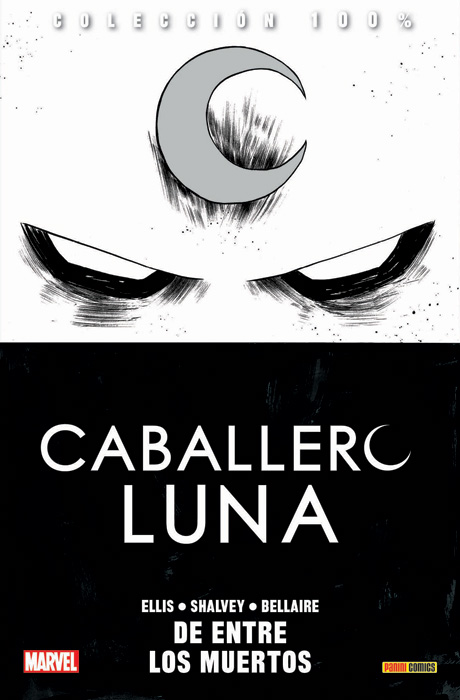
Caballero Luna: De entre los muertos (Warren Ellis, Declan Shalvey y Jordie Bellaire). Panini, 2014. Rústica con solapas. 136 págs. Color. 12,50 €
Caballero Luna es un personaje de derribo, uno de tantos creados en los setenta en el seno de Marvel con la intención de ocupar más cuota de mercado y generar otra marca registrada más que poder vender al cine o la televisión. Sólo el talento de los responsables originales de su primera serie regular —Doug Moench y Bill Sienkiewicz— dotó de interés al que en origen no era sino una copia más o menos descarada de Batman aderezada con unas gotas de misticismo egipcio. Sólo las dinámicas propias del género y de la industria —continuidad y fandom— podían dotar de seriedad a Caballero Luna.
Quiero decir con esto que tomarse en serio la historia de Caballero Luna, llena de contradicciones, cambios locos en su origen y resurrecciones a granel es labor de exégetas de la continuidad, como mucho, pero no tiene sentido desde el punto artístico en este caso. ¿Para qué puede servir entonces Caballero Luna? Precisamente lo interesante sería utilizar su condición de secundario y clon de personaje de éxito para que los autores pudieran liberarse de las normas que necesariamente tienen que respetar cuando tratan con los personajes importantes de la compañía. Convertirlo en un cascarón más o menos hueco, perfecto para experimentar y para ofrecer cómics que se salgan de la norma.
Todo eso es lo que encuentro y lo que me ha gustado de la breve pero intensa etapa de Warren Ellis, Declan Shalvey y Jordie Bellaire en la nueva cabecera del personaje. En los seis números que ha guionizado Ellis no se olvida de la historia de Moon Knight, pero la reduce al concepto básico, resumido en el texto que abre cada número y que es toda una declaración de intenciones: básicamente viene a decir que Marc Spector se murió, resucitó como avatar del dios Khonshu y se volvió tarumba. Para cualquier observador externo —y Warren Ellis lo ha sido siempre respecto a Marvel— la locura es la única consecuencia posible al caos de continuidad de cualquier personaje de la editorial, sólo que con uno como Caballero Luna esto puede llevarse a la práctica y convertirlo en el motor de una etapa del personaje.
Porque la nueva Moon Knight no trata de ordenar la historia del personaje ni recupera su pasado —más allá de un par de secundarios en el último número—. Simplemente toma lo que le interesa: un tipo sin poderes pero con buenas habilidades de combate y un arsenal de armas y vehículos molones, que está lo suficientemente loco como para no importarle ponerse en peligro enfrentándose a amenazas urbanas. En los seis episodios autoconclusivos se enfrenta a casos ayudando a la policía —tiene hasta su comisario Gordon particular—, ya sea con su traje de guerra de siempre o con un traje de chaqueta y pantalón completamente blancos.
Ellis, que siempre me interesa, suele moverse en dos registros muy diferentes. Uno denso y serio, en el que vuelca todas sus ideas sobre política, sociedad y tecnología. Es el Ellis de Black Summer, Planetary o Transmetropolitan. Y luego está el guionista de acción, mucho más visual y ligero en cuanto a contenido explícito, que es además un escritor que se mueve perfectamente en el relato breve de 22 páginas. Ése es el que encuentro en Moon Knight: episodios de ritmo perfecto, tan redondos como las mejores entregas de Global Frequency, basados totalmente en la acción y en la potencia gráfica.
Ellis escribe lo justo, ni una palabra más. La mayor parte de los comic-books que contiene el tomo consisten en una larga escena de acción, que funciona por la espectacularidad atípica de Shalvey, todo un descubrimiento, capaz de encontrar nuevas soluciones para las escenas de combate —parémonos un momento a pensar qué valor tiene esto hablando del género del que hablamos— y jugar con toda la iconografía de Caballero Luna, especialmente con su capa, con la que consigue efectos muy interesantes. El color de Bellaire, seguramente una de las dos o tres mejores coloristas de la industria ahora mismo, acompaña con unos tonos oscuros y sobrios —realistas— que se contraponen a la figura inmaculadamente blanca del protagonista.
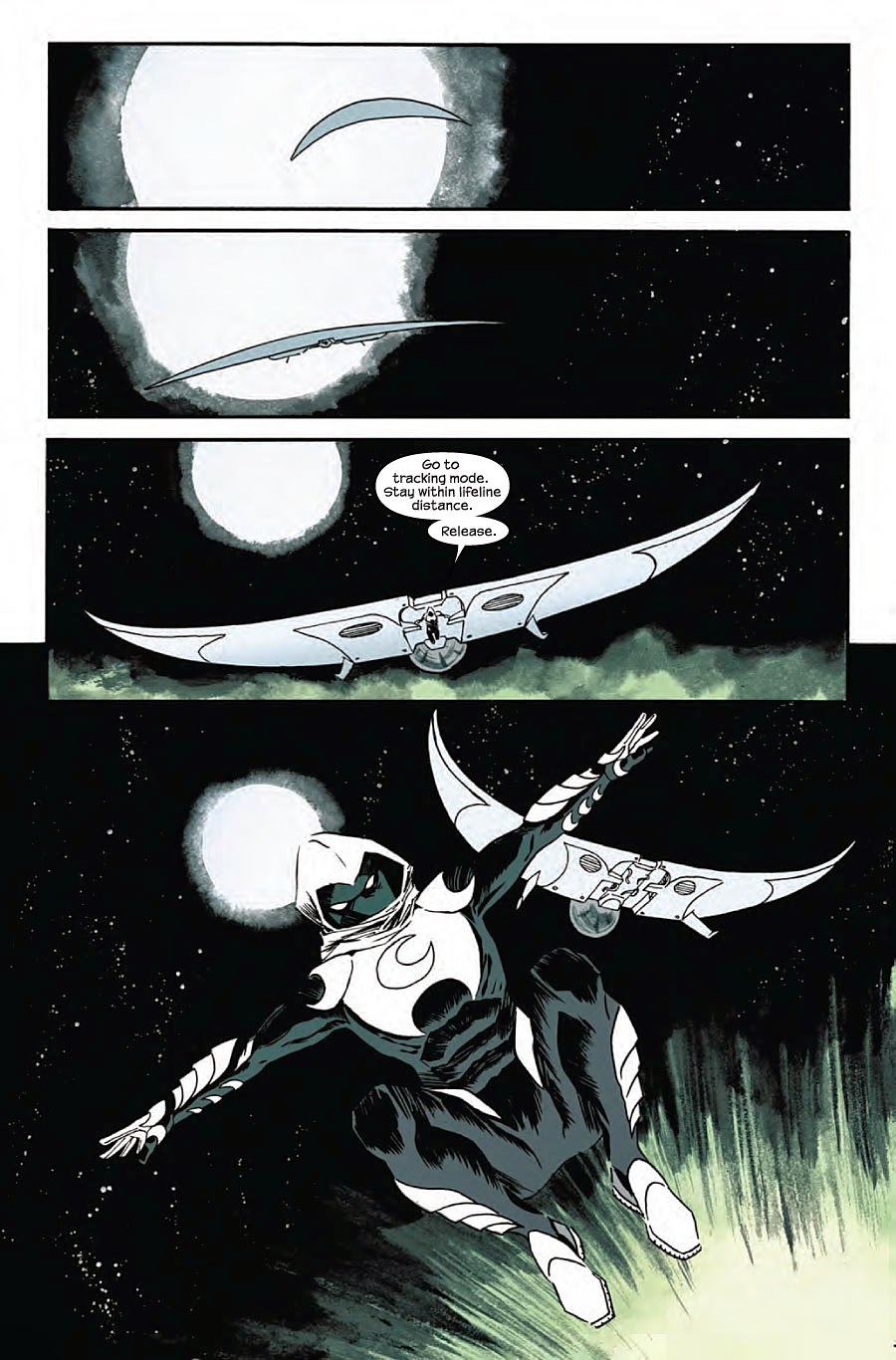
No es casual que el primer editor de la serie fuera Steven Wacker, responsable también de Daredevil y Hawkeye, entre otras. Así es mucho más fácil entender por qué se le permitió entregar a Ellis unos guiones tan atípicos —y provocadores— como éstos. Básicamente hace lo que quiere. En el segundo número, los créditos que marcan el inicio de la acción aparecen en la página once. En el tercero, Caballero Luna se enfrenta a unos fantasmas punkis. El argumento del quinto se resume en que unos tipos han secuestrado a una niña y Caballero Luna entra donde están, les pega y la salva. En el cuarto viaja a la dimensión del sueño, que parece más una excusa para que Shalvey y Bellaire se desmadren y entreguen algunas de las mejores páginas de la serie. En el sexto, finalmente, la venganza de un poli resentido le sirve a Ellis para ofrecer, al fin, su verdadera visión de Moon Knight.
Seguramente haya lectores que consideren que Ellis ha sido vago, o incluso que les está tomando el pelo. Sin embargo, en cada uno de estos episodios hay más trabajo por parte de todo el equipo creativo que en muchos tebeos llenos de texto y enrevesados giros de guión. Y en las pocas y medidas palabras que encaja el guionista en medio del despliegue de violencia gráfica puede haber, si se saben entender, más profundidad que en una tonelada de bocadillos de texto de algunos guionistas que no voy a mencionar porque no es momento ni lugar.
Se abre el telón y aparece un bilbaíno del Opus Dei perdiendo los papeles en un puticlub. “La culpa es de mi cuñao, que me ha liao", alega. ¿Cómo se llama la película? Putero y yo. Dirige, produce e interpreta (al cuñado crápula) el rey del porno cañí: Torbe. ¿Qué puede salir mal?
Pese a que es inevitable imaginar dantescas escenas sexuales cuando uno asocia los conceptos “Torbe” y “Putero y yo”, las cosas no son lo que parecen esta vez. Torbe, nacido como Natxo Allende en el Portugalete de 1969, da un giro dramático a su carrera con este filme, en el que no ha recurrido a profesionales del sexo, sino del cine.
La comedia torrentiniana Putero y yo no sólo es su primera cinta no pornográfica, sino que apunta alto: Torbe quiere, por un lado, dinamitar el cine español; y, por el otro, escapar del porno. ¿Quién da más?

Son las 0:30 horas del martes 17 de marzo y estamos en un club madrileño de dos plantas reconvertido en puticlub para la ocasión. El equipo de unas 30 personas que trabaja en Putero y yo -quince días de rodaje y 150.000 euros de presupuesto (sin subvenciones)- trata de rematar una escena en la que Torbe (el actor), su cuñado del Opus y un taxista explican a tres prostitutas cómo han ido a parar ahí. Toma buena. Parada para preparar la siguiente. La noche es joven: el día anterior acabaron de rodar a las 8 de la mañana.
Torbe baja al piso de abajo, pide un vaso de agua y se sienta con El Confidencial en un sofá ocupado por una muñeca hinchable. En efecto: empezamos bien.
Putero y yo será un filme “friki, políticamente incorrecto y de humor grueso”, suelta Torbe en una demostración de que la mejor defensa es un buen ataque: en su boca “grueso” deja de ser calificativo despectivo para convertirse en elogio.
“Yo hacía cortos y cómics, pero el mundo del porno me desvió del camino. Estuve quince años metiendo la puntita y conseguí independencia y vivir una vida loca. Ahora quiero retomar el cine”, explica. Atención al desliz freudiano: Torbe habla en pasado de su paso por el porno (y eso que, para tener tiempo para rodar Putero y yo, pasó varias semanas produciendo frenéticamente cortos porno para dejar repleta su nevera digital). He aquí la pregunta del millón: ¿Sí Putero y yo triunfa dejará usted la pornografía? “Sí”. Bien. Antes de que sus fans comiencen a cortarse las venas y arrojarse por las ventanas, escuchemos qué ocurre ahora mismo dentro de la cabeza de Torbe.

“El porno me dio dinero y autonomía. Si el cine me da otras cosas, dejaré el porno. Tengo la corazonada de que estoy iniciando una nueva etapa. La hora del cambio de chip”, confiesa.
Torbe se ha cansado del porno. ¿Qué va a ser lo siguiente? ¿Rajoy diciendo que le hastía la política? ¿Cristiano Ronaldo dejando a un compañero tirar un penalti porque le aburre la competición? Dios mío: ¿qué nos está pasando?
Lo que le pasa a Torbe suena a canción de Hüsker Dü: It's not funny anymore. O cuando el porno (léase el negocio del porno) ya no es divertido. ¡Y eso sí que no! Habemus drama.
“Yo me metí en el porno para follar y divertirme, pero el negocio creció, y acabó convirtiéndose en algo estresante y agobiante. Ya me he quemado”, zanja.
Torbe era un chaval que malvivía en el Bilbao de los años noventa. Salió de “pobre” en los albores de internet: pasó de bloguero sexual (1996) a empresario guerrillero de porno digital (1999).
La entrada en el siglo XXI forjó el mito de Torbe: el creador de la página Putalocura.com (enlace a contenido pornográfico), el emprendedor macarra que reinventó el negocio del porno en España a golpe de humor cutre-freak y reducción de costes (aprovechando la crisis), el hombre hecho a sí mismo que pasó de pobre a facturar millones, el protagonista de polémicas, juicios y escándalos. Al margen de lo que uno opine sobre la fachada moral de su negociado, he aquí un innovador capitalista de libro (escuela Hugh Hefner).
A tumba abierta
Todos conocemos la leyenda de esos actores de raza dispuestos a todo para preparar un papel; capaces de adelgazar sesenta kilos y pasarse meses confinados en una jaula (y bebiendo su propia orina) para meterse en la piel de un prisionero del Vietcong (por ejemplo). Pues bien: Torbe ha ido un paso más allá para mutar en director de cine español… En su cruzada por transformarse en un cineasta serio, emprendió uno de los experimentos cinéfilos más kamikazes de todo los tiempos: verse las 107 películas producidas por el cine español en 2014. Titánico no, lo siguiente. “Las he visto en cuatro meses. Ha sido una experiencia terrorífica”, rememora con sorna.

Torbe salva de la quema trece películas -entre ellas: Magical Girl, La isla mínima, Relatos salvajes, Ocho apellidos vascos, Gente en sitios y Torrente 5- pero tritura a las demás, a las que clasifica en temáticas tan pintorescas como Películas que parecen obras de teatro, Comedias que no hacen reír, Películas de miedo que no dan miedo, dan risa, Pajas mentales o Películas subvencionadas por Comunidades Autónomas. En dos palabras: haciendo amigos.
“Esta es una de las realidades del cine español, los que votan las películas no se las ven. Yo llevo varias semanas viéndolas todas, y os puedo decir, a bote pronto, que el nivel es bajísimo/malísimo. Muchas rozan lo insoportable. Vamos, que verlas se convierte en una tortura china”, escribió en su blog coincidiendo con la gala de los Goya.
“Hay dos tipos de comedia española: Torrente, que hace un humor personal, y el resto: un humor de andar por casa, parecido al de las series de Telecinco y Antena 3, que a mí personalmente no me hace gracia, un humor simpático, de sonrisa; yo aspiro al humor de carcajada, no de sonrisita, y al mismo tiempo quiero provocar y polemizar”, razona el director, que cree que Putero y yo será una comedia “inclasificable” porque no tendrá "historia de amor".
No sabemos si Putero y yo sacará a Torbe del porno, pero sí que la tradición cómica reivindicada por el autor, que va de Pajares y Esteso a Torrente, ha generado algunos de los mayores taquillazos de la historia del cine español.

A Torbe, de hecho, le pasa un poco como a Santiago Segura: puede hacer más o menos gracia, pero transpira chascarrillo casi sin darse cuenta. Atentos: al finalizar la entrevista, saca el móvil para enseñar su artículo sobre las 107 películas del cine español. Se mete en su web… y se vuelve tarumba para encontrarlo. Normal: en su página hay tantas ventanitas de mujeres en cueros que sortearlas sin abrirlas se convierte en un imposible. “¡Joder con los putos móviles!”, espeta el gurú del porno digital en modo de comedia involuntaria.
Illustration by Daniela Carvalho
Alejandro Jodorowsky wrote and directed classic surrealist films like The Holy Mountain and Santa Sangre. He also starred in Jodorowsky's Dune, a documentary about the best science-fiction film never made. He is a tarot specialist, a psychomagician, and a mime. He's written plays, comics, and musicals. He was born to Jewish Ukrainian parents in northern Chile but soon after moved to the country's capital, Santiago, and at age 24 left for France in search of the creators of surrealism. A little later he went to Mexico, where he wrote and directed films like the two titles mentioned above, along with El Topo, Tusk, and The Rainbow Thief—35mm equivalents to an acid trip.
Jodorowsky is a modern prophet. Even now, at 86 years old, he makes films as disruptive as those from the 70s. His most recent, The Dance of Reality (2013), tells the story of his life as a child in northern Chile, with a father obsessed with killing the president and a mother who sings like a soprano when she speaks. Dwarves, disfigured folks, and spiritual guides live along the banks of the sea.
These days Jodorowsky is working on something less magical than modern: He's seeking out donations on Kickstarter for a new movie, the second part of The Dance of Reality, which will be called Endless Poetry and is based on the period of his life when he arrived in Santiago until he moved to France when he was 24. During that time he discovered sex, poetry, adolescence, society, and the Second World War.
Because Jodorowsky is Jodorowsky, for every dollar you give him he'll give you "poetic money" that he guarantees will soon be worth much more than it is now (which is nothing). At the time of writing, he has reached his original goal of $350,000, around 10 percent of the film's projected cost. His Kickstarter, he says, is a fight against the film industry.
Jodorowsky spoke with me over Skype from a Paris apartment loaded with books and mystical figures.
VICE: How has Paris treated you?
How was it during the Charlie Hebdo killings?
Let's talk about the new film, Endless Poetry.
I see it another way. To make an experimental film, like poetry, like a work of art, first off, get rid of the industry—that is, make it disappear. I intend to lose money—to make art in order to lose money, since it's a shame that art is considered good if it makes money. Painting is the same: If you make money, it's good; if it doesn't make money, it's bad. I'm tired of idiotic wars. It's as idiotic as killing cartoonists who draw caricatures.
The art industry is killing the human spirit. We're not about that. So over 22 years I gathered what I was making—very little thanks to the economic crisis. All I managed to raise was a million dollars, I didn't waste it, and I put half into The Dance of Reality and lost it. It was a success all over the world with the best critics, but I didn't make a dime. Experimental film doesn't make a dime. The distributors made some money, the theater owners, that's all, but the creator makes nothing—and then after that experience I decided I had to make a second film, the continuation, with the remaining $500,000, and I looked for partners, telling them, "We're going to make a new film so we can start losing money again," and then it occurred to us to make a Kickstarter. On Kickstarter, we're asking for 10 percent of what it will take to make the film, but also to show that people—above all, the young—are tired of what the art and commercial world is putting out. I think they want to show that they want another cinema, something else, and say, "I'm going to see it if I give money," because on Twitter I have 1,060,000 followers. So if a million followers each give me two dollars, I would have two million dollars, but no, I ask for $350,000 to try and see what happens. It's only been a few days, and we already have about $330,000 donated.
It's proof that the industry loves neither the culture nor the human being, and if the people unite they can transform into collective producers and make great films. I'm demonstrating this, what a collective can do. We're going to achieve it—now it's nearly definite that we'll achieve it. It's good that we all unite to make art we want, culture we want, so the industry doesn't impose a life on us we don't want.
I am very old—I'm already 86—so what interests me? Fame no longer
interests me. I'm interested in creating honest art work, and I'm interested in
demonstrating that you can do it, that David can fight against the industrial
Goliath.
And then one day I became a poet and changed my life.
What period of your life will we see in Endless Poetry? It's when you leave Tocopilla and arrive in Santiago, right?
It was the Second World War at the time, but Chile wouldn't suffer because it's between the mountains and the Pacific Ocean. Without television, far from the world, with lots of copper and saltpeter money, Chile was a continuous party every day. Wine was cheaper than milk; everyone was drunk by six in the evening. Collective drunkenness. And above all, the best poets were there. There were two Nobel Prizes, those of Neruda and Mistral. Many poets. So in Chile there had been a strange miracle: the presence of poetry. Drunks formed choruses and recited Neruda. Poetry was respected. In Chile, to be a poet was to have a profession: You were a poet. You didn't need to do anything else. It was a life in which we discovered freedom. So much intellectual, emotional, and sexual activity. We were young, in the middle of paradise—this is what I want to show.
You're not going to cover when you go to Paris and later to Mexico?
Will you make a third part?
As you live you find yourself caught in life, which is why you dream, invent, all these things. But little by little, your teeth start falling out, hemorrhoids appear, your skin itches, and you start to say, 'Well, on this side I have old age, and on this side I have death.'
How do these films relate to your filmmaking career? Do they
interact with the earlier ones?
Yes, because these films explain everything I did before. The reason
why there are dwarves, the reason why there are disfigured people, because
there were disfigured people in town. In my films I relay more or less what I
lived.
These new films are the key to what I did before. But I didn't make them for this. I make them as a continuation of my expression. Interior age doesn't exist. Exterior age can exist. You see dumb old people because they were dumb kids, and I was an intelligent boy, so I'm an intelligent old man—and I can create.
The last film and the new one are personal; you unite the young Alejandro with the older one in these. Did something similar occur to you?
There's a scene in The Holy Mountain in which the hero transforms his excrement into gold, a type of analogy for money. How important is money?
Money is nothing more than energy that one must know how to use. And we're using it badly. Two percent of the people have almost everything, and 98 percent have very little. This cannot be. Further, there are many moral prejudices. We have to get rid of all this little by little. And that's the work of the artist.
Why did you create poetic money, part of the rewards you give out on your
Kickstarter for the new movie?
First of all, poetic money gives you something. For many years I
have given to you: I've written tweets, I've made art, I've fought. You've said
it's served you well. Psychomagic has healed you. Now give something. Respond.
I don't ask for you to give everything. I only ask for 10 percent. Respond. Learn
to give because giving is surrendering and not giving is quitting. Let's do
something collective. People spend five dollars on a pack of cigarettes, but
when I ask for two dollars to make a film, they cry out. People can't give. They
can buy. People think money is for buying. Money is also for giving. One must
learn to give.
So I created poetic money. If you give me $20, I'll give you a $20 bill invented by me. Poetic money. But if my film is brilliant, these fake $20 dollars I give you are going to be worth $2,000, because they'll be a work of art that will enter into the culture. Picasso said, "I make money." How? "Give me a dollar bill," he said, and he signed it and said: "Now it's worth ten." With poetic money, I'm showing that it's not worthless money, it's creative intention, and if I make a film that breaks boundaries and is worthwhile, those taking the risk will make a lot because it will take on value.
Will one be able to acquire things with poetic money?
Art enters art history when it's imperishable, when it's honest, when it's really healthy.
I was reading your book on which your last film and this one are based. In the book you talk a lot about the Chilean poet Nicanor Parra and the profound impact he had on you. Parra recently turned 100 years old. Would you like to reach this age and continue making films, comics, books?
Parra, look... I had a dominating, competitive, young father, so I had to search for paternal archetypes to fill that gap in me, because if you don't have a father, you don't know yourself, you don't meet yourself. You have to find the archetypical father, and the one we found at that time was Parra, because we were with Neruda who was ace, but very political, about communism and ego and murky feelings and so many things. We were tired, and then Parra arrived, who was intelligent, a poet with a sense of humor, a formidable comic. He became a guru, our guide at the time, and we also collaborated with him. We made a diary. For me, Parra was very important. Neruda, also. Gabriela Mistral, too. Altazor [by Vicente Huidobro]. All these poets were teachers for me.
We heard a project is underway to make an animated version of Dune.
They're cult comics.
Just imagine. You're
young. How old are you? 30?
Thirty-two.
[body_image width='1280' height='800' path='images/content-images/2015/03/17/' crop='images/content-images-crops/2015/03/17/' filename='the-vice-interview-with-alejandro-jodorowsky-465-body-image-1426610662.jpg' id='37057']
How did the documentary Jodorowsky's Dune happen? In some ways it was a reappreciation of your work.
Are these new movies acts of personal psychomagic?
Totally. It's nothing
more than psychomagic. I say to all technicians: "You're going to think I know
nothing about cinema. Fine, but I know what I want, and what I want is to heal
my soul." For this, I went to film in Tocopilla, because the streets where I
walked are there, my father's store, the plaza where I was as a boy, so it's going
to heal me, and it's going to cure my children, because my son will play the
role of my father, and this will be an enormous psychological shock between us
two. I'm going to make my mother sing, I'm going to humanize my father, I'm
going to correct my family tree. It's therapeutic work for me and everyone.
You're still performing psychomagic acts?
For me, the main art is poetry. I was born into a group of poets. When I was young I was a poet, and I continue writing. Before talking with you, I was finishing some 500 short poems that I've been making. I work in poetry, and this gives me strength for other things. For me, Kickstarter is poetry, because I work with the spirit of people and teach them to give. I'm performing an act of psychomagic on everyone. It's art. Psychomagic is art.
I photocopied hands and then I said, 'What if I photocopied anuses?'
Is anomancia real?
I have a copy of the Pope's anus, Obama's, huge personalities, Obama's wife, etc. Why not? I always tell the anecdote about [George] Harrison of the Beatles, who wanted to be the thief in The Holy Mountain, and he really wanted to do it. We met at the Plaza Hotel, but he said, "There's a scene I don't want to do, it's that scene where the Alchemist cleans my anus in a fountain, and there's a hippopotamus next to me. I don't want to show my anus to everyone next to a hippopotamus... like, that's not for me." I said, "With the success you have, showing your anus will show the youth that you don't have to have such a strong ego—do it." "I can't do it," he said, and I responded, "I can't stop making this scene. It hurts me, considering that if you work on this film it will make me a millionaire, but I can't because it's essential for me." So I made the essential scene, and it didn't make me a millionaire, but I made a work of art that still persists.
I don't know what happens to people with the anus. They show their mouths and not their anuses. I imagine there will soon be aesthetic operations to make photogenic anuses. It'll happen very soon.
Anuses worthy of being photographed.
Musicians always meet with you. You influence them. The last we know you met with was Kanye West. Do you remember that day?
The live show he has now is based on The Holy Mountain...
Have you seen him live?
Is it a very different thing to make films now than in the 60s and 70s?
Translated from the Spanish by Lee Klein.
Follow Camilo on Twitter.
"A caressing, torchy voice that enchants even the most hardened theater-goer, plus an astonishing beauty, make gorgeous Lena Horne one of the most exciting blues singers of our time. Her haunting style of singing has lifted this Brooklyn girl to the top of the nation's outstanding entertainers."
We missed a post due to illness here at the WFMU Comic Supplement, but we're back with a vengeance this week with all true-life stories of famous music and entertainment stars of yesteryear, as depicted oh-so-realistically in comic books of their day.
We've got six whole life stories to learn about so let's get right down to it; come and join us for non-fictional fun right after the jump!
For our first foray into fascinating lives of music celebrities we'll check out this quick three-page bio of Phil Regan ! (Who?) We want to know, too - let's go find out! Plus: it's drawn by a young Gil Kane (masquerading as "Katz" - his real last name). From Juke Box Comics #2, May 1948.
Above right, the cover of Juke Box #2, which we'll be re-joining after a few stories from another book.
The cover art is by Allen Ulmer.
Now let's nip over to Famous Stars #6, Spring 1952, with a photo cover from the movie "Iron Man" (really!) starring Evelyn Keyes and Jeff Chandler.
I know you'll recognize the subjects of the next two features! First up, an unsigned but nicely-drawn piece about Gene Kelly:
And here's the back cover of that issue, with Gene-pal again:
Now we'll step back a bit to Famous Stars #4, from Ziff-Davis, the May-June 1951 number with Jane Russell and Robert Mitchum on the cover as they appeared in the film
"His Kind of Woman"...Which would be the breathing kind, I imagine.
Get ready for - Jolie! As drawn by the prolific Jim Mooney.
By the way, the single-page public service ad above right is not from that issue of Famous Stars, but some 1950s romance comic instead.
And now, just to be confusing, we will re-visit Juke Box Comics, issue #2, to learn the life stories of three very famous musical stars, as depicted in all of their garish four-color glory!
First up - Mr. Cugat, as lovingly rendered by artist Phil Berube.
Love that panel. Next on the menu - the lovely Lena Horne, as drawn by famed African-American artist A. C. Hollingsworth.
And we'll wrap up our bountiful feast of celebrities with this story of the early years of Nat "King" Cole, as drawn by Sid Greene. One thing about this series of comic books that I like is that we see African American characters treated as normally as any other lighter-skinned players, unusual in those times. That said, there are moments in the next story where Cole endures some all-too-realistic humiliations inherent to showbiz that make me wince!
Wow! Quite the cavalcade of stars!
Join us again in two weeks for a whole new batch of cool comic books dredged from the deep damp past, courtesy of the WFMU Comic Supplement, where we strive to keep bringing you high art and culture fit to fill your eyeballs.
Leave your comments and questions at: mindwreckertv@gmail.com


