by momstuff@howstuffworks.com (Stuff Mom Never Told You)
Is BDSM a safe and healthy sexual lifestyle? Cristen and Caroline guide listeners through the basics of Bondage, Discipline, Dominance, Submission, Sadism and Masochism and why it isn't what '50 Shades of Grey' readers might think it is.
Collaboration between Boston Garage/R&B shouter Barrence Whitfield & Basque singer/songwriter Petti. Interesting mix of hard rockin' Rhythm & Blues and country/folk rock tunes, some sung by Petti in Spanish, Basque dialect.
"The result of the meeting is a record with many “*”s, all that you can imagine. Barrence shows a preference for five covers which are thought for Petti to play as comfortable as if he was at home. Steve Wynn´s “Kerosene Man” sounds as a new song, just like Dennis Brennan´s “Sugar Falls”. He is more respectful in Tom Russell´s country classic “Veteran"s Day”, but not with The Bottle Rockets´ “Thousand Dollar Car”. And in “No Reason”, he shows how good Treat Her Right, the formation from which arose Morphine, were. Petti corresponds with five compositions to share: “Bat ez bada bertze” to start the machine; a genuine blues near to Hound Dog Taylor style called “Ehiza”, that burns; “Solasaldia”, a song from the border continues the celebration, until the moment when they sing together “Min Ixila” or make the guitars explode in “The Lonesome Cowboy”.
One of the great virtues of Scottish pop-punk geniuses the Rezillos was they broke up before they could do anything wrong. They formed in 1976, made a splash in 1977, released their superb album Can’t Stand the Rezillos in 1978, and said farewell with a live album in 1979, fading into the sunset before they could tarnish their reputation.
However, a new version of the Rezillos has been playing live shows since 2001, and in 2015 the group decided to tempt fate by cutting a new studio album, and Zero is the first time this band has honestly let us down on plastic. Zero features three members of the lineup that recorded Can’t Stand the Rezillos — vocalists Eugene Reynolds and Fay Fife, and drummer Angel Paterson — and the band (which on these sessions also featured Jim Brady…
…on guitar and Chris Agnew on bass) manages a reasonable re-creation of the Ramones-esque sound the band delivered in its salad days. But if Zero comes within driving distance of the classic sound of the Rezillos, it seriously misses the mark in terms of feel; the guitars often sound like off-the-rack U.K. punk riffing, lacking the sugary energy and over the top joy of Jo Callis’ economical playing on Can’t Stand, and since Callis also wrote most of the songs on the debut album, it’s no great surprise that the kitschy playfulness and pop culture obsessions that dotted their lyrics don’t quite make the cut here, either, despite earnest attempts by Reynolds and Fife. (Callis would never have written anything quite as clunky as “Life’s a Bitch” or the title track, for that matter.) And while Agnew’s bass work is good, he lacks the hyperactive pulse Simon Templar and William Mysterious used to push the songs forward in decades past.
Can’t Stand the Rezillos was a one-of-a-kind blast of punky energy, new wave goofiness, and kids-throwing-a-party excitement; Zero sounds like the work of a veteran punk band whose members are hoping not to let down their fans. Is it bad? No, but when you’re trying to follow up a classic from a remove of more than 35 years, you’re often inviting a disaster, and though this album doesn’t sink that deep, the main thing it accomplishes is making you not want to listen to Zero again, and look for your old copy of Can’t Stand the Rezillos instead. Which, hint hint, is still in print.
This label puts out the most interesting and diverse music! From psychobilly to surf to retro '60s style garage rock to country blues music. The Watzloves are a band featuring Deutschmark Bob of DM Bob and the Deficits - a great Hounddog Taylor inspired trashy blues-garage rock band - but this is quite different. It's a sort of mix (hence the CD title I 'spose) of country, zydeco, calypso and New Orleans jazz. Silky Toss plays accordion and does the lead singing, Bob (who actually hails from Louisiana, though he lives in Germany now) sings backing vocals and plays guitar, washboard, and drums, and Jakebus plays slide guitar, tuba, and sings backing vocals too. There's an obvious strong Cajun music feel, and I'm not a huge Zydeco fan but this is pretty cool stuff. The songs are all neat little stories, and the playing by all is excellent. There's a twisted sense of humor permeating it with songs like "You Are The Reason Our Kids Are Ugly" (a Conway Twitty and Loretta Lynne duet cover), "Voodoo Queen" and "You Are So Strange," but not enough to make it simply a novelty act. "Go Away Now" is my favorite song overall, a super-catchy little number with a rockin' beat. Fun stuff here. (Alan Wright, Cosmic Debris)trax:
01 Heart To Give 02 I Have A Dream 03 Wrong Song 04 Jealousy 05 Country Girl 06 You Are The Reason Our Kids Are Ugly 07 Zydeco Dance 08 Cherry Stone 09 Chopped 10 You Are So Strange 11 Drive Your Car 12 Boy Who Cant't Dance 13 Voodoo Doll 14 Go Away Now
I don't suck dick. That's the deal, plain and simple. I know this statement is sure to enrage heaps of men, and even women, who consider
blowjobs a mandatory part of anyone's sexual repertoire. I totally get that. Here's the thing, though: I fucking hate it. I've never enjoyed cramming a penis in my mouth.
Now, before you go and
report me to the MRA, I want to clarify that this does not at all mean I hate penises. I don't think they are ugly, or gross. The standard penis has quite a practical and sleek design, which I greatly admire. As much as I love my vagina and all its parts, I do often find myself jealous of how worry-free the penis seems to be. If you tried talking to a penis about daily discharge, menstruation, pH balance, or pap smears, the penis would have nothing to say in return. Mostly because it's a penis, and penises can't talk, but also because it doesn't have to deal with these things. Not only that, but it doesn't even require a wipe after urination. Kudos to you, penis. All I'm saying is that I despise the act of putting one in my mouth, and forcing my mouth to partake in the motions my hand or vagina could perform instead.
I currently have a man in my life who I'm not exactly dating, but
who comes over about once a week to eat me out. The only thing I give him in return is a pat on the back for doing a good job. Some might think this arrangement is strange, but I prefer to think of it as pretty damn close to perfect. It was on our second date that I first gave him the opportunity to suck on my clitoris. After thanking him for giving me a ride home, I simply said, "Want to come up to my place and eat me out?" He gave me an enthusiastic yes, and we got to it. I sat on his face until I came, then sent him home. This has been our arrangement for a little over two months now. If you're wondering why we don't have sex, it's because I have made a promise to myself not to have sex until I'm in a relationship. While this guy is obviously very generous, the chemistry is not really there when it comes to the little things, like conversation.
Since starting things with him, I have resolved to never suck a dick again. I have also resolved to refuse getting romantically involved with any man who doesn't want to eat me out. Even if he has passwords for both Hulu Plus and HBOGo, I will still find the strength in me to call it quits if he can't put his mouth down there. Am I being selfish? Probably. But I don't care. In fact, I firmly believe this perceived selfishness is owed to me. This selfishness comes from many years of having sexual encounters with men who rarely ate me out. If they did, all but two or three of them never bothered to do it long enough for me to actually come.
The real root of the problem seems to be that too many straight dudes are under the impression that women orgasm from penetration. The only thing a man has been able to give me during penetrative sex is HPV. I have never been able to come from penetration alone, and I am in the majority: Between
50 to 75 percent of women need clitoral stimulation to achieve orgasm. A small portion of women are fortunate to have their clitoris positioned close enough to their vagina that they can come from just sex. Sadly, while my clitoris is in the same region as my vagina, it is still too distant for me to not need oral sex. Think of my clitoris as Alaska, while my vagina is Russia. (If you need a less cold or oppressive analogy, replace Alaska with South Korea and Russia with North Korea.)
I'm fully aware that there is such a thing as stimulating myself while being fucked. However, I've never been able to actually make this work. For me to reach an orgasm, I need to concentrate. I have to give my clitoris my full attention if it's going to give me the result I want. This level of concentration is hard to obtain while a guy is bouncing in and out of me, rhetorically asking me if I "like that."
Look, I know that my years of being denied oral sex is my fault too. I was a different person then. I never asked for what I wanted, because I worried it would make me seem less attractive. It's something a lot of women feel, that it's more important to fulfill a man's desires over our own. You know, in order to "keep him." Even the most headstrong, self-reliant, progressive women fall victim to this line of thinking. I have finally been able to fully shed myself of my meekness when it comes to sex and I know now that I can not only demand what I want but also deny what I don't want: blowjobs.
The third annual Häagen Dazs-Frito Lay Stress-Eating Contest was held this weekend at Morgantown County Fair in Morgantown, West Virginia. Eight competitors from the area took their places on the stage with one goal in mind: to stress-eat heaping piles of food until their feelings went away. But only one woman would come out on top: head server at Rocky’s Water Hole and recent, Mica Sullivan.
“I fucking deserve better, you know?” said Sullivan, in a rambling Facebook status posted at 3:14 this morning as she scraped the bottom of a bag of chips. “He’s trash.”
Ms. Sullivan demolished her competition by taking only 12 minutes to eat the entirety of her feelings.
“It was spectacular. I’ve never seen anything like it,” says contest coordinator, Martha Dietsche. “She truly had a lot of feelings.”
Sullivan spoke to the press after the event about the key to her success. “Jonny fucking knows I hate that tramp, and he still went bowling with her.” she added, finishing a box of Special K bars. “Who does that?”
The aforementioned ex was in the attendance to give her fuel for the event. She had a solid lead through the first ten minutes, but when she overheard Jonny taking credit for her success, saying he’s the one that made her the sad food monster she is today, Sullivan was able to rapidly take down that last mixing bowl of mac and cheese.
“I’m so nauseous,” admits the record-breaking champion. “I thought that entire batch of cookies would do me in, but I powered through to the nacho platter. Those were actually…” Sullivan cut herself off here, noticing that Jonny was sitting with his new girlfriend.. Sullivan swiftly canvassed the stage and finished off her competitor’s leftover servings of Valentine’s candy.
“She’s always been a good eater,” says Sullivan’s mother, Tracey. “But especially when Jonny’s around.”
Sullivan’s feelings could not be reached for comment, as they have been eaten.
Why I Run Netrunner (fantastic Previous post) is a great card game with a small problem--the initial difficulty curve is basically a cliff, with seemingly a thousand different things for newcomers to keep in mind. So developer Martin Brochu, aka Nagnazul, has created a neat little flavorific text-based tutorial for you all. Now you have no more excuse. Enjoy! (Some NSFW language.)
Here’s a quiz that will pay off for those who have been following Neatorama for a few years. You’ll be shown a picture of a cat, and you determine what species it is. We’ve posted some of these exact photographs. I expected to ace this one, but got tripped up on an easy one, and found one cat I wasn’t familiar with. Oh well, maybe I should write up a post on that cat!
Maybe you’re out with your female peers and are at a loss for another way to paint a picture of your lover’s dick for them. Maybe you’re in the heat of passion with your lover, praising his member, and you’re coming up short on proper descriptors. You know his dick’s taste is woody with top notes of apple, but there must be something else to say about it – the taxonomy of mouthfeel! Like any tasting, you want to remember the experience of his dick in all its complexity. Here are some labels to put on his shaft the next time you want to give it the proper referral.
Smoothness & Texture
How does his dick slide over your tongue? Is it creamy or soupy? Is it opulent, rich, waxy, velvety, or viscous? Are there any lumps or bumps in the product? If so, it may be worth warning others off of. But buyer beware: If you thought the demand for smooth wines was high, just imagine how many will want his smooth, satiny dick once they hear about it. This vintage may be worth keeping to yourself.
Complexity & Mouthcoating
How does your palate feel after you’ve pleasured him to completion? Soft? Supple? Does it feel as though a fat or oil has been rendered? Is there a richness there? All of these descriptors can be used to describe his dick’s complexity.
Uniformity
To what degree is his dick uniform throughout? Does the head feel smooth and clean, while the base of the shaft is contaminated with impurities such as hair? Make note of differences over the course of consumption.
Dryness
Does his dick have an herbaceous, astringent feel, or is it more sweet? Does it leave a lingering bitterness in your mouth after you’ve had it there? Identifying the dryness level of his dick helps you identify what level of dryness you would prefer in future dicks.
There is more to his dick than just the look, taste, and aroma. Become one of the best dick tasters around – a dongelier if you will – with these assessments of mouthfeel! You’ll be the most popular one at your next dick tasting!
A group of women in layered clothing were seen chugging Pinot noir at a local wine bar in Carlsbad, CA last Wednesday, despite the fact that all four women were on antibiotics. “They just kept swigging and yelling, ‘I’m on antibiotics!’ to one another,” observes Gil Fortney, the manager and sommelier on duty. “It was like a scene from Apocalypse Now, but with wine and women.”
The four women agreed via a group text Tuesday that they wouldn’t let their bladder infections get in the way of their monthly girls’ night at The Cork Shop. “I’m not gonna let a little infection keep me from gettin’ my party on!” barked Lisa, a personal assistant. “Those doctors always tell you not to drink alcohol on antibiotics, but I mean, I’m fine,” slurred Jordan.
The Cork Shop hosts a daily happy hour from 3:00—6:00 PM that the women frequent. “The one girl who screams about being in a ‘dry spell’ always rips up napkins all over my bar,” Fortney explains. The women are also notorious for taking up several extra chairs with their large purses, scarves, and snack totes.
“My wife and I were trying to enjoy a little quiet time without the kids,” says one unidentified patron. “But these women were so obnoxious; it made it difficult for us to connect,” explains the patron, who fears for his safety should the women challenge him to “say it to their faces.” “I felt unsafe,” his wife adds. “That was supposed to be our sex night, but after all the talk of burning sensations while peeing, it didn’t pan out.”
For a full two hours, the women tried to one-up each other by shouting their favorite home remedies for the urinary tract infections, including baking soda, apple cider vinegar and anal sex. One girl even went so far as to smuggle her own 100% pure cranberry juice into The Cork Shop.
Security camera footage shows the women taking turns feeling Rachel’s breast implants around 10:15 PM.
“I’m pretty sure I saw one of them slip the other girls some Vicodin at the end of the night. I wouldn’t think that mixes well with antibiotics either,” Fortney claims.
The quartet plans on returning next month, where they will rehash Maggie’s Diva Cup drama over four bottles of chilled rosé.
SodaStream, the company whose carbonators have rapidly proliferated through kitchens around the world in recent years, has a problem: the machines that it has on the market can only carbonate water. You make the water fizzy with a replaceable CO2 canister, then afterward you can drop in some flavored syrup if you want. (Trust me, I've tried carbonating other things — it can turn into an explosive mess in a hurry.)
So, according to almost every movie ever, we're supposed to be most attracted to beefy men with glistening muscles, smoky (and kinda dangerous) eyes that make us feel like they suspect our very darkest, deepest secrets, and thighs that look like they've been subjected to Olympic training. Examples of these "idealized" men include (but are totally not limited to, obvs) Brad Pitt, Chris Hemsworth, Will Smith, and Jason Mamoa. In the end, it turns out the ideal dude isn't Brad, Chris, Will, OR Jason. It's the "Boy Next Door."
While the study isn't without flaws —only heterosexual men and women were accounted for, the test pool is entirely UK-based, and the outcome still involves some "idealized" version of a person— the results are still intriguing. The study concludes that it's not that super fit men aren't easy on the eyes, it's just that gals prefer a "softer" body. "Men with well-toned bodies are, initially, regarded as attractive, but it is the man with the little bit of excess flab around the waist who often wins the day," the study states.
Que é o que busca calquera de nós cando saímos a comer fóra? Soborosas propostas e un bo trato. Por iso Alén Tarrío, chef do Café de Altamira, e Alejandro Oubiña, xefe de sala, teñen claro que o seu ten que ser un traballo en equipo perfecto. Levan tan só un mes xuntos, desde que o segundo – licenciado en Enxeñería Química – chegou ao local procedente do Acio, pero a boa sintonía entre os dous é máis que evidente. “Eu estou moi contento de que estea aquí”, afirma o cociñeiro. Ao mando dos fogóns deste restaurante situado en fronte da Praza de Abastos desde a súa apertura fai dous anos, practica alí unha cociña de mercado, fomentando un concepto tabernario pero posto ao día. Con sangue hostaleira pola veas – os seus pais teñen o Mesón Tarrío, en Lavacolla -, antes de sumarse ao proxecto que capitanea Adrián Comesaña, pasou polas mans de prestixiosos profesionais como Paco Morales ou Marcelo Tejedor.
Cociña contemporánea de ‘bar’, dicides na web do Café de Altamira… que significa? Alén: É a cociña de toda a vida pero un pouco posta ao día. Cando abrimos falaba moito con Adrián para ver que iamos facer. E estando aquí na Praza apetecíame guisar, volver aos pratos de antes. Entón á carta baséase niso. De feito, un prato inamovible e do que estou moi orgulloso, é o xarrete.
‘O sabor do mercado’ é o lema que vos acompaña. Porque é toda unha sorte estar ao lado da Praza, non si? Alén: Si, para min é un luxo. As nosas cámaras están prácticamente vacías porque compramos moito ao día. Alejandro: E ese produto fresco e de boa calidade realza un prato e ao cliente sempre lle gusta.
O lacón prensado e o queixo que nos deron a probar no Café de Altamira. Estaban boísimos!
Agora que acabamos de empezar a primavera, haberá novas incorporacións na carta? Alén: Si, é unha carta moi estacional. Agora por exemplo vai entrar o espárrago fresco. Intentaremos conseguir un da Ulla. Tamén empeza a robaliza boa, o sargo… Facemos moito os peixes de roca. E ademais buscamos pequenos produtores. Por exemplo, un día un compañeiro cociñeiro deume a probar un lacón prensado e díxenlle: “Madre mía! Ti sabes que este é o mellor lacón prensado que hai en toda Galicia?”. E díxome que o facía a súa nai, de maneira totalmente natural. É brutal. Sabe a lacón lacón. Esas son as cousas que hai en todos sitios, pero eu teño este! Tamén atopamos un queixo dunha gandaría da Estrada espectacular! Son esas cousas que ten todo o mundo, pero as nosas marcan a diferencia.
Algo moi compricado con toda a oferta de restauración que hai hoxe en Santiago… De que outros xeitos buscades a diferenciación? Alejandro: Algo para min básico é o acollemento. Ti cando chegas a un local novo velo por fóra, pero unha vez que entras estás totalmente desorientado. Por iso para min é básico recibir á xente cun sorriso, con alegría porque nos veñen visitar, e acollelos como se fosen da túa familia.
Falábamos antes de cociña de ‘bar’ pero dada unha volta… O ambiente que se crea na sala é tamén así? Alejandro: Si, o ambiente é moi distendido. Hai moita cercanía cos clientes, o que che permite moitas veces saber máis o que queren. Alén: É tamén hai unha parte de formalidade no momento no que chega o cliente e Alex os acomoda, retíralle o banco, cólgaselle a chaqueta, cambiánselle os cubertos…
O Café de Altamira está xunto á Praza de Abastos.
Levades un mes traballando xuntos. Como van as cousas? Alén: Moi mal! (risos) Hai moito que rascar! Alejandro: A verdade é que a relación cociña-sala ten que ser unha simbiose. Cociña non ve o que está pasando fóra e nós temos que ser os seus ollos aquí, saber o que os clientes demandan e transmitirllo. E tamén organizar de tal forma que eles poidan levar a cabo o seu traballo sen ver o que está pasando.
Cal é o traballo máis duro dos dous? Alejandro: Eu penso que o máis difícil é o del… O servizo si que condiciona a experiencia, pero fundamentalmente a xente vén a comer. Alén: É que hoxe en día facer cousas novas é bastante complicado porque agora a cociña está moi de moda e a xente está moi ao día. A clientela cada vez é máis esixente e entende moito máis. E iso esíxenos tamén moito máis aos profesionais.
Pero o que se leva as felicitacións ou as ‘broncas’ serás ti Alejandro… Alejandro: Non, son compartidas. Eu recíboas e teño que transmitirllas a el. Alén: E a min gústame dar a cara, saír da cociña, falar co cliente… Incluso se pasou algo, gústame sabelo de primeira man.
O traballo en equipo nun restaurante coma este é entón fundamental… Alejandro: Si, para que isto funcione non pode ir cada un polo seu lado. Se sacas un prato que ten salsa e nós non nos encargamos de poñer unha culler na mesa, está todo perdido. Ten que haber unha comunicación antes, saber como vai o prato, todo o que leva… Unha frase que di Alén que me marcou moito é que o non saber xera desconfianza no cliente. Alén: E que se vas a un restaurante, lle preguntas a un camareiro e marcha á cociña a preguntar… non queda moi ben. E cando cho fan tres veces xa dis: “Uff! Algo vai mal”.
Védesvos entón un bo futuro xuntos? Alén: Eu penso que si. El ten o seu carácter, eu teño o meu. Sempre vai haber roces porque botamos doce horas diarias traballando xuntos. Vémonos máis que ás nosas parellas! (risos). Pero eu estou contentísimo coa súa chegada e, de feito, nótase moito. Agora estou moito máis tranquilo, adícome á cociña, a carta está ao día sempre… Alejandro: O que pasa é que este local é moi complicado no servizo de sala porque hai un volume de traballo moi grande. Collen moitas persoas e entón o fundamental para que a xente saia contenta é a organización. Todo o persoal ten que saber o que ten que facer en cada momento. A comanda é a que fala.
Hoxe en día os cociñeiros levan moitos recoñecementos, pero non así os xefes de sala. Que opinas diso Alejandro? Alejandro: Non me preocupa. O recoñecemento vén por si só. Eu sempre teño como referencia a grandes xefes de sala como Abel Valverde, que é un xenio. Pero o maior recoñecemento é ver que unha persoa que atendiches o ano pasado nas súas vacacións, este ano vén de vacacións outra vez e búscate.
E para ti Alén, cal é o maior recoñecemento? Alén: Un pouco o que dixo el. Cando sae algo mal e me cabreo na cociña, sempre lles digo aos compañeiros: hoxe en día, coas que estamos pasando, en Galicia que chove todo o día, que veña alguén a visitarte á túa casa só para comer, hai que facer a ola!
If you've spent any time on Instagram over the last few years, you've almost certainly noticed the proliferation of collage pictures — even though Instagram's default image size is rather small, users often take several photos and mash them together using third-party apps before posting them. Instagram has noticed this trend — the company says that one in five of the app's 300 million monthly active users post collages — and it led the company to build Layout, its second standalone app, which launches today for iOS. (An Android version is due in the next few months.)
Like Hyperlapse before it, Layout is focused on making one thing as simple as possible — in this case, building photo collages that are easily exported to Instagram. As...
1. You know exactly what your partner needs to eat on hangover days and if you wake up first after a big night out, you’ll start cooking the proper egg scramble or place the right diner order immediately.
2. When one person watches a TV show or a movie on their own, it feels like they’ve cheated on you. Because they kind of did.
3. You have a shared preference for every type of takeout and a go-to restaurant in every cuisine category. So “Should we go Thai?” implies a specific menu and/or venue.
4. You have a joint bucket list of things you’d like to do together before you get old and wrinkly and incapable of certain types of adventure, like bungee jumping.
5. It doesn’t sadden you one bit to think about growing old—together.
6. You have another list of especially risky and/or dangerous things you’d like to do before you die but only once you both get old and wrinkly so the potential downside of things going awry is diminished, like trip on acid.
7. You also have a list of exotic vacation destinations you want to visit together over the years. You discuss your loose plans to see Machu Picchu, the Egyptian pyramids, and to go on safari in South Africa. The idea of traveling without each other is totally unappealing.
8. You know exactly which clothes and toiletries to pack for the other person in an overnight bag.
9. You share one suitcase when you take long trips, not because you don’t own your own but because sharing one seems intimate in an odd but awesome way.
10. When one of you is particularly rushed, you can count on the other to serve as your human clock and the resident weatherman. You don’t even have to ask “What time is it?” or “What’s it like outside?” because the other person knows to provide regular status updates as you shower and get your things in order.
11. You strongly prefer socializing together. When necessary, you’ll tolerate a “girl’s night out” or a “boy’s night out” but you’ll probably be the one to ask for the check because you genuinely want to wrap things up so you can meet up with your partner instead.
12. Whenever you encounter an especially fascinating story or funny video online, you immediately send your partner the link—not only because you want to share the interesting content, but also because you want to be sure you have the same reference points in conversations down the line.
13. When one of you is at their worst because you’re sick, overtired, or just grumpy for no reason at all, you’re allowed to act like an asshole for a while because the other person understands that you’ll snap out of it eventually and apologize.
14. Without question, you coordinate outfits for theme parties and you only consider couples costume options for Halloween.
15. You try your best to match—or at the very least, not clash—when selecting attire for formal events.
16. No matter what you actually think of the material, you like every single thing your partner posts to Facebook and Instagram and you favorite or Retweet them a fair amount to show support.
17. If the other person accidentally overlooks something you posted to social media, it’s acceptable to pick up their phone and like your own stuff (and maybe make a ridiculous comment) on their behalf.
18. You follow all of each other’s closest friends, because they’re your friends too now.
19. You are each other’s go-to editors when sending out important professional emails that demand a second set of eyes.
20. You can be abrupt on the phone or in an email when necessary without offending each other. For example, “Sorry, can’t talk,” is a totally acceptable way to answer a call.
21. The other person’s parents call, text, and email you when they can’t get in touch with their son or daughter.
22. You have a folder on your computer named after your boyfriend or girlfriend that’s populated with miscellaneous items like their resume and any projects you’ve helped them out with in the past.
23. When you’re in the car together, whomever’s driving feels totally at ease handing the other person their phone along with loose instructions for drafting a text or an email to so-and-so.
24. When drafting a text or an email on behalf or your partner, you know exactly what style and tone to adopt, depending upon whether you’re communicating with one of their colleagues, a friend, or a family member.
25. You find yourself using the word “we” in response to questions about your life, such as: “How are things going?” and “What are you up to this weekend?”
26. You make a conscious effort to drop the “we” thing when conversing with your single friends, assuming you should avoid rubbing your happy coupledom in people’s faces. But since most of your daily activities include your significant other, it would be inaccurate to say “I” most of the time.
27. Luckily, you soon realize that your friends are inspired by your closeness as a couple. They think it’s wonderful that you’re so happy together but they’re your friends and it’s their job to want the best for you.
28. Part of you wonders whether you’ve let yourself become too invested in your togetherness. Are you no longer completely independent? Is your sense of happiness and wellbeing now tied up in someone else’s existence? Is it okay to be so reliant upon the person you love? Yes, yes, and yes!
En los podcasts que Kevin Smith
hace como terapia de desintoxicación para Jason Mewes -su compañero en Clerks,
Mallrats y Jay y Silent Bob- habla siempre de una especie de vagina artificial que
usa para masturbarse. Uno de esos cacharros a los que quizá tú nunca has
prestado atención pero que para él es la cosa más divertida del mundo y además
comparte con su esposa y madre de su hija, la actriz Jennifer Schwalbach, cuando
se entregan al sexo anal y otras prácticas sexuales que a él le encanta airear.
Como por aquí tampoco habíamos
reparado nunca en ese tipo de juguetes, preguntamos a Kiochi Matsumoto, creador
de los productos de placer masculino Tenga, quien nos explicó que surgen porque en la masturbación tradicional "la fricción puede
causar irritación, el proceso es menos limpio, se despilfarra energía, alcanzas
más tarde el clímax y hasta puede generar eyaculación precoz". El testimonio del
japonés nos preocupó. ¿Acaso no sabemos pajearnos? Pero si lo hacemos desde
niños.
Consultamos el asunto con la sexóloga
Nayara Malnero, que nos contó que "los juguetes y cosmética proporcionan placeres
que por ti mismo son imposibles de lograr porque ofrecen nuevas sensaciones de
presión, rugosidad, temperatura, vibración... Existen hasta simuladores de sexo
oral con succión o geles que simulan el frío/calor y hacen que masturbarse sea
diferente". También nos reveló que hay un par de cosas que hacen todos los
hombres al pajearse y que no están del todo bien. Toma nota. Son estas:
Deprisa y mal
"La mayoría
de hombres comienzan a masturbarse de adolescentes, cuando todavía no cuentan
con espacios propios para relajarse. Eso les obliga a hacerlo rápido y
acostumbran a su cuerpo a responder de la misma manera. Esto podría facilitar
la aparición de casos de eyaculación precoz y de hombres que eyaculan más
rápido que un chimpancé."
Kevin Spacey dándose una ducha relajante en American Beauty.
Pasarse con la zambomba
"Masturbarse
da placer pero hacerlo tan repetidamente que acabe provocándonos dolor no es lo
más conveniente. Algunos hombres se preguntan si es normal que después de
cuatro o cinco masturbaciones ya no eyaculen. ¿Qué pretenden? ¿Ganar en
producción a la Central Lechera?"
Productos inadecuados
"Alimentos,
aceites, vaselinas... Los azúcares de los alimentos, algunos productos
tóxicos, las vaselinas y otros aceites pueden, además de irritar la piel,
producir infecciones. Igual es mejor buscar algo deinformación antes de decidir
qué utilizar."
Zurrarle muy fuerte
"A veces
algunos hombres se masturban de forma vigorosa y fuerte, lo que hace que puedan
producirse irritaciones, romperse el frenillo o cosas peores. ¡Con
cuidado!"
Esto no es American Pie
"Una tarta
puede valer, pero meterla sin pensarlo en el primer sitio que ves no es lo más
sano. Antes de hacerlo piensa en la palabra "amputación" y piénsatelo
dos veces. A la hora de masturbarte, utiliza siempre juguetes específicamente
pensados para ello. Hay miles."
Nosoloporno
"El porno es
al sexo lo que la ciencia ficción a la vida real. Lo que vemos ahí tiene poco
que ver con nuestra sexualidad real. Disfrutar del porno no es malo, pero
siempre y cuando no lo tomemos como modelo, ya que esto suele suponer el
desastre en las relaciones sexuales."
No eyacular
"Quedarse a
medias no es bueno ni para hombres ni para mujeres. La vasocongestión es máxima
y debe de liberarse con el orgasmo. De no ser así, pueden surgir complicaciones
médicas e incluso varices. Sí, has leído bien."
Apretar la punta
"Algunos
hombres, para mantener la higiene, aprietan la punta de su pene para no
eyacular (ouch!). Esto produce un efecto similar a no eyacular y también podría
causar los mismos problemas."
Si tienes alguna duda sobre este tema o sobre cualquier
otro relacionado con el sexo en todas sus variantes, haz como nosotros y habla
con Nayara Malnero a través de su web
Era mi primer libro comprado como adulto: Para una fenomenología de las drogas de
Antonio Escohotado. Me lo devoré una y otra vez imaginando cómo sería probar
todas esas sustancias que nunca había probado. A esa edad había consumido ya
todas las drogas que había en el mercado negro más inmediato (no existía
Internet, al menos no como ahora) y de las legales -incluyendo las de farmacia-
conocía un par de docenas de especialidades psicoactivas.
Algunas como el éter o el cloroformo me gustaban en su olor
de intensa química pero no en sus efectos, la LSD me maravillaba y la tomaba
como quien toma Lacasitos, la cocaína no me llamaba mucho por aquel entonces,
el speed -y la Dexedrina o la Centramina- me servían para currar jornadas de 12
horas de camarero, la 5-MeO-DMT me daba "yuyu" pero me gustaba, odiaba el
popper y los inhalantes, y la heroína, codeína, morfina y opio me ayudaban a
relajarme ocasionalmente. Supongo que soy de esas personas extrañas a las que
los opiáceos y opioides en lugar de provocarnos una relajación "babosa" nos
activan y nos permiten enfrentar mejor los trabajos intelectuales de largo
recorrido (no sirven para estudiar un examen la noche antes).
De todas las drogas sobre las que leía en aquel libro de
Escohotado, hubo una que me llamó mucho la atención: el fentanilo. Era una
sustancia de muy alta potencia que parece que ya se había usado en alguna
ocasión para adulterar heroína o para fabricar "falsa heroína". No sólo se
mencionaba el fentanilo, que tiene unas 100 veces la potencia de la morfina.
También había alguna mención a la famosa "China White" que lejos de ser simple
heroína blanca (clorhidrato de heroína) era un compuesto creado en el mercado
negro por un químico clandestino: el alfa-metil-fentanilo. Un pequeño cambio en
la molécula que la hacía caer fuera de las listas de prohibiciones en ese
momento -como ocurre ahora con los research
chemicals legales- pero que rápido solventaron las autoridades incluyéndolo
en la más restrictiva prohibición.
No era la primera vez que escuchaba algo sobre una droga de
esa familia. De niño recuerdo haber escuchado en el Telediario de TVE como
hablaban de una droga que ellos bautizaban como "Tango & Cash" -nombre de
una película macarra de la época- y que no era sino una variación del
fentanilo.
En aquella época -los años en que la FAD aterraba al país
con sus campañas en lugar de educar sobre drogas- se vendía mucho lo de
comparar "el poder de adicción". Y habían decidido que esa droga era 600 veces
más adictiva que la propia heroína. No 600 veces más potente, sino más
adictiva... decían.
Yo me preguntaba, si se suponía que la heroína era
el-gran-colocón-superadictivo-que-engancha-a-la-primera, cómo podía ser una
sustancia 600 veces "más adictiva" que el jaco. Sabía ya a esa edad que no
enganchaba a la primera, que exigía algo más de frecuencia y una predisposición
previa al asunto. Pero el mito de algo mucho más potente y más adictivo, como
los derivados del fentanilo, se quedó en mi cabeza durante años, pensando que
era improbable que tuviera ocasión de cruzarme con esa droga y saberlo: podía
encontrarla como adulterante pero no había mercado a mi alcance para ella.
La siguiente vez que escuché hablar de ella fue en uno de
los episodios más sucios de la historia de la medicina en España. Seguro que
muchos de los afectados de Hepatitis C lo recuerdan: Juan Maeso. El yonki Maeso
era el anestesista de un hospital público en Valencia y le gustaban los
opiáceos, con especial atención al fentanilo. Los anestesistas son las personas
que tienen la llave de la vida y la muerte entre los fármacos de acción
inmediata para un ser humano, y unos profesionales con una de las más fuertes
formaciones médicas. A Juan Maeso se le olvidó durante 10 años, de 1988 a 1998,
que cuando te chutas con una jeringuilla o la metes en un bote con sustancia
una vez usada, estás transmitiendo tus posibles virus a quien la use después, y
por eso deben ser desechadas siempre. No era por ahorrar, era por no llamar la
atención, la razón por la que el yonky Maeso usaba las mismas chutas para
pincharse él primero y luego a sus pacientes en la mesa de operaciones. Pero no
era tonto, no lo hacía al revés: él no se pinchaba tras usar las chutas en los
pacientes o hubiera cogido todos los virus que pasaran por el quirófano.
Y el informe de los genetistas era aplastante: nunca habían
encontrado un grupo epidémico donde brotase el virus de la Hepatitis C y se
pudiera trazar con tanta cercanía el origen vírico: el 80% de los pacientes
había sido infectado por el médico.
Por supuesto fue condenado en un larguísimo juicio a más de
1000 años de cárcel, de los que no cumpliría más de 20 por la ley en ese
momento, y una multa de medio millón de euros a cada paciente infectado, que
tuvimos que pagar todos los contribuyentes por ser responsable subsidiario el
hospital público. Uno de los actos médicos más miserables que he conocido jamás
con un personaje igual de miserable, nuestro yonki Maeso.
Tras aquello, sólo una vez más volví a saber del fentanilo y
esta vez fue como arma química.
¿Recordáis el asalto y secuestro al teatro en Moscú? El 23
de octubre del 2002 un grupo de 50 asaltantes armados y parapetados con
explosivos adosados tomaban al asalto un teatro en mitad de una función.
Cogieron 900 rehenes, de los que unos 90 consiguieron escapar en los primeros
momentos. Cuando la cosa se fue alargando en una situación de "no hay salida"
para los secuestradores y los rehenes, el gobierno de Putin tomó la decisión de
tomar al asalto el lugar con tropas especiales, y con medios únicos. Hasta el
momento jamás, que se sepa, se había usado el Kolokol-1 en una acción con
personal civil. El secreto producto ruso es una mezcla de halotano o alguna
variante de dicho gas anestésico y un aerosol de alguna variante del fentanilo,
de manera que mediante la simple respiración de un lugar inundado con ese gas
(que no huele ni se ve) uno fuera quedando anestesiado en cuestión de minutos.
En principio la idea no era mala. No era la peor de todas al
menos. Intentaban entrar sin tener que hacerlo disparando a un lugar abarrotado
de rehenes presos durante días. Pero la política de drogas rusa les jugó una
mala pasada. Putin dio la orden y se usó el Kolokol-1, que cayó como una bomba
en los agotados cuerpos de personas retenidas sin aseo, descanso ni buena
alimentación bajo un secuestro, así como en los de sus secuestrados. Apenas se
pegaron tiros, pero murieron 192 rehenes como consecuencia del uso de esas
drogas. ¿Por qué? Porque Rusia se opone a todo tipo de aproximación racional a
las drogas, de manera que no existen programas de metadona o de buprenorfina
para desengancharte, y los usuarios de drogas allí no importan nada. Por esa
razón, las reservas que tenían disponibles de naloxona -el antídoto del
fentanilo y los opiáceos- eran las de uso normal en quirófano, para revertir el
efecto de la anestesia. Pero no tenían naloxona suficiente para 900 personas y
192 murieron drogados por su gobierno. ¿Fue la salida menos mala? Nunca lo
sabremos.
Y años después, ya con la llegada de los mercados de drogas
online como Silk Road o el recién desaparecido Evolution, tuve la posibilidad
de acceder a la droga: podía comprar fentanilo.
La primera pega es que -aunque barato en cuanto a cada
dosis- es una sustancia que se mide en microgramos: millonésimas de gramo. Así
que no resulta buena idea comprar fentanilo en ese estado, puro y en polvo, si
no tienes un
traje HAZMAT. Una corriente de aire es suficiente para que respires
varias dosis mortales. Las únicas formas fiables de fentanilo, a mi entender,
son las preparaciones farmacéuticas desviadas del mercado lícito. Vienen en un
vial para inyección o en los parches conocidos popularmente como "parches de
morfina" aunque no tengan morfina alguna.
Como yo no pensaba inyectarme me quedaban los parches. Y a
por ellos fui, Bitcoin en mano, a comprar a la darknet de las drogas. Al cabo
de unos días recibí un discreto paquete que contenía el pedido: una caja de 5
parches de 50 microgramos/hora de fentanilo. Caros, porque cada parche contiene
en total unos 8 miligramos de fentanilo -varias dosis mortales para un novato-
que se puede usar en trozos por vía de la mucosa bucal y también fumado, aparte
de su uso correcto sobre la piel, pero cuesta unos 60 euros el parche de 50
mcgs/h en el mercado negro.
El uso correcto no es que carezca de riesgos: hace poco
moría una niña que había cogido un parche ya usado de la basura, e imitando a
su abuela enferma, se lo había puesto sobre la piel. Se fue a dormir y no
despertó jamás. El fentanilo es, sobre todo y ante todo, una sustancia muy
peligrosa en su manejo y uso fuera de manos entrenadas.
Los parches son una matriz de un polímero en el que se ha
"untado" una mezcla de adhesivo y fentanilo de manera que, por su buena
absorción transdérmica y la poca cantidad que hace falta que llegue a la sangre
para hacer efecto, son una buena forma de administrar una cantidad constante de
la droga. La cantidad de droga en el parche depende de la superficie del mismo,
ya que los de diferentes dosis tienen diferentes tamaños en proporción. De esa
forma si un parche de 50 mcgs/h tiene unos 8 miligramos en total, una décima de
ese parche contendrá una dosis de 800 mcgs: no llega a una dosis letal pero
para alguien sin costumbre sería una mala experiencia de sobredosis. Fumar 1/10
de un parche te administra por vía pulmonar -la más rápida de todas- casi la
misma cantidad que todo el parche pegado a tu cuerpo durante un día entero, de
una sola calada: si no estás muy hecho a grandes dosis de opiáceos es posible
que empieces a vomitar en el acto y caigas inconsciente poco después. Para
fumarlo, se pega el trozo a usar sobre papel de plata y se aplica calor con un
mechero, aspirando el humo con un tubito de papel de plata, al modo de otras
drogas como la heroína o la cocaína en base.
Personalmente me resultó un fármaco que al principio
califiqué como "opioide psiquedélico" porque cuando lo fumaba, a veces en mitad
de una frase o caminando a algún lugar de la casa, me quedaba dormido -pero de
pie y sin caer- y con visiones geométricas muy intensas en bellos colores
azules y amarillos. Duraban algo menos de un minuto y me despertaba en el mismo
sitio, con memoria de lo visto en esos pliegues oníricos. Las primeras veces
tienen un color y una intensidad tan vívidas como las primeras veces con
heroína u opio en grandes dosis, y no son iguales cuando adquieres tolerancia.
El fentanilo aunque es un opioide produce un exceso de
liberación de dopamina, lo cual hace que quieras redosificarte -como si fuera
cocaína- cada poco tiempo, pero sin embargo los efectos opioides no se van tan
rápido. Si tuviera que darle un consejo rápido a algún suicida de las drogas
que piense probarlo, es lo primero que no lo haga nunca estando solo y que
limite antes de empezar a consumir la cantidad que va a usar, encargando a la
persona que hace de cuidador que retire el resto para no saltarse el límite en
mitad de un estado ya alterado. No es bueno redosificar, pero si alguien quiere
entregarse al impulso de hacerlo, que use porciones mucho más pequeñas que las
mencionadas, o se enfrentará al fentanilo como anestésico: es un puto animal
como fármaco.
Por supuesto que a los añadidos de los riesgos de usar
opioides se le tiene que sumar el riesgo de caer inconsciente durante breves
lapsos, pero no en la forma que la heroína sino mucho más brusca, en los que si
te pilla con una tijera (cortando un trozo de parche, por ejemplo) puedes caer
sobre ella y metértelas por el cuello sin enterarte. Y así todas las cosas
malas que pueden pasar si de repente quedas inconsciente, y anestesiado al
dolor. Por eso el lugar más seguro es un asiento o sillón amplio, donde si caes
lo hagas en blando, lejos del fuego de los cigarros o velas, sin instrumentos
cortantes cerca y vigilado por alguien para que no te hagas daño, o por si hay
que llamar a una ambulancia.
Hay quién cree que fumar algo desconocido tiene menos riesgo
que esnifar o ingerir algo desconocido: bienvenidos al mundo de las drogas de
altísima potencia en las que una calada de humo puede ser suficiente para matar
a una persona. Y si alguna vez pensaste que la heroína era un fármaco
peligroso, no quieras conocer a su "hermano mayor" el fentanilo.
Advertencia:
El autor no pretende incitar a nadie al consumo de fentanilo. De hecho, lo
desaconseja -como opinión personal- por ser una droga demasiado peligrosa en su
manejo y efectos. Su capacidad adictiva no es menor que la de la heroína y ya
puede suponer el lector lo que le acarrearía engancharse a algo similar. El
fentanilo dentro de una terapia con un médico no conlleva los riesgos
mencionados, sino que es similar a la morfina en su gestión como analgésico.
Para una descripción mucho más detallada de los riesgos, efectos y peligros, aquí podéis
leer un manual con más imágenes y algunos consejos.
Desde juego, hay que ver cómo es Internet. Donde menos te lo esperas salta la liebre; donde todo es alegría, felicidad y gominolas de colores de repente se desata una tormenta de catastófricas consecuencias.
Pongamos como ejemplo lo que ha pasado con DC esta semana. Y a cuenta ni más ni menos de una portada alternativa. Pero pongámonos en antecedentes. Desde hace unos meses, todos los tebeos pueden pedirse con una portada alternativa, portadas que cada mes giran alrededor de un tema. No hay que confundir con las portadas alternativas que requieren de los libreros un pedido de ciertas cantidades de la misma cole (las famosas 1:50 o 1:100, que premian al librero que pida 50 o 100 unidades de un tebeo con un ejemplar de dicha portada alternativa, que por su rareza suele alcanzar precios bastante altos en el mercado del coleccionista). No, las portadas temáticas son de pedido libre: cliente o librero pueden pedir la portada normal o la temática sin ningún requisito, aunque la editorial lo que espera es que muchos pidan ambas, por eso del coleccionismo y tal, ayudando a subir algo las cifras de ventas. Las razones son tan claras que de las portadas temáticas se encarga el Departamento de Márqueting de la empresa, sin que los editores (ni mucho menos los autores) pinchen ni corten el bacalao.
A lo largo de estos meses, los temas de las portadas alternativas han ido variando en tono y, valga la reduncdancia, en temática. Ha habido meses en el que el tema ha sido un autor, como el mes en el que Darwyn Cooke dibujaba portadas apaisadas para todos los tebeos con su desfasado estilo sesentero habitual que, sinceramente, alguien debería mencionar a Darwyn que ya huele a naftalina...
...otras veces han girado sobre un personaje, como los meses en que todas las portadas eran un chiste protagonizado por Harley Quinn, o el mes en el que Flash "se metía" en alguna portada icónica del personaje protagonista de cada cole.
Y es que temas ha habido muchos: desde el mes de las portadas con monstruos, al de las pin-ups, o los edicado a promocionar otros productos de la compañía como la colección Batman '66 o la revista MAD. Aunque mis preferidas han sido las portadas alternativas que imitaban carteles de películas, donde se han visto homenajes más que curiosos...
...y alguna que otra genialidad que, desde luego, se agradece, por lo menos en lo que a un servidor respecta.
Bueno, pues vamos al grano. Para el mes de Junio, justo el primer mes tras la mudanza de DC desde sus ex-oficinas de Nueva York a la soleada California; justo el primer mes tras Convergence, el evento ejecutado por segundones de la casa injustamente olvidados para poder sacar tebeos en abril y mayo mientras todo el material de la compañía está metido en cajas; justo el mes en el que la mitad de las coles regulares de la compañía no volverán a publicarse y los rumores de "mini-reboot" suenan cada vez más fuertes; justo el mes en el que los tebeos de DC, después de casi cuatro años de relanzamiento dejarán de llevar el sello "The New 52", justo en ese mes, el tema elegido para las portadas temáticas es uno de los personajes más emblemáticos de la franquicia comiquera: el Joker. Y, concretamente, la portada de Batgirl se la asignaron a Rafael Alburqueque.
Pero antes de seguir, toca hablar de la cole de Batgirl y de su lugar en la nueva y diferente DC californiana. Érase una vez un guionista llamado Scott Snyder que escribía Batman. Y vendía. Mucho. Tanto como para sentirse tan cómodo como para, aprovechando el reseteo del New 52, cambiar el origen de Batman en una maxisaga de nueve números llamada Año Cero en el que deja a ese truño sobrevalorado que es la obra homónima de Frank Miller a la altura de lo que es: una vulgar parodia hipervolienta del grandioso género superheroico. O como para cambiar la naturaleza del Joker y, qué coño, darle poderes. O no, que si la narrativa de Snyder se caracteriza por algo es por no aclarar absolutamente nada de sus historias ser lo suficiente abierta como para que cada lector saque sus propias conclusiones de los hechos que acontecen en sus tebeos.
Bueno, pues Scott Snyder tenía un amiguete llamado Mark Doyle que le había editado varias cosas en Vertigo y, cuando acabó su necesaria saga del Año Cero, dijo que o ponían a su amiguete Mark Doyle a editar todas las coles de Batman o se llevaba el Scattergories. Y en DC, que saben que lo mismo da un editor que otro y que lo que importa para tener coles decentes y que vendan es tener a un autor que sea tremendamente conocido, especialmente en su casa a la hora de cenar y entre el fandom comiquero, achantaron y ficharon al figura Doyle.
Y Doyle se trajo a las colecciones de Batman unas cuantas ideas extrañas de Vertigo. Y en su línea empezaron a aparecer colecciones rarunas que contradecían la lógica del mercado al ir dirigidas a tragets potenciales que no respondían al típico cuarentón sin vida social que es el cliente tradicional de DC desde hace treinta años. Que si potenciamos el caracter cómico de la cole de Harley Quinn (y si hay que hacer que el tebeo huela a hachís, se hace); que si aprovecho que Didio quiere matar a Dick Grayson (otra vez) para recuperar al personaje y hacer una serie de espías donde su culo sea casi casi un personaje secundario; que si sacamos una colección para Young Adults (no le llames "adolescentes" nunca más si quieres venderles algo) llamada Gotham Academy. Y finalmente, transformamos Batgirl en una cole para chicas. Pero para chicas guays, chicas indie, chicas hipster.
El "relanzamiento" de Batgirl fue bendecido hasta por la autora que se venía haciendo cargo del personaje, la combativa Gail Simone, quien estaba hasta el pirri de pelearse con el antiguo editor, Mike Marts, quien quería que, como toda cole con la sílaba "Bat-" en su título, fuera oscura, adulta y pasaran cosas desagradables, especialmente a las mujeres. La Simone estaba tan hasta el parrús que públicamente apoyó la llegada del nuevo editor, del nuevo enfoque y del nuevo diseño del personaje, aunque significara para ella la salida del tebeo por la puerta de atrás.
La jugada de Batgirl (y la de Harley Quinn, y la de Gotham Academy) le ha salido muy bien a Mark Doyle, y el tebeo ha sido bendecido por la crítica indie-hipster, la misma que no se había leído un tebeo de superheroes en la vida y que se creen que los tebeos de superpoderes estandard son los de Scott Pilgrim (pobres almas cándidas y perdidas). Un triunfo que será sin duda efímero, ya que estos nuevos compradores hot dejarán de comprar tebeos cuando tengan que redirigir su presupuesto para comprarse las nuevas boinas de cuadros escoceses que se pondrán de moda este otoño, o para afeitrse la barba y ensanchar la parte baja de sus tejanos en cuanto pase la moda lumberjack. Pero bueno, de estrelas efímeras está el mundillo lleno y si no, que se lo digan a Gaiman.
La cuestión es que así están las cosas ahora. La nueva Batgirl hipster y sus colecciones hermanas son un éxito. Tan exitosas son que, aprovechando los dos meses de parón creativo a costa de la mudanza de sus oficinas y la consecuente limpieza posterior de editores y colecciones, DC va a intentar aplicar los mismos criterios creativos de Doyle al resto de su producción comiquera. Un proceso que en las propias oficinas de DC se hace llamar "Batgirlecer DC". En serio, batgirlecer es un concepto, una idea, una entelequia de la que la gente habla. En voz alta, incluso. Ni que decir tiene que Doyle se ha convertido en el hombre de referencia, en el quaterback de las pelis de instituto, en el señor vestido con un traje blanco y collares de oro que va recorriendo los pasillos de las oficinas de DC mientras guiña el ojo, señala con el dedo e insinúa su blanca sonrisa a sus compañeros mientras ellos le miran embobados deseando ser como él. Qué coño: deseando ser él.
Y en estas estábamos, con una Batgirl que luce un diseño nuevo, más fresco y juvenil, y sin tetas que le cuelguen por el spandex...
...con un estilo y una narrativa más cercano al cómic independiente que al típico de superheroes...
...con una temática más propia del tebeo femenino que del superherico, incluyendo su "working girl issues" y sus "really cool friends"...
...y, encima, convertido en un símbolo de las nuevas aspiraciones como editorial de ese dinosaurio creativo que es DC, fagocitado por ese meteorito estrellado del entertaining-ment que es el grupo Time-Warner.
Y, con estos precedentes, la portada alternativa que el departamento de márqueting visualiza para este cómic en el mes del Joker es ésta:
Que conste que les alabo el buen gusto a los de márqueting. Hace falta luchar contra los vientos de cambio pasajareos y productos de modas efímeras y centrarse en los clientes que nos hemos mantenido fieles a Batgirl durante años y que sabemos que por mucho que los actuales creativos lo intenten negar, Batgirl no es una niñita guapa que vive una vida de universitaria cool con un piso compartido en un barrio hipster. No, todos sabemos que Batgirl es una máquina de matar entrenada por Batman marcada para siempre jamás con el estigma indeleble de ser una víctima desde que el Joker le hizo lo que a Alan Moore le dio la gana en La Broma Asesina. Pero claro, Mark El Hombre De Oro Doyle es mucho Mark Doyle, y esta portada que nada a contracorriente de su pretencioso reinado de la molonidad no le ha gustado nada. Y enterarse por la prensa, al mismo tiempo que todos los lectores del tebeo y fans del personaje (ya sean los de ahora o los de verdad de la buena), tampoco. Y eso ha levantado polvareda en las oficinas de DC, y un enfrentamiento entre los editores y los de marqueting por recuperar el control de las variant covers.
Aunque no es el único sitio en el que se ha levantado polvareda. Al fin y al cabo, estamos en la época de Internet y es habitual que a la mínima las redes ardan. Unos con #CHANGETHECOVER, otros con #DONTCHANGETHECOVER. Que si la portada es inapropiada para este tebeo. Que si Batgirl existe desde hace más de cinco meses y La Broma Asesina es una obra icónica. Que si la portada refleja una situación incómodamente cercana a la del matrato de género. Que si pretendéis castrar al Joker. Que si los argumentos en defensa de la portada son machistas y retrógrados. Que si eres una feminazi y espero que te violen en grupo salvajemente, porque esto no va de machismo, sino de la ética del periodismo en internet.
La típica e inocente trifulca en foros y redes sociales, vaya.
Pero claro, DC utiliza la polémica para buscar una salida al entuerto dejando satisfechos a sus nuevos creativos fuertes. Aunque no parezca fácil sin dañar la mala de la compañía por un motivo u otro. Casualmente, el autor de la portada, Rafael Alburqueque decidía, sin presiones, claro, "pedir a la compañía" que retirara la polémica portada, cosa a la que la compañía "accedía", respetando la decisión de su creativo contratado. Y lanzando un comunicado en el apoyaban la decisión del dibujante debido a las amenazas de violencia que había provocado la portada. Y otro posterior aclarando que con lo de las "amenazas de violencia" se referían a la bronca por internet, ¿eh?, no fuéramos a pensar que él hubiera recibido amenazas de muerte, o que en las oficinas de DC ningún editor hubiera amenazado de muerte a ningún responsable de márqueting, malpensados.
Y hala, claro, con esto queda todo el asunto resuelto. Nadie habla mal (en público) del departamento de márqueting. La empresa queda libre de polvo de paja, ya que ha actuado a petición del propio dibujante. Y el dibujante... Bueno, al dibujante le odian tanto los detractores de la portada (porque hace falta ser un monstruo degenerado e insensible para dibujar esa portada para el actual tebeo de Batgirl) como los defensores de la misma (porque hace falta ser un calzonazos para bajarse los pantalones delante de las chicas que vocean tanto por internet y cometer un sacrílego acto de autocensura en lugar de defender su arte y su libertad creativa y de expresión). Hasta tal punto se sentó Alburqueque agobiado que finalmente ha hecho público que su primera intención no era hacer una portada tan fuerte, pero que la endureció a petición de los responsables de su edición (es decir, del departamento de márqueting), pasando la pelota de nuevo al tejado de DC.
¿Y quién pierde con todo esto? Pues los lectores de siempre. Esas cien o ciento cincuenta mil personas que sostienen la industria USA del cómic y que tenemos que ver como los nuevos millones de hipsters, esos que llevan camisetas de Flash compradas en el Springfield sin saber si es Wally West o el Barry Allen pre 52 o el Barry Allen post 52 y en cima ni siquiera les importa, como esos advenedizos temporeros reducen nuestra afición, nuestra dedicación, a la de molesto accesorio de una moda que, como todas las modas, pasará. De aquí a nada, los mismos que hoy someten a nuestros tebeos y amados personajes al cruel dictado de su moral pueblerina y políticamente correcta con la connivencia de los responsables de las editoriales, que tanto sudor y dinero nos ha costado mantener a flote, que han vendido sus ideales por treinta míseras monedas de plata, serán los mismos que de aquí a tres meses nos habrán olvidado y se centrarán en otras historias.
Pasará a los superhéroes como les ha pasado sucesivamente a los vampiros, a los zombies y al sado-maso, géneros de amplia tradición y de estándares consolidados que han tenido que cambiar sus reglas durante una corta temporada ante la imposición de las propias de una marabunta descontrolada en sus ansias de encontrar un producto cultural del que apropiarse y devorar durante unos meses antes de aburrirse y saltar a otro tipo de historias que fagocitar. Mientras tanto, no nos queda otra que aferrarnos con fuerza a nuestros TPBs con la tranquilidad que da el saber que esta es una tormenta pasajera. Que nuestros editores volverán a respetarnos. Que los superhéroes de nuestros tebeos volverán a ser muy machos y las heroínas volverán a ser vilmente arrastradas por el fango por los supervillanos mientras enseñan el culo y las tetas en el mismo plano. Como debe ser.
Jimi Hendrix overdosed on barbiturates at 27. Janis Joplin overdosed on heroin at 27. Kurt Cobain killed himself at 27. Brian Jones drowned at 27, and Amy Winehouse died of alcohol poisoning at the same age.
All of them were all incredibly influential musicians who coined new genres and changed the course of music history before they died untimely deaths at 27 years old. That coincidence spawned the myth of the 27 Club among music historians and fans. Howard Sounes wrote an entire book about it.
But the 27 Club isn't real.
According to research and a statistical analysis done by Dianna Theadora Kenny, a professor of psychology and music at the University of Sydney, the most common age of death for a musician isn't 27 — it's 56.
Chart from the Conversation via research by Dianna Theadora Kenny.
In fact, of the 11,054 musicians Kenny included in her study of those who died between 1950 and 2010, just 1.3 percent died at age 27. More musicians, in fact, die at 28 than at 27, she found. Statistically, there's no reason to believe in the 27 Club. Hell, Otis Redding died at 26.
What's interesting about the existence of the 27 Club myth, though, is that the deaths of these influential and exponentially beloved musicians also prove one of Kenny's other findings — that musicians who die young are more likely to belong to a newer genre.
Chart from the Conversation via research by Dianna Theadora Kenny.
While musicians from older genres such as blues, jazz, and country enjoyed lifespans similar to Americans with the same year of birth and gender, younger genres such as rap, hip-hop, and punk had a significantly wider gap between life expectancy and how long a musician actually lives.
As Kenny writes in her report, "Music genre was associated with distinct causes of mortality, more so than gender or age (not presented here). This suggests that once someone is inducted into the popular music industry, effects of sex and age on mortality may be masked by genre 'membership' and its accompanying lifestyle."
So we can't blame the 27th year for the deaths of some of our history's greatest musicians, but it seems like we can at least partly blame their genres.
You can read the rest of Kenny's research, including a breakdown by cause of death, here.
En El Jueves han estado haciendo cambios, ¡y eso siempre es polémico! Uno pensaría que hacer cambios significa tratar de mejorar pero entonces recuerda la programación televisiva. Pues algo por el estilo ha debido de pensar el consejo de redacción de El Jueves-el izquierdo, el derecho y el que cuelga en medio- para remozar su revista.
Lo primero que han tenido en cuenta es los nuevos tiempos, internete lleva ya años por aquí pero parece que la gente aún lo usa. Vale, quizá no Geocities pero un poco más sí. Y como no pueden meter youtubes en la revista, que seguro lo han intentado, han decidido ir al paso siguiente: Meter gente que escriba.
Vale, sí, ya antes había alguna persona escribiendo por ahí, y la sección de cartas y eso. Pero era POCO claramente. Que la gente les ha dicho que en inet se hace mucha valoración de la YorkDawn y luego ellos ven a tipos así como cincuentones que dicen ser de izquierdas -lo que podemos llamar el público objetivo de la revista- que lo mismo se gastan los 15 €uros que cuesta la revista que se echan unas risas con la prosa ácida y los chistes revolucionarios de los mongos de Mongolia. Ese es el espíritu a seguir, ese el objetivo a conquistar y, oye, lo mismo se puede disimular y apelar a Hermano Lobo o ¡Por favor!. Total, los de ahora las han leído casi menos que los de entonces y lo peor que puede pasar es que a alguno de aquellos le llegue la copla y se mura de forma fulminante. El regreso a los años sesenta y setenta no es algo que ocurra solo en la televisión española, está claro.
Gracias a todo esto en la nueva configuración de la revista hay unas pocas secciones escritas que son como once o así y que ocupan entre una y tres páginas. Vale, puede que eso haya significado eliminar el contenido ese que era como de dibujitos pero, ¿de verdad alguien sigue comprando cómics en España? ¡Si quieren dibujitos que se vayan a por El Manglar, hombreporfavor! Aquí estamos por las risas, de ahí que el nivel sea similar al de los monólogos del Comedy Central español. Y, claro, una vez que has caído en eso te das cuenta de lo mucho más barato que te podría salir contratar a uno de esos tipos cuyo nombre lo mismo te suena de algo de haberlos leído en la tele o visto en la radio o algo así, seguro que tienen miles de fanes que cambian el rumbo de las ventas. Además del ahorro que supone. El ahorro en tinta de colores es tremendo para la revista y el ahorro para el futuro de los autores que aún siguen publicando con ello también debe ser digno de verse.
¿Significa esto que debemos cerrar los ojos ante los cambios de la revista ignorando todo ese material de relleno que han traído para cubrir huecos desde 2005 e incluso antes? ¿Que da igual que ya no haya imágenes graciosas si al menos hay muchas, muchas, muchas palabras? ¿Que lo importante es más lo que están diciendo por mucho que sea lo que han dicho siempre -bien al tratar los mismos temas, bien al estar contando por escrito lo que las redes sociales permiten decir en el momento- y solo logren que una pequeña cantidad de gente pase del segundo párrafo?
¡Nunca! Nada justificará jamás la falta de imágenes, los excesos de la escritura, el dejar de lado la ilustración en lo que se supone que es un medio que gira en torno al cómic, el suponer que por poner a señores medianamente conocidos como tuiteros, presentadores de televisión y gente que ha salido en esos sitios y ahora ya no pero eh, lo mismo, alguien se acuerda, puedes rellenar espacio y en realidad rellenar espacio para que el cliente compre es más importante que lo que pongas dentro que es algo que hemos aprendido todos de la ficción en este siglo.
Así que ya sabes, lector, ahora podrás presumir de que con El Jueves lees más que en las actualizaciones de Facebook y los comentarios de noticias de los periódicos nacionales, ¡y con el mismo humor! Siéntete alegre por la mejora que en este país no es tan habitual. Siéntete alegre. Siéntete contento. Siéntete lleno de... de... de... ¡¡¡ORGULLO Y SATISFACCIÓN!
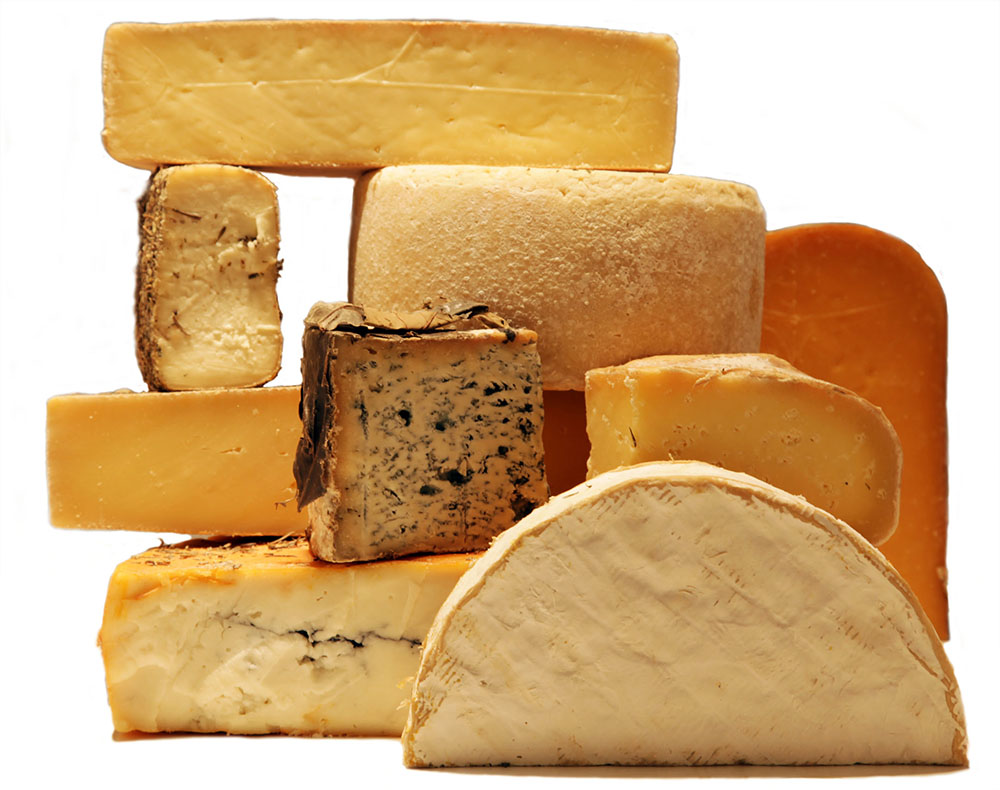
Cheese is the chameleon of the food world, as well as one of its greatest delights. Fresh and light or funky and earthy, creamy and melty or crystalline and crumbly—no other food offers such a variety of flavors and textures.
But cheese is not just a treat for the palate: its discovery changed the course of Western civilization, and, today, cheese rinds are helping scientists conduct cutting-edge research into microbial ecology. In this episode of Gastropod, we investigate cheese in all stinking glory, from ancient Mesopotamia to medieval France, from the origins of cheese factories and Velveeta to the growing artisanal cheese movement in the U.S. Along the way, we search for the answer to a surprisingly complex question: what is cheese? Join us as we bust cheese myths, solve cheese mysteries, and put together the ultimate cheese plate.
The Secret History of Cheese, or, Why the Cheese Origin Story is a Myth
This is the story you’ll often hear about how humans discovered cheese: one hot day nine thousand years ago, a nomad was on his travels, and brought along some milk in an animal stomach—a sort of proto-thermos—to have something to drink at the end of the day. But when he arrived, he discovered that the rennet in the stomach lining had curdled the milk, creating the first cheese. But there’s a major problem with that story, as University of Vermont cheese scientist and historian Paul Kindstedt told Gastropod: the nomads living in the Fertile Crescent of the Middle East in 7000 B.C. would have been lactose-intolerant. A nomad on the road wouldn’t have wanted to drink milk; it would have left him in severe gastro-intestinal distress.
Kindstedt, author of the book Cheese and Culture, explained that about a thousand years before traces of cheese-making show up in the archaeological record, humans began growing crops. Those early fields of wheat and other grains attracted local wild sheep and goats, which provide milk for their young. Human babies are also perfectly adapted for milk. Early humans quickly made the connection and began dairying—but for the first thousand years, toddlers and babies were the only ones consuming the milk. Human adults were uniformly lactose-intolerant, says Kindstedt. What’s more, he told us that “we know from some exciting archaeo-genetic and genomic modeling that the capacity to tolerate lactose into adulthood didn’t develop until about 5500 BC”—which is at least a thousand years after the development of cheese.
The real dawn of cheese came about 8,500 years ago, with two simultaneous developments in human history. First, by then, over-intensive agricultural practices had depleted the soil, leading to the first human-created environmental disaster. As a result, Neolithic humans began herding goats and sheep more intensely, as those animals could survive on marginal lands unfit for crops. And secondly, humans invented pottery: the original practical milk-collection containers.
In the warm environment of the Fertile Crescent region, Kinstedt explained, any milk not used immediately and instead left to stand in those newly invented containers “would have very quickly, in a matter of hours, coagulated [due to the heat and the natural lactic acid bacteria in the milk]. And at some point, probably some adventurous adult tried some of the solid material and found that they could tolerate it a lot more of it than they could milk.” That’s because about 80 percent of the lactose drains off with the whey, leaving a digestible and, likely, rather delicious fresh cheese.
Cheese Changed the Course of Western Civilization
With the discovery of cheese, suddenly those early humans could add dairy to their diets. Cheese made an entirely new source of nutrients and calories available for adults, and, as a result, dairying took off in a major way. What this meant, says Kindstedt, is that “children and newborns would be exposed to milk frequently, which ultimately through random mutations selected for children who could tolerate lactose later into adulthood.”
In a very short time, at least in terms of human evolution—perhaps only a few thousand years—that mutation spread throughout the population of the Fertile Crescent. As those herders migrated to Europe and beyond, they carried this genetic mutation with them. According to Kindstedt, “It’s an absolutely stunning example of a genetic selection occurring in an unbelievably short period of time in human development. It’s really a wonder of the world, and it changed Western civilization forever.”
Tasting the First Cheeses Today
In lieu of an actual time machine, Gastropod has another trick for listeners who want to know what cheese tasted like 9,000 years ago: head to the local grocery store and pick up some ricotta or goat’s milk chevre. These cheeses are coagulated using heat and acid, rather than rennet, in much the same way as the very first cheeses. Based on the archaeological evidence of Neolithic pottery containers found in the Fertile Crescent, those early cheeses would have been made from goat’s or sheep’s milk, meaning that they likely would have been somewhat funkier than cow’s milk ricotta, and perhaps of a looser, wetter consistency, more like cottage cheese.
“It would have had a tart, clean flavor,” says Kindstedt, “and it would have been even softer than the cheese you buy at the cheese shop. It would have been a tart, clean, acidic, very moist cheese.”
So, the next time you’re eating a ricotta lasagne or cheesecake, just think: you’re tasting something very similar to the cheese that gave ancient humans a dietary edge, nearly 9,000 years ago.
Camembert Used to be Green
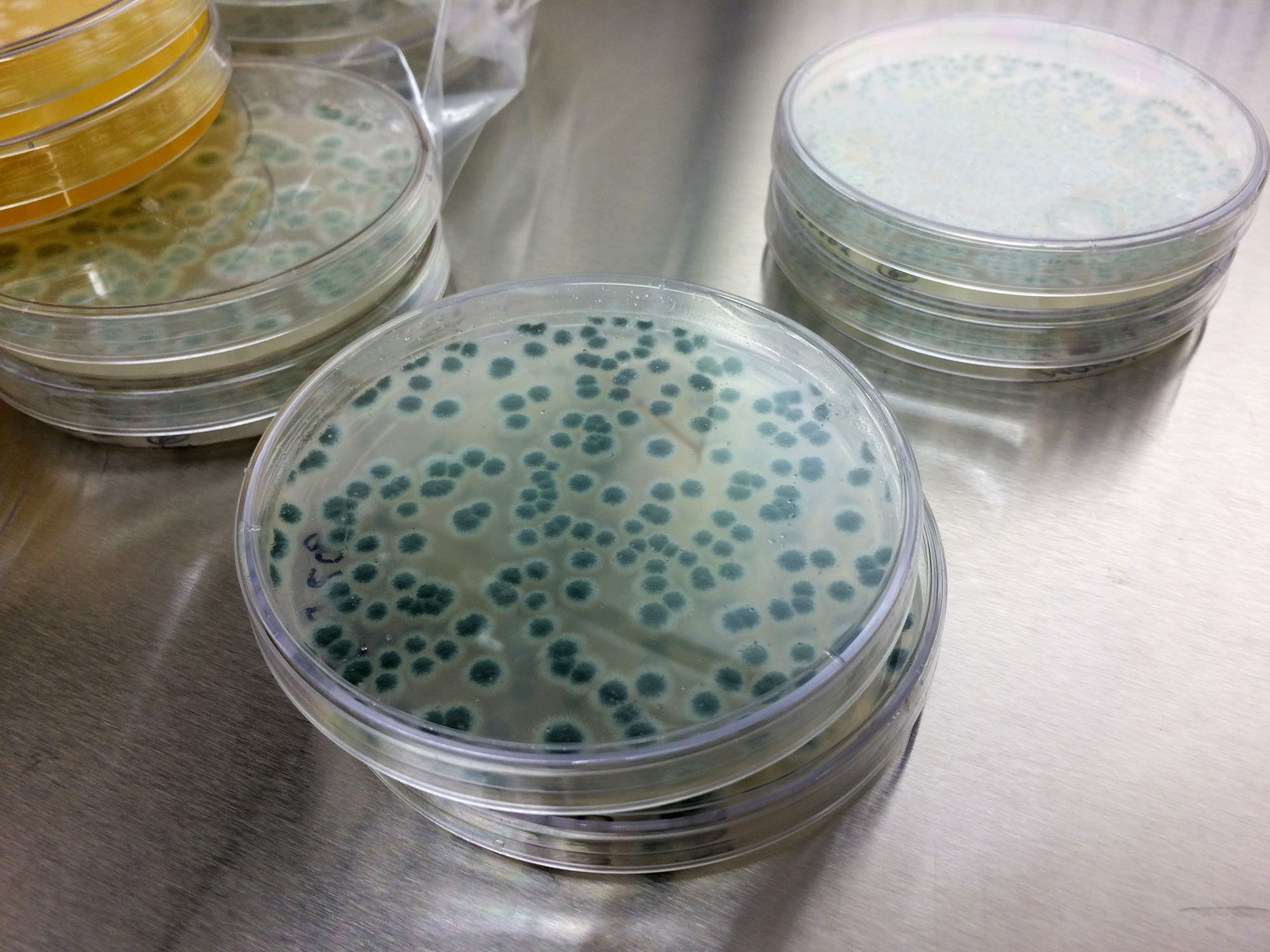
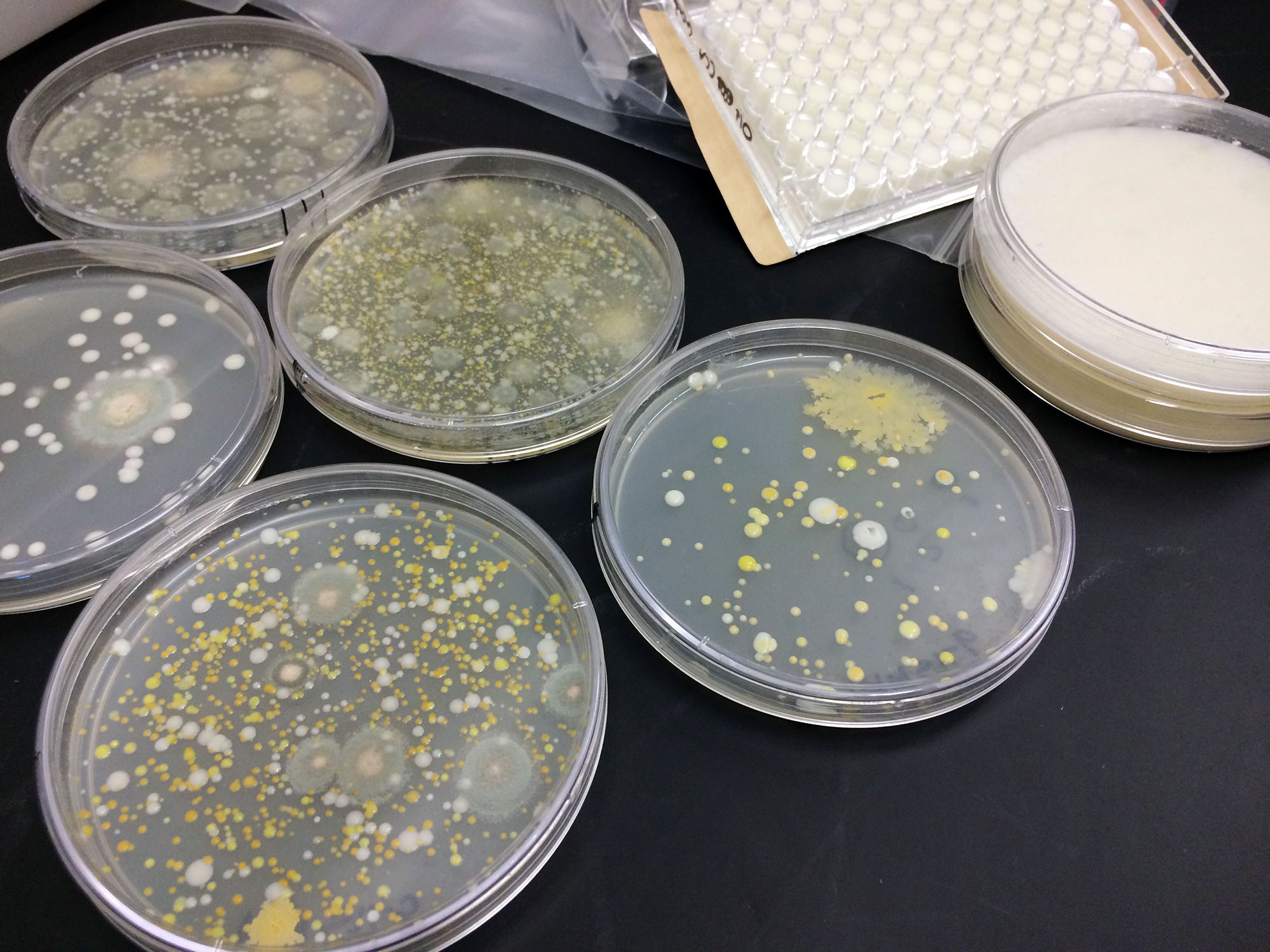
Those early cheese-making peoples spread to Europe, but it wasn’t until the Middle Ages that the wild diversity of cheeses we see today started to emerge. In the episode, we trace the emergence of Swiss cheese and French bloomy rind cheeses, like Brie. But here’s a curious fact that didn’t make it into the show: when Gastropod visited Tufts microbiologist Benjamin Wolfe in his cheese lab, he showed us a petri dish in which he was culturing the microbe used to make Camembert, Penicillium camemberti. And it was a gorgeous blue-green color.
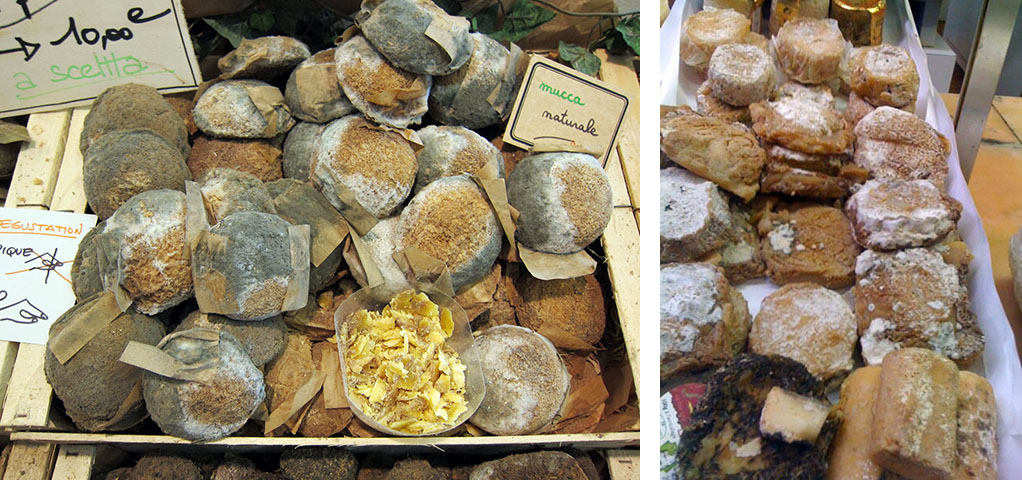
Wolfe explained that according to Camembert: A National Myth, a history of the iconic French cheese written by Pierre Boisard, the original Camembert cheeses in Normandy would have been that same color, their rinds entirely colonized by Wolfe’s “green, minty, crazy” microbe. Indeed, in nineteenth-century newspapers, letters, and advertisements, Camembert cheeses are routinely described as green, green-blue, or greenish-grey. The pure white Camembert we know and love today did not become the norm until the 1920s and 30s. What happened, according to Wolfe, is that if you grow the wild microbe “in a very lush environment, like cheese is, it eventually starts to mutate. And along the way, these white mutants that look like the thing we think of as Camembert popped up.”
In his book, Boisard attributes the rapid rise of the white mutant to human selection, arguing that Louis Pasteur’s discoveries in germ theory at the start of the twentieth-century led to a prejudice against the original “moldy”-looking green Camembert rinds, and a preference for the more hygienic-seeming pure white ones. Camembert’s green origins have since been almost entirely forgotten, even by the most traditional cheese-makers.
Penicillium camemberti growing in a petri dish in Ben Wolfe’s lab. Photograph by Nicola Twilley.
Listen to this week’s episode of Gastropod for much more on the secret history and science of cheese, including how early cheese bureaucracy led to the development of writing, what studying microbes in cheese rinds can tell us about microbial ecology in our guts, and why in the world American cheese is dyed orange. (Hint: the color was originally seen as a sign of high quality.) Plus, Gastropod will help you put together the world’s most interesting cheese plate to wow guests at your next dinner party. Listen here for more!
EPISODE NOTES
Heather Paxson
Heather Paxson is a professor of anthropology at MIT, as well as the author of an excellent book, The Life of Cheese, all about the new wave of American artisanal cheese-makers.
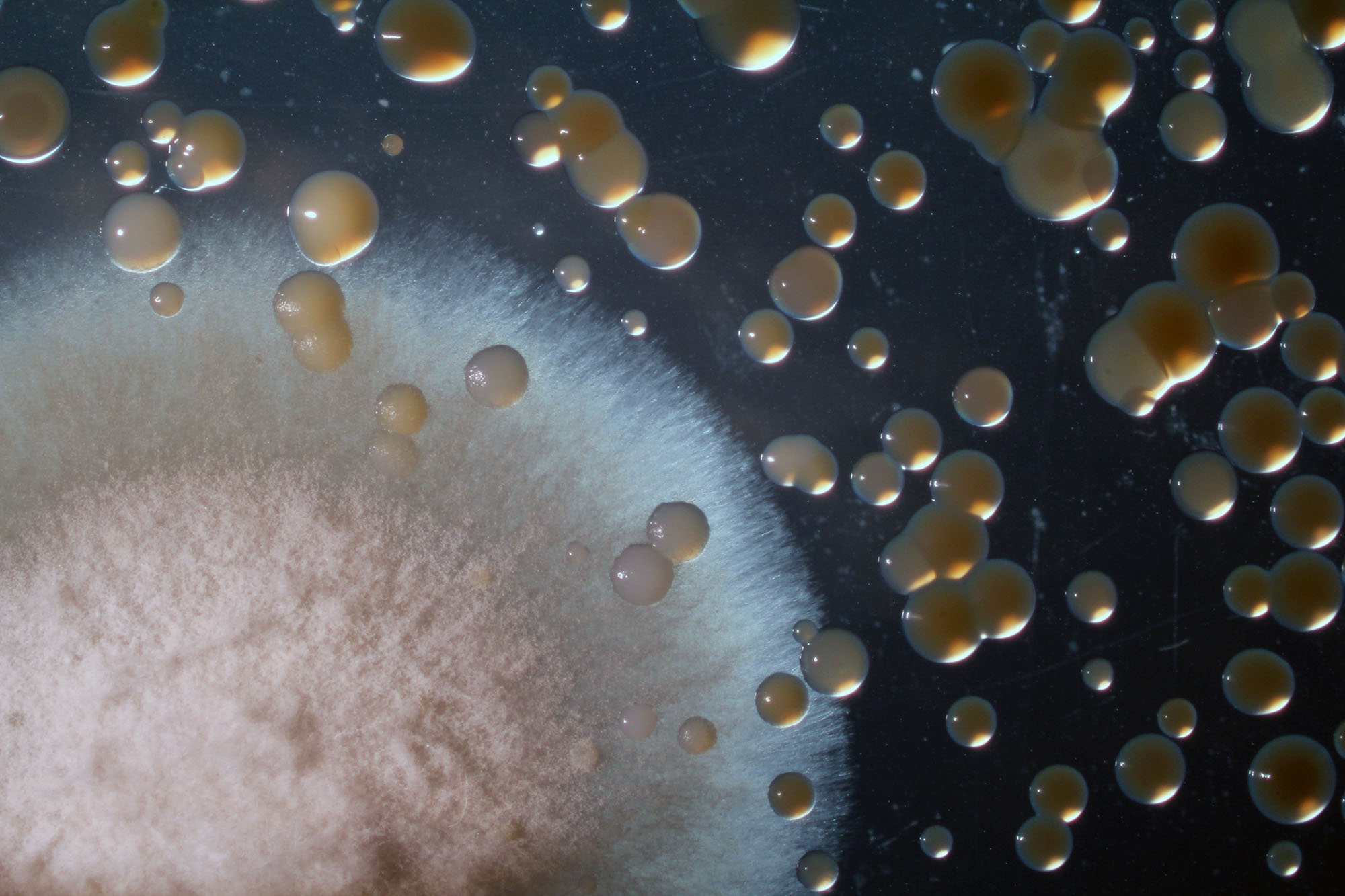
Rind microbes from a Colston Bassett Stilton. Photograph courtesy of Benjamin E. Wolfe.
Microbes Make the Cheese
In the episode, Heather Paxson describes the struggles she and her colleagues went through as part of a committee responsible for writing this American Academy of Microbiology FAQ on microbes and cheese, “Microbes Make the Cheese,” published in February 2015 and available as a free PDF here.
At his lab at Tufts University, microbiologist Benjamin Wolfe studies how microbes from food (mostly cheese!) interact, in order to tease out the ecological and evolutionary forces that shape microbial diversity. He is co-founder of MicrobialFoods.org, an online publication exploring the science of fermented foods.
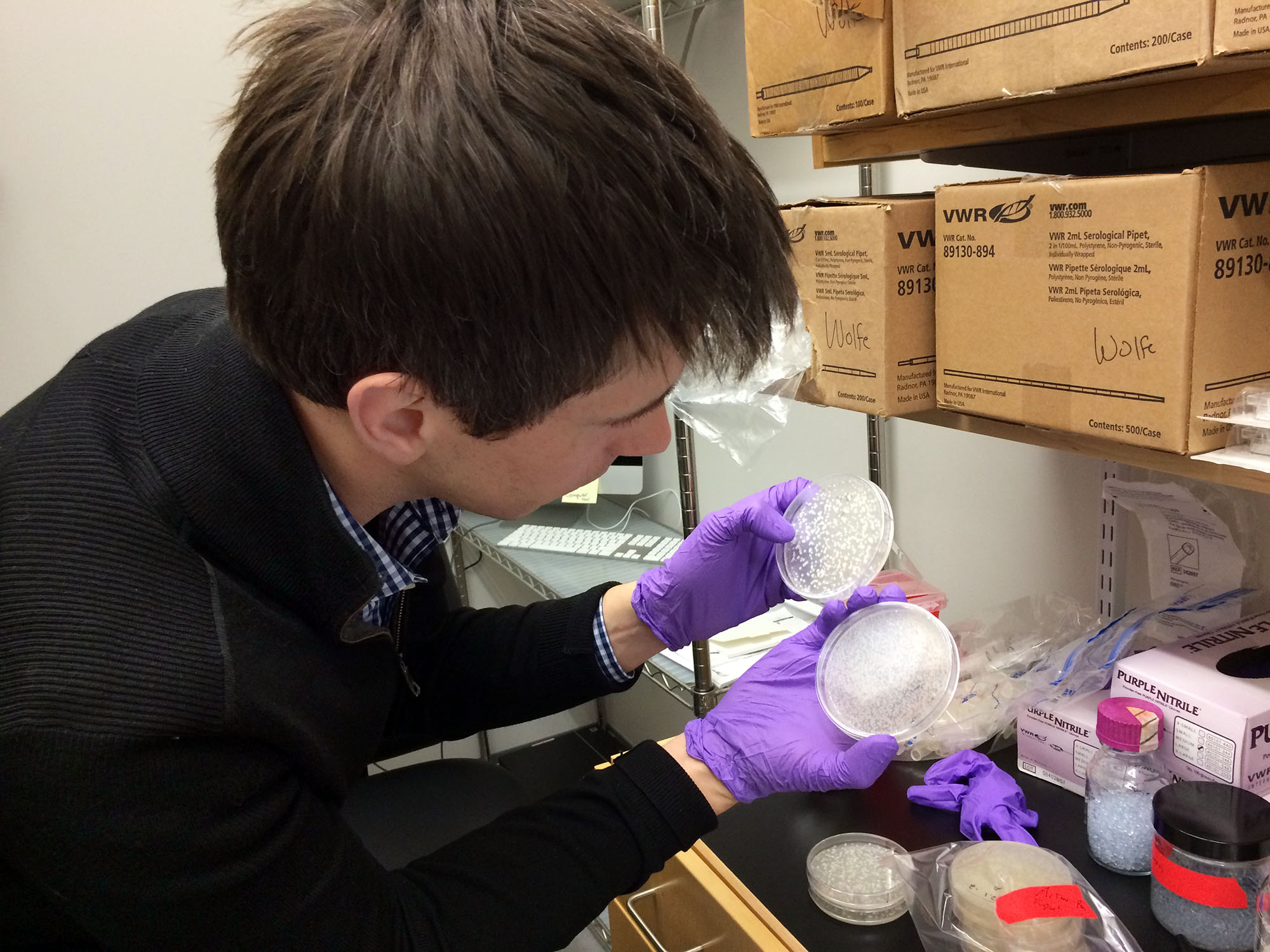
Ben Wolfe examining his in-vitro cheeses for signs of life. Photograph by Nicola Twilley.
In-vitro cheese rind communities in Ben Wolfe’s lab. Photograph by Nicola Twilley.
Cheese Rind Communities Provide Tractable Systems for In Situ and In Vitro Studies of Microbial Diversity
This paper, published in the journal Cell in July 2014, was co-authored by Benjamin Wolfe, Julie E. Button, Marcela Santarelli, and Rachel J. Dutton. The team surveyed 137 European and North American cheeses to assess microbial diversity, with some fascinating results. At the time, Wolfe was working in Rachel Dutton’s lab at Harvard’s FAS Center for Systems Biology. A Gastropod listener and current post-doc in Dutton’s lab, Kevin Bonham, recently wrote a three-part essay at Scientific American that goes into detail about the process for DNA-sequencing a cheese rind, and how to turn that data into useful information.
To eat the rind or not?
You may have noticed that some eaters scorn the rinds of cheeses, from the soft fuzzy white carpet that envelops brie to the tougher edge of an aged cheddar, while others tuck right into them. Which approach is correct? The answer depends on what kind of rind it is—as well as your own comfort level with microbes.
Some rinds today are covered with wax, and others, such as England’s Montgomery Cheddar, are surrounded by cloth, neither of which are edible. But for all the rest, the rind is what microbiologists such as Ben Wolfe call a “biofilm”—an entire ecosystem of microbes that colonize the cheese surface, gluing themselves together. Historically, the rind creates a method of preservation, a surface “to keep [the cheese] from being damaged and make it easy to transport. So people just let these rinds develop.” These microbial rinds are perfectly safe for consumption, though they have a different, sometimes stronger, taste than the cheese itself. So: Eat the rind or not? Heather Paxson, who unhesitatingly ate the rind on a St. Nectaire during an afternoon of cheese-tasting with Gastropod, says “It’s purely a matter of taste.”
Frankencheeses
As we explain in the episode, Ben Wolfe has become something of a “cheese doctor,” with cheese-makers sending him their “Frankencheeses” in the mail, in order to figure out what went wrong. Meanwhile, listener “Moldy in Avignon” sent us an email with the subject “Gross Cheese Mystery,” and a photograph of really, really old cheeses for sale in the Avignon market. We consulted with Ben, who shared his own photos of brown, nasty-looking French cheeses for sale at the Slow Food Festival in Bra, Italy. Apparently, these kinds of super-aged cheeses are meant for eating, though the cheese seller in this short video explains they are hard to find these days and much less popular than they used to be.
The brown dust is actually microscopic cheese mites: Wolfe calls them the “gophers” of the cheese world, as they eat into the rind, aerating it as well as increasing the surface area available for microbial colonization (and thus flavor development). They’re common in cheese aging, although in the U.S. they’re usually regarded as a pest, and cheeses are carefully brushed to remove them. Here’s footage of a cheese mite munching on microbial hyphae, filmed at the Dutton lab.
Very old cheeses (aged for up to five years) covered in craggly molds and a fine dust of cheese mites. (Left) Photographed by Ben Wolfe for sale at the Slow Food Festival in Bra, Italy. (Right) As photographed by listener “Moldy in Avignon.”
Cheese stories, cheese ads, and Wallace & Gromit
This episode wouldn’t have been nearly as much fun without all your cheese stories: thanks to all of you who wrote or called in, and particularly to Elana Lubin, Roz Cummins, Emily Lo Gibson, Mike Simonovich, Jenny Morber, Etta Devine, Tasha from the Boston area, and Doug from Perth. We sampled audio from Alex Crowley’s Wallace & Gromit“The Cheesesnatcher” claymation, as well as a 1986 Velveeta ad, a 1958 Kraft ad, and a “Time for Timer” Saturday morning cartoon PSA from the 1970s.







 One of the great virtues of Scottish pop-punk geniuses the Rezillos was they broke up before they could do anything wrong. They formed in 1976, made a splash in 1977, released their superb album Can’t Stand the Rezillos in 1978, and said farewell with a live album in 1979, fading into the sunset before they could tarnish their reputation.
 This label puts out the most interesting and diverse music! From psychobilly to surf to retro '60s style garage rock to country blues music. The Watzloves are a band featuring Deutschmark Bob of DM Bob and the Deficits - a great Hounddog Taylor inspired trashy blues-garage rock band - but this is quite different. It's a sort of mix (hence the CD title I 'spose) of country, zydeco, calypso and New Orleans jazz. Silky Toss plays accordion and does the lead singing, Bob (who actually hails from Louisiana, though he lives in Germany now) sings backing vocals and plays guitar, washboard, and drums, and Jakebus plays slide guitar, tuba, and sings backing vocals too. There's an obvious strong Cajun music feel, and I'm not a huge Zydeco fan but this is pretty cool stuff. The songs are all neat little stories, and the playing by all is excellent. There's a twisted sense of humor permeating it with songs like "You Are The Reason Our Kids Are Ugly" (a Conway Twitty and Loretta Lynne duet cover), "Voodoo Queen" and "You Are So Strange," but not enough to make it simply a novelty act. "Go Away Now" is my favorite song overall, a super-catchy little number with a rockin' beat. Fun stuff here. (Alan Wright, Cosmic Debris)
 trax:
trax: This label puts out the most interesting and diverse music! From psychobilly to surf to retro '60s style garage rock to country blues music. The Watzloves are a band featuring Deutschmark Bob of DM Bob and the Deficits - a great Hounddog Taylor inspired trashy blues-garage rock band - but this is quite different. It's a sort of mix (hence the CD title I 'spose) of country, zydeco, calypso and New Orleans jazz. Silky Toss plays accordion and does the lead singing, Bob (who actually hails from Louisiana, though he lives in Germany now) sings backing vocals and plays guitar, washboard, and drums, and Jakebus plays slide guitar, tuba, and sings backing vocals too. There's an obvious strong Cajun music feel, and I'm not a huge Zydeco fan but this is pretty cool stuff. The songs are all neat little stories, and the playing by all is excellent. There's a twisted sense of humor permeating it with songs like "You Are The Reason Our Kids Are Ugly" (a Conway Twitty and Loretta Lynne duet cover), "Voodoo Queen" and "You Are So Strange," but not enough to make it simply a novelty act. "Go Away Now" is my favorite song overall, a super-catchy little number with a rockin' beat. Fun stuff here. (Alan Wright, Cosmic Debris)
 trax:
trax: