Shared posts

22 Sep 23:26

Yes, You Can Make Soup Dumplings at Home

by Kenny Lao

Ever wondered how they get the soup inside the soup dumpling?

Kenny Lao, author of the brand-new book Hey There, Dumpling! pulls back the curtain on this magical food. 

When I open the bamboo steamer, I smell the porky broth and the briny, sweetness of shrimp. And then, when the initial steam subsides, I see the bubbles boiling in the rich broth through the translucent skin.  

Despite burning the roof of my mouth every time I slurp up that first soup dumpling, I am still blown away by the magic of being able to put boiling soup into such a delicate edible wrapper. It's always fun for me to ask students at the beginning of my soup dumpling class at Brooklyn Kitchen how they think we are going to get the soup into the dumpling. This recipe and instructional blows the top off this dumpling magic trick.

I have written a recipe for basic O.G. soup dumplings in my book, but I love the brashness of mixing pork with luxurious shrimp, which is something this recipe does so well.

My recipe consists of four parts:

  1. Chicken consommé
  2. Wheat flour wrappers
  3. Soy-vinegar sauce
  4. The final shrimp soup dumplings

While I use store-bought wrappers regularly, I always use homemade wrappers for soup dumplings. For soup dumplings, the wrapper must come up around the sides of the filling and be pinched into a top knot so that the sides are seamless enough. Only fresh wrappers are supple enough to stretch and stick to themselves in order to get the job done.

Start out by making the consommé, wrappers, and sauce. You'll then use the consommé to make the filling, which you should keep chilled so it stays thick—it will be easier to scoop that way.

Once you have the filling and the wrappers ready, follow these steps to shape and cook your dumplings:


  

Cut the dough in half and keep half covered. Roll the uncovered half into 10 equal pieces.

  

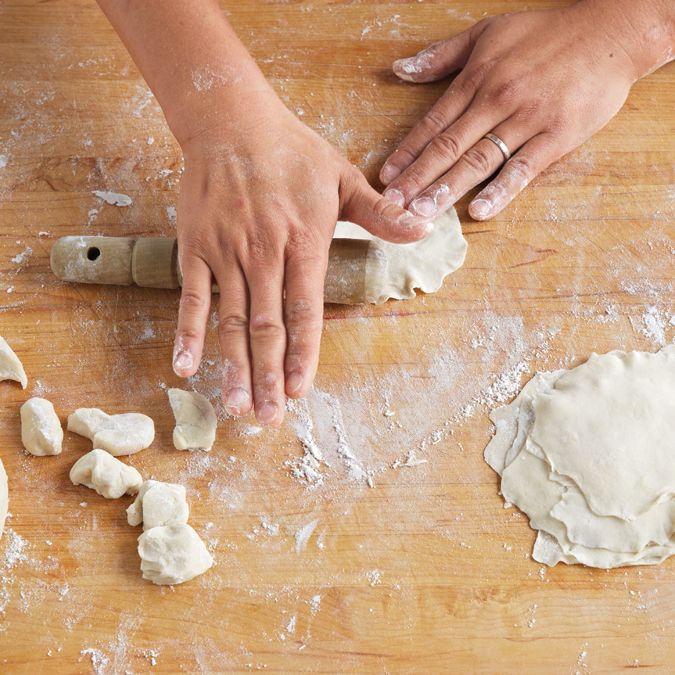
Working with one piece of dough at a time and keeping the others covered with plastic wrap, roll the dough into a very thin 5-inch (12-centimeter) round on a lightly floured surface. A small dowel works best for this. 

You want to roll from the center out, keeping a quarter-sized pad of thicker dough in the middle, and turning the dough with each roll to get an even circle.
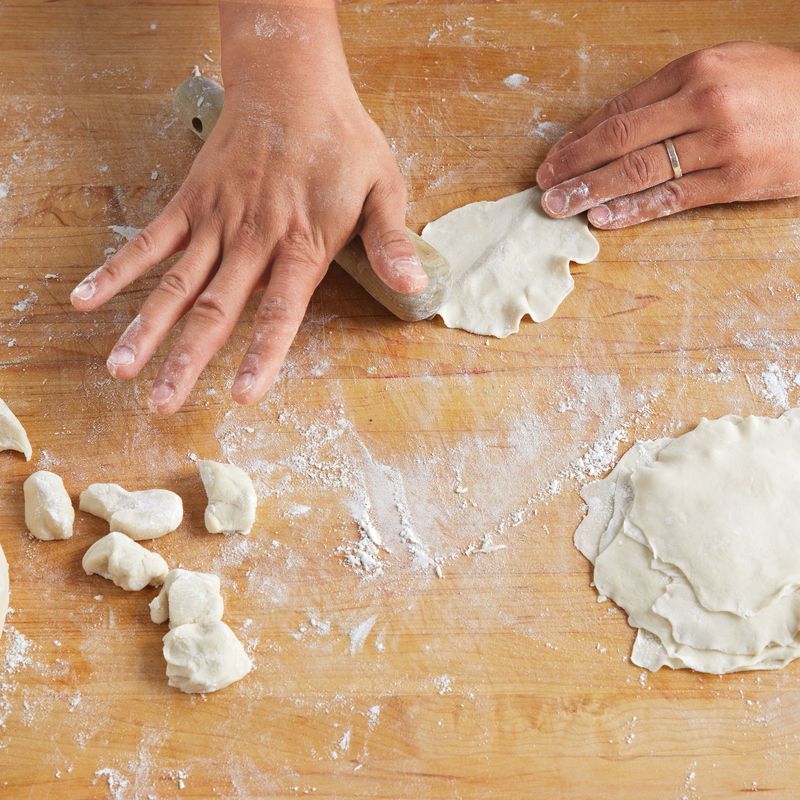
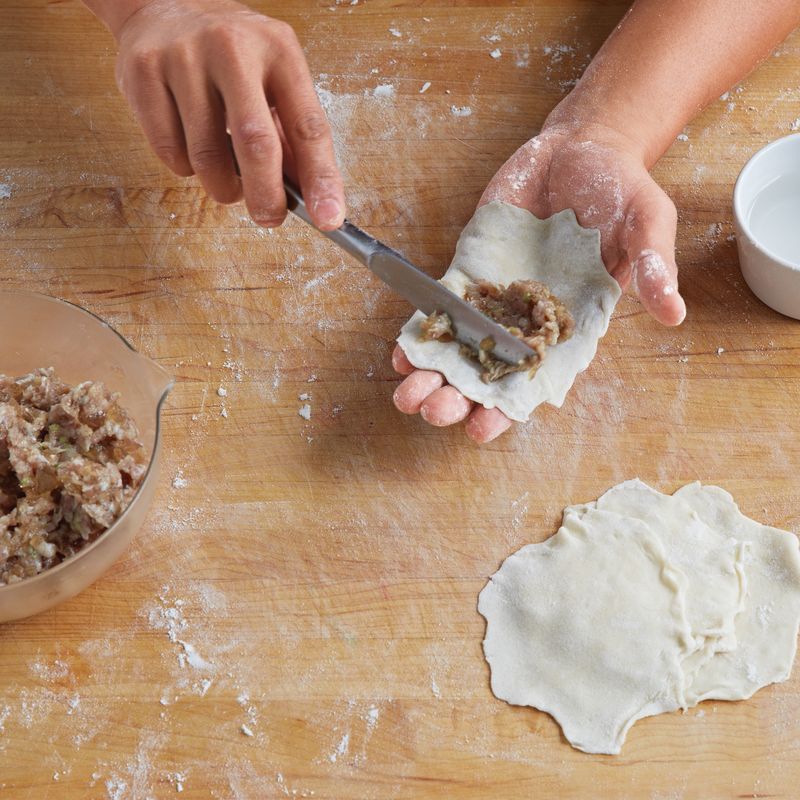
  

Rotate the skin with your left hand as you roll it out with your right hand. The edges should end up really thin so that they don't get clumpy when you pleat them at the top of the dumpling.

Place 1 tablespoon of filling in the center of the wrapper.
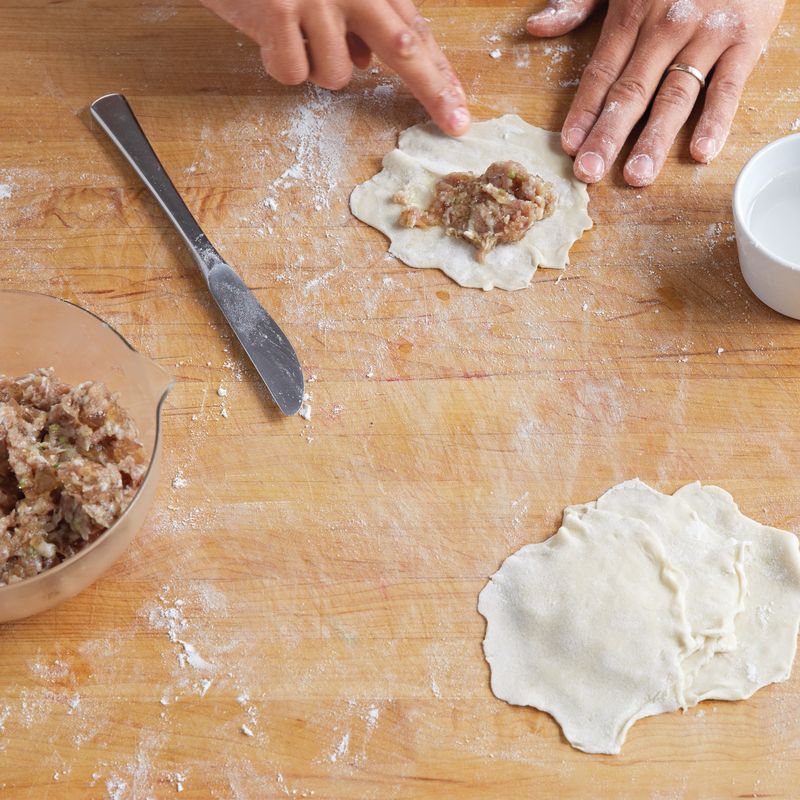
  

Dab a little water around the edges of the wrapper.

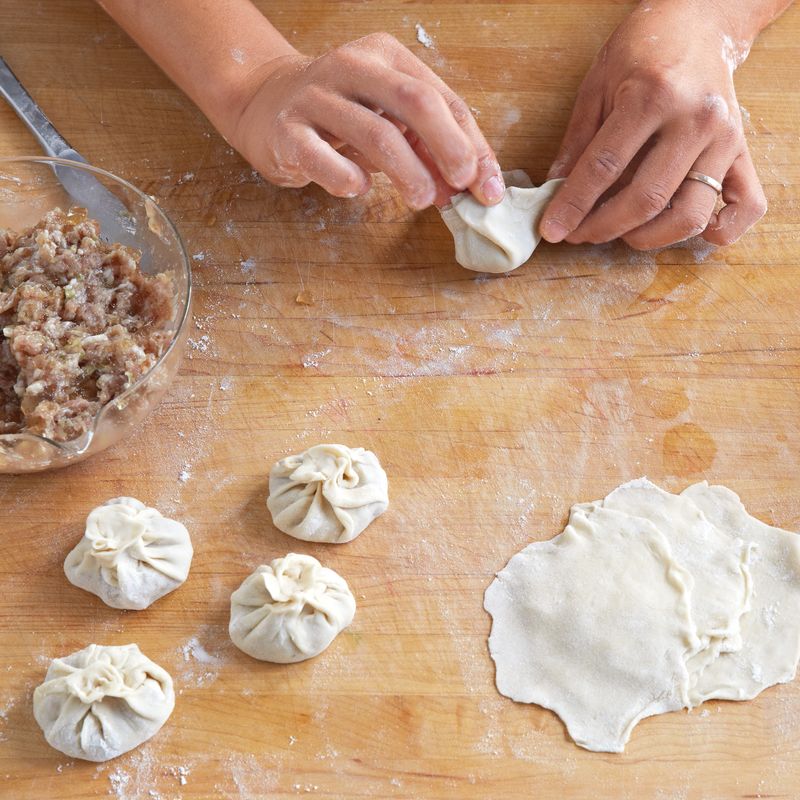
Pick up the four "corners" of the wrapper and pull them in toward the center so the filling can settle into the base.
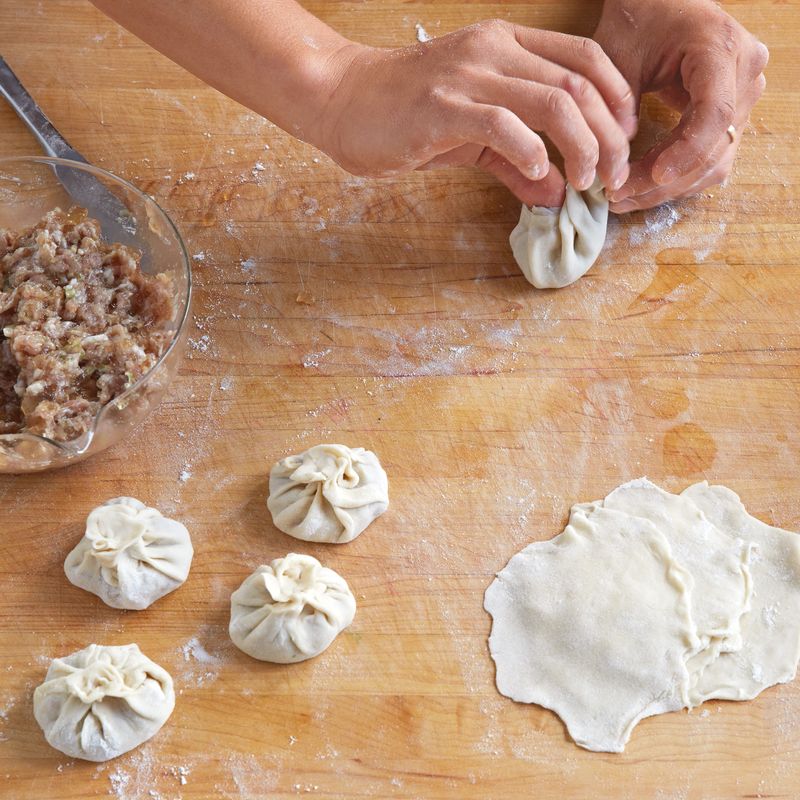
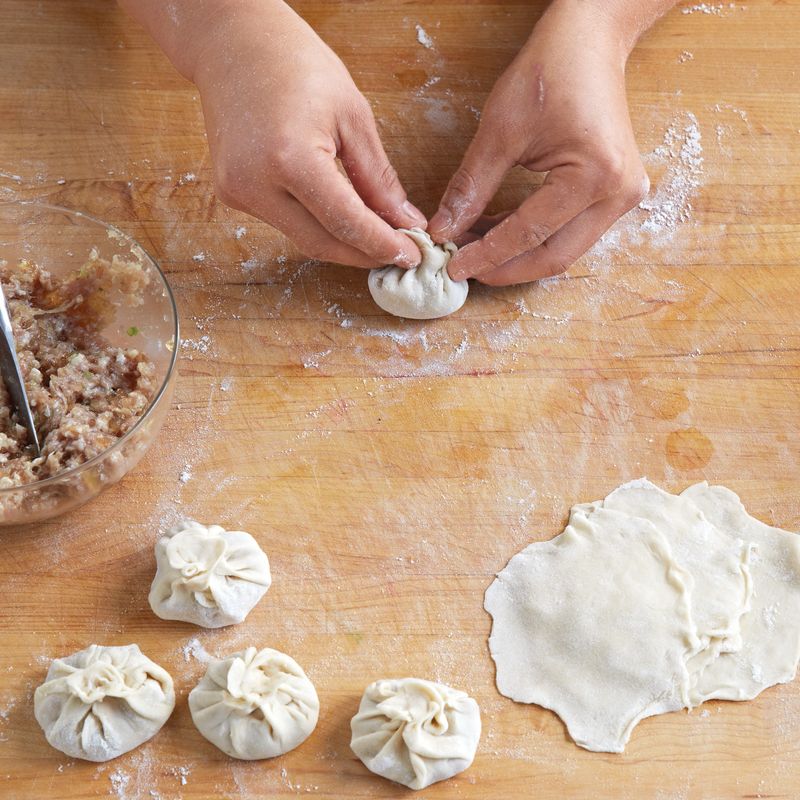
  

Pleat the wrapper between the corners to enclose the filling, then pinch the dough together right above the filling, where all the pleats meet.

This is the hard part, so concentrate now! Press the dough above the pinched center to flatten the edges to resemble a tiny flower.
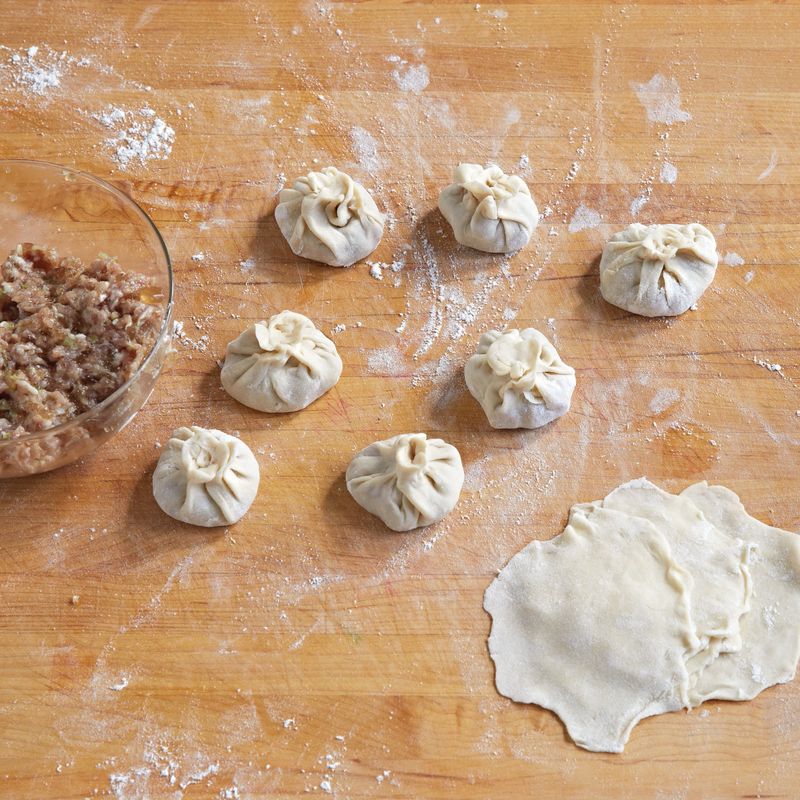
Place on a parchment-lined half-sheet pan. Repeat with the remaining dough and filling. 

Fill a wok with water to a depth of 3 inches (7 1/2 centimeters) or so. You basically want as much water as you can get in there without it touching the bottom of the steamer, so pop the steamer on the wok and add or remove water as needed. Bring the water to a boil.

Meanwhile, line two bamboo steamers with napa cabbage leaves or strips of parchment paper. Place the dumplings on top, spacing them 2 inches (5 centimeters) apart. Steam until the wrappers and fillings are cooked through, 6 to 7 minutes. If your wrappers are thin enough, you should see the soup bubbling inside.

Serve in the steamer, instructing guests on the art of eating a soup dumpling:  

1) Gently pick up a dumpling with the sides of chopsticks (the tips could poke a hole!) and sit it in a Chinese soupspoon. Take a small nibble from the skin to make a hole. Careful! The steam shooting out will be hot!

2) Slowly sip some of the soup out of the hole you've just made. Blow first if it's way too hot. You don't want to burn your tongue.

3) I like to use a narrow spoon to put a bit of the vinegar suace inside. Now go for it! 

Shrimp Soup Dumplings

Makes about 20

For the chicken consommé and the wheat flour wrappers:

3 pounds chicken wings
4 ounces Smithfield ham
1 cup sliced scallions, white parts only
2 ounces sliced peeled fresh ginger
3 dried shiitake mushrooms
1 large garlic clove, peeled
1 tablespoon mushroom soy sauce
2 teaspoons Shaoxing wine
Two 1/4-ounce packets powdered unflavored gelatin
1/4 cup cold water

For the wheat wrappers:

2 1/2 cups (363 grams) all-purpose flour, plus more for rolling
3/4 cup hot (but not boiling) water
1 tablespoon vegetable oil
1/4 cup cold water

For the soy-vinegar dip:

1/4 cup soy sauce
2 tablespoons rice wine vinegar
1 garlic clove, smashed
1/4 teaspoon freshly ground black pepper

For the dumplings:

2 1/2 ounces (70 grams) peeled and deveined shrimp
8 ounces (225 grams) fatty (80/20) ground pork

3 tablespoons minced scallions
2 tablespoons minced onion
1 tablespoon sugar
1 tablespoon soy sauce
1 1/2 teaspoons minced garlic
1 1/2 teaspoons rice wine vinegar
1/4 teaspoon sesame oil
1/4 teaspoon kosher salt
1 1/4 cups chicken consommé (from above)
Napa cabbage leaves, for steaming
Wheat flour wrappers (from above)

See the full recipe (and save and print it) here.

Final photo by Bobbi Lin; wok photo by James Ransom; all others by Lucy Schaeffer

22 Sep 23:23

The Four Different Types Of Introverts According To Jungian Psychology

by Heidi Priebe
tdurkee
tdurkee

Earlier this year, an article in New York Magazine emerged, suggesting that there are four different types of introversion: Social introversion, thinking introversion, anxious introversion and restrained introversion. While the piece was an interesting read, I found myself cringing at many of the attempted definitions.

The piece dismissively equated social anxiety with a particular form of introversion, which is not at all the case. Many extroverts suffer from social anxiety – they gain energy from social interaction but feel inept at initiating it, and therefor avoid it. Social anxiety is a disorder that can affect anyone, regardless of his or her social orientation.

In relation to the three other definitions of introversion (Social, thinking and restrained), it seems as though the researchers had simply sorted different components of introversion that are not mutually exclusive into three different ‘types’. The issue with this is, most true introverts would classify themselves as social, thinking and restrained introverts.

While this article certainly did hit on some aspects of what it means to be introverted, it may have helped the researchers to delve a little deeper into the Jungian definition of introversion, and the corresponding cognitive functions that separate introverts into four mutually exclusive categories. Below, we will explore how Jungian psychology classifies the different types of introversion.

Introverted Sensors

To sensing introverts, reality exists as a series of physical observations and experiences that they can sort through and classify while they are alone. These introverts are highly meticulous and detail-oriented, and enjoy keeping their homes, selves and environments in proper order. They are quick to notice patterns of behavior over time and they use those patterns to predict (and plan for) future occurrences. These introverts place a high value on tradition and are extremely respectful of social and societal conventions. They are rule-followers and tradition-upholders. To them, life is an ongoing process of putting – and keeping – things in order.

While alone, the introverted sensor is reflecting on past experiences, maintaining order in his or her personal environment and making tangible plans for the future.

Introverted Sensing types are: ISTJs and ISFJs.
Extroverted types that use introverted sensing as a secondary mode of analysis are: ESTJs and ESFJs.

Introverted Feelers

To feeling introverts, reality exists as a series of subjective experiences that they must explore and internalize to determine the true meaning of. Introverted feelers are highly creative individuals, who often use alone time to create poetry, music or art. They come to understand the world by deciding how they feel about the experiences they’ve had and developing a personal moral code to help them make future decisions. They often care deeply about social justice, and may feel the pain of wronged individuals on a personal level. They are the tortured artists of the world, who feel and experience everything on an incredibly deep, personal level.

When alone, the introverted feeler is reflecting on the experiences they’ve had, uncovering a deeper meaning behind those experiences and determining the corresponding moral principle. Often, they channel their feelings through some form of artistic expression. They also use alone time to indulge their wild imaginations and develop (constantly shifting) future ideals to aspire to.

Introverted Feeling types are: INFPs and ISFPs.
Extroverted types that use introverted feeling as a secondary mode of analysis are: ENFPs and ESFPs.

Introverted Thinkers

To thinking introverts, life exists as a series of objective truths that must be sorted through and fit into a greater system of cohesive, indisputable facts. Introverted thinkers are highly logical individuals, who strive to acquire as wide a breadth of knowledge as possible, in order to determine true information from false information. Unlike introverted feelers or introverted intuitives, they are not as concerned with the deeper, subjective meaning of their findings as they are with simply assuring that their findings are a correct and accurate reflection of the world around them. Introverted thinkers are the true scientists and researchers of the world.

When alone, the introverted thinker is researching topics of interest, comparing any new information they acquire to their pre-existing database of knowledge and determining where – if anywhere – the new information fits. They are creating an internal framework of how the world works on an objective, rational level.

Introverted Thinking types are: INTPs and ISTPs.
Extroverted types that use introverted thinking as a secondary mode of analysis are: ENTPs and ESTPs.

Introverted Intuitives

To intuitive introverts, life exists as a giant, mystical puzzle to be solved. They enjoy gathering a large database of knowledge about the topics that interest them and discerning which knowledge ‘clicks’ with their pre-existing hunches or perceptions about the world. While alone, they are usually meditating on the ‘big picture’ issues of the world and attempting to understand – and find abstract ways to solve – complex problems. They enjoy speculating about the future in a direct, pointed fashion – by predicting exactly how things are likely to unfold and forming long-term plans accordingly.

When alone, the introverted intuitive is usually researching topics of interest and analyzing what they’re learning to discern whether or not it fits with their pre-existing worldview. They also spend a great deal of time deciding upon and laying down long-term plans for their future.

Introverted Intuitive types are: INTJs and INFJs.
Extroverted types that use introverted intuition as a secondary mode of analysis are: ENTJs and ENFJs.

Note:

It is important to note that Jung believed everyone embodied both introverted and extroverted traits. Therefore, an introverted intuitive may also be an extroverted feeler. Or, an introverted thinker may also be an extroverted sensor.

In fact, Jung believed that we all possess two introverted cognitive functions and two extroverted cognitive functions. Therefore, an introverted intuitive may also be an introverted thinker, to a lesser degree. However, some of these functions are mutually exclusive (For example, an introverted thinker cannot also be an introverted feeler – though the two have traits that overlap). For an in-depth explanation of the Jungian cognitive functions, click here. TC mark

22 Sep 23:23

The Four Different Types Of Extroverts According To Jungian Psychology

by Heidi Priebe
kirstylee152
kirstylee152

Earlier this year, an article in New York Magazine emerged, suggesting that there are four different types of introversion. While I disagree with the specific categories of introversion that the article suggested, I do agree that there are four different types – as Carl Jung originally theorized.

It’s not currently trendy to be an extrovert. But, as an extrovert myself, I didn’t see that as reason enough to not also explore the different types of extroversion. Just as introverts are not all alike, neither are extroverts. Jung sorted both social orientations into four distinct categories. Here’s what he had to say about the different types of extroverts.

Extroverted Sensors

Extroverted sensors are energized and inspired by the physical world that surrounds them. They are keenly in tune with every sight, sound, smell, taste and touch that enters their awareness – they gain energy by engaging in each new sensory experience. These extroverts may be particularly interested in athletics and other physically intense experiences. They take in people the way they take in everything else – by noticing how people look, smell, sound and hold themselves. Their preferred method of socializing is one in which they are sharing experiences with other people – they’d rather bond over doing something fun together than over a long conversation.

What extroverted sensors love about social gatherings is the intense stimulation of being introduced to new people whom they haven’t ‘taken in’ before. These extroverts particularly enjoy the sensory stimulation that clubs, raves and other such entertainment venues provide – they can almost physically feel the energy that is present in such environments.

Extroverted Sensing types are: ESTPs and ESFPs.
Introverted types that use extroverted sensing as a secondary mode of analysis are: ISTPs and ISFPs.

Extroverted Feelers

Extroverted feelers are the most stereotypically extroverted extroverts in that they gain energy primarily through interacting with people. They enjoy listening to, learning about and sharing experiences with others in just about any fashion – be it a long, in-depth conversation or a simple exchange of small talk. Others’ joy and pain is their joy and pain. Though they certainly require alone time every once in a while (all extroverts do), extroverted feelers require the least amount of alone time out of all extroverted types. People are their main joy and inspiration in life and it doesn’t matter how or in what capacity they’re interacting with others – as long as there’s a plethora of people present whose energy they can feed off.

What extroverted feelers love about social gatherings is the chance to interact with various people, learn about the lives of those people and form new interpersonal connections. They also enjoy the validation they receive from others in social situations and they feed off the positive social energy that abounds. At a social gathering, you will usually find them chatting with many different people and making sure everyone feels comfortable and happy.

Extroverted Feeling types are: ESFJs and ENFJs.
Introverted types that use extroverted feeling as a secondary mode of analysis are: ISFJs and INFJs.

Extroverted Intuitives

Extroverted intuitives are the least stereotypically extroverted extroverts. They gain energy primarily through exploring abstract ideas about the world and speculating over various possibilities for the future. They are extroverts primarily in that their thoughts are oriented externally, toward the world of experiences they could have. These extroverts feed off the mental energy of others in order to form new ideas and come to intellectual conclusions. They particularly enjoy engaging in friendly debates and bouncing ideas off others. If others are uninterested in engaging in such conversations, the extroverted intuitive is likely to go engage their plans and ideas alone.

Extroverted intuitives often enjoy speculating about how a social gathering might go more than they enjoy the actual social gathering itself. They are maximally energized by the feeling that ‘Anything could happen.’ At a social gathering, you are likely to find extroverted intuitives excitedly discussing an idea in the corner of a room with someone who intrigues them. They may also spur friendly debates or intellectual conversations with a group.

Extroverted Intuitive types are: ENTPs and ENFPs.
Introverted types that use extroverted intuition as a secondary mode of analysis are: INTPs and INFPs.

Extroverted Thinkers

Extroverted thinkers are the most structured and decisive extroverts. They aim to impose logical order on their external environment in as efficient a manner as possible. These extroverts are goal-oriented and aggressive – they see a clear path between where they are and where they want to be and they are perfectly comfortable navigating their environments in any means possible in order to get there. They gain energy through working with others to achieve their goals and taking hold of those hard-earned achievements. They are not the warmest extroverts, but they do genuinely enjoy the company of others and they are primarily motivated by external achievements.

What extroverted thinkers enjoy about social gatherings are the networking opportunities they present, as well as the opportunity to gauge their own achievements and social status against others’ (not necessarily in a petty way, but as a means of benchmarking their own progress). These types will often be found trying to ‘charm’ or entice others who can help them professionally, as they almost always have business on their mind.

Extroverted Thinking types are: ESTJs and ENTJs.
Introverted types that use extroverted intuition as a secondary mode of analysis are: ISTJs and INTJs.

Note:

It is important to note that Jung believed everyone embodied both extroverted and introverted traits. Therefore, an extroverted thinker may also be an introverted intuitive. Or, an extroverted sensor may also be an introverted feeler.

In fact, Jung believed that we all possess two extroverted cognitive functions and two introverted cognitive functions. Therefore, an extroverted intuitive may also be an extroverted thinker, to a lesser degree. However, some of these functions are mutually exclusive (For example, an extroverted sensor cannot also be an extroverted intuitive – though the two have traits that overlap). For an in-depth explanation of the Jungian cognitive functions, click here.TC mark

22 Sep 23:13

La lección

by eldesco

Una de las cosas que diferencian a un gran periodista de uno mediocre, sobre todo cuando ambos se sitúan frente a un micrófono o una cámara de televisión, es que el primero siempre se sabe la lección. En las tertulias es un placer escuchar cómo Ignacio Escolar apabulla con datos a quienes defienden al Gobierno de manera rutinaria, sin argumentos. En los monólogos reina Gabilondo, un tipo que mezcla la pedagogía con el conocimiento. Antes de aparecer en pantalla los dos se cuidan muy mucho de saberse la lección.

Con los políticos pasa lo mismo. Si te sabes la lección puedes hablar de cualquier cosa, eres capaz de defender la idea más atrevida: transmites seguridad y confianza, comunicas con soltura tus propuestas, resultas creíble y contagias entusiasmo, te muestras como un estadista serio y fiable. Lideras. Si no te sabes la lección… eres Mariano Rajoy.

El presidente del Gobierno ha ofrecido un momento patético, otro más, ante la prensa. En este caso el ridículo ha tenido lugar ante los micrófonos de Mas de uno, programa de Onda Cero. Durante la entrevista con Carlos Alsina, Rajoy se ha mostrado especialmente espeso. Por momento incluso surrealista. Transcribo parte de la charla por su indudable valor humorístico…

Mariano Rajoy: Un catalán hoy es catalán, español y europeo. Lo que algunos pretenden pedirle a la gente es que renuncie a su condición de español y europeo. Es un disparate. Y sus derechos como españoles y europeos ¿Por qué tienen que perderlos? Si es que esto va contra el sino de los tiempos. Bueno, pues esto es lo que tratamos de defender nosotros.
Carlos Alsina: Pero la nacionalidad española no la perderían. Ya que estamos hablando de este escenario que sería la independencia catalana, la nacionalidad española no la perderían los ciudadanos de Cataluña.
MR: Ah. No lo sé. Es decir: ¿Por qué no la perderían? ¿Y la europea tampoco?
CA: Pues porque la ley dice que el ciudadano de origen nacido en España no pierde la nacionalidad aunque resida en un país extranjero si manifiesta su voluntad de conservarla.
MR: Pues… ¿Y la europea?
CA: Y la europea la tiene porque tiene la nacionalidad española.
MR: Me parece que estamos en una disquisición que no conduce a parte alguna. Lo que se le está obligando a la gente es que decida si quiere ser catalán o quiere ser español. Y algunos derechos tiene la gente como españoles y como europeos. Y yo creo que da una riqueza mucho mayor y unos beneficios mucho mayores ser catalán, español y europeo que ser única y exclusivamente catalán. Vamos, me parece de puro sentido común.

Rajoy no se sabe la lección. ¿Disquisición? Yo diría que se trata de un ridículo espantoso. Parece increíble, puesto que el presidente no tiene lecciones más importantes que ésta en su agenda: la famosa deriva independentista catalana. Estamos a cuatro días de unas elecciones cruciales. Es EL TEMA. Un reto titánico, su gran desafío, aquel que seguramente marque su futuro político. Pues no se lo sabe. “Ah. No lo sé. Es decir: ¿Por qué no la perderían? ¿Y la europea tampoco?”, masculla con torpeza el rey de la obviedad y la evasiva. El presidente del Gobierno, que se dice pronto.

Los ciudadanos, los votantes,deberíamos aprender la lección.

22 Sep 23:11

Why is it so easy to believe that the UK super-rich have sex with pigs?

by Cory Doctorow

animal-farm-pigs

Well, for one thing, it's pretty weird that as soon as the story that UK Prime Minister/hereditary toff David Cameron allegedly stuck his penis in the mouth of a dead pig in a college initiation for a secret society of the ultra-rich, the UK's top establishment figures leapt to his defense, saying that even if he face-fucked a dead pig, it wasn't such a big deal.

The seeming insignificance of necrophiliac bestiality for the great and the good raises the question: What did they do during their college years, that the pig incident isn't a "big deal"?

But more interesting is the widespread anthropological phenomenon of grotesque and depraved initiation rituals for the upper echelons of societies' power structures. In nations and tribes all over the world and in all times, this norm (and rumors of it) has re-emerged.

In a highly stratified society like the UK, where we're still ruled by those chinlessly perverse dweebs who can trace their ancestry to the Norman conquest, necro-bestiality isn't a weird affectation of the aristocratic classes but something intrinsic to the way our country is organized. In places with a greater degree of social mobility, like much of continental Europe, there's less of a scope for this kind of institutional ossification of perversion. But Britain is a profoundly sick society, and where you were born still determines how the rest of your life will pan out. The ruling classes will go to any lengths to keep it that way. These kids know that they might one day end up leading the country, which is why it's essential that they cum in a pig's mouth. It's not just enjoyment, it's class warfare.

There's no way of saying for sure, but it's certainly not beyond the bounds of credibility that they're all doing it. Politicians, bankers, businessmen, journalists, civil servants, everyone: the whole scummy top layer of the UK. It might not have been planned that way, but the constitutional evolution of British politics, the way that it incorporated feudal relics into its democracy right up until the present, made mass aristocratic pig fucking basically inevitable.

Is Britain Ruled by a Secret Pig-Fucking Cabal? [Sam Kriss/Vice]

22 Sep 23:10

Sex probably won't give you a heart attack

by David Pescovitz

AMI_pain_front-1

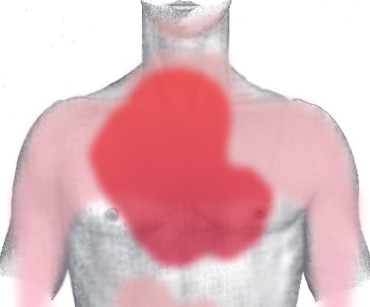
"Based on our data, it seems very unlikely that sexual activity is a relevant trigger of heart attack," said Ulm University medical researcher Dr. Dietrich Rothenbache about a new study. From UPI:
In relation to their heart attacks, only 0.7 percent of participants they'd had sex within an hour before their heart attack and more than 78 percent of participants said they hadn't had sex in at least 24 hours before having the heart attack. Based on this, and a total of 100 adverse cardiovascular events among the participants in 10 years of following up with them, researchers said sexual activity does not appear to be a risk factor for heart attack.

22 Sep 23:10

How a retractable ballpoint pen works

by David Pescovitz

yEqEM4

https://youtu.be/MhVw-MHGv4s

Click, point goes out. Click, point goes in. Click. Click. Click. (Engineerguy)

yEqEM4

22 Sep 23:07

Muere Ben Cauley, de los Bar-Kays

by Magic Pop
Ben Cauley
Ben Cauley nació en el sur de Memphis, Tennessee el 3 de octubre de 1947 y falleció el 21 de septiembre de 2015. Trompetista y cantante, fue miembro fundador de la banda de soul The Bar-Kays, y el único superviviente del accidente aéreo de 1967 que se cobró la vida de Otis Redding, el piloto del aparato y cuatro miembros de la mencionada banda de estudio de la Stax.  Cauley aprendió a tocar la trompeta en la escuela y formó una banda con el guitarrista Jimmy King, el saxofonista Phalon Jones, el batería Carl Cunningham, teclista Ronnie Caldwell, y el bajista James Alexander. El grupo se llamaba originalmente los Imperials, y más tarde cambió al de Bar-Kays a mediados de la década de los sesenta. Cauley  asistió a LeMoyne College en 1965 antes de convertirse en músico profesional.

The Bar-Kays 
Los Bar-Kays se convirtieron en la banda de estudio de la discográfica Stax en 1966 firmando un contacto con su filial Volt Records a principios de 1967.  Su primer single "Soul Finger", fue editado el 14 de abril de 1967. Cauley no solo destacó por ser un buen músico sino por ser el más elegante de la banda, vestido siempre de forma impecable.   Al Jackson, Jr.,  baterista de Booker T & the MGs, tuvo un gran interés en los Bar-Kays y los preparó para convertirse en el segundo grupo de Stax tras los MGs.  Acompañaron como banda de apoyo a muchos artistas de la casa como Otis Redding, Carla Thomas, o Sam & Dave.  Otis Redding les tomó mucho cariño y se los llevó como banda de acompañamiento en el año 1967.

El 10 de diciembre de 1967, en el lago Monona, en las afueras de Madison (Wisconsin), a tres minutos de su destino, un accidente de aviación acabó con la vida de Otis Redding  y  cuatro de los miembros de los Bar-Kays.  Fallecieron el guitarrista Jimmie King (nacido el 8 de junio de 1949), el organista Ronnie Caldwell (nacido en  1948), el saxofonista Phalon Jones (nacido en  1949) y el baterista Carl Cunningham (nacido en 1949).  Murió también el piloto y se salvó la cantante Wendy Rene quien debía subir a ese vuelo pero al final no fue de gira y optó por quedarse en su casa para cuidar de su hijo.

Con Otis Redding 
Se salvó el bajista de los Bar-Keys, James Alexander, quien voló en otro aparato por falta de espacio y Ben Cauley  quien  estaba sentado justo detrás de Otis Redding en el asiento del copiloto. Se había quedado dormido agarrándose al cojín del asiento. Se despertó cuando se dio cuenta que no podía respirar. Dijo que entonces vio a su compañero de banda Phalon Jones mirar por la ventana y decir "Oh, no".  Cauley se desabrochó el cinturón de seguridad, intentó salvar a uno de sus compañeros pero le fue imposible y presenció cómo se hundía el avión en las frías aguas del lago.  20 minutos después del accidente, Cauley fue rescatado por una barca de la policía,  con un shock hipotérmico.  Todo el mundo coincidió en la auténtica proeza de supervivencia en unas condiciones tan extremas a lo que Cauley, quien padeció pesadillas sobre el accidente hasta su muerte, dijo que se había salvado porque “supongo que Dios estaba conmigo”.

The Bar-Kays 
Ben Cauley y James Alexander reformaron el Bar-Kays con Harvey Henderson, saxo; Michael Toles, guitarra; Ronnie Gorden, órgano; Willie Hall, baterista; más Larry Dodson ( The Temprees) a la voz principal. Continuaron grabando con artistas de Stax como Isaac Hayes, Rufus Thomas, y The Staple Singers, apareciendo en Wattstax, "El Woodstock Negro".  No ganaban mucho dinero y, aunque de vez en cuando salían de gira con algunos de los artistas, Cauley tenía una familia con dos hijas que mantener, por lo que abandonó el grupo en 1971. Siguió actuando de vez en cuando por su cuenta.  Los Bar-Kays siguieron en activo con varias formaciones destacando entre altibajos en la música funk.

Ben Cauley y su trompeta 
En 1989 sufrió un derrame cerebral pero se recuperó totalmente, quedándole pequeños problemas en el habla. En la década de 2000, Cauley formó parte de la banda de Liz Lottmann, y estuvo tocando en grupos jazz, cantando blues, o tocando en vivo en el club de Memphis, Rum Boogie, ubicado en la famosa calle Beale. También dirigió un coro de la Iglesia Metodista Unida.  El 9 de septiembre de 2008, el abogado BJ Wade donó 100.000 dólares a Stax Records para crear la beca Ben Cauley, en su honor. El 6 de junio 2015 Cauley fue incluido en el  salón de la fama del Rhythm & Blues en Clarksdale, Mississippi, en representación de los Bar-Kays.

Documentos sonoros: 

Otis Redding y los Bar-Kays grabando para la televisión el día antes de estrellarse el avión el que viajaban muriendo Otis y cuatro de los componentes de los Bar-Kays. 


El famoso instrumental "Soul Finger" (1967) interpretado por los Bar-Kays. 


22 Sep 23:04

O BOE publica a reforma da Lei do Aborto, que limita os dereitos das mulleres máis novas

by Redacción

As mozas de 16 e 17 anos deberán informar os pais antes de poder interrumpir un embarazo. A medida foi cualificada de "innecesaria" por entidades e profesionais, que alertan da desprotección na que deixa a moitas rapazas, que "tiñan moi boas razóns para non contalo na casa"

22 Sep 23:03

La Xunta pide a Ferrol que complete la puesta en marcha de la EDAR de Cabo Prioriño

by José Marín Ameneiros

FERROL360 | Martes 22 septiembre 2015 | 18:45

Continúa la polémica en torno a la estación depuradora de Cabo Prioriño y la tasa de saneamiento. Un nuevo capítulo ha dejado hoy dos reacciones. La primera, de la Xunta de Galicia, quien a través del director de Augas de Galicia, Gonzalo Mosquera, ha instado al Concello de Ferrol a que «ejerza sus competencias y complete la puesta en marcha de la depuradora para poder garantizar el saneamiento de la ría». A raíz de las palabras de Mosquera, que ha comparecido en el Parlamento, AGE también se ha pronunciado. «O que se deberían depurar son as responsabilidades que correspondan por esta chapuza levada a cabo no sistema de saneamento», afirma el viceportavoz del grupo, Antón Sánchez.

En la Comisión Parlamentaria de hoy, Gonzalo Mosquera ha querido destacar que, según él, las obras de saneamiento y depuración del Estado y la Xunta en la ría de Ferrol ya han evitado que 2,2 millones de metros cúbicos de aguas fecales se vertieran en la ría sin depurar. «Hai preocupación no Goberno galego ante a posibilidade de que non se complete a posa en marcha de todo o sistema de saneamento de Ferrol e as augas fecais sigan verténdose á ría», dice el director de Augas de Galicia.

Respecto a esto, Mosquera recuerda que sólo se está tratando actualmente una pequeña parte de las aguas fecales de Ferrol en la EDAR de Cabo Prioriño. «Existe unha nova depuradora que hai que poñer en marcha e estanse rematando actuacións que permitirán que as augas fecais que actualmente se verten no interior da ría se traten nesa nova depuradora», asegura el director, que insta al Gobierno de Ferrol a cumplir lo previsto y apurar el arranque de los equipos inactivos para garantizar la plena depuración de todo el volumen de agua que llegará cuando se rematen los colectores a finales de año.

AGE pide depurar responsabilidades y tacha el asunto de chapuza

«O anterior goberno local do Partido Popular no concello de Ferrol estivo a cobrar aos veciños e veciñas por un saneamento de augas que nunca funcionou na súa totalidade», enuncia AGE, quien dice que el propio Gonzalo Mosquera lo ha reconocido en el Parlamento esta mañana al responder al diputado Antón Sánchez. AGE protesta asegurando que el director de Augas de Galicia, en lugar de admitir la responsabilidad del ente en dicho asunto, ha desviado la culpa al actual ejecutivo ferrolano.

«Só tras a chegada do novo goberno houbo unha acción que destapou a verdade, que non se depura e que se cobra pola depuración á veciñanza», continúa Antón Sánchez, viceportavoz del grupo de izquierdas. «Mosquera esqueceu mencionar a obriga da Xunta de investigar e controlar o correcto funcionamento dunha instalación pola que pagou 15 millóns de euros, e ao tempo que obviou que ata hai uns meses era o Partido Popular o partido responsable», añade Sánchez.

Para concluir, AGE anuncia que ya ha registrado una propuesta en el Parlamento Galego, con el objetivo, según palabras del propio Antón Sánchez, se aclare esta estafa y se depuren responsabilidades.

22 Sep 20:03

How Cats Won the Internet

by Miss Cellania

What is it about cat videos that we love so much? They make up a substantial part of the internet, and a good one can make a cat into a famous celebrity and make its owner rich. Maria Bustillos wrote a thoughtful essay that gets to the heart of the matter.  

Before we enter into the question of cat videos, we must talk about cats themselves. Cat videos are the crystallisation of all that human beings love about cats, the crux of which is centred in the fact that cats are both beautiful and absurd. Their natural beauty and majesty are eternally just one tiny slip away from total humiliation, and this precarious condition fills us with a sympathetic panic and delight, for it exactly mirrors our own.

She goes on to give specific examples.

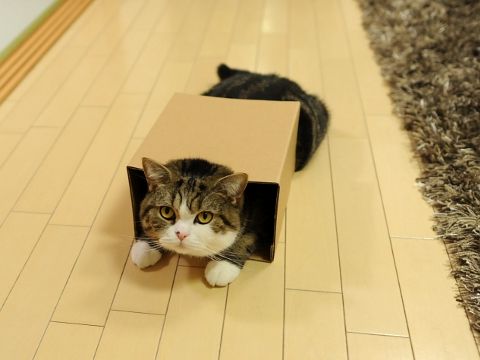
Maru is so resplendently beautiful, so thickly furred and magnificent, and so utterly mellow that even watching mugumogu clean his ears with q-tips is an entirely relaxing and pleasurable experience. But Maru is also a kook, and it is this kookiness that is responsible for the love his legion of fans bears him. Maru is perfectly capable of making a fool of himself over a bit of string, and he can fall off a cat tree with the best of them – but it is his determination to inhabit every available box, no matter how small or inconveniently situated, that seals his greatness and ensures his immortality.

And then she explains the wonder of internet videos themselves, and how funny cat videos can lead to world peace, among other things. The essay called “Hope is a Thing with Fur” is from her book Cat Is Art Spelled Wrong. Read the rest of it at the BBC. -via Metafilter

(Image credit: I Am Maru)

22 Sep 20:02

moot Does Barrel Roll, Brings 4chan Full Circle

by postcommunism
2channel (NYT, 2004) is an anonymous, Japanese-language bulletin board which regularly ranks as one of the 50 most visited websites in Japan, and one of the top 500 worldwide. In 2004, the Times described it as a site of casual freedom in an otherwise staid public arena, "the place where gays come out in a society in which they mostly remain in the closet, where users freely broach taboo subjects, or where people go to the heart of the matter and ask, 'What's for dinner?'" and Wired in 2007 called it "an anonymous anarchy" and a "refreshing liberation." From the perspective of 2015, 2ch's history as an anonymous board might seem less novel: a kinetic creative culture, persistent hate speech (and subsequent DDoSes), mainstream media inspiration, threats and hoaxes, animal cruelty and shock content, severe data leaks, and, of course, increasingly urgent legal and moral questions about exactly who is responsible for the anonymous voices on 2ch.net. Today the site is still going strong, but in 2014 the founder and original owner of 2ch (apparently) stepped down. Sound familiar? Well, yesterday 2channel's founder acquired a new, English-language anonymous image board. moot no longer owns 4chan.

The announcement, in full:
Today I'm pleased to announce that Hiroyuki Nishimura, best known as the founder of 2channel, has taken my place as the owner of 4chan.

Hiroyuki is a pioneer in the world of anonymous communities, and can be thought of as the great-grandfather of 4chan. His creation of 2channel in 1999 sparked an era of anonymous-centric web culture in Japan that led to the creation of Futaba Channel, the site that inspired 4chan. None of us would be using 4chan today—or potentially any anonymous image board—if it weren't for him.

I met Hiroyuki in 2011 and we became fast friends, bonding over our shared passion for creating and managing online communities. He is one of few individuals with a deep understanding of what it means to provide a digital home for tens of millions of people for more than a decade. There is nobody more qualified than Hiroyuki to lead 4chan, and I can't think of a person better suited for the task.

4chan sits on the eve of two great milestones—its 2 billionth post and 12th birthday. It has been a great privilege to serve as 4chan's founder and steward for almost twelve years, and I can't wait to see what lays in store under Hiroyuki's experienced leadership.

–moot
22 Sep 20:00

Yellow or white, w/ or w/out germ, but always plural, unless true grit

by mightshould
Just add water and salt; perhaps something else, too: add some Italian and it becomes polenta. Grits are principally coarse ground corn kernels. But there's so much more to it.

Some folks need a recipe for how to make grits – and then the fighting begins about how to make something so simple: Does the water have to be boiling first, or what is the best ratio of ingredients, is the cooking best at low and slow, which type of corn and grind or "grit" is best; is that how your Mamma made em?

Usually the standard supermarket grits have the germ and hull removed and the grind is a smooth, consistent size; often, dried hominy corn is used. Often this is called "Old Fashioned" by the marketing company, but it isn't really old fashioned at all. Stone-ground grits (yum) are the older version that were available from the local mill, (you should visit one sometime, no matter where you live), while the oldest fashioned type of water-cooked-ground-corn was probably a derivative adaptation of maize-based cooking familiar to local indigenous populations in South and North America.

The Southern US is the grits-belt where it is a staple breakfast food that's also become a popular dinner when served up as shrimp-n-grits. Why the corn-belt that's the big producer of all things corn is not the center of grits consumption is a mystery to me.
22 Sep 19:56

How Could They?

by showbiz_liz
Violence does not stem from a psychopathic lack of morality. Quite the reverse: it comes from the exercise of perceived moral rights and obligations. So says Tage Rai, whose research with anthropologist Alan Fiske analysed violent practices across cultures and history.

Does this mean that it necessarily 'feels good' or that people are never conflicted when they engage in it? No. People hate hurting others. It can be extremely distressing and traumatic, and can require training, social support and experience to do it. But that's true of many moral practices. It can be difficult to tell the truth or to stand up for what's right. People often resist or fail to do what's required of them. Most of us would agree that it's morally right to jump into icy water to save someone who is drowning, but that doesn't mean we relish doing it [...]

For years, we have been trying to reduce crime by enacting mass incarceration, by placing restrictions on the mentally ill, and by teaching potential perpetrators how to exercise more self-control. On the face of it, these all sound like plausible strategies. But all of them miss their target [...] if we really want to cut rates of violence, we must focus on its moral motives. Simply stated, violence must be made immoral.


Rai and Fiske have also published a book on this subject: Virtuous Violence: Hurting and Killing to Create, Sustain, End, and Honor Social Relationships
22 Sep 18:11

Capi, Mexi Llón y otras mascotas del montón

by Mike Medianoche

Este martes se presentó a los medios Capi, la nueva mascota de la liga de fútbol. Un Oliver Aton cabezón que ha sido más criticado que la filmografía de Sofía Mazagatos, y que al parecer promueve el esfuerzo, el juego limpio, la solidaridad, el respeto y el decir no al racismo. Porque vaya, tú ves al muñeco y dices “jo, es lo que necesitaba la lucha contra el racismo y contra la homofobia en el deporte. Menos mal que Capi ha llegado para hacernos a todos más solidarios y tolerantes. Gracias, Capi”. Sin embargo, en las redes sociales fue objeto de burla y escarnio, y donde le han llamado feo, soso y sin carisma entre otras preciosidades.

Capi-Mascota-La-Liga

Pon tu mano en la mano de aquel que te da la mano

De este modo, Capi pasa a engrosar la lista de esas mascotas feas y olvidadas que nadie reivindica, y que no se sabe cuándo nacieron o desaparecieron, si es que ya no siguen en activo. Repasemos algunos casos.

Mexi-Llon-Mascota-Vuelta-Ciclista

¿Será el mismo señor el que se disfrazó de Mexi Llon y de Capi?

Mexi-Llón

Fue la primera mascota de la Vuelta Ciclista a España y nació en 2013. Como en su día contamos, representaba a un mejillón amante de los pedales y que tenía su propio casco, para no hacerse chichones si se cae. Importó tanto a la sociedad que jamás volvimos a saber de él. Pero claro, es que ya había mascotas naranjas y muy míticas, como Naranjito y Ruperta, y una valva sonriente da como cosita.

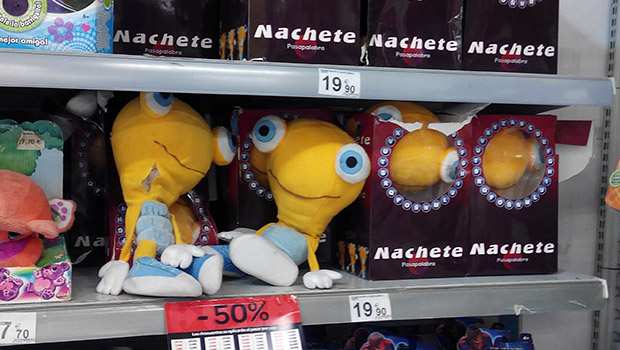
Nachete-Pasapalabra

Como dijo Krusty el Payaso, “yo hago mejores dibujos con el cu…. ¡hola!”

Nachete

Una especie de alien de ojos saltones intentó ganarse el corazón de la audiencia de ‘Pasapalabra’. Nachete intentaba ser una nueva Ruperta, o un Gallifante quizá, y se le regalaba a los invitados. En un intento de hacer caja llegó a comercializarse su figura en forma de peluches, los cuales ahora se liquidan a mitad de precio en mi Carrefour de confianza. La foto es del pasado agosto, así que es posible que todavía queden.

Fluvi-Mascota-Expo

¿Es un pitufo? ¿Es un martillo? ¡No, es Fluvi, la mascota de la Expo!

Fluvi

La mascota de la Expo de Zaragoza de 2008 bien podría ser el primo mayor de Nachete, porque tienen los mismos ojos, casi. Tuvo el duro papel de dar el relevo a Curro, pero claro, su aspecto de gota de agua casi martillo no favorecía a que los niños le cogiesen cariño, ni tuviesen ganas de ponerse camisetas con su dibujo. Eso sí, tuvo su propio videojuego y también una serie de televisión.

Gallina-Ahora-Caigo

Qué fue antes, el fracaso o la gallina

Gallina

Fue la mascota por un mínimo espacio de tiempo de ‘Ahora caigo’, y Su imagen era casi un calco del Gallo Claudio de los dibujos de la Warner. Pero es que la poca originalidad llegó hasta a su nombre, bautizándose directamente como Gallina; para qué dotarla de un mínimo de personalidad. Diría “se vendieron peluches de Gallina en jugueterías y grandes superficies”, pero creo más bien que intentaron venderlas y que las acabaron devolviendo todas al almacén. Su primera aparación fue en 2012, como Nachete.

Xubi-Mascota-Xacobeo

Vuelta al cole con Xubi

Xubi

En los 90 el Camino de Santiago tuvo su propia mascota, Pelegrín, un peregrino cabezón con ojos de huevo que hacía la ruta con su bastón y su calabaza. Una preciosidad que todos tuvimos en pins o camisetas, y que murió en 2010 para dar paso a Xubi, una especie de pera psicotrópica con maletita y concha para hacer el camino del Apóstol a cuyos restos Amistades Peligrosas dedicó un hit (una cover de Franco Battiato, en realidad). No confundir con Fluvi, aunque el nombre se parezca.

Cinecito-Pedro-Almodóvar

Cinecitos al borde de un ataque de nervios

Cinecito

Nació en 1994 en la Fundación Lumiére para dar a conocer entre los más pequeños de la casa la grandeza del séptimo arte. Hubo una época que cuando ibas al cine te salía esta cámara antropomórfica al a que Santiago Segura llamó en 2005 “mierda de mascota horrible que no se de dónde salió y que gracias a Dios no ha vuelto a aparecer en ningún lado”. Pero Cinecito es como la carrera musical de Betty Missiego, sigue en activo aunque nadie le vea en actos públicos. Como curiosidad, en Cinemanía cuentan que siempre que aparecía en actos públicos le encarnaba la misma persona, Lucía Ugena.

Y con Cinecito y música, este post llegó al final. ¡Slitzweitz!

22 Sep 15:53

10 Reasons Women Prefer Masturbating To Sex Sometimes (Even In A Relationship)

by Sylvie Quinn
Shutterstock,  Maksim Shirkov
Shutterstock, Maksim Shirkov

1. You get to be selfish without feeling selfish.

When no one else is in the sexual equation, you don’t have to feel bad about prioritizing your sensual needs. Masturbating equates to freedom from reading signals. You don’t have to evaluate your progress at turning a person on or worry about how much longer you have to hold out so you can both reach orgasm. Relieved of the burden of tending to man’s body, you get to focus purely on your pleasure, and who’s more important than Number One?

2. You get to sidestep the communication trap altogether.

It makes sense to grab the wheel rather than guide another driver in steering your way to Orgasm Land when you’re way more familiar with the mechanics of the vehicle. Self pleasure lets you manipulate your body exactly as you wish instead of fumbling to translate the desire to be fondled or touched in a very specific way, or struggling to explain exactly where your clitoris is located. It can be tricky to find the words to explain what you want to a man, but it’s never tough to execute your own inner sex nymph’s naughty wishes.

3. You can get REALLY weird without fear of judgment.

Channel Natalie Portman in Black Swan and squirm like crazy all over your bed, or fuck yourself with a giant dildo. During solo sex, you can do whatever you need to to get off without worrying about how weird or “slutty” a guy might think you are. And since you can trust yourself to keep your own secrets, you can rest assured that anything that happens between you and the sheets stays between you and the sheets.

4. You can dream (and scream) about other guys mid-action without a care.

We’re all prone to mid-sex fantasizing, but the risk of dreaming about being fucked by Jared Leto or your hot colleague or ex-boyfriend while you’re current partner is banging you from behind is that you accidentally kill the mood by screaming the other dude’s name out loud. When you’re flicking the bean, on the other hand, you can imagine whatever the hell you want and shout anyone’s name without fretting over a regrettable slip of the tongue.

5. You end up teaching yourself new arousal tricks.

No one knows your body as well as you do. Through regular, dedicated self exploration, maybe you’ve already figured out exactly how to move and groove your way to orgasm within minutes. But there’s always more to learn, and pleasuring yourself is an easy way to experiment without complicating things by involving a man, who’s remedial understanding of the way things work will likely slow you down. The more you touch yourself, the more likely you are to discover new twists and turns along your personal path to sexual satisfaction.

6. You don’t have to worry about STIs.

You can never be too careful when sleeping with another person. And no matter how steadfastly you practice safe sex, there’s always the risk of contracting an STI by receiving oral from someone with a tough to spot cold sore (a form of herpes, in case you didn’t realize), or by rubbing your skin against someone else’s. As long as you wash your hands regularly, touching yourself is the most stress free way to tickle all your erogenous zones.

7. You don’t have to think about birth control or pregnancy, either.

Since you can’t get yourself pregnant, having sex with yourself is a surefire way to feel great without the possibility of an unplanned pregnancy looming like a thorn in your horny side. It’s liberating to get sexy without worrying if your IUD will fail, or entertaining the should-I-or-shouldn’t-I-take-Plan-B-just-in-case debate the following day.

8. You get to watch whatever porn you want.

The options in terms of free pornography are vast and varied these days, but men and women don’t always agree on what constitutes sexy, and some women would rather keep their specific proclivities a secret. When you’re alone in the comfort of your home, you get to Google whatever fetish or genre of smut you please without consulting anyone, quickly transporting yourself on the dirty fantasy ride you crave.

9. You get to play with amazing vibrators that make men seem pretty superfluous.

Technology has given the female sex a plethora of cool vibrators and other toys designed to stimulate and penetrate that are incredibly effective, not to mention user friendly (something that can’t be said about a lot of men). With so many awesome dick substitutes on the market to supplement a woman’s sexual experiences, an actual male participant really isn’t required.

10. You can get intimacy elsewhere anyway.

Arguably, the one downside to masturbating is that you don’t get to connect with another human IRL. But nowadays, intimacy can be outsourced. If you want to feel less alone or you’re seeking at least the hint of a man in the room, you can always sext with your boyfriend, Skype with a like-minded male friend, hire a digital boyfriend, or play with a virtual sex app. TC mark

22 Sep 15:35

Suicídase unha das vítimas do desafiuzamento de Aríns

by Redacción

Esta semana fixo un ano exacto do lanzamento, no que esta familia compostelá foi expulsada da súa vivenda, a pesar da forte oposición social. Stop Desahucios critica que "a voracidade duns poucos siga a levarse vidas por diante".

22 Sep 15:33

El Concello ferrolano piensa en usar una parte del Castillo de San Felipe como centro de interpretación

by José Marín Ameneiros

FERROL360 | Martes 22 septiembre 2015 | 17:20

El Concello de Ferrol se plantea usar una partde del Castillo de San Felipe como Centro de Interpretación de la Memoria Histórica. La propuesta surge tras la reunión de la primera teniente de alcalde, Beatriz Sestayo, con la concejala de Conservación de Patrimonio, Rosa Méndez, y miembros de la Asociación de Memoria Histórica. El objetivo, según éstas, sería dinamizar un espacio del edificio dotándolo de contenidos diferenciados que sirvieran para su conservación e incrementar su atractivo cultural.

«É importante a contextualización do Centro de Interpretación da Memoria Histórica e a necesidade da recuperación da memoria e duns feitos históricos que forman parte do pasado da cidade», dijo Rosa Méndez tras la reunión. Por su parte, Sestayo avanzó que dicho centro de interpretación podría estar situado en el espacio que sirvió de cárcel en tiempos de la Guerra Civil.

Miembros de la Asociación de Memoria Histórica argumentan que el fin no consiste en construir un mausoleo en nombre de la memoria histórica, sino un centro educativo y divulgativo. «Estaría baseado nos principios de verdade, xustiza e reparación, considerando que o coñecemento dos feitos e das persoas que os sufriron son a mellor vacina contra a posible repetición de actos tan repudiables», enuncian desde la agrupación.

El próximo viernes, integrantes de la asociación visitarán el Castillo de San Felipe junto a miembros del Gobierno ferrolano para concretar dicha propuesta.

22 Sep 15:19

Your Body Is Surrounded by Clouds of Skin and Fart Bacteria

by Etrigan
The human microbiome is the subject of intense scrutiny for a variety of reasons -- probiotic yogurt, as a replacement for bathing, even down to the viral level -- but what we really want to know is How incredibly gross am I being by merely existing in the world? It turns out that the answer is Way gross -- like Pigpen, each of us sheds a unique cloud of bacteria that could conceivably be used to track criminals and to more precisely survey disease outbreaks.
22 Sep 14:40

[Galería] Vázquez también hacía pin-ups

by Yago García

Primero con dibujos para el mercado francés, y después desde el seno de su odiada Bruguera, el ‘Tío Vázquez’ se dio al destape como al que más. Y, por supuesto, lo hizo mucho mejor que la mayoría de sus coetáneos, con picardía y recortables: te ofrecemos una muestra de su producción sicalíptica.

Con sus once hijos, su presunta condena a prisión por bigamia y ese pasado como proxeneta del cual a veces alardeaba (afirmando que reinvertía sus ganancias, además, en los servicios de sus propias pupilas), cabe afirmar que Manuel Vázquez no pasaría hoy en día por un aliado del feminismo. Pero lo que no cabe negar es que el autor de Anacleto: Agente secreto era un genio del humor, y también un dibujante excepcional cuyos talentos brillaban al ser aplicados a lo sicalíptico. Como prueba de ello presentamos esta galería, con imágenes que nos llegan desde Pensión El Calvario, El rincón de Taula 13 Rue Bruguerarebosantes de pin-ups con mucho gracejo.

Los primeros dibujos de la colección corresponden a una jugarreta con la que el ‘Tío Vázquez’ trató de hacerse un hueco en el mercado del cómic francés a comienzos de los 60. A través de su amigo y colega Kito, el genio distribuyó entre las editoriales galas ilustraciones calentorras y firmadas con el seudónimo de ‘Elvaz’, a fin de venderlas (y, sobre todo, cobrarlas) en el país vecino. Las imágenes posteriores fueron publicadas ya en suelo patrio, y corresponden a las revistas Demassié Can Can, dos publicaciones (la segunda, efímeramente resucitada tras tres intentos anteriores) con las que Bruguera trató de hacerse un hueco en el ‘destape’ allá por 1979. A la primera revista corresponden esos recortables tan poco infantiles, mientras que en Can Can apareció esa página de humor gráfico donde un Vázquez que ya reservaba su lado más bestia para El Papus y cabeceras similares prueba que sus dotes para la risa no se achantaban en el dormitorio. Todo ello con otro seudónimo, esta vez el de ‘Sappo’. En general, nosotros vemos en estos dibujos más picardía, y más respeto hacia la figura femenina, que los mostrados por otros dibujantes españoles que tiraron por esos derroteros. ¿Qué opinas tú?

La entrada [Galería] Vázquez también hacía pin-ups aparece primero en Canino.

22 Sep 14:39

‘Her Story’ – El inmovilismo y el sesgo de confirmación

by Alberto Mut

El sesgo de confirmación es la tendencia a favorecer la información que confirma las propias hipótesis. Sí, acabo de copiar esto de la Wikipedia porque cuando una definición es tan buena no hace falta cambiarla. Para que me entiendan: ¿saben cuando dos personas les cuentan distintas versiones de una misma historia que ustedes desconocen y, voluntaria o involuntariamente, conceden más credibilidad a una de las versiones antes que a otra basándose en sus propias ideas preconcebidas? Pues lo mismo.

Es un rasgo fundamental del ser humano: la información que mejor encaja en nuestros prejuicios es a la que más peso otorgamos. Por otra parte, en todos los juegos hay reglas porque su existencia es una característica inherente a su propia condición. Un juego no es tal sin unas reglas y hasta casi se podría decir que un conjunto de reglas dado genera, si no un juego, al menos sí algo muy parecido. Esas dos cosas aparentemente sin conexión alguna son las que usa Her Story para pillarte desprevenido, darte la vuelta y hacerte quedar como un listillo que creía saberlo todo y en realidad no ha entendido nada.

(Aviso: Este artículo contiene spoilers de Her Story en los que se desvelan la trama y varias de las sorpresas más importantes del juego. Recomendamos encarecidamente no leerlo si no se ha terminado por completo el juego o, al menos, se conoce el desenlace de la historia. O si no le importa en absoluto, vamos, que no somos nadie para indicarle al lector cómo proceder).

Her-Story-4

En esa obra de arte llamada The Stanley Parable se critica de forma satírica la tendencia a reducir el diseño de gameplay y convertir una historia en una serie de decisiones deterministas que producen siempre el mismo resultado. El riesgo en el diseño y la experimentación en las mecánicas, algo que era de lo más normal en juegos comerciales de hace veinte años, han dejado paso al inmovilismo más conservador de los AAA multimillonarios, e incluso las producciones más pequeñas exhiben esta tendencia que se ha convertido en un estándar de la industria. En 1997 podías encontrarte con un Final Fantasy VII que añadiese secciones de conducción, estrategia en tiempo real y hasta juegos de azar como parte fundamental del gameplay; en 2011, un first person shooter fue criticado por añadir mecánica de looting y crafting de equipo y armas. Las cosas cambian, pero no siempre para bien.

Este inmovilismo, cuya consecuencia es el saber casi de antemano lo que nos vamos a encontrar en un juego, ha traído consigo un estancamiento creativo en el que los géneros tienen sus características grabadas en piedra, están claramente delimitados e incluso reciben críticas cuando añaden elementos que se consideran fuera de su tradicional esfera de influencia. Cuando conoces tan bien las reglas es imposible abstraerte a ellas y les pondré un ejemplo reciente: Alien Isolation. Sabía que no corría ningún peligro hasta que no viese al bicho en una cinemática en la que posiblemente matase a alguien o estuviese a punto de matarme a mí, momento en que el juego me daría por avisado. Hasta ese instante tenía claro que no me iba a pasar nada porque son las reglas. Porque no puedes matar a un jugador sin avisarle antes de que existe un peligro salvo si eres From Software, los creadores de la saga Dark Souls, que avisan de que puede morir… bueno, matándole.

Her-Story-3

Her Story tiene una interfaz atípica. Durante todo el juego sólo vemos una única pantalla, que además es la recreación de un monitor de tubo que evoca poderosos recuerdos en quienes tuvimos PC en los noventa, y que representa un sistema operativo arcaico y en la línea de Windows 3.1. Y nunca salimos de esa pantalla. Las únicas opciones que nos da el juego son las mismas que tendríamos si ese ordenador fuese real: arrancar programas, abrir archivos y carpetas y jugar al único juego que hay en todo el escritorio. El programa más importante de todos es un sistema de archivos en el que aparecen fragmentos en vídeo de los interrogatorios a los que sometieron a Hannah, la protagonista de la historia, hace veinte años. Pero el almacenamiento se corrompió tiempo ha y se ha perdido parte de la información, incluyendo el orden correcto de visionado de las cintas, por lo que la única forma de navegar por el incoherente montón de grabaciones es mediante una búsqueda de texto. Cada vez que introducimos uno o varios términos el juego recupera los vídeos en los que éstos aparecen mencionados pero sólo nos muestra una cantidad limitada de ellos. Por ejemplo, una búsqueda que incluya una palabra que aparece en veinte vídeos sólo devolverá los cinco primeros. Para ver los otros quince debemos refinar más la consulta añadiendo más palabras o directamente buscando otros términos, lo que expande la jugabilidad y enreda aún más la madeja del misterio. Como dice el propio Sam Barlow, desarrollador del juego, «si sabes usar Google, sabes jugar a Her Story». Básicamente, el juego no se juega sino que se observa y se analiza.

Así las cosas, uno se enfrenta al enigma confiado en su conocimiento de las reglas del juego, sabiendo, más que creyendo, que cualquier historia de detectives es fácilmente reducible a un montón de puertas que esperan a que el intrépido jugador las abra en el orden correcto. Que no puedes perder, todo lo más quedarte atascado y recurrir a Google para que te resuelva un enigma. Aquí al lado tengo las dos hojas de libreta llenas de apuntes garrapateados que lo demuestran, porque me tomo muy en serio mi papel como agente de la ley que quiere resolver un crimen y hacer un servicio a la comunidad, de manera que hasta lo jugué con una taza al lado para darle más ambiente. Aunque la taza contenía zumo, porque el café me sienta mal. Soy el peor detective de todo el Medio Oeste americano.

En el momento en que el primer vídeo se mostró ante mí, con la pobre Hannah nerviosa y vacilante, fue el momento en que entraron en juego mis prejuicios sobre la larga tradición de las historias de crímenes sin resolver. Obviamente, ella es la asesina. No tiene sentido que sea de otra manera o no sería la protagonista. No puede ser una testigo porque la historia necesita detalles de primera mano para poder ser narrada correctamente, unos detalles que sólo la asesina conocería. Y todo empieza muy poco a poco, con una pobre mujer que desea colaborar con las autoridades, señor agente, se lo prometo, yo quiero a mi marido, le echo de menos y quiero que vuelva a casa. Pero poco a poco la historia, tu historia, la que tú te has montado y no la que el juego te va presentando fragmentada, se desmorona como el testimonio de Hannah.

Her-Story-2

Durante las cuatro horas que me costó llegar al final, entendiendo como tal obtener el logro de cruzar la calle, porque el juego no tiene un final propiamente dicho, cambié de opinión tantas veces que al final me rendí y aparté todo lo que creía saber del juego para descubrir lo que el juego me quería decir. Cuando pensaba que Hannah era la asesina aparecía una pista que me hacía pensar en una segunda persona. Cuando esa segunda persona parecía ser ella misma empecé a pensar en un transtorno de la personalidad. Cuando tenía claro que era una enfermedad mental me fijé en el tatuaje que desaparecía y reaparecía según el vídeo. Y por fin, justo cuando creía que ya había resuelto el crimen, resulta que no había crimen que resolver, sólo reconciliarme con la realidad. El crimen llevaba resuelto veinte años y yo sólo estaba uniendo las piezas y quedándome con una sensación de vacío enorme, que me hizo mirar a la pared más allá del monitor durante un tiempo que sería incapaz de precisar, cuando el agente me preguntó si sabía por qué mi madre hizo lo que hizo.

Her Story tomó mis prejuicios y los retorció hasta romperlos, convenciéndome más aún de algo que vengo notando en los últimos tiempos: el diseño de juegos está demasiado encorsetado. Los géneros están demasiado definidos para su propio bien y además se penaliza a quien se sale de ellos, a quien incorpora elementos de otros géneros o a quienes los inventa, una característica creativa que últimamente se usa como crítica. Un elemento no es de ningún género, un elemento es, punto, y se integra bien o mal dependiendo de la habilidad del diseñador, no de la naturaleza del propio elemento. Her Story demuestra, como The Stanley Parable antes que él, que quien arriesga suele ganar si lo hace bien. El juego de Sam Barlow es muy simple y su lógica es sencillísima, pero supone un mazazo a las convenciones que están haciendo que el desarrollo de videojuegos se estanque en un pozo autocomplaciente lleno de decisiones que tienen más que ver con el marketing que con la creatividad y el auténtico entretenimiento.

Her Story es un juego necesario y ningún gran estudio lo hubiese desarrollado nunca. Y, de haberlo hecho, algún encorbatado hubiese querido meterle multijugador.

Her-Story-1

La entrada ‘Her Story’ – El inmovilismo y el sesgo de confirmación aparece primero en Canino.

21 Sep 23:59

"Everyone says Hufflepuff are a lot o' duffers."

by Fizz
In Defense of Hufflepuff [The Atlantic] The much-maligned house of the Harry Potter series doesn't get nearly enough attention or praise for its egalitarian ethos.
To her credit, the Harry Potter series author J.K. Rowling makes plenty of subtle efforts to elevate the house through the admirable actions of its less-heralded students. Hufflepuffs are supposedly defined by strong loyalty, disinterest in public glory, and a hardworking spirit. Perhaps that's why they don't stand out: Hufflepuffs have an ethos of self-improvement, while Gryffindors are brave, Ravenclaws preternaturally smart, and Slytherins deeply ambitious. When translating the four houses into vague personality quadrants for us non-magical Muggles (as many websites do), Hufflepuff comes up especially short. Not extroverted, or cunning, or inherently intelligent? Then you must belong to the other house, which, as Kaling joked, nobody wants. But that doesn't make much sense considering how much she herself values hard work.
21 Sep 23:40

The VICE Guide to Right Now: Pizza Rat Is the Only Real New Yorker

by Carrie Ratshaw

The video that set the internet on fire

New York is the city of dreamsor rather, the city of dreamers, the place where you go when you secretly think you can be famous, or rich, or original, or at the very least sleep with the famous and rich and original. It's got the reputation of being a hard place that makes people hard as well, but really New Yorkers are just a better-dressed version of the people they were back in Akron, Ohiothey want to be loved, they want to be fed, they want a big feather bed to fall into at night.

Most people, in New York or anywhere, don't get what they want. Or maybe they don't know what they want, so getting it is like some algebra problem where you don't have enough information and can never solve for x. So when you see someone who knows what he wants and gets iteven if that something is as banal as a fancy watch, a $10,000 suit, and a corner office at Goldmanit seems intoxicating. Could I be like that? you think, watching those confident people move around the cocktail bar, teeth flashing. Is that what you have to be to survive in New York?

That was how I felt when I saw the YouTube video of the rat struggling its little way down the subway steps with a slice of pizza clenched between her teeth. Live in New York long enough and you'll know a New Yorker on sightrich or poor, black or white, young or old, Prada or Gucci, all true New Yorkers have hustle, and Pizza Rat has got it. How did she get an entire slice? Where does she think she's taking it? What's her endgame here? Doesn't matter. New Yorkers know you only get so many opportunities in these madcap lives of ours, and when you see Mr. Rightor a plain slice just sitting on the groundyou have to grab it and never let go.

Watching that little lady struggle to get her prize down the steps, I couldn't help but wonder, am I more like the rat or more like the pizza? Am I the brave little vermin who is willing to struggle with all her might to get what she wants? Or am I just a passive pile of cheese and sauce sitting around waiting for some furry rodent to manhandle me down the stairs, even if that's not really where I want to go?

In the end, of course, the rat abandons the slice and scurries down the steps, alone, pizzaless, just another four-legged striver whose dreams didn't pan out. Her eyes were bigger than her stomach, or maybe her ambition was bigger than her abilities. In the end, the thing she loved so much was just a burden she was better off without.

Still, for those few seconds her entire life made sense. She had the slice, she was going home with it, her dreams had come true in a way that only happens for the select few. And then, just as quickly, her dreams went back to being dreams. But the slice was hers for a moment, however fleeting that moment was. How many of us can say the same?

21 Sep 23:39

Filthy rat pursues big city dream of eating pizza in the subway

by Joe Veix
pizza-ratThe most New York thing ever put on film. More »
21 Sep 23:39

This Tumblr tells how you to make a woman have an orgasm

by Maggie Serota
tumblr-orgasmProbably the most important free resource on the internet.  … More »
21 Sep 19:53

Spotify's Discover Weekly Updated Late And People Were Furious

by Brendan Klinkenberg

People love this playlist.

Spotify

Discover Weekly is a Spotify feature that delivers an algorithmically personalized playlist to its users each week. It's supposed to update every Monday morning and people really love it. It's pretty popular, and has an avid fanbase online. But there's a flip side to that love.


View Entire List ›

21 Sep 18:45

Why Brave New World is No Longer the Terrifying Dystopia it Used to Be

by George Dvorsky

Brave New World used to be one of the most terrifying stories about a false utopia . It gave us the concept of “test tube babies,” and its name became synonymous with technological progress run wild. But many of the things Aldous Huxley predicted are coming true, and it turns out they’re not so scary.

Read more...


21 Sep 18:33

4chan sold to 2chan founder

by Rob Beschizza

yotsuba-4chan

Chris Poole sold the sprawling image boards to their own inspiration, reports the New York Times.

“Hiroyuki [Nishimura] is literally the only person in the world with as much if not more experience than myself in running an anonymous, large destination community that serves tens of millions of people,” Mr. Poole said in an interview. “He’s the great-grandfather of all of this.”

Mr. Poole declined to disclose the terms of the acquisition, and he does not expect to serve an active role in 4chan’s future development. He stepped down from daily maintenance of the site in January, handing over the reins to a handful of part-time deputies who moderate and manage the site.

Even with its outside impact of web culture, 4chan was not a moneyspinner, the Times reports, though it "has at times been profitable."

Here's Poole's own post on the sale.

4chan sits on the eve of two great milestones—its 2 billionth post and 12th birthday. It has been a great privilege to serve as 4chan's founder and steward for almost twelve years, and I can't wait to see what lays in store under Hiroyuki's experienced leadership.

Nishimura is, incidentally, the editor of Variety Japan. In another, better world, Poole just sold 4chan to Variety. In the best world, he sold it to Reader's Digest.

21 Sep 18:24

Pecha o Ultramarinos, local de referencia no circuíto cultural compostelá

by R. C.
Esta fin de semana será a última do pub Ultramarinos, un local que nos últimos anos se converteu nunha das referencias da cultura compostelá.
21 Sep 17:18

Emmys 2015: Veep, Olive Kitteridge, The Daily Show, Juego de Tronos y los demás

Ya se han dado los premios de la Academia de Televisión estadounidense de este año. Un buen número de ganadores, unas pocas series arrasando y algunos comentarios que se pueden hacer tanto de los premios como de la gala. Así han sido los Emmys 2015.