http://www.sandiegoreader.com/news/2016/may/07/blue-cue-blues-rip-candye-kane/#
Shared posts
R.I.P. Candye !!!
http://www.sandiegoreader.com/news/2016/may/07/blue-cue-blues-rip-candye-kane/#
Fallece la cantante de blues, Candye Man
![]() |
| Candye kane |
![]() |
| Candye Kane |
![]() |
| Candye Kane |
![]() |
| Candye Kane |
‘Hombre. Integral’, hacer historia

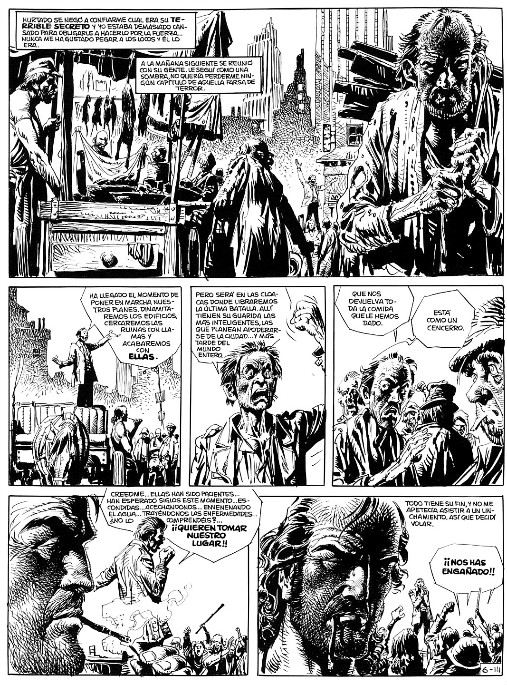
De las dos razones a las que atiende el titular por el que me he decantado para una entrada tan exigente como la que hoy os traemos, voy a comenzar dando cuenta de la que menos dificultad entraña, la que se refiere a la ASOMBROSA edición integral con la que Panini nos sorprendía el pasado mes de marzo. Una edición que supone, ante todo, la culminación del deseo callado de los muchos lectores que, desde que lo descubriéramos in illo tempore en las páginas de la añorada CIMOC, siempre hemos querido tener todas las páginas escritas por Antonio Segura e ilustradas por José Ortiz bajo unas mismas cubiertas.
Estación “termini” del largo recorrido editorial que han tenido las aventuras de ‘Hombre’, la trayectoria que se ha seguido hasta llegar a las casi seiscientas páginas que recoge Panini es (casi) tan apasionante como las sensaciones que va dejando su lectura. Así, después de tener que ir de CIMOC en CIMOC dando saltos para poder realizar una lectura completa de las muchas historias, en blanco y negro o color, que la pareja de autores españoles ideó sobre tan insigne personaje, los que tuvimos la suerte de poder hacernos con ellos, pasamos a ser poseedores de los diversos volúmenes en los que Norma fue recogiendo la serie.
Unos volúmenes que se publicaron en tres formatos diferentes: un primero en tapa dura de la Colección CIMOC Presenta —que llegó a alcanzar precios prohibitivos en los sitios de coleccionismo y sigue vendiéndose por ahí en cifras que oscilan entre los 45€ y 90€—; otro en tapa blanda y mayor tamaño de la Colección BN y, por último, los cinco CIMOC Extra Color que recopilarían las historias en las que podría observarse el magnífico tratamiento cromático que Ortiz era capaz de dar a su no menos superlativo arte en blanco y negro.

Con dichos álbumes formando parte de mi tebeoteca durante muchos años —tantos como casi dos décadas— no sería hasta 2013 que ese sueño de poder tener ‘Hombre’ bajo un sólo “techo” empezaría a tener visos de realidad cuando EDT, la antigua Glénat, se dispuso a publicar las historias del personaje. Pero, ay, la editorial comandada por Antonio Navarro incurre en un error inicial que termina transformándose en dos. Primero, el separar en dos volúmenes —uno para las historias en blanco y negro, el otro para las de color— el grueso de la producción de Segura y Ortiz. Segundo cuando, horror, al salir el segundo descubrimos con pavor que no se ha respetado el mismo tamaño y que EDT ha optado por un formato más grande para que las páginas con color luzcan mejor.
Tamaña decisión, que en su momento causó no pocos comentarios airados, se cuenta entre las últimas que tomará EDT antes de desaparecer a la chita callando del panorama editorial español, y nos dejará con unas ansias que sólo ahora, bajo la voluntad de Panini y el maravilloso trabajo que se está realizando desde su sello Evolution, se ven finalmente saciadas. Veintiún años han tenido que transcurrir desde que se publicara el último CIMOC Extra Color para que podamos tener en nuestras manos un volumen con el que la editorial, reza el titular, hace historia.
Pero si de hacer historia hay que hablar, entonces el discurso debe ceñirse única y exclusivamente a lo que Antonio Segura y José Ortiz consiguieron, sin excepción, con todas y cada una de las asombrosas páginas en las que los autores nos acercaron a ese mundo post-apocalíptico donde un protagonista sin nombre, el Hombre del título, recorría a pie, o en el jamelgo de turno, una tierra yerma y baldía en la que la palabra humanidad había dejado de tener sentido y se sustituía por la expresión “la supervivencia del más fuerte”.
Al hacer que su principal personaje sea epítome de dicha expresión, y dibujarlo como un antihéroe en toda regla que se rige por un código moral de lo más flexible, Segura consigue que, con pocas páginas de lectura, y sin saber mucho de él —algo que no cambiará conforme la historia, cosida a base de relatos más o menos breves, vaya avanzando— los lectores no tengamos más remedio que caer rendidos ante la evidencia de encontrarnos frente a frente con uno de los mejores personajes que se hayan publicado jamás en una página con viñetas: desagradable, borde, egoista, salvaje, machista y poseedor de un sin fin de más “virtudes”, Hombre es un logro como pocos pueden encontrarse en el medio, ya estemos ciñendo nuestra mirada a este lado del charco, como si la ampliamos a lo que nos ha podido ofrecer el cómic estadounidense.

Rodeado de una galería de secundarios que, o bien no le van a la zaga, o superan con mucho su talante deleznable, y con la puntual presencia de alguna fémina llamada a suavizar algo el brutal tono en el que se mueven todas las historias —imposible quedarse o citar una sola, pocas veces encontraréis un volumen con menos desperdicio que este—; la crítica soterrada a la sociedad de hace tres décadas, más vigente hoy en día que nunca, viene a hablar, en última instancia, de lo perenne —¿alguien ha dicho eterno?— en ‘Hombre’ y de la capacidad que tenía el gran Antonio Segura para trasladarnos a mundos tan febrilmente imaginarios como terrorificamente reales.
Una capacidad, no cabe duda, que no habría sido del mismo calado que podemos encontrar aquí si ‘Hombre’ hubiera contado con otro artista que no hubiera sido el INCONMENSURABLE José Ortiz. Lo que el dibujante español era capaz de conseguir con una plumilla está al alcance de pocos nombres a lo largo y ancho de la vasta historia del medio, y a la hora de acometer la lectura de ‘Hombre’ hay que hacerlo con una premisa muy clara: que ésta podrá prolongarse más de lo que lleva leer un tebeo cualquiera por cuanto resulta imposible pasar una página sin antes haber paseado la mirada por el genio gráfico que se despliega en cada puñetera viñeta.
¿Exageración decís? Ni por asomo. Es más, si tal afirmación se cumple a rajatabla cuando de lo que estamos hablando es de las páginas en blanco y negro que inician la lectura; si a lo que hemos de referirnos es a aquellas en las que hace su aparición el color, entonces el alcance de la misma comienza a quedarse corto para poder definir con precisión lo que Ortiz ofrece en unas planchas llenas de vida que nunca, ni después de tres décadas acercándonos a ellas —’Hombre’ es uno de esos pocos títulos a los que, cada cierto tiempo, es casi obligado hacerle una relectura—, cesan de sorprender y que ahora, de mano de Panini, encuentran, ya insistía en ello arriba, la MEJOR edición que hayan conocido JAMÁS. ¿Que 60€ son muchos? Sin duda, pero pocas veces tal desembolso estuvo más justificado: ‘Hombre’ no conoce de filias ni adhesiones a un género o a una procedencia concreta, ‘Hombre’ es un tebeo que, si eres lector de viñetas, TIENES QUE TENER. Punto.
Hombre. Integral
- Autores: Antonio Segura & José Ortiz
- Editorial: Panini
- Encuadernación: Cartoné
- Páginas: 568 páginas
- Precio: 57 euros en Amazon
Never Mind the Bus Pass
A call to action: your fat friend is going it alone
Dying Car Alarm Lays Down A Funky Beat

Most automobile madness has something to do with the electrical system, as dying batteries cause cars to do all sorts of strange things, and apparently dying car alarms create funky beats.
A musician named Guamu was walking by a car one day when he heard its dying car alarm laying down a funky beat, which inspired him to

Hopefully Guamu will share any profits he makes from the song with that poor sick car so it can afford to buy a new battery.
-Via Laughing Squid
“Franco tiña unha finca que se chamaba España”
A igrexa perde fieis para casar
Beiras insta a EU e Podemos a non "traizoar" o acordo fundacional de En Marea
O líder de Anova reclámalle a Yolanda Díaz que "explique" por que "quere sacarme do medio" e censura que "persoas" integradas na coalición estan a "xogar a intereses persoais" propios "da vella casta".
El Gobierno vasco financia un cómic infantil sobre una niña con pene

Se leerá en aulas de primaria el próximo 17 de mayo, y cada día un alumno se lo llevará a casa para leerlo con su familia “para generar un diálogo sobre la transexualidad en todos los hogares”.
La ideología de género más radical se introduce en las aulaspara normalizar la transexualidad y explicar a los menores que “hay niñas con pene y niños con vulva”. En esta ocasión, lo hará a través de tebeos infantiles, editados por la revista ‘Irrien Lagunak’, de la que forma parte el grupo editorial Elkar y que cuenta confinanciación del Gobierno vasco.
El pasado marzo publicó un tebeo en el que hay una niña con pene, Laila, que se muestra desnuda ante dos amigas, informa Gaceta.es.
“De pronto, te has quedado callada”, comenta la niña transexual.“Me ha sorprendido verte el pene en la ducha y pensé que eras un chico. Pronto me he dado cuenta de que estaba equivocada”, admite Ane Pirata ante dos amigas. “Laia es una niña, una chica con pito. Somos tres amigas y las tres somos diferentes”, continúa la conversación pensada para un público infantil.
Irrien Lagunak Kluba, con una difusión de cinco mil ejemplares, se gestó hace cinco años. Posteriormente, impulsó el nacimiento de la organización Bizi Poza, integrada por una treintena de asociaciones de familias con niños con necesidades especiales, entre las que se encuentra Chrysalis, la asociación vasca de Familias de Menores Transexuales, a la que ha dedicado el tebeo de marzo.
“Hay que tratar con normalidad lo que es normal, y afortunadamente cada vez lo es más”, ha manifestado Anabel Arraiza, coordinadora de la publicación. “Ahora tenemos un material muy recomendable para abordar la transexualidad en las aulas”, ha señalado.
Según ha informado Chrysalis, la ikastola San Nikolas de Getxo ha plastificado la historieta y ha creado un pequeño libro que será leído en todas las aulas de primer ciclo de Primaria el 17 de mayo, ‘Día Internacional contra la Homofobia y la Transfobia’.
Cuenta que posteriormente, cada día, un niño o una niña de la clase se lo llevará a casa para leerlo con su familia y generar así un diálogo sobre los hechos de diversidad también en todos los hogares”.
Chrysallis ha anunciado también la publicación del primer material didáctico específico para “trabajar en las aulas el tema de la transexualidad con menores”. Se trata de seis fichas ideadas por el sexólogo Aingeru Mayor que muestran las figuras de niños y niñas con sus genitales y proponen a los menores ejercicios para ahondar en la idea de que existen niñas con pene y niños con vulva.

“Hasta ahora en los centros escolares se ha transmitido el planteamiento chico-pene y chica-vulva, lo que no es correcto y niega la existencia de una parte de las niñas y los niños. Con estas fichas se pretende aclarar que la identidad sexual es un hecho subjetivo que solo cada uno puede relatar”, explica la entidad. Su material forma parte de los recursos que se comparten en Loratuz, Red de centros escolares que comprenden y acompañan la transexualidad.
La entrada El Gobierno vasco financia un cómic infantil sobre una niña con pene aparece primero en Infovaticana.
La industria láctea española, ¿la más rentable de Europa?
Por primera en la historia, el precio medio percibido por el ganadero español se ha situado por encima de la media europea. Pero los problemas del sector están lejos de resolverse, con un producción creciente y una demanda menguante que tira de los consumidores para obtener beneficios.
La entrada La industria láctea española, ¿la más rentable de Europa? aparece primero en Sabemos Digital.
El Chapo transferred to prison in border city of Juarez
El hombre que inventó 'Humor Amarillo': "El chino cudeiro era un becario muy tímido"
Vive al lado de la madrileña mezquita de la M-30, pero podría hacerlo en 13, Rue del Percebe. Nos recibe para contarnos la historia de Humor Amarillo, pero enseguida empiezan a llegar las visitas. Está Manuela Carmena en un pueblo del Oeste llamado Chumbo City, el Bigotes de la Gürtel rodeado de mamachichos, un cantaor japonés, el Arlequín empotrándose contra la Cibeles, una pelea entre Benny Hill y Jesús Gil... Postales cómicas pero verídicas, narradas por una fuerza de la naturaleza a la que se accede por intermediación de una médium, su mujer Pepa. Porque Juan Herrera no quiere cargar con el móvil.
PREGUNTA. Esta historia es importante y merece la pena contarla desde el principio. Tú tenías 30 años y Miguel Ángel Coll, hijo de José Luis Coll, tenía 24. Os dedicais a la radio experimental y de pronto os llama un rumano que viene de Italia, Valerio Lazarov, para trabajar en la primera televisión privada de España.
RESPUESTA. Sí, así llegamos a los estudios Moro, que en su día fue un plató de cine. El edificio estaba en ruina absoluta, entraba agua por todos sitios, no había cuartos de baño y la mitad de las salas no se podían usar porque se podía caer el techo en cualquier momento.
P. Y os metisteis a trabajar ahí dentro.
R. El mérito de Lazarov fue que con esa ruina, y en una velocidad asombrosa, empezó a emitir. Le dieron un plazo y si no lo cumplía, perdían la licencia. Así que el tío llenó esa ruina de gente, en un ambiente donde convivían las mamachicho con los fontaneros, donde no se sabía quién era el electricista de rodaje y quién ponía los enchufes. En los cuartos de baño se juntaban las gogós con los albañiles y todo el mundo comía por el suelo.
P. ¿Qué te pasaba por la cabeza ahí dentro?
R. No nos hacía mucha gracia, la verdad, porque estábamos demasiado concentrados trabajando sin parar.
P. ¿Y a quién os encontrábais por los pasillos?
R. Estaba Javier de la Rosa. Y el presidente, Miguel Durán, el de la ONCE. Me divertía muchísimo que un ciego fuera presidente de la primera televisión privada. Era todo de Berlanga, una cosa acojonante, bajo la batuta de un rumano enloquecido que había mandado Berlusconi. Estaba también el Bigotes, el de la operación Gürtel, que es el que traía a las Mama Chicho. Y Luis María Ansón. Y Mario Conde. Eran accionistas. Allí se engendró la España actual.
P. Y en ese caldo de cultivo nace Humor Amarillo.
R. Un día me llama Valerio y me dice que han comprado al peso un montón de cintas y que no saben muy bien qué hacer con ellas. Me dice que lo habían intentado pero no les salía nada. Probaron algo con Cruz y Raya, en un programa que se llamaba Tutti Frutti, pero aquello no funcionaba.
P. Y entonces recurrió a vosotros.
R. Sí porque ya te digo que nadie sabía qué hacer con las cintas. Me las mandaron a casa y no nos dieron ni duración de formato, ni nada. Lo vimos todo e hicimos un montaje salvaje sobre la marcha.
P. Tuvo que ser fascinante ese momento en el que ponéis por primera vez una cinta y salen unos japoneses haciendo cosas extrañísimas. ¿Cómo lo recuerdas?
R. Pensamos que aquello tenía mucha fuerza. Empezamos a editar bloques de media hora, un trabajo enorme. Nos juntábamos aquí en mi casa con mi video y hacíamos una lectura de códigos con los VHS y luego íbamos a una furgoneta aparcada en el parking de Telecinco y allí había dos magnetoscopios. Con los códigos que teníamos del VHS editábamos el capítulo que habíamos hecho en mi casa. Y esa fue la técnica que mantuvimos en todo momento.
P. ¿Pero no teníais un estudio?
R. No, nada de nada. Lo que teníamos allí era una especie de pajar donde pusieron una mesa sin cabina ni nada. Trabajábamos con un solo micro, un omnidireccional y unos cascos. Había un técnico que estaba en la mesa, sin cristal, ni ecualización, ni nada. Y así estábamos. Lo que pasa es que después se inundó.
P. ¿Cómo que se inundó?
R. Sí, sí, cuando llovía aquello se mojaba y estuvimos un tiempo locutando sobre un metro de agua. Teníamos dos banquetas de bar y nos subíamos ahí, como si fuera Venecia. Nos miraba el técnico de sonido más triste de la historia, que en tres años no se le escuchó reirse nunca. Era pálido, sospecho que era un muñeco de cera, y no se reía jamás. Nadie decía nada sobre nosotros, no figurábamos en ningún sitio, nuestros nombres no aparecían en ningún rótulo. Nada.
P. ¿Pero los datos de audiencia os respaldaban?
R. Hacíamos un 31 por ciento de share. La media de la cadena era un 25% al año y medio de empezar. Era una proeza, sobre todo en el horario del domingo después de comer.
P. El programa original era una producción japonesa, Takeshi Castle. Siempre me he preguntado a quién se le ocurrió comprarlo, quién tuvo la idea de llevar esas cintas a España.
R. Fue en una feria. Les llamó la atención aquello y compraron un montón de cintas. En dos fases porque luego adquirimos otra media temporada que encontramos en Hong Kong, rastreando.
P. Pero el que lo compró no sabía lo que era, ¿no?
R. Nada de nada, no se sabía ni de donde había salido aquello. Yo tuve la suerte después de tener relación con el autor, con Takeshi Kitano, y ahí me enteré de todo.
P. ¿Cómo lo conociste?
R. Pues soy un apasionado del flamenco y en Japón hay una fascinación por el flamenco puro, el de verdad. Entienden mucho y se lo toman súper en serio. El canal nacional de Japón alguna vez ha venido a hablar conmigo de flamenco y un día hicieron un documental sobre un cantaor japonés que es amigo mío y me entrevistaron en Casa Patas. De pronto el realizador, que no sabía nada de español, me señala y empieza a gritar “humor amarillo, humor amarillo”. Él conocía a Kitano, que luego se puso en contacto con nosotros. Así nos enteramos por fin qué era ese programa que habíamos doblado.
P. Durante años estuvisteis emitiendo sin saberlo.
R. Bueno, se veía que era un concurso, y que había una puntuación y esas cosas, pero nada más. Con Kitano nos enteramos de que además fue un negociazo que le sirvió para financiar sus películas de cine negro. Al parecer lo que hizo en Japón fueron parques de atracciones. La gente iba a hacer las pruebas de Humor Amarillo con sus familias y esas cosas. Y el señor Takeshi Kitano ganaba un buen dinero con ello.
P. ¿Quién es el chino cudeiro?
R. Aunque hacíamos un 31 por ciento de share, no nos conocía nadie, ni teníamos ningún prestigio y no nos hacían ni puto caso. Cosa normal porque éramos dos chavales. Hacíamos absolutamente todo solos pero llegado a un punto decidieron que nos tenían que poner un realizador para que la edición fuese más profesional, porque claro...
P. ¿Pero qué tiene que ver eso con el chino cudeiro?
R. Bueno, es que entonces nos pusieron a un becario, un gallego muy tímido que se apellidaba Cudeiro. En esa época se ganaba poco dinero y a este no sé ni si le pagaban. Por rendirle un homenaje y porque nos parecía un tipo encantador al que no hacían ni caso en la cadena, decidimos inventar un personaje con su nombre. Pero nos gustaba que fuese cada vez uno, sin una fisonomía concreta.
P. Es difícil explicar por qué nos gusta Humor Amarillo, algo parecido a lo que pasa con los chistes de Chiquito. ¿Cómo lo explica?
R. El secreto es crear una realidad paralela a las imágenes, que haya un contraste entre dos cosas. Es lo que hicimos por ejemplo con el Chino Cudeiro, que es un personaje que no estaba allí, que en realidad nadie veía, pero hablábamos de él todo el rato.
P. ¿Qué ha sido del becario Cudeiro?
R. Cuando empezaron a pagarle no le volvimos a ver. De hecho no he vuelto a verlo y me gustaría saber cómo le ha ido. Teníamos una gran relación, era un gran profesional.
P. ¿Y qué hay detrás del laberinto del chinotauro?
R. El propio cerebro humano tiene forma de laberinto. El mito del laberinto es una de las bases de la cultura mediterránea. Takeshi Kitano es un hombre muy culto y un nacionalista cultural japonés. Toda la iconografía de Humor Amarillo parte del Japón medieval. Kitano es un samurai. Todo está hecho en clave nacionalista y militarista japonesa.
P. Es increíble montar el show que montabais con el militarismo japonés como materia prima.
R. Son militaristas. Controlar el miedo y el dolor es la base de su cultura. Burla burlando ellos se enfrentan al dolor en el programa. Un español, aunque sólo fuese por sentido del ridículo, no se enfrentaría a eso.
P. En las imágenes se veían cosas a las que uno no estaba acostumbrado entonces. Tomas muy distintas, por decirlo de alguna manera.
R. Kitano era un genio. Fue el primero que metió las microcámaras para que se viera un primer plano con caras llenas de barro de cerca. Visualmente fue un programa que nunca se ha superado. Ahora hay drones, pero ellos hacían aquellos capítulos en la playa donde se concursaba en masa y estaba todo rodado con helicópteros. Eran tomas impresionantes, que no se han superado.
P. A los kanji, los venerables ideogramas nipones, les llamabais “gurrapatos”, hablabais de chinos en lugar de japoneses y en la intro hacíais burlas sobre el humor blanco, el negro y el amarillo. Era todo una ida de olla importante. Hoy no se podría hacer algo tan políticamente incorrecto.
R. Es curioso como la sensibilidad va siendo reconducida. Es un trabajo que se está haciendo desde la ingeniería social. Basta salir a la calle para ver que hay una contradicción absoluta entre la España real y la oficial. La verdad es que esta esquizofrenia me divierte muchísimo.
P. Vale, ¿pero lo de los gurrapatos qué? (risas)
R. Si es que en realidad España tiene una relación con Japón bastante profunda. El propio Antonio Machado tiene una influencia japonesa importante, los haikus se parecen mucho a la seguidilla flamenca, tienen la misma métrica. Tonino Guerra, el guionista de Fellini, me decía que las gallinas cuando pisan el barro hacen caracteres japoneses. Nosotros a eso lo llamamos gurrapatos para hacer un paralelismo con la grafía que hacen los niños.
P. En el doblaje que hacíais había mucho surrealismo pero también una especie de hilo temático.
R. Llevabamos un 'story board' con dibujos. Y el guión lo elaborábamos monográficamente, según la actualidad. Un día hablábamos de la especulación del suelo, otro del mercado de trabajo.... Era humor a 'croche't, a dos, no humor de ganchillo, a uno. Uno proponía un punto y el otro lo remataba.
P. ¿Y nadie os escogía o limitaba los temas?
R. No, siempre hemos disfrutado de absoluta libertad. Luego se puso la cosa muy fea y ahora ya no digamos. Aquella televisión no se parece en nada a lo que hay hoy. Antes había total libertad para decir lo que te diese la gana.
P. Hay quien dice que Humor Amarillo venía de 'Mai Dire Banzai', una versión italiana, y que llegó ya el formato de Mediaset, pero al parecer no es así, ¿no?
R. No, es al revés, Mai Dire Banzai estaba copiado de Humor Amarillo. Además no usaban el programa de Kitano. No tiene nada que ver. Hay muchos programas japoneses parecidos, pero ninguno con tanta calidad.
P. ¿Alguna vez has sabido qué decían en el programa original de Kitano?
R. Yo veía los capítulos en japonés.
P. ¿Pero los has visto doblados de alguna manera, subtitulados a algún idioma que entendieses?
R. No, no, eso nunca. Hasta hoy nunca he sabido lo que dicen exactamente. Era un concurso con humor japonés, con códigos que no tienen nada que ver. Parece que había bromas, por ejemplo salían occidentales que eran los tontos. Kitano es muy nacionalista y el tío medio tonto del programa era el occidental.
P. ¿Cuál era tu prueba favorita?
R. A mi me divertía especialmente una cosa que yo le llamaba la tabla de planchar, me parecía una metáfora muy conseguida. Kitano era un tipo muy listo, no era solo un jueguecito.

P. ¿No os forrásteis con Humor Amarillo?
R. No lo pensamos como un producto comercial, no lo hacíamos para ganar audiencia, ni dinero. Nos interesaba experimentar, cómo habíamos hecho en la radio. No recuerdo el dinero que nos pagaban pero te aseguro que era una miseria, vivíamos con dignidad, pero era una ridiculez a cambio del 31 por ciento de share durante cinco años. Cualquier persona que lo vea desde fuera puede pensar que es una estafa absoluta, pero a mi me daba igual el dinero, aunque ahora la gente no se lo crea.
P. Le ofrecieron volver a hacer el programa hace poco, ¿verdad?.
R. Lo hicieron en Cuatro, pero me negué porque querían que volviese a hacer el mismo programa otra vez. Y ya lo había hecho. No tenía sentido.
P. ¿No tuvo éxito?
R. No, claro, es que los ejecutivos no entienden nada. Hubiera podido tener éxito jugando con una vuelta de tuerca. Pero hacer lo mismo otra vez no tiene sentido.
P. Vosotros veníais de la radio, de hacer también vanguardia radiofónica con programas como Jack El Despertador.
R. Yo estoy convencido de que la radio es superior a la televisión. Nosotros hacíamos radio creativa. Por ejemplo, en un programa que hicimos que se llamaba Arroz Tres Delicias hicimos 50 entrevistas a 50 mujeres de más de 50 años. Pensamos que el ser más perfecto es la mujer de más de 50 años porque aúna la inteligencia natural de las mujeres con la experiencia, la maternidad, etcétera. Es un pozo de sabiduría. Así que hicimos 50 entrevistas como radionovelas y entrevistamos a todo tipo de mujeres.
P. ¿Por ejemplo?
R. Por ejemplo a Manuela Carmena, que entonces era la jueza del juzgado de vigilancia número 1 de Madrid. Nos dio su teléfono y nosotros la invitamos a nuestro programa. La pobre mujer pensaba que era una entrevista formal.
P. ¿Y qué pasó?
R. Montábamos una película en directo. A Carmena la llevamos de jueza a un pueblo del oeste que se llamaba Chumbo City. Nosotros actuábamos, de pie, utilizábamos los cordones de los micrófonos para dar latigazos a los caballos, nos lanzábamos cosas. Teníamos los efectos grabados, nos metíamos en la diligencia, atacaban los indios…
P. ¿Y que hacia ella?
R. Se interpretaba a sí misma, se metía en la acción de un pueblo del oeste pero haciendo de jueza Carmena. El programa iba sobre desahucios, los marginados eran los indios que comían en la calle y acampaban para protestar. La verdad es que nos adelantamos 25 años a lo que está pasando hoy.
P. ¿Y qué tal lo hizo la jueza?
R. Se defendió muy bien, fue muy graciosa. Estaba sentada en su mesa sin actuar, con su micrófono y nosotros alrededor pegándonos y dando gritos. Era una radionovela por la que pasó también por ejemplo la directora de 'Cosmopolitan', ante la cual maltratamos modelos que importábamos de países del este.
P. Con su currículum se podría hacer un almanaque. Goles Son Amores, con Manolo Escobar; Striscia la Notizia, compañero de Beppe Grillo; el primer zapping de España; Inocente, Inocente… Pero lo que más me interesa es Las Noches de Tal y Tal, ese programa en el que Jesús Gil salía en un jacuzzi rodeado de modelos.
R. Bueno, eso es un ejemplo de cómo trabajaba Valerio. Se le ocurría una locura y había que hacerla de un día para otro. Un día me llaman para decirme que me tengo que ir a Marbella a hacer esto.
P. Y allí hablan de hacerlo en un jacuzzi, ¿no?
R. La gente se acuerda de eso, pero hubo momentos mejores. En una reunión a alguien se le ocurre la parida de traer a Benny Hill, porque rima con Gil y Gil. Y Valerio dice que venga, que adelante. Se lo decimos a Jesús Gil y a él le pareció genial. Que venga el calvo, decía.
P. ¿El calvo?
R. Si, ese calvo que salía con Benny Hill. Pero el calvo estaba muy viejo y no hubo manera. Benny Hill era un anciano estropeado y el primer día cenamos todos, para conocernos. A la segunda copa Jesús Gil se pone a darle cachetes en la cara. Y Benny Hill, que no entendía nada, le arremangó una hostia y se lió gordísima. Hizo unas tomas, muy pocas, y se fue a Inglaterra corriendo.
P. Me han contado que ha tenido trato también con aquella panda que pobló una temporada la televisión, como Tamara, el Arlequín…
R. Eso es verdad. De una manera casual conocí al Arlequín. Me pareció un tipo muy listo e hicimos una relación de vernos, de tomar algo. De pronto venía Toni Genil, Paco Porras, etcétera. No tengo nada que ver con ellos pero me divertía lo que estaban haciendo: crear una ficción que la gente se tomaba por realidad. Eran personajes naive, buenas personas, muy ingenuos. El que tenía más mundo era el Arlequín, que había hecho cine erótico.
P. Y entonces pasó lo de la Cibeles.
R. Sí, bueno, eso fueron Loli Sánchez y el Arlequín, que se empotraron con el coche en la Cibeles. Fue como consecuencia de algo que le había pasado a un amigo mío, que había chocado contra la gorda de Botero porque le dejó su novia. Yo se lo conté al Arlequín. Él se quedó con la copla y se metió con el coche en la Cibeles. Cuando lo vi en el telediario no daba crédito.
P. ¿Y cómo valoras la televisión que se hace hoy?
R. Es una máquina de dinero y ha perdido magia. Por ejemplo, los decorados son todos iguales, de Sálvame al telediario, todos los decorados son de noche, también en los programas de mañana. Todo tiene la misma estética, los mismos colores, no se gastan ni un duro en los decorados. En los más caros lo ponen todo oscuro con lucecitas de LED.
P. ¿Y el Hormiguero, donde trabaja ahora?
R. Allí sabemos que la televisión es heredera del circo, no del cine. Por eso hacemos circo: con música y riesgo en directo. Jugamos con la verdad, no hacemos trampas. Arriesgamos al máximo y hay accidentes.
P. Se te nota mucho la influencia italiana.
R. Claro, es que es el lugar en el que hay que fijarse. Son los mejores, como lo era Valerio Lazarov. Me hace gracia que la gente joven se fije tanto en EEUU, que no tiene nada que ver con nosotros. Así sale todo como sale en la tele española hoy: copias malas de cosas que no hemos vivido.
P. De todo lo que has visto en televisión últimamente, ¿qué te gustaría doblar como si fuese Humor Amarillo?
R. El debate a cuatro de los políticos. Eso era muy gracioso. Ese señor que tiene a los otros esperando porque estaba en el baño. Sería divertidísimo imaginarse un diálogo. Pero es que hay tanto de donde elegir...
50 Garage Rock Tracks - A Youtube Playlist
What's the Difference Between Salsa and Pico de Gallo? — Word of Mouth
Tortilla chips are fine on their own, but add a bowl of salsa or pico de gallo to the picture and snacking takes a delicious turn for the better. These two Mexican dips share quite a bit in common, but do you know what sets them apart?
El Sótano - Paco Rockahula; ritmo y alma de rocknroll - 05/05/16
Paco Rodríguez, Paco de Lola, Paco Maruxa, Paco Rufus, para nosotros siempre Paco Rockahula. Este gallego fue un romántico del rocknroll, un auténtico agitador de la escena desde su sello Rufus Recordings y su tienda de discos Naranja y Negro. Paco nos dejó el pasado mes diciembre de forma súbita e inesperada. Este sábado se le rinde un sentido homenaje en Madrid y desde el Sótano nos sumamos a él repasando buena parte de las muchas bandas en las que participó.
Playlist; Los Flamin’ Guays (El último tren), Las Membranas (No quiero volver), Rock’a’Hulas (Rock-a-Hula stomp), Os Maruxa (Hot stuff), Rock’a’Hulas (Let’s go rip it up, El cruncho), Los Carnivoros (Cha-cha-chamaca), Franky Baltimore and the Rhythm Section (Baby doll, El secreto de mama), Las Membranas (Lloraré, Quiero ser un chico formal, Subnormal), Los Flamin’ Guays (Escapar de ti, Cruce de caminos, Como la podré conseguir) y Los 7-11’s (You better stop, Having fun). (05/05/16)
‘Captain America: Civil War’ Is Boring, Frustrating, Perfect, Wonderful Garbage
All illustrations by Nick Gazin
What's So Civil About 'Captain America: Civil War,' Anyway?
By Nick Gazin, Art Editor
There are some spoilers below but not too many, and you probably want to read about this movie if you clicked on this, right? Don't be a baby.
Wednesday was Holocaust Remembrance Day, so my assistant Helen and I honored the holiday as we do every year, by seeing Captain America: Civil War on its opening night.
Although I grew up reading and loving superheroes, my male power fantasies became more complicated as I reached something resembling adulthood. Now that punching someone I hate in the face is as easily accomplished as punching someone I hate in the face, my empowerment fantasies are along the lines of "learning to drive someday" and "stop hoarding."
All kidding aside, I hate the majority of modern superhero movies and not in a "they're just not for me" kind of way. I think they're a symptom of how broken and infantile our culture is. I don't see these movies as the cause of our problems, just a sad reminder of how our culture has become kidified. We're moving at an alarming rate toward a society that's just like the one Mike Judge portrayed in Idiocracy, a movie that is resembling the dystopian present we're mutating quickly into.
For the most part, the modern superhero movies are a cultural response to 9/11, which is why they all have scenes of buildings blowing up and cities being attacked. It's like the destruction is the real star, and the superheroes are just there to make sure that it happens. I think that's partially why they stay out of costume so much in these films, to not pull focus from the destruction. I recognize that genre fantasy movies have always dealt with real-world issues, but it's typically been through horror films, not colorful action films based on characters that were created to entertain preliterate children.
That said, I thought the first two Captain America movies were extremely watchable with clear plots, good acting, character development, solid relationships, and great visual design.
I showed up to the new Captain America with neither high nor low expectations. I was just glad to be out of the house in the company of a human woman that the other movie-goers might mistake for my wife or girlfriend. In my mind, I imagined the other movie-goers seeing me and thinking I was socially capable and charming. This is another one of my personal male power fantasies, to be likable.
The first half of the movie is the most boring, frustrating garbage I have ever seen in a superhero movie. The second half is the most perfect, wonderful garbage I have ever seen in a superhero movie.
The 3D in this movie was incredible, but most of the first half of the movie was scenes of buildings blowing up intercut with footage of seated, uncostumed people having meetings. It was bleak, dismal, and uninteresting. I found my mind wandering to chores I had waiting for me at my apartment.
The first half of the movie scrapes rock bottom when Captain America and the Falcon are wearing baseball hats and sunglasses in a coffee place, and they just look like how movie stars dress when they don't want to be recognized in public. I started rocking in my seat and sighing loudly like a resentful child on a long car trip at this point.
The government wants the Avengers to only avenge when the US government and the UN ask them too. Iron Man is fine with it, but Captain America wants total freedom. So then they are at odds for the rest of the movie.
The Black Panther/T'Challa is introduced. T'Challa is principled and handsome but joyless and lacks the humanity that makes Iron Man, War Machine, the Falcon, and the other likable characters fun to watch. There are so many goddamn characters in this movie, and so few really have a chance to shine or get enough screen time to have stories or even personalities. The Marvel movies keep on setting up stuff that gets paid off in later movies, so none of them can actually be a whole, complete good movie. They're just a swarm of half-stories, and you have to watch all of them in order or you're totally lost.
It was at the moment where I thought all was lost and the movie was total shit that someone flipped the "good" switch on, and it became like a whole different movie.
Robert Downey, Jr./Tony Stark/Iron Man goes to Queens to recruit Spider-Man in the best, funniest, most human scene in the movie. After flirting with the insanely hot Marisa Tomei in the role of Aunt May, Iron Man reveals that he knows Peter Parker is Spider-Man, and they have a fun back and forth that shows the joy and fun of superheroes that was lacking from the bleak, tedious first half. The new actor, 19-year-old Tom Holland, is the best Spider-Man yet by miles. His personality, dialogue, reverence for the other superheroes, the way the character moves is beyond perfect. I smiled and laughed every time he came on screen. I had that thing where I reverted to a state of childlike glee that I can't usually get from these movies.
A lot of people on Twitter found casting the insanely hot Marisa Tomei as the withered and annoyingly burdensome Aunt May as Hollywood chauvinism. The characters react to this a little in their dialogue, but it's clear in her scenes that this isn't the case. Instead of saying that Marisa Tomei is old, they're giving Peter Parker a cool aunt that he can relate to, one who won't be the deluded-but-sweet nuisance that Aunt May has always been in the past. I really wanted to see her fuck Tony Stark.
I know I said that superhero movies are the harbinger of the end of civilization, but I will be first in line to see the new Spider-Man movie.
Captain America brings his team of superheroes including Paul Rudd, who is hilarious as Ant-Man, to an airport where they change in a parking garage, and they meet up and have tense chats with Tony Stark and his superheroes, and then they have the best onscreen superhero battle I've ever seen.
The two teams run at each other like on the covers of so many comic book covers, and nothing about it looks fake or boring. It's fun and non-threatening, and everyone's finally wearing his or her beautiful costumes. I got chills and wept from the feelings I thought had long ago died within me.
At one point during the fight, Captain America asks where Spider-Man is from and Spidey says "Queens," which elicited some applause, to which Captain America replies "Brooklyn," and the whole audience roared like when Cyrus in the Warriors yelled, "Can you dig it?" I got chills again. It was a beautiful moment of unified excitement and recognition.
When we exited the theater, we witnessed an enthusiastic pack of tween boys who were horseplaying over whether Captain America or Iron Man was morally correct. It did my heart good to see kids get that energized in a movie.
I give the first half of this movie an F– and I give the second half an A+. I also wish that the movie had ended with Guns N' Roses song "Civil War" playing over the credits. That seemed like a real missed opportunity.
'Captain America: Civil War' Should've Been Called 'Captain America: Messy Bitches Who Live for Drama'
By Helen Donahue, Social Engagement Editor
War, what is it good for? After two hours and 27 minutes of Captain America: Civil War plus extra scenes in between and following credits, I have no fucking idea. This movie should have been titled Captain America: Messy Bitches Who Live for Drama because there was more violence in War of the Roses, and I'm talking about the civil war between the Houses of Lancaster and York and the Michael Douglas movie.
There are too many characters in this movie to keep track of unless you've been reading them your entire life, so here's how they were introduced to me: A group of Soviets are literally torturing some greaseball with a metal arm by saying words like "homecoming" and "nine" in Russian. Then the failed Olsen sister is on the phone with the dude who made himself into a human banana split on Not Another Teen Movie, and they're also on the phone with some dude flying a drone, and Scarlett Johansson. I'm probably forgetting someone, but before I can process anything, they're at the Institution for Infectious Diseases, and I hear Chris Evans say Rob Lowe has a biological weapon. They all start fighting, and I'm puzzled how they're able to butcher Rob Lowe and his squad of terrorists while bragging about how many people they've taken out so far. At this point, I wouldn't fuck any of these characters.
Robert Downey Jr. is in the movie now, but he's wearing a ton of makeup that makes him look more like present-day Alan Cumming than like he did in Weird Science. Smartass Robert Downey Jr. as Tony Stark gives a TED Talk, and everyone's applauding his ass, but he looks sad, and broken-down.
Then every character in the movie sits down and argues around a table for about an hour. They could be controlled by the United Nations, but only if they sign the Whatever Accords. Captain America won't do it, because Avengers don't sign documents, which reminds me I have to sign one for HR.
Anyway, the Avengers keep fucking killing people, so maybe Mr. America should just suck it up and sign with one of FDR's pens that Robert Downey Jr. tried to give him for some reason? The movie could have ended here—I took a bathroom break and almost left Nick in the theater I was so bored.
Finally, something decent happens in the movie—Robert Downey Jr. goes to Peter Parker's house to recruit him to help beat up all his old best friends. Then Jeremy Renner shows up looking like he's about to perform in Much Ado About Nothing. Instead he beats up an emotive robot to kidnap the Olsen sister. Paul Rudd is also involved, which would have been cool if his character had the personality of Andy from Wet Hot American Summer, but he was just a shrinking man with the wit of every Judd Apatow character he's been playing since 2005.
Everyone has chosen a side now, and they meet up at the airport to fight, which, in their defense, is a fantastic place to air grievances. Spider-Man and Captain America have a kind of cool fight, but all of these assholes obviously love each other, so it kind of just seems like if the dorky-ass cast of The New Girl decided to fistfight for an entire episode before hugging and making one another a cold brew.
Then a bunch of stuff happens, and they go to Siberia—originally I wrote a bunch more about this movie, but my editors were like, "Those are spoilers, Helen," and I guess fully grown adults get upset when you describe the plot of a movie online. Anyway this movie is super long, and at the end of it, I hadn't eaten the birthday cake Oreos I smuggled into the theater, and now I have to deal with that whole situation. This is what is known in the business as a "cliffhanger." Bye.
Follow Nick Gazin on Instagram and Helen Donahue on Twitter.
The female Ted Cruz doppelgänger porn is now online
* Que facer coa torre de Taboi?
I am told that people kill albinos and chop their body parts.
Similarly, they do not die, rather, they 'vanish.' There are no graves of albinos in cemeteries — people would come and steal the bones.".
In neighbouring Malawi, the UN warns Witchcraft Superstitions could lead to 'Total Extinction' for Albinos.
Last Year Tanzanian albino children mutilated for use in witchcraft received treatment in the US. Progress is slow combatting violence and discrimination.
(Previously 1; 2. and the quote - dated 1950)
Baby names generated by a neural network

In 2015, Stanford computer science PhD candidate Andrej Karpathy decided to test out some neural network tools he'd been experimenting with, and set them to generating plausible baby names. (more…)
The 10 most unsolvable unsolved disappearances

As a true crime journalist who searches for the missing, I am keenly aware of the breadcrumbs I’m leaving behind throughout a typical day. If I were to suddenly disappear, these bits of information will mean everything to detectives. But I worry that these clues will be misleading, that my receipts and cell phone pings will only muddy the waters of the official investigation should I vanish without a trace, because the littlest detail can seem quite suspicious when taken out of context.
James Renner is a novelist and journalist from Ohio. He’s new work of nonfiction, True Crime Addict, follows his investigation into the disappearance of Maura Murray. It’s available everywhere books are sold, May 24.
For instance, the police might find the credit card slip in my car that shows I was in the bad part of Akron, today, and think that has something to do with whatever happened. That’s where people go to buy crack, after all. But really, I only drove out to Exchange because I found a new place over there that serves authentic Pho. Yesterday, I paid for several mirrors at a craft-supply store I’d never visited in the past. If I disappeared, the detectives will wonder why I altered my routine that day. Maybe they’ll suspect I was using those mirrors to cut cocaine (my son needed them to build a periscope for Cub Scouts – honest!).
When someone goes missing, the clues they leave behind lack context. There’s no telling which detail is important and which isn’t. And the cases that go cold often contain more clues than the ones that don’t. It makes a certain kind of sense, if you think about it. These unsolved cases lack focus because there’s just enough evidence to lead a detective in any direction they wish to go. Without focus, how can an investigator hone in on the solution?
A disappearance is a half-finished story. Is the victim alive? Are they dead? Other crimes at least have a conclusion: murder, robbery, assault. We know what we’re dealing with. Not so with disappearances.
Of course, that’s what I like about them. And I suspect I’m not alone. After all, who doesn’t like a challenge?
Over the years, I’ve kept a log of the most alluring disappearances. I present them here, in no particular order.
10. Ted Conrad
Case Background: It was the summer of 1969 and the future looked bright for young Ted Conrad. He was a handsome, bright kid with a nice job at Society National Bank, in Cleveland. He had a cute girlfriend and an apartment in Lakewood. He could have done anything he set his mind to. And what he set his mind to that summer was robbing the his bank.
Conrad was a fan of The Thomas Crown Affair, the one with Steve McQueen. He watched the movie over and over, religiously and began to model himself after McQueen’s debonair character, purchasing a sports car and becoming fluent in French. On his twentieth birthday – Friday, July 11 – Conrad purchased a fifth of whiskey and smokes during his lunch break and made sure to show everyone the bag as he returned to the vault for the remainder of the day. When his shift was over, he walked out of the bank with the paper bag. But this time it was filled with $215,000. That was a lot of cheese in 1969 – adjusted for inflation, that’s equal to about $1.3 million, today.
Nobody noticed he was missing until Monday. By the time the bank figured out it had been robbed, Conrad had a four day head start on the F.B.I.
Possible Solutions: Conrad would be sixty-six years old, today. Family members claim he never contacted them after he fled Cleveland and his brother-in-law believes he’s dead. Conrad was spotted at a bar in Hawaii a couple weeks after the theft, by a couple from Cleveland on vacation. Before he vanished for good, Conrad sent his girlfriend a letter postmarked from Engelwood, California, near Los Angeles International Airport.
Want to hear something really crazy? I was watching an episode of Anthony Bourdain’s No Reservations not long after I reported on Conrad’s disappearance for The Free Times. It was the episode where Bourdain travels to Hawaii and meets a strange old man living in a house on a volcano. The old man wouldn’t talk about his past and refused to leave the evacuation area as the lava fields drew near. I’m not positive, but damn it if that strange man doesn’t look like an old Teddy Conrad.

9. Madeleine McCann
Case Background: The disappearance of Madeleine McCann is easily the most publicized missing persons case this century. But for all the reports and news specials, the mystery remains unsolved. Madeleine was from Leicester, a city near the center of England. She was on vacation with her family at Praia da Luz, a Portugal resort, in May, 2007, a week before her fourth birthday, when she vanished from the ground-floor bedroom of a rented apartment near the beach. Her parents, Kate and Gerry McCann, had gone with friends to eat dinner at a restaurant a mere 160 feet from the apartment door. During the meal, members of their group went to check on Madeleine, who was sleeping in a bedroom with her younger siblings. The McCanns had left the patio door unlocked so they could easily come in and out to check on them. Madeleine’s mother discovered her daughter was missing sometime around 10 p.m. The bedroom window was open, the girl was gone.
Possible Solutions: How can a girl just disappear from a popular holiday resort? Was she abducted? Was her death accidental and her body hidden? Is she still alive? Early scrutiny fell on Madeleine’s parents but it’s very difficult to believe they could have had anything to do with some kind of rushed cover-up while dining with seven friends. And it was Madeleine’s father who reported the girl missing at 10:10 p.m. that night. In the last nine years, according to the BBC, police have taken 1,338 statements and have looked closely at 60 persons of interest. There have been over 8,000 reported sightings of Madeleine from all over the world – so many, in fact, that the sightings, alone, have their own Wikipedia page. In a recent interview, Kate McCann said she believes her daughter is still alive, and being held not far from Praia da Luz.

8. D.B. Cooper
Case Background: This case is fascinating because it is actually a series of mysteries. On November 24, 1971, a handsome, well-dressed, Don Draper-type who called himself “Dan Cooper,” boarded a Boeing 727 at Portland International Airport for a thirty-minute hop to Seattle. He lit a cigarette, ordered a bourbon and soda, and when the plane took off, he handed a stewardess a note in which he claimed to have a bomb. He then casually asked for $200,000 cash and four parachutes to be delivered in exchange for the passengers when they reached Seattle. The FBI met his demands and the passengers and some crew were released before Cooper instructed the pilot to take off again. After they were in the air, he told the rest of the crew to join the captain in the cockpit and stay there with the door closed. At about 8 p.m., the aft airstairs opened up and Cooper jumped out with the money and two parachutes. It remains the only unsolved hijacking in American history.
So who was “Dan Cooper?” And where did he go?
Possible Solutions: There are dozens of men who have been suspected of being D.B. Cooper, as he came to be known thanks to a newspaper misprint. Several books have been written, pointing fingers at different suspects. But to date, none of these men have been linked to the fingerprints and DNA the FBI have on file. It’s possible the hijacker died as soon as he jumped from the plane, his neck snapping when the parachute opened, his corpse slowly falling into the deep woods south of Seattle. Perhaps he landed in a river or lake and that’s why no body was ever found. After all, an eight-year-old boy discovered a couple bundles of Cooper’s ransom cash in the Columbia River, in 1980. But if Cooper did die that day, there has to be a missing persons report that matches him out there somewhere, since he never managed to return to the life he left behind.

7. Amy Lynn Bradley
Case Background: In March of 1998, twenty-three-year-old Amy Lynn Bradley joined her parents and brother on a Caribbean cruise, while on break from college. They were aboard Royal Caribbean Cruise Line’s Rhapsody of the Seas, en route to Curacao, the morning of March 24 when she suddenly vanished. She was seen around 5:30 a.m., on the balcony of her family’s suite. Her father realized she was missing around 6 a.m. The balcony door was left open and her sandals were just inside the room. This occurred just as the ship was entering the Curacao port and her father asked the crew to not let anyone off until they found Amy but the gangplank was lowered anyway.
The night before her disappearance, Amy and her brother were up until 3:30 a.m., partying at the disco with the ship’s band, Blue Orchid. Amy was last seen in an elevator with one of the band members, a man known as “Yellow,” according to The Charley Project website.
Possible Solutions: Though she was last seen on a cruise ship, it’s not likely that Amy could have jumped from the balcony or have been pushed into the ocean. At the time of her disappearance, the ship was pulling into Curacao and she likely would have been seen by crew or tourists on land if she’d fallen into the water. She was also an excellent swimmer. So, did Amy exit with the other passengers on Curacao? Did she decide to stay on her own or was she kidnapped? Two Canadian tourists claimed they saw Amy on a beach in Curacao in 1998, and even identified her tattoos. And, in 1999, a man in the Navy came forward saying he saw Amy in a Caribbean brothel, leading to speculation that she may have been sold into sex slavery.
[caption id="attachment_460516" align="alignleft" width="300"]
thierry ehrmann/flickr[/caption]
6. The 229 People Aboard MH370
Case Background: In this day of constant surveillance, advanced radar technology, and heightened airline security it is inconceivable that a large passenger jet could simply vanish without a trace. And yet that’s exactly what happened on March 8, 2014, when Malaysia Airlines Flight 370 flew out of Kuala Lumpur International Airport and failed to arrive as scheduled in Beijing. Everything seemed fine when the captain communicated with air traffic control in Kuala Lumpur, but then he failed to check in with their Ho Chi Minh City counterparts when the plane crossed into Vietnamese airspace. At the same time, the jet’s transponder stopped functioning and it could no longer be tracked by tradition radar. However, military radar still had it. They tracked Flight 370 as it went off course and turned to the southwest. The aircraft’s satellite data unit continued to communicate with its satellite, even though the transponder was down. The SDU data suggests Flight 370 flew west for another five hours before it stopped transmitting altogether.
Possible Solutions: Oh man, how far down the rabbit hole do you want to jump? There are those who believe the flight was hijacked by terrorists who diverted it to Afghanistan so the aircraft could be used in a future attack. Others believe that twenty-two employees of a semiconductor company who were passengers aboard Flight 370 had to be murdered to silence what they knew about stealth technology. And there are some who blame things like black holes, aliens, and Shakira (I’m not kidding).
If Flight 370 was hijacked perhaps it was taken over by the two men who used stolen passports to clear security in Kuala Lumpur. Or maybe the captain decided to commit suicide and take everyone with him – it’s happened before. Maybe the lithium-ion batteries in the cargo hold caught fire and fried the electrical system.
Last year, debris from a Boeing 777 washed up on a beach on Reunion Island, in the western Indian Ocean. Since then, other pieces of an aircraft have been found along the coast of Mozambique. Though these artifacts have yet to be conclusively linked to Flight 370, they do fit the pattern of debris we expected to find if it crashed into the Indian Ocean.
But if it is Flight 370 how did it get so off course? What happened on board that plane for six hours after it lost contact with air traffic controllers?

5. Tara Calico
Case Background: Nineteen-year-old Tara Calico borrowed her mother’s bicycle and went for a ride near her house in the small town of Belen, New Mexico, the morning of September 20, 1988. She was listening to her Walkman as she pedaled along her usual route down Highway 47. She was due to return home by noon and was last seen around 11:45 a.m., two miles away. Her mother went searching for her at 12:05 p.m. When she could not find her, she contacted police. Later, part of Tara’s Walkman was found near a campground, nineteen miles away. Neither Tara nor the bicycle were ever found.
Possible Solutions: There are two clear possibilities in Tara’s case: 1. She was abducted by a man or a group of men. 2. Her death was accidental but covered up.
One clue that supports the abduction theory is the disturbing Polaroid photograph that was discovered in a parking lot in Port St. Joe, Florida, in 1989. It’s a picture of a woman who resembles Tara, bound and gagged in the back of a van beside a young boy, who is also restrained. Her mother believes it to be Tara and points to the scar seen on the woman’s leg that matches an injury Tara suffered in a car accident, as proof. But some police detectives who worked on the case lean toward a simpler explanation: that Tara was accidentally struck by a truck, driven by a boy she knew. That boy, and at least one friend, then covered it up, disposing of Tara’s body and the bike. Valencia County Sheriff Rene Rivera has publicly stated he believes this is what happened but cannot prosecute due to lack of a body.

4. Ray Gricar
Case Background: On April, 15, 2005, the District Attorney for Centre County, Pennsylvania, vanished under very mysterious circumstances. He was playing hooky that Friday, as he liked to do, driving through Brush Valley, cruising the back roads of rural P.A. When he didn’t return that evening, his girlfriend reported him missing. Police found his red MINI Cooper parked in the lot of an antique store in Lewisburg, near a bridge over the Susquehanna River. He was never seen again. A few months later, fishermen recovered Gricar’s laptop computer from the river. The hard drive had been removed. The hard drive was eventually discovered on the shore but it was so damaged, nobody could recover the data it once contained. A search of his home computer found Internet searches for “how to wreck a hard drive” and “water damage to a notebook computer.”
Possible Solutions: This one gets weird, fast. First, there’s the rumor that Gricar was murdered to avoid a sex scandal. You see, Gricar’s office had investigated Jerry Sandusky after kids came forward claiming they had been sexually abused by the Penn State assistant football coach. But in 1998, Gricar declined to press charges and the truth didn’t come out for another thirteen years. Some believe that Gricar, facing retirement in 2005, was finally going to make the allegations public and had met someone in the parking lot about this, only to be killed.
I prefer to believe that Gricar staged his disappearance and changed his identity to live out the remainder of his life, quietly. And I think he did it in such a way as to pay homage to a science fiction book he once consulted on. Author Pamela West approached Gricar about twenty years before he disappeared, asking for a little help with a novel she was working on, titled 20/20 Vision. It was a mystery loosely based on the cold case murder of Penn State student Betsy Aardsma, but it used time travel to solve the crime. In the novel, the main character disappears from State College, on April 14. Like Gricar, this detective was about to retire. And cigarette ash was found in Gricar’s vehicle, just like in the book, though neither Gricar, nor the protagonist smoked.

3. Brian Shaffer
Case Background: Brian Shaffer was dashingly handsome med student at Ohio State University when he disappeared after a night of drinking, on Friday, March 31, 2006. Shaffer and his friend, William “Clint” Florence, met up at the Ugly Tuna Saloona around 9 p.m. and then went bar-hopping for several hours before returning to the Ugly Tuna just before 2 a.m. The bar’s security camera shows Brian walking in but never coming out, again. His friends say they figured he’d gone home. He wasn’t reported missing until Monday, when he didn’t show up to catch a flight to Miami, where he planned to spend Spring Break with his girlfriend.
Possible Solutions: Not long before he went missing, Brian Shaffer’s mother died and those close to him say he took it hard. This event, and the pressures of medical school, lead some to believe he committed suicide, though no body has ever been found. Perhaps instead of killing himself, he simply walked away from his life. Others suspect foul play. His friend, Clint Florence, refuses to take a lie detector test. But again, where is the body? How did Brian get out of the bar without being seen by security cameras? Two New York homicide detectives have even suggested Brian was the victim of the Smiley Face serial killer, a rumored boogeyman who draws smiley faces near the locations of the bodies he’s dumped in rivers.

2. The Beaumont Siblings
Case Background: On Australia Day, in 1966, Jane, Arnna, and Grant Beaumont disappeared from Glenelg Beach near Adelaide, South Australia. Jane was the oldest at nine. Arnna was seven. Grant, just four. Their parents often let Jane take her younger siblings to the beach to play that summer. The children set out from home at 10 a.m. and were supposed to return at 2. When they still hadn’t come home by 7:30 that night, their parents called police. No trace of them has ever been found.Several witnesses came forward later to say they’d seen the Beaumont children playing at the beach. The children were seen in the company of tall, blond man with a thin face and a sun tan. They also bought a meat pie from a local vendor, which was strange for two reasons: 1. They’d come into the store before, but never for a meat pie. 2. Nobody knows where the children got the money for the snack, as they were not sent out from home with enough coin to cover it.
Possible Solutions: Washed out to sea? Jane was the only one of the lot who could swim, and she couldn’t swim all that well. Did Grant wander into the ocean, prompting his older sisters to attempt a rescue? Were they killed in an accident while walking along Jetty Road, their bodies hidden as part of a cover-up? Did the tall, blond man abduct them? Was he the person who gave the children money for the meat pie? A reward of $1 million still stands for information that might solve this mystery.

1. Maura Murray
Case Background: On the surface, Maura Murray appeared to be the quintessential All-American Girl: track star, former West Point cadet, nursing student, and cute as a button. Then a series of strange events began one night while Maura was working the security desk at Melville Hall, on the campus of UMass, Amherst. This was Thursday, February 5, 2004. A shift manager found Maura at her desk in a catatonic state. All she would say was, “my sister.” The manager escorted her back to her room. The next day, school was canceled due to snow. That Saturday, Maura’s father, Fred, came to visit, with $4,000 in cash, to find her a new car, he says, though they never purchased one. On Saturday night Maura wrecked Fred’s car on the way back to his motel room around 3:30 a.m. On Monday morning, Maura sent an email to professors, stating that she would not be in class that week due to a death in the family – this was a lie. Nobody had died.
That afternoon, Maura got into her car, stopped by an ATM to empty out her bank account, and then drove north into the White Mountains of New Hampshire, where she got into another accident, this time smashing into a snow bank. A bus driver who lived nearby stopped to ask if she needed help. She declined. The time between the accident and the moment the first officer arrived on scene was between five and seven minutes. Sometime in that window, Maura vanished.
Possible Solutions: I began investigating Maura’s disappearance in 2010 and what I found was quite shocking. Maura was not the angelic young woman presented in early media reports. At the time of her disappearance she was in trouble for credit card fraud and identity theft. She left West Point in the middle of a judicial inquiry that was launched when she stole makeup from the commissary at Fort Knox. And she had been having an affair with her track coach and sometimes told him that she wanted to run away and start a new life.
Where was Maura going when she crashed her car in New Hampshire? What happened to her afterwards? Was she heading into the White Mountains to commit suicide, to go off and die “like an old squaw,” as her father suggested to police. Was she picked up by a serial killer? Or did she use an underground railroad for abused women to aide her escape into Canada?