Shared posts

06 Mar 03:11

Os xuramentos dos falantes de galego

by ogalegoeu

Xa ao pouco de comezar os estudos de Filoloxía empezoume o gusto pola fraseoloxía (herdado de miña nai) e fun coleccionando xuramentos. Na fala popular era “moi de homes” meter un cagamento cada poucas palabras, así que poderiamos considerar “moi galego” este costume.

O curioso é que ao dicir “os palabróns” se metía moito castelán, como se a outra lingua rebaixase a dureza do cagamento e o fixese máis suave para o oído. Toda a xente empeza a fórmula con ”me cago en…” e non con “cágome en” como tería que ser en galego. E o castelán predomina tamén na segunda parte da frase. Parece que noutras comunidades (ou falantes) bilingües tamén se dá este fenómeno. Vexamos.

O cagamento máis habitual era “me cago en Dios”, así, todo en castelán (téñase tamén en conta que os nomes Deus, Virxe, Xesús… se dicían en castelán por influencia da liturxia). Un curioso pseudónimo rebaixado era “m. c. en diola”, ou “m. c. en diosma”. Un señor do Vilanova, moi relixioso e ben falado, repetía por calquera cousa ou persoa “m.c. en su dios” sen ser consciente do que dicía. Tamén é curioso como o converteron en santo “m.c. en San Dios”; “sandiós” repite o Bocas n´A esmorga de Blanco Amor. Ou aquel orixinal “m. c. en Dios se o hai e se non o hai perdeuse a cagada”. O máis logrado é quen xura sen xurar “m. c. en ningún Dios”. Mesmo hai xente que para recalcar algo axúntalle “rediós”.

Igualmente era moi abondoso o “m. c. na Virgen”, case en castelán. Algún converteuno en “m. c. na virginilla”, outro en “m. c. na media Virgen”. Non faltaba quen dixese “m. c. en Cristo”, ben disimulado en “m. c. en crisna”. Outros medio ocultaban a palabrota cambiando o verbo “m. caso en Cristo”, que un de Carballedo dicía “me caso con Cristo”. O mesmo ceo pode ser obxecto de xuramento “m. c. en el cielo divino”, que algúns emigrantes converteron en “m. c. en el cielo cubano”.

O “señor pobo” é moi creativo e non faltaban falantes que creaban xuramentos orixinais que lles daban certa personalidade na comunidade. O Pepe de Sandiás “m. c. na Santa Sede” -el pensaba na de beber, non no Vaticano, claro-. O Primitivo da Cervela, “m. c. na Biblia”. Xa non digamos o Benediuto de Pedroso cando estaba moi alporizado “m. c. en Dios, en la Virgen y en todos los santos del cielo, e 50 km arredor por se algún saliu de paseo”; un cagamento ben completo e en castrapo.

Hai varias versións do conto no que o Sr. Paco de Portomaior, no día do Carme, despois de xantar e mentres trasfegaban unhas copas de augardente de herbas lle escoitou ao seu cuñado Suso “xa estou farto de tanta misa e procesión do Carmen”… O Sr. Paco sacou a pucha, púxose de pé e estirando o dedo índice da man dereita berrou: “m. c. en Dios y en su p.. m…, Suso, coa Virgen do Carmen, coidadito, non ma toques, que para min é sagrada”.

A xente xuraba co nome da Virxe ou de Deus, mais raramente con santos concretos. Imaxinemos que alguén de Trasar de Carballo se cagase na Virxe do Faro ou no San Pegerto de Buciños! Seguro que o corrían a paus. É que Deus ou a Virxe son seres celestiais e inconcretos, mentres que a Virxe do Faro e o San Pegerto son moi próximos, coñecidos e avogosos. As excepcións serían o citado “sandiós” ou o “m. c. en todos os santos” así, sen concretar. Un amigo faloume de “m. c. en San Patrás” ou “m. c. nas zapatillas de San Antonio”, que non lle faltan ao respecto a ningún ser celestial. O mesmo que este “m. c. nos patucos do niño Jesús”. De Ourense tiña que ser o inventor de “m. c. nos santos todos metidos nun garrafón e o santo cristo de Ourense facendo de tapón”. Conta o meu amigo Modesto dun concurso de xuramentos que gañou “m. c. nos aparellos de dici-la misa”.

trasar-4-16-5

Trasar de Carballo, lugar de devotos á Virxe do Faro e o San Pegerto de Buciños

O que non debe ser xuramento, ao falar de demonios, é o “m. c. en Satanás”, o abundantísimo “m. c. no demo” ou “m. c. no demo maior”. Hai varios que rematan de xeito similar “m. c. na tos” –“m. c. na tos ferina”, “m. c. en sos”, “m. c. en Job” (serían eufemismos do “m. c. en di-ós”). Os máis suaves eran ben usados polas mulleres, “m. c. en Chus”, “m. c. na centella”, “m. c. na burra”. Miguel de Lira nas súas series repetía moito “Caghiná” e “m. c. na Marilús”. No Seminario de Lugo dos anos sesenta estaba moi prohibido “m. c. na Luna” porque se podía entender, seica, “m. c. na cona”.

E o mellor, o que di moita xente porque iso non é xurar, ao ser totalmente inconcreto, “me cago en tal”.

As palabrotas máis usadas na fala popular foron sempre “(m. c. na) cona” ou “(m. c. no) carallo!”. Enxebres de toda a vida; ademais do “m. c. na puta”, así en xeral. Ou engadindo: “a puta que te pariu, puta que te fixo, a cona que te botou, o carallo que te fixo”. Non sei moi ben que quería dicir o Sr. Manuel co seu “m. c. na cona inversa”. Hai quen se empeña en traducir o castelán “joder” ou “m. c. en la leche” por “foder” ou “m. c. no leite”. Soan ridículos, aquí sempre se dixo: hostia, carallo –disimulado en carano, carai, caramba, carape-. A señora María cando se enfadaba moito “m. c. no coño negro”, e o seu home “m. c. no cono”.

E para rematar, un poético “m. c. na noite” que o Sr. Olimpio cando se enfadaba convertía en “m. c. en la noche escura, rediós

Anxo González Guerra


24 Feb 12:47

If You€™re This Guy, Then You€™re A Bad Friend

By CRACKED Readers  Published: February 12th, 2017 
22 Feb 14:12

Vídeo: Como fazer um nó suevo

by admin

Como fazer um nó suevo, característico dos guerreiros de origem germânica que chegaram à Gallaecia arredor do 410 EC, onde fundaram o primeiro reino independente da Europa até o 584 EC.
Precisas cabelo bem longo. Colhe uma boa quantidade de cabelo. Fai um churro. Enrosca-o e enfia a ponta polo meio. Nó suevo pronto!

Música: Lady of the Sourtherly Winds (CC BY-NC-ND 3.0 PeerGynt Lobogris, 2015)

Imaxes:

  • Home de Osterby com nó suevo, Archäologisches Landesmuseum, Schleswig, Alemanha (CC BY 3.0, Bullenwächter)
  • Figura de bronce representando um germano com nó suevo, Biblioteca Nacional da França (CC BY 3.0, Bullenwächter)
  • Germano encadeado, figura de bronce II EC, Museu de Viena, Áustria (CC BY-SA 3.0, Gryffindor)
  • Guerreiro suevo (© Johnny Shumate)
  • Instruçóns nó suevo (sem autoria conhecida)
14 Feb 23:51

El Gran Oriente Medio en 2017: vuelta a la casilla de salida

by Fernando Arancón

A pesar de estar ya en 2017, la región de Oriente Próximo y el norte de África parece que sigue anclada en 2011. El malestar social, los conflictos armados y los pulsos entre potencias regionales serán una constante durante este año, desde Marruecos a Irán.

La zona este de la ciudad de Alepo es hoy por hoy la representación de cómo está la región en la que se circunscribe: agujereada, machacada hasta los cimientos por combates sin límite, la guerra total sin apenas recursos, calle por calle y casa por casa. Ese lento avance a base de tropiezos y golpes parece la constante histórica de este Oriente Próximo y el norte de África. 2017 no será excepción: prácticamente los mismos actores que hace un sexenio protagonizaron aquella oleada revolucionaria que derivó en un incendio descontrolado serán los que marquen el año actual. Pocos avances desde entonces y muchas las sensaciones —y señales— de estar volviendo al punto de partida.

Desde las protestas en el Rif a la Intifada de los Cuchillos, pasando por votaciones clave en Turquía e Irán, así quedará el mapa de riesgos para este 2017.

Siria e Irak: el principio del fin de la guerra

Ese Alepo arrasado poco se parece ya a la imagen que tenía cuando era la capital económica de Siria. Sin embargo, la captura de esta ciudad por las tropas gubernamentales ha fijado un antes y un después en el esfuerzo de guerra de Al Asad. Su objetivo principal durante los últimos tiempos no fue el Dáesh, un enemigo útil cuya presencia podía ser vendida al exterior como antítesis de los valores laicos y moderados de Damasco, sino esa facción etiquetada como rebeldes que en la práctica supone una amalgama de milicias y grupos, en su mayoría yihadistas, más cercanos ideológicamente al Estado Islámico que al hace años protagonista y hoy desaparecido Ejército Libre Sirio.

Sin embargo, la guerra en Siria no acabará este año, a pesar de que la victoria gubernamental se da por segura, especialmente gracias al apoyo ruso y a las milicias chiíes bajo el amparo de Irán y Hezbolá. El primer paso en el corto plazo es asegurar la zona oeste del país, económica y poblacionalmente mucho más densa que la desértica región oriental, y para ello Al Asad tendrá que acabar con las bolsas de rebeldes existentes en las cercanías de Damasco, Homs y la gran tarea pendiente: la toma de Idlib, el último gran bastión de esta facción en Siria. Terminada —o al menos solventada— esta fase, girará hacia Al Raqa, un trofeo que también ansían las milicias kurdas desde el norte y que hoy por hoy solo se ha visto frenado por una intervención turca que busca un imposible: perjudicar a Al Asad y a la vez a los kurdos.

Al otro lado del desierto, en el Mosul iraquí, la salida del Dáesh se va a producir antes o después. No obstante, en esta lucha parece que se le está dejando una puerta abierta a que los yihadistas abandonen la ciudad en dirección oeste. Más vale una victoria en Mosul hoy y tener que luchar en otro lugar mañana que emprender una batalla casa por casa en la inmensidad de la ciudad. No obstante, perdiendo su último gran bastión en Irak, los sueños de califato de este grupo están contados.

Con todo, el vacío que deje el Estado Islámico es casi tan peligroso como su propia existencia. La cantidad de facciones y grupos involucrados en la guerra contra los yihadistas es tan amplia que hace extremadamente inestable una posible carrera para repartirse el pastel. De ahí que las conversaciones de paz de cara al posconflicto ya hayan empezado. A día de hoy, Siria e Irak son un rompecabezas cuyas identidades y núcleos de poder —prestando especial atención a los kurdos— poco se parecen a los existentes antes de que todo saltase por los aires. Así, el debate del rediseño de ambos países comenzará a estar sobre la mesa, esbozándose una nueva fase en la que los Estados árabes y otras potencias más emparentadas con la región —caso de Turquía, Irán o Rusia— tengan un papel predominante.

Para ampliar: “Los caprichos fronterizos de Oriente Próximo”, Fernando Arancón en El Orden Mundial, 2015

Un punto central de este debate será la cuestión kurda, un asunto de largo recorrido que siempre ha sido aparcado en un rincón en favor de Estados multiétnicos y multiconfesionales. Sin embargo, a diferencia de otras épocas, los kurdos están hoy armados y poseen un dominio efectivo sobre el terreno; el caso del Kurdistán iraquí puede ser considerado prácticamente como un Estado de facto. Solo queda saber qué posición tomarán los kurdos sirios, bastante más afines a los kurdos turcos del PKK que a los iraquíes de Barzani. Desde autonomías respectivas en Siria e Irak —la opción con más peso en la actualidad— a sendas independencias, el catálogo de opciones para la cuestión kurda será crucial en el rediseño de esta zona.

Las demandas de un Estado independiente para el Kurdistán se remontan a cerca de un siglo y las pretendidas fronteras de este Estado no han dejado de aumentar desde entonces.

En el Magreb no existe la primavera

Nuevas caras, muchos conflictos y pocos cambios: así se podrían resumir las consecuencias de la oleada de revueltas que en 2011 sacudieron el norte de África. Un sexenio después, los factores que motivaron aquellos días permanecen tan inalterados como entonces —salvo Libia, aún inmersa en una guerra civil—. Incluso la ONU ha advertido de que, al no haber cambiado prácticamente nada en la situación política, económica y social de los países árabes, la bomba de relojería sigue activa.

En líneas generales, el desempleo en los países norteafricanos continúa elevado, especialmente el juvenil, con cifras alarmantes. Esto, además del evidente malestar que ocasiona, es un abono enormemente fértil para la radicalización o los suicidios, que en estos países son a menudo realizados de manera pública. Económicamente, sería atrevido decir que la situación ha mejorado. En Túnez, Egipto o Marruecos, las poblaciones se rebelaron por un alza inasumible de los productos básicos, un factor que hoy por hoy se ha agravado por el brusco descenso en el turismo que han sufrido los dos primeros países como consecuencia del terrorismo y la inestabilidad política.

Es precisamente este último aspecto uno de los más preocupantes. Ni Mubarak, Ben Alí o Gadafi están ya en el poder, pero visto el camino recorrido ya hay quien se arrepiente de haberlos sacado de sus respectivas presidencias. Con todo, la corrupción sigue desatada en el norte de África. Las policías y servicios secretos siguen siendo acusados de cometer torturas y los líderes parecen estar más deslegitimados que sus defenestrados antecesores. Con este escenario, solo Túnez parece mantenerse estable en su débil proyecto democrático. Por ello, Marruecos y especialmente Egipto son los dos puntos claves por los que el norte de África podría volver a saltar por los aires.

El desempleo juvenil es una variable clave en el malestar de los países árabes y una fuente habitual de descontento social. La práctica totalidad de los países de la región MENA tienen unas tasas muy elevadas. Fuente: The Economist

En el caso marroquí, las protestas ocurridas en octubre de 2016 por la muerte de un pescador de Alhucemas hicieron brotar dos problemas subyacentes. El primero de ellos fue que, efectivamente, los condicionantes que motivaron las manifestaciones del año 2011 siguen vivos, y, si bien la ciudadanía no ha encontrado canales mediante los que expresar su desencanto, este magma social fluye por buena parte del país. La segunda cuestión, que en absoluto es desdeñable y puede marcar una tendencia política en el país, es la proliferación de banderas bereberes durante las protestas. Partiendo de la base de que la identidad o cultura bereber es mucho más amplia que la circunscrita a Marruecos, el surgimiento de símbolos políticos bereberes en el norte del país puede motivar presiones autonomistas y reivindicaciones políticas alejadas del nacionalismo marroquí. La convergencia de estas dos reclamaciones —la política general con la identitaria— puede suponer durante 2017 un reto importante para el país, más aún si ocurren fenómenos que puedan volver a espolear el descontento social.

En Egipto, la situación es sin duda peor. Al Sisi está gobernando el país en una travesía sin rumbo claro y cada vez más debilitado. Desde que dejó flotar la libra egipcia, además de asistir a su hundimiento, se ha visto obligado a acogerse a un cuantioso préstamo del Fondo Monetario Internacional para contrarrestar el cierre del grifo saudí, incondicional apoyo del presidente egipcio desde que llegó al poder. En la actualidad, el país tiene importantes carencias en cuanto al abastecimiento de alimentos básicos y medicamentos, lo que ha llevado a brotes de descontento social que solo ha podido contrarrestar con unos niveles de represión inéditos hasta con Mubarak. De igual manera, los Hermanos Musulmanes han seguido acosando al Gobierno desde la sombra —un lugar en el que se mueven con gran facilidad— no ya con presión política, sino con grupos terroristas afines, como Hasm, orientados a socavar el poder estatal. Tal fue el grado de confrontación entre el Estado y la Hermandad que durante los últimos compases de 2016 se corrió el riesgo de abocar al país a un conflicto abierto. Conscientes del escenario, ambas partes decidieron tácitamente ceder a una distensión —y se especula con una tregua oficiosa—, algo que sin embargo no ha eliminado el peligro para 2017.

De igual manera, los reordenamientos geopolíticos del mandatario egipcio serán vitales para el equilibrio regional y también para el país. Arabia Saudí, fiel aliado de Sisi, retiró el apoyo económico a este cuando la devolución de unas islas en el estrecho de Tirán fue paralizada en Egipto. No es un asunto menor, ya que el presidente tiene que decidir entre enfadar a un aliado útil y necesario o exponerse a la ira popular por devolver un territorio que muchos egipcios consideran propio.

Para  ampliar“A cinco años de la revolución egipcia: las aguas del Nilo vuelven a su cauce”, podcast de El Orden Mundial en el Siglo XXI

Incendio en Tierra Santa

Si en 2016 se cumplieron los cien años del tratado Sykes-Picot, 2017 traerá una efeméride de similar importancia: el centenario de la Declaración Balfour. Aunque los deseos contenidos en esta carta ya fueron satisfechos en 1948, este año podría otorgar un deseado regalo para el Estado judío como es un avance en el reconocimiento de Jerusalén como su capital. A pesar de que Israel ha autoproclamado esta ciudad como núcleo de su Estado, ni la ONU ni la práctica totalidad de los países que reconocen a Israel consideran dicha urbe su capital en favor de Tel Aviv, donde se encuentran las embajadas. Sin embargo, la presidencia de Donald Trump podría suponer un punto de inflexión en esta cuestión que aniquilaría totalmente el ya de por sí delicado estado en el que se encuentra el proceso de paz en Oriente Próximo.

Parece que esta cuestión es uno de los puntos centrales en la política exterior del nuevo presidente para con la región. No obstante, no ha adoptado una posición nueva: desde hace años, el Congreso estadounidense mantiene viva la petición de que el Ejecutivo haga real el movimiento diplomático. A pesar de esta iniciativa, ningún presidente se ha atrevido a materializarla, conscientes de la repercusión que tendría en el mundo árabe y de las nefastas consecuencias en sus relaciones con muchos de estos Estados.

Para ampliar: “El nuevo Israel: Viraje al conservadurismo y nueva diplomacia”,  Daniel Rosselló y Esther Miranda en El Orden Mundial, 2017

Sin embargo, casi se podría decir que este será uno de los problemas menores entre Israel y Palestina durante 2017. La llamada Intifada de los Cuchillos continúa desarrollándose, siempre con el miedo presente de que derive en una radicalización islamista patrocinada por el Dáesh o que Hamas opte por una nueva salida armada. A pesar de todo, esta consecución de situaciones no presenta una lógica lineal, sino cíclica. Las desastrosas condiciones de vida existentes en Palestina tienen mucho que ver con las políticas de colonización israelíes y las restricciones de recursos y movilidad a las que han sido sometidos. Parte de la culpa también recae sobre los hombros de las autoridades palestinas, sumidas en la corrupción y más centradas en las luchas internas que en llevar las riendas del país. Un ente tan débil tiene prácticamente imposible hacer frente a la capacidad israelí.

Precisamente por este motivo se han acelerado los planes colonizadores israelíes. La complicada situación política del primer ministro Netanyahu, que gobierna en minoría y con escándalos de corrupción sobre su cabeza, hace que necesite huir de la mano de Hogar Judío, partido ultranacionalista y sionista que aboga no ya por la política de asentamientos, sino abiertamente por la anexión de Cisjordania, que de facto es Palestina entera. Esta escalada, que a día de hoy parece no tener freno, hace cada día más probable que los peores episodios del conflicto palestino-israelí puedan volver a producirse y generen otro foco desestabilizador en una región que ya se ha asentado en el caos.

Los asentamientos y el número de colonos israelíes en Cisjordania no han parado de crecer y para 2017 se han aprobado grandes proyectos de viviendas.

Para  ampliar: “Israel en el nuevo Oriente Medio: los enemigos están dentro”, podcast de El Orden Mundial en el Siglo XXI

Árabes, persas y turcos: las tres esquinas de Oriente Próximo

Los pulsos geopolíticos volverán a estar a la orden del día durante 2017. Si el año pasado se preveía más intenso en el pulso entre Arabia Saudí e Irán, con una Turquía en segundo plano, a medida que avanzó el año se fue revelando un mayor intervencionismo turco, especialmente a raíz del golpe de Estado del mes de julio y la amplia purga que vino después. Turquía ya no parece ocultar sus ganas de influir en la zona, un neootomanismo poco disimulado que entra de lleno en la complicada ecuación regional. En este sentido, los intereses inmediatos turcos parecen perseguir un objetivo claro: una reconfiguración del panorama regional a través de nuevos alineamientos en torno a Ankara.

Para ampliar: “Turquía en transición: el regreso del otomanismo y el giro hacia Oriente Próximo”, podcast de El Orden Mundial en el Siglo XXI

Turquía será así el canal de influencia rusa en la región. Siria, aunque aliado de Moscú, es una pieza cada vez más débil. A Turquía le interesa estar respaldada, o alineada, con un país de la primera división geopolítica mundial para conseguir que prevalezcan sus intereses, algo que ni Irán —que también podría coquetear con Rusia si Estados Unidos relanza su presión sobre el acuerdo nuclear— ni Arabia Saudí disponen en la actualidad. De igual manera, Erdoğan se ha preocupado de atraer una serie de piezas secundarias con las que complementar su creciente papel en la región. La de los kurdos iraquíes es fundamental tanto de cara a un debilitamiento de Bagdad como de las otras facciones kurdas, con especial atención al Partido de los Trabajadores de Kurdistán (PKK) turco y las Unidades de Protección Popular (YPG) sirias. De ahí la operación Escudo del Éufrates, una incursión en territorio sirio bajo la excusa de expulsar al Dáesh de la zona norte del país que en verdad buscaba bloquear el avance de las milicias kurdas sirias hacia el oeste, algo que habría supuesto un considerable aumento de influencia de esta facción en el conflicto.

En la actualidad, tres potencias se disputan distintas áreas de influencia en Oriente Próximo: Arabia Saudí e Irán como hegemones y Turquía en un giro neootomanista.

Más allá de los juegos geopolíticos de Turquía, habrá otro momento crucial para el país este año: el paso de un sistema parlamentario a otro presidencialista. A pesar de ser un movimiento que Erdoğan llevaba tiempo meditando, el intento de golpe de Estado —con todos sus quiénes y porqués con algo de cierto y de falso— ha legitimado esta transición en un intento por fortalecer el país, que ya ha entrado en una deriva autoritaria nacionalista y muy alejada de los valores que hasta hace poco trataba de asentar. Así, el referéndum sobre los cambios constitucionales probablemente encuentre un respaldo más que mayoritario entre los turcos en las urnas.

En la potencia árabe, las cosas podrían empezar a remontar a medida que suba el precio del petróleo. Su táctica del crudo barato ha sido poco efectiva y sus rivales han conseguido esquivar el torpedo hacia los hidrocarburos mientras Riad se enfrascaba en una guerra en Yemen que está lejos de ganar y en incendiar media región a golpe de talonario. Empieza a entreverse que Arabia Saudí no sabe utilizar más herramientas que los cheques y los barriles de petróleo. Su plan de transición económica hacia 2030, a pesar de no ser excesivamente ambicioso, cada día parece más lejano de cumplirse por la incapacidad del reino de acometer el más mínimo proyecto de modernización. A pesar de sus más que holgados recursos económicos, a medio plazo lleva las de perder en las disputas geopolíticas por su escasa capacidad de adaptación y la nula variedad de herramientas en su acción exterior.

Ese guante bien podría recogerlo Irán, que en 2017 se encontrará ante una bifurcación entre el continuismo o el enroque. El acuerdo nuclear ha conseguido sacarle de un ostracismo internacional al que el nuevo presidente de Estados Unidos parece querer devolverle. La presencia del país ha crecido en los últimos años gracias a una política exterior discreta, pero firme, a lo que ha ayudado el levantamiento de las sanciones. Sin embargo, este periodo de normalidad para la potencia persa ha sido breve. Con la llegada de Trump a la Casa Blanca, el acuerdo con Irán ha sido puesto en entredicho de inmediato, resucitando un problema que ya estaba resuelto. Si bien esto no debería alterar los equilibrios en Oriente Próximo, sí puede suponer un varapalo para el presidente Rouhaní, de la corriente moderada y aperturista. Con esta amenaza en el horizonte, las elecciones presidenciales iraníes de este año estarán ineludiblemente marcadas por si la facción más conservadora aprovecha la oportunidad y aplica una retórica antimperialista para hacerse con el poder, denunciando la complacencia y el excesivo aperturismo del actual presidente.

Una cosa parece clara: la región es cada vez más dueña de sí misma, con sus ventajas y contrapartidas. Huelga decir que desde el fin de la Segunda Guerra Mundial ha sido con diferencia la zona más convulsa y conflictiva del mundo. Tanto las dinámicas internas en lo político, económico, social y cultural como su papel de bisagra en las dinámicas mundiales han motivado esta inestabilidad. Al contrario que un interruptor, el mundo no tiene dos posiciones, y los cambios no tienen por qué ser rápidos ni sencillos. El próximo paso, en 2018.

14 Feb 23:15

How to irritate Europeans with one sentence?

by Alex E
14 Feb 23:14

770 thousands genomes reveals post-colonial population structure of North America

by Alex E
In the study, the researchers identified "genetic communities" throughout North America using data from more than 774,516 people born or currently living in the United States. The map below shows the distribution of ancestral birth locations associated with these "communities".


The distribution of ancestral birth locations
Clustering of 770,000 genomes reveals post-colonial population structure of North America.
Points show pedigree birth locations that are disproportionately assigned to each cluster. Only birth locations with OR>x within indicated generations y–z are plotted, in which parameters x, y, z are chosen separately per cluster to better visualize the cluster's historical geographic concentration. For each cluster, points are independently scaled by the number of pedigree annotations /Nature/. 


Via nature.com
14 Feb 23:09

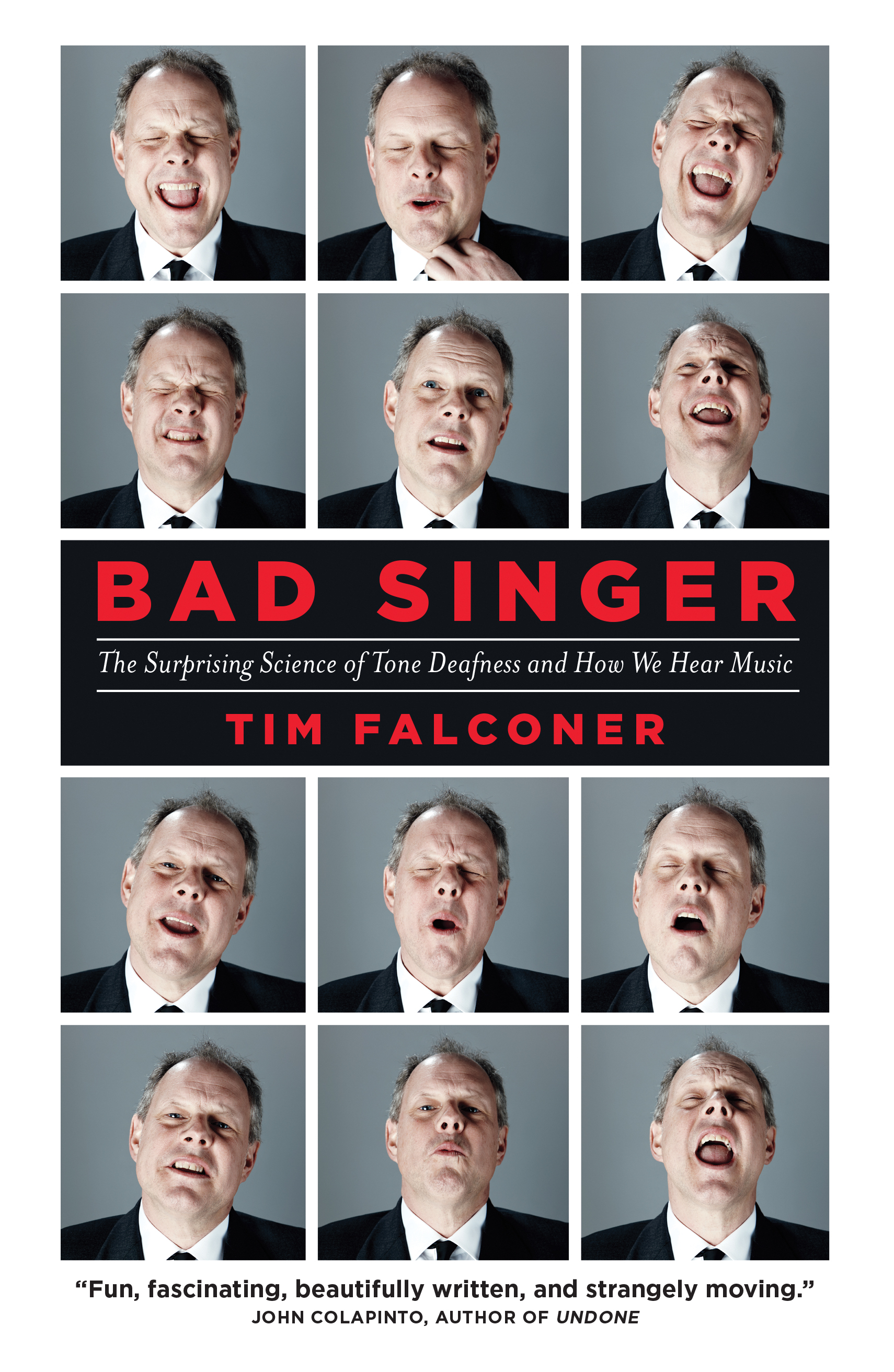
The Science of Why You Can't Carry a Tune

by Tim Falconer

From an early age, talking comes pretty naturally to most of us. We open our mouths and out come words. Sure, we still have to build our vocabulary and our grammar, and maybe ease up on the ten-year-old boy's fascination with all things scatological, but talking is easy enough. Singing seems like it should be just as easy, and for some people, it is. But there's actually a lot going on in our bodies when we sing. 

When we want to produce a note, we need to coordinate our lungs, our diaphragm, our throat, our mouth, our tongue, and our lips. And so much—from a change in lung pressure to the wrong shape of our mouth—can go wrong. We need to make all those elements work together when we talk as well, but speaking English and many other languages requires producing specific sounds, not specific pitches. So while we may tease someone who uses a funny pronunciation of a word, most of us are tolerant of people with accents. And we don't call people with deep, sexy voices bad talkers because they don't hit the high notes. 

Sean Hutchins, a neuroscientist and director of research at the Royal Conservatory of Music in Toronto compares singing to tossing a baseball. We require complicated muscle coordination and timing to throw a ball with the right trajectory. Screw up any step in the process and the ball won't go anywhere near your friend's mitt. "The same type of thing is going on when you're singing," he said, "except it's all inside of you." That makes it much harder. 

While we can watch someone throw a baseball to learn how to do it better—just as we can watch people play piano or guitar and see what they do with their fingers and hands—the steps necessary to sing a note are invisible. Watch singers and you will see their lips move. And perhaps you can see their bodies move as they take in air and let it out again. But you can't see what their diaphragms are doing or what their lungs are doing or even what their tongues are doing. Everything is hidden. Even if you used a laryngoscope to see these muscles and organs, you probably couldn't make much sense out of what you saw. According to Peter Pfordresher, director of the auditory perception and action lab at the University of Buffalo, "It's a pretty strange-looking image." 

Growing up in Connecticut, Hutchins took music and voice lessons throughout high school. He kept at it during his undergrad and graduate years with some a capella, some barbershop, and some light opera. He even met his wife while doing Gilbert and Sullivan. Meanwhile, as a psychology student, he was intrigued by the relationship between perception and production: how we coordinate what we see and perceive in the world with what we do in the world. As it turned out, singing was ideal for studying that interaction because in order to sing together, singers must coordinate what they're producing with what they're hearing. 

If you can't hit the right notes, you are, by definition, a bad singer. So the starting point for all good singing is the ability to perceive pitch, but it's more complicated than that. After a music teacher said, "I think everybody is deeply musical," the phrase stuck with Pfordresher and it's something he's wanted to explore through his research ever since. Believing it's a shame that so many people are unhappy with their singing, he wanted to understand the problems they have with it and to see if there was a way to help them. He thinks singing is as fascinating as it is difficult. Academic literature is full of studies, including his, about why some people can't imitate pitch correctly. "An almost more perplexing question is, 'Why is it that anybody can do it?'" he said. "The fact that as many of us can do that as are able to do that is, to me, a kind of wondrous thing, a kind of mystifying thing."  He believes that when people say, "Oh, that guy can't sing," they usually think they're assessing pitch. But they may be reacting to something completely different. When he talks to people about his job, they inevitably bring up American Idol and all the hopeless performers on the show. Many of them are, he'd agree, poor-pitch singers, but he figured there was something more going on so he decided to evaluate the program's most notorious contestant: William Hung. 

After winning a talent contest at his Berkeley dorm, the civil engineering student auditioned for the third season of American Idol. Despite his obvious (and nerdily charming) enthusiasm, it did not go well. While Randy Jackson, one of the judges, chortled away, Simon Cowell, the famously nasty judge, stopped Hung's a cappella rendition of Ricky Martin's "She Bangs" early on and said, "You can't sing, you can't dance, so what do you want me to say?" After his performance ran in January 2004, it became a viral sensation and Hung became a celebrity—and even landed a record deal. 

Curious about why everyone thought it was so terrible, Pfordresher compared Hung's rendition to the original. "Sure enough," he said, "William Hung's pitches were pretty much identical to Ricky Martin's pitches." He was singing the right notes, and he was doing it in one take without accompaniment and without digital editing, in a stressful situation. Not many people could do that. And still they laughed him off the stage. 

Turns out, there's more to a good voice than pitch control. Timing, for one thing. Volume, for another: Some songs call for soft, gentle vocals while some music demands it be sung loud. In addition, every singer has his or her own distinct sound, and some sounds work better for certain songs than for others. Luciano Pavarotti's rich tenor was no more likely to work well for an album of country and western covers than Johnny Cash's deep growl would have been appropriate for an opera. 

Hung's problems started before he even hit the stage. "She Bangs" wasn't a wise choice—not because it's a silly song (though that's true, for sure), but because it's not well suited to an a cappella rendition. And, sad to say, Hung's accent didn't help. From many of the original British Invasion bands to more recent examples such as First Aid Kit—two Swedish sisters who come across like they grew up in the American Midwest—we're so used to artists from all over the world sounding as if they're from the United States that anything else seems off. Then there's Hung's timing, which isn't great, and the thinness of his voice. 

In some genres, not being a virtuosic singer doesn't preclude great success. In 1985, Canadian musicians gathered in a Toronto studio to record a benefit song called "Tears Are Not Enough." It joined the British "Do They Know It's Christmas?" and the American "We Are the World" as supergroup singles that raised money for Ethiopian famine relief. The song is hardly an enduring classic, but the list of musicians who recorded it remains impressive: Neil Young, Joni Mitchell, Gordon Lightfoot, Anne Murray, Liona Boyd, Oscar Peterson, and many others. After Young sang his line in the studio, producer David Foster told him, "Little flat on 'innocence,' but other than that, it was great. We'll go again." Young waited a beat or two and then deadpanned, "That's my sound, man." 

That sound has certainly served him well for nearly six decades. Perhaps that's no surprise in rock music, but opera singers can sometimes be as far out of tune as shower singers. Divas have a certain sound that comes from the way they support their voices and the way they hold their facial muscles. "And then there's that little trump card in classical singing, the vibrato, which, frankly, makes the pitch that someone's singing somewhat ambiguous," said Pfordresher. So they can be slightly off and few of us will notice. 

Even for good singers, getting really good takes work, as I learned from Kellie Walsh, who comes from what she calls a "traditional Newfoundland family." Her dad was the son of a fisherman who had a family of eighteen and, when she was growing up, Sunday dinners were at her grandparents', where there was always music: People played accordion, spoons, and guitar, and they sang and danced. As the artistic director of the Lady Cove Women's Choir and Shallaway: Newfoundland and Labrador Youth in Chorus as well as the founder and conductor emeritus of the Newman Sound Men's Choir, she's taken part in competitions around the world. The trick to singing well, she says, is to treat the body as an instrument rather than just thinking, "If I open my mouth, sound will come out." Young singers often don't realize that a good voice comes from their diaphragm, not their throat. Once they start using more of their bodies, they produce a more pleasing sound. 

The goal with a choir is to make the sound as "blended and beautiful and in tune as possible," but trying to instruct and correct up to sixty singers at once is, of course, more challenging than working with one person. And because singing takes place inside the body, which she can't show, Walsh uses metaphor and mental images. One of her techniques is to tell singers to think of the inside of the mouth as a clock. Sending the sound to twelve o'clock means direct- ing their voices up to the centre of the roof of their mouth, or to three o'clock where the teeth are. "I'll say put that vowel right at twelve o'clock. Or if I want it to sound darker, I'll say put that vowel back at nine o'clock, to the back." 

While Barnes spends a lot of time working on technique with his clients, he also says that the hardest part of singing for most of them is trusting their instrument, which requires trusting themselves. "Singing is easy," he told me. "It's just hard to let it be simple." Our need to be good, our worrying about being good, and our eagerness to criticize complicates the act for us. We end up afraid to do it. "If you're full of doubt and judgment, then singing is indeed quite hard. To be worrying about your singing while you're singing means you're doing it wrong." 

As a performer, Barnes knows that when he's relaxed, he sounds better and puts on a better show. He believes singing is emotional, spiritual, and physical—and you can't separate this trinity. He's met and worked with a lot of great singers and they tend to be really soulful people. "Gladys Knight is a great singer, and she was exactly like her voice: warm, relaxed, intimate, easygoing. Chaka Khan is a brilliant singer, and she was exactly like her voice: intense, radical, crazy. k.d. lang is a very relaxed person, a very self-assured person, a very in-touch-with-her-spiritual-self person. Really surrendered in a Buddhist sense." Still, he admitted, truly good singing is hard. "It takes an unusual amount of trust and faith to really fill the world with your sound." 

This post is excerpted from Bad Singer: The Surprising Science of Tone Deafness and How We Hear Musicwhich is out today.

14 Feb 22:50

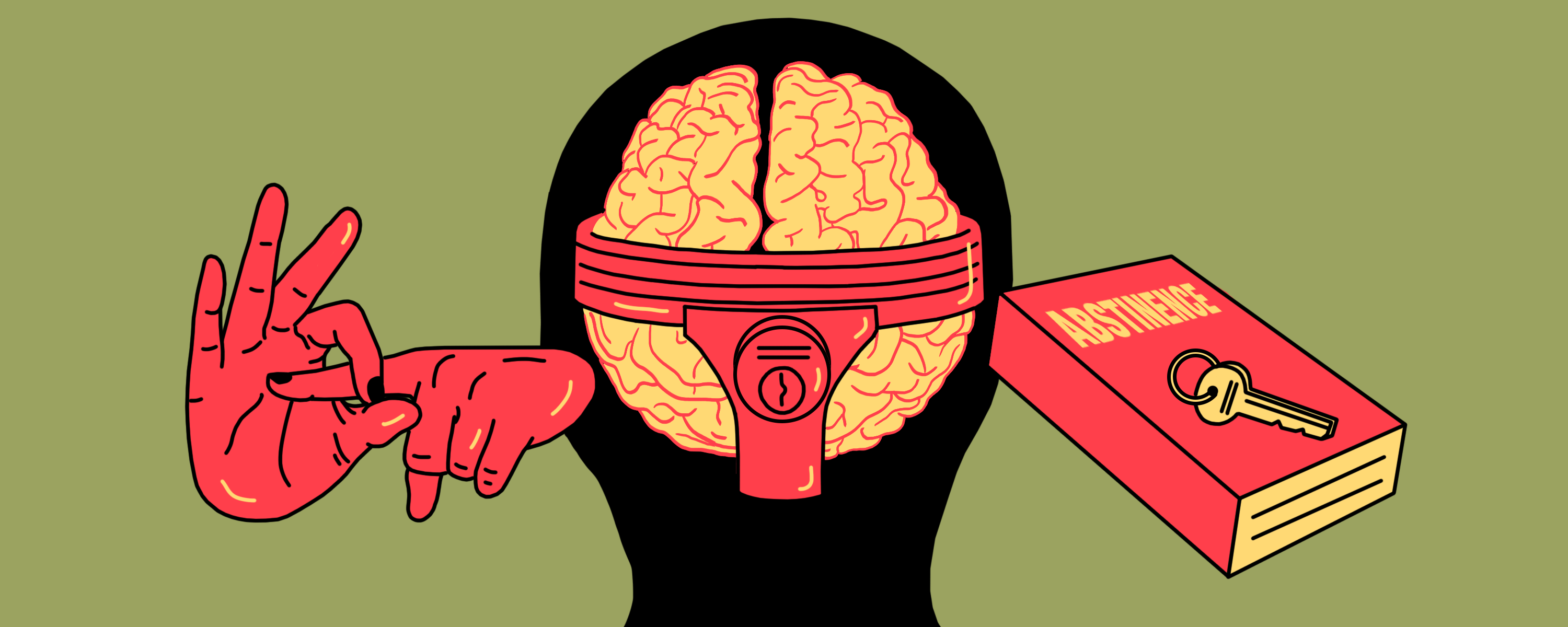
What Swearing Off Sex Does To Your Brain

by Hanson O'Haver For Broadly

In honor of Valentine's Day, we're spending the week debunking myths and lies about romance. Read the rest of our "Love is a Hoax" coverage here.

"We should be fucking," the David Banner song "Fucking" says. But is it true? Reminders of sex are certainly common in our society, from the advertisements on the subway to the attractive people on the subway who make us think about sex. Sometimes sex—the physical wants, the search for the right partner(s), the fear that everyone else is having more frequent and better choreographed intercourse than you—can feel like an oppressive force in our lives. Beyond this, there's a perception—especially prevalent among men who frequent online forums—that sex (or even self-achieved orgasms) causes the comer to lose energy that could be otherwise put towards building a better life.

For some people, these complications are too much to take. They've gone ahead and forsworn intercourse (and, in some cases, masturbation). Sometimes this is a temporary decision, a realignment of sorts, like a more literal Dry January. For other people, like the voluntary celibates of Reddit, this is a long-term project, with message boards forming an AA-like support group. These "volcels," as they're known (in contrast to involuntary celibates, or "incels"), swear that their white-knuckle lifestyle gives them courage, confidence, calmness, creativity, and other benefits that don't start with c.

Read more: Can You Go Crazy from a Lack of Touch?

I'm generally skeptical of online health advice, and doubly so when lifestyle guru Tim Ferriss backs it. Still, the idea that doing a counterintuitive and unpleasant thing could actually be good is the kind of pseudoscience that makes intuitive sense—hence the appeal of toe shoes and eating paleo. I wasn't, like, about to try it, but the neurological case against sex still seemed plausible. I decided to see if the scientific facts back it up.

I first spoke with Dr. Beverly Whipple, a leading sexologist and the co-author of The Science of Orgasm and numerous other books on sexuality. She told me that she's unaware of any medical benefit to abstaining from orgasm, and she literally co-wrote the book on the subject. "I would know about this if there was something scientifically to it."

Next I spoke with Dr. Nan Wise, a sex therapist and psychotherapist with a PhD in cognitive neuroscience. She said that there really is no physiological benefit to abstaining from orgasm, but things are more complicated than that. "When it comes to sexuality, you always have to look at biological, psychological, and social stuff." The power of the mind shouldn't be discounted. "Here's a place where the power of belief is going to determine what people experience, and their experience is going to confirm their belief. For people who believe that abstinence is going to help them, the belief itself may be driving some of the benefits."

I wasn't, like, about to try it, but the neurological case against sex still seemed plausible.

That said, any physical benefits from celibacy are likely to be short-lived. "There's really no hard evidence in support of the notion that abstaining from sexual activity or from ejaculation has any demonstrative benefits," Wise says. "On the other hand, there's evidence that having fairly frequent ejaculations has health benefits in terms of lower levels of prostate cancer. In general, there's a lot of evidence that engaging in regular sexual behavior is physically and emotionally helpful for both men and women, as long as we're not getting diseases or doing stupid things."

What about the message board belief that not ejaculating allows men to build up more testosterone? "There's an old study that shows testosterone levels increase if men abstain for seven days, but there hasn't been any continued evidence of that." (The study Wise refers to, conducted by researchers at Zhejiang University in 2002, found that testosterone spiked after seven days of abstinence but went back to normal fluctuations after that.) In other words, the relationship between testosterone and orgasm isn't quite as simple as people think; testosterone isn't something that just increases until it spills out during orgasm. Dr. Wise says the perception is "that people who have lower testosterone have less sex, in particular men. But there's also evidence that engaging in sexual behavior increases testosterone levels. It's not that low T causes people not to have sex; not having sex may actually inhibit testosterone."

For More Stories Like This, Sign Up for Our Newsletter

To be clear, it's not that abstinence is actively bad for you. It's just that it prevents you from getting all the health benefits that can come from sex. "A lot of the benefits of sex are not just about sex," Wise says. "It's about having connection with another human being. Even masturbation is a pleasurable activity. Orgasm is fantastic for your brain. A lot of different regions are activated, which means they're getting a lot of blood flow. It's kind of a workout for your brain."

Nevertheless, Dr. Wise says that sexuality is shockingly under-studied. "There are major gaps in the literature, in particular with female sexuality," she says. "And unless a drug company can make money, there's very little funding." This lack of hard data allows misconceptions and quackery to take root. "It's so sad. We're so uncomfortable in this culture with dealing with our sexuality in a healthy way."

So this is one of the rare situations where doctors advise: If it feels good, do it. "Pleasure is really important," Wise says. "Sex is great for us, especially if we feel good about sex and about the people we're having sex with—including ourselves."

14 Feb 22:46

Why Every Generation Freaks Out About a New Drug

by Maia Szalavitz

It's not hard to discern a general pattern over the course of American history when it comes to drug use: Every decade or so, a new panic emerges. In the 1960s, the slogan was "speed kills," and the alarm was raised about LSD. The 70s saw the emergence of a bona fide heroin epidemic. The 80s, of course, were high on cocaine, culminating in the crack era. The 1990s embraced nostalgia: Heroin was chic again, even if it allegedly fried your brain like an egg. The 2000s saw the rise of methamphetamine, and so far, this decade has largely (if by no means exclusively) been a story of heroin and opioids.

So what does this panic calendar portend for the future of our currently en vogue opioid problem—and drug policy in America?

The failure of any given generation to recognize the dangers of drugs not currently in fashion is such a recurring theme that it's been given a name. The University of Michigan's Lloyd Johnston calls it "generational forgetting," and, during the four decades in which he's led the US government's large national survey of youth drug use, Monitoring the Future (MTF), it has been on consistent display.

"We use the term to refer to the general idea that younger generations often do not know about the dangers of a drug-use epidemic," says Richard Miech, another professor at the University of Michigan and a co-investigator for MTF. "While one generation may have learned the hard way about the dangers of a specific drug… the next generation may have to learn the same lesson all over again."

"I often mention in it my lectures," adds University of California Professor Emeritus Craig Reinarman, a sociologist, "It seems to me that it's the result of a policy choice because the amount of cultural learning that takes place gets erased," he continues, explaining that as users become familiar with particular drugs, they tend to develop ways to manage risks. Drug education that focuses primarily on "just say no" doesn't leave room to pass these harm reduction measures down, he notes.

The problem is exacerbated by mass media outlets, which, as I noted in my last column, have a nasty habit of using select quotes and anecdotes to refashion the currently hot drug into the most deadly and addictive scourge ever. This results in ironic contradictions for anyone who actually bothers to read the archives and misinformation that drives public policy. Since every new threat is described as unprecedented, the lessons of the past go unheeded.

I experienced this for the first time myself in the 1980s, when, if you listened to the media, crack use was going to escalate forever until every suburban teen was curled up in a den with her own pipe. In fact, by the time a drug epidemic becomes a matter of public concern, it is typically already on the wane: Reinarman's research documented this quite clearly in a seminal analysis of that period. He notes that cocaine use in the US overall had begun to decline before the 1980s panic over it even started: the percent of the population who said they'd ever tried cocaine peaked in 1982, around four years before the media hysteria about the problem really took off.  

As for crack, the first time the government measured use by high school students resulted in the highest number ever seen: 4.1 percent of high school seniors in 1986 reported having used it in the past year, though the vast majority of these had done so only once. That number was down by 25 percent within two years. Nonetheless, media coverage continued to report that a whole generation was at increasing risk because of the "deadly" drug. (In 1985, there were a total of eight crack-related deaths among youth in the entire US and such deaths were never seen in more significant numbers, as reported in Reinarman's book Crack in America.) 

Of course, violence related to the illicit sale of crack, crack addiction itself, and the mass incarceration policy that was pursued in the name of addressing the problem did do tremendous harm—particularly in the black community in cities. And in fact, a healthy generational response grew up indigenously: the younger siblings and children of the crack generation—far from becoming the crack-fueled "super-predators" politicians had predicted—mainly turned to a different, and far more benign drug.

While the media and politicians were obsessing about young white Americans, grunge and the "deplorable" fashion trend of heroin chic, in the 1990s, the black hip-hop generation was turning to marijuana, according to David Courtwright, a professor of history at the University of North Florida, who cites research by Andrew Golub and Bruce Johnson.

Courtright, who is a pioneer in the study of opiate use in American history, notes that in the 90s, some black teenagers "shunned the drugs that messed up their elders. They would see what they called a 'thirsty crackhead' and say, 'I'm not going to do that. I'll smoke reefer instead.'" And some of the adults who had themselves been hooked on crack began using marijuana, too—to wean themselves off of the harder stuff.

Check out our interview with Alexis Neiers about 'The Bling Ring' and her drug problems.

It's too early to tell yet how our current opioid epidemic will play out and whether there will be another turn towards less risky drugs like marijuana—or whether this generation will switch to a drug type that has harmed prior generations, but received little notice lately.

If recent history is any guide, next up should be a stimulant—perhaps Ritalin, Adderall, cocaine or some new synthetic upper. Today's young people have been exposed to countless headlines and videos warning of opioid problems and they've likely seen the struggles of family members or older friends. But far less attention is given to stimulant risks.

Still, what is clear is that the move away from opioids is already happening among younger people. According to MTF data, past-year use of prescription opioids by high school seniors peaked at 9.5 percent in 2004 and was just 5.4 percent by 2015; for heroin, past year use peaked at 1.5 percent in 2000 and is currently only .3 percent. Daily use of prescription opioids reached .4 percent in 2009, but is now just .1 percent. Says Miech, of the trend among youth, "Since 2009, use of these drugs fell by 40 percent."

That's the good news. The bad news is that people suffering from opioid addiction right now are not being adequately treated and will continue to be at risk for overdose, particularly given the rising supply of fentanyl. If we want to stop the constant cycling of generations from one drug to the next, we need to focus more on why people use—not on whatever drug is particularly fashionable.

Follow Maia Szalavitz on Twitter.

14 Feb 14:28

I've been visiting Russia for nearly 30 years. I've never seen Russians prouder than under Putin.

by Lisa Dickey

One evening in October 2015, my Russian friend Valera and I went to the movies in the Siberian city of Novosibirsk. There was a multiplex not far from his apartment, and with a dozen movies to choose from, we decided to see The Martian.

As we walked out of the movie, I asked how he liked it. To my surprise, he began fuming about a scene I hadn’t thought twice about: a plot point in which the Americans ask China, not Russia, for help in getting a powerful enough rocket to return to Mars.

“Why would the Americans ask China for a rocket?” he practically spat. “Everybody knows the Russians have the greatest rockets in the world. We were the pioneers in space!”

I told him I didn’t think this was meant as a slap at Russia, and that as far as I knew, the Chinese had an impressive space program too. But Valera — who’s actually one of my more apolitical friends in Russia — was convinced that the film’s producers, most likely under the direction of the US government, had picked China to deliberately belittle Russia. This was a pretty wild assertion, but it’s a sign of the times in Vladimir Putin’s Russia.

For the past few weeks, President Trump has unsettled foreign leaders around the world, not to mention both Democrats and Republicans at home, with his unrelenting praise of Putin. He regularly lauds the Russian leader as smart, strong, and popular — and I can personally attest that he’s right about that last trait.

I saw Putin’s enormous public support firsthand during three months I spent in Russia in 2015. My takeaway: Many ordinary Russians believe he has has — to paraphrase a Trumpism — made Russia great again. And they love him for it. While Western observers criticize Putin for his dismal human rights record, brutal crackdowns on dissent, the annexation of Crimea, and apparent desire to upend the geopolitical order, none of these things has dented Putin’s public support at home.

This is the story of how Vladimir Putin transformed himself from being a little-known mayoral adviser to the most popular and powerful leader in recent Russian history.

Putin inherited a broken, dispirited country. Russians believe he’s fixed all that.

In 1995, 2005, and 2015, I took three identical trips across Russia (I’ve been visiting Russia since 1988). On each of those three 5,000-plus trips from Vladivostok to St. Petersburg, I stopped in the same 11 cities and interviewed the same people — sort of like the British documentary series 7-Up, but with Russians.

On the first trip, in 1995, the country was in shambles. Just four years out of the Soviet era, the Russian economy was tanking and the value of the ruble had plummeted, wiping out many people’s savings. A tiny sliver of enormously wealthy people was perched at the top of the economic ladder, while most of the rest struggled. Western goods were now available in Russia, but the general population couldn’t afford to buy them. And anyone wanting to start or run a business had to contend with the ever-present Russian mafia, which routinely demanded exorbitant sums for “protection.”

The president then was Boris Yeltsin, who was, it’s fair to say, not a paragon of stability. During the course of his presidency, he morphed from heroic resister of the 1991 coup attempt, standing valiantly atop a tank, to a fleshy, unpredictable, alcohol-fueled embarrassment. In its 2007 obituary of Yeltsin, Time magazine observed that “in the US, Boris Yeltsin will be more fondly remembered as the man who turned the menacing Russian bear of Cold War fear-mongering into a warm and cuddly creature, supine, pitiable and willing to perform in exchange for scraps.”

For a country that had for decades been one of the world’s two superpowers, this was an ego-smashing fall. When I asked about America on that 1995 trip, Russians often responded with admiration, even envy. One 18-year-old in Moscow, a McDonald’s employee named Yuri, told me that “the only people who criticize the wave of American culture in Russia are either nationalists or they're crazy.” And a 14-year-old named Denis, who was puffing on cigarettes when I interviewed him, told me, “I would definitely go live in America. Right now. No question.”

The prevailing attitude among most of the Russians I spoke with seemed to be a friendly, wistful appreciation of the United States. And Putin was a complete unknown, working in St. Petersburg under then-Mayor Anatoly Sobchak.

On my second trip, in 2005, things had changed. By then, Putin had been president for five years, and I saw a marked difference in the fortunes not only of the Russians I’d first interviewed 10 years earlier but of their towns and cities as well.

Almost all the people I talked to, in places such as Chita, Chelyabinsk, Novosibirsk, Irkutsk, and Kazan, were better off financially than they’d been in 1995; many now had credit cards, had traveled to Turkey or Thailand on vacation, and could afford to buy imported clothes and food. In their towns, potholed streets had been repaired, bridges had been built, new apartment buildings were going up. Between 1995 and 2005, the price of oil nearly tripled, and with that rise came a rise in Russia’s fortunes. In the eyes of many Russians, these improvements were a direct result of Putin’s leadership.

Part of Putin’s appeal was that, unlike Yeltsin, he radiated discipline: He didn’t drink, didn’t smoke, and was a black belt in karate. His actions, words, and very bearing conveyed a message of Russian strength, and the effect on Russians’ pride was palpable. It reminded me of the effect Ronald Reagan had on conservative Americans in the early 1980s, when he followed the national malaise of the Carter era with his relentless message that America could be great again.

This is why Russians buy Putin-emblazoned refrigerator magnets, T-shirts, and calendars

When I made the third trip, in 2015, a few themes kept surfacing: 1) people (such as my friend Valera) felt that the USA didn’t sufficiently respect Russia; 2) they loved and admired Putin; and 3) they were confident that Putin would restore Russia’s proper standing on the world stage — regardless of whether that involved lifting up Russia, knocking the US down a peg, or some combination of the two.

I’d wondered whether Putin was really as popular as reports and polls suggested — a July 2016 survey from a Moscow-based nonprofit pegged it at an astonishing 82 percent — and it didn’t take long to determine that he was. Everywhere I went, I saw his face: gazing out from refrigerator magnets, emblazoned on T-shirts, plastered all over wall calendars. In people’s homes, I saw framed photos of him placed lovingly beside family photos in the living room shkaf, or bookcase. One woman in Vladivostok, in response to my question of how she felt about Putin, picked up her framed portrait and gently kissed his face.

He was fabulously popular, even though the Russian economy was once again in a slump. Between January 2014 and September 2015, when I landed in Vladivostok, the value of the ruble fell by half, obliterating Russians’ purchasing power. Yet almost none of the Russians I spoke to blamed Putin. Instead, they blamed the Americans (and the West generally), for two reasons. First, for the sanctions we imposed following the annexation of Crimea. And second, because they were convinced we had artificially depressed oil prices specifically in order to damage their economy, which is heavily dependent on income from oil exports.

This, more than anything, persuaded me that Putin’s power runs deep and wide in Russia. It’s easy for a leader to gain support when the economy is strong. What’s difficult is maintaining that support even as things start to go south, and Putin has done that.

Yet of course there’s that other, darker reason he’s able to maintain such sky-high support. During his time in power, Putin has systematically stamped out political dissent and gutted what had once been a relatively free press. Opposition leader Boris Nemtsov was shot dead within sight of the Kremlin in February of 2015. Alexander Litvinenko was poisoned with polonium-210 in London. And as I write this, fierce Putin critic Vladimir Kara-Murza — who already survived one poisoning in 2015 — is in grave condition in Moscow, after his organs failed following an apparent second poisoning. He’s 35 years old.

Journalists who’ve criticized Putin’s government have also felt its wrath, being blacklisted, intimidated, threatened with prosecution, and occasionally murdered. Opposition journalism has been relentlessly suppressed; as a result, Russians who get their news from television are treated to a steady diet of pro-Putin — and anti-US — reports. And while more sophisticated consumers of Russian media realize these reports are one-sided, others don’t.

Many Russians continue to believe that the Russian press is completely free. A wealthy, world-traveling woman in Chelyabinsk named Masha was one of these: “The Russian press is certainly more free than the American press,” she told me over lunch in October 2015. When I asked her about journalists such as Anna Politkovskaya, shot dead in her Moscow apartment building following critical investigative reporting in Chechnya, Masha replied simply, “Journalists get killed in America too.”

Which brings us back around to our new president, Donald Trump. As his White House team continues to disseminate statements that are demonstrably untrue, while simultaneously engaging in a running effort to discredit CNN as a “fake news” operation, it does appear that he’s taking a page out of the Kremlin’s playbook. And I couldn’t help but notice that his recent rebuttal to Bill O’Reilly — “We have a lot of killers. … You think our country is so innocent?” — sounds an awful lot like the assertions of Masha in Chelyabinsk.

Amid all this, one fact is inescapably true. Yes, in The Martian, the US turned to the Chinese for rocket help. But even so, there’s no doubt that unlike in the 1990s, Americans are once again paying very close attention to what Russia does. In the eyes of many Russians, Vladimir Putin has made their country great again. Now we must ensure that our own president’s quest to “make America great again” doesn’t come at a similar cost.

Lisa Dickey is the author of Bears in the Streets: Three Journeys Across a Changing Russia (St. Martin's Press, 2017). As a book collaborator and ghostwriter, she helped write 17 published nonfiction books, including eight New York Times best-sellers. Dickey began her career in St. Petersburg, Russia, writing articles for the Moscow Times and USA Today. She also regularly appears at live events such as the Moth Grand Slam.

12 Feb 16:34

33 Girls Share The Gross Things They Do When Their Partner’s Not Around

by Lorenzo Jensen III
Illustration by Daniella Urdinlaiz
Found on AskReddit.

1. I chew my toenails.

“Chew my toenails. I’ve done it for years but I know my husband would freak out if he saw me do it (he doesn’t like feet)”

Jazzymoose


2. I squeeze the goo out of my pierced nipples.

“I had pierced nipples years ago, and the holes still gather sebum. I’ll wait for a couple weeks and then squeeze the goo out of each nipple (two piercing holes per nip) in an explosive POP! But only when my husband is not around.”

graciewindkloppel


3. I let my cat eat my boogies.

“Let my cat eat my boogies.”

theyellowpants


4. I pull my butt hairs out.

“I like pulling my butt hairs out. I’d shave, but every time I try shaving my ass it ends up in me accidently cutting myself. Its hell.”

cuddlise


5. I let my dog lick my mouth.

“I let my dog lick my mouth.”

Requisbabu


6. I blow out snot rockets.

“Blow out a snot rocket (I’m humiliated to admit this), but sometimes it’s better than waiting to find a tissue or paper towel, to only have that gross wad to hang onto until I get a chance to throw it away.”

lanapocalypse


7. I smell my boob sweat.

“I smell my boob sweat. I swear that it smells better than the rest of my body.”

Laurie_Jo


8. I fart like a fucking fog horn.

“I fart like a fucking fog horn and compliment myself of my abilities to do so.”

Aishas_Star


9. I fart explosively.

“Fart explosively. I get a certain satisfaction from letting go of a gas bubble that could fill a birthday balloon, but I doubt my SO would.”

stormycloudysky


10. I tweeze my ingrown armpit hairs.

“Those ingrown armpit hairs aren’t gonna tweeze themselves.”

nobody_likes_beets


11. I pick at blackheads and analyze my pores.

“Pick at blackheads and analyze my pores. I also use scissors to cut split ends.”

nativehoneybaby


12. I clean out smegma from my vulva.

“Poop. Clean out smegma from my vulva. Fart with abandon.”

Buttsex


13. I grab the lips of my vagina and pull them out, making a suction sound.

“I grab the lips of my vagina and pull them out, making a suction sound. Kinda like if you grabbed your face cheeks and pulled them out continuously.. Not sexual just funny.”

SoKawaiiGirl


14. I eat as if someone is going to take it away from me.

“Eat as if someone is going to take it away from me.”

meowdryhepurrrn


15. I stand in front of my magnifying mirror for hours and squeeze every pore and pluck every errant hair.

“Stand in front of my magnifying mirror for hours and squeeze every pore and pluck every errant hair. It’s thrilling.”

Weerrrd


16. I talk Ace Ventura-style with my vagina.

“I talk Ace Ventura-style with my vagina.”

blondeandtall


17. I pick my nose.

“I pick my nose.”

L1ttleMonster


18. I pluck my ginger unibrow.

“I’ll walk pantsless around the apartment with my hands in my panties like it’s a little pocket. It’s 100% not sexual, just comfy as fuck. I’ll also perform makeup tutorials with my cat as my sole audience. I’ll also pluck my ginger unibrow that I’ve managed to keep hidden from him for 3 years. And my three chin hairs.”

jerden


19. I wear his dirty shirts around the house.

“I’ll wear his dirty shirts around the house. His man stink smells good, but I’m not willing to tell him that.”

JesusHCrisco


20. I scratch my cooch and sniff my finger.

“I scratch my cooch, or just touch it. Similar to when guys just have their hand hanging out down there, nothing sexual. I also like my own smell, tho, so I sniff my finger when I’m done.”

thatgrrrl117


21. I take “luxury poops.”

“I have luxury poops…. I’ll roll a joint, sit on the toilet, watch Netflix on my tablet, maybe bring in a coffee…. just poop for like 30 minutes. My bathroom is super comfy.”

DreyaNova


22. I empty my menstruation cup.

“I empty my menstruation cup…

I poop/pee/fart/pick my nose/wear stank ass clothes/use my toys literally all of those are okay for me in front of him. But I refuse to open the flood gate of the bloody river. I yell at him to leave the bathroom. We are quite comfortable with each other otherwise.”

NovaCain


23. One in the pink, one in the stink, then a song.

“Insert one finger in my vagina, the other finger in my butthole, while at the time shouting…🎶 hello from the other siiiiide🎶

CallMeWaltrop


24. I floss my teeth using my own hair.

“Happens anyway when my partner is around, but I circumvent potential difficulties by getting with people as gross as I am.

Probably, openly picking the food stuck in my teeth. Using the hair my glasses weirdly rip out, to floss my teeth. Scratch my nethers when I’m at that stage where the hair growing back makes it itchy. Picking at my lips until they bleed and then licking my lips because I like the taste of blood (I recently got a fidget cube and it’s fun but doesn’t stop the lip-picking because fidget cubes do not taste of copper.)…

I went through a phase in which I was fascinated with my own pee (as opposed to others’ now, but I digress). I guess trying your own pee is a bit gross and was definitely was a thing that happened when no partner was around. And wearing something and peeing yourself and kinda sitting that, really the kind of thing where every time you recall it, you die a little bit inside, so yeah.”

PM_ME_UR_DECOY_SNAIL


25. I watch an ungodly amount of popping videos.

“Watch an ungodly amount of popping videos. He’s disgusted by it, but it’s SO SATISFYING.”

ToastyCheeseSandwich


26. I eat the shredded cheddar cheese out of the bag.

“I eat the shredded cheddar cheese out of the bag.

murder_kitty


27. I openly burp.

“Honestly, I openly burp when I’m alone. Loud roars, man. He comes around and I keep it quiet and hidden behind my hand.”

AlyceMagick


28. I smell his dirty shirts.

“I smell his dirty shirts because I love the smell of his pheromones.”

Laksflas


29. I sit with my hand down my pants (Al Bundy style), just because I’m always cold and it warms my hand.

“I fart and smell the fart, cause the smell can tell me how my poop will be later on. Also, I take shits with the door wide open. I sit with my hand down my pants (Al Bundy style), just because I’m always cold and it warms my hand. I scratch wherever I have an itch. I pull hairs (from my head) out of my buttcrack. I deal with all pimples and blackheads. Those kinds of things.”

Pheebje


30. I masturbate thinking about other guys.

“I masturbate thinking about other guys (and even girls) sexually dominating me, since he is not into dominant sex (I girlhandle him.)”

antipoppingcrusade92


31. I get super fucking high, sit around in dirty PJs, drink a six-pack of beer, and order three boxes of breadsticks from Pizza Hut.

“I get super fucking high, sit around in dirty PJs, drink a six-pack of beer, and order three boxes of breadsticks from Pizza Hut. I only need two boxes but they have that damn minimum for delivery.”

MissBanana_


32. Finger my tight little asshole.

“Finger my tight little asshole.”

yurmumm


33. I cut my poop with a stick.

“I have a poop stick! At one point, my poop stick was one of those toilet sponges that has a 12-18 inch plastic handle on it and the sponge at the bottom. I tore the spongy piece off so it’s just a stick now.

My whole life I have always had large poops. It would always clog and flood the toilets growing up. My mom would get angry and I was so embarrassed. My siblings always made fun of me. As an adult I just bought a plunger for the bathroom and it was easy enough to unclog when it happened, which is always 1-2 times a week.

My fiancé and I bought a house a few years ago. I was so terrified of having to poop when he was home. Not because of noises or smell, but I didn’t want to clog the toilet. We have only one plunger we keep in a basement utility closet. I’m too embarrassed to walk to the basement for the plunger and back up the stairs where he can then hear me plunge my poop down the toilet. Yes, I know he would still love me anyway, but I’m not willing to give up that much of my dignity.

Enter my poop stick! I had to use the bathroom so bad one day he was home and as soon as I saw it I knew it wouldn’t go down. Searched the bathroom for anything that may help when I saw the spongy stick. It was left behind by the previous homeowners. I tore the sponge off and used that end to cut up my poop into smaller pieces. Quicker than plunging and no awkward noises.

Three years on and I still have that damn stick. It’s kept in a bag lying in the back corner in the cupboards under the sink. When I need it, which is often, I put on a pair of disposable gloves and grab the stick and cut the poo into smaller pieces. Spray the stick with bleach spray, run it under hot water, and put it back in the bag under the sink. If he finds it he will have no way of knowing what it was for. Sometimes I look at him after leaving the bathroom and think about how weird it would be if he knew I was just slicing up my massive poop log just a few moments ago.

I don’t know why my poops are so big. I’m a petite woman, not overweight. I’m very hydrated, eat a healthy diet, and hit the gym before work 3-5 days a week. I have lots of fiber, yogurt, salads, fruits, etc. It doesn’t hurt or anything. It just comes out in one long thick piece. I don’t understand when people need 20 min to poop. It takes me no more than 30 seconds from start to finish (not including the poop cutting thing.)

It’s made things quite difficult for me though. I can’t poop anywhere other than home. If I all a sudden have to go at 11am I wait until I get home at 6 pm. No one wants to be the girl known around the office for flooding toilets. On vacations I use bathrooms at restaurants and fast food places cuz they have stronger flushing toilets I’ve noticed. Once I was at a small hotel/casino for a weekend. Woke up and I was dying to poop immediately. Waited til breakfast and used the casino bathroom next to the restaurant we had breakfast at. It was so big, one of my biggest ever. I pushed the handle and ran out without waiting to see what happened. Another woman was also in a stall. I heard the overflowing water hitting the tile floor before I exited the bathroom. We walked out after breakfast and I saw employees mopping up the water and trying to dry the carpet outside the bathroom. I had only been dating my now fiancé a few months and was terrified the casino would know it was me and kick us out or something.

TL;DR I cut up my poop with a stick!”

PooPooStick TC mark

12 Feb 16:25

Ha fallecido Jirō Taniguchi

by John Swift


Adiós a un grande del manga.


Una triste noticia. Uno de los autores japoneses más interesantes del manga moderno nos ha dejado con solo 69 años de edad. El autor, curiosamente, vendía más en occidente que en su propio país, aunque el reconocimiento le llegó a ambos lados de las fronteras de Japón. Por una parte, fue galardonado con el Premio Osamu Tezuka de Japón por su obra La época de Botchan, además de los Premios de la Asociación de dibujantes japoneses. Su estilo era más occidental y realista y las historias que proponía en muchas de sus obras eran dirigidas a un público más maduro y adulto. Joyas como Barrio Lejano (una obra maestra sin lugar a dudas), El olmo del cáucaso, Furari, La cumbre de los dioses o Crónicas de la era glacial fueron algunos de sus trabajos más reconocidos y apasionantes, marcando siempre su estilo propio.

Además, Ponent Mon tiene programado para junio el lanzamiento de otro de sus mangas, Venecia, un título muy diferente a los anteriores, con alto contenido autobiográfico.


Otros galardones que ha conseguido han sido:

- 1 Premio Shōgakukan por Inu wo kau (Tener un perro)

- 3 Premios Haxtur por El olmo del cáucaso, Seton: Lobo, el rey y Sandhill Stag. Seton.

- Varias nominaciones a los Premios Eisner, aunque nunca consiguió ganarlo.


Adiós, maestro.

También te puede interesar:


12 Feb 16:25

La serie basada en SCALPED ya tiene directores

by John Swift


Adaptación del cómic de Vertigo a la televisión


El canal WGN American va a realizar un episodio piloto, y futuriblemente una serie, basada en la serie de cómics Scalped, creada por el ganador del Premio Eisner en 2016, Jason Aaron, y R.M. Guéra. Dicha serie relata la inflitración de un agente del FBI en una reserva india. El agente, llamado Dashiel Caballo Loco, debe ir escalando posiciones dentro de una organización criminal regentada por su propio tío, entrando en una vorágine de violencia sin parangón que le llevará hasta el límite.


Según el portal Deadline, los directores del primer episodio serán los belgas Bilall Fallah y Adil El Arb. Bilall Fallah ha sido director de películas como Black (2015), Image (2014) y Bergica (2012). Por otra parte, Adil El Arb colaboró en la dirección con Fallah en Black e Image, y realizó Broeders en 2011.

El cómic es una joya, de esas historias de género negro que no te sueltan en ningún momento, con multitud de personajes cada vez más interesantes... ¡esperemos que la serie esté a la altura!

12 Feb 14:15

Ordes homenaxea os seus 12 veciños fusilados en Boisaca hai 80 anos

by Redacción

A Asociacion Cultural Obradoiro da Historia e os familiares dos asasinados organizan este sábado unha homenaxe no cemiterio compostelán

12 Feb 14:15

Ferrol busca reverter coa peonalización a crise poboacional e comercial do seu centro

by Marcos Pérez Pena

O Concello lanza a súa proposta para limitar o tráfico rodado no seu centro histórico, seguindo o camiño aberto por cidades como Pontevedra ou Compostela. O obxectivo do proceso, en fase de debate, é revitalizar a urbe e frear o deterioro do Barrio da Magdalena, cun 40% de vivendas e locais comerciais baleiros

12 Feb 13:46

Jim Jefferies tells Piers Morgan to ‘fuck off’ for defending Trump’s Muslim ban

by Jordan Freiman
He has a point.
12 Feb 13:02

Do You Hear the People Sing?

by Artw
As artists, we can no more claim to be above politics then claim we are avoiding air. Politics is killing us. It's the fish denying the existence of water. How to get people on our side with an idea of a compassionate social order? How do we get people riled up for justice and equality? How do we, as artists and designers and writers, go about spreading our message? Learning How To Scream Again: Promoting Leftism for Artists and Writers [via mefi projects]
12 Feb 13:00

Syrian Rebels Crippled After Single Fighter Gets Shot In The Face

by Josh

A single sniper cripples an entire Syrian rebel unit by taking out one rebel fighter trying to cross the street. This is why the war is taking so long.

If you’ve ever found yourself wondering why the civil war in Syria is taking as long as it is, this video is your answer. A single rebel fighter is shot in the face, and killed, by a sniper somewhere down the road. For the next 3 minutes, the unit is absolutely crippled and ineffective as they try to recover his body and evacuate him.

The lack of logistical support, training, and will to actually get into the fight are exactly what is causing the conflict in Syria to rage on for so long. At the current rate, we may be seeing combat footage coming out of the area for the next decade.

Warning: This video contains graphic content which may be unsuitable for some viewers. Viewer discretion is advised.

The post Syrian Rebels Crippled After Single Fighter Gets Shot In The Face appeared first on Funker530.

12 Feb 12:50

World’s Greatest RPG Shot Takes Out Two Saudi Soldiers

by Josh

A Houthi rebel lands what has to be the world’s greatest RPG shot, and kills two Saudi Arabian soldiers that are standing post.

When you watch this video, do so with skepticism. There are only two possibilities in this video, and we will let you decide the reality of the situation for yourself.

Situation 1: This is in fact the world’s greatest RPG shot, and this Houthi Rebel is the world’s greatest RPG gunner point blank period.

Situation 2: This was not an RPG shot at all, and just a quick piece of propaganda thrown together by the video editing team that works for these guys.

Either way, someone do the math on the distance traveled by tracking the time from when the rocket was launched until it hit the target. Get back to us on Facebook with the total distance, so we can figure out if this shot is even remotely possible.

The post World’s Greatest RPG Shot Takes Out Two Saudi Soldiers appeared first on Funker530.

12 Feb 12:34

Las familias de los 11 ordenses fusilados en Boisaca en 1937 reivindican su memoria e inocencia

Homenaje de la asociación cultural Obradoiro da Historia

12 Feb 12:33

What Will Sink Our Generation Ships? The Death of Wonder

by Christopher Mari

In 2015, Kim Stanley Robinson wrote a compelling and sobering article for Boing Boing titled, “Our Generation Ships Will Sink.” Robinson argued that humanity’s hope for spreading among the stars, an ancient longing popularized during the Golden Age of science fiction, and later, the Golden Age of television and science fiction film, was an impossible longing that we would most likely never be able to fulfill. This grasping for the stars could not logically occur because of the physical, biological, ecological, sociological, and psychological limitations of human beings. In summary, Earth was our one and only home, and we are as intrinsically tied to it as the flora in our own guts are tied to us. If we go, they go. When Earth goes, we go.

There is a call to action in this epiphany, and it is that we must take care of this, our only home, and invest in it and its future with all the madness and passion we have invested in the stars.

While I agree wholeheartedly that we should invest in maintaining our home, I also recognize that this sobering damper on the speculative imagination is also dangerous. Focusing only on what is known, what can be seen and observed, when we are incredibly limited in what we can see and observe, breeds complacency. Cutting off a doorway, a possibility, is a rejection of innovation. There is no greater threat to progress than the phrase, “That’s impossible.”

I, too, write speculative worlds. I also live in a world that was once speculative to the generations that came before me. I do impossible things today – flying in a great metal bird in the sky, pulling maps from satellites circling the earth as I drive, crossing impossible distances in a vehicle that burns dead dinosaurs for fuel.

If we figured out how to jettison ourselves from the Earth, we can figure out how to alter ourselves to traverse the incredible distances between stars and even galaxies. And here, then, is the difference in ideas that drives my writing as opposed to that of many other science fiction writers. I understand that space travel and expansion is just as much about altering ourselves, our attitudes, our social structures, our very biology, as it is about altering the places we choose to live.

Robinson is right that the distances are long, that we are reliant on Terran bacteria, that our current starship technology cannot sustain us, that human psychology and physiology are not optimized for deep space, let alone new planets. But at no point does Robinson’s piece consider that to take the stars we will have to change ourselves. In fact, we will have to interrogate what it is to be human, and remake the human body and mind. Much of our science fiction still looks out at the universe from the vantage of the colonizer: we are the Galactic Empire, imposing our Terran biological needs on the unsuspecting lands – populated or not – where we plant our flags. Instead, we must reframe this expansion as an evolution of humanity. We must see ourselves not as colonizers or parasites, but as organisms seeking symbiosis with the ecological systems of other worlds. Because if we go into space as colonizers, then yes, Robinson is right: we will absolutely fail.

Many science fiction novels focus on the nuts and bolts of engineering and physics while ignoring or glossing over concerns related to biology and sociology, the much-dismissed “softer” sciences that most likely the key to helping us reach the stars. The left-brain wants something predictable, knowable; it wants a button to push, and a clear line of causation. But organic life is a lot messier than a computer switch.

For a short time, this button-pushing future created only on what is known instead of what could be possible led to the attempted science fiction “mundane SF” movement, which suffered from lackluster branding (who wants to read something mundane?) and a depressing lack of wonder (“we’re all going to die!” isn’t exactly an inspiring message). Human beings thrive on imagination and pushing boundaries and limitations. Imposing limits when we don’t actually have any true idea of what’s possible is like imposing a steel trap over the mind.

So much of the future and the possible is unknown that when we build it, we have to reach for the fantastic. Take the current pace of discovery and progress in materials science, immunotherapy, quantum mechanics, and leap forward two hundred, three hundred, five hundred years. How much of what we believe to be true now will still be true? How many immutable facts will turn out to be, well, mutable?

Robinson likens generation ships to islands, and like islands, notes that they would be especially vulnerable to disease and blight, and incursions from rapidly evolving bacteria. Our bodies would change in unknown ways. This is true. I would argue, then, that we need to think of our generation ships not as metal islands, but as organic, fleshy worlds unto themselves, with interconnected ecosystems. What happens when the starship itself is a biological organism, a living and breathing thing, and we are the fauna living its guts?

This was a concept I explored deeply in my novel, The Stars are Legion. Because certainly, we will change if we create and inhabit a living organism to which we are intrinsically tied. The Earth has shaped our evolution in every way, and our world-ships will no doubt do the same. Perhaps we’ll never be able to leave these ships. But propelling ourselves across the universe inside a self-sustaining world that can repair and reproduce itself solves the problems of distance and reduces the chance of ecological collapse, particularly if the worlds moved together as a legion and included independent layers of systems so that if one began to decline, another would rise. Think of it as naturally evolving back-up systems.

Those who arrive in the next star system, if they have created societies that allow them to change what we currently consider to be the intrinsically human foibles of war and strife and pettiness and bickering, will require time to adapt to a new environment. Consider how symbiotic parasites can chemically change and shape their hosts to suit them. Now imagine a ship is programmed to merge its flora and fauna with a new planet when it arrives, making the world-ship, now, into a living terraforming machine, a bacterial incubator that rapidly adapts the local environment to sustain its hosts. If symbiotic parasites can do this here on earth, why can’t we hurl something like it through space?

Creating a future requires a profound and yes, unrealistic, vision of what is possible. But it is fantasy and wonder that drive technology and innovation. The stories of Pygmalion and his statue come to life, the Star Trek communicator; even flight itself was once considered a mathematical impossibility. The Taser, too, was inspired by an outlandishly fictional “electric rifle” that was written into Tom Swift stories at the turn of the last century.

When science fiction writers ask why it is so many readers have turned away from science fiction, consider that in much of our work, readers experience a fear and exhaustion with the future. We are fatigued with ennui, obsessed with dystopia. Is it because many of us have lost our sense of wonder, our sense that anything is possible? Grounding us on our own planet, by necessity, limits the future of the human species and locks us into an inevitable end.

Certainly, let’s invest in our planet and take care of our only home. But it’s also true that our star will eventually expand and destroy us, even if we are clever enough not to destroy ourselves first. Seeing the end of one’s species, however likely, doesn’t inspire innovation, only despair, no matter how far out that future may be.

We must continually look past what is possible, and even what is probable, if we want to inspire the creation of a more hopeful and lasting future. We can never stop reaching for the stars.

Kameron Hurley is the author of the essay collection The Geek Feminist Revolution, as well as the award-winning God’s War Trilogy and The Worldbreaker Saga. Hurley has won the Hugo Award, Kitschy Award, and Sydney J. Bounds Award for Best Newcomer. She was also a finalist for the Arthur C. Clarke Award, the Nebula Award, and the Gemmell Morningstar Award. Her short fiction has appeared in Popular Science Magazine, Lightspeed Magazine, and many anthologies. Hurley has also written for The Atlantic, Entertainment Weekly, The Village Voice, Bitch Magazine, and Locus Magazine. She posts regularly at KameronHurley.com.

12 Feb 12:32

The AI threat isn't Skynet, it's the death of the middle class

by forza
"I am less concerned with Terminator scenarios," MIT economist Andrew McAfee said on the first day at Asilomar. "If current trends continue, people are going to rise up well before the machines do." McAfee pointed to newly collected data that shows a sharp decline in middle class job creation since the 1980s. Now, most new jobs are either at the very low end of the pay scale or the very high end. He also argued that these trends are reversible, that improved education and a greater emphasis on entrepreneurship and research can help feed new engines of growth, that economies have overcome the rise of new technologies before. But after his talk, in the hallways at Asilomar, so many of the researchers warned him that the coming revolution in AI would eliminate far more jobs far more quickly than he expected. [Wired]
12 Feb 01:46

Games Workshop Community respond to PETA

by Edward Crutchington
Hot on the heels of the PETAs appeal to Games Workshop to consider their use of ‘fur’ in their games (reported on
10 Feb 16:44

Children's science book instructs students to suffocate a kitten

by Mark Frauenfelder

Our Green World: Environment Studies is a children's textbook used in India. Some schools have removed one of the pages from the book because it has an experiment requiring students to kill a "small kitten."

From BBC:

The passage in Our Green World: Environment Studies is meant to demonstrate that air is essential for life. It reads: "Put a small kitten in each box. Close the boxes. After some time open the boxes. What do you see? The kitten inside the box without holes has died."

The book's publisher has promised it will not appear in the next edition, according to the Indian Express.

Parvesh Gupta of PP Publications said: "A parent had called us a couple of months ago and asked us to remove the text from the book because it was harmful for children. We recalled books from our distribution channel and will come out with a revised book next year."

10 Feb 16:43

Detailed Map of the Catholic Dioceses and Baptized People in Europe

by Alex E
Detailed Map of the Catholic Dioceses in Europe


Baptized People in Europe for Catholic Dioceses
Reddit user: FrankCesco
10 Feb 16:41

7 Of Your Favorite Movies (That Aged F**king Horribly)

By JM McNab  Published: February 10th, 2017 
10 Feb 16:31

Confesiones del alma de Curro: «Pasamos de ser lo más importante de la Expo a los enormes olvidados»

by Alejandro Ávila Villares

«¡Mis niños!», grita Pili al ver las gigantescas estanterías repletas de aquellas atracciones infantiles que decían: «Hola, soy Curro, el de la Expo 92. ¿Quieres jugar conmigo?». Pilar Pinazo es Curro y Curro es Pilar Pinazo. El destino les unió hace más de 25 años y sus personalidades se han fundido en una radiante sonrisa. Pilar era […]

Este post Confesiones del alma de Curro: «Pasamos de ser lo más importante de la Expo a los enormes olvidados», escrito por Alejandro Ávila Villares, se publicó originalmente en Yorokobu.

10 Feb 13:20

Tiger Lillies – Cold Night in Soho (2017)

by exy

Tiger LilliesThere’s a Marmite quality to the weird, falsetto keening of Tiger Lillies’ singer Martyn Jacques that’s very much an acquired taste. The exaggerated, theatrical manner of his singing confounds the notion of “soulful” authenticity that some listeners require to buy into a song – yet with Cold Night in Soho, the trio’s first album in a decade not linked to a stage show, he wields it in a range of ways, variously serious, humorous and blasphemous, that lead one, unsuspecting, to an emotional climax that just reaches in and tears out your heart. Having set us up with the jocular, mordant cynicism of songs like “Heroin” and “The First Day”, the sucker punch of genuine human tragedy in “Cold Night in Soho” is simply devastating, a dose of reality that throws pop’s parade of placebo “feelings” into sharp relief.

140 MB  320 ** FLAC

The album is The Tiger Lillies’ fond tribute to the Soho of two decades ago, before streetwalkers and drunks were swept away by baristas and tech upstarts. Booze and drugs are rife in these non-judgmental tableaux: “Heroin” offers a grimly ironic account of artistic dissipation and celebrity ambition, set to jaunty oompah cabaret accordion, Jacques advising some wannabe star, “You got to be tragic, if you want to be magic”. But later on, we encounter that same youth as the homeless loser addict of “Screwed Blues”, desperately seeking the release of terminal overdose, his plight serenaded with plunking guitar and bowed saw. The saw’s lachrymose tone likewise laments the tramp gradually covered in snow as he sleeps in a shop doorway in “Just Another Day”. “The ice has entered your veins,” sings Jacques. “Now it’s time to go.”

In the face of such brutal human tragedy, it’s hardly surprising that presumptions of God’s redemptive nature come in for a kicking. “The First Day” retells the Genesis story as a parable of God’s abandonment of mankind, while “Salvation Army” offers an enthusiastically blasphemous creation myth, with whores blowing angels and God as a drug dealer whose supply never runs dry. “Salvation Army comes to Soho, eating apples from God,” mocks Jacques over piano and lowing euphonium. “Well, we never likes him anyway. He’s a miserable sod.”

But the album really comes together late on, when the subject of “Soho Clipper Blues”, a bluff account of a clippie’s devious tricks conning sad Soho johns, reappears in the concluding “Cold Night in Soho” as not just a character but an actual friend of Jacques – the victim 30 years ago of an aggrieved punter who left her corpse in Rupert Street. Over nine minutes wreathed in shivering bowed bass and saw, the album comes into focus on a more personal level, with Jacques’ wracked delivery becoming slower and slower as the emotion drains out of him and he sinks deeper into grief-stricken memories. It’s a remarkable performance, one which confounds their reputation as theatrical ironists and confirms that behind the greasepaint lurks genuine emotion.

10 Feb 13:20

Francia autoriza a menores de 18 años a ver películas con escenas de sexo explícito

by Redacción


Francia ha permitido desde este jueves 9 de febrero que películas que contengan escenas de sexo explícito sean autorizadas a menores de 18 años, siempre y cuando lo permita una comisión de evaluación.

El Boletín Oficial francés ha publicado el decreto del Ministerio de Cultura que elimina el artículo de la ley que establecía que toda película que contenía escenas de sexo explícito debía ser automáticamente prohibida a los menores.

El Gobierno responde así a una exigencia de la industria del cine francés, al tiempo que limita el margen de maniobra de la asociación integrista católica Promouvoir, que en los últimos años ha batallado para prohibir la difusión para menores de varias películas.

Las dos más simbólicas fueron “La Vie d’Adèle”, de Abdellatif Kechiche, y “Love”, del franco-argentino Gaspar Noé. Inicialmente prohibidas solo a menores de 16 años, las cintas fueron finalmente vetadas a todos los menores después de que Promouvoir entablara contra ellas una batalla legal que se acabó años después de su estreno.

Esas acciones provocaron la reacción del mundo del cine, que consideraba cercenada su libertad, por lo que la ministra de Cultura, Audrey Azoulay, encargó un informe cuyas conclusiones están recogidas en este decreto. Será la Comisión Nacional del Cine la encargada de evaluar si las escenas de sexo de un film justifican que sea vetado a los menores.

Esta instancia, encargada en la actualidad ya de catalogar las películas, tendrá un mayor margen de maniobra gracias a la publicación del decreto. Su opinión será tenida en cuenta por el Ministerio para otorgar una autorización de explotación a todos los públicos.

El decreto establece que la clasificación deberá ser “proporcionada a las exigencias de la protección de la infancia y la juventud, teniendo en cuenta la sensibilidad y el desarrollo de la personalidad propias a cada edad y el respeto a la dignidad humana”.

Las películas serán prohibidas a los menores cuando contengan escenas “que, en particular por su acumulación, puedan perturbar la sensibilidad de los menores” o que presenten la violencia como un hecho positivo o la banalicen.

En 2015, de los alrededor de 700 filmes analizados por la comisión, 53 fueron prohibidos a los menores de 12 años, 5 a los menores de 16 y 4 a los menores de 18.

Por otro lado, el decreto también prevé que sea directamente el Tribunal de Apelación de París el que se pronuncie en caso de que la clasificación de una película sea llevada ante la justicia.

De esta forma, el Ministerio prevé acortar los plazos en los posibles litigios, que siempre podrán ser recurridos ante el Tribunal Supremo

La entrada Francia autoriza a menores de 18 años a ver películas con escenas de sexo explícito aparece primero en Infovaticana.

10 Feb 13:01

Conocemos cómo es el clítoris realmente desde hace muy muy poco tiempo

by moscacojonera

Un párrafo me ha llamado especialmente la atención del post sobre el clítoris que ha publicado Martina González Veiga, la conocida sexóloga gallega , hablando de la charla que dio sobre el clítoris en 3D:

“Hasta 1998 no hemos sabido cómo es realmente el clítoris. Y esto ha sido posible gracias a la uróloga australiana Helen O’Connell. Y hasta 2016, no teníamos ninguna maqueta, ha sido gracias a otra investigadora independiente Odille Fillod, que podemos tener un clítoris en 3D”.

¡Llevamos menos de un año con un modelo 3D del clítoris! Copipego parte de su post, que resume muy bien el cambio tan reciente que seguimos teniendo respecto al clítoris.

“La medicina avaló el penecentrismo, convirtiendo en patología todo lo que tenía que ver con la estimulación del clítoris, en frígidas a las mujeres que no llegan al orgasmo con el coito y a los hombres en obsesivos del rendimiento. Hasta el punto en que hemos padecido una mutilación genital psicólogica, con la invisibilización de esta parte tan importante de nuestra anatomía.

El clítoris es el homólogo del pene, ambos parten de la misma estructura embrionaria, con la salvedad de que el pene está implicado en la reproducción y el placer y el clítoris está diseñado única y exclusivamente para el placer y el orgasmo. Y esta diferencia ha sido crucial:

  • Si las mujeres pueden tener orgasmos estimulando el glande del clítoris, no es imprescindible el pene para este asunto.

  • Si las mujeres pueden tener orgasmos masturbándose, no es imprescindible el pene.

  • Si las mujeres pueden tener varios orgasmos mmmm su placer no culmina con el pene y su orgasmo y eyaculación

El conocimiento del clítoris, marca un hito, desmonta el coitocentrismo, mejora la sexualidad de hombres y mujeres, y nos descubre que no somos disfuncionales, que disfuncional es el modelo de sexualidad predominante que nos han enseñado.”


Gracias Martina por citar como fuente nuestro post sobre la impresión 3D de un clítoris  ;-)