Shared posts

28 Mar 02:28

NimbleBit's 'Capitals' is Now Completely Free With Neither Ads Nor IAP

by Carter Dotson

NimbleBit released Bit City [Free] a couple of weeks ago, but if you want a freebie from the studio, well, good news: Capitals [Free] is now completely free. No ads, no IAP, the lives are gone. Now it's just a completely free online word game. I don't think I'll pick this one back up since it took up way too much time. I was too good at the game, finding those long word combos that would eliminate not just most of my opponent's board, but most of their soul as well. As satisfying as that was, it was also very time-consuming.

Still, I recommend giving this one a shot if you haven't already. it's got hex grids so it is a real game. And I'd love to see some "older" titles make transitions like this. If they're beyond the long tail of monetization, why not do your fans a solid and open up the game to everyone? A few people have complained about paying for the unlimited lives IAP now that it's gone free, but eh, you got a couple good years out of that $4.99 purchase most likely. Cool it!

27 Mar 20:34

Mark Millar Hopes To Reboot Kick-Ass With New Storyboards

by press@theouthousers.com (Tim Midura)
Mark Millar Hopes To Reboot Kick-Ass With New Storyboards

Kick-Ass: The New Girl starts in September.

Source: Millar World

Kick-Ass was a 2010 movie based on the series of storyboards of the same name by Mark Millar and John Romita Jr., first published in 2010. A movie sequel followed in 2013, after the storyboards were released in 2010. Now, Millar is prepping for a possible third film, with the announcement of a brand new set of Kick-Ass storyboards titled Kick-Ass: The New Girl.

On his website, Millar World Dot TV, despite his lack of TV projects, Millar gave a teaser from his script in order to set the mood.

Open wi' an establishin' shot ay sleazy nicht club oan th' ootskirts ay new mexico. it's night-time, but there's still a wee lecht in th' lift an' we can almost feel th' heat ay thes place e'en as th' sin goes. coloor-wise an' atmospherically, thes book shoods be th' complete opposite ay th' first kick-ass series in 'at everythin' in bleached hot in th' new mexico sin an' th' landscape an' buildings ur completely different frae th' stoaner greys ay new york. we can see thee wee figures haur in th' distance at th' back ay th' club, but tay far awa' tae see fa they pure ur. a body ay them is th' new kick-ass an' th' other tois seem tae hae apprehended 'er. we're immediately in an' immediately in trooble.

Millar is the writer behind multiple film projects including the upcoming EmpressKingsmen: The Golden Circle, Supercrooks, American JesusHuckNemesisChrononautsStarlight, and Jupiter's Legacy 


Written or Contributed by Tim Midura


27 Mar 20:32

Ourense acollerá a gran exposición dos suevos, o primeiro reino de Europa

by Redacción
Recreación dunha batalla entre suevos e romanos / youtube

Eran os suevos un pobo “bárbaro”? que fixeron durante case dous séculos na antiga provincia da Galaecia? E, que pegada deixaron no noso país?- “In...

Por Redacción

27 Mar 20:32

Más broncas y peleas violentas en el Stilo pese a las redadas policiales

by MARTÍN FERNÁNDEZ SANTIAGO


27 Mar 20:31

Una rata muerta lleva dos días en el parque de Ramírez

by ecg


27 Mar 20:23

7 Sexual Topics to Bring Up at Your Next Dinner Party

by karleyslutever
Do your dinner parties and/or Bumble dates need a healthy injection of sex, death and psychoanalysis? Here are 7 heated conversation-starters on sex and gender that will make you the star (or pariah) of your next social outing. By Kristen Cochrane. As the Prosecco enters your bloodstream, loose lips at the dinner party is fair game—almost everyone wants to talk about the topics that are off-limits at the office (trust me, I’ve tried). It’s not about being perverted or thrilled by the shock of…
27 Mar 20:15

An Orgy Organiser Explains How to Throw the Best Sex Parties

by VICE Staff

How does one set the mood for an orgy? Well apparently you just need a couple of things: inflatable furniture, sex toys, plenty of lube, and a copy of Michelle Branch's seminal hit "The Game of Love." In our second episode of Off the Record, we speak with a professional orgy organiser about the ins and outs (pun not intended, and very much apologised for) of running up the best sex parties in Sydney.

At his monthly orgies—held in apartments, art galleries, hotels, and even churches across the city—partiers will go through between 50 and 60 condoms. Everyone from labourers, to doctors, and even celebrities are on the guest list—but not just anybody can get in the door. You need to send in a photo of yourself to score an invite because "it's a physical party and we want people well presented, toned, and people you'd want to get off with."

After years in the game, our orgy organiser has seen it all: 13-person daisy chains, liberal use of strap-ons, and even people who've married after an orgy. He says he can't keep on organising orgies forever, but he'll enjoy it while he can.

27 Mar 20:05

‘Secret Hitler’: Board game of the year (from the same people who sold you a box of Bullshit)


A few years ago, I was living in New York City but had struck up some friendships in Cleveland, where I would eventually relocate. I had heard about this funny game

27 Mar 20:01

How to Live Alone Without Losing Your Shit

by Austin Williams

I have a pretty sick apartment. High ceilings, laundry in the building, spacious rooms (I have a couch in my bedroom) and a crazy view of the George Washington bridge over the Hudson. But like any decent New York City apartment, it's physically, financially, and virtually impossible to live here alone.

It's a two bedroom, converted to a three, that I split with three other guys (pray for the two of them who have to share a room). If you count two of their girlfriends, who at times seem incapable of finding their way back to wherever it is they actually pay rent, there's a grand total of six people living in this space—all sharing one bathroom.

I spend a fair amount of time wondering what it'd be like to live alone. While many 24-year-olds in other cities have this strange, restrictive fear of adulting via living by themselves, the slow burn of gentrification here in Harlem is the only reason I still live in a frat house. I'm baffled by people my age who don't want a place of their own.

"Human beings are relational creatures," Daniel Gaztambide, supervising psychologist at Mount Sinai St. Luke's Hospital in New York City explains. Apparently, some of y'all are on some Peter Pan shit and don't want to grow up because you're afraid you'll never see another person again. Fascinating.

"Even the most distant, abhorrent, most unpleasant person in existence has an underlying yearning for some type of connection," Gaztambide says, "and throughout life, we learn different ways of making those connections happen, and different ways of coping when we're not connected."

So, this one is for my fellow young professionals out there who, like me, are on the verge of taking the big leap. Affirming any and all claims that millennials are inherently softer than the relics who came before us, Gaztambide walks us through how to survive the daunting task of living alone.

Step One: Get Out of Your Head
Just as I often wonder what it'd be like to walk through my apartment without stepping on a roommate or a girlfriend, once you live alone, you might spend much of your downtime daydreaming about what the next stage of your life will be—filling that empty space with a spouse, kids, and maybe a heavyset Frenchie.

But once you have your own home, it's important to not spend too much time drowning in your own thoughts.

"When we use our imagination to think of something that we want to do or that we want to achieve, it can be a playful way of planning," Gaztambide says. "But if you're sitting on your couch just planning without really moving or taking steps, that could be a problem."

If you spend all of your alone time excessively daydreaming about what it'd be like to not be alone, you may be, as he suggests, "fantasizing because you're too anxious to actually do it."

Solitude can be a catalyst for anxiety if you're already an anxious person. When we're alone and our minds are wandering, we all do that weird thing where we have an imaginary argument with someone in our head. Maybe a co-worker or a family member. We spend hours thinking of smart-ass quips we could have or would have said during a debate that happened weeks, months, maybe even years ago. Gaztambide considers this type of rumination to be the evil, more petty cousin of daydreaming.

You're not crazy if you do this. As you spend more and more time in solitude, though, it's important to not get stuck in fictional scenarios. A quick fix would be to focus on people who don't live in your head or your home—these people are commonly known as friends.

Step Two: Don't Date Your Phone
I've basically dated a girl over FaceTime before. So I understand the tendency to forget that the people who you never see in real life aren't actually your friends.

When you have your own place, and your best friend no longer sleeps in the next room, I imagine it becomes even more difficult to not gravitate toward digital interactions—tweeting your followers, live-streaming your day, or Skyping whomever. But if the internet is your only connection to the world outside of your empty apartment, there are fundamental human experiences you'll miss out on. Experiences that are much more satisfying than whatever is on your phone.

"When you engage someone in a face-to-face relationship, there's something very radical that happens," Gaztambide explains. "We pick up on certain facial cues, signs of emotion, and the dynamics of somebody's speech—and naturally, without thinking about it, we put them together and mimic those reactions."

That mimicry tightens the bond we organically have with that person. "We get into a process of talking, responding, and reacting that we're pre-wired for."

A part of that bond is lost when that face-to-face interaction is two dimensional. "You may be looking at an iPhone screen, or if you're on Skype, a computer screen—clearly it's more distorted," Gaztambide says. "While it's certainly interactive, it's limited in some fundamental ways."

If you're privy to Black Twitter and you've ever wondered why so many of these fly out stories end so disastrously, with one partner doing a total 180 on the other the second their flight lands, it's because you don't actually fucking know the people that you meet online. They are strangers until you have that "radical" experience of sitting with them in person and finding out how low- (or high-) key crazy they are.

There are tangible physical health benefits to understanding the importance of IRL relationships. Gaztambide recalls a study of three groups of college students and their social media habits. "They had a high-use group, and two low-use groups—low-use extroverts and low-use introverts."

Of course the high-use group did the worst, but low-use introverts didn't do much better. They both showed "higher levels of distress" than low-use extroverts. So when you're home alone, putting your phone down isn't enough to get through the day. This brings us to our next step.

Step Three: Leave the Fucking House
To ensure your survival while on your own, this is the easiest way to not lose your mind. It's harder to lose yourself on the internet or overanalyze your loneliness when you're outside. When you're outside, you have to think about real things. How to not step in dog shit. How overpriced lunch will be. Or who puts together the playlist at H&M.

You can be amongst a sea of people, distracted from your fear of solitude. But you have to come home sometime, right?

Once you're back inside after a long day of avoiding your fake friends online and imaginary arguments in your head, there's still one problem with living alone—you turn into a total wimp when you hear a bump in the night.

Step Four: Don't be a Wuss
When we're by ourselves in an empty house or apartment, every single one of us thinks there's a murderer in the next room—it's in our DNA, apparently.

"A lot of people have that fear of being alone at home, hearing a noise, and thinking someone's there," Gaztambide says. According to the doctor, this is a universal human fear. "Imagine our ancestors walking around and they hear a rustling in the bushes. If their response is 'what's that rustling in the bushes? Let me go check it out'—they're dead. Because it's a bear."

"Evolutionarily speaking," he adds, "it was to our advantage to respond to that ambiguous stimuli by walking away—that person gets to pass on their genes, and so we continue on with what helped us survive."

Just like non-stop daydreaming, arguing with yourself, and being glued to your phone, sitting up and muting the TV to listen for a serial killer when you hear what could either be heat moving through the pipes or a psycho slasher coming for you is a perfectly normal inclination.

Speaking as someone with too many roommates, though, what absolutely would be insane is if you avoided these things altogether, as you opt to live with your friends your whole life.

27 Mar 18:58

How Not to Hate Your Husband After Kids

by k8t
Journalist Jancee Dunn examines the inequality in her own family and does something about it. She documented it for everyone. Dunn, mostly known for her work in Rolling Stone, has a new book How Not to Hate Your Husband After Kids. This is a "self-help" book, but better because it is funny and well-researched.

Dunn, the mother of a 6-year-old, realized that she and her husband Tom had fallen into a pattern of arguing and resentment, mostly related to household and child management. Tom is a "good father" and a "nice guy" but over the years, they fell into habits where Dunn was managing everything and doing the majority of childcare. Dunn was exhausted and interactions between her and her husband were trying. They were fighting in front of their child frequently. Yet, by all standard measures, they had a "good life" - work they loved, decent salaries, an exciting life in Brooklyn, friends, family. And if this is how they existed in a "good life," Dunn feared that it could be worse.

Dunn decided to do something about the inequality, resentment, and anger in her home and went on a multi-year quest to do extensive research and work with experts - most therapists, but also a home organizer and a hostage negotiator, as well as online parenting bloggers and celebrities. Dunn weaves the research within her own family's stories. Her family does not feel exceptional, but instead instantly relatable.
Each chapter has very clear takeaways. Excellent research and expert advice are given on the following topics: dividing chores in ways that make sense and make people happier; how to fight/argue like adults; how to be kind to each other; how to raise children while also prioritizing the romantic relationship; organizing time, especially weekends; decluttering/household organizing; training one's kids to take part in household chores; sex after kids; and money management.

Dunn also explains, with research, how couples and families slide into these patterns. Most expectant couples spend hours researching strollers, but do not talk about very pragmatic and real issues related to child-rearing or how this new human will impact their relationship. Couple don't discuss who will take the day off of work when the baby is sick, or what type of relationship they want their child to have with their relatives or if they think that a child should have a summer job as a teenager. Choices that are made in the name of "getting by" become patterns and habits. Dunn also examines what she called "maternal gatekeeping" - that some mothers open up the gate to encourage the father's participation, but then shut it. For example, determining what "the right way" to do things is and fathers are nervous about doing it wrong. Or mothers leaving fathers out of planning and management in order to maintain control. This perpetuates inequality.

Dunn also has a chapter on the structural reasons for some of the inequality - men being socialized to not be equal partners or parents, lack of family leave, etc.

The major takeaways, summarized at the end of the book and in this Cosmo article by the author:
  • He can't read your mind so stop complaining and ask clearly for what you want.
  • Divvy up household chores and childcare responsibilities very clearly.
  • Say 'thank you,' and say it often. Messages of gratitude, while seemingly small, are the most consistent predictor of marital quality.
  • Explicitly remember things that you love about each other.
  • Know that no matter what you and your spouse tell yourselves, your child is affected by your arguing.
  • Fight electronically if possible to avoid children hearing arguing.
  • Paraphrase each other when you're arguing. This is immediately disarming because people want to be heard.
  • Don't shut your partner out by engaging in maternal gatekeeping.
  • "Don't pee on the gift," meaning don't tell your spouse you're OK with something he or she wants to do (a weekend getaway, an hours-long bike ride, an afternoon nap) and then fume about it after the fact or use it against them later.
  • If you want "me time" you must leave the house.
  • Divide weekends into Friday night/Saturday morning/Saturday afternoon/Saturday night/Sunday morning/Sunday afternoon/Sunday night and do just one or maybe two things in each block rather than try to do multiple things at once.
  • Have a policy of "everyone wins" - try to do family activities where everyone gets something out of it. Dad and kid go to playground with Dad's friend and his kid, mom rests. Everyone wins. Not everyone needs to do everything in the name of "family time" - not everyone needs to go to the grocery store.
  • Just have sex. They engage in a sex therapy experiment that seems to work.
Jezebel review - probably the best summary of the book |WaPo interview| Chicago Tribune review| Author's own Cosmo summary| GoodReads
27 Mar 18:57

Destroying rock with gyprock

by acb
David Byrne posits a fascinating theory that the music of each age is determined by the architecture in which it is performed... Rock'n'roll music is made to be played in pubs and bars, where amplification is needed to be heard over the crowd. And playing with amps and loud drum kits requires musicians to have access to a space where noise can be made. The space where this typically happened was so universal that it defined an entire genre: the garage band. So what happens when there are no more garages? If we assume Byrne is right, you'd expect two things to happen. One, that the loudest music of our age to not come out of inner cities anymore. And two, that the music from cities will not be rock music.
How inner city apartment developments have killed rock'n'roll.
26 Mar 12:54

A loita dos veciños que conseguiron que unhas augas termais de Caldas sigan sendo públicas

by Redacción

Levan anos loitando contra o Concello de Caldas, pero, desta volta, a xustiza está da súa parte. Un grupo de veciños denunciou ao consistorio...

Por Redacción

26 Mar 12:54

Pirate Bay’s Oldest Torrents Are ‘Teenagers’ Now

by Ernesto

The Pirate Bay is one of the most established brands on the Internet, but this certainly wasn’t the case 13 years ago.

The notorious torrent site was originally founded by Swedish pro-culture organization Piratbyrån, during the summer of 2003.

It was first hosted in Mexico, where Gottfrid Svartholm operated the site on a server owned by the company he was working for at the time. After a few months, it moved to Sweden, where Fredrik Neij ran the site and tracker from a Pentium III 1GHz laptop with 256MB of RAM.

While some of the site’s current users weren’t even born at the time, several of the torrents that were uploaded back then are still available today. This week the site’s longest surviving torrents turn thirteen years old. In other words, they’re teenagers now.

Below are the oldest listed torrents as of this week. An episode of “The High Chaparral” has the honor of being the oldest torrent. The file was originally uploaded on March 25, 2004, and although it lists zero seeders in the search results, there are still several people sharing it.

Pirate Bay’s oldest torrents listed

The ‘unofficial’ record hasn’t gone unnoticed to Pirate Bay users. Several commenters refer to the torrent’s achievement as the oldest surviving torrent on the site.

“Well, I guess since this is a part of TPB history i’ll add it to my Raspberry Pi torrent server to seed forever. Hopefully others will do the same,” one person writes in the comment section.

Other torrents that will soon reach teenager status are a copy of the first season of “Oz,” a book with “Top Secret Recipes,” and the “Revolution OS” documentary, which covers the history of Linux, GNU and the free software movement.

What’s most remarkable is that people are still sharing these files after all this time. A torrent only remains available if there’s at least one person sharing it. Over the years millions of torrents have stopped working, but these have weathered all the storms.

To give an idea of how many older torrents are still listed on The Pirate Bay, we looked at one of the site’s most recent database dumps.

Of the 60,000 torrents that were initially available on TPB at the end of 2004, roughly 3,000 are still online today. This number goes up to 10,000 for the 2006 torrents, and 300,000 of all torrents that were uploaded last year are still around.

Given the iconic status of the “High Chaparral” torrent, it’s not unthinkable that this one will live on to become an adult. That is, if The Pirate Bay itself is still operational in 2022.

Source: TF, for the latest info on copyright, file-sharing, torrent sites and ANONYMOUS VPN services.

26 Mar 12:33

Los Planetas, ¿el grupo más sobrevalorado del pop español?

by Víctor Lenore

Finales de los noventa. Me pasan una copia de un documental sobre Los Planetas que se grabó para la cadena de televisión Buzz. Entre los invitados, destaca el periodista musical Nando Cruz, una de las firmas más solventes sobre el indie, que les describe como “el mejor grupo posible para crecer entre los dieciséis y veintiséis años”. Casi de manera inconsciente, me veo en aquella época asintiendo con entusiasmo, eufórico ante la brillantez de la frase. ¿Qué mejor guía para esa etapa de inseguridad física, odio extremo al mundo adulto y primeros flirteos con las drogas? Veinte años después, le recuerdo la sentencia lapidaria a Cruz y suelta “Qué vergüenza”. Pone gesto de que quiere que la tierra se lo trague.

En mi opinión de seguidor constante de la trayectoria del grupo, con niveles decrecientes de interés, las estrellas del rock granadino fueron la peor opción posible para pasar de niños a jóvenes adultos. Hablamos de unas canciones alérgicas a la alegría, empapadas en un narcisismo pomposo y que irradian un machismo soterrado-pero-implacable. Por cierto, después de hacer grabar el documental al equipo de Buzz, el cantante del grupo decidió que no quería que se emitiese, alegando una serie de excusas contradictorias, que van desde que no quería que saliesen las imágenes de su padre a que su discográfica multinacional se negaba a ceder los derechos de las canciones que aparecían en el metraje. Hablamos del famoso Juan Ramón Rodríguez Cervilla, en adelante J., mezcla de cerebro y pesadilla para el resto del grupo.

Obsesión con el islam

Su nuevo álbum, ‘Zona temporalmente autónoma’, confirma los peores pronósticos. Ya antes de recibirlo, varios periodistas y allegados al grupo coinciden en que estamos ante un disco flojo, del que solo se salva 'Islamabad', pieza de apertura de siete minutos, una misa psicodélica donde J. resume sus primarias ideas políticas. Básicamente, que las élites han traicionado al ciudadano corriente con chanchullos y paraísos fiscales y que por ello deben temer... un castigo de Dios (queda claro que Alá, grande y todopoderoso). El letrista del grupo lleva al menos una década obsesionado con el islam, hablando del impacto que tuvo para él la conversión de Cat Stevens, que se encomendó al Dios musulmán cuando vio peligrar su vida nadando en una playa. Al sentirse salvado, cambió su nombre por Yusuf Islam.

El resto del álbum suena a autoparodia, con colchones sonoros en vez de canciones, letras antisistema de bachillerato y la previsible y prescindible colaboración de Soleá Morente, tan mortecina como en los mediocres discos de Los Evangelistas. Por lo visto, J. ha descubierto el libro 'Zona temporalmente autónoma' (1991), del anarquista Hakim Bey. La referencia le sirve para presentarse como un activista contra el capital, mientras firma un contrato con Live Nation, empresa dominante de la música en directo, algo muy parecido a un cuasi-monopolio global, que además cuenta con la gigantesca Ticketmaster, monstruo en la gestión de venta de entradas, a la que se enfrentaron (sin éxito) Pearl Jam en su época de esplendor.

Actitud desafiante, pero siempre haciendo caja

Las entradas para ver a Los Planetas este año, en su peor momento de forma, cuestan alrededor de 32.50 euros más cuatro de gastos de gestión. Además te dan la posibilidad de comprar el nuevo cedé o vinilo al precio de 12.50 el primero y (atentos) 19.50 euros, el segundo. Por supuesto, fichar por Live Nation da acceso al grupo a la extensa red de festivales donde la empresa posee acciones. “Es la mecánica típica del rock: encima del escenario, poner un dedo de “que te jodan”, sintiendo un rebelde, mientras la otra mano la mantienes en la espalda para que el sistema vaya depositando los beneficios”, me comenta Igor Paskual, guitarra de Loquillo, poco antes de una mesa redonda en el Colegio Mayor Chaminade de Madrid.

¿Cómo sabemos que no hay ninguna posibilidad de que esta gira esté bien? Sencillamente porque desde hace años es notorio que J. detesta actuar en directo. Han sido demasiados los conciertos erráticos, los autosabotajes y los espectáculos lamentables, como el Primavera Sound 2013, donde tocaban su disco clásico, ‘Una semana en el motor de un autobús’ (1998). El cantante iba corto de voz, más aún de entusiasmo, y acabaron espantando a gran parte de sus seguidores del escenario principal. Sirvan de muestra este mustio y desangelado vídeo de un fan, muy representativo de la noche.

La teoría del camello

Dos o tres días más tarde, J. me llamó al móvil para regañarme por la dureza de la crítica en El Confidencial y de paso chulearse de que le habían pagado cuatro veces su caché habitual, que debe rondar los ochenta mil euros, según fuentes solventes, aunque el granadino es un negociador implacable, capaz de pedir a un promotor el doble de lo pactado una vez que este ya ha depositado la fianza por el recinto. Durante mucho tiempo, J. fue defensor de “la teoría del camello”, que consiste en que cuanta menos cantidad circule de una droga (en este caso, sus conciertos) más subirá el precio del mercado. Su situación ideal era tocar dos o tres veces al año y sacar pasta para vivir a todo trapo. Sin importarle nunca si los patrocinadores fueran el BBK o La Caixa. Bastaba hacer un chiste irónico durante el recital, como dedicar a la última entidad su himno 'La caja del diablo', para luego pasar a recoger el cheque.

Recuerdo viajar a Barcelona en julio de 2011 para entrevistar al grupo. Con la típica anarquía granadina, la charla tuvo lugar a las seis de la mañana, en su suite de cuatro estrellas, con la mayoría “colocados”, en máximos niveles de sinceridad. El resto del grupo le recriminaba a J su intenso odio a las giras. “El sueño de este es hacer como Brian Wilson de los Beach Boys, que enviaba los músicos a tocar y se quedaba en casa componiendo”, soltó Florent, guitarrista. “O mejor: querría tener un holograma suyo que cante para poder cobrar entera su parte del show”, denunciaba sin cortarse. Al año siguiente, el grupo seguía opinando lo mismo en una entrevista con El Periódico de Catalunya. “La idea de esta gira trata sobre el fin del mundo, es una teoría catastrofista de J., pero nos envía a Florent (guitarra) y a mí (batería) a defender su tesis frente a la prensa mientras él se queda en casa rascándose un huevo”, apuntaba entonces Erik Jiménez.

Desconexión de la realidad

Hablemos claro: J se siente en otra esfera de la realidad, superior al resto de los mortales. En 2013, el Centro de Arte Dos de Mayo de Mostóles le invitó a su espacio “Carta Blanca”, donde debía proyectar una selección de “vídeos, cortos y found footage” que explicasen las relaciones entre música y política, desde su punto de vista. Aceptó el viaje, pero a última hora le dio pereza y endosó a sus sufridos fans la plomiza y pedante película-ensayo ‘La sociedad del espectáculo’ (1974), del situacionista Guy Debord. Por supuesto, no se quedó a la proyección, sino que se fue de cañas. Una vez terminada, con los asistentes resoplando, decidió que no tenía mucho que añadir. De hecho, en vez de argumentar su elección ya había escogido a un periodista para que le ahorrase el trabajo haciéndole unas preguntas.

Lo único que sacamos en claro aquella tarde es que J. nunca había votado, ni tenía intención de hacerlo, ya que “mi misión en la vida no es esa, sino componer canciones, que es algo mucho más útil para la humanidad”. ¿Han escuchado alguna vez a otra persona, aparte de él, decir que las canciones de Los Planetas son “útiles para la humanidad”? Sus metáforas políticas recurrentes están basadas en los maniqueos cómics de Marvel, a los que recurre para presentarse como superheróe contra los supervillanos que escoja en cada momento.

Paranoia política

Tras un cuarto de siglo de carrera, J. ha escrito dos letras combativas estupendas, 'Canción del fin del mundo' y 'Reunión en la cumbre', pero en general es incapaz de sentir verdadera empatía por cualquier injusticia que no le afecte personalmente. Su disco más comprensible es ‘Los Planetas contra la ley de la gravedad' (2004), un trabajo conceptual sobre los abusos de su discográfica. Esa falta de empatía y compromiso colectivo se traduce en que acaba empantanado en la egolatría clásica de las estrellas de rock, en contraste con su amigo Nacho Vegas, que sí ha sabido combatir la carga de narcisismo que conlleva la profesión.

El rockero asturiano ha sido capaz de insertar su trabajo de manera natural en la actividad cotidiana de movimientos "de abajo" como la PAH, CIES No y la red de casas okupadas, además de apoyar a los llamados “partidos del cambio”. J. dice sentirse cercano al 15M, pero no ha hecho nada para demostrarlo y el sentimiento de proximidad no es recíproco. Sencillamente estamos ante otro millonario incapaz de ver más allá de sus triviales incomodidades.

Posdata

¿Su última boutade? Decir que los medios nunca le han apoyado, cuando el grupo creció entre portadas de Tentaciones, Rockdelux y La Luna de El Mundo, rotación constante en Radio 3 y máximo espacio en secciones de Cultura, amén de ofertones de salas y festivales controladas por empresarios indie rebosantes de entusiasmo. J prefiere inventar lo que el mundo le debe antes que preocuparse por aportar algo realmente valioso, más allá de la melancolía, la autovictimización y el ombliguismo. Valga como ejemplo la delirante entrevista, nivel ‘Zoolander’, que publica este mes Mondo Sonoro, donde muestra su máximo empane sociopolítico.

¿La frase estrella? “El indie fue la única cultura de resistencia de los años noventa”. Ríanse del zapatismo, la popularización de las obras de Noam Chomsky y el movimiento antiglobalización, que cuajó en la mítica batalla de Seattle contra el Banco Mundial y el Fondo Monetario Internacional. ¿Otra ida de olla? “El capitalismo está acabado. Lo hemos hundido con los ocho discos anteriores de Los Planetas. El modelo capitalista está dando sus últimos coletazos con Trump, Le Pen y Mariano Rajoy, ejemplos de cómo el sistema intenta mantenerse a la desesperada”. ¿Los Planetas “acabaron con el capitalismo” con sus ocho discos anteriores? A cualquiera se le quitan las ganas de volver a preguntar nada a J. Ya cuesta demasiado tomárselo en serio.

Los Planetas actúan en Barcelona (21 de abril, Sala Apolo), Madrid (27 de abril, Teatro Circo Price), Valencia (18 de mayo, sala Moon) y Granada (25 de mayo, Palacio de Congresos).

25 Mar 13:23

Finnish the Dishes: Simple Nordic Design Beats Dishwashers & Drying Racks [ARTICLE]

by Kurt Kohlstedt

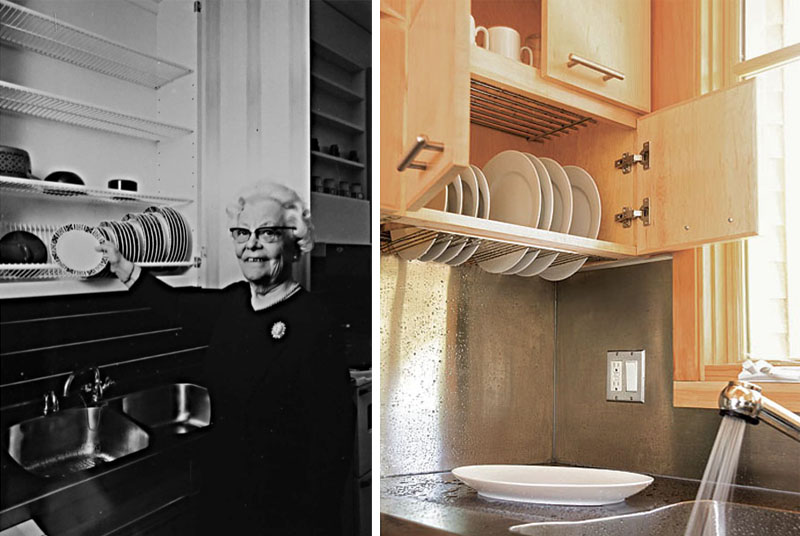
In the 1940s, inventor Maiju Gebhard calculated that the average household spent almost 30,000 hours washing and drying dishes over the course of a lifetime. Machines take less time but still require loading and unloading, cost money and occupy quite a bit of kitchen real estate. Sink-side racks add labor and clutter while taking up space on kitchen counters. What if you could skip these extra objects and steps and simply let your dishes dry in their own time in a cabinet?

Inventor Maiju Gebhard with vintage dish drying closet (left) and contemporary version (right)

“Being Finnish there are many designers and designs I can be proud of,” says 99% Invisible listener and reader Anton Häggman, “especially in architecture and furniture design.” But, he continues, “there is one Finnish design that I am more proud of than any other: the dish draining closet” (also known as a dish drying cabinet).

Typical Finnish drying setup with multiple shelves concealed above the kitchen sink

“That might sound strange, but stay with me because it’s the most quintessentially Finnish design ever — it’s practical, unobtrusive and cheap,” Häggman explains, and makes perfect sense once you use it.

Dish Drying Cabinet patented by Louise R. Krause (US patent 1860617)

An early “dish drying cabinet” was originally patented in the United States by Louise R. Krause (US patent 1860617) in the early 1930s, but it failed to gain traction. The idea was simple: position your dish cabinet above the sink and leave gaps in the shelves to allow water to drip down, letting the dishes to dry while in storage.

Early central draining variant using drip slots in the middle of shelves

In Finland, however, a version developed independently by Maiju Gebhard in the 1940s (in conjunction with the Finnish Association for Work Efficiency) was a huge success. Her basic design is widely used in Finnish kitchens to this day. Over time, older versions built with wood have been replaced by ones using metal wire and/or plastic.

Dish drying closet from below via Italehti.fi

Häggman reports that “in Finnish it’s called ‘Astiankuivauskaappi’ (beautiful language, isn’t it?).” Living in Sweden, he finds himself missing this essential system — “I have to dry my dishes on a rack that sits on the counter, like a barbarian.” He also speculates that Finnish modesty may help explain why the design hasn’t spread more readily to other countries around the world. In his experience, these are found in any Finnish apartment that does not have a dishwashing machine.

UTRUSTA dish-drying cabinet racks from IKEA (not be available in all countries)

The Finnish Invention Foundation has named the Astiankuivauskaappi one of the most important Finnish inventions of the 20th Century and the system has spread slowly and incrementally to other countries. Häggman, meanwhile, encouraged 99pi to share this everyday design wonder with global audiences “so that I can someday live in the US without having to suffer through a tabletop dish-draining stand.”

25 Mar 13:21

El sótano - Chuck Berry en versiones¿ del oyente (II) - 24/03/17

Segunda y última tanda de nuestros homenajes a Chuck Berry en forma de versiones seleccionadas entre todas las propuestas que enviaron los oyentes del Sótano.

Playlist;

KEITH DENNIS “Almost grown”

BUDDY HOLLY “Brown eyed handsome man”

JERRY LEE LEWIS “Little queenie”

SONNY VINCENT “Carol”

GROOVIE GHOULIES “Betty Jean”

MC5 “Back in the USA”

J. TEIXI BAND “Buenos acordes” 

JOHNNIE ALLAN “Promise land”

THE ROLLING STONES “Come on”

MATT LUCAS “Maybellene”

THE GUANA BATZ “No particular place to go”

THE MILKSHAKES “Jaguar and the thunderbird”

DADDY LONG LEGS “Thirty days”

SLADE “I’m a rocker”

HUMBLE PIE “RocknRoll music”

REVEREND HORTON HEAT “Run Rudolph run”

JOHN LENNON “Sweet little sixteen”

WILLIE AND THE POOR BOYS “You never can tell”

25 Mar 13:13

The Pirate Women Who Made Blackbeard Look Like a Joke

by Seth Ferranti

If you're into pirates, you've probably heard of Mary Read and Anne Bonny. The two ruthless corsairs were part of Calico Jack Rackam's crew during the Golden Age of Piracy, a roughly 80-year span from 1650 to 1730, when an excess of skilled sailors, combined with a rise of colonial cargo and general lawlessness, led to privateers seeking loot on the seas until the navies of Western Europe and the North American colonies finally cracked down on the practice. But other female pirates and the mythology surrounding them have become footnotes in pop-culture history—buried, obscured, or otherwise forgotten.

While names like Blackbeard, Captain Hook, Henry Morgan, and even the fictional Captain Jack Sparrow have lived on in infamy, notorious buccaneers and marauders like Cheng I Sao, who commanded more than 400 ships and 50,000 men off China in the early 19th century; Grace O'Malley, the Irish pirate who terrorized the British Isles in Elizabethan times; and Sayyida al-Hurra, pirate queen of the notorious Barbary Corsairs, have been largely ignored.

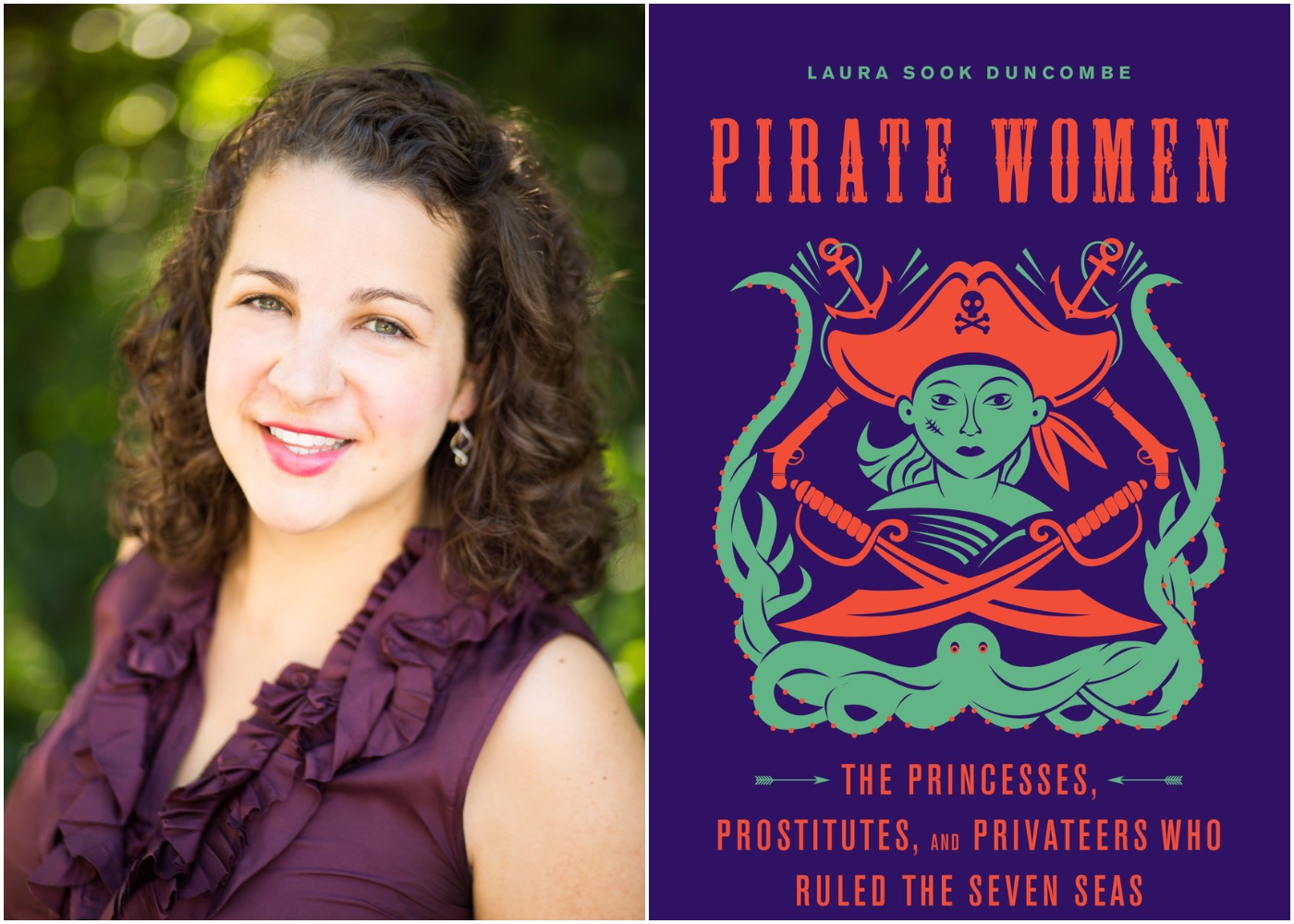
A new book, Pirate Women: The Princesses, Prostitutes, and Privateers Who Ruled the Seven Seas by Laura Sook Duncombe, seeks to change that. In 14 chapters with titles like "Medieval Maiden Warriors" and "A Cinderella Story Among the Corsairs," Duncombe details the lives of some of these pirates, from Queen Teuta, a Illyrian blue blood who marauded the Roman Empire, to Sadie the Goat, a scrappy, one-eared pickpocket turned river captain straight out of Gangs of New York. Duncombe, a lawyer, writer, and Jezebel contributor, goes into particular detail on Sao, whom she describes as "the most successful pirate of all time" and who was notable for explicitly banning the rape of female captives, a crime that was punishable by death.

I recently spoke with Duncombe about the universal appeal of piracy, why pirate women have been considered unworthy of historical documentation, and why the Cheng I Saos of the world deserve to have their own Pirates of the Caribbean.

VICE: What did the women whose stories you've told get out of living a pirate's life on the high seas?
Laura Sook Duncombe: Piracy really exemplifies freedom because it's an escape from the ordinary and what's expected of you. They're outlaws operating outside of the law and outside convention. These women particularly benefitted from that escape from convention because many of these women went from being the property of their fathers to the property of their spouses. The women of the past were not allowed to do the sort of things that women now take for granted, like work outside the home, own property, get a divorce. These women were able to literally cast off these constrictive garments—the petticoats, the corsets, the things that made it hard to move and hard to breathe—and donned trousers and shirts and sailed the seas. They didn't belong to anyone but themselves, and that's alluring to modern women. So I can only imagine how alluring it would have been for women living in more restrictive eras.

Pirate life was known to be challenging in so many ways—being on the sea for months on end, strenuous work keeping the boats sailing, terrible nutrition and hygiene—how did the women adapt?
Life was pretty rough and violent for many of these women anyway on land. We don't have many pirates who came from happy homes and storybook childhoods. Many of them were exposed to this kind of behavior early on. I don't think anybody exactly knows how these women were able to conceal their femininity for so long. I think a lot of times people see what they want to see, and as long as the women were pulling their weight and doing the job, they were good. Clearly they're not as delicate and unsuited for these positions as some people might think.

"I think women in general are frequently considered unworthy subjects of documentation because most historians are male. There's an erasure of people of color. There's an erasure of LGBT people and other minorities."

Why do you think women pirates have been considered unworthy subjects of historical documentation?
Well, I think women in general are frequently considered unworthy subjects of documentation because most historians are male. There's an erasure of people of color. There's an erasure of LGBT people and other minorities. Whoever is telling the story controls what happens. Look at the way America talks about the Vietnam War compared to the way the Vietnamese talk about the Vietnam War. It's a very different story. There's such a sacred relationship between man and the sea, and the men conquer the sea, which is considered female. For a woman to be involved in that upsets the mystical relationship between man and the ocean. I think it was just easy to leave women out and keep the fantasy. There were possibly many women who lived and died as men, and we don't even know about them. In the ranks of women pirates, we have this small number, but there were undoubtedly countless more that just never got caught.

Why was Cheng I Sao the most successful pirate of all time?
It is thought that she had a pretty rough childhood and adolescence and may have even been a prostitute. I think that a hard existence tends to make one pretty tough, and I think that she was just determined to avoid going back to where she came from. She was already part of a pretty successful pirate empire with her husband, but she absolutely went above and beyond that once he died. Her fleet was larger than many of the legitimate navies at the time. She had to be smart and able to have her crews be fiercely loyal to her. She was ferocious, and when she saw what she wanted, she just took it. People were so unused to that type of behavior coming from a woman that they were sort of hanging there with their mouths gaping open while she plundered their treasure.

How does the legend of Princess Alfhild reinforce how Viking society felt about women going to sea?
The story is told as sort of a love story, like this woman goes on this zany exploit, but then her boyfriend brings her back in line, and they sail off happily ever after into the sunset. I think that it's tragic that this woman makes this desperate gamble for freedom to avoid marrying this man that she says she has no interest in, and then he captures her and drags her back home. For this woman, who had no nautical training that we're aware of, to head off to sea just to get away, and then to be captured and brought back, it's very sad for me that her bid for freedom was not enough to get her away from this prince. When a prince wants a princess, the princess marries the prince. She doesn't get to say no, and I think that's very sad.

The Barbary Corsairs were well known as brutal pirates, but were led Sayyida al-Hurra, their pirate queen. What eventually happened to her?
There's so much misinformation that has not been particularly corrected by scholars about the barbaric nature of these Barbary Corsairs. It's hard to know what's true about them and what's not. But Sayyida al-Hurra, regardless, was an incredibly shrewd businesswoman. She'd sort of come into this governmental position, this ruling position with her husband, and then she took off running. She decided that she needed a naval operation to hit the Spanish where it hurt, because they'd driven her and her family from their home. We wouldn't know that much about her at all if not for all of the people with whom she did business, because she's written about in these Spanish and Portuguese sources as the pirate queen of the Mediterranean. Her own people did not discuss her in the same way. She eventually disappears. She was married to the king of Morocco, and we have no idea what happened to her.

In your book, you recount how the Irish pirate Grace O'Malley met with Queen Elizabeth, who'd captured her son. What was the outcome of that meeting, and did Grace keep pirating with the Queen's consent?
Grace O'Malley was incredibly smart, driven, and calculating. Toward the end of her life, she switched over to the English cause, and her son fought in the end for the English. She was always looking out for her family, and she was willing to do whatever it took to take care of her family. She wrote these letters to the Queen, and she sort of paints herself like, "I ended up as a pirate, but really it was just because I had to, but if you give me my son, I'll be loyal to you." The Queen sent her home with her son and gave her a license to pirate. Elizabeth was very fond of privateers, and she used privateers to get the money to build the British Empire that Parliament wouldn't give her. I think Elizabeth saw this incredible pirate who eluded capture for so long and has this crew that is loyal to her and decided it would be stupid to pass up that opportunity. It worked out well for everybody.

How did you determine if the legends were real or not in your research? Can you give some examples?
With Mary Read and Anne Bonny, we have transcripts from their trial. We have many sources of eyewitness testimonies that corroborate these stories. Finding documents from the time period is really a clue to me that I hit on someone who is most likely real. On the other hand, there's Haitian buccaneer Jacquotte Delahaye, who is in many stories and legends. She's very popular but there are no primary sources about her. I found a Spanish language book that said she did not exist, and putting that together with the lack of primary sources led me to believe she most likely did not exist. It's a treasure hunt. But there are some pretty strong indications when you find a primary source document, when you find a trial, when you find stories written up in the papers at the time, when you find things that came from that era that talk about these women—that is an indication that they're real.

In your opinion, which female pirate story would translate best to the big screen?
I think for every famous movie male pirate we should have female ones! I love Sayyida, though. I think it is just so triumphant to have this powerful, brilliant Muslim woman as the heroine of this story. I would love to see her be more known. And of course Cheng I Sao. Cheng I Sao was much more successful than Blackbeard. She pirated longer. Her ships were bigger, and she made more money. She kind of makes Blackbeard look like a joke. I would love to see Cheng I Sao depicted. She kind of is actually in Pirates of the Caribbean. In the third one, there's a character Mistress Cheng, but she has very little to say and do. She's on the pirate council, which is modeled on a real thing, the Brethren of the Coast. I think she should have her own movie.

Follow Seth Ferranti on Twitter.

Pirate Women: The Princesses, Prostitutes, and Privateers Who Ruled the Seven Seas by Laura Sook Duncombe will be published by Chicago Review Press on April 1.

25 Mar 13:12

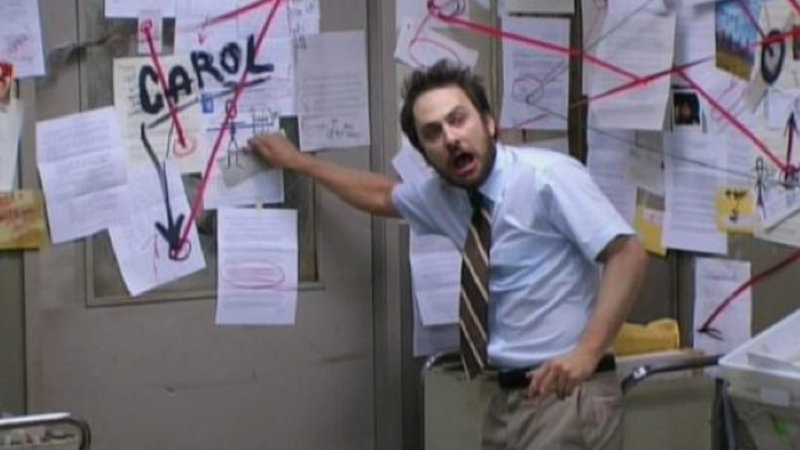
The Memetic Longevity of Pepe Silvia

48d

Charlie’s “Pepe Silvia” rant has long been a favorite of Always Sunny fans and meme makers.

25 Mar 13:05

César Strawberry: "Con Franco había más libertad de expresión"

"El gran éxito de Rajoy es parecer más tonto que malo" / "El Estado lo maneja gente que no ha sido elegida democráticamente" /"Loquillo y cuatro moteros encerraron a nuestro mánager en un baño y jugaron a El Padrino" / "Hazte Oír se ha filtrado en la sociedad impulsado por Aznar y otros extremistas del gobierno".

25 Mar 13:04

Las dudas de un joven ante los dictados feministas en una primera cita

by LA GACETA

Las premisas feministas actuales obligan a adoptar una serie de patrones a la hora de relacionarse con las mujeres. Piropos y flores, descartados. Una actitud distante, también.

La Gaceta.- Son las siete de la tarde del sábado. Pedro acaba de levantarse tras una larga siesta y contempla su WhatsApp entre bostezos. Ha quedado con Laura -una chica de su clase de Crítica Literaria- a las nueve de la noche, pero aún no sabe cómo abordar la cita.

Tiene dudas Pedro. Hace unos días leía en un artículo que el piropo representaba una “actitud machista”, por lo que sus conversaciones con Laura se han limitado a un breve intercambio de cumplidosa pesar del evidente interés de ella por cerrar el encuentro. El joven duda porque también escuchó en la radio que una actitud distante con las mujeres es la señal “más clara de machismo”. Pedro, en fin, no sabe qué hacer.

¿Dónde tomar algo?, se pregunta Pedro mientras el champú hace efecto en su rizada cabellera. El joven comienza a recordar que una vez otra compañera le dijo que los sitios románticos son “evidentemente machistas”. “Descartada la terraza de Huertas”, piensa Pedro, que habitualmente se reúne con sus amigos en un castizo bar de Chamberí del que está seguro que Laura saldría corriendo. “No obstante, no hay nada machista en dos cervezas y unas bravas”, se cuestiona un Pedro aún dubitativo.

¿Qué me pongo? La camiseta del grupo de rock descartada. “Algunas de sus letras pueden dar lugar a malentendidos”, reflexionaPedro, que también rechaza un abrigo de cierta marca comercial envuelta en un escándalo reciente: denunciaron a sus modelos por no cumplir con los “estándares de belleza internacionales”. “Esta ni de coña”, sentencia el joven, que finalmente opta por la camisa vaquera que le había regalado su hermana meses atrás. “No hay nada menos machista que el regalo de un familiar”, agrega con una sonrisa en el rostro.

¿Cómo saludar? Pedro lleva dándole vueltas en la cabeza a este momento toda la semana. Uno de sus columnistas de cabecera le alertó sobre el peligro de besar en la mejilla a las mujeres por la posibilidad de que puedan sentirse “acosadas”, pero el joven considera que un apretón de manos es “algo frío”, aunque tal vez lo más adecuado.

¿De qué hablar? A ambos les apasiona la literatura francesa y podría ser un gran tema de conversación, pero Pedro recuerda que hace unos meses un profesor tachó a uno de sus escritores favoritos del siglo XVIII como un “machista integral” y prefiere no tocar el tema. La política es otra de las pasiones del joven que, como gran conocedor de la realidad en Francia, alaba algunas medidas propuestas por Marine Le Pen y el Frente Nacional. “Eso sí que no. Imposible”, se convence Pedro a sabiendas de que -aún siendo Le Pen una fiel defensora de los derechos de la mujer- pronunciar su nombre puede provocar una situación desagradable.

La música -otra de sus grandes aficiones- se convirtió en tema tabú en la vida de Pedro después de un intenso debate que mantuvo con una compañera en clase. Aunque estaban hablando de La Divina Comedia del italiano Dante Alighiere, sobre la que Pedro había leído largo y tendido durante un viaje a la ciudad de la Toscana, la discusión terminó cuando su compañera hizo referencia a una canción que el joven había compartido días atrás en Facebook: “Con tus gustos musicales, con esos grupos machistas que escuchas, es imposible que llegues a entender el genio de Dante”.

¿Quién paga? Pedro teme que llegue ese momento. En otras relaciones se había acostumbrado a pagar y ser invitado con total naturalidad, pero ahora todo ha cambiado. Desconoce si Laura aceptará una invitación a unas cañas y recuerda que recientemente en un programa de televisión definían esa actitud como un “micromachismo a erradicar”. Tras darle mil vueltas, Pedro decide que pagará su parte de la cuenta mientras Laura sale a fumar un cigarro. Lo último que quiere parecer es un machista.

¿Cómo despedirse? Tras el apretón de manos inicial, Pedro cree que lo mejor es ser un poco más cariñoso y dado que entre los dos ya hay la confianza de varias cervezas opta por darle dos besos, pero rápidamente se arrepiente. De camino a casa escucha a unas jóvenes en el metro: “Que un tío te dé dos besos es una forma de acoso. Yo beso a quien quiero”.

Un decepcionado Pedro agacha la cabeza, repasa su día y admite decepcionado: “Tengo actitudes machistas”.

La entrada Las dudas de un joven ante los dictados feministas en una primera cita aparece primero en Infovaticana.

25 Mar 12:59

Sexo vandálico en Rosalía de Castro

by xurxo melchor
Una pareja destroza la puerta de cristal de un edificio de viviendas para mantener relaciones íntimas en la entrada

25 Mar 12:58

Muere el sacerdote que levantó la parroquia del Ensanche

La iglesia de San Fernando acoge esta tarde a las 18 horas un funeral por Manuel Cacheda

25 Mar 12:53

Orphan Black at PaleyFest: Panel Reveals Show Secrets and the Season Five Premiere!

by Teresa Jusino
image via Imeh Bryant for the Paley Center

image via Imeh Bryant for the Paley Center

After having the pleasure of chatting with the cast and creative team of Orphan Black one-on-one on the red carpet, there was the actual panel, where fans got more insights into the show, hints about things to come, and the best surprise of all: a screening of the Season Five premiere over two months ahead of the rest of the world!

A scene from the S5 premiere. Image via Ken Woroner/BBC America

A scene from the S5 premiere. Image via Ken Woroner/BBC America

I will not spoil the Season Premiere! However, I will say that it’s basically a non-stop heart-thump-a-thon during which every single character experiences something harrowing. There’s a new character introduced who’s as hilarious as she is unnerving, there’s a new status quo introduced as we get right into the heart of the story arc for the show’s final season, and there’s a wonderful balance between funny and frightening, which is something we’ve come to expect from the show. It won’t disappoint, and I’m looking forward to reviewing the episode in greater detail for you as we get closer to June. For now, just be very, very jealous.

The panel itself will be available on Hulu, a PaleyFest sponsor, in a few days. So, you’ll be able to watch the entire thing yourself. For now, I’ll just share some of the most fun or interesting tidbits from the panel that I thought you’d enjoy!

ORPHAN BLACK PANEL TIDBITS

  1. The cast literally finished wrapping the final season about 36 hours before traveling to Los Angeles for PaleyFest. On the final day of shooting, even actors who’d already wrapped made sure that they were there to say goodbye, and the cast and crew remained on set until 4:30AM, singing.
  2. Tatiana Maslany reveals that Season 5 has a lot of “character-specific” episodes, and that she loves Rachel’s arc this season. She remarked that Rachel being a clone “takes away from her specialness, takes away from her privilege, takes away from her power…” so this final season is all about Rachel trying to claim power.
  3. Jordan Gavaris talked about how playing Felix allowed him to become more secure in the parts of himself he hasn’t been as secure with in the past. “It was so nice not to feel self-conscious in my own femininity,” he says of getting to play Felix’s. “Clearly that’s me and my own bias,” he clarified, going on to say that he plans to take those best qualities of Felix with him into his own life.
  4. Maslany acting double Kathryn Alexandre got a lot of love over the course of the evening as the cast and creators gushed over the level of performance she consistently gave, despite her face never appearing on camera. Maslany in particular was effusive about Alexandre’s talent, and a lovefest ensued as the two of them fell all over themselves to compliment each other. Alexandre said that her performance was in large part due to the actors she was working with: “That’s a huge thing for an actor to trust not the actor you’re used to playing off of.”
  5. They cited one scene in particular that was a testament to Alexandre’s talent that involves a convent. Once the word convent came out, they all quickly shut up as apparently therein lie spoilers. So, you heard it here, folks. Look out for a big scene in a convent next season.
  6. Maria Doyle Kennedy on Mrs. S: “She has an element of bravery that I — that Maria — don’t have.” She hopes to take that bravery with her as she leaves the show.
  7. Evelyne Brochu talked about how hard it was to keep Delphine’s survival a secret between Seasons 3 and 4. She told the story of how, after filming what she thought was her final scene, one of the creators came up to her and cryptically said “See you soon…” and she thought he meant, like, for a beer or something. When she found out she was back, she thought “I’m gonna have to lie for a couple of months, and I’m not a good liar.”
  8. Brochu gushed about Delphine, admiring how driven the character is. She also talked about how Delphine’s accent and use of language is an insight into the character, because, “When you’re not speaking your own language, there’s a part of you that’s not being expressed.” And once she got on the topic of Delphine’s relationship with Cosima, and how much that has meant to fans, Brochu nearly started crying. She was so emotional as she revealed her pride in bringing to life a character that has meant so much to an often marginalized community and called Delphine “the most important character I have had the privilege of playing.”
  9. Graeme Manson then remarked that Orphan Black is “a clone show…about diversity.”
  10. Ari Millen similarly gushed about getting to play Ira, who is clearly his favorite of the Castor clones. He sees Ira as a unique opportunity “where I got to explore a side of me where I didn’t even know who it was.” Ira is such an innocent, and so unlike Millen, that he had no instinct or blueprint for playing him, and so it was like everything was new.
  11. Josh Vokey revealed that he was only supposed to work for one day as Scott, and so he’s grateful that Manson and Fawcett decided to make more of a character out of him. He then joked that his process for bringing Scott to life was to “take every insecurity [I have] and blast it on a microphone…and make it a person.”
  12. Kevin Hanchard talked about how he’s carried a scene that has never aired with him throughout his portrayal of Art. It was a scene that was used to audition actors in which Art explains what he saw in Beth Childs, and why he fell in love with her. Hanchard said that he’s used that as the underpinning of everything else about the character, because “that love grew and has always fueled him.”
  13. And there were some great fan interaction moments: Tatiana squealed when a fan revealed herself as the woman who dresses her turtle up as her favorite characters, including those from Orphan Black (and she brought the turtle!). Tatiana was familiar, and was excited the turtle was there! Kristian Bruun got a “Free Donnie” t-shirt from some adoring fans.

MBT26310a

And of course, no Q&A would be complete with these folks without each of them revealing their favorite Leda clone:

  • Fawcett: Used to be Alison, now it’s Rachel
  • Manson: Used to be Sarah, now it’s Cosima
  • Hanchard: Gave a huge shout-out to the dearly departed Katja Obinger (from S1), may she rest in peace.
  • Gavaris: Answered Crystal, while doing his best Crystal impression
  • Maslany: toss-up between Alison, Rachel, and Helena, whom she calls “a creature unlike any I’ve ever played.”
  • Alexandre: M.K.
  • Kennedy: Sarah, “my baby.”
  • Brochu: Cosima (as if there was any doubt)
  • Millen: “Helena, to my dying day.”
  • Vokey: “Cosima, my sister from another mister.”

And that’s all I’ve got on Orphan Black from PaleyFest 2017! Well, that and the gallery below featuring some pro photos and candid shots from the event. Enjoy!

Orphan Black returns to BBC America for its fifth and final season June 10th. And keep your eyes peeled on Monday, as I’ll be bringing you coverage from this weekend’s Westworld panel and red carpet at its first PaleyFest!


You are seeing this message because you have javascript disabled. To use our slideshows you need to enable javascript. There's no cross domain hackery or tracking voodoo, it's just some sweet jQuery animations. Please, think of the animations.

In the meantime, enjoy the html version below. I guess. If that's your thing.


  1. Orphan Black at PaleyFest 2017 Orphan Black at PaleyFest 2017 HOLLYWOOD, CA - MARCH 23: Kathryn Alexandre at PaleyFest LA 2017 honoring Orphan Black, Late Show, presented by The Paley Center for Media, at the DOLBY THEATRE on March 23, 2017 in Hollywood, California. © Imeh Bryant for the Paley Center
  2. Orphan Black at PaleyFest 2017 Orphan Black at PaleyFest 2017 HOLLYWOOD, CA - MARCH 23: Co-Creator/Executive Producer John Fawcett and Co-Creator/Executive Graeme Manson at PaleyFest LA 2017 honoring Orphan Black, Late Show, presented by The Paley Center for Media, at the DOLBY THEATRE on March 23, 2017 in Hollywood, California. © Imeh Bryant for the Paley Center
  3. Orphan Black at PaleyFest 2017 Orphan Black at PaleyFest 2017 HOLLYWOOD, CA - MARCH 23: Tatiana Maslany at PaleyFest LA 2017 honoring Orphan Black, Late Show, presented by The Paley Center for Media, at the DOLBY THEATRE on March 23, 2017 in Hollywood, California. © Imeh Bryant for the Paley Center
  4. Orphan Black at PaleyFest 2017 Orphan Black at PaleyFest 2017 HOLLYWOOD, CA - MARCH 23: Tatiana Maslany at PaleyFest LA 2017 honoring Orphan Black, Late Show, presented by The Paley Center for Media, at the DOLBY THEATRE on March 23, 2017 in Hollywood, California. © Imeh Bryant for the Paley Center
  5. Orphan Black at PaleyFest 2017 Orphan Black at PaleyFest 2017 HOLLYWOOD, CA - MARCH 23: Tatiana Maslany at PaleyFest LA 2017 honoring Orphan Black, Late Show, presented by The Paley Center for Media, at the DOLBY THEATRE on March 23, 2017 in Hollywood, California. © Imeh Bryant for the Paley Center
  6. Orphan Black at PaleyFest 2017 Orphan Black at PaleyFest 2017 20 / 36 HOLLYWOOD, CA - MARCH 23 (L-R): Jordan Gavaris, Tatiana Maslany, Kathryn Alexandre and Maria Doyle Kennedy at PaleyFest LA 2017 honoring Orphan Black, presented by The Paley Center for Media, at the DOLBY THEATRE on March 23, 2017 in Hollywood, California. © Imeh Bryant for the Paley Center
  7. Orphan Black at PaleyFest 2017 Orphan Black at PaleyFest 2017 20 / 36 HOLLYWOOD, CA - MARCH 23 (L-R): Jordan Gavaris, Tatiana Maslany, Kathryn Alexandre and Maria Doyle Kennedy at PaleyFest LA 2017 honoring Orphan Black, presented by The Paley Center for Media, at the DOLBY THEATRE on March 23, 2017 in Hollywood, California. © Imeh Bryant for the Paley Center
  8. Orphan Black at PaleyFest 2017 Orphan Black at PaleyFest 2017 HOLLYWOOD, CA - MARCH 23 (L-R): Tatiana Maslany, Kathryn Alexandre, Maria Doyle Kennedy and Evelyne Brochu at PaleyFest LA 2017 honoring Orphan Black, presented by The Paley Center for Media, at the DOLBY THEATRE on March 23, 2017 in Hollywood, California. © Imeh Bryant for the Paley Center
  9. Orphan Black at PaleyFest 2017 Orphan Black at PaleyFest 2017 HOLLYWOOD, CA - MARCH 23 (L-R): Graeme Manson (Co-creator/EP), Kevin Hanchard, Kristian Bruun, Jordan Gavaris, and Tatiana Maslany at PaleyFest LA 2017 honoring Orphan Black, presented by The Paley Center for Media, at the DOLBY THEATRE on March 23, 2017 in Hollywood, California. © Imeh Bryant for the Paley Center
  10. Orphan Black at PaleyFest 2017 Orphan Black at PaleyFest 2017 HOLLYWOOD, CA - MARCH 23: Josh Vokey at PaleyFest LA 2017 honoring Orphan Black, Late Show, presented by The Paley Center for Media, at the DOLBY THEATRE on March 23, 2017 in Hollywood, California. © Imeh Bryant for the Paley Center
  11. Orphan Black at PaleyFest 2017 Orphan Black at PaleyFest 2017 HOLLYWOOD, CA - MARCH 23: Evelyne Brochu at PaleyFest LA 2017 honoring Orphan Black, Late Show, presented by The Paley Center for Media, at the DOLBY THEATRE on March 23, 2017 in Hollywood, California. © Imeh Bryant for the Paley Center
  12. Orphan Black at PaleyFest 2017 Orphan Black at PaleyFest 2017 HOLLYWOOD, CA - MARCH 23: Jordan Gavaris at PaleyFest LA 2017 honoring Orphan Black, Late Show, presented by The Paley Center for Media, at the DOLBY THEATRE on March 23, 2017 in Hollywood, California. © Imeh Bryant for the Paley Center
  13. Orphan Black at PaleyFest 2017 Orphan Black at PaleyFest 2017 HOLLYWOOD, CA - MARCH 23: Kevin Hanchard at PaleyFest LA 2017 honoring Orphan Black, Late Show, presented by The Paley Center for Media, at the DOLBY THEATRE on March 23, 2017 in Hollywood, California. © Imeh Bryant for the Paley Center
  14. Orphan Black at PaleyFest 2017 Orphan Black at PaleyFest 2017 HOLLYWOOD, CA - MARCH 23: Tatiana Maslany at PaleyFest LA 2017 honoring Orphan Black, Late Show, presented by The Paley Center for Media, at the DOLBY THEATRE on March 23, 2017 in Hollywood, California. © Imeh Bryant for the Paley Center
  15. Orphan Black at PaleyFest 2017 Orphan Black at PaleyFest 2017 HOLLYWOOD, CA - MARCH 23: Ari Millen at PaleyFest LA 2017 honoring Orphan Black, Late Show, presented by The Paley Center for Media, at the DOLBY THEATRE on March 23, 2017 in Hollywood, California. © Imeh Bryant for the Paley Center
  16. Orphan Black at PaleyFest 2017 Orphan Black at PaleyFest 2017 HOLLYWOOD, CA - MARCH 23: Jordan Gavaris at PaleyFest LA 2017 honoring Orphan Black, Late Show, presented by The Paley Center for Media, at the DOLBY THEATRE on March 23, 2017 in Hollywood, California. © Imeh Bryant for the Paley Center
  17. Orphan Black at PaleyFest 2017 Orphan Black at PaleyFest 2017 HOLLYWOOD, CA - MARCH 23: Evelyne Brochu at PaleyFest LA 2017 honoring Orphan Black, Late Show, presented by The Paley Center for Media, at the DOLBY THEATRE on March 23, 2017 in Hollywood, California. © Imeh Bryant for the Paley Center
  18. Orphan Black at PaleyFest 2017 Orphan Black at PaleyFest 2017 HOLLYWOOD, CA - MARCH 23: Kristian Bruun at PaleyFest LA 2017 honoring Orphan Black, Late Show, presented by The Paley Center for Media, at the DOLBY THEATRE on March 23, 2017 in Hollywood, California. © Imeh Bryant for the Paley Center

[View All on One Page]


The Mary Sue has a strict comment policy that forbids, but is not limited to, personal insults toward anyone, hate speech, and trolling.—

Follow The Mary Sue on Twitter, Facebook, Tumblr, Pinterest, & Google+.

25 Mar 05:39

Hilariously Honest Tweets About Getting Old

by A B

23 Mar 21:44

Hai, fai, vai

by @cequelinhos

O galego e o castelán, como linguas en constante contacto na fala viva, sofren interferencias mutuas. Polo enorme desequilibrio socioeconómico e institucional existente, é o galego quen case sempre sae máis afectado deste rozamento, con perdas de léxico e de expresión autóctonos, con cambios na maneira de dicir algo que nalgúns casos poden ser definitivos. Noutros casos, simplemente con afinar o oído e escoitar as persoas de máis idade, comprobaremos que determinadas formas seguen moi vivas e que é unha mágoa non acollelas no noso vocabulario e expresión persoais. Velaquí o caso dos verbos que definen situacións, cuxo uso é ben distinto en galego e en castelán.

Os españois din “Hace frío, hace años…”

En galego temos diferentes verbos para cada uso. Para referírmonos ao tempo cronolóxico, usaremos o verbo haber: “Hai días que non vexo o meu xefe; dá gusto traballar así”. “Había ben tempo que non comía un arroz con chocos tan substancioso coma este!”

Se falamos de tempo atmosférico, usaremos o verbo ir: “Para ser primavera, vaiche un frío que encolle”. Unha boa regra mnemotécnica para recordarmos isto é o vello ditado que afirma que o frío (ou a calor) non se fai que xa vén feito.

Onde si empregaremos o verbo facer é cando queiramos reparar nun feito temporal concreto. “Fixo onte vinte anos que entrei a traballar na fábrica”. “Cando fas anos, Marcos? Coido que teño o agasallo de aniversario perfecto para ti”

23 Mar 21:29

‘Inspector Kurokôchi’, tan chanchullero como carismático

by Jaime Valero

Puede que el nombre de Richard Woo no nos diga nada, pero la cosa cambia si decimos que se trata de un pseudónimo de Takashi Nagasaki, co-creador de ese estupendo manga de aventuras y misterio llamado ‘Master Keaton’. Esta vez, el guionista nipón une fuerzas con el dibujante Kôji Kôno para presentarnos al Inspector Kurokôchi, un personaje tan carismático como Keaton, aunque desde luego no tan educado ni comedido. Al contrario, Kurokôchi es un policía histriónico y expresivo que no duda en recurrir a todo tipo de malas prácticas —sobornos, chantajes, engaños— para salirse con la suya. Un antihéroe que, pese a que de primeras pueda parecer un caradura sin escrúpulos, en el fondo lo que pretende es hacer justicia y detener a los culpables de los crímenes que investiga, aunque eso suponga quebrantar unas cuantas leyes por el camino.

A Kurokôchi lo conocemos a través de los ojos del joven agente Seike, un policía recién llegado a la policía prefuctural donde opera nuestro protagonista. Al igual que nosotros, Seike recela de Kurokôchi en un primer momento, pero conforme le va conociendo mejor, empieza a descubrir que hay más de lo que se percibe a simple vista en ese policía deslenguado y corrupto. A veces, todo hay que decirlo, la actitud de Kurokôchi parece un poco forzada, pero solo es cuestión de acostumbrarse a su singular personalidad. Por lo demás, es un policía de lo más astuto que siempre va un paso por delante del criminal y de los otros agentes, y lo que en apariencia son una serie de acontecimientos azarosos o sin conexión, al final se descubre que formaban parte de los meticulosos planes de Kurokôchi para sacar la verdad a la luz. En cuanto a Seike, su papel es meramente anecdótico, al menos en este primer tomo, y espero que se le saque algo más de provecho en próximas entregas, para que no todo gire continuamente en torno a Kurokôchi. En una obra con esta extensión, que en Japón ha alcanzado los 18 tomos, es indispensable contar con un elenco de secundarios lo bastante sólido como para mantener el interés del lector y para que el manga no acabe cayendo en la repetición.

Al igual que en ‘Master Keaton’, el guionista articula esta obra en base a capítulos autoconclusivos, en los que se resuelve el enigma o misterio planteado de inicio. La diferencia en este caso radica en que, a su vez, estos capítulos conforman una historia más larga que abarca el tomo entero, y que arranca con la aparición del cadáver de una joven que ha sido brutalmente asesinada. El resultado contiene todos los ingredientes propios de una trama policíaca: asesinatos misteriosos, sospechosos que tienen muchas cosas que esconder, corrupción política y policial, y todo ello está regado con un sentido del humor negro y socarrón que le sienta como un guante a la historia. Con un protagonista así, y con una forma tan peculiar de abordar el género negro, el arranque de ‘Inspector Kurôkôchi’ es inmejorable. Queda por ver qué tal se desenvuelve en la carrera de fondo, pero por el momento, es una serie a tener muy, pero que muy en cuenta.

Inspector Kurokôchi

  • Autores: Richard Woo y Kôji Kôno
  • Editorial: ECC Ediciones
  • Encuadernación: Rústica con sobrecubiertas
  • Páginas: 208
  • Precio: 9,95 euros
23 Mar 21:13

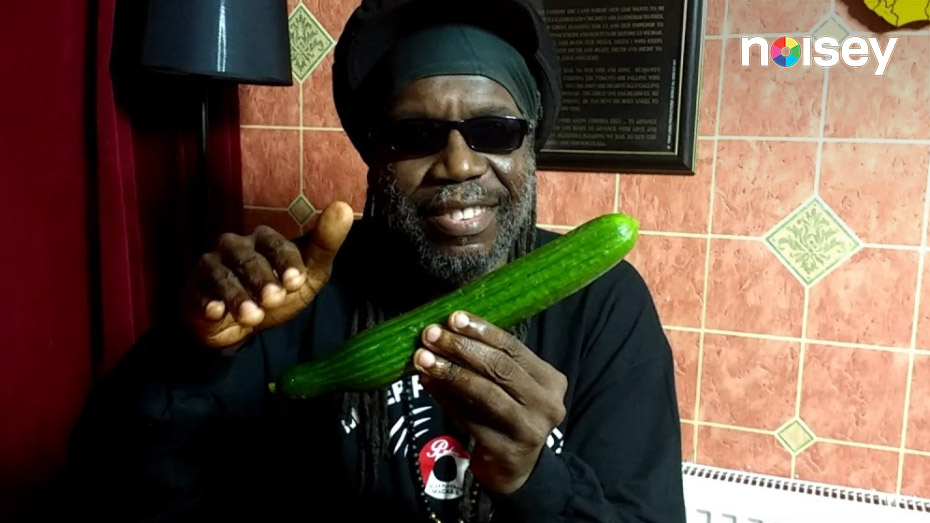
We Interviewed Macka B, That Guy Who Went Viral Rapping About Cucumbers

by Daisy Jones

Think of all the songs you listened to this week; on the bus, in the club, in your bedroom, out someone's car window. Now think about what those songs were about. Chances are—and this is based on absolutely no factual data—they centered on one of the following: sex, love, money, or getting trashed.

There's a reason most songs are about those subjects: they are our driving forces, the reason we unglue our eyes in the morning, take a breath of new-day air and plough onwards with our lives. They are the reason we speak to each other, the reason our thoughts continue to flow and pretty much the only reason for continued existence.

But maybe we've been restricting ourselves to those four depressing themes this whole time. Maybe life isn't just about fucking and getting fucked, in all senses of the word. Maybe there are other subjects that can get our juices flowing, get us pumped about being alive and inspire musicians to create with enough passion that will have us ugly crying on the sticky club floor at closing time because we relate so hard.

Continue reading on Noisey.

23 Mar 20:59

No, the meme-slinging alt-right Pepe worshippers didn't win the election for Trump

by Cory Doctorow

Despite the widespread belief that meme-warriors won the election through tactical shitposting of photoshopped Pepe the Frogs in Nazi arm-bands, the reality is a lot more complicated. (more…)

23 Mar 20:52

Tu cafetera podría ser un poco facha

by Eduardo Bravo

Aunque resulte sorprendente, la cafetera italiana de toda la vida tiene un pasado más oscuro que los posos del café. Su origen se remonta a los años 30 y su diseño estuvo inspirado en las soflamas con las que personajes como Mussolini y Filippo Tommaso Marinetti arengaban a la población transalpina de la época. Javier […]

Este post Tu cafetera podría ser un poco facha, escrito por Eduardo Bravo, se publicó originalmente en Yorokobu.

23 Mar 20:49

Larry Hama Has Some Strong Words For Roy Thomas

by press@theouthousers.com (Tim Midura)
Larry Hama Has Some Strong Words For Roy Thomas

Thomas recently said " people began making me aware of the fact that some people are complaining...about cultural appropriation and crap like that, which just makes me furious."

Source: Facebook

Larry Hama is an American comic book writer and artist, who has worked on X-Men, Batman, and Daredevil, but is best known for his 250+ run on GI Joe over 30 years. He's also a Vietnam war veteran, tv actor on MASH and SNL, and martial artist who studied judo, Japanese archery and swordmanship.

Roy Thomas is an American comic book writer and editor, who was Stan Lee's first successor as editor-in-chief of Marvel Comics. He introduced Conan The Barbarian to American comics and had lengthy runs on X-Men and Avengers. He's co-created Man-Thing, The Vision, Carol Danvers, and Iron Fist, which is what we're all here for today.

Thomas gave an interview recently about his feelings on Iron Fist's whiteness and the idea of cultural appropriation. One choice quote being:

You know, cultural appropriation, my god. It's just an adventure story. Don't these people have something better to do than to worry about the fact that Iron Fist isn't Oriental, or whatever word? I know Oriental isn't the right word now, either.

Hama didn't take to lightly to Thomas' remarks, posting "Hey, fuck Roy Thomas" on Facebook.

LH1.png 

Other comic creators weighed in, including Fabian Nicieza, who Hama managed to bring over to his side.

LH2.png


Hama also explained how he has became inured with the world's pronunciation of certain words.

LH3.png


 Hama clarified that his issue wasn't Thomas' use of the word oriental.

LH4.png


Hama mentions that he's not for changing the lead, but against dissing Asians for being upset over cultural appropriation.

 LH5.png

 Gerry Conway had a short response to Hama.

LH6.png


 LH7.png

 In closing, Hama reiterated that he was fine with the casting.

LH8.png


TL;DR Larry Hama is mad at Roy Thomas for his attitude over cultural appropriation.


Written or Contributed by Tim Midura