Shared posts

07 Jun 09:03

Anime Recommendation Chart for Beginners

by Miss Cellania

If you've thought about getting into anime, but don't know where to start (there's an awful lot of it to consider), help is here in the form of an easy-to-use flow chart. Imgur user lukeatlook is a real anime fan. He's made a recommendation chart three times before, and used feedback to improve the flowchart each time. In case you find it hard to read here, you can enlarge it to an enormous size at imgur. Now we need to find John Farrier to get his opinion on this. -via Geeks Are Sexy

07 Jun 08:50

Jennifer Tilly will probably be ‘in every Chucky movie until the end of time’

by Chris Gardner / The Hollywood Reporter
The actress just wrapped on yet another installment of the killer doll franchise.
07 Jun 08:30

Telegram Is ISIS’ Favorite App

6dd

Thanks to some heavy-duty security features and a pair of hands off CEOs, the cross-platform instant messaging client Telegram has become the app of choice for ISIS.

07 Jun 08:19

A New 'Carcassonne' App Is Coming to Android, Beta Testers Needed

by Tasos Lazarides

Carcassonne [$9.99] is easily one of the best iOS board game ports ever, with Coding Monkeys doing a great job translating the game into the digital world. The Android version, though, was a whole different story since it didn't have the magic Coding Monkeys touch. So, Asmodee Digital has decided to remedy that and is bringing a whole new version of Carcassonne to Android. And in order to get that app right, they are looking for beta testers. If that sounds interesting to you, you can go apply here.

If you've never played Carcassonne, this board game has you placing tiles on the board as you try to get more points than your opponent. You try to build roads, cities, cloisters, and much more, all the while trying to sabotage your opponent's plans. It's an excellent game that you should definitely check out if you haven't already.

07 Jun 07:55

A possum must be himself, and being himself he is honest.

by Johnny Wallflower
Yes, possums are cute [teeny munching and LOUD ending], and generally not agressive [quiet talking]. They love food [jazzy piano]. Did I mention how cute [gentle music] they are? Here, watch some more [inoffensive music]. Wait, here's the cutest of all [voiceover and music]! And no possum post would be complete without dogs playing with a possum [ambient sounds] or adopting possum babies [voiceover and music].

Fifteen Amazing Facts About Opossums [voiceover and music]
True Facts About Marsupials [voiceover and music, no possums]

Possums previously, previouslier, previousliest.
07 Jun 07:53

"Secret Hitler" board game adds Trump administration booster pack

by Mark Frauenfelder

Secret Hitler is a social deduction game that seems to be a variation on games like Werewolf and Mafia. The design, by artist Mackenzie Schubert, is beautiful.

The majority of players are liberals. If they can learn to trust each other, they have enough votes to control the table and win the game. But some players are fascists. They will say whatever it takes to get elected, enact their agenda, and blame others for the fallout. The liberals must work together to discover the truth before the fascists install their cold-blooded leader and win the game.

They just introduced new cards "featuring Donald Trump and prominent members of his administration," also drawn by Schubert.

06 Jun 14:02

Edelmiro López Iglesias: “Vivimos nunha Galicia máis próspera pero tamén máis pequena”

by @cequelinhos

Edelmiro López Iglesias. SABELA VÁZQUEZ DÍAZ

César Lorenzo Gil.

Profesor de Estrutura Económica de Galicia na Facultade de Económicas da Universidade de Santiago e ex director xeral de Agricultura (2005-2009), Edelmiro López Iglesias (Bilbao, 1960) é autor dun dos máis interesantes textos que recolle o libro Historia das historias de Galicia (Xerais, 2016), “Do atraso ao progreso económico de Galiza? Un proceso histórico á espera dun relato”, onde reflexiona sobre o cambio socioeconómico nun país contraditorio e aínda hoxe incapaz de reflexionar dunha forma realista sobre a súa identidade actual, lonxe das referencias que tradicionalmente a definiron. López Iglesias explica nesta entrevista como algúns tópicos sobre a nosa economía e demografía non resisten unha análise rigorosa.

É Galicia un país pobre?

Galicia é un país europeo de renda media-baixa. Nos últimos tempos superamos o atraso que definiu tan ben Xosé Manuel Beiras nos anos 70 mais seguimos suxeitos a moitas contradicións. Somos un país onde case todos os adultos somos propietarios de terras ao tempo que deixamos de ser un país pesqueiro e rural. A lista das persoas máis ricas do mundo está encabezada por galegos pero en cambio temos un alto índice de paro. Hai galegos que son penalizados por vivir no rural e non teñen igualdade en servizos e oportunidades ao tempo que se dan iniciativas tecnolóxicas e empresariais con éxito global. En definitiva, hoxe somos un país máis próspero pero tamén máis pequena. O peso demográfico no Estado descendeu notablemente en cen anos. Hoxe só representamos o 6% da poboación de España.

Ten Galicia un problema demográfico?

Galicia ten un problema socioecónomico coa taxa de ocupación. Hoxe hai máis ou menos a mesma cantidade de galegos traballando ca no 1950. É dicir, o que explica a nosa pirámide demográfica é a dificultade para crear os postos de traballo necesarios para aumentar a poboación. Entre o 1850 e o 1975, Galicia tiña un problema de emprego pero non de fecundidade. É dicir, a taxa de fillos por muller era moi alta pero como eses fillos non tiñan sustento na terra, marchaban; primeiro para América e logo para Europa e, en menor medida, para outras partes do Estado. Esta tendencia muda na época contemporánea. A emigración deixa de ser masiva pero xa nunca se recupera a taxa de natalidade daqueles tempos. Isto débese, naturalmente, a que a muller consegue autonomía na decisión de cando ser nai pero o factor importante segue a ser a dificultade para sustentar a poboación galega. Nese sentido, tal e como están as cousas, é preferible termos unha poboación estable, que nos axuda a repartir mellor os recursos. Mais as previsións non son alentadoras. Contan con que Galicia perda 1 millón de habitantes de aquí ao 2051.

O Goberno insiste en promover a natalidade.

O investimento en publicidade ou incentivos para que as familias opten por ter fillos é inservible. Entra nunha lóxica errada de considerar que os fenómenos socioeconómicos dependen da vontade da cidadanía e non de fluxos máis complexos. Imaxinemos por un momento que o PP consegue que de repente as mulleres galegas teñan máis fillos. Sen unha base produtiva distinta e con maior riqueza e emprego, de que serviría? Eses fillos, ao se faceren adultos, terían que emigrar para non morrer de fame. Así que seguiriamos tendo unha falta de poboación. Isto vese cando as institucións se conforman con conseguiren cifras de nacementos en zonas rurais deprimidas. A curto prazo conseguen que en efecto en tal ou cal lugar haxa máis nenos pero se logo non hai traballo e acceso a servizos e infraestruturas en igualdade de condicións coas zonas urbanas, a fin de contas, eses espazos han quedar baleiros igualmente.

Sen recambio xeracional, amais de sermos menos, seremos máis vellos.

O envellecemento da poboación é un éxito. Eu recordo persoas de 60 ou 70 anos que estaban ben desgastadiñas, moito máis do que están hoxe as persoas desa idade. A mellora sanitaria e na alimentación notouse e debemos alegrarnos de que aumentasen os anos nos que unha persoa vive en boas condicións. O que ocorre é que aínda non estamos, como sociedade, adaptados ao desafío que supón que unha gran parte da poboación teña eses rangos de idade. Debemos reflexionar sobre o modelo de pensións, encarar desde posturas de esquerda e con valentía a idade de xubilación para profesións sen carga física e pensarmos que o modelo de sociedade non envellecida é o de moitos países de África, onde apenas hai persoas de máis de 40 anos.

Moitas voces consideran que para solucionar o descenso de poboación, a muller debe voltar á casa.

Ese é un argumento reaccionario que en efecto se está a estender e que debemos combater con argumentos. A muller lexitimamente ocupa o seu posto na sociedade e non ten por que renunciar nin a cumprir os seus obxectivos profesionais nin á maternidade, se lle apetece. Igual ca os homes que queiran ser pais. Neste sentido debemos aprender das sociedades avanzadas neste ámbito, como Suecia. Alí conseguiron aumentar a taxa de natalidade grazas a dous conceptos nada “natalistas”: garantía de estabilidade laboral e flexibilidade na conciliación. As parellas non teñen fillos mentres a situación económica non estea clara e se non teñen claro que poidan cumprir coas necesidades da crianza.

Unha sociedade cun terzo da poboación maior de 65 anos, como se prevé, non obriga a repensar tamén o modelo económico dos coidados. Que opina de voces coma a de Vicenç Navarro, que propoñen un gran plan de investimento público en atención a dependentes?

Esa liña era a que marcaba a Lei de Dependencia do PSOE e que quedou derramada. Si é certo que Galicia podería ser un excelente campo de probas onde testar ese novo modelo económico porque amais de ter moita xente maior, caracterízase por un modelo de espallamento da poboación que obriga a medidas imaxinativas para garantir a súa atención. Eu estou de acordo en que se as institucións fosen ambiciosas poderiamos converter a Galicia en vangarda dun sistema que ao final se ha espallar por todos os países desenvolvidos. O coidado aos maiores é e será aínda máis unha fonte de negocio e de emprego. Negocio xa o está a ser. Hai moitas empresas enfocadas a cubrir as necesidades da terceira idade naqueles casos onde as persoas de máis idade o poden pagar. Mais como ocorre na sanidade, debe ser a Administración pública a que complemente e universalice a oferta. E nese ámbito hai unha enorme bolsa de traballo. E insisto, se hai postos de traballo, xérase riqueza, recupérase poboación, ben a través da inmigración ou do retorno dos galegos emigrados, aumenta a cotización social e garántese o sistema de pensións. E velaí remata o problema, o falso problema demográfico.

Vostede comenta que desde o 1975 deixamos de ser un país emigrante. Mais a sensación é que gran parte da mocidade galega está saíndo traballar fóra.

Hai que distinguir a evolución 1975-2008 do que pasou logo. Nese primeiro período estabilizouse a poboación e incluso chegou a medrar timidamente no período expansivo da década do 2000. Era o tempo do retorno dos emigrantes e a chegada de inmigrantes, principalmente africanos e latinoamericanos. Mais ese engadido poboacional non foi relevante para modificar a estrutura demográfica. Explícome: os retornados pertencían a un rango de idade alto, xa non fértil. E os inmigrantes foron os primeiros en marchar cando chegou a crise do 2008. Amais, desde ese ano asistimos á marcha de xente nova, como dicías. Cal é o problema? Que a estatística só recolle migracións referidas nos padróns e, sinceramente, cantas das persoas mozas que están marchando realmente mudan de domicilio oficialmente?

No artigo publicado en Historias da historia de Galicia, vostede repara tamén no efecto das infraestruturas sobre o territorio. Influíu a AP-9 na división, case simbólica entre o Atlántico e as provincias do interior?

As infraestruturas, por si soas, non condicionan procesos económicos. Pero si os afianzan ou, pola contra, poden reenfocalos. A AP-9 claro que marca esas dúas Galicias pero a realidade é que a fachada atlántica xa levaba tempo recollendo poboación e gañando en dinamismo. Ten lóxica e responde a un proceso peninsular. Se nos fixamos, tanto España como Portugal están a xirar sobre os seus espazos litorais. A cuestión é investir en infraestruturas con intelixencia para integrar territorios e facilitar fluxos. Se mañá hai unha liña de tren con moitas frecuencias entre Pontevedra e Vigo iso vai crear dinámicas imprevisibles entre ambos espazos. Xa o tren rápido entre A Coruña-Santiago-Ourense está a posibilitar cambios visibles, a pesar de levar tan pouco tempo en marcha.

Que opina vostede do proxecto do AVE en xeral?

O deseño radial das infraestruturas do Estado español prexudica a economía galega. En Catalunya e Levante téñeno claro. Non necesitan chegar a Madrid, necesitan comunicarse con Europa mediante o Corredor do Mediterráneo. Aquí, a patronal aínda non se decatou de que o importante é favorecer que o dinamismo da costa portuguesa entre o Porto e Lisboa chegue a Francia a través do Eixo Atlántico-Cantábrico, que é a vía máis rápida e na que se debería estar a investir máis diñeiro. E insisto, non para construír vías e poñer estacións baleiras senón para dotalas de moita frecuencia que favoreza a exportación de mercadorías e o transporte de persoas.

Mais electoralmente, a infraestrutura puntúa. Velaí os tres aeroportos.

En efecto, o localismo e a falta do compromiso cun proxecto propiamente galego motiva que teñamos tres aeroportos modernos e cun alto nivel mais que en realidade non son autónomos de Madrid. Ao final, o aeroporto dos galegos é o do Porto. Poucos investimentos máis ineficientes houbo ca eses.

Vostede sinala que Galicia non é periferia, que está no centro das grandes rutas marítimas, polas que circula a meirande parte do comercio internacional.

E non estamos aproveitando a nosa posición xeográfica para nada. Outravolta preocúpanos que se Ferrol vai ter un porto, que na Coruña non sexan menos. Proxectos como a Autroestrada do Mar non se aproveitaron e apenas se explota a oportunidade económica de sermos zona de paso dos grandes mercantes. Mais insisto, para iso cómpren dúas cousas que sufrimos: decisións que se toman no Estado e que ignoran as potencialidade galegas e a falta dunha visión galega en conxunto na acción política.

No seu texto incide en que Galicia xa non é un país rural mais que a nosa identidade segue ancorada nese mito.

Coido que os procesos de cambio social que se deron en Galicia foron tan rápidos e profundos que non fomos quen, como sociedade, de asimilalos na consciencia colectiva. Pensemos que o proceso de cambio de actividade económica no sector primario en 50 anos foi en Galicia tan profundo como en países como Francia ou Alemaña en 150 anos. De aí que ás veces a imaxe que miramos no espello non sexa real. Non somos o país do home da caxata e a muller do pano negro no medio da aldea nin tampouco o da paisaxe bucólica onde non pasa nada. Os galegos acabamos por crer a imaxe que proxectan os medios de comunicación masivos, deseñada en Madrid, sobre nós. Incluso na literatura, coa excepción de Suso de Toro ou Manuel Rivas, foi a cultura galega valente para superar o que “queremos ser” polo que realmente somos. A min gustábame moito aquela estampa de De Toro na que se facía “apoteose do churrasco” e se vía a xente do rural de hoxe facendo cousas reais e non aquelas que supúñamos que facían porque eran as que transmitira Xosé Neira Vilas en Memorias dun neno labrego.

Antes falabamos de que a solución demográfica é en realidade unha solución económica. Que sectores poderían axudar a gañar en emprego?

Tradicionalmente, Galicia é un país rico en materia prima alimentaria. Eramos o país da pesca e do agro. Hoxe non chega con producir peixe ou carne ou leite. O rendible é controlar todo o proceso de transformación, que é onde se pode gañar valor engadido. A industria alimentaria debería ser estratéxica, igual que o é nos Países Baixos, por exemplo. Hai que aproveitar o enorme impulso investidor dos gandeiros nestes anos. Tamén sigo pensando que Galicia debe seguir a ser punteira na industria do transporte: automóbil e naval. No primeiro caso, o problema é que a propiedade de PSA é de fóra e sempre a fábrica de Vigo vai depender dos movementos da compañía a nivel global. No segundo, coido que faltou un proceso de apropiación de todo o sistema produtivo. Os estaleiros galegos especializáronse na montaxe de barcos, sen crearen industria auxiliar, como ocorreu co automóbil. E é por iso que ao único que aspiran esas industrias é a que “caia do ceo” algunha oferta para construír un buque militar ou un barco de Pemex. E competir nese papel con países con Corea é, francamente, imposible.

Por suposto, o futuro de Galicia como economía ten moito a ver co que pase no resto do mundo. Mais parece que a cousa está moi confusa na UE, que non ten claro que modelo de sociedade quere.

Europa foi durante moitas décadas unha referencia socioeconómica. Propuxo o Estado do benestar como pacto social mais non conseguiu en todo este tempo estendelo máis alá. Se miramos hoxe o mundo, o noso modelo social é minoritario, non se dá nin en Asia nin en Rusia nin en América; moitos menos en África. Polo tanto, para moitos, o noso foi un soño e debemos abandonalo. E van intentar que a UE o abandone. Mais Europa tamén tivo certa culpa. Porque durante esas décadas tamén considerou que a industria xa non debía ser o piar da economía, así que a deslocalizaron e dedicáronse ao sector terciario. Mais sen industria á que servir, para que os servizos? Hoxe sabemos que a industria debe voltar a Europa mais tamén queremos industrias limpas, modernas e baseadas na tecnoloxía. É factible isto nun contexto no que Asia reclama tamén un cambio económico? Onde a China ten pendente un fabuloso proceso de cambio? E cuns EUA que seguen a reclamar a súa posición como gran potencia militar. Non é doado o papel que vai xogar o noso continente.

Levamos case unha década de Goberno Feixoo. Pensa que xa hai elementos dabondo para considerar os danos da súa xestión? Estou a pensar, principalmente, na desaparición das caixas e, polo tanto, a dependencia financeira na que quedou Galicia.

Hai xa elementos que podemos considerar definitivos, si. Por suposto a economía non depende unicamente da acción política dun goberno pero ten influencia. O balance dos anos 10 ha ser penoso, en varios ámbitos. O actual panorama financeiro si, por suposto. A venda do que eran Caixanova e Caixa Galicia motiva, por un lado, que gran parte do noso capital financeiro xa dependa dun banqueiro venezolano, sen vínculos reais nin permanentes co territorio. E tamén explica a creba de moitas empresas ou a frustración de moitas iniciativas que se fincaban nese trato preferencial coas caixas para o acceso ao crédito. Feixoo, en realidade, non ten política económica. Ou imos considerar facer política ir de comercial dalgunhas empresas para conseguir contratos a México?

No 2009 o PIB galego equivalía ao 93% do PIB medio da UE. Hoxe estamos, no mellor dos casos, no 85%. Esa perda de riqueza é enorme. Hoxe a Xunta está gobernada coma unha deputación, sen máis función ca repartir recursos para manter o sistema político a salvo. Os conselleiros son simplemente xefes de servizo ascendidos sen capacidade política e o presidente, que asume toda esa responsabilidade, aférrase unicamente á fama de bo xestor, de bo contable. E incluso podo darlle a razón. En San Caetano conseguiuse un xeito solvente de levar as contas pero para iso non fai falta un gobernante, chéganos cunha xestoría. U-la política industrial? U-la imaxinación para mellorar a capacidade produtiva da economía e evitar a emigración e o paro?


06 Jun 13:59

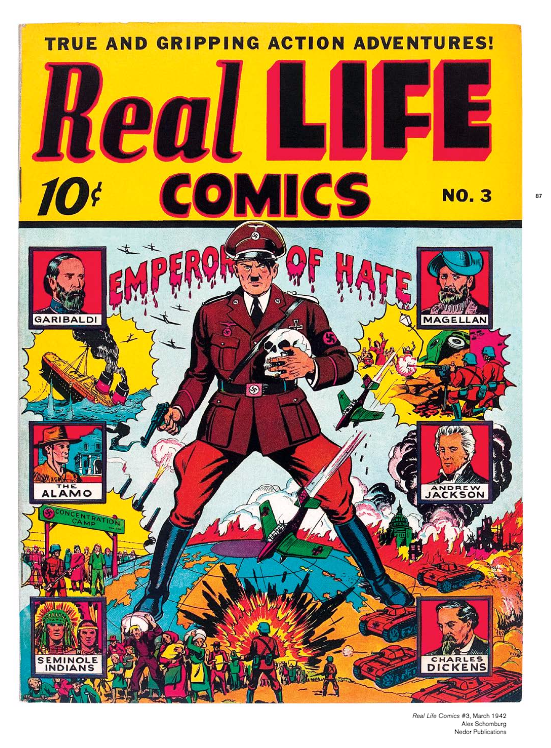
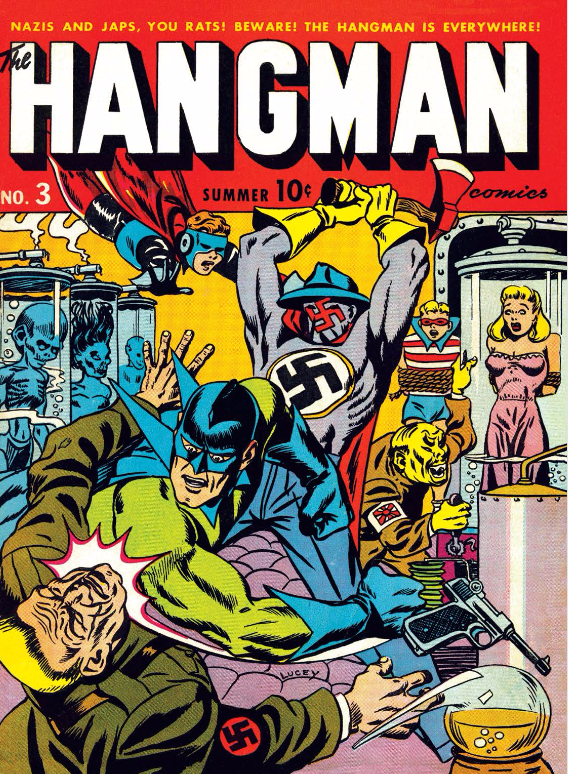
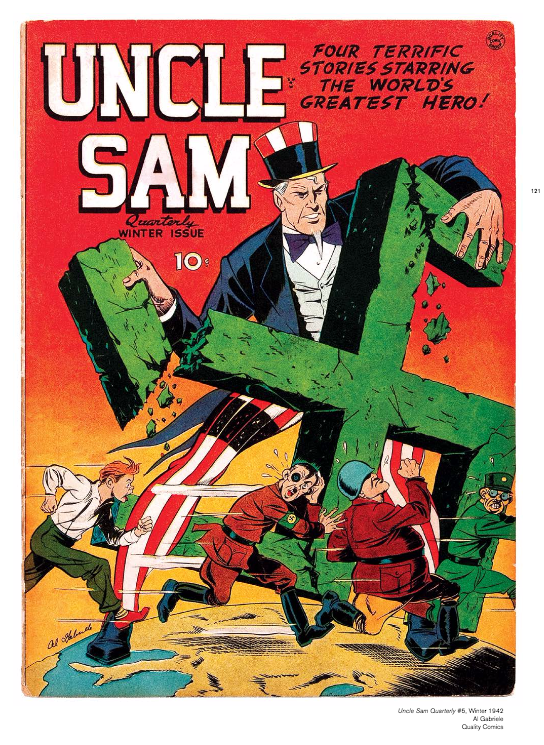
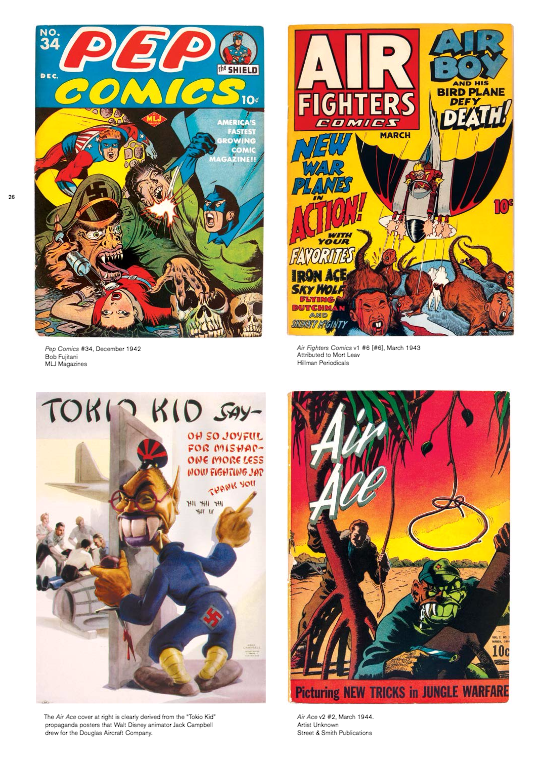
Take That, Adolf! How Comic Books Mocked the Nazis

by Joe Bish

Before President George W Bush referred to Iran, Iraq and North Korea as the "axis of evil", the word "axis" meant something quite different to Americans concerned with a war effort. The Axis powers of Japan, Germany and Italy – along with their respective satellites – represented an abstract evil after the USA's entry into World War II. After the Japanese attack on the Hawaiian naval base of Pearl Harbour, Uncle Sam rallied the troops and the GIs were shipped out to Europe and the Pacific. Hitler, Hirohito and Mussolini had to be stopped.

The war – the bloody catastrophe that it was – was in many ways integral in building superhero comic books as we see them today. The Nazis – and, to a slightly lesser extent, Imperial Japan – was a ready-made crew of baddies with their own costumes, logos and crimes. All that was needed was a brawn super-man (sometimes Superman) to give them the heave-ho.

Mark Fertig is a comic book enthusiast who serves as Chair of Art and Art History at Susquehanna University, a liberal arts college in Pennsylvania. In 2014 he released a book collating a load of noir movie posters, and this year he's published Take That, Adolf! – in which he's turned his attention to the pulpy comics of WWII.

I spoke to him about racism in comics, KKK Nazis and 9/11.

VICE: Does your interest in this subject come from a deep love of comic book history, or is it a WWII history thing – or is it just a mixture of both?
Mark Fertig: It's definitely a mixture of both. I'm a lifelong comic book collector. They're beginning to take up too much space in my house, which is sort of pathetic. I'm a college Art professor and I've been passionate about the Second World War for a long time, so I've taken students to various places in Europe for World War II reasons and visited spots and cemeteries and battlefields and things like that. That's always been a part of what I cared about, and this book was a great way to couple those two interests. I was really surprised it had never been done before. The war is such an important part of the history of comics.

It must have been quite an easy sell to the publisher with the way things are right now.
Sure, I mean… I wasn't thinking about the whole Trump thing when I came up with the idea to do the book. I don't think he was even on our radar yet, but yeah, that's a happy coincidence as far as I'm concerned. If people are looking back at that moment in history and coupling it with this dick, then that's fine by me. I just put a gallery together in a blog of ten or 15 images and sent it to a publisher at Fantagraphics, and they just said go.

Are all these covers from your extensive private collection or did you have to source them?
No, I had to actively go out and search. I don't have those kinds of comics – they cost too much. I have a few, but the covers that are in the book would be probably millions of dollars when taken all together. There's a book that came out in the late 80s or early 90s that's called The Photo-Journal Guide to Comic Books, and it's a two-volume thing with these tiny little pictures of golden age comic book covers. I went through that with a magnifying glass and tried to identify all the WWII covers that I could, with a list, and then I used a couple other research methods to fill out the list. When I got to the point that I'd had enough I started to acquire the images and put the book together that way.

Do you think the aesthetics of Nazi Germany lend themselves to comics? I'd imagine there were a lot of 12-year-olds doodling swastikas back then.
As a graphic designer, I think the power of the swastika as a corporate identity is very strong. If we think of things like the IBM logo and the CBS logo as these iconic marks, it's pretty undeniable. The brand the swastika represents as a visual icon is really powerful, and certainly comic book creators at the time plastered it everywhere they could. There was a conversation I had with the publisher about how prominent swastikas should be on the cover. I didn't want to be the guy with the big swastika book, but it's undeniable that people tend to pick up things that have swastikas on them. I had originally wanted to use a different title, but Fantagraphics had already published a book that had a similar title to the one I proposed, so they said, "See if you can find a way to get Hitler in the title, because research suggests that books [with Hitler in the title] sell better," so that's where we ended up.

British war comics seem to be quite factually accurate, based on actual battles and whatnot, and the drawings seem to be a lot more realistic, whereas the American ones appear to be a lot more fanciful. There are more capes. Why do you think there's this disparity between the two in the way they treat their roles in the war?
Well, I think that given the American comics were being made while the actual fighting was going on, and from a position of limited information, it kinda makes sense. The notion of using comic books to help win the war as a propaganda tool is probably why. In a similar vein, the US government didn't release any photographs from D-Day and didn't want any dead soldiers to appear in venues like the Saturday Evening Post or Life Magazine. I don't think the comic industry was particularly interested in reporting in a journalistic sense. I think they were way more interested in making money first and being a propaganda tool second.

Aside from 9/11, Pearl Harbour was the only real huge attack on American soil, and people still haven't forgotten about it, as evidenced by some of the reactions to the Japanese tsunami in 2011. Some of the images in the book are strikingly racist – what do you think these say about the American psyche?
You know, that's an ugly thing to touch on, but it's undeniably true. I think I quote a statistic somewhere in the book where a poll was conducted in which a god-awful percentage of the American people said that every Japanese man, woman and child should be killed at the end of the war. I'm not old enough to really understand the depth of feeling surrounding Pearl Harbour. I was unaware of the people saying they deserved it, but sadly it's not surprising.

I don't know if people are thinking that way now. I think we're fucked up for a lot of other reasons, but I don't know if there's a cultural memory of Pearl Harbour here. I think, instead, it's more likely that younger Americans couldn't tell you the first thing about it other than that they remember it or somehow carry a grudge. It's definitely fair to bring up 9/11. It's comparable. When you look at 9/11 and the entitlement to hate, which some Americans feel, the relationship to Pearl Harbour and the way that it surfaces in the comic books and the imagery of the time is really clear.

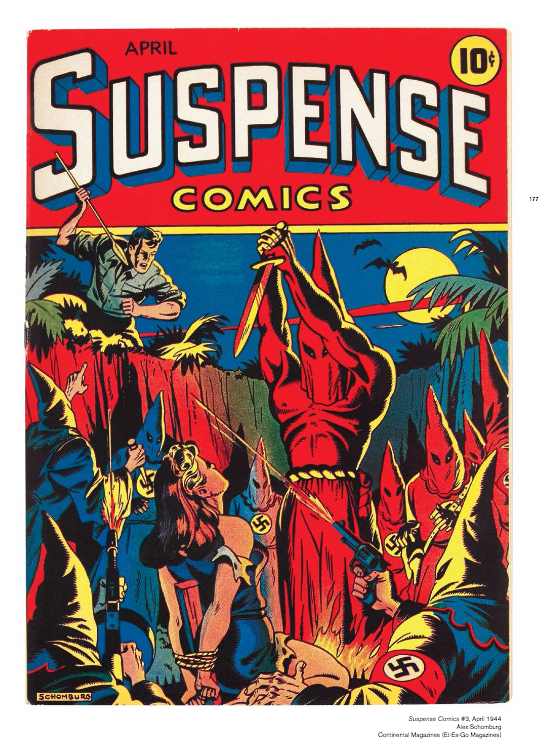
There's one particular cover I found quite striking, but also quite odd. It was the Suspense Comics cover with the KKK swastika jungle guys. It was kind of a mish-mash of different sorts of fascistic themes.
See, the thing I don't understand about the cover is what that guy thinks he's doing with the spear.

Yeah. What the fuck's going on there?
It's like there are these KKK Nazis guys down there with Tommy guns, so there's some classic American gangster in there too, and this guy's attacking them with a spear. It doesn't make a lot of sense. It's an Alex Schomburg cover, too, and he's really the pre-eminent cover artist from the war. There's more stuff of his than of anybody else in the whole book. By that point in the war you were beginning to see more and more comics that were salacious in an effort to make sales. I think, in a case like that one, it backfired, and news vendors pulled that one off the stand before people could actually buy it – or the comics that did make their way into the hands of school kids were then destroyed by their parents. That's a very notorious comic right there, in the sense that so many copies were destroyed for one reason or another that it's become really valuable today. Any time a copy comes up for sale it sort of becomes buzzy news in the comic book collecting culture.

One thing I noticed is that they don't really deal with any of the more sombre elements of the war, like the Holocaust. Have you come across any that do?
There's one Captain America cover that's pretty explicit. I think it's issue 46 that has Captain America and Bucky bursting into this scene where there are rows and rows of these really bedraggled people, each with a red tag around their neck, that are sort of lined up whilst these Nazi guys are shoving an old man on a stretcher into an oven. Cap and Bucky arrive, I guess, in the nick of time to try and stop this, but that's really the only cover that I could find that more or less directly addressed the Holocaust or the idea of genocide.

Do you think there was a reason they shied away from it?

I think they didn't know. When London was under the Blitz, everybody in America sort of sneered at the notion of indiscriminate bombing of civilians and everything like that, but what the Americans and the British learned as the wars went on was that we supposedly needed to do the same things to win the war. So we bombed Dresden and Tokyo, and firebombed all of those people, and the writers sort of used comics as a vehicle by which they could convince the American people that that kind of war was necessary in order for the Allies to win.

If we had known about the Holocaust to the extent that we did in the months after the war ended, I'm pretty confident that it would have been used as a way to convince people that everyday Germans – and not just the Nazis – were responsible for the war, and that that kind of bombing was politically and morally acceptable in order to win. But since that's not the case, that leads me to believe that they didn't know. At the same time, nobody was really paying that much attention to what was going on in comics, so there are a lot of moments when you can hear creators saying things like, "We could literally put whatever we want in there" in terms of trying out new heroes, but then also making political statements. That's why the Writers War Board as an adjunct of the government felt that comic books, because of how prevalent they were and how read they were, was a good spot to place that propaganda.

Thanks, Mark.

@joe_bish

More from VICE:

Exploring the 'Nazi Village' of Jamel

I Found Love, Togetherness and Milk-Chugging Nazis at Shia LaBeouf's Livestream

Johnny Ryan's Chick Tracts

06 Jun 13:50

A Guerra Irmandiña, 550 anos despois

by Redacción

Este ano non é un ano calquera. Fanse os 550 anos da Guerra Irmandiña e da toma de moitos castelos galegos. Un deles foi...

Por Redacción

06 Jun 13:47

A Montage Of Movie Characters Saying The Title Of Their Film

by Zeon Santos

It's considered cheesy for a character to name drop the title of the film by today's standards, but back in the day the “title drop” was something viewers anticipated, cheered at and talked about after watching a movie.

Some movies like Good Morning Vietnam, White Men Can't Jump, Dude, Where's My Car?, Stop! Or My Mom Will Shoot and What About Bob? Use the title drop during a memorable scene.

Others like The Godfather, The Big Lebowski, Hobo With A Shotgun, The Wolf Of Wall Street and Fantastic Mr. Fox are named after the main character so the name drop feels natural but doesn't make for a quotable moment.

All of these movies also have one other thing in common- they're all included in this compilation video by Roman Holiday entitled “Title Drops” along with around a hundred and forty more.

Title Drops from Roman Holiday on Vimeo.

-Via Laughing Squid

06 Jun 13:42

Reality Winner was outed by invisible dot patterns added by printers (among other things)

by Rob Beschizza

There's been much speculation on exactly how NSA leaker Reality Winner was exposed after giving The Intercept documents that showed the extent to which the security agency suspects Russian meddling (previously) in last year's general election. On one hand, the filing against her talks of the "creases" seen in the scans The Intercept posted, tipping them off to it being a workplace printout from an insider--an insinuation of casual sloppiness on the reporters' part. On the other hand, it seemed clear Winner did everything at a work computer anyway and was surely doomed once the story came out and internal investigations began.

The truth is all of the above, but with a cherry on top: the printouts contained invisible dot patterns added by the printer to identify the worker who sent the print job. All surviving photocopying, scanning and PDF compression to be published, plain as day, on the world-wide web. Errata Security explains how, in detail.

The document leaked by the Intercept was from a printer with model number 54, serial number 29535218. The document was printed on May 9, 2017 at 6:20. The NSA almost certainly has a record of who used the printer at that time.

The situation is similar to how Vice outed the location of John McAfee, by publishing JPEG photographs of him with the EXIF GPS coordinates still hidden in the file. Or it's how PDFs are often redacted by adding a black bar on top of image, leaving the underlying contents still in the file for people to read, such as in this NYTime accident with a Snowden document. Or how opening a Microsoft Office document, then accidentally saving it, leaves fingerprints identifying you behind, as repeatedly happened with the Wikileaks election leaks. These sorts of failures are common with leaks. To fix this yellow-dot problem, use a black-and-white printer, black-and-white scanner, or convert to black-and-white with an image editor.

It seems to me that media simply should not post replicas of the documents they are sent, even at the cost of foregoing the credibility this establishes. You just never know what might be quietly revealed (or surreptitiously encoded), even in a crop or excerpt.

It's not even an NSA thing: most new printers add these dots to every job.. The EFF has a list of printers that identify you, but it looks rather out of date.

UPDATE:

Joseph Cox links to more coverage of the various ways Winner was exposed, among which the dots are just one particularly fascinating trap: "It seems though authorities would have identified Winner regardless of the print dots or the second contractor. ... Judging by court docs, print dots and paper crease really make little difference."

https://twitter.com/josephfcox/status/872054901769162752

There are shades here of parallel construction, the law enforcement technique whereby a crime is solved through questionable or legally unreliable evidence, and investigators have to search for something more robust to take to court. But in this case, there's a more complex game of appearances in play, with prosecutors wanting to highlight the media's failings over those of the NSA or even the alleged criminal's.

06 Jun 11:50

Most People Get Herpes Long Before Their First Hookup

by Michelle Malia

When you imagine the when and the where of how you might have contracted oral herpes—the kind that causes those painful, hard-to-hide cold sores around your mouth—you probably picture one of three scenarios. A middle-school game of spin the bottle, a horny high-school hookup, or a drunk night out turned one-night stand.

But hang on, consider some new scenarios: A dad kissing his son's feet, two toddlers smooching in preschool, a grandmother giving her granddaughter a raspberry on her cheek.

It sounds innocent enough, family and playmates showing one another affection. But it's common to contract the herpes simplex virus type 1 (HSV-1)—the strain most commonly associated with oral herpes, as opposed to HSV-2, which causes genital herpes—from these seemingly harmless interactions.

Even if you're not having an outbreak, the virus lives in your saliva. "It's typically transmitted just by contact—a kiss from a relative, kids playing in daycare," says Sami Gottlieb, a medical officer at the World Health Organization.

You were probably hanging on monkey bars and playing on seesaws with little herpes-infected children as far back as preschool. You might have been one of them yourself: More than a quarter of kids worldwide under the age of 5 have HSV-1, according to a 2015 study published in the journal PLOS One. In North and South America alone, 20 million kids under the age of 10 have the virus.

And across the globe, 528 million kids under the age of 10 are infected. That's more than half a billion children who have yet to reach a double-digit age group.

To calculate these estimates, researchers gathered data from all existing studies that tested people for HSV-1 antibodies, a substance your body creates in response to the virus. Antibodies for some conditions, like chickenpox, signal that you were at one point in time infected but your body has since fought it off.

"HSV antibodies are a marker for HSV infection, but having them doesn't mean the infection has been cleared or resolved," says Gottlieb, who co-authored the study. "HSV infections are lifelong." Infection rates vary greatly from region to region. About half of the female population and 40 percent of the male population in the Americas, the region with the lowest rates, have the virus. In Africa, the region with rates higher than any other, 87 percent of the total population is infected.


Watch More on VICE: Sex Workers in Saarland


"In areas with dense populations, more close contact, and less hygienic living conditions, there's thought to be more transmission of the virus," Gottlieb explains. In some ways, that describes an average day in the lives of free-spirited kids—they kiss their friends on the playground, they get kissed by their parents, they stick their hands in or near other kids' mouths, and then in their own. "It can be transmitted very easily," she says.

Most people are basically walking herpes transmitters. Kids—and adults—are much more likely to contract the virus from direct contact with another person than from inanimate objects like drinking glasses or toys that have been covered in spit. "The likelihood that a herpes virus would stay alive on a toy and transmit to someone else is low," says Terri Warren, a registered nurse and adult nurse practitioner who has participated in about 100 studies on sexually transmitted infections, including herpes. "The virus needs human cells, it needs warmth, and it needs moisture to survive."

Parents have a free pass to be bat-shit crazy about protecting their newborn baby up until they're at least six weeks old, says Yvonne Bryson, a professor of pediatric and infectious diseases at the University of California at Los Angeles. "That's when it's most dangerous to a baby." In other words, if you have kids, you might want to conduct a quick visual vetting procedure before you hand anyone your precious cargo. Do you notice any cold sore or ulcer symptoms near their mouths? Then hold on tight—in the early days of a baby's life, an HSV-1 infection can be fatal.

Warren heard of this firsthand from fellow health care providers: A well-intentioned grandfather paid his healthy newborn grandchild a visit. He had a cold sore, but most likely, nobody thought anything of it. He probably hugged, kissed, and held the baby in his arms like any other family member had. Soon after, the baby started having trouble nursing; in this case, it was the first sign of infection. After that, its health deteriorated quickly. The newborn was hospitalized and died about a week later.

"We need to be careful about talking to parents and grandparents about not kissing newborns when they have cold sores, because often the baby has no immunity at all," she says. "They are particularly vulnerable." After those initial six weeks, a baby's immune system builds up and the risk of life-threatening infection drops to almost nil. That's when your crazy pass expires—sure, you can bend over backwards to protect your kid, but two-thirds of the world's population carries HSV-1, and many people with the virus are asymptomatic. In other words, it's nearly impossible to know who is infected out of a crowd unless they have an outbreak.

When the virus enters the body, it travels up the nerves and hangs out in the ganglia, a bundle of nerve cell bodies. There, the virus lies dormant—but intermittently it can travel back down the nerves and surface on your skin or mucus membranes, causing an outbreak. "There's more virus present when you have an active sore like an ulcer, but the virus can be shed even when there aren't any symptoms," Gottlieb explains, so it's difficult to shield yourself or your kid from every threat.

But there is at least one silver lining: Contracting the oral herpes virus as a kid could actually protect you from severe outbreaks in adulthood. "If you have HSV-1 antibodies, you're still just as likely to acquire an HSV-2 infection," Gottlieb says, "but you'll be much less likely to show symptoms of that infection."

Read This Next: Everything You Need to Know About Herpes and Sex

06 Jun 11:44

Wanted: Generic Father for Backyard BBQ

by Miss Cellania

What do you do when you want to have a big summer party, but you don't know how to grill? You put an ad on Craigslist for a guy to be "Dad" and man the grill! He'll also be expected to drink beer and talk about dad things.

Duties include:

- Grilling hamburgers and hotdogs (whilst drinking beer)
- Bringing your own grill (though this is subject to change. We will provide all of the meat)
- Refer to all attendees as "Big Guy', "Chief", "Sport", "Champ" etc. (whilst drinking beer)
- Talk about dad things, like lawnmowers, building your own deck, Jimmy Buffet, etc. Funny anecdotes are highly encouraged. All whilst drinking beer.

Desired experience:

- A minimum of 18 years experience as a father
- A minimum of 10 years grilling experience
- An appreciation of a nice, cold beer on a hot summer day

This is an actual ad for a cookout June 17 in Spokane. Whether or not they fill the position, everyone on the internet now knows where the party is in two weeks. -via reddit

06 Jun 11:44

Why Game of Thrones is a Bad Show 101

by Kylie

That’s right. HBO’s flagship program, the Emmy-winning universally hailed drama that has taken the television industry by storm for the past few years is just…bad.

No, this isn’t clickbait. No, this isn’t a piece that gives ironic reasons for our dislike of it, such as “we have to wait so long in between seasons!” When we say that Game of Thrones, by showrunners David Benioff and Dan Weiss, is bad, we mean it in the strictest sense. It is lousy, substandard entertainment by just about every single metric other than the fact that it looks really, really nice and the actors are incredibly talented.

If you’ve been around The Fandomentals before, this isn’t going to surprise you. After all, we (Julia and Kylie) have not been remotely shy in voicing our distaste for the program, nor miserly in providing reasons why we feel this way. In fact, we just spent months going back through and watching/analyzing every single plotline of the most recent season, one at a time, to unveil just how odious it is. And yes, before you (dear reader) suggest that we could just turn off our TVs if we think it’s so terrible, the thought has occurred to us. We happen to find value in deconstructing the flaws, plus we wouldn’t even bother if it wasn’t such a critical darling.

However, as we are coming up on our third season now of being quite vocal detractors, we do recognize that a lot of what we write about GoT is not quickly accessible. For instance, we make jokes about “Larry and Carol Larroling all over the place,” and it makes perfect sense to us as biting commentary. But for everyone else… yeah; it’s meaningless. Moreso, when we’re at parties and happen to let it drop that we don’t like GoT, if we’re not allowed to hide in a corner with our mumbled “we just like the books hee hee”, we’re asked to bring out reasons. Sometimes those reasons aren’t very easy to articulate, especially to casual viewers. Mostly because there’s so many at this point. Where do we even begin?

We do want to say right now: we don’t blame anyone who likes GoT and we don’t think lesser of anyone who likes GoT. We recognize that most people spend their ten hours a year looking at it and finding it pretty cool. Heck, it’s fine even for people who rewatch it—ask Kylie who her favorite James Bond is. It’s not like we can’t enjoy pieces of media that aren’t Citizen Kane.

It’s just that with GoT, people treat it like it’s…worthy. Worthy of consideration, of praise, of awards. Yet what we’ve found to be the one constant of this show is that it falls apart under the most minute amount of scrutiny. It’s true, it is the easiest show in the world to “turn off your brain and enjoy.” At the same time, there are enough “deeper” concepts introduced that it feels intellectually engaging. So, we promise we’re not here to judge, especially since it can be quite enjoyable to try and think deeply about it and fill in the (many) blanks. We’re just here to disabuse anyone of the notion that this show, as a narrative in and of itself, is quality literature.

We also need to get something else out of the way: we like A Song of Ice and Fire. A lot. We’re not even going to talk about the books here, though. We’ve argued before that they have nothing to do with each other at this point, and even though we could easily whip out fifteen thousand words on how GoT is the perfect thematic opposite of the books it’s pretending to adapt, this isn’t the place. The show falls apart on its own merits without dragging in atrocious adaptational decisions into this.

Therefore, without further ado (we know), we present you with the 9 major reasons why GoT is an objectively bad television show.

1. The Setting is So Inconsistent it’s Rendered Worthless

One of the major appeals of GoT is its rich, deep world with so much texture and backstory. The map in the credit sequence is evidence of how much Westeros serves as a draw. And even though we just said we weren’t going to talk about the books, we do have to say that the the writers used the scaffold of George R.R. Martin’s world to establish the universe for the show. However, as time has gone on, that scaffold has begun to fall apart, and it’s a hazard for any contractors to set foot on now.

What’s nice is that the details of Martin’s setting are widely accessible to GoT fans, for those who want more engagement. Want to read about the Night’s Watch in greater detail? Well, Martin’s done that work, and you’re sure to find it on the exceedingly thorough Game of Thrones Wiki. Even HBO releases promotional material that provides deeper contexts for everything, like their “History and Lore” video about Dorne, where they mentioned absolute primogeniture as a notable feature of the land… only for us to never find out about it within the show-proper.

We’re not saying every aspect of Martin’s world should make it onto the screen. Not even close. We’re just saying that there is a convenient fallback to make up for otherwise shoddy worldbuilding. Worse still, this shoddiness is two-fold.

Firstly, the actual physical settings of Westeros and Essos on the show are inconsistent because there’s no attention to detail. This is easy enough to ignore if you choose not to think about it, but we have to guess even the most casual viewer thought it was a wee bit odd when Arya warped from Braavos to the riverlands in the final few episodes of Season 6, especially since most of the other characters had barely moved in that two-episode span. Or, even better, Varys warped from Meereen to Dorne and back onto Daenerys’s ships leaving Meereen, the last magical teleportation taking place in the span of ten minutes of screentime.

The more you know about the setting and the source material, the worse this becomes, but it’s not as though it’s imperceptible to everyone else.

Similarly, the timeline makes no sense. Since there are many characters that rarely interact, their timelines are pretty independent. But, once they get together, it’s always a mess.

For instance: Jaime traveling to the riverlands and taking care of the situation at Riverrun works fine in its own time bubble. However, when you have to place it against the events that take place in King’s Landing, what we’re left with is Jaime and an entire army traversing hundreds of miles when only a few weeks (at MOST) passed for his sister. Even if we say “oh this scene happened a month before the following scene,” there’s no real excuse to have that kind of chronological hodgepodge in one episode. Also…we knew before Jaime left King’s Landing that Cersei’s trial was right around the corner. They didn’t have to have Cersei say, “In a few days, he’ll have a trial for me” back in Episode 4 and create this confusion in the first place. The word “soon” was always an option, which we feel we shouldn’t have to point out to Emmy-winning writers.
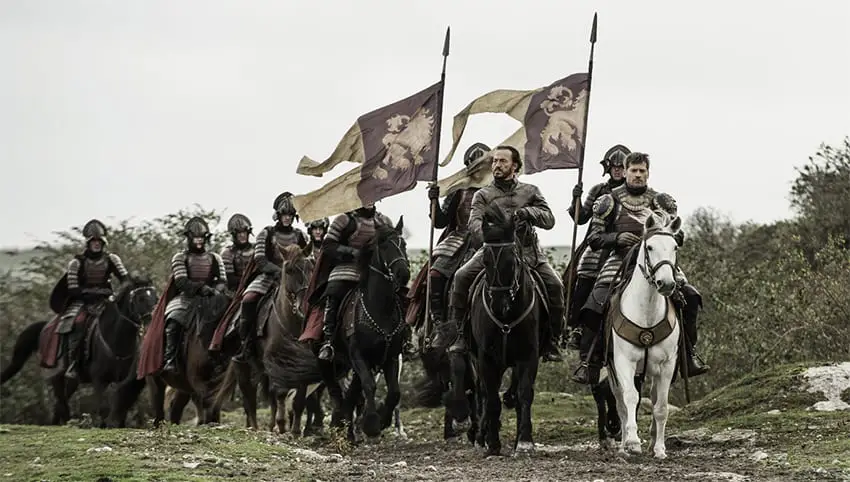
Just take one glance over those scripts, eh?

This is one plotline, in one season. Remember when the Sand Snakes waved goodbye to the ship that carried Myrcella and Jaime and Trystane, and then Season 6 opened with two of them having warped onto it? Which after hours and hours of debate, we still can’t decide where the ship even was when this happened?

We’ve been told these are nitpicks before, and like we said, they are small enough that you can usually ignore them. Not that it’s a great excuse for the writers to be blatantly sloppy and/or lazy. But we also suppose it doesn’t ruin the immersion of viewers who happen to be less familiar with the military advantages of Moat Cailin than we are.

But that brings us to the second major flaw in how this setting is written: Westeros as a society does not make any sense. This is a show that has hidden behind the excuse of “historical realism” before. And yes, we know most people understand that this isn’t historical. However, there is a “reality of the world” that is often trotted out whenever there’s upsetting material.

“That said, when we decided we were going to do that we were faced with the question: If [Sansa’s] marrying Ramsay, what would happen on her wedding night? And we made the decision to not shy away from what would realistically would happen on that wedding night with these two characters, and the reality of the situation, and the reality of this particular world.” —Bryan Cogman

We will tackle the violence against women later, but the main point is, if Cogman is using this as a defense, and in doing so suggesting that what happens isn’t by definition gratuitous since it inherently offers commentary on the setting (and therefore the story as a whole), then the writing team better be prepared to follow-through on this and create a setting that could have meaningful takeaways.

They do not. We have come to call this the “magically disappearing patriarchy.” You see, from what we can tell, the setting adapts to the needs of a given scene, especially the tonal needs of the scene.

When a scene is dramatic, and dark, and shocking, the setting adapts so that these dark and shocking moments can come to pass, be it a woman being abused, someone being murdered, etc. When a scene is funny, the inconvenient aspects of this misogynistic, fundamentally violent society somehow fade away.

Our favorite example of this came last year when Sam visited Horn Hill. His father had previously been established as a terrifying, abusive figure, and there was nothing in the episode to change that impression either. Well, with one exception: the way the women of Horn Hill behaved. Sam’s mother and sister were sassy, rather assertive, and perfectly willing to stand up to Randyll Tarly at his table to vouch for a wildling woman, who they previously thought was a sex worker. There’s so many reasons this would never happen in the books, or even in an abusive household today, but what it did was sacrifice any sense of realism or patriarchy, if we may, for women standing up for themselves.

Which yeah, we know we sound crazy saying we don’t want women standing up for themselves and defending other women, except for the fact that the shit everyone else goes through on the show only works if women are consistently disempowered in this kind of situation. The world where Sansa gets raped because that’s “what would happen” on a wedding night with Ramsay conflicts with a world where the abusive, martial Randyll Tarly is dressed down by his wife at his own table. And there’s no indication that this is abnormal behavior on her part, by the way. She walks off and Randyll comments on what a “fine woman” she is. Just a few scenes after this, Walder Frey pulls a terrified child bride onto his lap. Why is the “reality of her world” night and day compared to the empowerment at Horn Hill?
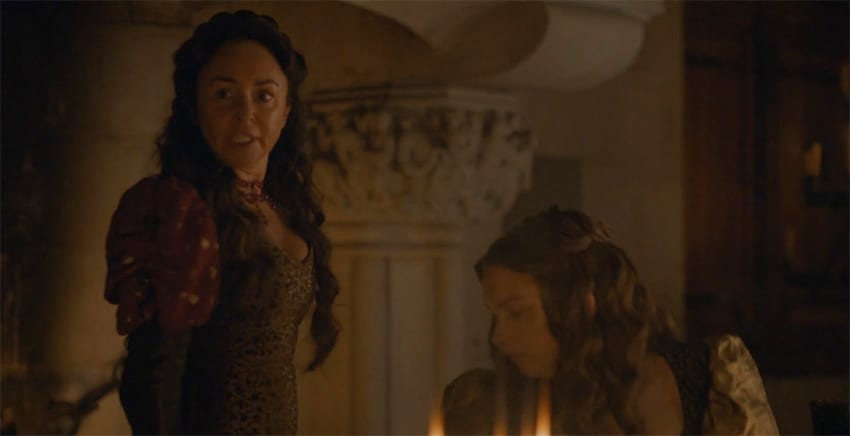
We mean… Yahhs queen, but actually how?

The big trouble with this is, of course, that there’s a space for apology for any woman who suffers. If Sam’s mother is free to stand up to a completely terrifying guy, then why couldn’t Sansa have asserted herself more to prevent that stupid marriage-for-revenge plot? How can any woman’s challenge of the patriarchy truly mean anything when the writers don’t seem to understand what the patriarchy is and how it actually affects human beings?

Don’t even get us started on the Dothraki. 

#2. Characterizations are Inconsistent

Once again, we aren’t talking about as adaptations. It’s true, these characters are so wildly different from their source material counterparts that we have an entire system of nicknames devoted to separating them in our minds, but that’s for another day.

Rather, we mean that characterizations are inconsistent against each other. Sometimes it’s just a matter of season-to-season resets. However, for some poor characters, we actually have no clue how they’re going to behave in a given scene because it’s based entirely on the needs of the plot.

Cersei is our favorite example, because she amuses us the most. For the large bulk of the show, she was portrayed as a rather reasonable woman. She had her moments of horribleness, like in “Blackwater”, and we were often times told how awful she was by everyone else around her (especially Tyrion). But from at least Season 4 onwards it’s really hard to view her actions as particularly bad. Sure, she pushed for Tyrion’s execution more than the audience would have preferred, but at the same time, there was no indication that she wasn’t sincere in her belief that he poisoned Joffrey. Additionally, Cersei’s entire plotline seemed to revolve around getting unbelievably negative feedback just for being a [somewhat] politically ambitious woman, while her son is being actively abused by Margaery, the Tyrells were twirling their mustaches at her, and she received a threatening snake-in-the-box message from Dorne that demonstrated her daughter’s life was in danger.

Really, from Season 5 on, we’ve found the marketing surrounding Cersei utterly mystifying. We keep on being told that she’s evil, and would do anything for power, and yet up until the very last episode of Season 6, that’s simply not the story on our screens. We go into this in quite some detail here, but she really just gets screwed over by every single person she tries to talk to, all while very reasonably working to protect her children from real and active threats to their persons. Despite never being taken seriously and everyone being mean to her. Cersei, ironically, was one of the most consistent characters, at least for two or three years.
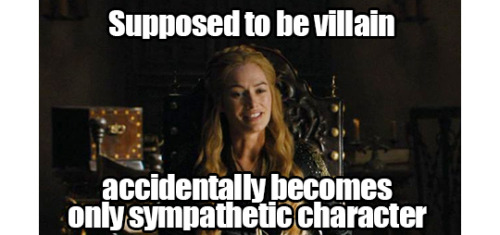
Then she blew everyone up.

She blew everyone up, she wine-boarded a nun, and she smirked and drank in her Outfit of Supreme Evil™. While this was certainly seeded by the promotional materials, as well as a few clunky lines, like Tommen saying Cersei would totally have murdered Prince Trystane (what?), this wasn’t in-line with the character we had seen on our screens. At all. We understand that “Evil Queen” is an easy trope to fall back on, but there actually needs to be evil stuff happening to justify that. What, she was slightly rude to Margaery once and therefore her violent bender was the only natural conclusion?

Still, for those convinced by the marketing, or who would just view it as Cersei finally reaching her breaking point, there’s the case of Sansa. At the end of Season 4, Sansa lied to the Vale Lords and donned an Outfit of Supreme Empowerment™ (very different) because she was now a shrewd player, using her intuition and manipulative abilities to get what she wanted. In Season 5, she kept the outfit for a bit, but was suddenly a complete idiot, incapable of asking very basic questions about Littlefinger’s plan for her to marry Ramsay Bolton to…get revenge on the Boltons. Then she was stripped of all narrative agency until Theon rescued her.

Well, cue Season 6, where there was literally no way to tell how Sansa would behave in a scene. Would she be awesomely assertive? Would she be ineffectually assertive? Would she just sit in the corner fuming for no reason when we had already seen her be awesomely assertive in the exact same situation? Would she just stand there and forget all the forms of courtesy? Would she be grinning in delight at violence?

Before you give us any “multi-faceted character” shit, no. Just no. If we can’t even predict what Sansa might bring to a scene, that is a failure of a character. Tell us one reason why she was able to use her voice and mention military movement in “The Door”, but in “Battle of the Bastards” was rendered mute? Give us one reason why she vacillated from telling Jon he should take the Lord’s chambers in Winterfell, to in the very next scene looking miffed that he was made king. Did she not consider that she was the Lady? Was this a problem for her? Why was she muted for a second time?
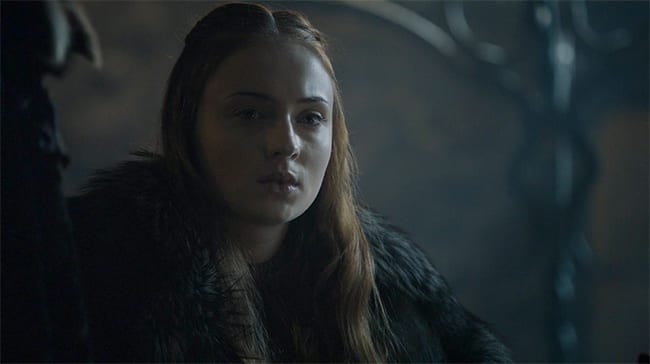
Use your words, Sansa!

And again, these are just the couple we’re focusing on. Why does Arya suddenly begin rolling her eyes around Braavos and snarking at the end of Season 6? Why does Theon spend an entire season reconnecting with the Starks and doing right by them only to fuck off for no reason? Why does Davos forget to ask a single question about Shireen after clearly spending multiple seasons loving and protecting her? Why does Jaime and Cersei’s relationship reset at the beginning of each season? Why does the High Sparrow spend two years as a shrewd political manipulator only to suddenly become a complete idiot and ignore Cersei attacking his own men just in time for her to bomb the whole sept?

Also, if anyone can come up with an adjective to describe Meera, we’d be appreciative. And no “brunette” is not enough.

#3. The Few Consistent Characters are Stagnant or Caricatures

There are a few notable exceptions to the “who are these people and how will they behave?” rule.

Tyrion, for instance, is a character that’s exceedingly consistent. He is perfect. Everyone who’s good agrees that he’s perfect. Everyone who is bad, doesn’t like him, or tells off-screen dwarf jokes. There was half a second this past season that we thought Tyrion was being challenged because the slavers still attacked Meereen, but no. They were going to anyway, and only Tyrion had the answer for how to beat them in the end.

We think it’s great that Tyrion is such an unproblematic fave, but to us, he’s the most boring and literal Mary Sue that’s ever graced our screens. The show is, in many ways, a series of bad things that happens to him, and how he overcomes them just by being awesome, or by random people being randomly wonderful to him.

Who is this man and why is he freeing slaves in this fighting pit?

It’s true; he drinks and he knows things. And that’s all one needs know about his character, because there’s sure as hell not any more depth to it.

Speaking of Sue tropes, there was a Villain Sue that was something of Benioff and Weiss’s favorite for the past couple of seasons. We speak of Ramsay Bolton, whose only defining trait was how badass he was in his evilness. We’d get scene after scene reminding us of this. Oh, thought that old lady might help Sansa? Fooled you! He flayed her. Thought Sansa had the upper hand in a dinner conversation? Fooled you! He knew just when to bring out Theon. Thought Osha might be able to stab him? Fooled you! Also, let’s spend three full minutes of screentime for him slaughtering Fat Walda and her baby.
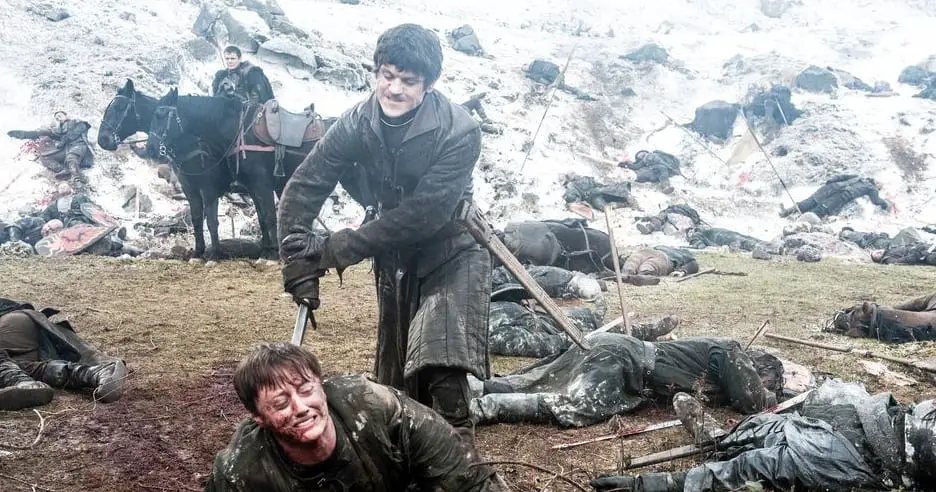
“Ramsay is actually kind of a badass. Like Ramsay fights…yeah.” —Benioff & Weiss

There was a hint at *something* beneath the surface with his relationship to Roose. This raises the question of why they’d even try to flesh out someone who’s clearly just a rapist asshole. But it’s hard to call this attempt a success. Ramsay was awesome in his evilness, and Roose was reasonably impressed, until the scene required that he wasn’t impressed. He went from praising Ramsay fighting off Stannis to yelling at Ramsay for his mistreatment of Sansa, as if the whole marriage had been Ramsay’s idea.

Really, there was just nothing interesting about Ramsay. He was evil. We get it. He also took over our screens for an incredibly long time, and in the end, he wasn’t even hoisted by his own petard. He was screwed over by a randomly materializing army. (Unless we want to pretend that the only motivation Sansa had in fighting for her home was being raped, which is bag of worms for another day.)

Who else is consistent? Well, there’s that one plucky swordfighter who always tells bawdy jokes. Bronn! Wait no, Daario! Wait no, Sandor! In fact, Sandor has been so badly Flanderized at this point, that he’s a walking chicken joke meme. Sure, he’s consistent, but is this really a character worth sinking any effort into? There’s nothing to unpack here.

The Waif was also a consistent character. She was a violent asshole who hated Arya. For…reasons.

Sorry, forgive us for not falling in love with these guys.

4. Character Arcs are Messes at Best, but Usually Nonexistent

Our previous two points did touch on this, but one of the biggest problems is that even despite these characters’ personality flaws (that give us adequate pause), they don’t even change or evolve naturally. They can’t when their personality has either completely stagnated, or is based on plot-demands. However, it might surprise you to also learn how completely meaningless their adventures have been.

For example: remember when Jon was dead? He was dead. Died. Gone. We’d think this might have an impact on his character, but aside from moodily eating soup for a scene, it was completely impalpable. It gave him an excuse to quit the Night’s Watch (kind of), but otherwise, he just…led an army. Maybe he was supposed to be angrier or broodier than normal, though he seemed just as brooding in Season 1 to us. He swung his sword at Hardhome as well as he did at Winterfell.

He was made king too, so you’d think he did something to earn that, or grew into some kind of leadership position, but no. He just ignored all good advice and marched an incredibly smaller force face-first into an obvious trap set by Ramsay, getting everyone killed in the process (until Sansa showed up and saved his stupid ass). He didn’t earn that rescue any more than his kingship, but hey. Cue that emotionally significant music in the final scene all the same.
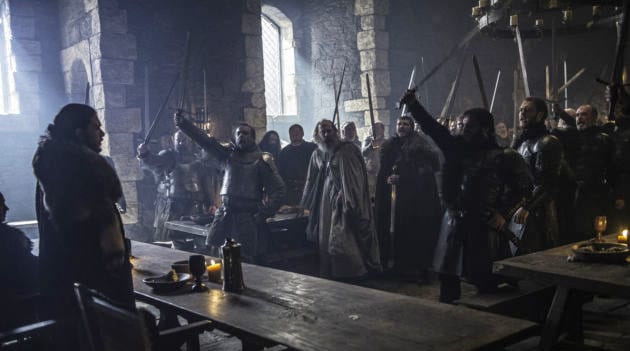
Aw, we remember that cello melody from back when things made sense, too!

Guys, this is the protagonist of the damn show. What was his arc? What was his arc the year before? “These xenophobes sure don’t like wildlings and aren’t very genre savvy?” We’re thrilled that he finds new ways to swing his sword every year, and that we were given an on-screen reason for Kit Harington’s haircut, but that’s not actual growth.

Arya is the other example we’d like to highlight, because never before have we experienced a training montage where nothing results from it. Imagine if at the end of Season 4, Arya had gone to the Twins and killed Walder Frey, baking his sons into pies and slitting his throat. Can you see it? Yes, because it’s as plausible for her character to have done it then, as when she did it in Season 6. We suppose her two-season vacation to Braavos allowed her to learn how to apply faces (a skill learned off-screen, of course), but she didn’t actually learn anything about herself there. Only that she didn’t want to join a stupid guild whose members’ only activity was smacking her with a stick. We didn’t need two seasons to tell us why she wouldn’t have been into that.

We have already gone through and thought deeply about each character to this extent (hint: Sam has also not had any development since Season 3!), and we encourage you to do the same, but we don’t want to belabor the point. The only character we can even think of that grew in the past two years was Olly. This isn’t a joke. He shed his idealization of Jon, and that’s more than we can say about a single other person on this roster.

#5 The Plotlines Don’t Make Any Sense

Hoo boy. This is the section that we’ve been the most apprehensive to write, because how on earth to you tell someone that the entirety of the show they’re watching is devoid of logic? And again, we don’t want to put blame on the viewers. The greatest success of GoT is giving off the appearance of a smart show. With regard to the plotlines, the writers have a way of masking contrivances and a lack of reasoning as complexity.

The best examples of these—as we fondly call them—Idiot Plots are probably in King’s Landing, especially for the past two seasons. This one in particular is where you can wave your hands and go “ohhhh, complex political machinations,” without actually thinking about how little any of it makes sense and how it all depends on characters not behaving rationally, or acting on information there was no way they could possess.

For example, early in in Season 5 Cersei summons Littlefinger “most urgently” from the North because she has to consult with him right after she first meets with the High Sparrow. These summons are of such great importance that he has to ditch Sansa with the Boltons to high-tail it down there. Before he gets there, Cersei randomly arms the Faith and suggests that they arrest Loras. Then, Littlefinger arrives and they have nothing to say to each other that relates to any of this. They talk about how sucky Lysa Arryn was, Cersei asks if her alliance with her ally who came running at her word is still intact, and Littlefinger proposes becoming Warden of the North. None of this has anything to do with the Tyrells or the Faith. He points out arming them wasn’t wise, but that’s the extent of it.

Later, Cersei gets Margaery to walk into a perjury trap set by the High Sparrow, who was a lawyer for some reason, because she knew that Margaery would lie about her brother’s sexual relations with his squire. Because apparently Littlefinger had convinced said squire (slash sex worker) to confess to having sex with Loras. We think. He at least mentioned to Olenna that he gave Cersei a “handsome young man”, and had no reason to be lying in that moment.

But here’s the thing: Cersei couldn’t have known about Olyvar or that Littlefinger had any control over him before Littlefinger arrived (and before she armed the Faith), unless she somehow already had been told about Olyvar and that she would therefore need Littlefinger to persuade him, but decided to have Loras arrested on spec anyway, because… ? How did she know that arming the Faith would lead to a perjury trap that would then save her son from his active abuse at the hands of Margaery? There’s shrewd and there’s “I read the script and knew what would happen.” Plus, this was the best plan she came up with? One that required burning the entire legal system to the ground, when she had otherwise proven herself very capable at governance (like sending Mace off to treat with the Iron Bank, which ended very well for them)?

Forgive us for the nicknames and “Handsome Young Man” shorthand. We have fun here.

Season 6 didn’t make a hell of a lot more sense. We wrote an entire essay on how fundamental the illogic was in Cersei’s actions, the High Sparrow’s actions, Margaery’s actions, Olenna’s actions, and especially Jaime’s actions—our hero who planned to revolt against the religious leader of the city without first securing the goddamned king or even checking where the rest of the kingsguard was.

In fact, we can’t even pretend that Cersei had this season-long big boom planned, because Olenna goadingly says, “You’re surrounded by enemies, thousands of them. You’re going to kill them all by yourself?” in Episode 7! Don’t make us go into the idiocy of Cersei murdering a member of the Faith when summoned to meet with the High Sparrow, only for him to summon her to meet in the final episode and be shocked when she doesn’t show up. And then he orders his key witness to go get her. Great plan.

We think it’s great that critics have at least been able to point out how the Dornish plotline makes no sense. Killing your own family to get revenge on the people who killed your own family? Brilliant! But what we’re saying is that it was completely par for the course. It just Dorne didn’t have really fancy sets and Lena Headey to hide behind.

You know what else made no sense? Sansa being raped. Like, okay, Ramsay is evil and would probably rape anyone on his wedding night. But let’s talk about what we fondly call the “Sansa Marriage Strike.” Because, you see, the whole reason that Sansa was shoved into that stupid plotline was because she was trying to get revenge on the Boltons. Let’s ignore the fact that Stannis was marching towards Winterfell and expected to win, so she and Littlefinger could have just waited in the Vale to make sure that was the case, where it was safe and she was well-liked by the Vale Lords.
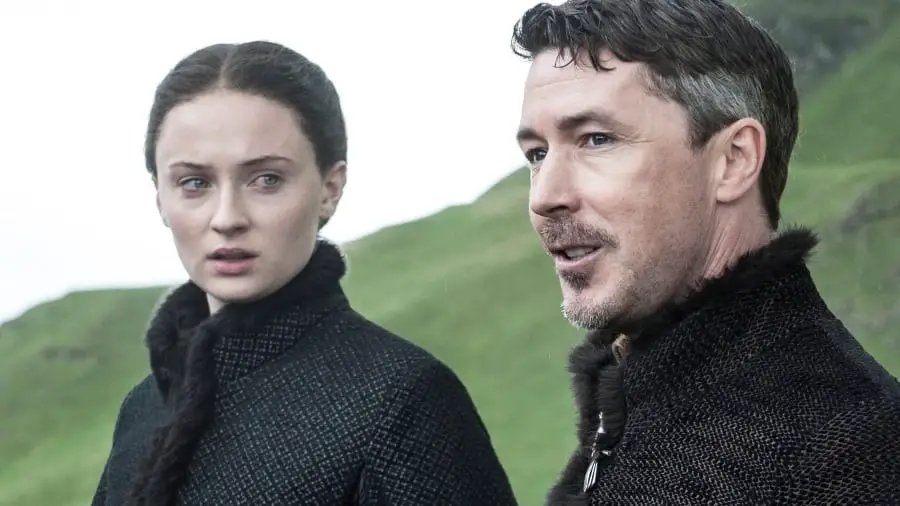
Sort of seemed like she wanted to anyway…

Please tell us how marrying your enemy and thereby legitimizing their claim to what should be your lands and castle is in any way an act of revenge. We’re waiting.

Littlefinger tossed out the lame “make him yours” aspect, but…what? Sansa is giving the Boltons her claim. Even if Ramsay was the nicest husband in the world to her, how does this help the Starks at all? How does this help her on a personal level? She’ll have babies with a man she “made hers” and that’s somewhat nice? A man who is from the family that KILLED HERS?

We will never get sick of talking about how illogical everything is on this show, so to spare you, we’ll direct you once again to our retrospective tag. Find out why Davos and Thorne were playing football over Jon’s corpse! Oh wait…we still don’t know!

#6 The Devil’s in the Details

As a quick point, while the macro-beats of the story make no sense, never fear: the micro-beats don’t either. There’s that consistency we’ve been craving!

We get that some of what we’re about to say are nitpicks, but the writing of GoT betrays, if nothing else, a complete lack of care. Some things have been picked up by astute fans along the way: how many Lannister necklaces are there? How does Arya know to cross off people on her list before news of their deaths could have reasonably reached her? Why did we never hear Theon’s dwarf jokes? Why did Bran choose to go back to the tower flashback after narrowly escaping the Army of the Dead and becoming the Three-Eyed Crow?

However, there’s a lot of smaller things we can point to as well, and this is across every plotline.

Let’s just stay in King’s Landing, because it never gets old for us. Why did Lancel go chase a little boy when he was tasked with bringing Cersei to the sept for her trial? Why did Qyburn tell Pycelle “sometimes before we can usher in the new, the old must be put to rest” when Cersei seemed to have wanted to keep Tommen alive, and therefore on the throne? (Also she’s been queen for 20 years—she’s the outside candidate?) Why did Qyburn stop Pycelle from going to the sept where he’d have blown up in the first place just to give him a special death, especially since “you do not deserve to die alone in such a cold, dark place”? Jeeze, he could have died in a warm explosion with his buddies!

Why does the king have absolutely no one guarding him? Why was the High Sparrow rushing to start Loras’s trial before the King of Westeros was there? Why was the High Sparrow holding the audience to this trial captive when they wanted to leave? How did Cersei extract Septa Unella, who had been tailing Margaery for half the season, without a single person noticing? Why was Cersei not being tailed by a septa? Why did nobody care that there was a zombified Gregor Clegane marching around with Cersei? 

Let them out! Let them out!

And this is just for one musical sequence in one episode!

Granted, we have a lot of fun with some of the sloppiness in the same way we have fun watching Mary Kate & Ashley movies, but this isn’t exactly a sign of quality media.

#7 “Shocking moments” are Really Just Unearned 180°s

“It’s easy to do things that are shocking or unexpected, but they have to grow out of characters. They have to grow out of situations. Otherwise, it’s just being shocking for being shocking.” —George R.R. Martin

Oh Game of Thrones. You twist-master! However, much like M. Night Shyamalan, the shocks that started working out fairly well have become…something else.

In the first few seasons, coincidentally when the show mostly aligned with the book series, the surprising moments made a lot of sense and felt like true twists, without any contrived-nature to them. Ned’s death is probably the finest example, because conventional storytelling would dictate that he lives. Similarly, you expect the wife and son to avenge him, making the Red Wedding doubly shocking, even if all the writing was on the wall when you go back and think about it.

Compare this to Arya poofing across the globe and murdering two men off-screen, taking over a kitchen (somewhere) and baking them into pies, and then feeding them to Walder Frey, who was randomly sitting alone in his giant feast hall during a giant party. This was certainly surprising to us. It’s impossible for it not to be surprising, because…what? How was this moment earned? We can be very fair and say it was foreshadowed because of her list, but if this means that she’s just going to apparate behind her targets and stab them, then that doesn’t exactly make it meaningful.

However, the writers seem so enamoured of shocks, or perhaps so pressured to live up to their reputation as the guys who write shocking television, that they’ll go out of their way to set up a certain situation, just so that they can pull the rug out from viewers in a 180° spin.

Our favorite example of this is with Myrcella’s death. In Episode 9 of Season 5, Ellaria Sand seemed to be very regretful and humbled in her conversation with Prince Doran after a botched attempt to kidnap (or murder?) Myrcella. Then she went on to have a really nice conversation with Jaime about “love is love”, where there is absolutely no hint of duplicity. So in the next episode, where she’s saying goodbye to Myrcella with affection and wishing her well, there’s absolutely no reason why any viewer who’s paying attention to what’s on the screen would think this isn’t sincere.

Except FOOLED YOU! Myrcella dies, and right after having a really nice, touching scene with Jaime, just to twist that knife more. Did this surprise us? Of course it did, because it was sitting in contention with what we saw on the screen. If there had been any hint of something, then okay, but unless we’re supposed to just have intuited that Ellaria is a world-class actor worthy of Indira Varma, there was no way anyone could predict this.
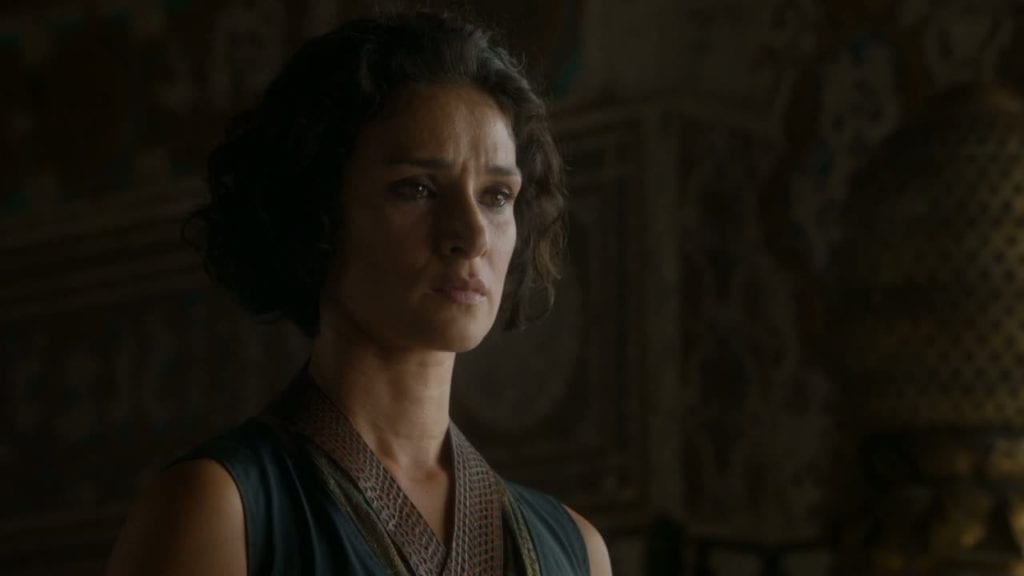
We kind of suspect Varma didn’t predict this either.

Shireen’s death bore some uncomfortable similarities in a tonal 180° as well. What a fun parallel between these dead girls!

Cersei’s sept explosion certainly was shocking. But to that we direct you back to point #3, because yes, it was shocking to see a reasonable and put-upon character suddenly become a mass-murderer who cared more about torturing a nun than checking on the well-being of her child who probably would have been emotionally affected by said mass-murder.

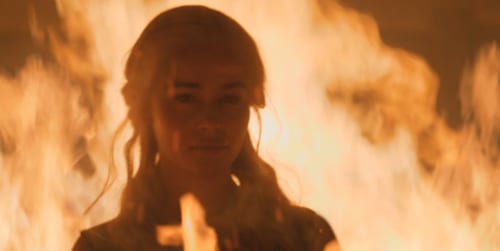
Other shocks include: Sansa being raped after her scene of assertiveness in the bathtub, Sam coming back for Gilly after reasonably saying goodbye at Horn Hill, Ellaria up and murdering Doran, Daenerys burning down a building and smirking as the flames enveloped her, Lord Umber randomly delivering Osha and Rickon to Ramsay because he liked his kinslaying, Jon being declared King in the North for his incompetence, a crossfade from the baby to Jon’s face that had no consequences in the story at all or to the character discovering it, everyone the Hound had been hanging out with dying, Drogon randomly appearing around a cliff after being too sleepy to help out his mother…

We’re getting bored from all these surprises.

8. It’s All Meaningless

Here’s the thing: there are plenty of pieces of media we love that don’t mean anything; it’s a little hard to think too deeply on the biting commentary provided by The Man with the Golden Gun (never trust a sidekick with a shapely butt?). But that doesn’t mean the entertainment value is any less real, even if it’s a tad ironic in nature at times.

However, in the case of GoT, there is a tendency by viewers and critics to think of it as meaningful. There are entire academic books about the condition of women and what the takeaway is (it’s nothing…see point #2), or how Euron is the most effective critique on Trump that we’ve seen to date. There’s also plenty of discussions of the epic *themes* surrounding the show. We even remember reading a critic gushing about Tyrion spotting that dragon in Season 5, and how meaningful it was in the context of his arc, because he had been at rock bottom. But…why is it meaningful? It was hopeful for him? It was cool to see? We know Peter Dinklage played the scene as if it affected *something*, but it takes more than swelling music for the audience to actually gain something from this.

Take the final sequence where Cersei blows up the sept. The beginning was filmed in such a way that you could tell it was meant to be deep. We got slow close-ups of everyone getting ready. Look, the stays on Margaery’s dress are being tightened…meaningful! We only see the back of Tommen’s head at first…meaningful! But like we described in #6, the entire set-up was out of nowhere and relied on one mind-numbing contrivance after the next. So how was this meaningful?
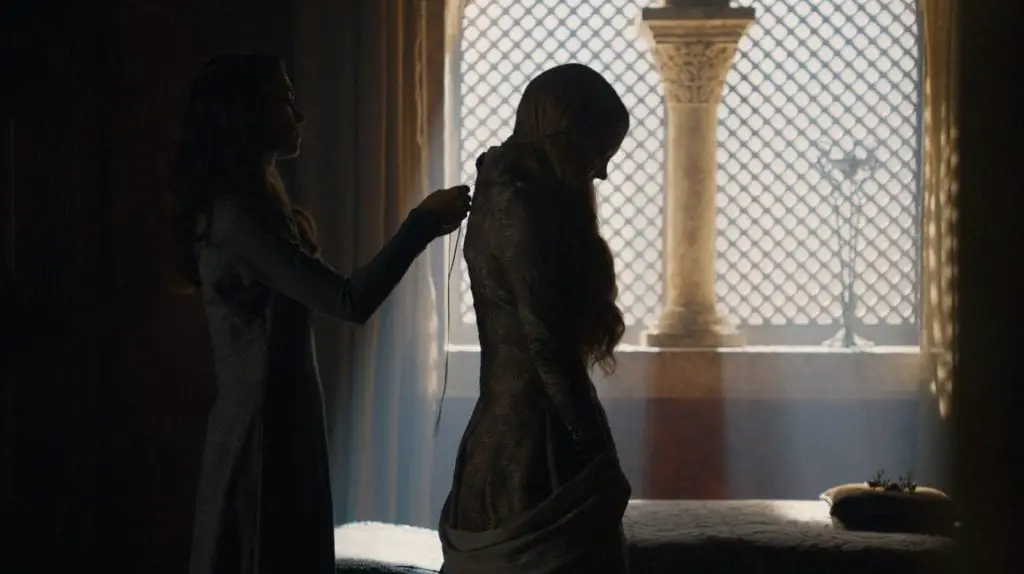
Looks nice though

We’re not saying that there isn’t a central message to GoT, because the pattern of the storytelling makes it clear that there is. It’s just one, and it’s incredibly simple: everything is bad and you should feel bad. GoT relies on a nihilism that was considered incredibly deep eighteen years ago when Fight Club came out. But at this point, and especially in this political climate where there’s nothing particularly constructive about embracing a doom-and-gloom futility, it’s hard to say it adds much to our cultural conversation.

Yes, things suck in Westeros in the books. And this is a hard setting for anyone to be having a bonny ol’ time, especially if you’re in any way marginalized. But the problem is that the narrative of GoT doesn’t provide commentary on that, or hold up a lens to the inherently hypocritical and unsustainable nature of such a world. Rather, it points to “look how dark things are” and leaves it at that, while at the same time seeming to take a perverse pleasure in punishing any viewer that cares about a person or place.

There’s multiple examples of this, enough to the point where Fandomental editor Gretchen needed to update her original piece on GoT and acedia, and we certainly don’t want to rehash everything. Rickon almost making it to Jon is a very good example of “haha you moron, did you have hope for three seconds?” But the one we find the most blatant has to be Sandor (the Hound) spending time with happy church-builders in the episode “The Broken Man”.
So innocent. So happy. We hope nothing awful happens to them.

There, Sandor met Septon Ray, who spends the entire episode telling him why he should reject violence and live a peaceful life, as well as why there’s always a second chance for those who wish to reform and push towards healing. Except no! That septon was an idealistic idiot. And he died. Along with all the unnamed Shire-folk who had done nothing but skip gaily around the maypole all episode. Sandor was proven right in his nihilistic worldview, and then went on to be such a hoot of a character, chopping people’s groins with his axe for comedic effect. We can’t make this up; there was an entire joke based around him stealing boots from a still-twitching hanged man.

This goes back to our point about 180°s, of course. The audience needs to have the rug continually tugged from under them, and it needs to be PAINFUL so we can all bask in the grand maturity of this show.

But…what does this do? Because all we’re left with is a story where it’s perfectly legitimate to root for the White Walkers. At least they don’t burn their children alive—they’ve got a great adoption program, from what we can tell.

This is furthered by the fact that there’s really no distinguishing between the actions of the good guys and the bad guys in most cases, apart from HBO’s marketing. For instance, Daenerys burns down a religious institution/entire culture’s social structure to gain followers, and she’s such a badass that we cheer for her. Cersei does the exact same thing, facing far worse odds than Daenerys had of survival we might point out, and she’s a villain. Because…she has black shoulder pads?

And while we’re at it, how is Olenna any better than Cersei, to the point where she’s able to call her “truly vile”? Remember when she murdered Joffrey, and how she’s now wanting revenge on all her enemies? Sounds kind of familiar. If this hypocrisy was called out, then we’d give credit, but it’s not!

Everything is the same on this damn show. The world sucks, and people act in violent ways to have badass moments. If not for the music and costume changes, we’d have no way of knowing how to feel about anything. Worse still, moments of empathetic connection go horribly punished (looking at you, Lady Crane), and for the most part, everyone is instantly mean to each other, especially women (looking at you, people of Braavos who ignored a bleeding girl in the middle of the streets). We get it, our protagonists—whoever we’re told they are—are up against really shitty circumstances. But this is the opposite of depth.

A wise man once said, “The battle between Good and Evil is a theme of much of fantasy. But I think the battle between Good and Evil is fought largely within the individual human heart, by the decisions that we make.” That wise man was George R.R. Martin, and the point he was making is that the important part of a narrative is not that bad things happen, but it’s that the characters have meaningful reactions to what they experience.

Really, from a Doylist perspective, there’s no point in writing a story where shitty things happen if you’re not going to do anything with that. It’s just offering up dark, grim violence for the audience to voyeuristically consume. That’s not deep; it’s pornographic.

And we’re sorry, but soaking in all this darkness…that’s a privilege. For a lot of us, we don’t need these reminders. Because:

#9 The Social Implications are Horrendous

Yup, here it is. We know that this is where we’re going to lose a lot of people. In fact, we know that there are many who would say we should keep those “social justice” arguments out of a critique. After all, the show falls apart on its own merits as an artform, and even as a coherent narrative.

We think that’s asinine. Especially for a show with such a large audience, as well as pull within the TV industry. Other writers look to GoT as the biggest success, and seek to copy its formula. Not to mention, media isn’t created or consumed in a cultural vacuum. Shows and movies create the forums in which cultural conversations happen, and to ignore the very real-world implications of those pieces of media is irresponsible.

That said, this section could be a piece in itself. In fact, Kylie wrote a series of 3 essays tackling the sexism in Season 6 alone, Zach did his best to take on ableism and homophobia with just two characters of the show as examples, we needed an entire two sections in our Meereen Season 6 retrospective to thoroughly explain the racism in both Tyrion and Daenerys’s plotlines, and we still fell short of being able to comprehensively look at the ageism, the ableism (though we tried with Hodor-gate), and utterly pervasive anti-religion aspects of the show.

We realistically can’t lay this all out here, or else no one is ever getting through this piece. If you want to take a deep dive, please click the links in the paragraph above. No, we don’t think GoT is sexist because there’s violence against women. This is something we should all be talking about more, and we praise shows that handle the topic with the sincerity and severity it deserves. GoT does not do anything close to that. Not to mention, men who happen to be victimized in this narrative are completely ignored, or treated as jokes. 

We don’t think this show is racist because people of color are marginalized in Westeros. We think it’s racist because it accidentally endorses colonialism and takes in-verse stereotypes at face-value. Ableism? PTSD is treated as an inconvenience, mental disabilities are treated as giant mysteries that need solving, and physical differences are treated as punchlines (remember when Jaime stopped a sword with his golden hand?). Homophobia is all about the straight people while Loras silently suffers, or Yara is made into a big gay stereotype (and an accidental rapist). And the brown, hypersexualized bisexual Ellaria Sand who is so violence happy that she murders an innocent straight white girl with a kiss really isn’t doing the show any favors either.

There’s always room for us to keep going. Even Season 6, which was meant to solve their “woman problem”, was full of misogynistic assumptions and molds for “empowerment.”

It’s a major problem. It’s actually about fifty problems rolled up into one, but we’re trying to be efficient here. Your entertainment doesn’t have to come with a side of racist misogyny, we promise. And we’re not saying that anyone who doesn’t notice this pattern is a horrible person either. We’re just saying to please not silence the voices of those who have noticed it, and who don’t find it acceptable. Because really, why should it be?

So…Now What?

We know that throughout this piece, we made a lot of sweeping statements, such as “nothing makes sense.” But the thing is, we arrived at each of these points after careful and thorough contemplation. Do you know that we once loved this show? And we really, really wanted to keep liking it? With GoT, however, once the wool is pulled from your eyes, there’s no putting it back. Not only is any benefit of the doubt or suspension of disbelief gone for us, but we find it almost unthinkable that it still exists for others.

We recognize that for that reason, we’re coming from a different viewpoint. To reiterate: we don’t blame anyone for liking the show, nor do we want to necessarily discourage that. What we do want to discourage, however, is anyone acting like this show is the greatest thing since The Sopranos. Call it a ‘guilty pleasure’, fine, but we fundamentally don’t understand treating it as anything else.

We’re also confused as to why many of the critics that rave about GoT are the same critics who were counting gallons per minute on Breaking Bad, or giving the rather popular Iron Fist the tearing apart it deserves. And sure, there are critical pieces on Sansa’s rape, plus almost no one has been able to muster any enthusiasm for Dorne. We don’t want to pretend that the show is completely beyond criticism. It’s just not getting the level scrutiny it deserves by any stretch of the imagination.

That’s why we’re here, and that’s why we’ll continue to be here. We hope you join us as we continue to have our fun, while taking this show to task. Because it’s not just about Sansa’s wedding night or Ellaria stabbing Doran. It’s about the foundation of utter illogic, incoherence, inconsistency, and nihilism told on the backs of marginalized individuals.

You can find enjoyment in shows like this. Heck, even we find enjoyment in commenting on Game of Thrones. We’d just never think for a second to call it “good.”


Images courtesy of HBO
Kylie

Kylie

Kylie is a Managing Editor at The Fandomentals on a mission to slay all the tropes. She has a penchant for complex familial dynamics and is easily pleased when authors include in-depth business details.
Kylie

The post Why Game of Thrones is a Bad Show 101 appeared first on The Fandomentals.
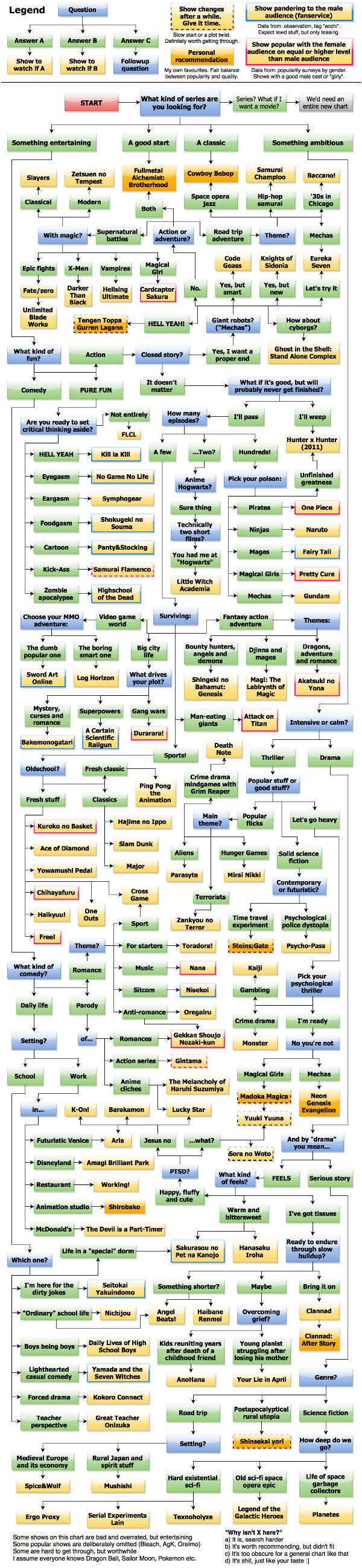
06 Jun 11:26

Siniestro Total actuará el 17 de junio en el Gaiás

El concierto será gratuito y de acceso libre

06 Jun 11:23

I’m In An Open Relationship, And You Should Be Too, So I Don’t Feel As Weird About Mine

by Eliana Kwartler

Recently, my boyfriend Lou and I decided to open up our relationship by allowing ourselves to sleep with and date other people, while staying committed to each other. A lot of people get freaked out when I tell them that Lou and I are no longer exclusive, but hear me out! Our relationship has been open for about four months, and I cannot recommend it enough. Seriously, you should try it, so you can feel the awesome benefits and also so I don’t feel as weird about this whole situation.


Listen to how great this is: as a couple in an open relationship, Lou and I continue to affirm our love for each other, while also actively looking for other people we might want to have sex with and then having sex with those people. How awesome is that?! Don’t you want to try sleeping with other people to experience pleasure in a way you never thought possible and also so that I can relax and be chill about what’s going on with me?


Opening up your relationship is so easy. Meet a guy in a bar? Bang him. Meet a guy at the gym? Bang him. Meet a guy at work? Don’t bang him because one of our rules is we can’t sleep with people we see on a regular basis.


And sure, this means I have to start looking for eligible single men again, which is something I thought I was finally done with. And I will admit that it definitely took me some time to get used to the idea of my live-in boyfriend of three years spending a couple nights a week with other women. But I am definitely on the road to being used to that idea. Like it makes me sick when I really think about it but if you do it too we could talk about it and affirm why these bad feelings are actually good for our relationship and I’d feel so much better. Just think about it, okay?


And that’s all part of the fun of open relationships! It’s an adventure that challenges you and forces you to grow in ways you maybe don’t need to. Doesn’t it all sound great? Think about how much fun it would be if you were also in an open relationship. Think about how much better I’d feel about the whole thing. We could go on this emotional journey together!


In case I haven’t communicated this to you already: I really love this setup. I’m crying right now because I love it so much! Even though it was mostly Lou’s idea and so far he’s the only one who’s really been taking advantage of it and boy has he, being in an open relationship gives me so much freedom. For example, I can act on my Robert Redford fantasy if I ever meet Robert Redford. Or sometimes, my doorman gives me a wink as I leave for work, and now, if I ever wanted to pursue that, I could and it would be totally cool. Actually, I guess that’s someone I see on a regular basis. But maybe you could sleep with your doorman, if that’s something you’re into! If that doesn’t entice you, I don’t know what will.


Just say yes to the possibilities and don’t look back. For me. Because I still really can’t wrap my head around this.


Have I convinced you yet? Please say yes.

06 Jun 11:22

Couple Shocked That Party Guests Would Rather Talk Than Play A Game

by Editor

Audrey Waithe and Paul Lerer recently invited several friends over to their home in Allston, MA, for what they thought would be an evening of festive gameplay. But to their shock and dismay, all of their guests responded with, “No thanks, we’re good.”


For some unknown reason, none of the guests could be tempted by an array of board games, multi-player video games, or pantomime charade-style games, instead opting to talk and laugh over shared stories and conversation. The party hosts were shocked.


“I just wanted everyone to have a good time,” Waithe expressed in frustration as Lerer helped her arrange a cheese plate in the kitchen. “Doesn’t anybody have an appreciation for the deep and satisfying reward from spending an entire evening playing Settlers of Catan?”


As they commiserated, their guests commented on the good weather and made plans for the coming weekends for other non-game activities like drinking, eating, and relaxing outside sans-games.


“I just don’t get it,” said Lerer, who’d pulled roughly 12 board games out of the closet and arranged them on the table in order of possible interest, where they sat untouched until the time guests left. “I mean I get it, sometimes people don’t want to commit to a full night of Risk, but to not play any games, when we have an entire stack?! These are really good games!


“I guess I just wanted to catch up on how people are doing and what they’ve been up to,” explained one attendee.


“That’s bullshit,” said Waithe when informed of the comment. “Everyone sees what everyone else is doing on social media. It’s only when we meet up in person, that we can really play games.”


Lerer nodded in agreement. “Total bullshit.”

06 Jun 11:18

A zona vella de Compostela ten 1.100 vivendas baleiras

by ALBA SUEVOS
Dez, cen, mil centros sociais! Escoitábase estes días polas ruelas de Compostela a xente plantada diante dos antidisturbios mobilizados ante o despexo do CSOA Escárnio e Maldizer na Algalia de Arriba. Pode permitirse que...
06 Jun 11:18

O PP impide investigar os contratos de Villar Mir coa Xunta para non "destruír a democracia"

by David Lombao

En Marea e BNG lamentan que os populares impidan aclarar as relacións do Goberno co empresario que agarda autorización para vender as centrais de Ferroatlántica nunha comisión que finalmente tamén apoiou o PSdeG

06 Jun 11:08

Reality Leigh Winner, 25, arrested and charged with leaking top-secret NSA docs on Russia hacks to The Intercept

by Xeni Jardin

Reality Leigh Winner, 25, has been arrested over charges she leaked top secret National Security Agency documents referenced in this Intercept story about Russia's cyberwar on U.S. voting infrastructure. She is identified as an NSA contractor.

(more…)

05 Jun 11:20

Máis de 50 entidades unidas para defender e promover o patrimonio galego

by Redacción

“A cultura é a identidade do noso pobo”. Con esta premisa, máis de cincuenta entidades culturais e patrimoniais de toda Galicia abriron o proceso...

Por Redacción

05 Jun 11:18

These Harrowing True Crime Documentaries Will Leave You Saying, ‘No Thanks I’d Rather Not’

by Rachel Wenitsky

On the heels of such sweeping successes as Making a Murderer and The Jinx, networks are racing to put out the next big true crime documentary. And while there’s no doubt that there’s nothing more thrilling than a murder mystery, sometimes you watch so many that they all blend together and all you dream about are strange and compelling murders. These harrowing must-watch true crime documentaries will leave you saying, “Hmm, no thanks; actually I’d rather not.”


The Keepers

This new seven part series from Netflix a breathtaking account of several women who begin looking into the murder of their beloved teacher while they were students in 1969. When they uncover a massive cover-up of rape and sexual assault, they take on local police as well as the Baltimore Archdiosese, which is cool so at first you’ll be like, “Ok wow, yes.” Then halfway through the second episode you’ll be saying, “Oh, no no no.” Then about ten minutes into the fourth episode, you’ll think, “You know what, this is important and actually done in a way that finally gives these victims a voice.” But then at the end of the seventh episode you’ll scream, “Nope!” Of course, by then, you will have watched the whole thing. Whoops!


Mommy Dead and Dearest

In this offering from HBO, a victim of Munchhausen’s by proxy faces trial after the murder of her mother/abuser. It’s a lot to take in and will leave you with complicated opinions and emotions. And even with its short run time, it’ll leave you feeling like, okay, but I also could have not watched this at all and been totally fine??


The Staircase

An oldy but a goody, The Staircase is a rollercoaster of a documentary about novelist Michael Peterson as he faces trial for the murder of his second wife, Kathleen. It’s a dark tale about an extremely unlikable man and even as you watch obsessively without stopping between installments, you’ll be saying, “Actually, you know what? No.”


The Witness

A troubling look at the 1964 murder of Kitty Genovese in which there were 38 witnesses who looked on and did nothing. It’s enough to make you say, “Wow people really hate women,” before ultimately adding, “I want to stop watching but I haven’t and I’m not going to!”


Law & Order: SVU

This one isn’t a true crime documentary but it is like, come on. You could be watching literally anything else. Honestly, what are you doing right now?


Well, there you have it! Five disturbing true crime dramas that you’ll keep watching until you’re like “Wow, I could have been doing literally anything else, huh.”

05 Jun 11:17

Definiendo el Kurdistán

by Gemma Roquet

Con las caídas de imperios y los procesos de descolonización se crearon fronteras sin tener en cuenta las características de sus habitantes ni del territorio. En consecuencia, en Oriente Próximo hay países artificialmente constituidos y antiguas naciones sin Estado, lo que provoca conflictos armados de forma casi permanente. El indefinido Kurdistán es un ejemplo de ello, una nación dividida en cinco Estados: Irak, Turquía, Irán, Siria y Armenia.

Los historiadores afirman que el Kurdistán existe desde el año 612 a. C.. Durante las invasiones arabomusulmanas, los kurdos acabaron convirtiéndose al islam sin perder su propia identidad, a pesar de estar divididos en distintos principados. El Imperio otomano y el persa se disputaron estos territorios, pero los kurdos acabaron alineándose con los primeros por razones religiosas y a cambio de cierta autonomía, la cual empezó a cuestionarse a principios del siglo XIX. En 1920 y después de la Primera Guerra Mundial, el Kurdistán debía convertirse mediante el tratado de Sevrest —que trazaría las nuevas fronteras en Oriente Próximo— en un Estado. Después de la caída del Imperio otomano, esta era la recompensa al pueblo kurdo por su apoyo a las potencias aliadas durante la guerra. Este tratado nunca se ratificó y en 1923 fue sustituido por el tratado de Lausana, el cual omitía el compromiso de la creación de un Estado llamado Kurdistán, lo que beneficiaba a los antiguos aliados del Reino Unido y Francia. Con este acuerdo, los kurdos fueron divididos entre Turquía, Irak, Irán, Siria y Armenia.

Distribución de la población kurda. Fuente: Reuters

Actualmente, los kurdos representan la minoría más numerosa sin un Estado propio, con quince millones de personas en Turquía, ocho millones en Irán, cinco en Irak, un millón en Siria y medio millón entre Armenia y Azerbaiyán, aunque hoy en día sería cuestionable la existencia de una identidad compartida debido a las fronteras que los dividen. Su división en fronteras que no tienen en cuenta las identidades, las persecuciones y la falta de reconocimiento o autonomía en la mayoría de países explican las discrepancias y conflictos que se han prolongado hasta la fecha en un territorio con importantes reservas de recursos naturales y que actualmente está inmerso en una guerra transfronteriza contra Dáesh, grupo que tiene la voluntad de crear un califato que ocuparía, entre otros territorios, gran parte del antiguo Kurdistán.

Este no es un artículo con previsiones ni soluciones. Consiste en un análisis de la situación kurda, los motivos que podrían explicar los acontecimientos que hace casi un siglo determinaron la división del antiguo y poco reconocido Kurdistán y el planteamiento de dos alternativas —el conflicto armado en Turquía o la atribución de autonomía en Irak— para afrontar las demandas de autodeterminación de un pueblo que ha estado perseguido durante años y que a su vez ha respondido con violencia.

La geopolítica lo explica todo

Al comparar las fronteras propuestas por la delegación kurda en la Conferencia de Paz de París de 1919 y en la conferencia de las Naciones Unidas de San Francisco de 1945 con la división prometida por las potencias aliadas en el tratado de Sevres de 1920, llama la atención la reducida extensión de esta última. En 2017 está reconocido parte de su territorio en Irak e Irán, pero representa una parte muy pequeña del territorio habitado por los kurdos y queda muy lejos de la frontera propuesta en 1919. ¿Hay alguna explicación detrás del retroceso en la concesión de autonomía para los kurdos de 1923?

Fuente: Cartografía EOM

Como de costumbre, el motivo es la geopolítica. En primer lugar, el territorio ocupado por los kurdos es rico en petróleo. En beneficio de sus amistades, Reino Unido quiso otorgarle parte del territorio a Irak, mientras que Francia hizo lo mismo con Siria. A pesar de la división, en Turquía y en Siria los kurdos siguen viviendo en el territorio de donde se extrae la práctica totalidad del petróleo nacional, mientras que en Irán representa el 20%. En el Kurdistán Iraquí, con el 74% de las extracciones totales del país, es donde el petróleo genera más disputas. La voluntad del Gobierno Iraquí era controlar las exportaciones y repartir sus beneficios entre todas las regiones del país, pero la región autónoma del Kurdistán, que vio en este reparto un perjuicio en los beneficios que podrían obtener, optó por iniciar la exportación directa de petróleo con la construcción de un oleoducto que conduce el crudo hacia el puerto turco de Ceiján y continúa hacia Europa. Esto muestra la diferencia en las relaciones del Gobierno turco con los kurdos dentro de sus fronteras y con los kurdos Iraquíes. Las consecuencias de ignorar las órdenes de Bagdad podrían haber sido graves si el Gobierno Iraquí no dependiera de las fuerzas armadas kurdas —peshmergas— para contener el avance de Dáesh, ya que esta situación incrementa el temor a las demandas de independencia de la región kurda. Así, el petróleo fue uno de los motivos para evitar la creación de un Estado que podría haber controlado este recurso y hoy sigue determinando las relaciones de poder entre el pueblo kurdo y los países en los que se divide.

Por otro lado, el antiguo Kurdistán se extiende por las cuencas de los ríos Éufrates y Tigris, fuentes altamente preciadas en países donde la escasez de agua es un riesgo. En este caso, hay que fijarse principalmente en la población kurda que habita en Anatolia (Turquía). En esta región de nueve provincias se están desplegando las infraestructuras del Proyecto para el Sureste de Anatolia (GAP por sus siglas en turco). Este es un programa para conseguir el pleno desarrollo económico y social de las provincias del sureste del país mediante el aprovechamiento del potencial hídrico de los ríos Éufrates y Tigris, lo que facilitará el riego, la generación de energía hidroeléctrica y el control de sequías e inundaciones. Si tenemos en cuenta que el Partido de los Trabajadores de Kurdistán (PKK por sus siglas en kurdo) y el pueblo kurdo en general tienen demandas de autodeterminación en Turquía y que justamente son la etnia predominante en el territorio donde el programa GAP debe desarrollarse, el conflicto está servido.

Aun así, las disputas no solo son internas, sino que los países de las cuencas bajas de los dos ríos —Siria e Irak— consideran la construcción de presas en Turquía como una amenaza a su suministro de agua y un claro perjuicio en el control de este recurso. Dáesh y otros grupos terroristas han amenazado con bombardear las infraestructuras después de ver bajar el cabal de los ríos en Siria o Irak. Por lo tanto, el agua y su control se convierten en el segundo motivo que podría explicar la decisión de dividir el Kurdistán mediante el tratado de Lausana de 1923, que hoy en día sigue siendo una de las causas de los conflictos entre el Gobierno turco y el PKK y con los Gobiernos de Irak y Siria.

Para ampliar: “GAP: un gran plan para el desarrollo sostenible”, Aysegul Kibaroglu, 2006

Teniendo en cuenta lo expuesto, se puede afirmar que, durante los años 20, el Kurdistán era un territorio con recursos naturales preciados y las potencias aliadas siguieron la estrategia del “Divide y vencerás” para evitar el control absoluto del petróleo y el agua por parte de los kurdos, en beneficio de sus aliados en Oriente Próximo. De todas formas, en el presente tiene poco sentido hablar de la propuesta fronteriza hecha por la delegación kurda en 1919, ya que la división que se impuso en 1923 es hoy una separación de facto, que se percibe en la ausencia de demandas colectivas, las cuales se han transformado en peticiones particulares para los cuatro países donde habitan los kurdos, relacionadas en muchos casos con la gestión de recursos naturales, además de reivindicaciones de carácter político y de identidad.

La autonomía como recompensa en Irak

En 1961 Mustafá Barzani, líder del Partido Democrático Kurdo (PDK), protagonizó una rebelión que duró cinco años, hasta que los kurdos consiguieron constituir una región autónoma. Este acuerdo con el Gobierno iraquí se rompió en 1975, lo que desencadenaría una guerra de más de 15 años. En 1988, cuando las guerrillas kurdas se aliaron con Irán en la guerra irano-iraquí, el ejército estatal persiguió y asesinó a miles de kurdos. El posicionamiento con Estados Unidos en la lucha contra la invasión iraquí de Kuwait en 1991 cambió el curso del pueblo kurdo en el país, pero la rivalidad entre el PDK y la Unión Patriótica del Kurdistán (UPK) no cesó. Los primeros contaban con la complicidad del régimen de Sadam Huseín y de Estados Unidos, mientras que el UPK recibió el apoyo de Irán durante la guerra civil iraquí, que se prolongó hasta el año 1997, cuando los líderes kurdos superaron sus diferencias. En 2003, la invasión estadounidense de Irak, que tenía por objetivo derrocar el régimen de Huseín que habían apoyado años atrás, dio paso a la creación de un Gobierno de unidad que respetó las exigencias de Estados Unidos y permitió la creación de una región autónoma para los kurdos con competencias lingüísticas, de enseñanza y de medios de comunicación.

La región autónoma del Kurdistán en Irak, con 6,5 millones de habitantes, es un ejemplo de progreso económico que se consiguió mediante las complicidades con potencias occidentales. Así pues, desde Bagdad no hubo alternativa a la cesión de poderes y, aunque durante los primeros años hubo intentos de retroceso, después del apoyo que están proporcionando los kurdos en la recuperación del territorio ocupado por Dáesh, no debería haber marcha atrás en la concesión de la autonomía. Es más, es posible que, como sucedió después de la guerra del Golfo, las potencias occidentales presionen para dar más poder a los kurdos, los cuales podrían ser unos aliados incondicionales poseedores de reservas petroleras. De hecho, en 2014 Francia cedió armas sofisticadas al ejército kurdo para combatir al autonombrado Estado Islámico o Daésh, lo que demostraba la legitimidad de la región autónoma a nivel internacional. Asimismo, la capital de la región autónoma del Kurdistán iraquí se está desarrollando económicamente a un ritmo mucho más rápido que el resto de país, pero también lo hacen las desigualdades y la dependencia alimentaria exterior. Erbil se ha convertido en una ciudad de inversiones extranjeras que hay que proteger.

El Kurdistán iraquí. Fuente: OilandGas

La voluntad de controlar las reservas petrolíferas de la región ha unido la UPK y el PDK, pero también hizo aumentar las discrepancias con Bagdad, que no quería ceder más control kurdo en las exportaciones. Recientemente, las relaciones entre Erbil y Bagdad han mejorado debido al apoyo fundamental que están proporcionando los peshmergas en la ‘reconquista’ de Mosul. Por todo ello, el Kurdistán iraquí podría convertirse en un feudo protegido por las potencias occidentales para garantizar la seguridad de las inversiones y la exportación de petróleo.

Para ampliar: “Poised to profit”, Vicken Cheterian en Le Monde diplomatique, 2013

Heridas abiertas en Turquía

A principios de los años 20, Atatürk, líder de la independencia turca, necesitaba el apoyo de las potencias occidentales y se comprometió a conceder autonomía a los kurdos. Cuando llegó al poder, no cumplió su promesa: prohibió su lengua, les negó su representación política e incluso negó su existencia. Este posicionamiento se ha mantenido hasta la actualidad. Esta vulneración de derechos hizo que el movimiento de liberación kurdo se fortaleciera con el PKK, fundado en 1978 por Abdullah Öcalan. En 1984, el PKK inició en la región de Anatolia, con 10.000 guerrilleros y más de 50.000 militantes activos, una guerra abierta contra el Gobierno turco por la independencia del Kurdistán. El conflicto armado supuso un total de 40.000 muertos y 3.000 pueblos kurdos destruidos hasta el año 1999, cuando Öcalan fue arrestado y los militantes del PKK depusieron las armas. En 2002 parte del PKK anunció el abandono de los ideales marxistas-leninistas con su transformación en el Congreso para la Libertad y la Democracia en Kurdistán —conocido como Kadek— y manifestó su voluntad de dejar atrás la lucha armada. Estos cambios facilitaron su legalización y la autorización por parte del Gobierno turco de la enseñanza de la lengua kurda y su uso en los medios de comunicación, además del levantamiento del estado de excepción impuesto en las provincias del sudeste.

La tregua duró tan solo dos años y en 2004 resurgió la guerrilla del PKK, que anunció un alto al fuego en 2006. Este no se respetó y los ataques continuaron hasta 2013, con la propuesta de una nueva tregua y la fundación del Partido Democrático de los Pueblos (HDP por sus siglas en turco). Aun así, las milicias kurdas siguen llevando a cabo algunos ataques en su reivindicación de mayores cesiones de poder, lo que dificulta el diálogo. Por otro lado, Erdoğan está utilizando estrategias políticas —sobre todo en el marco del referéndum para la reforma constitucional— para que disminuya el apoyo civil al PKK. Además, hay fuentes que afirman que el Gobierno de Ankara ha ignorado la creciente presencia de grupos terroristas islámicos como Dáesh o el Frente al Nusra porque luchan contra los kurdos en las fronteras cercanas a Turquía de Siria e Irak. Asimismo, el PKK se sigue identificando como grupo terrorista por la Unión Europea y los Estados Unidos, lo que significa que no puede recibir ayuda militar occidental. Así pues, en Turquía la violencia es una herramienta de presión para las guerrillas kurdas y también una forma de contención para el Gobierno turco, que está tomando medidas cuestionables y que obviamente no dan respuesta a las demandas de los más de 20 millones de kurdos que viven en su territorio.

Para ampliar: “La cuestión kurda”, Olga Miró

Avance del Partido de la Justicia y el Desarrollo (en amarillo) de Erdoğan en Turquía entre 2002 y 2011. Los demócratas (malva) ceden terreno al Partido por la Independencia de Turquía (azul), y los republicanos (rojo) quedan prácticamente relegados a las provincias del Egeo. Fuente: İstekler (Wikimedia)

La autonomía para cerrar las heridas

Con los años, la identidad compartida de los kurdos se ha ido diferenciando en cada país donde habitan. Las demandas políticas y estrategias para reivindicarlas no son las mismas en Irán que en Turquía. Observando el territorio antiguamente ocupado por el pueblo kurdo, se hace evidente que la estrategia de las potencias occidentales después de la caída del Imperio otomano fue dividir la región para tener un mayor control de los recursos. Posteriormente, la violencia fue el medio para conseguir los propios fines por parte de cada actor implicado. Además, las promesas de los Gobiernos estatales de cesión de autonomía y poder para los kurdos no comenzaron a ser una realidad hasta hace poco más de una década. ¿Es la autonomía la solución a la violencia?

Parece que en la región autónoma kurda de Irak esta estrategia está teniendo buenos resultados económicos, pero no ha sido un logro de la población iraquí y de la minoría kurda, sino que ha sido resultado de la presión de Estados Unidos. Mientras el país norteamericano tenga intereses económicos en la región, buscará mantener buenas relaciones con los kurdos y seguirá cediendo armamento a los peshmergas. Pero ¿qué sucederá cuando no necesiten a los kurdos como aliados? De hecho, no existe un apoyo a la cuestión kurda por parte de los estadounidenses, porque en Turquía el PKK sigue siendo considerado un grupo terrorista y nunca ha habido un posicionamiento claro con el pueblo kurdo, como en el caso iraquí. Así, el ejemplo de éxito económico y estabilidad en el Kurdistán iraquí está totalmente condicionado a sus relaciones con las potencias occidentales. La autonomía podría ser una forma de contentar las demandas del pueblo kurdo en Turquía, pero tiene que existir un contexto pacificador y de diálogo para que este sea sostenible e independiente de cualquier actor externo.


Fe de errores: En una primera versión de este artículo se indicaba la presencia de más kurdos de los que aparentemente hay en Turquía, Irán, Irak, Siria y Armenia. Las cifras aparecen corregidas según los datos más fiables disponibles.

05 Jun 10:55

The Untold Tale of the Comics Story That Redefined Wonder Woman

by Miss Cellania

If you want to understand Wonder Woman, you need to understand her comic book history. We've posted about her beginning as written by William Moulton Marston in 1941. But in the forty years afterward, Wonder Woman stories varied so much that her world, like many DC superhero stories, became a convoluted mess.

No character suffered from the ailments of continuity more than Wonder Woman. First introduced in 1940s tales that formed a kind of pop-culture feminist urtext, she had been depicted as a lasso-wielding warrior named Diana from an advanced society of ancient Amazons on a place called Paradise Island. She was a liberated woman before people generally spoke of such things, possessing an array of superpowers ranging from super-strength to ESP, as well as a curious fondness for bondage. She comes to the world of men to fight Nazis alongside a military love interest named Steve Trevor and best friend Etta Candy, a mouth-stuffing, plus-size woman who provided comic relief. It was as wonderful as it was eyebrow-raising.

Those early stories were simple enough, but over time, they were revised and rethought over and over to the point of near insanity. Readers learned that the WWII Diana actually lived on an alternate-reality planet called Earth-2, and that there was another Diana that they’d retroactively been reading about for the past few years. They perused multiple retellings of her origin story that rewrote not only her narrative but the nature of her powers, and that couldn’t be easily reconciled with one another. Then she lost her powers entirely and became a mortal woman who trained under a racist caricature named I Ching. Then she became an Emma Peel–esque super-spy for a while. It was enough to make your tiara spin.

That all changed in 1986, thanks to writer George Pérez. Read the story of how he redefined Wonder Woman in 1986 and made her the superhero we know today. -via Digg

05 Jun 10:55

UnREAL Season 4 Cancelled? Lifetime TV Show Pushed To 2018

by RenewCancelTV

Lifetime has pushed UnREAL Season 3 to now premiere in early 2018, rather than mid-to-late 2017 as expected: Here's to the fans…Hang in there for #season3 @UnRealLifetime AIRING in the FIRST part of 2018!! #Unrealtv2018 pic.twitter.com/KLzL7ESwqc — Constance Zimmer (@ConstanceZimmer) June 4, 2017 Many shows have been cancelled off the back of ‘scheduling delays’. Is […]

The post UnREAL Season 4 Cancelled? Lifetime TV Show Pushed To 2018 appeared first on Renew Cancel TV.

05 Jun 10:53

La plaga del vinagre de Módena

by Mònica Escudero, Mikel López Iturriaga

España ha vivido estos últimos días acontecimientos espeluznantes: curas, militares y guardias civiles han bailado la conga con el 'Que viva España' en una peregrinación a Lourdes, nuestro presidente del Gobierno ha votado en su contra en el Congreso y un par de escaños se han roto misteriosamente en plena votación de los presupuestos generales del Estado. Sin embargo, lo que ha puesto los pelos como a David Bowie en ‘Dentro del laberinto’ a algunos de los que hacemos El Comidista ha sido el modenagate de Pablo Iglesias. Es decir, la publicación de esta conversación privada entre el tuitero Comunista y el secretario general de Podemos.

Seguir leyendo.

05 Jun 10:31

Sing me a song, you're a singer

by Wolfdog
LyricsTraining is a pretty fun site to practice listening comprehension and learn songs in about a dozen different languages.

(Tip: when you're browsing videos, if you check the "Pending Review" box you'll see more choices, most of which are all still good quality.)
05 Jun 10:12

Thou Shalt Maybe Kill: 5 Bible Facts Everyone Gets Wrong

By Alex Buchanan,Guy Bigel  Published: June 04th, 2017 
05 Jun 09:38

How Arkansaw became Arkansas

by Foci for Analysis
The state of Arkansas was apparently originally known as the Territory of Arkansaw [sic]. Why would they have changed the spelling from Arkansaw to Arkansas despite the latter not resembling the name's pronunciation?
04 Jun 10:52

“Saúde, camaradas! Deica a eternidade!” 80 anos do fusilamento dos ‘Mártires da Estrada’

by X.M.P.
A Estrada rende homenaxe esta segunda feira ao alcalde, membros da corporación e veciños asasinados o 5 de xuño de 1937 na Caeira. O acto será ás 20:00 horas diante da Casa do Concello.