Shared posts

29 Jul 18:13

What Happens When You Run Away to Join ISIS, Then Want to Come Home

by Sirin Kale

"I was an extremist at one point," comments Adam Deen of counter-extremism think-tank Quilliam. "I work with a number of former extremists who now function as normal human beings. It's absolutely possible [to reintegrate into society]. If we can understand the reasons why people joined extremist organizations, we can undo those reasons."

He's commenting on reports that a German teenage girl who ran away to join ISIS now regrets her decision and is being held in detention in Iraq, unable to return home. As a former Islamic extremist, Deen knows the pressures she will face reintegrating into society.

Der Spiegel magazine reports that the 16-year-old girl is being held in Iraqi jail while receiving consular assistance. German authorities have confirmed that she is Linda Wenzel, the teenager from Pulsnitz, near Dresden, who went missing in July of 2016.

"I just want to get away from here," Wenzel told German broadcasters NDR and WDR and Sueddeutsche Zeitung newspaper. "I want to get away from the war, from the many weapons, from the noise…I just want to go home to my family."

Read more: Surprising Things I Learned as a Woman Fighting ISIS

She went on to explain that she regretted joining ISIS and wanted to be extradited to Germany. Wenzel had a gunshot wound on her left leg and another injury on her right knee that she claims was caused during a helicopter attack. The Times reports that she was found with a malnourished baby boy, though it could not confirm if the child was Wenzel's.


Watch: Inside the Weird World of an Islamic 'Feminist' Cult


We've known for some time that ISIS specifically targets women recruits for a number of reasons: to help shame men into enlisting, to reward male foreign fighters; or for sexual and domestic labor. Young, impressionable girls are particularly vulnerable to being recruited online. Since ISIS first declared its so-called caliphate in 2014, hundreds of women have joined the cause. ISIS' own women's division, the Al-Khanssa Brigade, specifically targets young women the world over by using social media. But Wenzel's age makes her a particularly tragic example of how ISIS's recruiting techniques can ensnare vulnerable young people.

The Daily Mail reports that Wenzel, who was discovered in Mosul with ISIS female supporters, became radicalized after her parents' marriage broke down. Police believe she was persuaded to fly to Syria after falling in love with an ISIS fighter she met online.

"A lot of radicalization comes from people wanting to practice their religious beliefs in what's seen as a 'pure' way," explains Deen. "This kind of religious indoctrination is very similar to what happens in a cult."

For More Stories Like This, Sign-Up for Our Newsletter

It is currently unclear if Wenzel was an active fighter herself, though earlier reports claimed that she was a sniper. She could face criminal charges in Iraq or be deported to stand trial in Germany. "If she'd engaged in any combat, she'd have to face a jury and be tried for it," Deen says. "I do believe she should be extradited back to Germany, because if we're going to have any chance of rehabilitating her, your best chance is to take her out of that environment."

"She'd need a lot of counseling," Deen adds, "and the person doing that counseling needs to be well-versed in Islamic theology, in order to deconstruct what she's been taught. The mentor would help her see that there are other, authentic and more tolerant interpretations of Islam she can follow, if she still wants to follow an Islamic faith."

For Deen, the most important factor in Wenzel's case won't be her gender, but her youth. "She's young and vulnerable, and without a doubt she'll be shunned by a lot of people should she reintegrate into society," he says. But some good could come out of her story, if she's allowed to return to normal life.

"We'd need to use her story and her rehabilitation as a lesson for other young people, so they can avoid her journey and not fall into the trappings of extremism."

29 Jul 18:12

All the Kinds of Sex Americans Are Actually Having

by Kimberly Lawson

When Fifty Shades of Grey first came out, Debby Herbenick, an applied health science professor and sex researcher at Indiana University's Kinsey Institute, says she was bombarded by the media with inquiries about the number of people who actually engage in BDSM. "I must have gotten 30 phone calls from journalists saying, 'Well, how many people really like to be tied up, how many people like to be blindfolded?' And we just had to always say we don't know," she tells Broadly. "Even though there had been studies before about those kinds of things—studies in college samples, or sex therapy populations, or online communities of people into BDSM—they don't tell you how many Americans do a certain thing or are into a certain thing."

That's part of the reason why she and her colleagues conducted the 2015 Sexual Exploration in America Study. The results of their survey, published last week, is the first of its kind to document the sheer variety of sexual behaviors that few people are willing to be open about. "For the first time," Herbenick says, "it established a base line for, this is the percentage of Americans who have engaged in spanking or public sex or threesome or what have you."

Read more: Why People Start Freaking Out When They Don't Have Sex for a While

More than 2,000 adults, 18 and older and mostly heterosexual, participated in an online survey that inquired about their relationship status, sexual orientation, and how recently they'd engaged in and how appealing they found a variety of sexual behaviors. As Herbenick points out, "not everyone does what they find appealing."

Since the team conducted a similar survey in 2009—which focused on more mainstream activities, such as vaginal sex, anal sex and condom use—researchers found that not much has changed in terms of the most commonly reported sexual activities: For men, it was solo masturbation and for women, it was vaginal intercourse. Herbenick says it was important to include these "normative behaviors" on their survey in order to calibrate their findings with similar sex surveys. "We knew with a study like this," she explains, "some people would be critical of it and would say, 'You just found a bunch of really unusual people in your surveys and Americans don't really do that much spanking or blindfolding or whatever.'"

Only 8.2 percent of men reported having never masturbated in their lifetime, compared to 21.8 percent of women.

The questionnaire touched on more than 50 sexual behaviors and among the broad array of data were a number of findings that revealed how different men and women's preferences and activities sometimes are. For example, only 8.2 percent of men reported having never masturbated in their lifetime, compared to 21.8 percent of women. Besides vaginal intercourse, giving/receiving oral sex, and partnered masturbation, the most common activity men reported doing with a partner was public sex (45 percent) while women said it was wearing lingerie. More men than women said they'd sucked/licked their partner's toes (25.6 percent vs. 10.9 percent), and more women said they'd used a vibrator (50.2 percent vs. 32.9 percent).

The study also confirmed to some degree some broad stereotypes about what we expect men and women to enjoy. There were more than 25 activities that men found more appealing than women—including all anal behaviors and group sexual experiences. Women, on the other hand, found five behavioral items more appealing than men did: among them were watching a romantic movie, getting a couple's massage, and experiencing pain as part of sex.

More men than women said they'd sucked/licked their partner's toes (25.6 percent vs. 10.9 percent), and more women said they'd used a vibrator (50.2 percent vs. 32.9 percent).

Because there was little statistical difference between men and women in more than 20 items, researchers propose at least some of these activities are not gendered. Among them: tying up your partner (8 percent of men, 9 percent of women found that very appealing), being blindfolded (11.8 percent of men vs. 11.2 percent of women), having rough sex (14 percent vs. 13 percent) and having sex where someone might hear you (12 percent vs. 10.7 percent).

Herbenick says that her hope is that these findings will be informative for people. "They show that not only do people do a lot of things, but they find many different kinds of sex appealing and interesting. For people who are interested in connecting more with a partner or exploring, maybe it'll give them some reassurance to say, "Wow, 30 percent of people are into that; I've got a pretty good chance that my husband or wife or boyfriend or girlfriend or significant other is into that, and I might bring that up."

For More Stories Like This, Sign Up for Our Newsletter

"I just think there's so much value in seeing that, as many of us have known forever, human sexual expression is just incredibly varied," she continues. "To me that's always been the beauty of humanity. To other people, I think that might be scary at times, but I don't think it has to be. You can be a perfectly normal, healthy functioning person and have a lot of different interests and openness to different types of expression."

29 Jul 18:04

Hari Kondabolu’s New Documentary Tackles the Harmful Representation of The Simpsons’ Apu

by Charline Jao

When there’s little representation of people like you in the media, the few characters that do appear become all the more essential for recognizing where you fit into the world. When people have very little contact with a certain group of people, most of their conceptions become based on the media they consume. For many Indian-Americans or Indians in the United States, that character was Apu Nahasapeemapetilon of the Simpsons.

In a documentary for TruTV called The Problem With Apu, comedian Hari Kondabolu talks about the impact the Simpsons character had on him and other actors and comedians in the industry. For Kal Penn, it made the Simpsons completely unwatchable. Also making appearances are Aparna Nancherla, Hasan Minaj, Utkarsh Ambudkar, Aasif Mandvi, Maulik Pancholy, and Sakina Jaffrey, all of whom talk frankly about being compared to Apu or the impact the Apu-accent has had on their opportunities. The comedian himself has spoken before about receiving auditions for stereotypes, and you can draw a clear line from the role of a bodega-owning “East-Indian” with an accent and a “soul-ful, philosophical air” to Apu.

The film also examines the fact the Apu is voiced by white actor Harry Shearer Hank Azaria, an act that Kondabolu once referred to as “a white guy doing and impression of a white guy making fun of my father.” Does that make him a minstrel? Kondabolu consults Whoopi Goldberg. We also get a glimpse of an interview with producer Dana Gould, who asserts that “there are accents, by their nature to white Americans that sound funny. Period.”

“Now I realize a some of you think I’m some annoying, PC, social justice warrior that’s very sensitive,” the comedian says, anticipating the comment section, “and you’re probably thinking ‘C’mon snowflake let it go!’ Well, I have let it go … for 28 years.”

Are you looking forward to The Problem With Apu?

(via BoingBoing, image: screencap)

Want more stories like this? Become a subscriber and support the site!

The Mary Sue has a strict comment policy that forbids, but is not limited to, personal insults toward anyone, hate speech, and trolling.—

29 Jul 17:37

Game of Thrones season 7: HBO has revealed the cure for greyscale. It’s hilariously simple.

by Caroline Framke

Jorah Mormont’s potential savior has arrived in the form of an easy-to-make ointment.

Sam starting the process of treatment for Ser Jorah Mormont’s greyscale in “Stormborn” made for one of the more outright disgusting segments of Game of Thrones in some time (and yes, I say that even while remembering the season premiere’s chamber pot montage).

The sight (and sound) of Sam peeling Jorah’s diseased skin clean off his chest while his patient muffled pained screams was viscerally gross, especially once the scene transitioned with a seamless match cut to a particularly cheeky shot of someone digging into a gushing chicken pot pie. But it was also illuminating as to how one of the most mysterious ailments on Game of Thrones might be cured — and honestly, the answer is a little underwhelming.

Per a study Sam swiped from the maesters’ library at the Citadel, the spread of greyscale can be stopped by peeling off the scaled skin and applying a special salve to the raw flesh of the affected areas. Sure, the man who wrote the study apparently died of greyscale while performing the procedure — thus leading to its ban — but come on. That’s it?

This solution, to be blunt, feels like a bit of a cop-out after Game of Thrones has spent so much time telling us that this contagious disease is essentially an automatic death sentence.

And according to the Game of Thrones production design team — which has released pictures of the book Sam is consulting, along with some of the letters seen throughout “Stormborn” — the salve to be applied post-scale removal is made of, well, some pretty basic stuff.

After seasons of hearing about how devastating greyscale is and how there’s no consistently proven way for someone to save themselves once they’ve contracted this ultimately dangerous disease, Jorah Mormont is about to get treatment through a mixture of skin surgery plus pine resin, elder twig bark, beeswax, and olive oil.

 HBO
This cure has eluded Westeros scientists for centures, apparently!

If this most mysterious process weren’t the cure for greyscale, it would also make a pretty delightful candle.

29 Jul 17:20

I Went to an Armpit Sniffing Class

by Jennifer Swann

This article originally appeared in VICE US

Susan Barbour moves around the room and passes out a stack of Ziploc bags, each containing a worn cotton T-shirt. "Gingerly take it out and find the armpit," she tells her students, who have each supplied a shirt they've slept in for a week straight, sans deodorant, during a recent LA heat wave. Barbour instructs them to lift the garments out of the bags, raise them to their nostrils, and take a big whiff. "Remember, the goal is empowerment," she says before unzipping her own plastic bag, lifting out its contents, and burying her head within.

It's a Thursday night at the Institute for Art and Olfaction, a Los Angeles perfumery school and laboratory devoted to exploring scents. More than a dozen participants have paid to have their armpit odors analyzed by a group of strangers in the hope that they might learn something new about themselves and their desires.

Barbour, an artist in residence who is working on a body odor–related exhibit to be displayed next summer at the Museum of Sex in New York City, tells everyone to spend two minutes writing down what they smell. To help with this exercise, she's scrawled several words on a chalkboard to describe an armpit's potential odor. Among them: salty, sweet, fruity, balsamic, earthy, funky, musky, and cheesy. One participant, describing another's scent as mushroomy, confesses to wanting to wear their sweat as a perfume. Barbour says at one point that a T-shirt reminds her of her childhood and the smell of human tears. The Institute for Art and Olfaction's executive director, Saskia Wilson-Brown, says another person's armpit smells "ripe, juicy, nutty, almost like toasted coffee."

Barbour handing out T-shirts. Photo by Saskia Wilson-Brown

Articulating the scent of other people's underarms isn't something most of us have ever given much thought to. But Barbour, a trained sommelier who now studies armpits with the same level of discernment and thoughtfulness as she does fine wine, wants to change that. "There's such a taboo in talking about how people smell," she says. "Saying someone smells is one of the worst insults."

Wilson-Brown founded the Institute for Art and Olfaction in 2012 as a means of legitimizing and supporting radical experiments in smell, a sense that often goes neglected in contemporary art. The nonprofit has since hosted everything from tobacco-smelling workshops and scented film screenings to perfumery courses and interactive synesthesia events. Barbour's workshop seeks to contribute to the fairly minuscule body of research about body odor, pheromones, and their potential effects on human attraction. She hopes it's also just the beginning of what she's dubbed a "probiotic renaissance," or a new movement embracing earthy, bacteria-heavy smells and tastes that were once considered repulsive, from sour beers and high-acid wines to fermented foods and stinky cheeses.

"I think that underlying all that is the desire to smell our bodies and be more present with human smells," she says. "We find it erotic, we find it comforting, we find it validating and interesting. And it's natural in an exciting way."

Barbour could be on to something: US sales of mass-produced, non-designer fragrances dropped by half between 2000 and 2015, according to a report from market researcher Euromonitor International.

Humans have been using chemicals to cover up their natural scents and make themselves smell better, presumably to potential mates, for thousands of years. The oldest known perfumes in the world date back to 1850 BC, when a massive earthquake destroyed a perfume factory on the Mediterranean in Cyprus. The perfume industry exploded in popularity in 17th-century France, thanks in part to a royal family that used it so lavishly that its royal court was nicknamed the perfumed court. The first deodorant was trademarked about 200 years later in America, planting the seeds for what is now an $18 billion industry.


Watch: Making love potions in California


Natural armpits experienced something of a revival in the 1970s, when the British scientist Alex Comfort advised women to use their body odor—or "personal perfume," as he called it—as a weapon for seduction in his book The Joy of Sex. Deodorant should be "banned absolutely," he wrote, as well as shaving the armpits, which he considered an act of "ignorant vandalism." Some two decades later, the California fragrance company Erox capitalized on this idea when it patented human molecules as pheromones—or chemicals they claimed were released naturally to attract a sexual partner—despite only debatable scientific evidence that they exist in humans. "The research has unfortunately mostly been driven down this path that seems somewhat in bed with the commercial pheromone industry," says Barbour.

A string of academic studies in the 1990s and 2000s reinforced the idea that smell does play a part in sexual attraction, but it turns out our preferences are mostly a genetic thing. Sweaty T-shirt experiments conducted in medical labs eventually gave way to the pheromone party craze of the 2000s, in which singles pick dates based solely on smelling each other's worn shirts. But the way Barbour sees it, pheromone parties are lacking "the most interesting part of the whole experiment, which is, what goes through people's minds when they smell and do we have a vocabulary and associations to adequately describe what people smell like?" she says. "That to me is the interesting thing that nobody was talking about. And that's the taboo."

This isn't the first of Barbour's projects to explore taboos associated with the body. She's also made a series of figure drawings using her own hair, which she photographs on the tiled walls of her shower. "It's these bodily traits that normally disgust us or make us feel gross," she says. "But with a few finger strokes or some extra time in the shower, I turn it into something that reminds us that humans are beautiful." Her fascination with armpits started about five years ago when she went looking for a new perfume and realized "the language we have to describe smell is so impoverished that we have to reach for these poetic devices" on fragrance bottles and labels, which tend to traffic in sexual euphemisms and flowery metaphors.

But during her workshop, participants described one another's armpits in great detail, articulating floral notes and musky tones. One person even said they felt that they could sense whether the owner of each T-shirt had long or short hair, based on their smell alone. And a majority of participants, before knowing which T-shirts belonged to whom, described two particular ones as smelling identical. They later learned that one belonged to Barbour and the other to her boyfriend. "Saskia referred to it as a G-rated orgy, because normally you wouldn't smell that closely or that intensely unless you're actually sleeping next to someone," says Barbour. "So it did create the effect of sleeping next to 20 people in the crook of their arms."

The response she found most interesting, though, was that when one of her friends unknowingly smelled her T-shirt, she said it reminded her of amusement parks and home-cooked dinner—two things they'd previously done together early on in their friendship.

"It felt like a profound experience of connecting, and not in any sort of sexual way, which other people who read about the event might have been expecting," says Barbour. "But it was really about recognizing the scents of a human and recognizing your smell in everyone else's, even when they were different, and finding something to like in everyone's smell."

Follow Jennifer Swann on Twitter.

29 Jul 17:18

Matt Groening Is Creating a Netflix Show About a Drunk Princess

by VICE Staff

An animated comedy series Matt Groening has been working on for more than a year finally got the greenlight from Netflix, and is slated to hit the small screen by 2018, Deadline Hollywood reports.

Disenchantment chronicles the strange travels of a drunk princess named Bean (voiced by Broad City's Abbi Jacobson) and her ragtag crew, including a "feisty elf companion" named Elfo (Nat Faxon) and her "personal demon" Luci (voiced by Eric Andre).

As they meander through a decrepit magical kingdom called "Dreamland," the trio runs into "ogres, sprites, harpies, imps, trolls, walruses, and lots of human fools," according to the Netflix press release. The whole thing sounds a little like Adventure Time meets BoJack Horseman, set somewhere similar to Hello from the Magic Tavern's "Foon."

"Ultimately, Disenchantment will be about life and death, love and sex, and how to keep laughing in a world full of suffering and idiots, despite what the elders and wizards and other jerks tell you," the Simpsons creator said in the press release.

Rough Draft Studios, the same folks who did Futurama, are animating the series, and Groening and Simpsons writer Josh Weinstein will serve as executive producers. The first ten episodes of the 20 Netflix has ordered are set to drop sometime in 2018.

"Matt Groening's brilliant work has resonated with generations around the world and we couldn't be happier to work with him on Disenchantment," Cindy Holland, Netflix's vice president of original content, said in the release. "The series will bear his trademark animation style and biting wit, and we think it's a perfect fit for our many Netflix animation fans."

29 Jul 17:15

¿Es legal hacer fotos y vídeos en playas, conciertos o sitios públicos?

by Sabemos

Caminas por la orilla del mar y te encuentras a alguien interesante, sacas tu ‘smartphone’ y tomas una fotografía sin que se dé cuenta. ¿Es ilegal lo que has hecho? ¿Puedes además publicarlo en redes sociales? Si bien es cierto que la Constitución ampara el derecho a la información y a la libertad de expresión, […]

La entrada ¿Es legal hacer fotos y vídeos en playas, conciertos o sitios públicos? aparece primero en Sabemos Digital.

29 Jul 14:24

La masonería comienza su lavado de imagen en Canarias

by LA GACETA

La masonería quiere crecer en España y empiezan una campaña para atraerse a la opinión pública. El primer paso la han dado recientemente en Canarias.

Juan E. Pflüger / La Gaceta- El pasado 23 de junio, la Gran Logia de España, coordinada con su subalterna en la provincia de Canarias, celebró una marcha masónica en Las Palmas de Gran Canarias. El objetivo, según ellos, era el de rendir homenaje a los cuatro alcaldes de la localidad que habían pertenecido a esa obediencia masónica.

La realidad es otra: los masones en España no logran desarrollarse a niveles de otros países europeos y pretenden salir del armario para intentar captar adeptos. Por eso eligieron la comunidad autónoma donde más miembros tienen: Canarias.

En España existen dos logias masónicas reconocidas: la Gran Logia de España-Gran Oriente Español, dependiente de la masonería francesa; y la Gran Logia Simbólica Española. En total no llegan a los 4.000 miembros.

La Gran Logia de España está más extendida y cuenta con algo más de 3.000 miembros de los que casi 500 están en las Islas Canarias. Mantiene 180 logias -centros de reunión- locales y tiene un Supremo Consejo que regula toda la actividad de los miembros. Al frente del Gran Oriente se encuentra, con el título de Gran Maestre, el abogado valenciano Óscar de Alfonso. Uno de los principales impulsores de esta salida del armario para intentar expandirse socialmente.

La Gran Logia Simbólica es mucho más reducida, aunque a diferencia de la anterior admite mujeres entre sus miembros. A penas sobrepasa los 300 iniciados en el total de España. También tiene su propio Supremo Consejo y su Gran Maestre, desde 2012, es la aragonesa Nieves Bayo Gallego, que ha hecho del laicismo su principal bandera dentro de la organización.

El número de masones en España es muy inferior al de otros países. Francia e Inglaterra tienen cerca de medio millón de inscritos en sus logias, en Estados Unidos los masones se cuentan por millones y en Alemania se acercan a los 300.000. Gracias a la legislación impuesta durante el franquismo, que prohibía el desarrollo de estos grupos secretos, en nuestro país siguen siendo muy minoritarios. Ahora, pretenden darse a conocer y expandirse en un entorno en el que muchos de sus planteamientos ya se imponen socialmente.

Entre estos objetivos se encuentran aquellos que pretenden la implantación de la ideología de género, el ataque a la familia y el globalismo. La ingeniería social que hoy en día se implanta en España con medidas favorables a colectivos LGTB, la inmigración descontrolada o los movimientos de ruptura de España, son los éxitos de sus postulados que les dan alas para intentar crecer.

Los éxitos de la masonería se han dejado sentir incluso dentro de las jerarquías eclesiásticas. Recientemente el Cardenal Ravasi, responsable del Pontificio Consejo para la Cultura, se dirige a los “queridos hermanos masones” pidiéndoles superar años de enfrentamiento y solicitando que se creen “Puentes y no muros”.

Una forma de actuar, por parte de un responsable de la Iglesia Católica, que choca con la excomunión que pesa sobre los miembros de la masonería y que les hace incompatibles -en tanto que sigan con sus obediencias masónicas- con el cristianismo. Es más, desde principios del siglo XX todos los ataques a la religión Católica han venido inspirados por la masonería. Así ocurrió en el México postrevolucionario de Plutarco Elías Calles o en la España de la Segunda República.

Como asegura Alberto Bárcena, uno de los mayores especialistas españoles en el estudio de la masonería, “Están en un proceso de normalización, de ‘salir del armario’ como ellos mismos dicen. Aspiran a blindar a la masonería, blindar la honorabilidad de la masonería. Han acuñado ya la palabra ‘masófobo’. Cuidado, que cuando acuñan la palabra tipifican la conducta. ‘Masófobo’ es el que denuncia las políticas de la masonería. Y ‘masófobo’ es el equivalente al ‘homófobo’, que esa palabra hace poco no existía siquiera y ahora, no solo existe, sino que puedes llevarlo a la ley, se tipifica como una conducta punible”.

La entrada La masonería comienza su lavado de imagen en Canarias aparece primero en Infovaticana.

29 Jul 14:11

How to Wrap Your Pussy in Foil and Put It In The Fridge Since No One’s Eating It

by Jasmine Pierce

So you brought your pussy to a party to share and no one wants to eat it: What do you do? You don’t want it to go to waste! Here is the best way to wrap your pussy in foil and put it in the fridge since apparently, no one wants seconds or even firsts of this dish.


Whip Out the Foil

Once you’re at a party long enough to be certain that no one there is interested in eating your pussy, it’s time to locate the tin foil. Pull it out and subtly remark, “I GUESS I’M JUST GONNA PUT THIS AWAY IF NOBODY WANTS ANY.” This move is passive aggressive, bordering on regular aggressive, but if no one steps forward who is even willing to try it, then I guess you know the truth. Not one person here is going to eat your pussy. But you at least want to keep it fresh in case someone changes their mind.


Wrap It Up Tightly

If literally no one is going to munch your puss despite how much effort you put in to make it delicious and appealing, that’s fine – but you can’t leave it out at room temperature, either. You don’t want it to dry out while it’s waiting to be eaten, so make sure you wrap the foil tightly and pinch the edges very carefully to avoid pinching the pussy itself (OUCH). Once it’s tightly sealed to the point where no air can touch it, announce one more time that your pussy will soon no longer be available for chowing down on. If you still have no takers, don’t feel bad. It’s probably not personal.


Make Sure There’s Enough Space in the Fridge

Every pussy is a different size and shape. So just make sure that once it’s ready for storage, the fridge can actually fit your pussy in it. Move some things around to make space for it if necessary. Hurry up, you want to get it in there before it loses its form and no one wants it ever again. Once it’s in there, you’re free to rejoin the party and gently remind people, “My pussy is actually still here in case you’d like to try it.” Hopefully that works, but if not, there’s still another option!


Consider the Freezer

If it seems like no one is even going to consider eating it for like a very long time, consider putting it in the freezer. You don’t want to give up hope, but you also want your pussy to last as long as possible in case one person finally says, “You know what I’m really craving right now? Your pussy!” Just remember, your pussy is NOT microwaveable.


So next time you’re at a party and no one seems to be interested in eating your delicious pussy, go ahead and wrap it up for another day. Also, maybe take your pussy to a party where it is appreciated because it is definitely delicious and people would love it if they just tried it!

29 Jul 13:54

Piero Umiliani

by Melt
Piero Umiliani (17 July 1926 – 14 February 2001) was an Italian composer of film scores. Although not as widely regarded as, for example, Ennio Morricone or Riz Ortolani, he helped form the style of the typical European 1960's and 70's jazz influenced film soundtrack.

In 1969 Umiliani's position in the pop cultural canon was firmly established, when his track 'Mah nà Mah nà' became the theme of The Muppets' Show, created by Jim Henson. Not to be contented by such popularity, Umiliani continued to be a voracious composer of experimental music. By the end of his career, Umiliani had written more than 150 soundtracks, not taking into consideration the music composed for documentaries, theatre and television. As an avid collector of musical instruments from all over the world, in 1970 he became one of the first musicians in Italy to experiment with the Moog synthesiser. His experimentations did not find the support of Italian producers of the time however, and so Umiliani created his own label to produce records (under the pseudonyms Moggi and Zalla) such as “Tra Scienza e Fantascienza”, “Synthi Time”, “L’Uomo e la Città” and “Omaggio a Einstein”.

Umiliani also paid homage to the German physicist, Einstein, where he began subverting "the rules of space and time in music (to create) an album with 23 compositions, all of them less than two minutes long, instead of following the traditional 7-10 tracks usually present in an LP. This is an original and experimental album, with a peculiar and epic catchiness, tied to Piero Umiliani's masterful use of synthesizers and great experience in the field of composing soundtracks." (Forced Exposure)


Moggi - La Volta Stellare


Moggi - Tra Scienza e Fantascienza


Synthi Boogie


Paesaggi


Psichedelica


Beer, Vermouth E Gin


IL Dio Sotto Pelle


Nostalgia


Moon Skin (La Ragazza dalla Pelle di Luna)


Seyga Seyga - Moon Skin (La Ragazza dalla Pelle di Luna)


By Ventral is Golden
29 Jul 13:49

Billy Bragg on Roots, Radicals, and Rockers

by MonkeyToes
What do you get when a bunch of British school boys in the mid-'50s play Lead Belly's repertoire... on acoustic guitars? Skiffle. And Billy Bragg wants you to get to know the music that brought the guitar to post-war British pop. (YT video of his recent talk at the Library of Congress, with transcript.)

So just who is this Bragg fellow? I think of him as the voice of "New England" and the Woody Guthrie-penned "Way Over Yonder in the Minor Key," but he is also the author of the newly-released Roots, Radicals and Rockers: How Skiffle Changed the World.

He appeared on Fresh Air (transcript, which does not fully capture the musical interludes) to talk about the work, and about skiffle's origins and influence:
[It was] the means by which British pop went from being a jazz-influenced confection for adults, in which young people were offered novelty songs to a guitar-led music for teenagers. It's the introduction of the guitar into British pop culture...Before skiffle, the only place you'd really hear a guitar being played on the radio in the U.K. would be if it was a singing cowboy. Sometimes you might hear an old blues guy playing up Big Bill Broonzy or a calypsonian. It was unheard of for a British artist to play guitar. And then this guy Lonnie Donegan comes along and has a hit with "Rock Island Line" - again, a Lead Belly song. And that kind of kicks the whole thing off.
Soundtrack suggestion: "Rock Island Line," performed by Lonnie Donegan.

Enjoy!
29 Jul 09:05

La marihuana: un ingrediente que se abre camino en las cocinas de todo el mundo

by Mary Soco

La marihuana: un ingrediente que se abre camino en las cocinas de todo el mundo

Siendo uno de los psicotrópicos más usados en el mundo, la marihuana está rodeada de un centenar de mitos y una discrepancia en lo referente a legalidad en diferentes países. En México, en meses recientes fue autorizado su uso medicinal y científico, retirándolo de la categoría de vegetal prohibido para así permitir su siembra, cultivo, cosecha, suministro y empleo con dicha finalidad, mientras que en otros países, como Canadá, su aprovechamiento con fines recreacionales está aprobado.

Esto último es lo que ha permitido que la marihuana haya comenzando a abrirse camino en las cocinas de todo el mundo, en una tendencia que invita a degustar sus propiedades en los platillos y a beneficiarse de sus nutrientes como parte de una dieta saludable.

Recientemente hemos visto como el mundo de la gastronomía se está inclinando a la mejora de todas las categorías de comida, yendo desde los aperitivos, hasta las bebidas, los platos fuertes y los postres. En años pasados la inclinación ha sido hacia agregar proteínas a todos lo que ingerimos, así como té matcha, hierbas orgánicas y ahora la marihuana comestible.

alcachofas con Marihuana

Así, alrededor del mundo es posible encontrar platillos clásicos enriquecidos con esta mezcla de flores y hojas del cáñamo índico, como son el caldo de camarón, los huevos a la diabla, las barras energéticas, el chocolate, aceites vegetales, macarrones con queso, café y brownies.

Pero además de esto, actualmente hay restaurantes de alta cocina que han llevado el uso de la marihuana a otro nivel culinario. Un ejemplo de ello es el restaurante Sinsemil.la ubicado en la ciudad de Nueva York, donde destacan platillos elaborados con ingredientes de temporada cuyos sabores se equilibran para dar la bienvenida a variedades de marihuana seleccionadas por su calidad orgánica y que son capaces de enriquecer con su sabor y sus propiedades psicotrópicas la experiencia culinaria.

Todo esto tiene como origen el hecho de que la marihuana frecuentemente ha sido utilizada como una alternativa saludable a los fármacos con altos efectos secundarios, como también a su uso en tratamientos holísticos y es precisamente esto último, lo que está aprovechando la industria para hacer crecer el mercado haciendo ver que no solo es efectivo médicamente, sino que también puede considerarse como un ingrediente saludable.

De allí que actualmente haya muchas empresas que intentan cambiar el panorama de los alimentos que llevan marihuana en su preparación, tales como gomitas, brownies y chocolates. Éstas compañías están creando productos veganos, sin azúcar y sin gluten para consumo humano, así como premios para mascotas con el objetivo de ayudarles a reducir la ansiedad y el estrés, beneficiándolos nutricionalmente a la vez.

Entre las tendencias más importantes para incluir esta hierba en los alimentos destaca el aceite de coco infusionado con marihuana, siendo éste uno de los métodos más efectivos y fáciles de incluir en los alimentos de los pacientes que lo necesitan. La otra tendencia es a través de la jugoterapia, que ha demostrado ser extremadamente benéfico cuando se usan las hojas crudas y frescas, pues crean jugos con alta densidad nutricional sin ningún efecto psicoactivo.

Sin lugar a dudas, conforme vayan cambiando las opiniones sobre el uso medicinal y recreativo de la marihuana, iremos viendo a mayor escala los beneficios que esta planta puede otorgarnos, pues es un ingrediente cargado de vitaminas y ácidos grasos beneficiosos para el sistema inmunológico, encargado de ayudar al cuerpo a recuperarse de diversas enfermedades.

Más información | The Cannabis Kitchen Cookbook Imágenes | Pixabay, Sinsemil.la

-
La noticia La marihuana: un ingrediente que se abre camino en las cocinas de todo el mundo fue publicada originalmente en Directo al Paladar México por Mary Soco .

29 Jul 08:29

Men Are Surprisingly Touchy-Feely When It Comes to Sex

by Justin Lehmiller

It's widely believed that men are pretty much always in the mood for sex. Men's desire to get it on isn't seen as having much—if anything—to do with their relationships or life circumstances. Unlike women, it's assumed that guys are just constantly horny.

However, a new study published in the Journal of Sex Research suggests that this stereotype about male sexuality is completely wrong and that men's sexual desire is much more complex than they've been given credit for. In fact, it actually has a lot to do with the emotional connection men have with their partners, which tells us that men and women are much more similar than they are different when it comes to the factors that predict desire.

In this study, researchers in Canada and the UK interviewed 30 heterosexual men who were involved in long-term romantic relationships. All of these guys were between the ages of 30 and 65. The researchers chose men with these characteristics instead of college-age men because they wanted to look at how desire is experienced when guys reach the life stage where they have the full responsibilities of adulthood at their feet and tend to be a bit more focused on their relationships.

During the interview, these men were asked several questions about their sexual desire, including the factors that both elicit and inhibit it. The researchers analyzed the responses and looked for themes. What they found was that, rather than reporting constant, high levels of desire, men said their desire for sex was quite variable and actually had a lot to do with how they felt about their relationship and the interactions they had with their partners. Here are a few of the major themes that emerged:


More From VICE: From Sex Worker to Seamstress


They Want to Feel Wanted
The vast majority of men said that feeling desired by their partner was the single biggest factor affecting their own interest in sex. They also said that the ultimate way their partner can show this desire is by initiating sexual activity. In other words, it seems that men would prefer their partners to take the lead more often.

They Want Novelty and Variety
Most men also said that their desire for sex was higher when they engaged in more exciting and spontaneous sexual activities with their partner. They particularly like sex that just "happens," as opposed to sex that is very planned and routine—like when a couple falls into the habit of only having sex on Friday night, and only in the missionary position.

They Want an Emotional Connection
Most men described how intimate communication was essential to their sexual desire. They liked intimate conversation not just because it often led to sex, but also because it had the ability to make the sex they had more meaningful and memorable. Conversely, when guys said they lacked an emotional connection with their partner, such as when they were in the midst of an argument, they lost desire. In other words, many guys seem to need a certain amount of emotional connection in order to enjoy a physical connection with a long-term partner.

They're Afraid of Being Rejected
Given how important men said it was to feel wanted, it is not surprising that feeling rejected was the biggest factor that destroyed their desire. And when rejection was experienced over and over again, it didn't just inhibit sexual desire, it also hurt men's confidence and self-esteem because they started to wonder what they were doing wrong or what was wrong with them.

Of course, in addition to the above factors, men said that their physical health mattered quite a bit, too. Specifically, if they were feeling under the weather or developed some sort of physical limitation, that tended to decrease their interest in sex.

Though this research was only based on the experiences of a small group of heterosexual men, the implications are enormous. For one thing, they tell us that, contrary to popular belief, guys in long-term relationships aren't necessarily perpetually horny. Their sexual desire is very much circumstantial and affected not just by their physical health, but by the health of their relationship.

These results also challenge a lot of common stereotypes about both men's and women's sexuality. For example, while it's widely assumed that women have a greater need to feel wanted than men, this study suggests that the need to feel desired by another person is a fundamentally human experience—not something specific to members of one gender group. Likewise, though it's often presumed that sex and emotion are completely separate for men, they actually seem to be intimately intertwined for most guys in LTRs.

Finally, this study also challenges the idea that sexual desire is something that men and women experience in fundamentally different ways. It's just not accurate to say that men's sexual desire is "simple," whereas women's is "complex."

The truth of the matter is that, regardless of gender, sexual desire should be viewed as an interaction of both biological (our hormones and health status) and psychosocial factors (how we feel about ourselves and our relationships). In this sense, we're all complex sexual beings.

Justin Lehmiller is the director of the social psychology program at Ball State University, a faculty affiliate of The Kinsey Institute, and author of the blog Sex and Psychology. Follow him on Twitter @JustinLehmiller.

Read This Next: A Single Fuck Makes People Smug for Two Whole Days

29 Jul 08:22

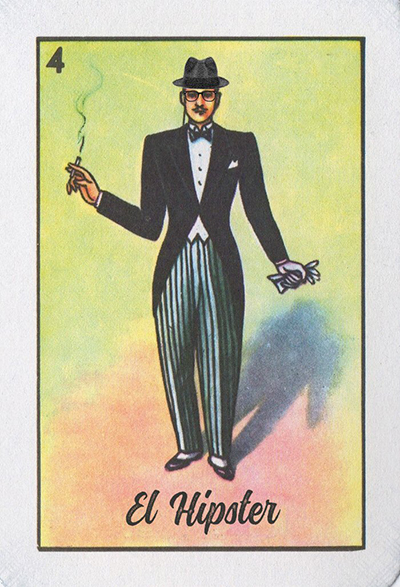
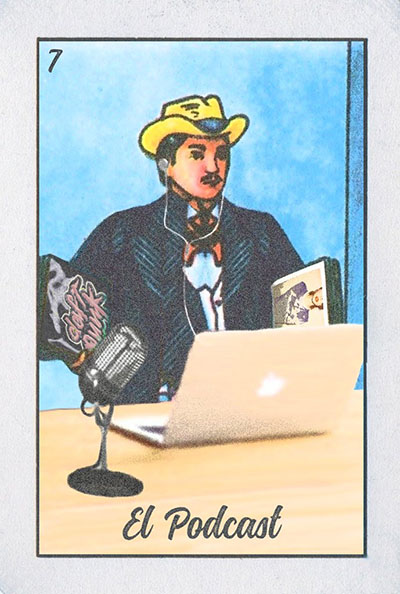
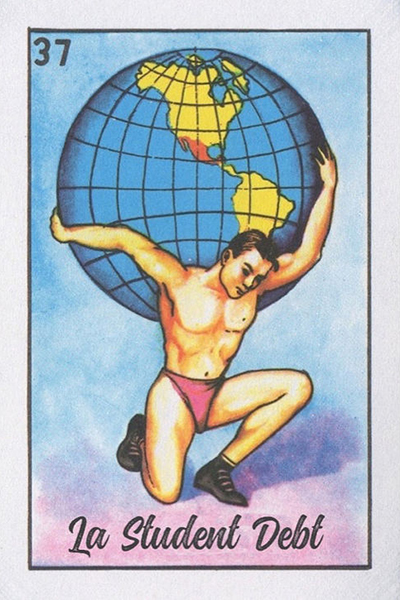
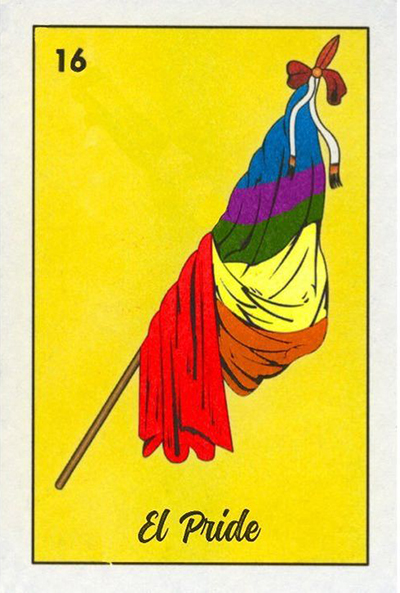
La lotería millenial

by Jessica Bermúdez

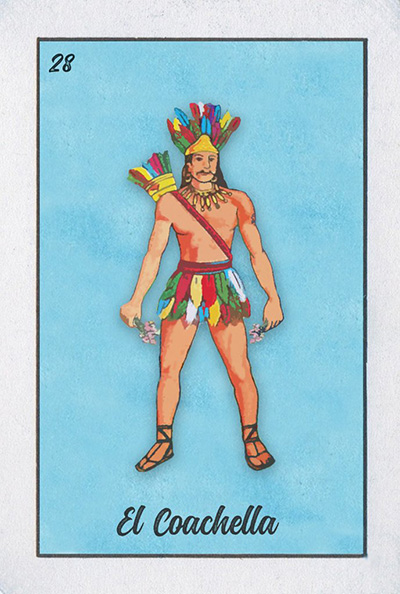
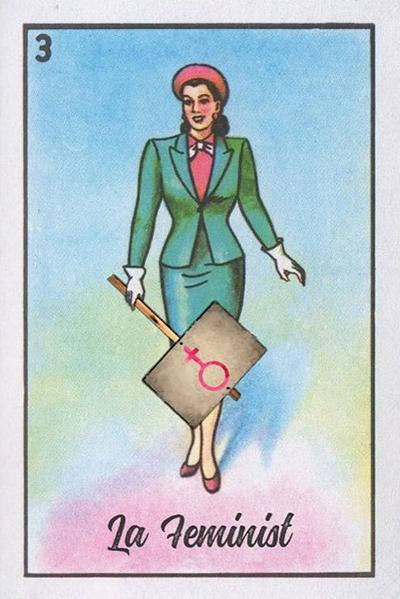
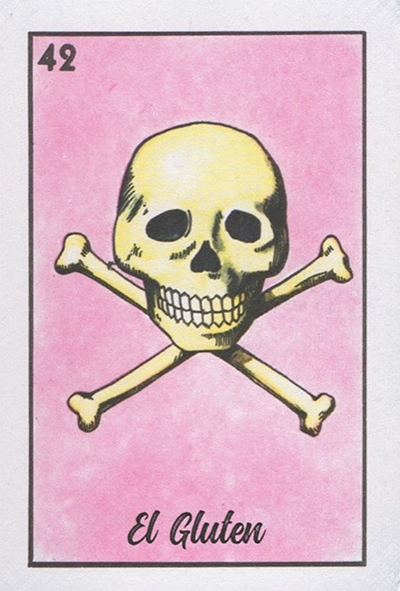
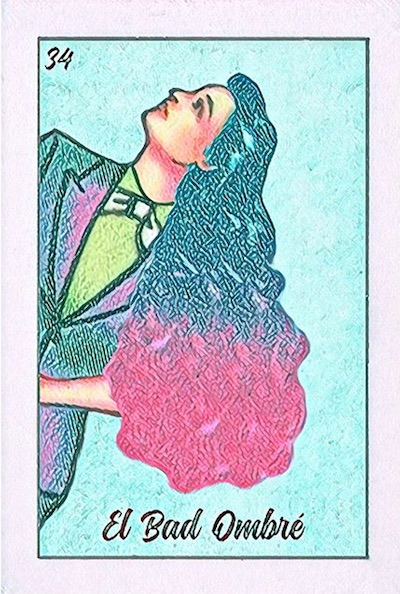
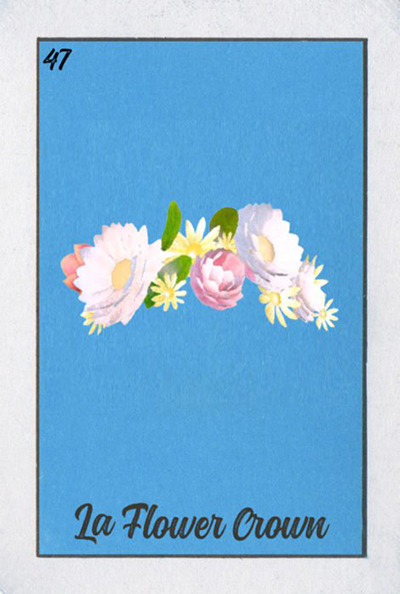
La “Lotería” mexicana es un juego de cartas similar a nuestro bingo pero con imágenes en lugar de números. Sus ilustraciones generan un sentimiento de nostalgia en toda la comunidad latina tal como el que las copas y bastos de Fourier producen a quienes nos hemos pasado las tardes de piscina con una baraja española.

Pero los tiempos cambian y las referencias del pasado se van quedando obsoletas. Por eso, Mike Alfaro, un artista guatemalteco de 29 años con residencia en Los Ángeles, decidió dar una vuelta de tuerca a la tradicional baraja mexicana. “A lo largo de los años estas imágenes se han convertido en iconos para todos los latinos que han crecido jugando con ellas pero también han quedado anticuadas y se han transformado en clichés. Así que he actualizado las cartas de la Lotería para esta nueva generación“, cuenta en su web donde también se pueden ver otras creaciones de este artista, diseñador y escritor.

La ‘Millenial Lotería’ de Alfaro ha cambiado a ‘La Dama’ por ‘La Feminista’, a ‘El Apache’ por ‘El Coachella’, a ‘La Caravela’ por ‘El Gluten’ y a ‘La Sirenita’ por ‘La Selfie‘. Mucho humor y referencias mucho más cercanas a los jóvenes de nuestra época.

Desde que la web latina Vivala le descubriera hace unos días, la fama de la ‘Millenial Loteria’ no ha dejado de crecer. “Me considero un producto de la globalización. Viví en Guatemala hasta los 17 años pero gracias a la televisión por cable ví desde ‘Los Simpsons’ hasta ‘Friends’. La televisión americana me ha influido mucho. Así que creo que no es una sorpresa que mi trabajo sea tanto latino como americano. Es un reflejo de quienes somos hoy día, no de los viejos estereotipos de ayer”, explicaba al medio.

Alfaro no se olvida de reivindicar sus orígenes, que han sido su fuente de inspiración para este trabajo: “Creo que en la comunidad latina hay un enorme mercado de talento sin explorar. Hay mucha gente creativa a la que no se le está prestando atención porque se nos subestima o se nos estereotipa. Tenemos que trabajar muy duro para abrirnos camino, y cuando lo conseguimos debemos ayudar a otros a conseguirlo también.”

Ilustraciones de la ‘Millenial Lotería’

POR ROBERTO MARTINEZ

POR ROBERTO MARTINEZ

POR ROBERTO MARTINEZ

POR ROBERTO MARTINEZ

POR ROBERTO MARTINEZ

POR ROBERTO MARTINEZ

POR ROBERTO MARTINEZ

POR ROBERTO MARTINEZ

POR ROBERTO MARTINEZ

POR ROBERTO MARTINEZ

POR ROBERTO MARTINEZ

29 Jul 00:55

A historia do 25 de xullo, o día grande de Galicia e de España?

by Redacción

O 25 de Xullo é un día especial para Galicia, é o seu día grande, o seu día nacional e festivo desde hai 37...

Por Redacción

29 Jul 00:54

ERROS

by Nuria Vil

coma quen dá con esa rabuñada nova no coche
na defensa dereita traseira
canda a luz de freo brillante
negra e escura
abríndose paso na carrozaría
que inda cres nova
despois de 20 anos

e sabes que ti non a fixeches
ti que aparcas con tino
e gardas as distancias
ti que dende que te estampaches
contra aquel farol
f  r  e  a  s
e metes primeira a cen metros do párquin


e manobras para metelo de cu
agardas a ver só un dos faros do coche aparcado
matemática
e freas
FREAS
porque es lenta para todo
ata para decatarte de que esa puta rabuñada estivo aí sempre


pero non a viras antes


así
tarde
lenta
co freo de man metido
decateime de que esa parte da conciencia
que eu cría intacta
está destrozada


TAcon017.jpg

Fotografía: Ramsés Rodríguez Silva

Texto: Nuria Vil

Licencia de Creative Commons
Este obra está bajo una licencia de Creative Commons Reconocimiento-NoComercial-CompartirIgual 4.0 Internacional.

28 Jul 09:30

¿Recuerdas la 'cabaña del Turmo' de Celtas Cortos? Pues la han rehabilitado

by Verne

“¿Recuerdas aquella noche en la cabaña del Turmo?”, cantaba Celtas Cortos en la canción 20 de abril del 90. No es un sitio ficticio. El autor del tema, Jesús Cifuentes, ha explicado que la letra no está basada en hechos reales, pero la cabaña existe: es refugio de pastores de la localidad de Benasque (Huesca), en el Valle de Estós. Como recoge la agencia EFE, su nombre es Tormo, a pesar de que en la canción se la llama Turmo y muchos corean “Turno” o “Turbo”.

La cabaña era refugio de verano y el epicentro de la llamada “tría de vacas”. La zona se dedica a la ganadería: cerca de 1.000 vacas suben allí en junio, donde se quedan hasta el 12 de octubre, cuando cada propietario identifica y recupera a sus animales.

La casa se encontraba muy deteriorada debido al paso del tiempo y, para recuperarla, la Comunidad de Bienes Monte de Estós -una propiedad comunal de los vecinos de Benasque- puso en marcha una campaña de micromecenazgo que ha permitido su rehabilitación y que el refugio cuente ahora con agua caliente, electricidad y conexión a internet.

Bruno Palomera, miembro de la Junta Rectora de la Comunidad de Bienes del Monte de Estós, ha explicado a EFE que la campaña ha sido "un éxito" y que se han recaudado más de 3.000 euros. Quienes han donado 100 euros tendrán derecho a pasar una noche de agosto en la cabaña.

Palomera ha incidido en que el objetivo de la campaña, más allá de la recaudación, es el de promocionar la biodiversidad, la cultura y las tradiciones de la alta montaña y "atraer vocaciones" hacia oficios como el de pastor que en algunos lugares se encuentran ya al borde de la extinción.

En agosto, la Cabaña del Tormo tendrá un nivel de ocupación del cien por cien gracias a esta iniciativa de micromecenazgo que ha permitido acometer esa rehabilitación, con ayudas también del Gobierno de Aragón y con fondos propios procedentes del alquiler de los pastos. Eso sí, no será una casa rural, sino que seguirá funcionando como refugio de pastores.

Celtas Cortos ya habían declarado que tras su gira, que finaliza en octubre, les gustaría colaborar con la comunidad del monte. Esta mañana han publicado en Twitter un mensaje en el que aseguran que “muy pronto os informaremos al respecto”.

Como ya hemos apuntado, casi nadie cantaba bien el nombre de la cabaña: Celtas Cortos decía Turmo, a pesar de que es Tormo, y sus fans coreaban otras cosas. ¿Cuál era tu opción cuando sonaba en los bares o en los conciertos?

28 Jul 09:29

Escucha la primera versión jamás grabada de 'There Is a Light That Never Goes Out'

by Noisey Staff

Es 2017 y Morrissey dice de forma regular cosas que que sonrojarían al mayor de los cuñados y Johnny Marr es el hombre que durante un tiempo estuvo tocando con The Cribs. Pero en 1986 eran los Smiths y acababan de publicarThe Queen is Dead, que es lo más cerca de la perfección que ha estado cualquier disco guitarrero.

El año pasado se cumplió el 30 aniversario de su publicación y la banda ha anunciado una reedición. Mientras tanto, ya puedes escuchar uno de esos tesoros que han estado languideciendo en los archivos del grupo durante tres décadas: la primera versión jamás grabada de "There Is a Light That Never Goes Out". Prepárate para que tus sentimientos se pongan a flor de piel como hacía tiempo que no te pasaba:

Si no te emociona esto no sabemos que lo podrá hacer.

28 Jul 09:27

La paradoja del perreo: por qué pijos y pobres bailan mejor que la clase media

by Víctor Lenore

Decenas de modernos madrileños abuchearon indignados al mítico Giorgio Moroder el pasado sábado. ¿Motivo de la ofensa? Se le había ocurrido pinchar 'Despacito' en su sesión del ciclo Las Noches del Botánico, donde se reúne el hipsterío de la capital para tomar el fresco y demostrar lo mucho que saben de “buena música”. Casi todos los comentarios de los detractores fueron lamentables. Pero hubo uno especialmente revelador: “Natural que le silbaran. Para poner 'Despacito' que se vaya a una discoteca”, espetó un treintañero.

Básicamente, es la frase más absurda de la historia del pop, ya que resulta imposible admirar a Moroder sin amar las discotecas. El alquimista sonoro italiano es el inventor de lo que cualquiera identificamos como sonido discotequero clásico, desde 'I Feel Love' (Donna Summer) hasta 'Call Me' (Blondie), pasando por el tema principal de 'Flashdance'. ¿Cómo es posible la grotesca disonancia cognitiva de cierto moderneo en pleno siglo XXI? La respuesta es que algunos oyentes conciben la música como fuente de disfrute físico y otros como base de estatus personal.

Clasismo pop

La mejor frase que he escuchado sobre este conflicto la dijo el veterano musicólogo Simon Firth, a quien tuve la suerte de entrevistar hace cuatro años: “El baile ha sido la puerta de entrada a la música para la mayoría de los seres humanos a lo largo de la historia. Todo el mundo quiere bailar, pero los supuestos especialistas en música estamos demasiado centrados en los discos y casi nada en los presuntos lugares de encuentro y relación. Seguramente el comienzo de este trágico malentendido está en los años setenta. Los defensores del rock, en un intento algo idiota de legitimación cultural, buscaron venderlo como ‘arte serio’, una experiencia que se disfruta sentado y en solitario. Esto es un disparate porque la mayor ventaja del rock y otras músicas populares es que están hechas para vivirlas en movimiento”.

El Jueves

El razonamiento es cristalino, pero quien lo encuentre demasiado académico siempre puede recurrir a un reciente cómic de la revista El Jueves, titulado 'Seis motivos por los que tu odio al reguetón es cuñao' (aquí pueden leerla completa). Nunca me ha gustado la expresión “cuñao”, que denota superioridad cultural frente a quien la recibe, pero esta tira cómica me parece magistral, mucho más eficiente que la mayoría de análisis que hacemos los críticos musicales.

'Despacito' será crema

Si han leído la página de El Jueves, o al menos la viñeta que reproducimos, verán que algo tan inocente y natural como la música puede servir como pantalla donde proyectar un montón de sentimientos, muchas veces inconscientes: entre ellos, el clasismo, la represión sexual y la arrogancia colonial. Lo han demostrado, de manera muy sólida, intelectuales tan distintos como Edward Said y Raquel Z. Rivera, una de las coordinadoras del ensayo clásico 'Reggaetón' (Duke University Press, 2009), todavía no traducido al castellano. En realidad, cualquiera un poco avispado se puede dar cuenta de todo esto sin necesidad de leer el tercer año que sale de discotecas. Hay otro factor interesante: no es casualidad que la mayoría de términos que usamos para hablar de música popular sean tremendamente imprecisos.

Decimos que un grupo es “cool”, que una canción “mola” o que alguien hace “buena música”. El motivo de esta ambigüedad es que resulta muy cómoda para las élites culturales dominantes, los “enterados” de toda la vida. Nadie duda de que dentro de treinta años 'Despacito' será considerada una joya cultural para gourmets, como hoy lo son los mambos de Pérez Prado o 'El negro zumbón' de Xavier Cugat, temazos que en su tiempo fueron tan machacados y omnipresentes como lo es ahora Luis Fonsi. El problema es que los hipsters necesitan sentir que son ellos quienes escogen cuándo algo es “cool”, “trendy” o “procede” (otro palabro poco riguroso para legitimar contraseñas culturales). De hecho, la mayoría de “modernos” no había acudido al concierto por el poderío discotequero del sonido de Moroder, sino porque los endiosados Daft Punk le citan como influencia y han contribuido a convertirle en icono retrofuturista (enésimo término absurdo para darse pisto en ciertos círculos).

La paradoja del “perreo”

Uno de los momentos más divertidos de mi trayectoria profesional fue recibir una llamada de El País, diario donde casi nunca había colaborado, para encargarme un reportaje que nadie más quería escribir. Se trataba, nada menos, que de la portada del suplemento dominical, que habían decidido dedicar a la explosión del reguetón y el electrolatino. El director había agotado la lista de expertos musicales que tenía en la agenda y todos lo habían rechazado, unos por desconocimiento, otros por alergia a los ritmos bailables y otros por no mancharse con las “músicas vulgares”. ¿Por qué quería “El País” publicar un reportaje sobre algo que ninguna de sus firmas estaba dispuesta a escribir? “Bueno, ejem, es que hemos estado saliendo de noche por la terraza del hipódromo de la Zarzuela y nos ha flipado que los pijos estén bailando esta música todo el rato”, me confesó el director.

El reguetón, justamente, es un género que ha entrado por arriba y por abajo. Lo bailan los pobres que buscan divertirse a tope en el escaso tiempo libre que les queda después del duro tajo. También lo disfrutan a fondo los jóvenes ricos que no necesitan exhibir estatus porque ya lo hace su dinero por ellos. Quienes detestan el 'perreo', en realidad, son los que están en mitad de la escala social y tienen aspiraciones de ascender, temerosos de que alguien con capital cultural les señale como “paletos”, “cutres” o “chonis” .

Todo esto ya ocurrió en los años setenta con la rumba de los barrios, que arrasaba igualmente en barrios humildes como Vallecas y en santuarios de ricachones como Puerto Banús. En realidad, la decisión de El País de analizar el reguetón fue un gesto muy valiente, que apenas ha seguido alguna revista cultural, musical o generalista. La lección que podemos extraer, en mi opinión, es que ya va siendo hora de dejarnos de chorradas culturetas para ponermos a bailar Maluma, J. Balvin y “Despacito” como si no hubiera un mañana, en vez de esperar a disfrutarlo en las residencias del Imserso de 2047, cuando nuestros nietos nos miren con envidia por haber tenido la suerte de vivir la época dorada del “perreo” latino.

28 Jul 09:22

Guía de iniciación al manga (I) – Osamu Tezuka y la creación del manga moderno

by Álvaro Arbonés

Es difícil saber por donde empezar a leer manga. Por eso en CANINO hemos confeccionado esta serie de siete artículos en los que destriparte todo lo que necesitas saber sobre manga. Especialmente, por donde empezar a leerlo. Y para arrancar, nada mejor que poner la vista sobre el que es considerado el padre del manga contemporáneo: Osamu Tezuka. Y no temas, si te pierdes entre tantos nombres, al final tienes una chuleta con los mangas perfectos para empezar a leer a este autor y otros que nombramos en relación a él.

Todos tenemos una idea bastante clara de cómo debe ser un manga. Línea gruesa, ojos grandes, uso exagerado de tramas, dibujos en blanco y negro, tendencias de folletín y el drama siempre al once. Nada de eso es falso. En términos generales, esa es la definición exacta de manga. Pero es estúpido pretender que eso es lo único que define al manga. El manga es otra cosa. El manga es muchas cosas. Pero así y con todo, no resulta difícil situar un punto concreto como su origen. Porque para ser todo eso que hemos comentado, que lo es aun siendo mucho más que eso, tuvo que haber una persona que unificara todos esos rasgos. Y ese no es otro que Osamu Tezuka.


Tezuka en sus primeros pasos

Empezar por Tezuka puede parecer el camino fácil. Abrir y cerrar la problemática de “¿qué es el manga?” y “¿por dónde empiezo a leer?” remitiéndonos al que es declarado el padre del manga. Pero, en este caso, cualquier otra elección resultaría un tanto ridícula. A fin de cuentas, antes de Osamu Tezuka, apenas sí se puede considerar que exista manga como tal.

tezuka-2

The Osamu Tezuka Story: A Life in Manga and Anime, de Toshio Ban & Tezuka Productions

Cuando decimos que Tezuka es el origen del manga no queremos decir que fuera el primero en producir obras de estética manga. Ni siquiera que fuera el primero en producir cómics en Japón. Queremos decir que, aun existiendo todo ese caldo de cultivo previo, él fue el primero en darle forma. Y es que, como en el caso del cómic occidental, podemos retrotraer el título de “primer manga de la historia” tan atrás como queramos.

Si consideramos como manga cualquier dibujo japonés vagamente narrativo, secuencial o que su autor denominara manga -algo particularmente ambiguo, si consideramos que el término se compone con los kanjis de “dibujo” y “sin límites”-, entonces tenemos infinidad de obras que merecen ese tratamiento. Desde el Chōjū-giga del monje Kakuyū, datados del siglo XIII, o ya en el siglo XIX los cuadernos del maestro Hokusai, los Hokusai manga, denominados por él mismo como trazos volviéndose salvajes. Pero, igual que con el cómic occidental, habría que ser muy amable para considerarlos manga. Ni estética ni narrativamente.

Junichi Nakahara

Junichi Nakahara

Para encontrar los primeros indicios de diseño manga tendríamos que hablar ya del siglo XX. Del trabajo de ilustradores como Yumeji Takehisa o, muy especialmente, Junichi Nakahara. Pero así y con todo, no puede considerarse que sean el origen del manga: eran ilustradores, no mangakas. En el plano estético, que todavía no en el narrativo, lo más atrás que podemos viajar es hasta principios del siglo XX.

Eso nos lleva a la época posterior a la Segunda Guerra Mundial: si bien tenemos ejemplos de animación con una estética ya cercana a lo que consideraríamos anime, además de tiras periódicas de influencia americana, no tenemos algo similar a la idea de historia larga y autoconclusiva en la cual entraría una parte significativa del manga actual. Y antes y después, porque es los que marcarían los momentos de la vida de Tezuka: su infancia antes de la guerra y su adultez después de ella.

tezuka-4

Para Tezuka, desde muy pequeño, su mayor influencia fueron las películas de Disney. Tanto es así que, desde que su padre le ponía sus películas siendo él muy pequeño, Tezuka veía las obras de Disney en bucle una y otra vez. Tanto es así que se dice que Tezuka llegó a ver Bambi (1942), la película original de David Hand, no menos de ochenta veces. Esa misma obsesión sería la que le llevaría a dibujar desde muy pequeño con el estilo que mantuvo toda su vida: redondeado, mono y con una querencia especial por los toques cartoon. Hábitos de dibujo que ya nunca abandonaría.

Pasaron los años y, ya en el instituto, fue reclutado para trabajar en una factoría para contribuir en los esfuerzos del país durante la guerra. Pero ni siquiera eso fue suficiente para que dejara de dibujar. Simultáneo su trabajo con el dibujo demostrando así algo que, con el tiempo, comprobaría todo Japón: cuando se trata de sacar adelante una obra, no hay nadie con tanta disciplina y buen hacer como Osamu Tezuka.

Tezuka

Eso es algo que siguió demostrando en los años posteriores. Con la guerra recién terminada, Tezuka fue aceptado en la prestigiosa Universidad de Osaka, donde estudió medicina. Y lo que no pudo separar la guerra, no lo separó la medicina. Graduado seis años después, fue en ese periodo en el que comenzaría a publicar sus primeros mangas como profesional, aunque todavía con un éxito más bien discreto. Centrándose en obras de ciencia ficción, entre las que se cuentan las estimables Lost World, Metropolis y Next World, el primero de todos ellos fue uno particularmente singular: una adaptación de La Isla del Tesoro de Stevenson realizada junto con otro mangaka, Shichimi Sakai.

Todo eso no fue más que el prólogo de lo que sería su meteórico ascenso a la fama. Porque no fue hasta 1951, año de su graduación, cuando se empezó a cocinar su primer gran éxito.

Primeros éxitos (y descubrimiento de su propia voz)

tezuka-6

Ambassador Atom iba a ser otro manga más. Otra obra de ciencia-ficción, esta vez publicada ya habiendo terminado la universidad. Y aunque la recepción fue más bien tibia, no tardó en darse cuenta de que uno de los personajes era extremadamente popular entre los chicos jóvenes: un robot humanoide llamado Atom. Escuchando a sus jóvenes fans, Tezuka publicaría en 1952 el primer capítulo de Astro Boy en las páginas de Shōnen Kobunsha. Y el éxito fue automático.

Astro Boy no es la típica serie shōnen en prácticamente ningún aspecto. Astro, pues su nombre cambio durante el proceso, es creación del Dr. Tenma, un brillante científico que, al morir su hijo en un terrible accidente de tráfico, decide crear un robot a su imagen y semejanza al cual introducir sus recuerdos para no tener que lidiar con semejante pérdida. Pero si bien al principio parece funcionar, pronto descubre que no hay soluciones fáciles contra la pérdida. Astro no tiene la capacidad de crecer y, aunque es básicamente humano en apariencia, todavía tiene una actitud robótica que lo aleja de lo humano. Entonces Tenma, con el corazón roto, repudiará a Astro y lo venderá al dueño de un circo, Hamegg, que además resultará ser un villano recurrente en la serie, asumiendo papeles tan diversos como el de mafioso o el de cirujano asesino.

tezuka-7

Astro Boy, de Osamu Tezuka

De principio a fin, toda la serie está marcada por ese destino cruel. Astro es un personaje adorable de ojos grandes, mofletes sonrosados y pelo pincho, una combinación de rasgos entre Disney y lo que consideraríamos el manga contemporáneo, pero nada de eso le impide tener una vida de penurias. Al menos hasta que el profesor Ochanomizu lo descubre y, tras adoptarlo y comprobar su potencial heróico, decide espolearlo para que luche contra el crimen.

Esa es la premisa del manga. Atom combatiendo el mal contra sus poderes. Y el mal por lo general son robots malvados, invasiones alienigenas o, en no pocas ocasiones, personas confusas que, en un momento de debilidad o locura, se vieron en el lado malo de la historia. Porque si algo es común es Astro Boy es que incluso los malos acaben siendo buenos. O al menos, no sólo malos.

Con 23 tomos publicados entre 1952 y 1968, Astro Boy es, probablemente, el primer manga de gran impacto no sólo en Japón, sino también en EEUU y Europa. Adaptada cuatro veces en formato serie, con una película chino-americana homónima estrenada en el 2009 y varios spin-off que transcurren en su universo o que adaptan libremente sus aventuras, entre los que destacan Pluto de Naoki Urasawa y Atom: The Beginning de Tetsuro Kasahara, la vida de este niño robótico ha sido tan convulsa como plena.

Osamu Tezuka

Y si bien el común de los artistas se hubiera quedado ahí, disfrutando de las mieles de un gran éxito e incapaces de producir otra obra de esa importancia, ese no es el caso de Osamu Tezuka. Eso hubiera sido lo normal. Relajarse. Dibujar veinte páginas a la semana es algo que pone al límite físico y mental a cualquier artista, tenga el talento que tenga. Pero si algo demostró Tezuka en varias ocasiones es que su capacidad de producción estaba al nivel de cualquier estrategia fordista de trabajo en serie.

Aún con el éxito de Astro Boy presente y convertido de la noche a la mañana en el autor de manga más importante del país, en 1953 decidió dar otro golpe sobre la mesa publicando uno de los mangas shōjo más influentes de la historia en las páginas de Shōjo Club: La princesa caballero.

La princesa caballero

La Princesa Caballero, de Osamu Tezuka

La Princesa Caballero es una historia peculiar desde su misma concepción. Transcurriendo todo en un contexto de fantasía medieval europea, nos narra la historia de la Princesa Zafiro, una chica que, desde su nacimiento, toda su familia ha pretendido que en realidad es un hombre para que así pueda heredar el trono que por haber nacido mujer le ha sido vedado. Además, debido a un accidente divino provocado por el ángel Tink, Zafiro tiene otra particularidad aún mayor: dos corazones: el corazón azul de un chico y el corazón rosa de una chica. Y dado que Tink no puede volver al cielo hasta recuperar el corazón azul, algo a lo que Zafiro no está dispuesta en tanto considera que tan suyo es el corazón de chico como el de chica, se convertirá en el sidekick en las aventuras de la princesa intentando erradicar el mal de su reino.

Decir que el manga fue revolucionario resulta obvio. De un sólo golpe Tezuka puso sobre la mesa la subversión de los roles de género dentro de la fantasía, redefinió el shōjo al demostrar que no todo tenían porqué ser historias autoconclusivas breves y, al mismo tiempo, demostró que su talento no era flor de un día. Que más allá de Astro Boy, tenía mucho que decir.

Y vaya que si lo dijo.

Fénix

Fénix, de Osamu Tezuka

Sólo un año después de comenzar La Princesa caballero y todavía con Astro Boy en publicación, comenzó a publicar en las páginas de la Weekly Shonen Magazine lo que él consideraba la mayor obra de su vida: Fénix.

Realizada durante más de veinte años y recopilada en doce tomos, Fénix es una historia tan inmensa que resulta casi imposible pretender abarcarla completa. Transcurriendo cada uno de sus tomos en una época diferente, abordando un género particular cada vez, aquí podemos encontrar algunas de sus páginas más brillantes. Experimentando con el formato, la narrativa y el dibujo, si hay un único elemento que las cohesiona todas, dándoles un hilo común, es que todas ellas transcurren en el mismo mundo, en el que el fénix titular tiene un importante papel en la historia.

Y si bien no es su serie más popular, ni la más conocida, es innegable que es en la que puso mayor esfuerzo y cariño de todas las que llegó a realizar. Incluso si no hay ninguna donde falte ninguna de esas dos cosas.

Tezuka más allá de sus clásicos

Osamu Tezuka

Tras inventar el manga moderno, era lógico que Tezuka intentará ir más allá. Y la oportunidad le llegó cuando en 1958 la rama animada de la Toei le pidió adaptar su manga El mono Son Goku, algo a lo que Tezuka aceptó poniendo una condición: dirigir la película. Ese fue su debut dentro de la animación. Pero debido a problemas con la Toei no acabó muy satisfecho con la experiencia. Eso provocó que, ya en 1961, decidiera crear su propio estudio de animación: Mushi Productions.

Produciendo animes de sus propias obras y las obras de algunos de sus protegidos después, seguramente el papel más importante que tuvo fue la dirección de la serie Kimba, el león blanco (1965-1966), que Disney plagiaría descaradamente en 1994 con El rey león, cerrando de ese modo el círculo que comenzó años antes. Igual que Disney sirvió de inspiración a Tezuka, Disney robó descaradamente ideas de Tezuka.

Animes aparte, Tezuka no siempre tuvo éxito. Su estudio produjo un buen número de series y películas, pero tuvo que cerrar en 1973 a causa de una bancarrota. Y del mismo modo, sólo un año antes, tuvo que cerrar la que era su otra aventura empresarial: COM.

tezuka-12

Sasaki Kikuko no Yuutsu, de Abiko Marie

COM fue una revista de manga creada por Tezuka en 1967 para que él y otros mangakas de su círculo pudieran publicar obras más personales y experimentales. Y si bien funcionó durante unos años, acabaron hincando la rodilla. ¿Ante quién? Ante la cabecera que inspiró a Tezuka: la revista Garo. Fundada por Katsuichi Nagai junto con Sanpei Shirato, Garo nació en julio de 1964 para cubrir el espacio de manga experimental que ningún otro estaba abarcando. De entre sus páginas surgió buena parte del manga radical de izquierdas, el manga abstracto y el ero-guro; durante los ochenta fue promotora entusiasta del punk y durante los noventa buena parte de los diseñadores gráficos japoneses estaban ya tan influidos por los artistas de la revista que, a su cierre en diciembre del 2002, ya se consideraba una de las mayores revistas de culto de la historia. No sólo del manga, sino del arte en general.

Y eso incluso si, para ser justos, nunca llegó a ser considerada una de las grandes. Ni siquiera cuando, en su mejor momento, logró colocar alrededor de 80.000 ejemplares mensuales. Una cifra monstruosa para los cánones occidentales, pero muy discretas para Japón: en aquella época, la Weekly Shōnen Jump tenía unas ventas superiores a los dos millones de ejemplares.

tezuka-13

The Push Man and Another Stories, de Yoshihiro Tatsumi

Con todo, su importancia es incontestable, entonces y ahora. Fue la revista que originó el gekiga, considerada la primera verdadera muestra de manga adulto con autores como Yoshihiro Tatsumi y Yoshiharu Tsuge; de nombres muy conocidos fuera de Japón, como Suehiro Maruo; y nombres muy poco conocidos pero que deberían serlo, como Nekojiru. Garo es, haciendo una comparación ridículamente burda, el Osamu Tezuka de la revistas.

Tanto fue así, que ni el propio Tezuka pudo competir con ella. Cuando COM cerró en 1971, Garo consiguió su mayor apogeo. Algo que nos enseña una valiosa lección: un sólo hombre no hace todo un medio.

Tezuka nunca consiguió generar a su alrededor un aura de autor revolucionario en el sentido político-estético que si consiguieron otros artistas del medio. Y es lógico: él era el establishment, incluso siendo un francotirador del manga. Su obra está muy lejos de limitarse a sus obras infantiles. O a las tres obras mayores que hemos comentado.

tezuka-14

Black Jack, de Osamu Tezuka

Para empezar, Tezuka tuvo una obra tan vasta que ni siquiera en Japón existen unas obras completas como tal. Sus obras completas implican una selección dentro de su vasta bibliografía. Porque no hablamos de vasta en términos de “decenas de tomos”. Hablamos de vasta en términos de «más de setecientas series, la mayoría de dos o más tomos». Su monstruosa productividad hace imposible comentar todas sus obras. O la mayoría. Siquiera una parte significativa. Si nombráramos Black Jack, Buddha, Dororo o Don Dracula, sólo por nombrar algunas de las más conocidas o celebradas, apenas sí estaríamos rascando una parte mínima, y aun así significativa y absolutamente necesaria, de lo que supondría toda su obra.

Pero eso, fracaso de COM aparte, no significa que toda su obra se ciña a la influencia que ha tenido sobre el shonen, el considerado manga infantil. Porque en lo que respecta al manga mal llamado “adulto”, Tezuka también fue el rey.

Obras como Adolf, Oda a Kirihito o La canción de Apolo son obras adultas que oscilan entre la influencia pulp, la crítica social y unas tramas complejas e intrincadas donde nunca nada es lo que parece y ni los buenos son santos ni los malos demonios sin corazón. Algo que se puede apreciar particularmente en MW, la serie que sería la respuesta de Tezuka al gekiga.

tezuka-15

MW, de Osamu Tezuka

Con una historia de pasados entrelazados, relaciones homosexuales explícitas, terrorismo de estado y un asesino en serie como protagonista, MW fue la respuesta en forma de thriller por parte de Tezuka a los que pensaban que su estilo, influido por Disney, era demasiado blando como para contar historias más adultas. Algo que demostró no sólo no ser cierto, sino que además influyó, en mucha mayor medida que todo el trabajo de los autores de gekiga, lo que hoy se considera manga adulto. Lo que hoy llamamos seinen.

El gekiga ha resultado ser un camino sin salida: obras de culto, pero todavía sólo de autor. Y, en tanto, las obras de Tezuka en Big Comic junto a autores como Shotaro Ishinomori, Takao Saito y Jiro Taniguchi han conseguido marcar el camino a seguir del manga considerado mainstream.

Podríamos seguir glosando los méritos de Tezuka días enteros. Y no acabaríamos nunca. Por eso hay que elegir un punto donde acabar.

Osamu Tezuka

Habiendo revolucionado el manga, redefinido lo que sería el shōnen, el shōjo y el seinen, y dando un puñetazo sobre la mesa en el mundo del anime -aunque, en este caso, no revolucionándolo completamente-, Tezuka falleció en Tokio el 9 de febrero de 1989. Sus últimas palabras, dedicadas a la enfermera que le estaba cuidando, fueron lo que cabría esperar de alguien que trabajó con la intensidad y pasión que él lo hizo: “Te lo suplico, ¡déjame seguir trabajando!“.

A casi treinta años de su muerte, se hace evidente que sin Tezuka es probable que no existiera la industria editorial del manga tal y como la conocemos. Tal vez ni siquiera existiría. Pero su ritmo de trabajo desenfrenado, su atención a los autores más jóvenes y su incapacidad de dejar de trabajar en varios proyectos a la vez sirvió para crear todo un telón de fondo a partir del cual poder definir unos rasgos y un estilo particular para el medio.

Esos ojos grandes. Esa línea gruesa. Las tramas, el blanco y negro, el entintado sobre el lápiz. Y también los diseños aniñados, kawaii, donde prima lo mono sobre lo realista, incluso para lo truculento, lo extraño o lo siniestro.

tezuka-17

Buddah, de Osamu Tezuka

Como es obvio, no todo el manga empieza y acaba en Tezuka. Existen infinidad de otros autores que han ayudado a definir los géneros, las fronteras y, especialmente, derribar esas fronteras cuando han constreñido en exceso la creatividad de los autores. Tezuka fue alguien con facilidad para rodearse de otras personas con talento, y nunca tuvo problema en promocionar sus carreras. Es por eso que dos nombres propios tan relevantes para el shōnen de corte más clásico como son Go Nagai, creador de obras como Mazinger Z o Devilman, o Shotaro Ishinomori, que tiene en su haber obras inmortales como Sabu e Ichi o Kamen Raider, fueron sus protegidos. Y eso que ambos acabaron tomando caminos completamente diferentes al del maestro: el erotismo y la violencia el primero y el drama y el relato histórico el segundo.

Pero como ya hemos señalado, ni siquiera su obra murió con él. Astro Boy continúa de varias maneras. También Black Jack. Y no hay año que no haya mangaka que no rescate alguna de sus obras para insuflarle de una segunda vida.

tezuka-18

Adolf, de Osamu Tezuka

Incluso alguien tan conocido e importante como Akira Toriyama, creador de Dragon Ball, afirma que tiene una deuda infinita con Tezuka. Y eso no es decir poco: siendo aún hoy para toda una generación el mascarón de proa de la Shōnen Jump, la revista de manga más vendida de todo Japón, es como decir que Tezuka es el santo patrón de todos aquellos que amamos el manga.

Y como tal, era imposible empezar a hablar de manga sin dedicar nuestros respetos al padre de todo esto.

tezuka-19

Breve guía de lectura para despistados

I. Tezuka (básico)

La Princesa Caballero
Oda a Kirihito
MW
Astro Boy: The Greatest Robot in the World.

II. Tezuka (avanzado)

Black Jack
Dororo
Fénix.

III. Revista Garo

El hombre sin talento, de Yoshiharu Tsuge
Una vida errante, de Yoshihiro Tatsumi
La sonrisa del vampiro, de Suehiro Maruo

IV. Protegidos de Tezuka

Relatos de Sabu e Ichi, de Shōtarō Ishinomori
Devilman, de Gō Nagai

¿Te ha gustado este artículo? Puedes colaborar con Canino en nuestro Patreon. Ayúdanos a seguir creciendo.

La entrada Guía de iniciación al manga (I) – Osamu Tezuka y la creación del manga moderno aparece primero en Canino.

28 Jul 09:20

Podcast 49 – ¡Restaurantes chinos!

by Jose Viruete


¡Lollito plimavela, sí! En el nuevo podcast de Virucom nos dedicamos a hablar del restaurante chino de tu barrio y sus múltiples platos. Examinamos a tope los clásicos como el cerdo agridulce, el pan chino y el pollo con almendras… pero también nos asomamos a LO DESCONOCIDO.

El Superagente 86, Mrs Hardita y yo mismo nos adentramos en los platos ignotos, repasando las 100 propuestas de un folleto que apareció en nuestro buzón. ¿Alguien ha pedido alguna vez el arroz especial? ¿Y las costillas de cerdo? 


De paso, contamos algunas cosillas sobre la cultura china y el origen de algunos platos. Y, como siempre, desfasamos a tope y acabamos haciendo nuestras típicas coñas sobre juegos de rol, tebeos y fantasía. Aquí somos así. 

La próxima vez que veáis que aparece un folleto en vuestro buzón, esperad un poco antes de hacer vuestro pedido. Recordad este maravilloso podcast y arriesgaos a pedir algo nuevo. Arriesgaos a VIVIR. 

¡Que disfrutéis del programa! Y compartid con nosotros vuestros conocimientos y experiencias comiendo en estos restaurantes. 

24 Jul 16:03

Kaspar Maase: "El modelo de ocio de los nazis pervive en nuestros días"

by Víctor Lenore

Estamos ante uno de esos libros que engancha desde las primeras páginas. ’Diversión ilimitada. El auge de la cultura de masas (1850-1970)’, publicado por la editorial Siglo XXI, es una obra inquietante, firmada por Kaspar Maase, erudito alemán que ha estudiado Filología, Historia del Arte, Sociología y Teoría de la Cultura. Su especialidad es la cultura popular. Lo más curioso del texto es el afilado análisis de la relación entre los nazis y la representación cultural del sexo. “La producción y distribución de los textos eróticos y de publicaciones de educación sexual fue reprimida. Pero no tanto por razones morales, sino por motivos de política demográfica y antisemita. Los escasos estudiosos de sexualidad eran judíos”, señala en el libro.

https:'Diversión ilimitada'. (Siglo XXI)

Maase amplía detalles en su charla con El Confidencial: “La actitud de los nazis hacia el sexo tenía muchas facetas. Había conflictos y contradicciones entre diversas corrientes. El profesor Dagmar Herzog demuestra que la mayoría de autoridades nazis querían que los alemanes -los que no pertenecían a minorías perseguidas- se divirtieran. Eso incluía los placeres de la carne. Se promovía el disfrute con guías para solteros y parejas casadas heterosexuales. Había libros sobre relaciones eróticas satisfactorias, pero se prohibió la pornografía y se establecieron castigos brutales contra los gays”, apunta.

La pervivencia del modelo cultural nazi

Más fundamental todavía, Maase denuncia la historiografía oficial ha exagerado artificialmente la singularidad del periodo nazi, cuando más bien pertenece a un proceso histórico continuo. Las élites hitlerianas no eran monstruos extraordinarios, sino seguidores de una larga tradición totalitaria en Europa. “La mayor parte de las técnicas de propaganda y de la escenificación ilusoria no las inventaron los detentadores del poder de la época nacionalsocialista, sino que se inspiraron en un repertorio ya existente, las concentraron y agrandaron sus efectos” apunta.

De hecho, la influencia nazi en la cultura no termina con su derrota en la Segunda Guerra Mundial. “El culto al Movimiento y al Jefe, los mitos de lo romano y lo germano, así como los de la raza, desaparecieron al terminar los breves imperios. Pero la arquitectura de la dominación y la política simbólica, la fascinación por la técnica y el desarrollo de mundos de entretenimiento que sirvieran de distracción de la realidad siguieron prosperando en las décadas siguientes y, en parte, su efecto aumentó claramente”, denuncia ¿Conclusión? “El modelo de ocio popular del nacionalsocialismo recorre todo el siglo y pervive en gran parte en nuestros días”.

Sainetes y comedias a granel

A más de uno le puede sorprender el razonamiento. “En Alemania, ha sido necesario que mueran casi todos los que vivieron el nazismo para que los estudiosos pudiéramos trabajar sin ningún tipo de tabú. No se podía escribir sobre fenómenos que sabíamos que ocurrieron: por ejemplo, que la mayoría de partidarios del régimen ario vivieron vidas seguras, placenteras y satisfactorias. El gobierno de Hitler fomentaba el disfrute de las novedades socioculturales y de entretenimiento. Desde hace pocos años, los historiadores hemos podido señalar que la mayoría de la población alemana, digamos los arios apolíticos, vivían vidas tranquilas y normales. Su consentimiento pasivo de una brutal dictadura tenía como recompensa una vida moderna de placer, consumo y entretenimiento”, lamenta.

El libro demuestra que las narrativas de exaltación patriótica fueron perdiendo importancia a medida que se consolidaban en el poder, para dar paso a contenidos más ligeros. “Retrocedió claramente el peso de las obras con puestas en escena exigentes. Una dramaturgia amena, sin objetivo propagandístico, constituyó en 1937-1938 casi las dos terceras partes del repertorio teatral, lo que superaba en más de tres veces a la temporada 1929-1930”, explica. El nazismo, retratado tantas veces como un régimen estirado y falto de sentido del humor, favoreció las comedias, el sainete y las piezas populares. Los veían como contenidos ideales para quitar hierro a las crecientes tensiones sociopolíticas en Europa. Y también para la carnicería que se preparaban para perpetrar.

¿Nos verán como a los nazis en 2090?

El verdadero salto mortal de ‘Diversión ilimitada’ consiste en decir que nuestros sistemas políticos actuales funcionan de manera similar. “Es de suponer que los historiadores del siglo XXI se preguntarán cómo fue posible que la gente de las metrópolis ricas de 1990 pudieran establecer su “sociedad de las vivencias” en un mundo de genocidios y limpiezas étnicas, en mitad de la explotación, la miseria y la opresión, a pesar de que todos conocían el comercio de armas y las destrucción del medio ambiente, las desiguales relaciones comerciales y la rentable connivencia con regímenes violentos, la exclusión racista y la fabricación de una imagen que convierte a los pobres del mundo en nuestros enemigos”, escribe.

Le pedimos que amplíe su enfoque, tan radical como inusual: “Hay una importante diferencia entre la situación presente y la de los nazis: nosotros estamos completamente informados sobre las catástrofes y atrocidades en las que nuestros gobiernos y nuestro sistema económico están implicados. No podemos alegar ignorancia, pero mi impresión es que mucha gente procesa esta información deprimente concentrándose en sus vidas privadas y placeres personales, ya que no perciben que exista una manera concreta y tangible de salir del desastre en el que estamos metidos”, concluye. Dicho esto, la incómoda pregunta sigue en pie: ¿nos verán nuestros nietos como nosotros vemos a los nazis?

24 Jul 16:01

How the Satanic Temple Became a Queer Haven

by Tyler Trykowski

In the early 90s, Ash Blackwood (who goes publicly by his psuedonym, Ash Astaroth) was an openly gay teen looking for community in his tiny Ohio suburb—and he found it when he stumbled upon Satanism.

With his piercings and blue hair, he found empowerment by embracing his own brand of weirdness—something that brought him routine high school bullying, but seemed to be embraced by the Church of Satan. Without a physical church to visit, he said he'd spend a few hours each day at his local library, logging onto online Satanic forums and chatting with like-minded souls. For several years, those virtual chats sufficed.

Ultimately, however, he became disenchanted by the Church's insincere and aggressive tone, not to mention the bros who infected the scene with outdated machismo.

He nearly ditched Satanism altogether. In 2014, as he prepared for a life explaining away his Lucifer tattoos with a spiel about liking the literary archetype, he discovered the Satanic Temple, an unrelated though similarly-named group. It was actually an anti-Satanic Temple rant that drew him to the organization, posted to YouTube by Brian Werner, a former death metal vocalist in the band Vital Remains. "It's become a very liberal, compassionate, borderline hippie-like outlook on politics and societal issues," said Werner.

"If this guy is leaving the Satanic Temple for those reasons," Astaroth recalls thinking. "That's exactly where I need to be."

A year later, Astaroth established New York City's first Satanic Temple chapter, pulling an online community into a real-life group roughly 80 members strong, the first IRL chapter in the city. The goal: to make it "not just accepting of LGBTQ people, but an enthusiastically accepting atmosphere for LGBTQ people," he said. In other words, the kind of group he'd longed for as a teen in Ohio. To wit, the first question on the New York chapter's membership application asks for one's preferred pronoun, which establishes a communal sense of respect while also acting as a safety net. "If someone takes the opportunity to answer it in a flippant way, they're just not going to be a good fit for our chapter," Astaroth said.

He has since moved to Salem, Massachusetts, where he's now the director of the Temple's headquarters and remains an assistant chapter head of the NYC group he founded. The Temple's openness to intersectional identities is just part of what's endeared him so strongly to the group. "Queer is an extra layer on top of being gay just like Satan is an extra layer on top of being an atheist," Astaroth said. "You can be both."

This would have been news to me six months ago. At 26 years old, newly lesbian, and navigating the tail end of a five year relationship with the man I loved, I didn't know what to call myself aside from "confused." Figuring I might as well lean into that untethered panic, I attended a public forum hosted by the Satanic Temple's LA chapter. Held at a biker bar in the suburbs, I showed up wearing mom jeans and fit in seamlessly, and I've since become a member in good standing.

Since then, I've been consumed with all things Satanic Temple. As someone who identifies as both gay and queer—queer in the modern sense of rejecting binary thinking—I feel at home in its embrace of complexity. As it turns out, I'm not alone.

With 60 chapters around the world (many of them online, according to LA chapter head Ali Kellog) and more than 70,000 followers on Facebook, the Temple has gained recent attention thanks to several campaigns meant to challenge the religious right's grip on American policymaking. Take, for example, its fight for reproductive rights, campaign to install a statue of its gender-fluid deity near a Ten Commandments monument outside the Oklahoma State Capitol building and offer to perform same-sex weddings when Michigan state officials wouldn't. VICE has previously covered the Temple's first "Pink Mass," in which spokesman Lucien Greaves trolled the founder of the Westboro Baptist Church, by having same-sex couples kiss over his dead mother's grave.

But beyond these kinds of stunts, the Temple is an important movement that provides a safe, radically-inclusive space for people who identify in all sorts of ways. Without defining itself as an LGBTQ organization outright, the Satanic Temple has become a haven for queer folks. At the first meeting I attended, nearly everyone I talked to was confidently queer, gay, pansexual, transgender, bi, polyamorous, or something in between.

There's still ample confusion about what it means to be a Satanist. Given society's long history of pegging Satan as the root of all evil, that's fair—though it's worth making some distinctions. Anton LaVey, a then 36-year-old American musician, founded the Church of Satan in 1966 with the mission of creating an organization "openly dedicated to the acceptance of Man's true nature—that of a carnal beast, living in a cosmos that is indifferent to our existence." The Satanic Temple, on the other hand, was created by Lucien Greaves (aka Doug Mesner) and Malcolm Jarry in 2014 to promote humanistic principles of benevolence and empathy.

Greaves is surprised I find the Temple's queerness, well, surprising. "It's not a big deal," he said. "We don't have strict separations or definitions of our gay membership, our trans membership, or anybody else." Though he doesn't have an exact headcount of LGBTQ members, Greaves said he wouldn't be surprised if more than half identify as such (an estimate that conforms with my experience at the LA chapter). The organization as a whole is a platform for LGBTQ members to celebrate their identities.

Throughout the long history of Satanic culture, "there's always been a tenor of tweaking the status quo, tweaking the mainstream," said David E Embree, who teaches religious studies at Missouri State University. That opposition to the status quo, Embree said, is exactly why the Temple has such great appeal to many who have been burned by mainstream religions. What's more interesting, in his mind, is the way Temple Satanists formed a community in the relative safety and privacy of online chat rooms. "The internet is the best friend Satanism ever had," he said—which makes sense, when you consider how dangerous it can be to identify as anything other than cisgendered, straight, and Christian in much of the country.

That origin story—how the Satanic Temple was mostly born online—makes for an almost too-perfect metaphor. The internet operates as both a Pandora's box of vile commentary and a tool for distributing a means of communication and organization to marginalized communities around the world. It obscures as much as it clarifies and blunts loneliness as often as it exacerbates it. Those are modern-day dualities that both queers and Satanists are all too familiar with. "Humans are complex," as Astaroth put it. "I don't understand why you would resist being as many things as you want to be. That idea shouldn't be intimidating, but refreshing."

This article was written by Kate Ryan. Follow her on Twitter.

24 Jul 15:55

Mansplaining, Offensive Representation, and…a Well-Written Sex Scene! Thrones Does the Impossible!

by Jess

Episode 2 of Game of Thrones, entitled “Stormborn,” has officially aired, and while this episode contained the biggest surprise of all (there was actually a good scene!) and some positive moments thanks to Bryan “Yes I will shove all the exposition into my episode for you” Cogman trying his best, it still falls flat.

DRAGONSTONE

For an episode entitled “Stormborn” we get absolutely no character moments for Dany. The few we do get are mostly devoted to her being a vehicle for other characters’ genius or emotion, and she just keeps getting less and less likable.

The episode opens with a storm at Dragonstone (yes…a heavy-handed reference to the title of the episode) but it isn’t just a reference…no, it gives way to the expository backstory about the name as well. Tyrion and Varys explain that Dany got the name “Stormborn” from a storm just like this many years ago. It’s not a necessary moment, and maybe it if wasn’t dually stressed, it would be okay. I can see Varys perhaps saying this to her—I mean really this sounds like a conversation that should have been happening with Barristan Selmy—but it seemed a little weird coming from Tyrion. It just seems more in service of D&D’s mission that he has to do everything and know everything rather than a moment to serve his character or his relationship to Dany.

Also, exposition on that name because we named the episode after it? Sure, we’ve got time for that. There’s even a line that Dany wishes she too could remember it, although delivered in her deadpan voice so I can’t tell what she actually feels. But thoughtful moments about the complexity of home for her? No…that would take too much time and take away from Tyrion.

Also remember last week when we were supposed to be emotionally roused by Dany returning home and spent a whole scene closing the episode watching her walk through Dragonstone in silence because it was so significant? Well, this week she could give a shit about it and wants to be off this crappy island with no lighting already.

Tyrion calms her woes, assuring her they will leave soon and Varys tries to do the same, telling Dany that the people despise Cersei…

I mean come on…if you’re going to write it into your episode, you have to show it. We’ve gotten no sign that there’s been any actual pushback from the common people of Kings Landing (aka the only people who should be left since Cersei obliterated all of the highborn) since the sept incident.

Then Cogman brings us back to season one (I think he rewatched it recently before writing this episode, guys) and Dany brings up the fact that Viserys used to believe the common people would be waiting for them, sewing secret dragon banners for their return. Cogman then attempts to plug a pothole that they’ve written when making Varys a Targ supporter by having Dany confront him about it, as well as his supporting“stupid and weak” Viserys, and that they sold her like a horse to the Dothraki for their profit.

On one hand, at least Cogman comprehends that she was sold to the Dothraki and her memories of that shouldn’t be all rainbows and sunshine, but I feel like that’s sort of undermined when he has Varys use the word “advantage” when talking about how Dany got through that situation. She was sold, like a slave. Implying she turned the situation to her advantage applies a sort of agency and lack of necessity of survival in her situation.

And they clearly do not understand the character they are writing. We have her targeting Viserys and Varys’s support for such a person to take the crown, but don’t realize they are essentially writing her as a less charismatic Viserys 2.0. She’s not any kinder, she’s not any wiser. Also Viserys wasn’t just cruel, stupid, and weak. He was verbally and physically abusive, lustful for power, and dangerously paranoid. But we’ve left the complexity of that relationship behind in season one and haven’t touched on it since, so why start now? It’s not as if it’s important that he essentially raised her.

Dany continues to call out Varys, telling him that he sent assassins after her and puts his weight behind whoever he likes better, without a shred of loyalty, only highlighting how little Varys’s masterplan makes sense in the show’s context, but Varys stands up for himself. He’s of the people and has lived in “alleys” and “gutters” and doesn’t owe loyalty to a name, but rather the realm. I think this would have been a nice scene for us to really get to have character moments for Dany in referencing the past, who she is, and the journey she has taken, especially as this episode is called “Stormborn” and her having just arrived “home,” for the first time. But every time there’s a thread to be taken, they let it go.

From Dany grappling with not remembering the moment that gave her the famous title when she was born, to her complex relationship with Viserys, being sold to Drogo, and getting through that, to at last this moment with Varys where she could have brought up that she too had experienced the “gutter” and “alley” life. Viserys was called the “Beggar King” for a reason. It wasn’t all palaces, houses with red doors, and manses for the Targaryen children. The show too often forgets Dany’s struggle and what makes her identifiably human and someone to root for, which is why we end up with stuck-up, privileged Deadpan.

Varys then challenges her, telling her he will not serve her blindly but he will serve her completely if she should have him and is all “I choose you (Pikachu!)” Why? I cannot say. He just went through a whole speech about not serving blindly and how bad Aerys was before her. But she’s not been shown to be a good ruler.

In fact, the last few seasons we’ve just seen cruelty, violence, infantile shouting and demanding, and a mouthpiece for Tyrion to rule through. He’s literally made their only plans or talks her down from following through with any of her own. Unless he’s using her as a puppet for Tyrion’s rule, there’s no reason why he should feel such passion for crowning her. D&D really do not realize they’ve essentially written her to be a second coming of the mad king, but with a smirk of empowerment when killing rather than delirious laughter.

However, she’s feeling nice today, or the writers are writing her to be, so she pardons him, insisting that he tell her if she’s failing him rather than conspiring behind her back, and caps it off with a nice promise of “If you ever betray me, I will burn you alive.” Yeah…she’s a wonderfully kind ruler. Not at all like her father or brother.
Oh, was I supposed to mention that I brought Jon Snow back to life?

A visitor then arrives at Dragonstone, and it’s none other than Melisandre! They have a chat in Valyrian and Mel gives her some backstory that she was once a slave and is super game for the “Breaker of Chains”. Oh look, another moment that would have been nice to seed in prior for Mel (and also Varys). But Dany’s campaign against slavery was forgotten when they were allowed to ditch Meereen last season and leave Daario the sellsword in charge. This meeting should mean a lot, as should Dany’s teaming up with Varys, considering her number one cause, but instead all of that context is thrown away.

Instead Varys starts to get petty because Mel is a fire priestess but Dany reminds him she put on her nice hat today and she’s pardoning people…unless they don’t do what she wants them to do, but that’s a different story. (Although maybe, with the way they write Mel, she’d dig the whole burning people alive threat thing).

Mel then exposits the “Prince That Was Promised” prophesy because nothing is sacred and everything must be destroyed, and Missandei corrects Dany’s translation because the noun in Valyrian could mean “prince” or “princess”. Dany gets taken with the idea but Mel shoots down her dreams and starts talking about how great Jon is. She tells her of how he let the Wildlings through and united them with the northern houses against the greater threat…failing to mention a big part of why he’s important; the fact that she brought him back to life.

Dany is either impressed or jealous, but to be honest you can’t read anything off her face it’s so deadpanned. Tyrion is an “excellent judge of character” though and vouches for Jon, mansplaining the situation to Dany, so she sends a raven to Jon to tell him to come to Dragonstone to bend the knee to his queen.

They have a council meeting later where Yara tells Dany if she wants the Iron Throne she should just take it. (Which is the truth because Cersei and Jaime don’t have anything comparable to their numbers, but oh no plot conveniency needs them to give Euron time to miraculously destroy a massive part of Dany’s power.) Tyrion mansplains to a whole room of women that it will mean a ton of civilian casualties from the dragons (Can’t she magically control them now?) and Ellaria “Weak Men Will Never Rule Dorne Again” Sand is annoyed that Tyrion doesn’t understand war means killing.
Tyrion also brings up the fact that Ellaria killed his niece (Cogman is filling all the holes this week) that he really cared for, but instead of going into it too deeply, it just comes off as a petty tiff and Dany quiets them. This would have been the one organic character moment for Tyrion to have and yet it’s the one time Dany speaks out about anything, stopping it in its tracks, just to defend Saint Tyrion and tell Ellaria she must “treat him with respect”.

Dany then proves she is literally a puppet queen by repeating the words he told her earlier in the episode ‘I am not here to be queen of the ashes.” (Could she not have come to this conclusion herself?! I might lose it if they infantilize her any further.) But Olenna is badass™ and empowering™ and tells Dany to defeat Cersei and rule her people, she must make them fear her. Hey, Olenna, I hate to tell you this but you sound a lot like Cersei “The only way to keep your people loyal is to make certain they fear you more than they do the enemy” Lannister. If it wasn’t for that pesky sept explosion killing your whole family, you two could have been great allies. 

Dany thanks all the women for speaking their mind, but tells them to shut up unless their name is Tyrion as he lays out their whole plan. BUT WAIT… SHE LITERALLY STEPS BACK TO LET HIM HAVE THE FLOOR AND LAY IT ALL OUT FOR EVERYONE.

Yes, go ahead and mansplain Tyrion. I will just stand back here minding my own business. #womenontop

I don’t know how much more of this I can take.

The plan is to besiege Kings Landing with the Martells, Tyrells, and Greyjoys because the Unsullied and Dothraki will only prove Cersei’s point of foreign invasion. (Which is riding on the idea that the people of Kings Landing actually exist and care.) Yara will escort Ellaria “home to Sunspear” to gather her army to ferry them to Kings Landing where they will lay siege, cutting off their food supply. (Rule #1: Roasting people to death is bad…but starving them is totally cool). 

Also, you mean to tell me the Dornish sailed all the way from Dorne to Meereen last season and then back with Dany only to squat back in Dorne when they arrived in Westeros?

WHOSE SHIPS ARE THESE?

Meanwhile the Unsullied will take Casterly Rock, (literally circumvent the fucking continent for this stronghold) and we don’t even get a Missandei reaction shot to this news because why lead up to future moments in the episode when all your scenes can exist isolated from one another? 

They all agree with King Tyrion—I mean Queen Dany and Olenna has a conversation with her telling her that the best way to rule is to ignore clever men, forget peace, and BE A DRAGON. #WomenOnTop

Onto the one good scene this episode! Missandei and Greyworm say goodbye to one another before he sets off for Casterly Rock, and these two actors absolutely kill this scene. There’s actual chemistry, they emote, it’s beautiful. Greyworm talks about how his feelings for Missandei have made him weak because he now feels fear, and in my heart I want to just sit him down and recite that Ned quote that a man can only be brave when he is afraid. It’s not a weakness, it’s a strength, but the Unsullied have been conditioned to think otherwise. He kisses her and when she pulls away, the pure fear, anxiety, and vulnerability on his face was so palpable.

She disrobes (we’ll just ignore the fact that she’s literally wearing nothing under her clothes) and then begins to disrobe Greyworm. “I want to see you, please,” she insists. At first he stops her, but eventually he allows her to continue, feeling true trust and vulnerability for the first time with another human being. And it’s so well acted and handled. She takes him to the bed and those first moments of contact, of them coming to terms with what they are doing and what it means from both of them, was really nice and made me actually feel something…a feat I thought impossible on this show.
Oh my god…is that ACTING? And…emotions? I thought D&D forbid showing feeling. Is the world ending?

On the other hand though, the cinematography really wasn’t doing this episode any favors and certainly not this scene. For example we get an extreme closeup of Greyworm processing his emotions and trying desperately to read Missandei’s reaction to seeing all of him, but then when we see her looking at him, instead of a closeup for her, which would be justified in that moment (perhaps not as tight as his), we get a wider shot from an odd high up angle with her body and boobs in frame. The scene wasn’t written vouyeristically or exploitatively at all, but it was sort of shot that way. It also went on a bit too long, but overall it was a really nice and surprisingly effecting scene.

WINTERFELL

Jon gets the letter from Tyrion mega fast, and he quotes “all dwarves are bastards in their fathers eyes” at the end of it. It’s like their safe-phrase so Jon knows it’s not fake. Seriously though, Cogman just rewatched season 1 didn’t he?

Jon asks Sansa what she thinks for once, ’cause she was married to Tyrion and maybe he doesn’t want to endure the same fate as the last time he didn’t ask her opinion, (except for later when he doesn’t ask her opinion again,) and she’s all #NOTALLLANNISTERS. She insists “he was always kind to me” but still it’s too great a risk for him to go. It could be a trap. Davos sees the bullshit of Team Dany but that will get ignored for the rest of the episode i.e. the Dothraki horde, Unsullied , etc, but that stops immediately because he’s gotta make the obvious connection Jon fails to see. Dragons = fire. They need fire to fight the threat of the ice zombies.

I love you Davos but CAN THESE MAIN CHARACTERS NOT DO ANYTHING REMOTELY CLOSE TO THINKING FOR THEMSELVES?

Davos agrees it’s too dangerous for Jon to go, but they need them…god, this conversation is meandering, and so instead of finishing this talk to it’s logical conclusion and Sansa bringing up the possibility of sending envoys here they just cut away. This could have been a nice moment of them communicating and putting her in command. Instead we get more sibling bickering.

Eight years later (compared to the speed of light travel time of the other ravens) Jon gets Sam’s letter about the dragon glass on Dragonstone and holds a meeting without talking the situation out with Sansa once again. Jon tells them what Sam says and about Tyron’s letter. He says that he’s going to accept the offer because they need allies and the dragon glass, announcing it to Sansa then and there. (And we get no reaction shot of her…cause why do that?)

Sansa finally chimes in and is, like, “oh hey yeah, remember when grandpa was killed by the last Targaryen that was crowned?”, and the room agrees with Sansa, that it is too dangerous for him to go. Jon agrees that it could be a trap but then backpedals because Tyrion wouldn’t “do that”. “You know him, he’s a good man,” he insists to Sansa, because even when Sansa is not married to him, she can’t escape being told how great he is. Nothing will change Jon’s mind.

Sansa brings up the great point of just sending an envoy, but Jon says that “Daenerys is a queen. Only a king can convince her to help us.” I don’t know why that is…what even is this line of reasoning? Also, is it just me or is Kit Harrington being directed to play Jon as a petulant child playing at war? All of his speeches come off so false this season, like a whiny child, but I don’t think it’s intentional.

Jon is leaving the north in Sansa’s hand’s (only for a bit though until he comes back) and that she’s “the only Stark in Winterfell”… how nice is it that he’s recognizing that it’s her birthright? But don’t get too cozy Sansa, it’s only while he’s gone. If we didn’t have unnecessary bickering and rivalry, accompanied by the failure to realize this is her place to begin with, this could have been a really nice moment. Especially if it was Sansa’s choice to relinquish the power of the North to Jon in the first place or just be the Lady of Winterfell while he took the King in the North title. Something to make this moment more than a checkbox of Jon being #great. Meanwhile Littlefinger is still on his reserved spot on the wall being creepy about it and so happy with the latest development. 
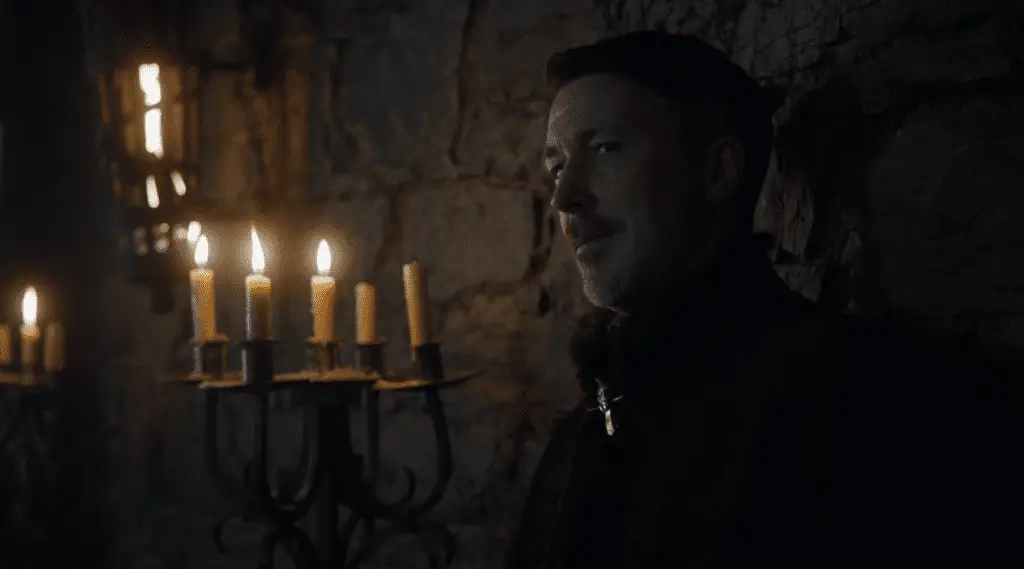
Would you even know that this was from a different episode than the last three if I didn’t tell you?

Speaking of Littlefinger he and Jon have a scene in the crypts where he tells Jon how much he loved Cat *gags* and  that he loves “Sansa as [he] loved her mother.” *gags again*  Jon slams him up against a wall a la Ned in season one and Jon’s all “touch my sister and I’ll kill you myself.” Which was a yay because finally we got some in-universe recognition of Littlefinger’s creeper status, and moments that weren’t all sibling rivalry for Jon and Sansa, but because of how they have been developed, it mostly came off as men fighting over property rather than the sibling protectiveness it was meant to be.

INN AT THE CROSSROADS/RIVERLANDS

Arya reunites with Hot Pie and it’s incredibly underwhelming. She’s acting really weird. She doesn’t seem to care about seeing Hot Pie again. She literally doesn’t look at him while he’s talking. It’s very Deadpan-esque, but Maisie Williams is too emotive to give absolutely nothing in the way that they’ve managed to make Clarke succeed in doing.

But really, this is kind of weird and so inconsistent. Arya was way happier with those Lannister troops last week than she is seeing a familiar and happy face. If they are trying to finally seed in the toxic effect all of this is having on her, it’s a little to late considering last episode we were supposed to be cheering about her empowered™ mass murder at the Twins.

Hot Pie even asks “What happened to you ‘Arry?” Which should mean something, but because of the context of everything leading up to this and how Arya has been framed, it doesn’t. Arya’s sequence this episode is just so weird because it’s nice but it doesn’t flow naturally from what they’ve been writing in the past, (heck just last episode). Is this just purely a result of it being a Cogman episode and him trying to write some complexity here? I like what this scene is trying to say, but it fails to actually say it.

Hot Pie tells Arya that the Boltons are dead after Jon won “the “Battle of the Bastards” (Can we stop the use of this name in-universe, please?) and after finding out her brother is alive and at Winterfell, Arya immediately leaves. She starts second guessing her choices and it could be nice. Maisie is so good, but there’s been no lead up to this. There’s been no questioning of her choice of going “home” or “family,” just pure badassery™ up until now, and it doesn’t elevate this moment the way it should.

Hot Pie doesn’t let her pay and they have one moment after—which feels separate from the rest of their conversation, because it feels like they actually know each other—where she tells him to take care. He tells her not to worry, that he is a survivor like her and it’s really sweet. I wish the whole scene had felt like this.

Outside the Inn, Arya decides to turn North instead of South, a nice bit of acting from Maisie as Arya chooses family over revenge. (Which again…needed the set up of this massive character choice that we failed to have, but I admire Cogman for trying to give Arya a complex arc, even if he had to do it in the isolation of one episode).

While warming herself near a fire, Arya’s horse (A+ horse acting here) starts shrieking and moving around and suddenly she’s surrounded by a wolf pack. Then behind her giant CGI Nymeria shows up! Yes Nymeria…Arya’s direwolf and probably the only source of the wolf CGI budget this season because who is Ghost? Arya is going back home and want’s Nymeria to come with her. There’s the almost promise and possibility of a return to normalcy for Arya with the arrival of Nymeria on her journey home but Nymeria turns away. She can’t go back home because the implication is that she is too wild. “That’s not you,” Arya says smiling, a callback to Season one when Ned describes the life of a lady laid out before Arya and she protests “that is not me”.

This could, again, taken out of context to the rest of the past few seasons, mean something greater for Arya. Has she been through too much to return to normalcy too? Is it possible to go back to that after all of this? Doe she want normal? Is it always possible to return home?

But no…that would require pre-existing set up and an established character arc.

OLDTOWN

Back at Oldtown, Archmaester Slughorn and Sam are inspecting Jorah, chastising him that should have cut off his arm the moment he was touched…yeah why didn’t he? Jorah apparently has about 10 years before it kills him, maybe 20, but around 6 months or less till his mind goes. Sam asks Slughorn about stopping Greyscale because Shireen’s was halted, (can we just say, thank god Sam is not doing poop montages this week and they are actually referencing previous episodes), but Slughorn tells him that was because they caught it early and she was a kid.

Jorah is a allowed “one more day” before being sent off to live with the Stonemen because he’s an anointed knight not a commoner, and Slughorn not so subtly hints that he should use that time to take his own life before he loses his mind—he’s a lost cause. It’s a heavy concept and not one addressed or stressed at all in an episode that had the time for it. Before he leaves, Sam learns Jorah’s family name.

While getting some books from the library—I guess no repercussions of sneaking into the restricted section without his invisibility cloak—Sam brings up that while perusing the Study of Rare Diseases by Archmaester Pylos, he found a possible cure to Greyscale. But Slughorn shuts him down, saying the procedure is too dangerous and it’s forbidden. It seems like maybe it should have been tested out some more before forbidding it, as we know Sam is going to be successful…

Jorah is writing a letter to Dany and literally addresses it “Khaleesi.” It is ridiculous and absolutely hilarious. Jorah looks at the sword, another suggestion that he’s going to kill himself so these are his last moments, but again we don’t get the weight of that decision at all. If we’re going to feel sympathy or follow Jorah’s POV at all, we couldn’t even use a few minutes to give him an essential character moment?
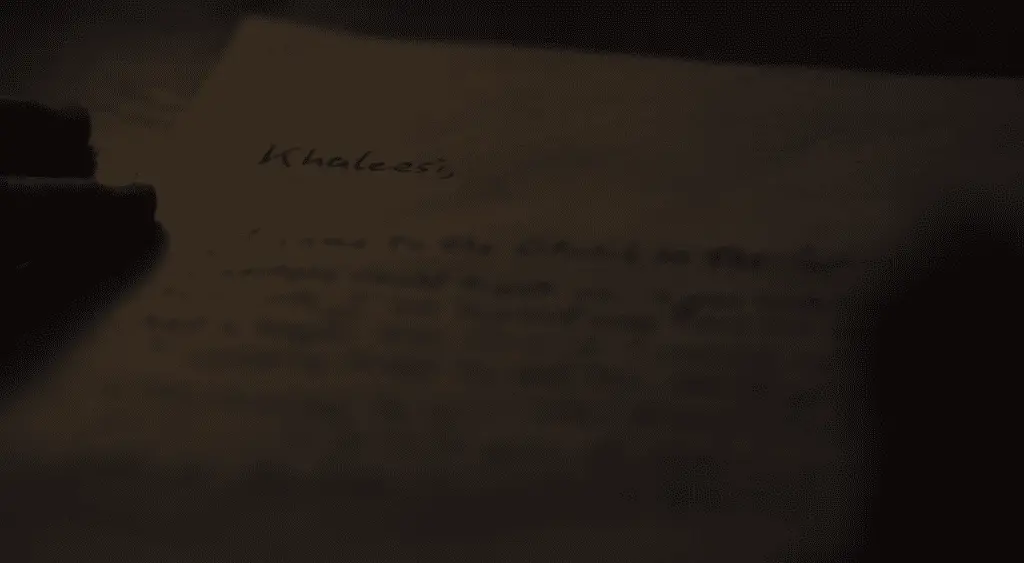
“Queen, I love you so much. I might be dying but pls remember our love that definitely exists. PS poor me I’m so friendzoned.”

He’s not even getting ready to do it when Sam comes in to cure him. There’s no weight to anything. It all just sort of happens. Sam mentions that he knew Jorah’s father and was with him when he died, declaring “You’re not dying today, Ser Jorah”. Ooh… is Sam taking on the complex guilt Connington feels about failing the father and not wanting to fail the son here? Definitely has the same weight…

It’s surgery time and Sam has him drink rum, not milk of the poppy for some reason, which would have been handy because Jorah isn’t allowed to scream or they will be caught. The steps are basically to cut off the layer of skin where the scales have formed and apply an ointment (it’s not like this is an internal disease or anything?). The layer peels off kind of easily, almost as if it were makeup!

KING’S LANDING

In King’s Landing Cersei calls what few banners she has, including some house Tyrell bannermen like the Tarlys, to rally them to her cause. She tells them that Dany has ferried an army of savages to their shores. (Oh yeah, what are the Dothraki doing? It would be interesting to see their reaction to doing the impossible—crossing the narrow sea and touching land on Westeros.) Cersei is genuinely trying to warn about Aerys 2.0 and she has a point, but at the same time she’s kinda doing the same thing, so really instead of bickering they should bond over their love for burning their enemies.

“You remember the mad king. You remember the horrors he inflicted upon his people,” Cersei recites and they cut to a Jaime reaction shot, as if this line means something for him while simultaneously ignoring the fact that the dude that is standing by the side of someone who blew a shit ton of people up with Aerys’s wildfire.

Randyll Tarly and the new Dickon are there, and despite trepidations about Dany’s dragons and his passionate loyalty for Olenna Tyrell (Where’s the patriarchy?) Jaime takes him aside and convinces him to join them. I thought he was already on their side considering he made the trek there in the first place? And also, what is with this notion that he’s worried about his honor by betraying the Tyrells and Olenna and siding with people who would “stab people in the back or cut their throats at weddings” like the Lannisters? I got news for you…Olenna murdered the king at his wedding via poison. (Maybe that is news. Whatever.) 
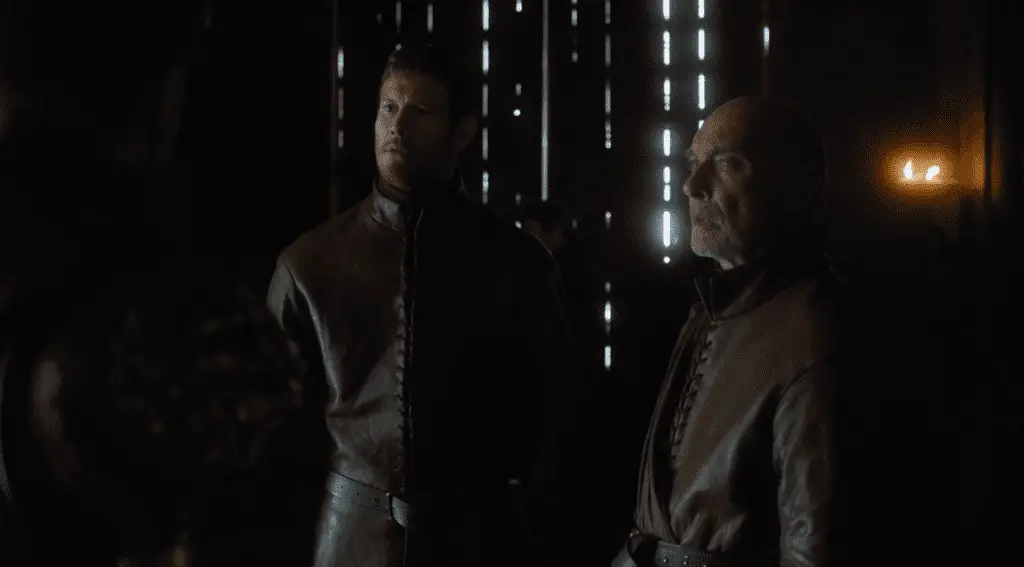
Something looks different…

Qyburn has got a plan for the impossible enemy—the dragons—as he takes Cersei for a stroll through the Dragon skulls stored below the Red Keep. We get backstory about Robert removing them from the throne room but that he didn’t destroy them because they were his “trophies”. Apparently Robert brought his “whores” down there to look at them, which must have been a fun time because anything Targaryen basically works as a blind anger trigger for Robert.

Also, is it just me or should Balerion’s skull be bigger?

Qyburn watched season five and knows that Drogon was wounded by spears in Meereen so he built a giant cross-bow-esque contraption for spears and they fire one into the skull. Cersei seems quite pleased with her new toy.

(SOMEWHERE ON WATER)
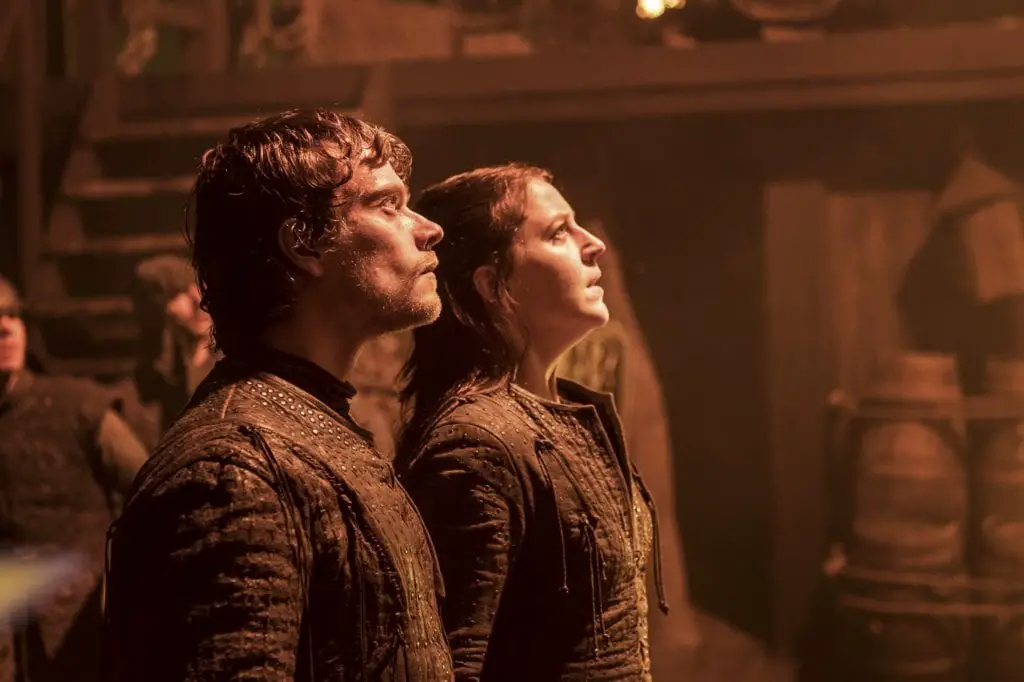
This Sand Snake scene only makes me happy that they are soon going to be gone from the show and these actors will be free to do bigger and better things, but oh my god it is awful. They are fighting over who they can kill when they get to King’s Landing, their accents are somehow worse, and the Bad Pussy Sand Snake threatens to kill the other two. Then they tease her because #womeontop and I leave the scene feeling so Empowered™.

At last it is the Yallaria scene we’ve all been “waiting” for, and they are discussing wine and fucking. How new, how original. Also, woohoo. Confirmation. Yara is officially a bisexual rapist pirate. I’m so glad. I feel so represented.

Ellaria really likes it, and the two women who like women start flirting because they are two women who like women in the same room. Ellaria orders Theon to get her another drink while they talk. (Yes, Theon is in this episode and mostly in the background, but Alfie Allen still acts his face off and deserves an Emmy for doing the impossible with nothing.) We have a good moment where Yara is actually nice to him and scolds Ellaria, insisting “he’s not your servant.” She says “he’ll be my advisor, my protector,” and it’s kind of cheap and easy considering what comes not long after, but I like the concept of Theon not being able to live up to what that “should” mean.

But unfortunately that’s the closest we get to seeding what should be a big character moment for Theon later in the episode, and it seems like the showrunners care very little for putting his trauma in the foreground.

Yallaria starts to flirt and Ellaria utters the line of the episode “a foreign invasion is underway,” as she feels her up. Yeah…it’s real. Then just as we are about to get the kiss we have all been waiting for, it’s quickly interrupted because Euron comes out of nowhere to cock-block.

They are under attack and Euron really is Jack Sparrow because his ship comes out of the fucking fog like The Black Pearl. Also fireballs are just constantly raining down from the sky? I don’t know why or how, but they are.

Where’s Barbossa? Oh wow, this was supposed to be a screenshot of the boats but you literally cant see anything because what is lighting?

How did he find them you may ask? How did he time this so perfectly? Who knows.

Euron is absolutely ridiculous levels of theatrically insane, and with this camera work I can’t even see what is happening in this “epic” sea battle. Bad Pussy SS is killing people who have swords with her tiny dagger and it’s hilariously silly. She goes below after taking down a few people to keep Ellaria safe because she wasn’t trained in the art of Snake Fu.

Yara takes a moment to look at the battle, but we don’t get context of what this means for her because we never get to see her lead her people or really get any scenes developing her character, so that long shot is wasted. Nymeria and Obara are fighting Euron but he kills them their own weapons. (Is this supposed to be some sort of poetic justice?) Oh well, let’s say a happy goodbye to these two as they no longer have to waste their talent away on this show anymore!

Also holy fucking shit, you know you messed up these characters when I didn’t feel anything about their deaths, or even believed they felt anything about each other’s deaths. We didn’t even get a reaction shot of Bad Pussy and Ellaria being taken captive and seeing what Euron has done to Obara and Nym. The showrunners clearly care even less for these characters than we do.

Now Euron’s got his presents for Cersei, fireballs come crashing down, and in what is probably supposed to be an epic moment but feels like nothing, Yara finally goes to fight Euron. This week his personality is yelling and crazy eyes and he bests Yara quite quickly. The relationship between these people and what all of this means is very much lost. He holds a dagger to her throat and dares Theon to come save her. Theon stops in his tracks, processing what’s going on around him and Alfie Allen acts the shit out of it. He sees Euron’s men cutting out tongues and pure violence all around him. His history of abuse comes flooding back to him and, triggered, he drops his sword, leaving his sister, and jumps off the ship. (Not that he could have done much in the first place). 

I don’t take issue with the action in general, I take issue with how it was framed, the lack of seeding that went into it. It was too sudden and in an episode that gave little to no thought or time for Theon. The triggering moment itself wasn’t sudden. Triggers are sudden. However giving Theon the climax of an arc in an episode he was barely in did.  For such a huge moment like that, we needed a lead up. Also, in the Inside the Episode D&D mention that Theon’s actions disappoint Yara, so with that, the context, the framing, and last seasons’s horror show of the “man up or kill yourself” therapy session “working,” I contest their ability to deal with trauma and abuse and how they are framing this. 

Yes, trauma doesn’t just go away, but they seemed to think it did last season and that’s what worries me.

We leave the episode with Theon floating in the water (maybe Gendry will pick him up in his rowboat?).

Overall, it wasn’t a horrible episode. It had one actual good scene and other isolated moments that in a different show and different context could have been really nice. You could definitely tell it was a Cogman episode, but despite his valiant attempts, you can’t just try and cram complexity or development in an isolated episode without it losing any and all of its impact because of its predecessors.


Images courtesy of HBO

The post Mansplaining, Offensive Representation, and…a Well-Written Sex Scene! Thrones Does the Impossible! appeared first on The Fandomentals.


24 Jul 15:47

The Most Feminist Revolution the World Has Ever Witnessed

by Carne Ross

Something extraordinary has happened in a corner of north-east Syria. It is a little-known story that defies the usual narratives about Syria or Assad, civil war or ISIS. It is nothing less than a political revolution, which bears important lessons for the rest of the world. In this revolution, women are in the vanguard, both politically and militarily, often leading the fight on the frontline and sacrificing their lives against the most atavistic and anti-woman enemy there is: the so-called Islamic State – or Daesh, as it is more derogatorily known.

This place is called Rojava, the Kurdish name for western Kurdistan, located in north-eastern Syria. After the collapse of the Assad regime in 2012, Kurdish parties began an extraordinary project of self-government and equality for all races, religions and women and men. I visited Rojava, in a personal capacity, in the summer of 2015 to try to understand what's going on there for a documentary film about anarchism, which you can watch on iPlayer.

Few journalists visit this swath of land along the Turkish border, which is about half the size of Belgium. It's difficult to reach and thus expensive, requiring a long journey from northern Iraq and a crossing of the Tigris by small boat onto Syrian soil. The Kurdish Regional Government of northern Iraq (KRG) is not sympathetic to the Kurds of Rojava, and makes access very difficult and sometimes impossible.

The few journalists who make it there tend to focus on the fight with ISIS, assuming that this is what most concerns western audiences. Rojava is safer than the main combat zones of Syria, but still suffers horrific suicide bombings, and western visitors would of course make a fine catch for Daesh kidnappers.

As a result, very little has been reported about the remarkable political experiment of Rojava.

What little commentary appears is often secondhand. It therefore frequently repeats earlier misconceptions or hostile propaganda put about, above all, by Turkey, which opposes the leading political party of the Rojava Kurds – the PYD – and the armed forces of Rojava, the People's Self-Defence Units, which comprise the mostly male YPG and all-female YPJ. Nor does the political character of the Rojava revolution fit familiar pigeonholes; it is neither a nationalist Kurdish project for an independent state, nor is it Marxist or communist, nor driven by religious or ethnic motives.

Perhaps most remarkably – and, sadly, uniquely – this is perhaps the most explicitly feminist revolution the world has witnessed, at least in recent history. Previously, this area was home to traditional peasant norms, including child marriage and keeping women at home. These traditions have been overturned: child marriage, for instance, is now illegal. There are parallel women's organisations in every field, ranging from the separate women's militia, the YPJ, to parallel women's communes and cooperatives. Self-defence is a principle of the Rojava revolution, which is why women are so active in the armed struggle – but the concept extends towards the right of self-defence against all anti-woman practices and ideas, including those of traditional society, not just the extreme violence of Daesh.

"From what I saw, this political transformation enjoyed widespread support from all: Kurds, Arabs, women and men, young and old. Why wouldn't it? The whole point is to give everyone a say in their own government."

In addition to ensuring complete equal rights for women, the feminist politics of Rojava aims to break down domination and hierarchy in every aspect of life, recasting social relations between all people regardless of age, ethnicity or gender, with the aim of achieving an ecologically and socially harmonious society. In terms of historical comparison, this project resembles most closely the short period of anarchism witnessed by George Orwell in Republican Spain during the Spanish civil war in the late 1930s. But the representatives of Rojava also reject the label of anarchism, even if much of the inspiration for this revolution came originally from an anarchist thinker from New York City, Murray Bookchin.

The political heart of the Rojava project is in the local communal assemblies, in which local people take decisions for themselves about everything that concerns them: healthcare, jobs, pollution... boys riding their bikes too fast around the village, as one woman complained about at an assembly I visited. Women and men are scrupulously given an equal voice. Women co-chair every meeting and every assembly. Non-Kurdish minorities, mostly Arabs but also Syriacs, Turkmen and Assyrians, are also given priority on the speaking list; at meetings I witnessed, interpreters were provided. This is self-government, where decisions for the village are taken by the village or region. If decisions cannot be made solely at the local level, representatives attend town or regional assemblies, but these representatives remain accountable to the communal level and may only offer views that are approved locally. It is a very deliberate attempt to keep decision-making as local as possible – a rejection of the top-down authority of the state.

Ironically, however, the inspiration for the revolution was very much top-down. Abdullah Öcalan, the leader of the PKK (the Kurdish guerrilla movement in Turkey), read Murray Bookchin's works while in a Turkish jail on an island in the Sea of Marmara (where he remains). Once a Marxist-Leninist and a ruthless military leader, Öcalan became convinced that self-government without the state was the way forward for the Kurdish people. He moulded Bookchin's philosophy for the Kurdish context, calling it "democratic confederalism". The Syrian Kurdish PYD is closely associated with the PKK. Following Öcalan, its cadres adopted democratic confederalism and implemented it in Syria.

Some have accused the PYD of domineering tactics, particularly at the start of this democratic revolution. Such conduct has given room for critics unreasonably to dismiss the whole project. From what I saw, this political transformation enjoyed widespread support from all: Kurds, Arabs, women and men, young and old. Why wouldn't it? The whole point is to give everyone a say in their own government – a radical innovation anywhere, let alone in Syria, a country long accustomed to dictatorship and repression. I spoke to many people at random. They were uniformly positive, and many argued that the Rojava model, of highly decentralised government, should be adopted in the whole of Syria and indeed beyond. But it's also a work in progress. In some of the assemblies I attended, women and men sat separately, a mark of the journey from traditional practice that this revolution is still navigating.

The revolution has suffered considerable assault. Turkey opposes Rojava and has prevented all supplies, trade and humanitarian aid from crossing its border into the region. Today, Turkish forces are attacking the predominantly Kurdish Syrian Democratic Forces (SDF), which subsumes the YPG/YPJ and Arab militias into a common anti-ISIS front. The SDF has been the most effective force in fighting ISIS and has driven it back across hundreds of miles of territory, at the cost of thousands of lives. Now, the SDF – led by a woman commander, Rojda Felat – has started the attack on ISIS's "capital", Raqqa. The SDF currently enjoys US and allied military support, primarily from the air but also from American and allied special forces on the ground.


Therefore, US and indeed western governments are involved in a grotesque contradiction in which they permit NATO "partner" Turkey to attack the SDF – their most important ally in the fight against ISIS – while also proclaiming unyielding commitment to defeating ISIS. Thanks to an almost total absence of press coverage, this absurdity attracts no controversy in western capitals. Kurds worry, with reason, that once Raqqa falls the US will abandon the Kurds to Turkish aggression. Indeed, with Turkish attacks against the SDF intensifying in northern Syria in a canton called Afrin, some argue that this betrayal has already begun.

The hypocrisies of international geopolitical manoeuvring, however, should not obscure the importance of the Rojava democratic revolution. Thanks to its horrific tactics, ISIS attracts the attention, but in fact it is Rojava that carries the more important message for those who care about democracy. Rojava offers an alternative and practical example where the people are in charge, and it works. Rather than replicate the disastrous centralised governments of Iraq and Assad's Syria, Rojava's self-governing institutions have proposed their model for the whole of Syria once the Assad dictatorship comes to an end – and indeed, Rojava has renamed itself the Democratic Federation of Northern Syria in order to emphasise its multi-ethnic character and its acceptance of Syria's existing borders, another divergence from the lazy western presumption that "the Kurds" want their own separate state.

But thanks to Turkish hostility, representatives of the Democratic Federation are excluded from the UN talks about the future of Syria – an injustice in which the US, UK and others acquiesce. The UN continues to pretend that "the Kurds" are represented by a party that is in fact a proxy of the KRG in Iraq. It is telling that international officials – mostly men who have never visited the area – still prefer outdated ethnic stereotypes to the more accurate cosmopolitan and feminist character of this project.

Meanwhile, the Rojava model is no less relevant in the west, where few can claim that democracy is in good health, with disillusionment and right-wing reactionary extremism – and, indeed, overt hostility to women (expressed not only by Donald Trump) – both ascendant. There are scores of westerners who, like the International Brigade of the Republican forces in Spain, have gone to join YPG and YPJ ranks. Several have lost their lives, including in recent days a former Occupy Wall Street activist from New York City. Some of these brave men and women have been prosecuted on their return home, punished for their commitment to democracy and equality. All suffer from the misrepresentation of their struggle in much of the international press. In reporting the death of the young Occupy activist, the Washington Post described the Rojava revolution as "pseudo-Marxist", when it is the very opposite. In this democracy, there is no place for the state, at all. The people govern, the antithesis of state communism.

The author, Carne Ross, and Viyan who his film is dedicated to

Thousands of YPG and YPJ fighters have died for this cause. During my visit, I met Viyan, a young woman YPJ soldier, on the front line – a huge gravel berm that stretched from horizon to horizon across a barren plain in southern Syria. ISIS positions were a few hundred metres away. A rifle over her shoulder, she told me that never before in her country, or the region, had women been equal to men. Without equality for women, there could be no justice in society. She was prepared to die to defend this dispensation. Tragically, Viyan was killed several months after our interview, fighting ISIS in the town of Al-Shaddadi.

Our film about the search for a better democracy is dedicated to her.

Carne Ross's documentary film, Accidental Anarchist, is available to watch on iPlayer. This article represents his personal views only.

24 Jul 15:40

A HISTORY OF GARAGE & FRAT BANDS IN MEMPHIS 1960-1975 Vol.1 & 2

by Mr.Eliminator


”A History of Garage and Frat Bands in Memphis, 1960-75 is a Memphis garage rock compilation that was released in conjunction with the book ‘Playing for a Piece of the Door’, by Ron Hall. The book is a candid history and discography of over one hundred garage rock bands who recorded at least one record in Memphis between1960-1975.”

Hmmm… More appropriate title would be ‘History of Garage and Soul Bands in Memphis’ as approximately 30% of the stuff are R&B tunes [especially on vol.2]. It’s a pretty interesting collection of some fine rare 60’s recordings transferred directly from original vinyls [not master trax], so the sound is bit raw & grainy here and there but anyway cool [I’ve fixed some cliks & crackles]. Some of the bands could be heard on other comps as Flash & The Casuals on ”Uptight, Tonight” comp, Danny Bunk And The Invaders on ”Hang It Out To Dry!”, The Escapades and The Breakers on ”Pebbles”, The Scepters on ”Everywhere Chainsaw Sound” etc. but some tunes can be find only here as The Coachmen ”Possibility”,  great Sci-Fi instrumental ”The Mysterians” by Jimmy Tarbutton And The Memphis Sound or rare garage gem Los Angeles Smog Division ”Blue Green” with ”borrowed” Pretty Things ”LSD” riff. Ok, check my favs below ‘n’ Dig!!!


24 Jul 15:36

Number of native speakers in millions

by Alex E
Number of native speakers in millions
Source: jakubmarian.com

Language Native speakers(in millions)
1 Spanish 470
2 English ~400
3 Portuguese 220
4 Russian 170
5 German 95
6 Turkish 88
7 French ~80
8 Italian 64
9 Polish ~45
10 Ukrainian ~40
11 Romanian 24
12 Dutch 23
13 West Central German 17
14 Greek 13
15 Hungarian 13
16 Czech 11
17 Swedish 9.2
18 Bulgarian 9
19 Serbian 8.5
20 Alemannic German  7.2
21 Low German  6.7
22 Neapolitan  5.7
23 Croatian 5.6
24 Catalan 5.5
25 Danish 5.5
26 Finnish 5.4
27 Albanian 5.4
28 Slovak 5.2
29 Norwegian 5
30 Sicilian 4.7
31 Venetian 3.9
32 Lombard 3.6
33 Belarusian 3.2
34 Lithuanian 3
35 Slovene 2.5
36 Bosnian 2.5
37 Galician 2.4
38 Macedonian 2.0
39 Emiliano-Romagnolo 1.8
40 Latvian 1.8
41 Piedmontese 1.6
42 Estonian 1.1
43 Sardinian 1.0


24 Jul 15:20

Why Do Men Go Gray at the Temples First?

by Roni Jacobson

It's an oft repeated maxim that gray hair starts at the temples in men (see: Paulie Walnuts, Grandpa Munster). In fact, the word "temple" is derived from this assumption. The temporal bones and lobes of the brain underneath, located at roughly eye level on the sides of the head, get their name from the latin word, "tempus," meaning both time and the spot on the head, linking gray temples with aging and the passage of time.

In movies, tv and life, rubbing one's temples is a shorthand to indicate that you're stressed out. It's also the stock image for headache and migraine, the pain of which is often described as pressure at the temples, or feeling like one's mind is "in a vice." But research has thrown the link between gray hair and stress into question. While the onset of graying can be sped up slightly based on outside factors—UV exposure, smoking and exposure to other chemicals—the emergence of gray hair is about 90 percent controlled by genetics.

There have been many studies investigating the phenomenon of gray hair in general, as well as about the pattern of baldness, another sign of hair aging, but surprisingly few concern the pattern of hair graying. The question of why hair starts to go gray at the temples—or even whether it's true in the first place—still remains largely mysterious. "I'm not aware of any definitive answer, certainly not in the scientific literature, so any suggestions would be speculation," says Gillian Westgate, who studies hair biology at the University of Bradford in the UK.

L'Oreal conducted a study in 2012 in which trained evaluators examined the heads of 4,192 adult men and women from 23 regions of the world. Gray hair clustered at the temples in men over age 45, regardless of ethnicity. But most of men also had gray hair on the crown and back of the head, with the hair in the temples showing up with slightly higher intensity. For women in the same age group, gray hair showed up on the crown and the temples in equal measure. It's unclear from the results whether the gray hair appeared all at once or sequentially.

Another study, with participants between ages 12-91, found similar differences between men and women, with men having about 20 percent more gray hair at the temples compared to the rest of the head, which also contained grays spread equally around, as measured by trained evaluators. Women, on the other hand, had an equal distribution of grays at the temples, front and top of the head, with less towards the back. The researchers took a stab at the pattern of graying over time: In surveys, about 60 percent of men reported that grays first appeared at the temples, whereas women reported graying generally starting at the front of the head. But the reports relied on subject's memories, which the researchers noted are susceptible to recall and other cognitive biases, severely limiting the conclusions.


More From VICE:


Indeed, when asked to estimate the presence of gray hair on their heads, men accurately estimated the amount of gray at the temples but drastically underestimated the amount around the rest of the scalp in self-reports compared to the standardized hair examinations. Women estimated the distribution of grays relatively closely. Although it's tempting to chalk this up to women having a more realistic sense of perception (ha), the discrepancy is more likely related to the heightened intensity of grays at the temples in men versus women, which could influence recall. So there might not be more grays, but what's there is the damn grayest.

"Is it just because it tends to be more visible there?" asks Paradi Mirmirani, a dermatologist in Vallejo, California and regional director for hair disorders at Kaiser Permanente. "In the course of daily living, when you look at people that does seem to be an area that kind of catches your eye."

When the real gray-spotting professionals—hair stylists—were asked about observing grays at the temples first, they deny it altogether. "I haven't seen that," says Quentin Gholar, 27, a barber at Frank's Chop Shop in the New York, who's been cutting hair for seven years. "In my experience it tends to come in all over." Hiro Nori, 34, barber of ten years working one chair over, concurs.

Although the jury's still out on whether gray hair begins at the temples, both studies show that it is more prevalent and vibrant there in men. As for why that may be, life stress is unlikely to be the root cause, as men and women experience relatively equal stress in life on average, yet show a different pattern of graying.

Gray temples likely have genetic origins, related to the way skin is formed in utero. "Local control in different regions of scalp may influence graying," Mirmirani says. "The top of scalp has one genetic signature and the sides and the back have another." As skin is being formed in the womb, a sheet from the lower neck grows upwards to form the skin around our temples and back of the head. The skin at the front and towards the crown develops from a separate plane of skin stretching upwards over our faces, with the two connecting at the vertex in the center of the scalp. The different genetic origin of different regions of the scalp has been found to be the reason behind male pattern baldness, Mirmirani says, in which hair typically depletes from the top of the head and crown and but stays in a fringe pattern around the temples. Graying appears to show something of an opposite pattern.

Another reason the temples may be more susceptible to graying may follicle cycling—the process by which hair grays. Hair pigment is produced by melanocytes, which sit around the hair bulb once formed and deliver pigment to hair in cycles. "Every hair cycle you need to rebuild your factory and you lose fidelity with every hair cycle," Mirmirani says. Hair pigment loses fidelity after four to five cycles, at which point graying sets in. Hair at the temples tends to fall out less. There is evidence that gray hair also tends to be thicker than pigmented hairs, potentially making coloring them more of a burden and less effective.

Hormones could also play a role. Hairs at the temples are rooted "more shallow in the skin and they remain sensitive to androgens," male hormones that are known to speed up hair cycling, Westgate says. "More rapid hair cycling means more opportunity for this graying effect." Sometimes the most obvious physical features of aging aren't ones that receive the most research attention. Perhaps the study of people who don't gray at the temples would reveal some clues as to whether this is due to genetic, hormonal or environmental factors, she adds.

Read This Next: I Got My Head Tattooed to Make My Hair Look Thicker

24 Jul 07:11

‘I’m Not On Social Media That Much,’ Says Your Shadiest Friend

by Editor

After asking if he saw the comments on a recent Facebook post, your most shady friend responded, “Actually, no; I’m actually not on social media that much.”


“I just think it’s kinda lame,” said the shadiest person you know, as if this was some kind of marker of social dominance he has over you. “I’m busy living in the real world.”


“Maybe he doesn’t want the women he casually dates to find out about each other,” says your way less shady but still kinda shady friend, Maria. “Or maybe he just doesn’t want any record to exist of the multitude of shady things and shady people that definitely comprise his day to day experience? Either way, super shady.”


When you asked him what he’s doing for work these days, he says he’s working on “a few side things,” which you could not verify because he is not active on Facebook or LinkedIn, and seems to change his phone number every other month.


The rest of your shady friend’s social media presence is equally blurry. He created an Instagram account but it contains no posts, no image, and the profile name is jk10934XL, none of the numerals of which appear to be a reference to anything you’re aware of. He says he “doesn’t fuck with Twitter.” His online presence is pretty much in line with your physical interactions with him, in which you occasionally bump into him from time to time at social gatherings, and he says he’s “not up to much” and that he’s “gonna go get another beer.”


When pressed on the reason for his lack of attention to social media, your shady friend says, “I’m just busy with other stuff.”

24 Jul 07:11

What Would Drug Dealers Do If All Drugs Were Legalised?

by Nick Chester

(Top photo: Matt Desouza)

Decriminalising drugs is a hot topic this week, with both Plaid Cymru and the Lib Dems publicly backing the idea to varying degrees. Granted, neither party is likely to be a frontrunner in the next election, and the Tories – anti-progression, anti-evidence and anti-logic when it comes to drug policy – are almost certainly going to sweep up. 

However, the fact two mainstream parties are calling into question the effectiveness of the War on Drugs is a positive step nonetheless. In fact, even the tabloids and right-wing media are starting to see sense: The Daily Mirror has taken tentative steps towards supporting legalisation, and The Spectator published a pro-legalisation piece last month arguing that the move could help reduce gang-related crime.

This argument – that decriminalisation or legalisation would take away the main revenue stream of many career criminals – is often made by drug reform campaigners. But is it really that simple? Would legalising drugs result in crime rates suddenly dropping, or would dealers and traffickers just move into other areas of criminality? To find out I spoke to reformed London gangsters Leroy Smith and Paul Murdoch; the Bristol-based ex-villain Paul Scrase; former Scotland Yard detective David Videcette; and criminologist Dr Louise Shelley. 

The consensus was that the majority of dealers would diversify into other illegal activities. Former drug trafficker and armed robber Smith thought gangsters might revert to carrying out hold-ups, one of the main forms of organised crime before drugs became popular. This reminded me of something Mancunian career criminal Colin Blaney had told me while I was ghostwriting his memoir: that when crack and heroin first hit, all the old armed robbers realised they could make easier money selling hard drugs, so made an overnight transition from blaggers to dealers. 

If all drugs were legalised, would this transition simply be reversed? 

Videcette doesn't think so. "I don't think we'd ever see large-scale robbery of banks or cash in transit like we used to, primarily because we're becoming a cashless society and everything is online, so the future looks more like non-violent thefts of virtual money and fraudulent transfers," he says. "What will drug dealers do if there's no profit left for them in drugs? They'll most likely drift across into something not too far away from their current skill set, so traffickers will traffic other things, such as guns, people and drugs stolen from legal supply routes."


WATCH: 'High Society: How Weed Laws Are Failing the UK'


According to Shelley, drug organisations are already diversifying into people smuggling. In May of last year, former UK Border Agency head Tony Smith reported a major increase in people trafficking gangs, and warned that they "are making so much cash they now rival the drugs trade". It seems plausible, then, that if drugs were legalised, other groups that previously stuck to importing and exporting narcotics might decide they want a piece of the pie.

Scrase says that dealers might start selling drugs legally, but use the threat of violence to ward off industry competitors. "You're going to have rivals trying to knock out the competition," he tells me. "Prices would probably hit rock bottom, but that would just cause more problems."

Of course, this scenario would only occur if few restrictions were placed on who can set up a legal drug selling business, and if drugs were ever legalised the trade would be tightly regulated. However, Smith reckons this would almost certainly result in a thriving black market. When prohibition was abolished in the US there were still problems with bootleggers, as hard liquor distilling had relatively restrictive limits placed upon it. Similarly, in New York, the current limitations on the sale of medical marijuana mean that people with genuine illnesses still frequently purchase it illegally. So it stands to reason that the same would happen with all other narcotics, whether it's because of cost, quality or accessibility. 

On that last point, Videcette points out that as well as there being restrictions on who could sell drugs, there will also be people unable to buy them via the legal channels. "There will always be those who do not wish to – or cannot – use legalised drugs from government-registered suppliers," he says. "Professionals who use drugs, for example – such as doctors, police officers, lawyers and the like – may never want their names on official lists of users because of the impact it might have on their careers, and they will always use black market suppliers."

"No one's a gangster for the sake of it; it's all because of the need to make money, so if they can make it legally, they'll do that instead."

Videcette also predicts a thriving market in stolen drugs. "Organised criminals would simply switch to other profitable forms of acquisition of the drugs, such as theft from the supply chain, or theft and sale from registered suppliers. So they will still sell drugs, but their methods of acquisition will diversify," he says. "A look at US states that have legalised cannabis shows us that organised criminals are now using government-registered supply networks to increase cannabis usage in places where cannabis isn't legal, buying it in legalised states and then selling it at huge profit in states where it's illegal."

Given that you can hop on a ferry in Dover and be in Calais in an hour-and-a-half, were drugs legalised it seems likely that former dealers might buy huge amounts of them in the UK and smuggle them across to mainland Europe. Yes, it's harder to sneak something overseas than it is to traffic it across state lines, but important barriers are removed within the UK. 

So one takeaway is: criminals will always do crime. Mind you, a couple of the former gangsters agree that a small number of dealers might pack it in altogether and take up legal professions instead. Murdoch claims that some dealers would lack the skills or inclination to make the transition to another illegal activity. "Some people who sell drugs just do it because they know people they can buy them from and are in the right place at the right time," he says. "They wouldn't be able to do other things. You'd also get a few who'd think, 'You know what? I don't like doing armed robberies and I don't like tying people up,' and wouldn't do it."

According to Smith, those only suited to drug dealing might plough their ill-gotten gains into legitimate businesses instead. "They'd go into anything that brings in lots of money legally," he says. "No one's a gangster for the sake of it; it's all because of the need to make money, so if they can make it legally, they'll do that instead."

Of course, it's impossible to know for certain what effect the complete legalisation of all drugs would have. Decriminalisation in Portugal has had a largely positive impact, but there's a difference between stopping the prosecution of drug users and allowing people to freely import, buy and sell everything from coke to heroin.  

Perhaps one day we'll find out what ramifications total legalisation would have, but until a nation is brave enough to take the plunge we can only speculate.

@nickchesterv

More on VICE:

The Story of Mephedrone, the Party Drug That Boomed and Went Bust

Inside the Criminal Trend of Stealing Laughing Gas from Hospitals

This Is Why Gen Z Isn't Into Drink or Drugs